

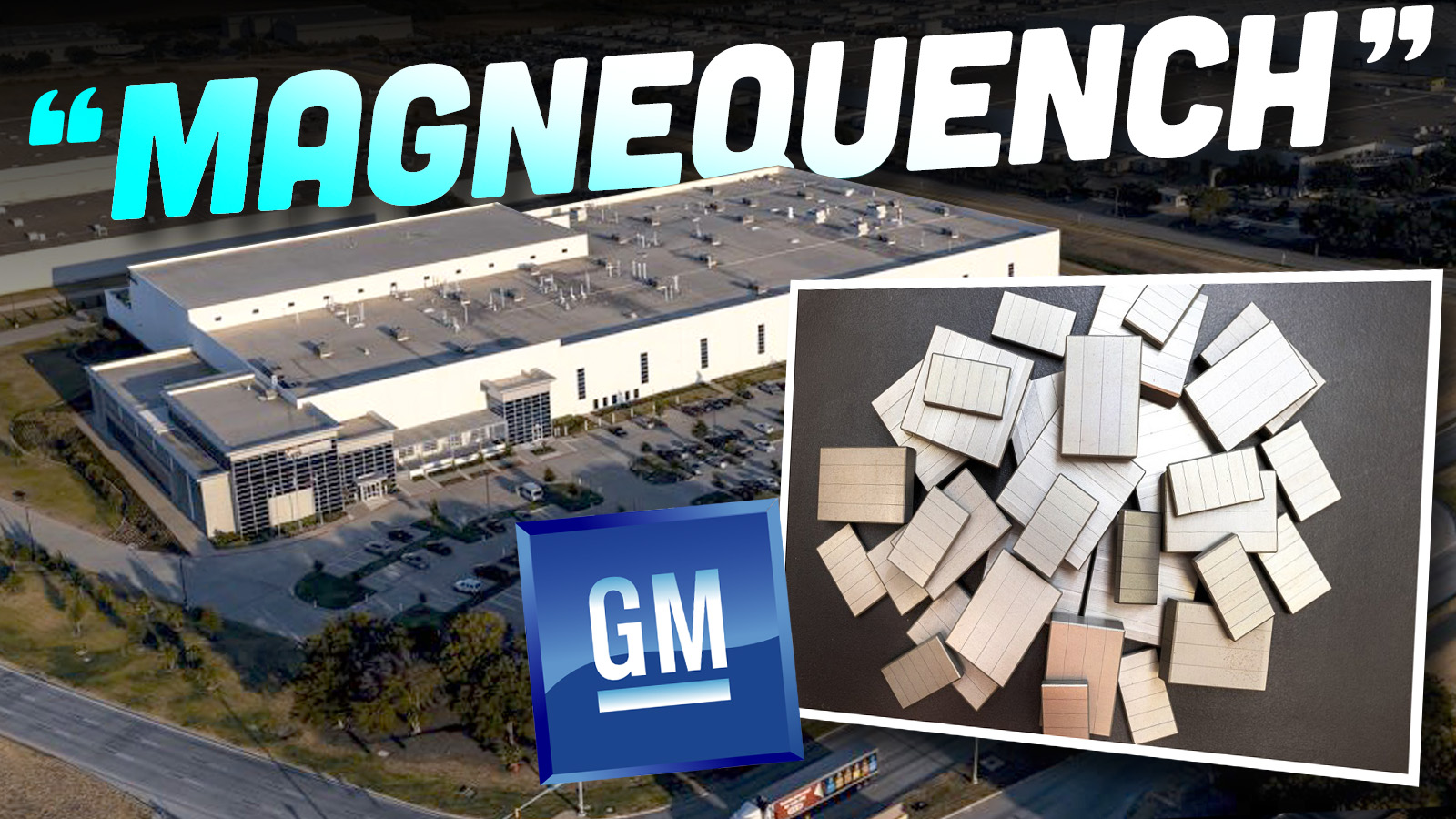
Over its more than century-long history, General Motors has introduced a lot of new technologies to the auto industry – the electric starter, automatic transmissions, catalytic converters, passenger airbags and telematics. However, GM’s once prodigious R&D lab has also introduced a bunch of technologies that were way ahead of their time and failed spectacularly when launched, such as turbocharging, cylinder deactivation, touchscreen CRTs in the dashboard, electric trucks and of course modern electric vehicles. One of the lesser known examples is the rare earth permanent magnet.
To be completely fair, GM didn’t actually introduce the very first rare earth magnets; that distinction goes to Karl Strnat and Alden Rey at Wright-Patterson Air Force Base and the University of Dayton. They developed magnets based on a samarium–cobalt alloy. What made these magnets special is that they had far more powerful magnetic fields than natural magnets based on magnetite, an iron ore with the formula Fe3O4. Magnetite is one of the few materials that are naturally magnetic without any human input.


Around 1982, GM and and company called Sumitomo Special Metals each independently developed new permanent magnets based on neodymium. [Ed Note: How did I not know GM invented neodymium magnets!? -DT]. In the 1980s, these magnets had limited applications (in 2026, they are widely used everywhere, especially in electric vehicles), but by 1986, GM had a new division called Magnequench that had begun producing magnets in Indiana.
What Is A Rare Earth Metal?
Before we carry on with the magnet story, let’s delve into rare earth metals. Contrary to the name, rare earth metals aren’t actually rare. There are 17 elements that are known as rare earths that have distinct magnetic, electrical and in some cases luminescent properties. These elements fall between numbers 57 and 71 on the periodic table (see Lanthanides below). This group of elements is widely used in manufacturing a vast array of modern products including semiconductors and of course magnets.
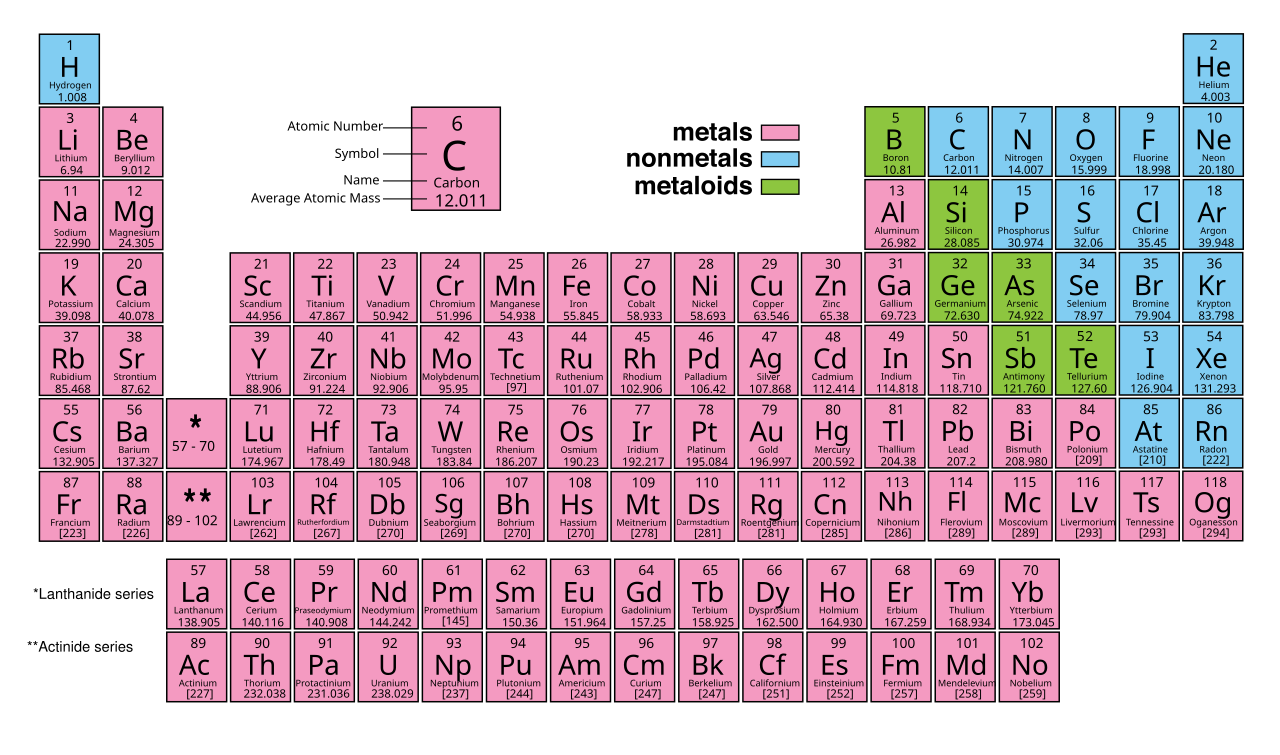
So why do we call them rare? Many of the most commonly used materials are found in concentrated veins in the earth’s crust. When we find gold, silver, copper, nickel and aluminum ores, there are regions with large quantities and other locations with none at all. That’s why we had gold and silver rushes in places like California, the Dakota territory and the Yukon in the 1800s. Someone found a vein and others rushed in looking to grab a piece of the pie. The same is true of non-metals like coal (or diamonds) and other materials.
The rare earth materials are actually widely distributed throughout the earth’s crust, but rarely ever concentrated enough to make extraction at scale commercially viable. Hence they seem rare. Right now there are four major ore-rich deposits containing large quantities of the most commonly used rare earth elements, two in China, one in Australia and the Mountain Pass mine in California, about 45 minutes west of Las Vegas. Mountain Pass contains usable quantities of 15 of the 17 rare earth elements.
The Mountain Pass mine was originally opened in 1949 by prospectors looking for uranium in the post-war nuclear build-up. Rare earths and heavy radioactive elements like uranium are frequently found in similar locations. As it turns out, the amount of uranium at Mountain Pass was insufficient, but the rare earth elements were starting to find a market. Over the years, Mountain Pass went through several changes of ownership and while current GM staff haven’t been able to confirm it, it likely provided the neodymium that was used by Magnaquench in the 1980s and 1990s.
GM Sold Its Magnet Business
In the mid-1990s, GM was following a similar pattern to many large American businesses and had begun divesting what were considered to be non-core parts of its business. While getting rid of Hughes and EDS probably made a lot of sense, spinning off the divisions (Delphi) that make the parts you assemble into finished vehicles probably wasn’t the wisest choice in the long term. As part of this process, GM decided it no longer needed to own a magnet business, and Magnequench was sold off to Chinese investors. The new owners invested in acquiring other magnet producers and expanding production outside of the US, mostly in China. By 2000, the original Anderson, Indiana factory was shuttered and within a few years all US production stopped.
Meanwhile, back at Mountain Pass, the separation plant adjacent to the mine was closed in 1998 and the mine itself closed four years later following a toxic waste spill and the ownership decided that Chinese competition made the mine unviable. By this time it was owned by Chevron, and in 2008, the mine was passed to Molycorp Minerals who built a new refinery at the site. Unfortunately, the cost of this investment led Molycorp to file for bankruptcy in 2015. This ultimately led James Litinsky and Michael Rosenthal, a pair of investors from Chicago, to start the process of acquiring Mountain pass and in 2017 MP Materials was born. They got the mine and the refinery back up and running and started looking at how they could build on that core.
Then 2020 Happened
One of the major economic trends from the 1980s until the 2010s was globalization. As free trade expanded, companies increasingly began looking to acquire materials and parts from wherever the cheapest source was that could meet requirements. This process worked great – right up until it didn’t. One of the many problems with globalization is that you tend to end up with a lot of concentration of supplies. Most advanced semiconductors were being produced in Taiwan. Manufacturing of computer hard drives went to Thailand. Processing of a lot of critical minerals including lithium, graphite and rare earth elements ended up in China.
As long as there aren’t any potholes in the road to market, the numbers worked out great (for the biggest companies at least) and profits and stock values grew. But throw in a few speed bumps and things can get ugly really quickly. Major flooding in Thailand in 2011 stopped nearly half the world’s supply of those hard drives, sending prices soaring. A decision by the US and Israel to go to war with Iran earlier this year has effectively shut off most of the flow through the Strait of Hormuz where about one-fifth of the world’s crude oil flows.

In late 2019, a new respiratory virus began spreading in China and by the spring of 2020, a global Covid-19 pandemic was in full swing. This quickly disrupted production of most goods globally. GM management had already committed to shifting most of its vehicles over to electric propulsion but now it was suddenly facing a lack of many key components and materials. The leadership team decided they needed a strategic reset that included a shift from globalization to “buy where you build,” or what others have referred to as local for local production. In the years since, the value of this strategy has become ever clearer as brittle global supply chains have been disrupted by the pandemic, natural disasters and geopolitical tensions such as military and trade wars.
MP Materials Starts A Magnet Business With GM’s Backing
In 2020, MP Materials was mining rare earth elements and processing the ore to make a variety of concentrates at Mountain Pass, but they weren’t making any finished products. GM came calling, wanting to arrange purchasing agreements for key minerals and have someone build magnets for them. After a period of conversations, Litinsky and Rosenthal decided that if GM would commit to buying a certain amount of magnets, MP Materials would produce them, and a deal was announced in 2021.

Now MP Materials just had to learn how to build magnets. With a foundational customer in GM, MP was able to raise the capital to build a factory and hire the experts needed to establish a magnetics business. They hired Alan Lund to lead the business and set up shop in Fort Worth, Texas.
Why Magnets?
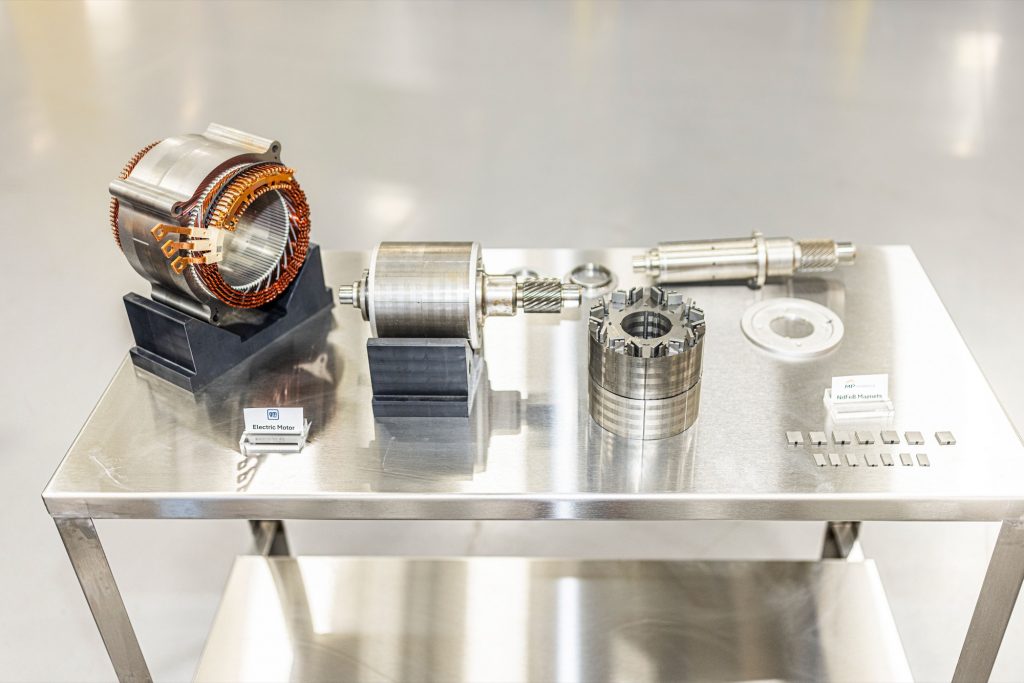
In the world of electric vehicles, there are two main types of AC motors, induction and permanent magnet (PM). All motors rely on magnetism to make a rotor spin, which in turn drives the wheels through a set of reduction gears. As we wrote in our deep dive, PM motors are generally more efficient and produce more torque. But they also contain significant quantities of permanent magnets which are made using rare earth elements that in recent years have mostly only been available from China. That is now changing thanks to a company called MP Materials and General Motors.
Permanent Magnet Motors
Induction motors are generally lower cost than PM because they don’t contain any permanent magnets. Instead they rely on electromagnets created by winding copper around a core and passing an electric current through it. PM motors are generally more efficient and have more torque and power density. But those magnets mean that they also have some drag when just coasting.
Some automakers like Rivian use a clutch to decouple the wheels from the motor when the power of that motor isn’t needed. On the Rivian R1 during light loads, the clutch decouples the rear PM motor while the front motor drives the vehicle. On some of its EVs like the Chevrolet Equinox, GM uses a PM motor to drive the front wheels while an induction motor on the rear axle provides on-demand all-wheel-drive without any drag when it’s not needed.
The big challenge with PM motors is those pesky magnets. In order to get the magnetic performance and reliability needed for the harsh environment or a vehicle, old-fashioned iron magnets won’t cut it. Instead, automakers rely on magnets containing some of those rare earth elements, particularly neodymium and praseodymium.
Establishing a Magnet Business
Getting back to MP Materials, the new magnetics began by doing computational analysis of more than 2 million potential formulations for permanent magnets which reduced the number to 200,000 based on price and availability of alloys. These were analyzed for magnetic properties and reduced to 13,000 recipes and a cost analysis brought the final number down to six compositions. From that the MP magnetics team began developing the manufacturing process and prototyping magnets for testing.
Since there was no large-scale domestic magnet production in the US, MP began looking for partners to develop the manufacturing equipment without relying on China. They ultimately created a new supply chain consisting mostly of American companies with a German vendor for the powder pressing stage and an Italian company for the sintering equipment.
How to Make a Magnet
The first stage after digging the ore out of the ground is some processing to get the right set of elements from the 15 available at Mountain Pass. One of the products from the refinery next to the mine is neodymium-praseodymium-oxide (NdPr oxide), which is the key compound needed for the magnets. The NdPr oxide is shipped from Mountain Pass to the factory in Fort Worth, where it goes through a series of steps to become an automotive grade magnet. First, in order to turn it into a metal it goes into a machine with a molten salt bath at 1,000 C. Running an electric current through the bath causes an electrolysis reaction that causes the oxygen to be stripped off leaving just NdPr metal which sinks to the bottom of the bath and is poured off into molds that produce metal ingots about the size of a standard brick.
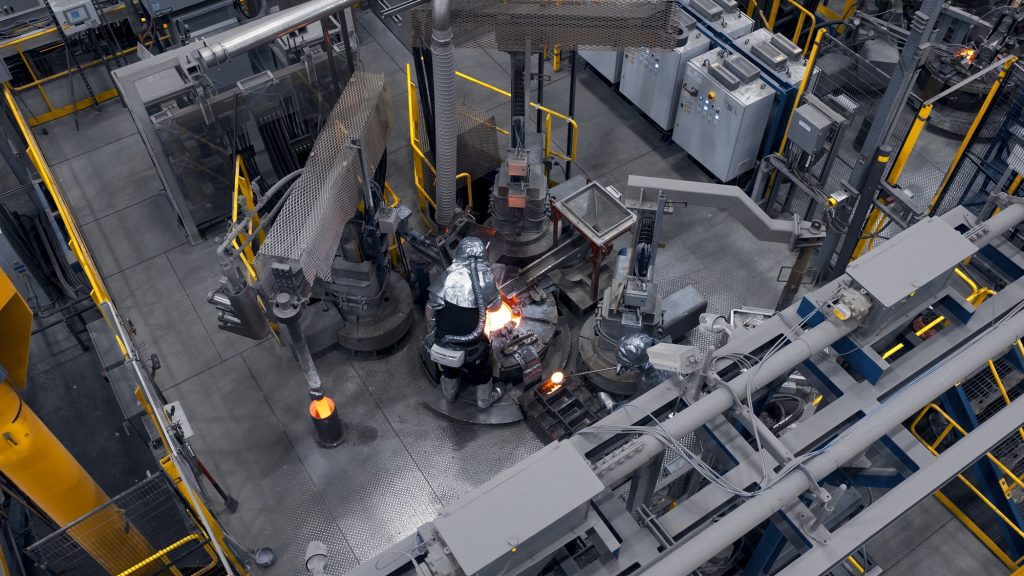
The ingots are then placed into a container with other materials including iron, boron and copper. Since those materials have different melting points, they are specifically arranged in the drum so that everything melts down and mixes together in the right proportions. This alloy then goes through a process called strip casting.
The metallic blend is poured onto a large rotating copper wheel where it spreads out into a thin ribbon and cools. Controlling the flow and wheel speed is essential to getting the thickness and cooling correct. The copper wheel also helps to create a specific micro-crystalline structure in the flakes with all of the molecules correctly aligned so the finished product will have the desired magnetic properties. As the copper wheel rotates, the strip comes off and fractures into flakes, roughly the size of a thumbnail. All of this is happening inside a sealed chamber filled with nitrogen and the flakes are collected in a custom designed hopper. Throughout most of the rest of the production process, the magnet materials are either in these hoppers or whichever machine it’s going through to prevent any exposure to air since oxidation will reduce the effectiveness of the magnet.

The hoppers of flakes are then moved over to an induction furnace where they are exposed to hydrogen. The presence of the hydrogen causes the flakes to break up into a coarse powder which is collected in another hopper. That coarse powder then goes into a jet mill that breaks it down into a fine powder with a targeted grain size of about 10 microns. That size is important to the remainder of the process.

The fine powder goes through a filtration process which separates out the particles that are small enough, but also sends those that are less than 10 microns back into a hopper. MP collects all of the byproducts of the production process including powder that is too fine and cuttings from the final stages and all of that which accounts for about 25-30% of the original material is sent back to the Mountain Pass refinery to start the process over. Nothing is left to waste.
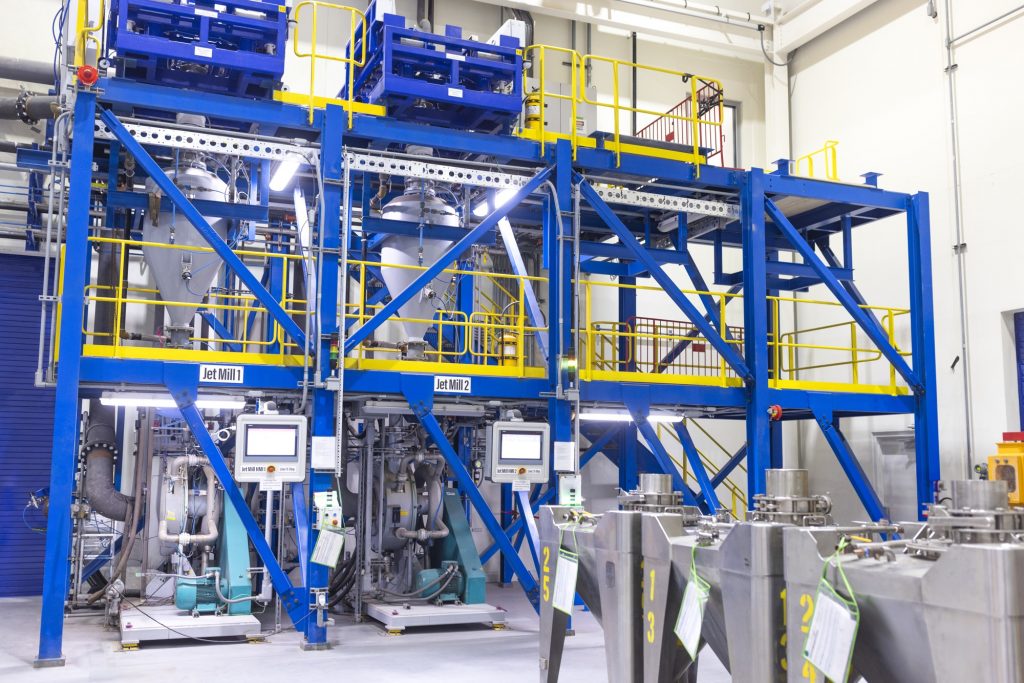
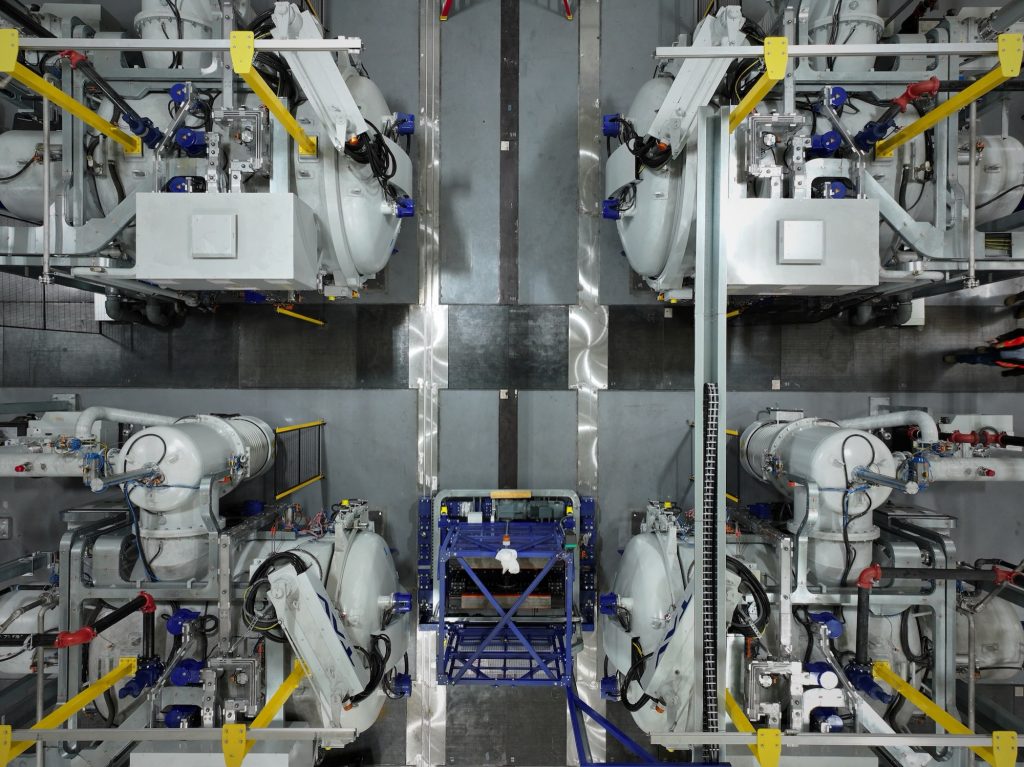
The fine powder is put into flexible molds and pressed into blocks which then go into a sintering oven causing everything to get more dense. At the end of the sintering process, nitrogen is injected into the oven to rapidly quench the blocks, locking in the crystal structure.
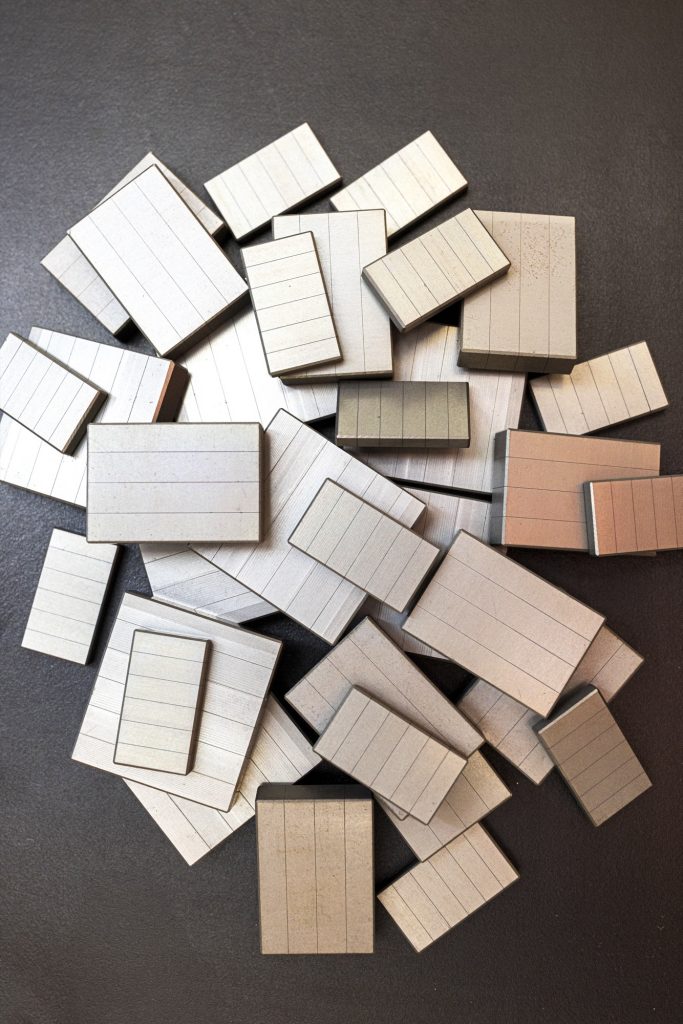
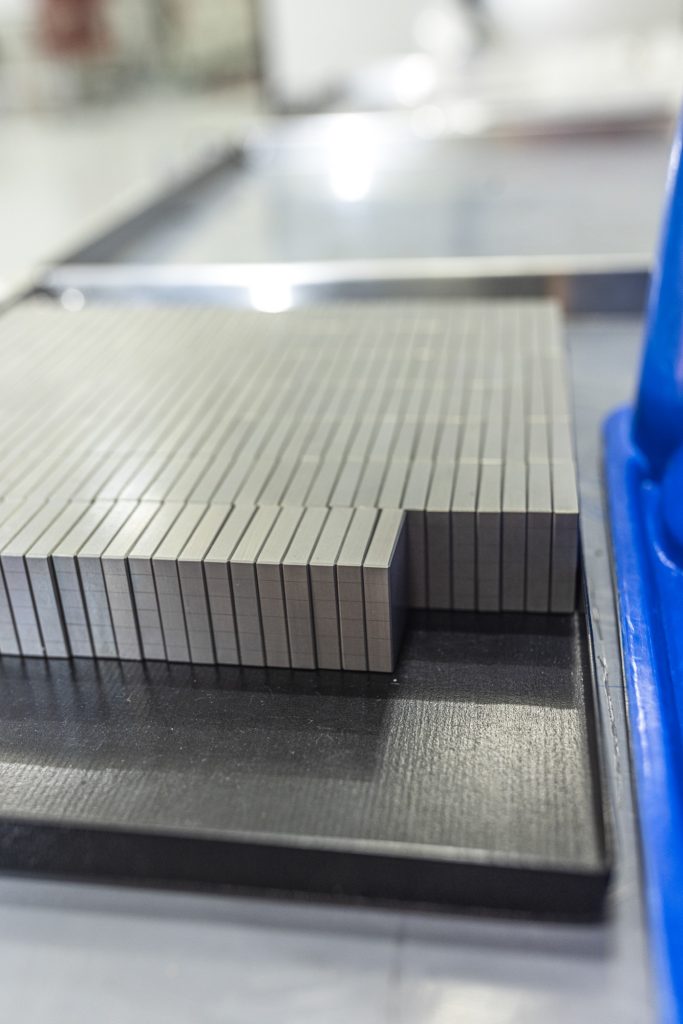
The sintered blocks are then cut into strips that MP calls gum-sticks because that’s what they look like. These are then bonded together in another block and cut in a different direction leaving a postage stamp sized block about ¼ inch thick. While the basic sintered block without cutting is perfectly usable as a magnet, it’s actually not desirable in a motor. The magnetic flux through the block causes eddy currents which cause the internal temperature to rise, increasing resistance and reducing efficiency. The layers in this block created by slicing and bonding help to prevent those eddy currents from forming.
The final main production stage is something called grain boundary diffusion. Other PM manufacturers do something similar but MP Materials claims to have some unique elements of their process that they didn’t want us to see. The NdPr metals are considered light rare earths. To really optimize the magnet performance, they also want to use some heavy rare earths, including terbium and dysprosium. MP creates a slurry from these metals and paints it onto all the surfaces of each magnet block. Under an electron microscope, the NdPr-iron-boron blocks have tiny gaps between the individual metal grains. The heavy rare earth painted blocks are again heated and that “paint” diffuses through the block, coating the crystal boundaries and dramatically improving the ultimate magnet performance.
The finished blocks are coated to prevent corrosion, vacuum packaged and shipped off to the customers which right now is mainly GM. The Fort Worth plant currently has two main production lines running with several more in the process of being installed. Once all of the equipment is in place, the factory will be capable of producing about 1 million magnets per day and 3,000 metric tonnes per year. The magnets leaving Fort Worth aren’t actually magnetized yet, as they wouldn’t be able to work with them or assemble motors if they were. At GM’s motor plant in Toledo, the stacks of steel plates that comprise the rotor are assembled on the center shaft and the magnets are inserted into the slots.
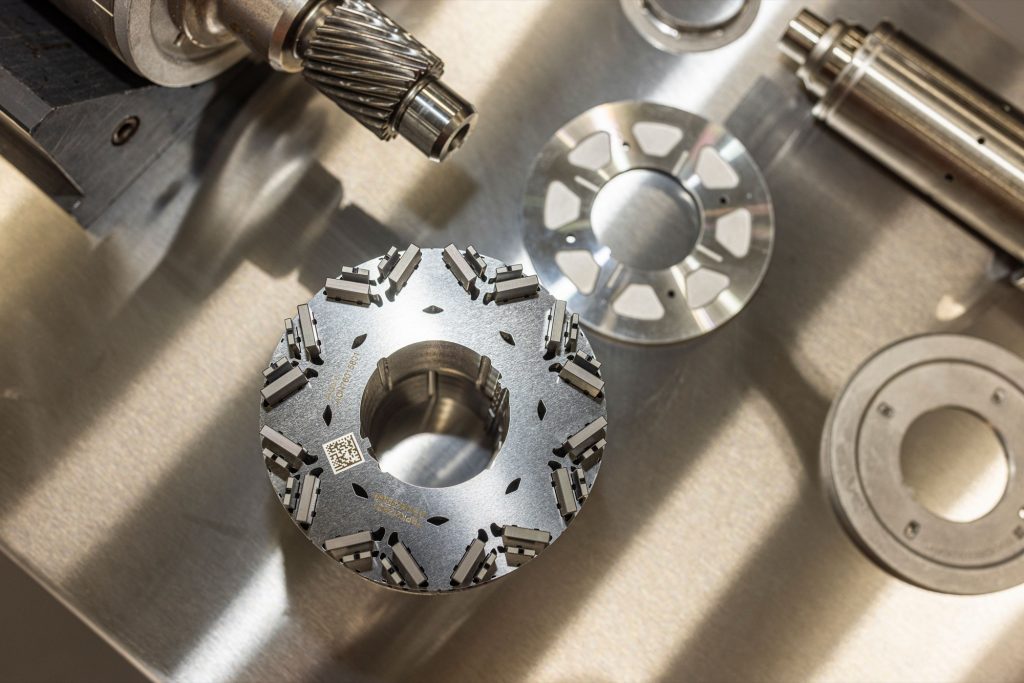
GM has two sizes of PM motors, with the larger containing 192 magnets and the smaller unit getting 128 magnets. GM has a supply contract for 1,000 tonnes per year of magnets. Right now, MP Materials is shipping magnets to GM’s propulsion systems engineering facility in Pontiac, Michigan where motors are being assembled and tested for validation. Once the MP Materials magnets are fully qualified, shipments will start to Toledo for production vehicles, something expected to happen by the end of 2026. This first plant will also be supplying magnets to Apple that are being produced from recycled magnets that will be reprocessed at Mountain Pass.
Getting a foundational customer in GM was key to MP Materials moving forward with getting the funding to build a magnetics business and that was reinforced by the deal with Apple. They now have the only full-scale permanent magnet production facility in North America and they have the capacity at the mine to grow further and supply many more customers. GM’s deal with MP is just a purchase agreement with no equity investment so MP is free to sell to one and all, now that the plant is running we’ll probably see more customers coming forward over the next few years. This is just one of many steps to creating more resilient supply chains, but it’s an important one for the auto industry and many others.
All Images: GM


Interesting side note about the parallel discovery by Sumitomo. They started out in the 16th century by refining copper so rare earths would be up their alley, and after the postwar zaibatsu breakups are part of a keiretsu with NEC (Nippon Electric) and Mazda. (I like Mazdas and used to work for a NEC computer shop so it’s interesting to me, at least.)
Excellent tech article. Illuminated some things I had thought about investigating, so due to this article, I did, thanks!
Tom Matano once told me General Motors core competency is not making cars but making money. He was 100% correct
Rare-earth magnetic materials are fascinating and challenging. I spent the better part of a decade (1985-1995) developing and then manufacturing magneto-optical data storage disks. One challenge was the source material (sputter targets) to make the thin-films (Tb-Fe-Co) on the disks.The targets could only be made by one or two companies in the world. Phillips-DuPont spent about $1M just to qualify the supplier. I had the advantage of having worked with one of the suppliers, so it cost us just $75K. The requirement was not just purity, but a super stringent compositional tolerance that was beyond analytical capabilities at the time (!) and a further requirement on the percentage distribution of different crystalline structures (!!!). Hitachi Metal made the best targets and we could only qualify them by using them, since the analytical method was insufficient. This created quite an awkward discussion about what constituted a satisfactory target. In the end, Hitachi did a fantastic job and all their targets were superb and met spec. The magnetic properties of the thin film was the most sensitive measure of composition. Sorry to ramble about non-car related stuff, but some topics strike close to home.
I got to meet Stan Ovshinsky a few times while I was in graduate school. He was a remarkable individual and a dapper dresser whose companies were not very successful, but the technologies were used by others in many successful applications.
Bit random, but when I read your second sentence, I immediately had to think of my Dad, who during the same time period worked in the exact field. And no, I am not looking for him 😀
Cheers, and have good day 🙂
“Uhh… just send us a bunch of units and we’ll send back the ones that didn’t work.”
It’s a shame M-O technology was salient for such a short time, it was an elegant way to do things.
Excellent article! New Member, nothing to add but happy to participate as a retired Math/Science facilitator. I am in.
Fantastic article. Makes me proud to be a member to help support stuff like this. I want more “how the sausage gets made” articles like this, maybe even one detailing the VW Currywursts since I doubt I’ll ever eat one.
Old tool & die maker (moldmaker) here. I have some magnets stuck on my tool box that are injection molded out of this. One of our customers helped develop the injection moldable material and the molding process. They mixed the Magnaquench powder with a nylon binder. Then extruded and made pellets.
I built a bunch of molds that ran this stuff. Very abrasive to the molding machine and the mold.
“what were considered to be non-core parts of its business”
That’s Pulitzer level of prose right there.
Fantastic Article ! Some of the more technical articles, I pause, and come back to, when I have the right mindset to devote to it. This was easy to breeze right through. Very well done!
Seconded! I’ve always been casually curious about how rare earth magnets are made and this is a great explainer.
I would also argue that is was during the ’90s that the current stock price/quarterly yield investment culture uber-alls really took hold. Companies stopped investing in the future for the sake of current shareholders. The demise of pensions and rise of the 401k contributed as well as the advent of day-trading.
This reminds me of how GM stupidly sold off GM-Ovonics along with the key NIMH battery patents to Chevron, of all companies.
The net result of that is Chevron did everything it could to prevent the use of NiMH tech in any application that was remotely related to vehicles.
Someone needs to share this article with the Insane Clown Posse.
Oh man, looking at that periodic table makes me feel old. There’s so many more elements now than when I took chemistry, and they all have proper names now (I’m looking at you unununium).
This headline is great because you could just leave it blank and fill it in yourself.
“30 years ago GM foolishly XXXXXX. Now it is YYYYY to compete with ZZZZZ.”
“30 years ago GM foolishly SCREWED THE POOCH. Now it is ACQUIRING A NEW POOCH to compete with THE POOCH IT SCREWED.”
Else:
“30 years ago GM foolishly cancelled X product. Now it is uncompetitive in the market attempting to compete with someone else who stuck with X”
It’s basically Autopian Mad Libs…
Hey, I just got an idea!
Torch will be on that one. Or maybe Mercedes. Probably Torch.
I’m kind of surprised Torch hasn’t already thought of it.
I’d bet he already has and the idea was lost in either lead toxicity or Citroen parts…
On a long enough timescale, every mine has a toxic waste spill. I don’t know if that’s a fundamental problem with mining or mining companies are lax with their safety (probably both), but that’s a contributing factor to a lot of our mining moving overseas.
Mine tailings are usually toxic and/or radioactive, so it is a fundamental problem. The mineral being mined is at something like a 5% concentration, so 95% of the rock being dug up ends up as tailings. If you leave tailings in an exposed pile they will end up leeching stuff into the groundwater.
Great, now I’m going to have to take a geiger counter with me next time I ride a bike trail built on reclaimed mine tailings. 😉
Depends on the specific geology of the mineral deposit of course. The worst thing iron ore likely contains is trace heavy metals. If you isolate and treat the water coming off the pile long enough so it not producing sulfuric acid from being exposed to water and air anymore it is probably OK.
Compare that to the Mountain Pass mine mentioned in the article, which was investigated as a uranium mine. The rock contains uranium. They just learned that the concentration of uranium was too low to process economically. It is still higher uranium concentration than most other places, and is now slightly higher concentration in the tailings after you take the magnet metals out. My guess is someone will make a bioleeching bacteria that is able to get the uranium out cheap.
Yeah, I was kidding. I assume (perhaps naively) that they wouldn’t have allowed recreational use of this land if it were still dangerous. I know one of the trails I ride has some sternly worded signs about leaving the trail, but I think that’s mostly because some of the surrounding land is still being mined.
As a Western PA native, the whole region is STILL contaminated with mine tailings and toxic runoff, not to mention slag dumps. There are still unmarked mines (and associated radon and other gaseous pollution) under thousands of properties. Add in the oil shale fracking…
Not to mention the ground itself being on fire- see Centralia PA for example. Though I suppose that’s more eastern PA.
Oh, we have underground coal fires too – just nothing on that post-apocalyptic scale.
At least we never set a major river aflame – twice. All hail Cleveland.
Very interesting article and good info about modern manufacturing
FTFY:
One of the major economic trends from the 1980s until the 2010s was globalization as executives of corporations shifted as much labor overseas to maximize short term profits over long term stability so they could get their quarterly bonuses at the expense of thousands of working class families.
As free trade expanded, companies increasingly began looking to acquire materials and parts from wherever the cheapest source was that could meet requirements; they were cheap because these places didn’t have to worry about woke-things like worker safety or environmental protections; suddenly they could employ basically slave labor and dump toxic waste directly into rivers, as long as it happened on the other side of the world.
This process worked great – right up until it didn’t, but there was simply no way to look ahead and predict that putting all your eggs in one basket that someone else controls could work out poorly, but at least for a brief moment they were maximizing shareholder value and all of the super hard working executives were rewarded with huge quarterly bonuses, despite the strategy being costly and stupid in the long run.
You guys should hire me to proof anything you write about Corporate America. 🙂
“A revolutionary US-led technology was sold off to Chinese investors to focus on short term profits, and the facilities and knowledge left disinvested” is basically the story of the industrial history of the US for the past 40-odd years.
(i’m still mad at A123, had too many friends who worked there)
40, cast your eyes back another 60-70 years.
Exactly. Some industries were more ripe for outsourcing than others, considering the state of the world post WW2. Simple things were the first targets.
I checked to see if there is a wiki entry for GM’s strategic mistakes over the years and shockingly no one has compiled them all yet.
I am sure it is doable, but it would be some depressing work.
It can’t possibly be as long as the list of services Google introduced, immediately abandoned, and mothballed later.
That is a very accurate statement. Google and Microsoft are the winners when it comes to purchasing, ignoring and then letting die.
Where GM is the master of developing, selling, then getting killed by.
Or companies MS acquired and did the same with.
Maybe there isn’t enough storage space on the wiki servers for that list.
There needs to be a balance between engineering and accounting. GM never found the proper balance. Releasing half-baked moonshots to the public, yet skimping on the practical details that mattered to the actual buyer. Think if the money spent on releasing the V8-6-4 had gone into perfecting the X-Body. Let Detroit Diesel, not Olds develop a passenger car diesel engine.
It’s spelled v-e-g-a.
Ooh, what’s the longest wiki entry? We may have a new challenger…