


So much of car design – well, so much of anything, really – is about compromise. That’s because restrictions are what really get creativity going, I think, and it’s how we deal with the parameters and barriers that we can’t change that pushes us to do our best. Car design is like this, of course, and it can be exciting to see how compromises are made and dealt with. Sometimes these compromises are made with the grace of a gilded swan making love to a French horn on a polished marble floor, and sometimes with the clumsiness of a bulldog violently humping a car tire on a wet tarp. I think one of the best places to witness this spectrum of compromise is via the lens of rear side doors from sedans used on wagons.
Yes, that’s right – some station wagons (estate cars if your toast had beans on it, break if your toast was a beanless baguette) use rear side doors right from the sedan version of that car. Sometimes the design is so well done that you never even suspect the doors weren’t an integral part of the design from the beginning, and sometimes it’s screamingly obvious. And that’s not always bad?


Let’s take a look at some examples of this phenomenon, because I think there’s a lot to be learned here.
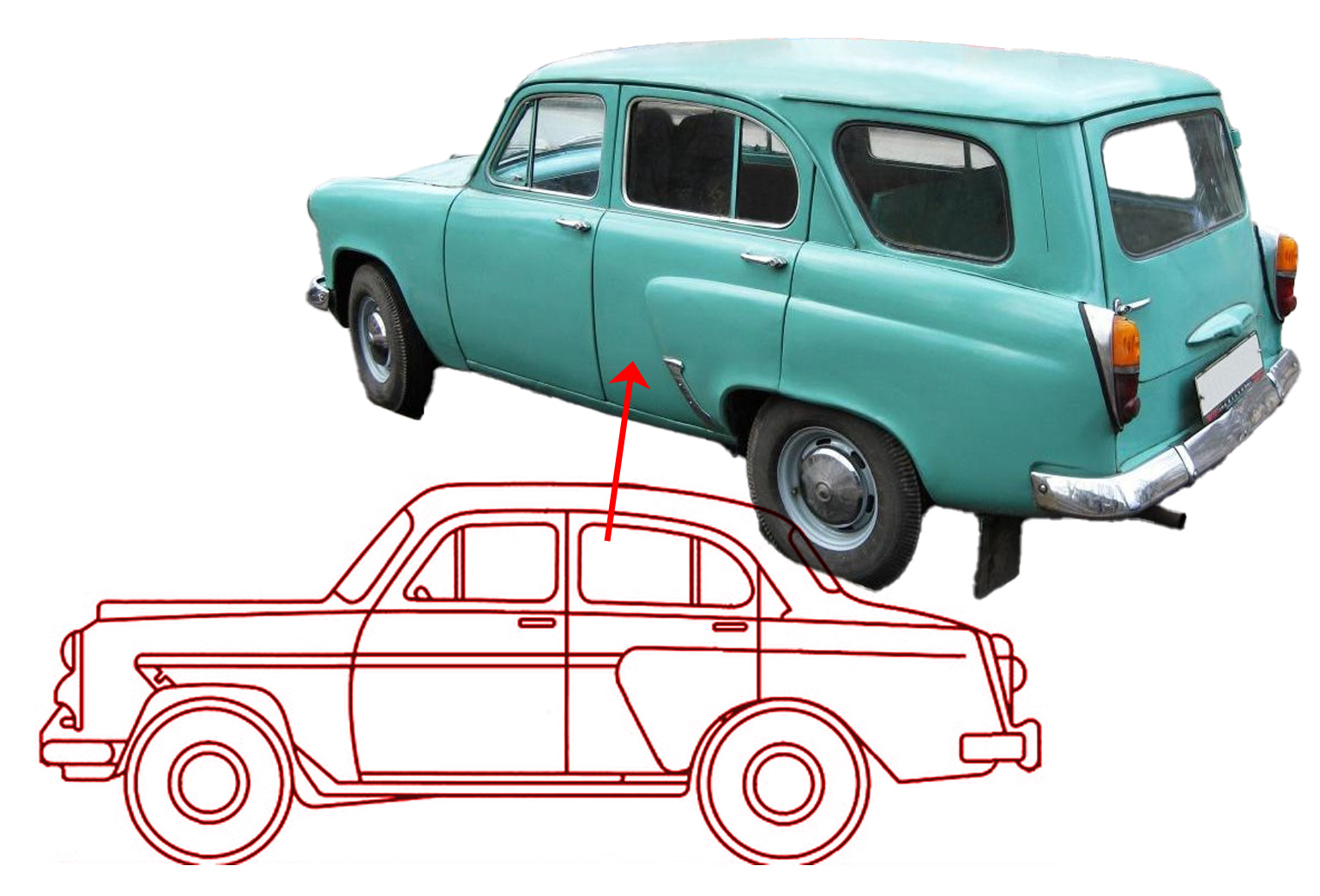
This is a strange example, I suppose, but it’s an early one, and it’s nice and obvious. The Moskvitch 423, introduced in 1957, was the wagon version of the Moskvitch 402, and was one of the earlier Soviet station wagon options. As you can clearly see, the rear doors are from the sedan version, and even the curved line of the rain gutter continues to follow the sedan’s roofline, even though the wagon’s long roof is clearly different. Let’s be honest: it’s pretty clumsy.
That curved C-pillar is something of a hallmark of wagons with sedan rear doors, and sometimes I really love the way it looks, even when quite obvious, like on the second-generation Saturn SL wagon, which gets a very curvy rear door from the sedan:
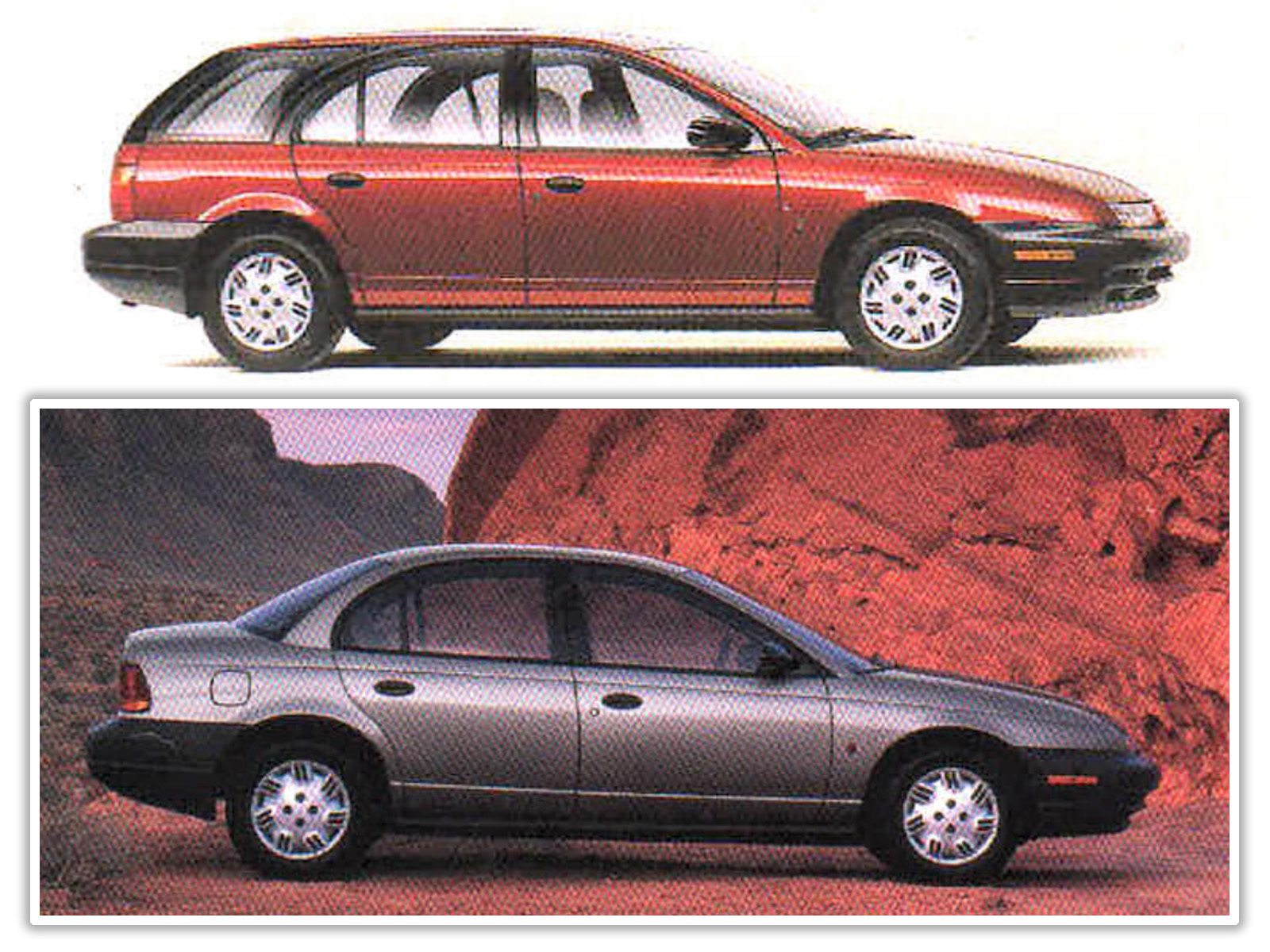
There’s no hiding that this is the same door, but what I like is how the Saturn wagon embraced that curved C-pillar, and made it an integral part of the design, just accepted it, made no attempt to disguise it, and as a result, I think it’s one of the most memorable visual cues of the wagon. The previous generation wagon had a pretty conventional, slightly angled C-pillar, and I thought it looked boring. Here, Saturn took a restriction and made it into a feature.
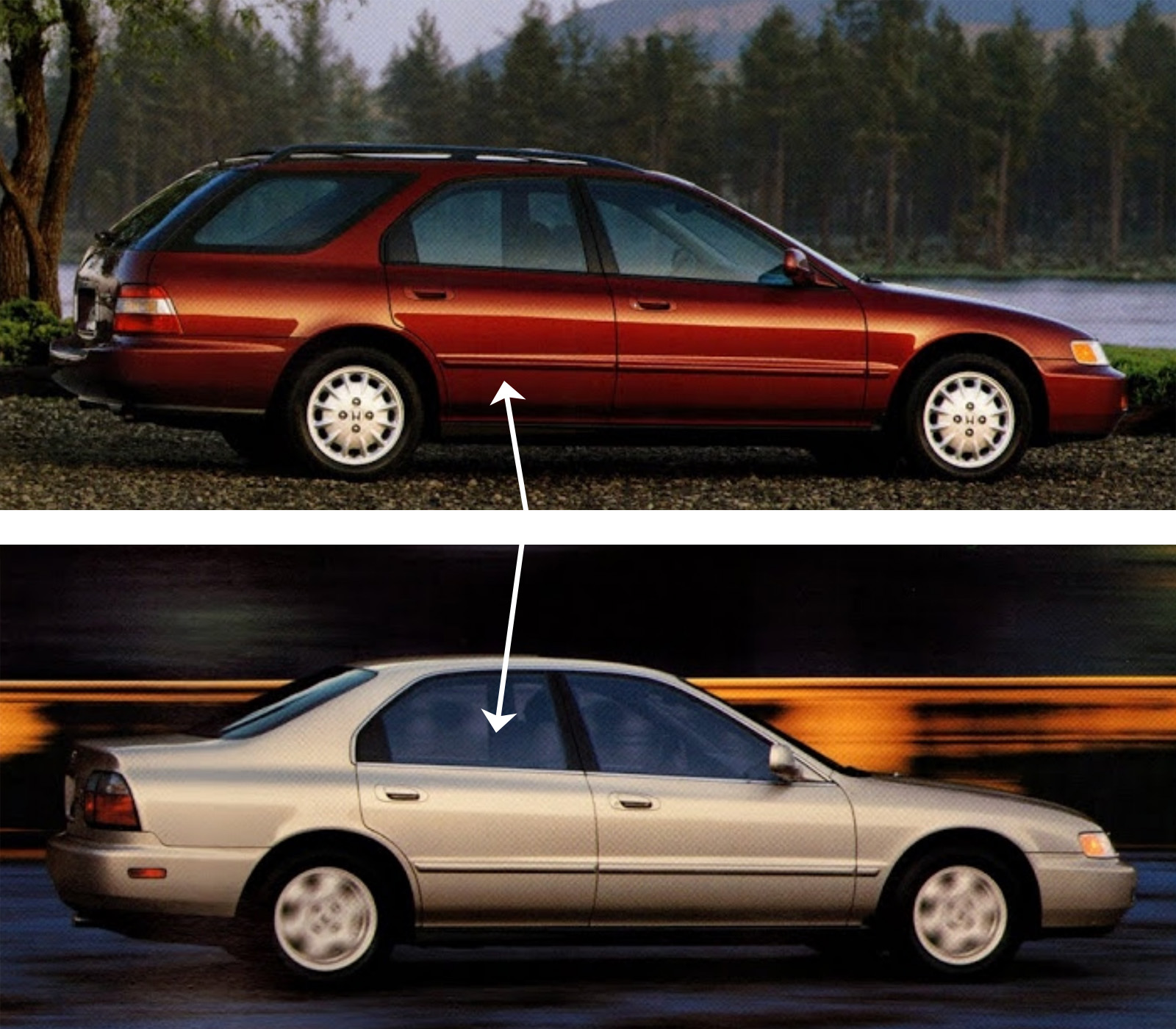
Other wagons with sedan doors that had to deal with dramatically raked C-pillars handled it in different ways; Honda, for example, managed to integrate a very forward-raked C-pillar in a quite harmonious way by mirroring the angle for the D-pillar and forming a trapezoidal rear side window. I always liked the look of these, and I think if they weren’t informed by that sedan rear door, they wouldn’t have come out looking so good.
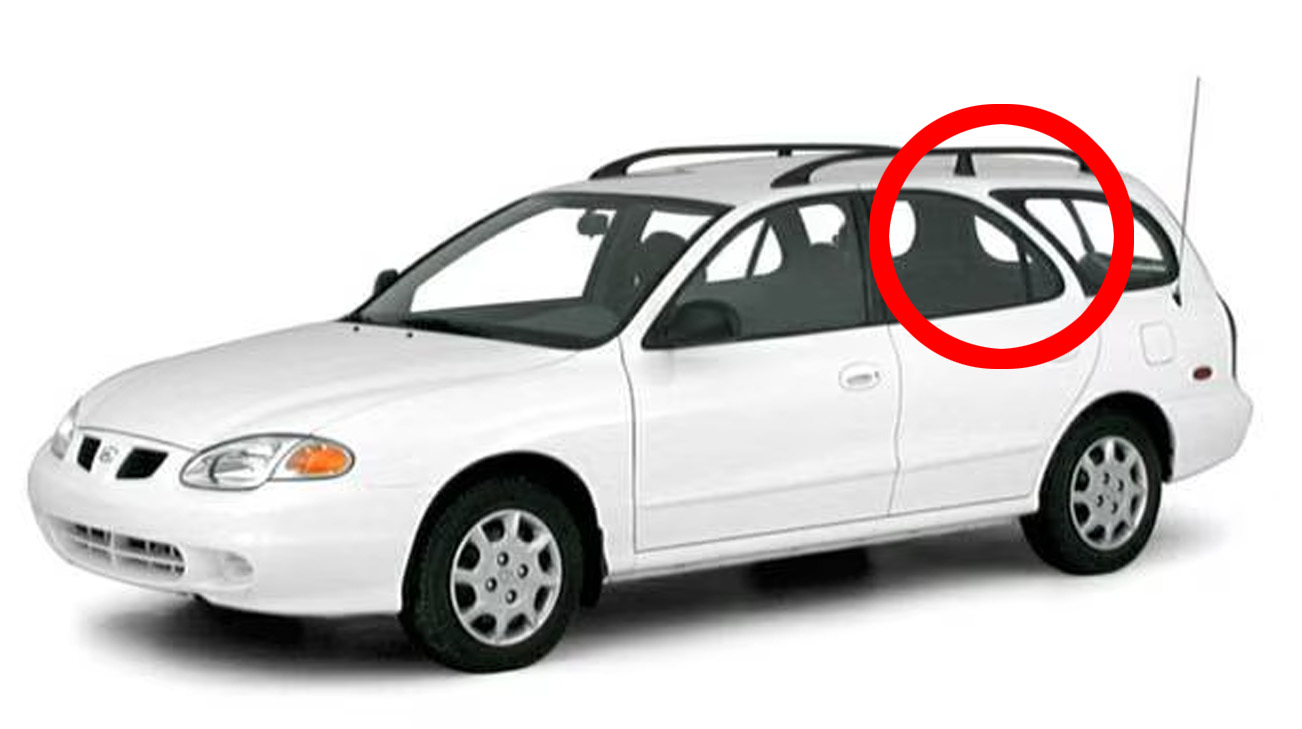
The 2000ish Hyundai Elantra wagons were faced with a similar dilemma as the Honda and Saturn ones, and while I don’t think this is terrible, I don’t think it was executed as well as the others. Interestingly, unlike the Saturn, the Hyundai does not black out the C-pillar, leaving it body colored, suggesting at least some degree of confidence in the design.
Weirdly, when Ford made a third-gen Taurus wagon, they seemed to have designed something that used common doors for the wagon and sedan from the get-go, as it had that distinctive, heavily raked and curved C-pillar look:
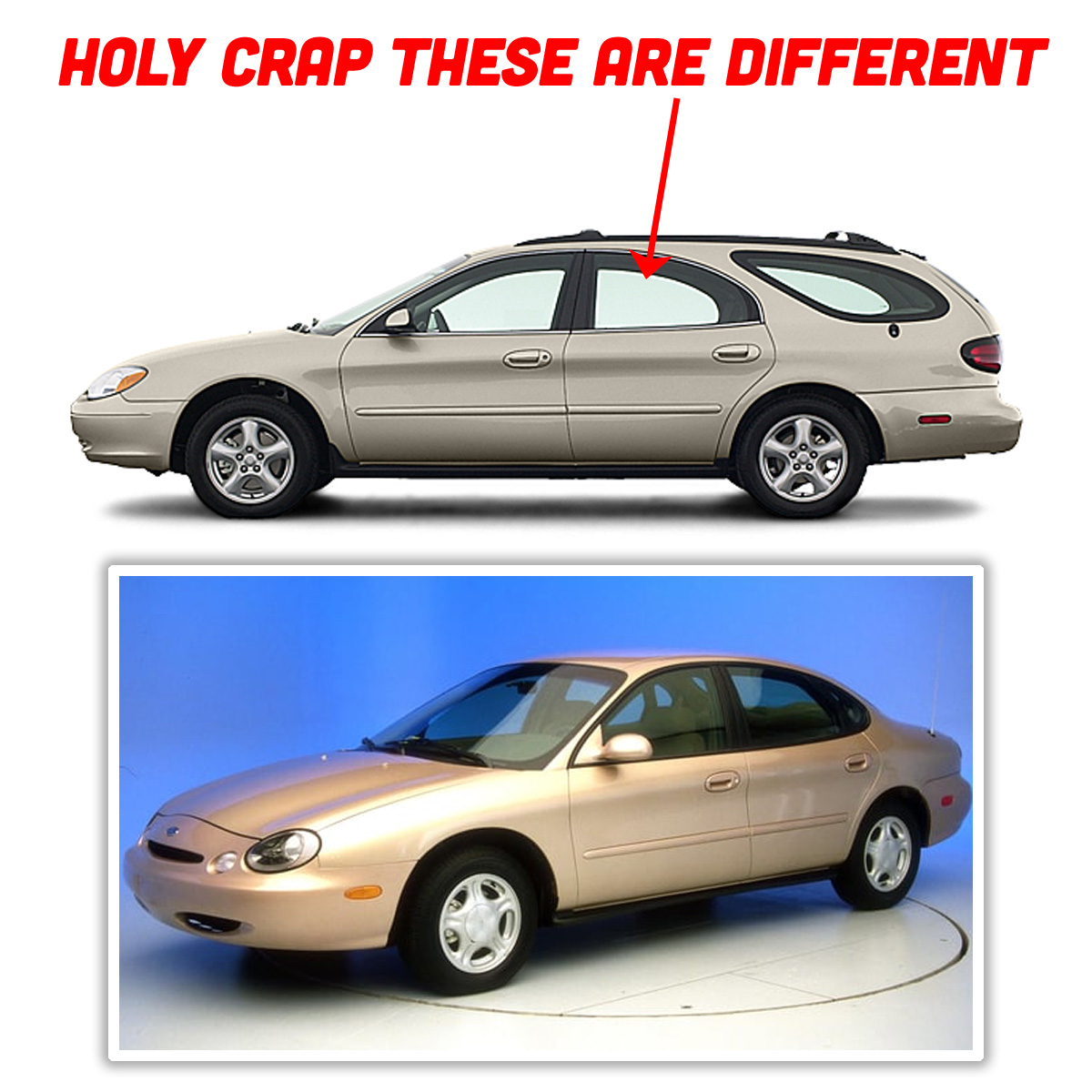
But they didn’t! Those doors are not the same! It seems ridiculous to design a wagon that looks like that and not reuse the doors! The cost savings have to be significant, so…why didn’t they try a little harder? Ford isn’t the only one guilty of this kind of baffling decision; look at the rear doors on the Plymouth Volare sedan and wagon:
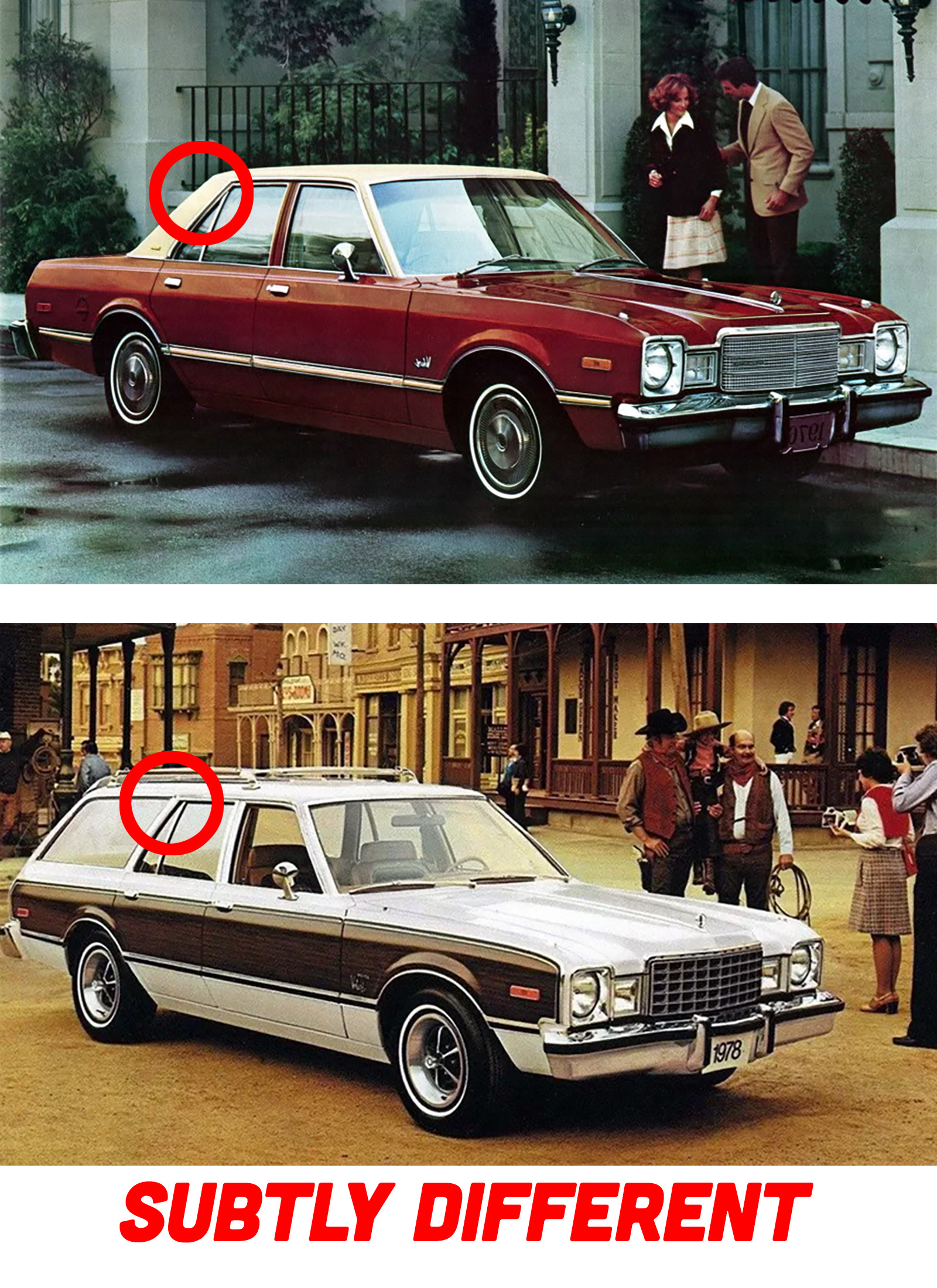
Look how subtle that difference is! Both doors are upright and angular, and the only difference is a slight degree of slant at the trailing edge of the window, which you can only really see by looking at the angle of the point of the bit of triangular fixed glass. They couldn’t have figured out how to make one door work for both of them? Where were the bean counters? I thought they loved this kind of crap.
Speaking of subtle, this may be the most fascinating case of door-sharing. Volvo, a company perhaps most famous for its wagons, started with wagons that had pretty dramatically different rear doors for sedan and wagon. Look at the Amazon, for example:
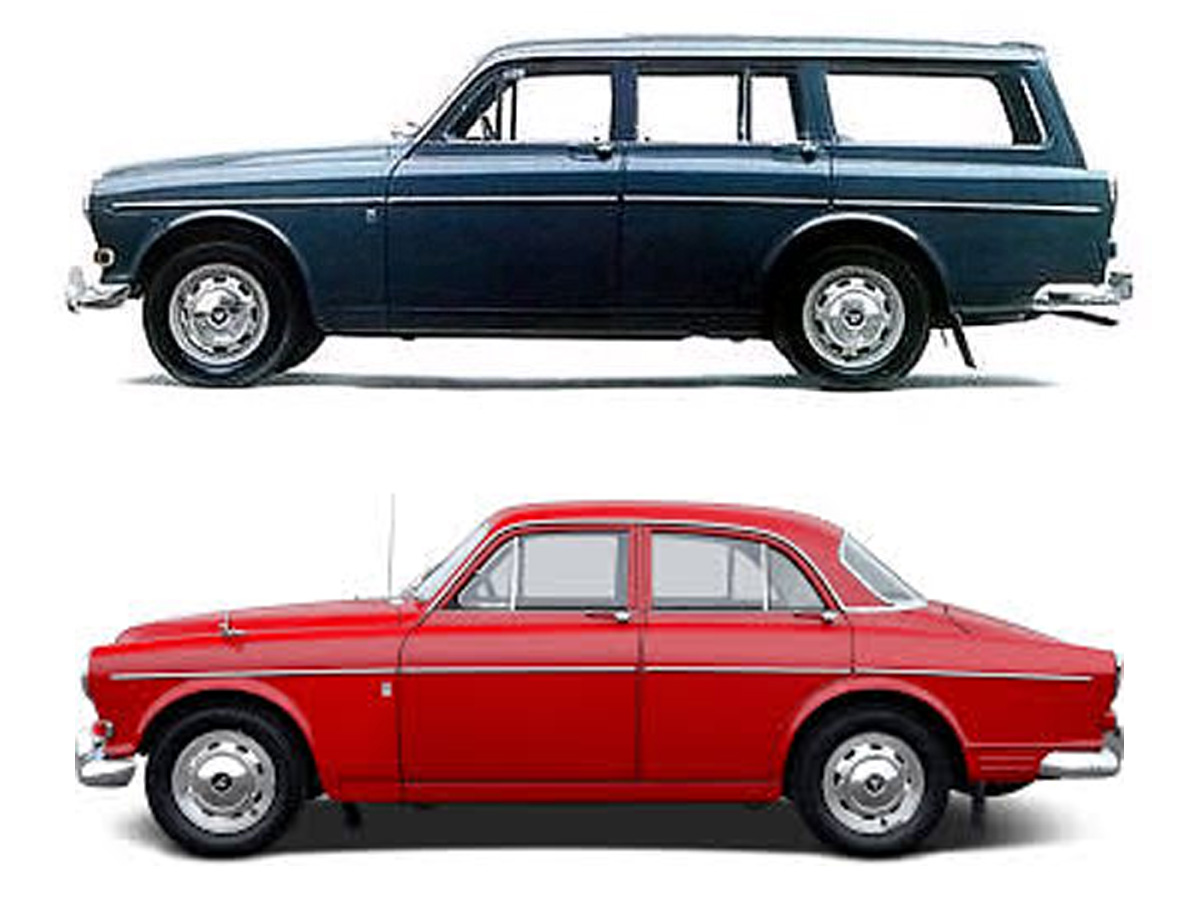
That was essentially a complete redesign from the B-pillar rearward, with no sheetmetal shared in the back half between the wagon and sedan. That gives a lot of design freedom, but it’s not cheap.
So, when it came time for Volvo to develop the Amazon’s successor, the Volvo 140 series (which later evolved into the 200 series), designer Jan Wilsgaard had a chance to try and design something that could share more parts between wagon and sedan. Parts like doors.
And he really tried his hardest, though the results weren’t exactly perfect, which I think just makes the car more interesting.
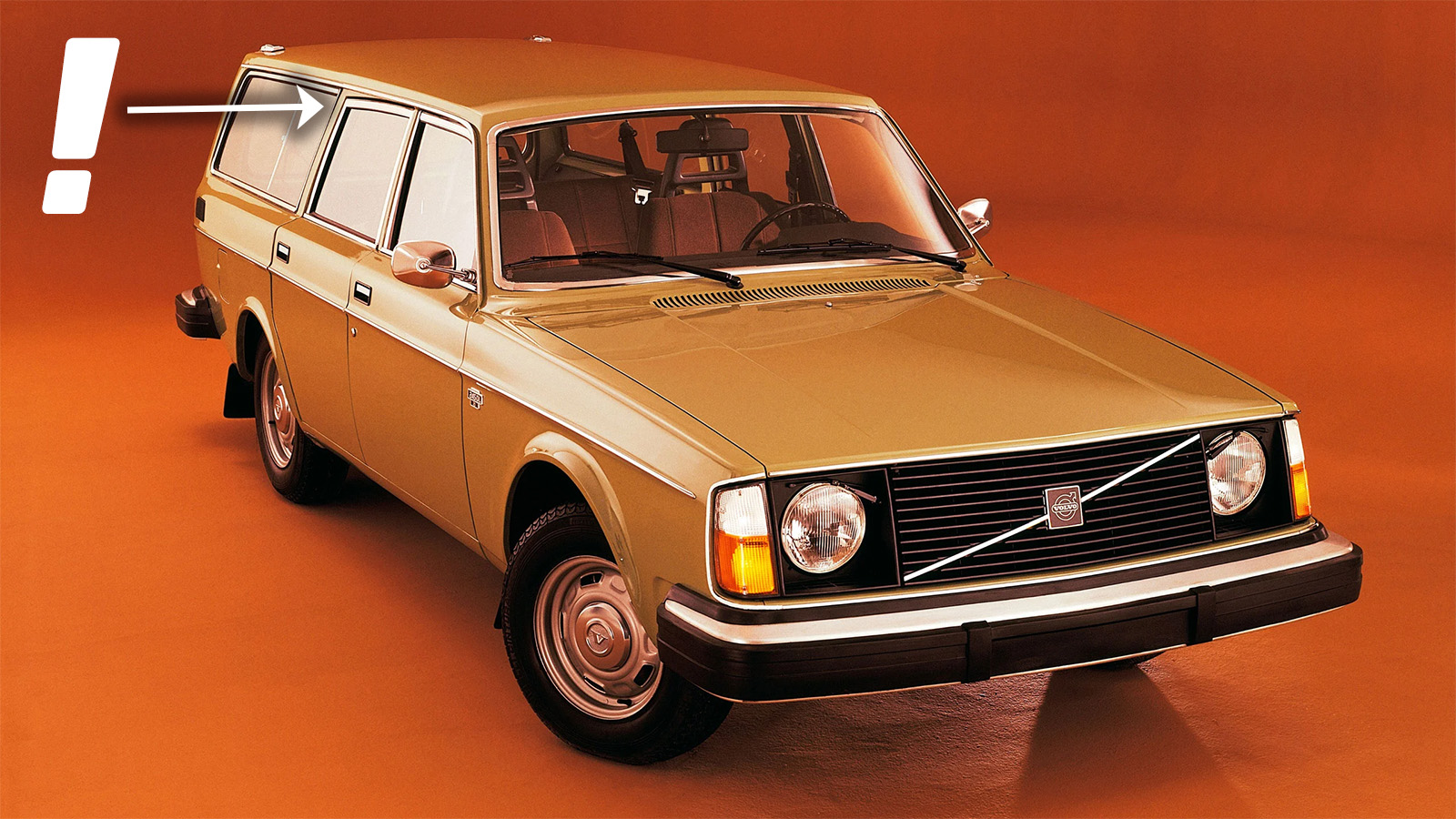
Wilsgaard made a choice to favor the sedan when it came to rear door design, a choice that, based on how popular Volvo wagons became, may have been the wrong one. As a result, a Volvo 145 or 245 wagon’s rear doors aren’t exactly in line with the roof: they have a very slight slope downwards that matches the slightly sloping roofline of the sedan.

I suspect most people barely even notice it, but once you’re aware of it, you can’t not see it. It’s not perfect. It doesn’t quite fit. And yet, somehow, I think this little imperfection just adds more character, like a gap in the teeth of someone’s pretty smile or an interesting mole or fetching scar.
It’s a subtle visual reminder that the world isn’t perfect, and sometimes we have to make do with what we have, the best way we can. I think that’s a pretty good thing to be reminded of in the shape of a car door.
Top graphic image: Saturn




This is a detail I’m constantly looking for. In my mind, rear doors being the same is the purest form of wagonification of a platform. Anything else is engineering and design engaging in some self-gratification, and a financial mistake by the head office.
(Mind you, I have absolutely zero training in manufacturing design, economics, or process and might not know what I’m talking about.)
I’m sure there are instances where a wagon was never in the cards for a platform until it was, and the original just couldn’t be massaged into wagon form aft of the C pillar without some serious problems, but that should be an exceedingly rare occurrence caused by some weird unexpected market response. If you think you might be producing a wagon, there’s no reason not to design it from the start to be 100% identical forward of the C pillar.
I think, for the most part, doing this ends up looking doofy and cheap. It reminds me of early crew cab trucks in the 60s and 70s where rear doors often use as much front door parts as possible which makes for goofy rooflines and worse pillars. The early Dodge D series crew cabs were the worst offender.
Citroen did this:
Worked in an auto glass shop and for some reason the Volvo 240 had different #s for the wagon and sedan rear window glass-
Out of curiosity, did you ever encounter cars with different glass from side to side?
’02-’07 Impreza is a half way oddity. The door outlines are exactly identical and interchangeable between sedan and wagon. But the Sedans are widebody and the wagons are not, so it doesn’t really work without adding quarterpanels to match the door style. Because these doors don’t have upper frames, they change the shape of the “door” along the roof by using two different window shapes.
I was wondering if you’d include the Volvo 240; it’s the one example that I’ve noticed more than the others.
Some automakers experimented with taking the idea to interchangeability not just across different body styles of one model, but different places on the same car. Consider the AMC Cavalier:
https://static.wixstatic.com/media/8cd09c_f4ade54fd7474a6fb3cc77bf52ab0f28~mv2.jpg
The hood and decklid were interchangeable, fenders swapped diagonally as did doors.
Like Ford did with a multitude of other Mercury design cues…the rear doors of the Ford Taurus wagon are Sable sedan rear-doors.
As a Certified Volvo Nut™, the rear doors on the 145/245 are a source of pride, as in “Look what they got away with!”. You really have to look to see it, and it saved money that could better be used elsewhere.
Oooh next do “automakers that made coupes out of sedans by simply omitting the rear doors.” Like the Jettas of the 80s, possibly Volvo 240s.
In earlier times, these cars were all over the place, except they were called “2-door sedans” and a 2-door coupe had a different roofline.
somewhat relatedly, I love that the 142/242 share same roof and floorpan structures as the 144/244. they just moved the B-pillar rearward for the 2-door. There was one factory example “243” going around where (I think a joke) that one side was a 2-door and the other was a 4-door.
It wasn’t a joke; it was purpose built for disabled people. The idea of the long door on the driver’s side was that a wheelchair user could fold their wheelchair and put it behind their seat, while the passenger side had “normal” sedan doors for easy entry and egress.
Subtle bit of wagon rear door trivia.
The ’72-’76 Gran Torino used the same rear doors on the sedan and wagon, complete with the coke-bottle swoosh that began in the rear door skin. The Montego also used the same rear doors on sedan and wagon, but lacked the indented swoosh.
For 1977, the boxy, bladed LTD II and Cougar sedans got rear doors with the lower part of the DLO squared off. The wagons? They used the rear doors with an upswept DLO from the previous-gen Montego to maintain the visual integration of the trapezoidal window aft of them.
It’s meee!! I’m 95% certain my Fiat Marea Weekend uses the same doors as a regular Marea. Not super surprising, since Fiat tried to share everything possible between the Mareas and the Bravo/Brava.
No, they are not the same. Unless they made differently in Italia. In Brazil, they are not interchangeable.
I’m just going off pics
Toyota appeared to go from using the sedan doors in the 2nd gen Camry wagon, to a unique rear door in the 3rd gen/XV10 wagon, to reusing the sedan doors in the XV20 wagon that we didn’t get.
Are the examples of nearly-the-same doors actually not the same except for the glass and window frame? It looks like the majority of the doors could be shared. Most of the glaringly shared-door wagons were a turn off. I liked the way Subaru managed the earlier Legacy sedans and wagons where the doors were shared, but looked like they were designed for their specific application and that’s one reason I went with a mk1 Legacy wagon over an Accord wagon.
Fun Fact. Ford/Mercury were heavily badge engineered, right til the end, but there were often VERY subtle differences between in Mercury versions of a same car that were then adopted by their Ford counterparts.
Ford Taurus Wagons ALWAYS used the Mercury bodies, going back to ’86. The Sable had partially covered wheel wells while the Taurus didn’t, but every Taurus/Sable wagon had that detail. “Jellybean” Tauri had the rear quarter window in the c-pillar that Sables lacked, except for the wagons. After the ’00 “redesign” the Taurus adopted the Sable C-Pillar completely, and that was the end of it.
Same thing happened with the 91 and up Crown Vic and Grand Marquis. Early Vic’s had a thin c-pillar w glass, marquis didn’t. After the ’99 redesign, they all adopted the C-Pillar and upright (ish) rear glass from the Marquis.
Oop. I didn’t see this before I posted.
How about AMC, who often designed doors so the front left and rear right were the same stamping? (And same for the other two of course.)
I believe they used this trick on the Hornet, and perhaps the previous gen American? I’d expect the doors to be the same on the wagon versions, given how frugal AMC was.
I interviewed Bill Reddig once, who styled the Rambler wagons of the 50s and early 60s with their trademark dip at the C pillar. The goal was to use the same roof stamping (and I assume rear doors) as the sedans. It was a cool look.
Reddig later moved to the Kelvinator side of the house. I was driving him from the airport to the AMC meet in Kenosha, and I asked him whether he preferred working on cars or appliances.
“Let me put it this way,” Reddig deadpanned, “nobody collects refrigerators.”
The late-50s Ramblers were the first car I thought of with the same rear doors, with the trademark dip at the C pillar.
I’ve got a 240 wagon and I always notice the rear door being from the sedan. It doesn’t bother me, but I’m never not aware of it.
Seeing that generation of Elantra gives me a jump scare, I was the unfortunate owner of a 99 that could not stay out of the shop. I very much liked the car but I had to get rid of it before the bumper-to-bumper warranty ran out or face ruin.
I’m very, very biased but I always liked that design feature of the Saturn SW (ahem, not the “SL wagon”). It made the car look more distinctive than other wagons on the road.
On a vaguely-related note, it always bothered me that the taillight on the first-gen Saturn SW’s looked so similar to the taillight on the Geo Storm Hatchback (the shooting-brake hatch, not the standard hatch). It’s like the designers took the Geo light and squished it. I feel like there’s more of a story here. The design is too close not to be related somehow. I need details.
The general look of the Storm/Impulse hatch looks like a shooting-brake version of an SW to me, TBH. I think this is a case of some sharing in the design studio among brands tied to GM, much like how the 1st-gen SL resembled the W-body Cutlass Supreme sedan. The original Saturn concept seems to have more in common with the Isuzu Stylus than the actual production Saturn.
I remember seeing comparisons to the Cutlass Supreme but aside from the wrap-around rear window I never thought they were that similar.
Interesting you picked the Stylus as a being similar to the Saturn concept. I always leaned towards the Gemini/Spectrum.
Why did Volvo do it that way with the 240? Why didn’t hey make that rear window/door upright for both sedan and wagon? They could still share the same doors but look less goofy in wagon form too.
Cost.
Remember the 200 series was derived from the earlier 140 – which was an incredibly big change from everything which had some before.
They did use the same rear doors for the 700 series – the sedan was designed after the wagon – and see how boxy that turned out.
I came here for the Volvo 100/200-series, leaving satisfied.
That said, that detail is also one of the reasons why the 700/900/90-series was/is superior, because the doors have flat tops.
The rear doors on the Taurus/Sable wagon are so much better than the ones for the sedan. I get wanting to have an angled look to the rear side window, but c’mon, practically screams for a larger opening, and the changes to that shape might yield a better structure for rear wagon occupants.
We had a 96 Saturn SL1 growing up. I always though the SW1/2 looked cool as hell. It sparked my love for stations wagons.
The Taurus wagon shared the same rear window with the Sable sedan and wagon.
+1 came here for this
They also used the rear of the Taurus/Sable wagon for the full-size Hot Wheels Dodge Deora II model.
Not exactly the same thing but I’ve always been a bit bothered by the Jeep Gladiator rear doors which I believe are shared with the Wrangler.
Yes! On the Saturn example, the wheel well is exactly the same, so why not use the same door? On the Gladiator, the wheel base is different form the Wrangler, so why use the same door when it makes ingress awkward? Cheap bastards and one of several reasons I could not consider a Gladiator when purchasing a new truck.
Those are an absolute deal breaker for me