

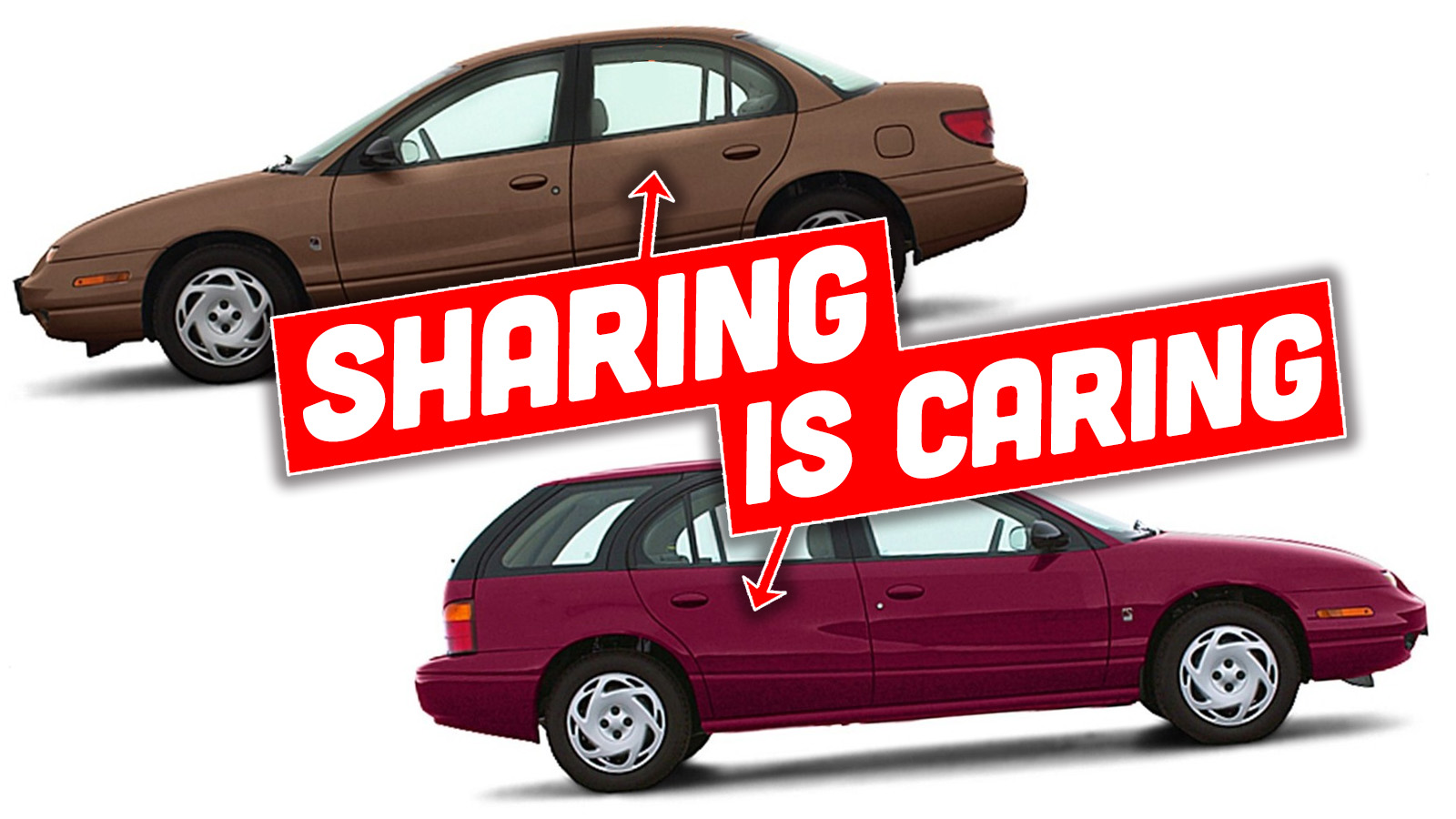
So much of car design – well, so much of anything, really – is about compromise. That’s because restrictions are what really get creativity going, I think, and it’s how we deal with the parameters and barriers that we can’t change that pushes us to do our best. Car design is like this, of course, and it can be exciting to see how compromises are made and dealt with. Sometimes these compromises are made with the grace of a gilded swan making love to a French horn on a polished marble floor, and sometimes with the clumsiness of a bulldog violently humping a car tire on a wet tarp. I think one of the best places to witness this spectrum of compromise is via the lens of rear side doors from sedans used on wagons.
Yes, that’s right – some station wagons (estate cars if your toast had beans on it, break if your toast was a beanless baguette) use rear side doors right from the sedan version of that car. Sometimes the design is so well done that you never even suspect the doors weren’t an integral part of the design from the beginning, and sometimes it’s screamingly obvious. And that’s not always bad?


Let’s take a look at some examples of this phenomenon, because I think there’s a lot to be learned here.
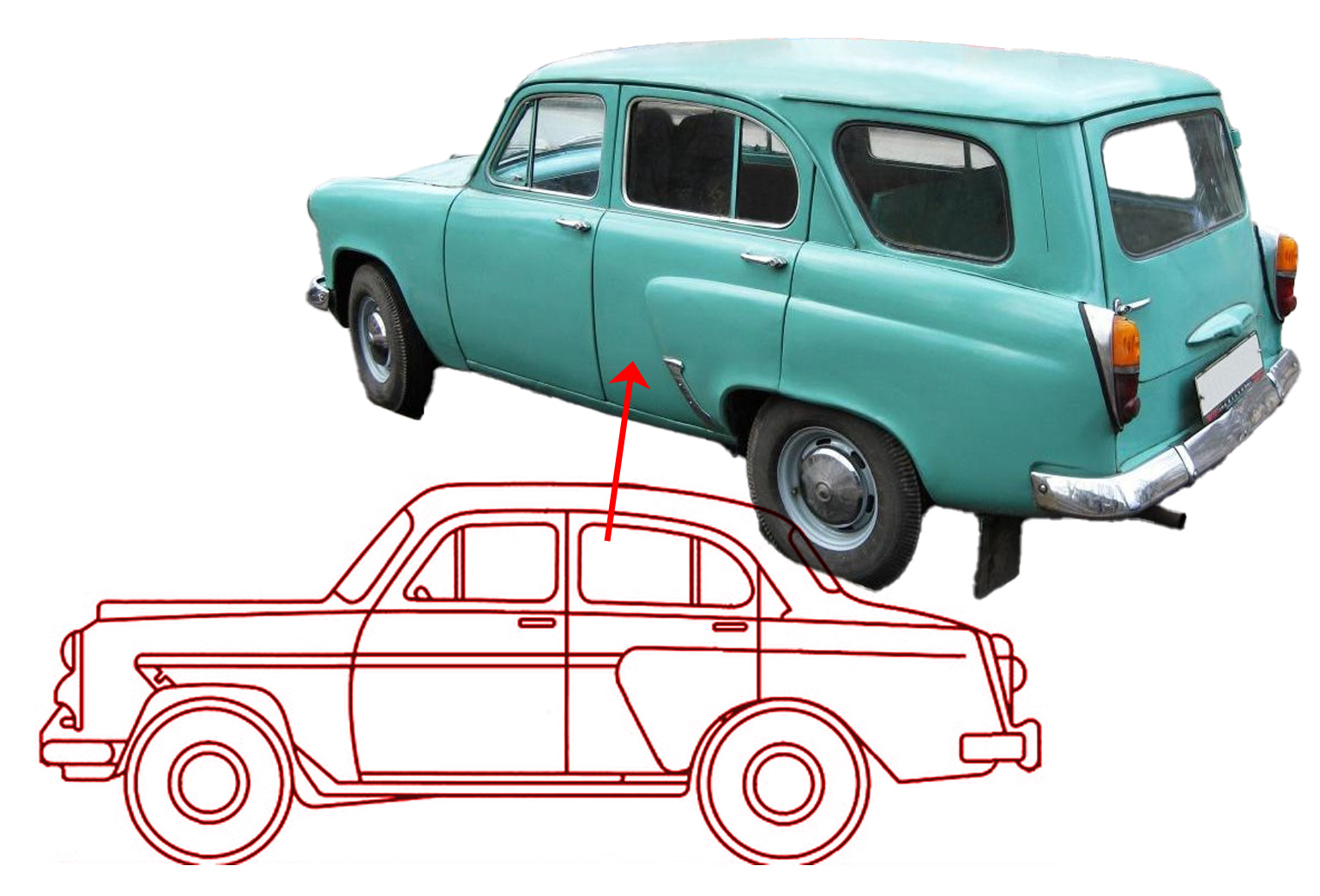
This is a strange example, I suppose, but it’s an early one, and it’s nice and obvious. The Moskvitch 423, introduced in 1957, was the wagon version of the Moskvitch 402, and was one of the earlier Soviet station wagon options. As you can clearly see, the rear doors are from the sedan version, and even the curved line of the rain gutter continues to follow the sedan’s roofline, even though the wagon’s long roof is clearly different. Let’s be honest: it’s pretty clumsy.
That curved C-pillar is something of a hallmark of wagons with sedan rear doors, and sometimes I really love the way it looks, even when quite obvious, like on the second-generation Saturn SL wagon, which gets a very curvy rear door from the sedan:
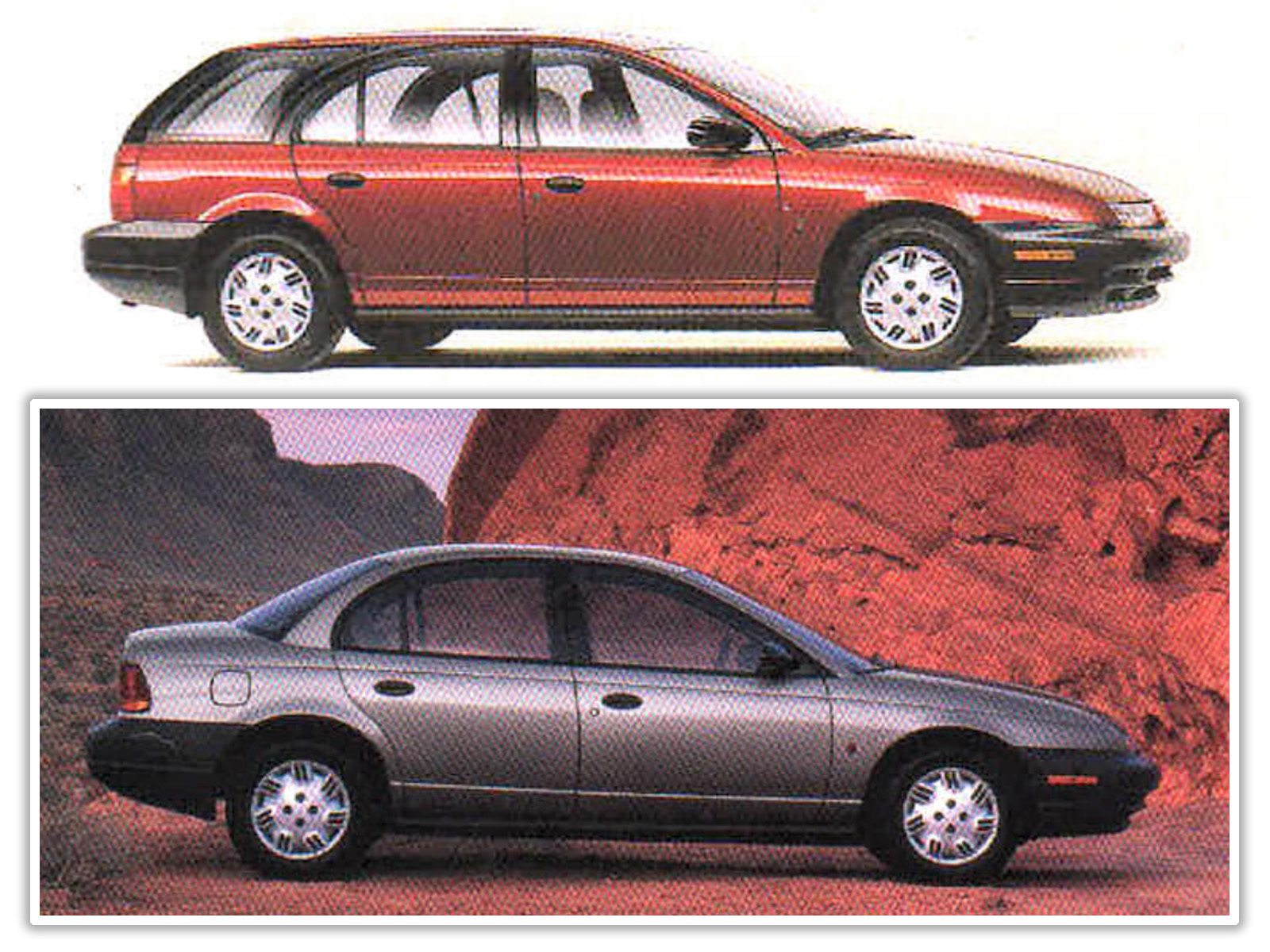
There’s no hiding that this is the same door, but what I like is how the Saturn wagon embraced that curved C-pillar, and made it an integral part of the design, just accepted it, made no attempt to disguise it, and as a result, I think it’s one of the most memorable visual cues of the wagon. The previous generation wagon had a pretty conventional, slightly angled C-pillar, and I thought it looked boring. Here, Saturn took a restriction and made it into a feature.
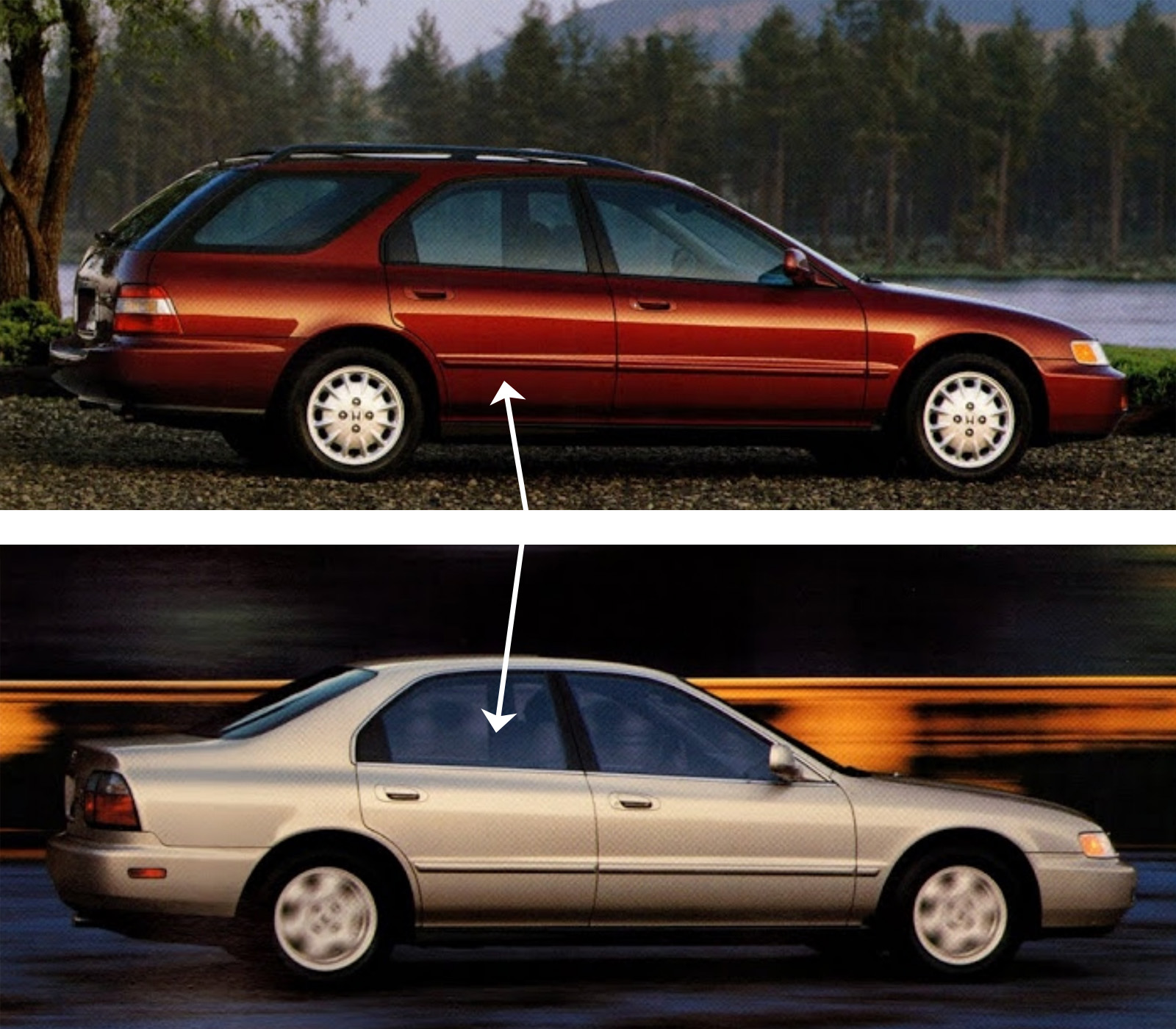
Other wagons with sedan doors that had to deal with dramatically raked C-pillars handled it in different ways; Honda, for example, managed to integrate a very forward-raked C-pillar in a quite harmonious way by mirroring the angle for the D-pillar and forming a trapezoidal rear side window. I always liked the look of these, and I think if they weren’t informed by that sedan rear door, they wouldn’t have come out looking so good.
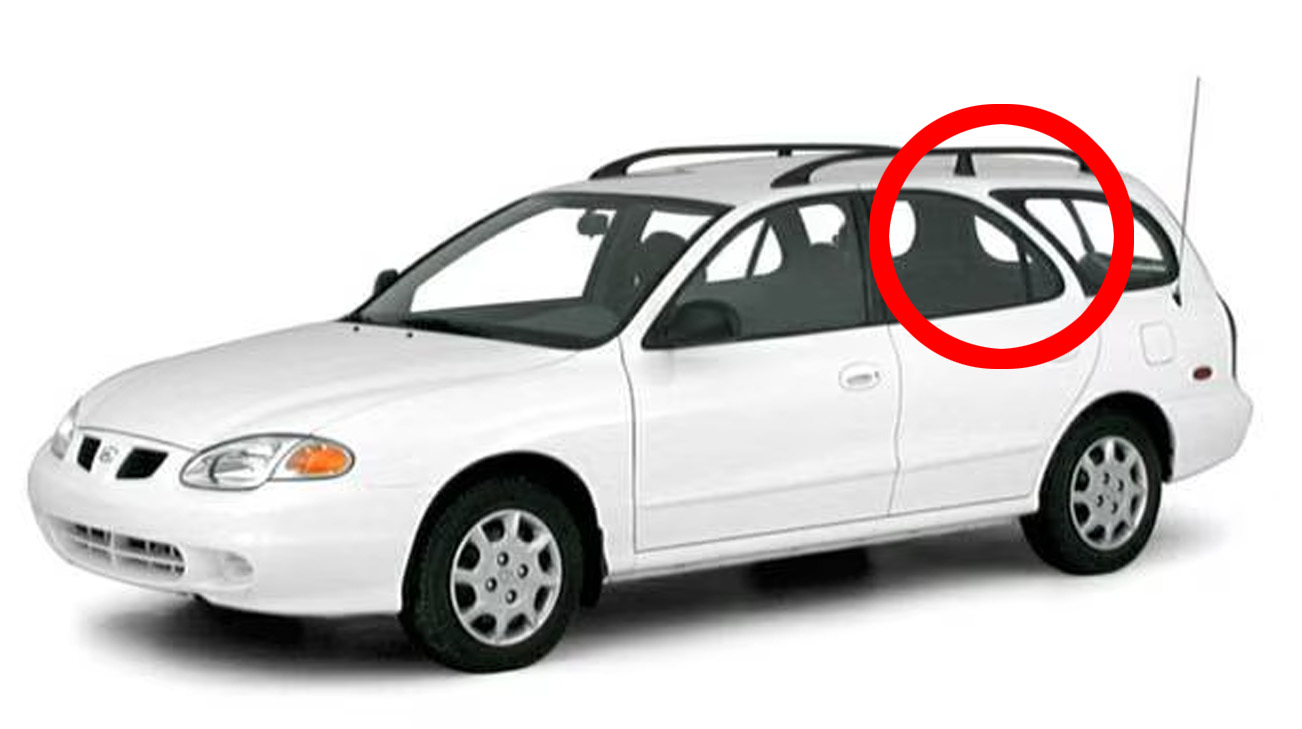
The 2000ish Hyundai Elantra wagons were faced with a similar dilemma as the Honda and Saturn ones, and while I don’t think this is terrible, I don’t think it was executed as well as the others. Interestingly, unlike the Saturn, the Hyundai does not black out the C-pillar, leaving it body colored, suggesting at least some degree of confidence in the design.
Weirdly, when Ford made a third-gen Taurus wagon, they seemed to have designed something that used common doors for the wagon and sedan from the get-go, as it had that distinctive, heavily raked and curved C-pillar look:
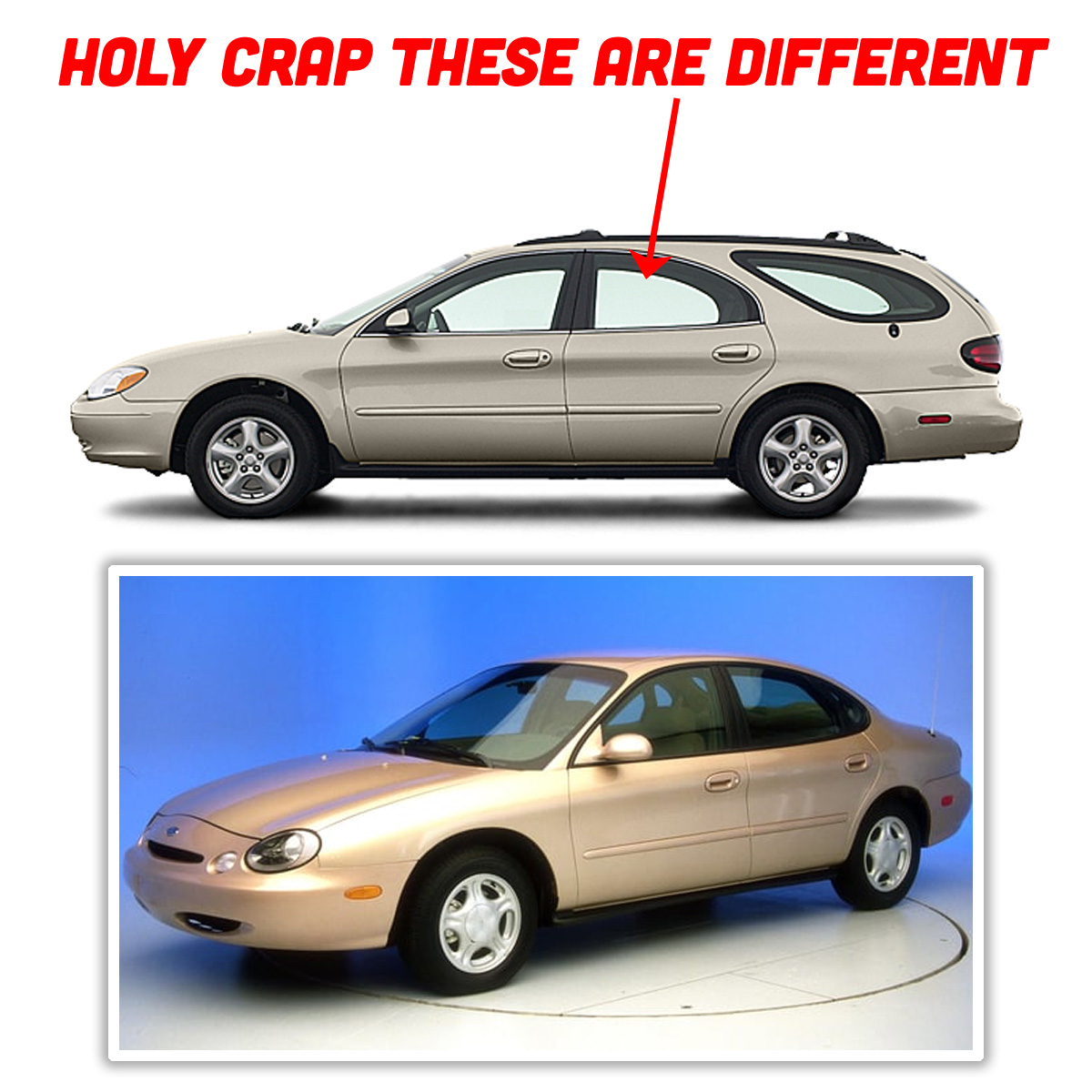
But they didn’t! Those doors are not the same! It seems ridiculous to design a wagon that looks like that and not reuse the doors! The cost savings have to be significant, so…why didn’t they try a little harder? Ford isn’t the only one guilty of this kind of baffling decision; look at the rear doors on the Plymouth Volare sedan and wagon:
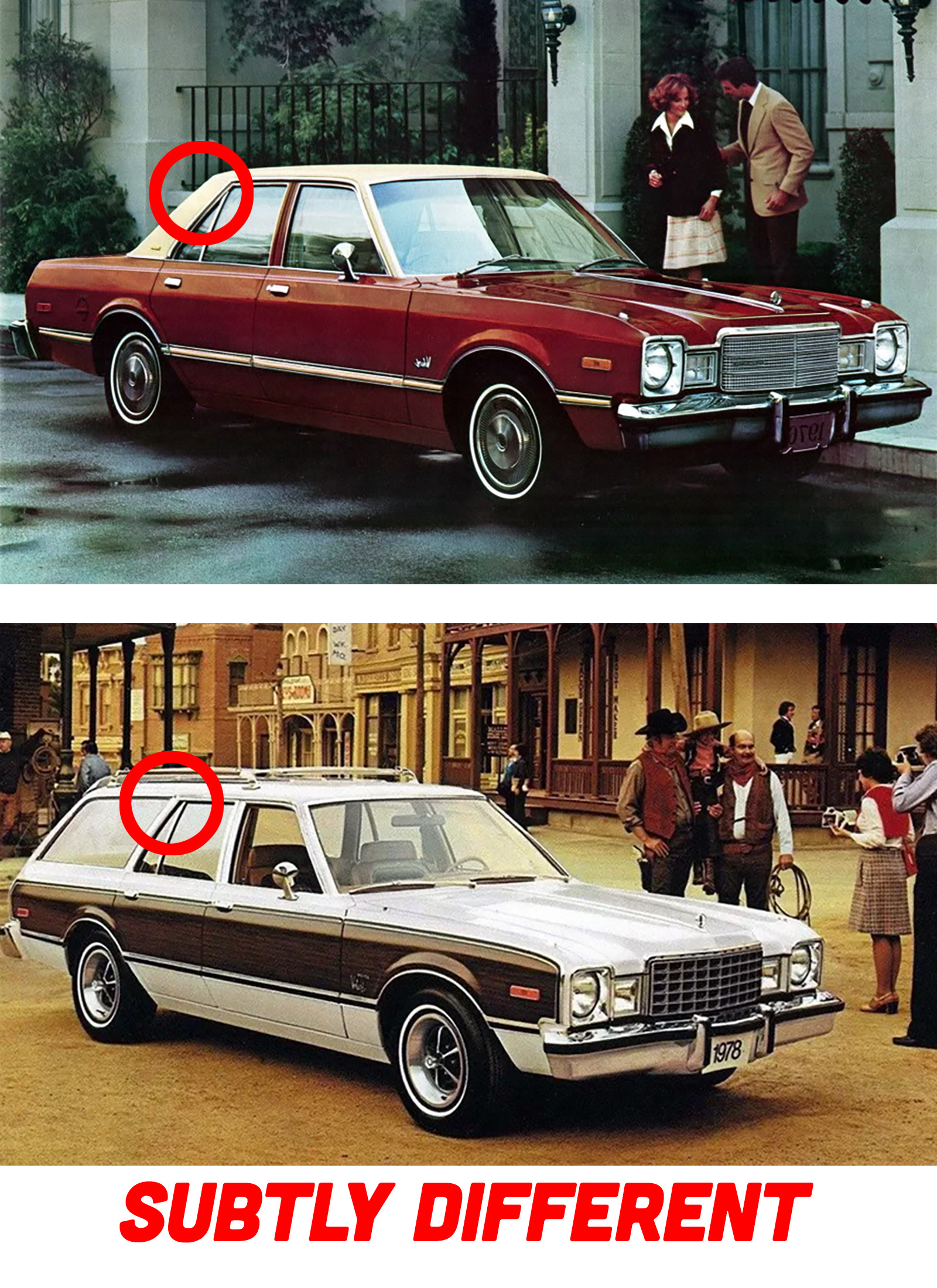
Look how subtle that difference is! Both doors are upright and angular, and the only difference is a slight degree of slant at the trailing edge of the window, which you can only really see by looking at the angle of the point of the bit of triangular fixed glass. They couldn’t have figured out how to make one door work for both of them? Where were the bean counters? I thought they loved this kind of crap.
Speaking of subtle, this may be the most fascinating case of door-sharing. Volvo, a company perhaps most famous for its wagons, started with wagons that had pretty dramatically different rear doors for sedan and wagon. Look at the Amazon, for example:
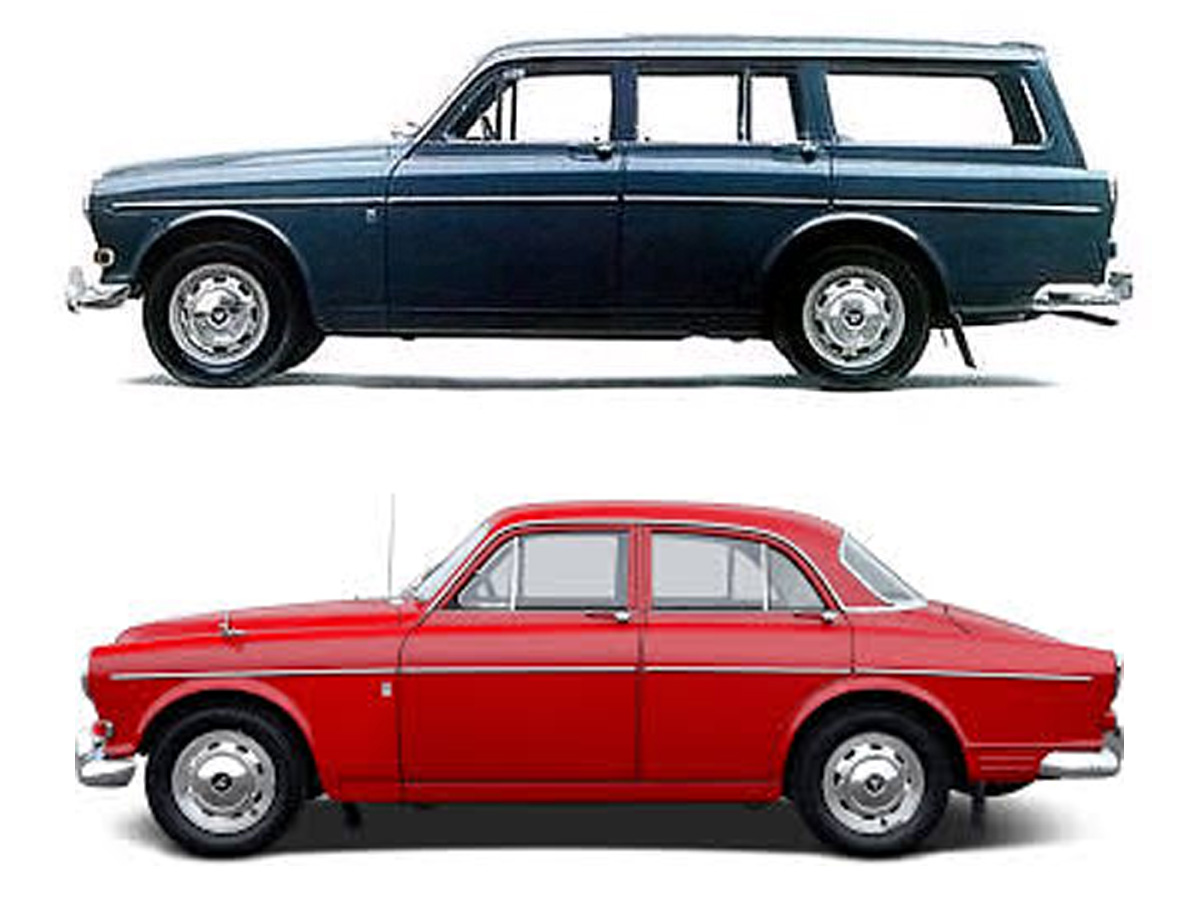
That was essentially a complete redesign from the B-pillar rearward, with no sheetmetal shared in the back half between the wagon and sedan. That gives a lot of design freedom, but it’s not cheap.
So, when it came time for Volvo to develop the Amazon’s successor, the Volvo 140 series (which later evolved into the 200 series), designer Jan Wilsgaard had a chance to try and design something that could share more parts between wagon and sedan. Parts like doors.
And he really tried his hardest, though the results weren’t exactly perfect, which I think just makes the car more interesting.
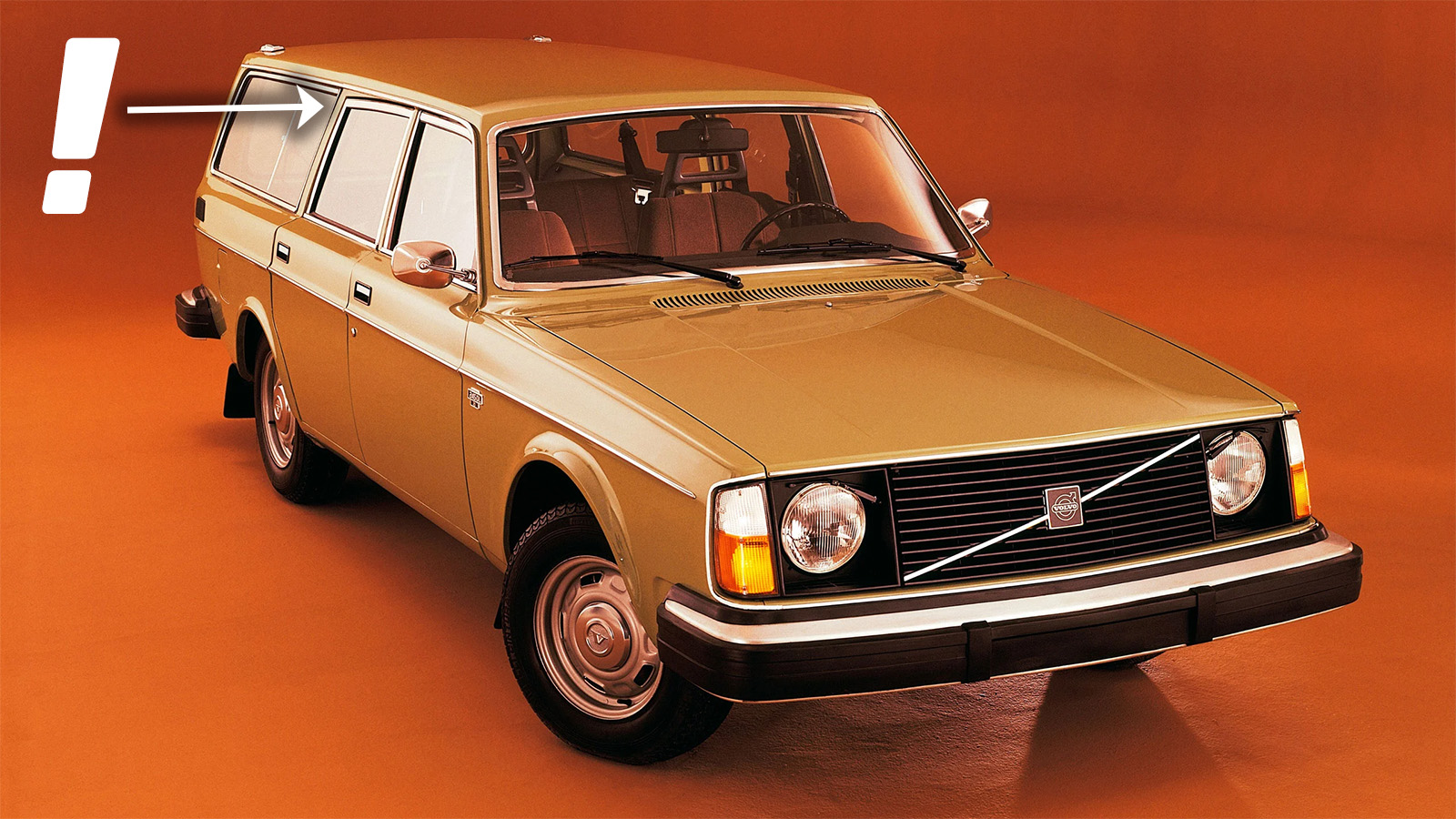
Wilsgaard made a choice to favor the sedan when it came to rear door design, a choice that, based on how popular Volvo wagons became, may have been the wrong one. As a result, a Volvo 145 or 245 wagon’s rear doors aren’t exactly in line with the roof: they have a very slight slope downwards that matches the slightly sloping roofline of the sedan.

I suspect most people barely even notice it, but once you’re aware of it, you can’t not see it. It’s not perfect. It doesn’t quite fit. And yet, somehow, I think this little imperfection just adds more character, like a gap in the teeth of someone’s pretty smile or an interesting mole or fetching scar.
It’s a subtle visual reminder that the world isn’t perfect, and sometimes we have to make do with what we have, the best way we can. I think that’s a pretty good thing to be reminded of in the shape of a car door.
Top graphic image: Saturn


How about sedans that use wagon doors? Volvo reversed the aforementioned 145/245 arrangement and the 700 series all had squared off rear door window frames.
The ultimate example may be the Checker sedans and wagons. Rear doors on both versions are completely square like a full length SUV. Checkers and Citroens are the only non-truck/SUV/van examples I can think of that don’t have a rear wheel arch cutout in the doors.
The “formal roof” GM G- body sedans hastily whipped up when the Oldsmobuick non-hatch fastbacks flopped used the wagon rear doors, with the small opening vent sections of the glass being in the doors themselves where they had been in the quarter windows of both the Aerobacks and the 6-light notchback Malibu and LeMans. Once you notice the split between them and the fixed main glass is more sloped than any other elements of the formal roof because it echoed the wagon D pillars, you’ll never unsee it.
Anyone else still have a soft spot for Saturn? My first car was a purple LS2, the big sedan. It was rock solid reliable and super cheap to maintain. I only sold it to lease a new car to build credit when I turned 20.
Yes, always wanted a 2nd gen wagon with a 5 speed. That ship has long sailed. I haven’t seen one in years here in the Northeast.
Saturns seem to have disappeared from the roads, which makes me sad. Maybe I should be that guy who gets a Sky Redline instead of a Miata…
It’s also on the Heuliez built Citroën BX and XM station wagons. Looks horrible.
The Accord and Taurus wagon were perfection.
How about pickup trucks that use SUV doors?
Land cruiser 79:
https://www.usa-car-import.com/upload/heading/toyota-land-cruiser-grj-79-dc-double-cab-euro-6-830x560_1.jpg
I’m surprised the US Ford Escort from the 90s isn’t mentioned. These used the same rear doors on the hatchback sedan and wagon and the center section has some commonality with the Mazda 323 and Protégé since it’s a common platform. I know the Thule roof rack kit for a 91-96 Escort also fits Mazdas and the Ford Laser.
Crew cab doors also get interesting, Square body and GMT400 Suburbans use the same rear door as a crew cab but the Tahoe has a fender cut out because of the shorter wheelbase. Ford didn’t recycle, the Excursion uses a slightly different door than the Super Duty and the Expedition door is completely different from an early F150 Super Crew
This is definitely a ‘man yells at clouds moment’ but my biggest take away from this article is how cheerful cheap cars used to look. That Saturn looks like a wonderful car. Why are today’s cars so angry and aggressive?
you would be angry too if a hyundai elantra cost $30,000
The cursed sibling to this is sedans that reuse the rear doors from the hatchback versions (mainly for markets like the US and parts of Asia where sedans are more desirable); this inevitably leads to the rear looking squashed and badly proportioned for a car that’s less practical:
https://upload.wikimedia.org/wikipedia/commons/thumb/1/12/2002-2005_Toyota_Echo_%28NCP12R%29_sedan_03.jpg/1920px-2002-2005_Toyota_Echo_%28NCP12R%29_sedan_03.jpg
If Chrysler had selected just one rear door for both sedan and wagon, I’m sure it would have been the leakiest/rustiest option available.
I admire wagons that use the standard lower door with a specific wagon glass and frame. The best example of this is the GM clamshell wagons. They use the rear lower door shells from the the C body hardtop sedans with a specific glass and frame to fit the wagon body.
BMW e91 wagons are this way as well. Probably the rest of them too.
Peugeot went all the way with their wagons though, from 404 onward the wagons are bespoke from the B-pillar back. Longer wheelbase, so longer doors, even completely different rear suspensions for more load-lugging ability.
Saab 9-5 wagon (er, “sport Combi”) had this feature!
Honourable mention for the Ssangyong Rodius, which looks like a poor lash-up of a hideous estate car from an equally hideous five door hatchback that never existed.
Here in Oz the Ford Falcon wagons always did something strange and went the Volvo 240 way with the rear doors – using the sedan door and also adding a higher roof (I think they used the same rear for about 20 years) for the wagon and add the updated front. Just add black paint and forget about it was the design solution.
The Volvo 700 series did the opposite, 4 door used the estate doors
Always thought the first gen Renault Laguna was a great example of this, obvious but embraced it
If I every come across a running SW2 with a stick I’m buying it…
The rear doors of wagons that slant down to match the roofline of the sedan really bug me; but what really bugs me is SUVs that have those sedan shape rear doors when there is no sedan version.
They could easily have a squared off opening that rear passengers would not have to duck in front of, with better visibility but they put that weird pointless curve of metal there instead. It manages to look awkward, be less functional, probably is less structurally sound and cost more.
Very cool. Someone should do some renderings of modern sedans as station wagons. same back doors and all : )
This is why I love this site- I used to have a 1987 240 wagon and I actually did notice how the rear door frame didn’t match the roof line and always wondered if the rear doors were the same as the sedan. Miss that car and its ever-practical Swedish design quirks!
Jason, if you had bothered to look at Mercury Sable saloon, you’d see that Ford used the Sable for the estate version. The rear doors are same on both Taurus and Sable saloons except for the window frames. Ford reshaped the Taurus window frame as to flow with the sixth window fitted to the C-pillar.
Other than coach-built vehicles, are there any four door vehicles that use the front door also as the back door (even cut down)? My ’64 F100 coach-built crewcab does. Pictures of the truck are on a Reader’s Rides. https://www.theautopian.com/crew-cabs-campers-a-far-traveling-phev-and-one-shamancycle-members-rides/
Tatra 813 crew cabs use a reversed front door for rear seats and I believe they were a production item. International S series crew cabs definitely use unaltered front doors and AFAIK were not coach-built. While not crew cabs, the Mack Midliner conventional trucks have cab doors that are the reverse of the cabover doors, with a fender cutout at the front where the European ones had a set back front axle.
GM didn’t black out the Saturn SW’s C-pillars from lack of confidence, but manufacturing ease. The space frame was always black and the color was applied to the plastic body panels. Sedans had painted caps over theirs, wagons didn’t.
I suggest the esteemed Torch also takes a look at a UK phenomenon of estate conversions. Crayfords did a few (which jarred slightly), whilst the Avon conversion of the Jaguar XJ6 made an impeccably elegant saloon….not so elegant. Most Abbots of Farnham conversions of big Ford Z cars used similarly obvious saloon doors, but their effort on the Mark111 Zodiac intrigues me because I think they may have slightly modified the nearly “square” doors of the saloon to be properly “square” – it needs somebody with good eyesight to check the pictures.Incidentally, the Mark111 Zephyr/Zodiac saloons were “interesting” in that the Zodiac was an upmarket Zephyr but used different rear doors. Ford’s accountants must have had a seizure.
Studebaker had a wagon with the same doors as the sedan too. It looks strange. First gen focus wagon is one of those ones where it looks like it might be but I don’t think it is.
Saturn did it best with the SW. You can see it is the same but it looks good. GM needs that thinking now.
Firstgen Focus wagon had its’ own rear doors, but sedans and ZX5 hatchbacks shared theirs, and they were optimized for the hatch by the European design team despite that model’s late US appearance.
This always annoyed me when looking at the Volvo 100/200 series wagons. It undermined the geometric clarity and perfection. It’s like looking at a handsome person with spinach stuck in their teeth
This is very pedantic, but I believe the Saturn wagon pictured is a SW, not an SL. In Saturn world SC=coupe, SW=wagon, and SL=sedan, because….GM?
-Proud former SW2 owner
Correct. And with unpainted bumpers they should* be SOHC models. SL1 for the sedan and SW1 for the wagon.
-Proud former owner of SL1, SW1, SW2, SL1 (in that order)
*GM isn’t perfectly consistent in trim rules. Painted bumpers could wind up on SOHC cars. And by the end of the run all cars had painted bumpers regardless of camshaft. I don’t think unpainted bumpers were ever available on DOHC cars. But GM is gonna GM, so there’s probably an exception somewhere.
Getting hyper-specific, there was at a minimum a stripper base model that was the SL, a midspec SL1 (both of which had unpainted bumpers and SOHC), and the top spec was the painted bumper, DOHC SL2 (although I can’t remember if there was a stripper SW, or if that started at SW1). And like you say, the final refresh (pre-Ion) were painted bumpers across the board.
Getting more hyper-specific, the SC1 had painted bumpers across it’s lifetime. The obvious visual differentiating the SC1 from the SC2 was a lack of pop-up headlights and no heckblende.
The first-gen SL didn’t even have power steering or a right-side mirror standard. It was only offered as a manual.The SL, which never had painted bumpers ended production in 2000. Not only was the bumper unpainted but it had a different mold that included two weird guard protrusions.
There was no base SW, just SW1 and SW2.
I was just about to mention the 2000 SL with its black bumpers. The SL did live on with painted bumpers through 2002 though.
Shit, you’re right. I could’ve sworn the SL died off after 2000. It was the wagon that died after the 2001 model year.
I love that there’s a community outside of Saturnfans in 1998 that’s as fascinated by the things.
They’ve always been quirky, so I’m not surprised they have a fan base here.
I loved my SW2 although my future wife thought it was dorky. She still married me, so jokes on her. Also, is the Saturn naming convention a perfect encapsulation of GM as a company? Two perfectly thought out, logical, easy to understand choices for every one that makes no goddamn sense
Yes, that does encapsulate GM as a company.
“A different kind of car…” but ultimately still the same kind of company.
SL as in Saturn Limo? SS might have been taken by the Camaro.
It was always explained to me that SL stood for Saturn Line.
Lol, we’re really talking all things Saturn today!
I think I once heard “Saturn Level” so same idea. It may seem inconsistent against SC/SW but looking back at the model’s intro I think it makes sense as it wasn’t a full line yet. The wagon didn’t exist yet, and the coupe didn’t have trims until ’93, it was just SC.
Dude, every time there’s an article here about Saturn, I know that you and I are gonna go off on tangents.
I say
you say
we say
Saturn!
I can’t wait for the Bishops Saturn Satur(n)days regular segment
Jason has brought up Saturnalia a few times without mentioning the obvious connection. Definitely a missed opportunity.