

Commercial aviation is one of the greatest achievements of humankind, but air travel can be absolutely miserable in the modern day. It is genuinely spectacular that we’ve invented a way to safely transport hundreds of people some 30,000 feet above the ground at hundreds of miles per hour. But one source of misery beyond ground-based annoyances is aircraft windows, or, more specifically, how their shades are used. I think all commercial flights should be legally mandated to have their window shades open during departure and arrival, and yes, I can back up this hot take.
This subject recently touched down on my desk after an industry colleague wrote a take that advocated for the deletion of windows entirely from an aircraft. As someone who does sit behind the controls sometimes, I cannot think of something that I would hate more than to trust screens and cameras as my only methods to see the outside world. Aircraft windows have proven their worth for longer than a century, and engineers have made windows, like the rest of aircraft, remarkably safe.


Aircraft windows aren’t just there for you to look out of. I mean, that part alone makes windows worth keeping, but there’s more. Having windows and having those window shades open provides an important safety element to the passengers and the crew during emergencies. Likewise, as I learned recently, if window shades were mandated to stay open at least until the plane got into the air, some passengers might have a better experience without spending a single dime more.
Getting Sick Opened My Eyes
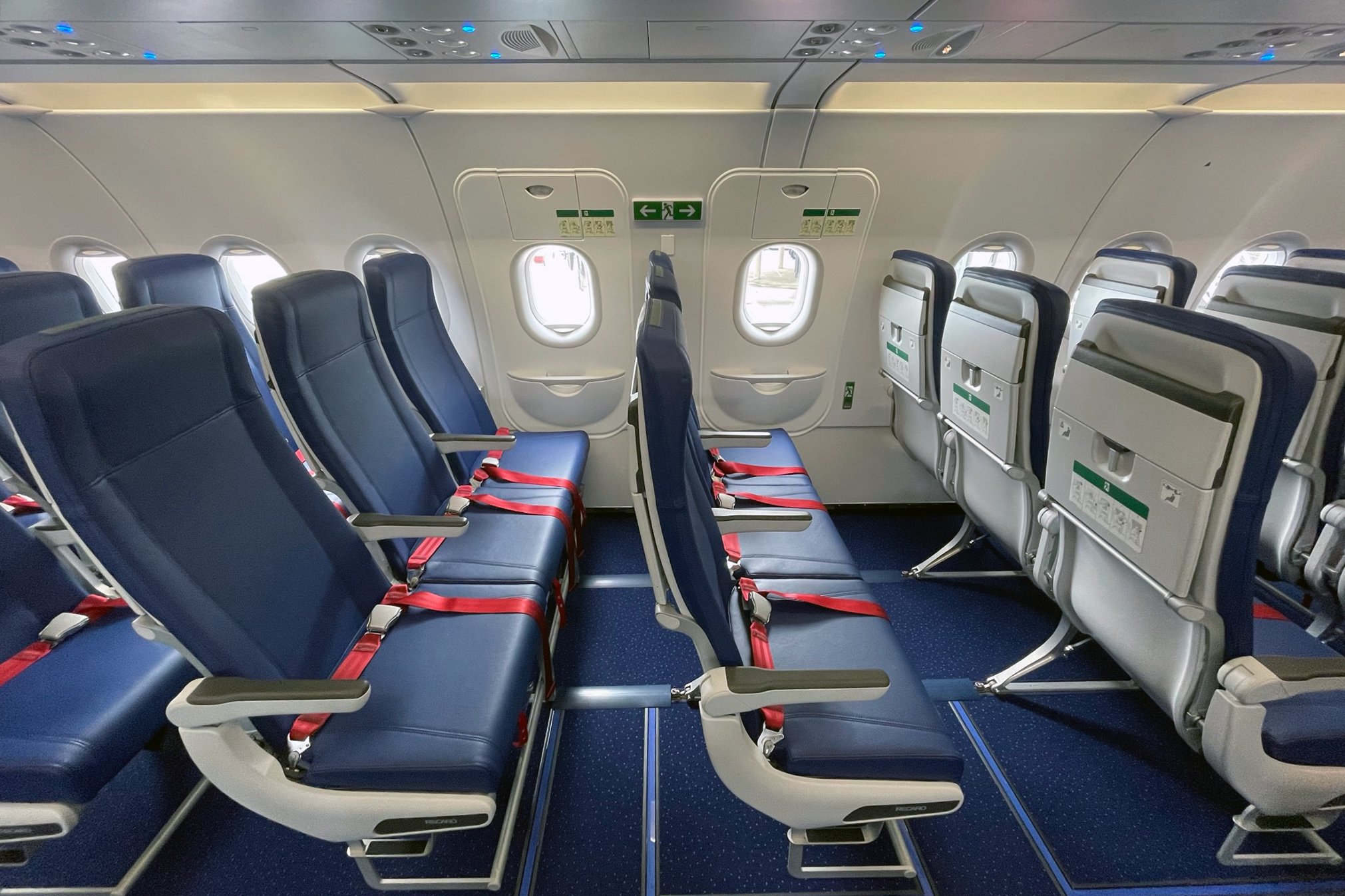
Being an auto writer has afforded me a life I did not know was possible. I am very privileged to say that, whenever I fly, I can usually score the best non-first-class seat in the house. You can usually find me in Seat 7A on most narrowbody airliners. I love the window seat because, as a bigger person, I like that I can “spill out” into a side of my seat without impeding on someone else.
Likewise, I spend a lot of time looking out the window, finding myself fascinated with airport environments, with mountains, and with seeing Illinois from so far up. Some of my favorite aviation photos were taken from inside of another plane. It’s great, and I could never do that if a real window were not there.

Every once in a while, I do find myself outside of a window seat. Those times usually involve last-minute bookings or when an automaker puts me on an airline I do not have status with. If I’m lucky, I’ll dodge the dreaded middle seat and get an aisle seat. But in both cases of middle seats and aisle seats, I’ve noticed that something weird happens to me under a specific set of circumstances.
Back in August, I covered the record-breaking JCB Hydromax. That trip required me to fly to Salt Lake City, which was a Delta Air Lines hub. The JCB team booked me on a Delta flight, which made sense, but was a bummer for me because I normally fly United or, formerly, Spirit. I accepted my fate of not getting a window seat.

On both flights, the vast majority of window seat passengers immediately closed their window shades before the planes even pushed back from their respective gates. This was a bit abnormal for me, as usually, even when I’m not in a window seat, someone nearby has their shade open. That was not the case on either flight.
I didn’t think much of it, and then the aircraft started moving. In both the flight that departed Chicago O’Hare International Airport and the flight that departed from Salt Lake City International Airport, taxi times were long, and the plane made several turns down different taxiways. The flight out of Salt Lake actually got delayed by a ground stop in Chicago. But since we were taxiing at the time, the plane just parked somewhere.
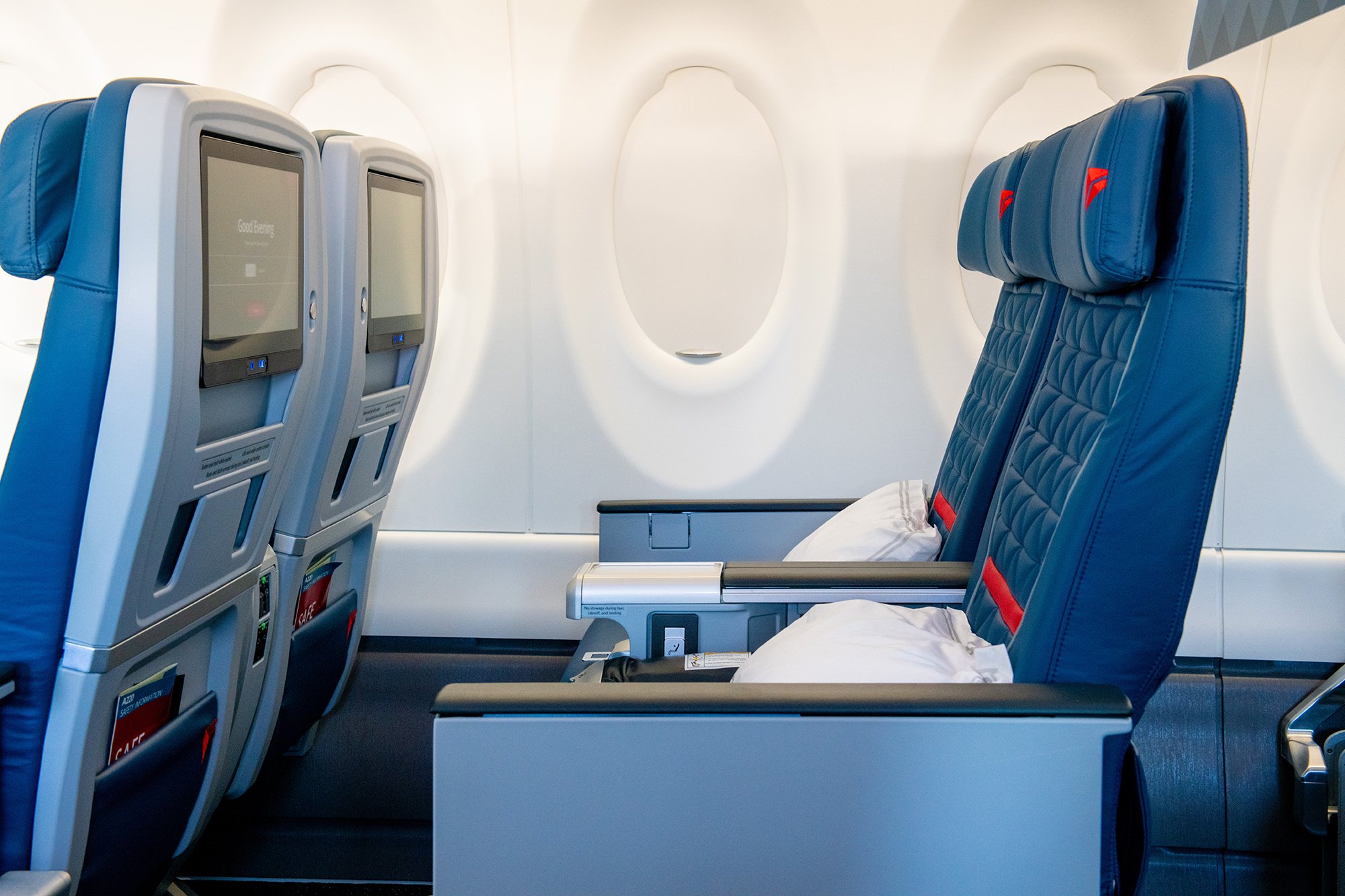
I say “somewhere” because I had no idea where we parked. Since everyone had their window shades closed on both flights, I could feel the aircraft moving, but I couldn’t tell they were turning right or left. I had no idea where the aircraft was in relation to the gates we left, and couldn’t even begin to guess ground speed or acceleration. This sent my head for a spin and, as I became further disoriented, I also started feeling nauseous.
Thankfully, the Salt Lake-bound flight went off without a hitch. It felt deeply weird that the last time I saw the sun was in Chicago, and that it was like I slowly teleported to the gate in Salt Lake.
The flight departing Salt Lake made me hit my limit. As the Boeing 737 released its brakes and started rolling out of wherever it was held during the Chicago ground stop, I kindly asked the person at the window seat to open the window shade because I was feeling really off. Within a few minutes, I had my bearings. Then, we blasted off into the sky; they closed their shade, and it was smooth sailing.
Why You Might Get Sick If You Can’t See Out Of A Plane

What happened is something that many travelers have experienced before. Our very own Bishop told me that he’s gone through a similar experience more than once. There’s a scientific reason behind it, too. What we experienced is a sensory illusion, and it’s generally caused by your eyes seeing (or not seeing) one thing, and your body experiencing another.
As the Vestibular Disorders Association writes, these feelings relate to how the human body’s vestibular system works:
Your sense of balance is maintained by a complex interaction of the following parts of the nervous system:
– The inner ears (also called the labyrinth), which monitor the directions of motion, such as turning or forward-backward, side-to-side, and up-and-down motions.
– The eyes, which monitor where the body is in space (i.e., upside down, right-side up, etc.) and also directions of motion.
– The skin pressure receptors such as in the seat and feet, which tell what parts of the body are down and touching the ground.
– The muscle and joint sensory receptors, which tell what parts of the body are moving.
– The central nervous system (the brain and spinal cord), which processes all the bits of information from the four other systems in order to coordinate it.

Some people describe a balance problem by saying they feel dizzy, lightheaded, unsteady, or giddy. This feeling of imbalance or disequilibrium, without a sensation of turning or spinning, is sometimes due to an inner ear problem. “Vertigo” comes from the Latin verb “to turn.” People who experience this often say that they feel like they or their surroundings are turning or spinning. Vertigo is frequently due to an inner ear problem. Dizziness, vertigo, and motion sickness all relate to the sense of balance and equilibrium. Researchers in space and aeronautical medicine call this sense spatial orientation, because it tells the brain where the body is “in space” — what direction it is pointing, what direction it is moving, and if it is turning or standing still.
The symptoms of motion sickness and dizziness appear when the central nervous system receives conflicting messages from the visual system and the vestibular system in the inner ears. For example, suppose you are riding through a storm in an airplane and the plane is being tossed about by air turbulence. Your head is moving, triggering the hair cells in your inner ear. Your body is moving, triggering your skin and muscle receptors. But your eyes do not detect this motion because all you see is the inside of the airplane. Thus, your brain receives conflicting messages from these four systems and you might become “air sick.”
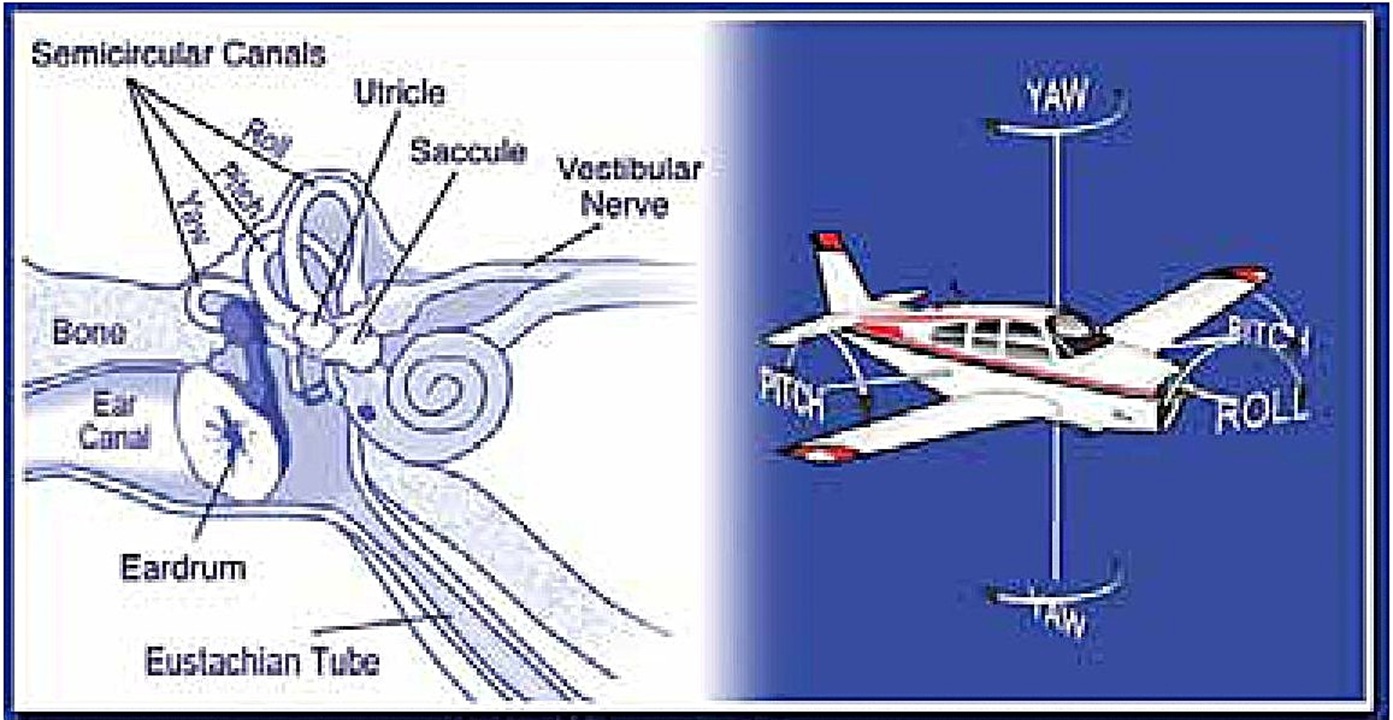
In short, when you cannot see an outside reference, or you just see a static plane interior, your eyes tell your brain that you’re not moving. But your other senses do detect motion.
As SKYbrary Aviation Safety notes, the vestibular system has its limitations. When an aircraft is flying straight and level in clean air, the only force you’re experiencing is the vertical pull of gravity. However, when the aircraft turns, climbs, descends, hits turbulence, or is just navigating a taxiway, more forces are being introduced. If you cannot see what’s going on outside, your vestibular system is missing a key piece of information for how to interpret what’s going on.
If you can’t see outside, it’s entirely possible for the aircraft to turn or change speeds gently enough that you won’t “sense” it. Alternatively, the aircraft could accelerate or decelerate in a way that makes you think the aircraft is climbing or descending when it actually isn’t. Without a visual reference, this could make you sick as a passenger. As a pilot, it’s a phenomenon known as a somatogravic illusion (pictured below). There’s also the somatogyral illusion, where the plane can bank one direction, but you feel it’s banking in the opposite direction. It’s weird stuff.
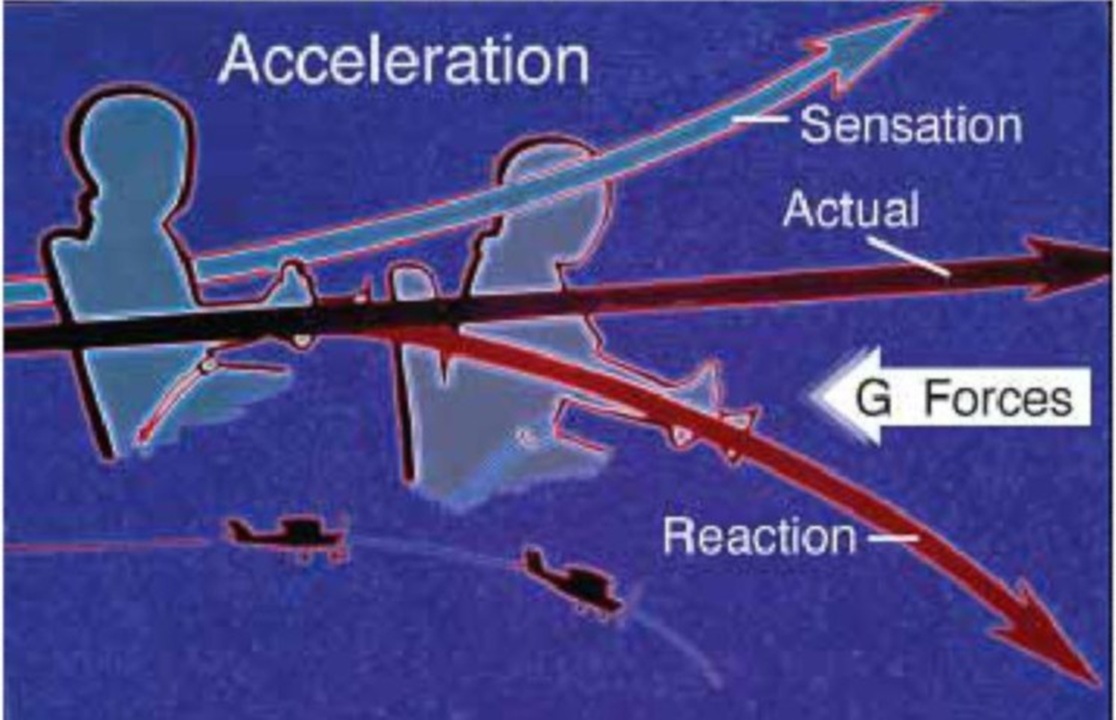
This can get especially dangerous for pilots because a pilot may think that a rapidly descending aircraft is actually pitching up toward a stall, and may react by pushing the controls forward, actually deepening the dive. Alternatively, a pilot suffering from a Somatogravic Illusion may feel that their aircraft that’s already climbing too steeply is actually descending, and may pull back on the controls, actually initiating a stall or making an existing stall deeper.
Thankfully, pilots are trained to trust their instruments in cases when their body’s senses cannot be relied on. For a passenger, opening the window shade — assuming there’s something to see outside can be enough to reset your head.
This alone would be enough for me to mandate that windows stay open for takeoff and landing. Look, nobody wants to find out what their seat neighbor had for breakfast. But there are valid safety reasons to do this, too.
Windows Aid In Safety

A couple of years ago, I wrote an explainer for why the flight attendants of some airlines request that you open your window shade for takeoff or landing. As I noted back then, there is a safety culture in aviation. The procedures and the regulations that pilots, even students like myself, have to deal with have sometimes been written in blood. One important area of safety is what’s known as the critical phases of flight, which the U.S. Federal Aviation Administration defines as:
As defined in the regulation, critical phases of flight are all ground operations involving taxi, takeoff, and landing, and all other flight operations below 10,000 feet except cruise flight.
These phases are “critical” because, during takeoff, taxi, and landing, there is a lot going on; the aircraft might be in a low-energy state, and the aircraft might not have a lot of altitude. Errors or severe malfunctions can be fatal here. If an engine fails during the takeoff run, the pilots need to be able to make the decision to continue or to stop the aircraft. If a landing is unstable, unsafe, or impeded by birds or drones, pilots need to be able to perform a go-around or a missed approach.

This is why the United States enforces what it calls the Sterile Flight Deck Rule. Pilots can’t be chatting about what they’re going to do this weekend when they’re 500 feet from landing or in the middle of rotating off the runway. Movies often depict aviation emergencies happening at cruising altitude, but often, the greater danger is an emergency happening near the ground where pilots do not have the luxury of airspeed, altitude, or time to work out the issue.
Flight attendants are another piece of the safety puzzle. In an emergency, they will be the ones giving you the instructions that can save your life. They will be coordinating the evacuation that, ideally, should be completed in less than 90 seconds. But their job goes far beyond just pointing you to an exit and telling you to leave your bags behind. During the outbreak of an emergency, flight attendants serve as extra pairs of eyes for the pilots.

Despite having expansive flight deck windows, pilots of common twinjets usually cannot see what’s going on with their engines. If the aircraft experiences an uncontained engine failure, for example, they’ll have fault indications that they could draw some conclusions from. However, a flight attendant can also look out of a window, see the damaged engine, see any potential fires, and report back to the flight deck.
In a ditching, flight attendants need to be able to look outside of the aircraft to figure out where the water line is. If they open the wrong emergency exit, that will flood the airplane. In a situation involving a cabin fire, first responders will be able to look through the windows to gauge the fire’s spread and intensity. The crew can also figure out which doors not to open to keep an external fire from getting in. Flight attendants can further tell pilots about visible leaks or structural damage.
An additional benefit is how windows help your eyes. In an emergency, you will need to adjust to the outside world quickly, be it a blindingly bright day or the black of night. Opening your window shade gives you an idea of what to expect. This is also why the cabin crew will usually dim the lights during critical stages of flight.
Of course, none of these benefits are there if the window shades are closed, or worse, there are no windows at all.
I Would Mandate Open Window Shades

Yet, as I reported two years ago, there is no governmental mandate to keep window shades open. The International Air Transport Association, which is a trade organization representing 300 airlines, and the United Nations International Civil Aviation Organization (ICAO) recommend requiring open window shades during critical phases of flight.
Currently, it’s up to each airline to require open shades or not. Countless international carriers, including airlines like British Airways and KLM Royal Dutch Airlines, require shades to be open during critical stages of flight. Some U.S. domestic carriers either don’t have a window shade rule or don’t really enforce one they do have. If you’re riding with a carrier that follows ICAO recommendations, chances are, the airline has a policy requiring the window shades to be open during critical stages of flight.
Thankfully, modern technology makes this so much easier. Aircraft like the Airbus A350 and the Boeing 787 Dreamliner don’t have shades at all, and instead, they have electronically dimmable window tint. The flight attendants can override whatever setting you have the window on to force all windows into a fully transparent state.

This is one of those situations that seems to have countless advantages and only a few disadvantages. Yes, having the window open during a takeoff or landing with one side of the plane facing the sun would suck. But it’s a temporary suck, and one that doesn’t suck as much as your seatmate barfing.
To be clear, I am not interested in telling you what to do. If you decide to keep your shade closed, I will live. I have always just thought that the science behind getting sick or disoriented when you can’t see out of a moving vehicle is fascinating. Now, maybe you might know a little more about yourself, too.
Still, if I had way more governmental power than I should ever have, I would require that window shades be open during departure and arrival. Once the plane is out of a critical phase, go ahead and close the shades. Otherwise, let that light in! While I’m in this hypothetical position of power, I would unravel the 25-Year Rule and the Chicken Tax. Look, a girl can dream.
Top graphic image: DepositPhotos.com


I’m in the “windows open” camp. We fly a lot, and seeing the Earth from above never gets old. I can see lowering it if you’re trying to sleep, but otherwise I don’t understand why the vast majority of people lower the shade the minute they can and never raise it until they have to. Just seeing how much incredibly vast open space exists in the U.S is amazing.
When JFK Jr and his wife died in their expensive plane, I remember reading that since there was no horizon for them to see due to the clouds/storm they were in, they had no way of telling what orientation they were in. It’s such a shame that he had not gotten the instrumentation training that the plane was perfectly set up for. I think he would have only had to flip on the auto pilot switch for the plane to have leveled out and maybe they could have gotten away from the storm.
40 years ago, getting my pilot’s license, I was trained how to interpret and rely on the instruments. Just in case I was stupid enough to get into weather where I couldn’t see. (Moonless night flight over dark terrain is another situation where instruments are your friend.) The training was to the point where I wore opaque glasses that blocked everything I could see except the instruments. This was back when those instruments relied on gyroscopes and pitot tubes. The instructor was merciless. He’d put the little Cessna into an unusual attitude and then say, “it’s yours.”
If the gyro for the artificial horizon takes the day off, it gets harder.
My wife recently flew Delta for a work trip. We usually don’t fly with them since we live within an hour of hubs for two other airlines. She said no one on the flights opened their shades at all during the flight. It seems strange. Twice is coincidence, three times is a pattern. After this article, I’m starting to believe Delta may be the preferred airline for vampires.
Same thing on my last domestic flight. Shades down, screens up, pacified and zoned out.
It’s weird.
I’ve seen the same view out my house windows a million times as well, but I don’t shut my blinds and curtains in the middle of the day.
The shades down thing is weird. These are presumably the same people who object to seats facing backwards in trains and when it has been proposed in airliners for safety reasons. Or school busses, where getting kids to face backwards would be easier than getting them to wear belts.
I don’t get either of those preferences.
Sorry, but I fly multiple times a month. I’ve seen the views. Flying lost its novelty for me years ago. I’ll follow the rules when they say open or close the shade, but otherwise, it’s down so I don’t get roasted by the glare and have some chance of nodding off.
It’s also worth noting that many FAs have been asking people to keep their shades down during boarding/exiting/taxiing to keep the aircraft cooler.
I think it’s perfectly reasonable and “polite?” to expect the airline to request shades be closed on the ground at least on the sunny side when parked, regulations requiring them to be open while taxiing / landing / takeoff, and up to the window passenger’s discretion at any other time.
Came here to post this exact response. I am on a Delta round trip at least once a week for work. Shades down!!, especially early in the morning. nighttime I don’t care.
so much this, not trying to burn alive while I’m sitting in my seat waiting for 40 minutes to take off.
While we are at it, all passenger seat cushions should be mandated to be at least 40cm(16″) deep. This trend of ever shortening seat cushions, presumably to create the illusion of more legroom, must stop. On long flights it becomes even more painful as the hard short seats cut off circulation in the legs.
It’s one reason I never want a window seat and only aisle. At least I can get up and stand at every chance they allow it without bothering someone else.
Short squabs are awful, and tilting them timeless it even worse. I always try to get the window seat on the north side of the plane. If I’m not looking out the window, the side of the plane gives me something to lean on. The aisle seat means you are constantly getting bumped into, or standing up to let someone out of your row.
One time when my wife and I flew to Vegas we somehow ended up in a row that had no window at all. It SUCKED. I like see the ground crew, know when we’re pushing off, see the taxiing activity. I also am really interested in the mechanics of flight and spend every takeoff and landing observing.
Pretty much since I’ve been a kid I’ve been fascinated by watching the earth roll by from above. I’m 55 now and still want my window. There’s so much cool stuff to see.
I’ve seen some incredible views from the windows of cheapo economy seats. Most of the other people are locked into their screens and miss it. The lack of curiosity and attention span I see is astounding. SNAP! Down goes the window shade immediately so we can flip flip flip flip across TikTok posts. It’s pathological.
I’d prefer big windows, like those on the 787. Last year I had a daytime flight on one and walked down the aisle. The windows are so large that I could get a clear, though segmented, view of both airplane wings, the front cowl of the giant turbofans, and the blue sky and clouds beyond, both forward and in my visual periphery. It was incredible. Most people were on their phones.
Read the idiot Brownell’s piece you reference from Jalopnik. You’re too kind, Mercedes. It was an unserious post, either intentionally to troll or unintentionally because he’s entitled and possesses poor reasoning skills.
Brownell’s the worst, I was ready to leave even before Autopian was created, solely because of him.
I love flying, but I also do it multiple times a month. Curiosity turned to boredom a long time ago. Particularly 5 hours into an 18 flight over the Pacific to Asia. I know what you’re getting at, and I definitely enjoy looking out the window more flying over land, but it all starts to blur together after years of long-haul flights.
I agree, I’ve done those long hauls as well and sometimes you just need to check out and sleep. I can’t begrudge people for that. The behavior that perplexes me is the near-universal screen addiction that so many of us have, where they want the cabin dark not so they can rest or try to keep on a sleep schedule, but because they want to flip through phone screens.
My wife and I flew from Japan to the UK over the northern route, including a long stretch over Greenland. We were not on the window side and all the shades were closed mid-flight anyway.
My wife went to the toilet. When she came back, she told me there was something I had to see.
We went back and crouched over the emergency door window in the rear of the plane, and spent roughly the next hour transfixed by the sheer scale of the Greenland mountains and glaciers, much to the amusement, but understanding, of the JAL cabin staff. There were hundreds of people on that plane who had no idea what they were missing.
My wife and I flew back from Oslo last year and happened to go over Greenland on a clear day. It was spectacular.
I don’t think I’ve been on a flight that didn’t madate open windows for takeoff and landing. Seems to be the done thing on this side of the world. Agree for sure that windows are required, I’d hate to fly windowless.
I was thinking the same thing! Have flown around the world and always found it enforced. Guess that’s the freedom we’re all missing out on.
I think it’s a IATA thing. It used to be common in the US too. Older flight attendants in the US will often request open windows. Some even made it part of the speech or an additional announcement like you get outside the US.
I knew an old lady who had been a pan am flight attendant trainer. She had been trained in part by the lady who came up with the hand signals and wrote the book on being flight attendant. They were and extra pair of eyes and ears for the cockpit. They were supposed to watch wings when taxing and engines during the whole time they were on. She said on several occasions how she has to run to tell the pilots something was wrong.
The job really hasn’t changed its just a false sense of security because modern airliners have been so safe. In part because of the best practices carried over. IATA knows that NTSB knows it.
FAA has problems with criticism now apparently. Even the the NTSB head Jennifer Homendy recently touched on how they don’t listen to recommendations.
Sometimes it’s very bright, so the shades come down, especially on the sunny side. It doesn’t have to have anything to do with using screens.
Oh I’m perfectly fine with closing shades during heat, bright sun, and so on. I’m not evil! lol 🙂
Now that I don’t travel much it’s mostly on United if domestic and whoever for international and I thought this already was a rule. United seems to follow it most of the time and I just assumed that since so many Southwest customers are assholes the flight attendants eventually gave up on trying to herd cats.
From what I can recall, both Air Canada and WestJet require the window shades to be open during takeoff and landing, at least I know I have experienced flight attendants asking for that on many flights I have taken, But it’s been a while, so might be misremembering
That’s correct on both calls.
The consistent problem I have flying is straining my neck. From looking out the window as much as possible.
Throughout the entirety of human history, people DREAMED of one day being able to fly through the heavens and see the world as a bird does. Now the slack-jawed screen addicts would rather stare at a 7-inch monitor in front of them than savor the incredibly majestic views of the sky and land below. Look at the world outside! Marvel! Think! Dream! OPEN THE DAMN WINDOW SHADES!
Does the crew on the 787, with the electrochromatic shades, have the ability to force all the shades open during critical flight?
Yes, they can also force them fully dark which is very annoying.
The most horrifying moment I’ve had in an airplane was when the Scenic Airlines Fokker F27 that was carrying me back from a trade show in Vegas (as the only passenger?!?) yawed about fifteen degrees just before touchdown and I was left staring at the centerline of the runway flashing directly at me through that huge, made-for-viewing-the-Grand-Canyon window as we closed the last few yards to the ground.
I will still always prefer a window seat. If I’m gonna die, I want real-time data on that. But the main reason is that seeing the landscape pass below is one of the greatest joys we can have in a vehicle. The rare view of our planet outside (even – or especially – at night) is way more interesting to me than whatever second-run movie is being offered. And I like movies.
The disorientation thing is very real too. I’ve spent a fair bit of time on fairly high seas and very rarely get ill on boats but being in the back of a crew-cab pickup winding through mountains makes me want to heave. Having a horizon is important.
I’ve been in airplanes where the pilot does that to lose altitude in a hurry without picking up a lot of speed. But they were all small non commercial planes except for one time in the old Hong Kong airport where they turned left at an apartment building a second before touching the runway. That was a crazy airport.
Both times I have flown on 787s (to and from Honolulu from Dallas), the damned F/As dimmed all the windows as soon as we took off. I was seriously annoyed – I like looking out the window, even over the ocean. So no thank you to the central control.
I am always in the window seat, and I very much prefer looking out. American mandates open window shades in the exit rows and the first row of first for takeoff and landing already.
I still very much enjoy flying after 30 years and millions of miles, and really don’t have time for all the entitled whiners who go on about how terrible it is. STFU.
Windows are a must! And shades up.
How else are you supposed to see the gremlin on the wing at 20,000 feet?
Or the tape pealing off the wings.
Sadly I fly so much that I hate it when people leave the shades up. This is an uncomfortable experience for all involved so lets see as little of it as possible.
Add in living in Florida where they ask you to close the shades on the ground, there is no way I could get on board with mandating shades be open.
I don’t want sunshine in my flying aluminum coffin.
Having done most of my flying out of Arizona and Sacramento, I agree that the shades should be closed while the plane is on the ground. They really do need to be open during takeoff, though, for the safety reasons mentioned. After getting in the air, getting too warm’s not a problem unless something happens to the aircraft HVAC system.
If you want to check out and not see anything going on around you, you have options. Sunglasses. Sleep masks. Fly at night. Those of us who’d like a little natural light have zero options when everyone goes all cave-dweller on us.
That “article” on Jalopnik advocating for the removal of windows was nothing more than a rage-bait piece designed to gather comments and drive engagement.
Yep. Brad was absolutely trolling.
Back in my USAF days we were taught to get our eyes out of the cockpit to fight disorientation and nausea, which works fine when there’s a horizon out there, but is less effective in cloud or at night. Worse for me, my crew position had no windows and our normal operating envelope was nighttime, extended low-level flight (500 feet or below). The plane was constantly climbing and descending during these terrain following flights to maintain a constant altitude above ground level. When the constant whoop de doo motion began to get to me, I found that tilting my head over to one side was an effective countermeasure. This converted the up and down into a side-to-side effect which was much more tolerable and I could still easily monitor all of my instruments and carry out my duties without impairment. I found this method works in civil aircraft, too, when it feels like the plane is porpoising or sliding. Try it sometime if you get trapped in a closed window situation.
I always pay extra to get window seats for that reason. That shade stays open the entire time I’m next to it, because I want to enjoy every moment of the miracle that is flight. I’ve also gotten some beautiful pictures of the Rockies to show for it, and had smartphones been a thing back then, probably some videos of thunderstorms going on beneath a plane.
When I was flying into Seattle, the pilot explicitly called out Mt. Rainier (I was on the wrong side, sadly), and the little kid next to me was just glued to the sights outside the window as we approached. Reminded me of being a little kid on a plane.
I honestly don’t care one way or the other about the windows or shades. My largest concern is getting enough legroom for my 6’5” frame and 34” inseam. On most aircraft that means the bulkhead or emergency seating. Anywhere Else and I have to get up and walk around a couple of times an hour to restore circulation in my legs. Did I mention I despise air travel.!
You have just reminded me of my airplane life. 36” inseam and my only joy comes from sitting next to my 5’ spouse with the arm rest pushed up and out of the way. Flying is torture that you pay for. Marat Sade himself could not have dreamt up that much discomfort.
Thankfully I don’t have to fly as much as I used to. It is pure torture.
Try United’s Economy Plus seats. I’m 6’0, 32″ inseam and had plenty of legroom.
I fly out of Canada so am limited to whatever the national carriers provide or partner with. Overseas flights offer more variety. If an upgrade offering more
legroom is available, I usually take it if the price isn’t utterly crazy. I like flying and looking out the windows, as it is a distraction from the cramped conditions. I find that leg room has gotten more precious as the carriers have squeezed the max return from their customers.
I’m with you. I’m a similar size and I flew to Europe once in regular coach. It was such a miserable experience I swore I would never do it again, and I haven’t. If I can’t get a seat with extra legroom, I don’t take the flight.
One of the few perks of having been acquired by a giant corporation is that they have a deal with Delta so I can book exit rows even though I haven’t had status since COVID. Saves me a lot of money paying for upgrades out of pocket.
You must not have ever flown out of Phoenix. On Delta at least, they mandate that you CLOSE all the window shades while on the ground so as not to overtax the A/C.
I have indeed flown out of Phoenix! Every airline I’ve ever flown out of there had the same request. I think that would be a fair exception to the rule. 🙂
I read somewhere (maybe here?) that some aircraft have window shades that can be controlled by the flight crew.
I say make all planes have this. But…
Make it so they stay open during all taxiing, take-offs and landings, but then revert to passenger control once the aircraft hits 10,000 feet.
I like this idea. I think the 787 is the only one with the electro chromatic windows, though and with carriers like Delta running their airframes for 5 million years, this window shade fight will continue forever.