

Commercial aviation is one of the greatest achievements of humankind, but air travel can be absolutely miserable in the modern day. It is genuinely spectacular that we’ve invented a way to safely transport hundreds of people some 30,000 feet above the ground at hundreds of miles per hour. But one source of misery beyond ground-based annoyances is aircraft windows, or, more specifically, how their shades are used. I think all commercial flights should be legally mandated to have their window shades open during departure and arrival, and yes, I can back up this hot take.
This subject recently touched down on my desk after an industry colleague wrote a take that advocated for the deletion of windows entirely from an aircraft. As someone who does sit behind the controls sometimes, I cannot think of something that I would hate more than to trust screens and cameras as my only methods to see the outside world. Aircraft windows have proven their worth for longer than a century, and engineers have made windows, like the rest of aircraft, remarkably safe.


Aircraft windows aren’t just there for you to look out of. I mean, that part alone makes windows worth keeping, but there’s more. Having windows and having those window shades open provides an important safety element to the passengers and the crew during emergencies. Likewise, as I learned recently, if window shades were mandated to stay open at least until the plane got into the air, some passengers might have a better experience without spending a single dime more.
Getting Sick Opened My Eyes
Being an auto writer has afforded me a life I did not know was possible. I am very privileged to say that, whenever I fly, I can usually score the best non-first-class seat in the house. You can usually find me in Seat 7A on most narrowbody airliners. I love the window seat because, as a bigger person, I like that I can “spill out” into a side of my seat without impeding on someone else.
Likewise, I spend a lot of time looking out the window, finding myself fascinated with airport environments, with mountains, and with seeing Illinois from so far up. Some of my favorite aviation photos were taken from inside of another plane. It’s great, and I could never do that if a real window were not there.

Every once in a while, I do find myself outside of a window seat. Those times usually involve last-minute bookings or when an automaker puts me on an airline I do not have status with. If I’m lucky, I’ll dodge the dreaded middle seat and get an aisle seat. But in both cases of middle seats and aisle seats, I’ve noticed that something weird happens to me under a specific set of circumstances.
Back in August, I covered the record-breaking JCB Hydromax. That trip required me to fly to Salt Lake City, which was a Delta Air Lines hub. The JCB team booked me on a Delta flight, which made sense, but was a bummer for me because I normally fly United or, formerly, Spirit. I accepted my fate of not getting a window seat.

On both flights, the vast majority of window seat passengers immediately closed their window shades before the planes even pushed back from their respective gates. This was a bit abnormal for me, as usually, even when I’m not in a window seat, someone nearby has their shade open. That was not the case on either flight.
I didn’t think much of it, and then the aircraft started moving. In both the flight that departed Chicago O’Hare International Airport and the flight that departed from Salt Lake City International Airport, taxi times were long, and the plane made several turns down different taxiways. The flight out of Salt Lake actually got delayed by a ground stop in Chicago. But since we were taxiing at the time, the plane just parked somewhere.
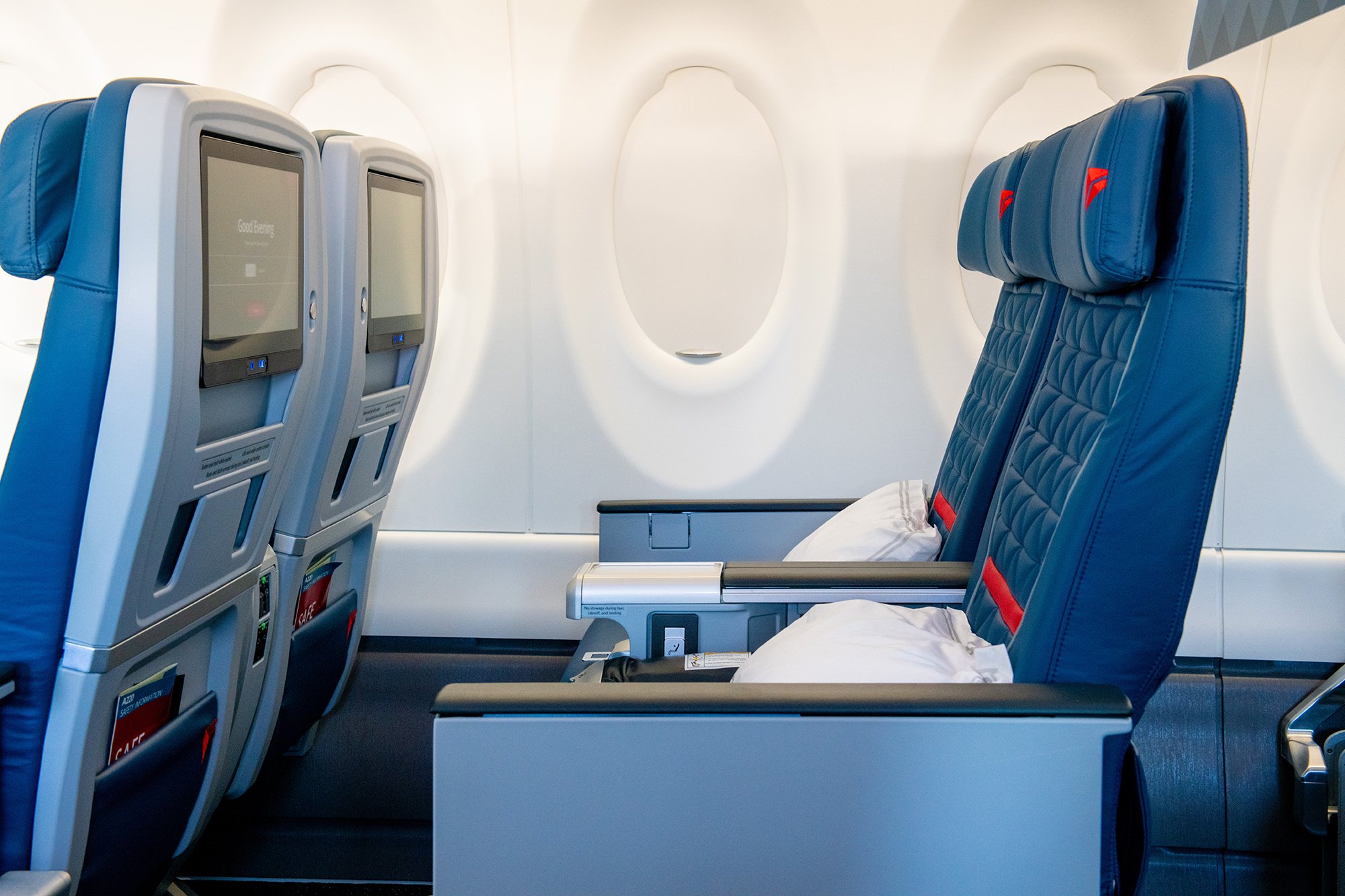
I say “somewhere” because I had no idea where we parked. Since everyone had their window shades closed on both flights, I could feel the aircraft moving, but I couldn’t tell they were turning right or left. I had no idea where the aircraft was in relation to the gates we left, and couldn’t even begin to guess ground speed or acceleration. This sent my head for a spin and, as I became further disoriented, I also started feeling nauseous.
Thankfully, the Salt Lake-bound flight went off without a hitch. It felt deeply weird that the last time I saw the sun was in Chicago, and that it was like I slowly teleported to the gate in Salt Lake.
The flight departing Salt Lake made me hit my limit. As the Boeing 737 released its brakes and started rolling out of wherever it was held during the Chicago ground stop, I kindly asked the person at the window seat to open the window shade because I was feeling really off. Within a few minutes, I had my bearings. Then, we blasted off into the sky; they closed their shade, and it was smooth sailing.
Why You Might Get Sick If You Can’t See Out Of A Plane

What happened is something that many travelers have experienced before. Our very own Bishop told me that he’s gone through a similar experience more than once. There’s a scientific reason behind it, too. What we experienced is a sensory illusion, and it’s generally caused by your eyes seeing (or not seeing) one thing, and your body experiencing another.
As the Vestibular Disorders Association writes, these feelings relate to how the human body’s vestibular system works:
Your sense of balance is maintained by a complex interaction of the following parts of the nervous system:
– The inner ears (also called the labyrinth), which monitor the directions of motion, such as turning or forward-backward, side-to-side, and up-and-down motions.
– The eyes, which monitor where the body is in space (i.e., upside down, right-side up, etc.) and also directions of motion.
– The skin pressure receptors such as in the seat and feet, which tell what parts of the body are down and touching the ground.
– The muscle and joint sensory receptors, which tell what parts of the body are moving.
– The central nervous system (the brain and spinal cord), which processes all the bits of information from the four other systems in order to coordinate it.

Some people describe a balance problem by saying they feel dizzy, lightheaded, unsteady, or giddy. This feeling of imbalance or disequilibrium, without a sensation of turning or spinning, is sometimes due to an inner ear problem. “Vertigo” comes from the Latin verb “to turn.” People who experience this often say that they feel like they or their surroundings are turning or spinning. Vertigo is frequently due to an inner ear problem. Dizziness, vertigo, and motion sickness all relate to the sense of balance and equilibrium. Researchers in space and aeronautical medicine call this sense spatial orientation, because it tells the brain where the body is “in space” — what direction it is pointing, what direction it is moving, and if it is turning or standing still.
The symptoms of motion sickness and dizziness appear when the central nervous system receives conflicting messages from the visual system and the vestibular system in the inner ears. For example, suppose you are riding through a storm in an airplane and the plane is being tossed about by air turbulence. Your head is moving, triggering the hair cells in your inner ear. Your body is moving, triggering your skin and muscle receptors. But your eyes do not detect this motion because all you see is the inside of the airplane. Thus, your brain receives conflicting messages from these four systems and you might become “air sick.”
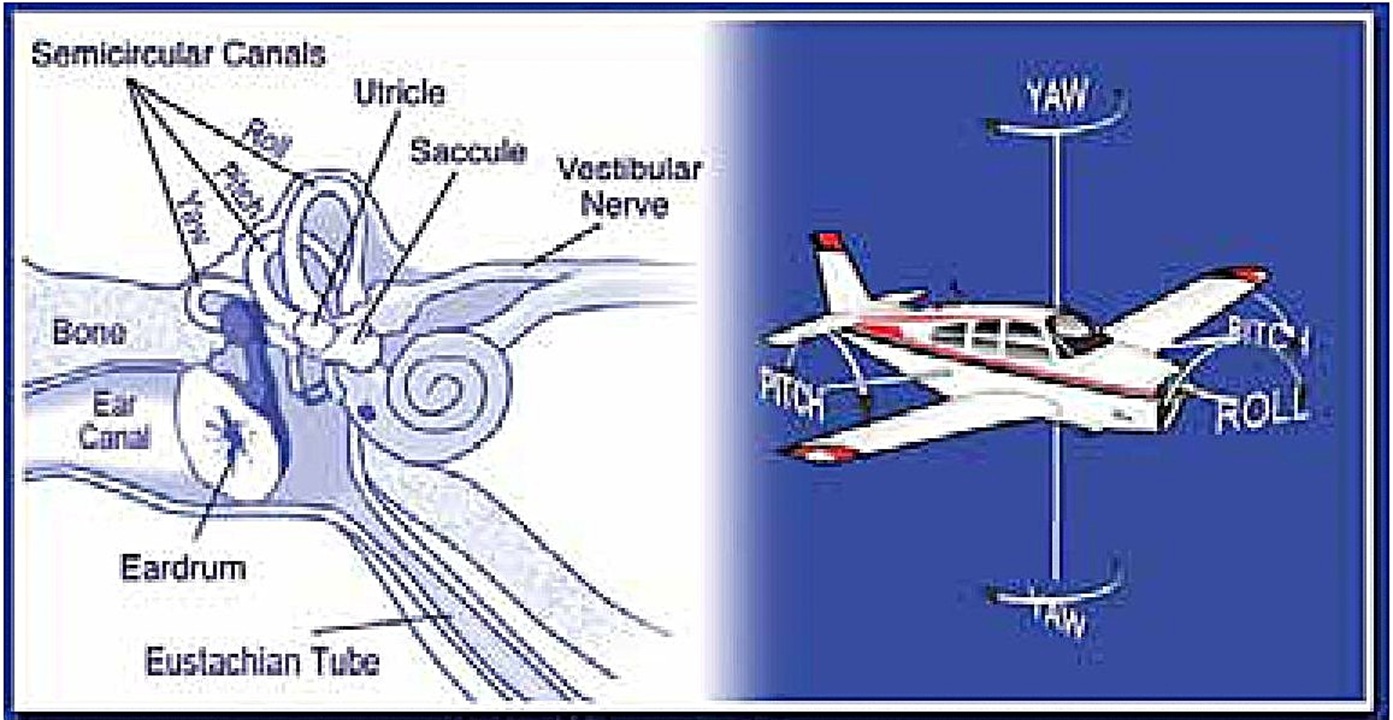
In short, when you cannot see an outside reference, or you just see a static plane interior, your eyes tell your brain that you’re not moving. But your other senses do detect motion.
As SKYbrary Aviation Safety notes, the vestibular system has its limitations. When an aircraft is flying straight and level in clean air, the only force you’re experiencing is the vertical pull of gravity. However, when the aircraft turns, climbs, descends, hits turbulence, or is just navigating a taxiway, more forces are being introduced. If you cannot see what’s going on outside, your vestibular system is missing a key piece of information for how to interpret what’s going on.
If you can’t see outside, it’s entirely possible for the aircraft to turn or change speeds gently enough that you won’t “sense” it. Alternatively, the aircraft could accelerate or decelerate in a way that makes you think the aircraft is climbing or descending when it actually isn’t. Without a visual reference, this could make you sick as a passenger. As a pilot, it’s a phenomenon known as a somatogravic illusion (pictured below). There’s also the somatogyral illusion, where the plane can bank one direction, but you feel it’s banking in the opposite direction. It’s weird stuff.
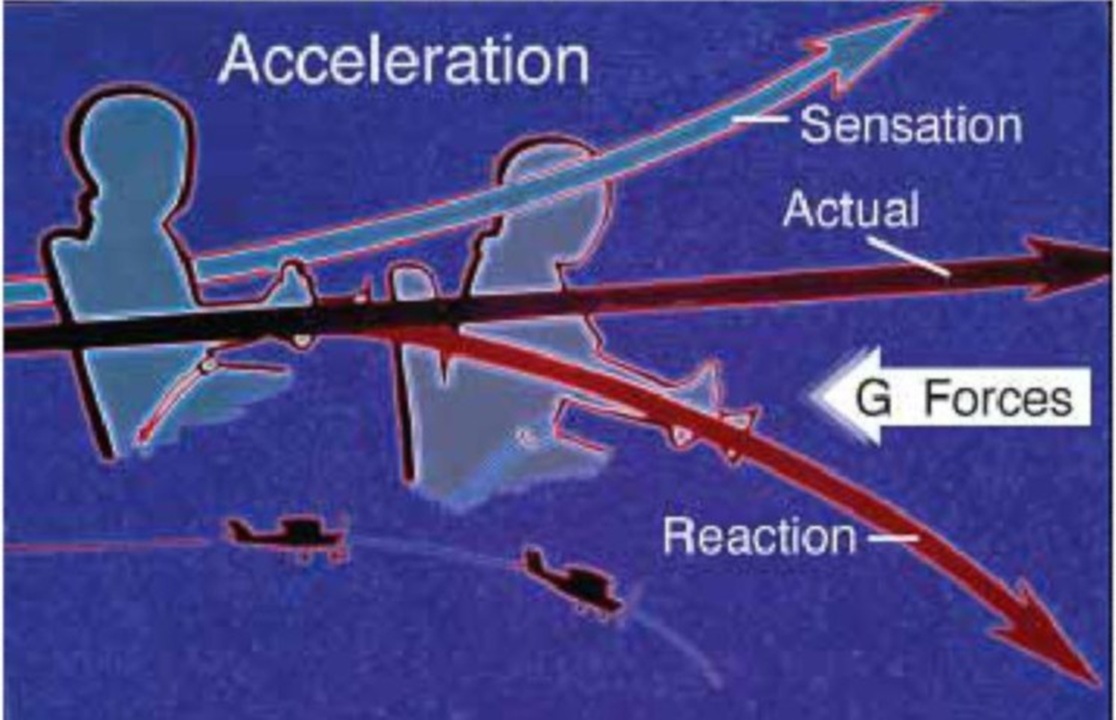
This can get especially dangerous for pilots because a pilot may think that a rapidly descending aircraft is actually pitching up toward a stall, and may react by pushing the controls forward, actually deepening the dive. Alternatively, a pilot suffering from a Somatogravic Illusion may feel that their aircraft that’s already climbing too steeply is actually descending, and may pull back on the controls, actually initiating a stall or making an existing stall deeper.
Thankfully, pilots are trained to trust their instruments in cases when their body’s senses cannot be relied on. For a passenger, opening the window shade — assuming there’s something to see outside can be enough to reset your head.
This alone would be enough for me to mandate that windows stay open for takeoff and landing. Look, nobody wants to find out what their seat neighbor had for breakfast. But there are valid safety reasons to do this, too.
Windows Aid In Safety

A couple of years ago, I wrote an explainer for why the flight attendants of some airlines request that you open your window shade for takeoff or landing. As I noted back then, there is a safety culture in aviation. The procedures and the regulations that pilots, even students like myself, have to deal with have sometimes been written in blood. One important area of safety is what’s known as the critical phases of flight, which the U.S. Federal Aviation Administration defines as:
As defined in the regulation, critical phases of flight are all ground operations involving taxi, takeoff, and landing, and all other flight operations below 10,000 feet except cruise flight.
These phases are “critical” because, during takeoff, taxi, and landing, there is a lot going on; the aircraft might be in a low-energy state, and the aircraft might not have a lot of altitude. Errors or severe malfunctions can be fatal here. If an engine fails during the takeoff run, the pilots need to be able to make the decision to continue or to stop the aircraft. If a landing is unstable, unsafe, or impeded by birds or drones, pilots need to be able to perform a go-around or a missed approach.

This is why the United States enforces what it calls the Sterile Flight Deck Rule. Pilots can’t be chatting about what they’re going to do this weekend when they’re 500 feet from landing or in the middle of rotating off the runway. Movies often depict aviation emergencies happening at cruising altitude, but often, the greater danger is an emergency happening near the ground where pilots do not have the luxury of airspeed, altitude, or time to work out the issue.
Flight attendants are another piece of the safety puzzle. In an emergency, they will be the ones giving you the instructions that can save your life. They will be coordinating the evacuation that, ideally, should be completed in less than 90 seconds. But their job goes far beyond just pointing you to an exit and telling you to leave your bags behind. During the outbreak of an emergency, flight attendants serve as extra pairs of eyes for the pilots.

Despite having expansive flight deck windows, pilots of common twinjets usually cannot see what’s going on with their engines. If the aircraft experiences an uncontained engine failure, for example, they’ll have fault indications that they could draw some conclusions from. However, a flight attendant can also look out of a window, see the damaged engine, see any potential fires, and report back to the flight deck.
In a ditching, flight attendants need to be able to look outside of the aircraft to figure out where the water line is. If they open the wrong emergency exit, that will flood the airplane. In a situation involving a cabin fire, first responders will be able to look through the windows to gauge the fire’s spread and intensity. The crew can also figure out which doors not to open to keep an external fire from getting in. Flight attendants can further tell pilots about visible leaks or structural damage.
An additional benefit is how windows help your eyes. In an emergency, you will need to adjust to the outside world quickly, be it a blindingly bright day or the black of night. Opening your window shade gives you an idea of what to expect. This is also why the cabin crew will usually dim the lights during critical stages of flight.
Of course, none of these benefits are there if the window shades are closed, or worse, there are no windows at all.
I Would Mandate Open Window Shades

Yet, as I reported two years ago, there is no governmental mandate to keep window shades open. The International Air Transport Association, which is a trade organization representing 300 airlines, and the United Nations International Civil Aviation Organization (ICAO) recommend requiring open window shades during critical phases of flight.
Currently, it’s up to each airline to require open shades or not. Countless international carriers, including airlines like British Airways and KLM Royal Dutch Airlines, require shades to be open during critical stages of flight. Some U.S. domestic carriers either don’t have a window shade rule or don’t really enforce one they do have. If you’re riding with a carrier that follows ICAO recommendations, chances are, the airline has a policy requiring the window shades to be open during critical stages of flight.
Thankfully, modern technology makes this so much easier. Aircraft like the Airbus A350 and the Boeing 787 Dreamliner don’t have shades at all, and instead, they have electronically dimmable window tint. The flight attendants can override whatever setting you have the window on to force all windows into a fully transparent state.

This is one of those situations that seems to have countless advantages and only a few disadvantages. Yes, having the window open during a takeoff or landing with one side of the plane facing the sun would suck. But it’s a temporary suck, and one that doesn’t suck as much as your seatmate barfing.
To be clear, I am not interested in telling you what to do. If you decide to keep your shade closed, I will live. I have always just thought that the science behind getting sick or disoriented when you can’t see out of a moving vehicle is fascinating. Now, maybe you might know a little more about yourself, too.
Still, if I had way more governmental power than I should ever have, I would require that window shades be open during departure and arrival. Once the plane is out of a critical phase, go ahead and close the shades. Otherwise, let that light in! While I’m in this hypothetical position of power, I would unravel the 25-Year Rule and the Chicken Tax. Look, a girl can dream.
Top graphic image: DepositPhotos.com


If I have a window seat, that shade is open and my nose is glued to the glass. I love to watch the world go by…trying to ID places on the ground, seeing the cool weather, etc. It mystifies me that anyone else wouldn’t be the same way.
That said, I hate flying…not because of the actual flying, but I find the hours spent in airport terminals to be absolutely miserable. And the cramped seating on the big planes doesn’t help my mood, either.
I may be crazy, but I’m pretty sure every Delta flight I’ve been on has required that at least the exit rows have their windows open for takeoff and landing. I realize that doesn’t help if you’re getting planesick in a non-exit row, but from a safety perspective it’s a pretty reasonable compromise.
Shades up! I want to see what’s going on out there, even at night. I’ll happily go along with closing them when parked at the gate on a super hot day though.
Ditto, shade up, eyes out.
Flying is such a rare and wonderful thing for me that I can’t imagine ever closing the shade. I prefer a seat where I can both watch the control surfaces on the wing and see the ground.
Now for an exception. GMP.
GMP (Gimpo International Airport) is the older and smaller Airport in Seoul. It’s closer to the city center and a bit further north than the huge airport (ICN) that is on a small island (Incheon) to the west of Seoul.
During take offs and landing, passengers can, in theory, see across the DMZ and into North Korea. North Korea is extremely paranoid about this. They have a long standing policy that they have the right to shoot down any spy plane that is flying with the window shades up from GMP.
I flew from GMP to Busan once and the flight attendants spent more time checking that the window shades were closed than to check seat belts, both on take off and prior to descent as I flew out and came back to GMP. It’s easy to ignore North Korea even from Seoul that is within artillery range of the DMZ and it was jarring to have that reminder.
PS, I thought the law required window shades to be up prior to landing to allow people’s eyes to adjust to the light levels outside in the case of an accident. I know on a lot of flights (particularly long haul ones), they will open the window shades before landing. It actually seems strange to have people leave them down.
I think Boeing has the right idea with the 787. No shades, all the windows change tint based on a schedule.
Personally I like the shade open if the sun is up. It helps with jet lag and time changes. It is also just nice to look out and see the world go by.
I can’t agree that the window seat gives room to “spill out”. The window seat, especially on a narrow body like a 737 has the least amount of room. The curve of the fuselage takes a couple inches of shoulder room so even sitting bolt upright my shoulder is touching the wall. I’ll take that tradeoff to control the window and see outside but it is a cramped seat.
I came to the comments to make exactly these points, and I am glad I am not alone. Someone convinced me the best choice for a long flight was window, so I once spent a flight to Japan smashed up against the bulkhead and uncomfortable. Aisle every time.
And the auto-dimming windows certainly makes it easier on flight attendants. I always get annoyed at passengers who have to be asked several times to leave their shade up until takeoff so the flight attendants can see out during preparations.
The window seat depends on who you are. I’m broad shouldered and long torsoed. Window seats are uncomfortable even on widebodies. On small commuter jets, I feel like Mr. Incredible in a car. Meanwhile for my wife, who is petite, the window seat, even on small commuter jets is more comfortable and she enjoys not having to worry about people climbing over her to go the bathroom.
I can sleep leaning against the side of the plane. On the aisle seat I’m constantly bumped into. I’m six foot, and leaning against the side is vastly better than people crashing into me. Or the cart. Center seat is the worst of all, and my camera backpack doesn’t fit under because there’s something out the way the seat is constructed.
I fly on airbus airlines, so I don’t know how it is on Boeings. I do like the A320 Neo a lot.
I can’t sleep on a plane period. Not even the one trip we splurged on business class for trip to Europe and had lie flat seats.
Sorry, I’m one of the “shade down” guys. I always choose an aisle seat. I hate heights, and keeping the shade down lessens anxiety about flying.
My ex Step Father a (now retired) 747 captain for British Airways always explained to me that part of the reason for blinds up was in the event of a crash or fire the ground the emergency services had more visibility to see what was happening inside the cabin as they were about to enter to fight any fires / rescue passengers. The logic has always made sense to me.
That’s one of those depressing bits of information like the real reason for the ‘Baby on Board’ sign is so that first responders know to check for a child seat in the event of an accident.
I can’t believe I just learned the real purpose to “baby on board”.
And blast everyone with deadly UV radiation? Dermatologists love this one neat trick.
Cabin windows in commercial airliners block both UVA and UVB radiation.
How much 100%?
Depends on the airplane. 100% of UVB and 50% to 100% of UVA
On the other hand car windows block UVB but do nothing for UVA.
That’s pretty good UVA/B numbers. Car windows can block some UVA depending on the window and tint.
Car windshields block some UVA but the side windows do nothing for it.
Tints like anything aftermarket depends on what you buy.
The A350 has electronically dimmable shades as an option, the only operators to have them are JAL (in first & business class) and Turkish (on their 2026-delivered planes, but not before).
I can understand why some would want the windows removed…
The best configuration for a plane is the flying wing, while it works fine for delivering splody stuff all over the world, carrying paying passengers would generate some issues.
After all lots of people wants a window seat (for all the reasons mentioned and more… for me it’s I like to take pictures of the mountains I climbed from above, so I book window seats when the flight path goes over the Alps) .
In a flying wing there would be an extremely limited number of wndows and they would be located in the front of the wing, which would generate weakness points.
Airbus and Boeing have been toying with the concept for quite a while, but they haven’t jumped the fence and started developping that kind of plane because they know the general public is not ready to fly in a plane with no window, and just a screen that can show the outside through several cameras.
This is resolvable; glass bottom plane. Of course, the cargo would have to go on top, but that’s what roof racks are for!
You’d think that airlines would want the shades up, or at least partially up if the sun is low and blinding, while the plane is on the ground just to minimize the chance of nausea and motion sickness among the passengers. Just movement with no visual reference is enough to make some people want to reach for the airsickness bag, let alone turbulence and 30,000 feet.
Also, I prefer the shade up most of the time, even though I’m not prone to motion sickness.
Boeing 727’s gave me the oddest, uncomfortable sensation though. Shades up or down, light or dark outside, ground visible or not, a 727 always felt like it was flying nose-up, even while level. I could look out the window or around the interior of the plane; it didn’t matter. Always felt like the whole cabin was several more degrees nose-up compared to other planes; enough to be just a little disconcerting.
Must be fun to be in an elevator
Not a problem. An elevator doesn’t jostle the inner ear or cause any apparent changes in direction or orientation which cause motion sickness. All it does is change the magnitude of the gravity you’re already feeling.
Somebody read Bradley Brownwell’s ‘hot’ take on the old site from a few weeks ago. It was bad. This is good.
That site is unreadable, was it about this topic?
Some airports require the windows closed during takeoff and landing. I saw this in dual-purpose civil/military airports.
I’ve seen the aurora over Greenland, forest fires at night in Canada, and an absolutely stunning snowy mt. Fuji. Team shades up all the way.
Is this a US thing? Whenever I board a plane in the UK, the staff tell me in no uncertain terms to keep the blinds up during takeoff ???? and landing. As the author says, it shouldn’t be a choice.
I’m from the UK and it’s every flight I’ve ever been on. I travel a lot too.
I’m pretty sure I’ve been told this in the US too
Most A350 jets don’t have the electrochromic dimming shade less windows, every long haul Delta A350 I’ve ever flown on only has had the analog shades like every other jet I’ve ever flown on. I’ve never been on the 787 yet, but I’m not sure if I want to hand control of the windows to the cabin crew exclusively. For short flights if I’m on the window side I like looking outside, but for the majority of the time I prefer the aisle seat and shades down especially on long haul when I already don’t sleep great on planes and am trying to avoid jet lag.
The crew only overrides the shades during taxi, takeoff, and landing. During cruise the passengers have control.
I’ve heard otherwise, that if they so choose you have zero control over the windows, but that’s dependant on the airline and crew. So maybe not.
I’m not sure where to start. I am a 2 million miler who racks up almost 200,000 miles per year these days. My flights almost always start with 4-hour drive down to the airport to catch a red-eye down to Seattle or Minneapolis. My second leg starts at 7:00 or 8:00AM. Nothing irritates me more than someone in the middle seat who is just starting their day asking me if I could open my window shade so they can see the mountains. At my destination, I almost always have a 3- 6 hour drive to my job in BFE America. I got a couple fitful hours of sleep on my red-eye. I will have to adjust to 4 times zones for a week of brutal 14-hour days ahead of me. The last thing I want to do is look out the window at topography 30,000 feet below me. The novelty of watching the flaps on the wings or the change in topography was lost on me 1.5 million miles ago. I have flown over the Rockies more times than I can count. I have eye masks, but they only do so much, especially when the sun is beating on the side of my face and upper body.
I bought a window seat so I could control my window shade, and not have someone with a weak bladder climbing over me every 3 hours. My primary concern is getting enough rest to be safe on the road when I land and safe at my job site the next day. If you pay for a window seat behind me and want to keep your shade open all flight, that is your right, even it it prevents everyone within 3 rows of you from sleeping But please don’t buy the budget seat in the middle and expect the person at the window to manipulate the window.
You need to be paid more and get first class seats for all that traveling. Then you’d be better rested and less cranky 😉
I do get a lot of first class seats. We still have windows.
I would assume at 2 million miles and 200k a year, Studmuffin gets to be #1 on the upgrade list for every flight, unless they fly 4-5 different carriers.
Delta Diamond. I get to the top frequently, but there are a surprising number of circumstances that can knock me down. For flights out of Anchorage, I am competing with captains of cargo planes which stop over in Anchorage to/from Asia to refuel and change the crew. I am also competing with hunters and anglers who often find it is cheaper to fly first class and get the “free” checked bags full of fish or moose than it is to pay for the bags in coach.
How does that work? Are you giving up your weekend to be there for Monday, or is the company losing what sounds like a whole day of work on a regular basis just to transport you to the job location?
At some point I would have just relocated, to cut out some of the travel.
My work isn’t Monday through Friday. I support big industrial facilities that shut down once every year or two and perform maintenance 24/7.
My wife has a job in rural Alaska. My job is salaried; I bill my customer for 8 hours of travel time each way.
Damn. I wish I got up only every 3 hours. That and a mild case of claustrophobia means I always reserve an aisle seat. And while I enjoy looking out the window, I’ve never asked someone to manipulate their shade.
I read that deeply unhinged take on the old site. It’s by far the worst take by that author, and he’s not lacking those…
Anyway, I’m 100% on your side here and I’m a militant shade open person. Really, the only time the shade should be down is if the low sun of a sunrise or sunset is angling horizontally into the plane. Even then, it could be half down so you still get the benefit of natural light without the glare.
Those dimming shades on the Dreamliner and A350 are amazing, you can still look out without being blinded. Like window tint on a car, they make everything better. Unless the cabin crew locks in the darkest setting, which I find infuriating.
Brownell truly is *the worst*, for a number of reasons.
Part of me always felt he’d have bad takes just for engagement. Part wondered if he really was that dumb. After that article, turns out he’s just a jackass.
I still think he does it all for show/clicks. Any press is good press, the contrarian gets that press.
Just makes him more of a jackass.
Air Force One recently requested that all window shades be closed so you wouldn’t see the boss being shuttled around in a catering container
As someone that gets dizzy with the Earth’s rotation, I appreciate this article. I’ve been repeating these points about our inner ears for years to my friends, but for car travel. As the designated driver by choice, and having a mini an that seats seven pairs of (potentially buggy) inner ears, I am always mindful of the risks of not properly syncing what you sense and what you see on the road.
Windows open here.
Even when the glare is bad – I’ll only pull the shade down partway in order to still get some sunlight and view in.
The one and only time I flew a 747, it was a military charter flight from LAX to Yokota AB (near Tokyo) via Anchorage.
I was assigned a window seat – but it was just ahead of an exit row and there was no window at all.
Pure misery.
It’s probably any good idea. Even on a red eye keeping windows open on take off and landing is a good idea. Plus are you really going to sleep through takeoff. They turn the cabin lights on before landing and make sure people are awake and buckled.
There was a recent incident at JFK with a fuel leak. It’s thought that a passenger alerted a flight attendant to it. We act like commerical aviation is no risk and boring. We have older fleets now, like anything else from what I’ve heard people that aren’t as good at maintaining systems as previous eras.
I’ve been on flights where I saw something that didn’t seem right and told the flight attendant who basically calmly went oh no then told the pilots and we went back and got on another plane.
There is this weird cultural thing that happens to people they act like they don’t care about seeing things because they do it alot. Sort of the “busy busy I’m important” culture. I used to fly several days a week with some 24 hour flights every other month for a while. I got sick of the airports, the stuff around the airports, and being in a plane sometimes but not the actual looking out. If you talk to pilots they love to see out and doesn’t get old for them. Talk to any one in Maritime it’s the same thing. They claim to have the best office in the world. Meanwhile Chad in seat 19f is trying to recreate his office because he wants look important and busy.
I fall asleep during takeoff on nearly every flight I take. And they don’t wake people up for landing unless they don’t have their belt on or their tray is down or their seat is back or their crap is around their feet instead of stowed.
I genuinely don’t care about seeing things, it’s a weekly commute for me. I’m not sick of looking out, I just don’t care about it at all. I know other people might so I just get aisle seats.
If it wasn’t for people that pop gum or smack their lips or don’t bathe before a flight, I wouldn’t notice them at all. Rest assured, I don’t give two shits whether you think I’m “important.” I’m not putting on a show for you, I would rather do my expense reports while I’m trapped in a tin can than on my Sunday.
It’s a weirdly narcissistic mistake to project your priorities and habits and interests and time-management decisions onto other people.
Well next time you fly internationally IATA / ICAO will likey require you to have have your shades open at takeoff and landing. It’s viewed as a safety issue.
I’ve witnessed the “narcissistic ugly American” on numerous occasions who refuse to listen to a flight attendant because they didn’t have to something on a domestic service they are used to. Thats partly why some of the UA flight attendants on international routes have such a stick stuck up their ass.
I guess if you are sleeping sitting up with the table up and buckled they just assume your eyes are closed. They absolutely go around waking people up who are reclined or don’t have their seat belt.
“Well next time you fly internationally IATA / ICAO will likey require you to have have your shades open at takeoff and landing. It’s viewed as a safety issue.”
I’m familiar, and have no issue at all with open shades under 10k feet. Passengers are told to open them on about 10% of the US domestic flights I take and 100% of the international ones.
“I guess if you are sleeping sitting up with the table up and buckled they just assume your eyes are closed.”
No. They don’t care whether you’re awake or not. As I said, they’re just looking for seatbelts, trays, seatbacks, and aisle clutter. No attendant has ever woken me up for landing unless my tray was down, and I’m over a million miles.
“They absolutely go around waking people up who are reclined or don’t have their seat belt.”
Yeah, that’s what I said.