

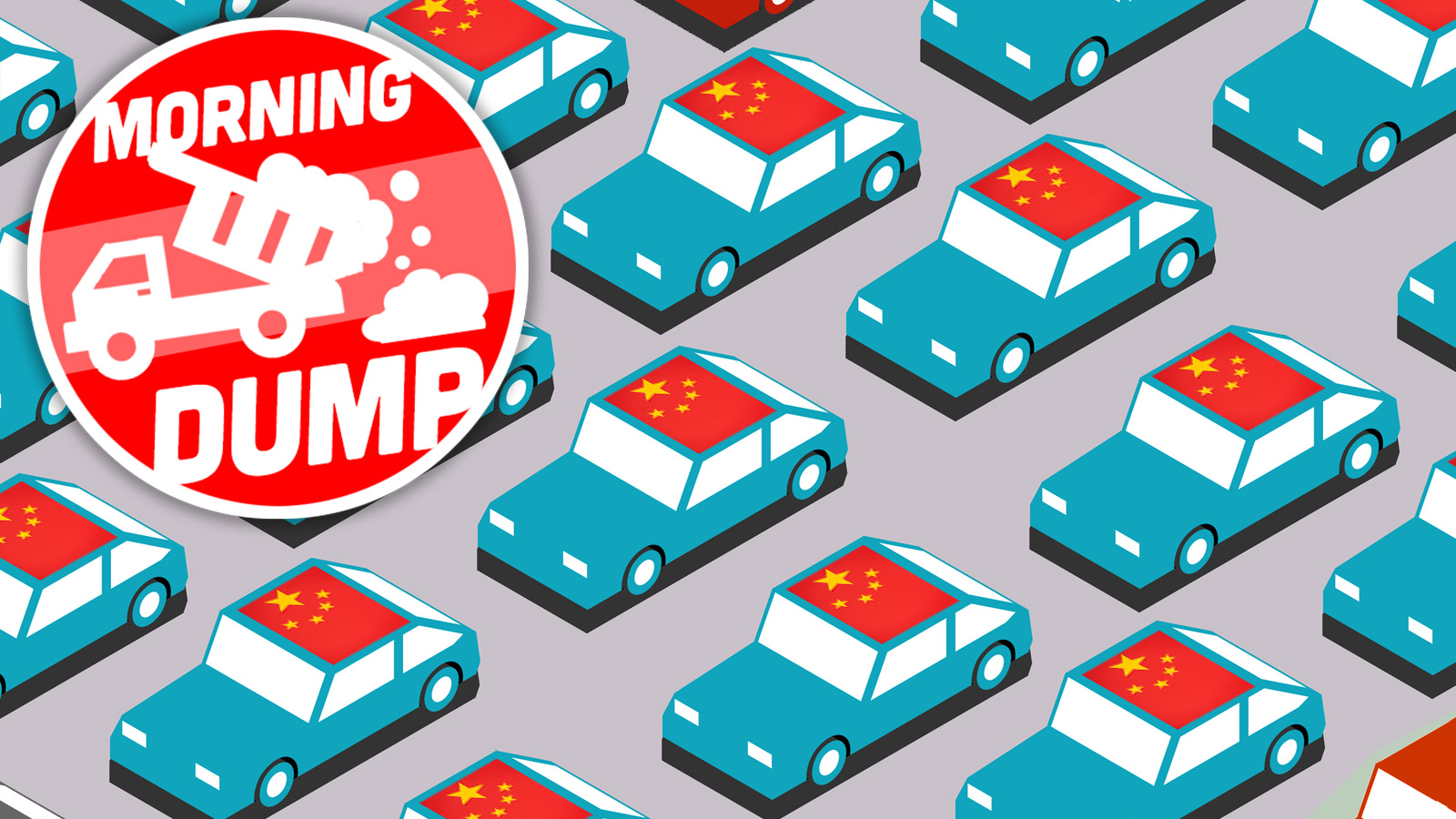
The global automotive industry has been propped up by Chinese consumers for nearly two decades. While there are some smaller markets that have grown in the last few years, the old large markets (Europe, US/Canada, Japan) have generally stagnated in terms of volume. The United States, for instance, might never get back to the 17.5 million cars sold in 2016, which is way less than the record 23.7 million sold in China last year.
What goes up must come down, and The Morning Dump today is going to be about what happens when things start falling. For China, the slump comes at a time when both domestic and foreign automakers are fighting for market share, which means everyone is about to lose in a big way.


Each day brings a little more information on the deal made between Canada and the US, and the tariff rate does seem to be going down, though there’s a big question of how that impacts the effective tariff rate, which in turn will affect what happens to one of Canada’s biggest automotive facilities.
Not all downward trends are bad trends. Consumers are happy when cars get cheaper, and one Vietnamese truck maker is bringing back the Nano name in the form of a cheap electric vehicle.
500 New Cars Is Too Many Slices
My family often quotes the above TikTok viral meme wherein a guy watches someone cut a pizza into increasingly smaller pieces. In the video he yells “that’s enough slices!” For whatever reason, this has become “too many slices” in our own internal parlance.
China has entered the too many slices/not enough slices zone when it comes to new cars, offering more models for a customer base that isn’t getting bigger.
What’s happened in China is not a surprise. It’s merely the confluence of various factors. The Chinese economy has grown roughly twelve-fold in GDP since joining the World Trade Organization in 2001. This nearly $18 trillion swing in GDP created a lot of buying power for Chinese consumers. At first, western automakers (led by GM and Volkswagen) dominated China, either through imports or through joint ventures with local automakers.
In order to push electrification and self reliance, the Chinese government made it a priority to build out the local automotive industry. This resulted in an explosion of local car companies which suddenly became very competitive with foreign ones. This conflict between the two forces has resulted in numerous brands trying to out-do one another with new models.
“We have a huge number of players in the domestic market, with over 130 brands selling vehicles and more than 500 new models launched in the first half of this year,” Fu Bingfeng, secretary general of CAAM, said July 21 at an industry forum in Shanghai. “Such an aggressive rollout of new products was far beyond what the market was able to accommodate.”
Average operating margins in China’s auto manufacturing sector have declined for nearly a decade, sliding to 4.1 percent in 2025 from 7.8 percent in 2017, when annual domestic passenger vehicle sales plateaued at 24 million, Fu said.
Operating margins slipped to 3.4 percent in the first five months of 2026, according to numbers he disclosed at the event. The dynamic is pressuring profits across the board.
500 new cars in half a year is way too many slices, especially as the market dropped for the 11th straight month in July. Fewer customers and more competition means margins are getting peach fruit roll-up thin. Many traditional OEMs have pulled brands out of China and I wonder how long the car market can slide before more domestic brands start disappearing or the government steps in with more subsidies.
This also puts pressure on Chinese automakers to try to get new sales abroad in places like Canada.
Canada’s New Tariff Rate Is 15%, But Is It Really 15%?
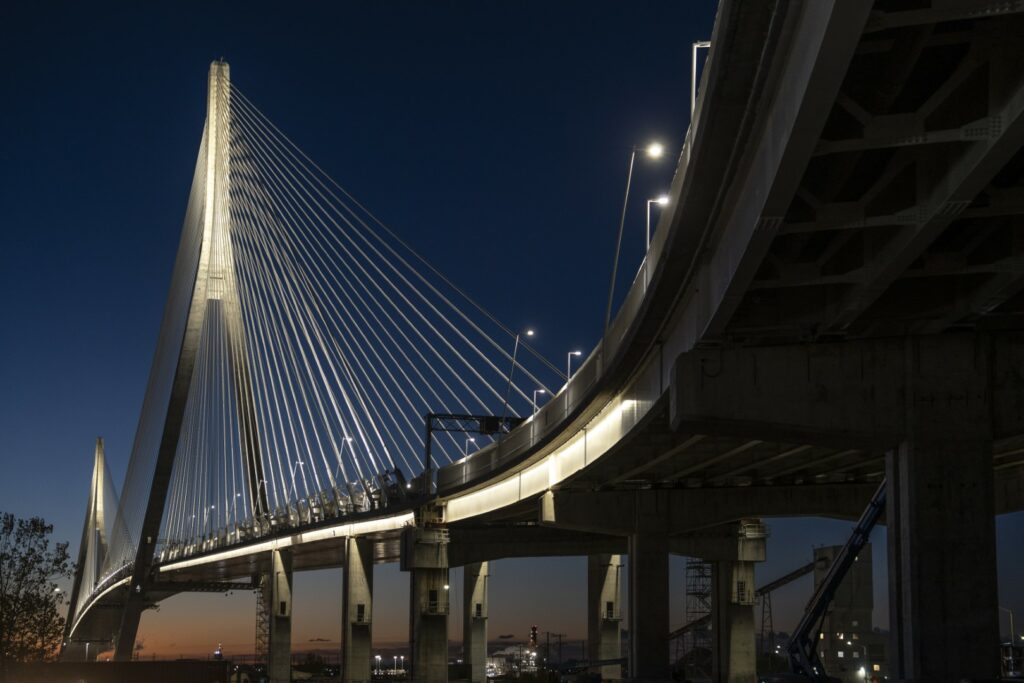
It’s now day three of what’s-gonna-happen with Canada. On Monday, everyone waited to see if President Trump was really going to put a 50% tariff on Canadian goods. Yesterday, we heard a deal was struck to avert disaster, but with few details.
This morning we’re learning a little more. Specifically, Bloomberg reports that the tariff rate on autos imported from Canada has dropped from 25% to 15%:
For vehicles made in Canada and Mexico, the tax applies only to a vehicle’s non-US content, a measure intended to push companies to move more production to the US.
The same content provision will apply to the new 15% rate, the people said. Details of the agreement have not been finalized and US President Donald Trump in the past has made last-minute changes to trade agreements or killed them entirely.
Under the USMCA, for a vehicle to qualify as compliant (and thus avoid the previous base tariff) it had to have 75% North American content. Under the new rules, only the parts content that isn’t North American gets hit with tariffs (If it’s a $40,000 car and 75% of the car is North American, the 25% tariff that existed meant a $2,500 tariff). What if that ‘North American content’ becomes US-only content, as intimated above?
The math gets a little wonky. Let’s say that the $40,000 car mentioned above only has half its content from the US and the rest from Canada/Mexico/Wherever. The $20,000 now gets hit with a duty, which is going to be 15%. That’s $3,000, which means the tariff has gone up $500. If the new rules allow for Canadian/US content, then the tariff drops by $1,000 to $1,500.
Whether or not a car is competitive if produced in Canada will depend a lot on both the content of the car and the final details of these rules.
Brampton Assembly Might Just Make Other Stuff
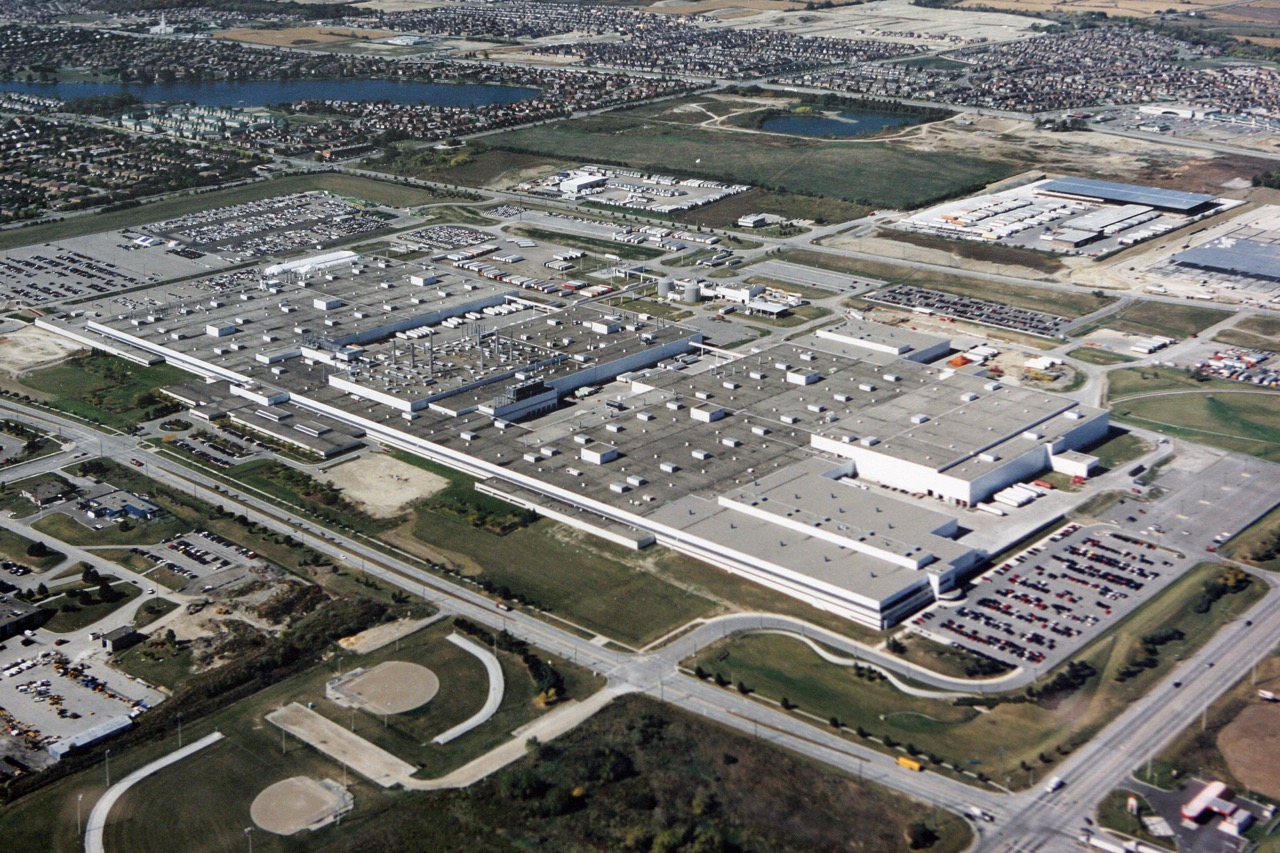
When the last Challenger rolled off the assembly line at the Stellantis facility in Brampton, Ontario, it was the end of a very long era for the automaker and for the region. The facility was supposed to be a place where the company would roll out electric vehicles for sale in the United States, which is about as cursed an idea as one can imagine in 2026.
So what’s going to happen? No one knows for sure and, as the Detroit Free Press reports, the union is not happy with the constant misdirection from Stellantis since the end of Challenger/Charger production:
In the union’s eyes, during those two years, Stellantis has lied to those autoworkers with promises to revive the Brampton Assembly Plant.
The broken promises have caused a spat between the union and Stellantis and even drawn the ire of the Canadian federal government. And next month, the union and Stellantis will have it out while negotiating the union’s next contract — and they will do it all underneath a massive shadow cast by news that Stellantis may close and sell the Brampton plant to a non-automaker, despite promising to find a new product to be built there.
The news of the sale culminated in a fiery news conference on Friday, Aug. 14, when Unifor President Lana Payne said Stellantis had issued a “gut punch” to her union.
It’s possible the new tariff rules will encourage someone to start building something in Brampton. If it’s not cars, it’s hard to see how it’ll replace all the jobs lost.
The Nano Is Back And It Costs $5,650 And Also It’s From A Vietnamese Truck Company
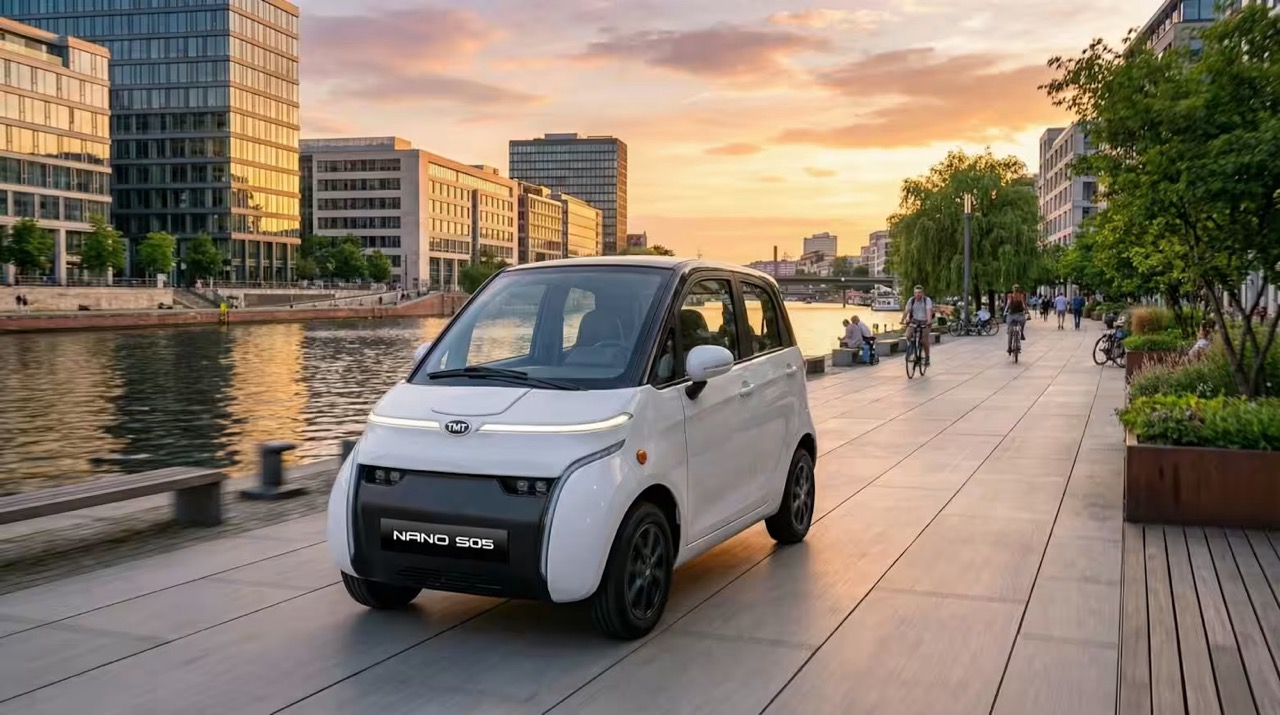
I’m old enough to remember all the excitement around the Tata Nano, which was then billed as a cheap alternative to bikes in India, with a then-$2,000 price. The car failed, primarily because it felt too cheap. The Nano concept is back and, curiously, it’s from a company in Vietnam that mostly does local assembly for trucks from Tata (and also Sinotruk). It’s a little electric microcar that’ll cost about $5,650.
The Nano S05 will cost less than VinFast’s VF 2, currently the Vietnamese automaker’s cheapest passenger EV at 188 million dong. It is also priced close to premium motorbikes such as Honda’s SH 350i, which retails at 153 million dong, and Piaggio’s Vespa Sprint 80th 180, priced at about 121 million dong.
Measuring just 2.28 meters long and 1.29 meters wide, the Nano S05 is significantly smaller than VinFast’s four-seat VF 2 and is designed to navigate crowded streets and tight parking spaces. The model highlights a growing push to develop affordable electric vehicles tailored for Vietnam’s motorcycle-dominated cities.
TMT says the Nano S05 model is assembled in Vietnam and draws on the engineering of the Silence S04, a Spanish electric microcar made by Acciona’s EV brand Silence.
A Vietnamese-built, Spanish-designed Indian-named microcar! Who said globalism was dead?
The larger-battery option will have two removable lithium ion batteries, allowing for charging without a dedicated charging spot, which is neat.
What I’m Listening To While Writing TMD
I was in a situation where I couldn’t connect to the Internet, so I pulled up the older Japanese Breakfast album I forgot I’d downloaded. “Boyish” is an all-timer, and I can’t believe I haven’t played it here yet.
The Big Question
What’s your favorite Chinese car or brand?
Top photo: DepositPhotos.com


Yeah, so Trump went ape-shit again last night and the deal fell apart at the 11th hour. Canadian tariffs are 50% now. Why? Because Canada wouldn’t let Trump intervene in negotiations Canada would have with other countries.
I fucking hate this man. And his followers.
So that statistic about there being 500 new car models this year is misleading; yes, there are a whole lot more new car launches than in the US market, but at least 2/3rds of that number is just minor model year updates, trim level reconfigurations, or even just 3-row SUVs with the 3rd row removed a la Mazda CX-70. The number of actually new car models or new generations from brands that are actually remotely close to mattering is probably below 50 (excluding commercial style vans). Of all of the new Chinese EV brands, just 22 of them account for 95% of EVs sold, and that number drops when you combine subbrands into their parent brands. Automakers like to split off their lineups into subbrands and classify them as seperate in the Chinese market (foreign brands included), so It’d be like if the Hyundai Ioniq and Kia EV# lines, Toyota bZ# series, Volkswagen ID.# line, etc. were considered their own seperate brands.
Cambrian explosion, but for Chinese autos. I wonder who will survive the extinction event…
Cars schmars. This here is a very sophisticated music curation service. Can we put our hands together for Matt’s reccos? Japanese Breakfast is obscure(ish), wonderful and definitely unexpected from a Texan DJ.
To a westerner, BYD definitely seems like the most “mature” brand. In the sense that they’re long established and parts availability wouldn’t scare me, and that they’ll be around in the near and medium-term future.
Doesn’t mean I really desire their cars, but I’d trust them. My coworker had one on a recent Italy trip, a Seal I believe. Decent to drive, good interior, a solid choice. But it had a silly gimmick, as there was a dedicated button on the steering wheel to change the orientation of the massive infotainment screen from portrait to landscape. A rotating screen isn’t a bad idea honestly, but something about it being motorized would give me pause. I just pixture it getting stuck at a 45 degree angle.
Think how many times Chinese Doug DeMuro has to say “THIS, is a……”
TBQ: Probably the Mazda 6e (so much so I actually bought one) and the Toyota bZ3. Cars built in China based on Chinese power electronics and Chinese platforms, but with the backing of a legacy automaker. I love EVs and hybrids, I’ve been messing with Chinese ebikes for over 10 years now, but I’m still hesitant at owning a fully 100% Chinese car.
Except for the SC01 though, If I had the cash and garage space I’d get one in a heartbeat.
TBQ: While on business in Detroit in 2012, I went to the annual Auto Show after work. I saw a sleek BYD sedan and was amused to read that the letters stood for “Build Your Dreams.” 14 years later, it still seems like a dream to be able to buy one of their products.
I have so much sympathy for corporate managers trying to navigate the swirling waters of international and intracontinental tariffs that change almost daily on the whims of a crazy and capricious “president.”
To answer TBQ, I’m currently very interested in a Zeekr 7gt to replace my Cupra when the lease is up, and if money was no object a 009 would be absolutely absolutely baller
Not a single DONG joke!?!?!
What is wrong with this comment section??
Heh, heh, heh, heh. He said dong.
Can you imagine the parts catalogue in China when 1000 new models come out each year?
JC Whitney would explode.
Build Your Dream (BYD), They are many over here in brazil . The Uber BYD’s I’ve been in are nice. The other Chinese makes used for taxis in China seemed worse.
I can’t answer TBQ as I honestly haven’t looked too much into Chinese brands (perhaps GWM for being a potential contender to keep the triple-dipper-proof Toyota 1NZ design alive with its reverse-engineered knockoffs, in cas Toyota ever discontinues its own production for the Probox and JPN Taxi?).
However, how hard would it be for Stellantis to sell the plant to another automaker that had to cut once-popular models from its Canadian lineup due to tariffs (such as Kia with the Telluride) or one that’s really looking to enter Canada/North America (such as a Chinese marque)?
Stellantis should have just kept building the Challenger. Give the people what they want
When Dodge killed it the tooling was worn out, they were paying millions for tax credits to offset CAFE, and sales were dropping below the marginal profit line.
Old, simple, inefficient cars may be profitable now, but it’s been too long to unshred all the stamping dies, injection molds, and casting forms that were no longer needed.