


Today’s Morning Dump is going to focus on the differences between countries. What is acceptable, predictable, or reasonable in one culture may not be acceptable, predictable, or reasonable somewhere else. While a debate over surveillance rages in the USA, Toyota is testing a kind of Dark Knight-esque system in its home market that allows authorities to view your car’s cameras.
You’d think the United States and Canada would have a lot in common, sharing both a large border and a predilection for the comedy of Eugene Levy. A trade war has highlighted the differences, although the worst crisis has been temporarily averted.


Large German public companies tend to have a lot of stakeholders to deal with, sometimes including state governments, and this can create both a necessary tension in order to reach helpful compromise and a slowness to react to emergencies. ZF’s new CEO is going to have to overcome those if he wants to save the company.
And, finally, when American car companies want to set speed records they tend to use sports cars or purpose-built streamliners. Czech automakers? Famously, they use sedans.
I Don’t Think This Would Work In The USA
“I know this is a difficult project in terms of privacy, but we can’t use all this valuable data to serve society unless we take a step forward. This project has allowed us to take a step forward,” explains Toyota’s project leader Masato Koike.
The project he leads is one that uses the many cameras built-in to Toyota’s cars to help emergency operators (in Japan this is 119 instead of 911) identify what’s happening at a scene. As Toyota’s in-house magazine reports:
The system has already been used at actual accident scenes. In some cases, it has led to faster deployment of fire trucks, and the results are starting to show.
“Could we use the dashcams in cars driving around town as the eyes of the fire department?”
That idea, from one Toyota employee, is what gave rise to Drive Recorder 119.
Now, through the cooperation of many people, that challenge to shape the future is ready to make a major leap forward.
Practically, this isn’t a complicated issue. Almost all communication between the people involved in an emergency and dispatchers is via voice. While that’s reasonable in many situations, you can imagine how having the ability to see the extent of an accident might help a dispatcher better assign resources in response.
In many cities, particularly in places like London, there are surveillance cameras everywhere and anything that happens in a public space is likely to be accessible to local authorities.
For now, most of the use has been limited to Toyota’s futuristic city, which itself feels a little like a surveillance state already. Car owners also have to consent to allow their cameras to be taken over by authorities in emergency situations.
Could this work in the United States? That’s a harder pill to swallow here, and some of that probably has to do with the reaction to the expansion of Ring cameras and, in particular, to Automatic License Plate Reading (ALPR) technology like Flock, which the ACLU rightly calls “mass surveillance technology.” After the police tracked and confronted journalist Joel Feder from The Drive, awareness of the risks of ALPR tracking seems to have widened.
As a side note, Joel is an old friend, and I’m not 100% sure he shouldn’t have been arrested for something. He has too much energy. It’s suspicious!
The United States And Canada Pause Trade War, Briefly
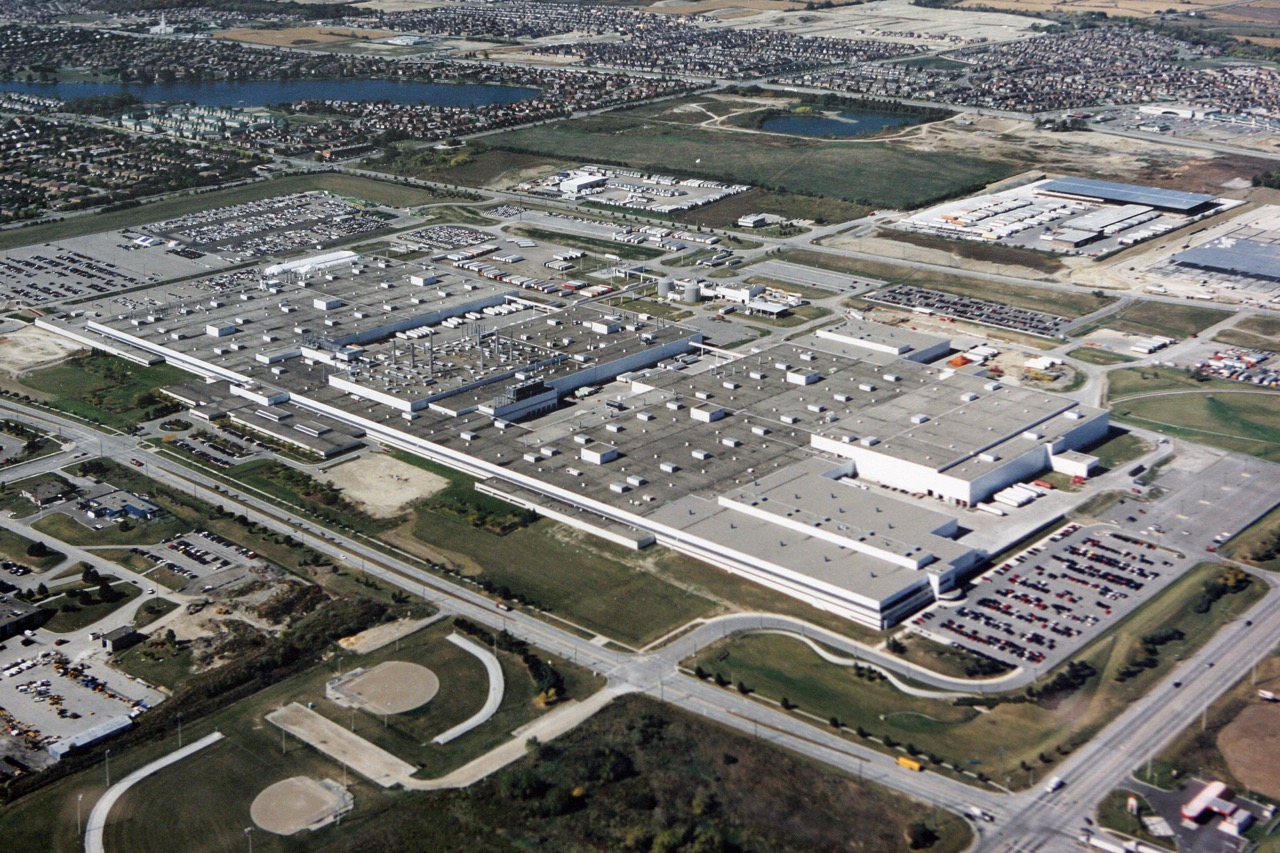
President Trump has backed off his threat to hike tariffs on Canadian goods to nearly 50%, stating that “I have paused the 50% Tariffs against Canada, that were scheduled to kick in tomorrow morning for a three day period, based on the fact that Canada and the U.S.A., subject to the finalization of documents, have a DEAL! ”
Is there a deal, though? The Canadians aren’t quite so convinced according to this Bloomberg report:
Canadian Prime Minister Mark Carney wasn’t as definitive, stopping short of saying they had a deal. Neither side said whether earlier sticking points such as auto tariffs and lumber will be resolved.
“Substantial progress has been made, although there is important work still to be done,” Carney said in a statement. “While we continue this work, Canada remains focused on building a stronger, more independent, and more competitive economy at home.”
While there are many issues, the primary one seems to be about automobiles. The United States wants a 15% tariff on Canadian-built cars, although with some reduction for American content. Even if the effective tariff is therefore only 9-10%, that makes it a little harder for companies to justify building cars in Canada and exporting them to the United States.
At that point, it’s maybe net cheaper to build cars in South Korea or even Japan.
ZF Friedrichshafen Blew Its Cash On Electrification. Can It Survive A Rebuilding?
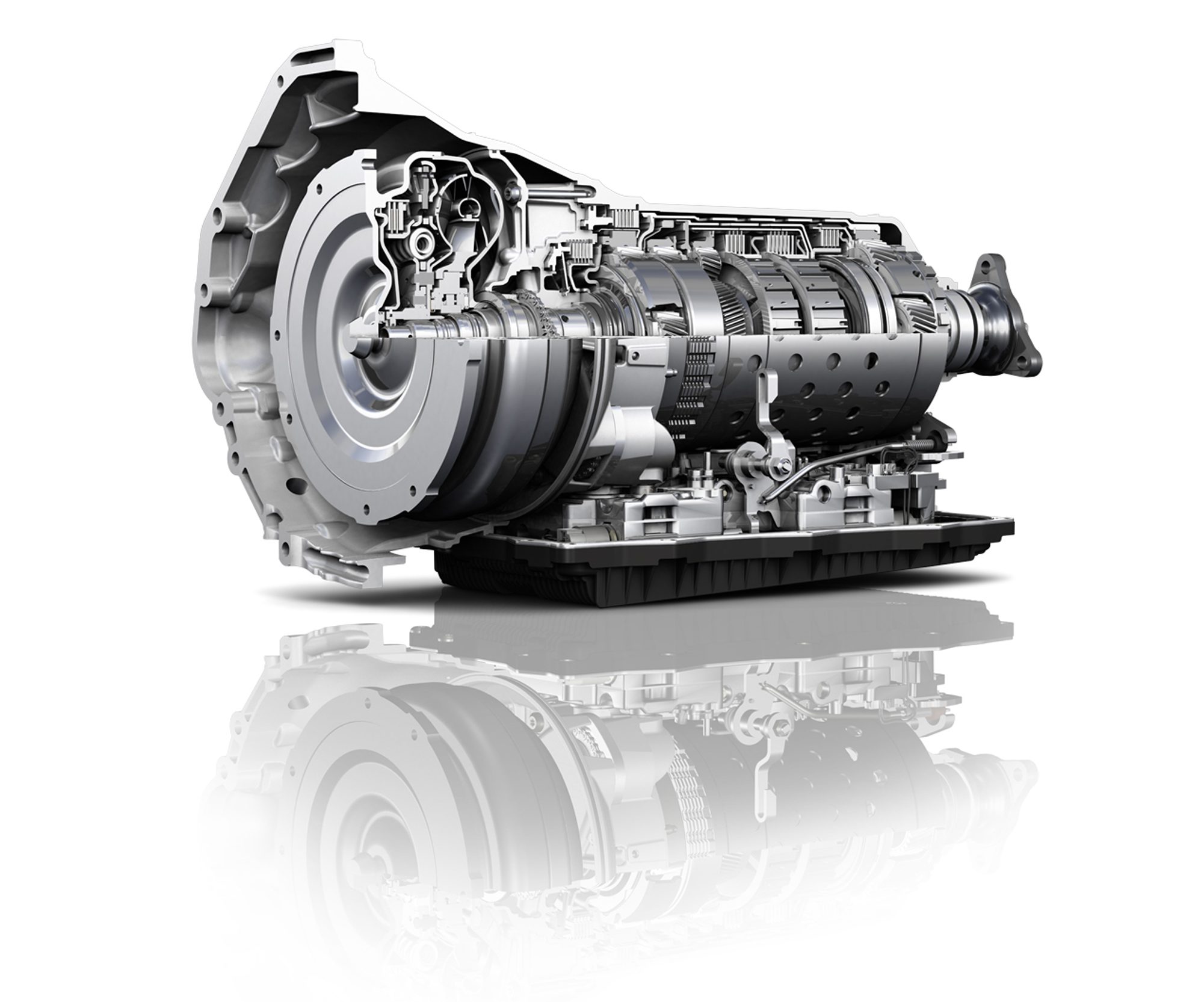
ZF is one of those companies that makes just about everything, but is known, at least in the United States, for gearboxes. Above is the inimitable 8HP transmission used by engineers who wanted to throw insane amounts of power at a vehicle that could still be considered a daily driver or a luxury car.
That’s the old world. The new one looks very different and, having over-invested in electromobility, the company has to decide what it wants to be. Per this Manager Magazin report, ZF ‘s new CEO Mathias Miedreich would like to not be so reliant on cars:
To stop the downward spiral, Miedreich has conducted a radical assessment in recent months and is now discussing an equally radical restructuring strategy with the management board and supervisory board – albeit with a rather unoriginal title: “ZF North Star”.
Manager Magazin was able to review a draft of the plan, which has not yet been communicated in detail internally. According to the 13-page document, Miedreich intends to downsize ZF by 2028. He plans to shrink the company and set a future revenue target of 35 billion euros. He intends to discontinue unprofitable products and units and close further plants. Miedreich will adhere to the plans of his predecessor, Holger Klein (56), to eliminate or relocate up to 14,000 jobs in Germany. And – in a revolutionary move – he even mentions a partial IPO as a strategic option.
If the plan succeeds, Miedreich can reach stage two by 2028. He wants to transform ZF into a new company that is only dependent on passenger cars by a maximum of 50 percent. A bit more of a technology company than an automotive supplier – something that rival Bosch already is today.
I have a Bosch dishwasher and it rules. Maybe ZF can make a nice fridge.
My Favorite Landspeed Racer Is Obviously This Škoda
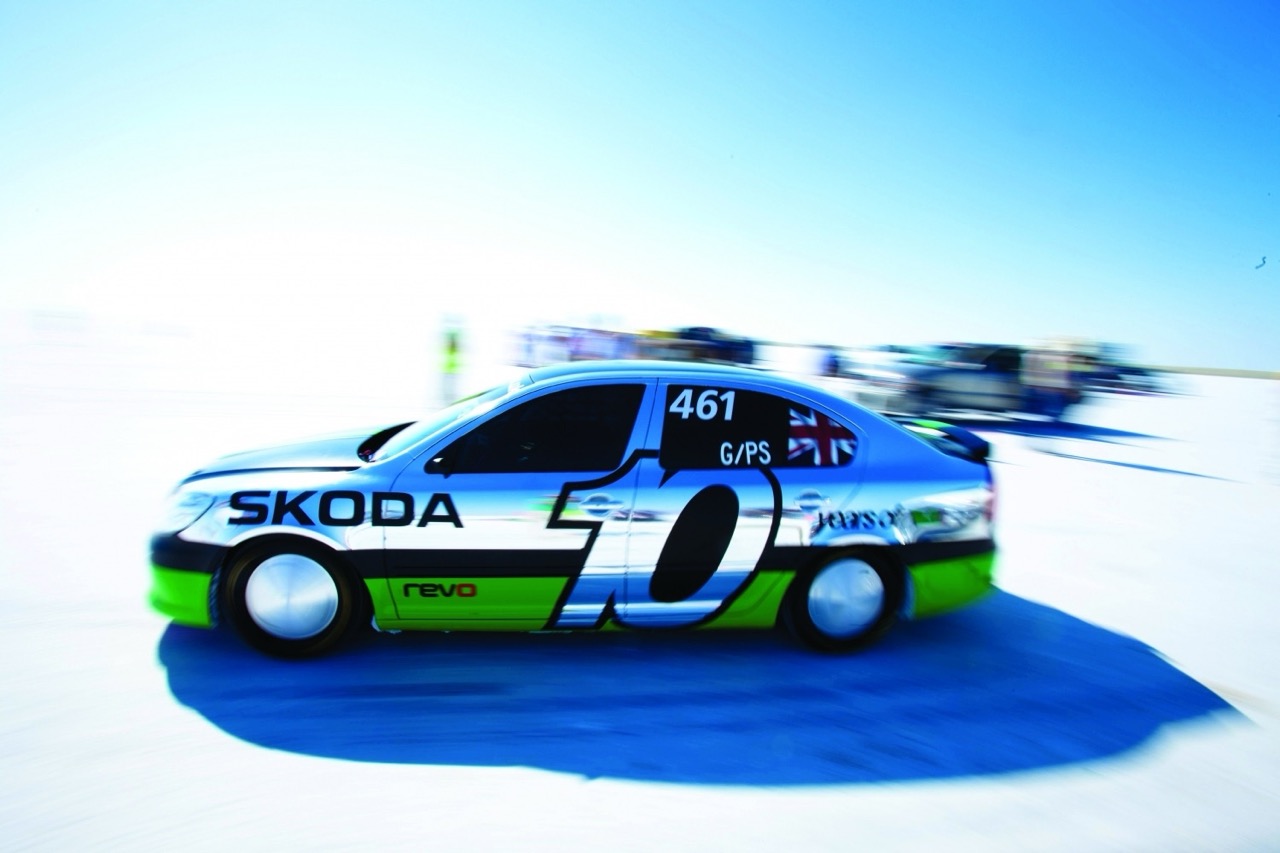
My favorite Bonneville is Hugh, and my favorite speed racer has to be this 2001 Octavia vRS, which managed to hit 227.080 mph on the salt flats. From the company:
The project was masterminded by Škoda UK, with the record-breaking car ‘borrowed’ from the press fleet before being extensively modified for the task of breaking the existing record of 216 mph. Following its requisition, the production-spec Corrida Red Octavia vRS 2.0 TSI was subject to a complete strip-down and rebuild. Under the regulations set out by the Southern California Timing Association, only a certain number of modifications were permitted. Adding to the challenge was the fact that the Octavia’s 2.0 TSI engine was so new at the time that very few motorsport or high-performance upgrades were available from external suppliers.
The fastest press car ever? Maybe. In addition to setting the record for a Škoda (the first of its kind) it also held the class record for ten years. In celebration of the 15th anniversary of this achievement, Škoda sent out more photos of the car. I love them.
What I’m Listening To While Writing TMD
Frank Beard, the beardless drummer for ZZ Top, passed away yesterday. While “Sharp Dressed Man” wouldn’t make my top 15 songs from the group, this video features The Eliminator, aka a heavily modified 1933 Ford Coupe. If your curious, my favorite ZZ Top song is probably “Jesus Just Left Chicago,” though “La Grange” has a special place in my heart. The band came to prominence in Houston around the time my mom was starting to go to shows, and she fondly remembers seeing them play garages and other small venues. RIP to a legend.
The Big Question
Would you allow the cameras in your car to be used by an emergency dispatcher?
Top photo: Toyota Times/YouTube




My dad was a huge ZZ Top fan in the 1970s. He was amused when people my age started raving about this great “new band” ZZ Top when Eliminator hit. I got to see them live a couple of times. Sadly another at Red Rocks got rained out after about 3 songs. Make up show was at a far more inferior venue.
Also, some vending machines in Japan go into a special emergency mode during a disaster, providing wifi (I think) and dispensing their food and beverages for free.
Note to hackers: don’t mess with that and cause them to stop doing it.
I can easily imagine Google would give the authorities access to the cameras studding Waymos. And that the cameras all over Teslas would be used by Musk to creep on women.