

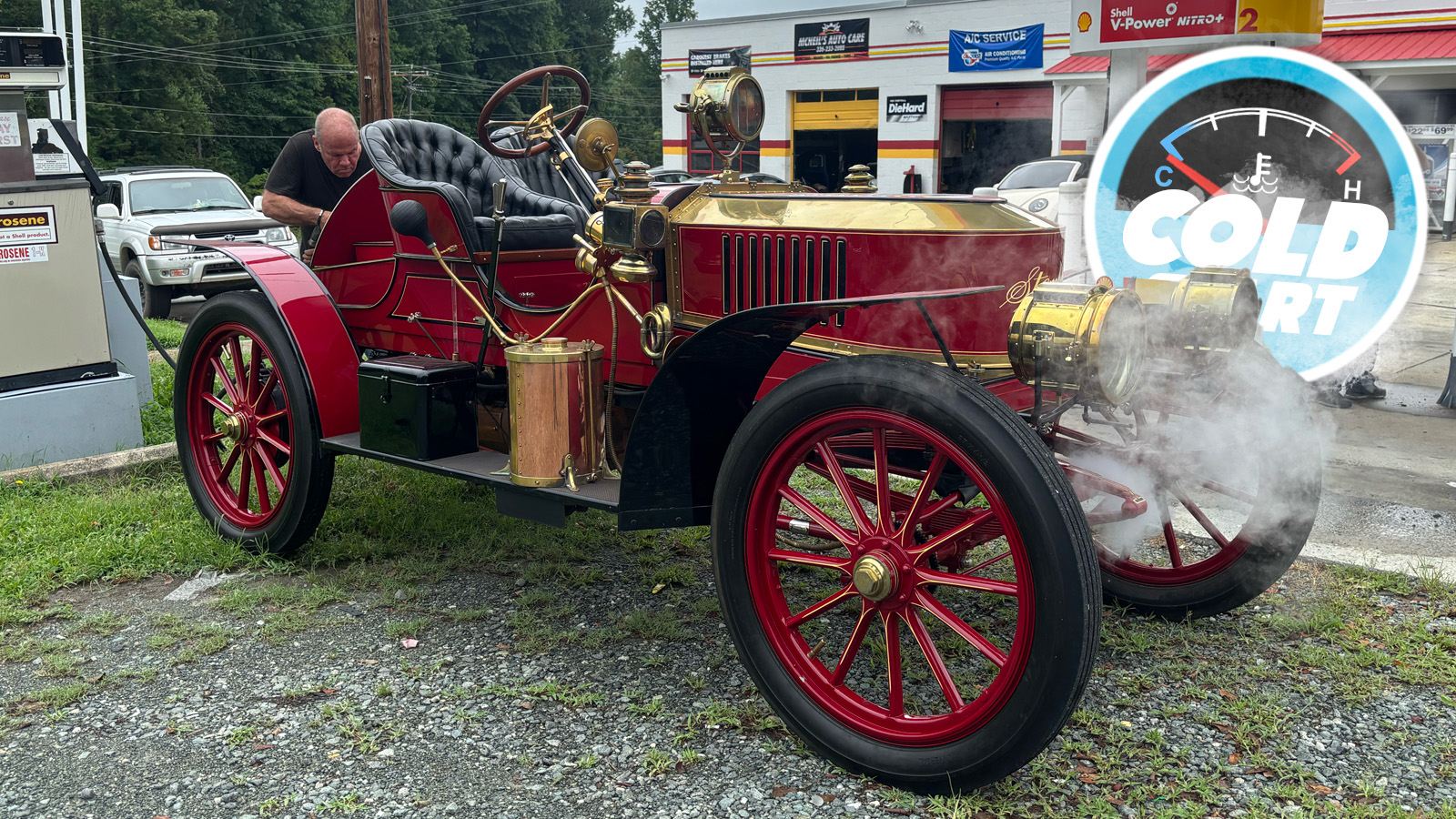
Some of the greatest joys in life happen when Motofortuna, the goddess in charge of guiding your path so that you encounter fascinating cars seemingly by happenstance, smiles upon you. That happened to me this past Saturday afternoon, as I was driving through a little town called Liberty and happened to see one of the most amazing things ever to be just taken out for a spin.
That amazing thing was a 1908 Stanley Steamer, and it was a model with a genuinely wonderful name: Model H5 Gentleman’s Speedy Roadster. Now, even in Los Angeles, the city I lived in that had the greatest amount of Motorfortuna attention, seeing anything like this just driving around was almost always because one person, Jay Leno, decided to drive it to the Autobooks store in Burbank.


But in Liberty, North Carolina? There’s far fewer Jay Lenos roaming around here, even feral ones. So seeing someone drive a lovingly-restored 1908 Stanley Steamer is an event with about the same probability of happening as meeting a raccoon that not only saw the one-man show you did about J.Edgar Hoover in college, but also liked it. It’s a beautiful improbability.
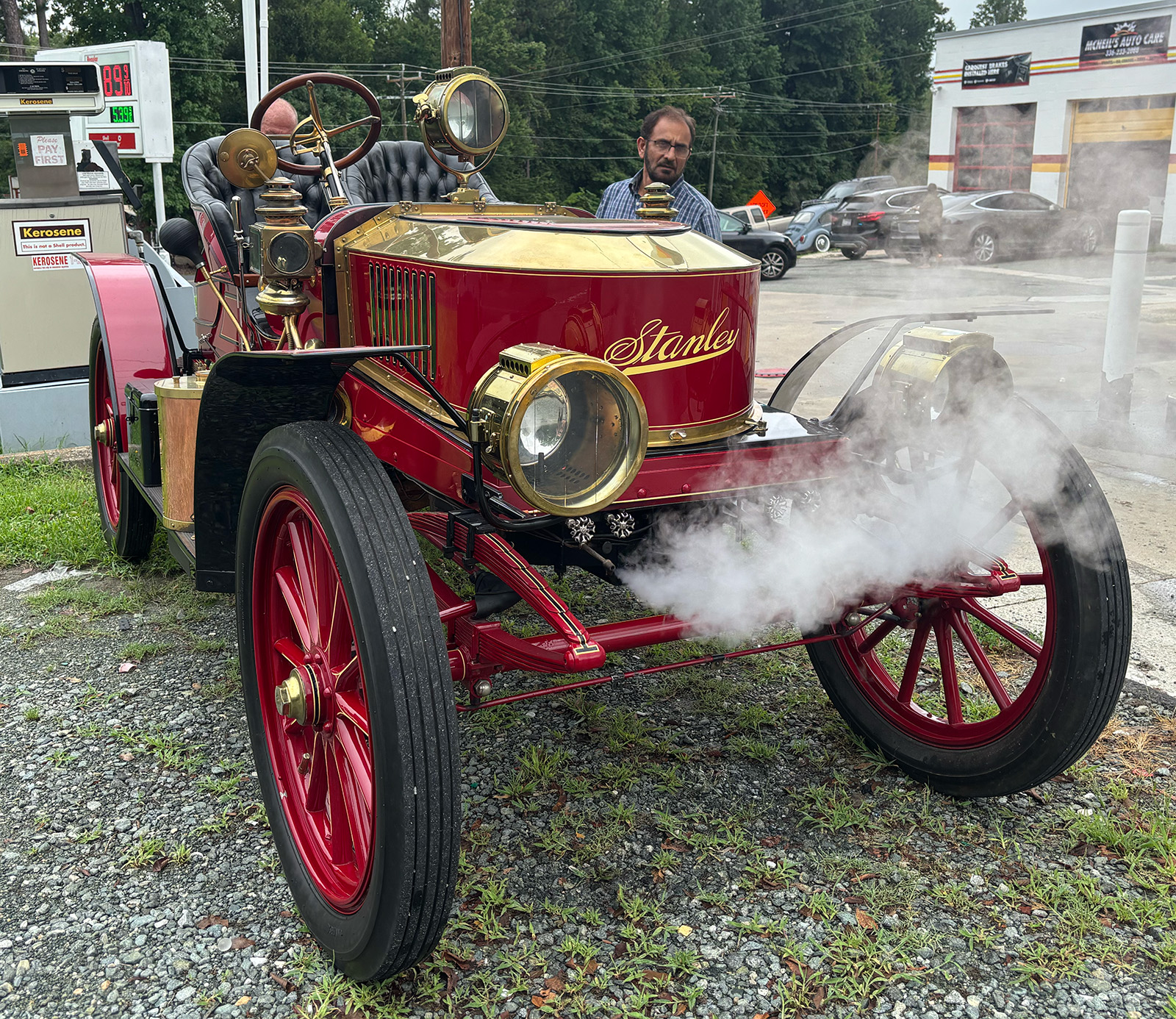
Let’s talk a bit about this Stanley, which was being filled with kerosene by the absolute hero driving it. It was idling there majestically, busily breathing steam out front as the owner attended to the fuel for the boiler. These cars take – at best – 20 minutes to get started, so I’m not surprised he left it idling as he filled it up.
The owner told me he hadn’t had it all that long, and I believe he said he bought it from a museum, which makes sense, because it was positively immaculate. I love that he’s just out driving it around now.
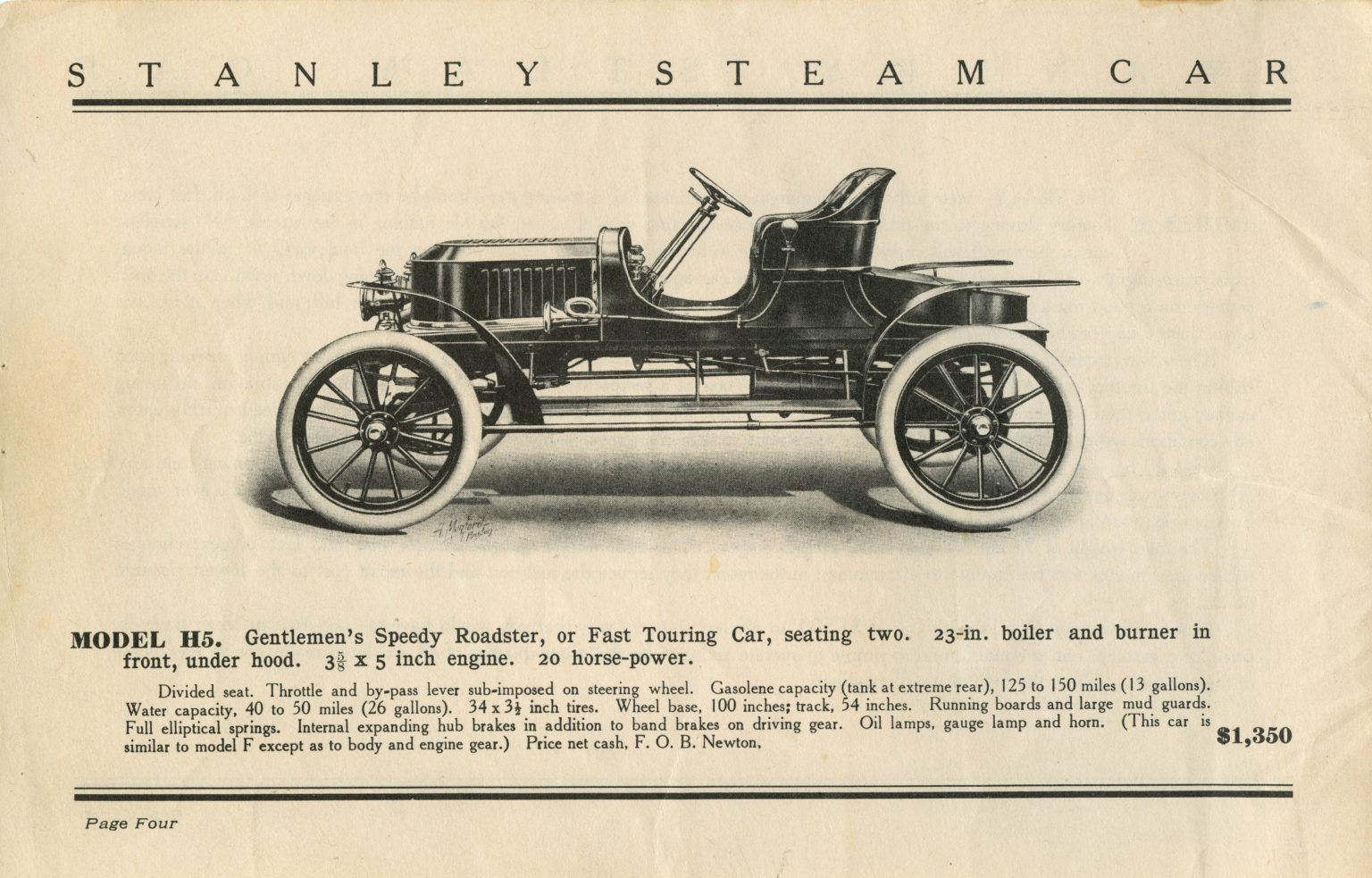
The Model H5 Gentleman’s Speedy Roadster was Stanley’s sports car. It made 20 hp, pretty damn good for the time, and could hit speeds of up to 65 or 70 mph. This thing could, by 1908 standards, move.
The process of getting it to move, though, was nontrivial. Steam cars were very competitive in the early years of motoring – they were the only option for essentially the first century of automobiles, starting with Cugnot’s steam drag from 1769 – and one of the features they touted were their comparatively simple engines.
And while this is true, the engines themselves weren’t as complex as a gasoline engine, everything else around those engines – boilers, water tanks, valves, so very many valves – all combined to make a much more complicated driving experience than a gas or electric car.

You can read the whole steaming up process here, from a 1918 Stanley manual, so these instructions represent a whole decade of refinement compared to the car I encountered. But even if you don’t want to sit and read it, let me give you some highlights:
There are at least four separate tanks to fill: the water tank, the boiler, the pilot fuel tank, and the main fuel tank, which is what I saw our friend filling with kerosene. Then there are pressure tanks that must be pumped with onboard pumps, with at least “25 strokes of air.”
This is what it takes to start the main burner; keep in mind, this section is just one of many:
START THE MAIN BURNER
The main burner starting valve stem goes through the dash at the extreme left above the steering post, and has a wheel handle.Do not confuse this with the main burner valve, which goes through the instrument board, and has a lever handle. On earlier cars the starting valve is in front of the dash attached to the steam automatic. This valve admits gasolene from the pilot tank into the main vaporizer.
Open the starting valve one half turn, for one second, close it for three seconds, repeating this until gas comes out of the main nozzles into the mixing tubes, passes up into the combustion chamber and ignited which it will do with a little puff.
Continue opening and closing the valve until the gas, which at first may be wet, becomes dry and almost invisible, then leave the valve open about 2 minutes.
Close the starting valve and open the main burner valve using the same method as with the starting valve until the gas is dry, then leave it open.
Notice the sound of the little puff the burner makes when it starts and the difference in the sound when the vapor is wet and after it becomes dry, so that when you are sitting in the car and turn on the burner, you will be able to tell by the sound when the burner starts, when the vapor is wet, and when it becomes dry.
When steam begins to blow out at the steam chest drip valve, partly close the throttle, so as to keep a small quantity only coming through.
When the pressure on the main fuel falls below 80 Lbs. lift the front toe boards and the air pump should be found attached to the air check valve, a sitting between the two hand air valves at the foot of the dash.
Open the main hand air valve (the one on the right) and pump 25 strokes of air into the main pressure tank and close the valve. If this has the effect of raising the pressure 50 Lbs. or more, wait until the pressure has fallen below 80 lbs. again then open the valve, pump another 25 strokes of air and close the valve again.
Operate the hand fuel pump if more pressure is needed.
When the steam pressure gauge registers 500 Lbs. close the main burner valve.
Close the throttle by pulling back the throttle lever and lock it with the locking screw.
Close the engine steam chest drip valve.
Close the door in the flue and the left side of hood.
See that the pilot light is burning properly and close the peek hole and door in left running board shield.
Replace the seat board, cushion, hand pump handle and carpet.
Before starting out on the road remember to see that the main fuel, pilot fuel, cylinder oil and water tanks are filled or at least contain sufficient quantity for the distance you are going.
Now keep in mind that a lot of these steps require the use of these small lovely hand-valves that sprout up all over the car, all unlabeled. Here’s two at the front, but I saw at least three more in the cockpit placed with what seems to be the same logic as as patches of crabgrass on a lawn:
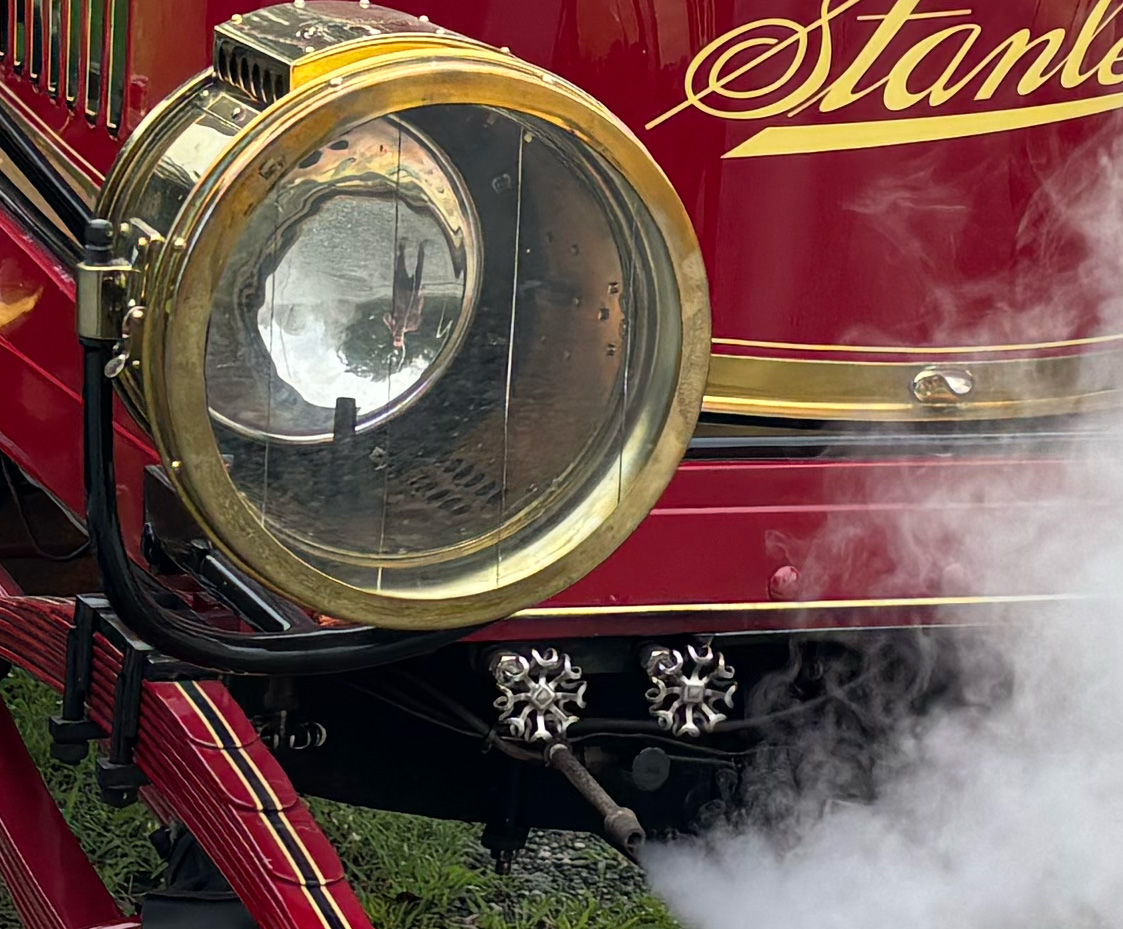
Also note that this thing is still rocking acetylene headlamps! Holy crap!
People may complain about the complexity of car controls today with so many things buried in touchscreen menus, but I’m not sure anything comes close to steam car operation.
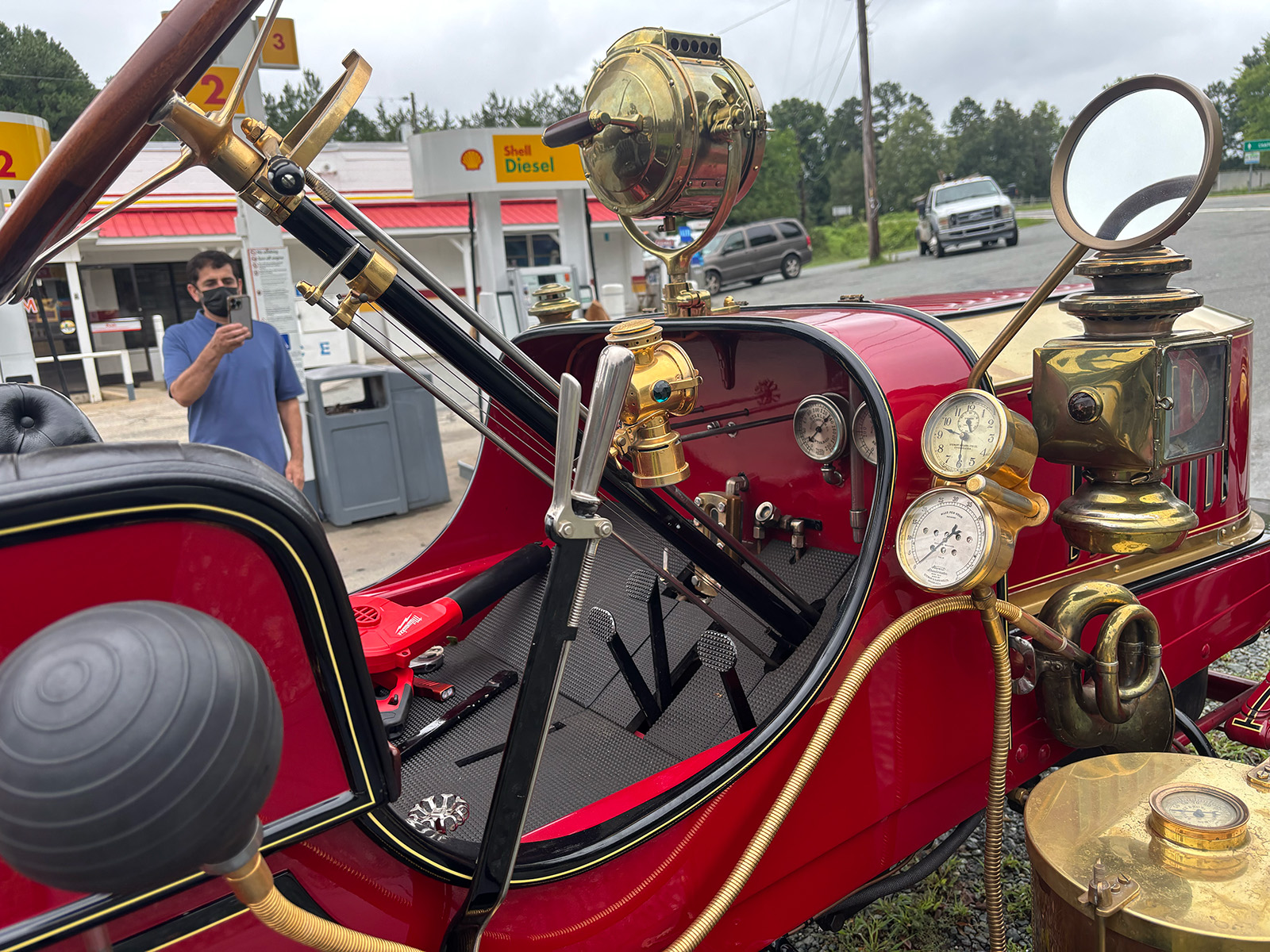
The interior is full of pedals and valves and levers, byzantine in their complexity. Look at all those gauges and check-glasses, and how many places you have to look to keep an eye on them.
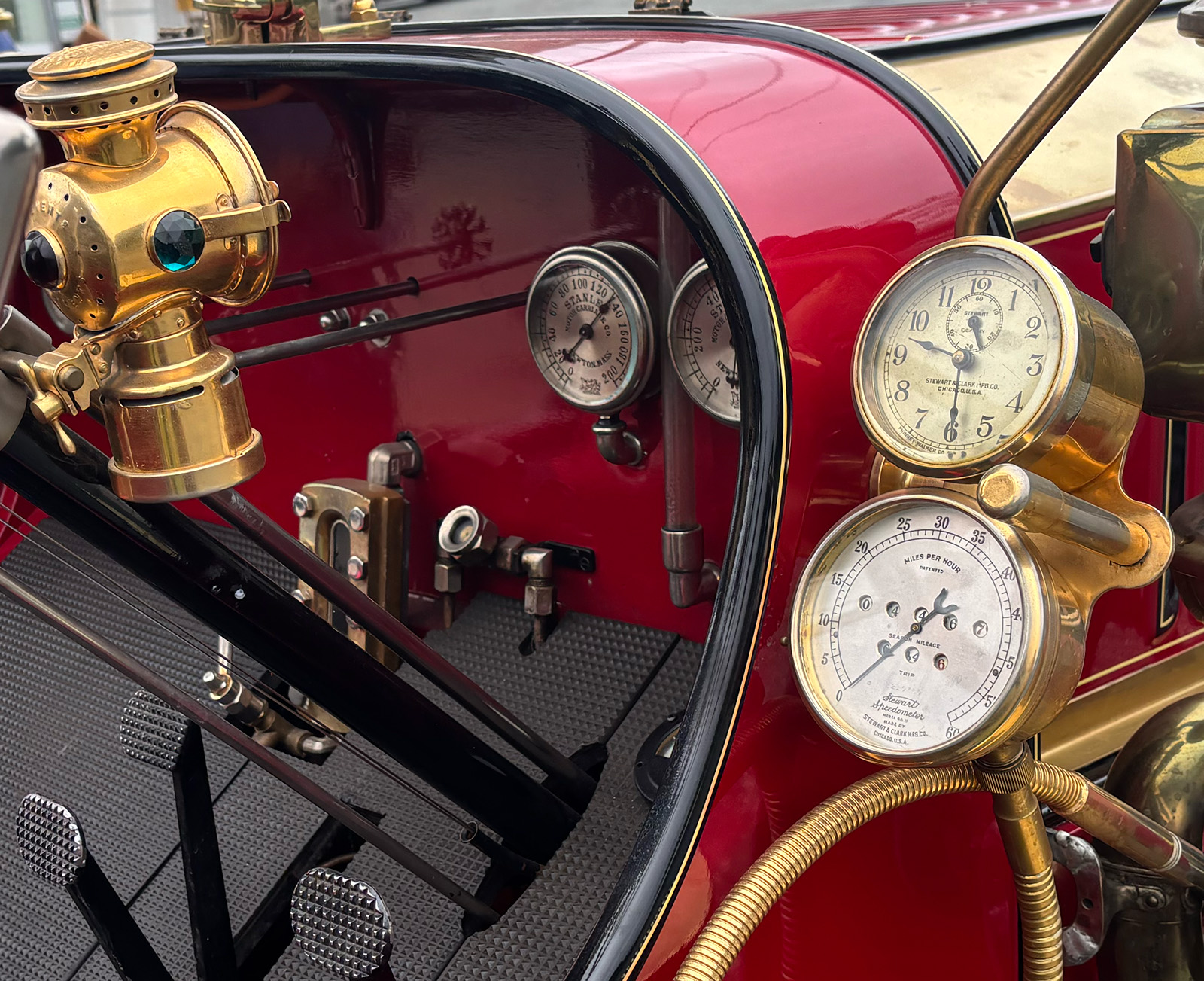
They are lovely, though. And I especially like that oil lamp set up to illuminate the gauges at night. At least some of the gauges; I assume the ones you have to watch to make sure the whole thing doesn’t explode.
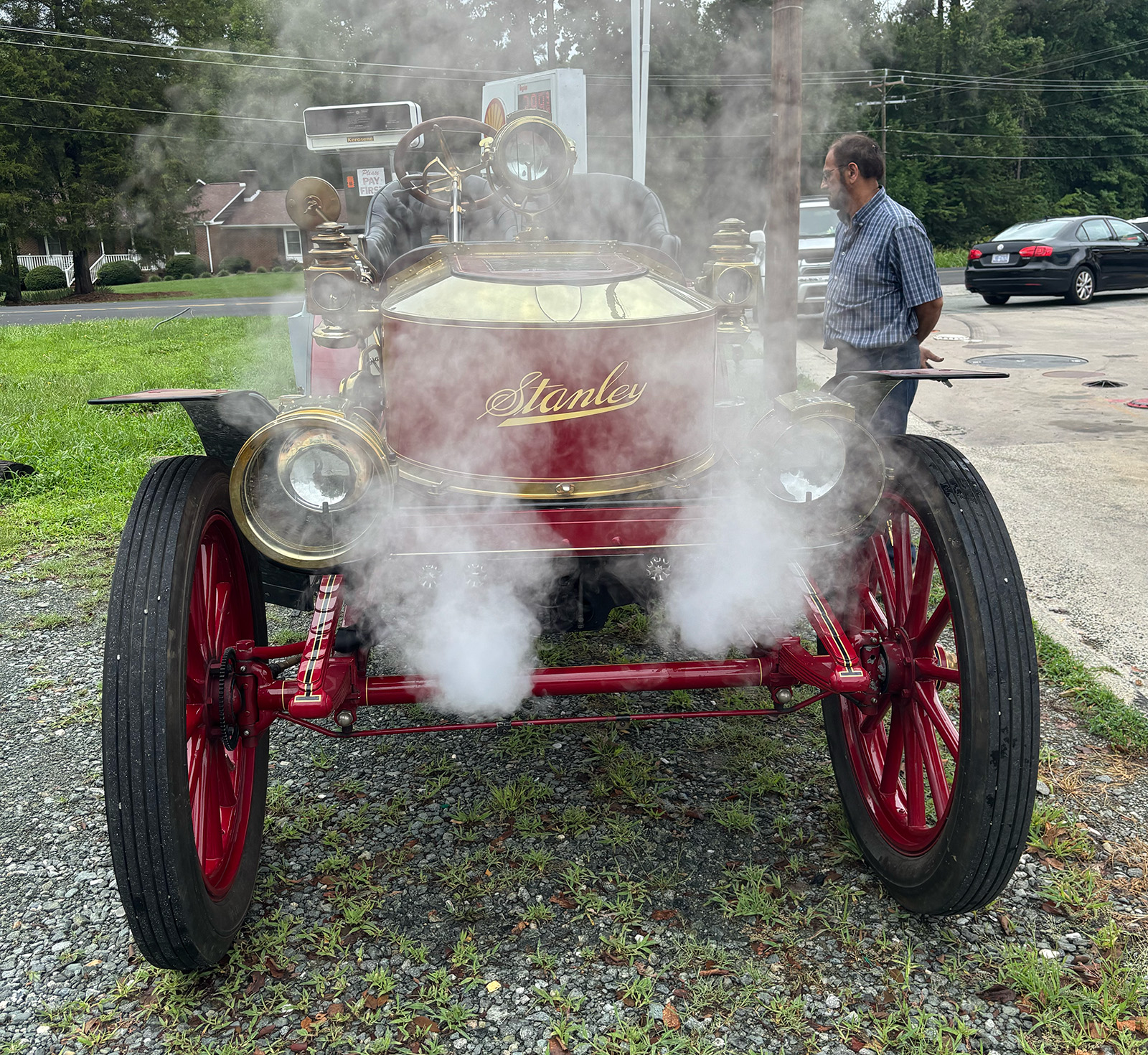
It’s such an amazing machine, and the complexity of it all, the way it burbles and steams and operates, just makes it all feel strangely alive. It’s like some mythical, majestic beast, decked out in scarlet and gold finery and ready to parade around town.
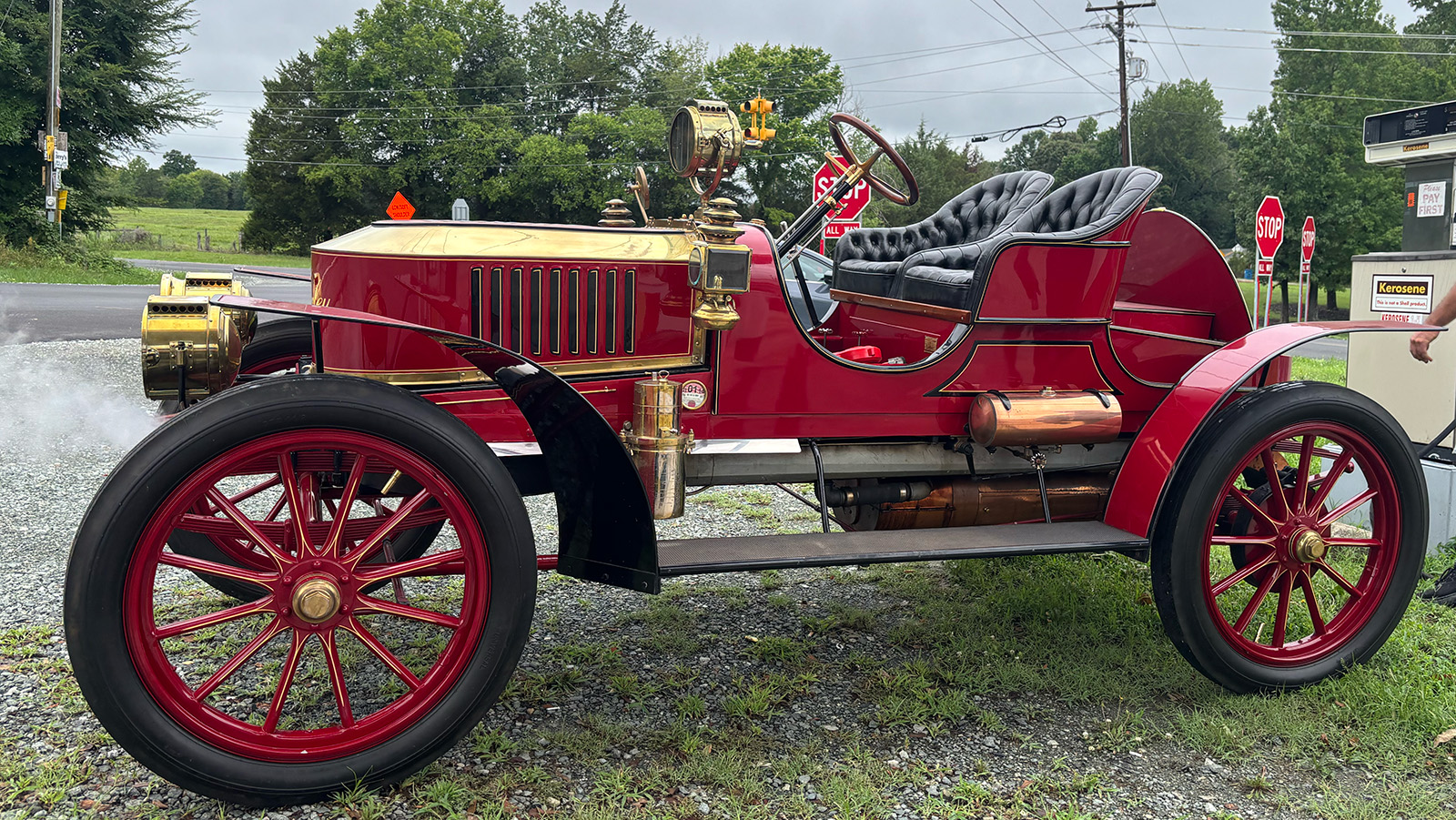
That coffin-shaped nose is a Stanley Steamer trademark, and I think that profile is what most people thing of when they think of a steam car – at least the people that think of steam cars at all.
This thing tooling around a little Carolina town was an absolute event, and I salute the daring owner for tackling the substantial engineering required to get this road-locomotive moving at all. So here’s to you, North Carolina Stanley Steamer owner! Thank you so much for exercising your great beast were we can appreciate it!
All photos by author


I took my son to Road America last Sept.. Saturday was a glorious day watching vintage (really 1950 – 2010s) sports cars race. Because of the variety, cars were grouped by their average lap times from qualifying.
Met up with my uncle who is over 90 years old and grew up on the family farm. He let us know there was a tractor show the next day a few towns over, so we spent at least 4 hours Sunday at the tractor show. It was a small(ish) ‘grounds’space, though there were a LOT of tractors.
The ‘tractor parade’ lasted for over an hour. And there were 3 large vintage steel wheeled steam tractors which to me were the stars of the show. At least one of them participated in the parade too. I was in particular glad my son got to have that experience.
A few years back I saw one of these at a Cars & Coffee in Newport, RI, and I caught the guy getting ready to leave, who turned out NOT to be Jay Leno. It was quite the show watching him get it up and running, and the sounds it made while it was warming up then driving off were unlike anything else.
There were a lot of high-end exotics there, but nothing gathered a crowd like that Steamer.
When I was a kid I got a parking lot ride in a 1917 Stanley phaeton. We had stopped to look at the parked “antique car” and then spent a good 20-30 minutes watching the very drawn out starting process.
Since I was well-behaved, the owner invited my dad and me to sit in back for a short ride. The thing I remember most is how smoothly it accelerated and its silence other than a recurring soft “fsssst” sound.
Many decades later I found a Stanley vehicle register online and was pleased to find the car I’d ridden in listed as a currently running vehicle.
Good story Torch. Just seeing any steam car is a sight to behold.
Gentleman’s Speedy Roadster. As of today I have a new favorite name for a car. What a great thing to stumble across. Kudos to the owner.
Read through all the comments; obviously this steam car has everyone so fascinated.
Not one mention of the VW Beetle in the 2nd picture!
Go back and look – what year is it?
Come on! the tail lights are clearly visible!
Right, that old timer together with the New Beetle convertible visible in the top shot conspired to trigger Gotham’s subconscious Torch Signal that drew Jason to Liberty at just the right moment.
Driving this around, I’d be compelled to sing in my best Wonka voice:
“There isn’t any way of knowwwing, which way it is that we are goingggg..”
Caractacus Potts rolls his eyes.
Reading those directions combined with my experience in home automation and working in a heavily automated manufacturing facility gives me an overwhelming desire to wire one up to an arduino and a bunch of actuated valves and create a push-to-start function.
Better make it connect to an app to push-to-start it from bed, gives you 20 minutes extra bed time in the morning
Even better, connect it to your Home Assistant instance so your car automatically starts warming up when you turn on your coffee maker.
My friends got married at The Stanley Hotel (same Stanleys as the car, also the original hotel from The Shining novel).
My favorite bit of trivia is that the cars could sometimes catch a bit on fire, as there is ample wood in their construction and a fire keeping the steam going.
The manual for the car instructs the driver, that in the event of a small fire, to simply drive faster until the wind puts the fire out!
Where I grew up there is The Stanley Hotel, which has a green Stanley Steamer in the lobby. Been there many times even saw it run a couple of times. Very cool.
Oh, my engineer side is massively triggered.
The diagram has an “emergency boiler check valve”. NO, NO, NO, a 1000 times no.
That is a Safety valve, not a check valve. Perhaps Stanley is so old it uses different terminology (although the term Safety Valve is from the mid-1800s). This is critical, because I’ve seen people put a check valve in place of a Safety valve and very bad things have happened.
So, a quick primer.
Check valve. Flows one way. If this was a check valve, it would either only flow into the boiler or out of the boiler. If it flowed in, then the boiler could build up to a super high pressure and the valve wouldn’t open. If it only flowed out, it would not build pressure at all. The drawing doesn’t show a check valve.
Safety Valve. Doesn’t flow until the boiler pressure is too high, then it flow. Someone will call it a Relief valve, although officially when it’s on a Boiler, it’s called a Safety Valve and slightly different. The drawing looks odd, but does look like a safety valve, with perhaps a condensate drain line.
The danger I see is AI. AI learns from diagrams like this. I swear, 99% of what AI knows about steam systems come from Steam Punk graphic Novels. It’s not just wrong, it’s dangerously wrong 90% of the time, and this graphic of the Stanley boiler looks like what AI would generate, especially with mis-labeling a valve..
glad you posted this – thought the same (I work for a boiler manufacturer)
You likely know how to tell a Safety from a Relief Valve then.
Indeed. Our companies make residential and commercial boilers, both water and steam, primarily heating but some industrial (not high pressure/process).
Fun fact: in Germany, the danger of boiler explosions led to the formation of the Dampfkessel-Überwachungs-Verein (DÜV) that later broadened its activities, changed its name to TÜV and became David’s nemesis during Project Krassler.
Meh, the US had it better. We didn’t have the “danger” of boiler explosions, we took out city blocks regularly. It wasn’t until Boston was flooded by molasses that we started requiring ASME construction codes. Slowly. State by state accepted ASME and I’m not 100% sure that every state has a real boiler inspector team.
I was in Alabama when it finally required ASME for new boilers. The law read that any currently operating boiler was grandfathered in, unless it was over 100 years old, of riveted construction and in a school. There’s an interesting story there that must have happened when school wasn’t in session or that would have been international news.
Oh, fun fact, the first manufacturer to make a valve to that German standard was Bopp&Reuther. The factory is still in operation and the buildings that the still make valves are considered historic buildings and B&R has to ask permission for any facility changes. I’ve been there twice.
Thanks, I didn’t know that and have never heard of them. I must admit Speyer is still on my list of cities to visit (mainly for other reasons, obviously).