

There’s a lot of news coming out of the C-suites this morning, though none as dramatic as the huge loss that Chrysler Dodge Ram Jeep Leapmotor BitChar-G Maserati parent company Stellantis has to take for, among other things, “previous poor operational execution.” That’s as strong a diss as you’ll get from a CEO these days about their predecessor.
Understandably, this has not positively impacted the share price. We here at The Morning Dump (meaning me) try not to get too distracted by stock prices, as they only capture a moment in time. Still, it’s fun to be able to write about all the automakers that would have been better investments than Bitcoin.


What was also a moment in time? Toyota CEO Koji Sato’s tenure, which is over almost as soon as it began. Now there’s a new CEO! Ford is probably keeping its boss for a while, and his new remit is to get more affordable cars to dealers.
How Much Of The Stellantis Loss Is About Carlos Tavares?

I have no specific animus toward any individual in this industry. Ok, to clarify, I have no specific animus toward any executive in this industry. There are maybe a couple of journalists and a comms person or two that irk me, but I don’t think I let it influence what I write. One of my least favorite PR people of all time worked for one of my all-time favorite brands, and it was fine.
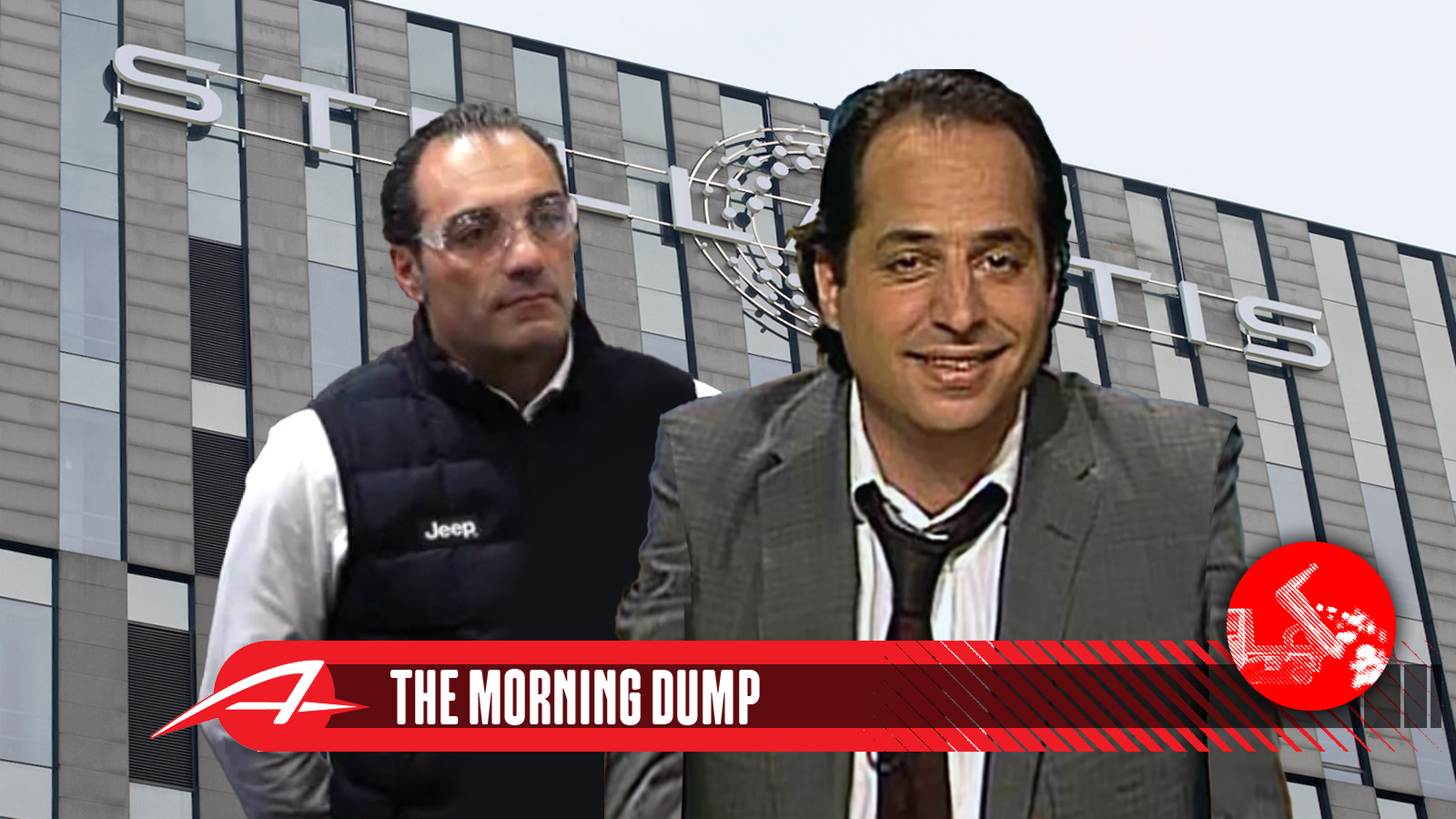
All this throat-clearing is to say that it may seem like I made it my mission to call out Carlos Tavares, pictured above, for what I saw as extremely poor choices made while he was in charge of Stellantis. This wasn’t personal, as I’ve never met Carlos Tavares. I would love to hang out with him, as we both seem to have similar car tastes. Drinking some of his private-label port and talking about Group B rally sounds like a dream, honestly.
His tenure was bad, though. It was. The company had a couple of years of extreme profitability, but it felt hollow to me. Any company can be temporarily profitable if it doesn’t develop good new products, tries to move its engineers abroad, cuts costs, and utilizes a pandemic to charge a high price for mediocre cars. It doesn’t work forever, though, and Stellantis has swung to a huge loss. Once it became clear that Tavares wasn’t working out, he was quickly ushered out of the company.
Of all the curious decisions that Tavares made, taking the North American market for granted was the most obviously shortsighted one. The new automaker consists of a palimpsest of brands created by extinct automakers, and most of the value was in North America. Antonio Filosa was promoted to take over for Tavares, and his main mission has been to undo the damage. For whatever reason, Filosa hasn’t seemed that explicit about blaming his former boss.
Ahead of its investor meeting, Stellantis came out to say it was taking a $26 billion charge to restructure the business. Some of this has to do with exuberance over EVs and a regulatory environment that’s been turned on its head. While many of us pointed out that skipping hybrids to go all in on EVs seemed like a faulty proposition, Stellantis wasn’t the only company to do this, and plenty of other automakers have taken write-downs related to these changes. This is to say nothing of tariffs.
The difference is that Stellantis and Filosa seem a bit more pointed about what has happened:
The reset we have announced today is part of the decisive process we started in 2025, to once again make our customers and their preferences our guiding star. The charges announced today largely reflect the cost of over-estimating the pace of the energy transition that distanced us from many car buyers’ real-world needs, means and desires. They also reflect the impact of previous poor operational execution, the effects of which are being progressively addressed by our new Team.”
He added: “We have gone deep into every corner of our business and are making the necessary changes, mobilizing all the passion and ingenuity we have within Stellantis. The positive customer reception to our product actions in 2025 resulted in increased orders and a return to top-line growth. In 2026, our unwavering focus is on closing past execution gaps to add further momentum to these early signs of renewed growth. We look forward to sharing the full details of our new strategy at our Investor Day on May 21.”
That’s rough, right? There are a few more details here, though not many. Here’s one thing that the release says:
A thorough reorganization of the Company’s global manufacturing and quality management processes. In this context, the Company hired over 2,000 engineers during 2025, mainly in North America.
And then this, about the specific charges it’s taking:
€4.1 billion due to a change in estimate for contractual warranty provision, resulting from the reassessment of the estimation process, taking into account recent increases in cost inflation and a deterioration in quality, as a result of operational choices, which did not deliver the expected quality performance, now being reversed by the new management team.
My sense is that this is related to Tavares offshoring of engineering, with a fairly arrogant assumption that it wouldn’t make a big difference. At the time, I pointed out that I didn’t think it was going to be worth it, and clearly, the company doesn’t either.
While Tavares isn’t named in this document, his corporate ghost lingers over most of it. To the credit of the former exec, a lot of blame has to be assigned to the board and board chair John Elkann. Tavares got paid roughly $26.1 million on the way out, and this has to do with a compensation package that encouraged the company to pursue goals that didn’t match up with long-term success.
Non-PHEV hybrid Jeeps are coming soon, so that’s something.
You’d Have Been Better Off Putting Money In GM Than Bitcoin Over The Last Year
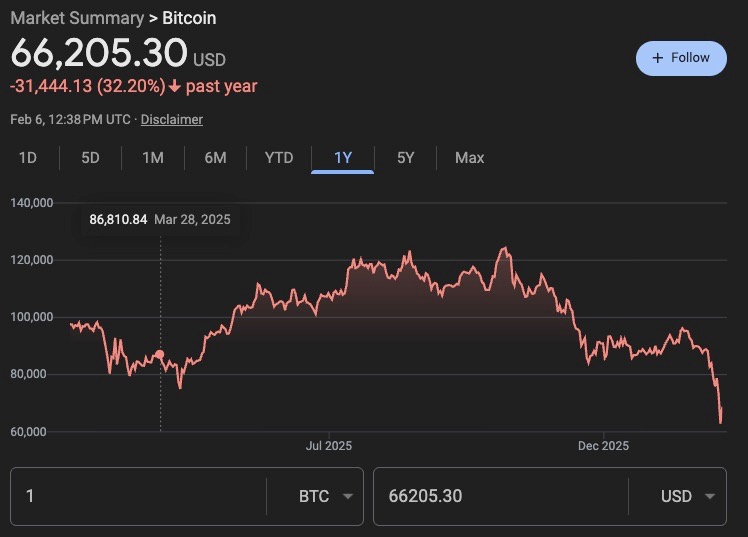
Before the Stellantis news, my headline for TMD was going to be the subhead you see above. Is this entirely fair? It isn’t. Is it amusing? Yes. Absolutely. Over the last year, as of right now, GM is up 74%, and Bitcoin is down about 32.2% ater a dramatic sell-off yesterday. Also, GM issues dividends.
Because Bitcoin is down, really, any automaker that’s positive over the last year is doing better, and a year is sort of an arbitrary number. If you look at the past five years, GM is up 53% and Bitcoin rose 69%. Again, though, GM has issued a cash dividend each year since 2022, so depending on how many shares you owned, you got paid out a little by holding the carmaker.
Why is this happening? Joe Weisenthal has some thoughts, and I agree that the reality of Bitcoin performing worse during a period when the dollar is in perceived trouble kind of undercuts the most basic premise of cryptocurrency. This, though, was what really got me:
-
Crypto is losing mindshare. If you’re a talented tech person, why are you doing crypto stuff instead of AI?
-
Meanwhile AI is crowding out Bitcoin specifically. For a long time, one of the big ideas behind Bitcoin was that miners could exploit access to cheap or stranded electricity. But if you have access to the power grid, why are you mining Bitcoin (which has never been that great of a business) instead of building an AI data center?
Everyone loves a new shiny object. My point in bringing this all up is that car companies are often treated as boring investments, but there’s value there (for some of them) as they produce actual shiny objects people still strongly desire. You know what’s sexier than your NFT Ape? A Corvette.
Toyota Gets A New CEO, Again

Didn’t we just do this? It seems like only yesterday that Akio Toyoda was stepping down as CEO of Toyota and putting Koji Sato in the position. In reality, it was almost exactly three years. Now, COO Kenta Kon is taking over, and Sato is getting a new job:
Koji Sato, President and Member of the Board of Directors, will assume the position of Vice Chairman and the newly established role of Chief Industry Officer (CIO), and Kenta Kon, Operating Officer, will assume the position of President and Chief Executive Officer.
Under this new leadership structure, Sato will focus on the broader industry, including Toyota, as Vice Chairman and CIO, while Kon will focus on internal company management as President and CEO.
This change in roles is intended to accelerate management decision-making in response to changes in the internal and external environment and to establish a structure that will enable Toyota to fully carry out its mission of contributing to society through industry.
Did the company reach for someone who would bring radical thinking from another automaker? Nope. As Bloomberg reports, Kon’s first job with the company was as Akio Toyoda’s personal secretary for a decade.
I don’t have a good read on why this is happening, as Sato’s tenure seemed mostly fine. Nikkei Asia provides some more analysis:
In contrast to Sato, a former engineer who liked to be known as the “car guy” and often tested vehicles, Kon said, “Since I handle accounting … I’m extremely particular about profits and numbers that enable solid investments to develop cars.”
Sato will have served as president and CEO for three years and is being replaced by a man seen as better able to drive efforts to lower break-even volumes and improve Toyota’s earnings power, amid intense competition.
At the press conference, Sato said of his tenure, “Honestly, I think it’s short.” His predecessor, Akio Toyoda, served as president for 14 years.
Ok, so Sato also thinks his tenure was kinda brief. Glad I’m not alone there.
Ford Wants To Make More Sub $40k Cars, Or, Make More Cars Cost Under $40k
The affordability crisis, if you think it’s a real crisis, won’t be resolved anytime soon. There doesn’t seem to be a magic bullet or, if there is, no one seems to be reaching for it. Instead, there are going to be a lot of smaller measures in the short term that might add up to… something.
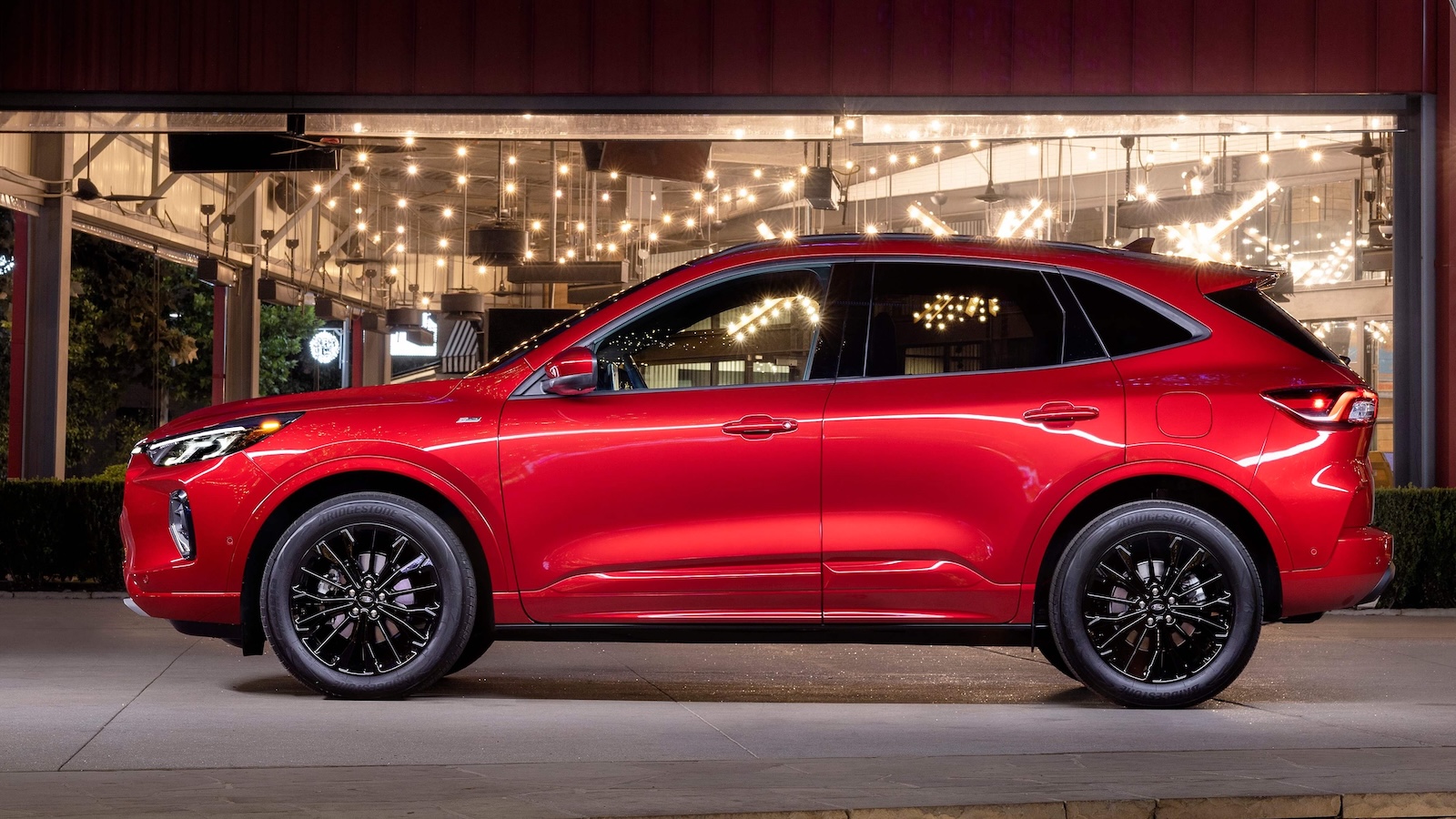
With NADA in full swing, carmakers are talking to dealers, and Ford used its time to talk about how it was going to deal with the issue. This is especially relevant to dealers, who are losing the Escape this year.
Speaking at the brand’s NADA Show meeting, officials said five models priced under $40,000 will be added to the portfolio by the end of the decade, starting with a midsize electric pickup next year. Andrew Frick, president of Ford Blue and Model e, said the vehicles would encompass a variety of powertrains.
“It will be across our lineup of cars, trucks, SUVs, vans, and it will be multi-energy,” Frick told Automotive News, adding that the products will all be new nameplates, not redesigns. “That’ll start to fill in the product side, but we have work to do to help affordability in the near term more tactically.”
What does something near-term and tactical look like?
Executives at the Feb. 4 meeting detailed plans to boost the mix of entry-level trims on vehicles including the Explorer and Bronco, as well as leaning further into certified pre-owned vehicles, extended-term financing and a first-time buyer program. Ford also plans targeted incentives for current Escape customers to keep them with the brand.
If you’re an Escape owner and looking to trade up, maybe later in the year, they’ll be able to get you into a Bronco Sport for a reasonable price.
What I’m Listening To While Writing TMD
We finally got the title track from Robyn’s new album “Sexisential,” and it’s hilarious. I’m not going to use the full version because it’s a little hard to watch at work, so here’s the very PC Music-inflected but SFW live cut from The Late Show with Stephen Colbert. It’s absolutely worth it for the surprise Adam Sandler joke.
The Big Question
Who was the best automotive exec of the 20th century?
Top photo: SNL/Stellantis


I still don’t get the snl image use
My vote for great executive is Soichiro Honda. He went from making piston rings to bicycle engines to establishing Honda Motor Co. with seemingly few missteps.
Indeed, and I find it quite impressive that Honda was already trying itself in Formula One just a year after launching its first automobile!
I’m sorry, but selling cars under $40k can’t seriously be considered “selling affordable cars”. If Ford seriously wants to sell “affordable” cars, they need to talk about selling sub- $30k cars.
If Honda can build and sell a Civic for under $26k, then Ford can build and sell a Focus for similar money.
In the end, Ford does not build affordable cars because they **really do not want to build affordable cars**.
I can’t blame them for that. But they need to cut the bullshit and stop pretending otherwise. That woe-is-me, “affordable cars are so hard to build”, story is wearing very thin by now.
And yes, Ford pisses me off. Where is Lee Iacocca when you need him (I’d buy a K-car from him right about now).
Taiichi Ohno was the best automotive exec of the 20th century.
He might be the most impactful person in all of manufacturing in the 20th century.
Best automotive auto industry consultant of the 20th century was W. Edwards Deming because he never held a formal title while working with Toyota, Nissan, Honda, and later Ford.
Wendelin Wiedeking for saving Porsche. Ferruccio Lamborghini for creating the anti Ferrari.
Why does Tavares look like Jon Lovitz?
Lovitz should sue Tavares for looking like Lovitz.
Get to know him and you’d understand.
Who else had to look up “palimpsest”?
I should have, but I confess that I didn’t.
Raises hand! I like finding obscure nuggets like these.
I knew what it meant because I had to look it up in a different context a few months ago, but I’m not sure what brands Matt is alluding to.
Of the 20th century? Well, that’s the period that basically saw the rise of all major legacy automakers, so you have lots of CEOs who build globe-spanning industrial behemoths out of nothing in an entirely new industry, so the list is quite crowded. Louis Renault, Armand Peugeot, Henry Ford, etc. etc.
Walter P. Chrysler deserves credit for transforming the bankrupt, failing husk of United States Motor Company/Maxwell Motors into a company that gave Ford some seriously close competition in the 1930s and ’40s. Henry Ford II pulled Ford Motor Company out of turmoil in the 1940s and led them to a $3.2 billion IPO in 1956, Alfred Sloan created logical order out of the chaos Billy Durant had assembled and turned General Motors into the envy of all other automakers in the 1920s, George Romney turned around American Motors and made Rambler the #3 selling brand in America, and, of course, Lee Iacocca famously saved Chrysler in the 1980s and, in the process, became a national pop culture icon in a way that corporate executives rarely do.
NOT on the list – Roger Smith, Sir George Harriman, and Jacques Nasser
As far as CEOs whose companies failed, but still did extraordinary things before that happened, I guess you can give some credit to E.L. Cord – his empire might have collapsed, but you can’t say he didn’t leave a legacy for the ages
DEFINITELY NOT Jacques “the knife” Nasser.
What about Carlos “I’m Not Actually A Mixing Board” Ghosn?
I thought he was Carlos “I’m like Houdini in a box” Ghosn… LOL
And I would take Ghosn any day over ‘The Knife’.
Nasser had some really stupid ideas. I recall one program was giving computers to employees like line workers so they would become more “technologically savvy” or something like that.
And I can tell you (as someone with over 25 years of IT work experience) that you don’t make someone more ‘tech savvy’ by just dumping some equipment on them that they never asked for.
He also implemented a racist/sexist/biased employee rating system where if you were an older white male, no matter how hard you worked, you could never be rated higher than ‘average’. And that in turn would affect your ability to get raises, promotions, etc.
There was a discrimination lawsuit over that that Ford ended up settling and paying out millions in compensation to wronged employees.
He also did that stupid “Premier Auto Group” which resulted in Ford dumping way too much in the way of resouces on their least profitable/money losing brands while starving successful brands like Lincoln of new product.
What that dipshit did almost killed Lincoln.
He also undid a lot of the processes that were built up in the 1980s and 1990s that made Ford’s quality the best of the 3 American automakers… and that followed by Ford’s quality going down hill.
Nah… Ghosn was waaaay better than Jacques Nasser… there’s no contest.
“How Much Of The Stellantis Loss Is About Carlos Tavares?”
Also… how much better off would have FCA been without that stupid merger that created Stellantis?
I’ve said it before and I’ll say it again… PSA had NOTHING that FCA couldn’t develop on their how.
If the reason for a merger was “EV Tech”, then FCA should have hooked up with Hyundai/Kia, Tesla, BYD or some other Chinese company.
Apparently the Agnelli family/Exor were the ones pushing for this stupid merger. So I blame them.
“Ford Wants To Make More Sub $40k Cars, Or, Make More Cars Cost Under $40k”
BULLSHIT. If that was true, maybe they can start by un-killing the Ford Escape and bring back the Ford Focus.
“Who was the best automotive exec of the 20th century?”
Elon Musk has been both the best and the worst. In the early days of Tesla, he was the best. Then in the early 2020s, his success went his head causing him to lose his mind, do stupid shit like cozying up to Trump and the deplorables, which led him down the path of more stupid and deplorable shit.
Maybe it started earlier than that given what we’ve learned recently about his connection to Epstein that dates back to the early 2010s.
He reminds me of Henry Ford who was also great in the early days and became a dreadful person who also almost sank the company he built.
I’d say it’s a tie between Henry Ford and Elon Musk when they were both at their best in their earlier years.
Here’s another vote for Maxixum Bob. Lutz helped get some pretty cool cars made.
palimpsest? c’mon Matt.
NOT MUCH OF A SURPRISE NOW, IS IT?
Ford’s last big effort was to improve quality; how’s that going again? I imagine if they’re focused on lower-cost models, that aspect won’t improve as they try to hit a price point.
Instead of calling them ‘execs,’ I propose they be called ‘overpaid guesstimators who blame underlings/market forces/etc. when things go sideways.’ Lately, all of them are merely throwing shit at the wall and watching almost none of it stick. And yet they are still gainfully employed, golden parachute at the ready.
I think it’s laughable that Farley thinks a mythical $30K midsize EV truck is somehow going to be the panacea to Ford’s issues. Lest he forget, they already offer the Ranger, and I haven’t seen one with an MSRP anywhere close to $30K on a dealer lot.
E – Cool avatar.
Ford’s been making a lot of “Elon-lite” claims and promises lately. I don’t really believe anything they say, nor what they claim to be their intentions.
I’m glad I’m not the only one that thinks that. Talking about a “Model T” moment in the future is not the same as The Model T moment when things are rolling off the line. One place to start with affordability might be with reducing recall expenses… and to not constantly kill your affordable models then promise to make some more at some point in the future.
The claimed cheap EV skunkworks team, the Maverick increasing in price by nearly 50%(!) over a short period of time. Claiming they’re going to provide affordable options while needlessly axing cheap models to… make more expensive models. Not to mention Farely’s BS constantly complaining that he has all these six figure jobs to hand out that nobody wants (which is frankly, bullshit).
I believe that Ford is committed to selling as many large, expensive trucks and SUVs as it can. That’s about it. I get that the goal of these companies is to make as much money as possible, but get out of here with the “we really want to provide affordable transportation” nonsense. Because it’s bullshit.
I generally don’t take issue with CEO pay packages – being a CEO (especially of a large company) is an incredibly difficult and taxing role (Elon Musk’s pay package is an exception to this comment). Besides, it’s not like there’s a finite amount of money in the economy and their gain is my loss.
Where I have a big effing problem is golden parachutes. Any CEO who is fired (removed, involuntarily retired, whatever) for poor performance should get the same thing I would if I were let go – a security escort off company premises.
I know everyone enjoys ripping Stellantis (see a lot of my posting history), but I continue to think that the new people in charge are actually making some good decisions. Whether it will actually save the company, I have no idea, but at least they’re finally taking some steps in the right direction.
Contrast that with Mr. (pictured above), where everytime he announced something I thought it was stupid, and history has proven me correct.
I agree they seem to be making good decisions, but my main concern is that these decisions should’ve been made years ago. Who knows how long it’s going to take to actually start seeing the fruit of these good decisions – Stellantis may not even exist in its current form by then.
As also stated by NSX, I’m not sure if they will weather the storm as Stellantis. But agreeing with you both, I think they have started making better decisions. The return of the v8 was a simple cheap nod to their customers that already showed some benefit. I hope that and other recent decisions will be enough to for the core Mopar brands to come out the other side healthy in at least some basic fashion.
I’m just really looking forward to the EV truck that ford is (ostensibly) going to be putting out next year. Fingers crossed for a mid-gate!
Anyone want a good read? Go to the r/Stellantis subreddit.
Apparently Filosa had a meeting in Auburn Hills today and people are talking about unionizing or quitting. It does have some great insights to how they operate too.
Apparently, if I read it correctly, a commentor said that after Stellantis and a supplier come to an agreement about building a part, the supplier just builds it, ships it to Stellantis, and Stellantis just throws it into a box and it’s on its way. No quality checks at all. During the manufacturing & testing, or for parts going directly to the line or dealerships. Suppliers are building whatever and Stellantis just ships it out.
Mind bogglingly stupid.
Wolfgang Bernhard probably gets my vote for best executive, because he let Chrysler engineers build and test the ME 4-12. Stupidly awesome, so why not?
lie
I mean, I may have taken it kinda out of context.
https://www.reddit.com/r/Stellantis/comments/1qxiupe/comment/o3wzzky/?utm_source=share&utm_medium=web3x&utm_name=web3xcss&utm_term=1&utm_content=share_button
Unpossible.
Toyota needs to get their act together and build reliable cars again.
Not a single Stellantis product I’d consider buying. That was not always true and I’ve actually owned a few dodges and jeeps over the years.
So fake money isn’t doing well, you say?
Apparently “Bitcoin” is the Dutch word for tulip.
(Sorry, that’s probably a bit esoteric for those that don’t know the history of market bubbles.)
I got it. But at least the Dutch had pretty, if worthless, flowers after the bubble
One of the best things I ever read on Twitter: “Bitcoin explained: imagine that keeping your car idling 24/7 creates solved sudokus that you can trade for heroin.”
Stellantis’ focus on execution gaps is vital. There should have been a lot more of them over the last decade.
Best I can offer you is an old V8
A $26 billion hit, to cover up bad decisions and management, that turns around and gets blamed on EVs.
I mean, they straight up said the previous guy screwed the pooch, albeit in corporate weasel-speak. This is about the most damning condemnation you’re going to see though, because the whole CEO universe is super inbred and it’s awkward to see Tavares at the country club after you @#$%-talked him in public.
Robyn is just a treasure
Show her some love! 😉
How about The Deuce (Henry Ford II). If only for the fact that he got in a pissing match with Enzo. I miss the days when the boss’s name was on the company. Makes it seem more of a personal thing than a gun for hire with a golden parachute.
Years ago, the (public) company I worked at still had the founder at the helm.
These people take everything personal resulting in moonshots, and public battles that you don’t see anymore. When he passed away: the financial folks took over and cut the workforce severely by outsourcing.
But, to your point, both Ford and Lamborghini had more in common than arguing with Enzo, they both made tractors in that era as well.
I’ve spent many a summer in a field on a Ford 8N!