


First of all, Happy St. Patrick’s Day to all who celebrate. I will be making some colcannon, cabbage, and Irish chicken for dinner. If growing up in Houston taught me one thing, it’s that a rich life is full of cuisines and people from around the world. I feel the same about the automotive market, generally, although I do wonder if there are maybe a few too many car companies at the moment.
Have you seen a VinFast on the road? I’ve seen at least a couple of VinFasts, and seeing one always elicits a double-take. The Vietnamese automaker had grand plans for the United States, before shifting focus to India and Southeast Asia. You’d think that would mean the company would cancel its North Carolina factory. You’d be wrong. The Morning Dump is amused to report that the plant is still planned to open.


Leapmotor is another carmaker that didn’t exist up until recently. It was founded as a Chinese company, although its JV is now mostly owned by Stellantis. According to its annual filling, it’s also profitable. Foxconn is a Taiwanese carmaker that desperately wants to be a carmaker, and, thanks to its Mitsubishi deal, it’s a little closer to getting there.
No one questions whether we need Audi, and the carmaker (which also owns Ducati and Lamborghini), though I do wonder if we need an EV-derivative A2.
VinFast Doubles Sales, Commits To Building Cars In North Carolina
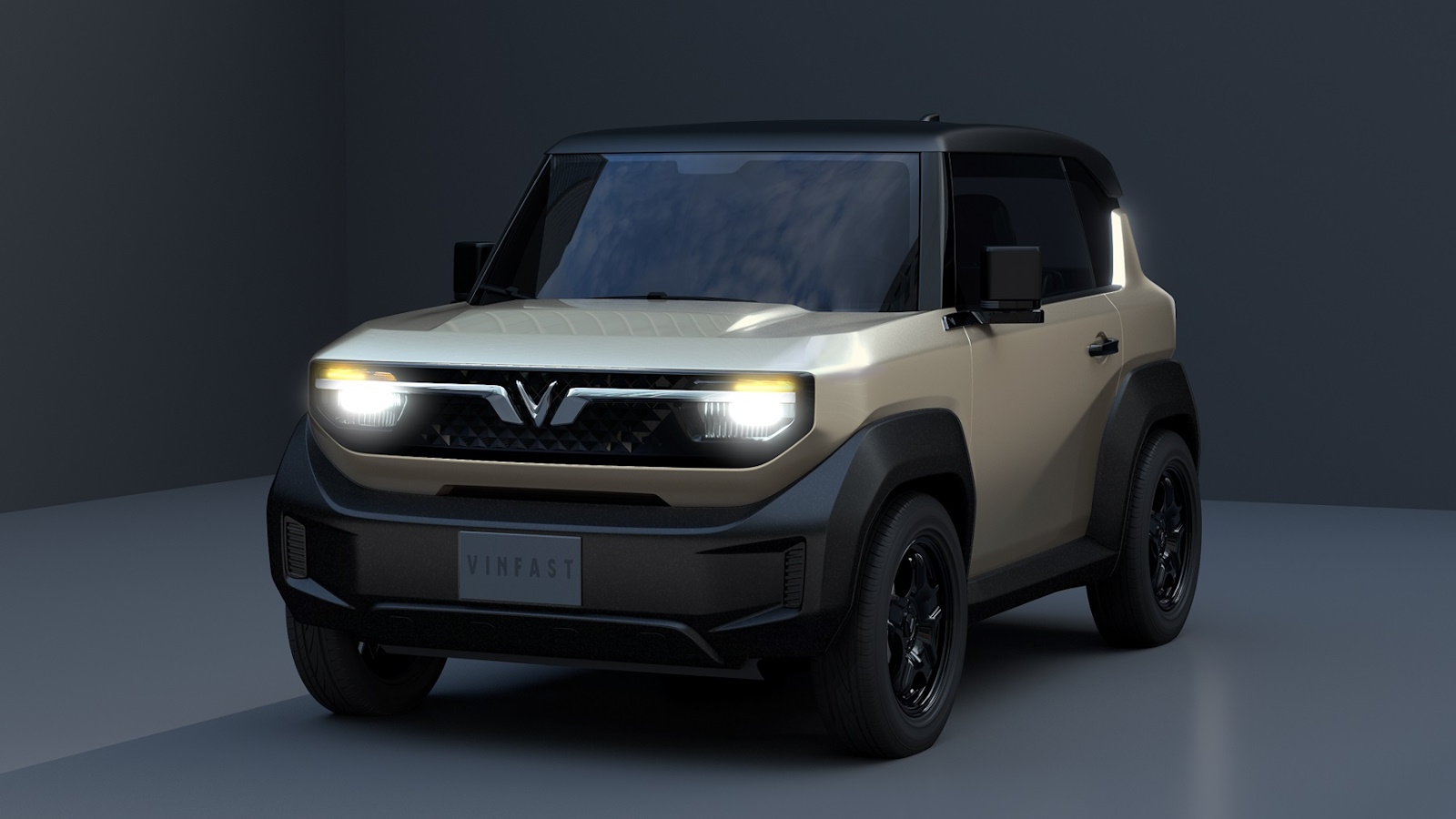
VinFast is a Vietnamese automaker created by that country’s richest man, Pham Nhat Vuong , who is one of those serial investors that owns seemingly every kind of company (gold mines, oil wells, shipping or real estate). While the company started out making refashioned BMWs, it quickly jumped on the EV hype bandwagon and started making its own electric cars.
The company even started selling vehicles in the United States, although a combination of terrible reviews, the loss of the Inflation Reduction Act, and the projected downturn in the market have sent the company looking for other markets. Specifically, the company is focusing more on Southeast Asia and its own home market, where it sells most of its cars. For that reason, I sort of assumed its delayed North Carolina plant was dead-in-the-water.
While sales were up by a lot last year, Nikkei Asia reports that the company still lost money:
VinFast on Monday reported a $3.87 billion net loss for 2025, worsening by 26% from the year earlier on sales and other operating expenses.
The Nasdaq-listed car maker generated $3.59 billion in revenue last year, a 105% gain, it said in unaudited results. Cost of sales, its biggest expense, swelled to $5.13 billion, and the company took a $236 million impairment charge on a delayed factory in the U.S. state of North Carolina.
The Vietnamese company has plans to introduce a hybrid car, expand into other electric scooter markets, and resume construction of the U.S. plant in 2026 with an eye to starting operations in 2028, it said in a call with analysts.
That hybrid bit is interesting, as is the news that it isn’t actually abandoning North Carolina. Here’s Business North Carolina with a few more details:
Vietnamese electric-vehicle maker VinFast says it intends to resume construction of its planned North Carolina factory in Chatham County as early as next month, with an eye toward launching production there in 2028.
But the company has revised its ambitions, telling local officials that it expects employment in the 1,400-job range. That’s 81% lower than previous expectations of 7,500 jobs, reflecting a more sober outlook for EVs now than four years ago.
Presuming the factory starts assembling cars, it would remain a major North Carolina signature business-recruiting success, but not nearly the impact expected previously. State and local officials pledged topping $315 million over 32 years to VinFast when the project was announced in 2022. Payouts are contingent on the company investing $4 billion and creating 7,500 jobs.
Is the company going to be making EVs? Hybrids? I’m hoping it’s the little, cheap VinFast VF3. An American-built, sub-$20k two-door EV Suzuki Samurai-clone (if that price could ever survive) would be awesome. I don’t know if it would be successful, but it would be awesome.
Leapmotor Says They Turned A Profit Last Year

Leapmotor, or Zhejiang Leapmotor Technology Co., is a Chinese carmaker that’s been focused on the most affordable end of the electric car market. Analogs tend to fail when it comes to Chinese brands, but it gives me Dacia vibes. It’s also closely aligned with Stellantis, which owns a portion of the automaker, and the majority of the Stellantis-Leapmotor JV.
The carmaker turned its first annual profit on the backs of strong sales, and it looks like that momentum is going to carry into more projects with Stellantis. The company is already expanding in Europe thanks to underutilized Stellantis factories, including one in Poland. According to Bloomberg, there’s a lot more in the works:
Leapmotor also said it is “actively exploring” cooperations on cars and components with the Franco-American-Italian carmaker, according to a Monday filing, noting that some projects had already entered “advanced negotiation stages.”
Closer collaboration will offer Leapmotor more global opportunities while also helping Stellantis save on development spending and provide a shortcut to better competition with China’s BYD Co. and SAIC Motor Corp.’s MG in Europe, as well as local rivals including Volkswagen AG and Renault SA.
The pact will help Leapmotor navigate European regulations and potential tariff exemptions. Stellantis possesses “better intelligence access” and “strong expertise”, Chief Financial Officer Li Tengfei said on an earnings call, confirming an earlier report by Bloomberg News.
“We believe that localization is the definite direction for global expansion of Chinese EV companies,” said Li.
Localization used to be how American companies described what they were doing in China, and now it’s the other way around.
Foxconn Takes A Stake In Mitsubishi Electric

Taiwan’s Hon Hai Precision Industry, better known as Foxconn, really wants to make cars. So much so that it attempted to grab Nissan on the cheap, which led the Japanese business community and government to encourage Honda to get in there first. In all that drama, it turns out that maybe Honda was more interested in Mitsubishi than Nissan.
The joke is on everyone, because now Foxconn has just a little bit more of Mitsubishi than it did before, as Nikkei Asia reports:
The Japanese company is finalizing details, but the plan is to sell a 50% stake in Mitsubishi Electric Mobility, and jointly operate the business. The final agreement should be agreed by May.
Mitsubishi Electric had considered withdrawing from the automotive parts business before opting for a joint operation with Foxconn.
Mitsubishi Electric Mobility’s main business is alternators and starters, so this feels like it’s just part of a larger play to be in the industry and have some control of the supply chain.
This is nicely timed with an editorial in Automotive News from Hans Greimel that points out some hard truths about Honda’s attempt to strong arm Nissan into a deal:
Barely a year ago, Honda CEO Toshihiro Mibe sermonized Nissan’s embattled management about the need for “quick and decisive, painful decision-making.”
Mibe’s doubts about Nissan’s ability to turn itself around emboldened his all-or-nothing bid for Nissan’s full takeover. It also derailed the merger of equals both carmakers originally envisioned.
Now, as Honda tumbles into its own money pit, Nissan seems to have the last laugh.
It’s a little early to call a victor, but it’s a fair point. Last year, I blamed Nissan’s hubris for not taking a subsidiary role to Honda. Maybe Nissan saw what I didn’t see.
Audi’s Bringing Back The A2, But It’s Not The One You Want
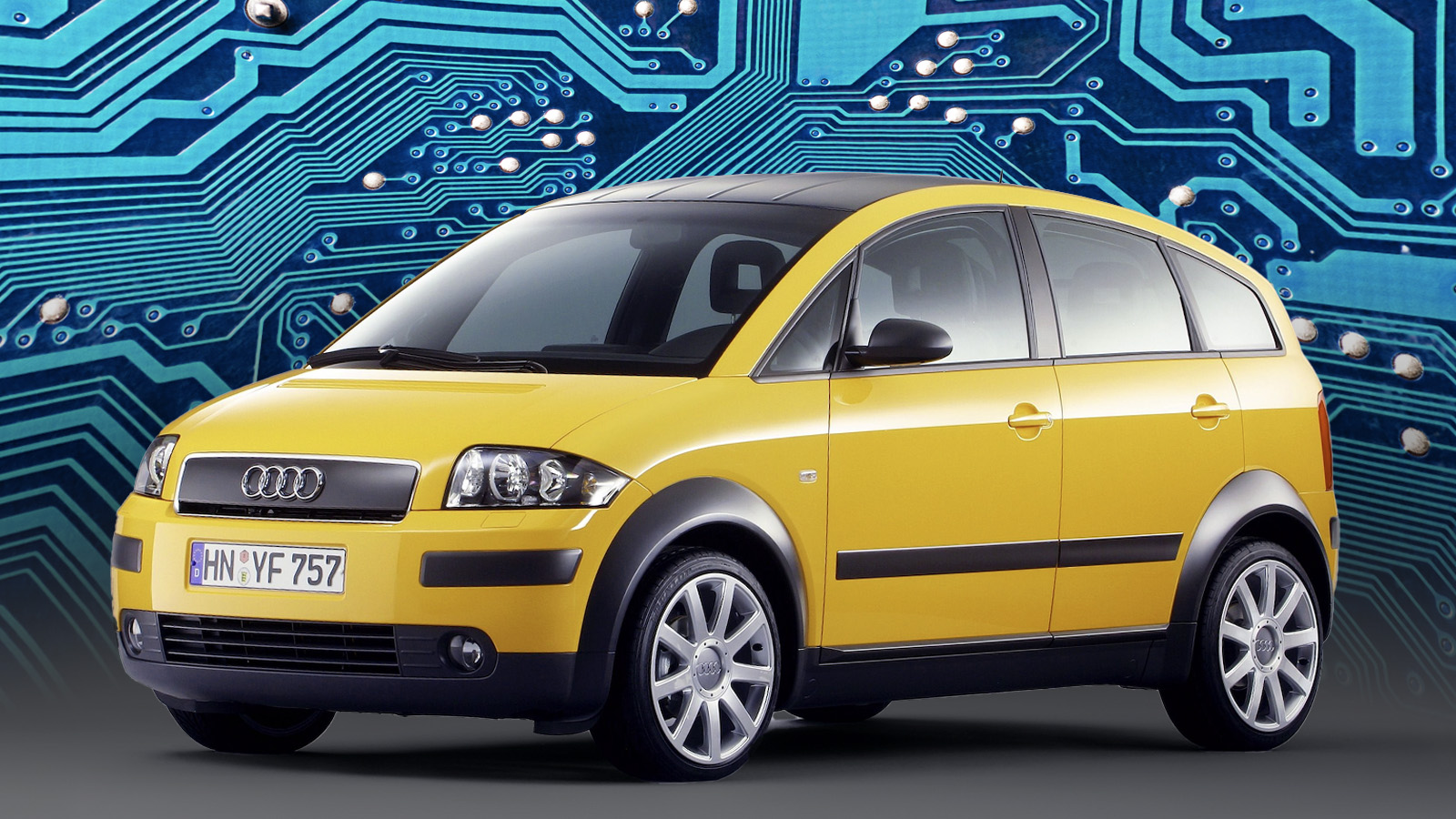
Antti called the new Audi A2 e-tron the “TRON of Audis.” That’s a pop cultural way of saying it’s a sequel that’ll never live up to the original. That being said, we do have a preview of it now courtesy of Audi:
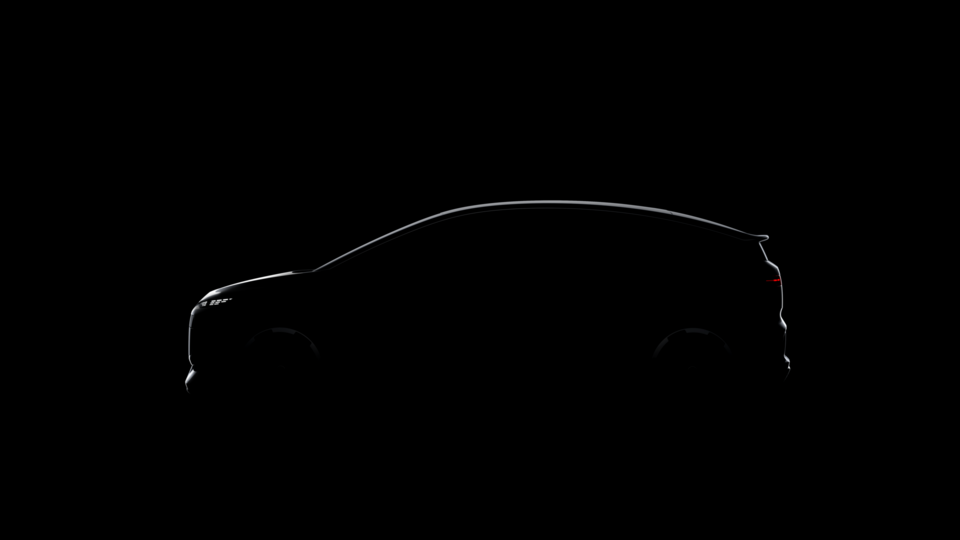
It’s going to just be a VW ID.3 under there, but maybe it’ll look good? From the brand:
The A2 e-tron, manufactured in Ingolstadt, will further rejuvenate Audi’s model range and open up access to premium electric mobility. A preview of the vehicle’s silhouette can already be seen in the first design sketch.
Audi is taking the next big step on the road to a consistently electric future. Audi CEO Gernot Döllner has announced the A2 e-tron – the new electric model family from the brand with the four rings – at Audi’s Annual Media Conference. “We’ve listened. Our customers want electric mobility that impresses in everyday life. The A2 e-tron is our promise to deliver exactly that – efficient, compact, and confident. We’re making entry into the electric Audi world easier and more relevant than ever,” said CEO Gernot Döllner.
There’s no change we’re getting it here, don’t worry.
What I’m Listening To While Writing TMD
In honor of St. Pat’s Day, here’s Thin Lizzy performing “Whiskey In The Jar.”
The Big Question
You get to save one brand and kill one brand. Who stays and who goes?
Top photo: VinFast/DepositPhotos.com




Deep cut White Stripes reference
Save VW. Kill Tesla.
VW is doing a good job of slowly killing itself off anyway.
Sadly true. The mighty sure have fallen. But that is really the whole industry, IMHO. Dreck across the board.
What is Irish chicken?!!
My first question as well.
I would argue there are not enough independent automakers. But Being a small manufacturer of anything is hard. You still have to comply with all of the rules and regulations the big corporations do, but your costs per unit were higher.
I would love if there was a low volume manufacturer exemption for automobiles. Maybe relaxed safety tech regulations (AEB, cameras) and crash testing exemption. Just look at Jason’s cold start to see an example of what new ideas could be.
I’d love to build a modular microcar with variants spanning all the way from an unmotorized 100% pedal-powered velomobile, to an AWD electric race car with no bicycle drivetrain and about 1 horsepower per 2 lbs of laden vehicle, and everything in-between(“street legal” class 2 or 3 e-bike, e-moto disguised as street legal ebike, inexpensive commuter-oriented car, ect), all sharing the same base chassis, where all variants overlap parts use with other variants as application dictates.
This way, you could buy your child the pure unmotorized bicycle version, and when they get their first job they could buy the parts to upgrade it into an ebike or even their first car as they get older, and if finances/skill permit, even build their first race car out of it.
With the way 3D printer tech and CNC mills are going, it will be possible in the near future. It’s those damned regulations and potential for lawsuits that kill the viability of the idea.