

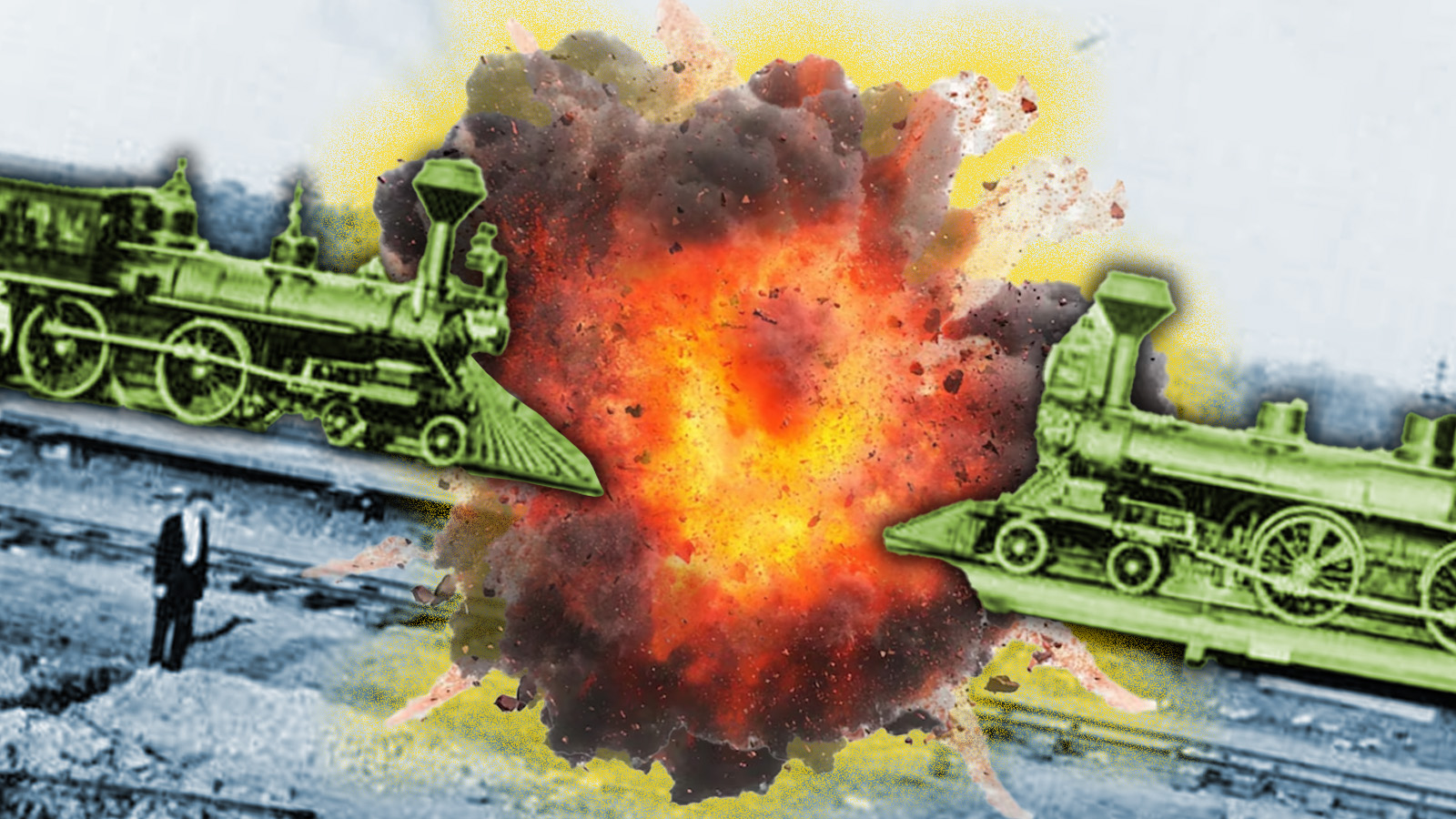
A train crash is usually a serious event, one where property damage, injuries, and even fatalities can reach depressing levels. Usually, everyone avoids trying to crash trains whenever possible. Yet, for decades spanning the 1800s and early 1900s, Americans nationwide sometimes got their kicks by intentionally crashing trains into each other, and then running toward the wrecks. Let’s look into the events that got so huge that tens of thousands of people gathered to watch trains crash and, sometimes, blow up in spectacular fashion.
I’ve been finding myself enamored with early American vehicle history. The dawn of rail, river, and road transportation is fascinating. At first, trains, steamboats, and early automobiles were world-changing inventions that permitted mobility that had never been seen before. What’s amusing is that it didn’t take long for operators of these vehicles to start doing shenanigans with them.


I recently wrote about how Americans started building practical steamboats in the 1800s, and then started racing them almost immediately after. Steamboats captured the hearts of people from sea to shining sea, and nobody seemed to care that these races were often shockingly deadly. But this wasn’t the only way Americans would pass time. If we weren’t racing boats at the breakneck speeds of 13 mph, we were disposing of locomotives by ramming them into each other.
America Was A Leader In Steam Trains
The history of steam locomotives draws some parallels to the development of steamboats. In the earliest days of rail-based transport, wagons rode on wooden and then metal rails, and those early forms of trains were moved along through muscle power or pulled by cables.
In 1712, English inventor Thomas Newcomen invented an atmospheric engine. Scottish inventor James Watt then took Newcomen’s design and, in 1765, turned it into the practical steam engine. Various inventors throughout history would take these engines to move the world.
Some of the first steam locomotive designs were made and even tested in the 1780s in America and Europe. Here in America, a major locomotive pioneer was John Fitch. If that name sounds familiar, it’s because I very briefly mentioned Fitch’s name in my steamboat piece. In 1787, Fitch fitted a Watt engine to a boat, the Perseverance, and demonstrated it to delegates from the Constitutional Convention. Fitch would go down in history for creating America’s first steamboat service, but before that, he loaded steam into trains. From the National Park Service:
John Fitch invented the steam railroad locomotive during the 1780s and demonstrated his little working model of it before President George Washington and his cabinet in Philadelphia. His idea was to use a full-scale version of his little engine to haul wagons–freight cars, actually–across the Allegheny Mountains where the United States faced an almost insuperable problem of supplying, through a nearly roadless wilderness, Major General Arthur St. Clair’s campaign against hostile British-supplied Indians of the Old Northwest.
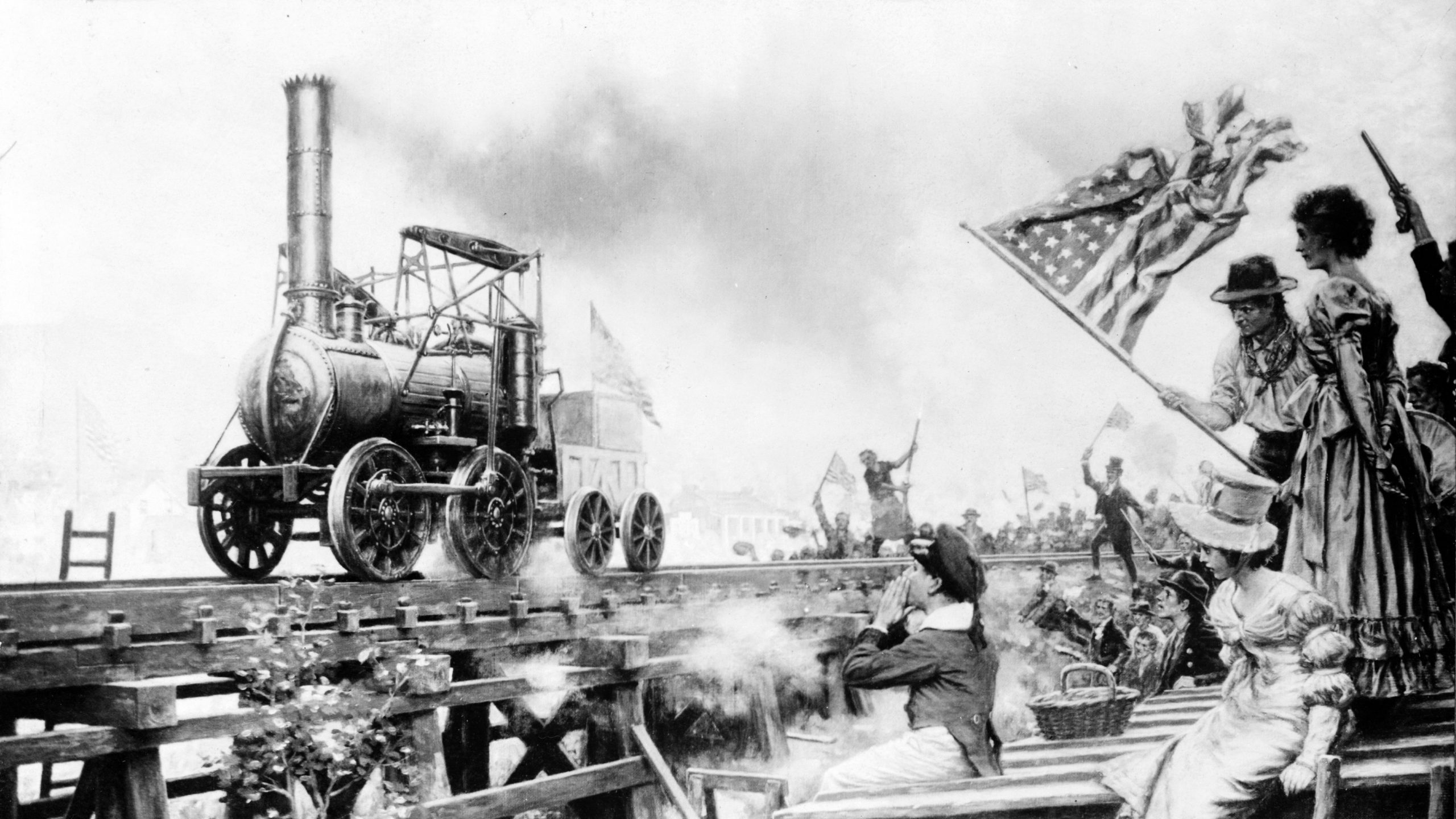
America was at the forefront of steam locomotive development, and, depending on who you ask, America invented the steam train locomotive, not Britain. Still, even if America invented the locomotive, America would be slow to adopt the technology. The first full-size locomotive to go into service in America was the Stourbridge Lion (above), which was imported from England and run in Pennsylvania in 1829.
America’s lust for trains would explode nearly immediately after. The first successful American locomotive, the Tom Thumb, was built in 1830. Trains would captivate America so much that rails would soon criss-cross the entire country, and the Transcontinental Railroad would be completed on May 10, 1869.
You probably won’t be surprised to read that, just like with steamboats, America also loved to race trains whenever possible. Railroads competed with each other to see which was faster by blasting between two destinations. But racing trains apparently didn’t rise to the level of popularity of racing steamboats. Instead, trains would find their claim to fame in spectacular wrecks.
Crashing Trains For Fun
It’s not known who was the first person to crash a train for fun, or when it happened. However, most sources suggest that the practice rose to popularity in the mid-1890s.
One of the first examples of these crashes was orchestrated by A.L. Streeter, no known relation to me [Ed note: It sounds like someone related to Mercedes, just based on what you’re about to read. -MH]. As the Akron Beacon Journal writes, Streeter, then a railroad equipment salesman from Illinois and a conductor for the Chicago, Milwaukee & St. Paul Railroad in the past, cooked up the idea to crash trains as a way to make money.
According to an 1896 issue of The National Magazine, Streeter wanted to conduct this crash in Illinois as early as 1892, but railways weren’t exactly lining up to crash their trains for fun. But he did get interest from the Cleveland, Canton & Southern Railroad, which was running out of cash and thought that crashing trains could bring some business. It wasn’t even that hard for the railroad to help Streeter out, as it had a pair of rusty retired locomotives that it was able to bring back to life just long enough to crash into each other.
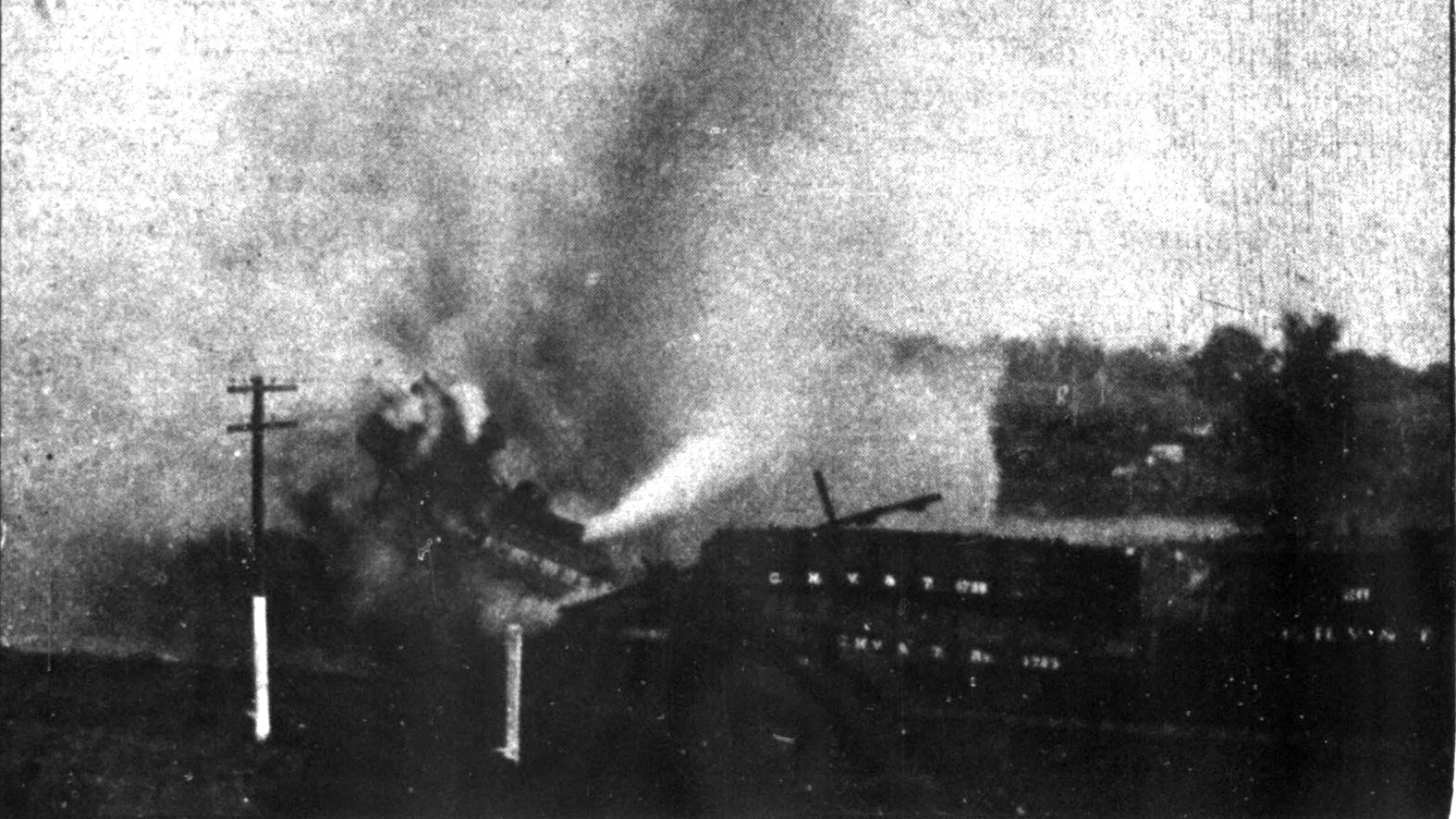
For his part, Streeter turned into a bit of a showman. He marketed the July 20, 1895, crash, which would take place a couple of miles outside of Canton, as being the most wonderful exhibition in America. From the Akron Beacon Journal:
“Two monster locomotives, with full head of steam, starting a mile apart, will rush toward each other at the rate of 60 or 70 miles an hour, and allowed to come together with a crash that will result in the most horrible HEAD-ON COLLISION ever seen or heard of,” Streeter advertised in the Akron Beacon and Republican and other Northeast Ohio newspapers.
“It will enable those present to note the terrible effects of a railroad horror. It will take place in an enclosure, and the public will be free from all danger. Everybody should see this exhibition.”
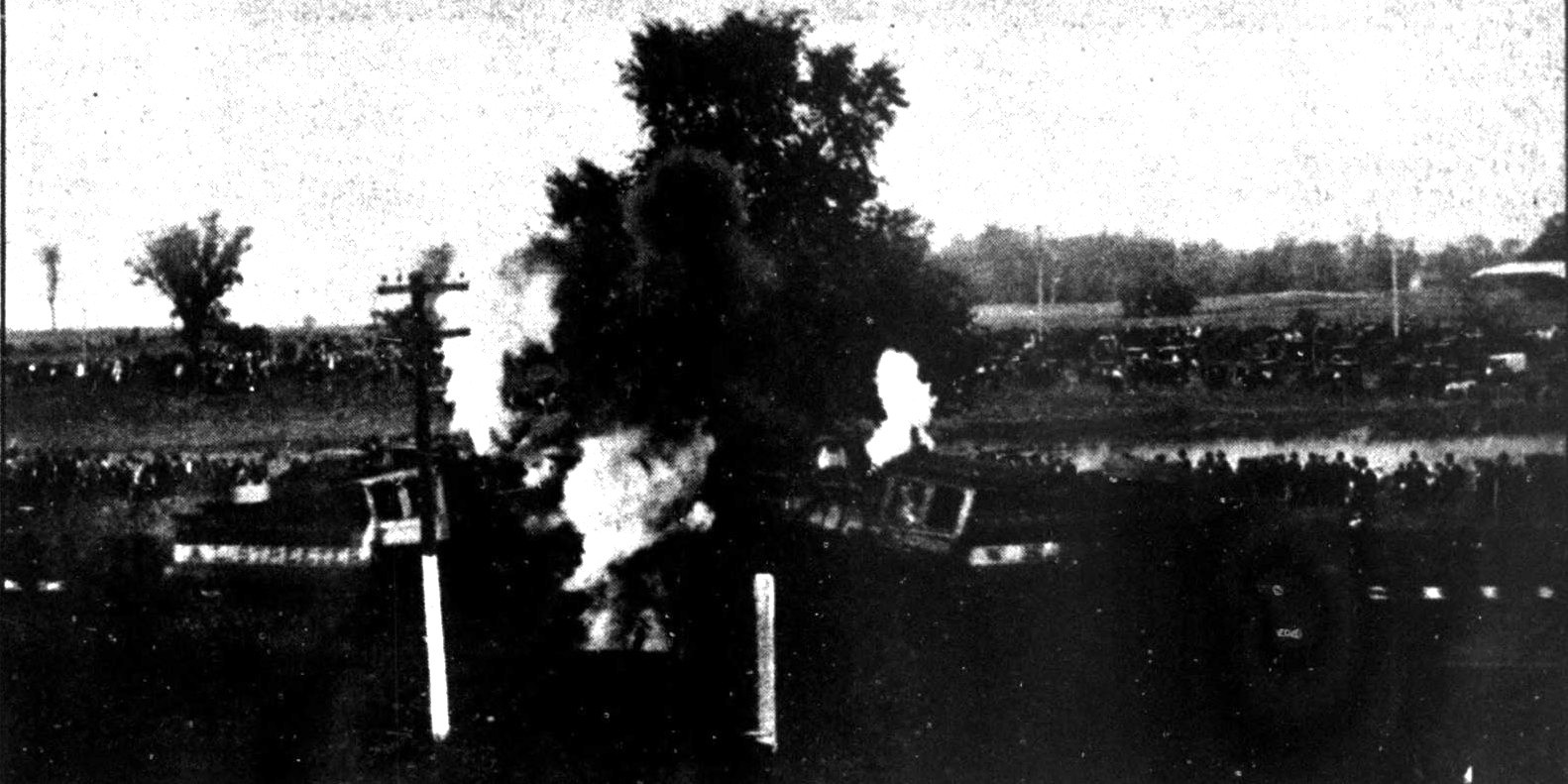
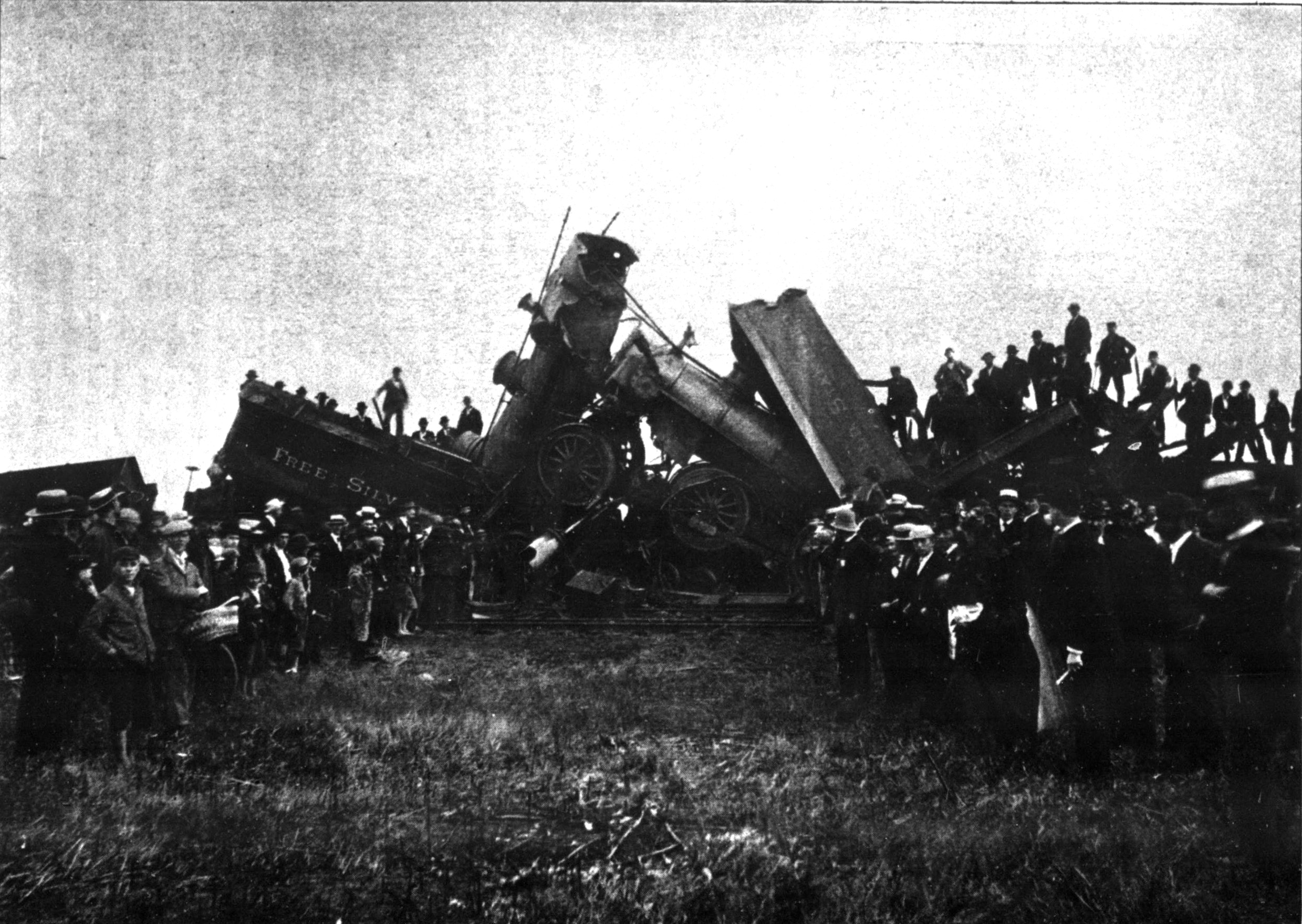
The pair of locomotives was painted red, white, and blue. One locomotive was named the Free Trade for the event, and the other was the Protection. These trains would symbolize the collision of two economic theories. Each train would also be loaded up to 40 tons by hauling flatcars carrying rocks and decorations.
Streeter charged 75 cents per person to watch the train crash, and the railroad dropped people off at the site for 15 cents a ride. The organizers were hoping for a crowd of 20,000 paying at the gate. Thousands of people did arrive, but most of them found free vantage points near the crash and avoided paying the 75-cent fee. Only about 200 people paid to watch the crash.
The plan called for the locomotive crews to back the trains up about a mile, engage full forward thrust, and then jump out. The uncontrolled trains would then meet and crumple at whatever speeds they managed to attain. Unfortunately, the plans went off the rails when, as the trains approached, the crowd rushed into the projected point of impact. Had the crash continued as planned, there would have certainly been deaths or injuries. Streeter canceled the crash.
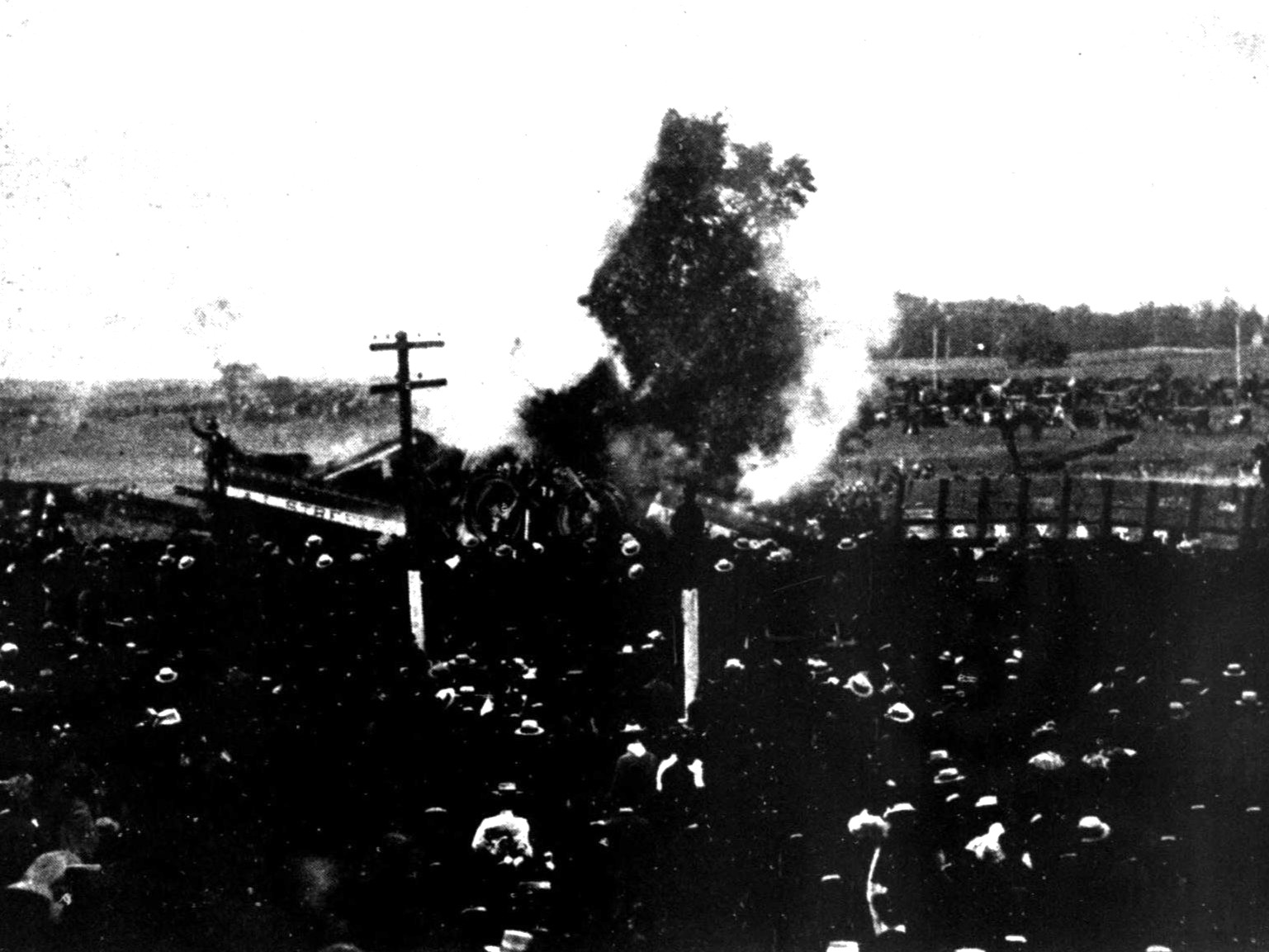
The aftermath was a disaster. Few people got refunds, and countless were mad that they paid to see the supposedly best event ever and got nothing. Apparently, Streeter didn’t even pay the $2,400 fee for permission to run the event. Streeter himself lost $800 in the ordeal. Sadly, I could not find an accurate inflation calculator that goes this far back.
However, Streeter learned that there was clearly a lot of interest in crashing trains, so he tried it again on Memorial Day 1896. That time, at Buckeye Park in Ohio, locomotives A.L. Streeter and W.H. Fisher (named after a Columbus, Hocking & Toledo Railroad official) crashed in front of a crowd of 25,000 people.
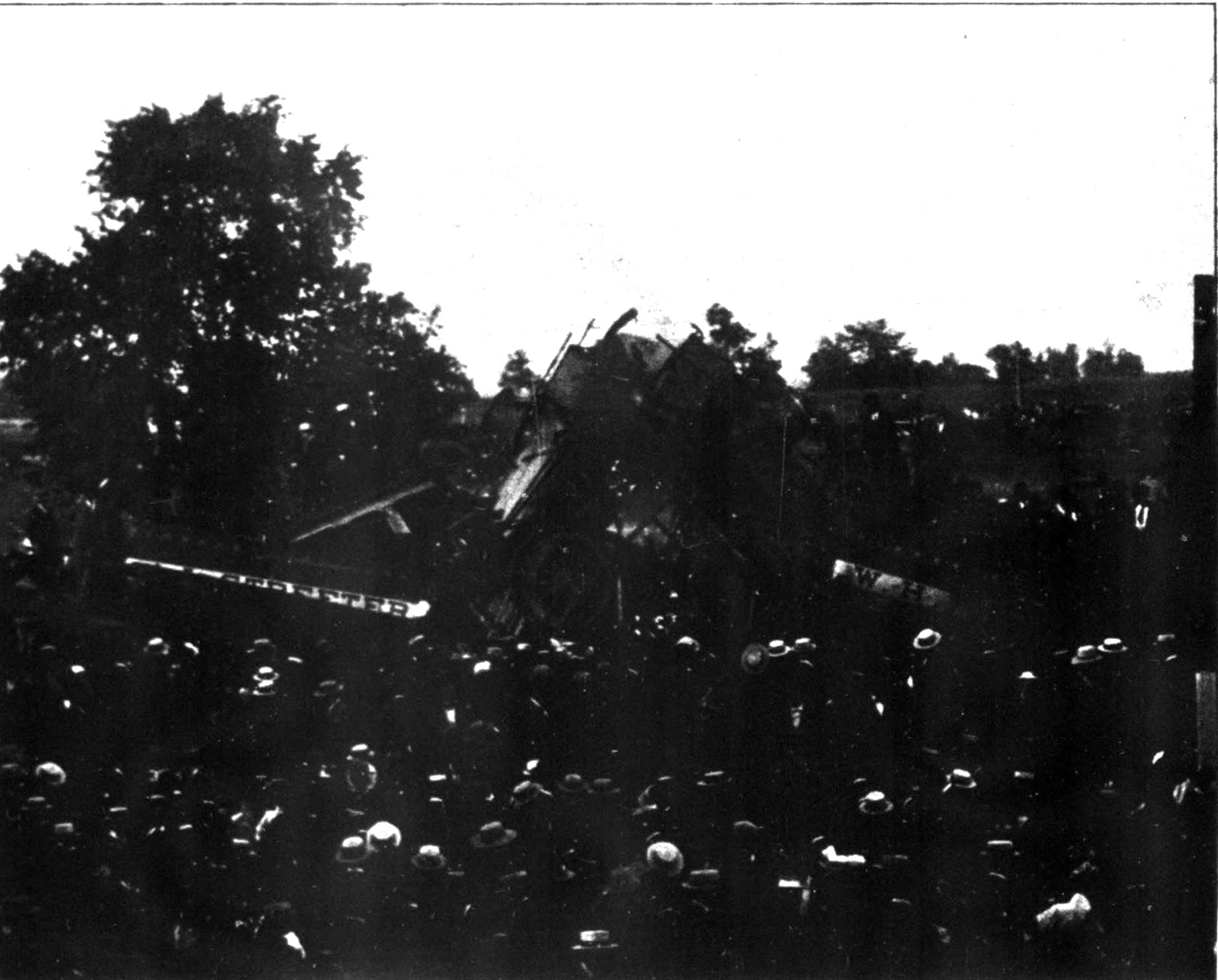
This time, Streeter placed dummies in the trains that were dressed like engineers, which added even more flair to the crash. The two trains collided at roughly 40 mph and were nearly totally destroyed in the collision. Train parts went flying in every direction. The crowd, who each paid a couple of dollars to be there, cheered through the shrapnel flying through the air. The train crash was such a smashing success that it became national news, and one paper wrote, per the Smithsonian Magazine: “the most realistic and expensive spectacle ever produced for the amusement of an American audience.”
Streeter’s success in this event was apparently infectious, as at least six more staged crashes were scheduled in the year after. Some organizers hired Streeter; others just copied his idea. It was only that same year that perhaps the most infamous staged train crash in history happened.
Building A Fake Town To Crash Trains
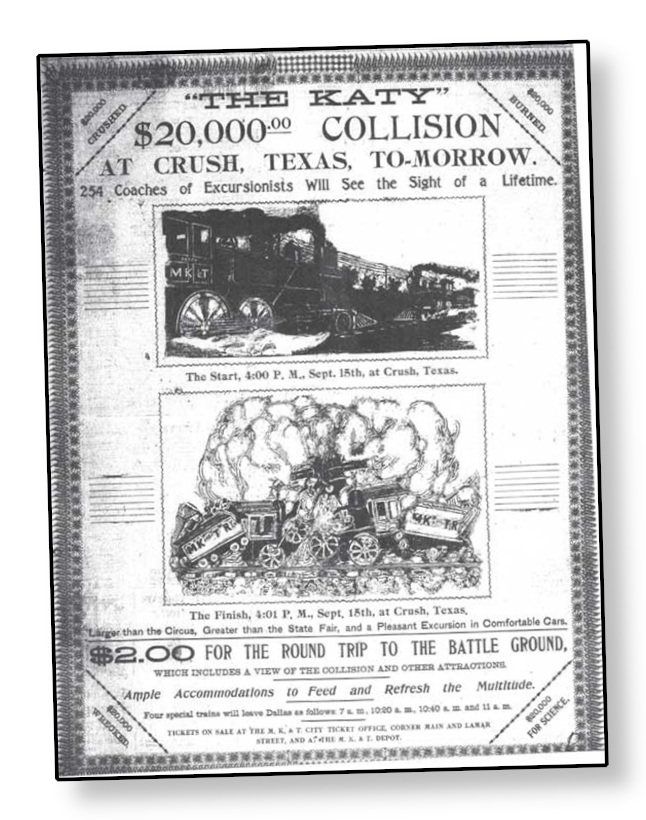
William George Crush was the general passenger agent of the Missouri–Kansas–Texas Railroad, which was known as the Katy. The railroad snaked its way through its namesake states, and as it upgraded its equipment in the late 1800s, it had a bunch of older, outdated locomotives sitting around and doing nothing. Crush, perhaps motivated by the success of Streeter, decided to promote the railroad by organizing his own train crash. But his would be bigger, better, and more bombastic than anything Streeter had done by that point.
Katy railroad officials loved the idea and gave it the green light. As the Smithsonian Magazine writes, the officials had a good motivation to rubber-stamp the plan. A quarter of America’s railroads were wiped out during the depression of 1893. The Katy survived and managed to rake in $1.2 million in passenger tickets and $3 million in freight in 1895, but the company wanted to secure its position even further.
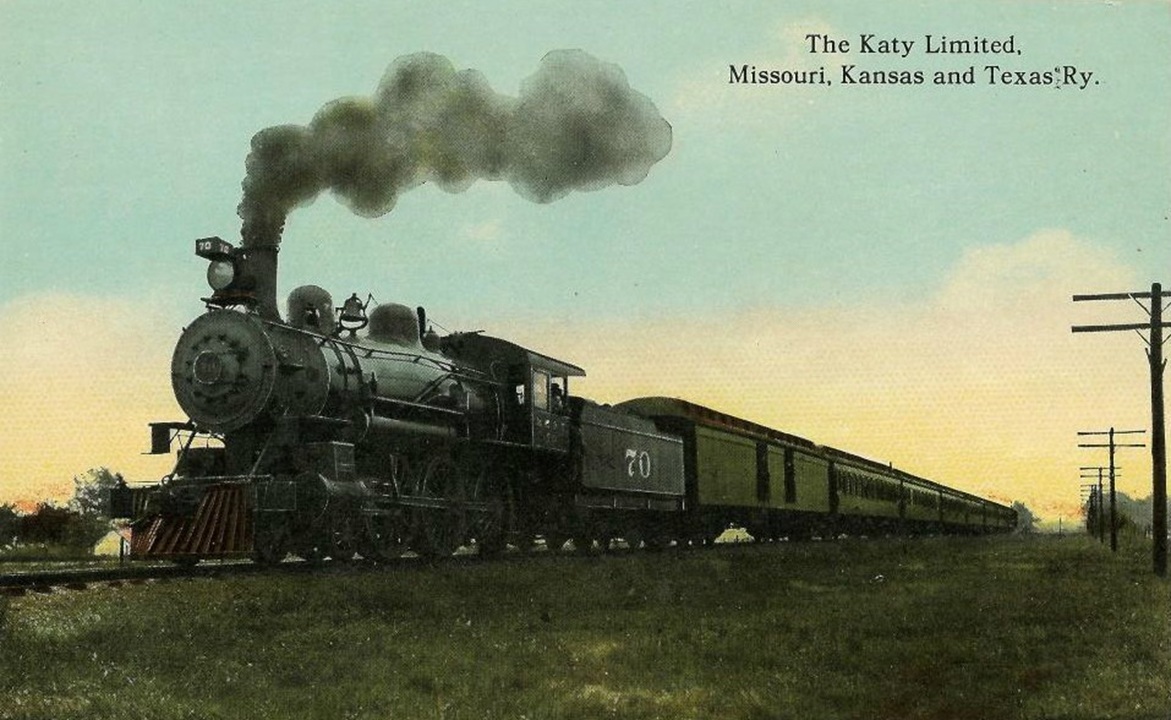
Crush’s plan was grand. He planned the event over a year in advance. Technically, Crush’s plans actually predated Streeter’s successful crash. The railroad chose two outdated 35-ton 4-4-0s that were built in 1870, and took them on a promotional tour. No. 999 was painted green with red accents, and No. 1001 was red with green accents. The trains, which hauled seven cars decorated in advertising from sponsors, toured the Katy’s trackage, handing out leaflets at every stop. This marketing campaign was brilliant, as it meant that, in short order, the news traveled nationwide. Sponsors included P.T. Barnum’s circus and the Orient Hotel.
Another clever part of the marketing was that spectators would not be charged to view the train crash, and the railroad offered discounted rates to get them there. As a result, people would come to see the crash from as far as New York City.
The Katy’s preparations for the crash were surprisingly complex. While Streeter crashed trains on existing tracks, the Katy and Crush would go to insane lengths to ensure a successful event.

The railroad did not use existing trackage for the run. Instead, as Trains.com writes, the railroad’s track crews of 500 men laid a spur off of the Katy’s trackage in Waco, Texas. Then, four more miles of rails were laid. This ensured that the crash wouldn’t happen near existing tracks or towns. Since the crash was taking place in the literal middle of nowhere, the railroad had to build a depot, a 2,100-foot platform, a shop, and two telegraph stations. In other words, the railroad built an entire temporary town, and named it Crush, after the event’s mastermind.
The prep continued from there, from Trains.com:
For weeks, crews ran the engines up and down the 4 miles of track to see where the exact point of impact would be. From the place they decided on, workers built a grandstand 200 yards away for VIPs, and a press box 100 yards away for photographers. Among the photographers was an assistant to Thomas Edison, who was filming events around the country with his new motion picture camera to show on his vitascope screens. Additionally, there was a bandstand, and three stands for politicians to entertain the crowds with oratory.
William Crush arranged to borrow a tent from the Bailey circus, and the superintendent of the Katy eating house service was put in charge of sandwiches to be sold there. To keep the crowds in good shape, he arranged for eight tank cars full of free water and ice for the public. In fact, the whole event was free. The only cost was the tickets to get there: a $2 round trip for Texas residents.
Medicine shows, gaming stands, lemonade stands, and soda stands were allowed in the carnival setting. Liquor was not sold, as promoters anticipated that everyone would bring their own. A jail was set up in case of problems.

As an archived issue of the Katy’s employee magazine claims, Crush went to great lengths to try to ensure the event’s safety. When the two trains rolled into the fake town, track crews removed the track behind them. This ensured that, if either train somehow continued for any reason, there would not be an out-of-control train speeding into populated areas or onto the Katy’s mainline.
Crush, unlike Streeter, also did not use worn-out locomotives. While the 4-4-0s chosen by the Katy were old and outdated, the railroad made sure they were in perfect mechanical condition for the event. The idea here was to ensure no explosions or anything that would either stop the crash or injure spectators. The trains even had extra safety chains to make sure they did not violently separate from their tenders and cars during the crash event.
The Katy then had skilled crews running and maintaining the event’s engines. Frank Barnes and E. Stanton operated the No. 999, and Charles Cain and S.W. Dickerson were on the No. 1001. The engineers assured the public that they were going to crash the trains at a speed that wasn’t fast enough to blow the locomotives’ boilers.
America’s Infamous Staged Train Crash
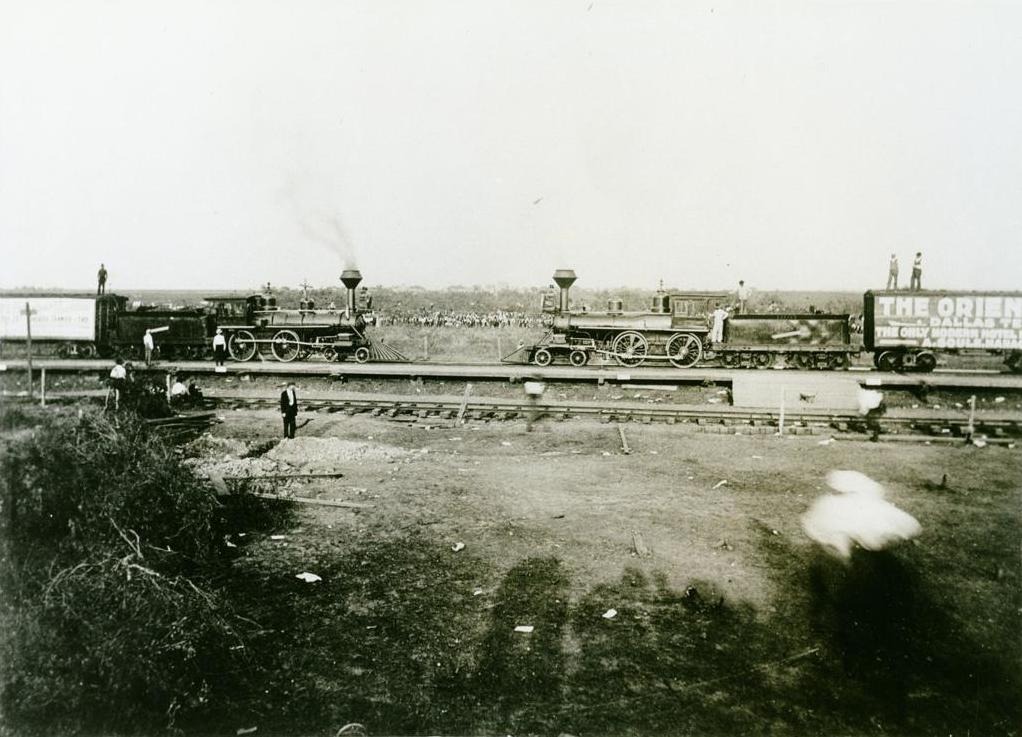
The day of the crash was September 15, 1896, and it was a total blowout. Some 40,000 to 50,000 people had arrived in Crush. Most of them arrived in the 33-plus trains to the event, which dropped people off every 12 minutes. If you rode to the site from anywhere in Texas on Katy’s line, your ticket was just $2.
Eventually, the crowd was in place and backed away from the tracks while the stage was set. The trains met at the expected impact point and then reversed a mile out. Then, their respective crews set the trains to full speed ahead and jumped out.

The trains met at their intended collision point, but what happened next was very unexpected, from the Texas State Historical Association:
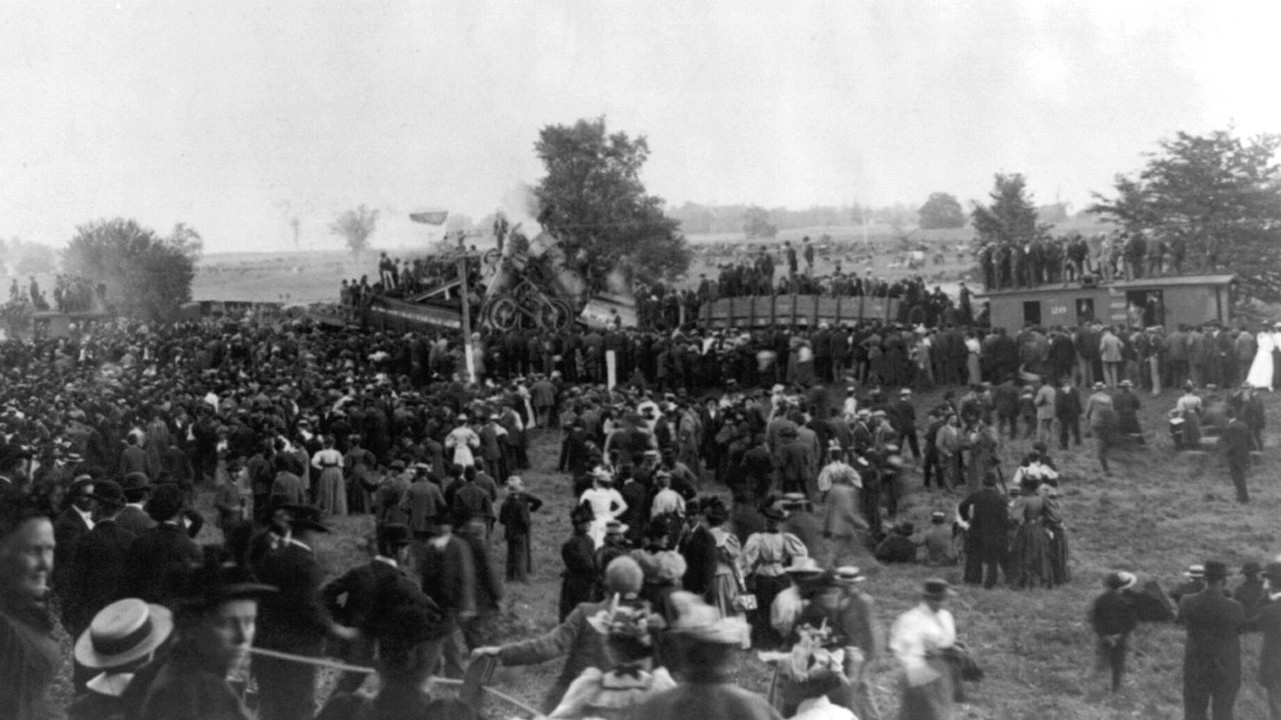
A great cheer went up from the crowd as they pressed forward for a better view. The locomotives jumped forward, and with whistles shrieking roared toward each other. Then, in a thunderous, grinding crash, the trains collided. The two locomotives rose up at their meeting and erupted in steam and smoke. Almost simultaneously, both boilers exploded, filling the air with pieces of flying metal. Spectators turned and ran in blind panic. Two young men and a woman were killed. At least six other people were injured seriously by the flying debris.
The Katy wrecker-trains moved in to remove the larger wreckage, and souvenir hunters carried off the rest. People began to leave for home, the tents, stands, and midway booths came down, and by nightfall Crush, Texas, ceased to exist. The Katy quickly settled all damage claims brought against it with cash and lifetime rail passes. As for George Crush, the railroad fired him that evening but relented and rehired him the next day. He continued to work for the Katy until his retirement. Composer Scott Joplin commemorated the event in his march Great Crush Collision which was published just a few weeks after the wreck. It has been surmised that the spectacle drew its huge audience in part because it occurred at a time of economic distress when railroads symbolized to many the evils of the big business “octopus” and were a target of attack for populist politicians.
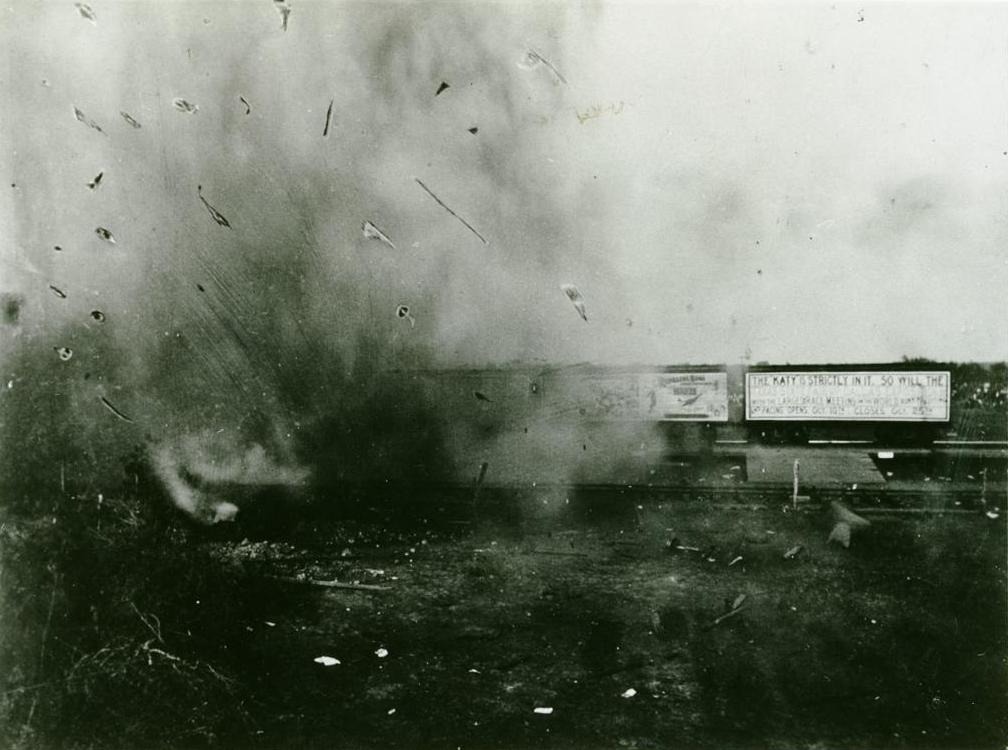
Period reports described chaos on apocalyptic proportions. One reporter said, via the Smithsonian Magazine:
“A crash, sound of timbers rent and torn, and then a shower of splinters. There was just a swift instant of silence, and then, as if controlled by a single impulse, both boilers exploded simultaneously and the air was filled with flying missiles of iron and steel varying in size from a postage stamp to half a driving wheel, falling indiscriminately on the just and unjust, the rich and the poor, the great and the small.”
One report said that an entire driving wheel from one of the trains was blown 2,500 feet by the explosions.
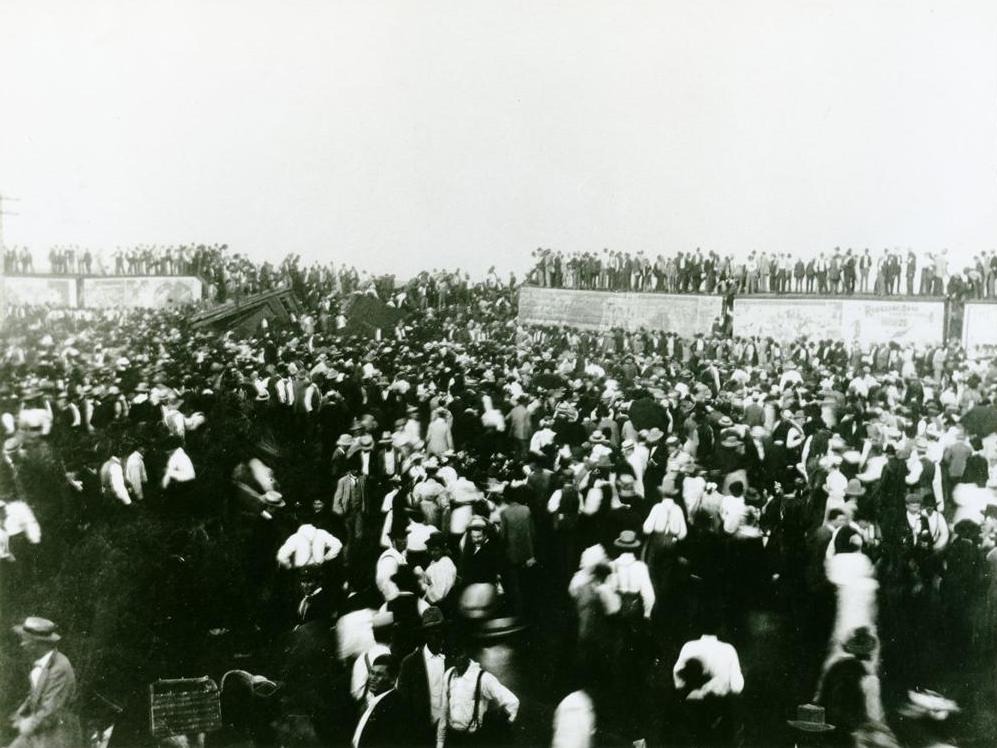
If you’re not abreast of your steam trains, a driving wheel is one of the gigantic and heavy metal wheels that provide traction for the locomotive. To send one of these flying nearly a half mile means some incredible energy was released in the boiler explosions. Jervice C. Deane, the official event photographer who took the photos that are included here, lost an eye due to a steel bolt fired from one of the blown-up locomotives.
Amazingly, all of the death and injuries didn’t dissuade other showmen from following the lead set by Crush and Streeter. The Katy even got international attention from the event.
The Crashes Continued
Since this activity went on for so long, there are even videos, like the one above, of trains crashing!
Carnival barker and theatrical manager Joseph S Connolly made an entire career out of crashing trains. According to the Guinness Book of World Records, between September 1896 and August 1932, Connolly staged approximately 73 train crashes for public exhibition. His knack for crashing trains gave him the nickname “Head-on Joe.” His crashes were even bigger and more explosive than the Crush’s, even though the “Crash at Crush” is perhaps the most infamous exhibition train crash in history. From the Guinness Book of World Records:
Joe Connolly’s first deliberate train-wrecking took place in Des Moines, Iowa, on 9 September 1896. It established the basic premise he would use for all his future events, which was more safety conscious (given late-19th century standards of what constituted “safety”) than those of his rivals. A length of track was laid down adjacent to the grounds of the Iowa State Fair and two near-obsolete locomotives were acquired from the local railroad company. The crowds were charged 50 cents to enter the viewing area, but were kept in a fenced off area a “safe” distance from the tracks. Railroad engineers backed their locomotives up to the farthest extent of the track, built up the steam pressure and then set them in motion, jumping clear as they picked up speed.
The Iowa train-wrecking drew around 20,000 paying customers, and boosted attendance to the state fair considerably (between 50,000 and 70,000 attended the fair that day). It cost a reported $8,500 to stage the wreck (around $260,000, adjusted for inflation to 2020), but netted more than $10,000 (c.$310,000) in direct gate receipts. Connolly was paid $3,558 (c.$110,000) for his work.
Here’s another video of trains crashing:
Amazingly, over the course of nearly 40 years, Connolly would manage to crash a total of 146 locomotives. Now, nearly a century later, he still holds the record for the most trains crashed. Reportedly, Connolly found ways to spice up his crashes. Sometimes, he’d paint the locomotives with the names of political candidates, or intentionally rig them to blow using dynamite or gasoline.
According to the book, The Man Who Wrecked 146 Locomotives by James J. Reisdorff, staged train wrecks remained popular until the 1930s. The Great Depression changed America’s outlook on crashing trains for fun. Suddenly, crashing sometimes perfectly good trains was seen as wasteful, and the events lost popularity. Connolly’s last staged wreck happened at the Iowa State Fair in 1932. After the trains crashed, he walked away and retired from crashing trains. As Atlas Obscura writes, one of the last staged train crashes for the public was likely in 1935.
A Product Of The Past
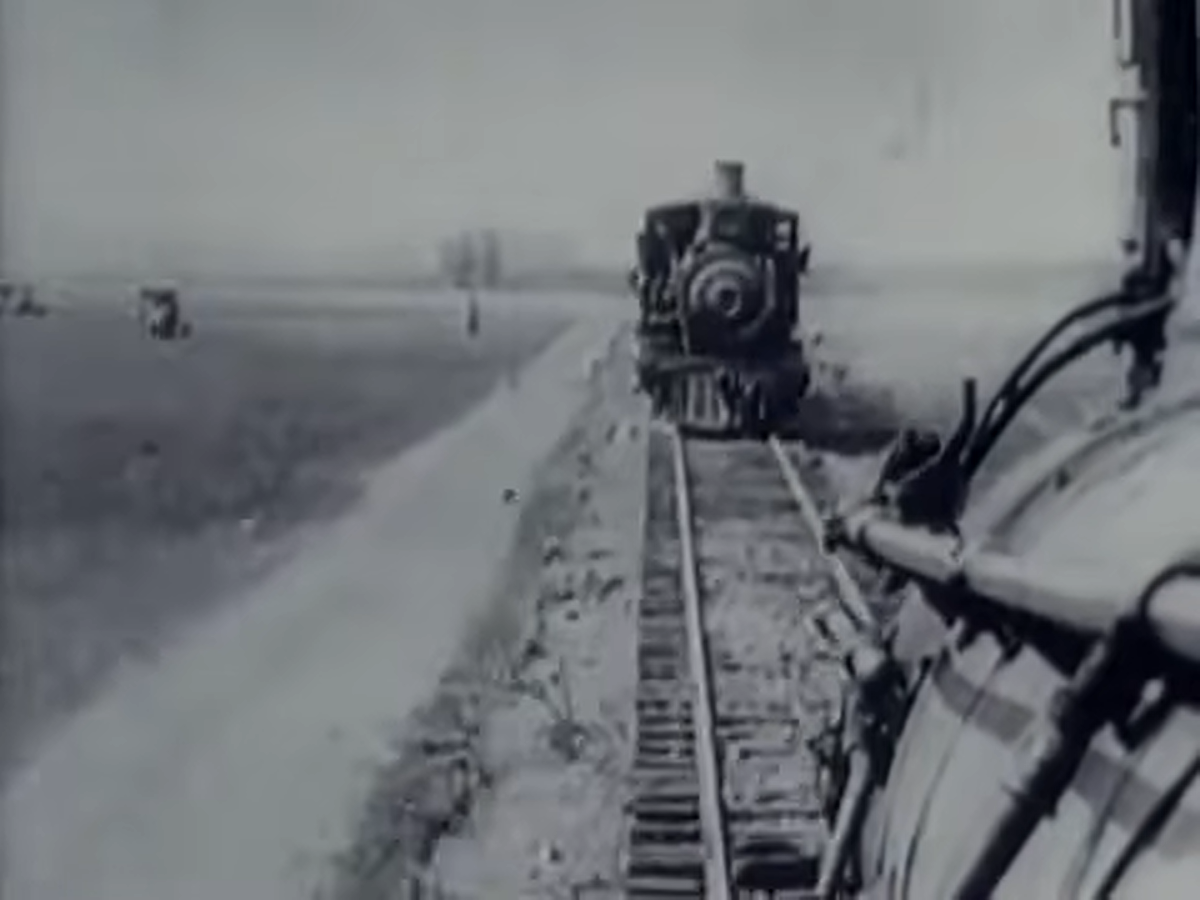
Today, the idea of crashing trains just for the fun of it sounds absurd. Sure, we see trains crashing in movies all of the time, but there isn’t exactly anyone lining up to ram two diesel-electric locomotives together. Certainly, such a thing would be seen as too dangerous and too wasteful today. An operational locomotive can pull freight, pull passengers, or be parted out. Today’s locomotives also carry thousands of gallons of diesel each.
But for a period of around four decades, intentionally crashing trains wasn’t seen as just fun, but good for business, too. If you were a cash-strapped railroad, sending two locomotives into each other was seen as a viable marketing strategy, and it was largely thanks to the likes of Streeter, Crush, and Connolly.
This is just another fascinating artifact from American history. Americans used to enjoy some of the weirdest pastimes despite the fact that just spectating in them could have led to death or dismemberment. A part of me wonders what it must have been like to live during such a time. Would you be willing to stand by a track as two roaring steamers crashed?
Top photo: YouTube/Public Domain


This clip was my first exposure to deliberately crashing trains into each other, which should be familiar to people of a certain age:
https://youtu.be/EZYIr-r07gE?si=McJApj4EZ5WixeuZ
I thought of Headbanger’s Ball and Chromatic Death as well.
Gomez Addams
What’s wild is that I referenced The Crash at Crush just this morning.
Many people like to hate Algebra for asking questions that start off like:
A train leaves Chicago for Los Angeles traveling at an average speed of 47 miles per hour.
At the exact same time, a train leaves Los Angeles for Chicago traveling at an average speed of 52 miles per hour.
Where will the two trains meet?
Now, you may think this is a boring problem.
One that doesn’t have any relevance to your daily life.
Not worth solving.
Nay, Nay I say.
Here’s why you should solve this problem:
First, assume that at some point, both trains will be on the same track – Note they are both going between Chicago and Los Angeles. These days it’s safe to assume they are both following the shortest track and, further, that there’s probably only one set of tracks through most of the country.
Second, have a spirit of entrepreneurship. Try to see how you might profit from this situation.
You will eventually see that at some point, it is likely that the two trains will meet.
Now, if there is only one set of tracks at that point you will have a pretty spectacular train wreck.
If you have an entrepreneurial spirit, you will realize that soon there will be a lot of people around the area of the train wreck.
There will be rescue workers, law enforcement types, fire fighters, EMTs and of course lots and LOTS of reporters and their crews.
Now, an entrepreneur would realize that all those folks are going to get hungry during the long, meticulous clean-up process.
If the wreck happens at a remote location – there’s lots of nothing along the tracks between L.A. and Chicago – they won’t have many choices for places to obtain nourishment.
What you as entrepreneur should do then is buy a good little food truck – maybe one with 4 Wheel Drive and park it someplace near the point where the two trains will meet.
Have a good supply of sandwich fixings and plenty of coffee and you’ll probably pay off your expenses the very first day. If you have a good supplier to keep you stocked you should be showing a good profit by the end of the second day.
So in addition to the above asked “Where will the two trains meet?”, you should also solve for the following:
1. Where can you obtain a well equipped food truck and what will it cost up front?
2. Is your credit good enough to finance it short term?
3. How many counter workers should you hire to fully cover the anticipated number of customers?
4. What should you stock in your truck – hamburgers? Hot Dogs? Tacos? Some regional favorite?
5. Will the event occur near an established road? If not, how far will you have to go off-road with your food truck and how will you secure your supplies so they don’t end up all over the floor.
6. One of the most important things to consider (there are bound to be other lesser things) is: What is the radius of the debris field when the two trains meet? This is very important if you are already set up and waiting so you don’t have a boiler land on your spiffy new food truck.
Note that the above questions would be good for students in an advanced placement class combining knowledge of various business, mathematic, scientific, geographic, and social networking fields.
What’s the town in Alaska where they send junk cars off a cliff every 4th of July?
“ Up Next, in a related story… NASCAR is racing in Talladega this weekend!”
What a fascinating article! People appear to have gone to great lengths to be entertained without having all of the things we take for granted now days. Can you imagine paying money and taking a trip to witness something like this and chancing having hot metal debris hurled at you? Insanity! I’m pretty sure there wasn’t any kind of safety netting put up to help control the debris, either.
For a while this was a smashing success, then future events got – derailed…
OK, this has got to be COTD right here Top Dead Center! Clever!
“Why else would a grown man play with trains?” -Gomez Addams
I was a kid when the movie “The Sting” came out, and ragtime and composer Scott Joplin briefly reappeared in the public eye. We had a piano book of Joplin rags, and Great Crush Collision was in it. I only learned (and still remember) the two alternating rumbling left hand parts mimicking the trains coming towards each other, and the occasional right hand diminished chord playing train whistle.
I still have that piano-rag book! I actually dressed up as Scott Joplin for a “Night of the Notables” event at my high school, giving a spoken presentation of the man’s life followed up by playing “The Entertainer”, “Maple Leaf Rag”, and “Bethena” (not actually in that book as it was a Waltz). My parents had a vinyl copy of the soundtrack from The Sting and that kind of got me hooked on Ragtime right around the time I started taking piano lessons.
I never learned the Great Crush Collision, but thanks to Mercedes I may go dig it out and see if I can play a few lines on our 1933 Howard baby-grand this evening.
Cool!
We had the “The Sting” soundtrack, and a couple of Joplin records from Nonesuch Records. I learned “The Entertainer” for my keyboard (ok, ok, organ) lessons. I remember Marvin Hamlisch appearing on TV a lot, I think mostly on the variety shows that made up a big chunk of prime time TV in the day.
You’re going to like the thumb-under train rumble bass lines, they’re fun.
England gets the nod because it was there before, during, and after the dawn of rail use. Mines used wooden “rails” to tow carts along by horse before new fangled things like metal tracks or steam engines existed.
Gives me an idea of what ought to be done with all those damn Teslas! 😉
Parking them at speed under firetrucks isnt enough? Dont give elmo ideas how to profit now that the cybertruck doesn’t sell.
No, it’s not enough. Let’s put that “full self driving” mad max mode to good use and have two of them Crash at 88mph headfirst. I would pay to see that.
At least all the unsold Cyberdumpsters.
“three stands for politicians to entertain the crowds with oratory”
Ugh.
“smashing success”
Ah, Mercedes, you’re the best.
Also Crush is the only fake town I know outside of Blazing Saddles!
She caught the Katy, and left me a mule to ride
She caught the Katy, and left me a mule to ride
My baby caught the Katy, left me a mule to ride
The train pulled out, and I swung on behind
I’m crazy ’bout her, that hardheaded woman of mine.
For the benefit of anyone who isn’t familar with the genius that is Taj Mahal, here ya go: https://www.youtube.com/watch?v=rvfWdsFQysA
I had only heard The Blues Brothers rendition. Thanks for edjumacating me!
I remember talking to some old steam guys about those shows. They felt it’s was just like demolition derby’s are today a way to dispose of something you aren’t really using anymore and make some money off of something that’s lost most of its value. Most of the parts were useless without being machined to fit exactly if they were even the same size or design apparently some of the train yards would have scrap heaps the machinists would go out to pull stock or parts to fit what they were fixing. So it’s was just rapid disassembly with some losses to parts and better return then scrapping it whole.
The first battles of the civil war people went out to watch it like a show with picnic baskets. So being close to a dangerous situation with no safety precautions was at least semi common.
I heard that war wasn’t nearly as much fun as planned.
Wilmer McLean certainly had an interesting time.
Awesome article! Long before Hollywood action movies, Americans have loved going fast and blowing things up.
Now – do state fair steam tractor racing! They used to mount outmoded steam tractor boilers and engines on old farm truck chassis and race them at speeds up to 50mph around the dirt tracks. Talk about a suicide sport!
Is there any film of that?
I wish. I saw photos at the Indiana State Fair, I think circa 1950s. But it’s hard to find anything in the internet.
That’s the way it is with a lot of things
“Here in America, a major locomotive pioneer was John Fitch.”
180 years later, John Fitch developed a performance and handling package for the Chevrolet Corvair. Cars modified by John Fitch were marketed and sold as the “Fitch Sprint”.
https://www.corvaircorsa.com/fitch01.html
Or perhaps that was a different John Fitch 🙂
“Today, the idea of crashing trains just for the fun of it sounds absurd. Sure, we see trains crashing in movies all of the time, but there isn’t exactly anyone lining up to ram two diesel-electric locomotives together.”
Oh I dunno. I think this would be the perfect event for something like a redneck equivalent of Burning Man.
“Certainly, such a thing would be seen as too dangerous and too wasteful today. An operational locomotive can pull freight, pull passengers, or be parted out. Today’s locomotives also carry thousands of gallons of diesel each.”
As I understand them (please correct me if I’m wrong) there’s differences between an end of life steam locomotive and an end of life diesel electric. You don’t want to be using an end of life steam locomotive for anything but crashing or as a museum display because it might explode anyway, even under normal use. Boilers wear out so there’s a harder cutoff for steam locomotives whereas diesel electrics are much safer at the end of their lives and can do less taxing work.
And the experience I think would be quite different. Rupturing boilers at full boil causes them to explode in the most spectacular way whereas a ruptured diesel tank designed with such crashes in mind may just leak and if you’re lucky maybe catches fire. Yawn.
It’s surprising there wasn’t a revival after WW2 as railroads retired their last steam locomotives.
Early days at burning man might have seen things like that, if they could manage it, back in the days of the Vegematic of the Apocalypse, burning magnesium and unlimited walls of fire.
I wouldn’t be surprized at all if such things have been done fairly quietly, somewhere, just to avoid unwanted attention.
Practice saying,
“It was on fire when I got here!”
Well they could do a CBS and plant explosives to guarantee an explosion like in the Pinto expose
Not familiar with that one but I do remember NBC doing the fake show on GM “side saddle” gas tank pickup trucks. They didn’t realize that one of the fire crew on site was a volunteer fireman who worked full time at GM.
He’s either misinformed or full of shit, as usual.
Well that’s not very nice. Lol
To show you did I dive I seem to have gotten it mixed up with a subterfuge NBC did on GM about their exploding side saddle gas tank around that time. They were caught using explosives to show the tank blowing up.
Yeah NBC did their filming in Hendricks County out near Indianapolis Raceway Park. They hired a crew from the local fire department to stand by and one of the guys I worked with at GM was there. Back then a number of the fire dept were volunteer members, but that category has been eliminated in the last 20 yrs.
In Pennsylvania all we have outside the big cities is voluntary fire fighters. But to offset no pay they get to fundraise and pay for their own equipment. So major support for our fire fighters not so much for the ones raking in the bucks. But still they do deserve our respect and support.
It doesn’t seem so crazy when you look at the context of the times.
Survival could be a daily battle and deaths from lack of safety exceeded wartime numbers.
As trains succeeded, crashes became common, so actually wanting to know what they were like makes absolute sense.
A friend has a large, very sharp photo of a steam train going off a bridge.
I’ve never seen another like it.
Additionally, the country was in great flux and nearly collapsed as a few elite gathered most of the wealth, to the exclusion of everyone else.
Violence became more common, even directed at employees.
It was a weird time when steam engines became obsolete faster than they wore out, so they were easily available.
Mercedes, dunno if this CPI calculator that goes way back to 1635 is as accurate as you would like.
$800 in 1895 is $30,854.86 and $2,400 is $92,564.57.
Then in October 1895, there was an unintentional train crash in Paris, France. The driver came into the station way too hot and basically fell out of the second floor of the terminal on to the street below.
https://www.unseenhistories.com/railway-crash-montparnasse-1895-colourised
I thought Gomez Addams was just kidding!
And this is where we got the long-standing idiom, which is still in use today, “It’s like watching a train wreck”
(It’s also referenced in the mid-1960’s TV sitcom “The Addams Family” when Gomez Addams crashes his model trains)
Demolition derby with trains. Who knew?
I didn’t comment on the steamboat article because I didn’t have anything to write that didn’t seem insipid, but I should have for the sake of the numbers. I love these kinds of articles. I find this stuff fascinating on several levels and entertaining. The history of transportation is often greatly neglected and I think it’s good to know where it all came from and how. I especially like these last two as they’re subjects I don’t know much about.
Early bicycles might be something to include, too. The early development of roads came from the bicycle community, not automobiles, and the bicycle offered freedom of travel to women that they had been denied until then. On the dumb entertainment side, there were 6-day races where one person would race for 6 days straight with as little sleep as possible. Viewership increased over the time of the contest as people wanted to see the participants going insane. It was often considered barbaric even back then and developed into a more sensible multi-person switch-off race. Bicycles as machines attracted some of the most brilliant mechanical minds of the day. As a nerd, I’ve spent some time gone through old patents and the stuff that people came up with in the 1800s and early 1900s were sometimes shockingly brilliant, often seeming modern (back when Kickstarts were a thing for invention rather than unfortunate people trying to pay medical bills, many of the bicycle improvement inventions seemed to be made by scrolling through expired old patents and modernizing the idea, presenting them as new) and too far ahead for the technology of the time to properly work, and other times, they were ingenious, but humorous dead-ends (firearms history is great for this, too). The latter are my favorite because they show the sometimes messy evolution of things that we take for granted and might assume to be more linear in development. It’s also a good antidote to ancient alien technology conspiracies.
So what I’m reading is that cyclists invented endurance gaming streams in [year of insanity-causing 6-day bicycle races].
I can imagine “Desert Bike For Hope” being similar to the modern, Bus-inspired event.
The idea of “brilliant mechanical minds” converging on bicycle racing is definitely supported by the Wright Brothers’ pre-flight participation.
I’ll also agree that firearms history is a rich source of education and reference for engineering and history in general!
Ford may be the go-to example, but the pursuit of interchangeable parts and mass-production was largely driven and progressed by firearms.
The late 19th and early 20th centuries are full of lessons and examples around the mass-adoption of rapidly-shifting technology, with developments like smokeless, repeating, small bore, automatics, etc.
Yeah, it’s fascinating to see the progression of mechanical invention that kind of flowed from firearms to bicycles to cars and aircraft and sometimes entire companies that followed that same path. Like, I have an Iver Johnson bicycle. They started out in firearms, added bicycles, then motorcycles (though briefly). For my bike, the tubing started out as billet steel, bored out like a gun barrel, then rolled to desired wall thickness—that’s nuts to think of anyone doing that today, but that’s what they knew for building quality. I had a conversation with a friend years ago where he was asking something about some car company and, after mentioning that they also built aircraft, he said he just assumed every car company did. Thinking about that after, there really were a remarkable number that did both, especially if counting contract work in WW2 or separate divisions of a parent company.
Early firearms, especially repeating gun development, was especially interesting. There was no established blueprint, so it’s cool to see what people tried and how advances in ammunition technology drove it and vise versa.
The Lewis and Clark expedition famously carried a semi-automatic rifle.
There are records of the founding father’s fascination with autoloaders, automatic and semi-automatic.
Jerome K Jerome wrote a hilarious story on bicycle innovation and the struggle with technology.
I hadn’t heard about the semiauto, but I know that they carried a quite powerful Girardoni air rifle (approx .50 caliber) since it needed no gunpowder. Just a good bit of effort to pump up the reservoir.
That was the gun.
Automatic weapons predate gunpowder by centuries, so the idea has always been out there.
Firearms engineering is one of few machines expected, and only acceptable with a zero failure rate.
Many of the older technologies are still in play in response to the delusion many governments suffer that they have any actual control over who has one.
There is an entirely different approach out there using low speed manufacturing techniques, some not seen in use for ages.
Improvised, expedient, homemade firearms range from the simplest, crude designs to sublime use of forgotten designs.
“Ancient alien technology”?
Annoyingly common conspiracy theories centered around ancient peoples’ technology coming from aliens that’s based on ignorance of history, humanity, and how creative inspiration often manifests (this one is a bit of a mystery, but it isn’t aliens); lack of imagination (funny enough); social media engagement chasing; intentional cherry picking of known facts; and sometimes racism.
When you consider the rewards for advanced technology, when it’s accepted, easy to see why someone is always pushing the envelope.
Even now, ideas unavailable here are widely known other places.
Often accessed by simply asking.
As for the history we know, one visit to the Smithsonian can rewrite what we’ve been taught about some inventions.
I recommend the book about secrets called Blank Spots on the Map.
And of course James Bamford.
As for aliens, I would be surprised if some govts aren’t making up stories.