

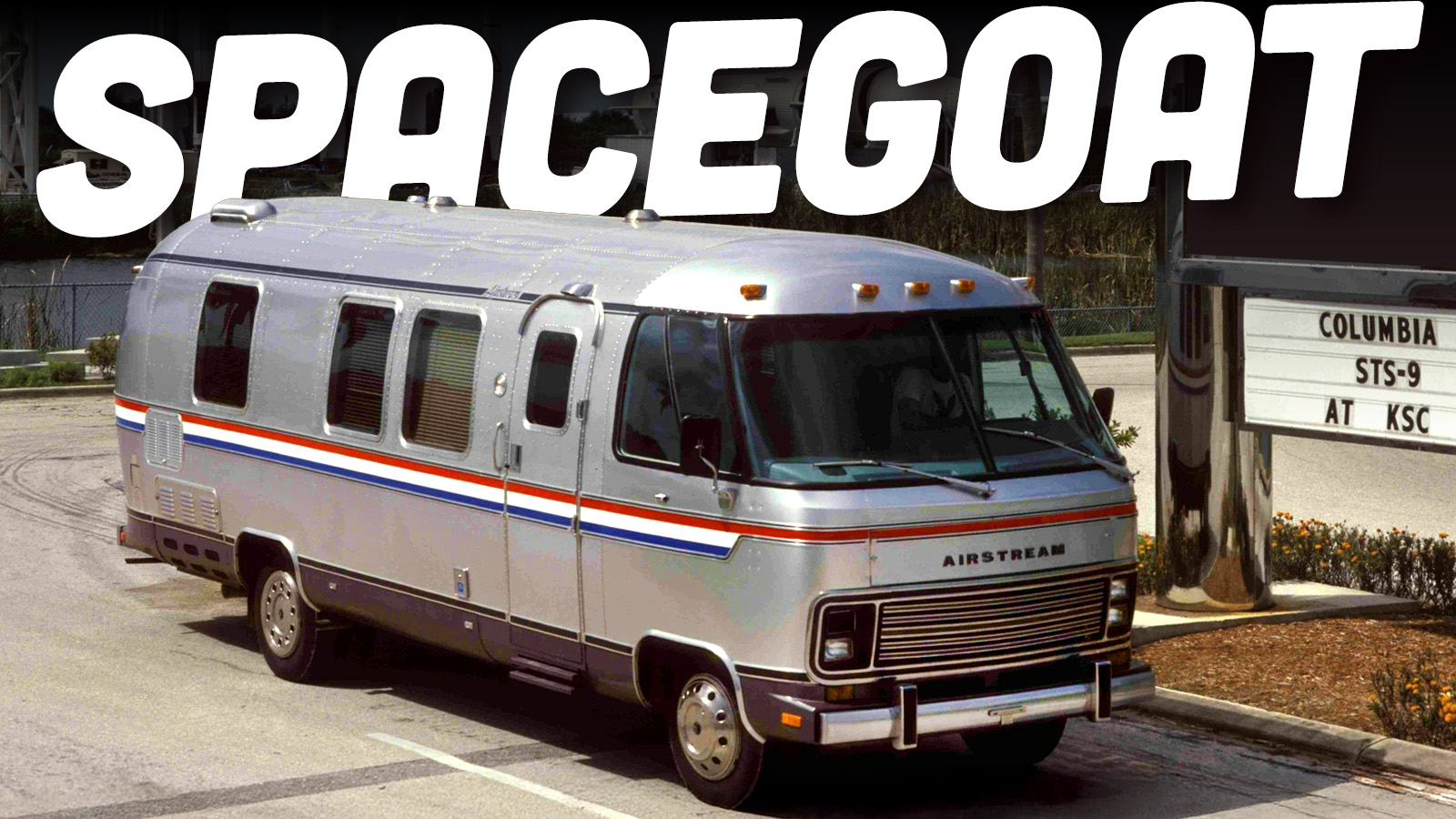
The launch of Artemis II has everyone thinking about space and dreaming big right now. While most people focus on the spacecraft, the mission, the heroes flying the mission, and their toilet, there was a lot of work here on the ground to make this spaceflight happen. One of the issues NASA had to tackle was simply getting the astronauts to the launch pad. For decades, astronauts have gotten to the launchpad in America’s sexiest and coolest motorhomes. It’s a tradition that continues today, even if the motorhome isn’t so hot anymore.
On April 1, Artemis II launched from the Kennedy Space Center, rocketing astronauts Christina Koch, Jeremy Hansen, Reid Wiseman, and Victor Glover on a historic flight around the Moon and back. This is a mission with a lot of firsts. This is the first time we’ve taken humans beyond low Earth orbit since Apollo 17 in December 1972. Glover is now the first person of color, Koch the first woman, and Hansen the first non-U.S. citizen to break free of low Earth orbit. This flight, which is the second flight of the Space Launch System and the first crewed mission for the Orion capsule, will be the furthest any human has gotten away from Earth.


Before these heroic astronauts flew into the history books, they had to get to the launchpad first. While the rockets, the shuttles, and the capsules have always been the most visible parts of the American space program, the National Aeronautics and Space Administration (NASA) has also put a lot of work into the astronaut transfer vans that get astronauts to the launchpad and, in the past, from space shuttles. On April 1, continuing decades of tradition, the Artemis II astronauts stepped out of an Airstream motorhome before taking off. But this motorhome wasn’t originally destined for the Artemis program. Nor does it really have the sort of aesthetic draw that the previous vans had.
NASA’s Long History Of Astronaut Transport
NASA has involved transfer vans in the transport of astronauts from the early stages of crewed spaceflight. From NASA:
In the 1960s, Mercury astronauts traveled from their crew quarters in Hangar S on Cape Canaveral Air Force Station to the launch pads inside a transfer van pulled by a Reo tractor. Although the tractor had five forward gears, only four were used, and the highest speed reached was 20 mph. Faster speeds along the Cape’s less-than-perfect roads would have resulted in a pretty rough ride.
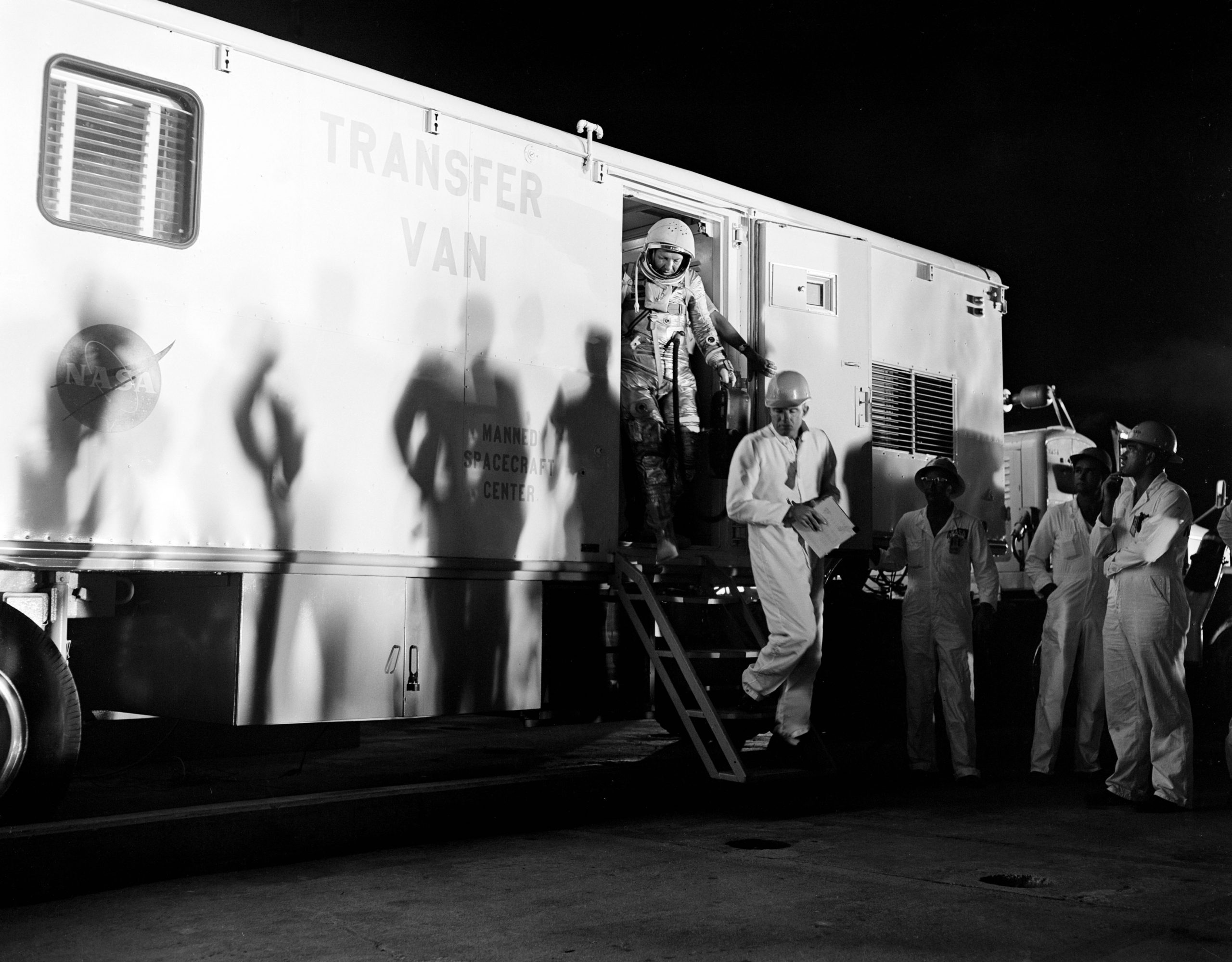
The big van also had a relatively light load. Only the astronaut was seated in the van and the support personnel stood up during the trip to the pad. The driver communicated with the passengers by intercom to tell them when they were approaching a curve or turn. Gordon Cooper’s ride to Launch Complex 14 on May 15, 1963, took 16 minutes.
His chauffeur, C. J. LaMar, drove either the primary or backup van for all Mercury launches. Along with driving primate astronauts Ham and Enos to the pad, LaMar piloted the backup van, which would have been used in case of a breakdown of the primary van, for the launches of Alan Shepard, Gus Grissom and John Glenn, and delivered Scott Carpenter, Walter Schirra and Cooper to the pad for their flights. Not once was there motor failure, a flat tire or any other mechanical trouble en route.
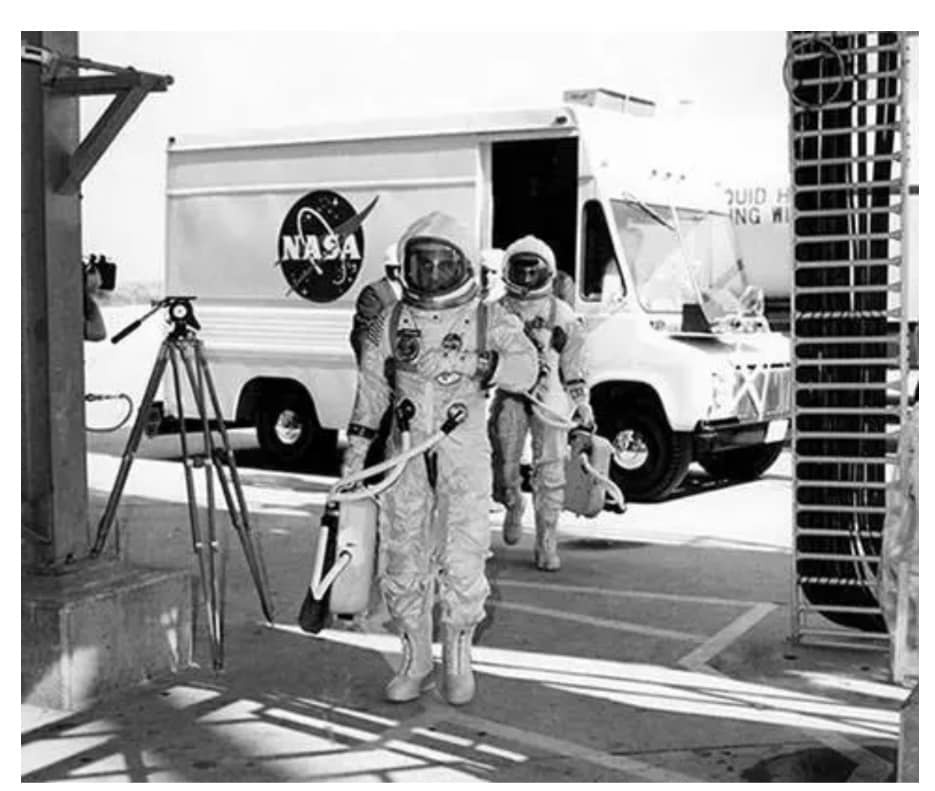
When Project Gemini came around, the astronauts would transfer from their suit-up trailer and into a big stepvan. Archival footage shows suited-up astronauts just sitting in the back of this thing like they’re gearing up for a Hollywood film-style bank robbery. These vans were also quite basic inside, without windows or many luxuries. The breadvan was also used before the tragic events of Apollo 1.
As crews got bigger, so did NASA’s transfer vans. Eventually, the breadvan was retired and, in its place, was the first of NASA’s hot motorhomes, a Clark Cortez. What was really neat about this motorhome was that it was built by a company that normally operated far outside of the RV space. In the 1960s, the Clark Forklift Company decided to get into the RVs with an all-steel and front-wheel-drive Class A motorhome that was built to stand the test of time. Here’s what I wrote about the Cortez in the past:
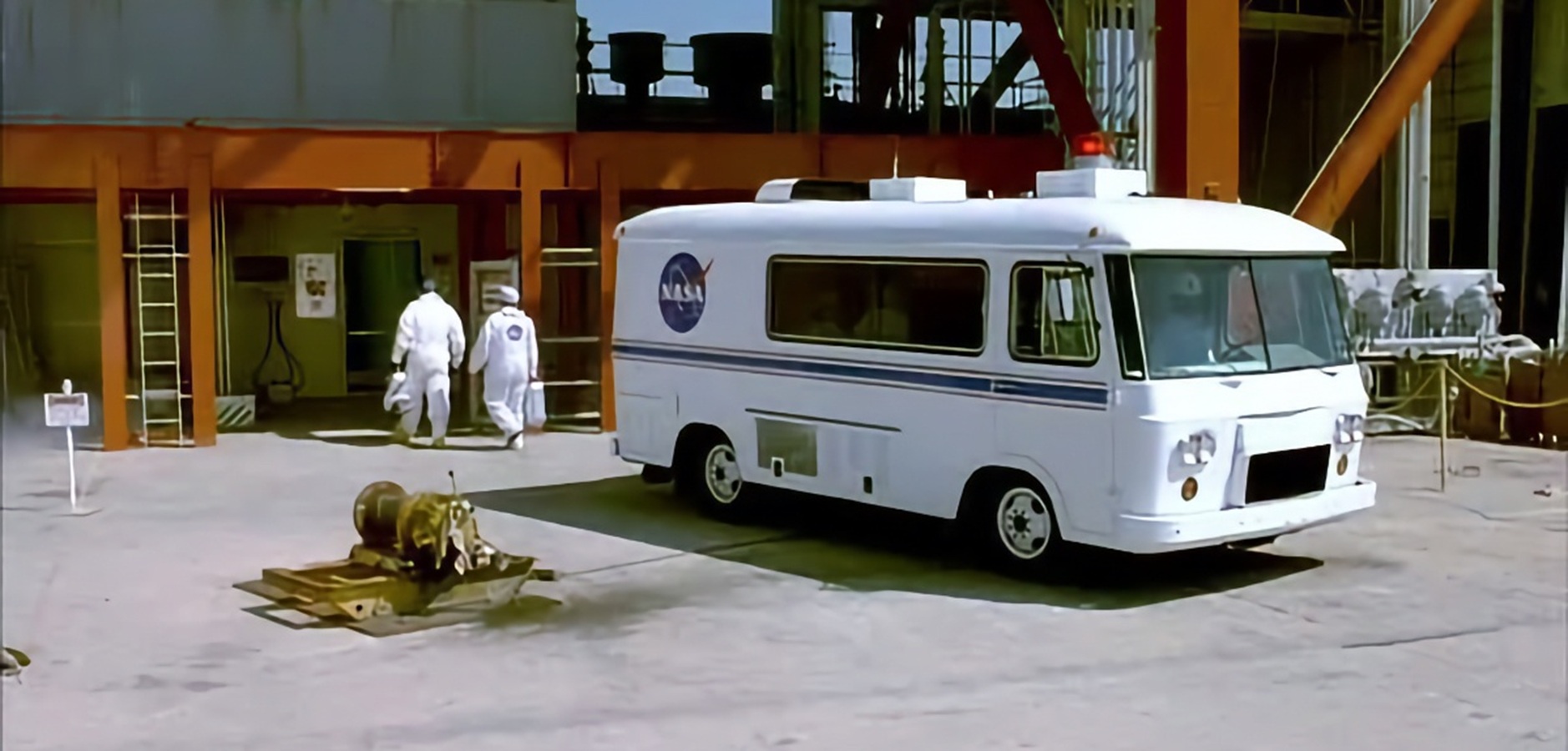
The first way Clark would differentiate itself from other manufacturers was with front-wheel-drive. A whole decade before General Motors did the same with the Motorhome, Clark paired a motorhome with a front engine driving the front wheels. The standard engine of a Clark Cortez was a 225 cubic-inch Chrysler Slant Six making 140 HP. That was bolted to a four-speed manual transaxle of Clark’s own design. Having a front-wheel-drive design allowed Clark to build a coach that was closer to the ground with a flat floor behind the engine. Clark wanted to build an RV that drove like a car, so in addition to making its Cortez coaches ride closer to the ground, the company also outfitted them with four-wheel independent suspension.
Another notable departure in Clark’s design is the chassis and body. The Clark Cortez motorhome is built out of a unitized steel construction. Normally, this is where I’d say that the coach has a steel skeleton to which fiberglass panels are fitted, but that’s not the case here. Perhaps borrowing from its forklift history, Clark built this thing entirely out of steel. It has that steel skeleton, but the entire body is steel as well and it’s all welded together into a single piece of steel. The completed motorhome is just 18.5 feet long. Like the classic Winnebago from earlier this week, it’s a small Class A coach compared to the monsters on the road today.
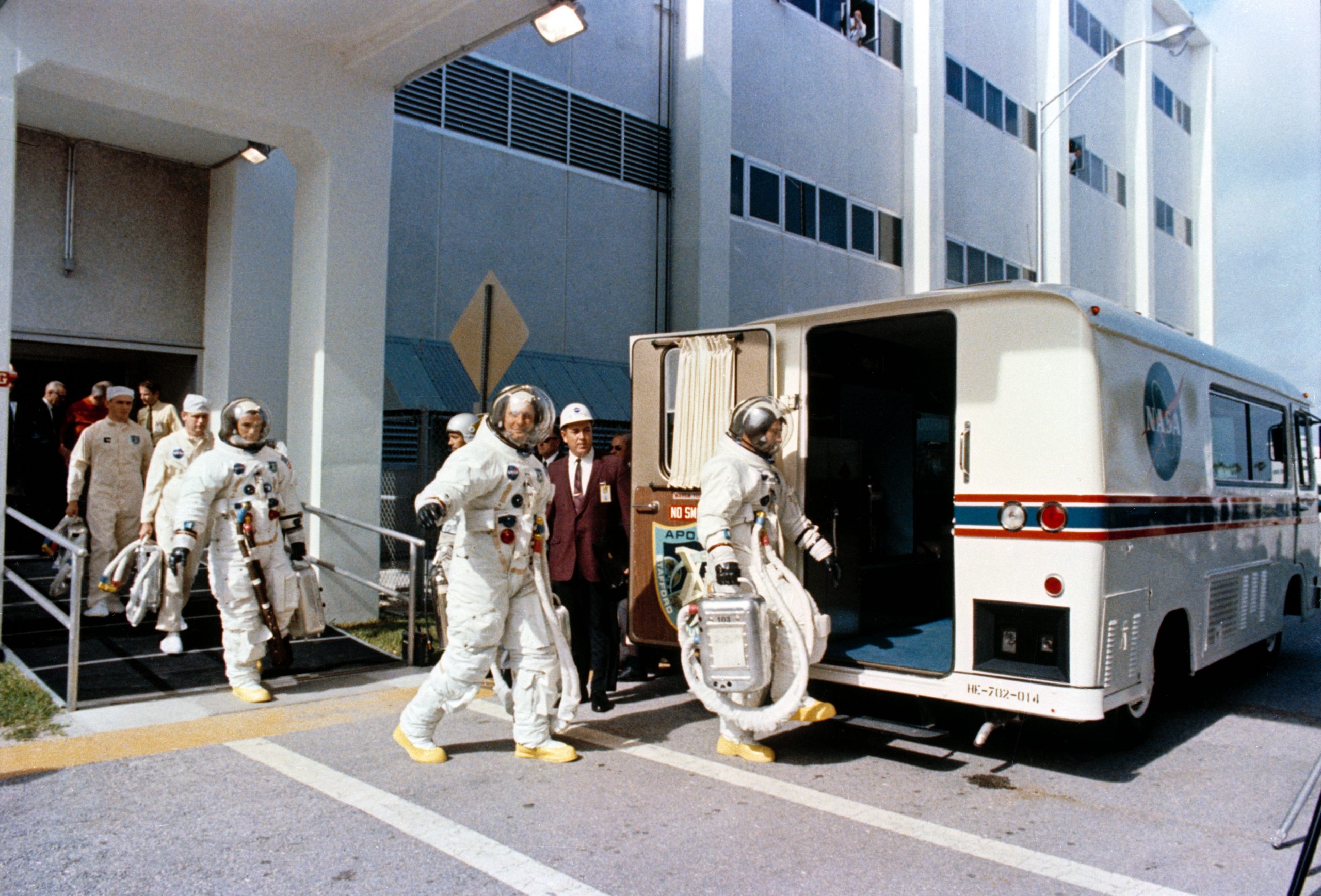
The great thing about the Cortez is that the interior of every one was custom. This was great for NASA, which had its Cortez outfitted to haul astronauts. The Cortez served NASA for a decade and a half. My story on the Cortez notes the motorhome’s contribution to space travel:
Starting with Apollo 7, the van would carry astronauts, the ground crew, and equipment. The van ferried astronauts to the Saturn V complex at Kennedy Space Center, and yep, that means some of its passengers included Edwin “Buzz” Aldrin Jr., Michael Collins, and Neil Armstrong. NASA used the converted camper until the sixth flight of the Space Shuttle program, Mission STS-6, the first flight of Space Shuttle Challenger. Today, the Cortez astronaut transfer van can still be found on display at the Kennedy Space Center.
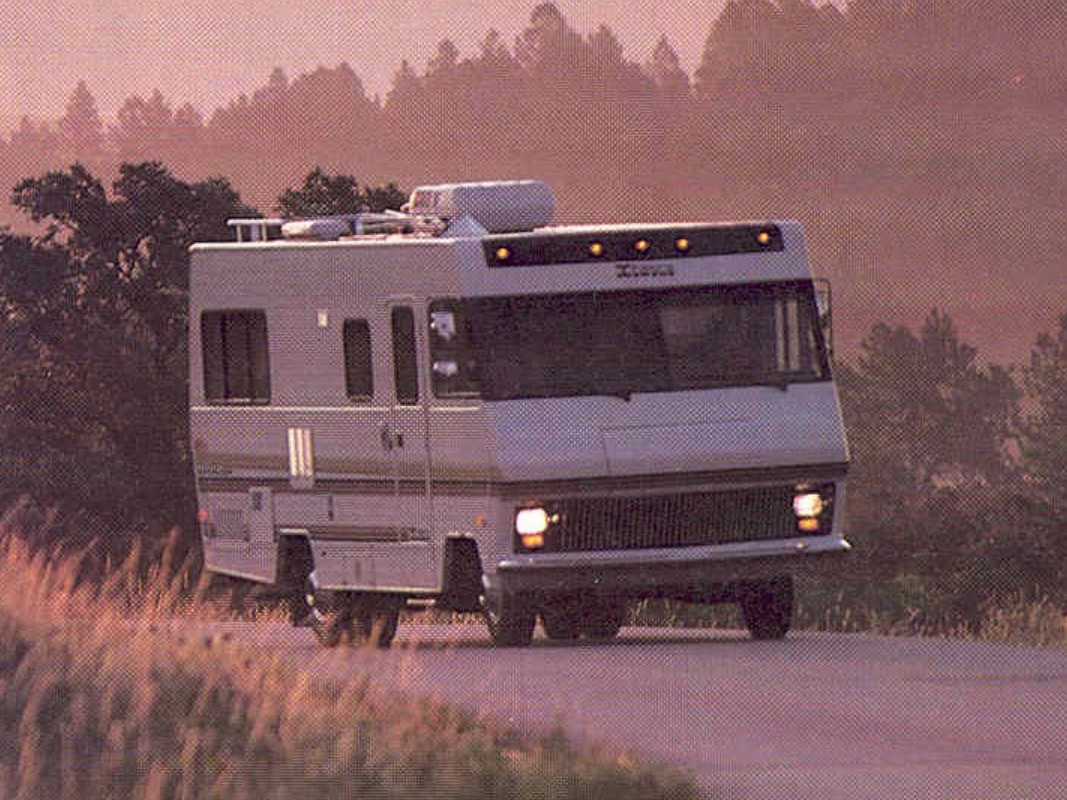
The Cortez was replaced by a rather short-lived motorhome-based astronaut transfer van. The astronauts of STS-7 and STS-8 in 1983 would find themselves piling into an Itasca Suncruiser M-22RB. This motorhome was painted in an off-white color and had a brown stripe down its side. I could not find a photo of what the actual NASA motorhome looked like, but the image above shows what a 1983 Itasca Suncruiser looked like.
Airstream’s Contributions To America’s Space Program
The Itasca didn’t even stick around for a whole year because later that year, NASA turned to its old friend at Airstream for help. The Cortez was too small, and the Itasca was merely a stopgap. America’s astronauts needed a proper, large motorhome to transport them from the Operations and Checkout Building to the launch pad and back.
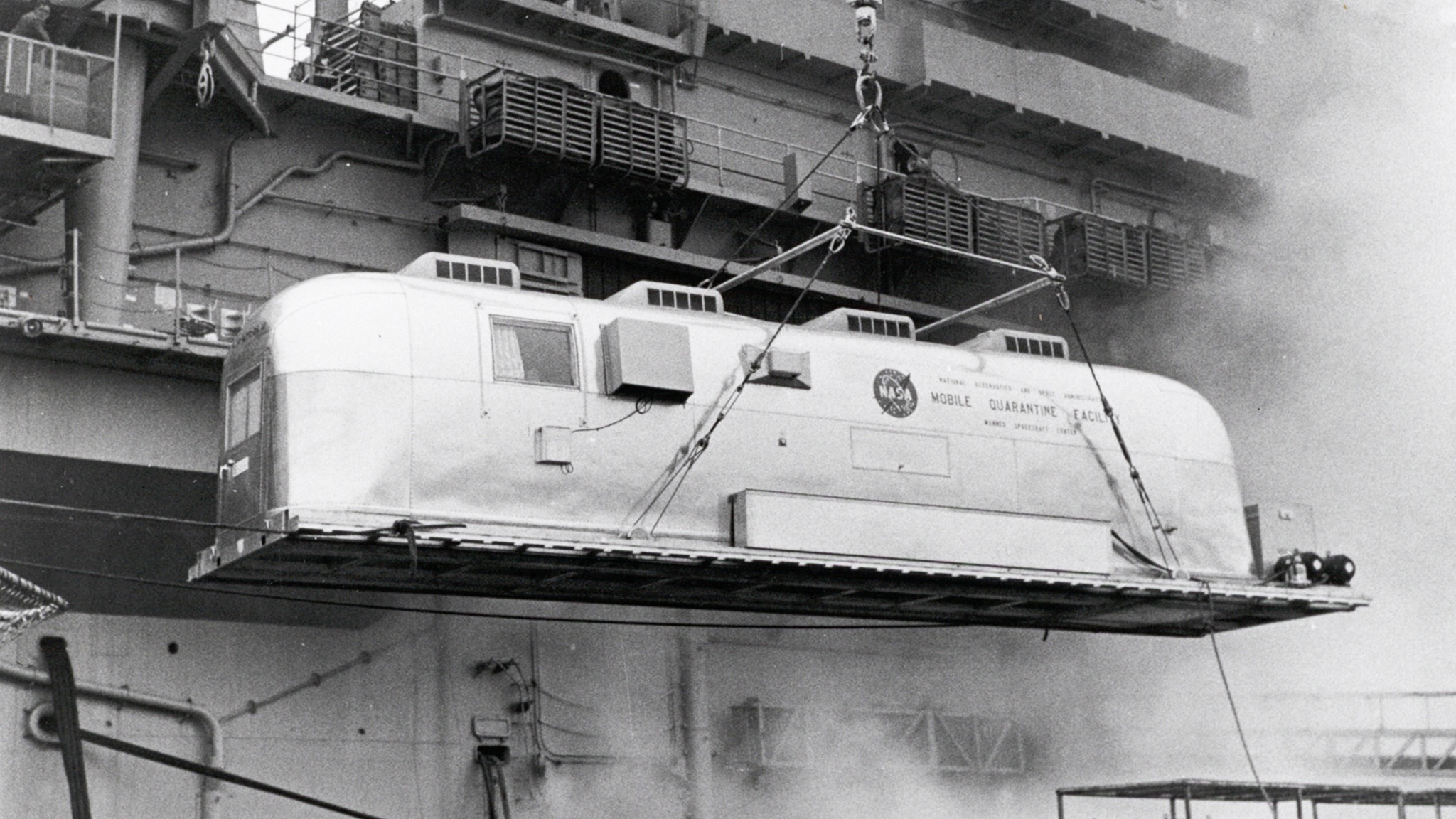
Airstream had already been embedded in America’s space program since Apollo 11. Back in the 1960s, the scientific community was concerned that astronauts could bring back an unknown lunar pathogen home. In 1967, NASA awarded a contract to Melpar, Inc., of Falls Church, Virginia, to build a Mobile Quarantine Facility (MQF). Melpar subcontracted Airstream to build the units, and Airstream built four MQFs based on its iconic travel trailer design.
The astronauts would splash down after a mission, get loaded into the MQF, and be flown or floated to the Lunar Receiving Laboratory for the rest of their quarantine. The 35-foot MQFs were pretty much just travel trailers inside, featuring a kitchen, bathroom, and bunk beds. However, the Airstream MQFs also had a medical exam table as well as seatbelts for when the unit was transferred onto or off a plane or a ship. The units also had filters, negative-pressure atmospheres, and an airlock to pass samples through.
The Astrovan
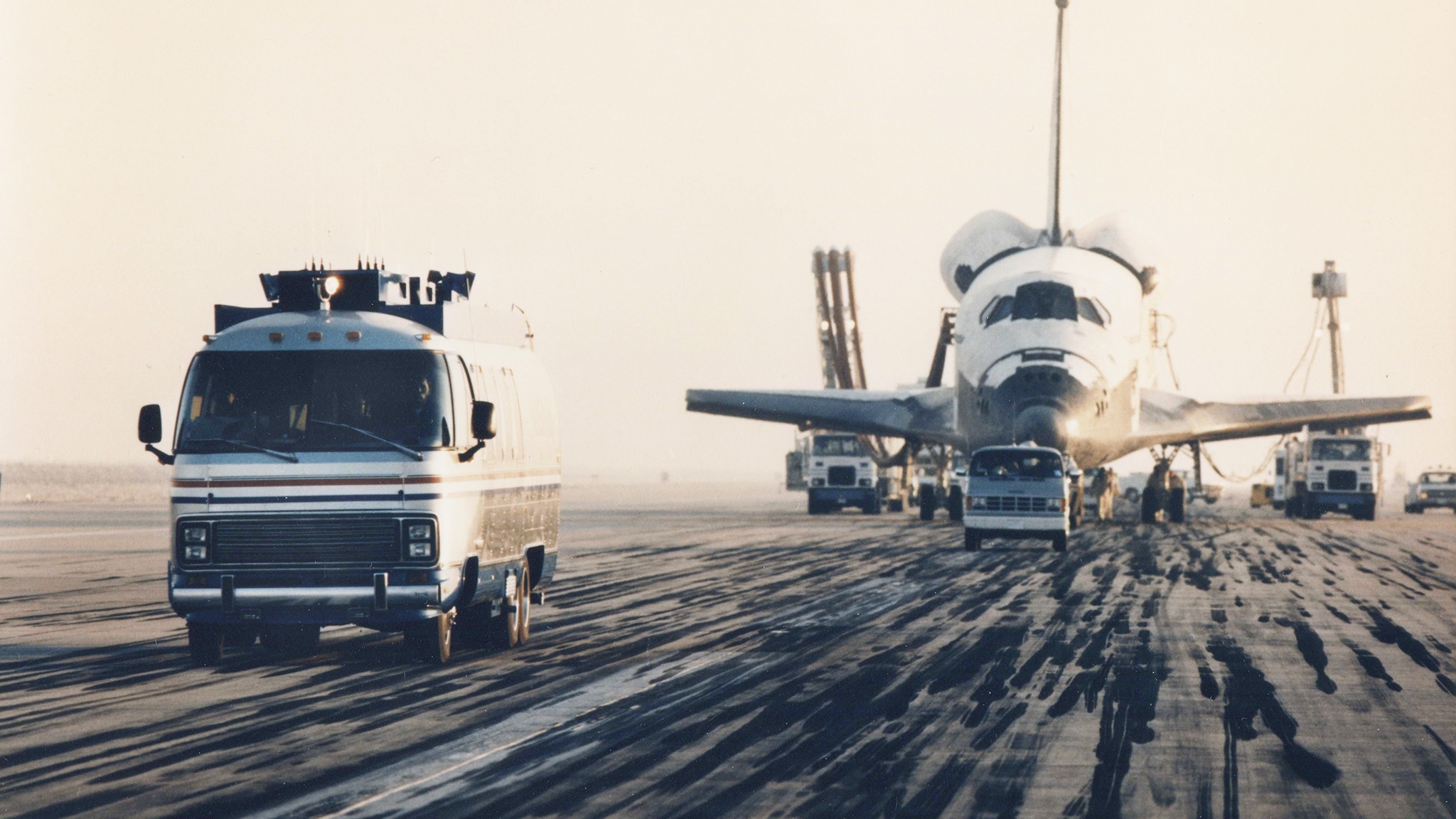
The MQFs were used from Apollo 11 through 14 until it was confirmed that quarantining astronauts wasn’t actually necessary. When it came to making an astronaut transfer van, NASA was in luck, as Airstream was experimenting with motorhomes at the time. From my retrospective:
Winds of change came in the early 1970s. Then Airstream president Chuck Manchester saw a hole in the RV market for a line of premium yet mid-priced campers. Airstream, a brand that some saw as the crown jewel of American RVs, dipped its toes into this lower end of the market carefully. It introduced a new line of RVs, Argosy, that blended patented Airstream character with experimental ideas the brand wasn’t willing to introduce into the main line just yet. You can thank Argosy for Airstream’s famous wrap-around panoramic windows.
In 1974, Airstream introduced its first-ever motorhome, the Argosy Touring Coach. These still had riveted aluminum bodies like Airstream trailers, but rode on a Chevrolet P-30 chassis with a lumpy gasoline V8 for propulsion. By 1979, the Argosy motorhome experiment was determined to be so successful that Airstream started selling motorhomes under its own brand name.
At first, Airstream sold these motorhomes as the compact 24-foot and the 28-foot Excella and International, but the brand started to get a little silly. During the 1980s, Airstream experimented with adding feet of length to its coaches, producing a 31-footer, a 32.5-footer, a 34.5-footer, and a massive and rare 37-foot coach.
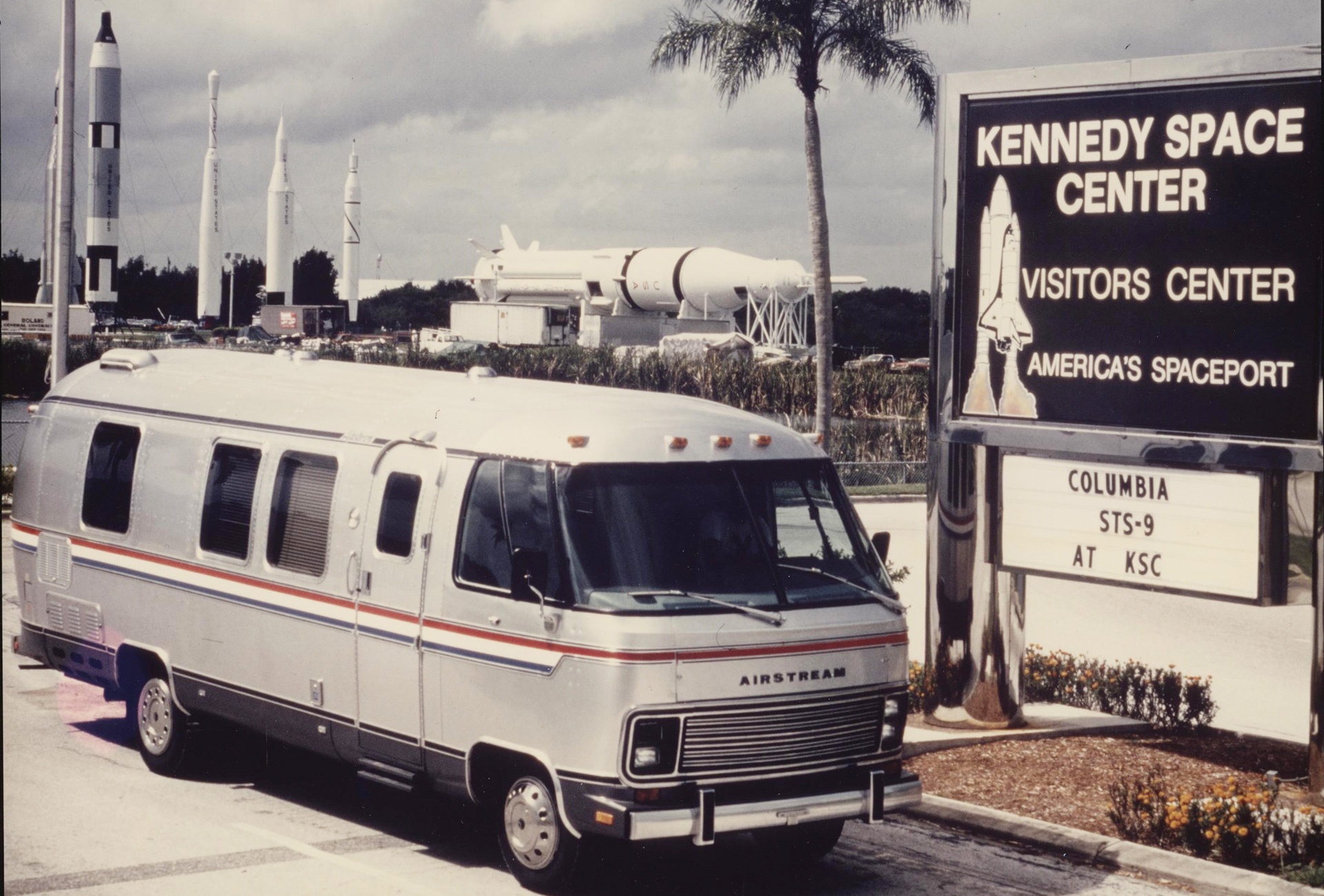
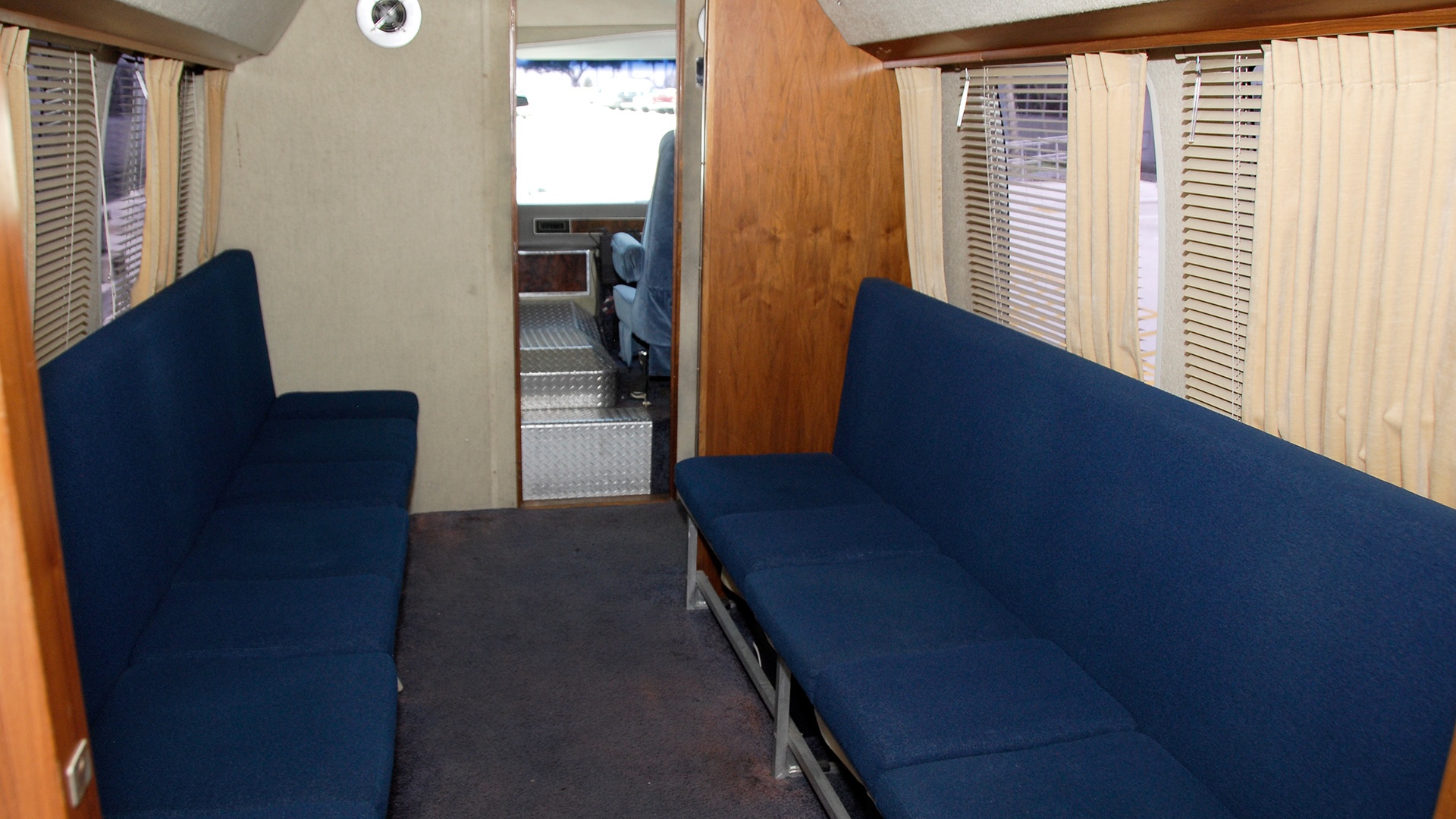
NASA’s version of the Excella, called the Astrovan, had most of its RV components stripped out. The interior mostly consisted of two benches with lift-out sections for the astronauts’ portable ventilator units. The motorhome’s bathroom and refrigerator were retained, and a rear door permitted cargo loading. Airstream also kept the motorhome’s wood paneling and drapes. It looked great inside!
Airstream continues:
In its 27 years of service, the Astrovan racked up a mere 26,500 miles. That’s because it was only used during launch rehearsal and on launch day to transport the crew approximately nine miles from where they suited up to the launch pad and back. On launch day, the crew gathered in front of the Astrovan, smiling for photos and waving to the crowd before boarding the vehicle. They were then escorted by security to the launch pad, occasionally spotting a Florida alligator or two along the way.
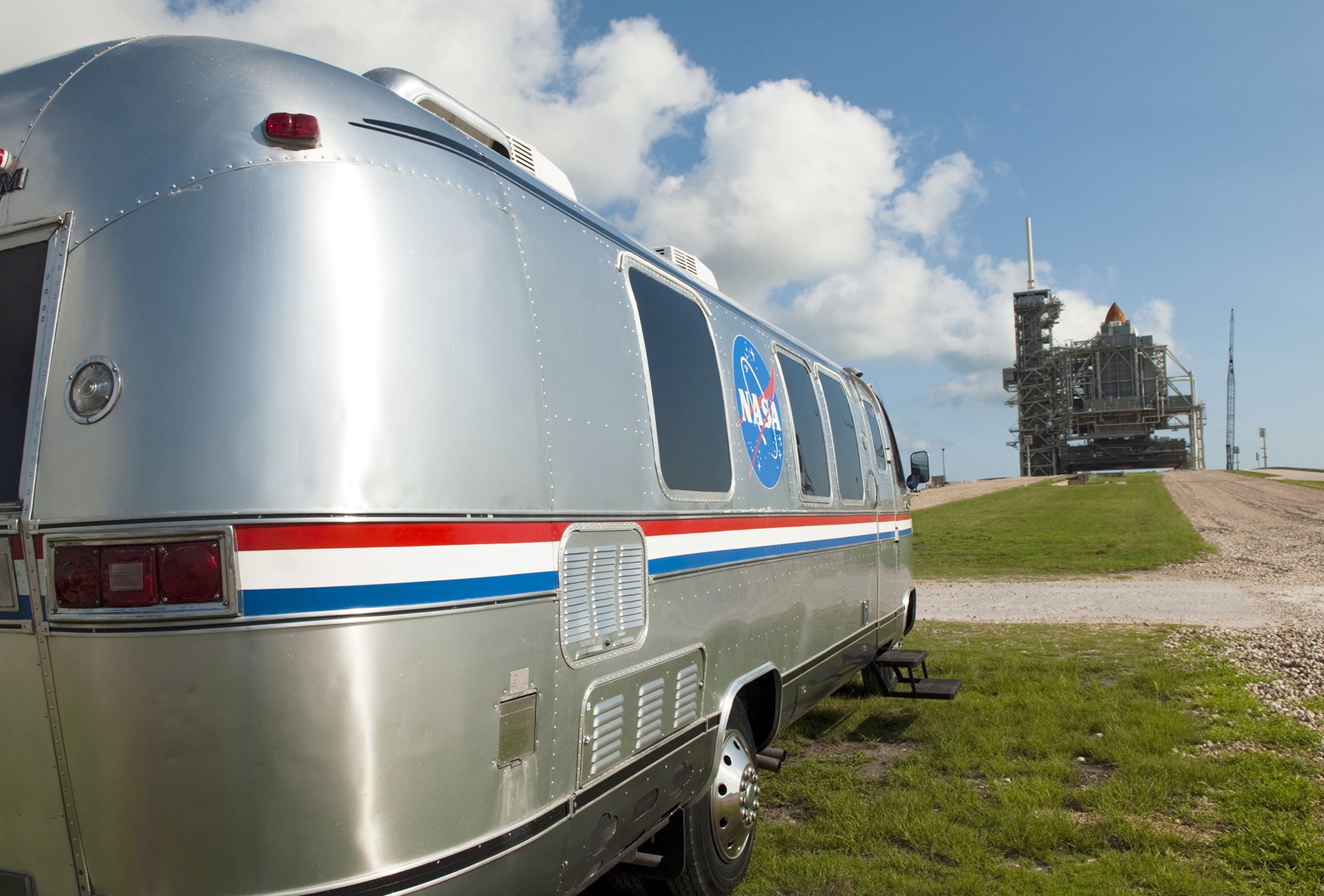
The Astrovan, with its traditional interior, was a familiar and comforting sight on launch day. Traditions have been important to astronauts over the years. For example, on launch day, breakfast is always steak and eggs, a tradition that started with the first manned American space flight. Before boarding the Astrovan, the crew had to play a game of cards and they could not leave for the launch pad until the commander lost.
“I always associate this vehicle with flying,” said astronaut Chris Ferguson, who participated in three shuttle launches, including commanding the final Space Shuttle launch in 2011, “because you get in here for TCDT, which, of course, is the launch rehearsal, and then launch day.” It was exciting for the crew, especially for the newest members, to be able to ride in the vehicle that had carried their predecessors out to the launch pad. The Astrovan has hosted a long list of famous astronauts including Ohio native John Glenn, the first American to orbit the earth in 1962, who boarded the Astrovan in 1998 and returned to space at 77 years old. Kathryn Sullivan, the first American woman to perform an extra-vehicular activity in space, is another famous Astrovan passenger.
As the Astrovan got older, NASA considered replacing it. But by that time, the Astrovan had become such a famous part of America’s space program and had become so much of a beloved vehicle to astronauts that the astronauts fought back. So, NASA kept using the motorhome all the way until the last space shuttle mission in 2011. After its nearly three-decade run, the Astrovan was retired at the Kennedy Space Center.
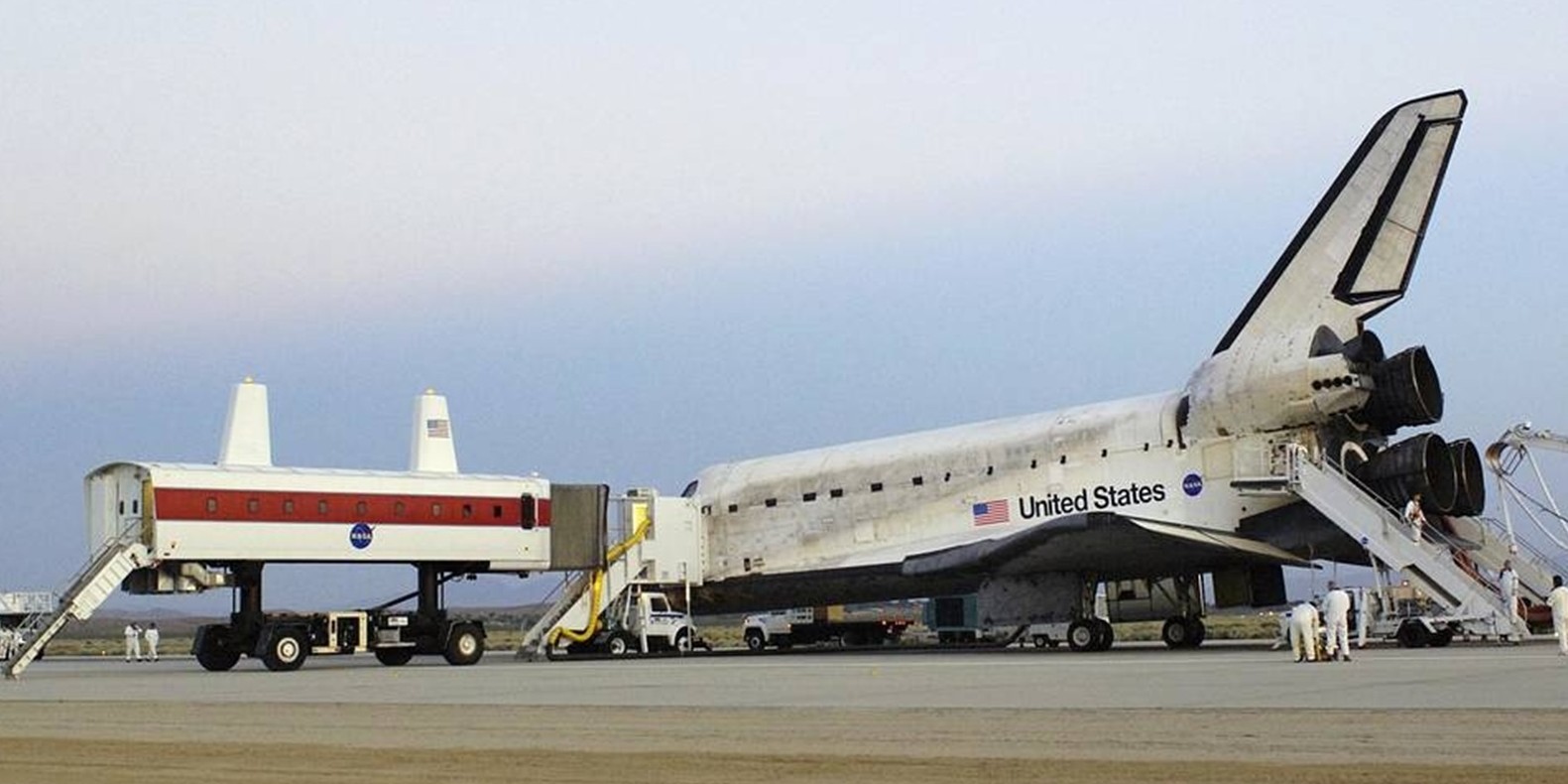
One more vehicle that I need to mention is the wild Space Shuttle Crew Transport Vehicle. This vehicle was actually one of the oddball people-movers from Washington Dulles International Airport, given a NASA paint scheme, and put into use picking up astronauts after space shuttle landings.
A New Astronaut Transfer Van
NASA would find itself in a bit of a pickle as the crewed Artemis missions grew closer. The old Astrovan was in poor shape and needed restoration before it could be used again, leaving NASA without a transfer van.
In 2021, NASA solicited bids for the Artemis Crew Transportation Vehicle (CTV). NASA was pretty straightforward, giving bidders three options. They could make a whole new vehicle for the job, use a commercially available vehicle modified for NASA’s needs, or restore the old Astrovan. The twist is that the vehicle for the job would have to run a zero-emissions powertrain. This vehicle also needs to carry four astronauts, one driver, one Suit Technician, one Flight Operations Director, and one Protective Services Agent.
The vehicle also needed to be able to carry the astronauts’ cooling units and equipment bags. The entry door also had to be 24 to 36 inches wide so that fully-suited astronauts could get in and out of the vehicle. The CTV deadline was June 2023.
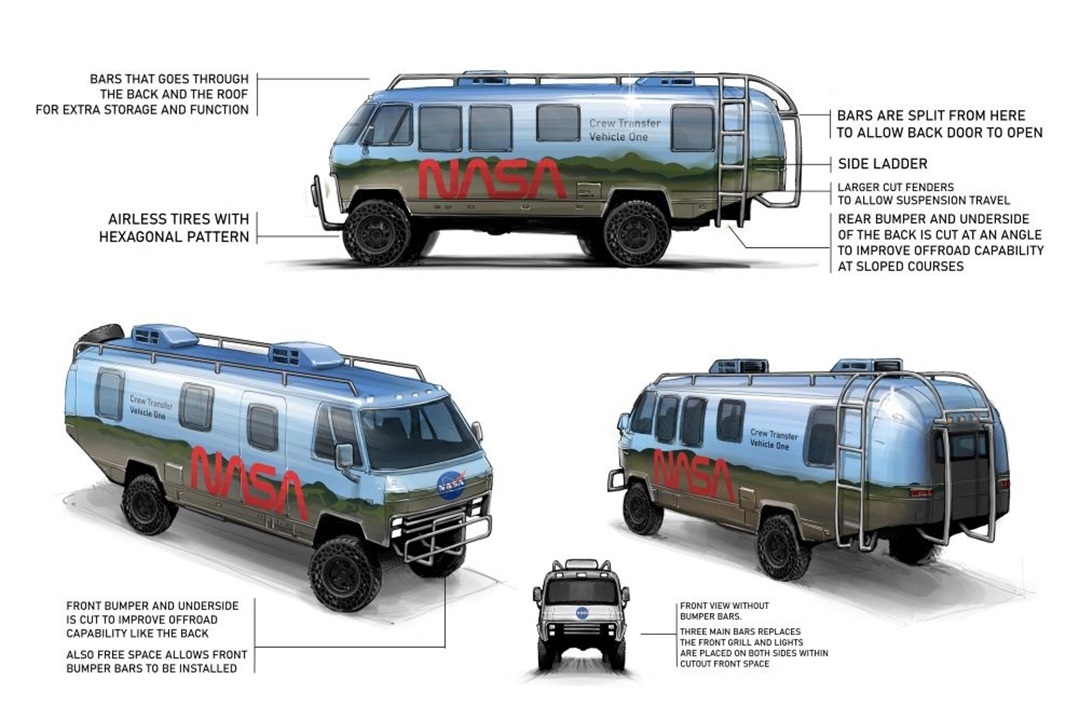
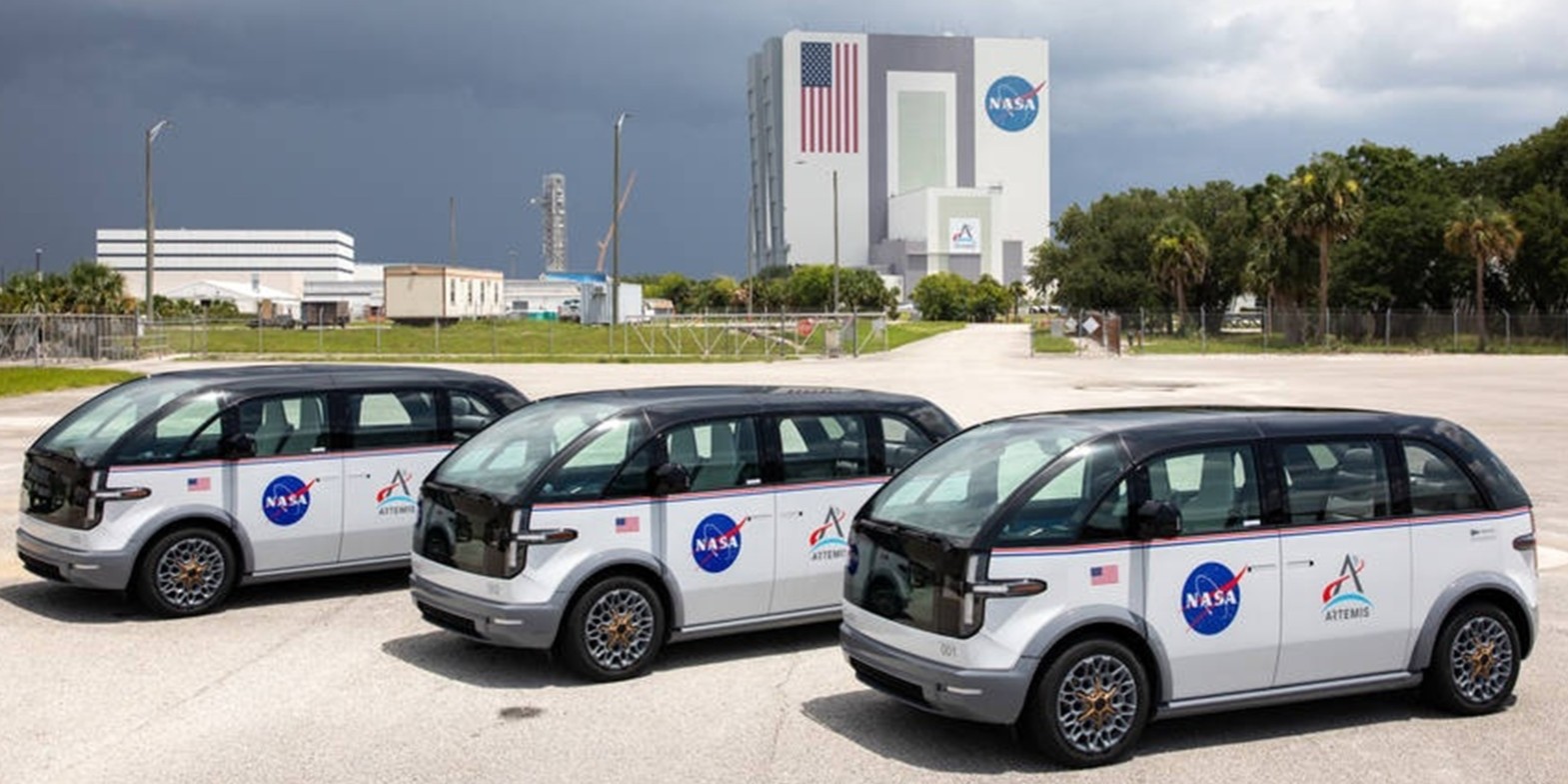
One proposal from Oxcart Assembly and Hoonigan (above) called for restoring the old Astrovan into a huge electric off-road motorhome. Ultimately, Canoo won the contract. In 2022, Canoo sent three of its quirky electric vans down to NASA to transport astronauts. Tesla also didn’t make a van for SpaceX, and instead used Tesla Model X SUVs to get crews to the launchpad for Crew Dragon missions.
Airstream ended up partnering with Boeing to build a crew transfer van for the CST-100 Starliner. From Airstream:
In early 2018, Boeing approached Airstream about building a new crew transport vehicle. It was a logical choice, considering Airstream’s history of working with America’s space program – from the four Mobile Quarantine Facilities built by Airstream for Apollo astronauts returning from the moon, to the original ASTROVAN that carried Space Shuttle crews to the launchpad. Production began at Airstream’s manufacturing facility in Jackson Center, Ohio in summer 2019 in a modified Airstream Atlas Touring Coach.
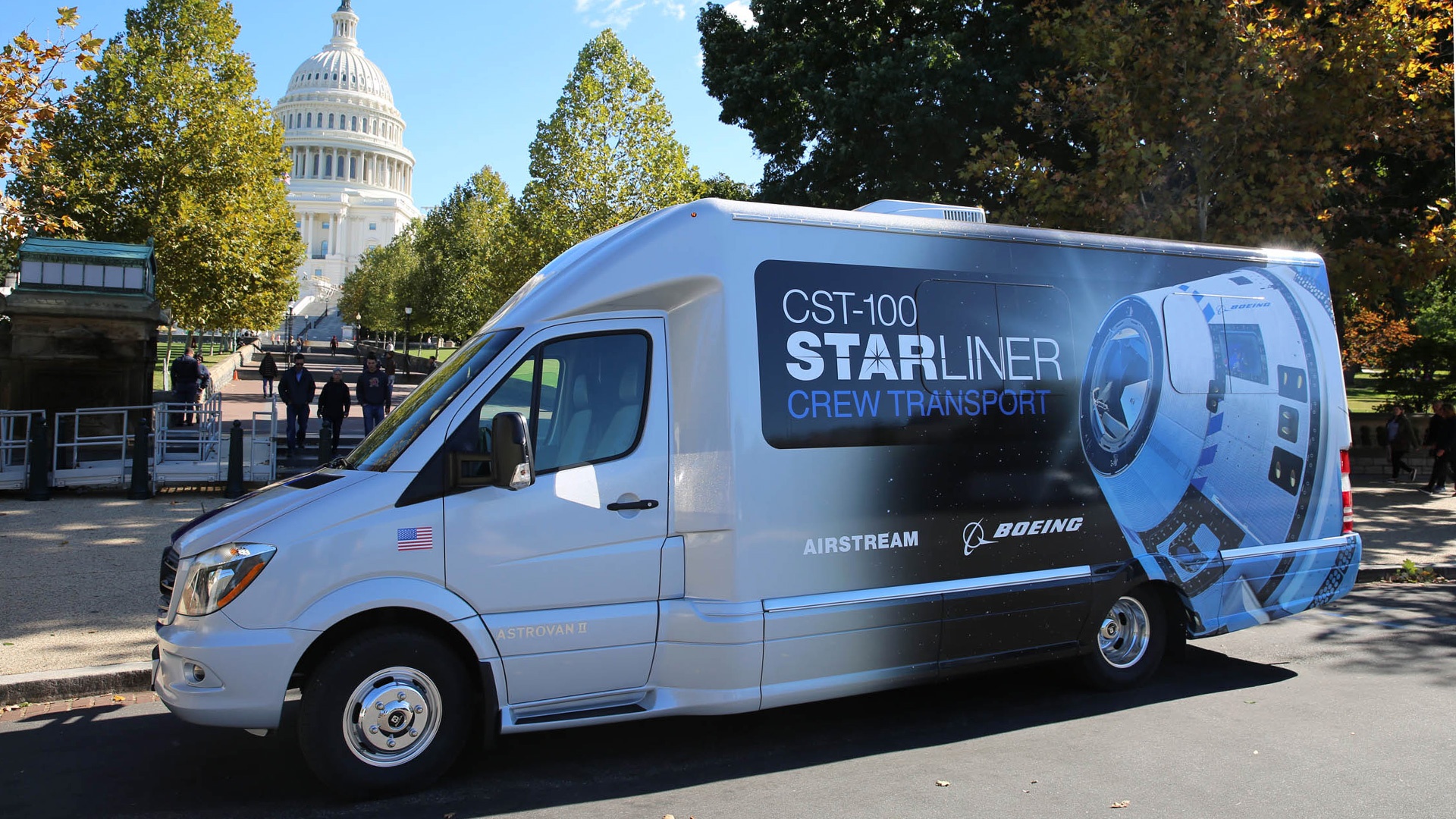
Inside ASTROVAN II, Boeing’s crew will find seating for eight. The back cabin includes six seats arranged across a central aisle – two on the curbside and four on the roadside. Each seat has access to 110V outlets and USB charging stations. The seats were custom built in Wapakoneta, Ohio and incorporate stitching in Boeing blue. The graphics on the side of the vehicle depict the Starliner spacecraft in orbit around the planet.
And Airstream is working with their partners at AT&T to create a system for live streaming from inside the vehicle during its historic 9-mile trip out to the launchpad. Production was completed in October 2019.
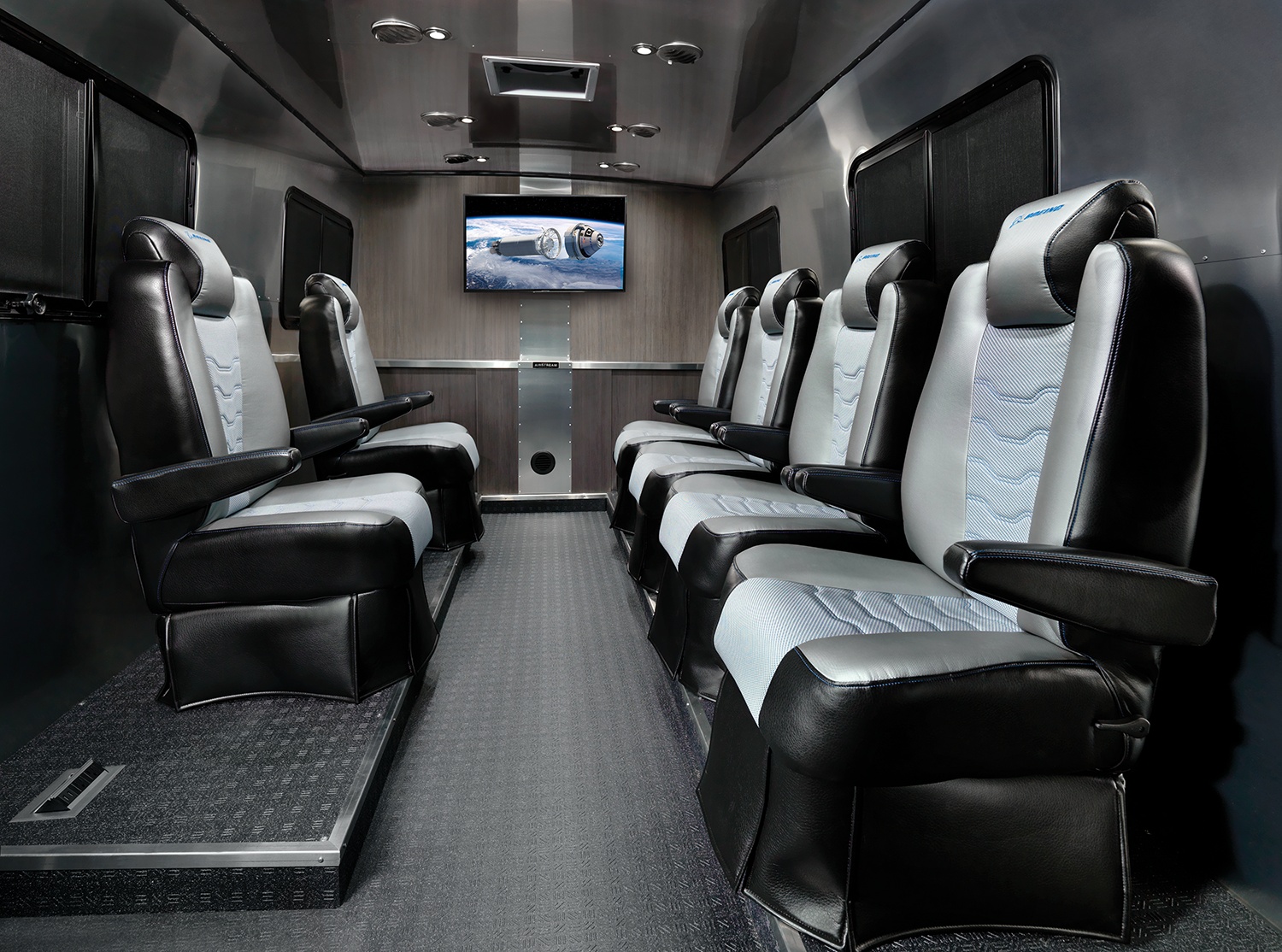
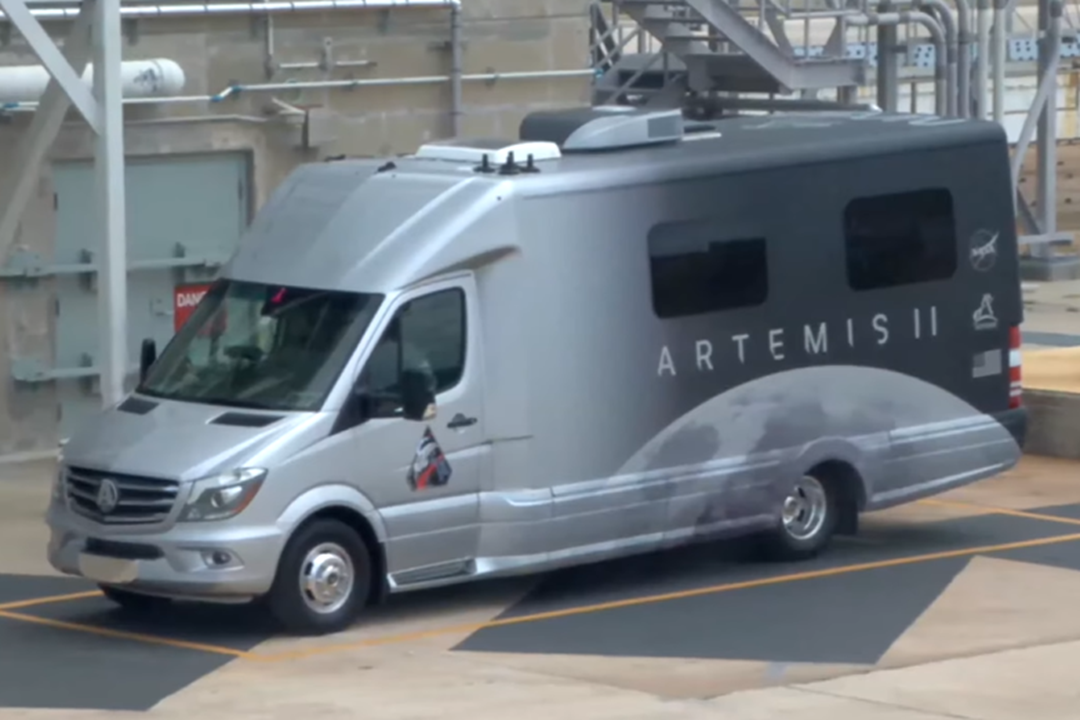
Canoo went belly up in 2025. NASA and the USPS both decided that the handful of Canoo vans that they received just weren’t going to cut it. Unfortunately, this put NASA in a tough spot again. Nobody took on the restoration of the Astrovan, but NASA needed something to carry astronauts. So, it leased the Mercedes-Benz Sprinter-based Airstream Astrovan II from Boeing for Artemis II.
In a way, it’s still so very cool to see that Airstream has been involved with NASA for longer than half a century. But I feel like something is missing in the Astrovan II. Maybe it’s because the Astrovan II was meant for Boeing, not for NASA. Maybe it’s because the Astrovan II isn’t particularly distinctive, unlike the old Astrovan. The van doesn’t quite have the same futuristic look as the old Astrovan. Or, maybe it’s the wrap NASA put on the van.
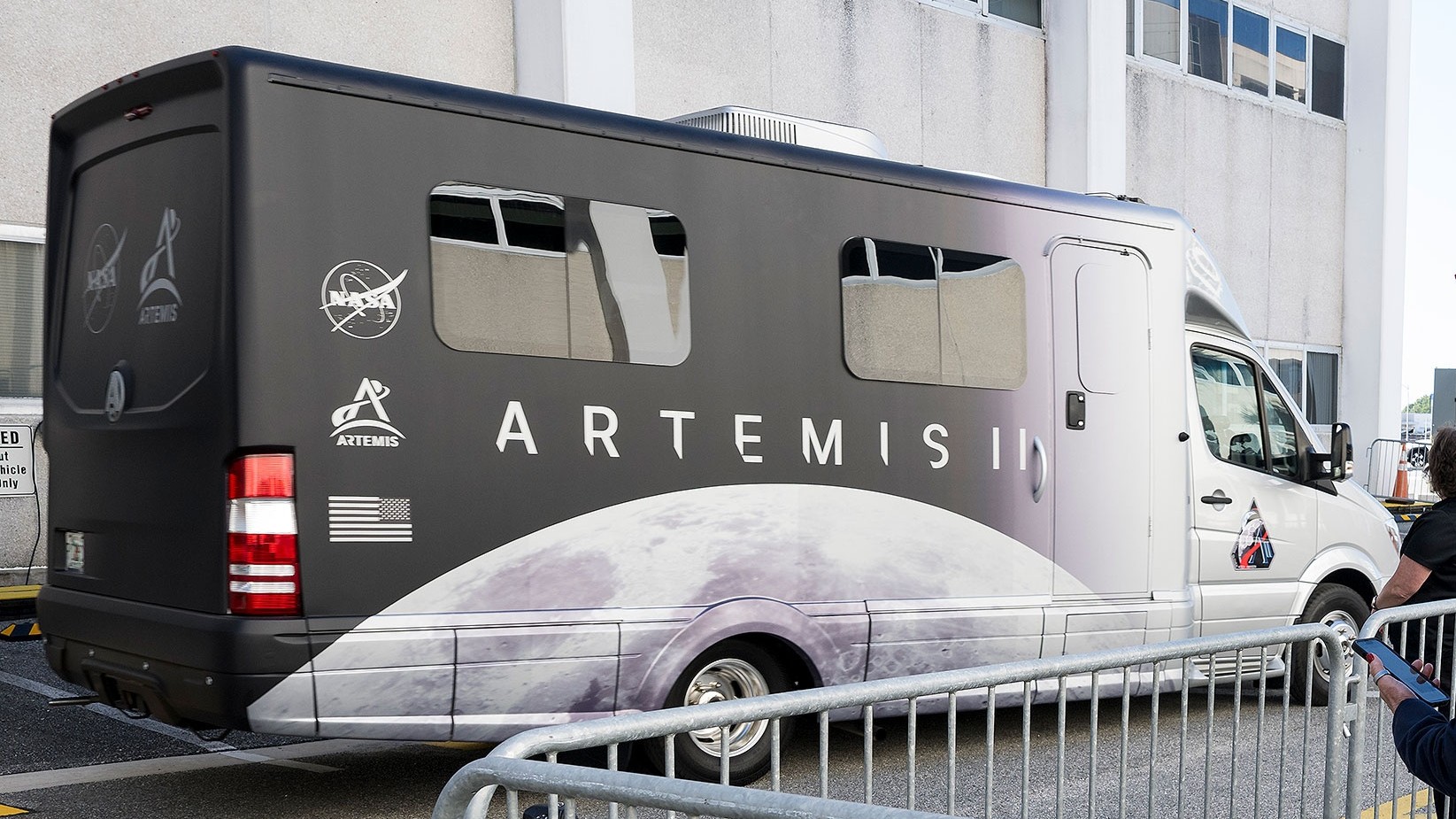
I cannot put my finger on why the new van doesn’t have that same sort of rockstar appeal of the old ones. Maybe NASA should ditch the wrap and go with its classic livery of a red, white, and blue stripe with its logo.
If I were Airstream, I’d take that old Excella Astrovan, restore it, and send it back into service. It would be a fantastic marketing tool for Airstream, and the astronauts get to ride in the very same van that nearly three decades of astronauts before them did. Of course, the van is only leased, so who knows what the future holds. But for now, the van seems to be function over form, and sometimes that’s all you need!
Either way, this is just a look into the operations of NASA that don’t normally get headlines. Capsules, spacesuits, and rockets get to have all the fun in the spotlight, but America’s space programs wouldn’t have gone nearly as smoothly without being able to efficiently transport astronauts. As it turns out, if you want to get an astronaut to a launchpad, just grab one of America’s coolest motorhomes.
Top graphic image: NASA





*points finger at every airport hotel shuttle*
Also disappointed to see a wrapped sprinter van take on the iconic duties of crew transportation.
My choice would be an electrified transport based on the Hunslet ATT77 aircraft tug…
That’s the chassis used to make the Colonial Marine’s M577 Armored Personal Carrier from the movie Aliens. Paint it NASA white/red/blue! Gun turrets optional.
Too bad we can’t embed images – here’s an AI rendering…
ps. Props for the “Spacegoat” heading!
https://www.google.com/search?q=show+me+a+hunslet+att77+vehicle+in+NASA+livery&sca_esv=842869c4d90cbdd0&rlz=1C1ONGR_enUS1166US1166&sxsrf=ANbL-n4S-zLgMy1JtweowMGj4HaiV5NVAg%3A1775227985085&udm=50&fbs=ADc_l-aN0CWEZBOHjofHoaMMDiKpaEWjvZ2Py1XXV8d8KvlI3sbM0Xv-BZKE_VrZb6-djVgPsTSy5UjazDfPq8BLa8BrpC2CeRVYjn-nx4-2axs2CqkRR8KTAa5DGRlJ8A6mylUjdfTEe72mM2ZK2Y9APd-XzeupgtgzPQVSLpEAs9sIxqmsS45cuXcXFMQ3KvmZYkiB4dapVuxLm6WaQR4KEcvuelOnGQ&aep=1&ntc=1&sa=X&ved=2ahUKEwjz38jL99GTAxVwnSYFHXG6DeMQ2J8OegQIERAE&biw=1600&bih=731&dpr=1&mstk=AUtExfChJYHnkIIXOoBnztRZKIoqHqbe6aZlX5KegL4rWR5nUJupKweN5RZnVvDUAv4Jj7AKWBj-2cKsDlRRpUs9Axyk9J8kzjjdo2bQb9Y7vwSkNVKfRi_1-NJqWMEr1P8wGlQRheTcIe9eyB-A-Dd9OpJN_AZLZcysZlHoClPu_JKO6G-lft2uSXLMgSlKki8mRP5YJmeXRHDyrsproQZv0tl_LHXwwHlmbn7nZp5CBDP21iKaT1s8tl4QpfvuoEpKQdp6_3C2YIIyVo6lwrLZcJOVy-E2n2qeHvC6Rutg1MwaNLUQqjoqtffxUWS3ver-5_R-quPGF314Bg&csuir=1&mtid=U9TPabroAcquqtsP7bbIoA8#sv=CB8SLgoQYWltLWltZy1iMGQ2YjU2ZBAAGgVSM0hKWCIRI2FpbS1pbWctYjBkNmI1NmQYQyCV0brGCFICCAQ
Airstream coaches are wildly overpriced.
There. I said it.
The entry level motorhome is the same price my kid paid for an actual home, and unlike an Airstream his won’t go down in value.
You’ll get no argument from me there! The motorhome the Astrovan II is based on costs over $200k!
The old one looked iconic with it’s signature Airstream bare aluminum and classic RWB paint stripe. The new one just looks like any one of a thousand generic Party Buses heading towards NYC or LA on a Friday night. “Artemis Bus Rentals, reserve yours today!”
A smarter move would be for Rivian to modify one of their EDVs with panoramic windows, a finished interior and decent seating – then offer it to NASA on a $1/year lease.
I figured the Astrovan would be in a museum by now. Is it sitting behind the Vehicle Assembly Building under a tarp or something?
Just a Sprinter (or what is is called in this decade…), bummer.
The milk (step) van was cool! Something about that basicality, like why we drove old aircooled VW vans 20 years ago, before they became boomer accessories.
And those black government wheels, with the small chrome center caps? Perfect!
The other old special ones were also beautilful 🙂
Fun concept, the one with the big wheels… But I wouldn’t wanna get up there in a space suit!
After one minute of design thinking: A low floor city bus, electric of course for the short distance, and you know, positive climate press… would be perfect!
Actually just one like they use in airports to get you out to your cheap flight… But where’s the fun in that? 😀