


Two-seater cars have always been a bit of a conundrum for most manufacturers. The glamorous or sporting “halo” status they provide to a brand is almost priceless, but the simple fact is that cars with absolutely no back seat whatsoever are going to be a hard thing to sell en masse. Nobody knew this better than Ford, who gave us a striking two-place convertible coupe in the mid-fifties that bands wrote songs about and many people loved but far fewer people bought.
Changing to a four-seat design increased the Thunderbird sales exponentially, but there were still those that missed the romance and cachet of that original roadster with no rear seats. Ford’s answer to this conundrum arguably came from what would later be recognized as one of the greatest marketing minds in all of automotive history.


Of course, this sales guru’s solutions were often a bit surface deep and cheesy; this turned out to be the case with the brief revival of a two-seat T-Bird that wasn’t a two-seat T-Bird at all.
Fun, Fun, Fun Till Dearborn Took The Two-Seater Away
With any fifties-themed diner, you can imagine the kind of cars the images on the walls will be before even setting foot in the place. Besides the “Tri-Five” Chevy that our Jason hates so much, there will likely be pictures of two American icons that were rather similar on paper but very different in execution and intent. Chevrolet’s Corvette debuted as a boulevardier not-quite-sport-car rear drive two-seater in 1953, while Ford’s identical-layout Thunderbird followed two years later. Over time, the Corvette became more of sports car, while the iconic first 1955-57 Thunderbirds remained cars where luxury took priority over canyon carving. Not that there was anything wrong with that: they appeared in movies and rock videos for years afterwards, but it was never more than niche market product.

General Motors was fine with the ‘Vette being a mere plastic fantastic “halo” car for the Chevrolet brand, but at Dearborn the higher-ups wanted to move more metal out of showrooms. Capitalizing on the momentum of the first T-Birds, Ford launched a larger four-seater version for 1958. The styling of the boxy second-generation car (as seen in Mr. Mister’s 1985 Broken Wings video) had yet to find its groove and was never universally loved, but the sales figures didn’t lie: the bigger ‘Bird proved to be nearly twice as popular as the iconic two-seater and launched what would ultimately be billed as the personal luxury car market.

The Thunderbird would start to take on a much more secure identity with the launch of the third generation in 1961. Much sleeker than the early car, it featured a very Lincoln Continental-style nose and sweeping flanks that culminated in round lights that gave this bodystyle the name of “Jet Bird” and a much-appreciated injection of sportiness to the line.
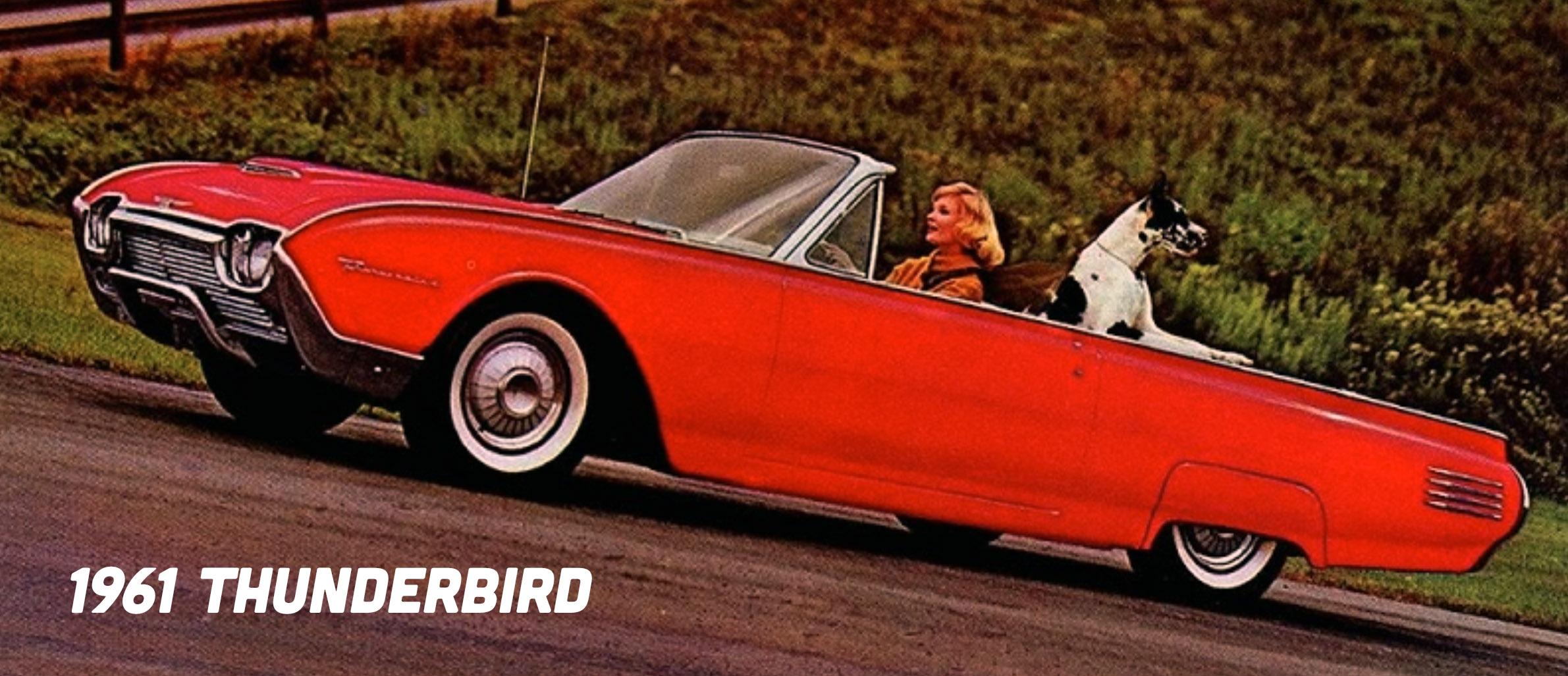
Still, there were those in the market and in the halls of Ford that lamented the loss of the old two-seater, especially with the Corvette getting all the attention that it did. There was no way that Ford would ever revert to slow-selling product with no back seat, but as luck would have there were designers with a unique concept of how to make this work, and new blood in the top office that wanted to make a splash.
No Surprise He Did The Maserati TC Decades Later, Amirite?
On November 10, 1960, a brash 36-year-old cigar-chomping Italian guy named Lee Iacocca was named vice-president and general manager of the Ford Division, and he was ready to rock the boat. After years of rather staid products, Iacocca was looking to add some flash to the Ford line with minimal cash. The latest Thunderbird at the time was a great start, but Lee knew that a special edition with a few unique features might be just the thing to breathe life into the product line.
Thunderbird studio lead Bud Kaufman and designer Ken Nelson came up with a great way to turn a four-seat car into a racy two-seater: cover the back seat area with a removeable fiberglass tonneau cover. On the surface, such an idea would result in a rear deck lid that appeared big enough to land a chopper on. However, the T-Bird team alleviated that issue by adding very Batmobile-like raised and padded “headrests” to the leading edge of the tonneau behind the front seats that then tapered down to the trunk lid.
It was a surprisingly convincing look, proportionally balanced to the point that many non-car people never would have guessed that it was just a big chunk of plastic stuck over half of a passenger compartment.

The good news is that you could remove the tonneau cover and have a four-seat car quite easily. The bad part was that you needed to know before you left your house if you were going to be taking more than a driver and passenger any time that day, since the tonneau didn’t fit in the trunk or anywhere else once removed. You also needed room in your garage or basement or shed to keep the thing for the times it wasn’t in place.

However, an unexpected rainstorm was not an issue, since the top could raise and lower with the tonneau in place, as this video demonstrates:
According to some sources that I read, such as Dean’s Garage, there is a dispute as to how much Iacocca was involved with the Sports Roadster. Some stories say that he passed the idea onto the T-Bird team to design, while others claim that Lido had little to do with the creation. Regardless, as Ford’s President it would seem nothing could get built without his approval. Also, we know that he championed things that like the Mustang, Lincoln Mark III, and the wood-covered LeBaron convertible that put inexpensive fancy or sporty aesthetics on top of basic, existing platforms. This tonneau cover two-seater seems totally in line with Iacocca’s modus operandi.

The Sports Roadster also featured some special badging and a flashy set of 48 spoke chrome Kelsey Hayes wire wheels to complete that “sports car” appearance. Such a looker of a car caught the eye of many potential buyers, including one that, in retrospect, maybe Ford wishes hadn’t seen it.
You Ain’t Nothing But A Turkey And You Ain’t No Friend Of Mine
Nothing sells a product more than a celebrity appearing with it, especially when that star is known to parade about with their new toys. One Ford dealer in Memphis happened to show a picture of the new Sports Roadster to his childhood friend Elvis Presley while visiting Graceland on a Sunday afternoon in fall of 1961. The King went right downtown the next day and traded a Cadillac for one of the first Sports Roadsters built. Initially, Elvis seemed pleased with his purchase until he literally drove the wheels off of the thing.

Reportedly, The King was driving with his typical alacrity and took a turn quickly. Immediately the outboard Kelsey Hayes front wheel simply collapsed, the spokes breaking and dropping the nose onto the pavement. Elvis was uninjured; he had the car repaired and later some of his employees drive the thing out to California for a movie shoot he was doing. Unfortunately, on route the Memphis Mafia members driving experienced more broken spokes on wheels; with limited parts supplies the wires needed to be replaced with alternatives, and The King was apparently irate when he saw his T-Bird arrive rolling on steelies.
The story was told that higher-ups at Ford (and possibly even Henry II “Hank the Deuce” himself) offered Elvis a full refund on the car; I couldn’t find how that ended but I do know that all of the cars sold to that point were recalled and had wire wheels with larger diameter spokes installed instead. Unfortunately, the high-profile damage was done at that point. In all, only 1,427 Sports Roadsters were sold out of the 78,000 T-Birds for the1962 model year.
A Real Sports Roadster In A Straight Line
Look, nobody was going to confuse the Sports Roadster with something to take on a Jaguar E-Type in the twisties; with the top up it actually looked pretty much exactly like any other Thunderbird except for those fragile wheels. However, you could check a box that at least got you a roadster that got you some real punch: the M-Code. This option gave you a 340 horsepower 390 cubic inch V8 with three Holley two-barrels mounted on top.
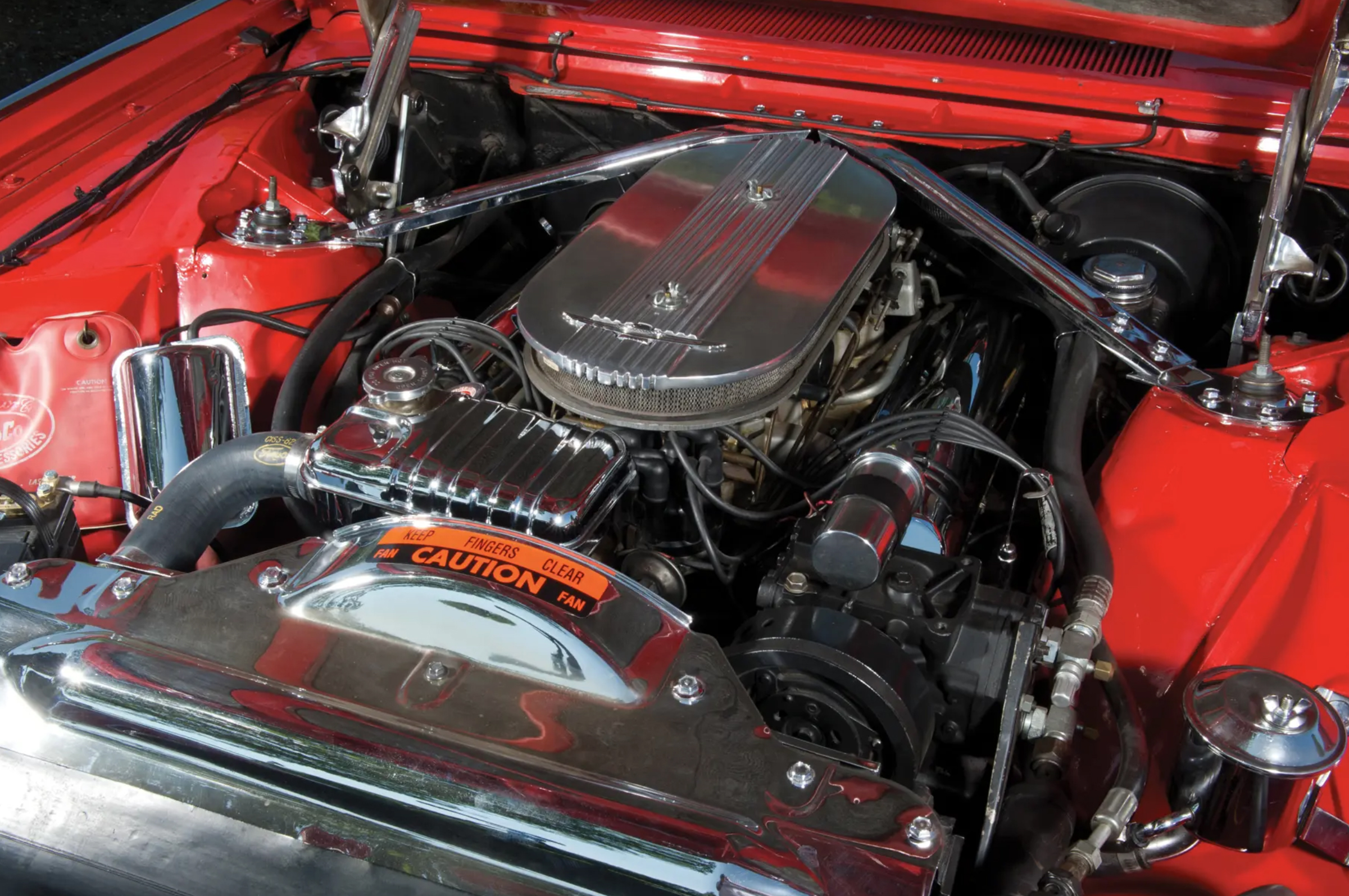
It was a heavy car, so the extra power didn’t give you lightning-fast acceleration, but zero to sixty in about 8 seconds was decent for a personal luxury car at the time.

Only 120 Sports Roadsters came from the factory with the M-Code motor for 1962, and the next year a mere 37 found buyers. Clearly the fake two-seater customer was mainly into the looks and not trying to back that appearance up.
Who Knew That We’d See A Two Seat T-Bird Again One Day
The Sports Roadster option continued for 1963, but a mere 455 examples were sold in that final year of the “Jet Bird”. Ford didn’t create a similar option for the brand new 1964 “Thelma and Louise” style ‘Bird, but the aftermarket did make a tonneau that Ford dealers could install:

It’s not really as convincing as the factory option on the “Jet Bird” and no surprise that reportedly fewer than 100 exist.

It’s widely known that many more fiberglass tonneau covers existed than “real” Sports Roadsters, and the wire wheels just bolt on, further diluting the value of this special edition. An authentic M-Code Sports Roadster usually sells from around $75,000 to over $100,000. Get an authentic one with a lesser motor and you’re looking at only around $30,000 to $60,000; comparatively not a lot for something so rare, special, and eye-catching at any car show. Of course, just sticking the tonneau on any “Jet Bird” for the look would set you back even less money.

You’ll get a fair turn of speed as well to go with the luxurious appointments, making any cruise night a pleasure. It might not have been a ‘Vette, or even a real two-seater, but this is one ‘Bird that was fit for A King, thankyaverymuch.
topshot source: Ford



I’ve seen one in person. A friend was a car broker and was delivering one to a client, same color and everything. It was too much red for me personally, but I thought it was different from a style persepective. I also think that the 64, with the aftermarket two-color tonneau, looks better than the earlier styling. Still a sucker for the 57 though!
I always loved the 60’s T-Birds. Usually you can find late 60’s, early 70’s hardtops needing a little work for under $5k on Facebook Marketplace as everyone wants the convertible. Can’t say I’m interested in one either, but I do enjoy a big comfy 2 door coupe.
the fake 2seater, and 90s supercoupes are my favorite thunderbirds.
Great analysis.
I find the wire wheels questionable myself. I get that all the imported sports cars had them but I rather see a T-Bird on Cragar 5 spokes or slot mags for a 70s feel. I also prefer Ferraris on Campagnolo wheels over Borrani wires
With a bat wing center cap!
I soured on wire wheels when my brother had one leave his gt 6. He told me it was common that after a hard brake, he would need to reverse hard brake, to re-tighten, till he could find a spot to whack the ear with a nagahide mallet . These don’t have center nuts, and apparently got sub-par manufacturing, but all are beeaatch to keep clean, and just the wrong tech.
In the t-bird community the third generation (61-63) is usually called the Bullet Bird, not the Jet Bird. The fourth (64-66) is usually called either Flair Bird or Jet Bird. It’s not like they’re official Ford-sanctioned names, though, so you do you. And a ’66 Q-Code (428 V8) scoots along quite nicely for a car that weighs well over two tons, thank you very much.
I read Jason’s article about the Tri-5 you linked, and my only point is that I similarly don’t understand the prices 60s VW Microbuses command these days.
Of course it didn’t end well: he died on the toilet.
So did the Thunderbird
Ford kinda jumped the shark with the retro on that one.
They might not have sold in vast numbers, but contrary to the rather snide tone here, they are quite well remembered and desirable.
You can be snide, as well, about a 390 running an 8 second 0-60, but in 1962 that was pretty damned nice. It continued to be all the way through the malaise era, too. And the experience of stepping on a big, baritone, torquey V8 with instant response is a joy well beyond numbers.
If you want to make a change cheap and quick
The marketing department will do the trick
Another fun bit is that it was Robert McNamara who was responsible for the T-bird getting a backseat. Relentlessly pragmatic, he also pushed Ford to offer seat belts, then a huge novelty.
Thanks for this. Born in the late 50s, I most closely associate McNamara with the massive troop buildup in SE Asia as I was getting old enough to become politically aware. But the Wikipedia article on him: Robert McNamara – Wikipedia does flesh out other aspects of his multiple careers to which I was heretofore unaware.
He was also responsible for the Falcon, whose monastic austerity actually sold a lot of cars. The Falcon platform also provided the base for the Mustang (great), the Maverick (good), and the Granada (Malaise)
If you want to see a 1963 Thunderbird Sports Roadster being driven with alacrity – stream “Palm Springs Weekend”
Robert Conrad looks dreamy behind the wheel.
I seem to remember a ’66 convertible T-bird doing some ‘canyon carving’ in another movie. Thelma-something.
Those cars are in a lot of shows and films.
I had no idea they were a production option.
I didn’t know these were that rare. Those values seem surprisingly reasonable. So a regular ‘Bird of the era with a cover could conceivably be in the $20ks? The lesser engine and the cover would be the way to go (or not if you don’t like the look and annoyance). They’re all slow today, so the big engine would just be to brag to other dorks. While it’s not something I’m looking for, that’s a pretty cool car for the money to cruise around in that should be pretty cheap to run, fuel cost aside.
Same. I thought I saw a few before.
After reading this, I imagine at least some of the ones I’ve seen were ordinary ones with an added tonneau.
Yeah, with the exception of the first generation, Thunderbirds have never really caught on and are a low-key deal in an absurd classic car market.
They can be an expensive pain to work on, though, with all of vacuum operated luxuries like power locks, swing-away steering wheel, and the bevy of electrical gremlins awaiting you for everything else. Shitloads of fancy, unobtainium trim can make restorations expensive, too. The convertible top mechanism is a miracle of engineering and fixing and adjusting it will make you want to tear your hair out. I had a 1966 ‘vert and I will never buy one again.
If you do go for a ‘Bird, get one in good shape, avoid the convertibles, and you should be in good shape. Leave the basket cases to surprise the uninitiated.
I’m a ragtop guy. I was looking around for a mid 60s Mustang and being shocked at the prices for what was once an affordable car. A friend suggested we talk to a guy in his neighborhood who had given up driving but had a 65 t bird convertible in his garage. Scored it for half the price of a comparable Mustang.
I got it driving and presentable without much effort. But the electricals were terribly fiddly, and since I put the top up and down a lot, I could never get it adjusted properly. It started to bum me out that I was always chasing down minor things.
After about a year, a guy left a business card on it, I called him and he offered me a surprising price so I let it go. I wanted to square up with the fellow I bought it from, since there was a decent profit and I felt he deserved some. He told me to keep it, he was just glad to see it back on the road.
Yeah, but did Elvis shoot his Thunderbird with a handgun like his De Tomaso Pantera?
Chuck Berry would have made an even better spokesman for the Thunderbird:
https://www.youtube.com/watch?v=gGx4cWDQD5U
The Ding-a-Ling Edition?
Wrong Chuck Berry I think you are thinking Chuck Barris of Gong Show fame?
https://youtu.be/wiCSSIEUukk?si=NF5AIBEdOp_Qs9Ar
Iacocca has been rightly recognized as one of the greatest auto execs of all time, but both this and the Frank Sinatra Edition Chrysler Imperial show he wasn’t immune to dumb ideas. Didn’t he also oppose the Clean Air Act?
And can the world just accept that the only reason Elvis Presley reached higher levels of fame and fortune than, say, Chuck Berry or Bo Diddley was because he was white?
We can’t judge someone from the past based on our modern standards unless we know the “why”. Why did he oppose the clean air act, did he think it didn’t go far enough? Was he worried it would lead to unchecked executive branch power and would rather it be set up differently? Or maybe that it was too open ended.
And that’s before we get into bills that have “poision pills”. For example if there was a Save the Puppies bill but it had an attachment that let the government spy on its own citizens. If you opposed that clearly you are an evil puppy hater right?
I believe Iacocca was actually quoted as having said, “We’ve got to ask ourselves, ‘How much clean air do we really need?'”. That certainly doesn’t sound to me like he didn’t think it went far enough.
I’m sure that wheel collapse left the king all shook up. He definitely wasn’t going to trust Ford after a mechanical failure like that left him with a suspicious mind. I’m glad they personally contacted him since he had to walk all the way home in his blue suede shoes thinking about how his car totally broke down in the ghetto. At least he was able to return it to sender before things got out of hand and everyone ended up doing the jailhouse rock.
I’ll show myself out now.
Have your COTD.
That’s all right.
A little less conversation and a little more car puns please
I can’t help falling in love with this.
The story was told that Edsel Ford himself offered Elvis a full refund on the car;
It was probably Hank the Deuce. Edsel died 1943.
Elvis was so important he came back from the dead to give him his money back.
Effi’n A!
Edsel was a true “car guy” while his father saw them as appliances. The first MG imported to the US was for Edsel Ford, so he did have an understanding that driving should be fun.
I am surprised we have never seen a treatise on how the huge automobile failure, the Edsel affected his life and career. I mean the name is bad enough but yes the car was named after him. If it was me I might have gotten into the arts.
Knowing Elvis as we did he probably would have preferred his baby back, baby back ribs
One of my uncles had a ‘62 Sports Roadster T-Bird (we called them Bullet Birds) in bright red. It was slick and beautiful. Loved riding around in that car. He always told me if he still had it when I was old enough to drive, he’d sell it to me. Sadly, he sold it when he was drafted for Viet Nam. Upon his release from the service he bought a just-introduced Datsun 240Z in Monte Carlo Red. It was a great car, but I wish that Bullet Bird had stayed in the family.
Huh, I had no idea these were so rare. I always thought these were neat, so when I saw one last weekend at a local car show I even pointed it out to my wife.
Again, MANY MANY more tonneaus made than actual official “Sports Roadsters”
“Ford didn’t create a similar option for the brand new 1964 “Thelma and Louis” style ‘Bird,”
That would have been an entirely different storyline.
That was the unreleased prequel with her annoying cousin Louis with a 1985 FILA T-Bird.
Great, now I’ll have Mr Mister in my head all day. I can think of worse fates!
https://www.youtube.com/watch?v=cyGYAg-wjKE Enjoy this cover by Anneke van Giersbergen…its the version that will be in my head all day.