


Somehow, the volunteers of the Experimental Aircraft Association did it again. For a fifth year in a row, a record number of people crammed into Wittman Regional Airport in Oshkosh, Wisconsin, for a whole week of everything aviation. Over 734,000 people visited EAA AirVenture Oshkosh 2026 to enjoy a little bit of everything from ultralights and Warbirds to aerobatic stunts and massive explosions. For me, it was the trip of a lifetime as I got to scratch off a childhood dream and get deeper into aviation than I’ve ever been. As everyone flies and drives home, I want to reflect on how awesome a plane bash the last week has been.
EAA AirVenture Oshkosh tends to center itself on a major theme with smaller sub-themes. Last year, the main theme was ‘Endless Possibilities,’ with sub-themes being the good Samaritans who use aviation to save lives, celebrating the women in aviation, and, well, the endless possibilities offered by taking flight.


This year, AirVenture joined the rest of the country in amping up the patriotism. But instead of just going with an America 250 theme, AirVenture had a fun twist. This year, AirVenture was themed around ‘Celebrating The Freedom Of Flight.’

This theme focused on how aviation has helped reshape America since the Wright Brothers’ flights in 1903. As such, the show featured everything from some of the earliest powered aircraft to the latest electric flying contraptions and all points in between. AirVenture featured creations by individual inventors, big companies like Airbus, Boeing, and Douglas, and, of course, the U.S. military.
What I really adored about this theme was a great emphasis on early aircraft. I usually fangirl over large airliners, transports, and unique general aviation aircraft, but haven’t really explored early aviation as much as I have wanted to. This year, I’d be spoiled by how many century-old aircraft were out there.

I’d also get in some unique aircraft experiences, as I was honored to be a guest of the DC-3 Society on a Friday morning formation flight of a trio of DC-3s and C-47s. I have always wanted to ride in a DC-3, and it was everything that kid-me imagined it would be, and more!
I also scored a second flight aboard the iconic Goodyear Blimp, and somehow, this ride was even cooler than last year’s flight.

I Walked 42 Miles Around A Living Museum
That’s the amazing thing about AirVenture. It isn’t like a museum, where the vehicles you look at might have last run before you were even born. The vast majority of the over 10,000 planes (showplanes included 1,346 vintage aircraft, 875 homebuilt aircraft, 360 warbirds, 118 ultralights and light planes, 88 seaplanes and amphibians, 40 aerobatic aircraft, 18 rotorcraft, and 6 hot-air balloons) that come to AirVenture actually flew there.
These planes come from all over the world, and when the show wraps up, they’ll fly back home, too. Even the Red Arrows skipped across the Atlantic Ocean some 700 miles at a time. It’s a sort of living history that you just won’t find in any typical museum.

This year, I really wanted to capture the scale of AirVenture. I’ve been going to AirVenture every single year since 2022, and usually, I just state how long the runways are at Wittman Regional Airport. At 8,002 feet, runway 18R/36L is well over a mile long. Runway 9/27 is pretty large, too, given its 6,179-foot length. These runways are long enough to have supported some of the world’s most iconic aircraft, from the Concorde and the Lockheed U-2 to the Airbus A380 and the Aero Spacelines Super Guppy Turbine.
But, honestly, the raw numbers tell only part of the story. While much of AirVenture does run along the airport’s runways, the aircraft areas run deep into airport grounds. There’s just row after row of airplanes, and even in places where there aren’t planes, there are still vendors, booths, a theater in the woods, a colossal campground, workshops, seminars, and more.

This year, I was curious about how far I was walking because AirVenture was going to be the biggest test for my left knee since I busted it in May. My doctor said that my healing was better than average, and that his recommendation was just to get out there and use it. So, I wanted to see just how much that knee was working. On average, Sheryl and I usually covered 7.5 to 8 miles a day, with a peak of over 10 miles on Friday. Some people in an AirVenture Facebook group I’m in claimed to have walked twice as many miles as we did.
I attribute my lower daily mileage counts to breaking AirVenture up into sections. Every day, we’d cover only a portion of the event, maybe only one or two main sections.

In total, we covered about 42 miles of walking through the week. My knee felt solid the whole time, and it works even better out of the other end. I feel like it’s 99 percent back to normal, and it’ll probably be totally back before the summer ends. But to bring us back to my original point, AirVenture is so huge that you can easily walk tens of miles in a single day.
As we walked through the aircraft areas, I took note that this year was very different from even the previous events I’ve been to. The crowds grew large and stayed that way. There were so many people that it was legitimately difficult to get pictures of some aircraft without multiple people blocking them. AirVenture usually has “slow” days on Tuesday (the day before the Wednesday nighttime air show and fireworks) and Thursday (when people tend to leave following the Wednesday show). This time, however, the crowds remained enormous. If I had to wager a guess, people stuck around this time because the Red Arrows weren’t scheduled to perform until Friday.
Some People Didn’t Remember Rule 1

The increased attendee count seemed to have come with some drawbacks. Earlier, I noted how smoke from the Canadian wildfires meant that a few days’ worth of arrivals all tried to land in Oshkosh in the span of a handful of hours. Pilots were cursing each other out, ignoring ATC, not following procedures, stepping on each other, and cutting in line. It resembled Chicago at rush hour, and those pilots all showed terrible airmanship.
Sadly, this poor behavior didn’t cease when everyone got on the ground. I lost count of how many people reported having their bicycles, bags, and camping chairs stolen. I saw generators lashed to RVs with heavy chains. In one instance, the owner of the Consolidated PB4Y-2 Privateer that parked in Boeing Plaza had his backpack stolen while he was securing the aircraft.

Other poor behavior came from the flightline. For safety reasons, the flightline moved about 120 feet back on Friday, Saturday, and Sunday to accommodate the Red Arrows aerobatic display. This move was temporary, and the restriction lifted as soon as the Red Arrows were done on each day. On Saturday, this resulted in a literal stampede of people running 120 feet forward with chairs and other junk in hand to get a spot for the nighttime air show. This was dangerous, and everyone is lucky that nobody was injured.

If all of that wasn’t bad enough, some folks used the flightline as a trashcan. A woman brazenly discarded an empty bottle and a camping chair bag right in front of my face. Never thought I’d do a Gambler 500-style trash cleanup at AirVenture, but I did.
Thankfully, I’d say the bad behavior, which also included just general rudeness from some people, came from a minority of visitors. While very sad to see, most people at AirVenture were kind and respectful. I suppose that, with nearly 730,000 people all in one place, there are bound to be some bad apples. Oh well, let’s get to more plane action!
A Rotating Display Of Awesome

This year’s highlight aircraft were a little different. Usually, there’s some large airliner occupying Boeing Plaza for much of the show. You can usually count on something like a Super Guppy, Boeing 747, or some widebody airliner parked up front. This time, the Super Guppy couldn’t make it due to being damaged in a storm. Boeing Plaza had a rotating cast of fun planes throughout the week.
A highlight for me was the Delta Air Lines Airbus A350-900.

I have never seen an A350 up close and certainly have never walked around one. Seeing it blew my mind. I’m always impressed by how large turbofan engines can get when you stand next to them, and I adored checking out the guts of the Rolls-Royce Trent XWB-84 turbofans strapped to the wings of this beauty. These engines put out 84,200 lbf thrust each!

I also loved chatting with the crew, who seemed to really enjoy flying and working on this aircraft. One of the aircraft’s mechanics gave me a sweet holographic trading card! They even told me when they were leaving, so I could get some images and video.

The plane that really got my attention in Boeing Plaza this year was the Red Bull Flying Bulls 1958 Douglas DC-6B. She looked so gorgeous under a Wisconsin sunrise, and her crew was so impeccably dressed. What can I say? I’m a sucker for polished aluminum.

Here’s what Red Bull says about its aircraft:
Without a doubt, the DC-6B is the crown jewel of the Flying Bulls. Built in 1958, the plane has had an illustrious past. She was used to chauffeur heads of state and their celebrity guests all over the world. The sheer size and the unmistakable 1950s coat of the DC-6B are as impressive as ever. All over the world, the DC-6B is renowned for her eventful history. Manufactured in Douglas, Santa Monica, in 1958, the plane was sold to the stateowned Yugoslavian airline JAT. Premier Marshall Josip Broz Tito ordered a luxury model for himself and his celebrity guests. In 1975, Tito sold the plane to Zambia’s head of state Kenneth Kaunda who also used the DC-6B as a luxury airliner – until he left her abandoned outside Lusaka airport.

This is where Chris Schutte, the manager of a small aviation company in Windhoek, Namibia, found her, and by chance discovered a sister plane! In fact, Schutte bought the last two remaining DC-6Bs and began restoring them. However, as troubles along the Angolan border intensified, Schutte was forced to sell one of the DC-6B planes, and that’s exactly when the Flying Bulls appeared on the scene. In March 2000, Sigi Angerer, chief Flying Bulls pilot, spotted the DC-6B for sale in Africa in an airline magazine and quickly made his move. On July 7th 2000, the plane took off from Windhoek and headed for Salzburg. The flight took 28 hours, with 4 stops, causing no problems. In 2001, restoration began and following thousands of hours of labour, the DC-6B left the workshop in all her glory three years later.
Once registered as “Fish Eagle” under the registration number V5-NCF in Namibia, the plane received the American aircraft register N996DM shortly after its transfer to Austria. Thirteen years later, the DC-6B was finally given Austrian citizenship and now operates under the Austrian registration OE-LDM, making it the first DC-6B to ever receive an Austrian code. The first DC-6B to receive an Austrian code has fascinated people ever since its arrival, boasting a brand-new interior, four new engines and the latest technology. Everyone agrees the DC-6B is in better shape today than when she left her Douglas birthplace in 1958.

The Flying Bulls DC-6B sports a quartet of Pratt & Whitney R 2800 CB-3 radials with 18 cylinders and 2,400 HP on tap, each. She drinks 1,000 liters of fuel per hour, can fly for 23 hours straight, and has a top speed of 297 knots.
It’s Bigger Than It Looks

One of my other favorites was this, the Seattle II, a replica of the legendary Douglas World Cruiser. From the Seattle World Cruiser Association:
On September 28th, 1924 three aircraft touched down at Sand Point Washington to complete the first circumnavigation of the globe by aircraft. The aim of our project is to fly a reproduction of one of these aircraft, dubbed Seattle II, around the world in celebration of that epic and historic first leap around our planet. To that end we have constructed a reproduction of one of the original aircraft to make the journey. The 1924 Douglas World Cruiser was, in itself, a successful and durable design, and became the basis for several follow-on contracts with the Navy and commercial operators.

The Seattle 2 is powered by the same type of engine that powered the original Cruisers; a 400 HP Liberty V-12.engine. Many consider the engine to be the most important contribution the United States made to aviation technology during World War I. It was designed in just 6 days by Jesse G. Vincent of Packard and Elbert J. Hall of Hall-Scott in mid-1917 for the U.S. Government. Automakers Ford, Lincoln, Packard, Marmon, and Buick produced 20,748 Liberty 12s before the Armistice. The engine also powered the first aircraft to cross the Atlantic, the Curtiss NC-4, and the first plane to make a nonstop flight across the U.S. a Fokker T-2. Another major area for upgrading was the fuselage. The Douglas World Cruiser of 1924 was a redesign by Donald Douglas and Jack Northrup of a successful Navy torpedo-carrying float plane. In this transition, the fuselage moved from a combination and-wire-trussed wood affair to an all-tubing assemblage with some adjustable metal tie rods. We replaced the tie rods with tubing. Ease, cost, strength, as well as reliability of modern materials and methods, motivated this use of a unified fabrication approach.

Where the original aircraft had a basic electrical system for starter and running lights, we’ve added to this a state-of-the-art avionics package, as required in the international aviation environment. To accommodate modern landing facilities, we’ve replaced the tail skid with a wheel and installed brakes on the main landing gear. Edo metal floats with water rudders will be used instead of the original non-steerable wooden pontoons. Durability of metal floats and better hydrodynamic design will better serve the Seattle World Cruiser on its world flight. The original aircraft’s cover material was cotton. This fabric was organic and the paints used were very flammable. When wet, the cover would sag and distort the airfoil. The water also added considerable weight to the aircraft, degrading performance. In the sun, the old fabric would dry out and tighten, again distorting the airframe. Additionally, the original fabric was prone to rot, requiring replacement many times during an aircraft’s lifetime. New materials and processes have led to the development of long-lasting, durable covers and finishes, which are non-flammable.

What got my attention the most was the sheer size of the thing. The Seattle II simply dwarfed every other aircraft in the area. Oh yeah, and the cockpit is entirely open! Imagine flying that hulk of an aircraft around the world without a ceiling over your head.
Sheryl Got To Model For A Plane

Sheryl’s favorite aircraft was the Demoiselle. From the Old Rhinebeck Aerodrome:
The Santos-Dumont “Demoiselle” is a typical example of vintage aviation technology. With a wingspan of 19 feet and a 35 HP engine, the Demoiselle is considered one of the world’s first ultralight aircraft. Alberto Santos-Dumont of Brazil made the first officially observed powered, controlled flight in Europe in 1906 with his canard “14-bis” aircraft. The flight, in France, covered a distance of 722’.
In 1907 he designed and built the Demoiselle (nicknamed the “infuriated grasshopper”) using bamboo extensively. He made plans available and many were built around the globe. Instead of a conventional control stick placed in front of the pilot, one was located behind the seat and the pilot would slip into the Demoiselle sliding the control stick into a pocket sewn into the back of the flight suit. Leaning to the left or right actuated the wing warping system thus banking the aircraft while in flight. The Demoiselle is an excellent example of a pioneer aircraft demonstrating that aircraft design was still in its infancy, and that standardized methods of control had not yet been developed.

Dumont established a relationship with jeweler Louis Cartier. When he found accessing his pocket watch to monitor his flight time was somewhat inconvenient, he discussed this with Cartier who developed the concept of a wristwatch for men, an idea that Dumont popularized. Cartier continues to produce the “Santos” watch to this day.
The example at AirVenture is a replica that was built by the Club Aero des Garrigues in France beginning in 2018. It took volunteers over 11,000 hours over seven years to build the replica. To make sure the aircraft is as accurate as possible, the volunteers used only the construction methods that were available in 1907.

One of the Club Aero des Garrigues volunteers was on hand and explained that Demoiselle is a contraction of mademoiselle and is a synonym for “jeune fille,” or young woman. The volunteer told us that Demoiselle also roughly translates to damsel and that Sheryl’s look perfectly captured the spirit of the aircraft. He then proceeded to have her model for the aircraft for the club’s next magazine issue. D’aww.
Getting Experimental With My Fireworks Shots

Every year, an aircraft in Boeing Plaza is designated as a photo subject, and photographers rush to it to get pictures of it in front of the Wednesday night fireworks show. Since 2022, I followed the flow, getting shots of the same plane in front of the fireworks as the other folks. This year, I decided to get experimental. The highlight aircraft was an America 250-themed Southwest Boeing 737, which I thought was cool, but I wasn’t really amped for.

Instead, I started searching the aircraft areas near the center of the flightline for a neat aircraft. I really wanted the Seattle II to be my subject, but I feared it was too far away from the fireworks and explosions. I ended up at this 1938 Ryan SCW-145, which is a rare piece of history. It’s one of only 12 built, and of that, it’s one of only five that remain airworthy.

Between 1938 and today, this Ryan has managed to fly around the world. Its life started in San Diego, and from there, it’s been to Oklahoma, Florida, Australia, England, France, New Zealand, and then back to America. This absurdly rare plane is more well-traveled than many people! This Ryan even served America as a U-Boat patrol during World War II.

It was a little difficult getting good pictures of the Ryan under the fireworks given all of the different light sources and people who kept walking in front of the camera, but I did get some shots that I loved.

This year also changed how the AirVenture schedule works. In the past, I’ve said that AirVenture is really two shows in one. From Monday to Wednesday, there was usually a lot of general aviation aircraft and commercial airliners. Then, a massive wave of these aircraft departs on Thursday after the Wednesday night fireworks show. From Thursday to Sunday, a lot more military aircraft move in. In the past, I recommended that if you weren’t into military hardware, get your pictures done by Wednesday.

While there was a mass departure on Thursday this year, the aircraft that replaced those that went home weren’t just military pieces. Commercial airliners were still arriving at Oshkosh, and a large number of GA aircraft stayed behind, too. So many aircraft rotated through Boeing Plaza that there was a whole spreadsheet covering it all.
You Have To Come One Year

Still, my advice remains the same: If you want in on the fun next year, get to AirVenture early, no later than Monday, if you can. If you see a plane you like, get pictures of it right away. There’s always a chance it’ll leave on that same day. If the aircraft’s operator is nearby, ask them when they’re leaving. That takes out the guesswork and prevents you from missing a departure that you wanted to see. I missed out on the departures of the 777, the A321, and the Southwest 737 because I had no idea when they were leaving.
Also, consider that you are not the only person there. A lot of people will haul in all sorts of chairs and coolers, plop them down at the very front of the flightline, and then disappear for most of the day. This is technically against the rules, but EAA’s volunteers don’t really enforce it. Some of these people never even return to the flightline despite dropping everything down there, so they’re hogging a space that someone else can use.

I’ve now had the time of my life for the fifth time in a row. Somehow, AirVenture keeps getting better every year, and there’s always something to keep me excited through a whole week. Thanks to AirVenture, I now have piloting a Goodyear airship and piloting a DC-3 on my bucket list. Of course, one year I want to be a part of the huge line of planes coming in, too.
I was actually sad when I left this year’s event. Sure, I had seen everything and been just about everywhere. I had gotten a whole week of experiences. Yet, I didn’t want it to end. I wanted a time machine to start it all over again. For one week every year, an empty airfield turns into a city with a greater population than many actual locales. Then, it becomes a grassy field all over again, and the city disappears. I can’t wait until 2027 when I can join the madness all over again.
“The End,” but I have way too many great pics to share, so here are a bunch more!

The Boeing B-52 Stratofortress and its eight engines will always be impressive.

A Yak 52!

Oh, here’s what the Ryan looks like when things aren’t exploding around it.
The Red Bull P-38 was hard to get pictures of because people always crowded around it.

I love twin-boom designs like this.

It’s like a flying mirror!

I wonder what this North American T-28C is like to fly?
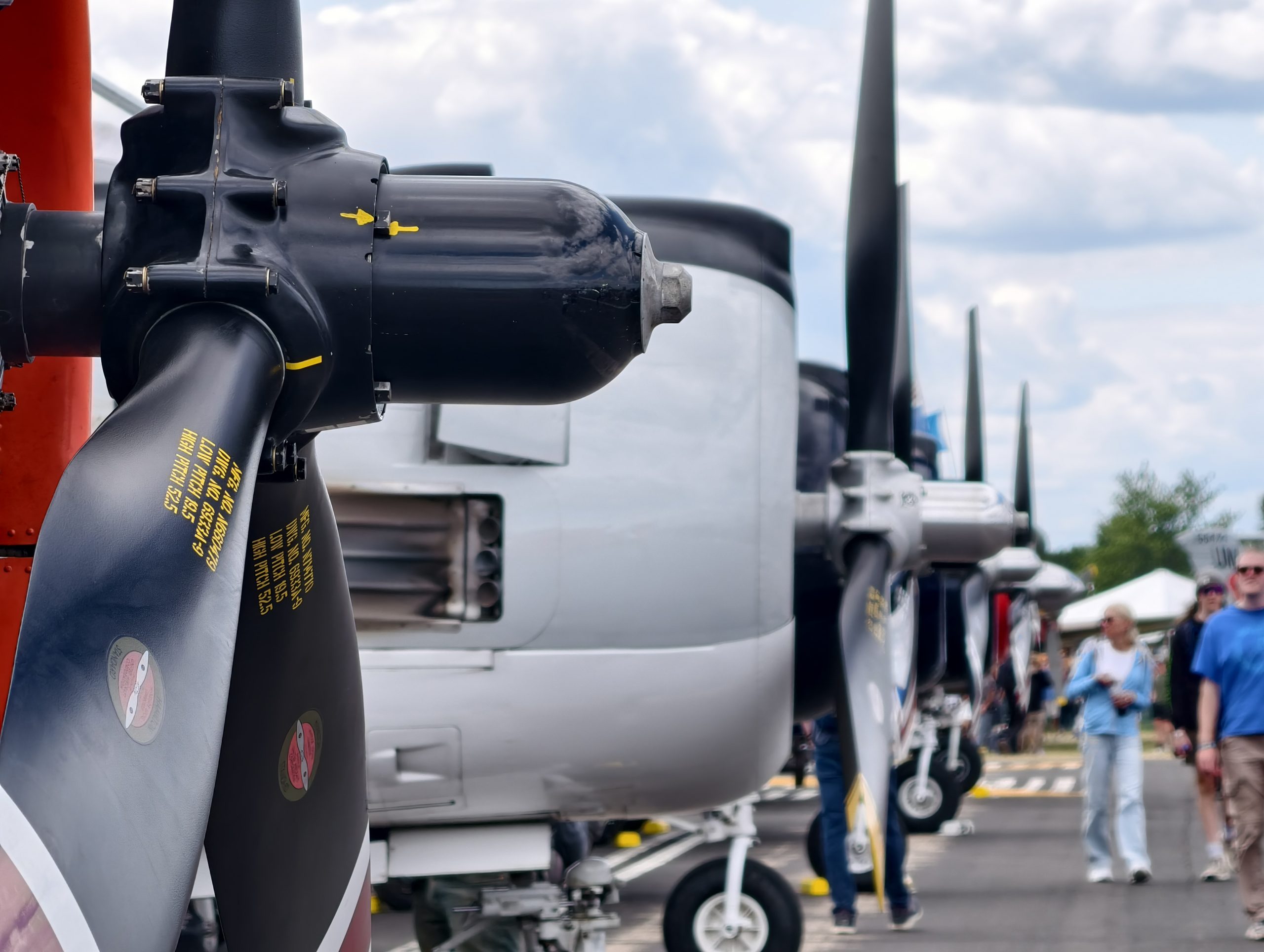
Experimenting with Warbird close-ups with my phone.

The Red Bull DC-6 looks resplendent in polished aluminum.

One of NASA’s jets catching a Friday morning sunrise.

Another one from the Friday morning DC-3/C-47 formation flight.
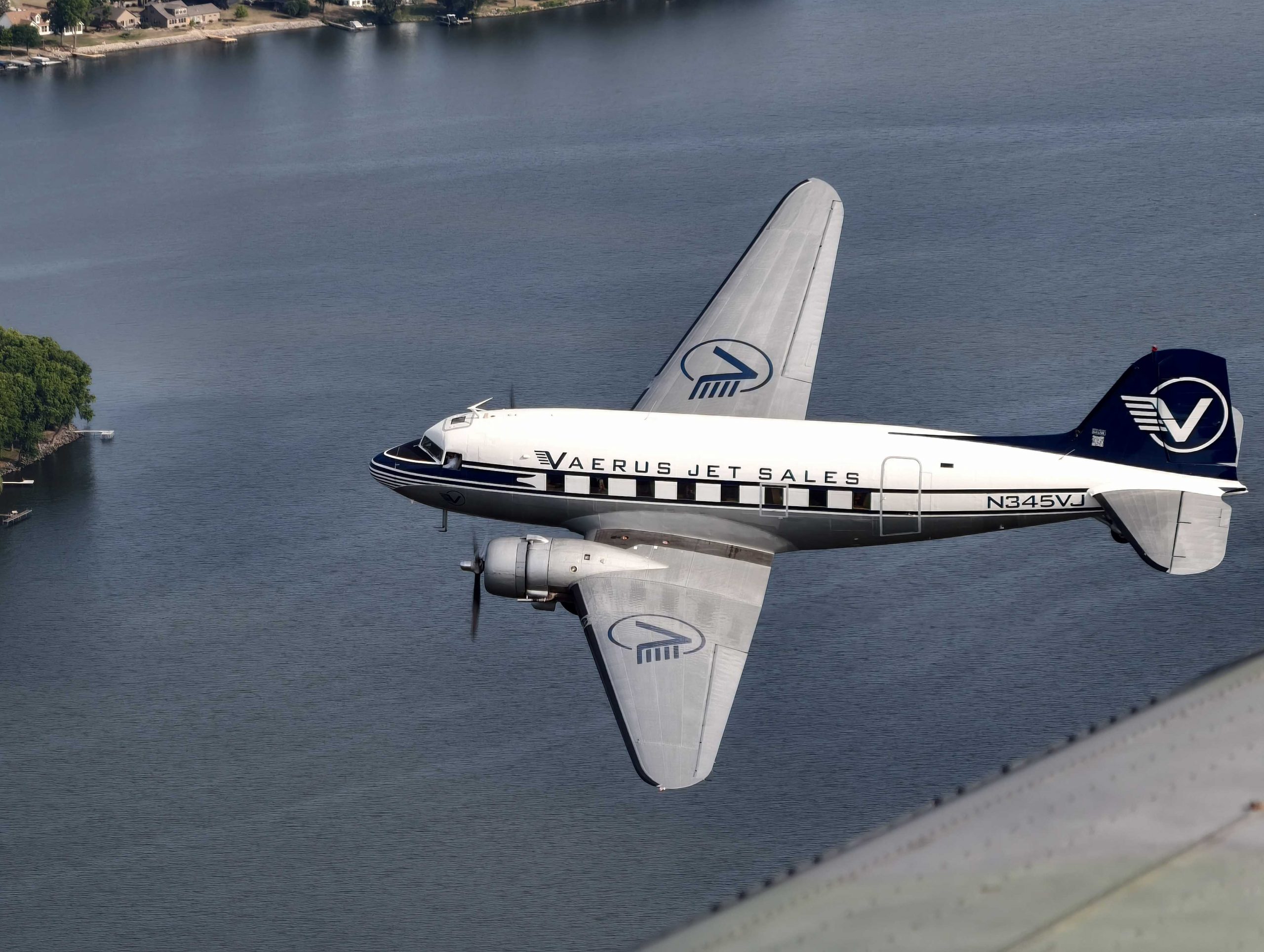
Okay, just one more!
All images: Author


Didn’t go this year, just not mentally prepared for 750,000 people and the possibility of 95 degrees on asphalt. The smoke didn’t help the decision. But my brother went up solo since he hasn’t missed one in decades. Of course he is a mechanic and we would go with my oldest brother who was an aeronautical engineer. He would motorcycle or drive in from Connecticut religiously. And the whole affair up there is kind of spiritual, like flight itself. Sadly there were a few jerks who shall be excommunicated as soon as they are found out. Next year for sure though! And bravo to ypu Mercedes once again with an amazing write up…
Awesome! Thanks for the write-up.
The fireworks photos were almost as impressive as the airplanes.
I remember seeing that Red Bull P-38 many times under its former owner, Lefty Gardner, when it was named White Lightning.
You got some great pictures! I’d really like to make it out there some time.
1,000 liters of fuel an hour, wow!