


A lot of the buzz this week has been over the unusual appearance of Audi CEO Gernot Döllner at a rally for Republican candidates in Georgia last week hosted by President Trump. German politicians, citizens, and employees have expressed disgust. There are petitions calling for his removal. As more information comes out, though, I do think it’s getting harder to blame the company.
The Morning Dump will take the contrarian view today, which is that this might be bad for democratic norms, but it’s maybe a great outcome for Audi and its parent company, in that they might have gotten enough tariff relief and incentives to make the plant essentially not cost anything. I think you gotta take that deal.


Audi has to do something as it can’t rely on China. No one can rely on China. The market there is entering its “harshest winter.” Exports are helping, of course, but there are only so many exports. Who is doing okay in this environment? Ford is turning it around, slowly, and Hyundai is absolutely crushing.
The Art Of The Deal
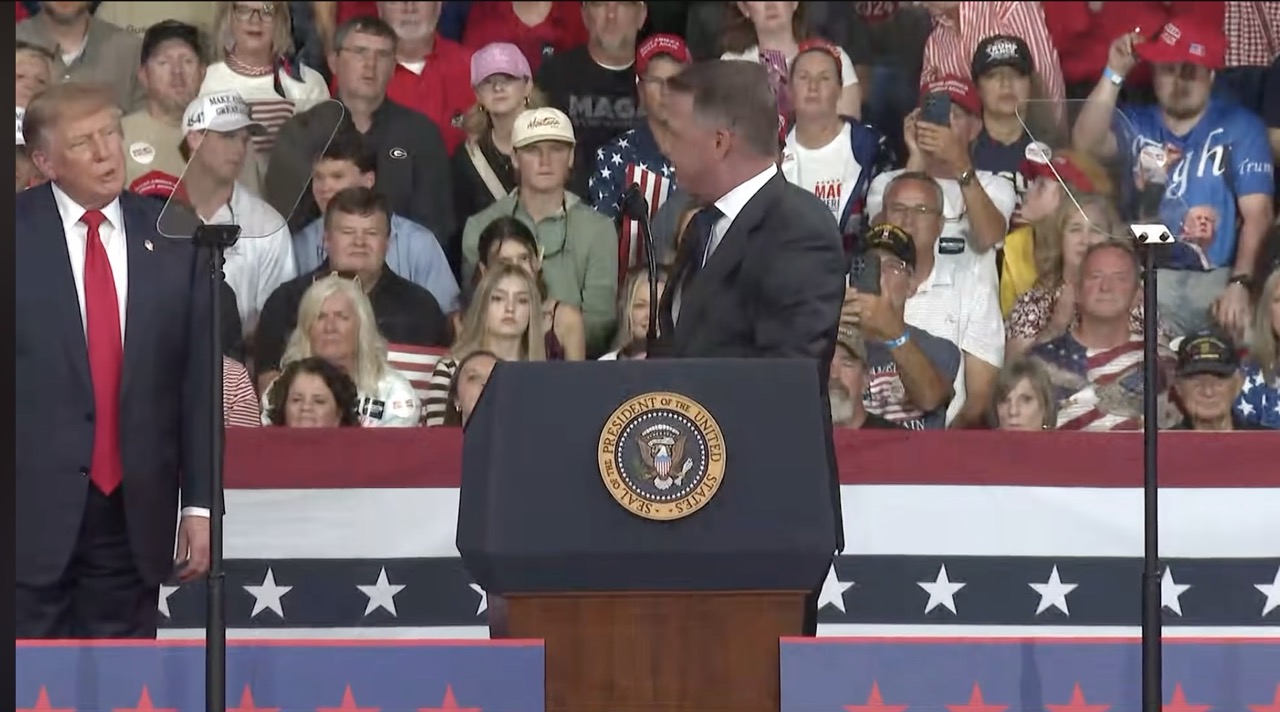
With one very notable exception (Elon Musk), automotive CEOs generally don’t go to campaign events as representatives of their own company. Many corporations, including Volkswagen, have specific rules against this kind of behavior, and in a well-functioning democracy you don’t necessarily want to have a political leader blackmailing companies into appearing like they’re supporting candidates.
The fact that Audi’s CEO appeared on stage at a rally in Georgia upset and surprised many people in Germany, and it’s turned into a public relations disaster for the company over there. Here? I don’t think anyone is going to even think twice about it before leasing a Q5 or whatever. Yesterday, we learned there was likely some sort of quid pro quo involved.
Which, yeah, duh.
Döllner got on that rally stage, said what he needed to say, and left so quickly I’m surprised he didn’t leave a smoke outline of himself like Wile E. Coyote. It had the feeling of a hostage video. It’s not going over well in Germany, where more than 100,000 people have signed a petition calling for Döllner’s removal.
Perhaps, though, Audi got the better of the deal? There’s a lot more detail coming out today, and it makes what happened make a little more sense. From Manager Magazin (Google Translated):
Döllner presented a newly concluded deal: Audi could finally finance the plant in the USA that he and his board had been planning for a long time. Under the new conditions they had negotiated with US politicians, the investment would finally pay off. He could not give exact details, as the agreement had not yet been signed.
There were “no facts or figures,” someone in the group said. But, according to those involved, the promise made by the travelers to America was enormous: the company was supposed to indirectly recoup its entire investment. A small portion through subsidies, the rest through tariff reductions. In other words: a gift!
Unlike BMW and Mercedes, Audi has no production in the United States. According to former Audi of America President Johan de Nysschen in an interview with Automotive News, the company was close to building a plant there, but decided on Mexico at the last minute. The company could have co-located with Volkswagen in Tennessee, if it weren’t for pride:
“Ingolstadt does not like to be dictated to by Wolfsburg, and they want to be masters of their own destiny,” de Nysschen said. Co-locating with Volkswagen carried the risk of reinforcing consumer stigmas. “So many people who are ignorant say, ‘Oh, Audi is just a luxury Volkswagen.’ It’s not true, but if they are built in the same plants, that reinforces that perception.”
Sharing the plant would have produced economies of scale, leveraged suppliers and enhanced utilization rates, which Chattanooga desperately needs. Currently, the plant runs well below capacity, producing only the VW Atlas and Atlas Cross Sport.
“You are trapped in this sort of vicious cycle,” de Nysschen said. “You can’t build volume because you’re too expensive, and because you don’t have volume, you are too expensive.”
Audi is currently building cars in Europe, which have tariffs, and Mexico, where Audi faces a double-whammy of tariffs and extra charges because its plant there isn’t complaint with the US-Mexico-Canada Agreement. The company is losing money, China (more on that later) is a bad bet, and something has to change. For years, Audi has been looking to bring a plant to the United States, and the tariffs have only reinforced this need.
Manager Magazin has a little more on how this deal allegedly came together:
That the supposed gift would indeed come at a price was apparently already suspected by some that Friday afternoon. The course of the call with the most powerful people in the company, greatly shortened and simplified, can probably be imagined roughly as follows: Audi CEO Gernot Döllner announced that he would thank US President Donald Trump (80) for his support. Following this, according to those involved, questions arose – and, only gradually, answers. Döllner would meet Trump. No, not at the White House. At a campaign event. He would be in the audience. And on stage.
Some in the group were visibly shaken. It could be interpreted that Trump was giving Audi an investment gift before the US midterm elections on November 3rd – and using the creation of 4,500 jobs to drum up support for his policies.
I mean, probably? But why should Audi’s CEO really care? He’s not an American citizen, and there’s already an American citizen auto industry CEO appearing at Trump rallies and threatening legislators, so a quick thank you doesn’t seem that bad by comparison.
There is some sort of strange circular logic to this from the US side. Tariffs were supposed to encourage manufacturing here, but the only way to do that is to offset those tariffs from other foreign manufacturing? What was the point, then?
Either way, what was actually agreed to and what was determined is completely up in the air at this moment, as Handlesblatt reports:
According to insiders, only vague declarations of intent exist. The agreement with Trump is said to be particularly uncertain. Allegedly, the only agreement reached with the US government is that concrete steps regarding potential tariff reductions after the midterm elections could be taken in mid- or late November.
There appears to be nothing more than a “Memorandum of Understanding.” “With that, we effectively have nothing in our hands. And nobody knows what will happen to this ‘nothing’ if the Republicans lose in Georgia,” says a person familiar with the matter.
Oh, right, that’s why you don’t do this.
Norms, like history, are essentially a lie we all agree to believe. It’s not good for the average citizen if the addition or reduction of jobs is all just a result of political theater, so that only the states run by members of the Natural Law Party get a new Citroën plant. And if you’re a company, does throwing in with Legal Marijuana Now Party of Nebraska mean risking losing out big if they happen to not win the election? That also seems less than ideal.
China’s Car Association Sees A 22% Sales Drop This Year, Followed By A 2% Rebound Next Year

China was once a major profit center for traditional OEMs, before the local industry rode huge government investment to essentially leapfrog the people who taught them how to make cars. Now profits are hard to come by as there are still too many companies building cars and not enough people buying them.
This year has been rough, next year is, according to this Automotive News report, not much better:
Passenger vehicle sales in China will drop 22 percent to 18.5 million in 2026, marking the steepest-ever downturn for the world’s biggest auto market and breaking its five-year growth streak, the China Passenger Car Association forecast on Oct. 26.
The group expects only a modest 2 percent rebound in 2027.
Cui Dongshu, secretary-general of the trade group, attributed the plunge to multiple “short-term” factors, including tightened government subsidies, a new tax on electrified vehicles, higher oil prices and increased vehicle production costs.
Yikes.
Companies like BYD and Geely have seen better margins abroad, and especially in places like Europe. Still, there’s not enough of that to go around given that governments that have domestic automotive production are extremely wary. Here’s more from Nikkei Asia:
Geely’s net profit fell short of the market expectations of 5.19 billion yuan, sending its Hong Kong-listed shares down 4% on Thursday.
“Management is not very content with the quarterly results,” Vice Chair Gui Shengyue said. “Over the past three months, we’ve encountered challenges unlike anything we’ve seen before … with every model in our line-up coming under assault from similar products offered by competitors.”
“China’s auto industry is currently going through the harshest winter in history,” he added.
What can one even do in this situation? Is anyone able to survive it?
Hyundai’s Shift To The US And India Is Paying Off
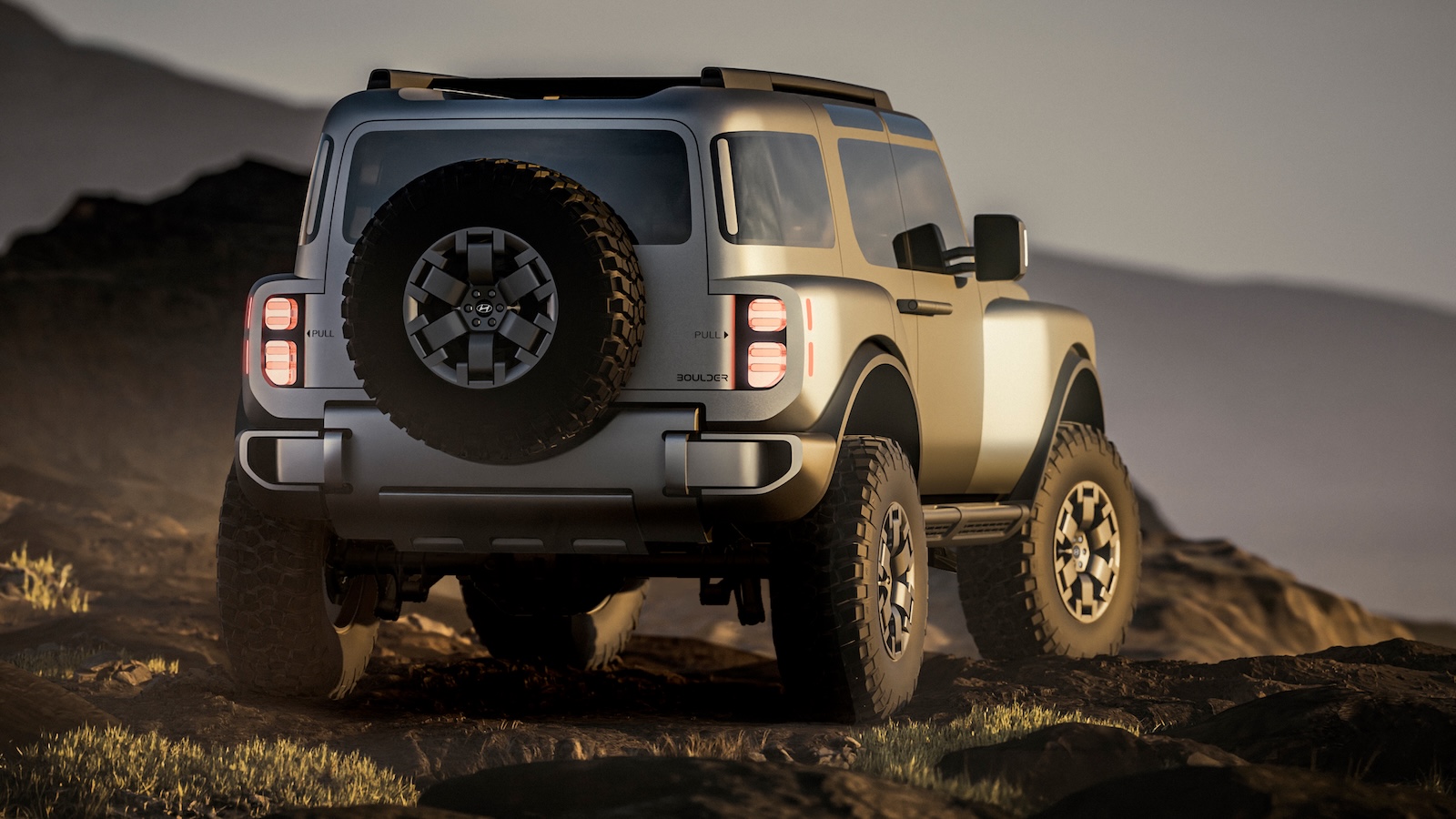
Hyundai seems to be the automaker that’s playing the game at the highest level right now, balancing EV powertrains and hybrids, as well as production and sales across the globe. The company’s operating profit rose to about $2 billion in Q3 of this year. How did the company do it?
The performance was underpinned by Hyundai’s best-ever third quarter in the US, where rising gas prices strengthened sales of hybrid models including the Santa Fe sport utility vehicle and the Sonata sedan. Retail sales in India, a key future growth market, rose 9.5% in the period.
It’s not all open field ahead of the automaker, as sales were down in China, Europe, and South Korea. There are also tariff costs, which are weighing on everyone.
Ford Profits Up As Well

Ford is an automaker that isn’t that reliant on China, which is not a bad place to be. The company also sells hybrids, which people want. The biggest strength Ford has is F-150 sales, and those were imperiled by a fire at its aluminum plant (and the inability to import foreign automotive grade aluminum due to tariffs).
It sounds like we’re maybe clear of that now, and the company’s profits ticked up a bit to $2.7 billion last quarter, as Reuters reports:
Ford CFO Sherry House told reporters on Wednesday that “Novelis’ operational recovery is largely behind us.”
The automaker is turning F-150 trucks at a much higher rate than normal, Ford CEO Jim Farley told analysts. It is aiming to keep about a 55- to 60-day supply of vehicles, versus the typical 80 to 100.
“It’s really allowed us to build that disciplined full-size truck business, while we watch our competitors play a very different game,” Farley said.
Ford will have more competitors in the truck space soon, including Hyundai.
What I’m Listening To While Writing TMD
As far as unconventional, vampire-adjacent songs for Halloween go, you could do worse than “On Your Side” by The Last Dinner Party.
The Big Question
What’s the best deal you’ve ever made on a car, service, or a car part? My parents once traded my mostly functional manual Ford Escort to someone who painted our house. Was that a good deal?
Top photo: Audi/NBC Universal


I think Audi is wasting their time trying to get big in the USA when they mostly sell luxury cars. This is a bad time for luxury cars, and even if they’re a little cheaper I don’t think that will be much of an incentive for those few motivated to buy an Audi.
TBQ: Three years ago, a relative (familiar with my vehicular proclivities) turned me on to the existence of a wholly intact and largely untouched ‘64 13-window Deluxe microbus, tucked away for decades into a tree row on an acquaintance’s farm in far western Oklahoma. No rust, no dents, and it even still had the original middle seat.
I was in the area for a nephew’s graduation, so I figured I should at least inquire. “Sure, I’d sell it. Would $750 be too much? I know it’s worth more, but I just want it gone.” I honestly thought he was f*cking with me at first, but he wasn’t.
Fast forward to two years later, with it stripped back down to its original white-over-mouse gray paint and sitting on new General Grabbers. My plan was to do a full build for Shasta Snow Trip (IYKYK), but as it so often goes life got in the the way and I was forced to put the bus up for sale.
The proceeds from the ~$2k investment to that point were enough to make it feasible to purchase our current home. I don’t expect to ever encounter another deal like that one turned out to be.
So many people who are ignorant say, ‘Oh, Audi is just a luxury Volkswagen.’ It’s not true, but if they are built in the same plants, that reinforces that perception.
Gee, I wonder where those people who are ignorant got that idea?
https://en.wikipedia.org/wiki/List_of_Volkswagen_Group_platforms
OK Johan now explain how a luxury car that shares the entire platform with an economy car isn’t a luxury version of that economy car.
I mean, the Cayenne was designed by Porsche, then the platform went down-market to the Audi Q7 and VW Touareg.
Sometimes the economy is decontented luxury, not gussied up base model.
I bought a 318ti from a family friend who is fastidious with his cars for $1,250, I was rear-ended and pushed into another car about 8 months later and at the end of the day kept the car and got $3k from insurance. I spent a few hundred on parts, and a bra to cover the front grill, then drove it for the better part of 3 years before I sold it for $1,250.
I was once given a 1969 Mach 1 by my boss in 1978.
It was his soon to be ex wife’s car.
So Audi bribed the most corrupt President in American history and could still essentially get nothing in return. But come on, when has Cheeto Mussolini ever gone back on his word?!
New 2025 Nissan Leaf S for $21,500 ($8500 under MSRP)