


Jaguar. Few nameplates conjure images of world-beating sports cars and legendary luxury sedans in equal measure to a history of an automaker mired in financial insolvency, dubious build quality, and corporate infighting. No car in the marque’s lineage exemplifies this turbulent history more clearly than the second-generation XJ, the XJ40.
With a gestation period of 14 years, the XJ40 endured one of the longest development timelines in the history of the British motor industry. Throughout that time, Jaguar endured constant interference from British Leyland’s bureaucracy, two oil crises, and even the privatization of the company by Maggie’s Hardnuts (aka Margaret Thatcher) in 1984.


This tumultuous landscape led to Jaguar axing their own legendary V12 from their new car, a decision that, in period, was derided as shortsighted and representative of management’s pigheadedness bred under the rule of British Leyland. Hindsight, however, shows that the very decision that knocked Jaguar out of a segment it created may have very well saved the company.
Birth Of The 40
To understand the XJ40, we must first meet its predecessor. Launched in 1968, the Series 1 XJ6 was a one-vehicle solution that replaced Jaguar’s three-sedan lineup: the 340 (originally Mark II); the 420 (originally S-Type); and the 420G (originally Mark X). When the Series 1 XJ debuted, it set new benchmarks for ride and handling for a luxury sedan, garnering superlatives from automotive journalists and customers the world over. Come 1972, Jaguar introduced their 5.3-liter V12 in the XJ to create the world’s only production 12-cylinder sedan. Journalists in period were gobsmacked:
With a combination of performance and refinement that wouldn’t be seen until, arguably, Toyota introduced the Lexus LS400 nearly 20 years later, it’s no surprise that the sequel to the original XJ was going to have big shoes to fill.
Coincidentally, 1972 was also a seminal year in Jaguar’s history. As AROnline explains, after surviving six years of mergers with BMC and, later in 1968, British Leyland, founder Sir William Lyons retired from Jaguar. In his absence, he left Chief Engineer Bob Knight to defend the old guard. Knight fought tooth and nail to keep the firm’s engineering department separate from British Leyland’s, a stand that preserved the brand’s integrity amid the unmitigated dumpster fire that was BL.
Knight understood that the successor to their already popular XJ model had to be done right, especially if Jaguar, and British Leyland as a whole, wanted to remain competitive in the American market. Only a few months after Lyon’s departure, as AROnline notes, Knight set about kickstarting the development of a new saloon to usher Jaguar into the 1980s.
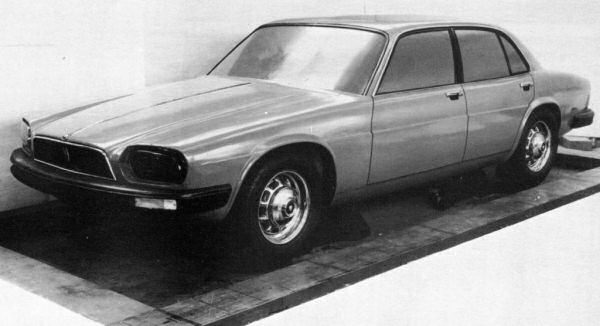
Having stared into the eye of the beast that was British Leyland, Knight knew what he was up against. Developing an all-new car worthy of the Jaguar name, under the scrutiny of the conglomerate mess that was 1970s BL, would be one long rock fight. But little did he know that this mission to pull Jaguar into the future would become the longest development cycle in the company’s history.
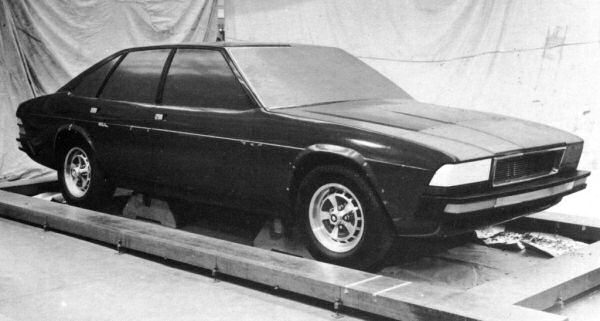
By 1980, the situation at Jaguar was dire. Although Knight had preserved Jaguar’s engineering autonomy, the cancerous nature of British Leyland’s mismanagement had wreaked havoc at Browns Lane. In the span of just a few short years, Jaguar went from being one of the most respected car manufacturers in the world to one that was known for making smooth, quiet, refined luxury cars…rather badly. Worse still, according to this BBC documentary on the XJ40’s development, Jaguar was losing £50 million a year.
That being said, Knight’s work wasn’t all for naught. As noted by AROnline, his determination and enthusiasm, along with the successful introduction of the XJ-S in 1975, proved to Leyland management that Jaguar’s independence was necessary for the company’s success. Knight stepped down and handed over Jaguar’s reins to John Egan and Jim Randle in 1980. In a recounting from the Australian Motor Heritage Foundation, Knight understood that although his crusade to keep Jaguar’s core management and engineers intact had saved the brand from being fully subsumed by British Leyland, it was time to let fresh management and talent, still distinct from BL, restore the company’s independence. It may have been dark, but there was a light at the end of the tunnel.
A Fateful Decision
That light would be the XJ40. Eight years into development, not a single prototype had set a wheel to pavement. But it was clear that the fate of the company rode on the success of this new model. Throughout the 1970s, while Jaguar’s management viewed the XJ40 as a priority, a lack of funding from BL meant the project trudged along at a glacial pace. By 1979, as AROnline notes, the XJ40’s final form was nearly ready to be greenlit, and design work on an all-new, all-aluminum, 24-valve straight-six, was well underway.
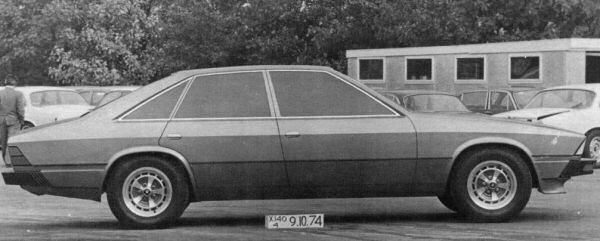
The XJ40 was originally slated to use the XK straight-six and Jaguar’s world-beating V12, but the 1970s energy crisis rendered both engines obsolete nearly overnight. The XK engine had been soldiering on largely unchanged since 1948 and, with its cast-iron block, was long in the tooth. And though the V12 was a technological tour de force in 1972, it was already seen as a thirsty dinosaur by the end of the decade.

After unanimous agreement from British Leyland’s board, Jaguar was granted an additional £77 million in funding to finish the XJ40 in 1980. With more funds and Randle now behind the helm of engineering at Jaguar, the XJ40 could really start making headway. Still, BL stuck its fingers in wherever it could. In an effort to save on development costs, Leyland management incited one of my all-time favorite stories in the automotive industry.
Revenge Of The Engineers

As legend has it, British Leyland attempted to push Jaguar to use Rover’s 3.5-liter V8 in the new XJ. The Jaguar engineers saw this overstep into their utopia as heresy and were on the verge of revolt. To avoid the indignity of diluting the bloodline of Jaguar’s drivetrains with a common Rover engine, Jim Randle was credited with staving off this heretical powertrain by designing the frame rails too narrow to accept a V-shaped engine.
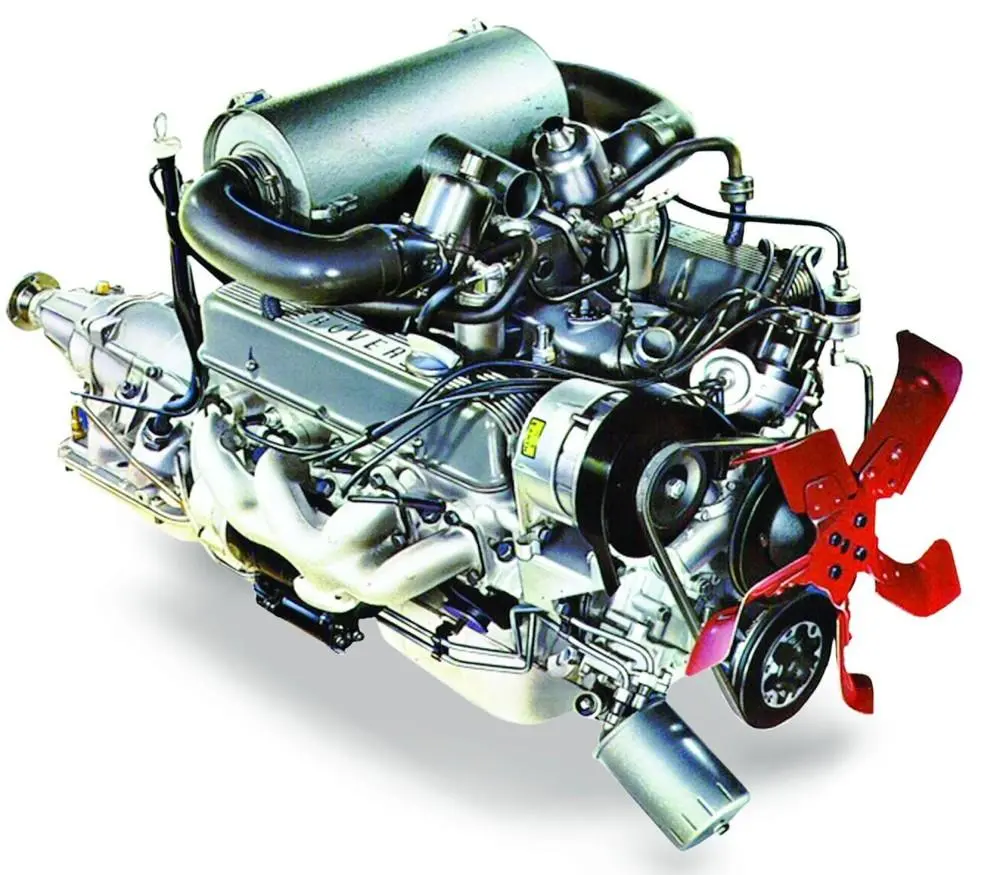
The same decision meant Jaguar couldn’t use their own V12 in the XJ40, but in a future where large cars with large engines might not exist, this was seen as a side effect of progress. The idea of a 12-cylinder XJ was put out to pasture, and Randle continued to work toward readying the XJ40 for its scheduled 1984 launch.
Here Comes Jerry!
Come the summer of 1986, the XJ40 program was running two years behind schedule, but Randle and the team at Jaguar were close. Still with the understanding that the XJ40 absolutely had to be right, the BBC noted that the additional two years of delays ensured that the car would get the testing it needed to be ready for the marketplace. The launch was set for the 1986 NEC Motor Show in October, and it looked like Jaguar, against all odds, was going to turn itself around.

That is, until the Germans dropped a bombshell.
In September of 1986, just a month before the public debut of the XJ40, BMW launched their all-new E32 7 Series. While initially introduced with straight 6 engines, BMW blitzkrieged the entire luxury car landscape with the announcement that, starting in 1987, the new 7 Series would be available with a V12. With the Series 3 XJ on its way out, BMW, not Jaguar, would soon have the only 12-cylinder production four-door in the world.

I can only imagine the vulgarities that were spewed in Coventry. Absolutely nobody could have seen this coming, and even Mercedes had to delay the launch of their upcoming W140 S-Class so they could re-engineer the front end of the car and finish developing an all-new V12.
Jaguar, lacking anything close to Mercedes’s development budget, were caught with their pants down. With the launch only weeks away, there certainly wasn’t enough time to find a way to wedge their V12 into the XJ40. That would have to wait. To maintain a semblance of relevance in the luxury car marketplace, AROnline notes that it was decided to keep producing the Series 3 in Daimler Double Six guise alongside the new XJ6. While initially intended as a stopgap, the nearly 30-year-old design of the original XJ marched along all the way until 1992.

The Truth, But Not The Entire Truth
Once the all-new XJ6 hit the streets in 1986, rumors began circulating of the internal engineering coup at Jaguar that prevented them from putting their own V12 in their new car. Like many of British Leyland’s corporate failings, the story was as salacious as it was entertaining. When the V12-powered XJ40 debuted in 1993, even Jeremy Clarkson went on British television and presented this story as fact:
Damn. Check out that haircut.
While legend may say this design decision was solely to thwart British Leyland’s cost-cutting measures, legend also tells us that fairies utilize corgis as battle steeds. Considering that Jaguar did eventually get their V12 into the XJ40 bodyshell, I had always wondered what that took. If the frame rails had been too narrow for a V-shaped engine, redesigning the front of the car must have taken a hell of a lot of engineering work.
As the owner of a facelifted XJ12 (X300), I let curiosity get the better of me and started digging into exactly how much of an engineering nightmare it was to shoehorn their V12 into that engine bay. What I found shocked me.

Though British Leyland trying to persuade Jaguar to use Rover’s V8 was certainly true, the story actually takes a turn once you look deeper. In a 2016 interview with Driven to Write, Jim Randle revealed:
“It wasn’t crush tubes [being too narrowly spaced]. Our friends at British Leyland wanted us to drop the AJ6 engine and put the Buick [Rover V8] engine in. So I developed a story which said: ‘look, we’ve done a lot of crush work’—it was the structure going back into the bulkhead, which I’d got a very nice, square-ish box. I said, ‘We’re going to have to do it all again, because if that key stress carrier is changed, that’s going to be a big job; we’ve got to rethink the structure.’ Which is bullshit of course, but they swallowed it.”
It had nothing to do with the engine bay being too narrow! The whole story was a diversion, cooked up with the ulterior motive to keep British Leyland from hijacking development of the AJ6 engine range, and it worked. AROnline notes that Randle later admitted that, for all they knew, the Rover V8 probably would have fit! Fortunately, and perhaps predictably given BL’s incompetence, nobody from BL ever checked, and their campaign to foist Rover’s V8 onto Jaguar was dropped.
A Silver Lining
Once the XJ40 reached customers, it was clear that the car Jaguar designed to take on the 1980s lacked the competitiveness the company needed to survive into the 1990s and, eventually, the new millennium. When Toyota hit the market with the Lexus LS400 in 1989, the uncertainty over large-displacement engines in luxury cars was squashed for good. With more power, refinement, and better economy (the big Lexus even skirted the gas-guzzler tax), Toyota’s 1UZ V8 outclassed Jaguar’s all-new AJ6 straight-sixes in every metric. Jaguar needed to do something, and fast.
While the engine bay may have been wide enough to handle a V12, fitting one would still take some serious re-engineering. Now with access to Ford’s purse strings, Jaguar had the resources they needed to make their legendary, if aging, V12 fit in the XJ40. As AROnline explains, Jaguar spent more than £35 million and created or altered more than 140 panels just to get their engine into their own car.

In hindsight, this probably looks a lot like a fool’s errand. The V12 appeared in the XJ40 for its final model year in 1994 and only remained in production until 1997 in the facelifted X300. £35 million was an incredible amount of money to spend on a car that would only sell a few thousand units. Even Randle didn’t understand the exercise when questioned in the 2016 interview with Driven to Write:
“I really don’t know why they did that, [it] seemed illogical to me. If you wanted that power out of an AJ6 engine, you’d only have to turbocharge it, and you’d go way past what the V12 would produce.”
He was right. In 1994, Jaguar strapped a supercharger to their 4.0-liter AJ16 six and created the XJR, which was both more powerful and faster than the equivalent XJ12.

But much like Bob Knight’s never-ending slog to protect Jaguar’s identity, the re-engineering of the XJ40 to accommodate the V12 wasn’t futile. Around the same time that Jaguar began tweaking the 40’s bodyshell, they also began work on their next family of engines: the AJ-V8. This 32-valve, all-aluminum engine was Jaguar’s answer to Lexus. It offered as much power as the ancient V12, or in some instances even more, in a smaller, more efficient package.

According to AROnline, the V8 was originally slated for a next-generation XJ, codenamed XJ90, but further funding constraints forced Jaguar to refresh and revise their aging XJ40 to keep it relevant. The work done to wedge the V12 into the XJ40, coincidentally, meant the wide DOHC AJ-V8 would fit as well. Combined with updated styling, this evolution of a design that originated in the early 1970s carried Jaguar, rather successfully, into the new millennium.
The Bigger Picture
Looking back at this story, it ended up being significantly more multifaceted than I expected. I thought this tale of engineers using a narrow engine bay to get their way would be a fun anecdote about the misery that British Leyland has long been remembered for.
But the deeper I dug, the more it grew beyond a footnote in Jaguar’s history. Without it, I think Jaguar as we know it might not exist today. Looking back at the state of the company when John Egan took over, it’s remarkable that the company survived past 1980. Randle’s nerve in feeding management a carefully crafted lie showed me that this wasn’t just engineers wanting to get their way. It was their line in the sand to British Leyland that Jaguar was Jaguar.

It was men like Bob Knight, John Egan, and Jim Randle who understood that, despite the pressures from their corporate overlords, it was necessary to do everything in their power to maintain Jaguar’s independence and identity. Had they capitulated and let British Leyland have their way, the brand’s image would likely have been irreparably tarnished. Their steadfastness and understanding of both what Jaguar was and what it could be were the guiding lights that helped the company survive some of its darkest years.
Today, Jaguar is in a strangely familiar situation. It shut down car production at Castle Bromwich in mid-2024, let its aging lineup run out, and has now unveiled the Type 01, a 1,000-hp electric GT that looks like no Jaguar before it. Once again, the company’s fate hinges on the success of a big, new car. The difference is that this time, it’s Jaguar’s own leadership rewriting what Jaguar is. Will it work? Only time will tell. But the XJ40 is proof that this company has survived bad bets, bad bosses, and bad timing before. If there’s still a Jaguar left for us to argue over, we have the XJ40, and the men behind it, to thank.
Top graphic image: Jaguar Heritage


As someone who has lived in Indiana for the past three decades, when I hear the name Bob Knight, the image of a British automotive engineer is not the first thing that comes to my mind. Nope, I’m thinking of the hot-headed basketball coach who loved tossing chairs hither and thither with whom the engineer shares a common name.
I have a feeling Jaguar’s Bob Knight might have enjoyed tossing a few chairs in BL’s boardroom to get them to back off…
BL management really did have a talent for wrecking everything it touched.
I think we’ve spoken before, about my ’96 XJ12, which is the final year of the V12 at all in the X300 (technically the V12 is an X305). ’96 was the first model year in which all new vehicles needed to be OBD2 compliant. Apparently, the V12 was not, because it could not do continuous emissions monitoring. Since it was going to be low-volume (I believe only 19 were imported), Jaguar applied for and received an exemption that year. There was no ’97 V12 at all for the X300, meaning it had solely the N/A I6 in the XJ6 and Vanden Plas and the supercharged one in the XJR.
It is indeed interesting that the final X308s produced in ’02 or ’03 had engineering that dated back to the ’70s and the gestation of the XJ40. And a lot of people think the FoMoCo-era Jaguars were awful; in reality, Ford spent hundreds of millions massively improving Jaguar’s production quality. To say nothing of the subsequent X350 XJ, which served as a production test-bed for the bonded-and-riveted aluminum that Ford later employed in the F-150.
It is also ironic that, after Rover Group had been broken up, Jaguar and Land Rover would be reunited and Jaguar would begin supplying its own AJ-V8 engines to Land Rover starting in the mid-aughts. Engines that, with the gen. 3 5.0-liter variants, people have erroneously said are Ford Mod/Coyote engines.
So Jaguar could have had a reliable 4 liter aluminum V8 and released the car years earlier?
Plot twist: Carlos Tavares (not pictured) told a similar lie about the frame rails on the new Dodge Charger being too close together to accommodate a V8, and the Hemi actually fits just fine!
The Jaguar Type01 came out in 2024 to the media.
With an automotive 4-year lifespan: it’s half-way through it’s life before a refresh and it’ll hit end of life by it’s projected release in 2028.