

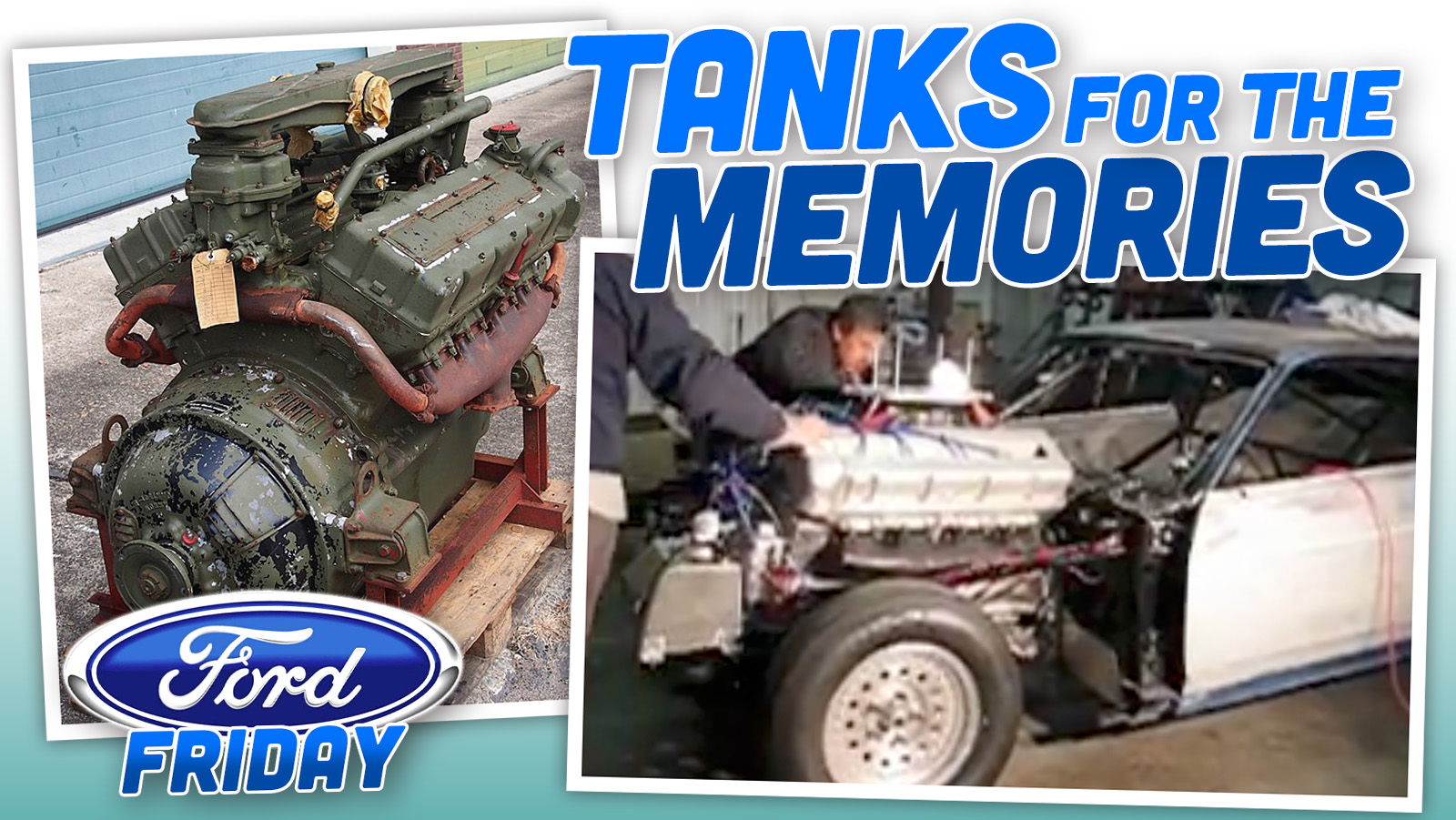
As I’ve said before, I really don’t believe most automotive conspiracy theories. The notion that General Motors killed trolley cars to sell more buses doesn’t really wash with me, and I don’t think the “Pinto Memo” was the smoking gun some say it was.
Having said that, I do believe that large auto manufacturers are holding back on technology they could give us now, but will wait forever to finally offer. I even have proof: Ford mass-produced an impossibly high-tech motor way back in 1940, yet it took them over fifty years to build an engine with similar specs for an American street car. Talk about stonewalling.


You Call That Advanced?
The new-for-1992 Crown Victoria seemed like a spaceship next to the car it replaced, but the most astonishing thing to us at the time was the 4.6-liter “modular” V8 powering it.

This was a rather impressive motor for Ford. I remember looking under the hood of a new Crown Victoria and marveling at the Mercedes-like all-aluminum block and heads with single overhead cams, soon to be double camshafts on later versions with four valves per cylinder, as in the Lincoln Mark VIII.

At the time, I was driving a nine-year-old Panther body with an old pushrod Windsor V8 which, incidentally, was of virtually the same design as the 289 in the 1965 Mustang that brought me home from the maternity ward many years before. Ford seemed to have jumped ahead decades with this new motor into what was for them uncharted territory.
Hardly. Thousands of vehicles had already been built by Ford with an engine not unlike the 4.6 V8, except this earlier twin-cam aluminum V8 was the largest gasoline-powered engine ever produced by Henry’s firm. If you’ve never heard about the Ford GAA, get ready to be shocked.
Just Plane Big
Two situations that tend to bring out the most advanced thinking from automakers. One is motorsports competition, and the other is competition of a more dangerous nature: battle for world dominance. World War II saw combustion-engined technology pushed to the limit.
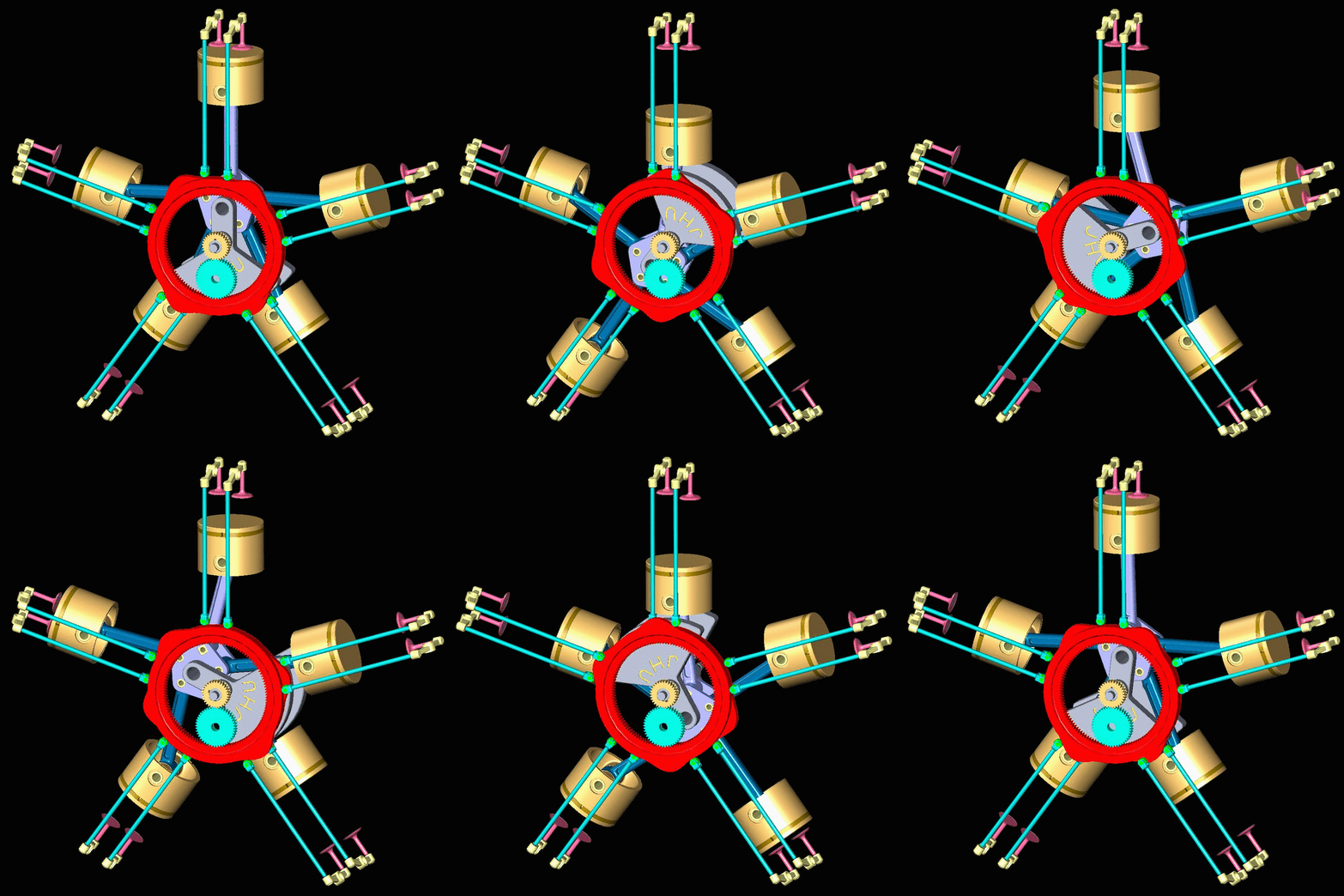
In the early part of the twentieth century, aircraft were primarily powered by air-cooled radial engines with pistons arranged in a circle around the propeller shaft, but this was starting to change.
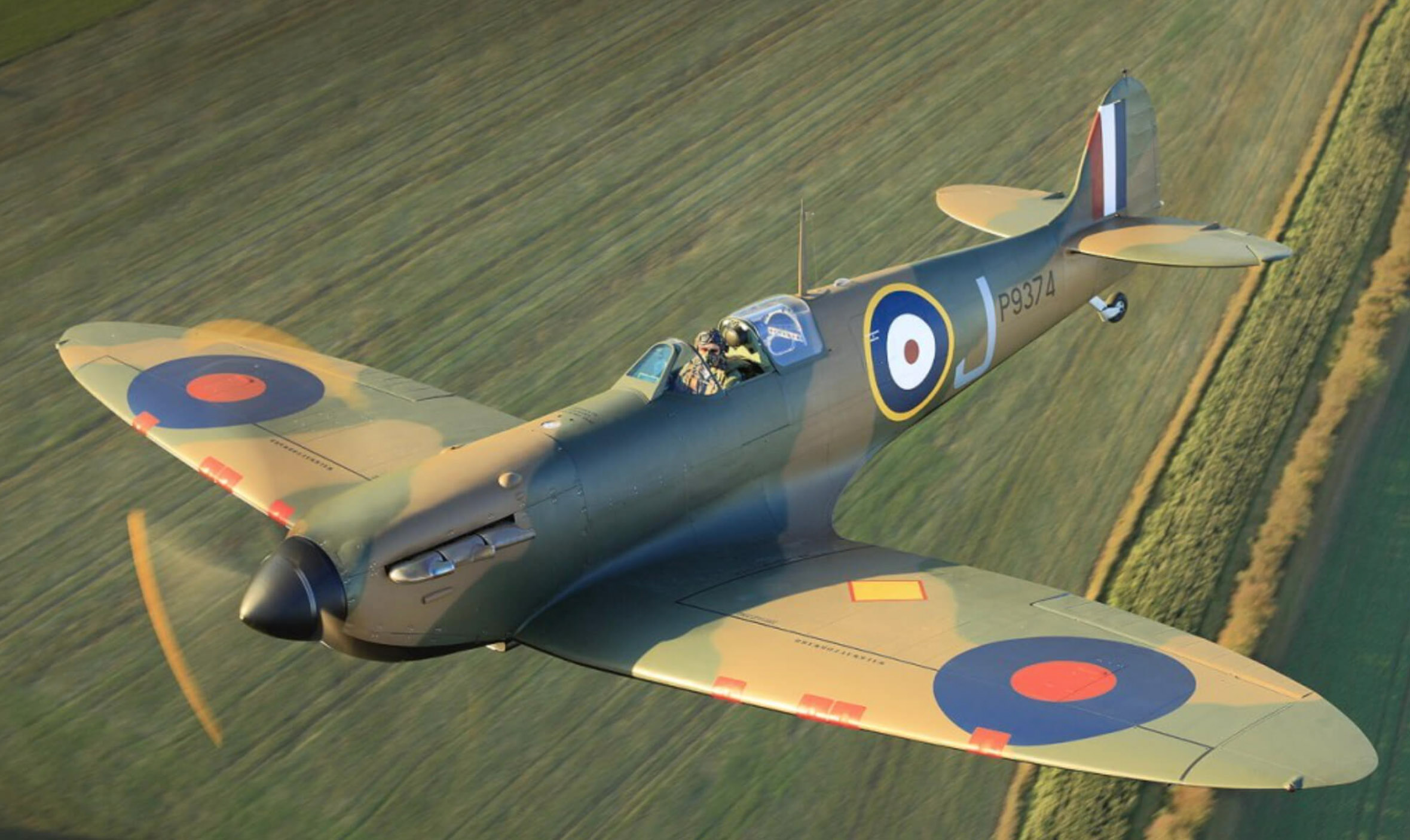
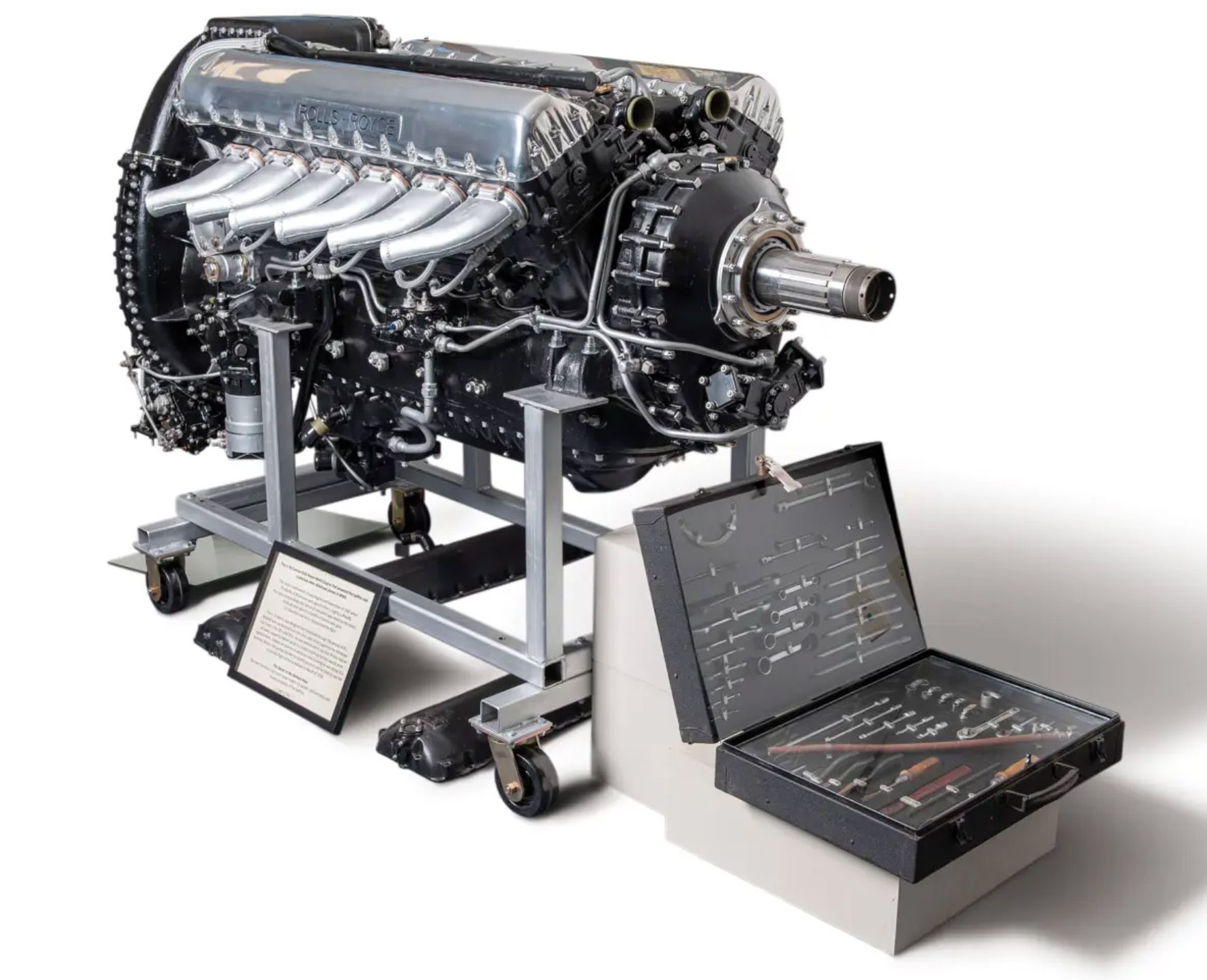
A shift to inline or V-format liquid-cooled engines began with the aircraft that were being developed for what would become World War II. The famous British Spitfire fighters featured a massive 27-liter V-12 called the Merlin, built by then-engine-builder Rolls Royce. Sure, the jets you’ll see in Top Gun are impressive, but if you’ve ever been to an air show and heard a Merlin-powered craft fly over you at low altitude, the noise just stirs your soul; you really feel those twelve cylinders as much as hear them.
England needed help in making more of these powerplants from their allies here in the states, and Ford had factories in the UK at the time. During WWII, these Ford factories produced 30,400 Merlin motors in England, but Old Blighty wanted more. This example for sale some time ago came with all the specialized tools needed to keep it running.
At the very least, English manufacturers wanted Americans to make complex parts for the Merlin (crankshafts, for example) but they ran into issues. US companies like Packard simply didn’t want to produce anything other than complete engines. Ever-obstinate Henry Ford figured that he’d invented the freaking assembly line and didn’t have any interest in making an engine designed by someone else in a country we had declared independence from. Besides, he saw this as an opportunity to get into the aircraft engine market himself. In retrospect, he probably should have done some homework first.
Ford Motor Company went down a path to develop a motor that was very similar to the Merlin. Named the XV-1650, this 60-degree liquid-cooled V-12 displaced 1,650 cubic inches and was packed with technology that was mind-blowing for the time: aluminum block and heads, dual overhead camshafts and four valves per cylinder. Contemporary reports said the so-called Merlin copy was anything but; it was actually modified and ostensibly improved in every way over the British engine. Ford was convinced that this would be the ideal powerplant for not just military but civilian aviation moving forward.

Henry Ford being Henry Ford, he proceeded with this work without checking to see that the contracts the US government had with other manufacturers were rather ironclad and protracted, meaning all of this work was seemingly for nought. Or was it?
Tanks A Lot
Despite being spurned by the aircraft makers, Ford went back to what he did best: ground-based vehicles. In an odd turn of events, there was a need for the Ford aircraft engine, or at least half of it. Hard to believe, but the then-current M4 Sherman tanks were powered by Wright R0975 Whirlwind: a 9-cylinder radial engine!

Supply issues with the Whirlwind sent the Army looking for additional providers, and Ford had an idea. The XV-1650 was too large for the application, so they chopped four cylinders off to create a huge V8; the GAA V-8 was born.
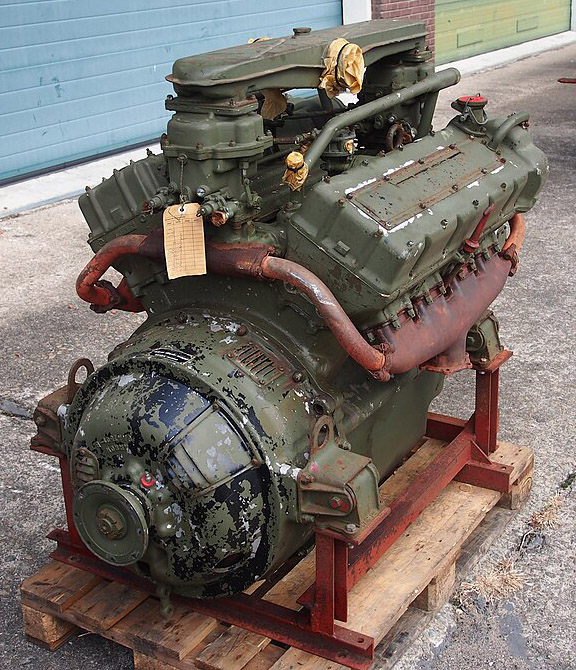
Despite losing a third of its pistons, it was still massive, with a displacement of 1,100 cubic inches (18 liters), making the largest gasoline engine Ford had ever built in any major numbers. If you thought that a Windsor 351 V8 was a big motor by modern standards, the GAA just dwarfs it. At nearly four feet tall and five feet long, it’s twice the length and height of the popular Ford automotive mill, as the scaled comparison below shows.

The fully cast-aluminum GAA had all of the tech from the XV V-12 it was derived from, including double overhead cams actuating 32 valves on the flat-plane crank motor. There were twin Stromberg NA-Y5-G carburetors and crossflow induction.
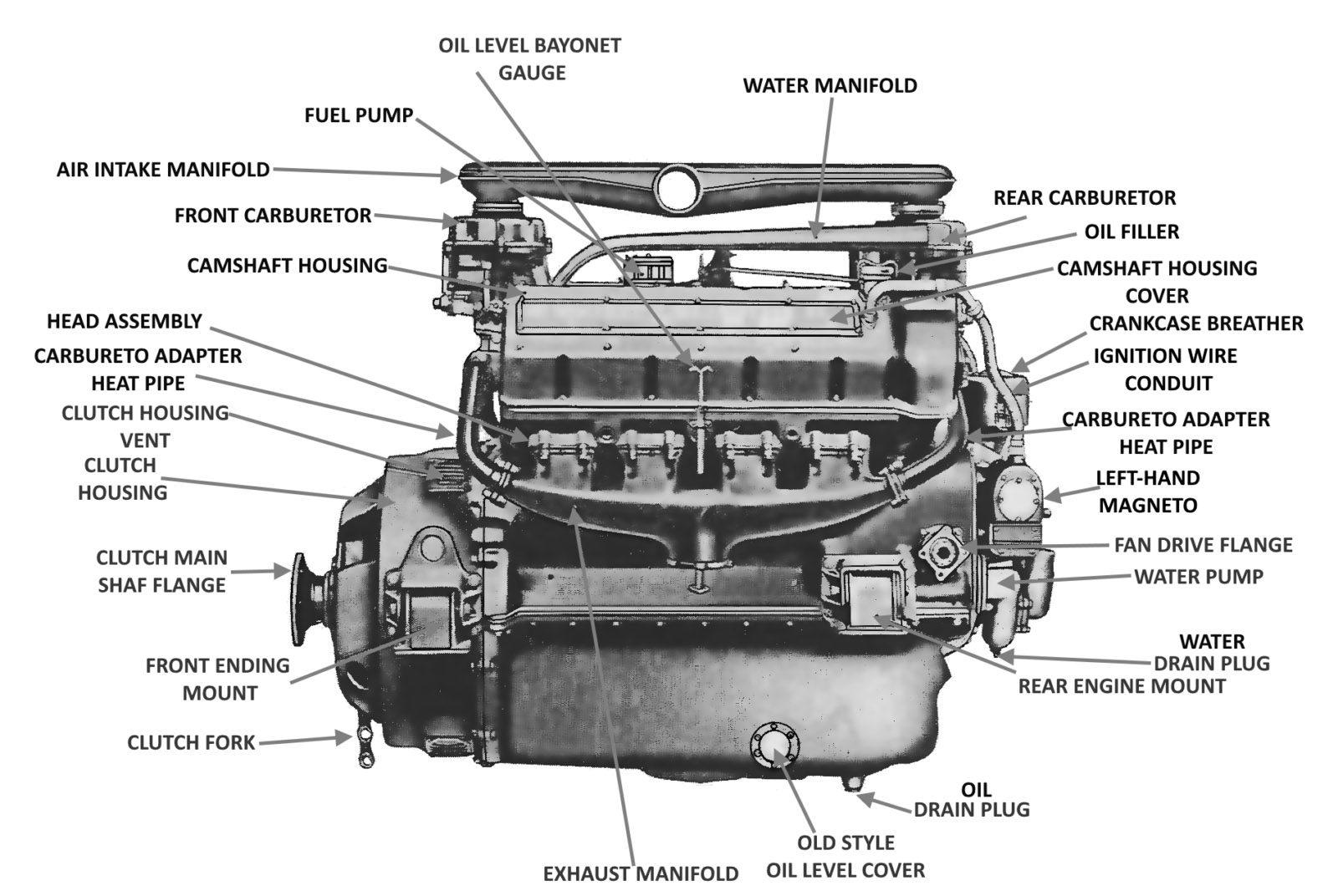
Redundancy was a big deal: the GAA had dual magnetos and two spark plugs per cylinder making up a complete dual ignition system. Don’t forget: On the battlefield, you can’t stop to change plugs.
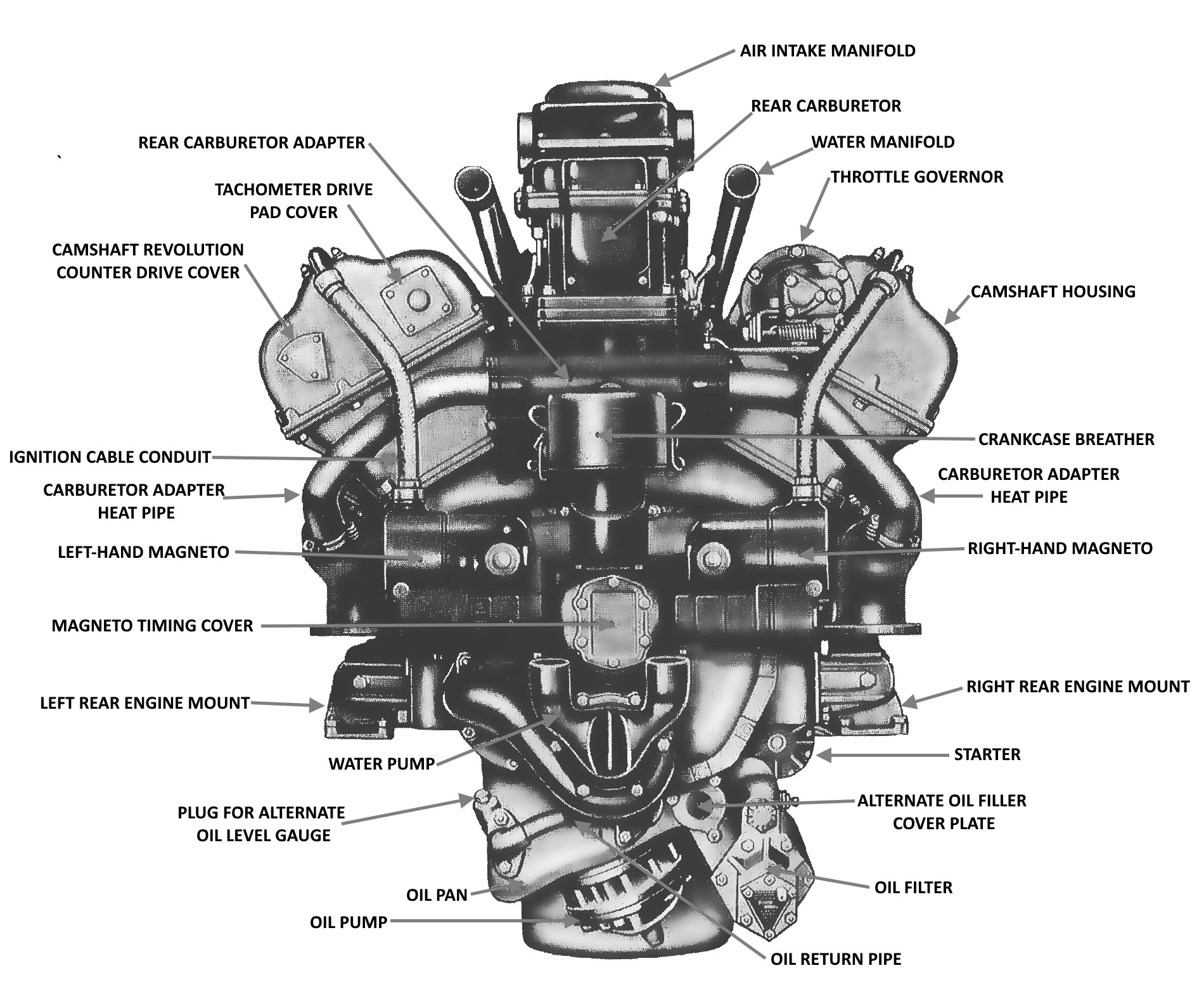
Power? You got it. Ford rated it as having 500 net horsepower at 2,600 rpm, but the more astounding figure was 1000 pound-feet of torque from idle up to 2,200 rpm. Here’s a video that digs in a bit deeper if you’re interested:
The Sherman M4A medium tank received the GAA, but with the British desperately needing motors for their own tanks, there was an effort to supply the giant Ford engine to English manufacturers as well. In an odd twist similar to the initial impetus for the GAA, the British builders of the Merlin developed their own land-based version of their aircraft engine called the Meteor. This was a V-12 motor, and with four extra cylinders compared to the GAA, it easily produced over 600 horsepower. Ford claims that they could have increased the power of their own engine to match, but British tests apparently uncovered what they described as teething problems. Whether you believe that or not, it’s just more proof that regardless of both Ford and Rolls-Royce having a common goal in beating the evil Axis powers, the tenet of “not invented here” was and always will be far stronger.

Ford didn’t give up, though. As a last gasp, it developed what was called the GAC: a 1,650 cubic inch (27 liter), 48-valve V-12 that produced 770 horsepower. Of course, now the war was drawing to a close, and Ford had the battle for American civilians’ wallets versus GM to contend with. Only four of the GAC mega monsters were reportedly built, and the GAA followed into oblivion after 1950.
Maybe It Was A Mach XVIII Mustang?
Looking at an engine that’s nearly four feet tall with the displacement of a kiddie pool, your first response as the deranged Autopian that you are is likely to install this powerplant into a car. This is a horrendous idea, and naturally with thousands of Ford’s tank mills built and many still existing, someone has done just that.
I would imagine an F-350 or something similar might be the best Ford street vehicle to even attempt to do such an insane feat, but it turns out that a 1970 Mustang was the vehicle of choice for the conversion. The whole idea is so stupid that it makes perfect sense. Here’s a video of this thing running:
My assumption is that the GAA Mustang was able to actually move under the power of the tank engine, but I couldn’t find any footage to prove this. I doubt that it would pass emissions here in Chicago, so you’d have to register it in Montana or something. Well, it makes more sense than a jet engine if nothing else.
You Got Better But Never BIgger
You might think that as a specialized production engine, the total number of Ford tank engines produced would be limited, but by the time the last GAA rolled off the line, Ford had made between 28,000 and 30,000 GAAs. According to Mac’s Motor City Garage, 500-1000 still exist today. If you see an old Sherman tank parked in front of a VFW hall near your house, Ford’s monster may be lurking within.

Ford has never mass-produced another gasoline engine as big as the GAA, a fact that makes this one of the most legendary Ford motors ever made, even if it wasn’t for the street. But Ford did eventually give us the GAA’s battle-proven technology, albeit in taxi cabs and cop-car ‘Vicks, even it took them nearly half a century to do so.
Kind of makes you wonder what they’re keeping from us today, doesn’t it?
Top graphic images: Wikimedia/Alf Van Beem; Heidrich Performance/Kevin Heidrich


GAA!!! (ha ha) So I guess the GAA was more Fix Or Repair Daily vs Found On Road Dead? Ok, both! Now it would be Fix Or Recall Drunk…
Now I gotsta get me one of these and throw it in my Accord…VTEC yo!
https://www.youtube.com/watch?v=SIj2GVfua84
i remember seeing this on speed. lol
Are we really sure Ford wanted to defeat the evil axis? He was a pretty big Hitler supporter before being against him made his company tons of money..
No Crown Vics had aluminum block 4.6’s. The only 2v(SOHC) 4.6’s with aluminum blocks were in early 2000s Explorers and Expeditions.
Also, I guess since Ford made two “production” 60 degree V8 engines… they might be the only OEM that’s done that. Even though the old one was not put in a car/truck.
Oh that SHO Yamaha Cosworth and I guess Porsche , forgot about that.
Both aluminum too.
Kind of makes you wonder what they’re keeping from us today, doesn’t it?
What indeed?
https://youtu.be/jpWy0nNeSWU?t=11
One one side we are saying manufacturers are hiding tech and on the other we are saying they are flooded us with tech but considering the cost of a new car with minimal new tech would we be willing to pay the cost for future unproven tech?
Depends on the tech I guess. I doubt most folks are going to pay $$$$ for tech that saves them $ in gas, especially since a lot of folks can’t even be bothered to keep their tires properly inflated but I’m sure people would be happy to pay $$$$ for full self driving that actually works as advertised.
Stuff I’ve actually worked on or seen: infinitely variable valvetrain, 40:1 compression ratios, 1000bhp/litre ICE, current emissions-friendly 2-strokes, linear electrical machine free-piston engine, homogeneous charge compression ignition, a doodad that delivers the government published MPG regardless of driving style, monoblocks (never have a head gasket failure ever again), a displacement on demand system that actually works, an entire four cylinder engine that only has 24 bolts, and a cast iron block that weighs the same as aluminium.
Only three of those failed to get to the prototype stage.
Plus there’s the secret stuff I can’t talk about, and the other secret stuff I don’t understand.
“a cast iron block that weighs the same as aluminium.”
I’ve heard iron blocks can be made close to the same weight as an equivalent aluminum block for the same strength. I wonder if the reason those are not more common has to do with the other properties of aluminum blocks, e.g. higher thermal conductivity and less prone to rust.
“a doodad that delivers the government published MPG regardless of driving style”
Well that’s easy. All such a doodad has to do is pull a VW and realize its being tested. Then it can deliver underwhelming fuel economy results that are easy to realize even by the heaviest lead foot.
Most of that however sounds like stuff that works great in the lab but doesn’t translate well to production. As I’ve heard said of medical research “if humans were mice we’d have cured cancer decades ago”.
I’m still waiting for ceramic engines, $1/GGE renewable hydrogen, ACTUAL full self driving, Smokey Yunick’s hot vapor engine and Trunk Monkey.
Oh well. At least the Fuel Shark delivers!
Trunk Monkeys exist, they just don’t perform as advertised.
Thats fine, I’ll take three.
Infinite trunk monkeys with infinite typewriters have been able to deliver the promise of AI for years. The smell of infinite monkeys presents significant hurdles to adoption unfortunately.
The problem with the iron block is you can’t get molten iron to flow through a tool that thin, and that big. They could laser sinter a block, but for that money you could have a magnesium casting instead.
The MPG doodad just restricts you to the same performance as the NEDC or whatever. Welcome to 0-60 in 90 seconds…
For non-production runs, would it be reasonable to machine the casting to remove some unwanted iron (and weight)?
Sure, but cast iron is horrible to machine, and if it’s never going to be a production solution it’s not worth making prototypes.
It’s far from the first idea that turned out to be unmanufacturable.
Can blocks, at least inline ones not be forged?
Beats me, I’ve never designed a forged part.
Me neither, nor have I any blacksmithing experience. Watching those old corporate Chevrolet videos on how car parts were made is what raised the question in my head.
Yep. Works great in the lab but doesn’t translate well to production.
Iron and aluminum have about the same strength to weight ratio, but aluminum tends to be stiffer. Whichever material turns out the be easier to fabricate with really fine details, think the internal structure of bird bones, will win. Aluminum may not “rust” but it’s much more chemically reactive in so many interesting ways. Being thermally conductive isn’t really a virtue, ideally an engine should run as hot as possible, and have as little heat lost to the atmosphere as possible. Heat is work and lost heat is lost work.
Ford has been making iron castings precise enough to be competitive with aluminum since the 1950s
3d printing shows the promise of doing a lot of the things like super lightweight steel monoblock or even multiple materials in one structure .
I’m not sure that’s completely true, else iron would be the standard material instead of it being limited mostly in truck engines today. Even when the block is iron the heads tend to be aluminum.
I enjoy your articles…
please forgive me, I just can’t help but make the joke that you forgot one thing:
The Fuel Shark! I’m so impressed w/ mine…I just can’t believe how much gas I save! It’s probably the best invention ever
Ha ha
(Damn, I just saw Cheap Bastard beat me to it!)
Hey now, Rolls Royce builds a lot of jet engines. Although I think the engine company isn’t related to the car company at all these days.
Hasn’t been for decades.
The car company licenses the name/logo from the engine company.
The car company was such a small part of the business, it was spun off in the early 1970’s.
Rolls-Royce’s jet engines power about half the passenger aircraft in the world, and quite a few ships as well. They’ve even got the contract to re-engine the B-52.
Dual magnetos are partly for redundancy, but also to just try and get a decent flame front in the huge cylinders.
In an 18L V8, each cylinder is 2.25L. More than a two liter soda bottle per cylinder.
If you lose an ignition system, EGTs will go way up since the fuel isn’t fully burnt in time.
also to just try and get a decent flame front in the huge cylinders.
Diesel is the answer.
As far as I know there are no dual magnetos in the Marvel world.
Per Wikipedia the GAA engine weighs 1470 lbs. Those Mustang front tires really don’t look like they could handle that sort of load unless they’re running high pressure truck tires with a significantly upgraded suspension?
That’s stupid light for its size.
Lot driven? Ran when parked.
Ever heard of The Meteor Interceptor?
https://youtu.be/6rj-2o-Q-gM?si=-punBmKhyT2M0fGI
Well. That was fun!
I think the next-biggest engine offering from FoMoCo was (and is!), and this is despite Ford at one time also building tractors, the 572 cu. in. variant of the 385 line. It is a hoss at over 9 liters, but I think it’s intended specifically for motorsport. It’s a crate-only mill not offered as factory equipment on any rolling stock.
TIL Ford also had a 572. Always associated that number with GM.
If I’m not mistaken, in the early days, unlimited class hydroplane racing boats used surplus WWII inline aircraft engines as their power source, before switching to helicopter engines.
There’s one that still occasionally runs, the U-3, which had a twin-turbo Allison. It was even a winner in the early ’00s when the Turbine boats all became fuel flow limited to curb speeds and reduce costs. These days it’s hard to race ex-miltary engines, though, since the supply of surplus has dried up, and people who have parts want them to go into plane and tank restorations, not pulling tractors and race boats.
Another late ’80s effort ran twin blown big-block Ford V8s crank-to-crank. It wasn’t competitive. Two of these monstrosities, though, might just have been…
Fascinating and thank you – it’s a bucket list item to actually attend a race, but for the meantime, I’m content to just know this insane motor/watersport still exists.
There is a great documentary on Netflix about 2 Miami coke dealers who won unlimited class championships in the 1980’s. It’s called Cocaine Cowboys: The Kings of Miami.
H1 Unlimited has a great YouTube channel that streams all their races, and also uploads lots of on-board footage. The majority of events nowadays are on the west coast, in Seattle, at Tri-Cities, and I think they still do San Diego, but there’s two east of the Mississippi: Madison, Indiana on the Ohio River, and I think Lake Guntersville in Alabama. Before 2020 we also had Detroit just off Belle Isle, but they haven’t had it since.
Sad about Detroit, as that would have been the easiest for me to get to. But the YouTube channel is a score – thank you!
Someone needs to swap that into a Geo Metro now. Mustangs were waaaay too obvious.
I remember hearing a P51 for the first time about 15 years ago and man that was one of the most insane sounding engines ever.
I went to the (then) Reno Air Races back in the 80s. The sound of the engines in the Unlimited Class, including some Merlins, ripping around the course at 450+ mph is something else.
Roughly 30 years ago I was visiting an air museum, and a P51 did a low pass over a friend and me. I turned to jelly, was crying a little, and non-functional for a few minutes. It rocked every fiber of my being and i had to stand there and recovery (in a good way).
I’m getting goosebumps thinking about it as I write this.
I will always be astonished and impressed by the amount of stuff we manufactured and shipped all over the world for the war which we were in for about a long as a kid is in high school. Also imagine all that stuff being decommissioned, buried, melted down, recycled, or what ever happened to it all after the war. Yes the battles and sacrifices the soldiers made were the most important part but the logistics of it all really impresses me.
Surplus equipment and materials didn’t run out for decades.
I’ve used really oversized production tools in independent shops in the Bay area that almost certainly came from war plants.
Trailer production got its boost from surplus.
This wasn’t even the weird engine for the Sherman. The Sherman had 4 main engine options
The US tested all the engines. They liked the GAA and almost all GAA engines (M4A3s) went to the US Army. The Russians wanted the diesels and they got them. The USMC would take whatever they could get and generally got M4A2s as well.
The Brits got strapped with the M4A4. Not only was the engine a lot heavier (all cast iron) and thirstier than the GAA, it produced 130 less horsepower and was a nightmare because it tended to eat sparkplugs (and needed 60 each change). Oh, and it was such a big engine, the tank body had to be lengthened which added even more weight to the tank.
However, in a sign of the problems with the British tank development, the Brit’s LOVED their Shermans because they were more reliable and easier to work on than their homebuilt tanks (until the Meteor came out in the Comet,)
This is great stuff! Thanks for adding
Later, Israel put Cummins diesels into theirs, too.
There was also the Caterpillar D200/RD-1820 which was a diesel conversion of the Wright Whirlwind radial engine used in the M4A6 and postwar Russian missile boats
https://www.dieselworldmag.com/diesel-engines/vintage-diesels/wwii-caterpillar-diesel-american-7-cylinder-tank/
HP/L Hondabois would NOT appreciate these fine pieces of engineering.
This is awesome. I was a huge Ford guy in my teens and have no clue this even existed.
Can we assume it had cast-iron cylinder liners?
Steel sleeves, supposedly. But no, not the Vega-style coating
Indeed the reason why GM had so many problems with it was because it was cutting edge tech in the early ’70s.