

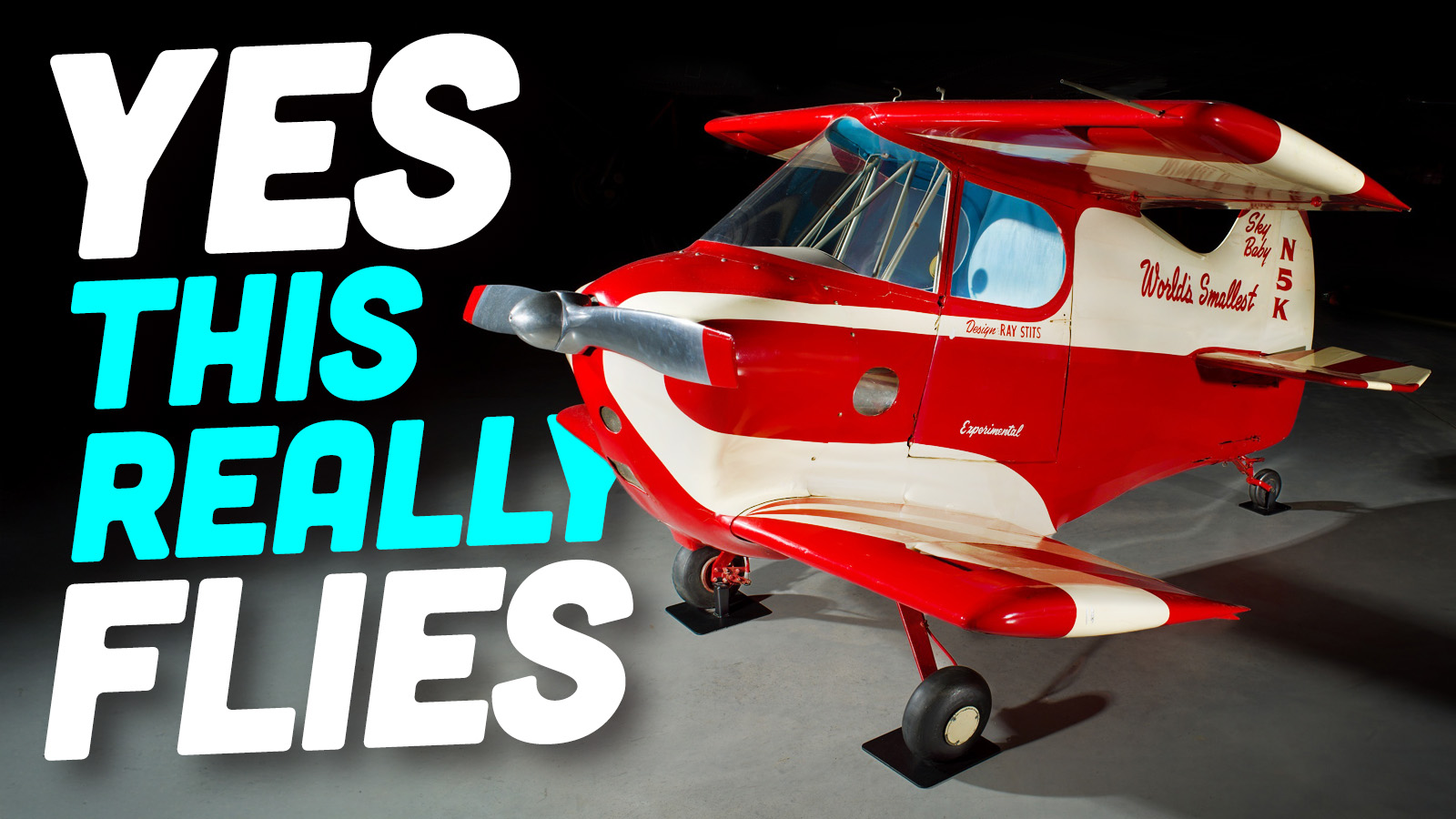
A pilot-carrying flying machine can be seriously tiny if you’re creative enough. There are many ultralights that you can park in your garage or haul in a standard cargo trailer behind your SUV. You can even buy a helicopter that’s basically scaffolding and an engine. One wild engineer had taken the idea of a tiny plane to the extreme. This is the Stits SA-2A Sky Baby, an impossibly tiny plane that’s only nine feet long, yet had an enclosed cabin and an impressive top speed of 205 mph. This wasn’t just an experiment, either, but a real plane that was actually flown.
Most of today’s tiniest planes fit into what America calls the ultralight category. Under Federal Aviation Regulation (FAR) Part 103, an ultralight may weigh no more than 254 pounds, may not carry more than five gallons of fuel or roughly the equivalent in batteries, may not travel faster than 63 mph under full power, and cannot have a stall speed greater than 27 mph. Ultralights also cannot carry passengers and, generally, their pilots can’t weigh too much, as ultralights tend to have low gross weights.


If your plane meets all those criteria, the government says you can fly without a license or registration. But you’re also highly limited in where and when you can fly. I spoke recently with an FAA Aviation Safety Inspector about this, and they told me that it’s the FAA’s opinion that ultralight rules work because the chances of causing catastrophic damage or injury are low. If you crash your ultralight, there’s a good chance the only one getting mangled is you.
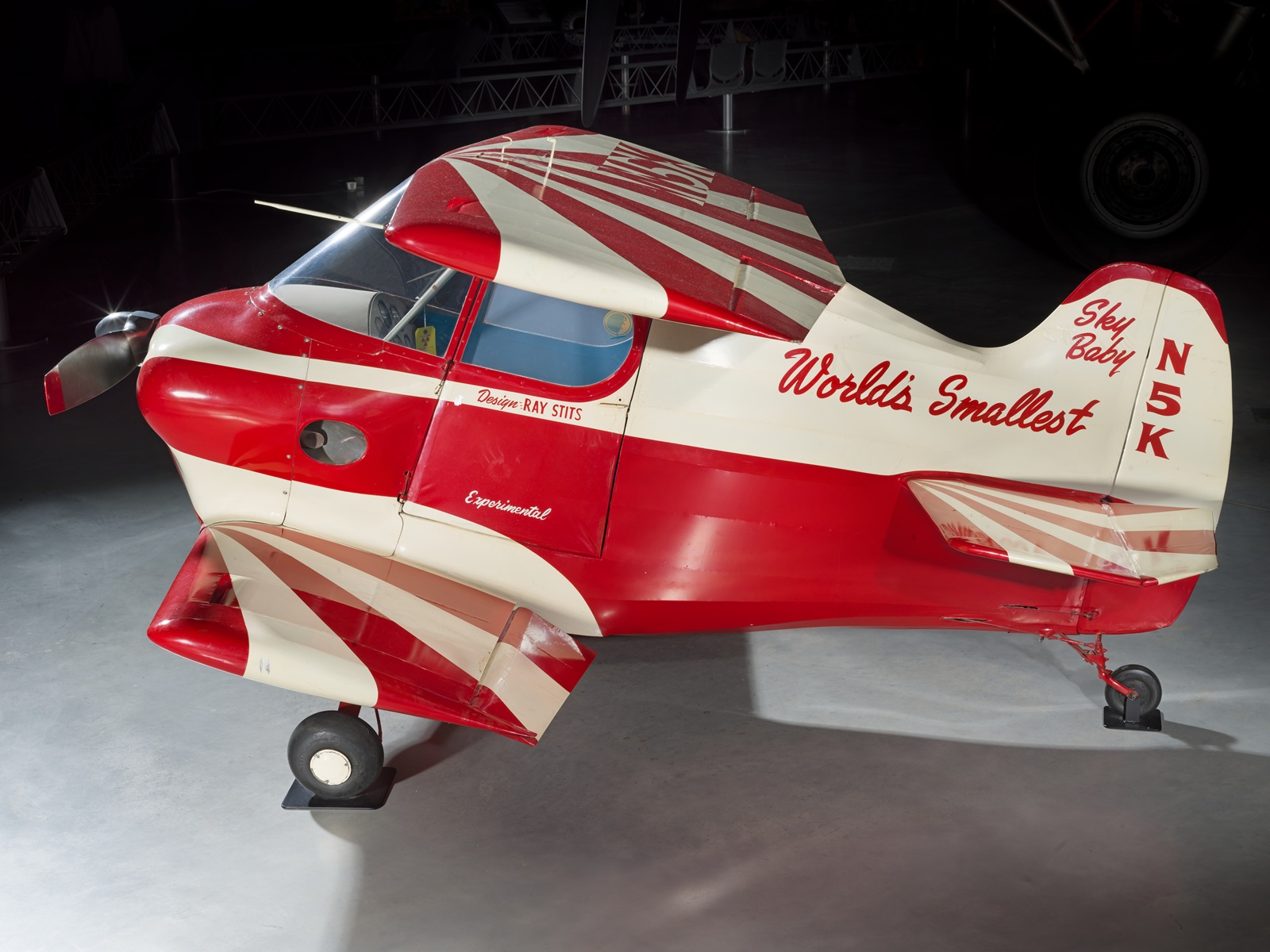
The Stits Sky Baby (above) is sized like an ultralight, but has a spec sheet that would put some larger aircraft to shame. For one, it flies more than three times the speed of an ultralight despite weighing only 200 pounds more. Oh yeah, this thing was a little hot rod, and it was built for a specific purpose.
The Challenge
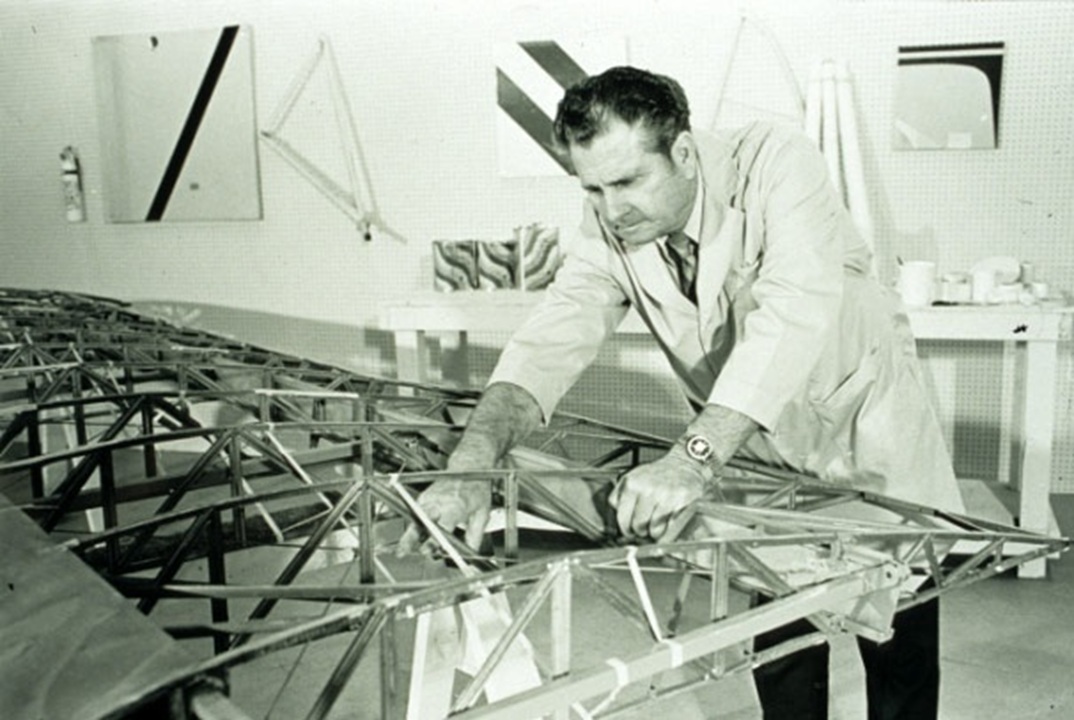
The SA-2A Sky Baby was the brainchild of Raymond M. Stits, an American icon of aviation and a pioneer of homebuilt aircraft.
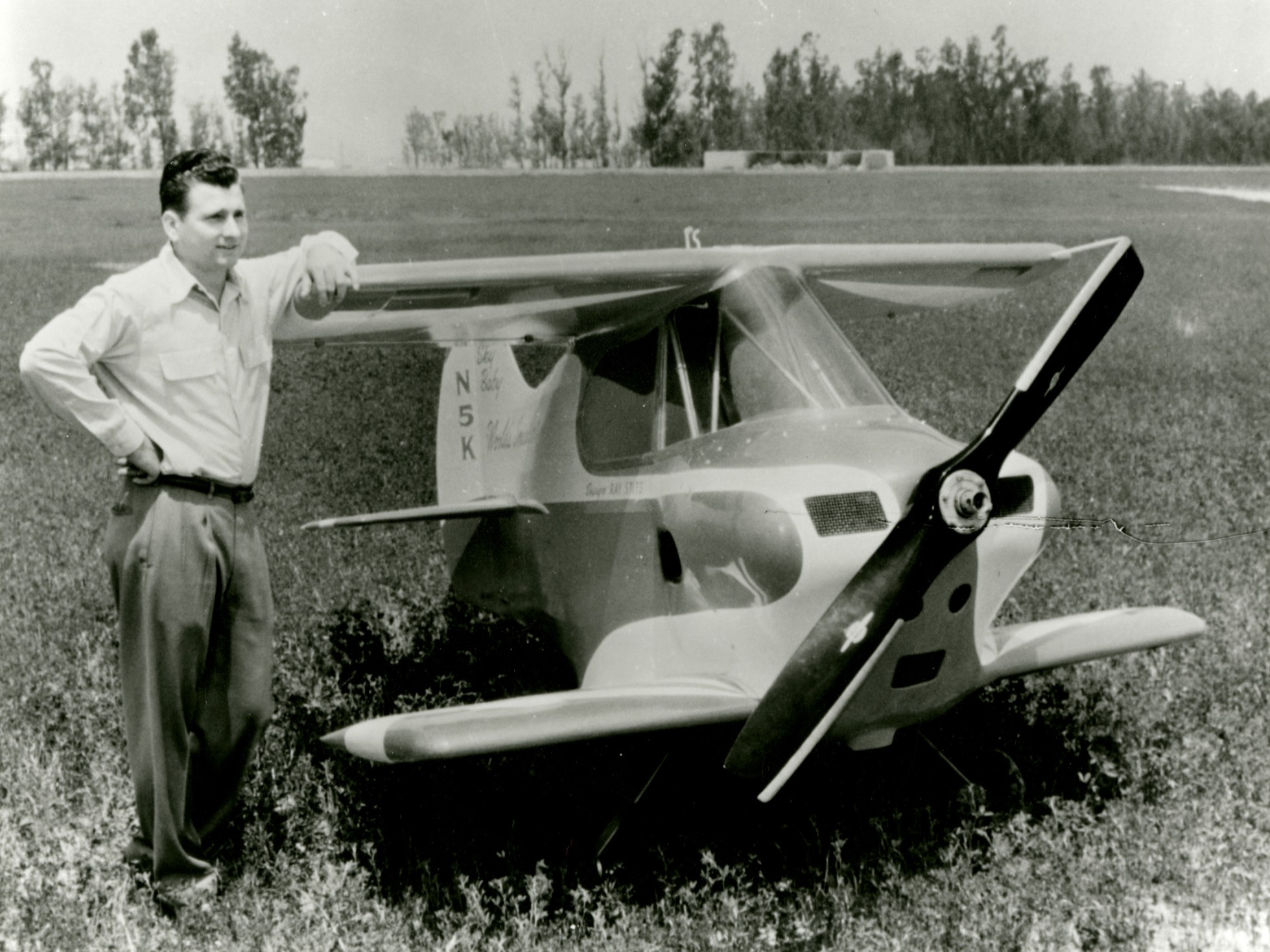
Born in 1921, Stits became infatuated with aviation in his teenage years. He learned to fly at 20 years old and joined the U.S. Army Air Forces as a mechanic. After serving America during World War II, Stits worked at Kellogg Field in Battle Creek, Michigan, maintaining and modifying the local flight school’s trainer aircraft. Then, as often happens when gearheads come together, some chatter led to a sort of bet. I’ll let Stits himself explain what happened next:
During a Saturday morning “bull session” at the school, the subject of very small aircraft came up, and the question was raised: “What was the smallest airplane that anyone knew of that flew successfully?”
Someone mentioned a 13-foot wingspan racer built by Steve Whitman, the Tandem Wing Flying Flea, and other designs. After everyone offered their opinion, I asked a rhetorical question: If I was to build an aircraft with a 10- foot 10-inch wingspan, and a 10-foot 10-inchfuselage, would it be the “World’s Smallest Airplane?” One self proclaimed aviation expert said, “Stits, you can’t do it!” and that was all the incentive I needed to finally start an aircraft project I’d long thought about building.
This conversation would lead to Stits flying right into the history books as a visionary.

In order to achieve this tiny plane, which Stits called the Junior, Stits needed to keep everything as minimal as possible. He started with the powerplant, selecting a 1.83-liter Aeronca E-113C horizontally-opposed twin with 40 horses in its stable. Stits then designed the aircraft around the engine, selecting a low-wing monoplane configuration. To keep wing loading low, he limited the weight of the operator to just 120 pounds. The pilot also had to be small, as the cockpit was only 15 inches wide.
For comparison, Spirit Airlines was notorious for its tiny 17.8-inch seats. Well, the Stits Junior makes a seat on Spirit or Frontier seem properly luxurious. Stits and his obsession with stripping weight and size from the aircraft resulted in a weirdly amusing problem: He was too big to fit into his own plane! But it wasn’t a physical size limitation, but one of weight, as Stits designed the aircraft’s center of balance for a 120-pound pilot. Basically, whoever flew this thing might have wanted to make sure they didn’t get that second burger for lunch too often.
Stits said he built the plane in 90 days and even managed to take it for some taxi tests to make sure its engine and controls worked as they should. But since he weighed 200 pounds, there was so much weight aft that the plane couldn’t get its tail off the ground to actually attain flight. The day before Thanksgiving 1948, an unnamed pilot who did meet the strict weight requirement took the Stits Junior into the sky for the first time.
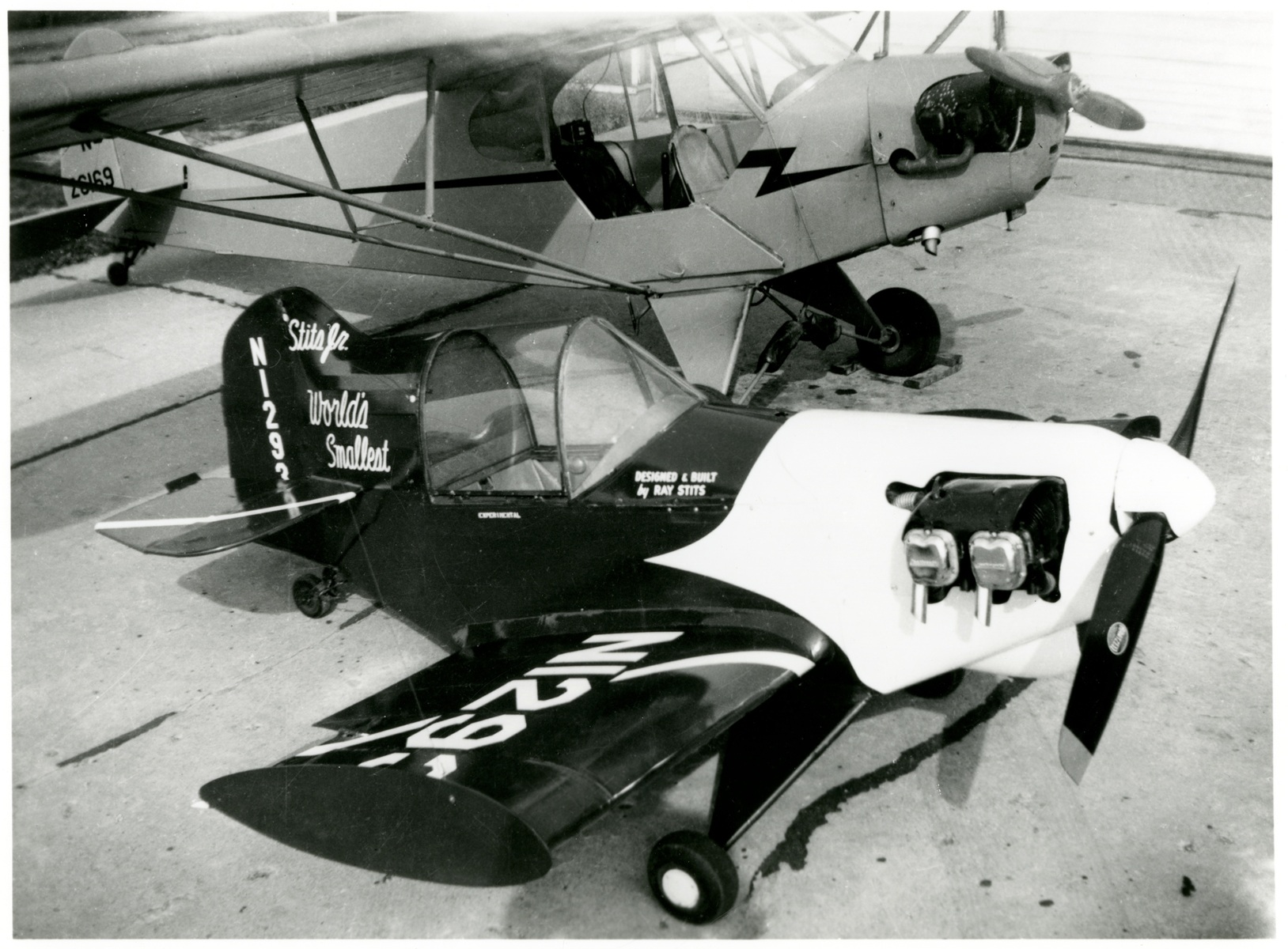
While the flight never reached more than 10 feet, it proved that the plane could fly. Unfortunately, the pilot messed up the flare while landing, leading to enough damage to warrant rebuilding the aircraft. During the rebuild, a hotter 65-horse Continental engine was used. Stits went with the new engine not because of its greater output, but because the Aeronca engine transmitted too much vibration. The heavier engine moved the center of gravity far enough forward that a 170-pound pilot could safely fly the aircraft. To illustrate how delicate the center of gravity of the aircraft was, when the pilot got out, they had to toss a 35-pound sack of rocks into the seat behind them. Why? The engine was so heavy that the engine would faceplant itself on the apron without a counterweight. Stits just couldn’t move the landing gear without ruining the aircraft’s perfect balance when it had a pilot in it.
Stits continues:
The second and third flights at about ten feet above the runway were successful, but the fourth flight at about 50 feet ended in a high flare and a second crash landing. The pilot suggested that more rudder area was needed for better directional control when the tail wheel was off the runway, so I added six inches to the rudder, which increased overall length to 11’ 4.” Repairs were made and the fifth test flight around the airport lasted about 15 minutes, but again ended with a high flare and third crash landing. While repairing the damage this time, I removed the wingtip bows and added end plates to give more lift and provide greater aileron response. This reduced the wingspan to 8’ 10”.
Stits earned an Experimental Airworthiness Certificate for the Junior after pilot Bill Haddock performed a demonstration in the Junior to the Civil Aeronautics Administration. With a certificate in hand, Stits wanted to exhibit the airplane at air shows as “The World’s Smallest Aircraft,” but Haddock’s crop dusting business kept him from touring as Stits’ pilot.
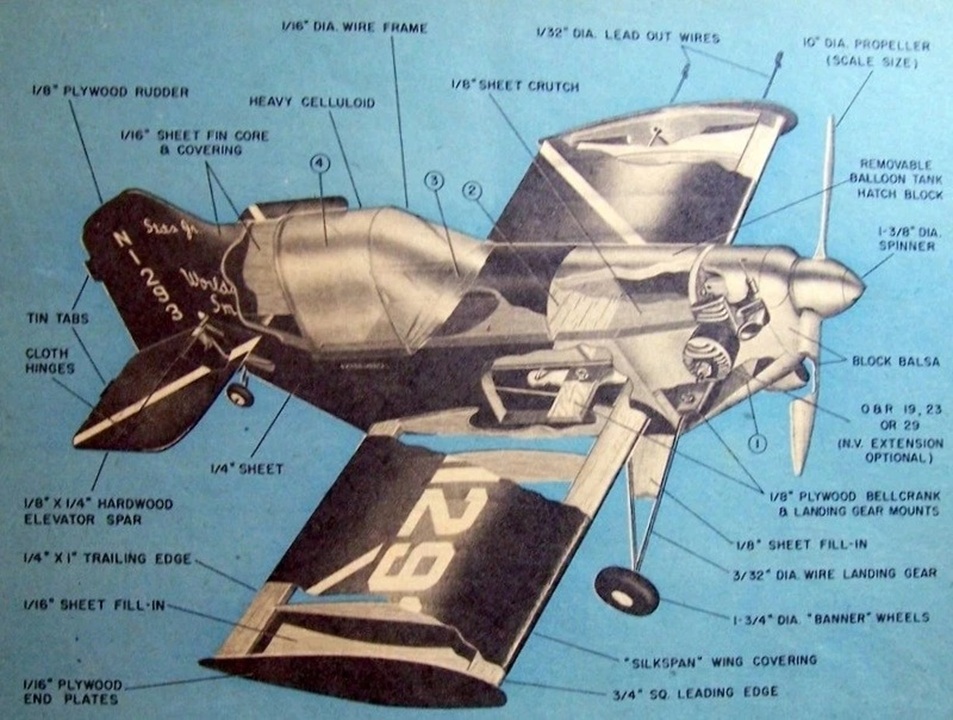
As it turned out, a friend knew of just the pilot for the job. Bob Starr climbed into the Junior and successfully landed it several times without crashing, impressing Stits enough to take the show on the road with a deal to split the profits from air shows with Bob right down the middle. The aircraft wouldn’t even need to be flown to different shows, either, as it was just small enough to fit on a flatbed trailer towed by a regular car.
Magazines of the era wrote exaggerated tales that suggested that the Junior was too hard to fly or that Stits was too scared to fly it. Nope, he was just too big to fly it. For decades, Stits also maintained that, while the Junior needed some greater attention during ground handling due to its small size, any competent pilot within the weight limit could fly it safely.
The Junior was a smash hit, and the aircraft became so popular that people from all around the world knew about it. Soon enough, Stits was approached by pilots who wanted blueprints to the Junior so they could build their own. Stits saw not just a market for blueprints, but perhaps even one for a larger sport plane that could be built as a kit.
Stits Plans To Sell A Kitplane
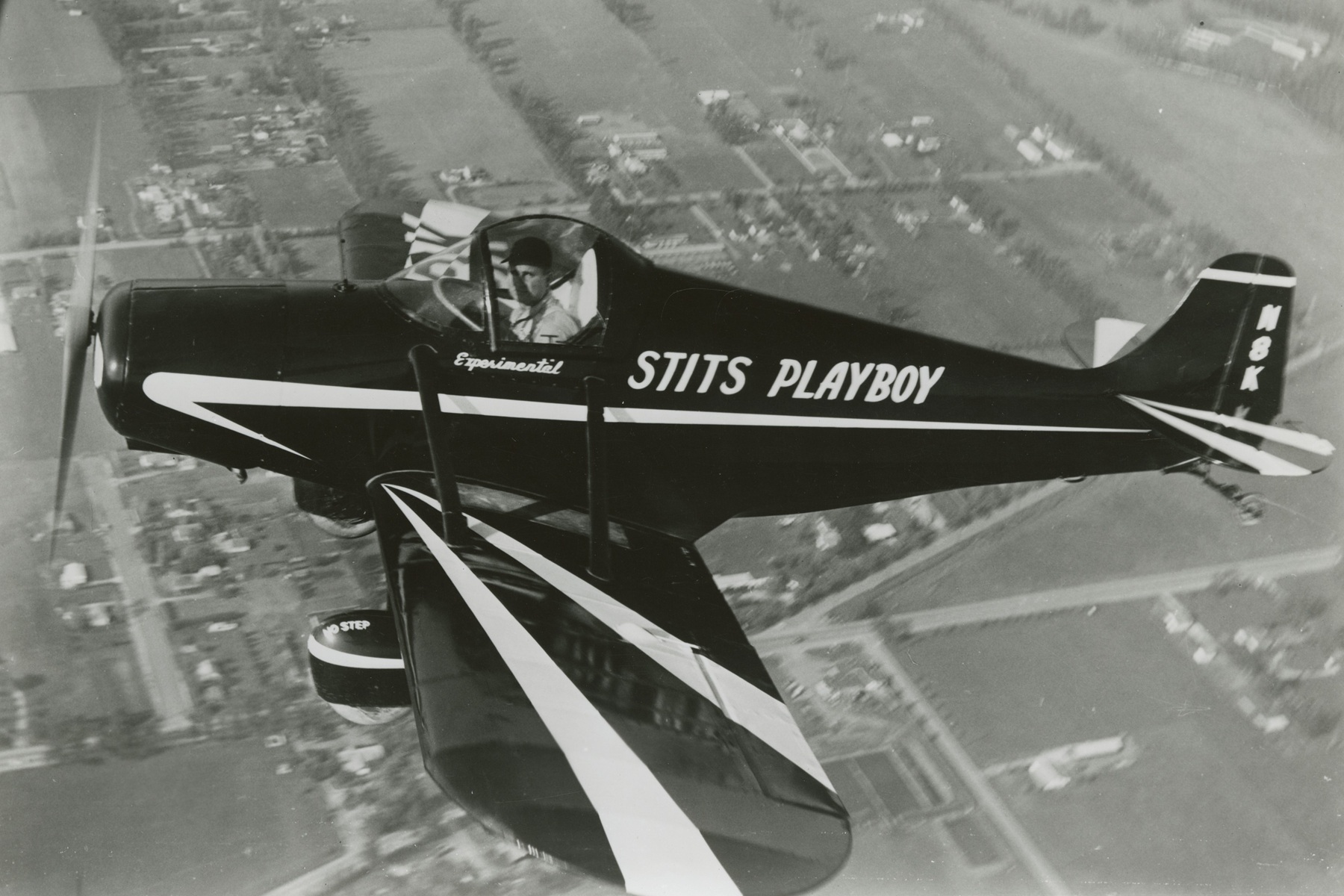
Kitplanes magazine describes what happened next:
“In the summer of 1950, I started laying out the basic design for a new aircraft,” Stits said. Then he moved his family back to Arizona, where he was originally from and where there was good work for an aircraft mechanic with his skills. “By the time I moved to Tucson, the new sport plane design work was complete.”
Stits named it the Playboy. In the process of foraging for materials, he discovered that the good stuff, aircraft-quality materials such as 4130 chrome-moly tubing, aircraft-grade spruce, plywood, and hardware, all had to be shipped from Los Angeles on special order because there were no aircraft material distributors in Tucson.
He decided that he was going to have to move again. After researching suitable locations near the main shipping routes, he settled on Riverside, California, about 50 miles east of Los Angeles. A little more digging around led him to West Riverside Airport, which became today’s Flabob Airport. What he found there was a rundown hangar with no doors that could be fixed up and rented for $15.00 a month. He eventually took a night job with Pacific Airmotive Corporation in Chino, leaving him days for working on his projects. Junior had been wrecked again (carb icing this time) and he laid the Playboy project aside temporarily to develop an even smaller airplane, this time a biplane, for his little cash cow, airshow flying.
The Stits SA-3 Playboy was introduced in 1952 and was sold as a kit that retailed for $995 ($12,582 in 2026). What’s particularly notable about it is that a Playboy served as the basis of the Van’s Aircraft RV-1, which was designed by Richard VanGrunsven.
The Even Tinier Smallest Aircraft In The World

There are lots of stories out there about why Stits built the Sky Baby. The Experimental Aircraft Association says the build was spurred after there were doubts that the Junior truly was the smallest plane. The Smithsonian National Air and Space Museum says that one pilot dared Stits that he couldn’t build an even smaller plane. Here’s how Stits described it:
Rather than rebuild Junior for the fourth time, I decided to postpone construction of the long-planned Playboy and build an even smaller airplane, but this time, a biplane for airshow work. To reduce the distance the pilot sits aft of the wing center-of-lift, as with the Junior, I moved the seat forward with the rudder pedals on each side of the well-baffled carburetor. I also decided to avoid a repeat of the carburetor icing problem by installing a second engine primer to inject isopropyl alcohol into the carburetor air box to melt any ice. After two months of design work, I was ready to start building what I named the Sky Baby, and Bob agreed to furnish the Continental engine, assist on the project, and fly the airplane in airshows, again for half of the pay.
I designed the CG to accommodate my own weight and planned to do all the flight testing myself. It had long been my policy to test fly each aircraft I made major repairs or modifications to, and by 1950 I’d flown every military war surplus primary, basic, and advanced trainer. However, I hadn’t earned a Commercial Pilot Certificate which was required for a pilot to be paid for flying in airshows. We went to Jack Hardwick Aircraft in El Monte, and Bob bought a run-out C85-8 Continental for $400. During overhaul, I upgraded it to the Continental Racing Engine specifications which were rated at 112 HP at 3600 RPM. Having shared work experience, I kept track of Bob’s time spent on the project. Total time was 127 hours during the first four months of the project, which took me thirteen months to finish. The landing gear was built with 4-inch wide by 3/8-inch thick leaf spring for the nose gear and main gear, and during my high-speed taxi tests the leaf spring on the steerable nose gear, positioned 18 inches forward of the main gear, would twist, causing a steering problem.
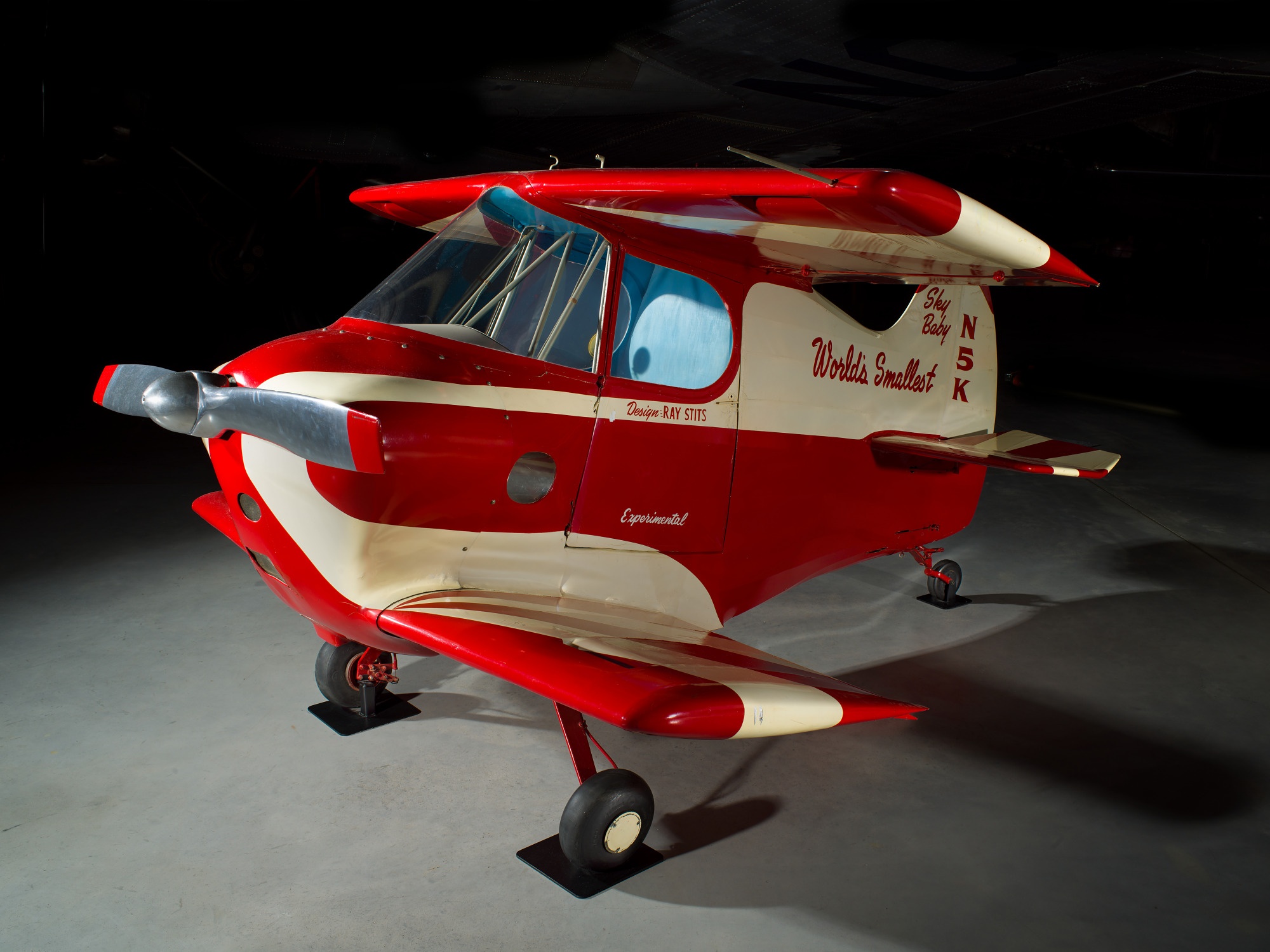
Stits continues that a large air show was being advertised in Detroit, and he just didn’t have enough time to redesign the nose gear. So, he removed the nose gear entirely and installed a tailwheel. Then, he moved the main landing gear forward. This changed the center of gravity limits enough that the pilot’s weight limit was reduced to 170 pounds.
The fuselage is made out of chromoly tubing with a fabric covering. The wingspan, which is an impossibly short 7 feet, 2 inches, is taken up with biplane wings made of spruce with a fabric covering. The upper wing has the flaps while the lower wing carries the ailerons.

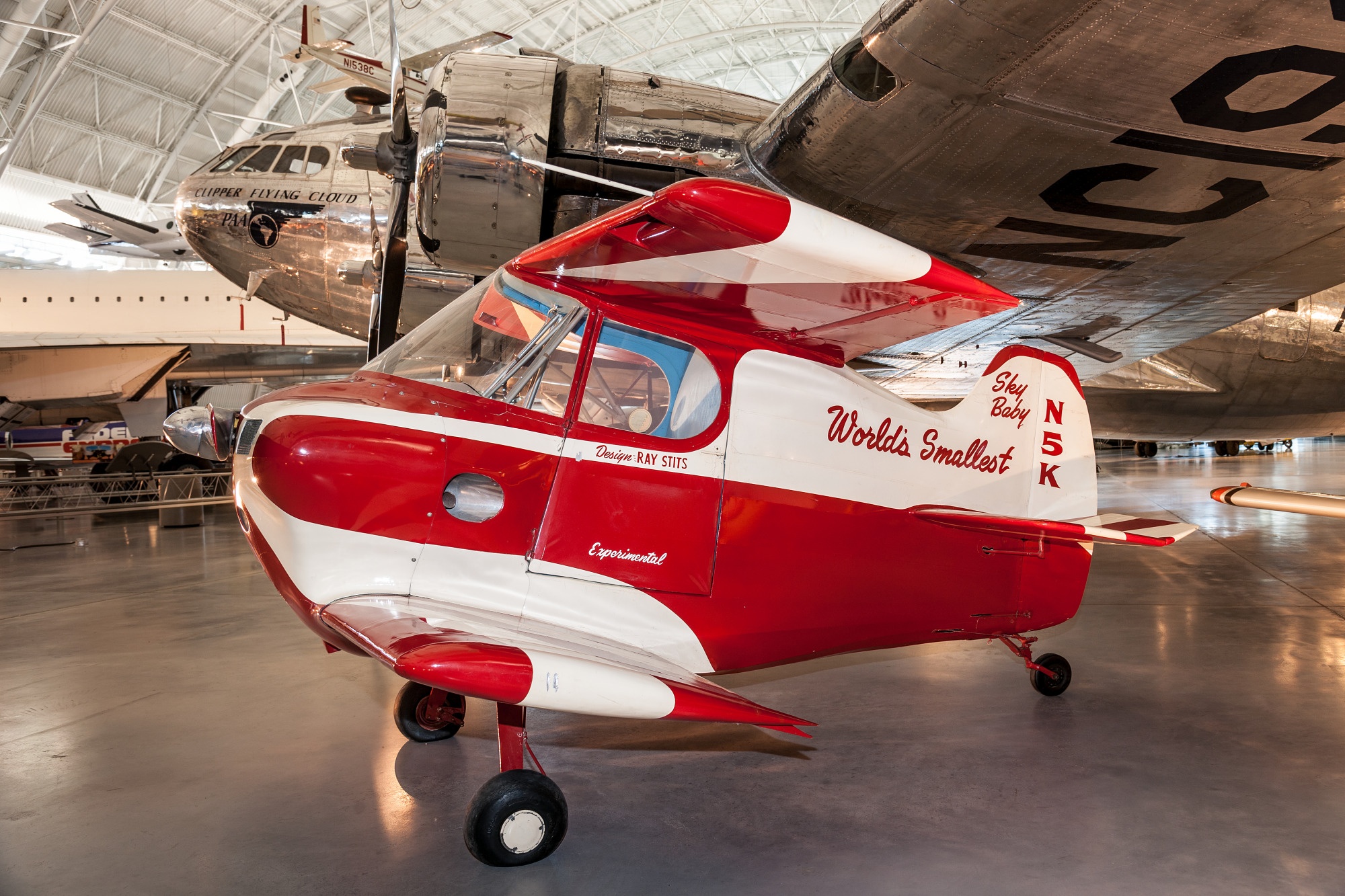
The cockpit of the Sky Baby is hilariously tight. The pilot sits in the seat with the engine directly ahead of their crotch, and the pilot’s feet operate the rudder pedals under the engine’s oil sump. Dry, the aircraft weighed only 452 pounds. Its gross weight was 666 pounds, which included a pilot and five gallons of fuel. Complete, the Stits SA-2A Sky Baby was 9 feet and 10 inches long, or shorter than most cars on sale today. After its completion in 1952, many magazines touted the Sky Baby as the plane that could park in a one-car garage or be towed behind a car without violating any width restrictions.
What was amazing was that the Sky Baby wasn’t just rolled down a runway or tested solely in ground effect, but it put on some real performances. In 1952, Popular Science and Popular Mechanics wrote about how the plane, which cost only $2,800 ($35,409 in 2026) to build, reached 150 mph with Starr behind the controls.

With water injection, the ERCO Ercoupe-sourced four-cylinder engine made 112 HP, and magazines reported that the engine was capable of pushing the Sky Baby to 205 mph for 30 minutes. The time wasn’t a limitation of the aircraft. That’s just how quickly the engine ate up the meager five gallons of fuel in the Sky Baby’s tank. Reports do vary a little. Flight magazine reported that the Sky Baby had a cruising speed of 165 mph and a top speed of 185 mph.
Either way, the Sky Baby was quick. Magazines calculated that the power-to-weight ratio of the aircraft was about equal to a WWII fighter plane, but on a smaller scale. For comparison, the Cessna 172M Skyhawk that I fly has a never-exceed speed of 184 mph, and it would take some time to get there. The Sky Baby was a little pocket rocket.

Also interesting are the Sky Baby’s other stats, like the fact that its pattern speed (the speed at which the aircraft flew around an airport pattern) was 125 mph, but landing speed was 57 mph. I tend to hold around 90 mph on the downwind leg in the pattern, so the Sky Baby would outrun me.
As the Sky Baby was built specifically for air shows, its time in the sky was limited. There was a rush of requests for the aircraft to fly in various shows. Newspapers, magazines, and news stations all asked to get their own demonstration flights so they could write stories and publish newsreels. Stits also did some promotional imagery to show how tiny the plane was. Sadly, I found exactly zero images of the cockpit.
Stits Moved On

Following that short blast of attention, demands for the plane to fly dried up. Some asked for Stits to publish blueprints for the Sky Baby, but he much preferred to finish the Playboy and have those people buy kits for those instead. The last person to fly the Sky Baby was Lester Cole, who wanted to get the aircraft into more shows, but this didn’t materialize.
The Sky Baby was retired in October 1952, only four months after it earned its Experimental Airworthiness Certificate. The aircraft had only 25 hours on its airframe and was in flying condition, but was no longer in a position to make Stits money. Only one Sky Baby was ever built.
After the Sky Baby, Stits would go all-in on his kitplane business and then later, an innovative fabric coating process. From the Experimental Aircraft Association:
Ray Stits was in many ways the Ed Heath of the second generation of homebuilders. In the early 1950s, shortly after the formation of EAA, he began a mail order business to supply homebuilders with materials and parts, just as Heath did in the 1920s and early ’30s. Ray followed that successful endeavor with a series of simple-to-build designs of his own: the Playboy, Playmate, Flut-R-Bug, and Sky-Coupe, which he eventually developed into a certificated airplane. Along the way, he also developed his famous Poly-Fiber covering process, which became so successful that he had to drop his other business endeavors and concentrate on it exclusively.
When he sold the company to the Alexander Aeroplane Company, Stits Poly-Fiber was the most widely used covering process in the world. One of the earliest EAA members, Ray Stits was the first to recommend to the organization that local chapters be authorized, and he founded the first one himself. He was an active member and could see EAA Chapter 1’s clubhouse on the Flabob Airport from his mountaintop home.

Stits donated the aircraft to the Smithsonian National Air and Space Museum in 1972, which later loaned it to the Experimental Aircraft Association AirVenture Museum until 2014. Now the Sky Baby resides in the Steven F. Udvar-Hazy Center of the National Air and Space Museum, where you can see it today.
Stits maintained that he never built his plane to set a record, and the plane even predated the first publishing of the Guinness Book of World Records by three years. But when the book went live, the Sky Baby was in there as the world’s smallest aircraft. For years, Stits had commented about how some builders had claimed to have built the “smallest aircraft.” Stits claimed that a lot of builders have constructed smaller planes than his, but they either crashed immediately or never got higher than ground effect. Those that did get high, he said, never did much more than fly around the pattern. So, to him, the Sky Baby was the true “world’s smallest successful biplane,” and the Junior was the “world’s smallest successful monoplane” because both aircraft got real flight hours before their retirement.

Follow Your Dreams, No Matter How Big Or Small
Stits passed in 2015, and the aviation world celebrated his contributions. He was survived by his wife, Edith, son Don, two grandchildren, and four great-grandchildren.
Looking back on his projects, Stits said, “It is also my opinion that anyone who has the courage and ambition to design and build an airplane, whether it flies successfully or not, deserves a lot of credit for his or her efforts.” I think that’s so true, and not just limited to planes, either. If you’ve built your own car, motorcycle, or heck, even something like a bar or furniture, that’s incredible! You can always look at the thing you created and feel good about yourself, knowing that you built it with your own two hands. There’s a lot of pride in achieving goals like this. I imagine that’s how David feels about the WWII Jeep that he built from scratch.
In the case of Stits, he built a plane based on a challenge to give the final answer to a silly question. He did it, and then became a pioneer of kitplanes and, for a while, a bit of an aviation celebrity. Are his planes truly the smallest? I won’t litigate that; I think it’s just awesome that it happened in the first place.
So, if you ever wonder just how small a plane could get while still fitting a pilot inside, as it turns out, the answer is “smaller than most cars on sale.” Just make sure you don’t go for the huge burrito before boarding the airplane equivalent of a mosquito.
Top graphic image: National Air And Space Museum


that thing had to be a handful in the air. theres a strange plane for sale here in my neck of the woods on craigslist of all places. bought at an estate sale. its a Quickie Q2 but it needs lots of work. i actually snagged one on sky cars the other day. according to skycards theres only 15 in the air.
Cute idea with a narrow wingspan, so you can drag it behind a car.
But folding wings have always been a thing, even long before WW2, so really no need for it, other than breaking some world records. Which is cool.
https://en.wikipedia.org/wiki/Folding_wing
I literally visited the EAA Museum 2 hours ago and thought I saw this plane there, but turns out it’s this:
https://www.eaa.org/eaa-museum/museum-collection/aircraft-collection-folder/1983-stits-ds-1-baby-bird—n4453h
This one is smaller.