


If you ask any traveler about their opinion on the worst airline in America and you’ll probably hear rants about Spirit Airlines or Frontier Airlines. Both of these airlines carry reputations for squeezing every possible nickel out of their passengers while subjecting them to an experience that feels no different than being in a flying city bus. Now, after two bankruptcies and a failed bailout from the U.S. government, Spirit Airlines is reportedly preparing to shut down. Many travelers are probably cheering right now, but I will miss the airline of terrible gates and eye-searing jets.
This morning, the Wall Street Journal reported the breaking news that a $500 million deal between Spirit Airlines and the U.S. government has fallen through. With no other entity interested in saving the twice-bankrupt airline, Spirit is reportedly throwing in the towel and is preparing to cease operations. Unless a lifeline arrives in the 11th hour, America will lose one of its cheapest ways to travel great distances.


Update: 3 a.m. CST: Spirit Airlines has ceased operations, releasing this statement:
“It is with great disappointment that on May 2, 2026, Spirit Airlines started an orderly wind-down of our operations, effective immediately. To our Guests: all flights have been cancelled, and customer service is no longer available. We are proud of the impact of our ultra-low-cost model on the industry over the last 34 years and had hoped to serve our Guests for many years to come.”
The original story continues below.
Understandably, there will be a lot of folks who will feel rather elated at the failure of Spirit Airlines. The airline’s tantalizingly cheap tickets came with quirks like expensive upcharges for basically everything, even water. Viral videos of arguments, fights, and other poor behavior aboard Spirit flights didn’t help. But I won’t be cheering. Spirit might have been terrible, but it was also the perfect kind of airline for someone like me.
Cheap Is The Name Of The Game

Spirit Airlines has gone through a lot to end up where it is. The last time I wrote about Spirit’s struggles was in 2024, so let’s go through a quick review to bring you up to speed.
I think the most fascinating part about the Spirit Airlines story is that it didn’t even start life as an airline. It was founded in 1964 as the Clippert Trucking Company. The business would become Ground Air Transfer Inc. in 1974 and then Charter One Airlines in 1983. As Charter One, the airline ran chartered tour flights. It wasn’t until 1992 that Spirit began running scheduled flights, and Spirit didn’t become an Ultra Low-Cost Carrier (ULCC) until 2006.
That part is important because the way that Spirit operates makes it a bit different than an airline like Delta. Here’s what I wrote in 2024:
An Ultra Low-Cost Carrier operates differently than an airline like American or United. The ULCC business model focuses on cutting as much cost as possible. Most ULCCs operate just a single type of aircraft – usually the Boeing 737 or Airbus A320 – and configure each of those aircraft exactly the same with an all-economy configuration. Operating just one type of plane means that everyone, from mechanics to cabin crew, needs to be trained on only one type of plane, further saving costs.
In the past, ULCCs used to fill their fleets with used planes to save money, but now many carriers will just buy lots of new planes in bulk and then sell them for higher prices when they’re just a few years old. That saves the company money and it also benefits the customer since it means the planes usually stay nice and fresh. Well, as nice as a bare-bones all-economy Spirit plane can be. Flying new planes can also be cheaper to operate in the long run since they’re more efficient and may not be as maintenance or training-intensive as an old bird.
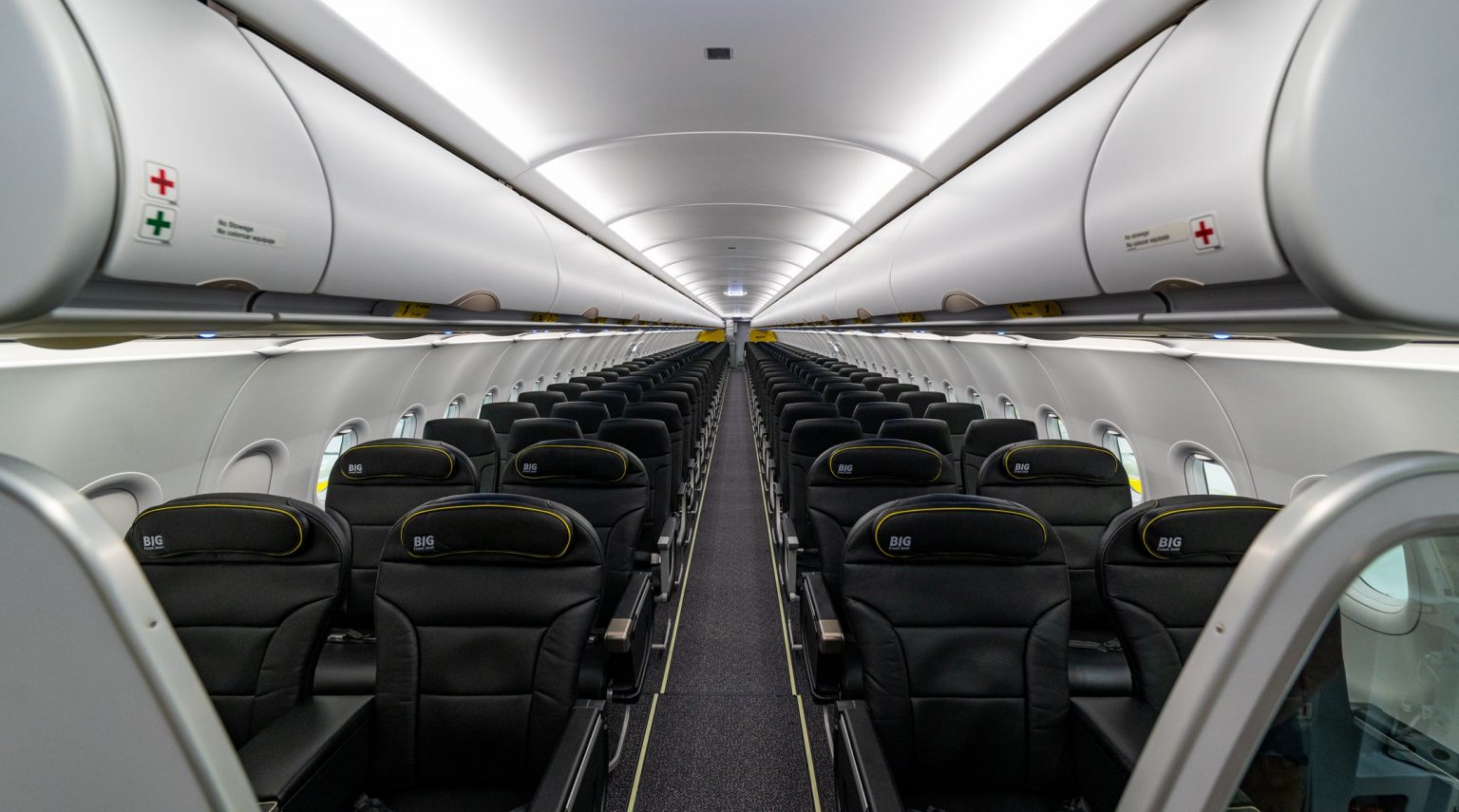
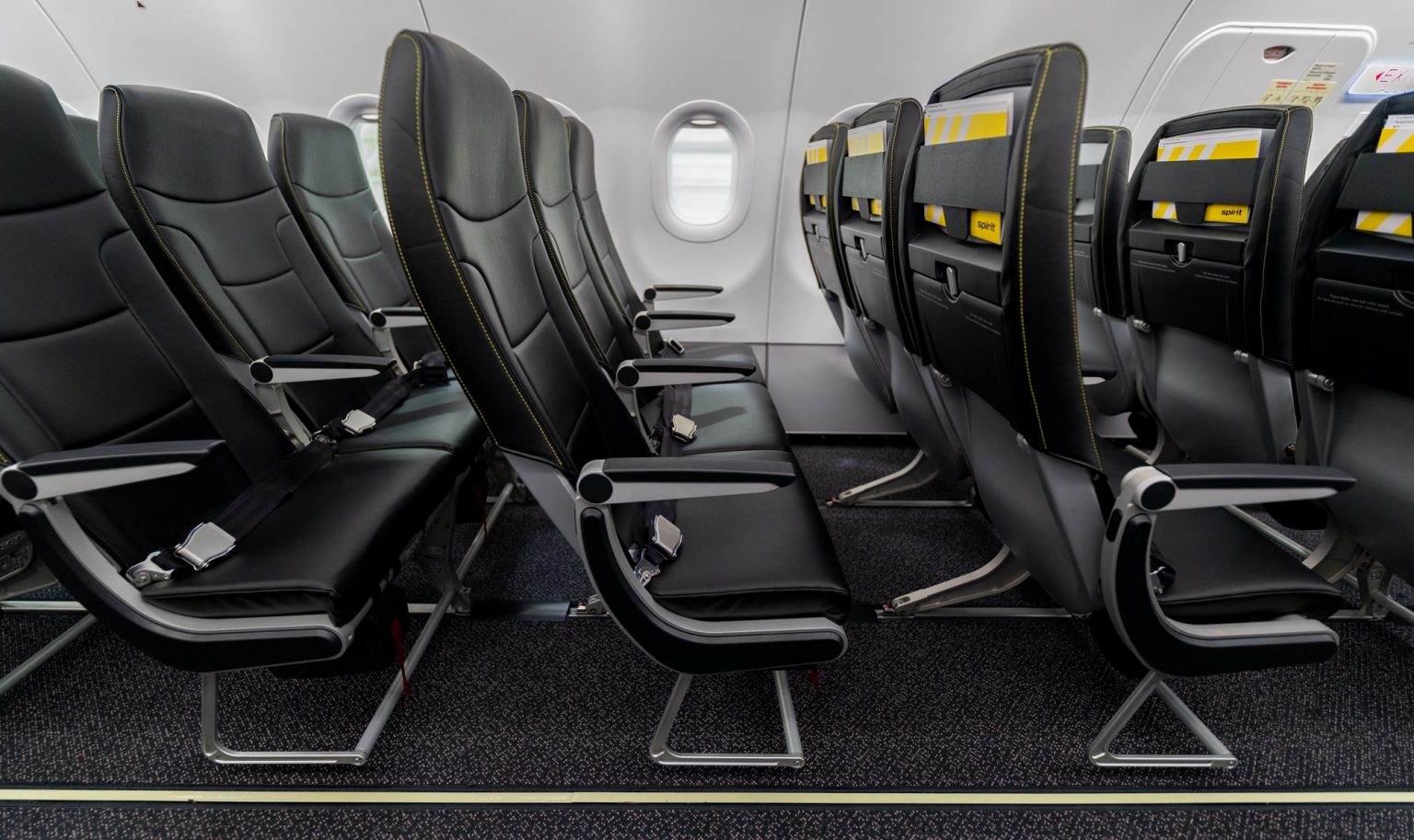
ULCCs also have other ways of trimming the fat from their operations. They will often order planes with as few features as possible to cut down on weight. Interiors will also usually be barren with the absolute bare minimum to get people from one destination to another. If you’ve ever flown Spirit or Frontier you know these airlines basically put glorified bus seats in their planes and your only luxury is a tiny tray table. The airline doesn’t even try making the seats look pretty. Frontier doesn’t even offer Wi-Fi, citing costs and the weight of carrying the equipment in each aircraft.

To be clear, public transit is great and there should be buses for all who want them. But far too many transit buses have rock-hard seats for their passengers, and it almost feels like Spirit copied them.
ULCCs have other clever ways to reduce their operating costs. They’ll fly to airports with cheaper fees and utilize mobile stairs whenever possible instead of paying to use a jet bridge at a gate. Aside from paying their employees less, ULCCs also often make their employees do multiple jobs. I have been on multiple Spirit flights where the gate agent was also a flight attendant, which isn’t as common in other airline models.
If you’ve flown on an ULCC like Spirit Airlines or Frontier Airlines, you might have also noticed that they get the worst possible gates. For example, it’s common for Spirit and Frontier to use Chicago O’Hare’s international terminal for both departures and arrivals. If you’re unlucky enough to score a Frontier flight that leaves O’Hare, you have to leg it to nearby Midway.
Basically, ULCCs like Spirit Airlines and Frontier Airlines are meticulously crafted to spend the least money possible. The benefit is that these airlines can often offer base fares so cheap that no other form of transportation can even compete. Spirit advertises a base fare as low as $25. However, add bag fees and all of the micro fees together and it can be more expensive than a big airline.
Making you pay for bags and snacks isn’t the only way a ULCC will jack up the price of airfare. The Spirit Airlines of recent years has been criticized for turning to microtransactions to pad its bottom line. For example, it used to be free to walk up to a kiosk at the terminal and print your boarding pass. Now, it costs $2. If you want a human to do it, you’ll have to spend $10. Frontier’s fee is even more insulting at $25 to have an airport agent print it for you.
Now, most airline passengers are used to flying with digital boarding passes and thus, will avoid these fees. However, not everyone is tech-savvy. If you aren’t, these airlines say, you have to pay up. Spirit Airlines won’t even let you have a cup of room-temperature water for free anymore.
Spirit Made Bank, Until It Didn’t
Despite all of the hate, the upcharges, the complaints, and the late flights, the models used by Spirit Airlines and Frontier worked for a while. Spirit Airlines raked in cash, recording profits solidly in the hundreds of millions every single year until 2019. At their peak, ULCCs raked in more per dollar of sales than big airlines. The COVID-19 pandemic dealt a blow to airlines as travel demand plummeted. As CNN reported, America’s airlines collectively burned billions of dollars during the first two years of the pandemic, and that was despite billions coming from the federal government in the form of grants and another $21.2 billion in loans.

Then something a bit weird happened. Traffic demand rebounded, and most airlines recovered. But Spirit Airlines did not. According to VOA in 2024, Spirit had lost $2.5 billion since the beginning of 2020 and had another $1 billion in debt payments coming due by 2025.
What happened? One major curveball was that the big airlines wanted a slice of the budget market and started offering their own super-cheap base fares. Then, Spirit was hit by an engine recall from Pratt & Whitney, which left its aircraft grounded, unable to make money. In 2024, Spirit flew more passengers than it did before the pandemic, but those passengers were paying 10 percent less per mile, and Spirit made 20 percent less revenue per mile. So, flying more passengers alone didn’t help.
Frontier tried to merge with Spirit, but was outbid by JetBlue. The Justice Department blocked the JetBlue deal, which worsened conditions for Spirit. Click here to read more from my report.
In 2024, Spirit Airlines filed for Chapter 11 Bankruptcy in November 2024. This wasn’t the end, but a restructuring. Airline bankruptcies are common in America. In the past 27 years, American Airlines, United Airlines, and Delta Air Lines all had bankruptcies. American’s bankruptcy was only 15 years ago. Usually, the airline makes a bunch of changes and cuts, straightens up, and flies right again. It’s common for an airline to go bankrupt, restructure, and come out of the other end stronger. But that isn’t what happened with Spirit.
During its first bankruptcy, Spirit said it burned $1.2 billion and was out of cash. Spirit emerged from its first bankruptcy in March 2025, stating:
Spirit Aviation Holdings, Inc., parent company of Spirit Airlines, LLC, (“Spirit” or the “Company”) today announced that Spirit has emerged from its financial restructuring, completing a consensual, deleveraging transaction that equitizes approximately $795 million of funded debt. With significantly less debt and greater financial flexibility, Spirit emerges as a stronger company better positioned for long-term success.
As part of the restructuring, the Company has also received a $350 million equity investment from existing investors to support Spirit’s future initiatives, including investments to provide Guests with enhanced travel experiences and greater value. Spirit’s Plan of Reorganization was confirmed by the United States Bankruptcy Court for the Southern District of New York, with overwhelming support from a supermajority of the Company’s loyalty and convertible noteholders.
Then, Spirit fell apart again and had to file for bankruptcy a second time. In August 2025, Spirit found itself back in court, filing another Chapter 11, and asking for help again. Here’s how that went, from CNBC:
Spirit Airlines won approval for a $475 million lifeline and a $150 million payment from its biggest aircraft lessor in court on Friday, as the struggling budget airline races to stabilize itself after its second bankruptcy since November.
U.S. Bankruptcy Court for the Southern District of New York approved the $475 million in debtor-in-possession financing, a lifeline that bankrupt companies can use to continue operating, along with $150 million from AerCap and the rejection of 27 airplane leases. Spirit said on Friday that $200 million would be immediately available for the carrier.
Spirit has been cutting dozens of routes, announced plans to slash its fleet, and last month said it would furlough about one third of its flight attendants to cut costs. The airline is in talks with its pilots’ union and is seeking about $100 million in cuts from that group.
The Spirit Airlines shrinkage was dramatic. In April 2024, the airline had 25,000 scheduled flights. This April, it had only 12,000 scheduled flights. But the airline just couldn’t arrest its descent. Spirit, like other airlines, is getting hammered by higher fuel costs due to the war with Iran. Spirit planned to spend $2.24 per gallon of jet fuel this year, while current prices are a little over double that.
But unlike other airlines, Spirit just didn’t have any buffer for surprises. Worsening Spirit’s condition is that other airlines have been rushing to fill the gaps left behind by Spirit’s heavy cuts.

A twist in the Spirit story came in April when the Trump Administration entered talks with Spirit and its creditors for a potential rescue package. Trump wanted to give the airline $500 million in exchange for a 90 percent stake in the airline, effectively making the U.S. government the majority owner of the airline.
As CNBC reported, Transportation Secretary Sean Duffy was against the idea, as were some lawmakers and some of Spirit’s own bondholders. The Trump Administration wasn’t even sure how it would fund the deal. Then, the government also hit an impasse with Spirit’s creditors.
According to the New York Times, Spirit’s creditors believed having the government take control of 90 percent of the airline would put them in an even worse position if Spirit failed after the rescue package. So, the deal has apparently fallen through, and reportedly, Spirit Airlines is preparing to cease operations. According to Reuters, some other airlines think that Spirit won’t even survive the weekend and are preparing to take on Spirit’s passengers.
Meanwhile, Trump has reportedly sent one last proposal to Spirit and its creditors in hopes of getting a deal. If the deal isn’t taken, Spirit will likely fade away from American skies, and quickly. That makes me sad.
I’ll Miss Spirit Airlines

Yes, I just spent so many words absolutely trashing Spirit. I strongly dislike Spirit’s upcharges, its performance, its lack of comfort, and its seeming disdain for its own passengers. Flying Spirit really does feel like you’re boarding a city bus that calls itself an Airbus A320. But you know what? Spirit is awesome in just the right situation.
As most of our readers know, I am a serial cheapskate. With rare exceptions, I usually buy the cheapest, most depreciated versions of my dream cars. Getting the best deal sometimes means having to fly somewhere to pick that car up. The only way this works out financially is because Spirit and Frontier offer ludicrously cheap base fares.
When a dealership in California gave me a sweetheart deal on a new 2016 Smart Fortwo Edition #1, I had to fly out there to pick it up. It was my first time flying in my whole life. I paid Frontier about $50 to fly from Chicago to Los Angeles aboard “Fallon The Falcon,” then a factory-fresh Airbus A321. An Uber ride to the airport costs more than that!

In 2017, someone gave me a Smart entirely for free on the condition that I drove it home. I paid a whopping $31 to Spirit Airlines, which got me from Chicago to Denver. You can’t even fill a car’s gas tank for that price nowadays. I paid these base fares, too, because when I go on trips to buy cars, I fly with nothing more than what I can fit in my purse. So I don’t bring a carry-on or anything else that would trigger an upcharge.
These stupidly cheap fares mean that people who don’t have the cash for even a normal economy seat can fly vast distances for less than what Amtrak or Greyhound charges. Spirit also has a stellar safety record with zero hull losses or fatalities in its entire history.

I won’t say the flying experiences have been nice. Frontier Airlines has canceled more flights for me than I can remember. In 2022, Frontier left me stranded in California for days because of an operational meltdown. While Spirit hasn’t canceled that many flights for me, it has the problem of rarely really getting me to my destination on time. The seats in the Airbus aircraft of Frontier and Spirit are so hard that my butt hurts just thinking about it.
Yet, when I just need to get from A to B with exactly zero frills, Spirit’s website is the first place that I visit. When United Airlines tells me to cough up $400 for a ticket, I know Spirit is probably going to want only $120 for that same flight. When I just want to get from one place to another, I appreciate that.
The Impact Of Spirit Failing
I’m not really sure what’s going to happen in a post-Spirit world. The immediate impact is going to be a lot of hardship for hard-working Americans. Spirit Airlines employs around 9,500 full-time workers and around 17,000 people if you count contractors. All of them could be out of work before the weekend is out. That’s devastating, especially at a time like right now when people are already struggling.

Anyone planning to fly Spirit home may find themselves without a ride, which is also terrible. Any points you accrued with Spirit would be worthless, and you’ll have to beg for a refund on any ticket you currently have. It is never a good thing when an airline shutters, even an airline that people hate.
It’s also unclear what budget flying will look like in a post-Spirit world. Chances are, if Frontier, JetBlue, or Southwest aren’t flying where you’re going or their fares aren’t cheap enough, you’re going to have to cough up more dough to fly. This will be even worse in cities where Spirit held a high market share, like Fort Lauderdale, Florida. Reportedly, Spirit has a 27 percent share of the market there.
Yet, I also know that a lot of people aren’t going to miss Spirit. They won’t miss the delays, the microtransactions, the poor behavior on flights, or the hard seats. But I will. I’m going to pour one out for the big sky taxi.
Top photo: Spirit


I’ve never felt loyal to or romantic about particular airlines… maybe I would if I’d been born a decade or two earlier. I never flew Spirit, but at least 40% of the videos I’ve seen where people have to be removed from the plane by police, and by force, have been at Spirit. And at least 70% of the airline jokes told by late-night talk show hosts are about Spirit. So, not a lot to recommend it.
I used to fly frequently between London and the west coast of America: several times a year. It was bearable I guess… I was younger then and more tolerant of discomfort and inconvenience than I am now, and since I was flying for work, I was always taking major carriers like American and United. Plus, there was a girlfriend at one end of that trip, so that was incentive too. 😉
I haven’t flown in about 15 years, and the prospect of doing so now really tamps down any residual enthusiasm I might have about long-distance travel. I didn’t bother to get a Real ID, and my passport expired years ago. I don’t miss any of it. Not the flights themselves, or the airports, the lines, the smells, the noise, etc… …none of it. Sure, there are still some places in the world that I’d like to visit, but honestly, if it doesn’t happen that’s fine. I can just fire up the barbeque on any given afternoon, and if there’s an urge for a little bit of adventure, I can heft the dog up into my old Volvo SUV and drive her out to a beach in Ventura county.
”Excellent” (Taps hands together like Mr. Burns) – Ed Bastian CEO of Delta
I flew Spirit once, from Dallas to Vegas, in 2012. Did all the research before hand on additional fees I’d need to pay and it still came out a couple hundred bucks cheaper than Southwest was. So I figured hey, lets give it a try.
The flight out was uneventful. On time, easy, I was like hey this is great. I might default to these guys going forward.
Then I showed up to the return flight. End of a long weekend in Vegas, a midnight flight out on Monday morning was probably a bad idea to begin with- especially when I had to check out of a room at 11am and occupy myself all day with a hangover. Get to the airport and we’re delayed 3 hours. Which became 4, then 5, then finally 6 before we left. Just a long, miserable night in the airport.
Once on board the staff was yelling at everyone to hurry up like we caused the delay. Ok fine, seen that elsewhere. What happened next though was a few passengers started trying to cause a revolt against the crew. I ignored it and went to sleep, but I’ve never seen anything like it.
A couple years later and a new job with a lot of travel moved me to mainly United for travel. Couldn’t imagine going back to Spirt after that. Especially as I heard so many stories about huge delays and cancellations.
I think I’d still fly them over Frontier though.
If you are booking a ULCC with the thought that you’re just taking a long city bus ride, you’re not going to be disappointed. Who gets on a bus (or any other form of metro transport) and thinks that they’re not getting their money’s worth if they don’t get a coke and a bag of pretzels? I used Spirit regularly out of my home airport for work because it was cheaper and more time efficient than getting in a car and driving. Anywhere I could get to in two hours or less on Spirit, I’d do in a heartbeat. It wasn’t the lap of luxury but it got me to where I needed to be faster than anything else could. Did I love Spirit? No, but it served a function.
Pros: definitely the cheapest way to get to Costa Rica on a student budget.
Cons: fresh vomit on my seat and seatbelt.
I’ve swapped spirit for breeze. It’s just as bad but I get to use little podunk airports
I loved Spirit for what it was and my unique geographical situation: Living east of Pittsburgh, I flew to Florida and Vegas using Spirit from the 2-gate Arnold Palmer Airport. No paying for parking. No driving through two tunnels and downtown PGH. That and the Spirit price tag made it more than worthwhile for me to cram my spherical self into a suspiciously slim seat. They were always on time. They never lost our luggage.
Sure, flying truly transcontinentally or transoceanically, or trans-modally I’d take Aer Lingus or American, but for simple hops, it was Spirit all the way.
I also appreciated that they didn’t have Southwest’s enforced cheeriness.
My sympathies to the employees, good riddance to the company and business model. I hate that Spirit’s practices are bleeding over into mainstream carriers and I’m not looking forward to the day my employer stops allowing anything but the Delta version of a Spirit fare because it will save them $50 on my ticket (and cost me $50 extra to upgrade since there’s no way I’m not selecting my seat ahead of time).
I accidentally booked one of these ULCC flights as part of a multi-leg itinerary once. Check in was at a completely different, and crappier, terminal and the line was out the door because of course they’re not going to staff the desk appropriately. Luckily, the flight was delayed, so it didn’t end up mattering how long I waited in line. Then I got on the plane and the seats were so close together I literally could not sit with my knees facing forward.
It was, without question, the worst flight I’ve ever been on and I would rather not fly than do that again.
How splendid… the end of Spirit promises a grand redistribution of “the poors” whose relationship with basic decorum appears, at best, purely aspirational. We on the legacy carriers should prepare for a fascinating era in which civility is treated less as a norm and more as a quaint historical footnote. /s
I only flew Spirit once: going to Vegas for SEMA over a decade ago. It was the cheapest option by far, and since it’s barely a 1-hour flight, the lack of comfort didn’t bother me. I can’t recall any complaints for what I paid, but I also never flew them again.
This would be impossible to measure, but I’d love to see a metric of how many people overpaid for a flight simply thinking “Spirit is always cheapest” and not shopping around and factoring in all the extra fees, ground transport costs getting to smaller airports, etc. It’s probably a much higher number than you’d expect.
I fly quite a bit for work, and they have pricing agreements with the major carriers. Building up airline status on Delta, United, and/or American (especially if you fly internationally) really helps open up personal travel as you leverage their massive networks. I have status on United, and just paid for my whole family vacation flights across the US on miles.
Spirit is great for short, quick trips. Don’t check a bag, don’t bring a carry-on, and you’re golden.
I’m another of those rare people that didn’t hate Spirit. They were essentially the only way I could afford to fly, and since I never took more than a backpack with me on trips, I paid the base price every time, unless I paid the extra $20ish for a window seat.
I never had a flight cancelled, only a few rescheduled, and only one of those to a point where I had to call and book a different flight (at no extra cost). They were always on time or early.
Were the seats uncomfortable? Yes. But that’s really the only complaint I have.
I don’t have any reason to fly semi-regularly anymore, but I still wish they weren’t gone, and I hope all the employees that suddenly lost their jobs are able to find something else quickly.
Thank you for this homage to Spirit Airlines! I really enjoyed flying Spirit for multiple reasons. Boarding and de-planing were relatively fast since most people opted to check bags instead of paying the higher fee. Also I really liked that there was no drink cart, so i could actually relax in the aisle seat without getting my feet run over. Lastly, the screens are nice on other airlines, but it’s a real bummer when you get a seat where screen isn’t functioning. Never a problem when you flew Spirit!
I only flew Spirit once, from Atlanta to Houston and back. On the return trip we were in the air on New Year’s Eve as the hour struck midnight. The crew got out champagne and passed glasses around to all those of age. We chatted with the flight attendants, everyone on board had a good time together. The flight left and arrived on time, the crew was professional and courteous. Was it the most comfortable plane? Nope, the seats were definitely bargain bin. But it was cheap airfare that allowed me to be with my dad during what we all hoped would be his final round of chemo.
So for that and other reasons it’s one of the few flights that I distinctly remember.
You will be missed by many Spirit. Especially those that can’t afford more expensive flights.