

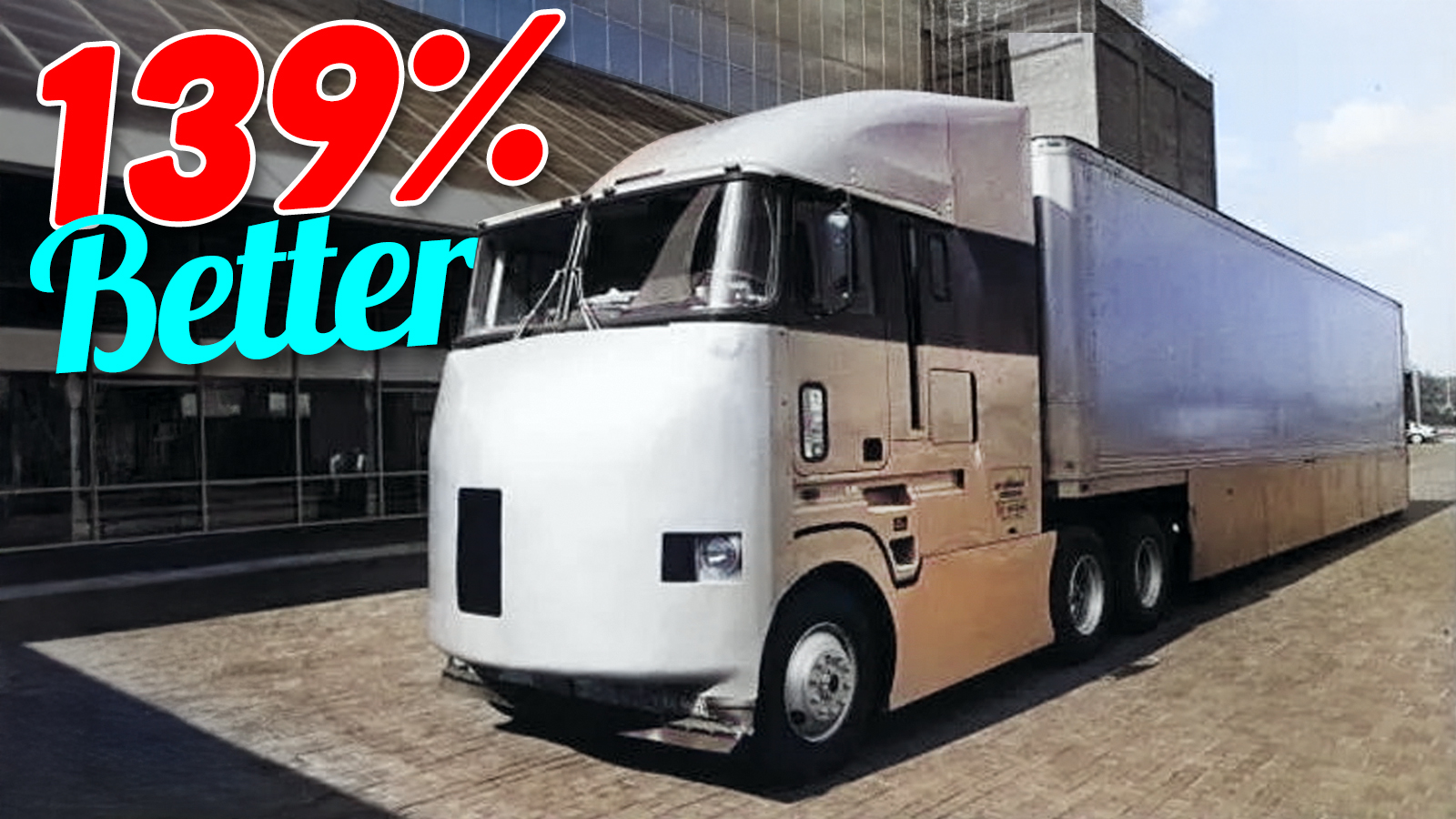
The semi-tractor producers of today put a lot of energy and resources into aerodynamics. Truckers and truck manufacturers cannot control the cost of diesel, and fuel itself can account for as much as a third of a tractor’s operating cost. That’s when fuel prices are closer to “normal.” One of the industry’s favorite methods to ease a trucker’s pain at the pump is through streamlining rigs to get better fuel economy. Back in the 1980s, one trucker took this to the extreme, managing to increase his truck’s fuel economy from 4.4 mpg to 10.52 mpg. But there is a sad reason that not every truck gets over 10 mpg today.
In several decades past, tight truck length restrictions more or less forced the aggressively blocky cab-over-engine tractor to dominate the market. These trucks, which feature their cabs and engines on top of the front axle, were short in length, allowing a maximum amount of remaining legal length to be all cargo, therefore maximizing profits. For decades, cabovers were essentially bricks being powered through the wind. It was common for diesels to get four or five miles per gallon, while gasoline-powered tractors got three miles per gallon or less.


However, fuel was cheap, and despite such poor fuel economy, owner-operators and fleets were still able to make money. While some designers had bold ideas to increase aerodynamics to increase fuel economy and therefore make even more money, the industry itself largely stayed the course, hitting the road with the trucking equivalents of skyscrapers moving at 55 mph.

The turning point, like so much of automotive history, was the multiple oil crises of the 1970s. The price of diesel rose exponentially, and then stayed there, which meant that simply fueling the tractor cut into the profits of hauling loads. From 1978 to 1981 alone, diesel saw a 170 percent increase in cost. Sadly, the federal government doesn’t have any public-facing data for the price of diesel from before 1978, but we know that prices soared during the 1973 oil embargo, too.
Usually, fuel is the second-largest expense in operating a semi-tractor, with driver wages being the biggest. However, during times of extremely high fuel prices, this can invert. Many companies survive by charging more for the load. However, that doesn’t work for everyone. A dynamic where fuel is absurdly expensive can force smaller trucking companies and owner-operators out of business, as they might not have the cushion to weather the storm.
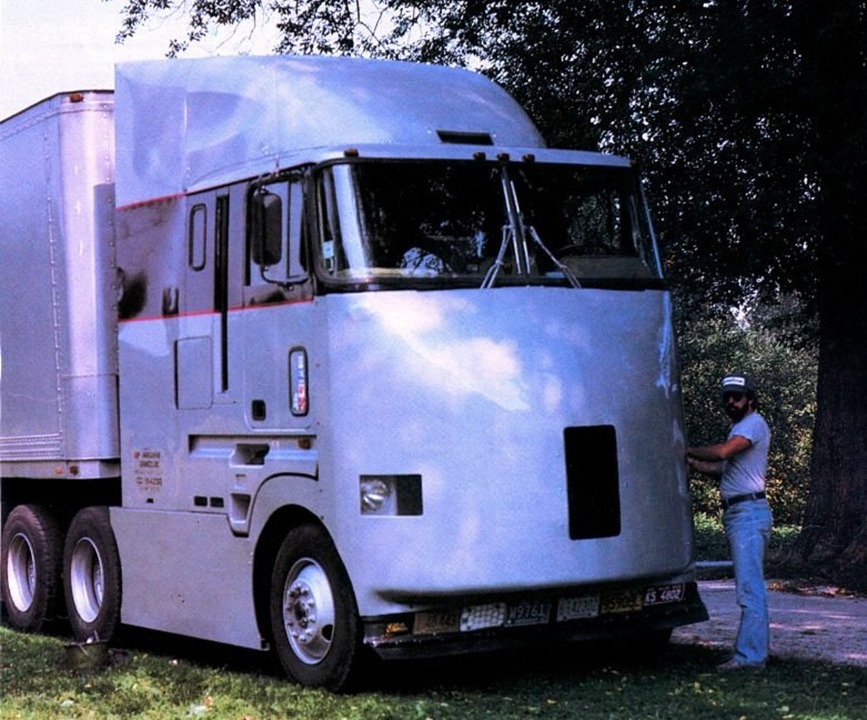
The price of diesel stayed high through the 1980s, often finding itself more expensive than gasoline. Many truckers scrambled to find ways to reduce costs. One of them was Robert “Bob” Sliwa, who, faced with the high prices of diesel in the 1980s and a semi-tractor that got only 4.4 mpg, he took matters into his own hands. Sliwa managed to increase his truck’s fuel economy by 139 percent, and launched a new company in the process.
A Man Who Hated His Truck’s Fuel Economy
Connecticut native Robert Sliwa’s first love wasn’t trucking, but going fast in a 1968 Chevrolet Chevelle. Sliwa’s old business site tells his story:
As a child, Bob had a very inquisitive mind, and was very interested in science and physics. He would love to take apart, and then successfully put back together, all of his mechanical toys to see how they worked. Later as a teenager, he transferred those mechanical aptitude skills into his first career and became an automobile mechanic part-time after attending daily high school classes. Also during this period, he discovered his love for anything automotive and became an amateur drag racer. He raced his cars during sanctioned events at drag strips throughout the northeast. This period was instrumental in his life as he learned many lessons from racing that would be very useful later in life.
Circa 1970. 1968 Chevelle SS. L88 – 427 cubic inch Big Block Chevrolet engine. Second-Design Open-Chamber Aluminum Heads. 600 horsepower. 12.5:1 Compression Ratio. Holley Dominator 1250 CFM carburetor. Edelbrock high-rise intake manifold. Hooker Headers with 2.25″ primary tubes, 10.5″ M&H RaceMaster Slicks. 4-speed Muncie M22 Rock Crusher Transmission, GM 12 Bolt differential with 4:11 gear ratio. 1/4 mile times of 11.4 @ 122 mph. Drove it to high school during the week and raced it at Dragstrips in the Northeast on Sundays.
He enjoyed driving so much, he figured a 13 speed truck transmission would be more fun than 4 speed automotive one. So in his early twenties, Bob obtained his Class 1 license (predecessor of the CDL license) and began driving tractor trailers throughout the northeast for local regional carriers.

After six years of working for other companies, Sliwa decided to get into the over-the-road trucking business for himself. He bought a Ford CL-9000 cabover tractor and leased it to a trucking company in Denver. It wasn’t long before he figured out how pitiful semi-truck fuel economy was. The Ford would make runs as far west as California, averaging only 4.4 mpg along the way. This was about 1980, and diesel prices were high and only getting higher.
The Ford CL-9000 was a wonderful truck for Sliwa’s work. Launched in 1977 for the 1978 model year, the CL-9000 was Ford’s flagship Class 8 tractor. What made the CL-9000 stand out in the busy crowd of cabovers was Ford’s then-unrivaled attention to driver comfort. The CL-9000 featured a cab that was suspended from the truck chassis using an air suspension on all corners.
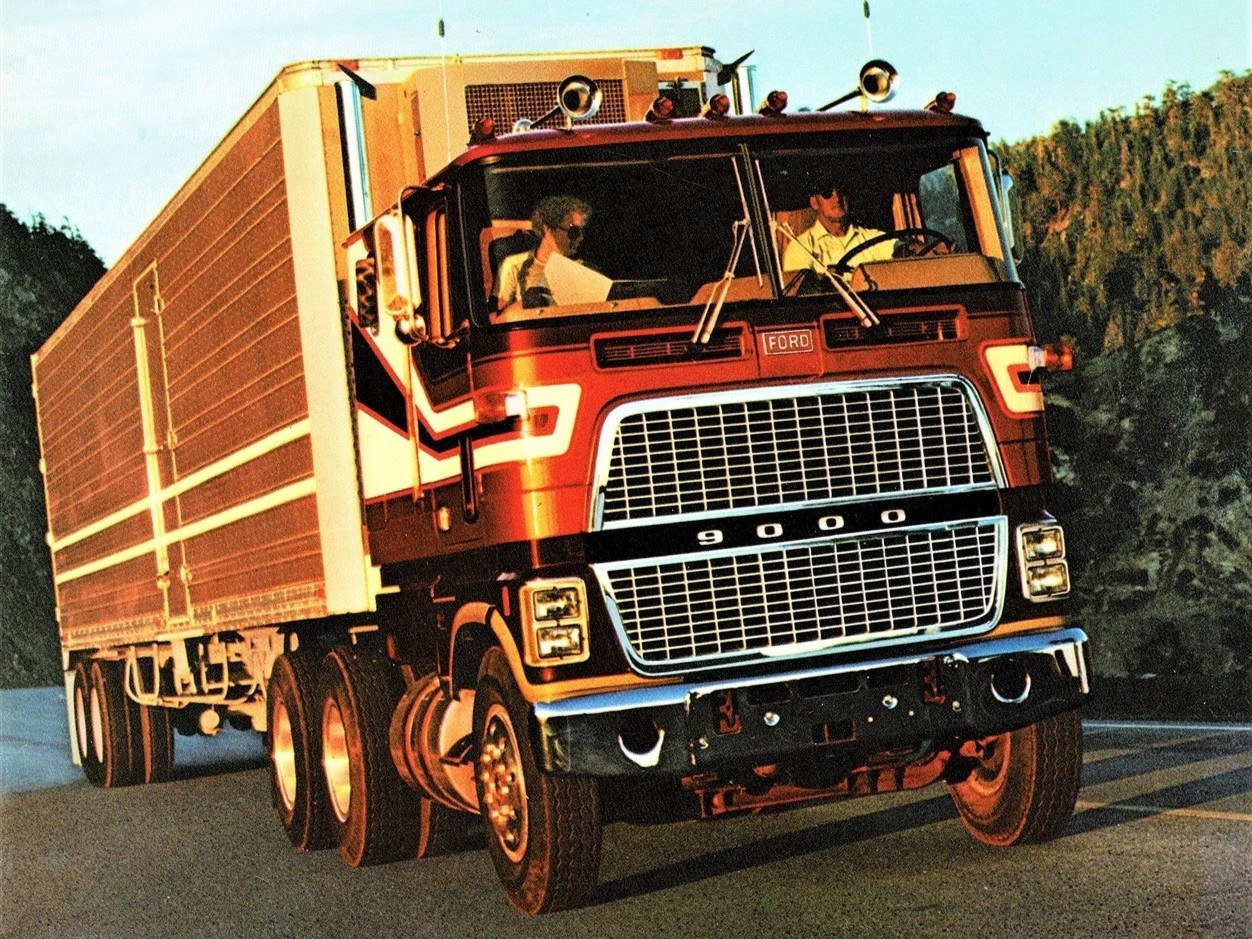
This was a huge step forward in cabover design. In the past, it was common to mount the cab directly to the frame. If you were lucky, there were rubber isolators in the mounting points. Generally, one of the major downsides of a cabover is that you’re sitting right on top of the axle, and every single bump that axle goes through is transmitted right to your body. This is a major contributor to driver fatigue, aches, and later, pain.
As Mark Parkhurst wrote in August 1978 for Overdrive magazine, this wasn’t an easy endeavor for Ford. Since the cab now essentially “floated” above the chassis rather than rode on the bumps with it, all of the parts between the cab and the chassis now had to be flexible. That’s far more than wiring, too, as that meant that the gearshift lever, the steering column, and more all had to be able to flex and telescope a little.
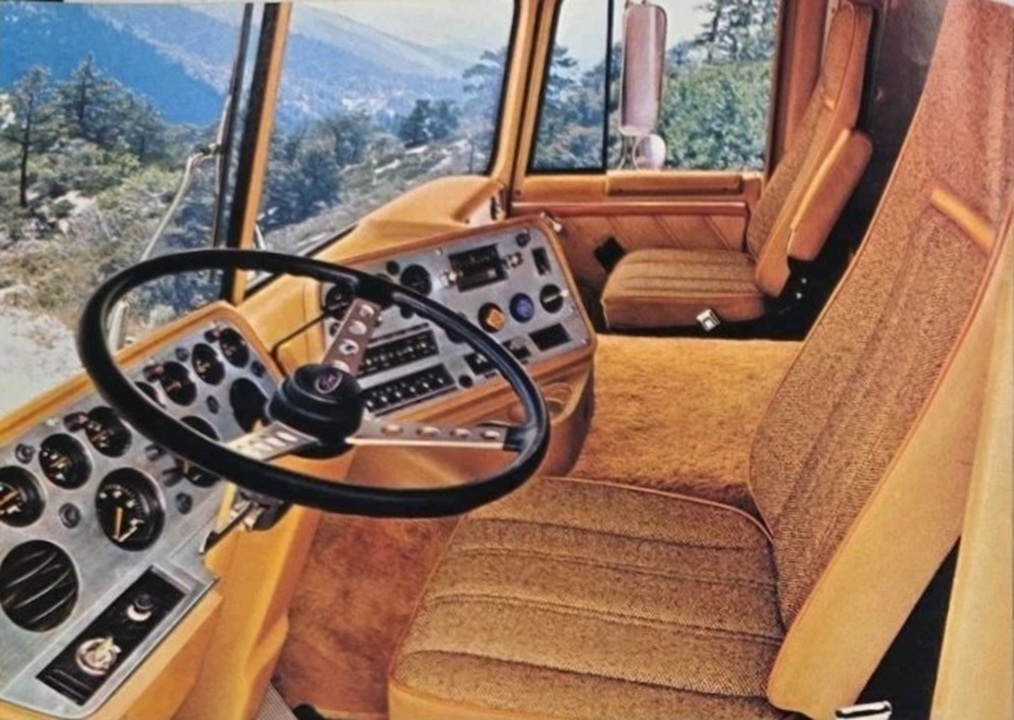
Ford didn’t stop there, and decided to make the CL-9000 as carlike as possible. The rig featured supple seats, dual-zone climate control, cruise control, crank-operated vent windows, a built-in CB radio antenna, and pedals spaced far enough apart for a driver in boots or with big feet to operate in comfort. The magazine also praised the way the truck was designed to be easily serviced by the driver. Parkhurst, a former long-haul trucker, went as far as to say that the CL-9000 had the best ride in the industry and a better air-conditioner than any car.
But for all of what the CL-9000 did well, fuel economy wasn’t one of them. Ford bragged about having a lightweight all-aluminum cab that was optimized in a wind tunnel, but only said that its work “can contribute” to greater fuel economy. Ford never quoted actual numbers, and said that your fuel economy will vary based on many factors.
To be fair to Ford, the 4.4 mpg seen by Sliwa’s tractor wasn’t abnormal for the day. But with diesel prices only escalating, having the nicest cab in the world didn’t matter if you couldn’t afford to run it. That was the position that Sliwa found himself in as a smaller owner-operator.
From The Drag Strip To The Highway
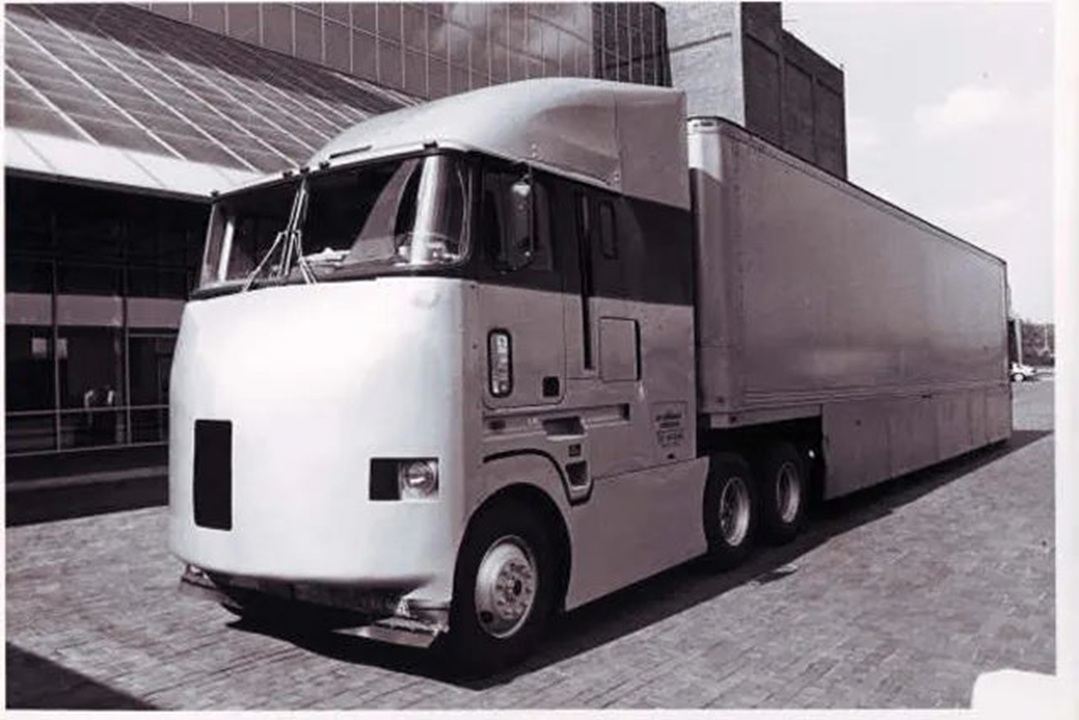
In 1980, Sliwa decided to bring the engineering lessons he learned in drag racing to make trucking better. But instead of getting lower trap times, it would be increasing fuel economy. But Sliwa wasn’t a professional engineer, so he worked through trial and error. Starting with a baseline of 4.4 mpg, Sliwa would change one part on the truck, test if it resulted in fuel economy gains, and then change another part if the previous part was successful. The truck remained in revenue service through all that time, so the testing was in real-world driving.
Sliwa notes what he did to his CL-9000:
We started with a CL-9000 Ford cabover rig, and added a fiberglass aerodynamic nose cone and custom widened and extended roof fairing, Lexan covers over the headlights, vastly reduced inlet area for the heat exchangers utilizing 6 electric fans, chin spoiler, and sheet metal cab extenders and side skirts. Other components included an auxiliary generator, custom low-restriction exhaust system, wide-base super-single trailer tires.
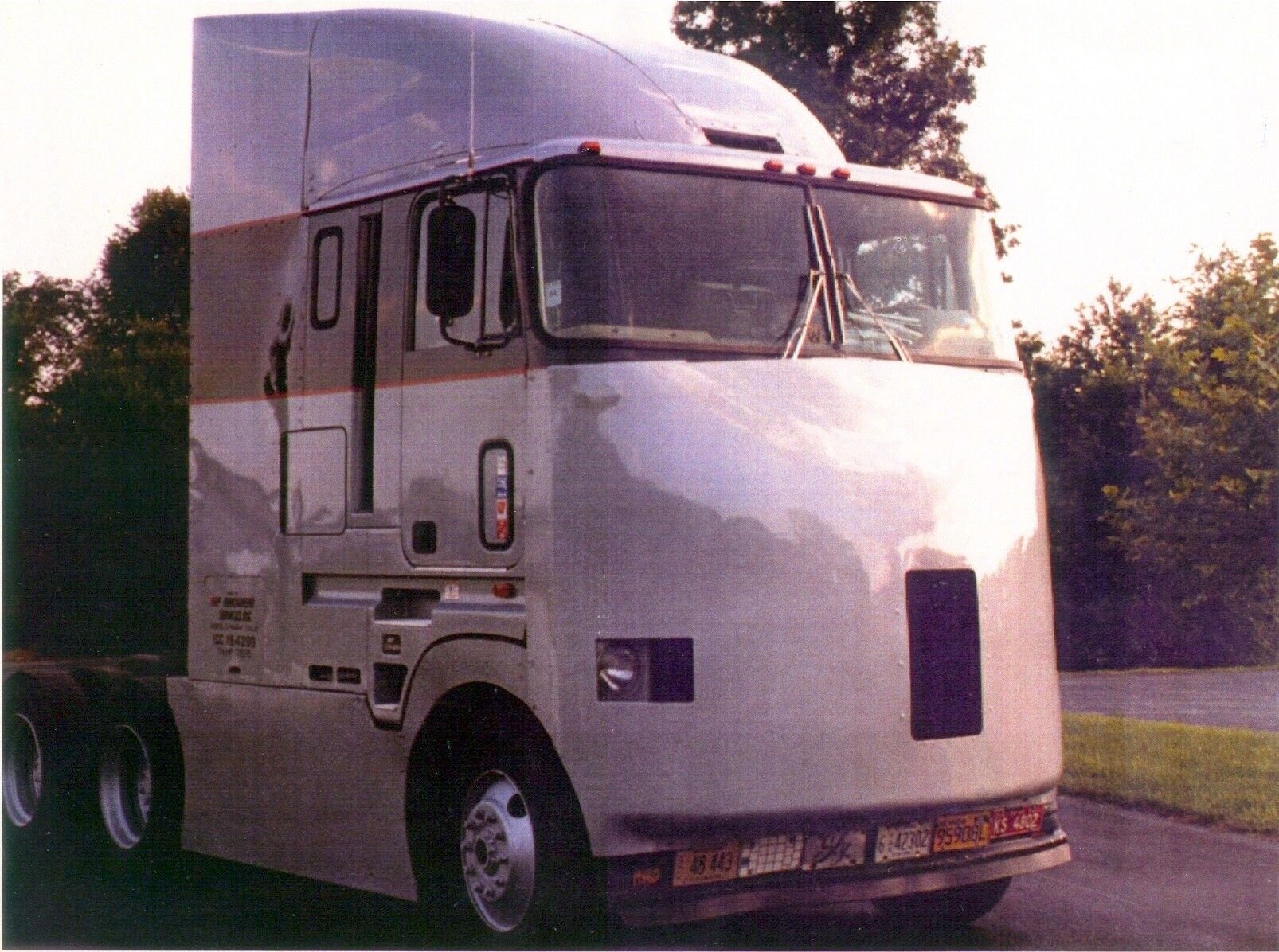
Sliwa notes that the chin spoiler was vitally important to the project. Heavy-duty truck diesel radiators tend to be mammoth units with lots of surface area. Trucks have huge grilles because they really need to gulp down lots of air for cooling. However, those inlets also cause drag. To get the best of both worlds, Sliwa’s chin spoiler worked a lot like a ram air scoop, and piped incoming air to the radiator. The bottom of the truck’s front fairing also had dozens of small holes to let air in.
Sliwa’s truck was equipped with a 14-liter Cummins straight-six diesel, which should have made around 400 HP when stock. This was backed by a 13-speed Fuller transmission. Reportedly, Sliwa made adjustments to the engine for greater fuel economy, but it isn’t said what.
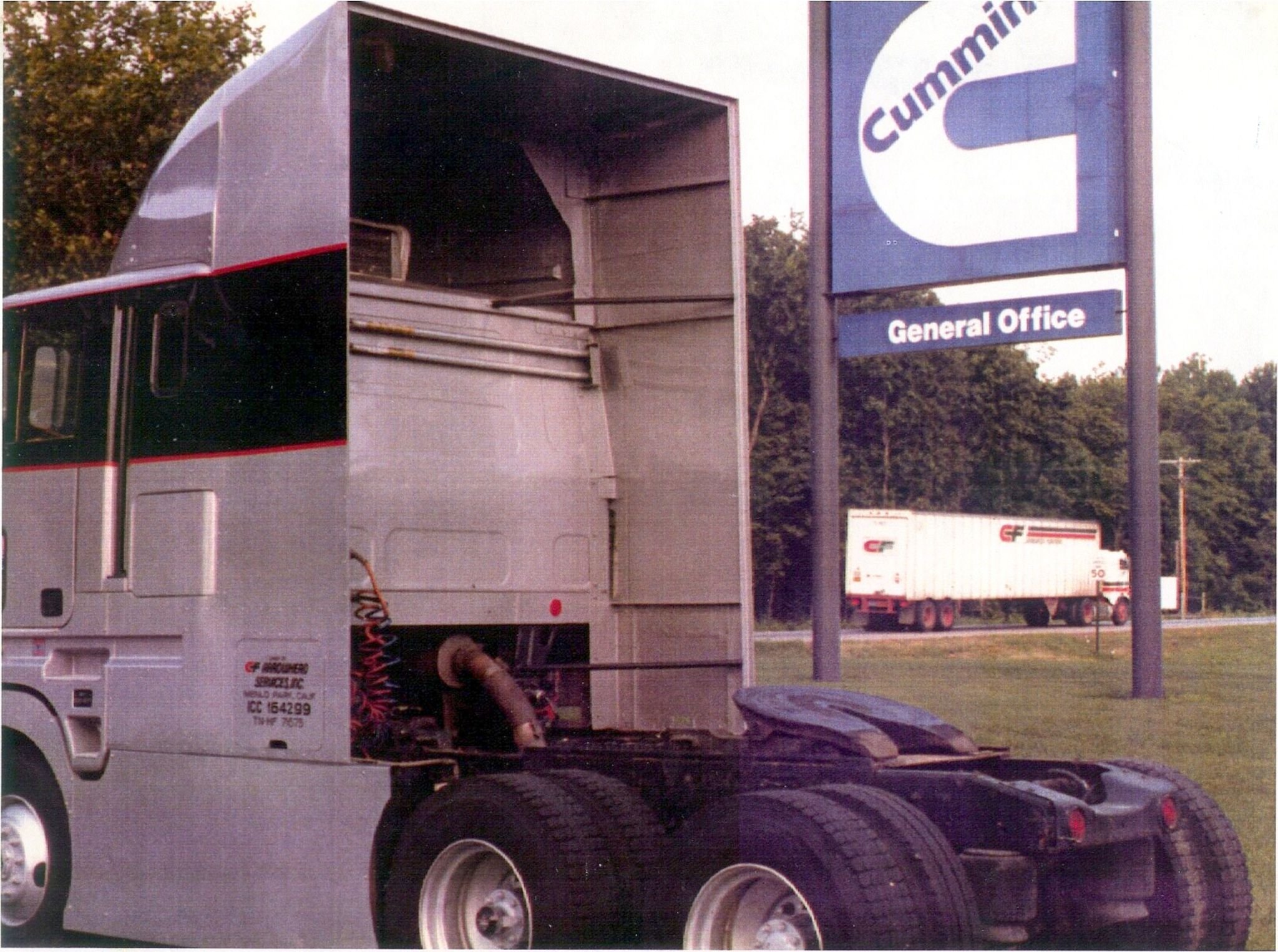
Another important part of Sliwa’s work was modifying the trailer. By now, research conducted by NASA in the 1970s and others earlier had proven that aero devices attached to a trailer can reduce drag. Sliwa implemented that research by adorning his trailer with aero skirts that ran the entire length of the trailer, even over the tires. Further, he also used cab extensions to close the gap between the truck cab and the trailer, another trick that NASA had perfected.
Sliwa would drive the truck everywhere at exactly 55 mph. That was the national speed limit at the time, anyway. Little by little, every added aero bit increased fuel economy. On one run with an actual load in tow, he’d score 9.33 mpg. On another, he’d get 10.4 mpg. On a single recorded run, the truck returned an incredible 10.52 mpg. This work happened over the course of about a few years.
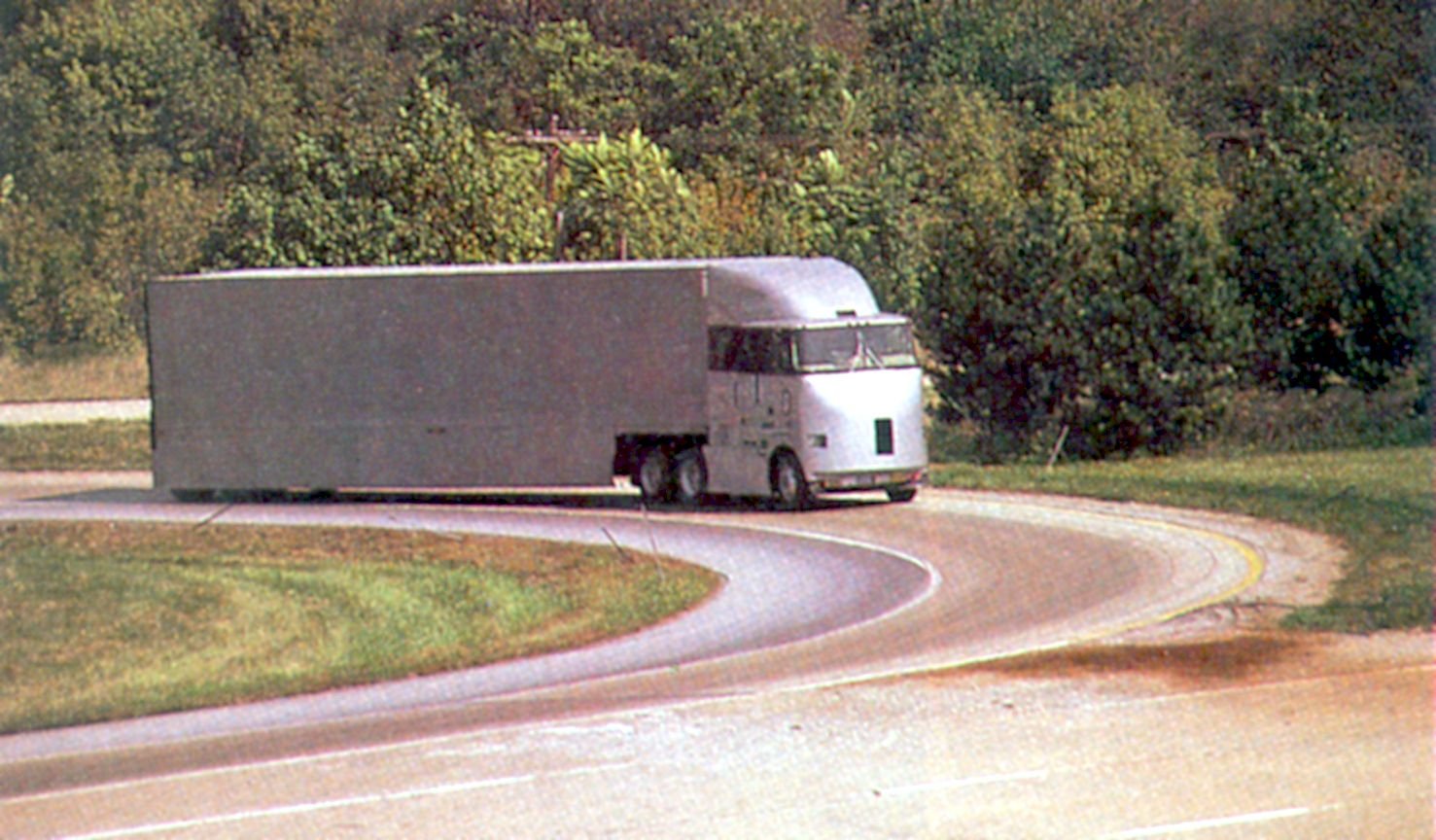
This practically made Sliwa a celebrity in the trucking world. In 1984, Heavy Duty Trucking magazine and Land Line magazine both wrote profiles about his success.
A large part of Sliwa’s fame was that his claimed 139 percent fuel efficiency gains were unheard of. When NASA studied truck aerodynamics in the 1970s, its engineers concluded that streamlining could increase fuel economy by 25 percent. The goofy Paymaster semi-tractor of the late 1960s claimed a 40 percent gain in fuel economy. Yet, the trucking magazines allegedly verified that Sliwa wasn’t pulling anyone’s leg. Through a combination of aggressively slow driving and extensive modifications, his truck broke the 10 mpg barrier that many truckers had thought was insurmountable back then.
According to Diesel Army, Sliwa would leave his role as a truck driver, and doing business as the AirFlow Truck Company, he’d work as a consultant, advocating for aero devices for semi-tractors. Eventually, Sliwa left the trucking fray entirely and took on a career in software.
The Train-Inspired Truck
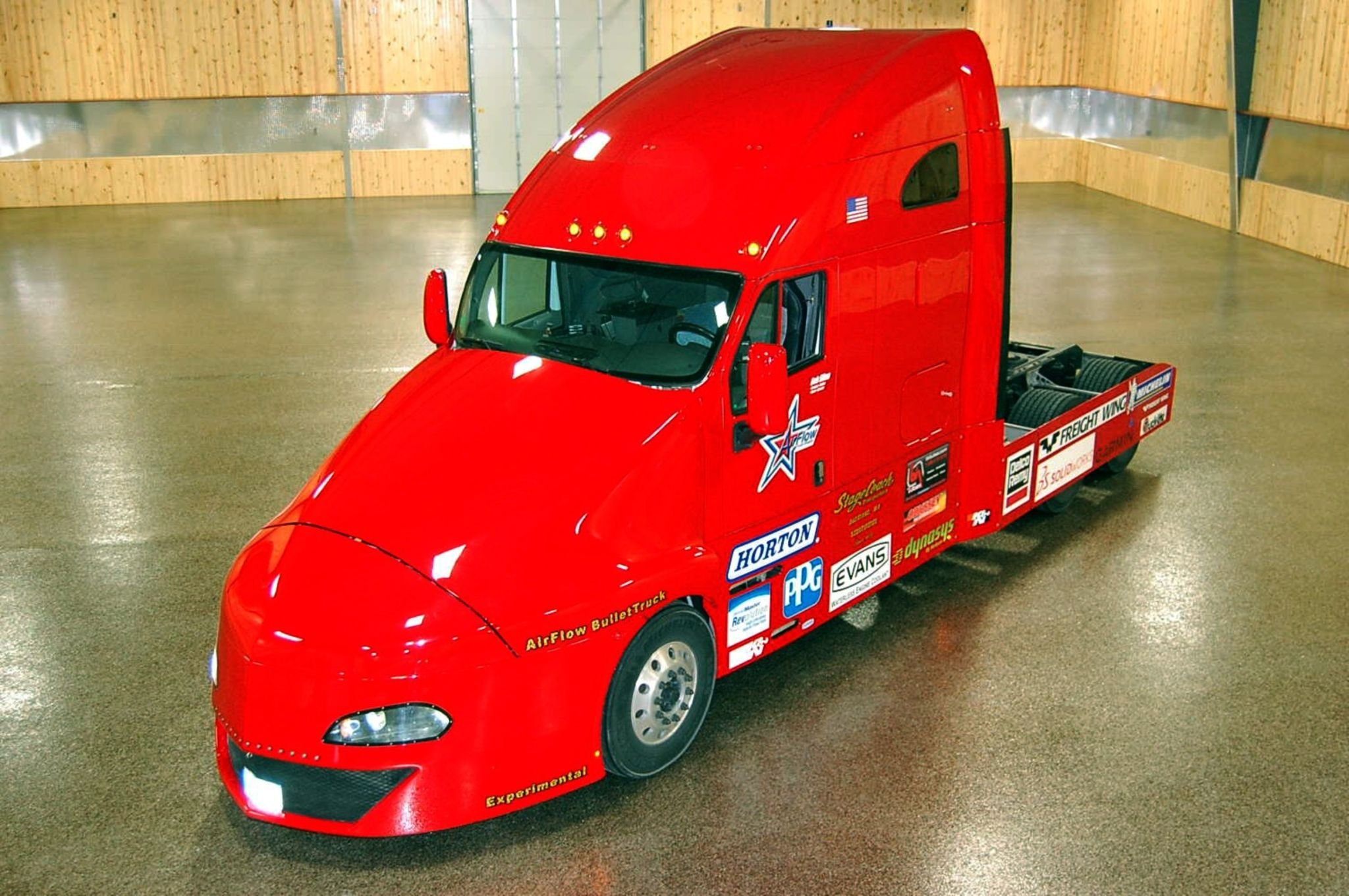
That changed a little over two decades later in 2008, when, just as the trucking industry was going through another upheaval in the era’s financial crisis, Sliwa had an idea. According to Autoweek, Sliwa was unimpressed with the shrinking 401(k) from his software job and, inspired by Japan’s Shinkansen trains, he came up with a solution to the day’s rising diesel prices and got back into trucking.
Sliwa would develop a 15-liter Cummins ISX straight-six-powered 2003 Kenworth T2000 into what he called the Bullet. Reportedly, Sliwa said that the truck would take around six months to build, but it took much longer. Autoweek reports:
What followed was a three-year odyssey that saw sponsors frustrated with the slow pace, Kenworth/ Peterbilt parent Paccar monitoring his Web site and a few platinum cards’ worth of debt. The result? Well, Sliwa’s not quite sure yet. On its maiden voyage, his aircraft-style glass cockpit returned wildly disparate economy numbers.
“It would say 1.4 mpg,” he said. “Then it would say 200 mpg.” The problem remains elusive. Without hard consumption numbers, he estimated economy between 12.3 mpg and 14.3 mpg on his first 858-mile jaunt with an unladen trailer.
The AirFlow BulletTruck’s Cummins engine is stock, churning out 450 hp and 1,800 lb-ft of torque. There’s no dramatic program to reduce weight. But there is a custom-ducted Horton radiator that allows for the extreme degree of rake in the hood. Sliwa figures he’s put in 700 hours of work ahead of the firewall alone. He painstakingly reproduced the computer model created by industrial designer Jeremy Singley using wooden stringers and fiberglass. The pair also developed aluminum side skirts and an inflatable end cap to streamline the trailer.

At the time, the American truck fleet’s average fuel economy was 6.4 mpg, a far cry from what Sliwa achieved. Reportedly, Sliwa’s goal was not to make another one-off truck like he did in the 1980s. This time, he wanted to sell the aero mods to the public as bolt-on accessories for existing trucks. Sliwa’s interview with sponsor K&N details more about what he did:
“We had great help with the SuperTruck design from our CAD and CFD designer, Jeremy Singley, of Jeremy Singley Industrial Design. The AirFlow rig has never been out on the road yet, so we have not done any actual wind-tunnel testing. All of our aerodynamic testing has been done via computer with software provided by one of our Partners, SolidWorks. SolidWorks provided the Computational Fluid Dynamics (CFD) FloWorks software that we use to tweak the aerodynamics. The CFD software is analogous to a virtual wind tunnel. Our FloWorks CFD software says we have 326 lb ft of drag, which is a 45% drag reduction over a stock Kenworth T2000 pulling a stock trailer. This translates to an approximate 25% fuel savings.”
[…]
“Other than the redesigned cooling system and drive belt system, and the custom implementation of the new K&N Heavy Duty Washable Air Filter, the engine is basically a stock Cummins ISX 450 horsepower diesel engine.” “We have done some modifications to the ISX to reduce parasitic horsepower losses. These include removing the belt-driven A/C compressor and installing an all-electric A/C compressor, removing the 40# cooling fan hub, and adding 45 quarts of 5W40 synthetic motor oil.”

Heavy Duty Trucking detailed how much fuel economy the truck was reported to get:
It got 13.4 mpg in a coast-to-coast run hauling a revenue load and grossing 65,000 pounds. He ran it in daily service and got similar results.
“Going around the country, every load was a Landstar load,” he said in reference to the company he was leased to. “They were loaded and unloaded normally. For that year (2012), people would say, ‘Oh, you’re going to rip the skirts off that truck. No, I didn’t.” They also scoffed at his Double-Nickel cruising speed, but it was entirely feasible with steady driving. “At 55 (mph), I’d see a truck pass me four times during the day – I’d pick one out because of its appearance—and at the end of a day he’d end up parking next to me at a truckstop.”
He exhibited the Bullet at truck shows to drum up interest and attract sponsors – among them Cummins, Goodyear Tire and Flex-a-Lite fan — to pay for his development work and the downtime it required.
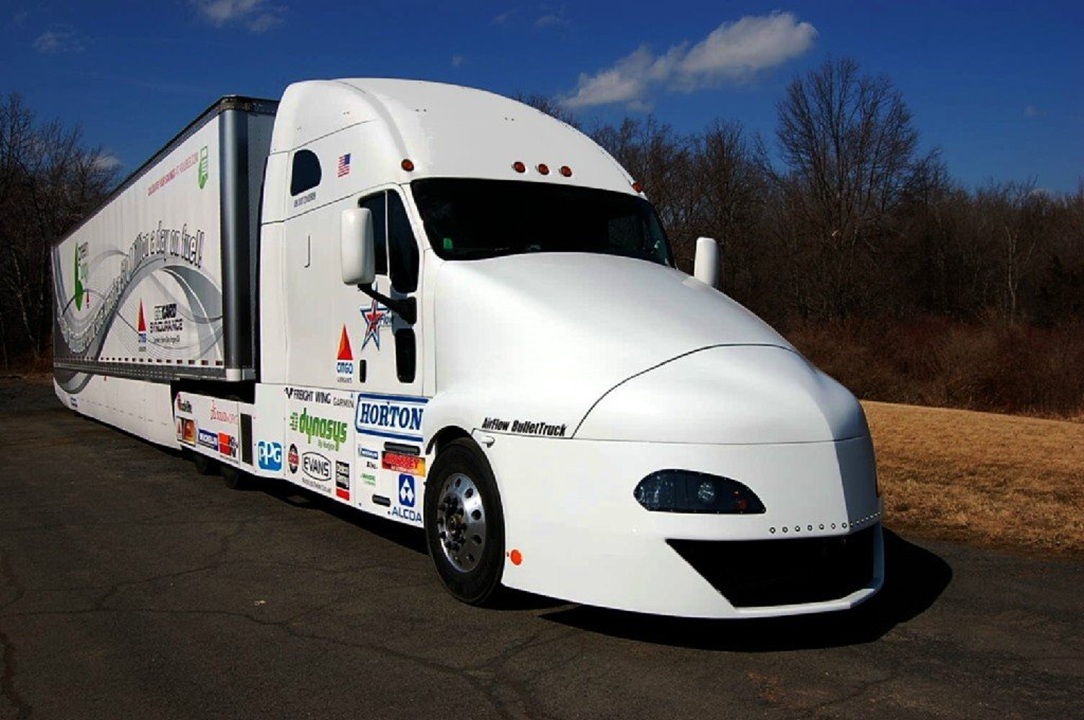
A notable part of that blockquote is the part about speed. By this time, the 55 mph national speed limit had been lifted for many years. Sliwa was likely getting passed by trucks buzzing him at 65 mph or 70 mph. Sure, he might have ended up at the same truck stops as the drivers who passed him, but he took much longer to get there. It could also skew the fuel economy numbers a bit since he wasn’t driving the same speed a typical driver would.
Work on the Bullet concluded in 2012, and Sliwa went right into his next project, even more ambitious rigs called the SuperTruck and the FutureTruck. These never left the concept stage, but one truck did. The Starship was developed in a collaboration with Shell and various engineers across the trucking industry.
The Carbon Fiber Starship
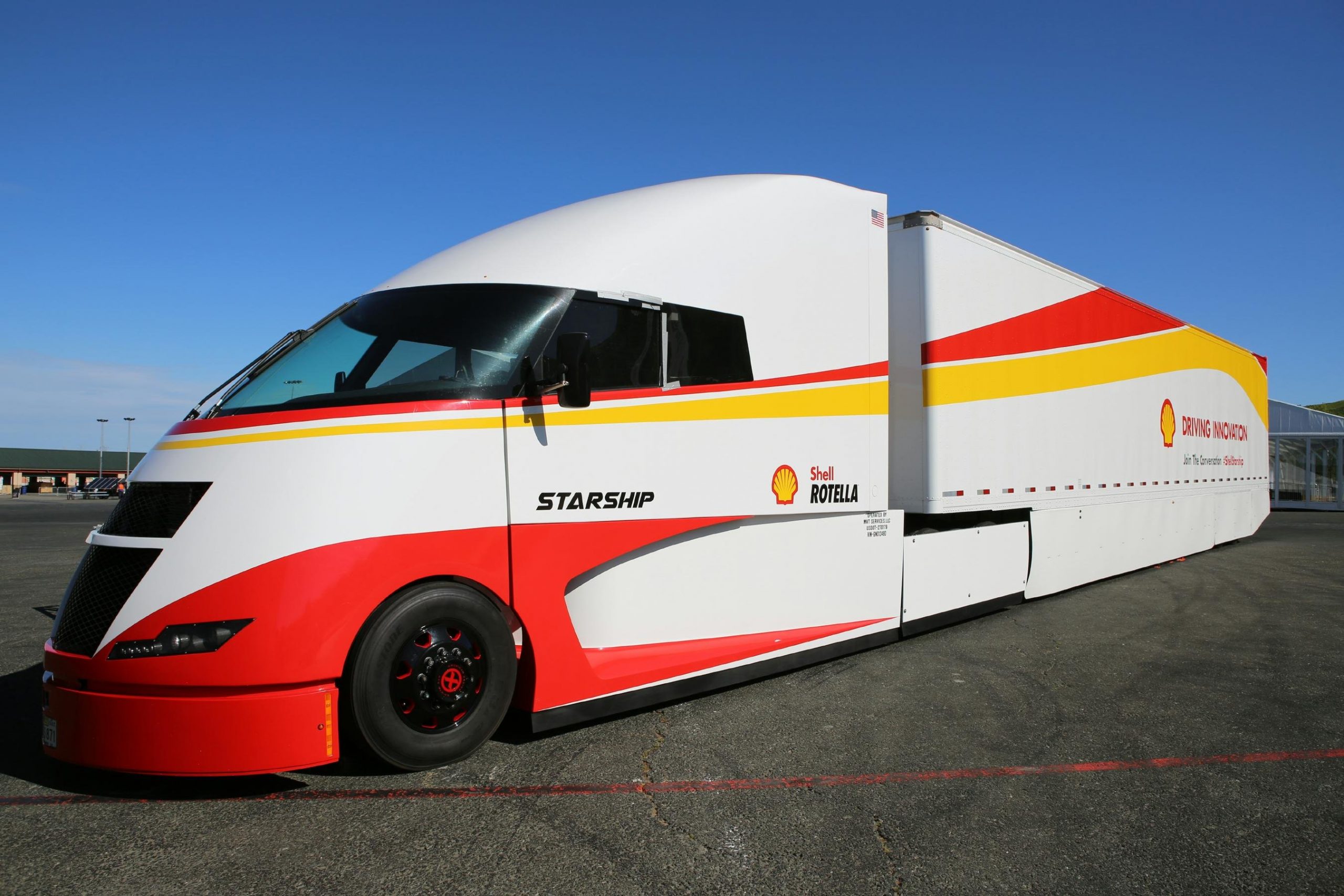
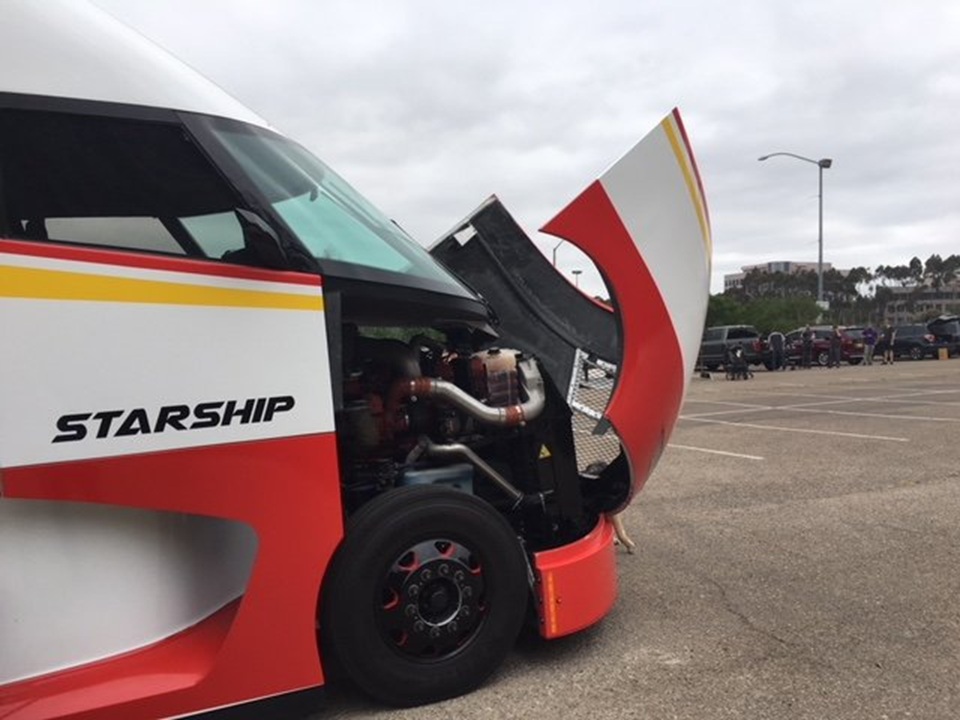
The original Starship was based on a 2016 International ProStar chassis purchased from Mesilla Valley Transportation. This truck was powered by a 400 horsepower and 1,850 lb-ft of torque Cummins ISX15 straight-six, backed by an Eaton UltraShift Plus 18-speed automated transmission with tall gearing for fuel economy.
The truck wouldn’t retain its factory cab, and instead got a custom carbon fiber body and custom trailer. It also received an electric tag axle, which was powered by a battery and a 5 kW solar array on the trailer’s roof. The tag axle provided help on hills and regenerative braking. When parked, the battery provides juice to the sleeper, eliminating the need for a diesel-powered auxiliary power unit or idling the truck when parked. The Starship took about three years and over 18,000 working hours to build.
The Starship’s marketing was clever. In 2018, the Starship drove from San Diego, California, to Jacksonville, Florida, at an average speed of just over 50 mph to gather real-world fuel economy data. The truck was loaded to a gross weight of 73,000 pounds and was carrying real cargo. Specifically, 39,900 pounds of material to create a reef off the coast of Florida. Update: The average speed calculation includes traffic, stopping, and other situations for the whole trip, not just steady-state highway driving.

The result of the test grabbed headlines, as the truck returned 178.4 “ton-miles per gallon.” This was advertised as a gain of 148 percent compared to the 72 ton-miles per gallon of the typical Class 8 truck. A ton-mile per gallon combines the weight of cargo with the distance traveled, against the fuel burned, rather than just looking at the fuel burn. To calculate, you would take the weight pulled in tons multiplied by the distance in miles, divided by the fuel consumed in gallons.
In this case, Shell and AirFlow claimed that the average American Class 8 truck is loaded to a gross weight of 57,000 pounds. That’s truck, trailer, and cargo. A typical empty long-haul truck and dry van can weigh over 30,000 pounds alone. That’s around 27,000 pounds for cargo, or 13.5 tons, by Shell’s math. The Starship carried 19.95 tons of cargo.
On Sliwa’s previous trucks, he tracked miles per gallon, not ton-miles. Neither company had the answer to why they changed the math. However, many fleet operators care about ton-miles, since ton-miles represents how much weight a gallon of diesel can haul over a distance.
Fuel economy wasn’t as impressive as previous builds. The Starship got 8.94 mpg, which was far better than the 6.4 mpg national fleet average but far worse than the Bullet and Sliwa’s original Ford CL-9000. Some factory-stock tractors can also score in the mid-8 mpg range in ideal conditions.
Out of curiosity, I took the data from the Bullet’s testing and converted it into ton-miles. That truck’s average should have been around 230 ton-miles per gallon, or better than the newer Starship.

Shell and AirFlow went back to the drawing board and created a Starship 2.0. This truck had the same body as the first one, but was equipped with a 2020 Cummins X15 400 EX Efficiency Series engine and a 12-speed Eaton Endurant transmission. That version of the Starship scored 10.8 mpg over the same distance as the first Starship, and did so while carrying 47,100 pounds of cargo and averaging 62 mph. It hit 12 mpg on another run. In terms of ton-miles, it came out to be 254 ton-miles per gallon.
A third Starship iteration (below) hit the road in 2024 with a Cummins X15N 15-liter natural gas engine with 400 hp and 1,850 lb-ft of torque. That one is said to achieve a 9 mpg diesel gallon equivalent rating, or 204 ton-miles per gallon. Like most hyper-efficient trucks, the Starship isn’t a production vehicle, but a window into what could be.

It Wasn’t A Dead End
This is where the AirFlow experiment stands today. Bob Sliwa still runs AirFlow and advocates for aero trucks.
Sliwa posts about the Starship and uses generative AI to make videos about the truck. He hopes to partner up with a brand like Tesla or some other truck manufacturer to help them streamline their rigs. Ultimately, as Sliwa claims on his LinkedIn, it took the majority of the trucking industry decades to start doing what he did in the 1980s. The average semi still gets below 10 mpg and, to him, truck manufacturers still aren’t going as far as they could on aero.

I get why he feels that way. Four decades ago, he turned a blocky Ford into the truck equivalent of a bullet, and got all the praise for it. Then, he watched as the rest of the trucking industry only slowly adopted aerodynamic designs, and none as extreme as his.
But I also get the other side. Truck producers know that truckers and the people who work on rigs don’t like having to deal with complexity. Likewise, trucks have to be repairable, maneuverable, durable, and be priced within reach. Fuel economy is a big factor, but isn’t a builder’s only concern.
That said, Sliwa does give credit to Paccar for creating the 1988 Peterbilt 372 (above), the aero cabover truck that looks somewhat like the truck that he made in 1983. Peterbilt even claimed that the 372 could get 11 mpg in some configurations, which was even better than what Sliwa got in his truck. Times are also changing. Today’s electric Class 8 trucks do have streamlining going on, and each new generation of diesel semi-tractor seems to get slicker than the last. So, Sliwa’s dream of hyper-aerodynamic trucks may come true one day.
Top graphic image: AirFlow Truck Company




That 9mpg diesel equivalent sounds a bit sketchy. Are they just using the textbook 6lbs or CNG per 1 gallon of diesel equivalent. Some calculations have it closer to 4lbs per gallon. BTU value or similar would probably be a more fair metric. CNG has less energy density then diesel and tuning has been an issue in the past. But they have made great strides with stoichiometrics in the last 30 years.
“The average semi still gets below 10 mpg”
It does but that average is all Class 8 and all types of trailers. It is dump trucks deliverying gravel and asphalt in town, log trucks in the mountains, flat beds and car carriers hauling trailers that are aerodynamic disasters. It includes a whole lot of drivers putting grill guards on the front of their aero trucks and completely destroying that aero work.
Every truck manufactuer makes a truck that will do better than 10 mpg, pulling a van trailer, fully loaded, at real speeds. Today production trucks are doing 12 mpg which was what the first generation SuperTruck did with all manner of tech that was not applicable to a production product. The industry has made huge gains in the last 15 years.
The rig reminds me of an NHRA pro stock car. Although if you have ever seen one of those in person, they are suprisingly narrow to cheat the wind. Somehow I dont think that old drag racing trick would work on a semi unless you wanted a van that would only hold one pallet vs two side by side lol
It’s interesting that the Starship trucks are using engines in the lower horsepower range of the Cummins ISX15 or X15 line. Yes, they’re typical of what a lot of fleets purchase (to shave cost wherever they can) but there’s a point where for heavy loads, a higher horsepower engine is necessary to put the motive force behind the torque and get the truck and its load up to speed efficiently. That will improve the average speed over an entire run, and the truck will be able to get up to and stay in its most fuel-efficient speed range sooner and for longer.
In other words, you don’t need a 600+ HP ISX/X15 like all the supertruckers want. But something around 500-525 HP (which is sort of the ISX/X15’s original design “sweet spot”) would probably be optimal for power to put the torque to work, and get a load moving at its most efficient speed.
But again, it’s possible that AirFlow is using the engines that fleets are currently buying and most likely going to continue buying, rather than the engines that they could do better with if they would only pay a little more up front. Of course, full aero treatment also adds cost, so getting by as best as possible with the lower-output engines may be the most realistic, if slightly compromised, approach.
Note: The ISX15 and X15 engine families are closely related; the shortened “X” designation was introduced with next-generation modernizations to the 15-liter Cummins engine. The 525HP configuration is typically the basis for the higher-horsepower variants, which are achieved mainly through the “chip” programming and appropriate capacity cooling and turbocharger setups. When maxed out, they can deliver over 2000 lb-ft of torque at 600 or more horsepower. That’s a lot for a roadgoing truck. There are even bigger numbers, but they’re typically found in engines intended for heavy-duty offroad use.
Interestingly, European trucks often run even higher horsepower numbers due to higher weight limits compared to American regulations. But they’re typically speed-governed to the equivalent of 60MPH, and a large percentage of European highways limit trucks to the equivalent of 55MPH.
Thanks for sharing the inside scoop on what common fleets are doing!
I’m surprised the Starships are so unimpressive and that’s with skewing the numbers by running unreasonably slow speeds. I know aero doesn’t necessarily follow appearances, but come on, I would think this thing should at least hit those numbers at similar higher speeds of the other trucks. It does look really cool, though.
Agree that any fuel economy comparisons should be at the same speed.
Edit: Aha, I figured it out. The reports didn’t say, but the average speed wasn’t the speed the truck went down the highway, but the average speed for the entire trip, traffic and all.
That makes more sense. That’s probably driving pretty much normal truck driver speeds, then. Maybe even a bit faster depending on traffic and stops.
Retired driver here. I can safely say that no matter how fast you drive that truck you typically average 50 to 55 mph. Higher speeds just simply wear the driver out quicker than he has to stop to rest.IMHO heavy trucks should be restricted to 70 or 71 mph.
That makes sense to me! Cars are similar, in my experience. Unless you’re doing a cannonball run, your average overall is going to be much lower than your highway cruising speed.
My random question of the weekend is, given the fatigue of going so fast, and presumably the horrible fuel economy, why do some folks with unrestricted trucks drive 80+?
Great article. I really like the solar panels on the top of the trailers to power HVAC. When you compare a semi-trailer to an airplane, it seems like the bulk of the opportunity is at the tail of the trailer. It would be sweet to see some major retailers put the doors at the front, using robot spotter rigs to bring trailers to loading docks, and have super-tapered tails on the rigs. Of course that would take $7.00 diesel to make such a radical change. Maybe Trump will be remembered as the environmental president.
I saw Starship 3.0 in person earlier this year, very cool in person. Though I gotta say, less than 10 mpg after all that seems…not very impressive? Saw a dude with a modified (much less aggressively so, mind you) early 00s Kenworth who claimed to get 9-10mpg on the highway while loaded without all this extra rigamarole. Wonder what gives.
agree, although you’d need to know weight, season, route (specifically inclines), percent of steady-state vs stop-and-go, etc etc to be able to make a meaningful comparison.
And to think I see so many semis on the road without any of the basic fuel efficiency equipment on them at all.
Like the Peterbuilt brick-faced trucks with oversized spiked chrome nuts on the wheels?