

If you own an older car, chances are your factory speakers kinda suck now. They might’ve been fine back in the day, but heat, humidity, and ultraviolet light can all conspire to degrade foam speaker surrounds, compromise factory speaker cones, and generally make your music sound like it’s coming from a tin can on a string. But before you place an Amazon order for the cheapest speakers available, there are a few things you need to know to make sure you get awesome sound and an easy installation experience without breaking the bank. Here’s everything you need to know about replacing your factory speakers from someone who’s modified the audio system in almost every car he’s owned.
Sizing Things Up
When shopping for speakers, the first things to consider after setting a budget are speaker size and configuration. Generally, the holes the manufacturer cut into your car for speakers are only so big. Some cars use tiny four-inch speakers in the dashboard and door cards. Some use 6.5-inch speakers in the doors. Some use speakers that aren’t circular, mostly either 5×7″ or 6×9″ speakers, but old GM cars are infamous for their 4×10″ speakers. Crutchfield is a great resource for speaker sizes if you don’t know the dimensions of your speakers, and if you’re dealing with a more obscure car, chances are someone in a forum has already figured out speaker sizing.


Component or Coaxial?
There are two speaker configurations: component speakers, and coaxial speakers. Component speakers consist of a woofer for low-to-middle frequencies, a crossover unit, and a tweeter for high frequencies. If your car has separate locations for its tweeters and front speakers, these are probably the sort of speakers you’ll want to use, providing you have space to put the crossover somewhere.
Coaxial speakers, on the other hand, essentially put a tweeter in the middle of the woofer cone and build the crossover right into the unit itself. If it’s one tweeter, it’s marketed as a two-way speaker. If the manufacturer crammed two tweeters in that tiny area, it’s called a three-way speaker. These are a great option if your car doesn’t have factory tweeters, but they can also work well on some factory tweeter applications that are particularly close to the woofers.
Depth, Diameter, And Impedance
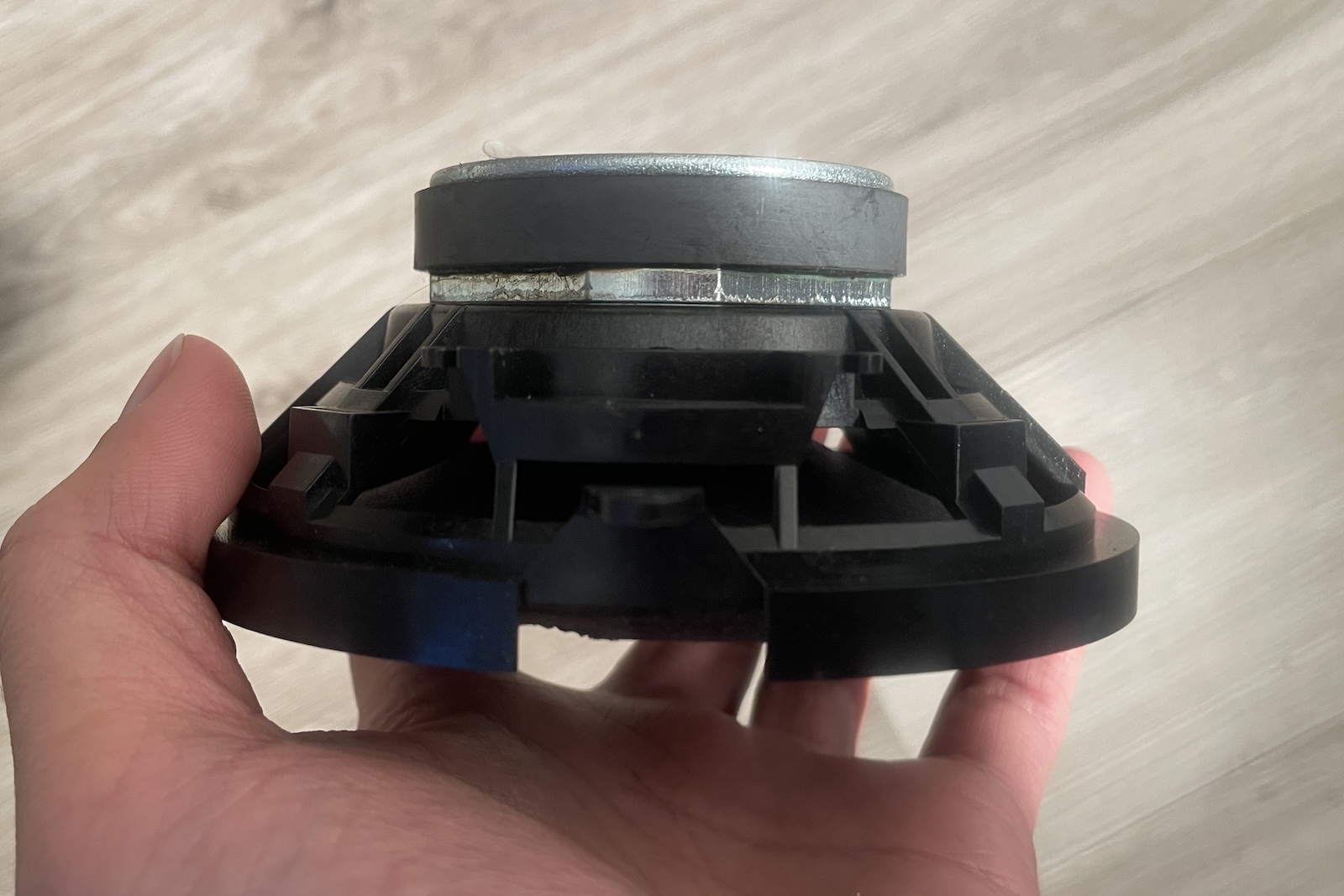
Speaker depth and magnet diameter can also matter for installation, depending on where the new speakers are going. If you’re putting new speakers in the parcel tray of a sedan and don’t care about taking a little bite out of trunk space, depth and magnet diameter don’t matter too much. If you’re replacing your door speakers, you’ll want to ensure that the depth and magnet diameter of the replacement speakers won’t interfere with anything in the door. Window travel, the window regulator, the door handle mechanism, that sort of stuff.
The next thing to look at will be impedance. Many car audio systems use four-ohm speakers, but that’s not always the case. An extreme example is the door woofer setup in 986 Porsche Boxsters and 996 Porsche 911s. Not only are they tiny 5.25-inch woofers, they’re two-ohm units. If you replace a two-ohm speaker with a four-ohm speaker, it will be much quieter as it requires twice the wattage to achieve the same loudness. If your car has an amplified factory audio system, it may use two-ohm or lower speakers in certain applications, so that’s something to watch out for.
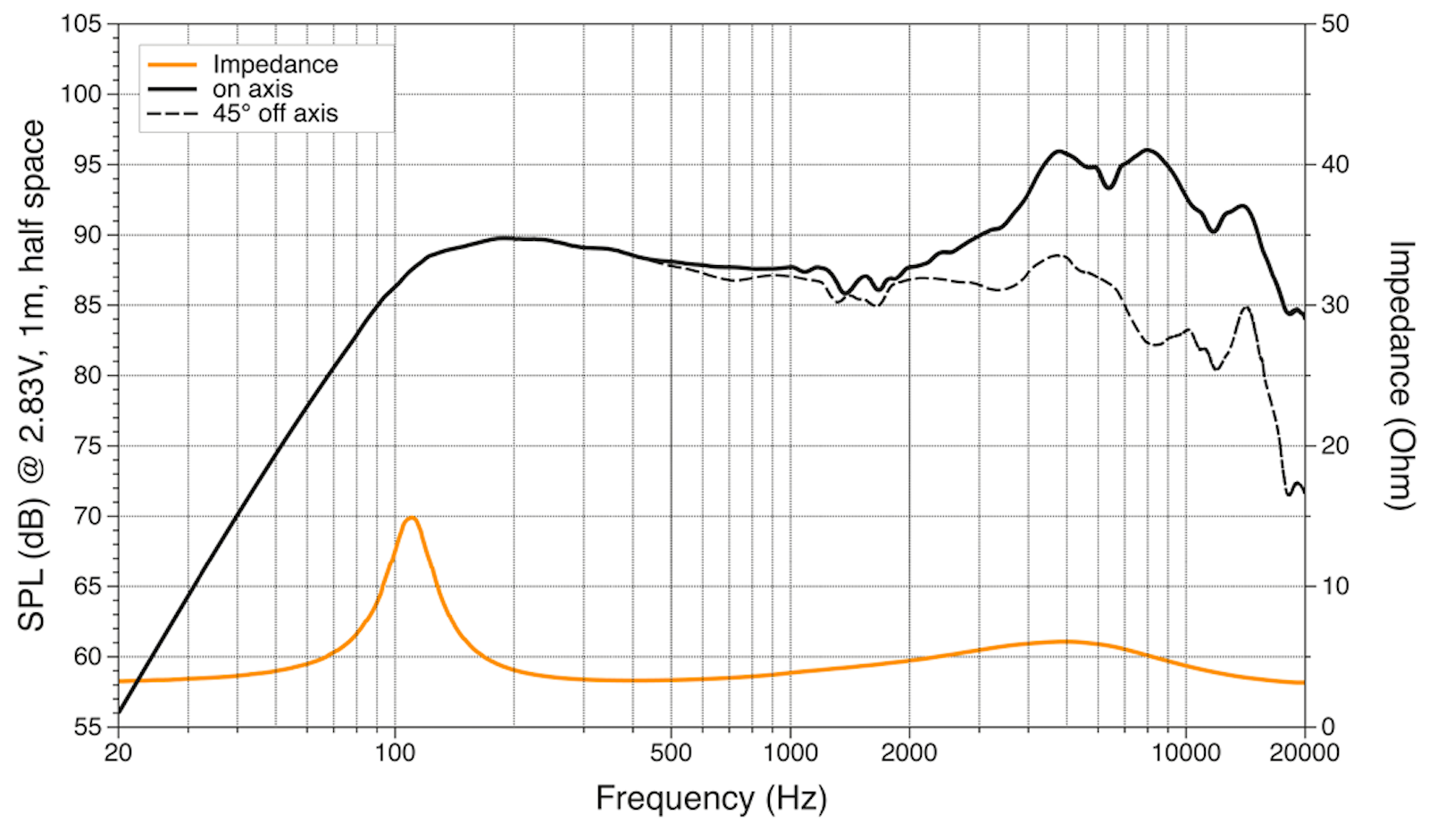
Speaking of loudness, it’s worth looking into frequency response, effectively the lowest and highest frequencies a speaker can produce without a huge drop-off in loudness. If you don’t have dedicated subwoofers, you’ll want speakers that can hit fairly low so you don’t miss a bunch of your music. The bottom end of this envelope is usually determined by speaker size more than construction, but even within a size class, some speakers hit lower than others. A bottom end of 70 Hz compared to 90 Hz can make a huge difference if you don’t have anything else to fill the low frequencies.
Powering Up
Finally, you need to consider power, and this is where things involve a bit of math. The wattage figure you see on the box of aftermarket speakers is the root mean square wattage, or RMS. Essentially, it’s the average continuous power a speaker can handle without blowing out or distorting and making all your songs sound terrible. In contrast, most factory audio systems are advertised using peak output. So, how do you figure out the root mean square of your factory amplifier? Well, that’s where things get a little complicated.
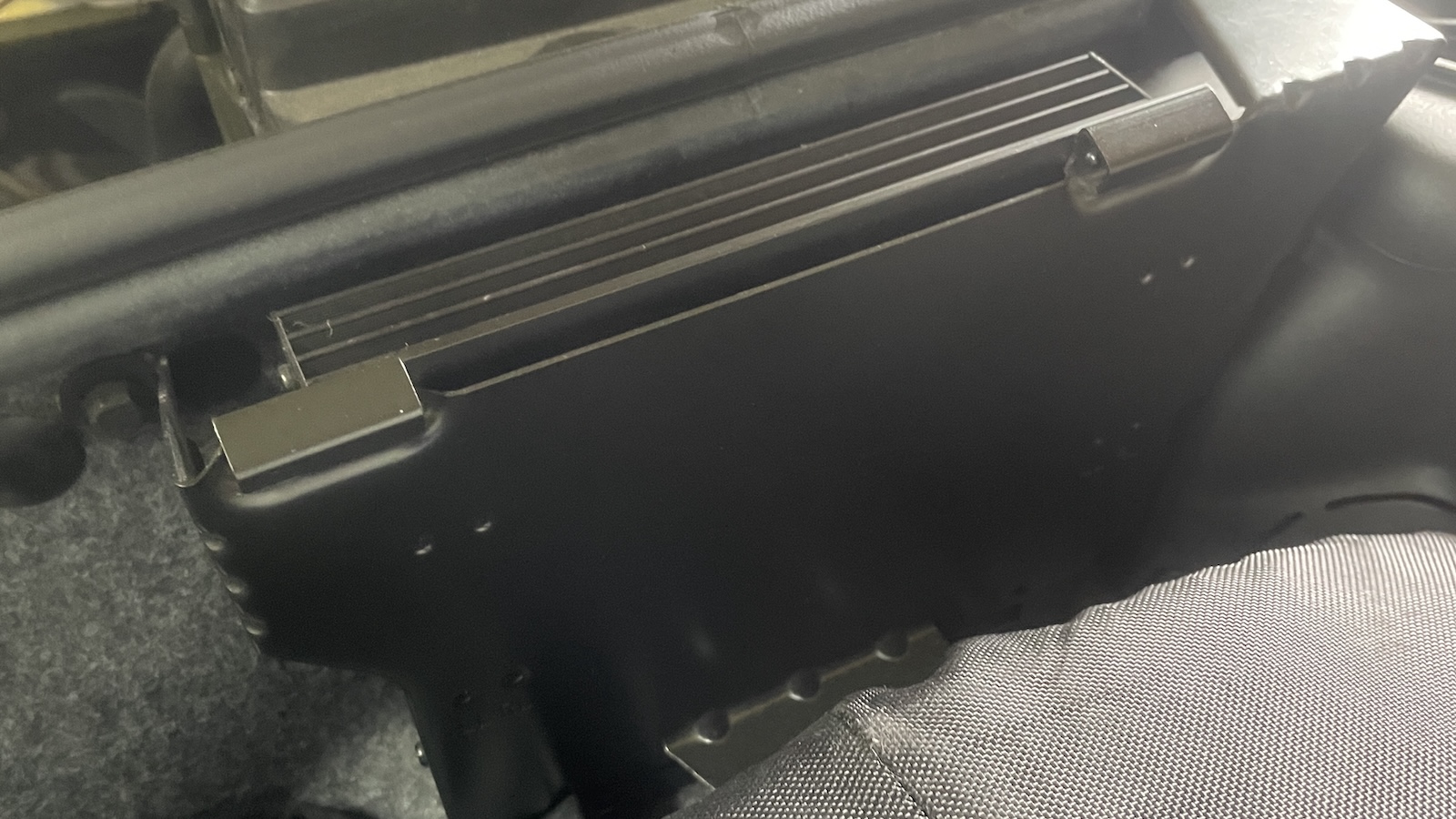
Ideally, you’ll want to know how much power it can send to the channel you’re replacing the speakers on, because you can’t always glean that from peak advertised wattage. Let’s use a 2005 Ford Mustang with the Shaker 500 audio system as an example. While it might be advertised as a 500-watt sound system, that’s peak wattage, and not all speakers are amplified. While each door-mounted subwoofer gets its own little Class D amplifier, the other door speakers and rear speakers are driven by the head unit, meaning they aren’t receiving much power at all. In this case, you don’t have to worry a ton about replacement speaker RMS, as the factory speakers are only rated at 25 watts, but you will want to calculate root mean squared power if dealing with replacement of factory amplified speakers. The easiest way of doing this is to take the peak channel wattage and divide by the square root of two, or roughly 1.414. Once you have that figure and narrow your search to speakers at or above that, you will want to consider sensitivity.
A speaker’s sensitivity is essentially its efficiency, how much sound it can pump out from a given level of power, rated in dB/W/m. That might be a lot of letters and slashes, but it boils down to decibels with one watt of power at one meter from the speaker. If you’re looking to go loud but are limited by the amount of power available to drive the speakers, an aftermarket speaker with a sensitivity of 90 dB will really let you crank the tunes compared to an aftermarket speaker with a sensitivity of 85 dB, provided their power handling capabilities are matched. Remember, the decibel is a logarithmic scale, meaning 90 dB is about three times more intense than 85 dB. When you’re only playing with, say, 15 watts RMS per head unit channel and a car that’s not especially well-insulated, sensitivity matters.
OK, But How Does It Sound?
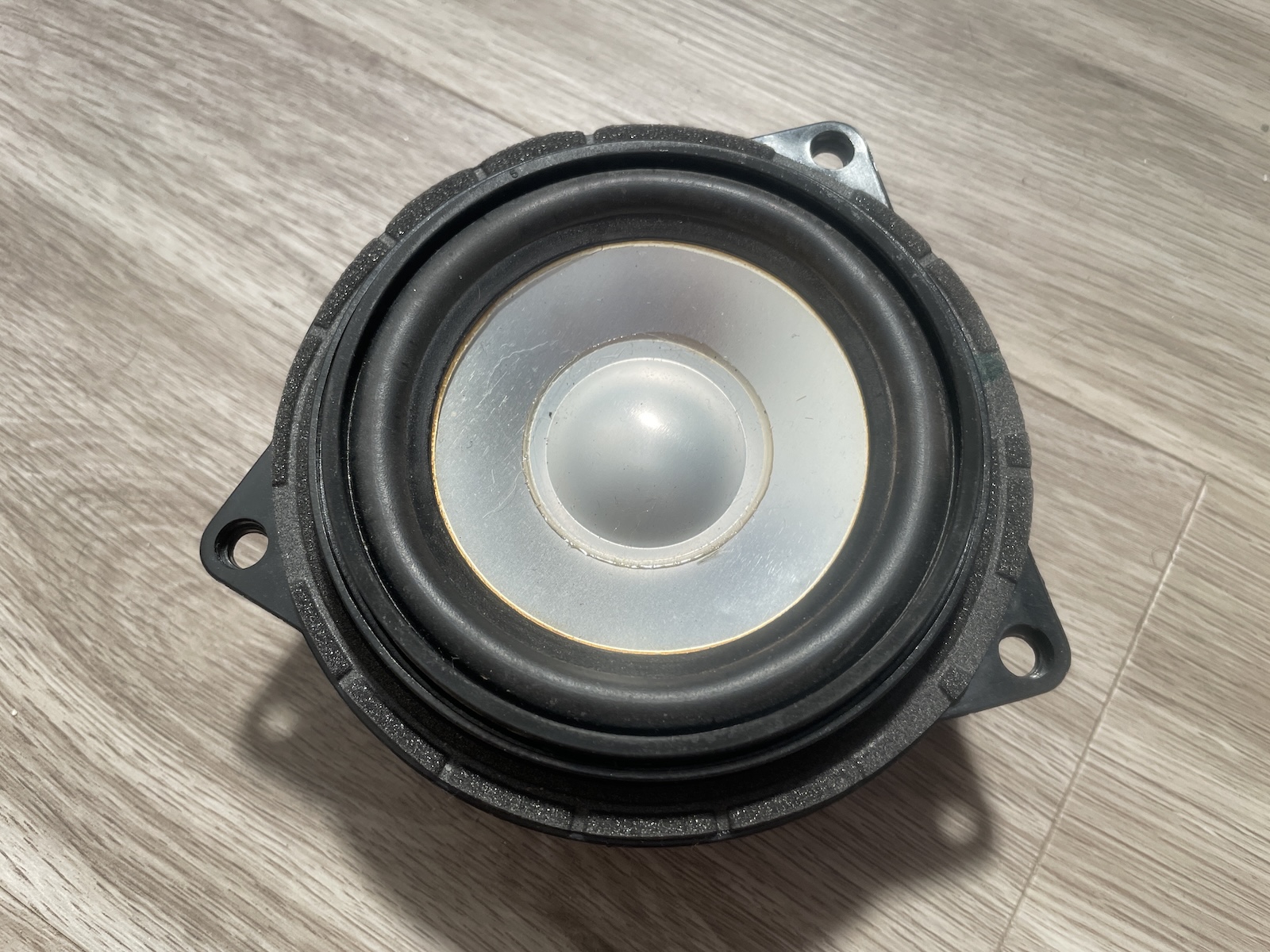
Once you have all these parameters worked out, it’s time to start thinking about tone, especially if you won’t be replacing the radio. Most factory head units offer notoriously poor sound adjustment, in that they often have broad-sweeping shelf adjustment for bass and treble, and that’s about it. We’re talking extremely coarse tuning that makes speaker selection extra important. A warm speaker will typically have stronger bass and richer midrange, while a bright speaker will excel in high-frequency sound. Granted, this advice largely applies to older vehicles. Modern sound systems use digital signal processing, including frequency boosts and cuts, and time alignment to get better sound out of cheap factory speakers. Swapping in aftermarket speakers could dramatically change the sound signature and induce unwanted sonic weirdness, so approach newer stereos with caution if you aren’t adding an aftermarket digital signal processing unit.
Unsurprisingly, speaker construction plays a role in tone. Metallic tweeter cones tend to sound harsher than reinforced silk cones, but they also cut through road noise better in noisy interiors. Mylar and polymer cones typically offer superior UV and weather resistance, at the expense of some sound quality because they aren’t that stiff. Paper speaker cones can sound wonderfully natural but often aren’t as resistant to humidity as polypropylene cones. Aluminum speaker cones are exceptionally rigid but can be more prone to resonance at certain frequencies. If you have an electronics store near you with one of those speaker walls, bring your music and do a little listening to find out what you like.
Installing Your New Speakers
Once you settle on a pair of speakers, you’re going to want to look at installation gear. Speaker harness adapters are a no-brainer, as they mean you won’t have to cut your factory speaker harnesses or do any crimping or soldering. Simply connect the spade terminals on the speaker, plug the other end of the adapter into your factory speaker harness, and enjoy. Likewise, some cars require speaker brackets for aftermarket speakers. These are typically cheap, and with the rise of 3D printing, you can even make them at home. Just don’t use PLA, it melts in hot car interiors. If you’re removing a door panel, you might want to look into sound deadening for a quieter ride and better sound, and if you’re replacing small speakers, you might want to look into bass blockers that deaden low frequencies better produced by other speakers in the vehicle. Oh, and if you’ll need to remove door panels, order replacement clips ahead of time. It’s not uncommon to break a few if they’re old, and being able to immediately reattach your door panel is a lot nicer than driving around with exposed bits of sharp metal next to you.
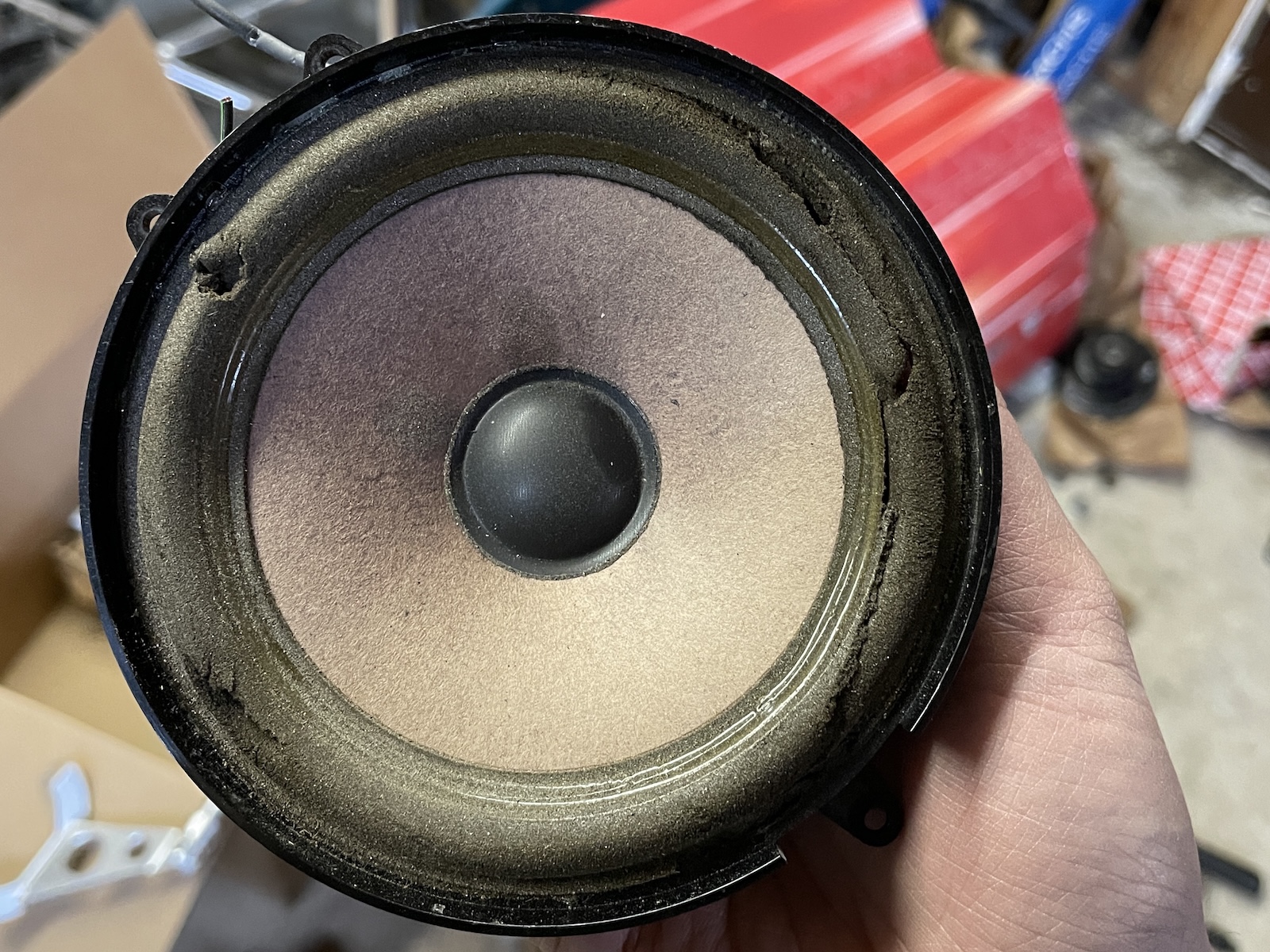
That’s a lot to digest, so let’s put it all into practice. Last summer, every song played in my 1999 Porsche Boxster started to sound like a 192 kbps MP3 ripped off of a music blog. Since the door drivers are weird two-ohm 5.25-inch woofers with a low-pass filter to give them nothing but bass, the 26-year-old dash speakers were the obvious culprit. Yep, that looks pretty crispy. My Boxster was specced from the factory with premium audio, which means a Haes 4x40w amplifier driving two four-ohm four-inch dashboard speakers with accompanying dome tweeters, along with the aforementioned funky door woofers. Since the factory tweeters are a thumb-width away from the mid-range speakers and there isn’t much room in the dashboard for separate crossover units, coaxial replacements would do just fine.

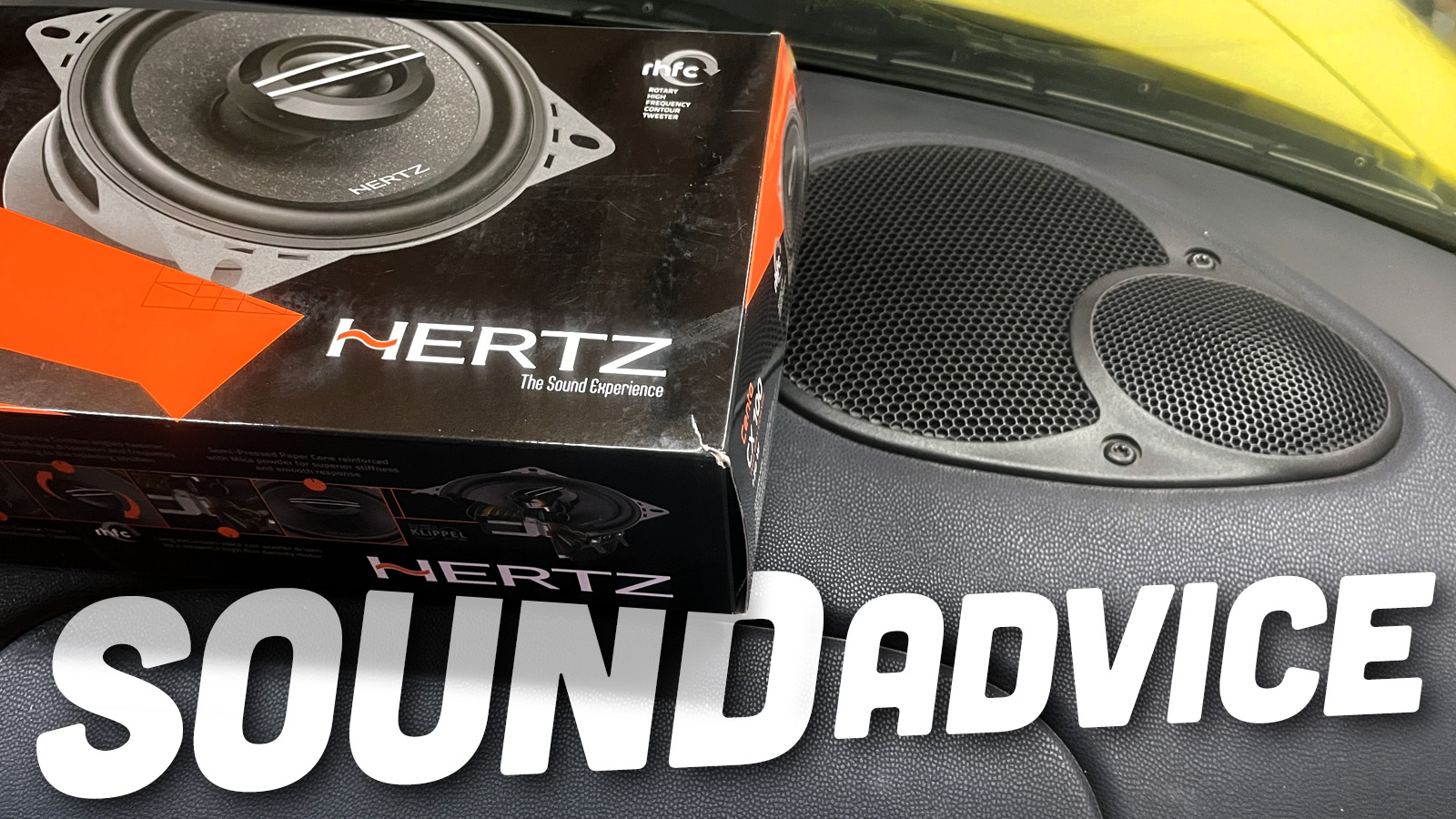
I ended up going with Hertz Cento CX 100 speakers for a couple of reasons. Firstly, their shallow construction, reasonable 3.04-inch magnet diameter, and low tweeter protrusion of less than half-an-inch gives me plenty of space to tuck a harness adapter below each speaker and avoid hitting the speaker grilles. Secondly, with a frequency response of 80 to 22,000 Hz, an RMS power rating of 40 watts, an impedance of four ohms, and a sensitivity of 92 dB, they offer a broad spectrum of sound and powerful output. Finally, since the factory placement in the Boxster means some degree of fighting windshield tweeter reflections, the Tetolon silk-blend tweeter cones should offer a nice balance. Since the Boxster requires speaker brackets to mate aftermarket speakers with the factory grilles, I had a set 3D printed, massaged them to fit the new speakers, and lopped off any mounting tabs on the speaker that interfered with fitment. From there, I applied some foam tape as insulation, connected up the speaker adapters, and bolted them into the car.
Once I received the speaker adapters, the whole installation process took an hour at most, with the hardest parts being removing the Torx screws without hitting the windshield and exercising care not to scratch the vinyl dash pad. Is it the visually-tidiest install ever underneath the speaker grilles? No, it’s not my best Dremel work ever, but the wiring’s safe, the speakers are secure, and the resulting sound is vastly better than what I had before. Best of all, I got everything but the speaker adapters on sale, so the whole setup cost me less than one new factory replacement speaker. So, before you press that order button, research is key. An extra few minutes of Googling can make speaker replacement go smoother and give you the sound you want at a price you can afford.
Top graphic image: Thomas Hundal


Crutchfield is your friend here, even if you don’t buy from them.
Or you just buy from them to support the use of their knowledge – plus you get installation goodies and info for free.
I used to buy exclusively from Crutchfield, but recently the installation goodies aren’t necessarily free, and the website is a bit a pain to navigate.
Yeah, but they’re still inexpensive and the instructions are pretty helpful.
As for the website, I’ll admit I can stuggle to find certain items, but the amount of info they provide (and links to the user manuals) trumps that small problem.
You mean to tell me dropping 10” subwoofers in the trunk of my Geo Storm and calling it good wasn’t the right way to do car audio. 16 year old me is very disappointed.
My first car was a 73 Duster with a slant 6. I paid more for the 70’s Pioneer Super Tuner and amplified car speakers that I added then what I paid for the car!
Priorities !
Same with my above anecdote haha. $300 for the car. $500 for the audio components. Having tinnitus before the age of 40, priceless.
An upgraded head unit and speakers was my very first car modification on my 1989 XJ decades ago. I used Crutchfield back then and they were and are great to work with. I’ve upgraded stereos and speakers in every vehicle since until my recent turbo NC Miata. I pulled the previous owners broken aftermarket head unit out and just didn’t bother putting anything back in. The whoosh noises are enough and the wind noise covers the rest. I now have a double DIN size hole in the dash that I might fill with a Lego diorama, or something similar.
Thank you for coming to my Ted Talk on “spending lots of money to upgrade audio in enthusiast cars through trial and error.” This is all largely stuff that I vibed out myself over the past eight years, and hope if you own one of the specific cars in question you now never have to suffer from trying to find information on enthusiast forums and shuffle through endless forum posts of people saying insipid things like “the sound of the car exhaust is the only audio system I need” or “just buy some headphones to wear while driving” when people made threads for suggestions.
Edit: lol I just realized these weren’t nested replies to my first post. Sorry!
Elise 111R audio advice, from someone who spent a lot of money making it sound much better than you’d probably expect it could:
The Elise is a relatively noisy car with nearly no space for anything (but luckily not a lot of space at all to push sound). You need efficient speakers more than anything else. The rear is specced for 5.25″ speakers, but what I did was buy the speaker ring adapters (JSP ones off Amazon, for designed for the full size Harleys) and trim them so they I could mount 6.5 Hertz Mille Pro speakers. This both offsets the speakers so they are bit less “firing into the back of the seat” and also provides some structure for the somewhat flimsy piece of plastic that the speakers are normally attached to (so the larger speakers will cause resonance in the plastic much less than the smaller speakers did before). The conventional wisdom in Elise circles is to buy similar speaker rings for the dash to allow fitment of 5.25s, but that still requires cutting into the dash for fitment and looks kinda goofy so instead I bought Hertz Cento CX100s so they sit flush which as far as I could tell were the best 4 inch speakers you can get normally. The Joying 8.9″ floating head unit on Amazon also fits basically flawlessly in an Elise, filling up the entirety of the space between the airbag panel and the gauge cluser panel and stopping vertically just above the HVAC controls and just below. If you had told me it was designed for the car I’d scarcely have reason to disbelieve you. For tweeters I got Hertz C26s and angle mounted them on the forward most screw holding the door panel on firing upward into the dashboard at about a 20° angle; preventing things from being harsh even though the tweeters aren’t that far away from you.
Realistically, though, all of this is probably fluff. The final 10% (that happens to take up over a grand by itself). Elises already came with off the shelf head units and speakers from the factory that are more likely than not long replaced by the time you come across one (mine had a new head unit and the original in a box in the trunk), so all that really probably necessary in an Elise to get a decent uplift is an efficient small amplifier with a DSP and a powered sub; of which the Elise has neither from the factory. Kicker Key is flawless for the first, because you can wire it and shove it on top of the chassis sills behind the dash, like it’s not even there; then do the DSP functionality. For the sub, there are a couple options that would fit, but the one I went with was the Pioneer TS-WX010A; which is a small self contained unit that can fit right on top of the passenger footwell rest and not even be felt. Federalized Elises all have the wiring run for the driving lamps even though they were rarely specced for them; so underneath the dashboard on the passenger side there is even a fuse holder that you can tap into to run the circuit directly down to power it the sub.
Keep in mind to run low level inputs on an Elise you need to pop the airbag panel off, so you’ll need the replacement clips on hand to reinstall it. B121U0117F is the part number, you need four clips (buy 12) and they are like $3 each. You also need to be flexible because even when you pull the seats out you don’t have a lot of room to work. I personally didn’t bother with any sound deadening because I wanted to add as little weight as possible while doing all this.
Facelift C4 Corvette audio advice, from someone who spent a lot of money to replace the top spec Bose system and made it sound pretty damn good:
Rip it all out. Even if the Bose system was good for the 1990s it’s not anymore even if it somehow still works. Get the factory base audio speaker boxes for the rear (which is already a gigantic sealed fiberglass enclosure from the factory) off eBay and some high efficiency midrange coaxials 6x9s high in the back (I used the JBL GTO 939s, but the top spec Pioneers should be fine too). Build your own speaker boxes for the footwells out of MDF or whiteboard material (they don’t have to look great because they are behind the sill panel) and you can put some good quality 6.5s in there. I used a combination of JBL GTO 629s and 3/4″ tweeters in attached to the A-Pillar mounted about 4 inches above the lowest screw holding the a-pillar trim (thought in line with the top corner of the side mirrors), firing across the dash. Get a subwoofer. You don’t need anything crazy like those goofy boomer setups you see at car shows where they fill the entire hatch area with subwoofer boxes. I used a Kicker Comp RT 8″, mounted to a piece of thin particle board and cut to fit where the little storage bin went under the carpet in the rear; with a low profile handle straddling the speaker hole so the assembly could be lifted out to still use the storage space below.
Resist the urge to get get a combined amplifier, because this is a hard car to get a ground in. The smaller Kenwoods (KAC-M3001 or M1814) will both fit perfectly in the spot that the factory amplifier was on the little shelf in front of the storage cubby and a Kicker Key probably will too; then find a similar-sized amp for the subwoofer. C4 is criminally easy to run wiring through, with firewall grommets right behind the battery tray and huge channels both in the door sills and along the center console.
Any Double DIN head unit will fit right behind the factory trim plate, but the high end ones with the moving screens will need trimming (I had an AVIC-8100, then an 8400, but nowadays the high end Chinesium head unit will fit great).
My car was completely wrapped on the inside with Frost King pipe insulation more to keep it more thermally stable than necessarily sound-deadened, but this step probably isn’t really necessary if you don’t care that much about the inherently rattly nature of the C4 because the sound stage is still pretty good (much better than the C5/C6’s speaker placements) and the cabin is small.
If you don’t go insane on the head unit like I did and buy a good quality regular Double DIN system instead, you’ll probably be in it for a little over a grand and have a legitimately massive increase in sound quality that is well in line with modern systems.
996 specific audio advice (that probably applies to the 986 as well), from someone who spent a lot of money to replace the top spec Bose system only make it sound *okay*:
Don’t touch the door woofers. This are actually decent quality. Put the most expensive twiddlers in the dash and rear seats you can afford/will fit. I tried Infinity Reference and they were a waste of time. Clearer but much harsher. Infinity Kappas were a much better upgrade and added a warmness to the sound across the entire range. Nowadays I would use Cento CX100s. Realistically though, getting rid of the shitty head unit (for the Porsche PCCM+ system in my case) was a much more dramatic upgrade than the speakers alone were; because the amp itself in the frunk is decent.
Even if you don’t replace the head unit though you’ll get a decent uplift from Hertz Cento CX100s for ~$500
Dealing with factory bose systems is awful. 🙁
Useful writeup!
> A bottom end of 70 Hz compared to 90 Hz can make a huge difference
Forget “can,” it *does*. Losing power below 9Hz (~F#) vs below 70Hz (~D) means you’re missing some of the energy in the root of a lot of standard guitar chords, which will make a lot of rock and acoustic music sound weaker than it should.
The owner of a high-end audio equipment store once confided in me that most of his customers knew nearly nothing about what to buy or why, so he and his staff would throw out technical terminology for a while and sell them the most expensive components that they could.
I once watched a saleswoman gush about how heavier speaker wires and gold-plated connectors would “definitely” improve sound quality.
Around that time I was working at an auto parts store that sold Kraco stereos, which were crap, but not all of our customers realized that. A good percentage of the stereos were returned, as they were defective right out of the package.
“High-end audio” is almost entirely a cheat code to extract unlimited money from middle-aged men who can’t hear above 18KHz and believe in directional cables.
I think you meant to say “8kHz.”
What? Eh??? Stop mumbling!
WHAT
One of my kids had one of those sound clips that ‘old’ people can’t hear. On an unrelated note, did you know that you can melt 100w tweeters with a 40w per channel amp?
Tweeters are more sensitive to distortion than other drivers. Overdrive a 40W amp and it becomes more like a steady (DC) current that will burn out the voice coils rather than the AC current that music is.
Beat me to this observation. I once burnt out an Advent small tweeter in my office system while playing around with a signal generator. Was puzzled why their high end didn’t seem to extend beyond 8kHz no matter how much gain I used, until the smell of smoke made me realize that the problem was my ears.
Holy trip back to high school Batman!!
I have a related request.
To those who play a lot of bass: PLEASE PROPERLY ATTACH YOUR LICENCE PLATE AND FRAME! All that buzzing is an assault on the ear balls.
Thank you.
It might be better (and cheaper) to just refoam the stock speakers if all else is OK. I’ve refoamed home speakers and while it’s a bit tedious it’s not hard to do.
Agreed. I did this with a pair of Baby Advents a while back and it was not as hard as I thought it might be. And they sound fantastic again.
I found the hardest part is getting off all the crumbling foam and goo for a clean surface. But once it was done the speakers sounded great again.
Pro tip is use a razor blade, but not in a slicing motion. Hold 90 degrees to cone and use in a dragging/scraping motion. The old brittle foam comes off and no damage to the cone. I have done so many re cone jobs at this point from 4in drivers to 15in. Not the most fun job, but when a good set of speakers come back to life and sound great again it is a satisfying feeling.
I am sure eventually I will have to deal with replacing speakers, but to date I am perfectly happy with the sound quality of the H/K systems in my BMWs and Mercedes.
I spent TONS of money and effort on car audio over the years, very happy to not have to anymore. Though my Spitfire is due for a refresh. I really want one of those retro-look head units when I finally get around to installing the new interior. Speakers are fine – now very vintage Cambridge Soundworks separates with a Soundstream amp in the trunk. You can almost hear them at highway speeds too!
As another 986 owner whose original factory speakers are getting long in the tooth, where did you get the 3D printed speaker brackets?
Thingiverse, Thangs, and Makerworld are the best options for 3D printer models.
Quick search had the most results on Thingiverse. I didn’t find anything specifically labeled for a 986, but there is something for the 987.
Search Thingiverse – Thingiverse
Don’t forget Printables! That’s my go-to.
Tinkercad too. You can also make your own designs there online very easily.
I got mine off eBay from a guy in Britain who 3D prints them. His Ebay username is super_paulie. They fit perfect. His Ebay post also gives you exact speaker measurements that will fit the slightly smaller space on the drivers side.
Thomas, your statement about component vs coaxial is kinda wrong and a gross oversimplification. Coaxials simply place the components on the same axis, but they are still discrete transducer components. Just sayin’.
Also, if you really like quality sounds, get a powered sub, but if your don’t care, save that weight. I say this as someone who stupidly put a fairly heavy powered sub in the trunk of my S2000. Duh-me.
One mistake I see a lot of people make is almost everyone is UNDERPOWERING their speakers. If a speaker is rated for 300W before it distorts, and you only give it like..75W, the result will be a tinny, weak sound with no low end.
Back in the day I had some really nice 6×9 Orions rated at 400W or something, and I bought a seperate alpine amp and gave them like 320W, and literally everyone thought I had a subwoofer. But nope. Just a lot of power for speakers rated for high power.
Forgive me, but that’s not quite all there is to it. It has a lot to do with efficiency too. And even amplification type. I run class A SET amps with fairly low power, but they sound quite loud because there’s no class B compression. Note that I do always match any SET with an active subwoofer because bass sucks power like few things.
Your advice is good in that system matching really matters, but it’s messier than just that. Larger, higher wattage capable speakers are usually more efficient than smaller ones. That means that you might actually get more sound of a high power capable speaker than one matching the amp max in contrast to your assumption.
Interesting article!
I’ve vaguely considered upgrading the speakers in the old Tracker, since the bass is pretty non-existent, and max volume is hardly loud enough to hear podcasts on the highway.
I’m not sure if this article makes it feel more or less approachable, though! I’m comfortable 3D printing and soldering, and a lot of the terminology sounds like what I’ve been learning in radio/electrical theory classes, but it does sound like a lot of parameters to understand!
It’s shocking both how universally bad car audio was before around 2010, especially if you bought the fancy option, and just as much how universally good car audio has been since 2015.
One big recommendation to add is please add some sound dampening like Dynamat while you’re in there. There are lots of cheap options you can find on amazon and it usually makes more of a difference in how good things sound than a high end amplifier / head unit.
I think a particularly big reason for that is how cheap and good DSPs can be nowadays. All sorts of 10+ year old forum posts you find on the internet tended to say that the head unit was a dead end for increased sound quality, and the real gains to be made were in replacing speakers and amps; whereas my experience with modern-ish cars has basically been the opposite and the speakers/amplifier were probably fine but the hardware/software in the head unit itself was been marginal. My 996 had noticeable gains with replacing the main speakers for much nicer ones, but the actual big improvement was dumping the original head unit and installing the modern retrofit one Porsche sells. My X150 XKR had decent sound quality (not awful but most definitely not befitting how much the car cost new), but replacing it with the modern Tesla-style touch screen system and doing nothing else with the speakers or amplifier made it sound like an entirely different car in terms of quality; and from what I’ve read custom solutions that forum members had been doing to “hack” the software/DSP settings from newer Jaguar/Land Rover sound systems onto the X150 sound system also led to uplifts.
It’s also probably why the Chinese Android units have had such huge boosts in sound quality to make them much more justifiable of an audio solution to the established brands vs where they were before COVID.
Shout out to my 2004 Jag XJR, which had a very good soundsystem from the factory
It entirely depends on the system you choose.
We buy lower-tier cars and usually end up with the lowest-tier audio systems. The one on my ’06 Altima was one step up and had six poly 2ohm Clarion-made speakers with big honkin’ magnets connected to a Panasonic head unit. I added a nice 12″ IDQ sub and it sounded great. The head unit also had the best radio setup I’ve ever seen – instead of AM/FM1/FM2, it was A/B/C. You could save whatever presets you wanted, so of course mine had perhaps one AM station and the rest were all FM. I’ve no idea why others haven’t done that.
Meanwhile, the ’14 Mazda3 had four paper whizzer cone sad-sack specials, like my ’98 Chevy C1500. Total crap. Luckily, drop-in Infinity Reference component front/coax rear speakers dramatically improved the sound, and I have a small Infinity sub I’m planning to put under the passenger seat.
Going yet newer, our ’21 Outback has similarly shit speakers to the Mazda coupled with some godawful processing. I can’t stand it, but my wife doesn’t mind, so unless it becomes my daily I’m leaving it alone. It’s absolutely horrid.
I have also modified the audio system in every car I’ve owned (four, soon to be five).
I don’t have much to add, except, don’t trust amplifiers with built-in bluetooth. I installed an amp and speakers in a Nissan Xterra because I was waiting for wireless Android Auto stereos to come down in price (they had just hit the market). The amp had bluetooth built in so for a few months, I would just connect my phone directly to the amp like it were a bluetooth speaker. It worked fine and it got plenty loud.
When I finally installed a proper aftermarket stereo and hooked it up to the amp, the audio quality jumped 10 fold. I’m not an audiophile but I have listened to and appreciated some really nice setups. My completed system sounded incredible and it became the highest quality audio system in my life.
Unfortunately, once you get used to that quality, lesser systems are uninspiring. Consequently, I listen to podcasts much more than music, now that the Nissan is gone.
A couple of notes.
True 3 way speakers have a woofer, a midrange, and a tweeter…. Not two tweeters. Fwiw one is not better than another. It all depends on the overall sound. There are great 2 way speakers and awful 3 ways; and visa versa.
The power rating of a speaker is the max power the wires in the voice coil can handle before it pops like a fuse plus the maximum travel the speaker cone can go before it bangs against the back of the magnet. A higher power rating isn’t necessarily better as the speaker may have heavier voice coil wire to handle more current but that will also increase the moving mass, running the response. This is critical with tiny tweeters that by design have to be very low mass to move back and forth at 15,000 times a second or so. Super thin voice coil wires are the norm for them. They can’t handle a lot of power but usually there’s not much energy way up there.
Speaking of power. You are more likely to destroy 100 watt rated speakers with a 10 watt stereo than pop 10 watt speakers with a 100 watt stereo. That’s because when you overdrive a low power amplifier the waveforms get clipped top and bottom causing enormous odd-order harmonics and distortion, especially in those very high frequencies where tweeters with those very thin voice coil wires are… over drive a 10 watt amp with heavy bass notes and pop goes the tweeters! Turn up a 100 watt amp and those heavy high current bass note stay clean and go just to the woofer ( with its more robust voice coil) where they belong. Tweeters survive.
A good choice is to have a separately powered sub woofer coupled with a stereo head unit that can be configured to not only split the deep bass off via a low level sub out jack, but ( this is critical) split off just the higher frequencies and prevent the deep bass from continuing into the stereo’s amp and regular speakers. This is called bi-amping and done right works very well and gets very loud.
Finally you can never have too much power but car stereos are spec’d by BS marketing teams. Unless you’ve got dedicated power ( extra battery.? Large capacitors? 00 gauge wiring?) you probably only have about 10-15 watts per channel from your stereo head unit regardless of how it is advertised. If your stereo in your car is fed by 12v and a 20 amp fuse; 12×20 = 120 watts / 4 channels = 30 watts / channel and with class AB amplifiers about 50% efficient that leaves maybe 15 watts per channel going to the speakers ( the rest is heat at the stereo’s heat sinks).
Rock on and watch your hearing. You’ll pay the price later in life if you abuse your hearing when you are young. It don’t come back!
I strongly suggest using the high-level inputs on a sub whenever possible.
Also, note that you can feed all the high frequency signal you want to your sub; it just won’t reproduce them is all. Just don’t send the lows to the tweeters.
And I swear I’m not trying top be argumentative, but you might have really simplified the signal power math a bit too far, as there are capacitors involved which change things considerably. As such, you can have momentary outputs far exceeding an averaged rating.
What did you say? Could you repeat that?
eh? Sonny? What’s that you say? I ain’t deef ya know… 🙂
The capacitor/cross over protecting tweeters doesn’t help when you’re clipping an amplifier. Those deep bass notes become square waves with very high frequency very powerful harmonics. They’re high enough in frequency to blow through the crossover into the tweeter and they’re powerful enough to melt the tweeter’s voice coil wire like a fuse.
The problem with using high-level outputs to drive a sub is you’re defeating one of the best reasons for bi-amping. You don’t WANT to have any deep bass going out of the main stereo’s high level (speaker outputs) – you want to split off the deep bass BEFORE it gets to the amplifier section so you don’t clip the main stereo amp. It’s those thumping deep bass notes that have all the power and those are what will clip the amp (and fry the tweeters). Better to take the deep bass off before the mains amp AND hopefully the splitter will also keep the deep bass from passing on to the regular amplifier and speakers.
No offense, but you are misusing the biamp term. I will expound on that in another reply.
Yes, you absolutely should use speaker level outputs from the amp, into the high-level inputs of the sub, which then passes them through a high-pass filter/crossover before sending them onto the main speakers. I think you might be forgetting about that function of sub-woofer speaker level inputs. They they always filter the lows, as that is the entire point.
The reason you should always use the speaker level inputs whenever possible simply has to do with timing. You just plain achieve better signal parity with those inputs over an RCA which uses a different signal path.
You lost me a bit about the tweeters. I believe we fully agree that you should never feed bass signals to a tweeter sans crossover or pass filter (same thing really). Feeding that much current to a tiny tweeter coil will melt it toot suite.
Finally, and please don’t hate me, but you are fundamentality misunderstanding one thing. An amplifier will not clip unless there is something actually overdrawing it. You can feed all the dirty down deep bass signal you want to an amplifier input, but if there isn’t a huge woofer to draw that power, no actual amplification of those bass signals occurs and couldn’t possibly clip the amplifier thus damaging the tweeter. It just doesn’t work that way. This means that the signal coming out of the sub high-level output only contains higher frequencies to the speakers and thus only those signals are amplified and virtually the entire load of low frequency amplification is carried by the sub, not the primary amp. Does that make sense?
Ooops. Nope. You can most certainly clip a power amp even with no load on it as it’s the PA voltage that gets clipped. Most preamps can overdrive the amplifier down stream since the preamp is design to boost even very low signals. Put a normal signal in, say from the radio, cd or streaming and the preamp will blindly boost it up past the max input level of the amp if you let it. The preamp output is always on max amplification but the preamp level gets attenuated by the volume control on the way out. As a math example lets make up some numbers… preamp amplifies x100, power amp amplifies x10…
Assuming a nominal 12v :
Sig = .02 preamp ups this to 2v with volume knob at 50% = Preamp out = 1v and power out peaks at a loud but clean 10v…
Sig = 02 preamps ups this to 2v with volume knob now at 75% = preamp out = 1..75v and power amp out maxed out at only = 12v (clipped because 12v is all you have. It can’t give you 17.5v).
Nasty business if you overdrive the amp by cranking the volume (attunator) all the way up.
Bi amp means 2 amp. The split needs to be done at the preamp level before the power amps if you can. Usually one amp for lows ( and just lows) and another for highs ( and just highs) I’ve had preamp systems with a 12db/ octave crossover at 800 hz to split lows to a mid-sub and highs to an electrostatic array. I’ve also had systems more like a car where the sub output goes to the low amp ( the sub woofer amp) and only lows, while everything else but the lows goes to the high amp.
Some car stereo head ends have low level sub outputs and let you configure the crossover point.. guessing maybe 100-120 hz. Everything below that goes to the sub, everything above stays in the head end going to the built in amp and the front and rear speakers in the car. If you don’t have a sub then you disable the feature and the main amp and speakers gets it all… low bass through top highs.
Some powered subs have low and high level inputs. If you use a high level input on the sub form your stereo amp speaker you are feeding the sub with lows also amplifying the lows and feeding your main speakers. Your main speakers probably won’t go as low as the sub woofer so you won’t hear much bass from them but your poor main amp is still amplifying those deep lows and you run the risk of clipping. The powered sub is just going to take your high level input and attenuated it down to preamp levels and reamplify it anyway.
Trust me on this…use the low level sub out to drive your sub if you can.
Well sure the input signal can be clipped if it’s too high a voltage, but it can’t do any damage to nothing attached. What you’re talking is different. Over voltage is the problem then, not frequency. I can instantly destroy an amp’s input stage by feeding it 120v from a wall socket. Without something pulling current there’s nothing to damage the output stage.
You need to do some research on subwoofer amplifiers. They do not attenuate the high input to a line level before amplification. Note that it was Simon Zreczny of Audio Consultants and his main technical guy David who made it absolutely clear that you should never use the low level for sub unless you had no other choice.
I don’t know what kind of equipment you have, but I can easily demonstrate the problem. Just switching inputs yields much muddier bass from line vs speaker level inputs. It’s just a signal path timing issue.
Do this please: Google “rel subwoofer line or speaker wire”
I’m going to go with what a premier manufacturer says. Note, that we’re talking about music here, not home theater.
The thing with the tweeter is when you are clipping an amp you are changing smooth sound waves into harsh square waves. Square waves generate enormous amounts of noise (harmonics out the wazooo) … you turn a clean deep base note into a distorted bass note with high frequency screaming trash. The crossover doesn’t care if it’s a flute or screaming garbage, those very loud trashy frequencies get passed straight through the crossover since the frequencies are quite high, all the way to the tweeter, where they promptly over heat and melt the very light, but very thin voice coil wire.
It’s all about the odd order harmonics generated by square waves.
I think you’re mixing square waves with DC. You can amp square waves just fine, even though they will certainly sound harsh, but it’s when you overdrive to DC that the damage occurs. Is that what you mean?
Do you know how a passive crossover works? Most speakers do in reality feed high frequency to woofers; they just don’t get reproduced by those big fat woofers coils.
You can amp square waves just fine, but you don’t want square waves inaudio you want smooth audio waves that match the input signal as close as they can, just amplified. The problem isn’t the amplifying… it’s the trash that’s created when you inadvertently make a square wave out of a smooth audio wave.
And yes the woofer may also get the high frequency signals if you are just using a simple capacitor as a high pass for the tweeter, but woofers by design have beefy voice coils so the high frequencies, if any, won’t melt the wires. Tweeter voice coils typically have hair thin or smaller wires, sometimes also a cooling ferrofluid bath to keep the from melting, but they can’t handle energy Beyond what they’re designed for. Clipping lows can create a lot more high frequency noise than you would get playing even very loud ( but non distorted) music.
We’re both trying to recommend best practices. Certainly it will come down to the specific components and setup. I think we can both agree biamping is better than not, and better to have too much power than not enough. Don’t over drive the system to the point where it distorts, and pick components that match and compliment each other.
Indeed. However, I will not yield on the high level thing if you care about sound quality. REL and B&W fully agree with that advice.
FWIW, I used to believe exactly as you do. It was the dealer (Audio Consultants) who corrected me upon the horror of hearing I was using line levels for subs. I’m a full of shit know it all who despises being wrong, so it was not easy for me to be wrong, but I was.
I really do hope you check out what REL says on the matter. The reason I’m so ‘vocal’ about this is because it honestly did improve the sound significantly when I switched from line to speaker level. Like, it was undeniably obvious I was wrong and I could hear it immediately.
FWIW my (affordable) powered sub line of choice is the GoldenEar line of subs from about $500 to $2000.
They only have low-level inputs. 🙂
I have a problem. I own six Strata IIIs.
I’ve only a pair of goldenear force field 30s paired with my Quad ESL 2912s
Quads. Nice!
The autopian may be the only place on the web where audio guys (assuming you’re both guys) can disagree on some fundamentals but attaboy each other’s rigs. Anywhere else you’d be impugning each other’s mother’s virtue and shouting words that would make a US Marine blush.
Well done.
I own the domain Audiotopian.com. Honest. You can look it up.
Anyway, I’m never taking a dump on this place by going low (except maybe over politics ;)). Besides, as I said in another reply, I used to believe the exact same thing as Zipn. It was only after professionals made quite clear I was wrong did I learn.
Regarding Bi amplification: Having an active subwoofer does not equate to Bi amplification.
Bi, tri, quad, and so on (see B&W Nautilus) amplification is when you have discrete amps for each speaker input, not when you mix in a sub. Let’s say I have two monoblocks each driving a full range transducer and then I add a single active subwoofer. By your definition, that would be bi amplification, which it just isn’t.
Here’s one to pick apart. I bi-wire a couple sets on my speakers with solid silver conductors.
One interesting discussion guys.
Being a boring and drunk sort of night, my only disappointment was that your discourse did not devolve into a shit throwing, insult filled, irrational monkey spank debate.
However you both made points that reminded me of why all my high end car stereo shit was always purchased at K Mart or Walmart back in the day.
But carry on by all means…
Hahaha! So fucking true. Twenty years ago I would have sunk low, but now I know I’m completely full of it so I can usually keep sane. Usually.
At this point I mostly only care about accuracy than my own pathetic ego.
Appreciate the laugh here.
Thanks, I appreciate it. It’s easy to take the high road
….since I’m right and he’s wrong
(just kidding)
I just now remembered the other big reason to use speaker inputs. Preamplification is only done once vs twice with line level. This is not insignificant.
My setup is a pair powered subs plus a pair of full range electrostats with their own amp. Electronic Crossover at 80 hz, a large single driver in eavh speaker so I’m biamped by your definition, though I’d argue a powered sub driven by a system that splits only lows to the sub and sends only highs to the the main amp is also bi amped.
Either way it’s usually better to have multiple amps for your drivers than have one amp trying to do it all.
Excellent notes.
15W per speaker about a meter away is loud af.
On my to-do-someday list is to add speakers to the rear of our 2021 Odyssey. For some reason only the highest trim models included speakers for the back row passengers. From what I could tell from the wiring diagrams, it also used a different amplifier, so its not a matter of just running the wires from the speakers to the amp…
I replaced a stereo in an MR2 just so I would have an aux input, and no idea what the hell I was doing. Crutchfield included everything I could possibly need, adapters, brackets, etc.
My “go to” place for 40 years…
Love Crutchfield. My last full stereo swap was in the Miata, and even though I bought the speakers from 3rd Millennium (they sell speakers with built-in brackets for the NA) the Kenwood HU came from Crutchfield.
Nothing was more satisfying than putting a Kenwood tape deck and some decent 6x9s from Crutchfield in my first real car (76 Cutlass hand me down) to replace the factory AM radio.
Big spender! My 1st car (77 Maverick) got it’s AM radio replaced with some $20 something tape deck from Sears and a pair of Sparkomatics. Later upgrade to a secondhand pullout Alpine w/ Alpine speakers (was the 80s).
Crutchfield is great. Don’t know how much of their current business is auto these days, given how integrated infotainment/climate control units are these days.
Seriously, Crutchfield is the best. Customer service? Can’t get any better. Fitment guides? Hell yeah they got them. Speed of shipping? Rivals Summit Racing and Jegs for that. Knowledge? PHD levels
I’ve had many good experiences buying my audio gear from them.
Yeah. For car audio they are still great. Sadly most new cars can’t do head unit upgrade things, so that market is dwindling, but for speakers, you can still do some big changes.
Are you sure? They sell kits for plenty of vehicles which replace the OE screens with aftermarket ones, along with kits to integrate them into the rest of the OE system. It’s still a thing, it’s just far more expensive and fancy.
I just mean a lot of the newer vehicles have such integrated screens, that adding units is usually not possible.
Another thing is that with my Volt and others, it does Android Auto, so I don’t really need a head unit upgrade anyways.
Yeah, Thomas Hundal would have been much better off just doing a sponsored article with input from Crutchfield. There are errors and oversimplifications here which are arguably worse than no knowledge at all.
Don’t know what you’re doing with car audio? Just call Crutchfield. They know just about everything there is to know about car audio, and their pricing is reasonable.
I don’t mind building my own stereo adaptor harnesses, but their wiring harness service is also an excellent option.
They couldn’t make self installation any easier.
My 80 year old Grandma could handle doing a full system install from them, as long as her hip was still working. May she RIP….
The Crutch way has been my way for over 40 years and hundreds of installs. It’s hard to beat their prices, service.
Agreed. This article felt very un-Autopian and more like the ‘other’ sites, unfortunately. Hundal does great work. In this case I would have rather read less about general audio geeking and more about his actual install challenges and triumphs. Keep us entertained!
I felt like I’d wandered over to The Drive. “I replaced my shocks with coil-overs and was surprised they rode like shit!”