

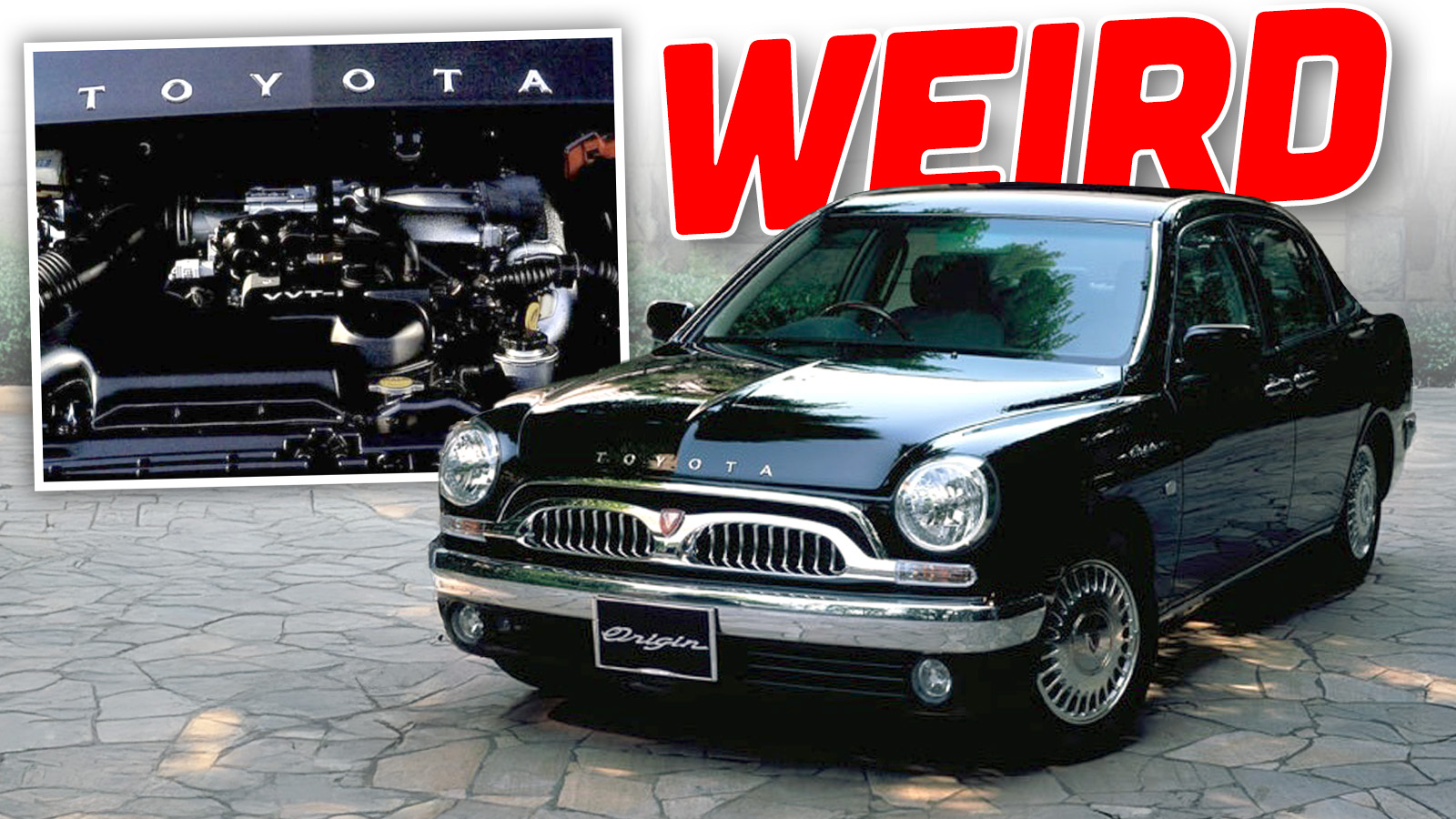
The turn of the millennium was a gold rush for retro cars. From the Volkswagen New Beetle to the Jaguar S-Type, just about every automaker under the sun was cashing in on heritage to varying effect. Some models were strokes of genius, some fell flat, but it’s safe to say that the Toyota Origin is a little different than most of its retro rivals. In the words of Brian O’Connor, “Pop the hood.”
Actually, before we pop the hood, it’s time for a little history lesson. In 1955, Toyota launched a car called the Toyopet Crown. A strange name, but a significant model for several reasons. While a reasonable hit in Japan, it almost broke Toyota in America. This was the first passenger car the marque shipped across the Pacific, and when it arrived on high-speed North American roads, some problems emerged. As Toyota put it:


The performance and quality issues that had been a source of concern materialized, and problems including a lack of output while traveling at high speeds, inadequate high-speed stability, extreme noise and vibration, abnormal vibration, and breakage of parts due to deformation occurred.
Ouch. However, Toyota did learn from these early mistakes and was almost unbelievably successful over the next 40 years. Not only was it one of the world’s largest automakers, but the year 1999 marked the milestone of 100 million Toyotas made in Japan. As a form of celebration, the marque tooled up for a limited-run model paying tribute to that original Crown.
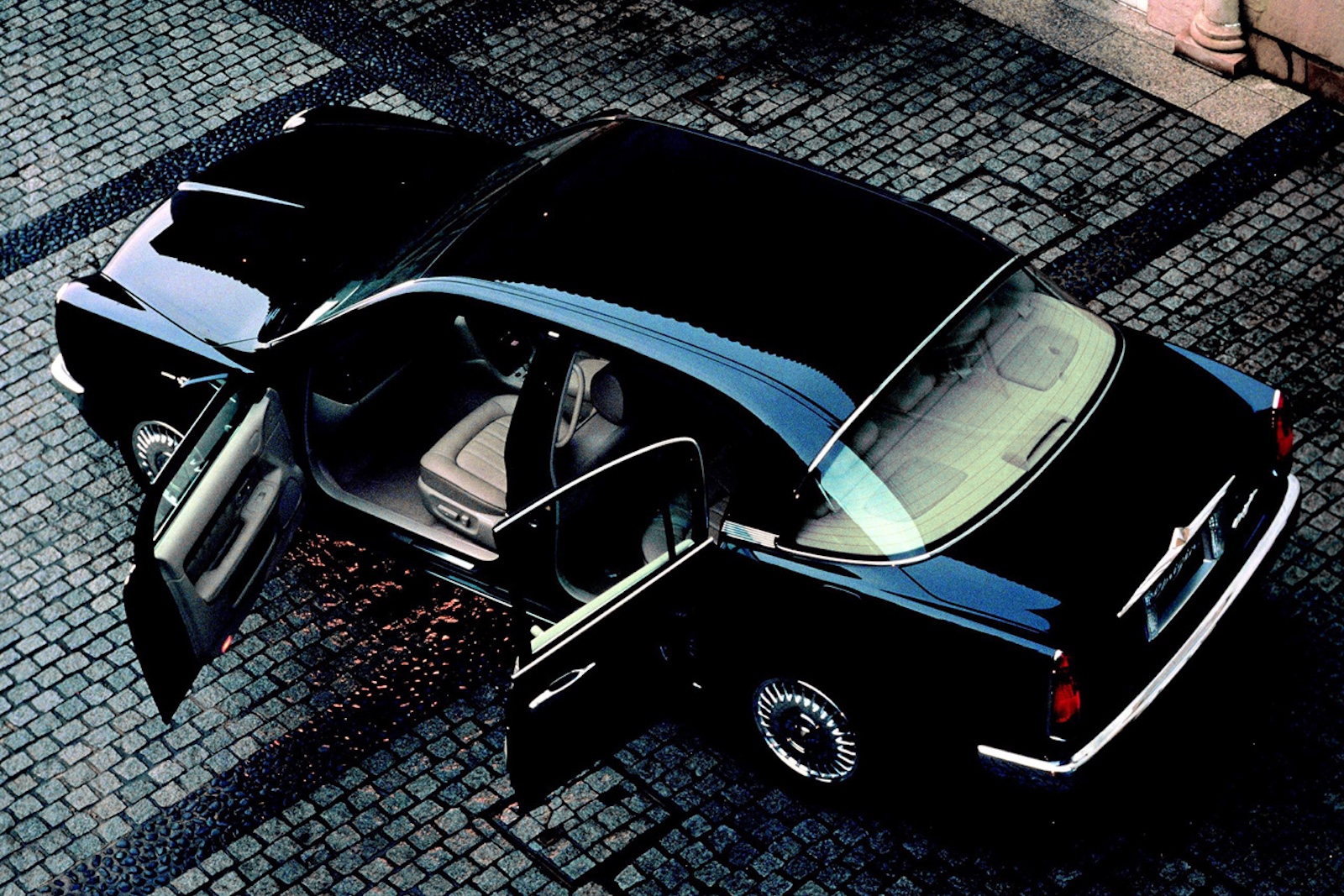
To build the 1,073-unit Origin, Toyota started with a normal Progrès sedan and then went a bit berserk. All the retro elements you’d expect are here, and then some more. The original Toyopet Crown got rear-hinged coach doors, and so did the Origin. It’s the same deal with the subtle tail fins and the wraparound rear glass, hugely expensive things to do that serve up an unmistakable ’50s vibe.
Speaking of traditional, significant portions of this sedan were built the old-fashioned way. You know, by hand. Between May of 2000 and April of 2001, craftspeople at Kanto Auto Works oversaw the careful blending of the fenders with the slam panel, wet-sanded the paint between coats, and ultimately created something like a mini-Century.
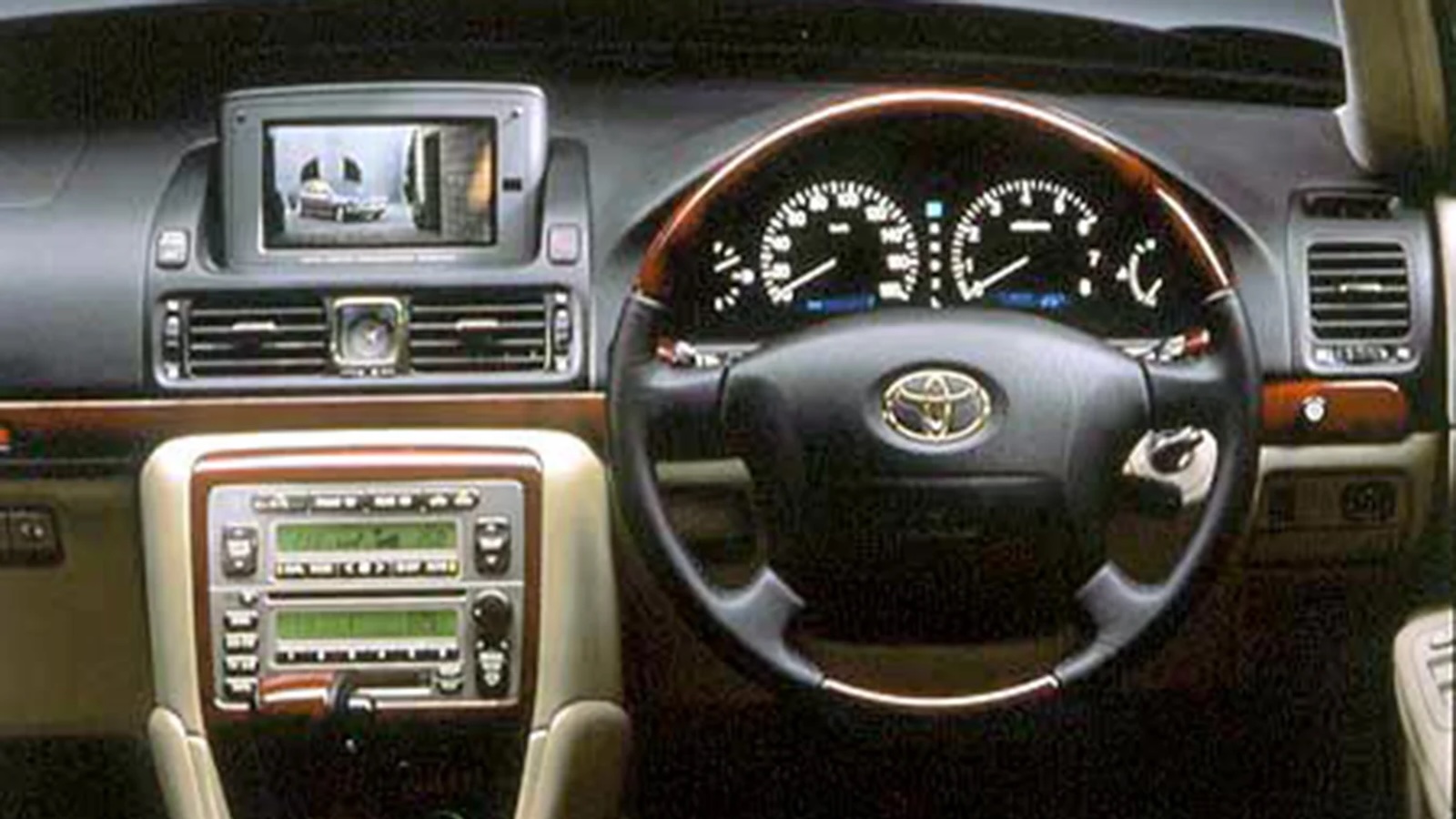
Inside the Toyota Origin, you’ll find all the trappings of Y2K luxury. We’re talking leather, wood, an electroluminescent gauge cluster, and just enough toys to keep drivers entertained. That GPS navigation unit should be fairly familiar to anyone who’s driven a Lexus IS 300, because I reckon it’s essentially the same sort of part. Opulent stuff, although perhaps the most interesting part of the Toyota Origin is what lies beneath the hood.
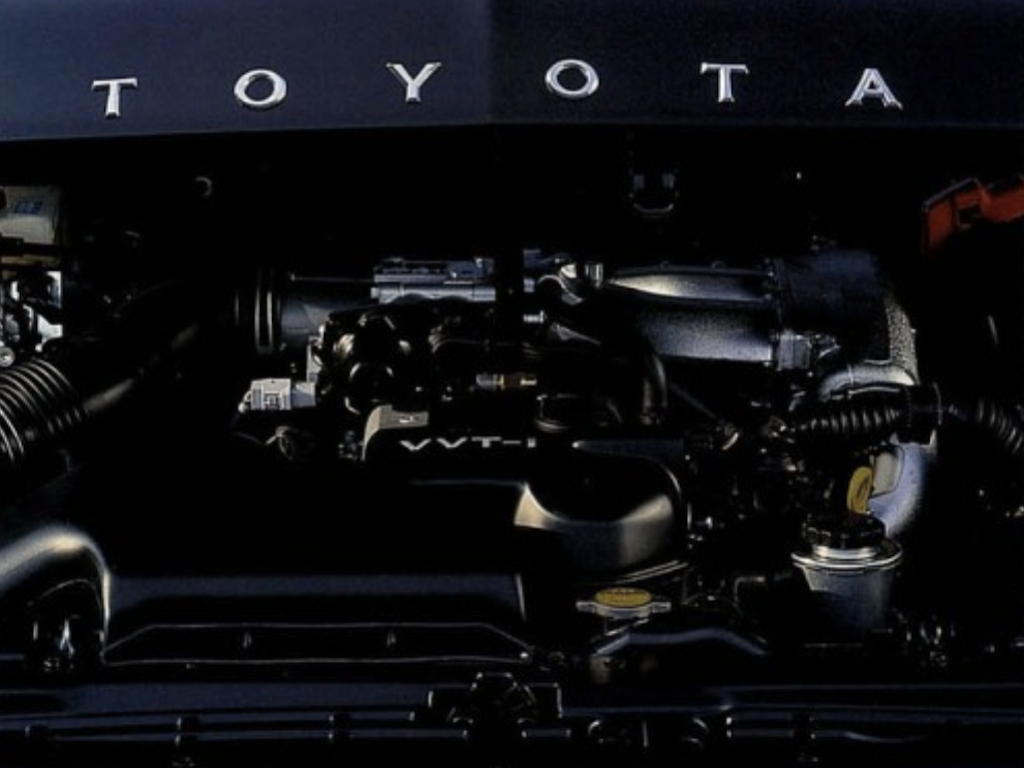
Surprisingly, each and every Toyota Origin rocks the mighty 2JZ-GE three-liter inline-six. Alright, so it might not be the same battle-hardened factory-turbocharged 2JZ-GTE that spawned a thousand memes, but it’s pretty close. This 212-horsepower unit is pretty much identical to the one found in the Lexus IS 300 and the naturally aspirated fourth-generation Toyota Supra, meaning the power potential is pretty big for anyone brave enough to bolt on a turbocharger. The standard four-speed automatic transmission will be a limiting factor here, but I wouldn’t be surprised if a W55 five-speed manual transmission from an IS 300 effectively bolted up to an Origin.

Would it be sacrilege to turn an ultra-rare hand-built Toyota sedan into a performance machine? Perhaps, but perhaps not. After all, Toyota’s now moving in a direction where even the Century ultra-luxury sedan has an exclusive GR performance variant. However, whether you want to build something crazy or simply enjoy a luxurious JDM machine that’s easy to park in the city, the Origin is now eligible for U.S. importation. The weirdest factory 2JZ-GE car can be yours, and that’s a fascinating proposition.
Top graphic image: Toyota





Looks like a hot rodded Volga M21. https://m.youtube.com/watch?v=Ee6IkfGCTAQ
IMO it fails the same way so many retro designs fail – it ends at the exterior. All that hand crafted effort to make it look retro on the outside, and then they slapped a bunch of parts bin plastics on the inside.
The A pillars are what always look wrong to me.
I’d definitely drive one.
Me too. I really like it even though the retro look is a bit obvious. But I like the overall vibe, and a NA six is plenty of power for me and my modest/around town needs. God forbid you need a part though. Legally registering JDM cars in California seems to be impossible more or less, let alone insuring them. So, I won’t even bother to see what one of these might cost.
Can’t say I’ve looked into insurance but there are a fair number of JDM vehicles running around licensed in my state. Of course that used to be the case in some states where they can currently not be registered for the road. That is what worries me the most, that I’ll spend that money and not too long after the state decides I can’t drive it on the road.
I like it – but I also kinda want a Toyota Progres now.
It has that 1960 Humber Super Snipe series II or Rover P5B feel about it. I like it.
Snipe! Thank you! I was trying to think what it reminded me of.
Good luck hunting down a Snipe. IYKYK
The Toyota Mid-Century
And with just a little bit of work, you can turn it into a Toyota Mid-Century Modern
tis should be should have been the COTD, plus I want one
That is one damn ugly car: Looks like a mix between something they find fancy in China or Russia – and some fake AI “all new you won’t believe 2026 Hillman Super Minx” video from YouTube.
That is a handsome vehicle.
There is something very cool about this…would love one if they had an RHD version. Imagine of other automakers did this kind of thing with past ordinary models.
It’s cool, but also meh.
Had a quick look at prices on goonet. These are expensive compared to an IS300 or a Crown of the same vintage but not horrendously so for something so rare. JPY3.2m for one with 116,000km, which translates to about AU$32k (US$25kish). Plus shipping and all that jazz.
what, pray tell, is “goonet”
Goonet Exchange is a used car sales platform. Think used cars for sale by different dealers across Japan. Prices are often a bit higher than the auctions but it’s still a good way of getting a rough idea of how much a particular model of worth.
But yeah, funny name, I have no idea what it means.
I did a quick search after reading the last paragraph about modifying one, and interestingly, there weren’t really any results for someone having done such a thing!
It’s got some Soviet Volga vibes going on.
2JZ, no shit?
I thought it was a Gallo 12
Nah, the Gallo 24 is better
I always really liked these, but I would not want to try and risk registering one in my state, would be a lot of money to be out if they decide to make an issue of the VIN format and lack of FMVSS label
As far as 2000s retro goes, this is really nice. I hope I see one in person at some point.
This has scads of the uniqueness and reliability that motivate many a JDM enthusiast. I’d want to know if replacement windshields are available stateside, though. It seems like I’m replacing one every year in my household.
They could have gone a bit more retro on a detail or two in the interior, but the cost of production would have gone up beyond what it already was.
When American automakers put something similar out, we get a Mustang, PT Cruiser or Thunderbird. They could be a bit more creative, but then again, Toyota is much more economically stable than the Big 3 (or whatever it is now), and can green-light money-losing projects whenever they feel like it.