


It’s been over sixty years, and the waiting continues. Oh, we’ve been patient and quiet about it, but make no mistake: we still want our jet car! Well, not exactly a “jet” propelled vehicle that would melt the headlights on the car behind us at a light. We want a turbine-powered machine as Chrysler promised us we’d have in our garages by the 1970s at the latest.
Today, with advancements of the last decades and fossil fuel engines being employed to extend the range of electric cars instead of directly powering them, this just might be a chance for Stellantis to put the spotlight on a revived Chrysler turbine once again. Better yet, our S.W. Gossin suggested just the product to showcase it. Get ready for the new Chrysler 300E/T.


Piston Engine Goes Boing Boing Boing But The Turbine Goes Hmmm
During the fifties and sixties, it seems like all of the Big Three felt that engines with pistons that bounced up and down were old-world. In their mid-century optimism, General Motors explored Wankel rotary engines, and Ford even teased us with a proposed nuclear-powered car (what?). To many of us, however, it was Chrysler’s work with gas turbine-powered cars that seemed the most promising and “jet age” exciting.

Chrysler presented us with a turbine-powered street car in 1963 that made us believe the technology was ready to go.

Though they were designed in Detroit, they were fabricated by Ghia in Italy, the coachbuilder having made a number of earlier concepts for Chrysler (and the studio had yet to be purchased by Ford). Notice the “turbine” motifs on almost every surface.

Look at the exhaust system on this thing!

The motor isn’t as large as you might think, and it sits way back in the engine bay:

Here’s a spare motor that was for sale at the same place selling the turbine car shown in the images above (which sold recently to a secret buyer at an undisclosed sum).

At least fifty hand-built examples of these bronze-painted coupes were loaned to members of the public for testing and whooshed around American suburbs so Chrysler could get real-world feedback in a manner similar to what General Motors later did with its EV-1 electric car.
It’s not nearly as loud as you’d expect, but it sure sounds cool as hell (if you’ve never heard one, you need to click on the short video below) . The 130-horsepower coupe took around 12 seconds to get to sixty, so while that noise might terrify some hemi-pilot at a stoplight, rest assured he could shut the turbine car down without issue.
Once the tests with the Turbine were done, the cars were returned to Chrysler and, just like the electric GM cars, in order to avoid future liability all but nine of them were destroyed, as this painful-to-watch video shows. Warning to sensitive viewers that love Italian craftsmanship; this sucks to see.
Unlike the EV-1, there were no documented cases of people protesting this mass destruction. Overall response from testers was that the cars ran smoothly and attracted a lot of attention, but fuel economy was abysmal even for the time, and the laggy spooling-up of the engine didn’t offer a payoff for this thirst.
Chrysler didn’t give up right away, though, A total of seven generations of turbine motors were developed over the next fifteen years or so with progressive improvements in function and economy. The key to better efficiency was something called a “regenerator” or “recuperator” that recirculated the hot exhaust and used it for a heat exchanger to pre-heat the intake air (sort of like the opposite of a turbo intercooler, I think).

One of the last Chrysler turbine motors was installed in a custom-bodied 1978 LeBaron coupe with a rather dramatic looking nose:

Check out the drop-down headlight doors! The Imperial that appeared three years later seems to have taken a lot of cues from this thing.

That unique nose appears to have been possible since the motor is set so far back in the bay compared to the LeBaron’s standard Slant 6 or 318/360 V8.

Oh, Lord, look at what they also tested a later turbine in! Talk about the last car you’d want to show off your space age engine. I bet the intense heat of the turbine accelerated the rusting of the front funders of this early Dodge Aspen.

Despite the improvements in efficiency of the later turbine engines by the late seventies, Chrysler was struggling just to stay alive; creating a new kind of power system was obviously not on the agenda. Today, however, the current owner of Chrysler (Stellantis) can’t afford to not try something new and different, and I have just the showcase for it.
I Got Me A Chrysler, It Seats About 20
In one of our recent Autopian Asks, editors and readers were asked what kind of new car they’d like to see appear at a current auto show. Our S.W. Gossin didn’t even flinch:

That’s a pretty specific request for a very rare and massive “sumo class” luxury muscle car with a 440 Chrysler V8 and a leather-lined interior. I’m not entirely sure what Mr. Gossin finds so appealing about these giant, somewhat oddly proportioned things with mile-long overhangs, but I must say that I feel exactly the same way that he does: I love them. 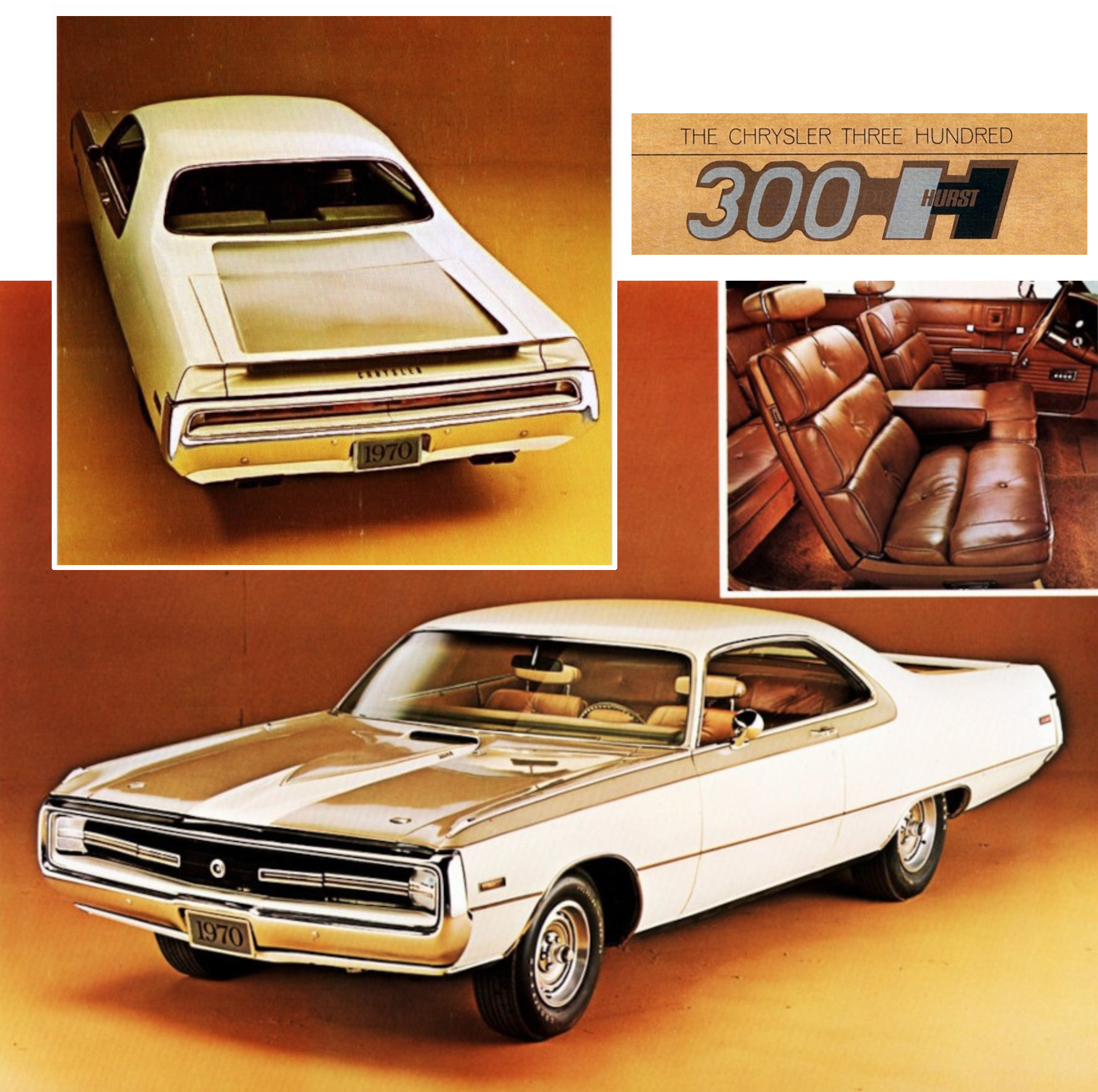
source: Chrysler/Stellantis
The whole “fuselage” style of large Chrysler products from 1969-73 featured an “aircraft” style body that curved in at the roof (so-called “tumblehome”) and then arced outwards to eventually taper in again at the rocker panels; a profile that dramatically continued all the way down the sides of the car. It’s a clean and dramatic appearance that took on a menacing look with the 1970 Hurst-badged 300. Only 501 of these special coupes built complete with two-tone paint, snorkel hood scoop and “loop” spoiler on the trunk lid (oddly enough, despite the Hurst name very few came with a center console and floor shifter).
I love this thing so much that I did a 1980s tribute based on a Cordoba/Mirada platform that would have been launched around 1984.

My concept would have had a fuel injected 360 and even an independent suspension to replace the leaf springs:
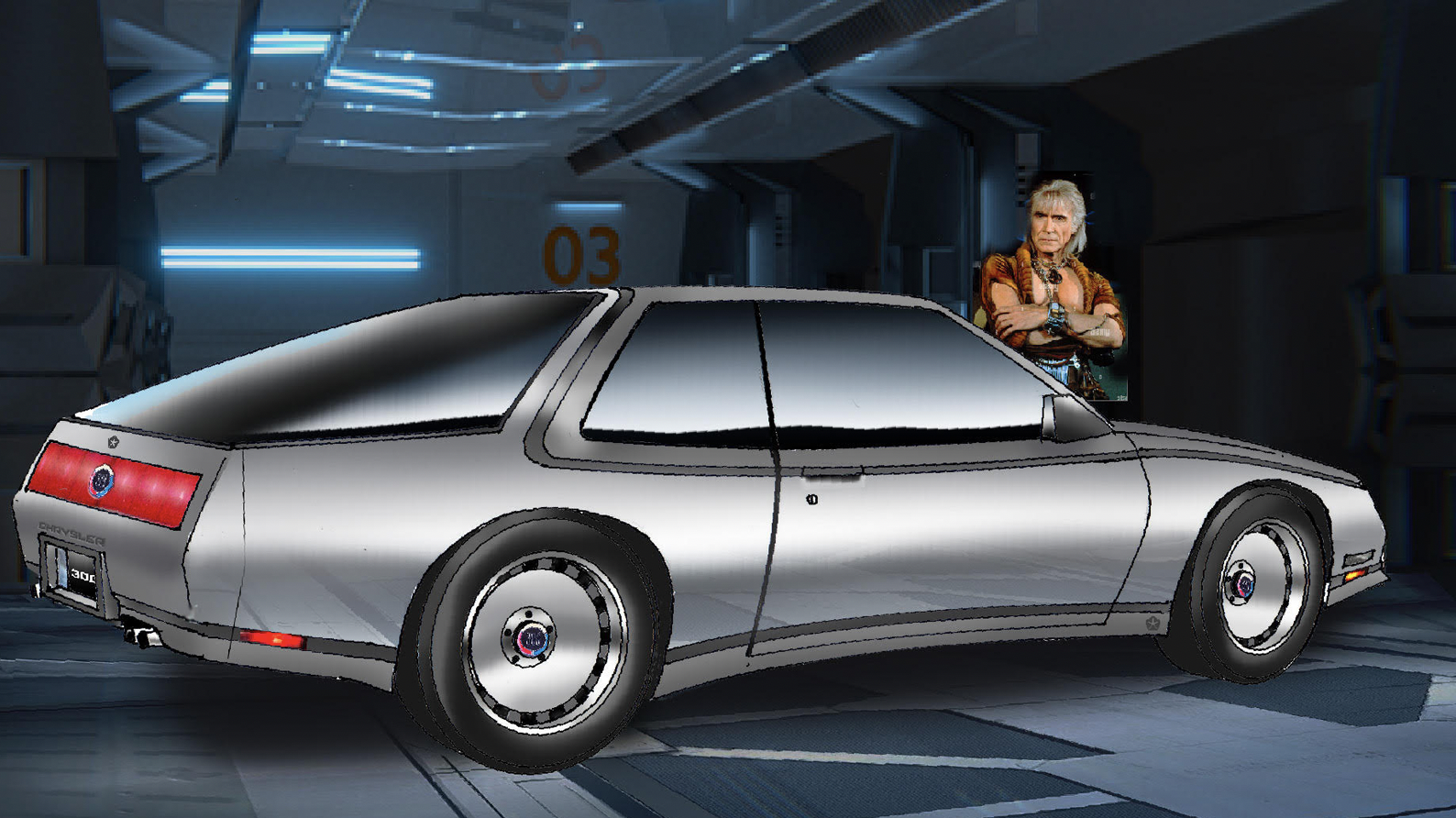
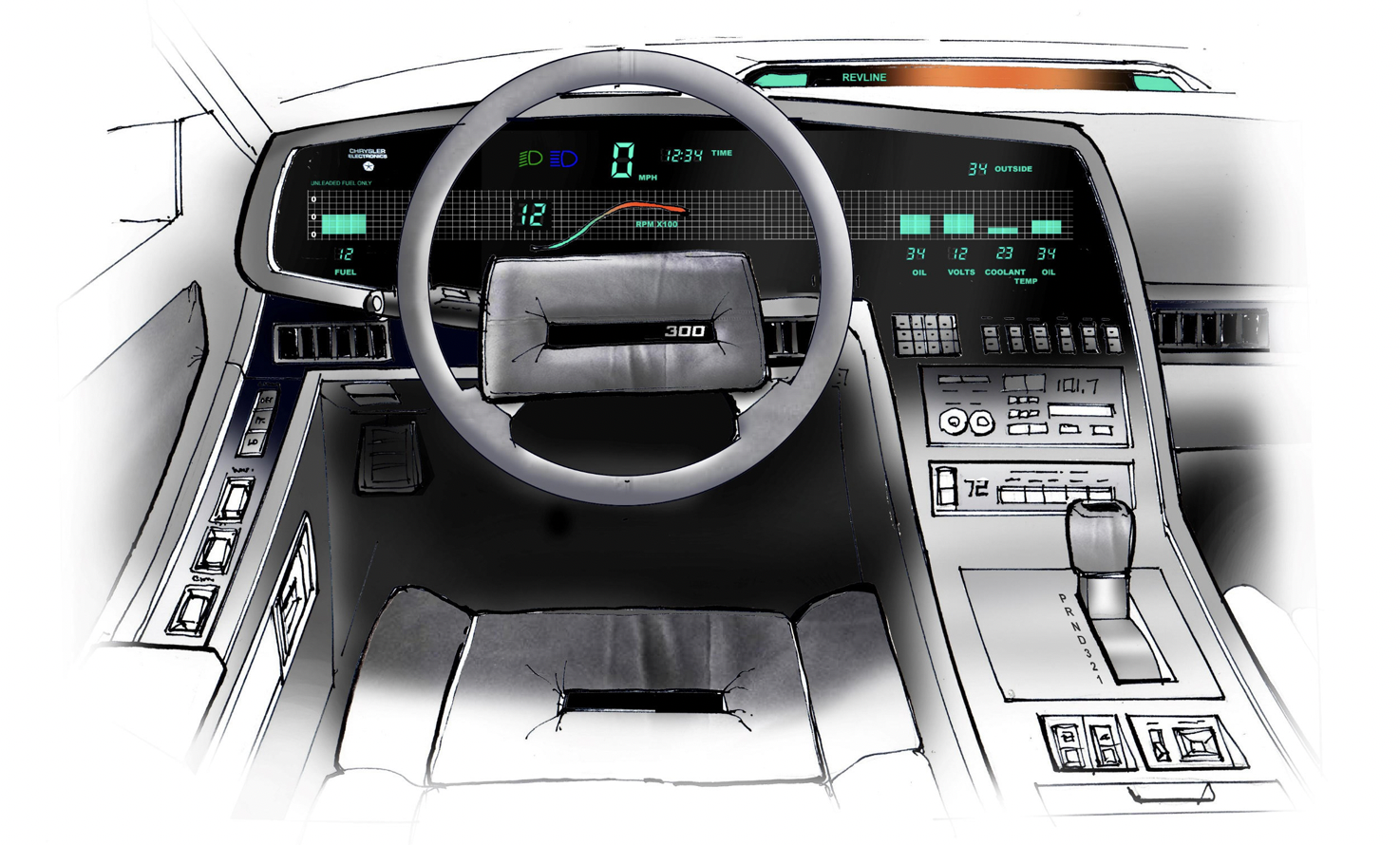
I went straight-up 1984 with the interior, too. Notice the LeBaron K-car switchgear. “A door is ajar.”
Reviving such a big luxury sports two-door for today sounds like a cool idea, but why would we do it? I mean, the sedan and coupe market is kind of dead; the 300 sedan has been gone for several years, and the Charger that S.W. wants us to base this 300 on is hardly selling like hotcakes.
Have no fear; I can see a way to make this new 300 coupe a flagship for the return of the turbine. Still, why would this technology work any better today than in 1963? Read on.
They Misspelled “Hypercar” Too
As we’ve seen, turbine engines generally have terrible throttle response, and the mashing of the throttle to get it going results in terrible fuel economy. Ideally, a turbine can start up and just run at a constant speed. It can’t do that when driving the car’s wheels, but it sure can if it’s used as an electric generator. A few companies have tried that in recent years.
A relatively current one was done by Ariel, makers of the bare-bones Atom. Their range extender electric product called the “HIPECAR” (yes, that’s in all caps) features four electric motors for a total output of 1180 horsepower and a zero to sixty time of just over two seconds. It’s all covered in what has to be the ugliest bodywork ever placed on a motor vehicle, but I’m guessing the whole non-aesthetic Mad Max thing is the point.

Yes, it really looks like that. If nothing else, they’re pushing the envelope with the design.

It also has a turbine engine in back to supply power to the batteries; Ariel has fun with the DANGER TURBINE EXIT stickers but supposedly it’s not nearly as searing hot as you’d think.

source: Ariel
As with the last Chrysler turbines, it recirculates the exhaust to reduce temperature and emissions while it lowers fuel consumption. Here’s how Ariel describes it:
Delta Motorsport has developed a 35kW micro-turbine system specifically for the Hipercar. The gas-driven turbine runs at a fixed 120,000 rpm, operating at a nominal 750V to maintain charge. The battery management system switches the turbine on and off, depending on requirements, and weighs less than 50kg, so it’s significantly smaller and lighter than a piston engine alternative. In addition, the combustion system incorporates a recuperator that limits emissions to well under legal requirements.

Also, let’s not forget that turbines can supposedly run on anything (famous demonstrations have shown tequila and perfume, for example) which means it opens the door for all sorts of alternative fuel options. I’m sold on this technology! Let’s get going on our Charger-platform EREV Chrysler 300 E/T!
Turbine-Charging A Charger
As Stephen requested, the latest Charger will serve as the basis for our basis for the revived 300 coupe. We’ll use the slow-selling EV platform and remove some of the batteries in front to make room for the recuperator-equipped turbine. The turbine could obviously run at a constant speed but I’d like to have it increase revs when you accelerate just to have the sound you get when 737 you’re riding in is finally cleared for takeoff. We all want to live that dream.
I’m not sure if there would be room in front for a frunk; it would depend on how big that turbine would need to be.
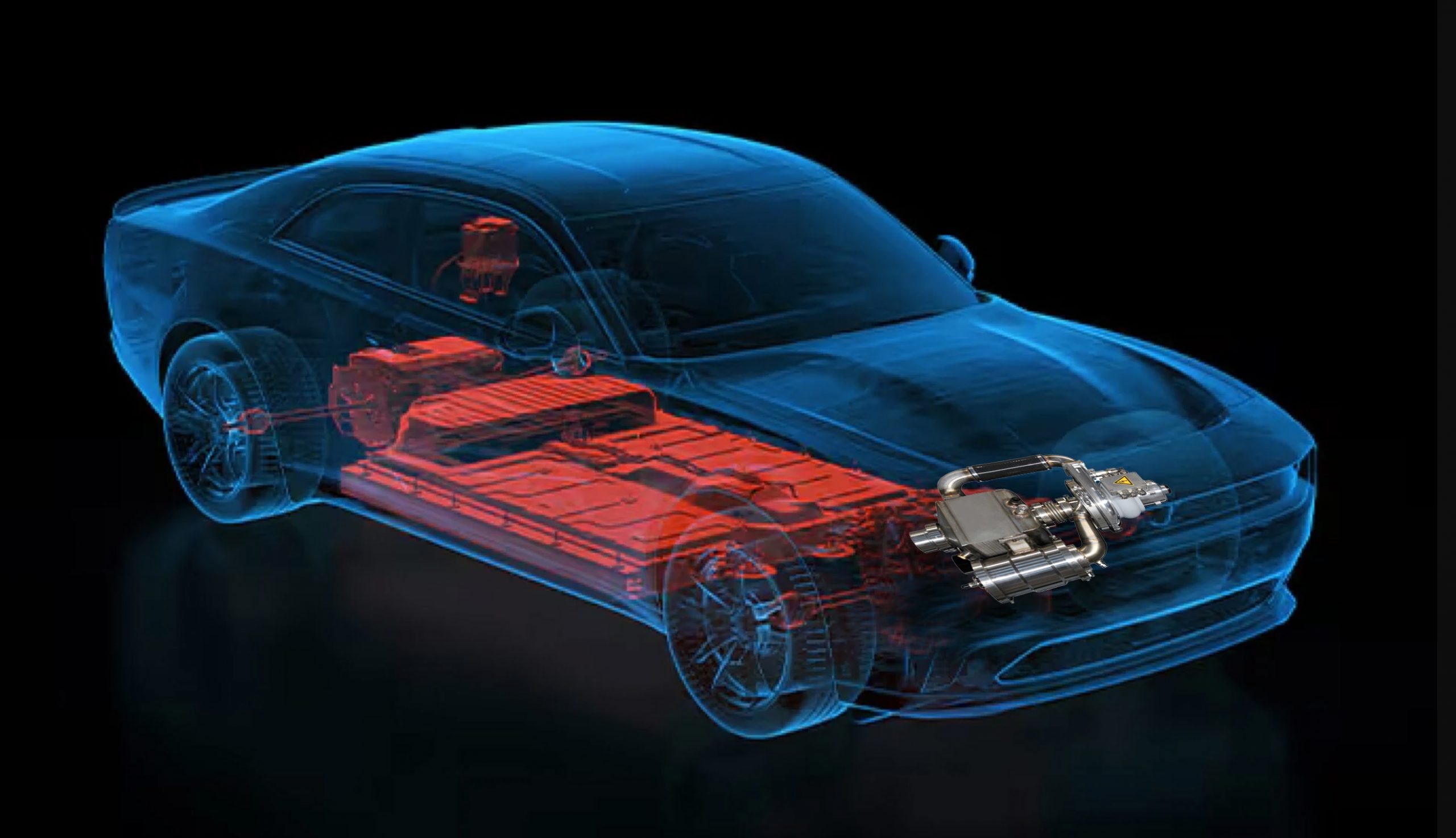
Honestly, it won’t take a lot of work to give a Charger the “fuselage” look. I’ll start with a very 300-style nose featuring projector lights hidden behind printed patterns on smoked-0ut clear and continue that arc-shaped profile down the side of the car, adding partially covered rear wheels. The two-tone paint with contrasting rocker panels and hood also highlights the air scoop intake for the turbine. I like the name “Turbine E/T” since it stands for “electric turbine” but also relates to drag racing definition as well.

The roofline is more upright in back than that Charger for more interior room, and the back has a “loop” spoiler not unlike the 1970 inspiration. This one I scribbled below has more luxury-oriented “turbine” style wheels.

Inside, I wanted to take the cabin of the 1963 Turbine as a visual guide since it’s so cool looking.

I’ve copied the Ghia-built car’s three-pod gauges in front of the steering wheel and the “turbine” motif air vents for the climate control. You can also see the half-round shaped center console and the odd “turbine” pattern I found for the upholstery inserts. Adjustable thigh supports on the seats are shown extended here. The large round buttons below the ends of the center screen are for start/stop (driver’s side) and glove box (passenger’s side).

Am I going overboard with the visual turbine shout outs? Absolutely not! We’ve waited over half a century for this technology to hit the streets again as a Chrysler, and we’re going to tell the world.
The Future Is Back!
I know that Stephen was looking for a hemi under the hood of a Hurst 300 revival, so I knew that if I was to dare substitute it with something different it had better be spectacular. A turbine-powered car would hopefully get that job done.
The fact that the public has rather decisively rejected the fake engine noises and rumble of the latest EV Charger restores my faith in the world a bit. However, if I suppress my Luddite tendencies, I’ll admit that an all-electric muscle car does deserve to succeed, and it should be a Mopar. Substitute the silly mock-hemi audio of the current EV Charger for real jet engine sounds? Now we’re talking. Would it work better than a standard piston engine range extender? Do we even care? The whole point is to put this dying Stellantis brand into the spotlight.
Just to have a 300 back in any form whatsoever, or even another Chrysler branded product beyond an aging minivan, would be a win at this point. Big coupes like this 300 I’ve shown might be sales duds today, but I can’t think of a better showcase of a revived technology that would show the world that Walter P’s brand is far from dead. We were promised jets, and it’s high time that we got them.
Top graphic base image: Stellantis


…when there was a time when they were ok letting the engine sound the way it is. We do turbine today and they’ll add speakers and make it sound like a V8.
FYI, a federal appeals court just declared the federal ban on home distilling unconstitutional.
US appeals court declares 158-year-old home distilling ban unconstitutional | Reuters
Sounds like the perfect time to have a range extender that runs on any flammable liquid and buy that Harbor Freight home distilling setup.
Exactly! If allowed, you could grow your own fuel.
The new design looks like a 1968 Plymouth Satellite with better paint. Anyone who has driven a smooth running a V-8 would never drive that table saw vehicle. Although I could have seen it in MIB as the basic car with hidden abilities.
I watched the clip. I really wanted it to sound like the Batmobile.
Batmobile startup
Its hard to justify a small turbine when modern automotive piston engines are so smooth and can be as efficient as even large turbines.
Instead of TURBO decals on the side, it can have TURBINE decals
I love those classic 300’s, I’ll take a new one w/ just a TURBINE
“LeBaron K-car”
So did Jon Voight own that one?
Was his pencil in the glovebox?
Ha ha
You did an amazing job here. I love big two doors. You’re killing me. I would still rather have Hurricane power.
Thanks, I appreciate it! I’d rather have Hemi power, actually.
There is one more Chrysler turbine vehicle that is even still in production today, although not as part of Stellantis.
The M1 Abrams tank was originally developed by Chrysler Defense and uses an AGT1500 turbine with a recouperator as described above. It’s a little higher horsepower than the car engines at 1,500 hp and 2,750 lb-ft of torque.
Oh, I love this!
My grandpa bought one of those ’70 Chrysler 300 Hurst editions. He daily drove it until 1978. I’d love to have one someday. They’re so good looking.
Jetson-healey interceptor
Power-Style-Performance
Why not a small jet engine as the range extender/charger on a car? Something small like the Williams F017 that’s used on cruise missiles. Only weighs 67 pounds. https://en.wikipedia.org/wiki/Williams_F107
Cruise missiles aren’t known for their high-mileage reliability…
Aren’t they? I’m no expert but I wonder what the MPG is as they are small and go a far distance
Would probably require significant re-engineering. Turbine engines designed for shaft power alone are significantly different than turbofan engines. What you really want is more like the engine for a turboprop or helicopter.
As much as I love the idea of a turbine engine in my car, the pragmatic engineer in me keeps saying that if turbines were economically viable in cars, they would be prolific by now. The fact that they aren’t (nor are their kin like the Wankel) should tell us something.
Hint: Like wankels it’s the efficiency.
Yes high efficiency in turbines requires high temperature combustion thus exotic metallurgy with corresponding exotic prices.
I wonder how exotic that metallurgy really is given the Soviets figured it out in the 1960s while western brains considered such metallurgy impossible right up till they found out not only was it possible but it was part of 20 yo rocket engines collecting cobwebs in old Soviet warehouses.
The picture of the ’78 LeBaron coupe prototype gives me first-gen Mercury Cougar vibes for some reason.
This is not a redesign that has me shouting “take my money!”, but it does illustrate that Chrysler needs another 300 model and the Daytona platform would make sense.
I’ll finish with my memory of stuffing four adults and five kids in a fuselage-bodied Chrysler Town and Country station wagon and going from Pennsylvania to Disney World back in the days when they still used the ticket system where the phrase “E-Ticket ride” comes from. I spent that entire trip in the rear wayback/gunner seats.
I’d like to see how the efficiency of small turbine/generator combo compares to the best ICE engines tuned for single speed generator AND throw in the various rotary designs like Mazda’s Wankel, the Omega-One (now the H2 Starfire), and the Liquid Piston (google them if you don’t know what they are).
There’s probably some sweet spot of generator and engine RPM for all the different designs. Would love to see which one is the most efficient. From what I’ve seen, generators/alternators like lower RPMs for lower losses, but turbines do like extreme high speed. I guess some gear reduction would be required with a turbine.
Let’s see, Stellantis for the car stuff and, say, Boeing for the turbine. That’s a combo sure inspire confidence.
One of my aunts drove fuselage Newport when I was still little. it was light green with a dark green paisley/brocade interior. Gimme.
I’d like to add a button to dial up exhaust temps to melt the front of vehicles who dare to tailgate or creep right up to your rear bumper at every light/stop.
Recuperator kill switch, yes. Straight outta the turbine.
Maybe throw on Pontiac’s Vacuum Operated Exhaust system?
I love it, but I am getting strong 5th gen Thunderbird vibes more than I am Chrysler vibes. Maybe having dual round headlights would tie it back closer to Newport, T&C, New Yorker? To me, the 300 was duplicating the Thunderbird’s look while Chryslers other offerings were a bit more their own thing.
It’s a Satellite
I like the exterior, I think the interior is great other than the squared off steering wheel give that back to the Austin Allegro it came from. Ditch the turbine nonsense and put a proper big-ass Hemi in it. If you can afford a 5000lb luxury coupe, you can afford the gas to feed it and have it make proper noises that aren’t coming out of a speaker.
Though that said, as a range extender is really the only way a gas turbine is ever going to work in a road vehicle, as the only way they are even remotely efficient is at full load. But I suspect they will always cost too much.
I do like the design, even if it could use more differentiation from the Charger. The details do help, but it could use just…something a little different in the grille area.
That said, a whisper quiet turbine range extender would set this machine apart from the rest, and would at the least make for a great concept on the auto show stand. What like they did in the ’90s.
Just don’t let it compressor stall, or you’ll stop sounding quiet and start sounding like the WRC. Or a tuned turbo car with 2-step at a late night car meet. Or a firing range.
Me, I think I’ll have a base model New Yorker with the Hurricane. Jets are too rich for my blood.
As a former owner of two fuselage C-body Mopars (1969 300 and 1972 Newport), I fully support this idea.
that’s some dope rides you had there! What kind of V8s in them?
The ’72 had a low compression 400 and ’69 had a high compression 440. The ’69 would lay rubber til the cows came home and would accelerate so fast the windshield washer fluid would siphon up and dribble on the windshield from the intertia.
That’s great. Our Slant 6 Dart (with foot pedal windshield washer) sadly couldn’t do that.
Dodge Dart Plymouth Valient
I had forgotten about FPWW! I think we had the Plymouth Valiant variation (?).
I’ve been trying to figure out why my old ford truck ends up with windshield washer fluid on the windshield after a highway run. I’d been looking for electrical switch and wiring problems. But after reading that I bet the nozzles are creating a Venturi effect. It’s surely not the inertia on my truck.
Chrysler can share a platform, but is doesn’t need to share body panels with the Dodge.
If it is going to share body panels with anything, it should maybe share a design with a brand that isn’t sold in the US. Lancia is another struggling brand that is part of Stellantis. Or maybe Citroen. Those brands aren’t in North America. All the brands, at some point in their lives were considered more upscale, yet still mass-market brands. Let these brands share a design language. Maybe not high volume sellers, but something with a more avante garde design that pulls in some customers and keeps those brands alive.
Would it have a turbo-encabulator to make is faster?
For a number of years now, work has been proceeding in order to bring perfection to the crudely conceived idea of a transmission that would not only supply inverse reactive current for use in unilateral phase detractors, but would also be capable of automatically synchronizing cardinal grammeters. Such an instrument is the turbo encabulator.
Sounds craptacular
Would pair well w/ my new Fuel Shark! It’s so awesome and I’m so impressed w/ it. I can’t believe how much gas I save!
It’s all ball bearings now.
I’d love to see how the hell they’d manage to get a turbine engine to pass automotive emissions.
I thought the same thing, but Ariel claims that the emissions are “negligible” in that thing. They also probably claim that it’s an attractive, useable car so I’d take what they say with a grain of salt.
My guess is that it’s obscenely high in NOx due to the high combustion temps
No reason you couldn’t use something like DEF to fix that.