

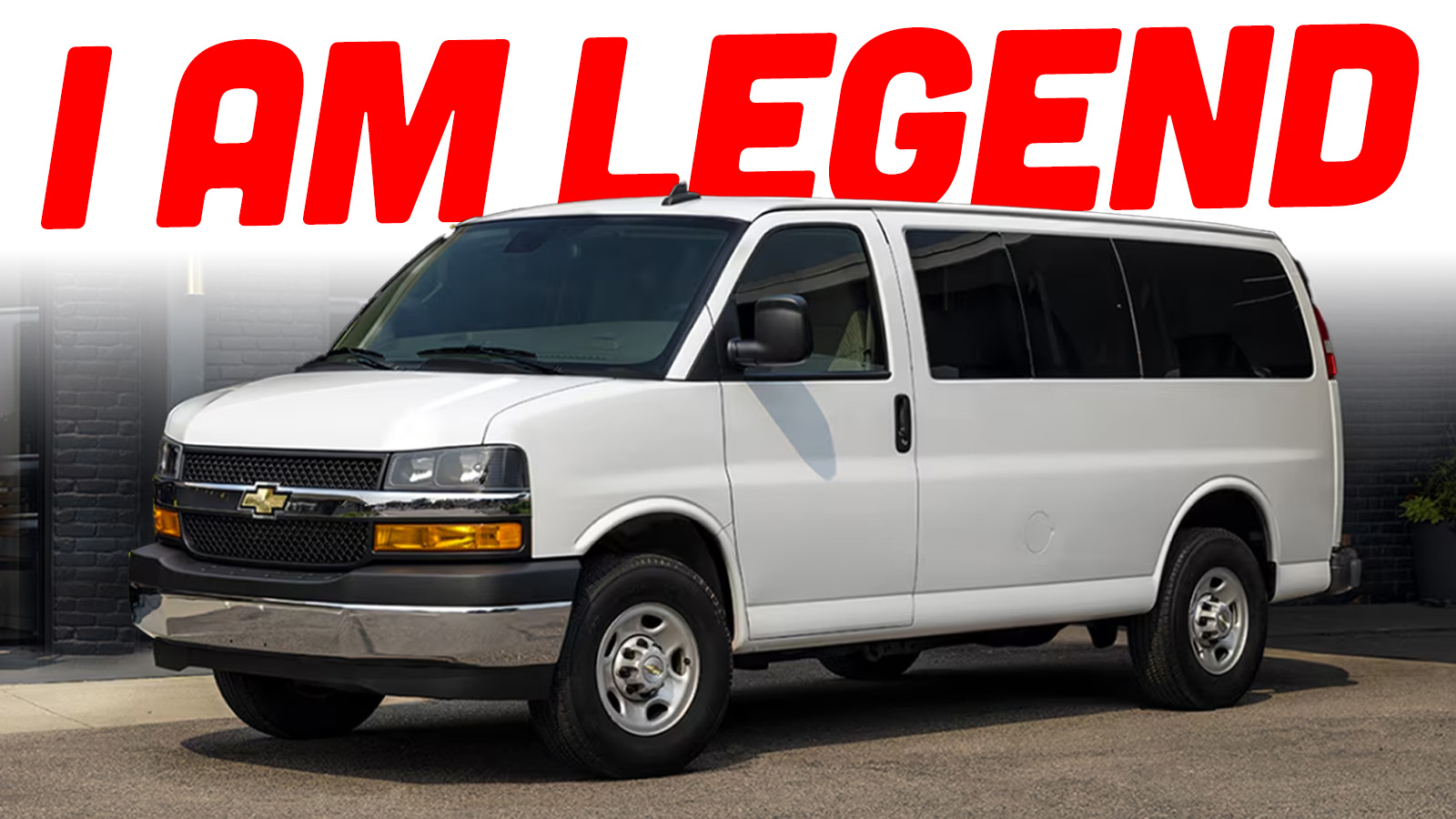
I don’t think General Motors’ line of Chevrolet Express and GMC Savana vans will ever leave production. While many believe 29 years is too old for the body-on-frame utility vehicle to continue to exist, it’s pretty obvious at this point that it’s here to stay.
If you need further proof, look at GM’s latest decision to end production of its BrightDrop electric delivery van. This van was supposed to be the Express’s spiritual successor when it debuted in 2021, a commercial-oriented vehicle designed to work with businesses to get jobs done, like last-mile deliveries. With a bunch of useful tech and up to 303 range on tap, it was, on its surface, pretty promising. Our own Thomas Hundal even drove one back when it was called the Zevo 600, and loved it.


Yet GM has sold just 3,976 BrightDrops this year so far through the third quarter, compared with over 60,000 Express and Savana vans in the same period. Now, after just four years, Chevy is pulling the plug.
GM actually paused production of the BrightDrop at the Canadian Automotive Manufacturing Inc. (CAMI) assembly plant in Ontario earlier this year over low demand. That pause was supposed to be temporary, with production originally set to resume next month. But demand for the van never rematerialized, so the pause was made permanent. From GM:
The commercial electric delivery van market developed much slower than expected with the plant operating below capacity and production suspended since May 2025. A changing regulatory environment and the elimination of tax credits in the United States have made the business even more challenging. The decision is part of broader adjustments the company is making to North America EV capacity.
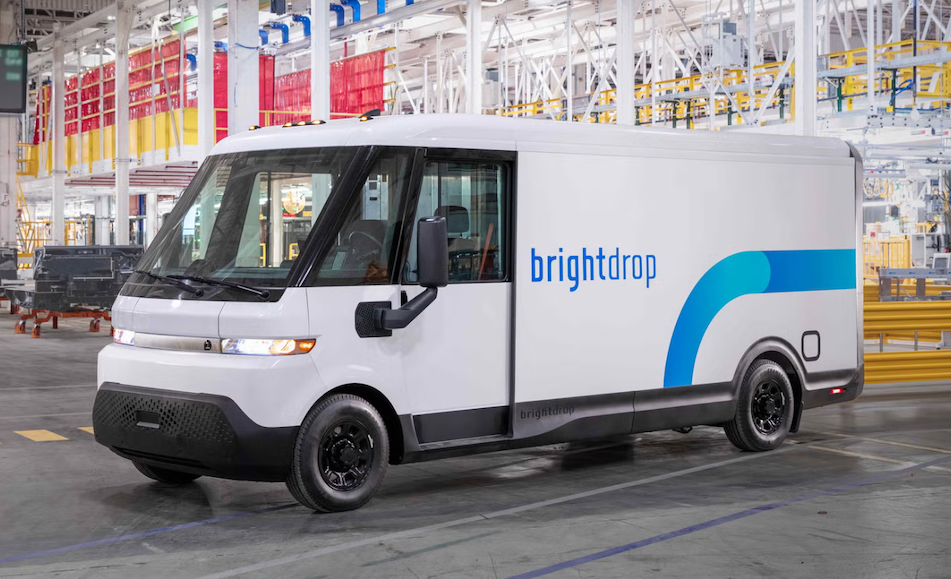
“The decision to end production of the BrightDrop electric delivery van is driven by market demand and in no way reflects the commitment and skill of our workforce at CAMI,” said Kristian Aquilina, president and managing director of GM Canada. “This continues to be an uncertain time for our workforce at CAMI, and we are committed to working closely with our employees, Unifor and the Canadian and Ontario governments as we evaluate next steps for the future of CAMI.”
With no other vehicles being built at the plant, GM intends to pay hourly employees six months of salary and “the potential for lump sum payments and other benefits.” The company says it’ll also assess the plant “for future opportunities.” Most recently, CAMI built the Equinox up until 2022. Before that, it built cars like the GMC Terrain and the Suzuki XL-7 (a badge-engineered Equinox), among other cars.
The move to end BrightDrop production comes just one week after Chevy announced it would be writing down $1.6 billion from its EV business over the disappearing tax credits, the reduction of emissions regulations, and the resulting contraction of demand. Basically, the company realized there was no way the market was going to want a near-$70,000 electric van for commercial use without some sort of government intervention. And now that those subsidies are disappearing, the BrightDrop is no longer a viable product.
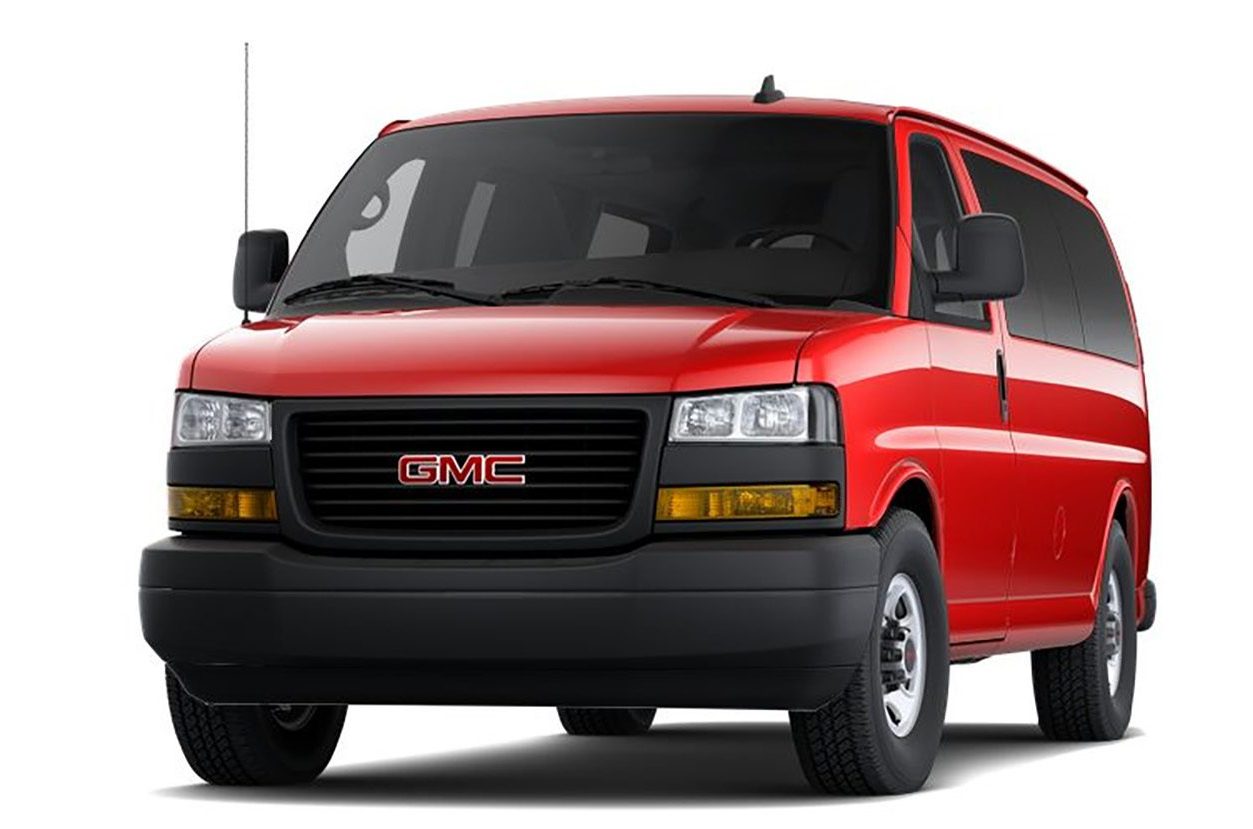
The Express and Savana vans, meanwhile, are in a perfect position to maintain their market share. Unlike the BrightDrop, these gas-powered GM vans are inexpensive, starting at just over $43,000. Because millions have been built and they’ve been around for decades, parts are cheap and plentiful. Plus, because they’re essentially just a ’90s body-on-frame truck underneath, anyone can fix them.
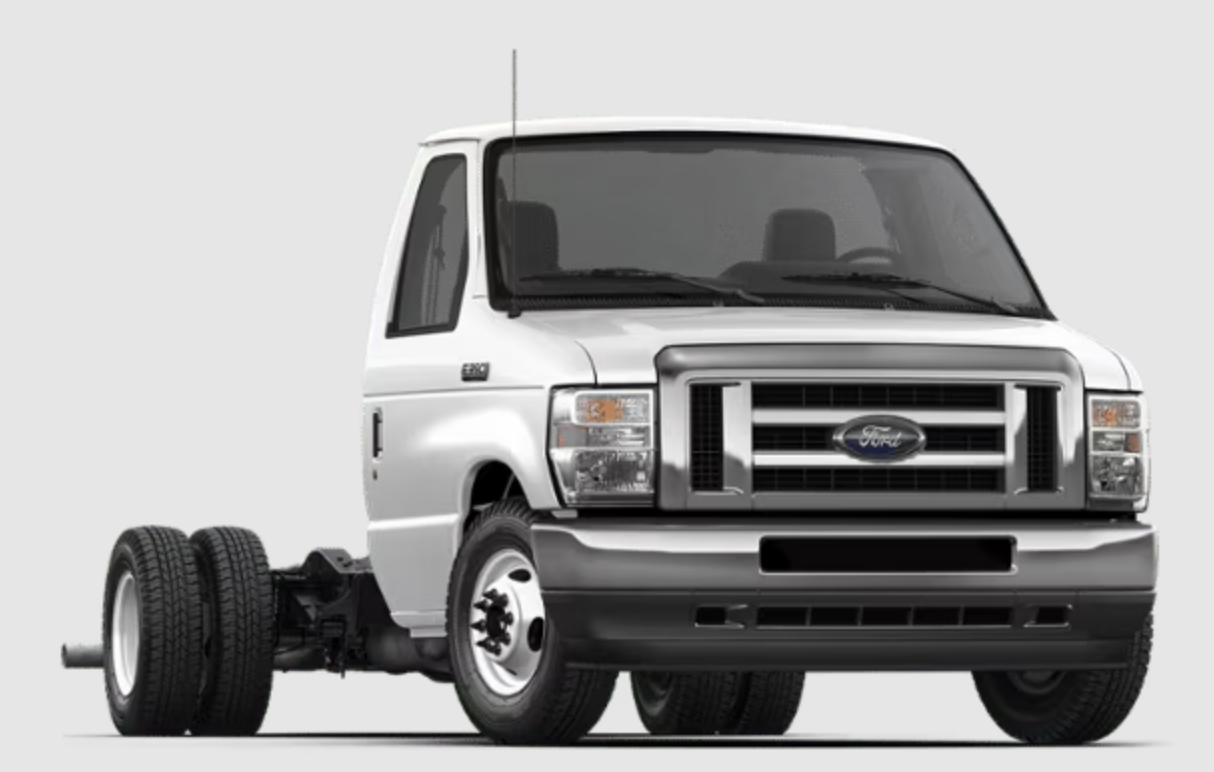
Further, the Express and Savana vans don’t really have any competition. Sure, the Ram ProMaster and the Ford Transit exist, but those are both unibody vehicles that can’t match the Express’s towing capacity. There’s the Mercedes Sprinter, but that’s more expensive to get into and to maintain. Ford actually still makes the Express van’s closest competitor, the E-Series, but it stopped building the passenger and cargo van versions, and now only offers them as stripped chassis or cutaway vehicles, where you have to bring your own back half:
Sure, GM could invest a bunch into making a new Express and Savana, but there’s simply no reason to right now, especially as regulatory emissions pressures ease. So long as these vans can do the job, why mess with a good thing? The company clearly thinks the same way. Though a rumor from back in 2022 suggested the Express and Savana would be phased out of production, a Chevy spokesperson confirmed to me that the Express and Savana would return for the 2026 model year.
What of the rest of the electric van segment? Rivian continues to dominate the field, having sold nearly 7,000 units of its Commercial Van so far this year. Ford, meanwhile, has sold 4,604 units of its electric transit. Mercedes has sold just 495 electric Sprinters, though it went on sale just a couple of months ago. Ram sells an electric ProMaster, but it doesn’t share sales data by trim—I’m willing to bet its numbers are similar to Ford’s.
With any luck, the Express and Savana will outlive them all.
Top graphic image: Chevrolet




I don’t love them stopping the electric van production, but I am happy to see the Savanna/Express live on. The world needs some simple vehicles still.
I’m honestly not sure why GM didn’t drop a PHEV drivetrain into the Express with one of the smaller 4cyl engines. The upside of the legacy American vans is that they have lots of space in the frame, being truck-derived, something that the Eurovans (Sprinter, Promaster, Transit) don’t have as much of.
Maybe the answer is really just development cost vs. having an old, durable money printer.
(Still waiting on Ford to give in and restart E350 full van bodies… I know those dies and molds are still sitting in some warehouse, come on!)
“The decision to end production of the BrightDrop electric delivery van is driven by market demand”
Which naturally is actually “phew! Kinda looked like we might have to do other things for money there for a bit.” Going backwards sucks. There are a ton of businesses where an EV van is far superior, even at its price.
Respectfully, I think that if more businesses were interested then more BrightDrops would have sold.
Without support to push them, they were cooked. GM really needed to believe in the platform and push it…enough of the 60k sales for the Safari would have been BrightDrops to make it make sense. It would have been expensive for them though, so it makes sense that they’ll just do what’s familiar instead.
The Express has 283 cu ft of cargo space. The high roof / extended wheelbase Transit has 487. The Brightdrop clocks in at 615.
The Brightdrop isn’t going to sell to your average carpet company or plumber. They need FedEx, UPS, Amazon – the big delivery companies to sign up to buy them thousands at a time instead of a ICE step van on a Freightliner or Ford chassis.
Yep. I suspect with enough interest, there could have been a smaller version. But even without that, they could have converted some of those 60k annual sales into the bigger vehicle. Perhaps not a lot, but perhaps enough to keep it viable.
The entire market is only about 21K a year. YTD numbers
6,809 – Rivian
4,604 – Ford
3,976 – GM
495 – Mercedes
I think the problem for GM is that it is a unique standalone platform. Ford had a modern van that sells 150K a year it could convert to EV. Rivian had it’s development paid by Amazon. That gave each a leg up on GM when the market didn’t materialize as expect.
I’m curious how an eExpress would have done with a battery pack between the rails and an e-Axle in the rear.
Plus the 60k GM sold of the Express. I suspect the last mile delivery market could be bigger too. The number of over-full NV200’s I see is remarkable… I know those owners aren’t going straight to a Brightdrop, but there’s certainly room.
That said, I think you’re 100% right about the platform – and seeing what GM is doing elsewhere with their EV platforms, it makes sense that a 1 of 1 platform is suddenly less feasible.
It’s the B-52 of work vehicles. Probably has multiple generations of the same family operating them, just like the Stratofortress.
I’m guessing a few years from now I’ll drop back to Europe to see the family and almost all the vans will be electric, and then I’ll come back to the US and almost all the vans will be gas belchers.
Maybe if your family was in China, but there is an ever-increasing hesitation to go to 100% EVs in Europe as well.
Would love it if they’d offer a hybrid option similar to the hybrid F150… I know they won’t but being able to get one of these that could do ~30 miles fully EV would be awesome.
I’m amazed these still meet crash standards more than anything.
IIRC the regulations are less strict with higher GVWR.
Which could be why they only sell them as 2500+ vehicles since they can’t meet the regulations for lower classes.
On one hand, I hope the Express/Savana manage to outlive me.
On the other, this seems at least a bit like a marketing failure on GM’s behalf. The Brightdrop is quite a bit bigger than the Express (it’s a stepvan, and seems to be priced relatively competitively as such), it shouldn’t so much replace the Express as augment it. Anecdotally, I don’t think I’ve seen any of the Rivians up in Canada (not sure if it’s not available, or just that with Amazon as the primary buyer, they’ve routed all allocation to the US), but there are Brightdrops (mostly FedEx, I think). I’d be curious to hear how it’s working out for its intended users, if it’s a flawed product, or GM just hasn’t put in the time to build a customer base.
They aren’t even close to the same price range. Chevy vans start around $40k and go up to around $50k (obviously they can be kitted out much higher than that).
The Brightdrop EV vans start almost 2X that cost. Now that EV incentives are gone, there aren’t many businesses willing to spend 2X as much for the “privilege” of going EV when the difference is so high.
Priced competitively against other stepvans.
https://www.commercialtrucktrader.com/listing/2025-FORD-F59+14%27+step+van-5020367282#sid=551588
Totally different class and size to the Chevy vans. The Brightdrop vans weren’t aimed at replacing the Chevy van.
That’s exactly my point – the Brightdrop is a different class of vehicle from the normal cargo van on account of being larger and more optimized for certain applications. It’s expensive, but more reasonable when compared to similar sized vans, it’s just that both some users have settled on the suboptimal/smaller but cheaper Transit as a solution, and I suspect also that heavy utility sales numbers aren’t reported as comprehensively as passenger vehicles, so we don’t have that frame of reference. Admittedly, I’d hope GM did have that information, and assume they’re falling short of their target.
Yeah, I don’t think I’ve seen any Rivian vans here in Canada either, but I do see a lot of Brightdrops around town
The Express/Savana is the reason why I can still get the BCM and rear parking sensors brand new from GM for my 2006 Lucerne
I compare the GM vans to the diamond-shaped bicycle frame, which also hasn’t changed in eons. Why? Because it is perfectly suited for task, and aside from details, no improvements can (or need to) be made. GM should build these vans in essentially the same way until safety or emissions regulations render them unviable.
The molester van lives! It’s a shame that nobody makes the short wheel based version of these full sized vans any more. The shorty van had the best form factor.
Dajiban!
Chevy makes two wheelbases. Not as short as the ’80s shorties, but still shorter.
I got to drive a Brightdrop this summer along with an E-transit. The Brightdrop was such a superior product. It drove like it was smaller, the tech was very driver-centric, and everything seemed really well thought out. It was really no contest. This is sad news. I hope they bring it back… Maybe re-engineer it as a hybrid to get more sales.
From the book Chevy Express: A Van’s Van
Wow, so it’s Richard Peterman (aka Dick Dickman) whose job it is to make GM products terrible. The Astro van I had, I always said it was engineered by bean counters. What a dick that guy is.
Typical 90s quality.
Your average Chevrolet van/SUV/4X4 truck rattles, squeaks, shakes and howls? That’s FACTORY QUALITY for you, my sir!!
Only way they could make these better is to drop in some sort of hybrid system that drives the front wheels.
Several years ago, a carpet crew showed up in a LWB 3500 with a 4′ roll of carpet sticking out the back. Besides the driver and the super senior passenger boss, a crew of 8 crawled out the back. The van was in decent shape and I asked the driver how many miles? He smiled; “860,000, now on its recently installed new engine, the third”. Very impressive severe service vehicle.
What caused the original motor to go, and at how many miles?
I imagine the Tariff thing will be an issue here, but the Van business for GM was always sharing a plant in Wentzville with the Colorado. up until maybe a decade ago, this made some sense as the old generation was low sales and at least had a frame so the production processes in theory were somewhat similar overall. but with the current Colorado/canyon designs, the problem has been capacity.
I would still suggest they make an ICE frame that mounts tot he Brightdrop hard points. Maybe Make an Erev version that increases MPG that is enough to offset the cost delta inside of a year and see if the cleaner sheet design can sell as an ICE at lower prices?
43k seems kinda crackhead priced for a 30 year old van. The base price should be below 30k.
One other competitor you didn’t mention: Rivian’s delivery vans. They are now available to the public, after having been Amazon-only before.
The price should be lower but when I was cross shopping vans and SUV’s that could tow it’s actually competitive. A new base suburban is a few grand more. A Transit is even more expensive.
Parts and pieces have not gone down in price. Labor rates and insurance have definitely not gone down. Design amortization is probably minimal, but tooling still needs replacement and maintenance. I am not disagreeing with you that 43K for a Free Candy Van seems high, but I am old and I remember when this 30 year old design, that now has all the NHTSA safety crap tacked on was 19,999 out the door. lol
I like to refer to them as “Freak Handy” vans.
So does Diddy.
He did mention it in the last paragraph:
oops I missed that, sorry 😐
On the surface I’d agree. But these are heavy-duty vehicles and you’re paying for capability.
C’mon GM!! Make an ExpreSS!! You know you want to!!
I mean the big ones come with the 6.6 Gas motor, used ones have the old 6.0 and all of them seem to have enough room for a supercharger of one type or another to fit in there.
I mean Dajibans are popular to race in Japan… No reason why you couldn’t give the vans a race tune with the big engine and sell it with a big graphics package on the side. Maybe time to bring back the little round opera windows while we’re at it.
I just luxed one out on the build and price and other than missing 4wd one of these would be a fantastic family hauler Vs. a new overpriced pick up truck.Only 57K loaded. We had these in the 1970s-80s for a big family. https://www.chevrolet.com/build/XQAEEG
Quigley is still doing 4×4 conversions of these. As long as you’re under 60k miles.
https://www.quigley4x4.com/
Ive got two in my shop right now. Front End hits
I have owned one. What a fantastic and comfortable highway cruiser. I think a plug in hybrid version would be very cool.
Here’s my wish list for the GM Express/Savana:
I don’t disagree but I also can’t see GM investing any real money into the platform as they still sell well. Also, the person buying them often isn’t the one driving it in fleets. Or for a small business the price vs capabilities is far more important than driving dynamics/nice interior.
I would kind of like to see one with the E-Ray front electric drive system so they can creep from door stop to door stop offering free candy, but on the quiet.
An AWD full sized van would rule.
They did rule.
That’s why you can’t find any of the factory AWD’s used for cheap anymore. Even if they have billions miles on them… and mine had almost 300k on the clock before I sold it.
What year were they produced? I mean the factory ones, not the aftermarket 4WD conversions.
2003-2014 I believe. They stopped making them when they stopped making all 1500 vans.
I have an Express 4500 with the Duramax. Can’t see any reason to bring it back. Costs a lot more upfront, cost more to maintain, doesn’t really save on fuel because diesel cost more than 87 gas. Oh, and if anything goes wrong with the emission system it goes into limp mode after 500 miles.
The major segments the Cutaway plays in: Delivery box, ambulance, shuttle bus, school bus are moving to gas engines.
I do like the grunt though.
Good point. My statement about brining back the duramax was if they were to go higher on GVWR (they should). But you are right, it’s crammed in there and only getting more complex as time goes on.
Yes, the Duramax is a REALLY tight fit. Took dealer 2 days / 12 hours to change the thermostats on mine and I watched them work.
Yep…that’s van (or cutaway/chassis cab) life for ya.
I had to install a new master chassis harness on a 2010 Express. It connected to everything on the engine, all the way back to the fuel pump in the tank and the rear abs sensors…..
It was awful, and doing it on a high mileage vehicle made me look like I had just been working for a century in a coal mine.
Van bodies are great! Until you have to do engine work…
On the plus side, the master harness was surprisingly cheap for such an item. Usually something like that can total a vehicle due to just the part(s) cost.
Would have been a dream to work on with the 4 cylinder 2.8L Duramax they offered for a bit in the van bodied Express.
Less HP but more torque than the 4.3L
$43k doesn’t seem that inexpensive to me, especially considering the back is just bare metal. I guess you can always count on the white paint to start peeling away in chunks within a few years.
Production and tooling costs were amortized two decades ago and I doubt much new tech has been added recently. At least anything exclusive to these vehicles. These vans should be selling for less than 20k.
Development costs? Yes. Tooling? Not really, tooling wears out fairly quickly.
You can’t amortize your most expensive input, labor.
Nor parts price increases from the 8 and 5 percent inflation a few years back.
And a 2 liter of Coca-Cola should still be .49¢.It is 2025.
Yeah I thought the same thing but looking at the specs and it starts with same capacities as a lot of 3/4 ton trucks so that can justify some of the costs.
It’s certainly not “cheap” but it’s completive. Worth noting that they killed off the 1500 a few years back so only heavy duty models are sold now. So a few grand cheaper than the Ford and Ram 1500 starting prices but you get a 2500.
In other words, it may be good or bad value for money depending on how you look at it.
Goes with the adage of “if it ain’t broke, don’t fix it”
See GM? Keep a model around long enough, you’ll finally get all the bugs out and make it work.
Its the Dodge Charger theory