

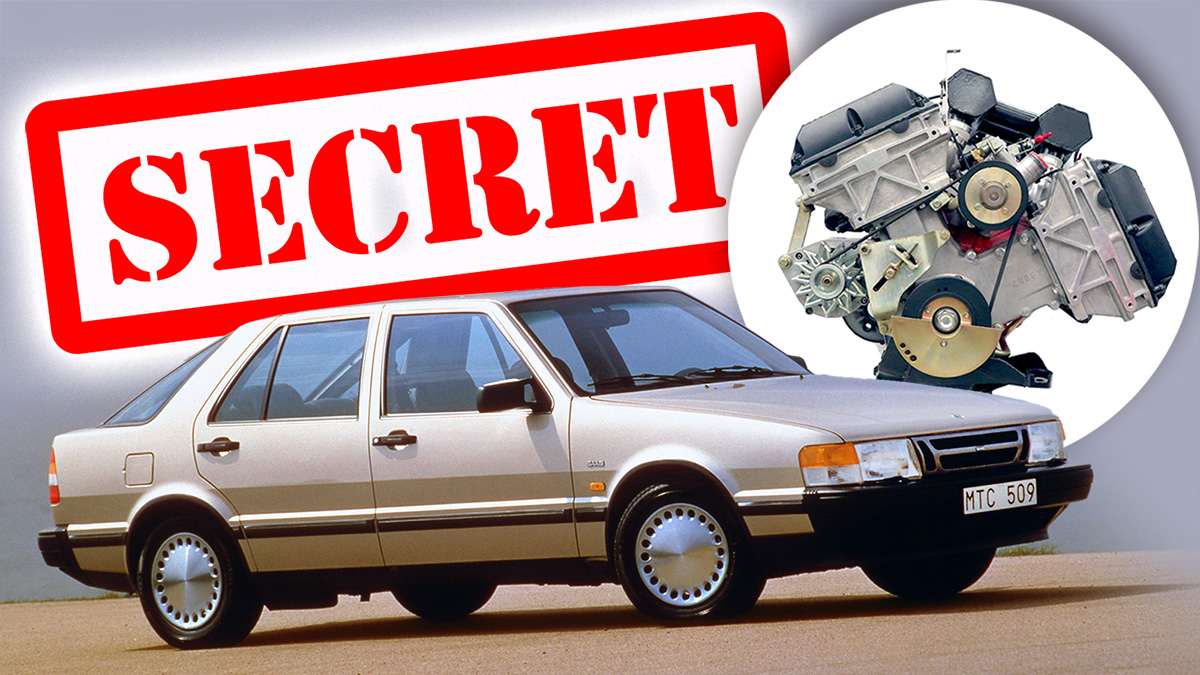
Which powertrain do you consider synonymous with Saabs? Yes, it’s the turbo four, most often a two-liter, that has powered countless Saabs throughout the decades. I’m sure there are a bunch of freaks that believe in the power of Saab’s original two-stroke motor, but for most Saab drivers, it’s been all about the turbo.
Yet, for a brief moment, Saab’s make-it-or-break-it 9000 could have had a V8. The secret Saab V8 is the story of peerless engineering and true belief in making something out of the ordinary, in the face of the dire financial straits that Saab was always perilously near.


In the early 1980s, Saab was busy developing its new, large 9000 model. The Swedish company had been building the same cars for a long time: the small, idiosyncratic 96 that was still a development of its original two-stroke cars, now powered by Ford’s V4, was finally phased out and replaced with various rebranded European hatchbacks.
The 99 and the 900 were largely the same car, as the late ‘60s 99 had been re-engineered in the 1970s to form the basis of a longer, more substantial 900, which the company would continue making long into the 1990s. To achieve real sales numbers, Saab would have to develop a model it could successfully sell in the United States, as widely as possible, with more interior space than the 99 or 900.
Let’s Make A Swedish-Italian Car
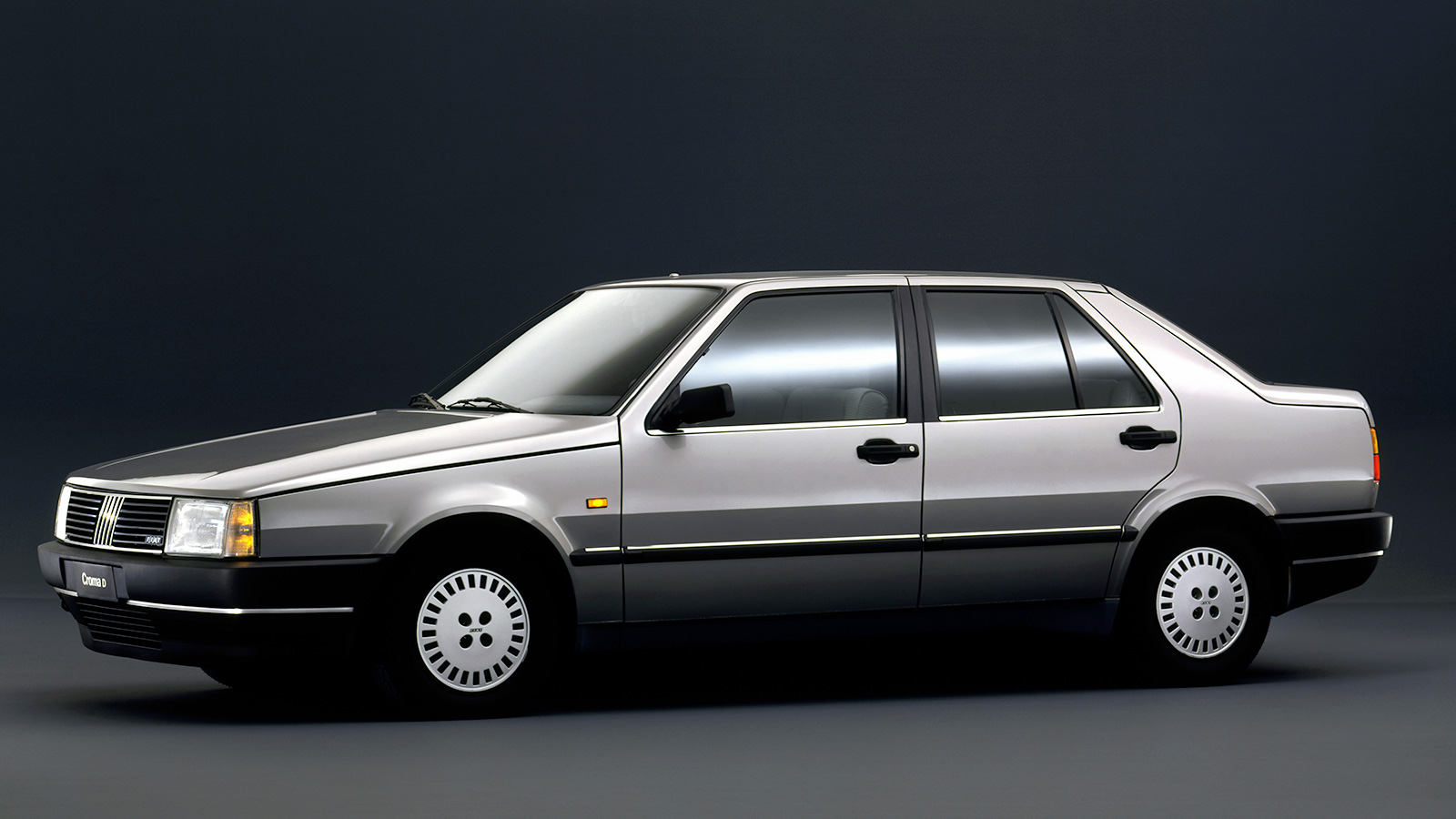
Saab found salvation in the form of a new platform, which was being developed by the Fiat Group. Access to the joint effort and Giugiaro design was through Saab’s partnership with Lancia, which resulted in the Lancia Delta being sold in Sweden with Saab 600 badges. Fiat was developing a new, front-wheel-drive midsize car that would also be sold as a Lancia and an Alfa Romeo, meaning it would have to be good enough to carry all significant Italian passenger sedan badges at the same time, while fighting the same German competitors that Saab had in its sights. In the late 1970s, Saab joined the project, which would now be called the Type Four, based on its four brands. Initially, the idea was based on 75% shared parts content between all four cars, but this would not happen.
There were a number of challenges. First of all, the Italian cars, especially Fiat’s Croma, would not be designed first and foremost with American customers in mind, and they would also not have the required body strength to pass American crash tests. After initial crash tests, Saab had to engineer its own front structure and introduce side impact beams, which meant the doors were heavier than in the Croma and Thema despite their visual similarity. Saab also chose to develop the 9000 with a beam-axle rear suspension layout, while the other three cars feature independent rear suspension.
The platform meant that Saab, which preferred its own engines, would have to adapt its own powertrain to a transverse layout. Up until that point, the engine had been longitudinal and with the unit back-to-front, with the clutch in the front and the timing chain and ancillaries in the rear. A prototype called Cecilia has survived to present day, and it consists of a 900 combi-coupé body on top of the 9000 chassis, with the engine mounted in transverse configuration. These mules were run from the late 1970s until 1982, at which point the future 9000 was only a couple of years away.
Should’a had a V8
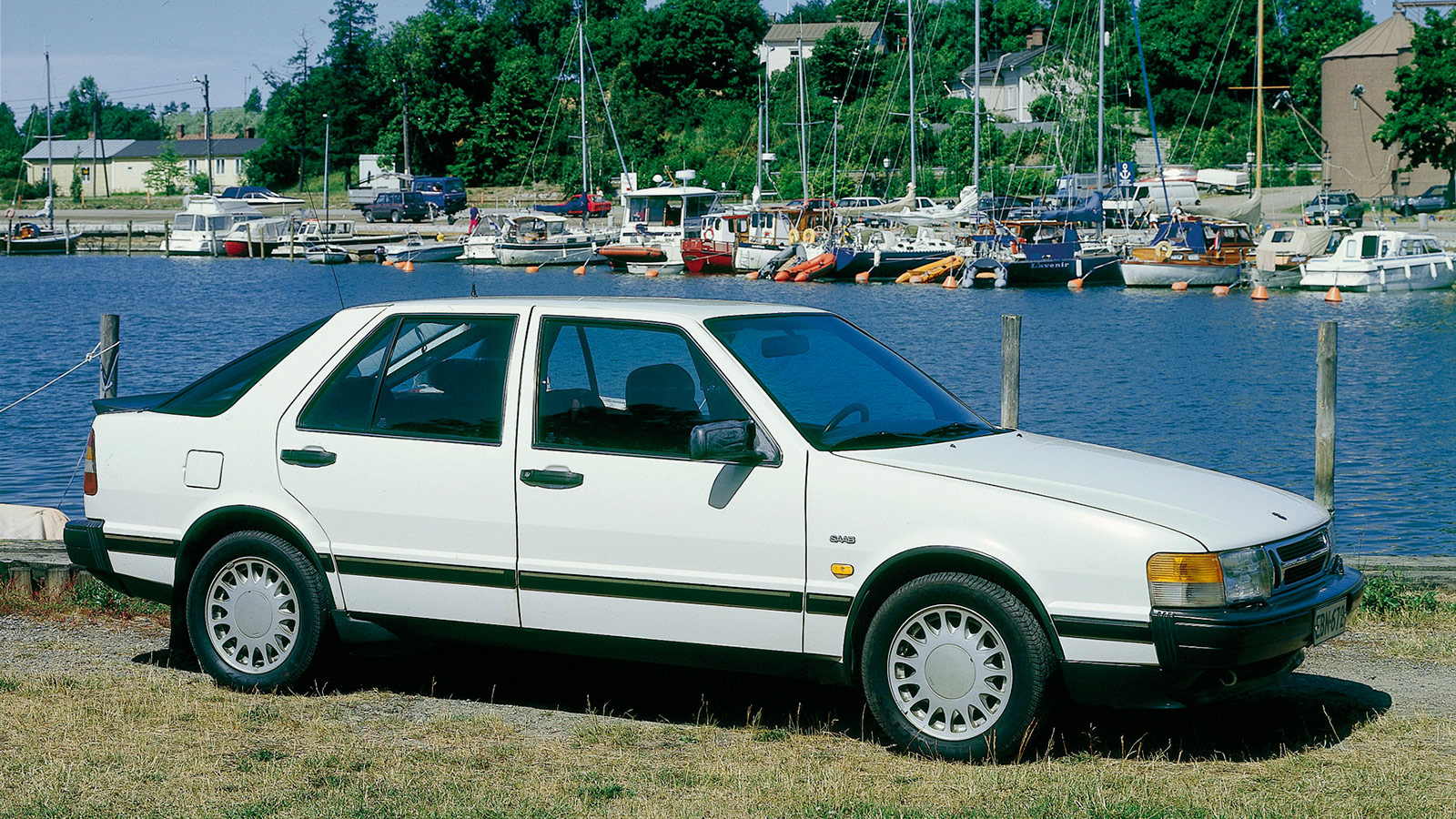
As the Swedes developed the car from an Italian starting point, the powertrain packages were also evaluated with American sales in mind. Robert J. Sinclair from Saab-Scania of America had successfully boosted Saab’s sales figures, marketing the 900 far above the economy car as it had been initially viewed. Sinclair demanded fuel injection, turbos, five-speed gearboxes, leather seats, and the convertible option, which would become very successful for Saab and especially its Finnish manufacturing plant in Uusikaupunki, which would end up manufacturing the drop-top cars.
With the 9000 launched in 1985, Sinclair raised the issue that a four-banger would not be viewed as prestigious enough for American customers, with or without turbos. How about a V8?
The Swedes balked. The 9000 development was difficult enough as it was, as they had been building a Swedish car out of an Italian car, with far more involvement than the badge-engineered Delta/600 required. In their view, the turbo powertrain would be upmarket enough, and its reliability had been proved time and time again – especially with the 1986 Talladega endurance run, where three 9000 turbos each clocked 100,000 km (62,000 miles) in less than three weeks, with the pedal constantly to the metal.
However, the CEO of the Finnish Saab-Valmet, Juhani Linnoinen, took the idea to heart. How difficult would it actually be to design a V8 that would fit the 9000 chassis, one that could be manufactured in Finland and push the 9000 into a real success story in America?
A Secret Team Is Assembled
As “Valmet” in Saab-Valmet stood for Valtion metallitehtaat (State Metal Works), the automobile factory itself was a 1968 joint effort between Saab-Scania and the Finnish state. This meant that Saab-Valmet had access to engine development in Finnish locations, which manufactured diesel engines for industrial usage, tractors, trains, and so on.
The Linnavuori plant near Tampere had already been contacted earlier to help with a potential diesel engine project for Saab in the 1970s, but nothing came of it: the requirement was a pre-combustion chamber diesel engine, and the plant’s specialty had been direct injection diesel engines for industrial use. Instead, Saab-Valmet experimented with kerosene, and that didn’t really work. Note that the Italian siblings of the 9000 all received diesel engines, but they weren’t used in the Saab.
To come up with a viable V8, Linnoinen decided it would have to happen quickly, in secrecy, without informing the Swedes. The Finnish arm of Saab would engineer it to such completion that it would be practically turn-key; there would be too many questions if the engine remained theoretical. They would need to make a complete car with a complete V8 engine to sell the idea, without anyone intervening.
In 1988, Linnoinen formed a skunkworks team at the Linnavuori diesel engine plant and had them sign a ten-year NDA. Behind locked doors, in the factory’s basement, the specialist team started their work on the secret V8 engine, which it called Twin Four. They would only have nine months to do it.
Two Four Cylinders Joined At The Hip
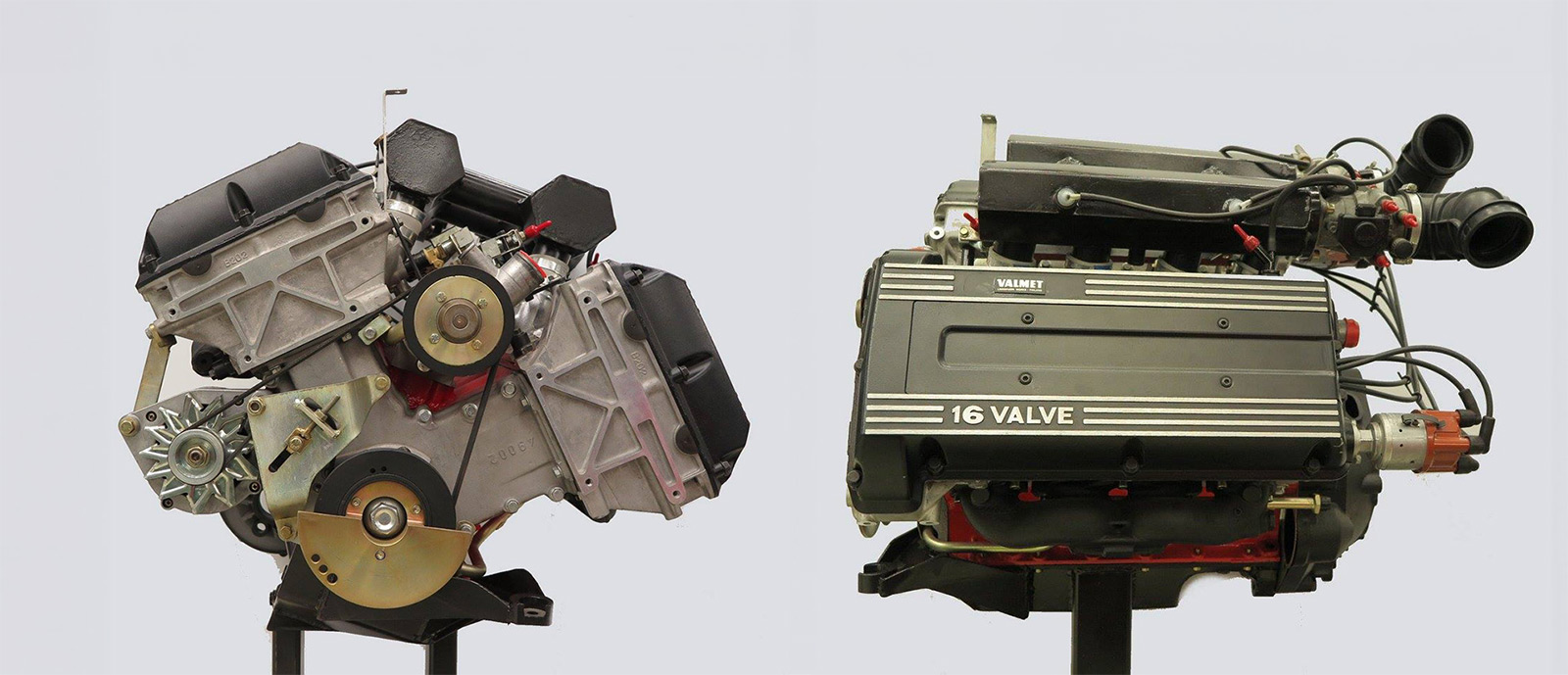
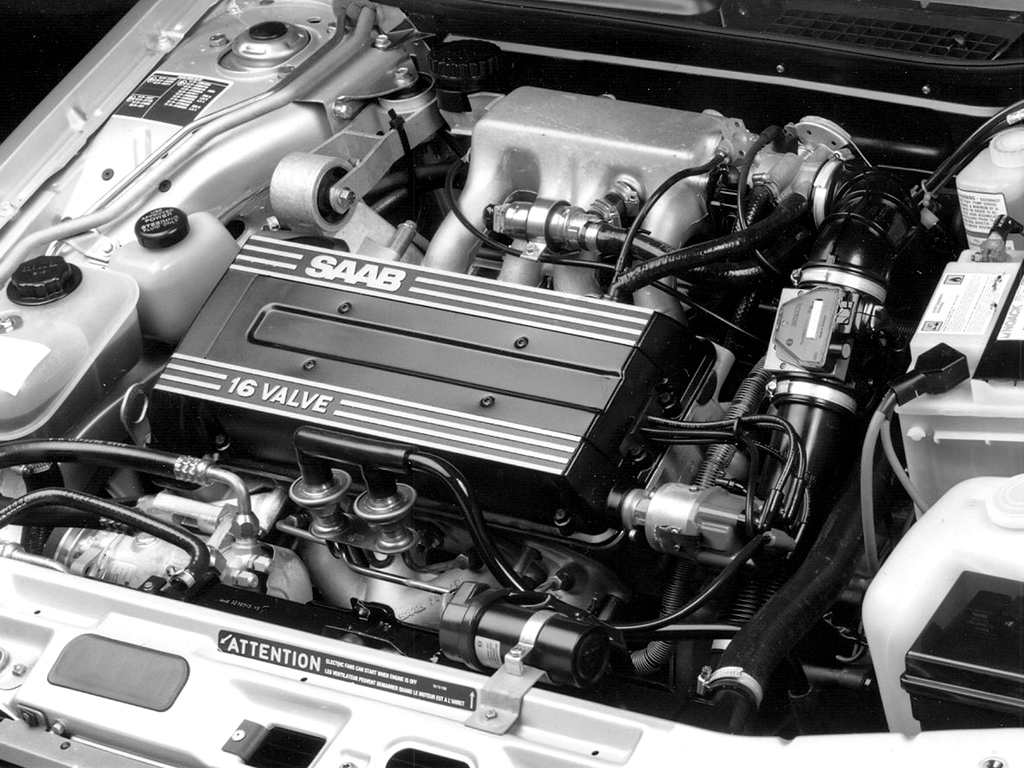
The project name reveals the core principle: it’s two Saab fours joined at the crank, at 90 degrees. As many existing engine parts as possible from Saab’s new-for-1984 B202 four would have to be used, beyond engineering a new crank and a new cast-iron cylinder block. The Twin Four also used the 16-valve aluminum heads from the B202 to save costs: this was achieved by modifying the exhaust and intake valves to suit the new layout. On one of the heads, the intake became the exhaust side.
A bunch of custom parts were required, from the water and oil pumps to the sump. The connecting rods had to be modified to fit the new crank, too. Bosch developed a new engine management system for the engine, which also had two throttle bodies and two distributors.
The B202, which was used as the V8’s base, was multi-valve and modern at the time of development as it featured double overhead camshafts. Still, it was a development of Saab’s earlier 8-valve iteration of the H engine, itself based on the B engine, which had its roots in Triumph’s 1.75-liter slant four cylinder. Importantly, Triumph had also created a three-liter V8 out of that engine, resulting in disastrous reliability for various reasons, including overheating. Saab-Valmet’s V8 engineers are likely to have studied that effort very carefully, especially as the Triumph Stag V8 had been fitted in a handful of Saab 99 test cars in the 1970s. The oil crisis ended those dreams, probably for the better.
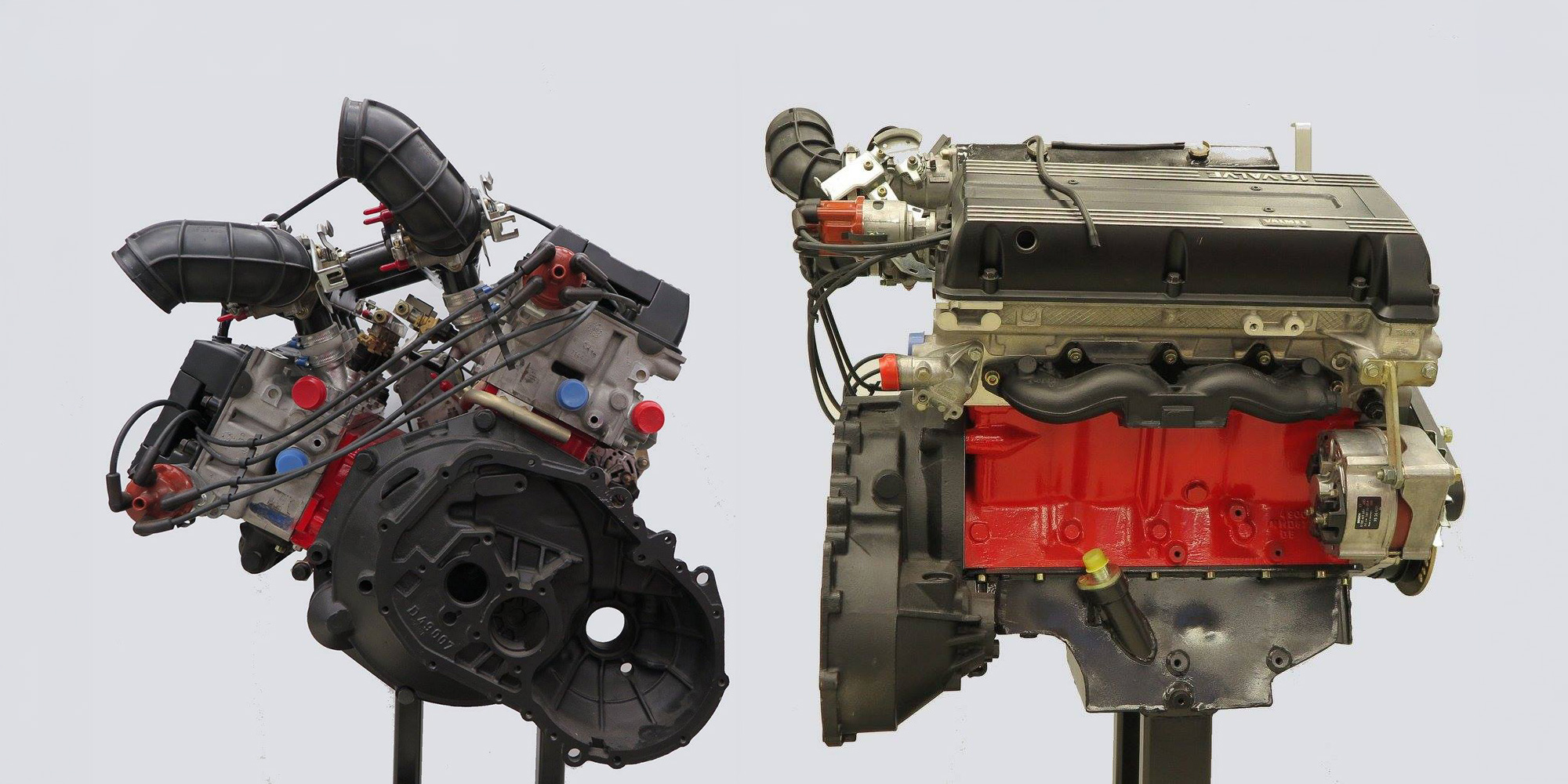
To make sure the drivetrain would take the power, the team chose to pair the engine with the turbo’s five-speed manual gearbox instead of the 9000’s autobox, which would likely have suited the customer base better. However, the V8 would not be turbocharged as 230 horsepower was considered enough for the chassis, and fitting blowers in there would have meant even more shoehorning. The four-liter V8 only weighed an extra 130 lbs, and stock front springs would do.
Amusingly, since the engine used stock heads, it also used stock head valve covers, which say 16 VALVE on them. While technically correct for one side of the engine, it should have ones with 32 VALVE badging.
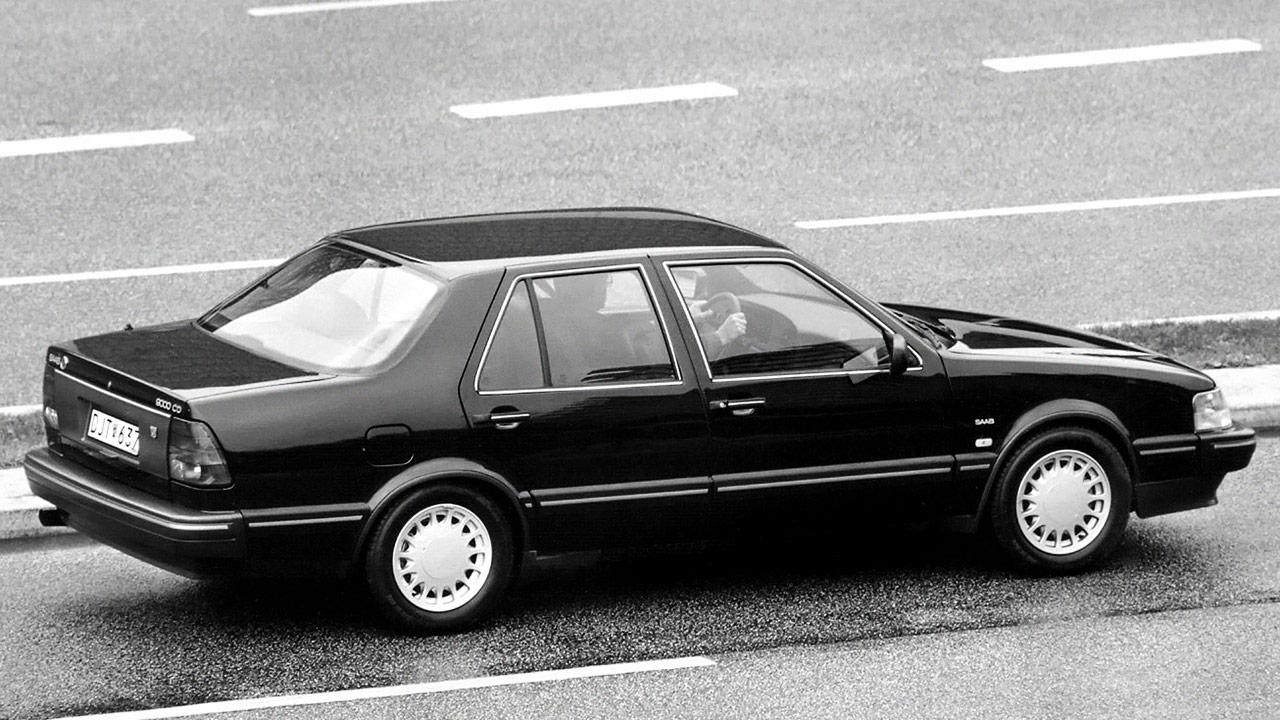
The five-door 9000 CC was soon joined by the 9000 CD sedan in 1988, with a new slanted front-end design. The executive sedan would be a perfect fit for the V8, and by 1989, the Twin Four team had successfully fit a prototype engine in a dark blue 9000 CD. They had manufactured parts for ten engines and built five engines, out of which one was installed in a test car.
In an interview, the workshop lead Mauno Ylivakeri told how he had tested the prototype V8 car on the road. He booted the throttle after leaving the factory gates, and the car soon hit 110 mph in a 60 mph zone. Speed measurement was conveniently verified by a police radar: a patrol car had been parked beyond the top of the hill, and Ylivakeri was soon flagged to the side and fined 1500 marks.
Since the car had been registered as a four-cylinder, Ylivakeri was glad that he hadn’t had to open the hood next to the patrolmen. The speeding ticket was cheaper than being fined for an engine that wasn’t in the car’s papers. The engine must have sounded completely different than a 175-horsepower turbo four approaching!
General Motors Ruins The Party
The tests continued through 1989, including winter and hot-weather testing around Europe, with the car accumulating 65,000 test kilometers (40,000 miles) on the clock. The Finns were adamant that the car was great, good enough to sell 30,000 units yearly, surely necessitating a new production line at the Saab-Valmet factory. The odds just weren’t in their favor.
That year, despite the yuppie 900 convertible selling great, Saab was suffering enough financially that a restructuring was inevitable. Born from jets but needing to focus on them, Saab-Scania separated the car business into its own business unit, Saab Automobile AB, with General Motors taking 50% of the company’s stock. The other half was controlled by Investor AB, which is a holding company led by the Wallenberg family that had run Saab until that point. As the Finnish team finally presented the 9000 V8, it wasn’t as well-received as they had planned and hoped.
General Motors was open to expanding the engine portfolio of the 9000 range, but the engine would have to be its own three-liter V6 – the 54-degree Ellesmere Port V6 that would also go into the new 900NG developed with GM money and parts. Despite the V8 prototype being a complete, functioning car with years of engineering under the hood, it would have no production plans. Imagine the wind getting taken from your sails after developing the ultimate Saab super-sedan.
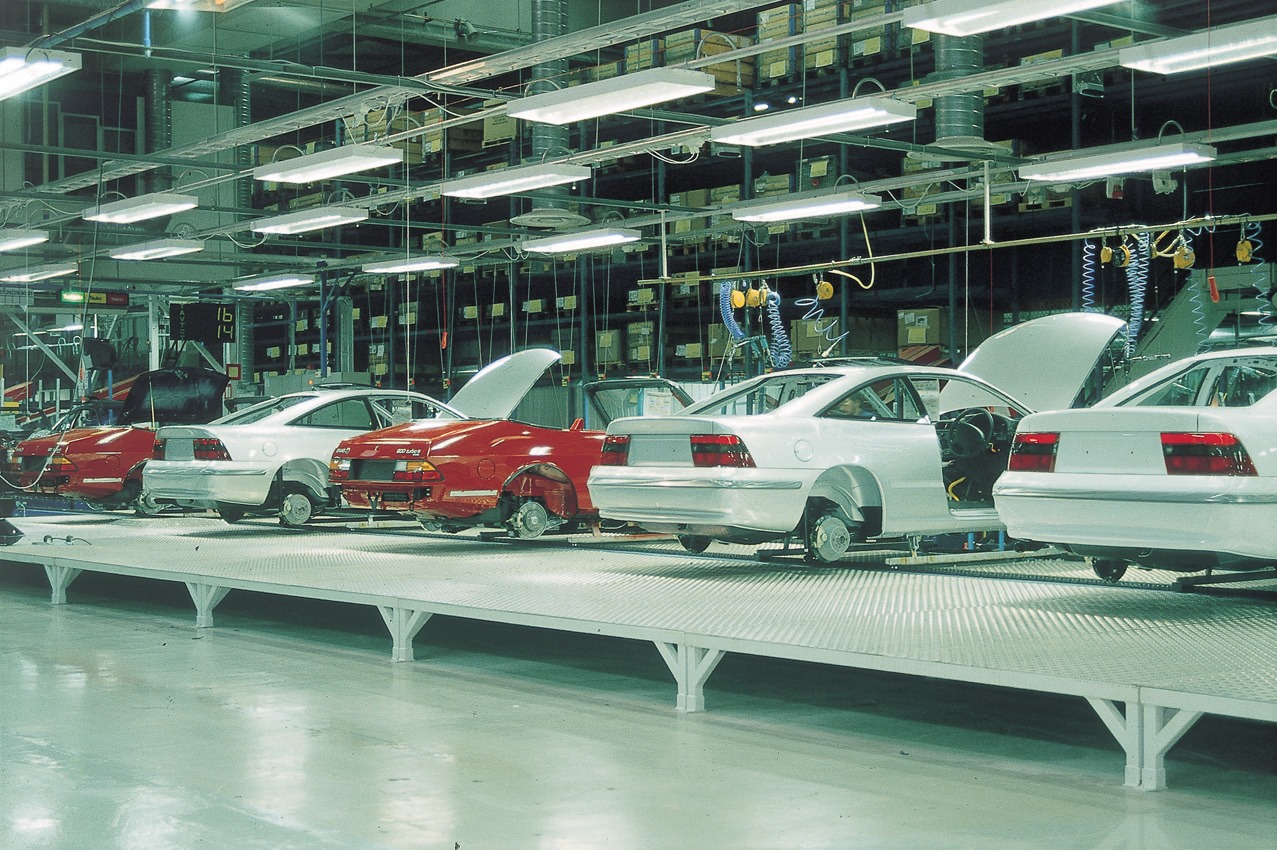
The GM years would not leave the Valmet factory redundant, despite Saab 9000 production ending there in 1990. In addition to the new, GM-based but Saab-engineered 900, which was launched in 1994, the factory started building the technically related Opel/Vauxhall Calibra coupe in 1991, eventually with the same GM 54° V6 that had taken the V8’s place under the 9000’s hood.
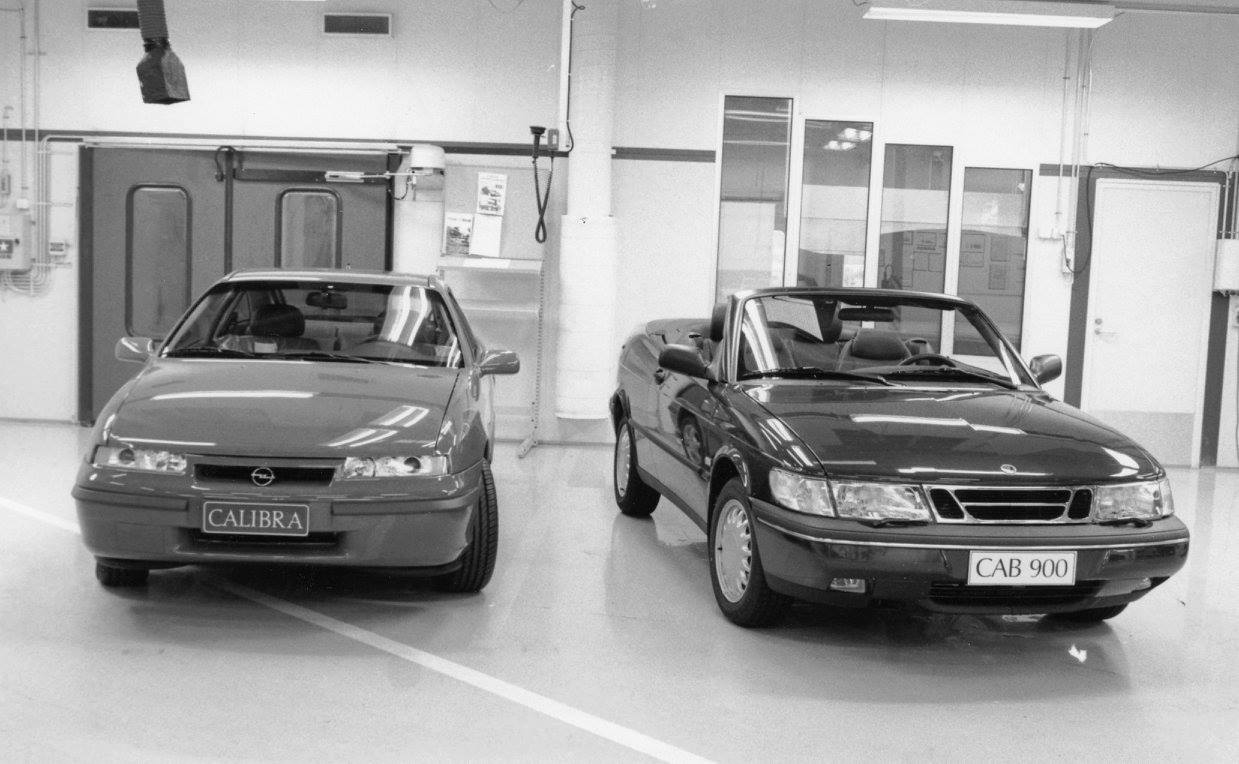
With the Calibra, Saab-Valmet had a sort of revenge: by 1992, after just a year, GM had announced it would cease Calibra production in Finland due to withering sales and move it completely to Germany. Saab-Valmet, which had also been bought out by the state-controlled Valmet in 1992 from under Saab’s rule, had invested hundreds of millions of Finnish marks into setting up the Calibra lines and didn’t take the decision gladly. It went to court over breach of contract and won, which resulted in the Calibra production continuing in the summer of 1993 until 1997.
Saab-Valmet renamed itself Valmet Automotive in 1995. By the end of the decade, it would begin building the new Porsche Boxster 986, alongside Saabs and Lada Samaras (but far away from them in a separate building).
Would It Have Worked Out?
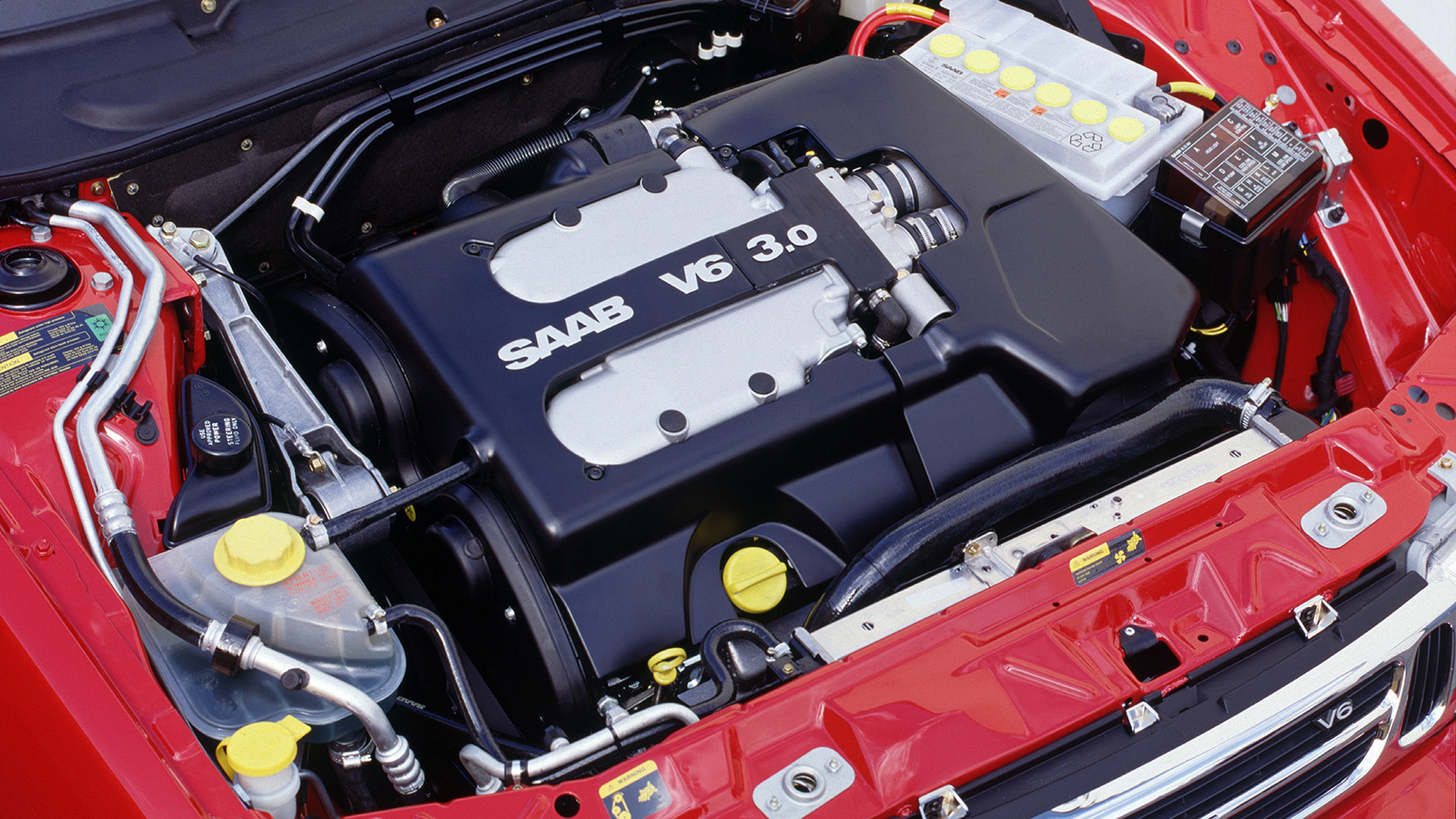
Looking back, it’s difficult to say what the V8 would have meant for the 9000. Had it reached production in the early 1990s, the base car, introduced for the model year 1985, would already have been quite old, and an automatic transmission would have been a definite requirement.
The GM 3.0 V6 was only introduced for the 9000 for the 1995 model year, and U.S. sales of the 9000 CD/CDE sedan ended in the summer of ’95, with the 9000 CS/CSE continuing til 1998. The 9000 was replaced by the 9-5 in 1997-1998: it was based on the same GM platform as the 900 NG and its facelift version, the 9-3.
The 9-5’s version of the 3.0 V6 received a curious Saab touch: it was asymmetrically turbocharged, meaning the turbo only ran off one bank of the engine.

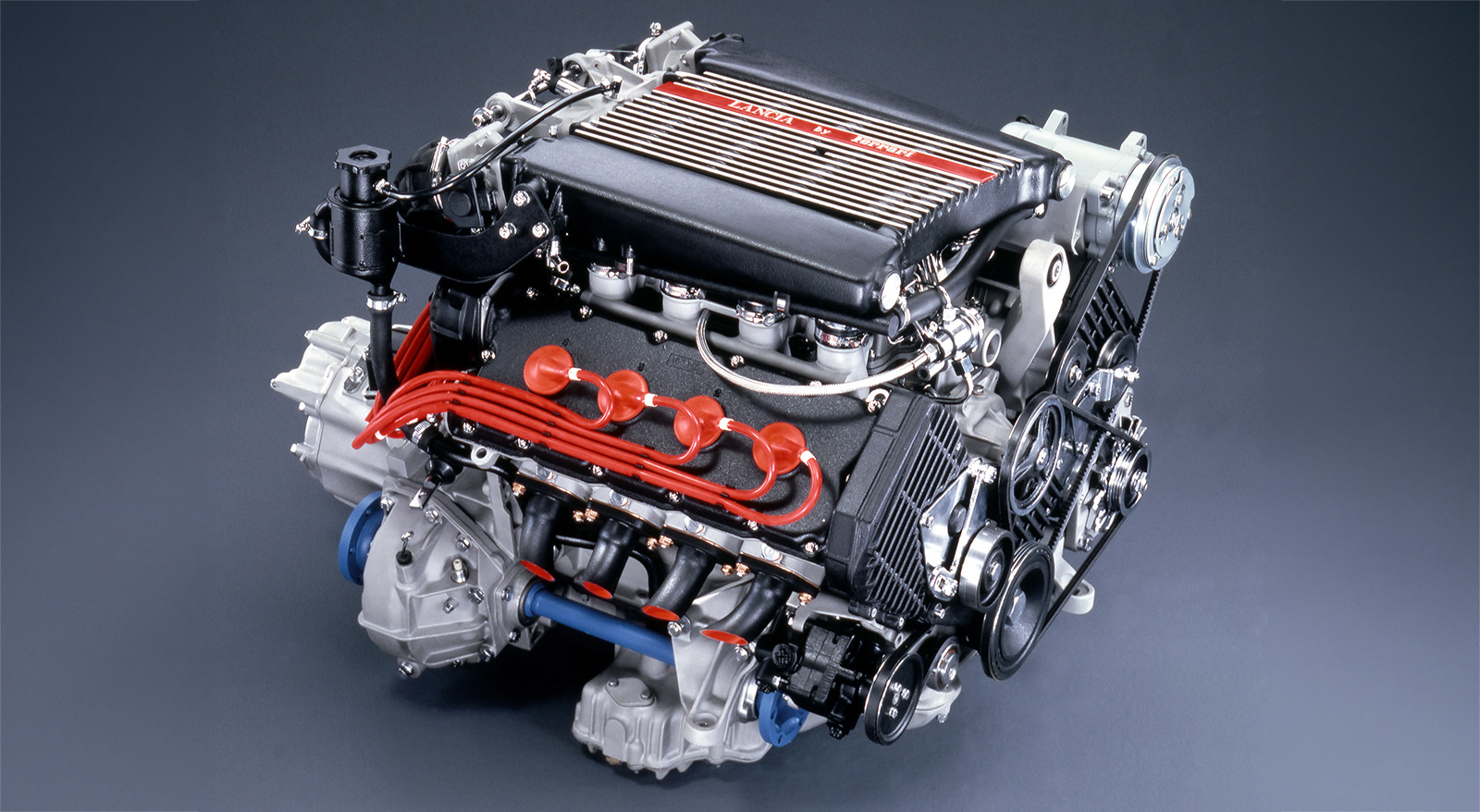
A V8 engine was offered in the 9000’s Lancia Thema sibling, with the 8.32 name: that was a Ducati-built version of a Ferrari V8 based on the unit used in the 308 and Mondial, with a cross-plane crank instead of the usual flat-plane. A liter smaller in displacement than the Linnavuori skunkworks “Twin Four” V8, it produced 215 horsepower in its fastest form. Unlike the Alfa Romeo 164, the Thema and its Ferrari V8 version were never exported to the United States.
The Linnavuori engine plant, the birthplace of the Saab V8, is still operating as AGCO Power’s diesel engine factory after being bought by the American agricultural machinery corporation in 2004. It manufactures 30,000 diesel engines every year.
The only Saab 9000 V8 prototype ever made still exists in the Uusikaupunki factory museum, alongside the prototype engines. It’s in running and driving condition, and over the years, it’s been taken to test drives near the museum.
Out of five completed engines, the locations of three are known. A rumor persists that one was fitted in a factory employee’s personal car. If you have any information of it, drop a note at tips@theautopian.com!
Top graphic images: Saab; Valmet Automotive


I know it’s not the point of this interesting article (thanks Antti!) but all I can think of atm is how I miss Saab. A 99, or a 900 or even 9-3 two-door hatch is (was 🙁 ) such a fun and practical car. I still kick myself regularly for not buying my neighbor’s 9-3 a few years ago.
Valmet made all kinds of stuff besides cars. There are still Valmet farm tractors including a simpler take on the bidirectional tractor and one of Valmet’s most famous products is the rk 62 assault rifle. This improved AK is now indirectly made by the Italians since SAKO took over the rk 62 and is owned by Beretta
Really, though, it’s easier to line everything up at 180 degrees:
https://live.staticflickr.com/7121/7011123121_4826e57c52_b.jpg
Glad to hear the Talladega run Saabs performed flawlessly, my friend’s 9000 Turbo once got through Serbia from Bulgaria to Hungary at wide open throttle and while it went on great, it ended up not so great.
He was flagged by a Serbian Customs officer at his entry into Serbia and asked to drive him to the other border (which was a thing that was done back then, I once had to drive a lady officer 70 miles to her village too. Of course the village was on my way so it was fun), and given a free pass to gun it as the guy had his badge should they get pulled over.
So those were some very fast 417miles, all on highway, pedal to the floor (a good 130mph most of the time), which the car got through flawlessly. Then the headgasket gave up at the first longer coffee break.
I guess it didn’t have a turbo timer or an electric coolant pump to cool down after the stop.
As for the Lancia 8.32 – sweet ride in a straight line, but replacing the last two spark plugs reqired dropping the engine (they were deep under the windshield).
Just slab a tubo on it FFS, no need for 4 additional cylinders! Luckily they often did 😀
I love Saabs and I love the 9000, but I don’t think this would have changed much.
It was cancelled right as GM was preparing to launch the Northstar Cadillacs. The Northstar turned out to have many problems, but on its face, it was far more advanced and powerful than this motor would have been. Given that, would it have made sense for GM to have two FWD V8 luxury cars?
Cadillac never achieved what they wanted in any market with those cars — the problem wasn’t just the motor, it was front-wheel drive. I don’t really think Saab would have fared better. I’m sure it was very difficult for Saab to see superlative-filled reviews of the 9000 that then knocked the car for having an I4, but top-trim 9000s in 1990 were over 30k. That’s about $80k adjusted for inflation, and at that price point, it seems like the sophisticated buyers Saab was looking for preferred something RWD.
Saab never really had success with V6s until the NG9-3, either. The uptake for the 9000 B308 V6 was very low, and the asymmetrically turbo-charged V6 in the 9-5 is probably the worst engine Saab ever sold.
For truly damaging interference in Saab’s product planning, I’d point to the cancellation of Saab’s AWD attempts in the 90s, and the very long delay in replacing the first-generation 9-5.
This article was awesome, and covers yet another wacky engine attempt by Saab. I worked at a Saab dealership from ’99-’02 and that was when the odd 3.0t was available in the 9-5. What a weird engine – but loads of torque. A V6 9-5 was a really nice tourer, especially in the wagon.
The 2.5 V6 in the 900s (pre 9-3) were junk – they felt weaker than the 2.0T and had a reputation for being somewhat fragile and maintenance-intense.
Because the 9000 shared a platform with the Lancia 8.32, I figured that a V8 was possible in this chassis, but because of the fact this was two siamesed 90* Saab 2.0s, it had to be wider than the ‘Ferrari-based’ V8 in the 8.32.
I love that one narrative through line of the entire saab story is that if you give the main office in Trollhattan any say in anything it will take too long and be way too expensive because nothing short of perfect would do.
Joining two inline engines into a V is not even remotely easy, but Allen Millyard actually makes a hobby of it. His Kawasaki V12 is an engineering tour de force.
VAG did that to make the original Audi V8 which was two VW 16V fours on a common crankcase. The VW W8 and W12 engines followed a similar path combining VR6 variations, including the monster W16 Bugatti
That’s like the difference between using a feather and using the whole chicken.
“General Motors Ruins The Party”
A real Saab story.
Saab was a niche company making niche cars. It had a strong and loyal fan base, but it wasn’t big enough to keep the lights on. That is how Saab ended up in dire enough straits to need to be bought out. And no one was seriously interested, but General Motors. The next-best contender would have been Fiat Group, especially because it did have an existing relationship with Saab, but Fiat saw the financials pretty early and backed out.
GM was a poor steward of Saab, especially by the end. GM was drowning under its own bloat and couldn’t produce particularly compelling or profitable cars either in Europe or North America, a condition that only got worse as the years went on. Probably any other large company of means would have done a better job than GM.
At the same time, Saab would have died much earlier than it did if GM hadn’t purchased it. And of course there was the dirty business at the end of GM selling Saab and then blocking its sale to a Chinese company to protect GM’s own interests in that market…only the Chinese automakers were the only ones interested in it.
Exactly. The Saab fanboys love to poo-poo on GM, but the reality is that without GM, Saab would’ve died much sooner than it did. Besides, GM still let Saab get away with some of their shenanigans, which many other companies wouldn’t have tolerated (or have been oblivious to. you decide). I mean, just look at Volvo as it changed hands. The Mitsubishi & Ford years were fairly interesting (if not necessarily exciting), but ever since Geely took over, they’ve slowly rationalized themselves away.
As a former Saab owner, Saab’s main problem was never GM. Saab was terrible at business. They repeatedly missed the forest for the trees: obsessed with building the perfect car in the places nobody would notice, without ever getting to the parts they did. It repeatedly drove them to bankruptcy.
People didn’t care that the 9-3 used a better, reengineered head unit from the Vectra unit it was supposed to have. They didn’t care that the spark plugs measured detonation instead of a coil pack. They cared that the car was FWD 4cyl instead of RWD 6cyl, and had a worse quality interior than a 3 series despite costing the same. The 9000 actively cost them money to produce because Saab spent so much money reengineering the “not up to par” components they were given, from different suspension architecture to a completely new body for better crash safety… the end result was still a FWD 4 banger at luxury prices, that you had to drive to find the advantage in the details.
I love and respect Saab’s passion to building the most thoughtful car possible, ignoring convention, and it’s what made the brand special. However, their inability to optimize this process meant they were never going to find success, no matter which parent company they were fighting.
Missing engines can’t be found because this was TAAP SECRET.
I’ve seen this play out, they need a catchy name, like HEMI, and then advertise the crap out of it so it becomes a meme of its own representing the worst of your brand’s and owner’s stereotypes.
They did, one even more popular, and widespread than HEMI:
https://classicregister.com/sites/default/files/styles/max_2600x2600/public/images/2025-08/Side%20decals%201.jpg?itok=wxMm5SWX
“TURBO” was also, unlike today’s “HEMI”, technically correct – the best kind of correct.
Sigh… I just really want a Saab. That’s all.
All I wanted was a ’76 GLE. It has a lousy blue book value of 900 bucks.
DO IT. Trust me, it is worth it. So much fun per mile.
“General Motors Ruins The Party”
Of course! Everyone knows GM hates V8s.
General Motors should’ve been demoted.
2nd Lieutenant Motors
Private Motors. Which I can see being marketed as an ultra exclusive brand, e.g Maybach Or as a porn site. Or both.
Dang it, take my upvote!
If that V8 can fit under the hood, so can an LS1 😉
Also, a real Saab V8 would be almost as scary to work on as a Passat W8 😮
Some have tried stuffing one of the LS variants from an W-body Impala SS into a 9-3, but I don’t think the project was ever completed. I suspect the Saab V8 wouldn’t have been too bad to work on, given the robustness of the timing gear and internals, especially if based closely on the B202 turbo four. The ZF automatic really was the weak point of the 9000, as it was marginally able to handle the original four cylinder turbo engines. I deliberately chose to skip the automatic on every 9000 I owned.
I personally find V8 transverse-FWD cars to be deeply unsatisfying most of the time, and can’t understand why people are that desperate for one.
One of my classmates told me about his father’s 1985 Cadillac de Ville with transverse-mounted V8 engine. He was proficient mechanic and would gladly do lot of maintenance work himself. Replacing the oil filter in that de Ville for the first time broke him. What would take five minutes took him more than an hour to remove the oil filter.
I had Buick Skylard (spelling is intentional) and Chevrolet Celebrity, both with V6 motors. So, I knew how impossible it was to replace the spark plugs on the rear side without accidentially breaking the ceramic part when tightening or loosening them. So, he got triggered when asked about replacing the spark plugs on the rear side next to the firewall.
Yep, a lot of transverse-V6-engine cars already have poor access to whatever’s on the firewall-facing bank of the engine. And many of those are narrower 60-degree engines. With V8s, which tend to be 90-degree designs, it’s that much more likely that something’s going to be pretty damn inaccessible if it’s mounted transversely.
Not to mention the negative effects on handling and suspension components having all that weight, plus that of the transaxle, distributed laterally over/between the front wheels.
I once almost bought a V8-engine FWD car once, incidentally a 2004 Cadillac Deville, but that was more out of desperation as a college student than a deliberate effort to own one. I can’t see myself buying a FWD V8 car now that I know better.
For 1989 or thereabout, General Motors redesigned the engine mounts and some components for the transverse-mounte V6 and probably V8 engines. The new engine mounts allow the engine to rotate forward to access the rear spark plugs after disconnecting the top dog bone braces.
I’ve not driven a V8-powered FWD car, but I can say with authority that the mildly tuned turbo 4 in my Viggen (~321hp) gets very entertaining, very fast, and not always in a good way. I can’t imagine that an even more nose heavy dynamic would be better….
In the late 90s, I bought a used ’88 9000 Turbo with the automatic. It wasn’t as fun to drive as the 5M non-turbo I rented in Sweden in 1988, but also didn’t kill my wallet like a foolishly-purchased BMW Bavaria did years before. The 5-door Saabs were beautiful. The sedans, much less so. I sold my 9000 for about what I paid for it two years and 30,000 miles later. I kind of wish I hadn’t, but sometimes it’s better to have fond memories instead of regrets.
In my experience Saab engines are really well thought out and easy to work with. They put a lot of effort into engine development, and they had a very different vision of “perfect” than VW.
You never worked on a 9-5, did you? What a mess. Saab had the whole engine bay to work with and shoved everything in the left corner. It’s like a layer cake. From top to bottom- intake, passenger motor mount, power steering pump, serpentine belt, timing chain tensioner, water pump, front main seal. If you ever want to do a timing cover removal that’s all got to come off. Fortunately the chains are stout.
On the contrary I did a full engine out timing chain replacement on a 9-5. I’d heard it’s actually a lot more annoying to try to do it in place. It’s definitely a modern engine that has some modern access issues, but I don’t think it’s unusually bad. Anything on the top, front, or rear of the engine is really easy to get to.
In some ways, the V6 was easier to service, as far as accessories, etc., on the front of the engine. I’ve had several 9-5s over the years (still have one) and have done most of the things that one can do with them. I’ve managed to dodge doing the balance shaft chain, and the times I’ve replaced timing chains (twice), I did the roll-in method on both.