


While Honda built its reputation in America on exceptional reliability, the past few years haven’t exactly been smooth sailing. Owners of cars with some of the company’s most popular modern four-cylinder engines have reported premature head gasket failure, often resulting in a steep bill if an affected vehicle is just out of the factory warranty period. Thankfully, relief is here. Honda just rolled out a special warranty extension covering head gasket issues on select 1.5T and two-liter models, and this looks like it’s going to be huge.
First, a little background: some of Honda’s recent four-cylinder engines have been dogged by reports of premature head gasket failure. The 1.5-liter turbocharged inline-four used in many Accords, CR-Vs, and Civics was the first to show its hand because Honda’s been using it for the better part of a decade, but the two-liter naturally aspirated four-cylinder engine used in the Accord Hybrid, CR-V Hybrid, and Civic Hybrid has also produced reports of premature head gasket failure in recent years.


Head gasket issues in the former engine are prominent enough that in 2024, a lawsuit named Bissell v. American Honda Motor Co., Inc. et al. was filed alleging the existence of a defect on 1.5-liter turbocharged engines that can result in premature head gasket failure. In July 2025, another filing joined the fray, this one titled Alcantara, et al. v. American Honda Motor Co. Inc., et al. and also alleging premature head gasket failure.

It’s not particularly difficult to find reports of 1.5T head gasket failure, but many go like this complaint from the driveaccord.net forum. It usually starts being noticeable with the engine shaking and misfiring, and many technicians initially arrive at the same first diagnosis as this owner: “I put my scanner on it and it stated #2 cyl misfire Injector failure. I was about to purchase 4 new injectors.” Unfortunately, new fuel injectors don’t fix a blown head gasket, the problem generally returns quickly, and the result is usually a big bill if the car’s out of warranty. This claim of “$4,000” sounds about right given the labor required to teardown the engine and fix the actual issue.

While the aforementioned legal filings over the 1.5-liter turbocharged engine were happening, complaints regarding head gasket failure on the two-liter naturally aspirated four-cylinder engine found in several hybrid models started building. I’ve previously covered this issue in greater depth, but the majority of owner complaints play out like this one from the CR-V Owners Club forum. After going through a misfire and having the dealer replace spark plugs, the owner experienced further symptoms and was in for a bit of a shock once the dealership found out what had actually happened:
The next day the diagnoses was a blown head gasket and possible bad cylinders. They wanted me to authorize the head teardown of 19hrs. A cost of $4000. Which I declined. I told then I’m going to call Honda of America. I’m waiting for a response. My question is: Am I the only person with a 2023 CRV hybrid, 17 months old with 66k miles with a blown head gasket?
Honda did issue a product improvement campaign in July for the hybrid powertrain stating that “To better manage engine temperatures, a PGM-FI update has been developed to optimize electric water pump operation.” However, that’s not quite the same thing as extra head gasket coverage. It also doesn’t cover the 1.5-liter turbocharged engines, but it didn’t take long after the posting of this bulletin for some proper relief to arrive.
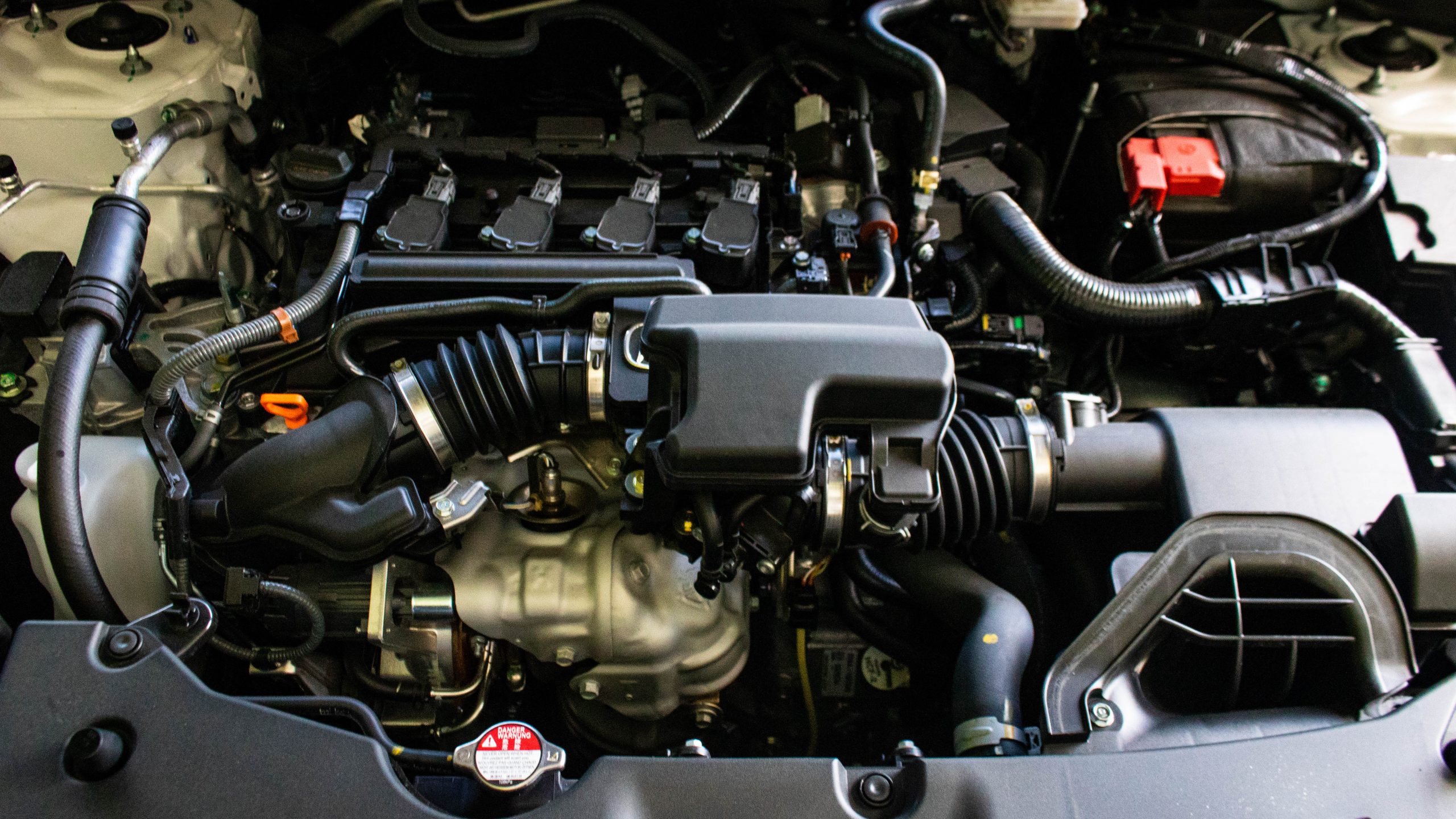
On Wednesday, we received a tip from a reader that a warranty extension had allegedly been issued for select Honda and Acura models with the 1.5-liter turbocharged inline-four and the two-liter hybrid powertrain. Naturally, I reached out to Honda to verify the existence of said extension, and the response is both thorough and pleasing to see.
American Honda is committed to our customers and the quality of our products. After detailed analysis of warranty claims and dealer service records, the company has determined that certain Accord, Accord Hybrid, Civic, Civic Hybrid, CR-V, CR-V Hybrid and Acura Integra and ADX vehicles may experience reduced effectiveness of the original cylinder head gasket under certain driving conditions.
In the interest of customer satisfaction, American Honda is providing an extended warranty on the original cylinder head gasket, related to this condition, for 10 years or 150,000 miles, whichever comes first. The original limited powertrain warranty is 5 years or 60,000 miles for Honda vehicles and 6 years or 70,000 miles for Acura vehicles.
Models included in this warranty extension:2018-2026 Honda Accord equipped with 1.5L turbo engines2018-2026 Honda Accord Hybrid2016-2024 Honda Civic equipped with 1.5L turbo engines2025-2026 Honda Civic equipped with 2.0L engines (non-hybrid)2025-2026 Honda Civic Hybrid2017-2020 Honda Civic Si2022-2026 Honda Civic Si2017-2026 Honda CR-V equipped with 1.5L turbo engines2020-2026 Honda CR-V Hybrid2025-2026 Acura ADX2023-2026 Acura Integra equipped with 1.5L turbo engines
If you’re doing the math in your head right now, that’s head gasket coverage for double the time and more than double the mileage of Honda’s standard powertrain warranty, and four extra years or more than double the mileage of Acura’s standard powertrain warranty. The list of covered vehicles is particularly interesting as well, as it includes the standard, non-turbocharged, non-hybrid trims of the 2025-and-newer Civic. Those cars use a K20C9 engine that’s unrelated to the L15 1.5T engine or the LFC hybrid engine, but Honda’s clearly identified a risk here.

If you own an affected Honda or Acura that now falls within the extended warranty period of ten years or 150,000 miles, you can breathe a sigh of relief. On the chance your head gasket does pop, you shouldn’t have to pay thousands out of pocket for a proper repair. While word of this extended coverage comes a bit late for owners who’ve been through the head gasket wringer already, it’s better for Honda to have stepped up and done the right thing late than sweep it under the rug.
[Hat-tip to Brian Becker!]
Top graphic image: Honda


I wouldn’t go as far as to say all modern engines are complete garbage, but in general they do seem to have many, many more issues than they had just a decade ago. Direct injection, turbocharging, and razor thin piston rings brought on by newer EPA regulations seem to be contributing to the issue. Of course this doesn’t really explain why the GM small block has become a dud… that’s just straight up poor quality control. Its a shame because most of these really do have noticeable improvements in power, drivability, and gas mileage.
Better late than never. Hopefully Honda handles this better than they have their widespread CVT issues, turbocharger failures, the oil dilution issues, the VCM failures, and how other companies (hyundai/Kia, gm, Subaru, vw/audi) have handled widespread engine failures.
Even with a warranty I don’t trust any current or recent Honda powertrains. The EarthDreams engines are compromised, the V6s are troublesome and the transmission logic blows, and I can’t think of any other US offering with a powertrain that has a solid reputation in the last 15-20 years.
What’s going on with the CVTs? Haven’t heard that one.
Widespread failures. The dealers are starting to recommend servicing every 30K miles, which is absurd. Yes, it’s effective at reducing the failure rate, but a closed system using a synthetic fluid should last longer than that.
I’ve probably had about 20 CR-V customers need CVTs, a smattering of HR-Vs, and maybe a dozen Accords. We’re not even a Honda shop.
Oh boy, deja-f’in-vu. I had a Nissan with the Jatco CVT right as the massive failure rate on those started becoming apparent. First it was lifetime/as-needed fluid replacements. Then they started recommending every 40,000 miles. Then they started recommending transmission coolers…for a 4 cylinder sedan.
Good job, Honda.
Yup. My first Jatco CVT was in our ’11 Quest. Got 160K w/o a single CVT service before failure but our ’17 Quest got serviced every 30K. Never had any issues before we traded her in but made it to about 170K miles no issues. I personally recommend any CVT go 30K on at least the dump and fill. Cheap insurance really.
But yes, suggesting an add-on trans cooler on a sub-200hp powertrain means that something in the design was not fully baked.
Well, our Jatco was showing failure signs at 85K despite being serviced at 42K. I dont think a 30K interval would have mattered. It’s just a bad transmission.
Ick.
One of the other things that’s often overlooked is that many CVTs have a filter that should be changed regularly.
30K miles seems a bit excessive to me unless it’s a Pathfinder/QX60/JX35, Quest, or Murano that does a lot of towing and/or hauling or mountainous driving. We generally recommend 50K intervals to our CVT customers which is easy to remember and prepare for.
Then again, better to do too often than not often enough. And a $300-500 fluid service is cheaper than a $7-9K transmission job.
I dislike automotive CVTs (not eCVTs, those are fine!) so much. In general they have a high failure rate regardless of manufacturer – Nissan/Infiniti, Hyundai/Kia, Honda/Acura, GM, Mitsubishi, Subaru, Dodge/Chrysler/Jeep, even Toyota. The cost of the fluid service is significantly more than the fuel savings. The driving experience isn’t great. So why even bother? Mazda (for example) has the right idea by staying with their proven 6-speed. Sure it doesn’t eke out the highest fuel mileage, but it’s realistic, dependable, predictable, reliable, and easily serviced.
Cheaper to engineer and manufacture? I don’t really like the driving experience much either aside from the way they can bump rpm a hundred or so rather than pausing and downshifting.
The Mazda 6 speed is a nice transmission. So is the Toyota 6 that was phased out ~2017. I really don’t like the 8spd they replaced it with. Then there’s the 10 speed units that never stop shifting and hunting.
Oh, and the issues with 1234yf systems. I’ve lost track of how many condensers we’ve done on 2016+ Hondas.
I have seen a few head gasket failures reported on the RDX forum I am on, and have heard the 2.0t in the Accord has had issues as well. Not enough info to say there is definitely a problem, but it does have me concerned on the longevity of my ’22 RDX. I guess time will tell.
so, on the scale of GM truck motor recalls, how big of a deal is this really?
IIRC it encompasses Honda/Acura’s entire lineup except for the V6 engines (which have their own problems). So while the transaction price is lower than the gm trucks, the failure rate is potentially more damning across the range.
In short, avoid honda/Acura, and sell if you already own one.
In terms of scope, very. IIRC gm is recalling 800k engines. This probably affects several million cars, although idk what % is affected.
In terms of inconvenience, the GM recall feels more consequential as there are reports of engines becoming abruptly inoperative at highway speeds with no warning, which can cause serious accidents. The Honda issues seem to give a little warning and not disable your car at 70mph on a highway.
Does inoperative mean not providing power, or ceasing to rotate. The first is bad but drivers ought to be able to deal with it. Abrupt engine lockups are a whole other thing.
Oh wait, is that true with automatic transmissions? I’ve never blown an engine with an automatic. Of course the lack of a clutch probably makes it worse.
Actually, on GM cars and I gather other modern cars you lose the power steering and after one application the power brakes, so people younger than I am who expect cars to be reliable would be in a bad place. Maybe not as bad a place as someone in front of them though.
“The Honda issues seem to give a little warning and not disable your car at 70mph on a highway”
In the old Majel Barrett Star Trek computer voice:
“WARNING. Engine core failure imminent. You’re fucked in 10…9….8….”
Thought I dodged the 1.5t and cvt issues with a 2024 sport 2.0l manual but at 27k miles it’s drinking a liter of oil every 1k miles. Dealer insists that it would have to do the same within 750miles to be warrantable.
I’m glad we kept the 08 matrix for roadtrips.
That’s about 4000 miles per gallon of oil – what are ya complaining about? 😉
Yah, I’d be complaining too.
That seems very VAG or GM with that small of a difference. I’d almost be tempted to evacuate a few ounces of oil before their check, but I also don’t want to commit fraud. Ugh.
I’ve got a friend with a 2023 Sport 2.0L Manual Hatch and he’s had 3 valve cover gaskets done by the dealer, with the last one including a whole new cover, apparently the head wasn’t cast perfectly. Now he’s questioning if it’s got oil consumption or a leak. Such a shame since it’s an incredible value of a car on paper.
Yeah we bought it as a keeper. But I’m looking to trade as soon as something worthwhile shows up. I hope Subaru gives us the manual Crosstrek they teased.
While this is a good thing for most owners, this will be the first warranty on my Integra that I intentionally ignore, but I do all my own wrenching anyway because I frankly don’t trust anyone else to do it for me. The head on these cars, and honestly even the entire engine/transmission assembly are easy to pull and work on. I noticed the valve cover gasket was leaking over the weekend, so that’s my excuse to do ARP head studs next oil change. If the HG goes after that at some point, that’s on me, but I’m actively on the hunt for a used engine to build something spicy anyway. Why? Because.
Go get yourself one of these to help with that job. A friend of mine is a Honda Mechanic and has the 1.5T and 2.0L sets in his tool box 1.5T Cylinder Head Disassembly Trays & Rocker Arm Holders – EnvisionAuto3D
Thanks for the hat-tip, Thomas! (I myself saw someone post a service bulletin on FB.) This is personally good news for me, as I own a ’21 Accord LX 1.5T. I bought the HondaCare extended warranty* which supposedly covers everything like the factory 3/36 for up to 8/120 and Tampa Honda included a supposed lifetime powertrain warranty, but I was already wondering if I’d want to keep the car past 120k. Anyone know how good those dealership third party powertrain warranties are? Would it cover a bad head gasket at say 140k or 180K?
Though I find the car overall quite mediocre and the seat downright terrible, I’ve quite enjoyed the engine: smooth through redline, good torque, nice fuel economy . . . too bad about its tragic design flaw.
Now if the dealership could just fix the thrice broken AC!
*overpaid because the dealer falsely stated I had to buy it right then and there at the time of vehicle purchase but could get a full refund within 30 days, yet it turns out I could have/should have returned that warranty and shopped for the same warranty for less at another Honda dealer.
Likely cant Fix the A/C since it is an inherent design flaw with the switch to R134yf
It worked well for 4 years. Then last year the condenser went out, and this year the clutch and compressor (the latter an intermittent problem that was initially a big hassle to even get the dealership to acknowledge), all covered by the HondaCare warranty. Now it intermittently takes an hour to start cooling, but the dealer can’t replicate the problem.
As if the gasket problems and belated taking of some responsibility aren’t indication enough of Honda’s quality lapses, it’s my understanding that Honda issued a service bulletin covering the cost of replacing the condenser on Accords built between ’18-’20 but excluded the ’21 despite its still being the same 10th gen Accord! I’d be POd if I didn’t have the warranty: a 4 year old, 60k Honda with a $1500 AC repair. (And now the compressor this year.)
My 2018 Type R’s Condenser failed last June. That was covered under a 10/150k warranty. However, the compressor also melted down and locked up from running without freon. That was $2600 out of pocket which sucked. Dealer broke a few of the super fragile bumper clips too but claimed it was that way when they took it off since it has been off before when it got a bigger intercooler installed.
That’s upsetting! How’d they argue their way out of covering the compressor? How could they prove being without freon wasn’t a sudden failure that subsequently caused the compressor to seize up? And isn’t freon part of a sealed system anyway?
Did they get a good deal on Head Gaskets from Subaru?
An extended warranty is not a fix. I speak as someone bit by a known problem with an engine that had gotten an extended warranty. Mine, of course, failed shortly after the extended warranty ended, and even if it hadn’t, the hassle of having an engine out of commission for an extended period of time was at least as bad as the financial cost. If I owned one of these I’d be unloading it ASAP.
I mean better than Ford’s Ecoboost 4 cylinder issues. They are also know to have head gasket failures due to poorly designed steam passages and open Deck coolant set up. I have not seen Ford do this extended warranty to help anyone out though.
I mean, Ford might be the champion of poorly handled defects. They are, after all, the company whose “fix” for blowing up engines was to drill a hole in the underbody pan so when a rod went through the block, at least the oil wouldn’t pool and start on fire.
That does not excuse anyone else’s poor handling of defects. If “better than Ford” is your standard, you need to raise your standard.
also remove the active shutters on the radiator….Mavericks are good though right?
These HG failures are similar to the Ford ones unfortunately. Putting a new gasket on is just a band aid. Honda needs to redesign the cooling jackets in the block, the replacement HG will have the same issues. If I still had a 1.5T powered car, I would keep it until the first HG went, then dump it asap after getting fixed.
Could a redesign of the head gasket (different material?) handle this?
it’s an open block design. HG issues are more likely on those. There is a reason Ford finally went to a semi closed deck design on the 2019+ 2.0 Ecoboost engines. The other ones are also semi closed or close deck blocks and don’t suffer from HG issues
Honda probably shouldn’t be looking to Ford as the low bar it can clear.
Breathing a big sigh of relief here (’24 Integra). I know it’s a (relatively) small percentage of 1.5t engines with this issue, but it’s nice to have some peace of mind.
Don’t breathe too easily. It’s one of the ones under the extension which is relatively good, but it also means you have to deal with the dealership in terms of getting it covered. That doesn’t guarantee you’ll have alternate transportation while it’s in the shop, nor that everything they do is covered, and that they won’t cause damage as part of the repair.
Brings back memories of Honda’s CVCC head gasket issues.
You are certainly dating yourself with this one!
Aye-yup. I sold them when they were new!
History books?
Didn’t know Honda was contracting out engine design work to Subaru.
Disappointing, I’d been eyeing one of these CRV Hybrids as a possible replacement for my wife’s car in the next few years, 150K extended warranty is generous but that 10 year limit will disappear pretty fast especially if we’re buying one that already has a few years on the clock. I’d say it will hurt resale but it doesn’t seem to have really hurt Subaru any so maybe we’d be fine.
I’d get a CX-50 Hybrid, RAV4 Hybrid, XC40, or Corsair Hybrid if I were shopping for a hybrid in that class.
CR-V has gotten too big, being nearly the size of the original Pilot. The sound deadening is not very good (such that when I rode with some acquaintances we couldn’t even converse between the two rows).
Was just looking up the Corsair PHEV yesterday! But those all make sense, I do like the idea of a PHEV since the previous owner installed a car charger in our driveway so we’d really been talking about trying to find a RAV4 Prime, and seems the Corsair is weirdly one of the few credible contenders even close to our budget range. When we get around to actually shopping I want us to at least test drive a CX50 hybrid-really wish they offered it as a PHEV but I’ve owned a couple Mazdas and very
I like the idea of the XC40, imo the best looking car in the class and as a tall guy I’d appreciate the Volvo seats but I’m nervous about reliability and maintenance I’ve just read such mixed things on Volvos, which also makes it a hard sell to my wife.
Kinda bummed the 2.0T didn’t get included. While they seem to have less head gasket issues, I still see mentions of some on the forums (though it could be more related to pumping way too much boost through them).
Some 2.0Ls are listed
Not the 2.0T.
You understand what this means? Now that owners are protected by an extended warranty against cataclysmic disaster, the moment those vehicles are out of warranty they’re all getting dumped on the used car market.
I mean, that’s exactly right. That’s how my parents would get their E-Class MB’s. Then again, that didn’t really work out for them when the transmissions crapped out.
I’ll be a bit mean and arrogant here and state that I believe the vast majority of owners won’t have a clue about this issue and why the warranty is 10/150K. They’ll probably just look at the warranty length and go “wow, see, this is why I buy Hondas!”. Most of us are that way about a lot things we buy, really.
This is a long way of saying that I doubt it will tank resale. There are going to be some 2nd, 3rd, and 4th owners with nasty repair surprises down the road though.
I’m sure the problem is very public on CR and other such publications, which are about the only things consulted by the general consumer population when purchasing a car. That, and a quick internet search returning an avalanche of disgruntled postings.
Apparently the issue is caused by little slots between each cylinder, which I believe Ford had a issue with in their 1.5 eco boost motor until they redesigned it. Here’s someone in the civic forum talking about it.
All the displacements of the EB had that issue.
no they didn’t. Only the 1.5 4cyl and 2.0 from the mid to late 2010s. The issue was corrected back in 2019.
Whoops, I meant 2.0 and under, which also includes 1.6. Supposedly corrected, but corporations say a lot of things. They also didn’t put the Focus ST on the list of affected cars, but mine had that failure.
Oh yeah that 1.6 was a dud. Too bad as I liked the Fiesta ST as I had too much fun with a regular SE 5 spd.
The reason the Focus ST was not on the list was because that Gen 1 Ecoboost 2.0 engine had a closed deck engine block, which was much more robust than the open deck used in the 2015-2018 Edge, 2017-2019 Escapes and 2017-2019 Fusions. The ST never got the open deck, not even the last 2018 specimens. That doesn’t mean they don’t fail but it was not a common issue and they take some extra boost on the regular without quitting early.
That’s what I thought and that’s why I bought it—closed deck—not going to have a HG issue with that! Turns out (after a few years digging on and off), it looks like Ford subbed in some of these other blocks that had the cooling jacket issue, but I have no idea how to ID which one a particular car has unless, like me, you start it one morning and can’t see out your rear window and you know you don’t have the good one. On the plus side, the neighborhood was mosquito free for a bit! (Not really.) Diagnosing it was a pain because it wasn’t a HG and there was no cooling leak into the intake, say from the turbo. I ended up having to bring it to a good mechanic and he had trouble figuring it out, too. Only recommended fix was a new engine in late ’21 when mechanics were booked out for months on small jobs. Some just outright hung up on me when I asked about replacing an engine and I got rid of my crane and stand when I moved, plus it was my only car. Really sucked because it was a fantastic car that had done 180k with a reliability record that could have been for a Corolla.
My top two contenders for my next daily both use this engine, so this is very interesting news.
There are better choices. From a service and repair standpoint, I wouldn’t recommend any honda/acura model.
For a newish 5-door hatchback with a manual transmission?
Other options are:
1) Golf – not buying that or anything Euro for ease of maintenance.
2) Corolla hatch – a contender but very disappointing cargo capacity.
….that’s about it.
Are they going to reimburse those hosed by this issue prior to the extended warranty being offered?
It’s good they are stepping up. But I am going to throw a bit of a wet blanket here and state that unless the incidence rate of this failure is teeny tiny compared to its forum presence, this still means that a Honda is a time bomb once it hits 150K miles. That’s not how the company built its reputation.
My exact thoughts.
First gen HRV also has a 1.5T… meaningfully different enough that this issue won’t affect it, or just overlooked?
First gen HR-V used a 1.8L N/A motor.
I have a ’21 CRV with the 1.5, but it only has 33K miles on it. Time to get those tires rolling so if the head gasket croaks, it does so by 2031.
Any word if there is a design improvement for 2027 and up models, or are they just going to advertise the 10/150,000 warranty in perpetuity?
Yeh this is what I was wondering, there doesn’t seem to be much of a diagnosis or update here only a better warranty if it does happen.
The cylinder head gasket in the new models is a new updated part and is the same gasket that is now going into these older models.
The extended warranty covers the original head gasket. What happens when the replaced head gasket fails? $4000 out of pocket for that repair?
I’m guessing there is a cylinder head hot spot issue if the band aid was water pump tuning.
Ford’s fix for the 1.6L Ecoboost was to install a temp sensor in the area where the hot spot occurs that also triggers a low coolant light.
My 2020 Accord with the 2.0 turbo is not covered. I’ve seen some reports of the gasket failing on these, not nearly as much as the 1.5, but I’m not sure if that’s because there are many more 1.5’s than 2.0’s in service.
Is the warranty coverage not retroactive for owners who can produce a bill for previous service? Rather lame of Honda if not.
Yeah I thought that was standard practice.
Hey, Ford, pay attention. Your ecoboom motors are a joke. My SHO ate it’s water pump at 90k miles and I had to pay $3500 to have it and the timing chain and components replaced. My daughter’s Fusion with the tiny turbo engine leaks between cylinders and you simply don’t care about her or the countless others with the same problem.
I won’t buy another Ford, ever.
And the Powershift transmission issues that Ford never properly took responsibility for.
You overpaid for that timing job. At least you had warning of the water pump failure thanks to the weep hole, otherwise the engine could have failed rather than just needing a timing service.
Call any mechanic anywhere and get the job quoted. That was 4 years ago and that was the LOW quote. And I had no warning other than a CEL from the stretched chain that, neat, the water pump runs off of.
Don’t lecture me on the gen 4 SHO. It’s an expensive car to maintain because Ford is stupid. Lifetime PTU fluid, btw!
I work in auto service and it’s been my career for a few decades. The current price at my shop for a SHO timing chain and water pump job would be $2,588.15 out-the-door, and that’s with Motorcraft parts. The two nearest Ford dealerships (there’s about a ten or so in my nearest major metro area) quoted about $3,400 for the same parts. There’s other shops in my area that charge less for labor and have a lower parts markup, so the lowest professional charge would be about $2100-2200 for the same job. I’d tell my customers to budget $3500 just in case other services might be found to be needed.
So, yeah, it sounds like you overpaid given the cost 4 years ago was considerably less, and/or you live in an area that has a much higher cost of living.
As for “lifetime” fluids, most enthusiasts and folks in the industry know that translates to “service lifetime”, which – depending on the vehicle – is usually between 100,000 and 150,000 miles. We generally see the “lifetime” Motorcraft fluids being due about 120-150K, depending on how the vehicle is being driven, but some of our customers will do them every 75-100K when they use the vehicles harder, with a few taking samples to send to Blackstone Labs. Fluid changes are cheap insurance against a component failure. “An ounce of prevention is better than a pound of cure” as the saying goes.
Personally I’d prefer the Fusion Sport to the Taurus SHO if I were going for a spicy Ford FWD-based sedan. It’s a more athletic platform, has more room, and the 2.7L is more fun and generally has fewer issues than the 3.5L. The SHO looks better, though, and I wish they’d had a SHO version of the prior generation with the taller roof. I had a Mercury Montego and it was so wonderfully roomy, and made great use of the Volvo-derived platform.