

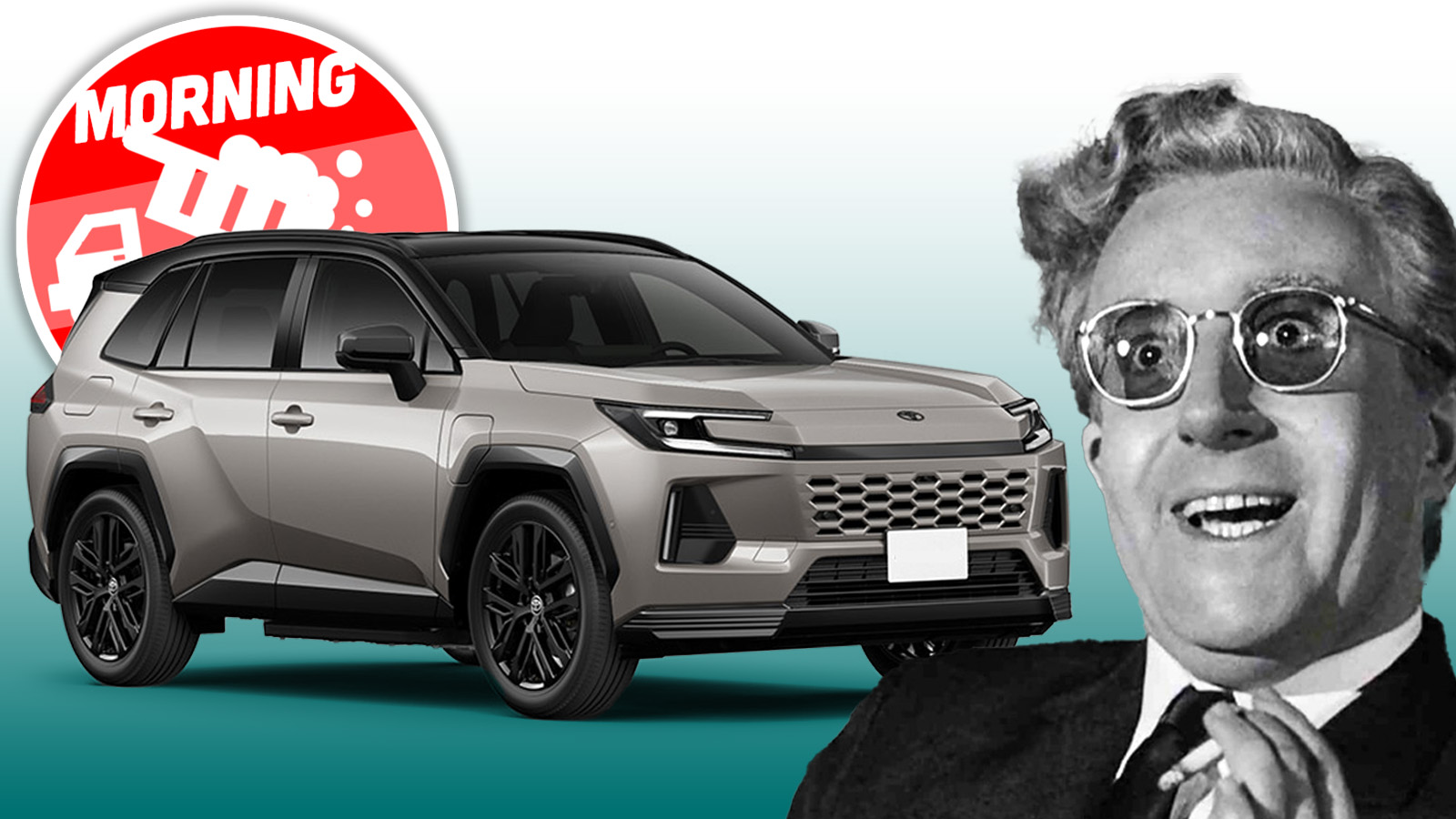
I love hybrids. I own a hybrid. I think most vehicles should either be full BEVs or hybrids (including EREVs), with the exception of some trucks and lightweight sports cars. It seems to me, based on the news this week, that a majority of people agree with me. How have hybrids gone from being perceived as dorky low-T greenmobiles to ‘authentic,’ as one automotive researcher called them?
The Morning Dump has long contended that we are in The Decade of the Hybrid, as early exuberance for electric cars has given way to the reality that most people are not going to buy the EVs that car companies seem to be building. Hybrids have transformed from fuel sippers like the Prius to full rippers like the McLaren Artura and brand new Lamborgh… Audi Nuvolari. That seems to be giving them a new push and a new image. Or maybe it’s just acceptable now that it’s the best alternative to BEVs.


Honda is, it seems, going full hybrid on a lot of cars. There are somethings you should never go full, but going full hybrid for crossovers and compact cars seems to be working out just fine for Toyota. Volkswagen probably wishes it had leased a bunch of hybrids, because one of the few parts of its company that’s consistently profitable is sweating all the EVs it now owns.
Did you know you can get a PHEV version of the Śkoda Octavia? It’s one model in an amazing 30-year run for this car.
[Ed Note: I’m told the title of this article is some kind of pop culture reference, so I’ll leave it even though it’s long and clunky. -DT]
Hybrids For The Rich, BEVs For The Not-So-Rich?
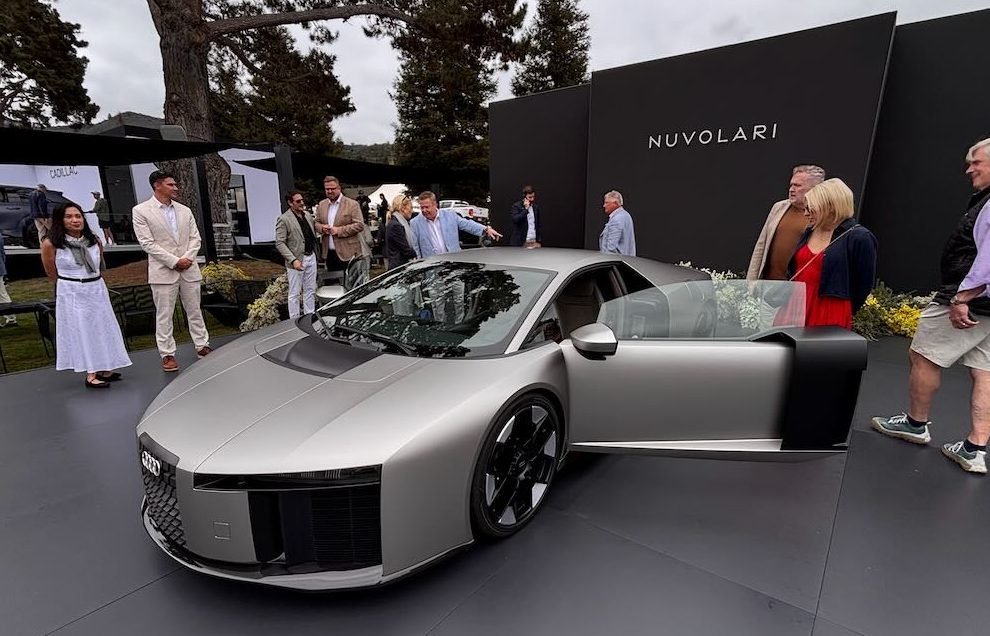
When I attended The Quail a couple of weeks ago I made sure to stop by the Audi stage to see the new Audi Nuvolari. I even chatted with a press guy from the brand I’ve known forever and he asked me what I thought of it. Honestly, it looks stunning in person. While it may have the feel of an older Lamborghini, I enjoy an older Lamborghini, so I’m not complaining.
Bloomberg‘s Hannah Elliott was also there, and got into a conversation with Audi CEO Gernot Döllner, who said some interesting things:
“We find that the higher the segment is, the more the enthusiast still loves the combustion engine,” Döllner says, explaining that the hybrid engine still allows car buffs to access the same desirable analog feeling that also makes mechanical watches appealing. EVs, by contrast, are considered commodities of mobility, not status symbols of pleasure and taste. “The lower the segment is, the more battery electric is accepted.”
It’s true that hybrids are, proportionally, probably best represented in supercars and hypercars. It’s a little eat-your-cake-and-have-it-too, with something that is easy to drive in Carmel traffic, for instance, but can make all the fun sounds you want in car you’re paying $700,000 for. The idea that the wealthy want gas-powered cars and are ok with hybrids, whereas its BEVs for the poors is a bit curious, though.
Credit to Hannah, she got another fun quote:
“One of the things that people are craving these days is authenticity,” says Rebecca Lindland, head of automotive advisory at HarrisX, a global market research firm. “A hybrid communicates that even though it does have an electric component, it is somehow perceived as way more authentic. It stays truer to the internal combustion experience.”
I think this is more important at the higher end of the market than the lower end. While I’m a proponent of hybrids for a wide range of consumers, I understand that a majority of people don’t want to have to think about how their car is powered.
Its’s been a weird transition from my earlier days, when the collective car enthusiast community dissed the Toyota Prius. Everyone seems to like the new Prius and has no problem accepting a hybrid. Whereas the Prius was the poster child for hybrids 20 years ago, it’s now cars like the Ferrari F50.
As the ACEA just reported, a whopping 37.3% of the new car market in Europe is now hybrid-electric, compared to 20.7% share for BEVs, and 29.7% for gas/diesel cars.
Honda Is Probably Going Full Hybrid For The CR-V And Accord
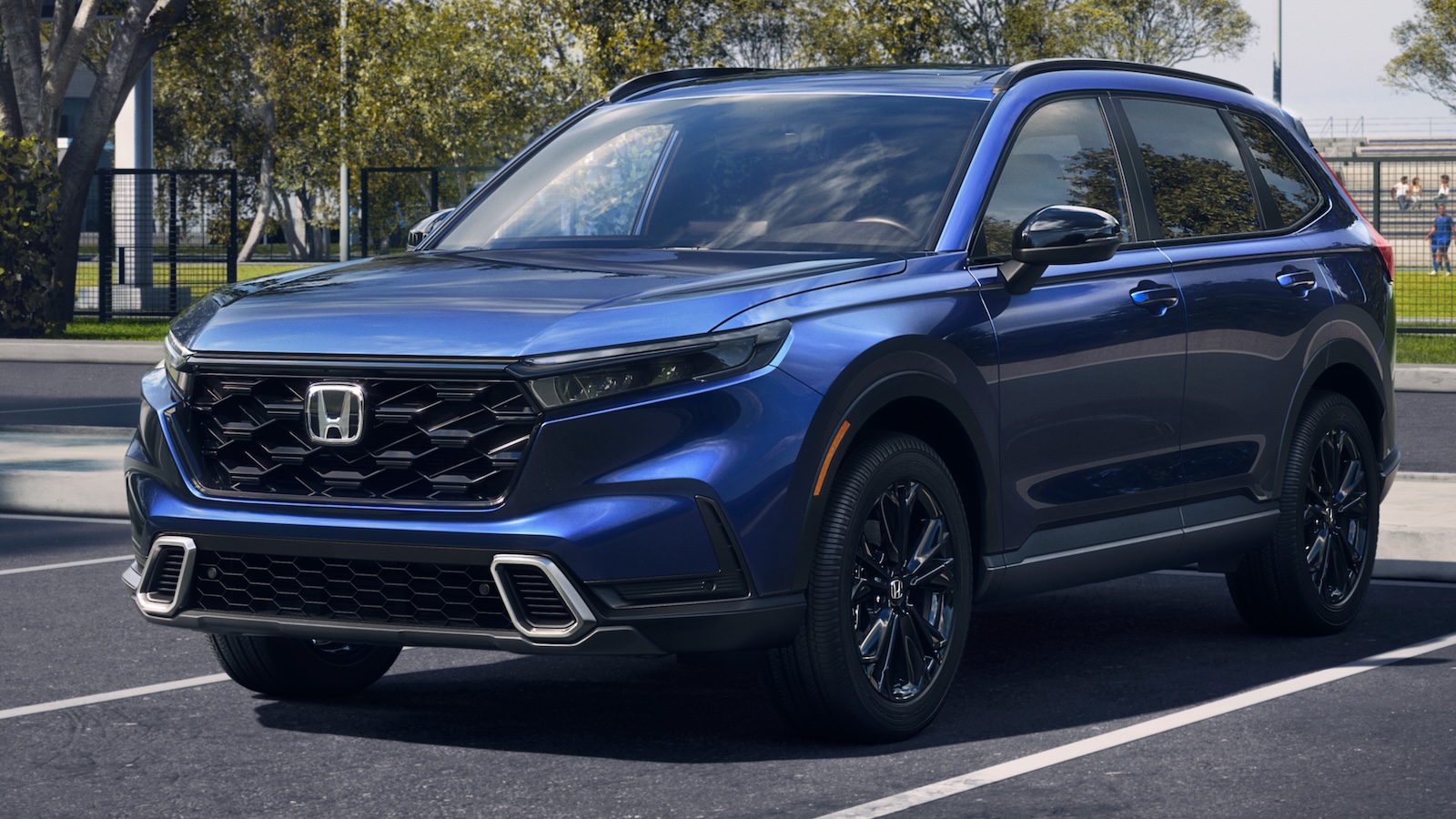
With Toyota going full-hybrid on the Sienna, Camry, and RAV4, it’s probably only a matter of time before Honda does the same. According to Automotive News, we’ll probably have to wait until 2031 as the company still recovers from canceling most of its EV projects.
Hybrids accounted for nearly a third of the brand’s U.S. sales in the first half of the year. Honda is ramping up production and marketing to capitalize on that momentum. Several core models, including the CR-V and Accord, could go hybrid-only by 2031.
Honda sees the greatest hybrid upside in its midsize SUVs. The company is developing a more robust hybrid architecture tailored for larger North American utility vehicles, featuring a new V-6 engine, multiple electric motors and a lower-cost battery pack.
While hybrids are slightly more expensive, there’s a cost savings that comes with only making a single powertrain.
When A One Percentage Point Error Costs $70 Million

Volkswagen continues to be in a bad way, and the one part of the company that consistently makes money is the arm that, well, makes money. Or at least makes money available for people to buy cars. Specifically, it’s Volkswagen Financials Services, headed up by this guy, Anthony Bandmann.
VWFS has continued to be a profit center for the automaker. Will it be for the future? There’s a little bit of an issue as Manager Magazin reports:
At first glance, VWFS appears to be in a solid position. In the first half of 2026, the division delivered nearly €1.7 billion in operating profit, more than any other vehicle brand. However, despite increases in key performance indicators such as the number of contracts and new contracts, operating profit fell by 7.6 percent. “This is due to increased costs associated with residual value risks,” the company explained.
Since new cars are increasingly being leased rather than purchased, the number of vehicles on Volkswagen’s finance division’s books is rising – and with it, the residual value risk. According to the annual report, this risk climbed by over one billion euros to almost 5.9 billion euros between 2024 and 2025. If VW’s residual value experts are too optimistic in their calculations, it becomes costly. An average error of one percentage point results in losses of almost 60 million euros. In its report for the first half of 2026, the company points out that residual value risks have increased again since the beginning of the second quarter.
This is the challenge of leasing (and, also, renting cars). If you are the entity responsible for leasing a bunch of vehicles, you have to calculate a value for that vehicle at the end of the lease term. If the vehicle is worth more–as has generally been the case due to a shortage of good used cars–as the leasing entity you do better. If the opposite happens then you lose money.
VW pushed EVs, and they pushed EVs via leases, and residual values for older EVs haven’t been great. Manager Magazin gets one of its patented juicy insider quotes, who says “We’re sitting on a time bomb.”
At least in the United States, EVs have done a little better lately on the used market, so maybe it won’t be so bad after all.
Happy 30th Birthday, Octavia

I have driven a Śkoda Octavia vRS, so I can say with authority that these are great cars. Amazingly, I’ve never considered why the car was called that. It turns out that it’s derived from the latin word for eight (also used in the word “octave”), because it was the eighth vehicle from the company way back when.
What we’re celebrating today is the 30th birthday of the reborn model, according to a press release:
The decision to revive the historic Octavia name – originally used for a model produced between 1959 and 1971 – was taken during the development of a new vehicle. Work began in 1992, one year after Škoda Auto had joined the Volkswagen Group. Access to the Group’s technology supported the development of a practical car styled by Dirk van Braeckel, then Škoda’s Head of Design. Meanwhile, a new production facility in Mladá Boleslav raised annual capacity from 90,000 to 350,000 vehicles.
The first-generation Škoda Octavia liftback, with a 528-litre boot, was unveiled on 4 April 1996; series production began on 3 September that year. The Octavia Combi followed in March 1998 and was joined by an all-wheel-drive version in 1999, further expanding the model’s versatility. The year 2000 saw the debut of the very first Octavia RS. It proved a true success story: in total, 1.44 million units were produced, and selected variants remained in production until 2010, even though the second modern Octavia generation had already been unveiled in 2004.
Absolutely the best.
What I’m Listening To While Writing TMD
The hits keep coming. I know the “rule of threes” thing is sort of nonsense, but losing Dolly, Yayoi Kusama, and Tim Curry within a couple of days feels wrong and also connected. Kusama never got a single, I think, so here’s Tim Curry doing “Sweet Transvestite” from Rocky Horror Picture Show.
The Big Question
Has your view of hybrids changed over there years?
Top Image: Columbia Pictures; Toyota




We have a BEV (Ioniq5) which is awesome and a regular hybrid Toyota AWD station wagon which does get good mpg, but is otherwise miserable to drive. Can’t wait until the plug-in hybrid/EREV three-row SUV comes out. Or maybe the Scout Harvester with the front bench seat.
TBQ: The first gen Prius was truly dorky looking. The current one looks great. Arguably better than today’s Camry. I rented a second generation one that looked a little better. And it was almost decent. Braking felt a little goofy, but it could get out of its own way. At the time, my daily driver was a Jetta TDI with a stick. Back then diesel was often cheaper than gas, so fuel expense was similar. Those days are gone and hybrids have certainly improved since then. Worries about replacing battery packs seem to be a nonissue.
My next car almost certainly will be a hybrid. I recently did the timing belt and front brakes on my Accord V6 so it will probably be a while before I replace it.
hybrids were dorky when the only option was a Prius. it looked dorky.
now that a hybrid Camry looks exactly like a regular Camry, but with 50mpg, it’s hard to not like that. well, I think also now with the Camry, there is no ICE only version, but it’s not a horrible looking car for a Camry (if an appliance car can look good).
i just had a RAV4 hybrid as a rental. drove about 180 miles on 4 gallons of gas. you guys with “CVT=bad” and “two powertrains is turrible” opinions are missing the boat on some great commuter vehicles.
The eCVT from the Toyota hybrids is nothing like the conventional CVTs that most people complain about (or occasionally obsess over).
The eCVT from Honda isn’t a traditional belt driven CVT either, it’s an electric traction motor powered by an electric generator which is driven by the gas engine, and then at highway speeds the gas engine sends power to the wheels as well.
I’m anti-hybrid, ESPECIALLY for hypercars.
They are less authentic than pure EVs. For a hypercar, the only thing you need a gas engine for is noises (maybe range, as if people take these stupid things on road trips). It’s not for better performance. It’s no more authentic than piping in prerecorded engine noises.
I think they are a compromise all around and are just two systems with Lord knows how many more parts to fail. Just get the damn BEV.
You cannot match gasoline energy density with any battery on the market today. Simple truth. You also cannot charge any battery as fast as refill a fuel tank. Time, experience, and image matter more than how much fuel it burns. Much like a yacht the same type of buyer tends to own.
Regardless of your opinion, ICE powered hypercars will be a thing even after we’re all driving BEV commuter cars that recharge in 30 seconds and go 500mi without issue. Practicality doesn’t really matter.
I’m 100% for ICE supercars, but I think hybrid supercars are lame. A supercar without a manual is a disgrace IMHO.
Toyota has proven the right hybrid powertrain is every bit as reliable as a conventional ICE configuration. Every generation of drivers raised since the late ’90’s has seen hybrids become more prolific and proven. They aren’t just for tree huggers or budget conscious buyers, they are just cars now.
Until electrical energy storage gets lighter than Li-ion and less volatile (thermal runaway) hybrids aren’t going anywhere.
I don’t know. Hybrids seem like twice the amount of things to maintain or can go wrong. I have a BEV and an ICE. That’s what I like; one of each. Not one that has both.
Funny that a hybrid has fewer total parts to go wrong than ICE thanks to the eCVT. BEV has significantly more battery cells that can kill a pack. Letting each system do what it’s good at, is a benefit to both.
TBQ: No
Gas or BEV. I want one power train in my car, not two. BEV for 98% of my driving, gas(diesel) for the other 2%.
IOW: BEV or I will rent.
Less is more (peaceful in my car to maintain).
For many years I thought “Dr Strangelove” was a parody of “Fail Safe.” Just a couple of years ago I learned that “Dr Strangelove” was released first.
Close. Was based loosely on it.
Fun fact: the B52 interiors were all fake sets. The USAF rescinded access to a real plane so the set designers made it up guessing a bit as the real ones were presumably secret
[Ed Note: I’m told the title of this article is some kind of pop culture reference, so I’ll leave it even though it’s long and clunky. -DT]
Young people! I played Dr. Strangelove in an 8th grade play about the time the movie was released in 1964. It was great fun for a Jewish kid. Quite a change in perspective compared to the Cuban missile crisis of 1962.
Even though we lived across the river from Manhattan, I figured that we would be crisped, if the Soviets bombed NYC since the CEP (circular error probability) of their missiles was so poor. I was a nerd from an early age.
David, buddy, that “pop culture reference” is a masterpiece. I’ve got the DVD and access to a full-blown movie theatre for like $250 for an entire afternoon. They serve beer. Come out to Iowa (and bring the rest of the Autopian crew) sometime and lets watch it.
TBQ? I loved the original Honda Insight when it came out – such a fascinating, purpose-built car. Plus it had fender skirts.
I was indifferent to the Prius when that followed, although I had a couple friends that went nuts over them. Mostly I just didn’t care for the looks. Later, I rented a second gen Prius and managed 55 mpg on a round trip to Maryland. After that I started paying a bit more attention to them.
The one I was really fascinated with was the Volt. After seeing the concept at the Chicago Auto Show, I became quite enamored with the idea of not using any gasoline for short trips. Of course, when the actual one came to market I thought the price was crazy and the looks didn’t match the concept very well, but it still seemed pretty cool.
The big surprise came a few years later when used Volt prices were just dirt cheap. Being able to buy a four-year-old one with 40,000 miles on the clock for $11,500 seemed like a deal too good to pass up. The first couple of years with the car were pretty-much like David’s initial reaction to his BMW i3, i.e. best car ever.
Since then things haven’t changed too much even though I’ve gravitated back to driving my classics more often again. I still love the concept of the PHEV and hope to replace the Volt with either another one of those or a full BEV when the time comes. As to regular hybrids, they’re still… fine.
Combustion engines are going the way of mechanical watches
Yes, my view of hybrids has changed, but not for the better.
The original hybrids had great tech like the e-CVT.
Now there’s a whole genre of what I’d term Hybrid Compliance cars.
Ones where you take a pure ICE automobile and shoehorn (a) electric motor(s) and a battery into the car for minimal MPG gains.
For PHEVs of this category the batteries are simultaneously too small in capacity to have sufficient electric only range and too large in overall size to the point it intrudes into the cabin.
Thank the laws that forced compliance regardless what the buyer wanted.
Yes and no. Toyota has had the tech to make a compact maverick style pickup for nearly 30 years, and yet they let Ford beat them to the punch… 23 years later
Sometimes industry doesn’t make what the people want, they make what they’ll still buy.
“Has your view of hybrids changed over there years?”
Not really. I’d still have something that I can work on that’s gets “worse” mileage than something that gets high mileage but needs to go to a specialty shop when something goes wrong.
The specialty shop thing is real. When I got the 2 way Helical LSD for my Leaf I had to go to a shop several hours away that normally does EV conversions as no performance shop would touch an EV of any sort
My Prii have “gone to the shop” less than any cars I’ve ever owned.
Look up ‘The car care nut’ on YT. He’s a Toyota specialty mechanic that shows how to fix basically anything their modern cars. Hybrids do require more electronics knowledge, but they’re not terribly more complex if you can work on newer ICE cars.
I’ll definitely check it out.
I prefer to identify as a hybrid rather than a transvestite. 😉
Sorry to Tim go, but so glad to see all of the recognition that has been bestowed upon his memory since his passing. I don’t believe he ever received his due share during his time here with us.
RIP, Tim.
As they moved away from early-adopter tech, eco people, and performative greenwashing customers and put more powerful versions in more mainstream looking vehicles, of course appeal broadened. Volatile gas prices also haven’t hurt, but in the top three cars I regularly see that are in the 20-year-old range, the Prius is easily one of them, and I’m sure that reliability of the most visible hybrid poster car also had a huge effect on changing perception of long term worry (though it seems like Toyota was also way ahead in terms of rust protection and, here in New England, that’s also a major factor in longevity and a big reason even younger Mazdas are rare). Of course, there’s enough to worry about with non-hybrid reliability today, too, so what could be a little more when mileage is 40% better and it runs on 87 instead of possibly needing premium? I haven’t changed my view of hybrids as a concept—I’ve always seen the potential benefits—but apparently like a lot of buyers, I didn’t find any personally appealing until fairly recently.
Not to mention the early gens really sucked. Anemic powertrains, poorly tuned regen braking systems, and efficiency-at-any-cost interior styling.
I drove a first gen hybrid civic in CA years back, and man that thing was a pile. Regen had no pedal resistance, and a dead spot between max regen and actual braking. 0-60 was a ‘just waaaait for it’ 10.9-12.2 seconds depending on SoC. By comparison any modern hybrid is likely faster accelerating than it’s ICE counterpart, or at least very close.
And early eco tires were abominable by every measure and I highly doubt they made a major difference in the real world. My sister had a 2nd gen Civic Hybrid and my mother the same, but not hybrid. My mother’s had its whole trunk, real tires, much better performance, and cost less for only got a couple mpg less despite the fact that she did not drive economically.
I bought my 08 Avalon from a family member who upgraded to a nearly new hyrbid sienna. The entire time they owned the Avalon, it averaged 22ish, going up to 27/28 for long highway trips. In the Sienna, it gets 42mpg everywhere, despite being bigger, heavier, and still driven with the same lead foot. 10 years ago there’s no way they would’ve bought a hybrid. Had this specific deal not existed, they probably would’ve bought an older Sienna with the same 3.5L as the Avalon.
Hybrids have come a very long way, and in another 15 years EVs might be that good too.
Definitely. If I wasn’t so adamant about manuals, I’d prefer a hybrid to standalone ICE.
“The Big Question
Has your view of hybrids changed over there years?”
My question is why editors don’t catch typos anymore.
As far as hybrids go, for years my motto was “Never trust a Prius.”
But after the Volt, I would definitely consider a hybrid. But not a Toyota.
Why not a Toyota?
The local Toyota stealership has a reputation for horrible salespeople and a horrible service department. Many people will drive 100 miles to the next nearest area where there are a few reputable places. But if you do that, the local one does not like to service anything that you didn’t buy from them.
My co-worker had a Sienna van with a recall for the head gaskets. He had around 65,000 miles on it and asked them if they would replace the spark plugs while they had the heads off for the gasket replacement and they refused. He offered to pay for the spark plugs and the labor and they still said no. He then bought the plugs himself and brought them to the techs that were doing the work and asked them if they would install the new plugs and they said they had to ad permission from their service manager before they could do anything extra.
He ended up getting into an argument with the service manager about and threatened to have it brought 100 miles to a different stealership. They eventually caved in and replaced the plugs, but it added a week to the head gasket change.
I’ve heard dozens of similar stories from other Toyota owners in this area. Many of them bought elsewhere, and the local service department treats them terribly.
Plus, while I haven’t driven many Toyotas, the ones I did drive just felt kind of cheap and ‘tinny’. Their horns sound wimpy, the alarm chirp even more wimpy, and, ergonomically to me, nothing makes sense as to where the switches and controls are located. I think this must be Japanese vehicles in general, though, as I owned a Chevy Tracker, which is a rebadged Suzuki, for 9 years and I never did get used to turning on the wipers once it started raining.
Ok. Thanks for the insight. I have owned two Toyotas (a ’90 Xtra Cab bought new and an ’84 Tercel 4×4 wagon) but that was back when I did my own routine maintenance and never dealt with the service departments.
I have a hate/hate relationship with VAG that will probably last until I shuffle off this mortal coil. I’ve had several Hondas in three different states and their service departments were all pretty solid to deal with. Expensive, but I hadn’t found independent shops I would trust with a timing belt.
In my Saab and Peugeot days, I was fortunate to find well-regarded independent shops to handle anything beyond tuneups and oil changes which I wanted to still handle.
The thing about Toyota hybrids for me is that they have been at it longer than any other brand I can think of and the Toyota-licensed hybrid systems in Ford Escapes used as taxis in NYC routinely went 300K miles with nary a hiccup. Those miles are about the worst one can put on a drivetrain. Probably about half the Lyfts I take these days are Toyota hybrids of some sort. And the drivers all love them.
After reading your last paragraph about ‘wimpy horns’ (?) sound like you have a case of american car bias. Toyotas have the most intuitive layout out there.
Do you mean to say all your cars have auto wipers? I don’t really understand.
That dealer seems to suck but to be honest I dunno what that has to do with the quality of the whole brand.
I have pretty much only owned American cars, other than two Chevrolet badged Suzukis. (Metro and Tracker) On those, the wiper switch buttons were high on the dash to the right of the gauge pod instead of on or near the steering column and I had to take my eyes off the road to look at them to make sure I was pushing the right buttons.
The few Japanese vehicles I drove were not very intuitive for me, but I’m used to GM products. When I used to rent cars every week it was through Avis when they featured GM vehicles. I could hop in a Chevy, Buick, Pontiac, Oldsmobile, or even a Cadillac rental car and just get in and drive it. And even the F*rd Deathstars and Dodge Caravans were easy to just hop in and go.
But when I got into a Nissan, Mitsubishi, or Toyota, I could figure out the gas, brake, steering, etc., but things like the window up/down switches, wipers, rear wiper, and even the radio buttons felt foreign to me and I learned that I had to spend time in the rental car lot just figuring out where stuff was and how it worked.
Both my parents only drove American cars for the most part. (My mom did drive a Renault Alliance for a few months while I was in college until something died and she had it hauled away and bought an Oldsmobile) My dad worked for the UAW for 30 years so buying Japanese was something he would never do.