

I love hybrids. I own a hybrid. I think most vehicles should either be full BEVs or hybrids (including EREVs), with the exception of some trucks and lightweight sports cars. It seems to me, based on the news this week, that a majority of people agree with me. How have hybrids gone from being perceived as dorky low-T greenmobiles to ‘authentic,’ as one automotive researcher called them?
The Morning Dump has long contended that we are in The Decade of the Hybrid, as early exuberance for electric cars has given way to the reality that most people are not going to buy the EVs that car companies seem to be building. Hybrids have transformed from fuel sippers like the Prius to full rippers like the McLaren Artura and brand new Lamborgh… Audi Nuvolari. That seems to be giving them a new push and a new image. Or maybe it’s just acceptable now that it’s the best alternative to BEVs.


Honda is, it seems, going full hybrid on a lot of cars. There are somethings you should never go full, but going full hybrid for crossovers and compact cars seems to be working out just fine for Toyota. Volkswagen probably wishes it had leased a bunch of hybrids, because one of the few parts of its company that’s consistently profitable is sweating all the EVs it now owns.
Did you know you can get a PHEV version of the Śkoda Octavia? It’s one model in an amazing 30-year run for this car.
[Ed Note: I’m told the title of this article is some kind of pop culture reference, so I’ll leave it even though it’s long and clunky. -DT]
Hybrids For The Rich, BEVs For The Not-So-Rich?
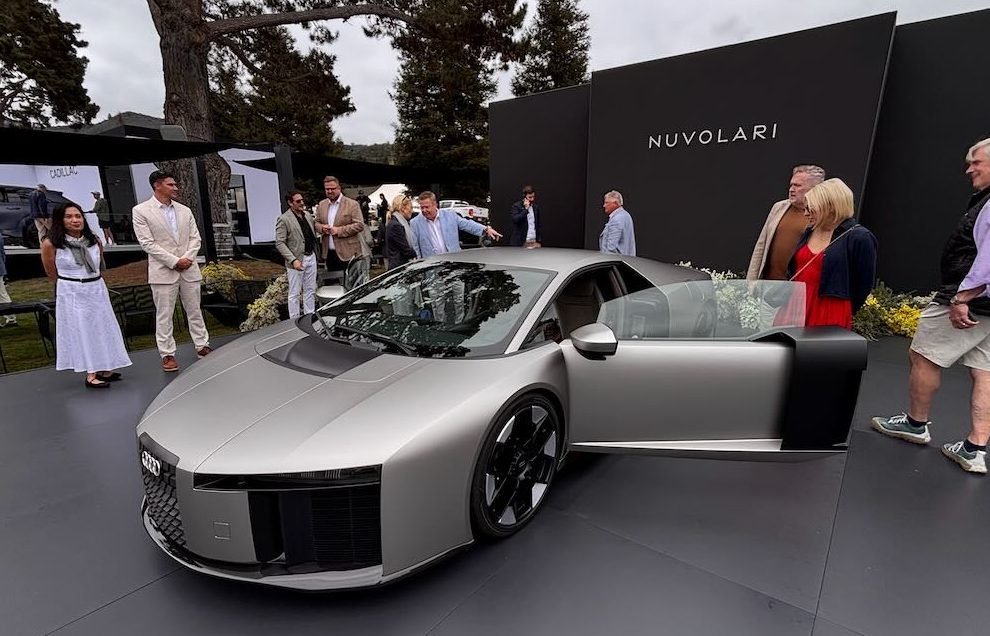
When I attended The Quail a couple of weeks ago I made sure to stop by the Audi stage to see the new Audi Nuvolari. I even chatted with a press guy from the brand I’ve known forever and he asked me what I thought of it. Honestly, it looks stunning in person. While it may have the feel of an older Lamborghini, I enjoy an older Lamborghini, so I’m not complaining.
Bloomberg‘s Hannah Elliott was also there, and got into a conversation with Audi CEO Gernot Döllner, who said some interesting things:
“We find that the higher the segment is, the more the enthusiast still loves the combustion engine,” Döllner says, explaining that the hybrid engine still allows car buffs to access the same desirable analog feeling that also makes mechanical watches appealing. EVs, by contrast, are considered commodities of mobility, not status symbols of pleasure and taste. “The lower the segment is, the more battery electric is accepted.”
It’s true that hybrids are, proportionally, probably best represented in supercars and hypercars. It’s a little eat-your-cake-and-have-it-too, with something that is easy to drive in Carmel traffic, for instance, but can make all the fun sounds you want in car you’re paying $700,000 for. The idea that the wealthy want gas-powered cars and are ok with hybrids, whereas its BEVs for the poors is a bit curious, though.
Credit to Hannah, she got another fun quote:
“One of the things that people are craving these days is authenticity,” says Rebecca Lindland, head of automotive advisory at HarrisX, a global market research firm. “A hybrid communicates that even though it does have an electric component, it is somehow perceived as way more authentic. It stays truer to the internal combustion experience.”
I think this is more important at the higher end of the market than the lower end. While I’m a proponent of hybrids for a wide range of consumers, I understand that a majority of people don’t want to have to think about how their car is powered.
Its’s been a weird transition from my earlier days, when the collective car enthusiast community dissed the Toyota Prius. Everyone seems to like the new Prius and has no problem accepting a hybrid. Whereas the Prius was the poster child for hybrids 20 years ago, it’s now cars like the Ferrari F50.
As the ACEA just reported, a whopping 37.3% of the new car market in Europe is now hybrid-electric, compared to 20.7% share for BEVs, and 29.7% for gas/diesel cars.
Honda Is Probably Going Full Hybrid For The CR-V And Accord
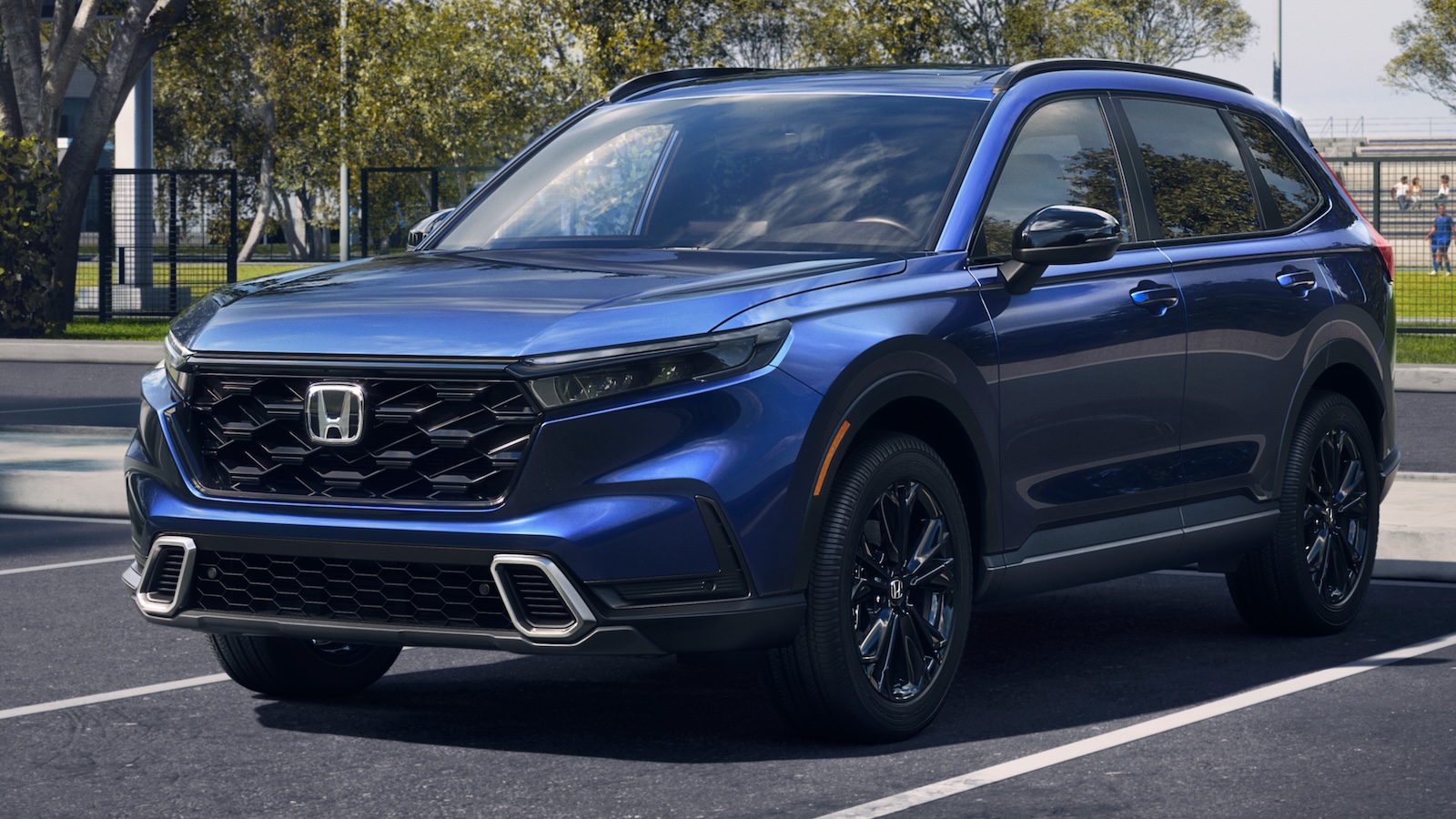
With Toyota going full-hybrid on the Sienna, Camry, and RAV4, it’s probably only a matter of time before Honda does the same. According to Automotive News, we’ll probably have to wait until 2031 as the company still recovers from canceling most of its EV projects.
Hybrids accounted for nearly a third of the brand’s U.S. sales in the first half of the year. Honda is ramping up production and marketing to capitalize on that momentum. Several core models, including the CR-V and Accord, could go hybrid-only by 2031.
Honda sees the greatest hybrid upside in its midsize SUVs. The company is developing a more robust hybrid architecture tailored for larger North American utility vehicles, featuring a new V-6 engine, multiple electric motors and a lower-cost battery pack.
While hybrids are slightly more expensive, there’s a cost savings that comes with only making a single powertrain.
When A One Percentage Point Error Costs $70 Million

Volkswagen continues to be in a bad way, and the one part of the company that consistently makes money is the arm that, well, makes money. Or at least makes money available for people to buy cars. Specifically, it’s Volkswagen Financials Services, headed up by this guy, Anthony Bandmann.
VWFS has continued to be a profit center for the automaker. Will it be for the future? There’s a little bit of an issue as Manager Magazin reports:
At first glance, VWFS appears to be in a solid position. In the first half of 2026, the division delivered nearly €1.7 billion in operating profit, more than any other vehicle brand. However, despite increases in key performance indicators such as the number of contracts and new contracts, operating profit fell by 7.6 percent. “This is due to increased costs associated with residual value risks,” the company explained.
Since new cars are increasingly being leased rather than purchased, the number of vehicles on Volkswagen’s finance division’s books is rising – and with it, the residual value risk. According to the annual report, this risk climbed by over one billion euros to almost 5.9 billion euros between 2024 and 2025. If VW’s residual value experts are too optimistic in their calculations, it becomes costly. An average error of one percentage point results in losses of almost 60 million euros. In its report for the first half of 2026, the company points out that residual value risks have increased again since the beginning of the second quarter.
This is the challenge of leasing (and, also, renting cars). If you are the entity responsible for leasing a bunch of vehicles, you have to calculate a value for that vehicle at the end of the lease term. If the vehicle is worth more–as has generally been the case due to a shortage of good used cars–as the leasing entity you do better. If the opposite happens then you lose money.
VW pushed EVs, and they pushed EVs via leases, and residual values for older EVs haven’t been great. Manager Magazin gets one of its patented juicy insider quotes, who says “We’re sitting on a time bomb.”
At least in the United States, EVs have done a little better lately on the used market, so maybe it won’t be so bad after all.
Happy 30th Birthday, Octavia

I have driven a Śkoda Octavia vRS, so I can say with authority that these are great cars. Amazingly, I’ve never considered why the car was called that. It turns out that it’s derived from the latin word for eight (also used in the word “octave”), because it was the eighth vehicle from the company way back when.
What we’re celebrating today is the 30th birthday of the reborn model, according to a press release:
The decision to revive the historic Octavia name – originally used for a model produced between 1959 and 1971 – was taken during the development of a new vehicle. Work began in 1992, one year after Škoda Auto had joined the Volkswagen Group. Access to the Group’s technology supported the development of a practical car styled by Dirk van Braeckel, then Škoda’s Head of Design. Meanwhile, a new production facility in Mladá Boleslav raised annual capacity from 90,000 to 350,000 vehicles.
The first-generation Škoda Octavia liftback, with a 528-litre boot, was unveiled on 4 April 1996; series production began on 3 September that year. The Octavia Combi followed in March 1998 and was joined by an all-wheel-drive version in 1999, further expanding the model’s versatility. The year 2000 saw the debut of the very first Octavia RS. It proved a true success story: in total, 1.44 million units were produced, and selected variants remained in production until 2010, even though the second modern Octavia generation had already been unveiled in 2004.
Absolutely the best.
What I’m Listening To While Writing TMD
The hits keep coming. I know the “rule of threes” thing is sort of nonsense, but losing Dolly, Yayoi Kusama, and Tim Curry within a couple of days feels wrong and also connected. Kusama never got a single, I think, so here’s Tim Curry doing “Sweet Transvestite” from Rocky Horror Picture Show.
The Big Question
Has your view of hybrids changed over there years?
Top Image: Columbia Pictures; Toyota


I thought the hybrid idea was great from the beginning, though I was no fan of the Prius. I think the newer ones look a lot better. I’m glad there are a lot more hybrids available now, and I like my Maverick hybrid.
While Battery longevity has increased in the past 2 decades, I still see a used hybrid vs a used ICE vehicle a lot more warily. Of course thanks to costs of things, the poorly designed Ford DCT’s and CVT’s in general have given many of the small cars that get stuck with them a bad rep too, so it is really just a huge trade off.
Since I prefer manual everything though. I don’t really care about the hybrids, except that they displace more cars that should have a stick shift.
Market research firms always sound like they’re sniffing glue. Just full of such weird, lofty, out-of-touch opinions on what the masses are thinking, expressed in the most pretentious and buzzword-y terms imaginable.
Hybrids now drive really well. Manufacturers have figured out how to use the electric motors to fill in the dips in the torque curve, and the transmissions they use no longer feel disconnected and rubbery. They’re a good solution for a whole lot of people, and I support the idea that nearly all mass-market cars ought to be hybrids.
Now bring back the sedans and wagons and give me the EU-market Skoda PHEV wagon.
The more hybrids I’ve driven, the more I like them, at least for workaday vehicles we drive 90% of the time. Our PHEV Fusion (admittedly a pretty lousy PHEV) gets 90-100 MPG and makes for the perfect around town runabout vehicle. And our last minivan rental was a Toyota Sienna. Though I still prefer the Odyssey and Pacifica as actual minivans, the 40+ MPG from the Toyota was seriously impressive.
I want to see the Tales from the Slack where David argues that nobody will understand the Dr. Strangelove reference…
If I view my wife’s opinion on hybrids vs EVs as a good stand in for the semi-informed general public she has gone from being into an EV to basically mandating one her next car be at least a hybrid and ideally a PHEV for her next car. As some others have commented on here it sort of feels like EVs were pushed before they were ready to be pulled from the oven. Which is too bad, they keep getting better but I fear getting people back into them may be challenging.
I haven’t had much direct hybrid experience other than a rental Ford Escape PHEV driving around Lofoten, Norway a couple years ago and I was absolutely sold on the idea after that-and if they’d offered it with AWD we might have even tried to buy one for my wife as our family car as we were shopping at the time. Thanks to the relative lack of options we’ll probably try to find her a decent used RAV4 Prime as we’re lucky enough to have already had the PO of our house install a charger in the driveway.
Our 09 highlander hybrid was incredible, and our current RAV4 Prime is perfection. Our friend’s brand new Camry AWD gets like 45 mpg and it’s loaded with every modern convenience.
I’m shocked it’s taken almost 2 decades for everyone else to try to catch up to Toyota’s success.
I think part of what’s weird about it and maybe stymied the hybrid thing was in the early years there was actual market evidence that ecopod styled hybrids actually sold better than their normal looking siblings aka conspicuous consumption.
Maybe it’s a lack of vision that led to them being cancelled after only one generation, but a lot of automakers tried rolling out “normal” hybrids in the early aughts (even GM had a hybrid tahoe and silverado lol) and iirc people didn’t really buy them in big numers, not least because gas was cheap enough that the extra expense of a hybrid didn’t really generate enough ROI unless you were planning on keeping it for years. Plus I know for myself there was a fear of what was then new tech being unreliable in expensive ways. That being said by the twenty teens it does seem a little short sighted that other automakers didn’t see the writing on the wall and begin to reinvest in hybrid tech. I’m especially surprised Honda largely slept on hybrids for so long as an early innovator.
Silverado Hybrids gained I think 1 or 2 mpg average, and of course there was the concern that GM might have botched the implementation so the hurry up and wait to see if the premium price made sense over time was the norm I think. in Hindsight, the reality of owning one today is pretty scary as repairing them is near impossible and normally they are financially totalled.
For sure the GM hybrid trucks were kinda pointless, but also Honda made an Accord hybrid for what one generation before canning it (maybe it was 2) Ford dabbled in some midsize hybrids I think (though they’ve probably been better at offering hybrid tech than most other automakers besides Toyota and very recently Hyundai/Kia have rolled out hybrid tech with shocking speed.
Honda stuck that hybrid Accord at the top of the model tier and as I recall calibrated it more for performance with a V6 rather than efficiency.
Yeh that is my memory as well, which in theory seems sound that’s what Toyota is currently doing with the RAV4 Prime. I think the pitch was v6 performance with four cylinder gas mileage, but iirc it was more expensive than the v6 model and didn’t really offer that much more mpg.
As I’m reading various comments on here and thinking about this, I think something maybe we’re all forgetting a little is how much lithium battery tech has improved hybrids and made EVs actually viable vs the early 00s. My memory is a lot of these early hybrids weren’t even using lithium batteries?
That’s sorta what Honda did with the current Civic hybrid, which I own. Sure, they could lower it, add more wind skirts, skinny the tires, embiggen the battery, drop some weight, depower the ICE or downgrade to a 1.6 or 1.8 and probably beat Prius/Camry/Corolla mileage. Instead, my car is sorta GTI performance, with Honda reliability, and 50MPG as a bonus. It’s the fastest car I’ve owned. What’s not to like? The V-6 Accord was before it’s time, when people didn’t understand hybrids really, and Prius was the golden child. Now, there’s really no point to a Prius. It looks good, but those looks bring compromises, and the car’s always been an ergonomic disaster.
Ford had the Fusion and C-Max as mid sized hybrids. The C-Max replaced the Escape Hybrid (but it was nearly the same car, but 2″ lower – shared platform and the interior as well). Unfortunately they screwed up at launch and advertised a too high mpg, then basically gave up on it. I had one, liked it because it was much faster than a Prius of the same year, much cheaper and the mpg difference wasn’t that bad (it still doubled that of the car it replaced in my fleet.) When it got totaled, I went with an Escape (they brought it back when they dropped the C-Max.)
The C-Max was always an interesting vehicle to me, unabashedly practical and imo while not sexy better looking than any of the Priuses (Prii?) I briefly suggested one to my in laws but they were hung up on not believing a Ford could be reliable.
I’ve driven a 1st gen Escape hybrid years ago and more recently drove a rental one in Norway and was quite impressed with it’s economy and being quite decent to drive on twisty Norway coastal roads.
The Silverado Hybrid was rated at 21 city / 22 highway / 21 combined
The Silverado 5.3L was rated at 14 city / 20 highway / 16 combined
The problem for GM was that people focused on the 2 mph highway not the 7 mpg city.
Yes. I used to perceive hybrids as some sort of futuristic and complex technology, mentally associating them with EVs rather than traditional ICE vehicles.
I never had a negative view of hybrids as a concept, but I was unimpressed by the vehicles themselves, with no model I particularly wanted to own. (This is mostly due to my subjective distaste for most Toyotas.)
Now, I think of hybrids as the ultimate evolution of the ICE vehicle. Electrifying the driveline is simply the most efficient & elegant way to convert fossil fuels into forward motion.
I think this realignment of hybrids [as the ICE tech they are] is largely responsible for the de-politicization of the technology.
For me, that means that as good as hybrids are, BEVs are still the ultimate goal in terms of reducing pollution and achieving a superior user experience.
I remember listening to a podcast many years back about the weird polarization of EVs and how the obviously “eco” styled ones far outsold hybrid versions of “normal” cars, which I think may have led some companies to double down on hybrids that didn’t look normal. Unfortunately I think this may have helped lead to some of the politicization of the tech? I also think familiarity as you point out, when hybrids first came out I worried they’d be technologically complex maintenance nightmares which clearly hasn’t been the case, I imagine that’s true for other people.
I bought a new 2026 Honda CR-V hybrid in November. I’m very impressed with the fuel economy as well as its quick (for an SUV) performance.
That’s funny. My 73 year old mother in law thinks her CR-V hybrid is a slug.
I think that complaint centers on highway speed performance, where the instrumented tests show that Honda’s hybrid system really falls off.
I’m impressed with its acceleration- especially in merging situations.
Yes, as I said, the acceleration falls off by freeway speeds. Below that looks pretty peppy.
I’ve always joked that hybrids are for people who are afraid of commitment.
My wife has a PHEV and I love that she can go MONTHS without buying gas for it. It’s also much more comfortable over distance than my BEV, meaning she’ll only road trip in her car, so when we hit the road it’s really nice to see 45-50 mpg on the highway.
Actually, I’d say PHEV cars are those afraid of commitment. If you drive on battery enough that you don’t need gas for months, then you should have bought a BEV. On the other hand, hybrids are for those who drive enough that they can’t charge enough. For instance, I drive 150 miles a day and can only charge once. Most of the time I’m just hauling around a heavy battery that affects performance negatively in exchange for an extra 100 miles of range per tank.
I was poking around the Ford UK site last week and from what I saw the PUMA EV was their cheapest vehicle. beating out the non EV PUMA by a few grand. one data point, but one that backs up the thought that EVs will most likely become the cheaper and lower cost option as time goes on for more and more people.
TBQ: Not really. I have never been against hybrids. I have never owned one, but only because no one has released a hybrid I want (or more accurately, no one has released I hybrid I both want and can afford – I’d love a Revuelto). I don’t think most hybrids are fun to drive, but then again, I don’t think most vehicles need to be fun to drive. The normies don’t care anyway – they just want Carplay.
What has changed is my view that hybrids should be the default powertrain choice for everyone. I was initially a proponent of battery electric vehicles but now think hybrids are a better option. BEVs are great, but they are expensive, use a lot of resources, and require new infrastructure. I wonder if we should be strongly discouraging mass adoption of BEVs at this time rather than promoting them. This would free up economic and intellectual resources to build and perfect hybrids.
Ultimately, I think hybrids are a bridge to full electrification, but I think the bridge is much longer than I previously thought. The ideal solution would be BEVs combined with a well-designed, low carbon power grid, but that is impractical at this time. I think we jumped the gun on BEVs to the detriment of society – we need to step back and start promoting hybrids instead.
The problem with hybrids is that they do nothing for local air pollution. That is the most important environmental aspect of BEVs for me.
I don’t disagree. That is why I specified that mass adoption of BEVs probably should be discouraged. There are definitely places where BEVs should be encouraged.
I think we would be better off getting all vehicles 30%+ better MPG than getting one in ten vehicles to be zero emissions. My concern is that the people that are mostly likely to transition to and benefit from BEVs are those that drive less than average. Those who would benefit the most from hybrids (both in savings and in pollution/emissions reductions) are those who drive the most miles.
We should probably get the biggest contributors to pollution to transition first. In some cases (trucks in dense urban areas) that will involve transitioning to EVs, but in most cases, that would involve transitioning to hybrids.
“I think we would be better off getting all vehicles 30%+ better MPG than getting one in ten vehicles to be zero emissions.”
For the biggest impact on pollution we need people in cities to drive EVs because that is where air pollution is concentrated. It is also where driving an EV makes the most impact because of gridlock. Lucky it is also were it is easiest to build out charging infrastructure because 80% of the US population lives in urban areas.
The emissions from someone driving 25K miles a year on the highway across the interstates and back roads of Montana are having almost no impact on human health and respiratory disease.
The all vs 10% is Toyota’s talking point which assumes there is a limited amount of batteries that don’t allow 100% of vehicle to be BEV. That assumption is false.
Everything I have read suggests that batteries still require materials which are not plentiful. It may be technically true that enough raw materials exist for 100% of vehicles to be battery EVs, but for practical purposes we don’t have enough materials. If nothing else, if the raw materials for batteries are readily available, why are they so expensive? Economics would suggest that if batteries we easy and cheap to build, prices would be much lower.
Something is clearly limiting how many batteries we can build, whether it is raw materials or otherwise. Given that batteries still at appear to be a somewhat limited resource, we should be using them judiciously.
For local emissions that isn’t true. Going hybrid does very little for PM, NOX, and HC
I’m skeptical. I find it hard to believe that we can burn 30% less fuel without substantially lowering all emissions. Do you have any sources for that? I’m always open to changing my mind if better information is available.
Batteries: In China 60% of their new vehicle sales are BEV or PHEV with the majority of those BEV. No shortage of materials in a country that made it a priority.
The higher cost of BEVs in the USA is due to a lack of economy of scale not the underlying tech. We also also cancelling battery plants and converting other to make grid storage batteries.
Emissions: Local emissions are not connected to fuel consumption. They are based on the design of the emission system. Emissions are regulated in grams / mile and all light duty vehicles are allowed the same limit. Ford F-150 and Toyota Prius – same limit. It is cheaper and easier to make the Prius meet emission regulations but at the end of the day a company does not spend any more than is necessary to meet the emission target. No company is spending extra money to make a cleaner car because the buyer doesn’t care and won’t pay extra for a cleaner car. Meet the standard, no more, no less.
I know this because I work for a manufacturer and see our powertrain development. I also go to CARB’s website and look at actual emission certifications.
FTP@UL tests:
2025 Honda Accord
0.015 …… NMOG+NOX
0.5 ……… CO
0.000 ….. PM
32 MPG
2025 Honda Accord Hybrid
0.022 ….. NMOG+NOX
0.2 ……… CO
0.000 ….. PM
48 MPG
2025 Honda Pilot
0.014 …… NMOG+NOX
0.3 ………. CO
0.000 …… PM
21 MPG
Minor differences depending on the pollutant.
CARB emission certification at the link below. The call them Executive Orders. Unfortunately after 2025 they stopped posting the details.
https://ww2.arb.ca.gov/applications/new-vehicle-and-engine-certification-executive-orders-light-duty-vehicles
Thanks for your reply. That actually makes a lot of sense. If I understand you correctly, the Prius could hypothetically put out less pollution than the F150, but it doesn’t because they put more effort into reducing the F150’s emissions.
What about time spent idling? Presumably hybrids spend less time idling at stop lights, which is a more common in dense cities. Pollution per mile may not be better with the Prius, but are there times when the Prius’ engine wouldn’t be running (and thus no pollution is generation) when the F150’s engine would be running?
As for batteries, I’m still skeptical. Again, everything suggests there is something limiting battery production aside from politics and consumer interest. I could see where China might be able to produce a lot of batteries, but they also are in an ideal situation for ramping up battery production (government support for battery production, less concern about the environmental and societal impacts of mining, more accessible natural resources, etc.). I’m not sure China is representative of the rest of the world.
Yes, turning off the engine at stop lights can save fuel and emissions. The same can be said for non-hybrids with stop/start. In 2025 58% of non-hybrid models sold in the USA had stop/start and another 5% are 48V mild hybrids.
All hybrids aren’t created equal either. Some don’t have electric AC compressors so they idle the engine at stoplights if the AC is on. Almost all hybrids use waste engine heat for cabin heat so they run the engine to provide heat. (This really annoyed me with my Prius)
End of the day, we aren’t going to make the big strides we need on urban air quality with hybrids. The total amount of gasoline burned in the USA peaked 2018 but air quality hasn’t improved in our cities. Some are getting worse as they grow and those people bring more cars and more pollution. We have to steadily improve emission from new cars just to stand still on air quality.
I like hybrids, I’ve owned hybrids, I’ll likely buy another hybrid in the future. However, going hybrid is a minimum step and one that should have been made a decade or more ago.
I admit to being confused by this. If a hybrid car burns less gas running the same route as an a non-hybrid car because for a percentage of that trip the hybrid is being powered electrically, how is it doing nothing for local air pollution? I’m not doubting that when the gas engine is running the emissions are the same, but when the gas engine isn’t running there are no emissions (aside from brake and tire dust).
CO2 emissions are directly related to the amount of fuel consumed. Local emissions “HC, CO, NOX, PM” are not. Those are directly related to the design of the emission system.
US emission regulations are measured in grams / mile and all light duty vehicles are treated the same. A car that burns less fuel will have fewer emissions going into the emission system, so it can be smaller and cheaper. Also turning the engine on and off makes it harder to meet emissions as the catalytic converter can start to cool and emissions are higher at startup.
Real examples from CARB certifications:
FTP@UL
2025 Toyota Corolla Hybrid
0.0216 ….. NMOG+NOX
0.08 …….. CO
0.0001 ….. PM
47 mpg
https://ww2.arb.ca.gov/sites/default/files/classic/msprog/nvepb/executive_orders/EO%20Web%20Files/PC-LDT-MDV/2025/toyota_pc_a-014-1226_styxv01.8h3a.pdf
2025 Lexus LC500
0.0222…. NMOG+NOX
0.08 …… CO
0.0003 …. PM
22 mpg
https://ww2.arb.ca.gov/sites/default/files/classic/msprog/nvepb/executive_orders/EO%20Web%20Files/PC-LDT-MDV/2025/toyota_pc_a-014-1239-1_styxv05.0m5a.pdf
We can throw in a motorcycle too as many people think they are really clean because they get good fuel economy:
2025 Honda XR650L
0.4 ………… HC
0.3 ………… NOx
9.0 ………… CO
https://ww2.arb.ca.gov/sites/default/files/classic/msprog/nvepb/executive_orders/EO%20Web%20Files/HMC/2025/hmc_hmc_m-2-922__sdt–20240322.pdf
Thank you for the explanation. So if my soft brain has absorbed this correctly, there’s a regulatory ceiling on various particulates per mile and the gas engine in a hybrid that might be running 70% of the time in the test cycle is allowed to emit the same amount of particulates as a non-hybrid gas engine that’s running 100% of the time in the cycle. And while the manufacturer could theoretically contain more particulates using the tech that is used for non-hybrid gas engines, that would require more rare metals that are expensive, so there’s no incentive to do so.
Yes, that is about it.
A manufacturer will sometimes make an engine cleaner than required to earn credits that can later be used to sell a dirtier engine. Emission regulations are based on fleet averages so when the regulations change not every engine has to change at once but instead it is a rolling change over a period of years. With the big changes coming for 2027 this has been a frequent topic of discussion for my employer.
The whole process is rather complicated but at the end of the day the goal is to meet the regulation without exceeding it because exceed the regulation is seen as wasting money.
What? Sure they do. They consume 1/2 or the less the amount of gas, and they run at optimized RPMs to reduce emissions even further.
Local air pollution: HC, NOx, CO, PM have almost nothing to do with the amount of fuel consumed. See my reply to The Stig above.
I’m not wealthy, but I want the gas-powered car I already own and am okay with hybrids. I do not want a BEV as an only car.
To be faaaair, a lot of BEVs are coming from low-end manufacturers like Kia and Hyundai. I would bet no one attending The Quail is shopping either of these brands.
I think it’s also a combination of the folks who are a bit better off a) not worrying about the price of petrol and b) being in a position to [more easily] have additional vehicles. The comparative inconvenience of traveling extensively in a BEV is also likely a factor.
tl;dr – people with more money can afford petrol and/or multiple cars whereas people with less money generally need to make a single car do all the things
When I read the Audi CEO’s take on the topic of ICE vs Hybrids vs BEVs – it suddenly made sense to me.
Think about watches.
The highest-end watches don’t run on batteries – they’re complex Automatic mechanisms.
Middle and low-end watches are Quartz movements (tho some are Solar – which is really cool)
So for the folks who can afford the fuel and the maintenance of ICE motors – Yay you.
There will be other luxury buyers who will only want an EV – because the greatest luxury is never needing to go to the gas station. Yay them.
But sooner than you think, it will be make more (dollars and) sense for normies to purchase and operate an EV than an ICE or even a hybrid vehicle for 90% of our driving needs. Which suits me just fine. Yay us.
BTW – David really needs to watch “Dr Strangelove”. Today’s world will make more sense afterwards.
the rich want less precious (gasoline) fluids.
I group Hybrids together with regular ICE vehicles since they mostly work the same way to the end user, they are just more efficient.
What I am find the best balance and because I am a little nerd, my Chevy Volt. My commute is 28 miles, 14 of those are on the highway. As soon I merge and set cruise control, I force the engine to turn on. 0.36 gallons each way. 5kwH each way.
This is the best car GM ever produced after 2010. And I dont have to worry about the engine turning on (unless super cold) like other PHEVs. I can even use E15 that is 20% cheaper than E10.
It isn’t so much that if the car is worth more post lease, the company does better. Its specifically if the car is worth more than was estimated the company does better. Lease pricing is based on estimated residual value, so they can price the lease for a car to have estimated zero dollar value and still make all the money they need and planned for.
I think “I’m Going Home” would be a better choice but Tim does a great job on both.
On the day I went away, goodbye
Was all I had to say, now I
I want to come again and stay, oh my my
Smile, and that will mean that I may
‘Cause I’ve, oh, seen blue skies, through the tears
In my eyes
And I realise, I’m going home
Anthony “The Rubberband Man” Bandmann:
Hand me down my pocket calc’, hand me down my hat
Hurry now and don’t be late ’cause we ain’t got time to chat
You and me, we’re goin’ out to catch the latest finances
Guaranteed to blow your mind so high, you won’t come down, no
Hey, y’all prepare yourself for the rubberband man
You’ve never heard a sound like the rubberband man
You’re bound to lose control when the rubberband starts to jam
Oh Lord, this dude is outta sight
Everything he does seems to come out not quite right
Typo?
> Whereas the Prius was the poster child for hybrids 20 years ago, it’s now cars like the Ferrari F50.
Not a whole lot, really. The first one I was really aware of was the Prius, and it was a pretty good vehicle. If anything, my view of regular hybrids has diminished a bit because PHEVs and BEVs have gotten much better.
I know David isn’t the pop culture aficionado that Matt is, but Dr. Strangelove?!? Do yourself a favor and watch Sellers, Slim & Scott in one of the greatest satires of all time.
“Gentlemen, you can’t fight in here! This is the War Room!”
“I can no longer sit back and allow Communist infiltration, Communist indoctrination, Communist subversion and the international Communist conspiracy to sap and impurify all of our precious bodily fluids.”
I love the idea that DT is on the lookout for things he doesn’t recognize.
Tropic Thunder reference slid right under THAT radar!
PS David, if you think this headline is clunky, just be thankful he excised “learned to.”
I had the same thought!
Dr Strangelove came out in 1964. this is not pop culture but boomer culture (and a classic). watch it!
First saw it at the drive in when new. Part of a triple feature with 2 Bond films. 7 year old kid was bored due to B&W format vs Color.
With the passage of time that has changed.
I remember a History teacher bringing it in to class on a Betamax around 74 or so.
Still see it on TV now and then.
Usually try to watch, if only to try and regain a memory of rational thinking by our dear leaders…./S
As the owner of a late-model hybrid CR-V, I think Honda hit a bullseye with driveability, efficiency, and comfort with that vehicle.
Too bad about reliability of the ICE engine tho….
Yeah, watching that one closely. Mine hasn’t had any issues yet.
I don’t know all the acronyms, but my GF just leased a new Kia Niro hybrid a few weeks ago and loves the thing. She’s made a game of trying to keep the electric going without the gas kicking on.
She lives 2 miles from me, and 5 miles from work, and has no interest in modifying anything. A lease is perfect for her. She even has the sunroof she wanted.
Had an about 09 civic hybrid for a while and I loved, loved, loved gamifying the gas/electric/recharge on it!!
I’ve rented a Niro Hybrid for a combined 5 weeks this year and it is a nice car. Roomy, enough pep, and better than 50 mpg in mixed driving.
TBQ: Honestly yes, especially as it continues to improve and mature as a platform. Whatever my next daily ends up being will almost certainly be a hybrid of some variety depending on what is available when that time comes.
My view of hybrids?
Mr. Hardigree, we cannot afford a Hybrid gap!
…all of our precious engine fluids…
Don’t worry, Ford knows the recall code.
COTD right there!
You can’t charge in here! This is a power station!