

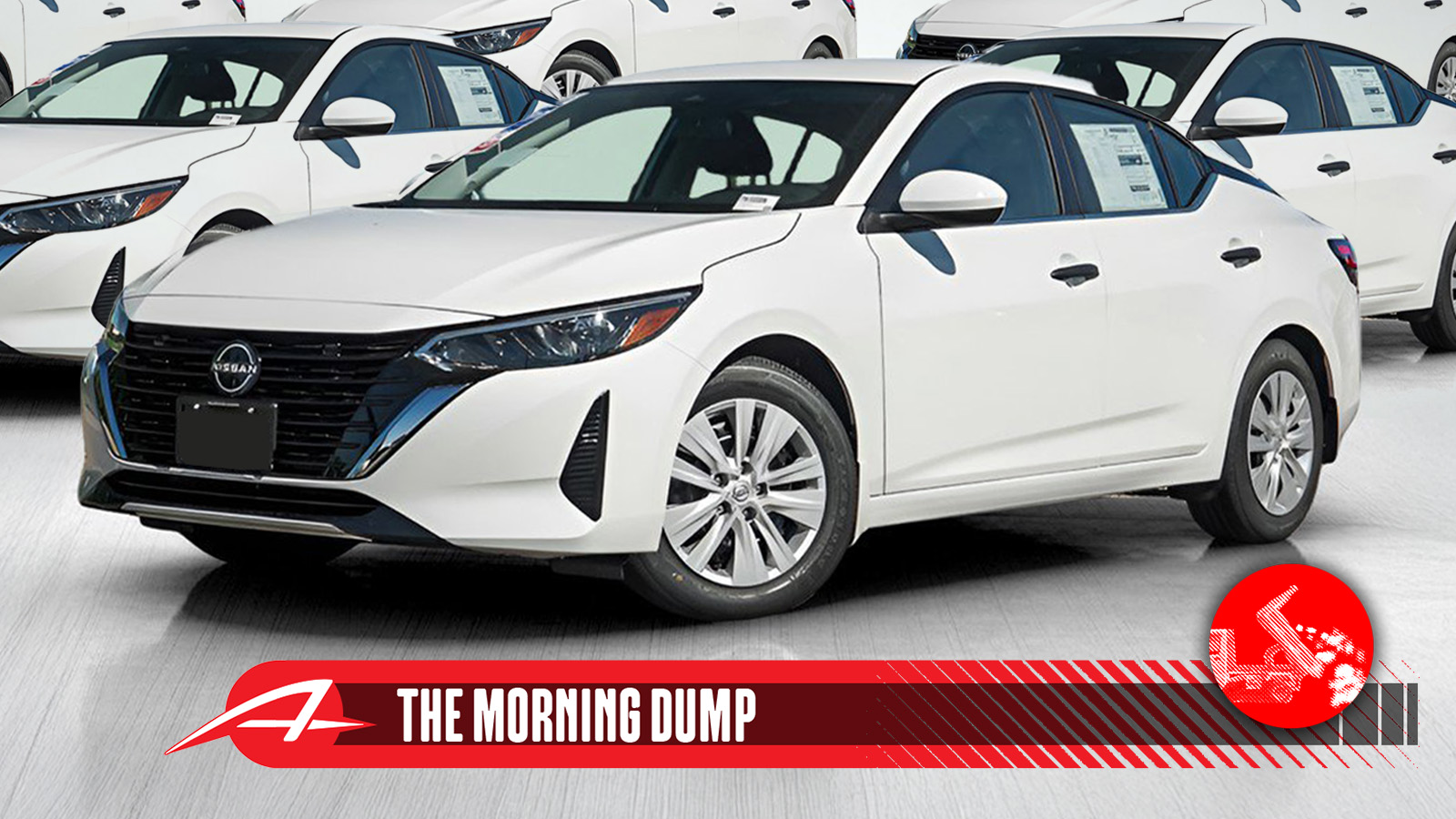
Affordability is the main topic on the mind of Americans right now, which means people are looking to save money anywhere they can. That includes the dealership floor. According to new data released yesterday, the demand for base models over more premium trims is on the rise this year, to the point where automakers are seeing huge swings in demand depending on spec. As a result, you might soon be seeing far more base models on the lot in the coming months while shopping for a new car.
What else is happening this morning? Nissan, which teetered on the edge of insolvency as early as two years ago, looks to be getting things back on track, showing smaller losses than expected as it announces its seventh factory closure. And for the first time in 10 years, registrations of electric vehicles fell in America year over year—but that hasn’t stopped Tesla from retaining its dominance in the EV capital of America, California.

In a bit of less industry-esque news, the Formula 1 movie is confirmed to be getting a sequel. Sadly, something tells me it won’t be called F2. Let’s get into it.
More Buyers Are Starting To Realize Base Is Best
In my experience visiting dealerships, it’s rare you actually see a truly base, no-option version of a car sitting on the lot. Cars you see at the dealer carry various levels of options throughout various trims, pre-determined by the dealer, who orders those cars, or the manufacturer, who allocates those cars to the dealership (or, in many cases, both).

Cars with more options generate higher margins, so it makes sense that the cars available for buyers on the lot are more decked out than the base car you see on that automaker’s website. Both the dealer and the carmaker want to make as much money as possible on every sale. But buyers are speaking with their wallets, with data showing that cheaper, simpler entry-level trims are selling quicker than premium versions, according to data from Cox Automotive and CarEdge, seen by Reuters.
The publication reports that “Americans are ditching premium trims for entry-level cars as affordability takes a hit:”
Steep sticker prices on new cars are pushing Americans to opt out of premium trims for basic models, lifting sales of entry-level variants and prompting some automakers to adjust production.
Pickup trucks and crossovers have cemented their place as top-sellers despite their hefty price tags. But average transaction prices have hovered around $50,000 for nearly a year, according to Cox Automotive, putting many fully loaded models out of reach.
The strain extends beyond the showroom. Widening wealth gap in the U.S. and a sharp rise in costs for housing, insurance and healthcare are squeezing lower-income households, with President Donald Trump’s tariffs adding more pressure.
“If you want to keep a car for a decade, shouldn’t you get the bare minimum of options that you will use? No need to get the most powerful engine if the plan is just to commute to work,” said Sam Fiorani, vice president of research firm at AutoForecast Solutions.
If you’re an automaker or dealer, you can feel one of two ways about this. The negative Nancies will stress about how they’re losing on that precious margin, since fewer buyers are opting for fancy trims and options they don’t actually need. On the flip side, building base model cars isn’t as expensive and often quicker than building pricier versions. So long as you can keep sales volume up, there are still profit opportunities.
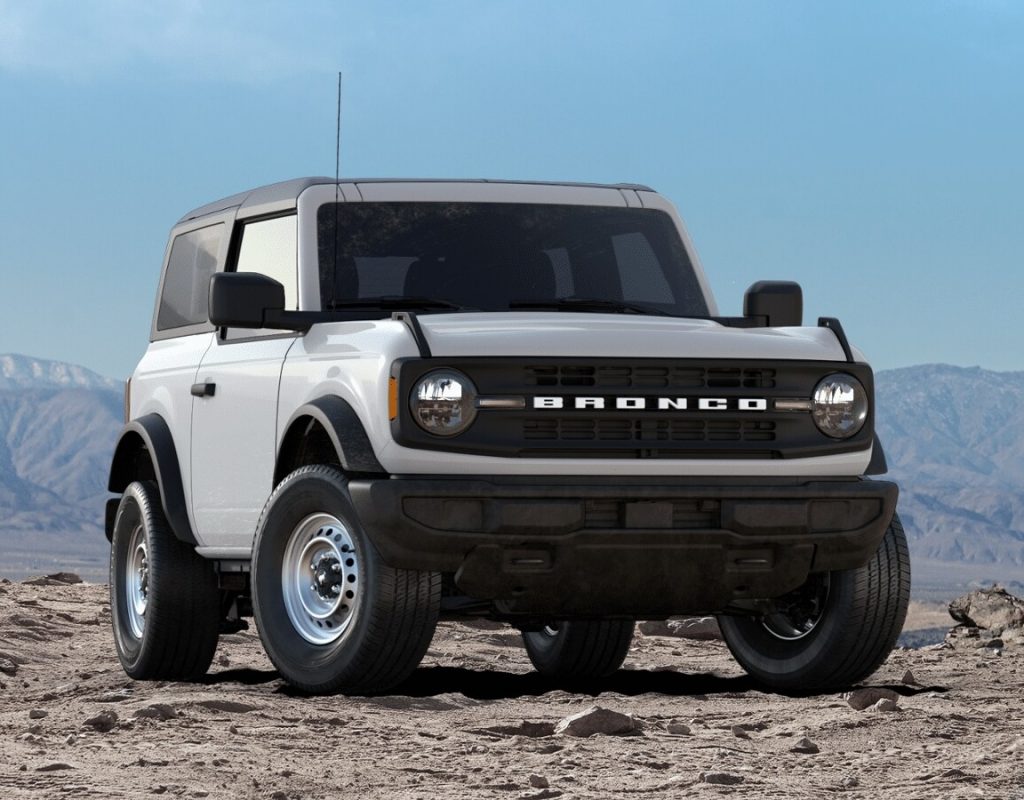
How automakers feel about this isn’t as important as how they plan to adapt, of course. And most of the big players in the affordable car space are taking notice:
Automakers say the impact is showing in sales. Ford reported lower overall U.S. sales in January, but said deliveries of the basic trim of its compact Maverick pickup rose 33.5%.
Honda flagged a similar shift to focus on entry-level models in January.
As Reuters points out, demand for cheap cars like the Corolla and Camry was up in January, according to Toyota, while Stellantis told the publication it’s cutting prices across its brands to better appeal to lower-cost buyers.
CBT News, a news site for dealers, says the shift will push automakers to “recalibrate production and inventory strategies” going forward to align “inventory with price-sensitive demand.” That means buyers should start seeing more base model cars at dealerships in the near future, to match what people are actually buying.
If this trend continues, I wouldn’t be surprised to start seeing trims with unpainted bumpers and steel wheels. And I’d be totally down for that.
Nissan Is Actually Doing It, But At What Cost?
The past couple of years have been supremely interesting for Nissan. Back in 2024, an exec reportedly said the company had “12 to 14 months to survive,” leading the car world to question when, not if, the Japanese auto giant would collapse into bankruptcy or be absorbed by a competitor like Honda.
That Honda merger didn’t happen, though, and Nissan forged a different path forward. It acquired a new CEO, Ivan Espinosa, in March 2025, who introduced a restructuring plan for the brand called “Re:Nissan.” The plan involved significant cost-cutting measures, including the closure of seven factories and the reduction of around 20,000 jobs.

That plan is working, according to Espinosa. It just recently offloaded the seventh and final factory it planned to get rid of—an assembly plant in South Africa where it previously built the NP200 half-ton pickup—to Chinese automaker Chery. So far, the company has $1 billion of the planned $1.6 billion in fixed costs from its balance sheet, and plans to get that number to $1.3 billion by the end of next month, according to Automotive News:
As for job cuts, Nissan is ahead of schedule on that front as well.
Espinosa declined to give a figure for Nissan’s progress on job cuts, but said the company is “a bit ahead of schedule” in trimming the global workforce by about 20,000 people.
What about the actual numbers? Well, things are still bad for Nissan, but they’re not as bad as originally expected. Which means they’re good … right?
In announcing the quarterly results, Nissan lifted its earnings outlook for the fiscal year ending March 31. The company now expects an operating loss of ¥60 billion ($391.3 million), better than the ¥275 billion ($1.8 billion) in red ink it had forecast in November.
The loss reverses a ¥69.8 billion ($455.2 million) operating profit from the year before.
Nissan issued a net-based income outlook for the first time this fiscal year, forecasting a ¥650 billion ($4.2 billion) net loss.
That compares with a net loss of ¥670.9 billion ($4.4 billion) the year before.
Despite the double-digit percentage gains Nissan is expecting from dealers this year in the U.S., sales forecasts are looking pretty flat in 2026. So it’ll be up to those cost-cutting measures to ensure the brand’s continued existence in the near term.
EV Sales Are Down In America For the First Time In A Decade, But Tesla Still Has Its Home Market Locked
The registrations of pure electric vehicles dropped by 0.4% in the United States last year compared to 2024, falling to 7.8% of the overall new car market, from 8%, according to S&P Mobility data seen by Automotive News. This is the first time in 10 years that the number of EVs sold has fallen compared to the previous year.
The loss of the federal EV tax credit certainly had something to do with the decline, but it wasn’t the only factor, according to S&P analyst Tom Libby. Things like infrastructure and range anxiety remain important pain points for buyers. And we certainly can’t forget about affordability now, can we?
Although congressional repeal of the $7,500 EV tax credit helped trigger a sharp drop in EV sales in the final months of 2025, the slowdown in demand actually began in 2024, Libby said.
“I think there’s a lot of reasons for that. A key one is price,” Libby said. Even with generous government and automaker incentives, high EV sticker prices remained a hurdle for mainstream buyers, who gravitated toward hybrids instead.
“The customers who wanted an EV got an EV. When you get beyond the early adopters, there are barriers like charging infrastructure issues, the range anxiety issue,” Libby said.
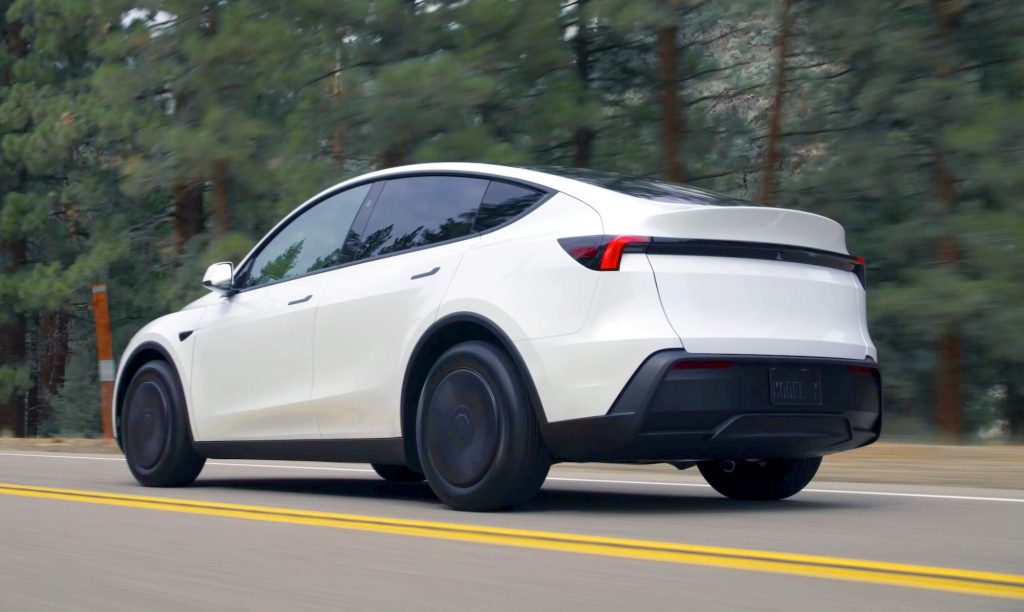
Tesla might not be the overwhelming market force it once was, but it’s still the undisputed king of sales in the United States, holding 44.9% of the EV market in 2025 (down 3.1% versus the year prior). In its home state of California, its most popular car, the Model Y crossover, is in an entirely different league when it comes to sales, according to data from the California New Car Dealers Association published by San Francisco local news station KRON 4:
Top Selling New Vehicle Models in CA (2025)
-
Tesla Model Y: 110,120
-
Toyota RAV4: 65,604
-
Toyota Camry: 62,324
-
Tesla Model 3: 53,989
-
Honda Civic: 53,085
Even if Tesla never updates the Model Y again, it would likely be years before it loses the sales crown in the Golden State.
The F1 Movie Is Officially Getting A Sequel

I enjoyed the Formula 1 movie, even though it wasn’t totally realistic. It was fun to see real faces from the F1 scene appear alongside Brad Pitt on the big screen. As interesting as a movie surrounding the Formula 2 scene might be, I don’t think F1’s sequel will be that clever. But it’s definitely happening, according to the original film’s producer, Jerry Bruckheimer. From the BBC:
Speaking to the BBC at the annual Academy Awards luncheon in Los Angeles on Tuesday, Bruckheimer said: “We’re working on a sequel.”
The producer declined to give a timeline for the project or confirm casting details, including whether Pitt would reprise his role. But Bruckheimer added that he would “of course” be involved in casting decisions.
I don’t see Pitt not returning in some way, though perhaps he’ll play a team principal or something similar. I can see a Sonny Hayes + Guenther Steiner team-up working nicely.
What I’m Listening To While Writing TMD
It’s Valentine’s Day tomorrow, which means love is in the air. So I’m listening to “Nobody’s Love” by Maroon 5, from their 2021 album Jordi.
The Big Question
Is the ultra-base, stripped-out model about to make a triumphant return?
Top graphic image: Nissan






My daily driver has air conditioning…and crank windows, manual locks, manual transmission, a driver seat with no armrest or recline function (until I yanked one out of a higher trim model in a junkyard), AM/FM radio with one of those cigarette lighter Bluetooth adapters. Hell, there isn’t even a keyhole on the passenger door.
Air conditioning. That’s all the luxury I need. And maybe an armrest. If they made trucks like that today I’d buy one in a heartbeat (10 years from now when it hits the bottom of the depreciation curve).
Base trims have so much kit on them now that all I really want is the better touchpoints on the mid-upper trims. I would happily do without some LCD real estate and driver nannies for better armrests and richer seat fabrics. Tech has become so democratized at this point that the plushness of the basic furnishings is the big differentiator for me.
Is the ultra-base, stripped-out model about to make a triumphant return?
Nope. These babies are 90’s loaded!
Idk what’s worse, David admitting he likes Coldplay or Brian sharing a Maroon 5 song….
Would you have preferred Matchbox 20 or Nickelback?
Base trim levels are great, until you get spoiled by new tech and realize you don’t want to live without it.
My first car had good old-fashioned keys, crank windows and no AC. I don’t think it even had power steering. I didn’t know what I was missing, so it was fine.
Then I got one with power windows and AC, and decided I’d never go without those features ever again.
Many vehicles later, and now the wife’s car doesn’t even require you to take fob out of your pocket, plus heated & cooled seats. It has completely spoiled me.
Mind you this was a COVID purchase when we needed a new (read: reliable) car, and all they were shipping from the factories was the high content cars so we didn’t have much choice in the matter (we would have gone without things like the air conditioned seats for cost reasons, if we’d had the choice), but it’s pretty much ruined me as far as going with a base level trim ever again.
There is a big adjustment period, for sure. But in my experience, after 6-12 months, you stop missing that stuff. Well, maybe not the AC, depends on your climate. But taking the keys out? Nah, I was over that in month.
It looks like Auto execs are realising that if they want to hit their completely unhinged sales growth numbers (looking at you, Stellantis), they gotta start focusing on the bottom part of that “K” shaped economy.
I personally think more base models is a good thing. They tend to last the longest into their 2nd and 3rd owner cycles, cause they break down less.
My modern-day feature set is cruise, A/C, and heated seats. Hell, go back to standard DIN radio sizing and slap the shittiest radio you can in it, I’ll upgrade it myself.
Jeep has overpriced their wranglers so much.
Yep
I know it will never happen with how everything is a computer now, but I love how my base NC Miata was wired with one harness and all the connectors are just sitting there. 20 years later, I can just add most of the options for cheap by swapping components. I wanted cruise control, so I swapped a $10 switch and the steering wheel for one with the cruise and radio buttons. Now I have cruise control. I swapped the headlight stalk to one with a foglight switch and added fog lights to the factory harness and they work. The wiring is there if I wanted to add heated seat switches and heated seats.
The most interesting one was that you can swap the wiper stalk in from other Mazda’s and you get intermittent wipers, which was never offered on the NC. But they just work if you have the switch to select them.
That’s awesome. I thought it was clever I was able to add remote unlock to my wife’s 2009 G6 that didn’t come with it, by using a Dorman remote programmer. This is a whole ‘nother level. I suspect for production efficiency that many cars are built with the options mostly there, just not hooked up.
Used to be that a lot of vehicles around here were available on the lots as a base model + cold weather package. That’s all I want – all of the features of the base plus some heated seats.
Toyota making you jump from the LE to SE or XLE to get heated seats is really annoying. I want the smaller wheels, both because of the fuel economy and because of what my wife did to the wheels on her poor poor EVquinox.
Pay a good aftermarket shop to install seat heaters then.
I want an Alcantara headliner and power rear sunshade! And I want it available on the base LE, don’t you dare make me step up for that!
Around here, the Camry has a pretty cheap cold weather package available on the LE that provides heated seats and steering wheel. The LE has standard power driver seat–not everyone offers that in the base model. So there’s tradeoffs.
I’d take heated manual adjustment over non-heated power seat any day. And the one I want is cheaper to produce.
With how things are equipped now, the base model of a lot of cars makes sense. We leased a SUV for my son when he was at Michigan Tech, because it was cheaper than buying him a dependable used 4 wheel drive (they get about 200 inches of snow annually and he was 8 hours from home if something happened). We got the base model with only AWD as an option and it was fine. It had good LED headlights, decent safety (automatic braking, blind spot monitors, etc.) remote start, cruise, heated cloth seats, and a decent radio with 7″ screen. What more do you really need?
I would be wary of what shenanigans would occur to said base trim as has been mentioned already. Buyer beware and all.
I looked at WT trim Colorado’s a few years ago and they ticked most of my boxes. No cruise, no sunglasses holder, no steering wheel controls, etc. which is at least immediately visible.
The overhead console could be swapped, I think cruise could be too, but the buttons were not going to work without programming or a BCM swap.
The Maverick XL in the early years would be what I’d want theoretically but no cruise unless you shelled out for XLT.
I don’t like sunroofs or leather seats so if I wanted a Passport, I’d have to go back to ~2021MY before the Sport trim disappeared.
Toyota’s valiant-on-paper effort to keep the 4Runner SR5’s MSRP at the same place is commendable but goodbye skid plates, full-size spare, power seat (which I actually would prefer to skip anyway), etc. and other previously-standard equipment.
Oh yea I just remembered that Canadian Ioniq 5 without fast charging too.
Can’t take anything for granted these days as the HyunKia engine immobilizer saga taught us. And that one wasn’t even on the window sticker.
“Toyota’s valiant-on-paper effort to keep the 4Runner SR5’s MSRP at the same place is commendable but goodbye skid plates, full-size spare, power seat (which I actually would prefer to skip anyway), etc. and other previously-standard equipment.”
I just sat in a new TRD Off Road 4Runner, $50K MSRP. The material decontenting Toyota employed to keep it near the inflation-adjusted MSRP or my 2016 SR5 is jaw-dropping. I get that it’s a new powertrain and platform and adds a bunch of infotainment and nanny tech, but God…after selling the fifth gen for 15 straight years and raking in profits on the amortized development costs I feel like Toyota could have afforded to offer a Range Rover for $50K. Decontenting it like that feels like a slap in the face to me.
I seem to recall an article in C&D or Automobile decades ago asking the Q:
Which was a better buy for the same money: An Accord DX or a Civic EX?
Answer: It depends.
I really want trim-independent options to make a return, and not on the “options package” way some manufacturers do it. It annoys me to no end going into the “Build & Price” tool on (insert manufacturer here)’s website and having to option up to the second highest trim package and $8000 worth of optional packages just to get an auto-dimming rearview mirror or heated side mirrors.
That’s one thing I’m looking forward to on the Slate. Everything is a base model, so every option is al a carte.
In the world of personal-use pickups, I’m definitely seeing fewer Denali and Platinum trucks, and far more “one level above Work Truck” trucks. And the Ford XLTs and Chevy Custom trucks are actually pretty nice and still have plenty of nice features.
Sigh, we live in a world of personal-use pickups…..
And a lot of those are the 4 door models. What a waste.
I am usually interested on the second lowest trim. LT for GM, EX for Honda/Toyota, whatever name they use in Stellantis, etc. Best balance of equipment and features before crossing the border for features I dont need.
Our Bolt EUV is LT with an appearance package, our Equinox EV is LT, Volt is also LT with comfort package that adds heated seats/steering wheel. Our Pacifica PHEV is Touring L, etc. The only exception I made was for the Blazer EV RS since the way it looks its way different than the LT and the lease payment was not that much of a difference.
I could see base models getting popular, as $$$ keep getting higher and higher. Do you really need all the bells and whistles or are you ok with heated seats and a decent audio?
When I looked for a new Crosstrek in 2019 I only went to the mid level to get the heated seats. It has those plus the cargo cover thing for my costume bins and dog. That’s it.
Ah heated seats, only on mid-trim and above often in $2500 convience packages.
Well trained dog if it stays under the cargo cover. My Ridgebacks would not.
Subaru had the “cold weather comfort package” or whatever the hell they call it forever. Heated seats and an armrest for, like, $600. Half the WRXs on the lots around here were a base model with that package. The good old days of the 20-teens
I had aftermarket seat heaters installed for $500 in my last new car purchase. Far cheaper than stepping up to the next trim level if that’s the deciding feature. I think OEM is probably better but these are a big step up from no heater whatsoever.
No. If anything, manufacturers will start optioning up the base model and we’ll see a reduction in available trims. They want the margins, they want the base model buyers, and they want sales volume. So they’ll compete to have the best-equipped base model, eliminate some trims, and essentially limit their lines to the mid and high trims, but call them the base and high trims.
100% – look at Subaru, where suddenly the base model Impreza and Crosstrek no longer exist in “base” form but are really the next trim up from the previous model year and they’re charging around $3000 extra for it.
That annoys me to no end – the only time we didn’t buy the base model was our 2004 Toyota Corolla S because I really wanted a leather-wrapped wheel and the 195 tires, but we still made our local dealership grab one from Ohio so we didn’t have to pay for the spoiler and alloys ($800 I think?) that were required on every Pennsylvania build. I’m all about not spending money on stuff I don’t need or want.
This right here. There really are no basic cars anymore. Which is also why they seem so expensive. But the reality is NOBODY bought those stripper cars other than your weird uncle.
As I have said on here a gazillion times – you have to be some sort of wierdo to want a stripper crapcan when for the same money or less you can just buy a much nicer 2-3yo used car. Or in my case, a massively nicer 8-10yo one.
Is the ultra-base car about to be the new hotness? I VERY much doubt it. The meat of the non-premium market has always been the mid-trim car. One or two steps up from the pauper spec is usually the best place to be, and of course the automakers will continue to incentivize that by making a desirable feature or two unavailable on the lowest spec. Like my SX-spec KIA Sportage rental lacking heated seats. Which sucks. And of course, it’s FWD only until you step up a trim or two, and today people think they are going to DIE if they don’t have AWD.
Also – non-premium cars basically never have “options” today – they ONLY have trim levels, take it or leave it. Which sucks, because it inevitably means taking crap you don’t want, like large gaudy wheels, to get something you do want, like that all-important to me butt heat.
I stand by my opinion that if a couple of grand in price makes that much difference, you probably should not be shopping new cars to start with.
“Is the ultra-base, stripped-out base model about to make a triumphant return?” NO!
Most people will buy what is on the lot and we know the lots will not be full of cheaper base models, and also people want resale value Über Alles, so they will buy the luxed up versions.
You NEVER get back what you spend on the upper trims past the decently equipped mid-point, but the loaded one may sell faster. And of course, if you get more enjoyment out of the extra tinsel more power to ya.
Yeah, I like certain options and end up in high trim levels (mostly for comfort things like ventilated seats, but I do like the 360 cameras), but I know that I’m just paying to use those things, not “investing” for higher resale.
Exactly. Resale will probably be higher – but not as much higher as what you paid up front. With some rare exceptions. Anybody who bought the $4K M-Sport package on a RWD stick BMW e91 is doing the happy dance today, and 4wd on trucks up north will generally get you every penny back.
I know that but the resale value calculators online may convince people they will. Hell there are people out there trying to get full parts and labor on lift kits and winch bumpers on their jeeps and trucks they are trying to sell. NOT happening.
I certainly have never seen that to be the case, and I have bought and sold a HELL of a lot more cars than the average person. You might, at BEST get back 25-50% of what you paid for the options, with very rare exceptions like Sport or M-Sport on a RWD e91 BMW wagon where you will get 100%+ of the option cost back. That is VERY much the exception though. Another exception is 4wd on pickups up north – but that is almost more that the 2wd takes a massive value hit more than you get your money back on the 4×4.
I was not disagreeing with you. I think buying for resale and not buying what you really want and need is stupid.
I am only disagreeing about the online value calculators. They clearly show that you DON’T get the money back for options, only that the higher-end trim is worth a little more at resale time. But not as much more as it cost new, with exceptions.
I think you nailed it with the comment about 4WD trucks in snow country. Generally speaking you won’t get your money back on higher trims so you should just buy exactly what you need, but you should also understand the basic market for what you’re buying and buy the version with the basic features expected in that segment.
