

In this world, there are Hondas everywhere for those with the eyes to see. Passenger cars? Honda has those. Trucks? Those too. Motorcycles? Yep. Dirt bikes? Also yes. ATVs? Mhm. Generators? Sure. Cute little scooters? Yeah. Business jets? Somehow, yes.
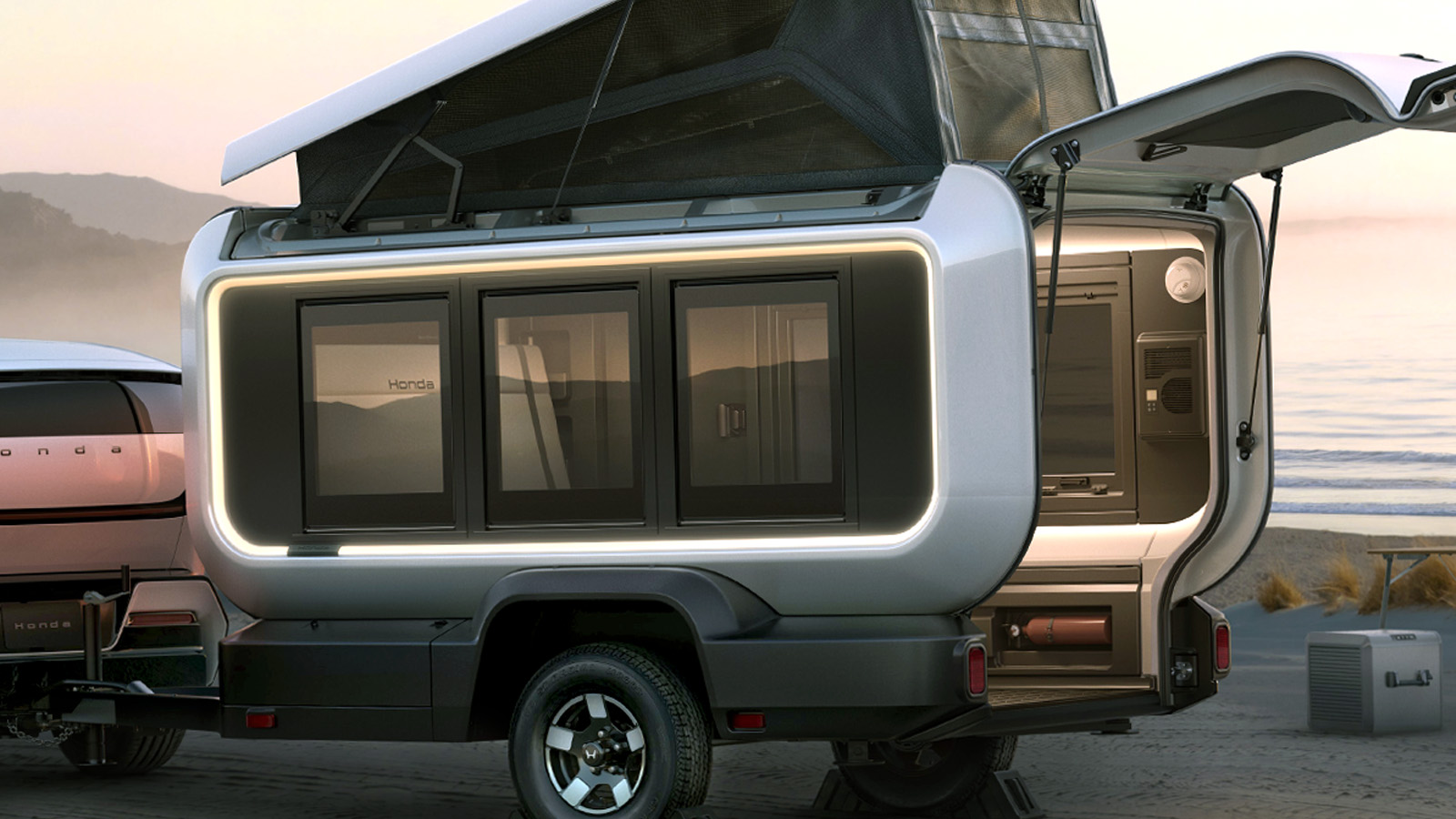
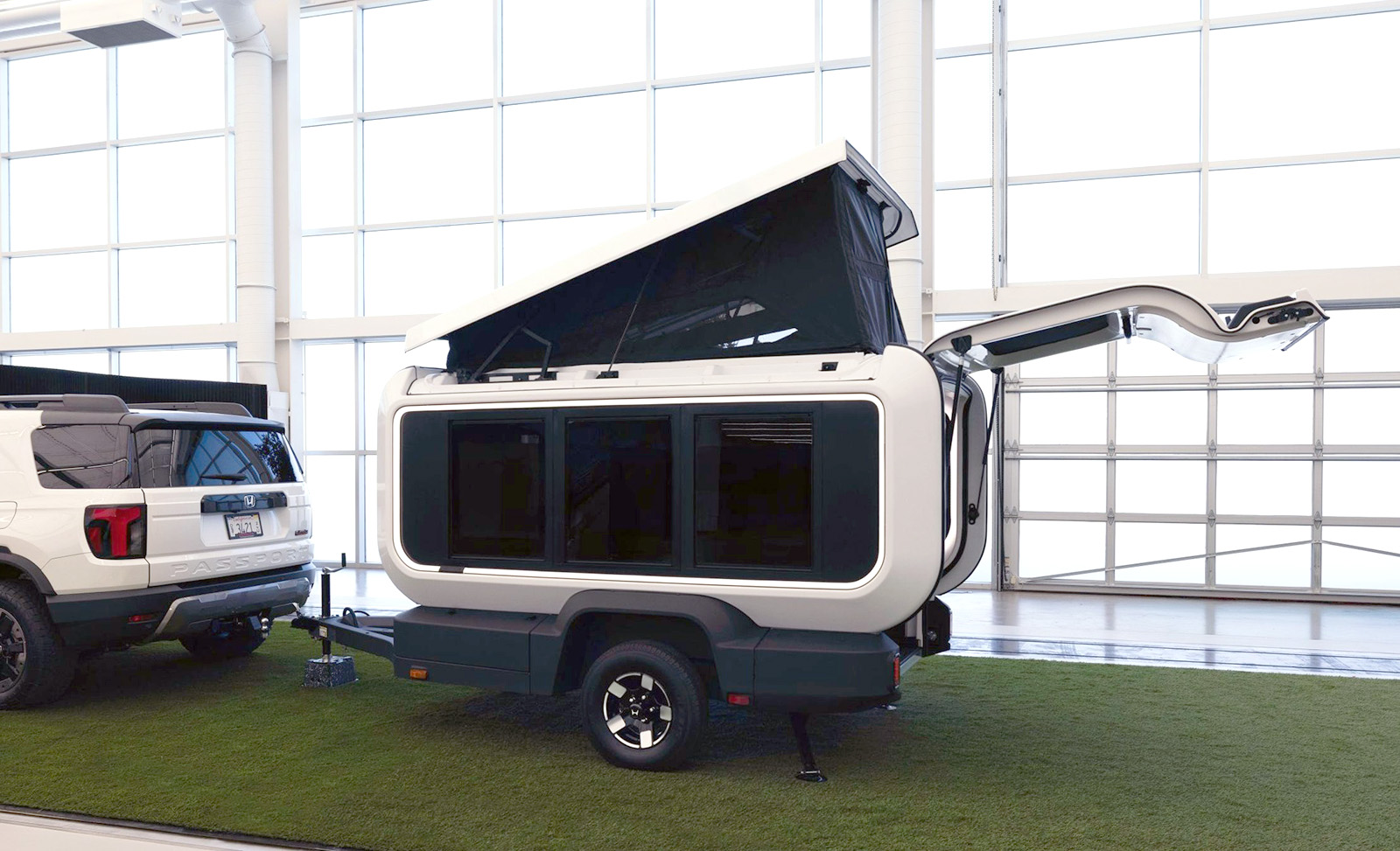
And now, there’s a new type of Honda: the Base Station prototype, previewing a new travel trailer designed to be towed by the small SUVs that dominate American streets.


Honda had a private media reveal of the Base Station at its offices in Torrance, California about a month ago, telling attendees like me that we were there for an unnamed product reveal. I had no idea what the reveal would be — adventure vehicles? more scooters? — until I saw a sheet draped over something shaped suspiciously like a small camper.
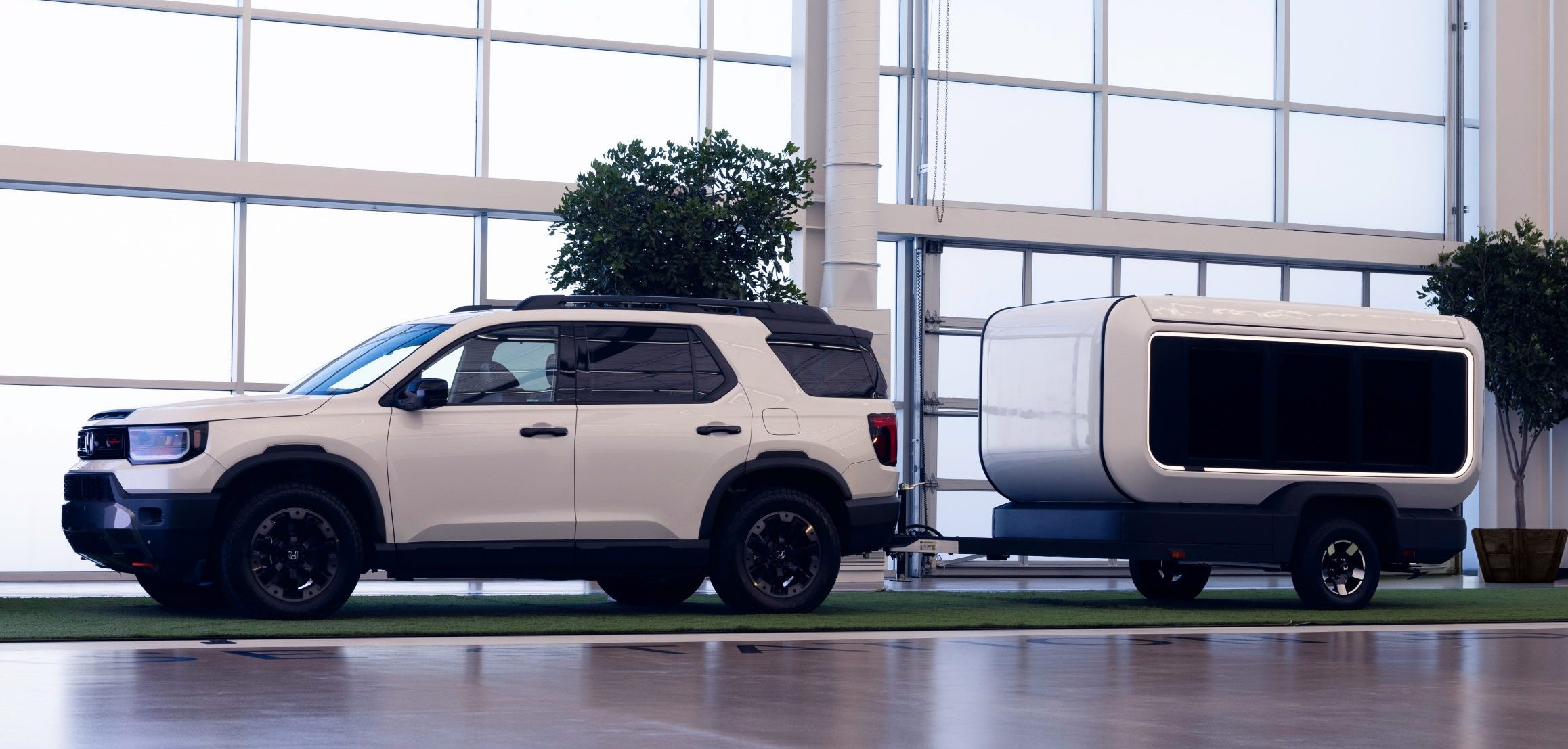
Even then, I tried to imagine what it was like underneath. Would it be bright and silver, like an Airstream? Or blocky with small windows, like a traditional camper?
When the sheet came off, my eyes went wide. The Base Station’s rounded structural frame encased dark windows with rings of light around them, which Honda says can be programmed to different colors and brightness settings for ambiance or to help illuminate a campsite at night.

The giant windows take the place of the stuffy, opaque walls I see on most campers rolling down the road, and if Honda had told us at the reveal that the Base Station was designed in collaboration with Apple, I would’ve nodded and said: “Yep. That tracks. It looks like an Apple Watch.”
What Do We Know About the Honda Base Station?
Honda hasn’t released many specific details on the Base Station, so we currently don’t know things like pricing, release dates, weights, or other numerical specs. But the Base Station is small, and the idea is for it to be a lightweight, compact travel trailer that can be towed behind popular crossovers and SUVs like the Honda CR-V.
Honda says the camper will fit in “a standard residential garage or parking space,” and that it will be “competitively priced in the lightweight travel trailer segment.” The camper competitors Honda listed ranged from $20,000 to more than $50,000.
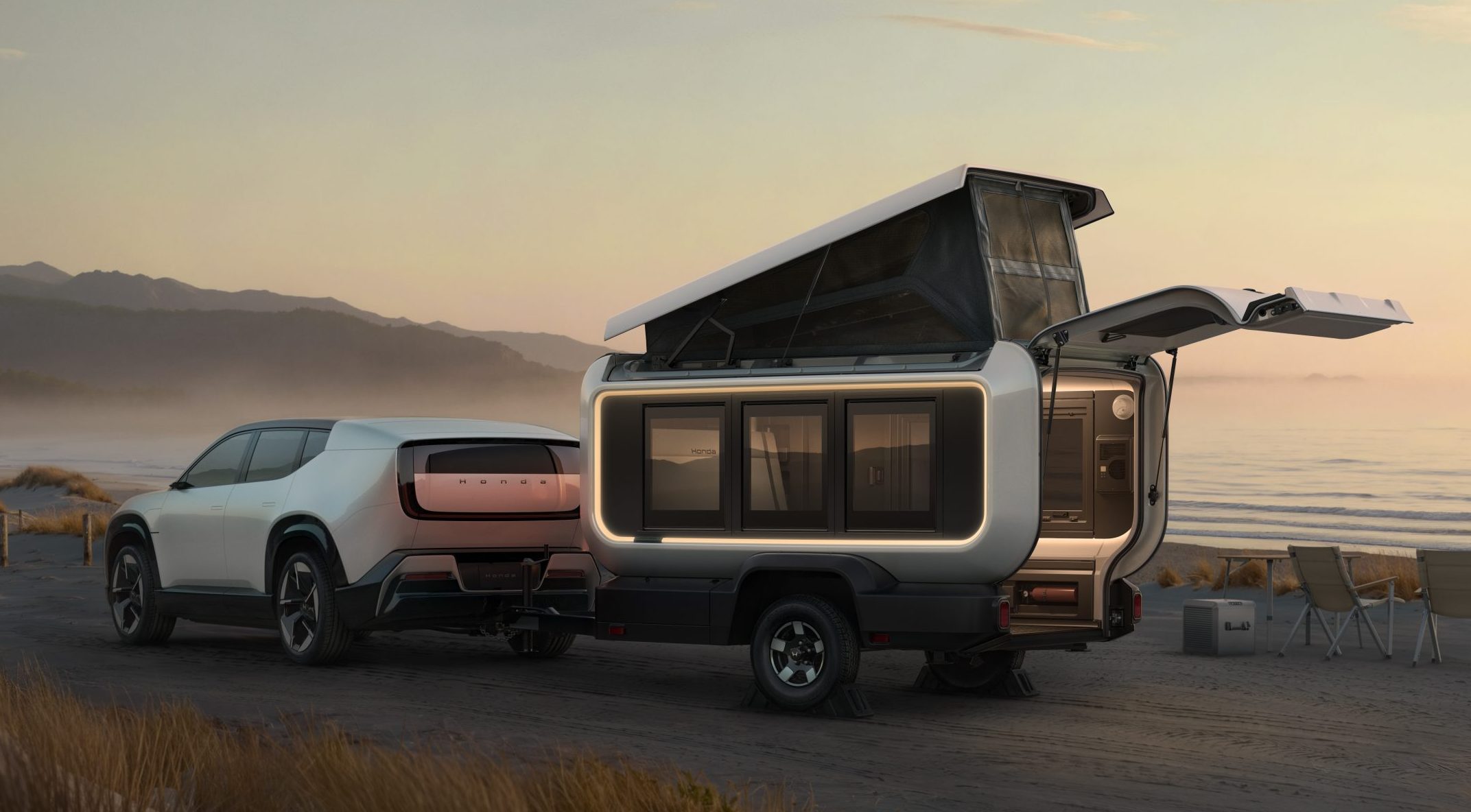
When we saw the Base Station recently, Honda popped the roof and rear tailgate but didn’t let us touch or enter the camper because it was still a prototype. But the company did tell us that the Base Station will come standard with a lithium battery, inverter, and integrated solar panels if people want to power their campsite without emissions. In addition to that, the idea for the Base Station is to offer a bunch of camper accessories — air conditioners, external showers and kitchens, induction cooktops, and more as upcharges — allowing people to choose what they want to include on their build.
Honda also says popping the Base Station’s roof can create seven feet of stand-up space, and that the Base Station can “sleep a family of four comfortably with a large futon-style couch that folds out to provide a queen-sized sleeping area and an optional kids’ bunk bed.”
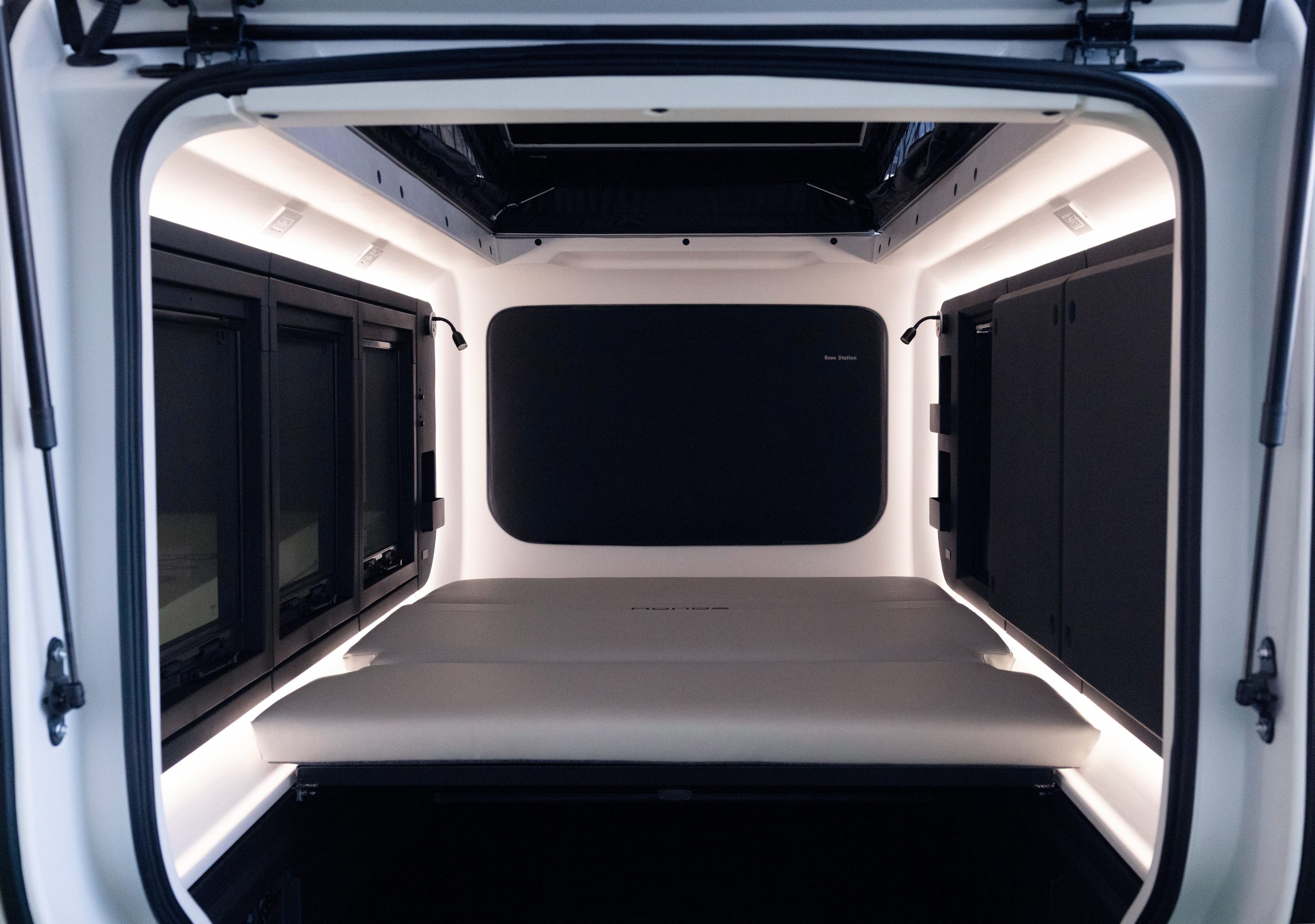
No one was in the camper while it was on display in California, so I couldn’t eyeball the human space, but “a family of four” seems optimistic. In spite of the Base Station’s airiness and modular nature, it’s still so small that the queen-sized sleeping area is about all the ground space the camper has before things get cramped. If you like your family, I’m sure the cramping would be fine.
The Base Station prototype is from the Honda U.S. teams in California and Ohio, and to me, it underscores the Americanization of non-American brands like Honda and Toyota. The company’s Americanization runs so deep that Honda can function as a lifestyle brand here, selling everything — cars, dirt bikes, campers — to buyers with Honda-heavy garages.
The Democratization Of Adventure … For A Price
At the reveal, Honda staged the Base Station prototype behind the new Passport Trailsport — a light off-road SUV that, every time I review it, makes me discuss a concept I call “the democratization of off-roading.” It’s like the democratization of speed; as cars get more capable, even the cheaper and more utility-oriented ones have power figures people wished their sports cars had decades ago.
The same is true for off-roading. For a long time, we’ve looked at off-roading as an activity for big, hardcore trucks and SUVs, whose body-on-frame architecture is flexible for adventuring but makes driving on the road rougher, less efficient, and less enjoyable.
We’re now seeing more and more light-core off-roaders like the Passport Trailsport, which have unibody architectures (where the body and frame are together, like on a car). They blend decent off-road capability with the comfort and efficiency of a road car, so you don’t drive off the trails and onto an uncomfortable highway ride back home.
Honda says the Base Station is meant to “democratize camping,” and after driving light-duty off-roaders like the Passport Trailsport, that resonates with me. The concept of the Base Station, like the Trailsport, allows someone to feel and be adventurous without having to swallow the sacrifices that come with going all-in on that adventure, such as needing mass amounts of space for full-size trailers and diesel trucks to tow them with.

[Mercedes Note: The RV market already has quite a few of these small-ish empty boxes that you’re supposed to fill up with your own gear. The huge question will be cost, and Honda says its competition costs anywhere from $20,000 to over $50,000.
I have written about campers of this size and scope that cost well less than $20,000 that already come fully equipped, like the Sunset Park Sunray 109, or the Coleman Rubicon 1200RK. A legendary fiberglass rig like a Scamp 13 Standard is only $25,000, can be towed by a Honda, and also has way more standard features than Honda has teased with its own camper. A Bean Stock 2.0 looks funky like this Honda, is similarly minimalist, and is made out of fiberglass, and has a price of $20,000.
Hopefully, Honda will get much clearer about pricing soon, because that’s going to be a big deal. – MS]
I’m all about this democratization of adventure, even if “democratization” is relative when the average price of a new vehicle in America is $50,000. But like any vehicle or big accessory, to have light-duty off-roaders and campers on the new market — and eventually the used market — is good for us all.
It also doesn’t hurt when they look as good as this one.
Top image: Honda





This seems to slot between the “take the family to the KOA” style campers with all the goodies and the basic “thing to sleep in” campers the overlanding crowd likes. Is there a market for it? We’ll find out.
Those basic overlanding setups are not cheap, but are typically well made. A friend just paid $12K for a well built aluminum camper shell for his pickup from Radica. That’s just a shell with solar panels and an awning, no interior at all.
On the other hand, traditional campers are well equipped and comparably cheap, but built like a house of cards, as Mercedes has learned.
This Honda camper is probably going to seem pricey and sparse compared to the later, but cheap and well equipped compared to the former. But you’ll take your kids camping in it for years and then hand it down to them and they’ll take their kids camping in it.
Yeah, it’s probably going to be more expensive, but…you will get automotive grade closures, seals, wiring, connectors, axles, brakes, fasteners etc… Those are going to be far better than the Temu grade stuff the rest of the RV industry uses at slightly lower consumer prices. I have a 25 year old Honda 4 wheeler and a 40 year old Honda generator that spend most of their lives in a cold dusty barn, however they ALWAYS work when I need them.