

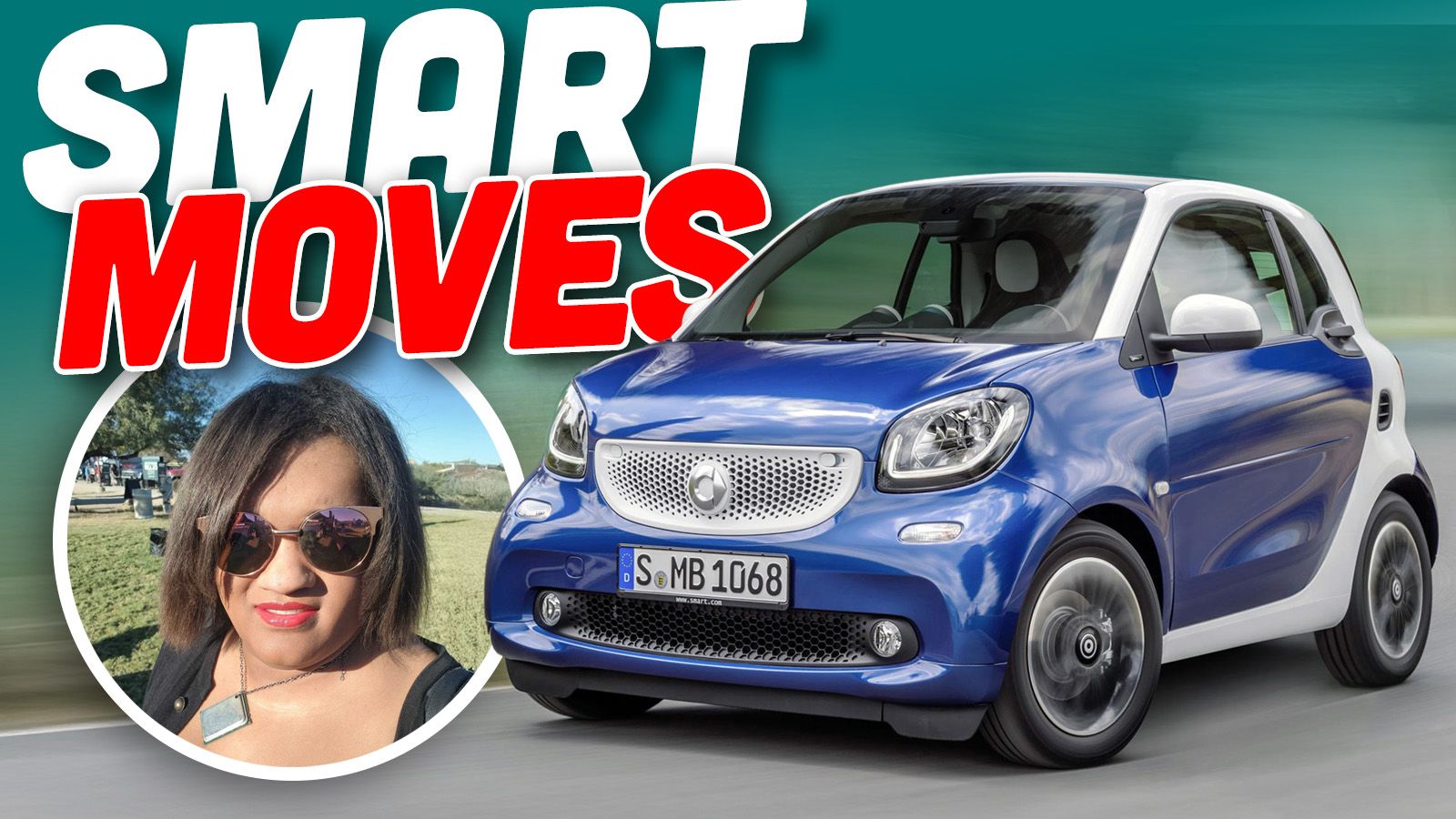
There’s a lot of buzz right now about automakers that have fallen from the pedestals of their reputations. Jeep recently disappointed people with the Recon, Ford has piles of recalls, and even Toyota’s somewhat recently taken a battering with its own issues. Many more brands haven’t even gotten the chance to survive. One of them was Smart. Once a trendy city car brand in Europe, Smart tried to give America a go, and failed spectacularly. Here’s how I, a Smart enthusiast of nearly two decades, would have saved Smart from sucking so hard in America.
It’s sad to love a brand and its cars, only to see it make what you think is all of the wrong decisions. It’s even worse if those decisions ultimately lead to your favorite brand shuttering its doors forever. A lot of folks like to talk about how they would have saved their favorite brand from either failing or ending up on its current path. So, for a short-lived series, the Autopian is going to run with that idea. All of your favorite Autopian writers are enthusiasts or experts in some brand, and we all have ideas about how we’d save them. So, hear us out, and see if we might have done better than our favorite brands did.


Smart production officially kicked off in 1998. The company started off with a trendy concept. The Fortwo, née the City Coupe, was a stylish car designed around the concept of making driving and parking in a dense city fun. The City Coupe received poor to mixed reviews from the press, largely for its single-clutch automated-manual transmission, but the buying public didn’t care and scooped them up. Smart decided to expand on its concept with the Crossblade open-air car in 2002 and the Roadster sports car in 2002. The four-seat Forfour joined the lineup in 2003. Sadly, while Smart had tons of fans and healthy sales, it burned money to the tune of billions.

In 2006, Smart was liquidated. By this time, it sold only one model, the Fortwo, and had to move forward like that. Even though Smart was a one-trick pony, it still wanted to plant its stakes in America.
Why I Fell In Love
I first fell in love with Smart in 2008. It happened entirely by accident, too. My dad crashed his third-generation Ford Ranger, and, instead of buying my dad another old truck, my mom had the idea to get my dad something cheap and fuel-efficient. Apparently, my parents had heard of this thing called a “Smart car,” and we lived within driving distance of a dealership.
I was only 15 years old at the time, and I had images in my head of a futuristic car that drove itself or something like that. I have a vague recollection that I pictured these cars as being like the Saturns of the 1990s, but new and awesome. I was wrong.

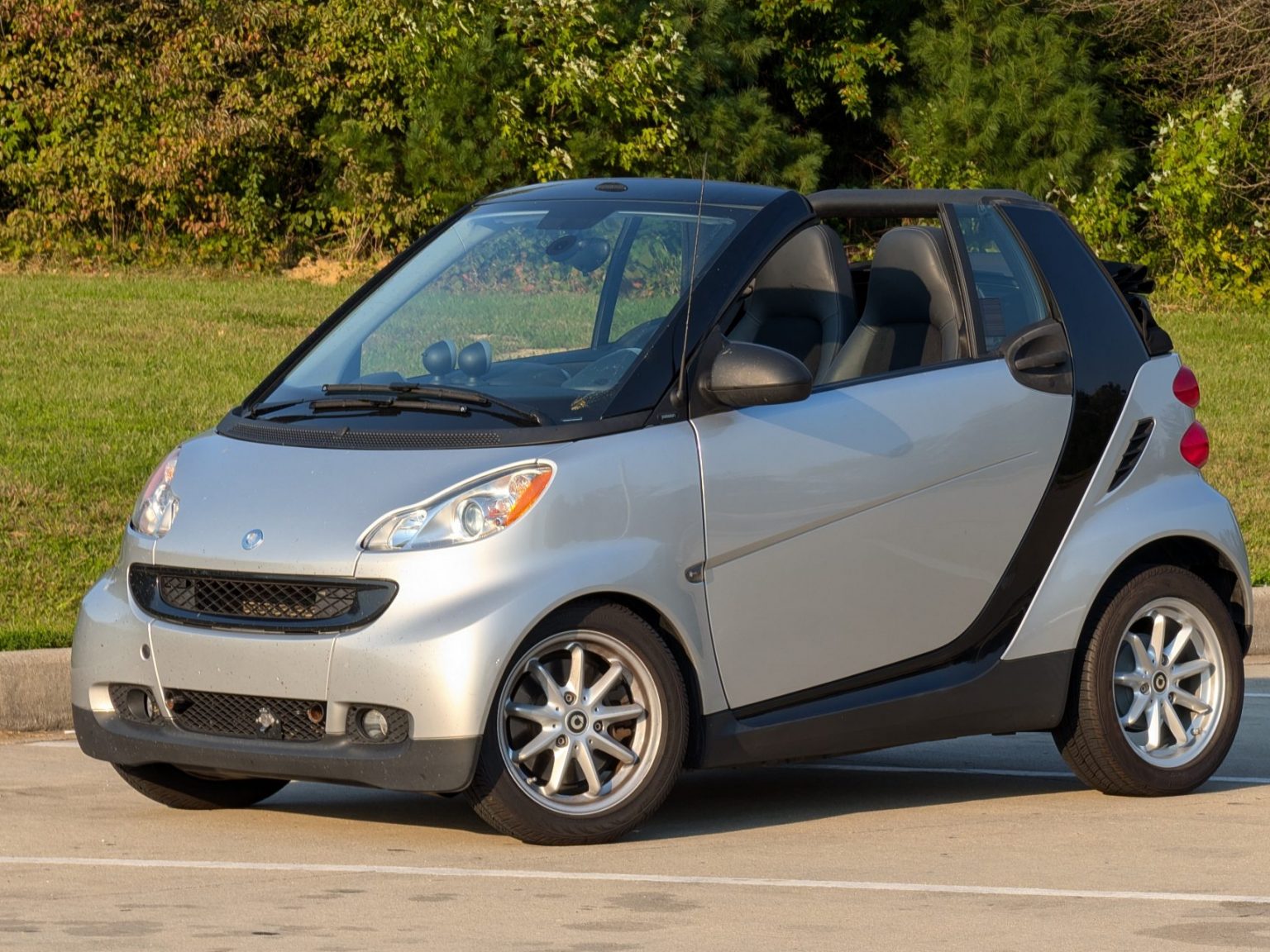
Teenage me would find out that a Smart wasn’t some 22nd-century Saturn, but it wasn’t far off. I was blown away by how the Smarts in Smart Center Lake Bluff had plastic panels, bright colors, and a high-tensile steel safety cage painted in a contrasting color with the panels.
My brain was further blown the moment I opened the driver door. In designing the Smart Fortwo, Mercedes-Benz managed to package an entire real road-legal car into a span of only 8.8 feet. I loved how nearly every inch of space had a purpose, and the fun vibes of the exterior continued inside. The fabrics were in bold colors, the instrumentation sprouted out of the dash like plants, and up above was a transparent polycarbonate panel that spanned the whole roof. I remember the brochure proudly proclaiming how the roof, which was Webasto Makrolon AG267, was the world’s largest polycarbonate automotive glazing.
The mind-blowing features continued, as I learned that engineers stuffed the engine in the rear, and that tiny 999cc 3B21 triple from Mitsubishi turned the rear wheels. Smart USA was so proud to say that the Fortwo got the highest fuel economy of any car that wasn’t a hybrid or diesel at 41 mpg highway.
What was clever was how the cars were marketed at first. Smart USA was run by the Penske Automotive Group, and Penske decided to throw away the typical dealer experience. Smart Centers were designed to look like art galleries, and the salespeople were dressed to the nines, like they were going to a gala later that day. The salespeople also weren’t pushy, and just taught you about the car and let the option of putting a $99 reservation down entirely up to you.
This was a welcome change from the usual dealership experience of the smell of stale popcorn and a guy desperately trying to get you to buy something. Sadly, when we went to that dealer in May 2008, there was already a waiting list that was over a year long. My dad needed a car sooner rather than later, so we left the dealer without a car.
But I left that car with a new “attainable dream car.” I took a brochure and other materials, then studied them from back-to-back. I even built a sort of Smart “shrine” in my bedroom. There was a time I could almost recite the brochure word-for-word. I became so excited for Smart that, when I was a Freshman in high school, I proudly proclaimed that a Smart was my dream car.

I was mocked mercilessly. Most of my classmates wanted Ford Mustangs, Chevrolet Camaros, and Dodge Vipers. My love for Smart? That was unacceptable. The bullying was bad enough that I briefly considered just wanting a Ford Mustang or something just to fit in. But, somehow, I kept falling back in love with the Swatch Mercedes Art Fortwo. It drew me in like a bug to a lightbulb. I then joined America’s largest Smart forum, which was busy with more than a thousand people who were all kinds of excited to get their cars.
I was one of the youngest members of the forum. It was no secret that the average Smart buyer was well into their fifties. To them, it was awesome that a youngin’ was interested in the little car.

Over time, my obsession would grow so large, and my enthusiasm spread so wide that I more or less became the face of Smart in America, even though I didn’t own a Smart. The wonderful people of the Smart community even made me a fun picture of a Smart dolled up like a Back To The Future time machine.
I was always the kid who was working so hard to have a Smart as their first car. My sort of “fame” in the American Smart community that, at one point, Smart USA began to concoct a marketing plan around me. The plan was that, in around 2010 or 2011 or so, I’d become a sort of spokesperson for Smart USA, do some ads, and at the end of it all, I’d be presented with my dream Smart. Jill Lajdziak, who was then known for her leadership at Saturn, was in charge of Smart, and I was supposed to get to know her personally and everything.
Smart Fumbled America

The Penske team often sold Smarts out of standalone dealerships that sometimes didn’t even share property with a Mercedes-Benz dealer. A ton of money was put into presentation and into the dealerships. Penske also wanted to make sure the owner experience was stellar, and Smart USA officially sponsored owner meetups and sent out its President to personally meet each and every Smart owner who attended the meetups. Smart USA, like Saturn, wasn’t so much a car brand but it was a big family.
The one thing that Penske really sucked at was advertising. Penske largely relied on word of mouth to sell Smarts, and it didn’t really work. Smart USA did try to fix it once with its so-called ‘Against Dumb‘ campaign:
The Against Dumb ads had the core message that most cars commute with only one or two people inside, so a two-seat car is brilliant for that. However, the message was delivered in an absurd way that made people feel like Smart was actively insulting pretty much most of America. Oops.
One last gasp effort from Penske involved a wild plan to import and rebadge Nissan Micras, a plan that never worked out.

Mercedes-Benz USA took over distribution in 2011 and got rid of all of it. Practically overnight, the Smart USA strategy changed. Smart USA was now going to operate like a normal U.S. arm of an automaker, and not be weird like how it was under Penske.
Smart’s standalone dealers were abandoned, and sales were rolled into the existing Mercedes-Benz dealer network. Mercedes-Benz USA also pulled out of owner events, and Smart USA became less like a family member and more like a car company. Nobody had a direct line to the President of Smart USA anymore, if they even knew who the President was. But, crucially, Mercedes-Benz USA fixed Penske’s error of failing to advertise. Mercedes-Benz USA even put a Smart ad in the Super Bowl:
The changes of Mercedes-Benz USA did help sales a bit, but it wasn’t enough. Sales would fall again, and by 2019, it was all over. Mercedes-Benz threw in the towel and canceled Smart in the USA. Today, few Mercedes-Benz dealers even service Smarts. 2019 was also the year when a 50 percent stake in Smart was sold to Geely.
Today, Smart is still around, but it sells three electric crossover SUVs and exactly no city cars. The company is basically “Smart” in name only, and sells cars designed and built mostly in China. To be fair to Smart, it has committed itself to building a sequel to the Fortwo, but that isn’t going to happen for a while. So, Smart, the brand of funky two-seat city cars, is selling nothing but generic crossovers. Smart still doesn’t sell cars in America, and thus far has shown zero interest in coming back.
Alright, so I hope that sets the stage. Now, let’s save a car company!
How I’d Save Smart USA

If I were in charge of saving Smart, I would dig into the past of none other than Porsche.
Back in the 1990s, Porsche realized that it couldn’t survive on selling enthusiast cars alone. There simply weren’t enough 911 buyers to keep the company afloat. So, Porsche built the more entry-level Boxster. That gave Porsche some much-needed cash, but ultimately, Porsche decided that it needed a model that had real mass-market appeal. That’s how the world ended up with the Cayenne. Basically, Porsche sold as many Cayennes as possible so 911 enthusiasts could enjoy their cars for years to come.
Today, Porsche has enthusiast cars and mass-market crossovers mingling with each other, and it seems to work well. We see this happen in other automakers, too. Mazda’s most famous car is the Miata, but it slings a bunch of crossovers, too. Chevy’s halo car might be the Corvette, but it moves a ton of Blazers and Trax, too.
To me, Smart’s biggest problem was that, for its entire run in the United States, it sold only a single niche product. What Smart needed was a car that it could sell to tons of regular people so that weirdos like me could keep buying Fortwos.

The sad part is that this is something that Smart knew from the start. Smart did not plan to take on America with only the Fortwo. It knew that Americans wanted something big. It also knew that Americans wanted options. In 2004, Smart announced that it was coming to America, not just with the Fortwo, but with an SUV called the Formore (above) that was supposed to land in 2006. From Autoweek:
Smart defines Formore not as a sport/utility vehicle, but as a “smart/utility vehicle.” The company says the new four-wheel-drive model will be suited to all road and driving conditions.
Production will begin in early 2006 in the DaimlerChrysler plant in Juiz de Fora, Brazil. The plant can build 60,000 cars per year, of which fully 50 percent are headed to the U.S. “With the Smart Formore, we will be applying the typical Smart characteristics of innovation, functionality and joie de vivre to the SUV sector,” says Andreas Renschler, Smart president. “The Smart Formore will provide a driving experience loaded with adrenaline-off road as well as on-expressive design and a high utility value. It is the ideal model to launch the Smart brand in the U.S. market.”
With the Formore, Smart is following the naming logic it began with the four-seater Forfour: giving vehicles names that have a direct connection to the vehicle use. Other Smart models are the Fortwo coupe, Fortwo cabrio and the Roadster and Roadster-coupe.
Here’s what I wrote about the Formore at the old site:
Per Autoweek, the baby Smart SUV was going to ride on a modified Mercedes-Benz C-Class platform bolstered by a beefy suspension and raised ride height. All-wheel-drive with a Mercedes 4Matic system was the plan, and it would offer the option of a 3.0-liter V6, too. The Formore would have been the second vehicle in the Smart lineup, after the first-generation Smart Forfour, to offer a true manual transmission. Looking at this Smart Forfour below, it appears the Formore was definitely inspired by its design.
The SUV was due to hit American roads in 2006. Production was to begin in late 2005 at DaimlerChrysler’s Juiz de Fora factory in Brazil. Projected sales were modest, with the marque expecting to move just 30,000 units a year. Regardless, mules and prototypes began appearing on roads as the production date grew nearer.
[…]
In September 2005, merely weeks before production was to start, Mercedes-Benz fully took over operations at Smart. Gone were the Roadster and Forfour; the Formore was cancelled. Concepts like the Crosstown would never see the light of day.
To my knowledge, only two Formores exist, the concept car with the orange windows, and the production version that was found in the warehouse in the photo below. The whereabouts and status of the black one are entirely unknown.

Smart’s grand plan initially called for us to get only the Formore. This was part of the reason why entrepreneurs like Thomas Heidemann and companies like G&K Automotive went through the painstaking and expensive work to federalize the original Fortwo for America. If Smart itself wasn’t going to sell the Fortwo in America, a handful of smaller companies decided to do it, instead.
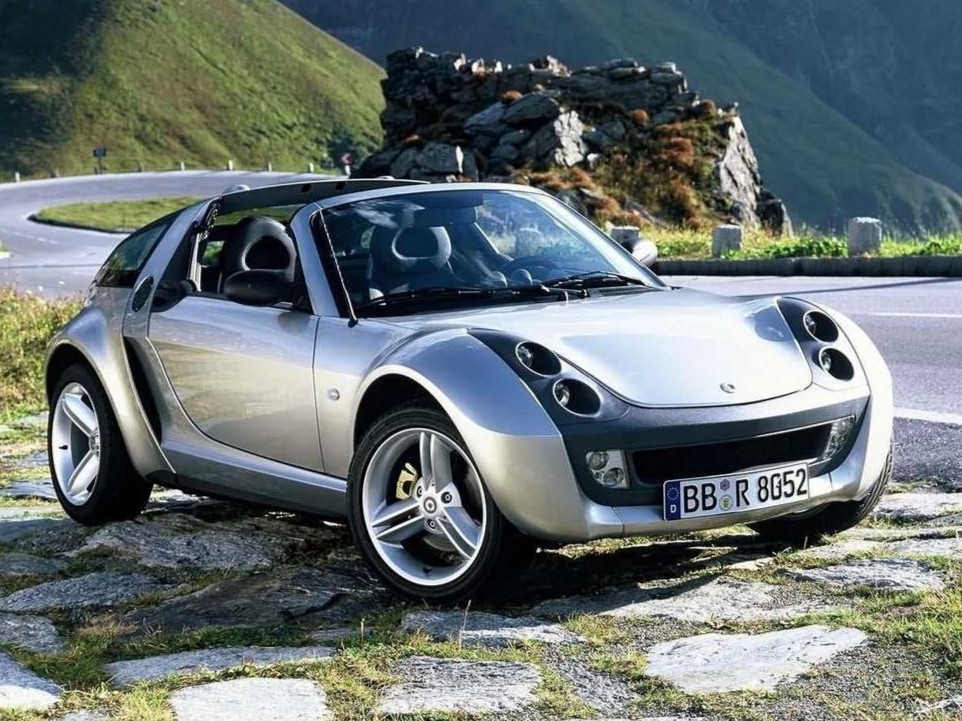
Apparently, by 2005, Smart changed its tune, and it started showing off its cars on the American auto show circuit. As Evo magazine writes, Smart got ambitious enough to say that it was going to sell the Roadster sports car here in America, too.
As I noted above, Smart faltered in 2006, and DaimlerChrysler mopped up Smart’s multi-billion-dollar mess. According to the New York Times in 2006, conditions got so bad that DaimlerChrysler considered selling Smart off to someone else. According to the same report, an anonymous DaimlerChrysler executive also said, “it’s clear that no one is waiting for another S.U.V.,” which, ouch.
It was also probably wrong, given that the American SUV and crossover craze had only grown after Smart gave up on it entirely.

I think Smart’s 2005 plan was actually the correct one. Had things worked out, Americans would have had access to a Smart-branded SUV, a Smart sports car, and the tiny city car. The SUV could have been Smart’s volume model, leaving breathing room for the quirky Roadster and Fortwo.
Or, maybe Smart shouldn’t have sold the Fortwo here at all, and sold a lineup consisting of the Formore, the Roadster, and the Forfour. That gives Smart two volume cars and one enthusiast car. What’s neat is that the Forfour was mostly a Mitsubishi Colt underneath, and had the option for a manual transmission. That would have meant that two out of three of Smart’s models could have had the option for a true three-pedal manual.
Of course, selling volume SUVs alone wouldn’t be enough. Smart USA would have had to actively advertise its cars, just like any other automaker does. But, at the same time, I think Smart USA’s original concept of treating everyone like family was pretty great. Only Saturn was doing something similar. Smart USA could have stuck with that.
So Many Possibilities
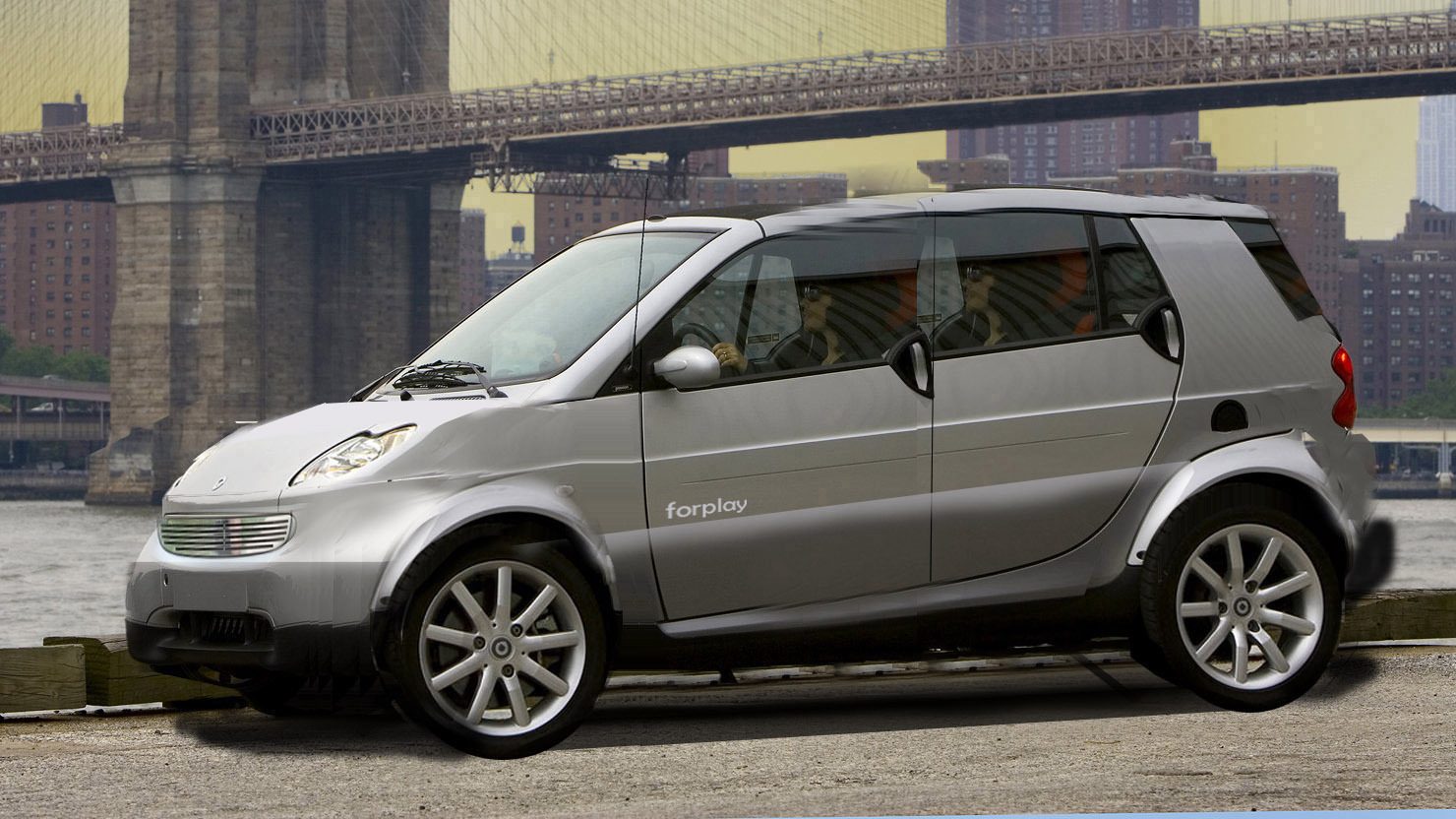
Smart USA could have also gotten experimental. SUVs had a bad reputation with environmentalists in the 2000s. Maybe Smart could have marketed itself as “SUVs Done Smarter” or something like that. The image above is something our secret designer, the Bishop, made for me as a possible “Forplay” crossover Smart could have made.
Really, I think Smart’s biggest problem was just its product offering in the United States. Since Smart decided to have only a single car, it was doomed the second gas prices got cheap again, and people got back to buying trucks and crossovers. This also limited Smart’s progress in other countries, too. Smart did take a big swing in 2014 with the second generation of the Smart Forfour, but that car was never sent to America. It was also overshadowed somewhat by its platform mate, the Renault Twingo III.
Now, I think Smart has swung too far in the other direction. The company currently sells nothing but electric crossovers and not a single heritage model or enthusiast car. You could slap any brand’s badge on Smart’s current crossovers, and it wouldn’t change a thing, which is so sad.

If I were in charge of Smart, I’d hit a big reset button. Sell a crossover or a few, yes, but make sure the crossovers are still distinctively “Smart.” Then, have a couple of fun cars on the side.
But that’s just how I would do it. I do not have a business degree and haven’t run a company of any kind, let alone a car company. I’m not a car designer or an engineer, either. So, my opinion is honestly worth about the cost that you paid to read this post. But I do love Smart, and I have been able to watch industry trends for years. At the very least, it seems that selling an SUV would at least put Smart USA in a better position.
While I did rag on Smart in this post, I’m still rooting for it. I still want to drive its electric crossovers, and I cannot wait to hear about the new #2. I desperately hope I get invited on that press drive, even if it won’t be sold in America. That’s how much I love Smart. But, had I ran Smart USA, I would have taken bigger swings. Who knows, maybe I would have failed, too.





Smart was always the mouse that the mountain gave birth to.
Nicolas Hayek of Swatch fame was its original dady. When his grand and way ahead of their time ideas didn’t pan out with VW, Mercedes chimed, didn’t play ball with their ideas neither, and they pulled out. MB proceeded alone, to make what Smart became.
Part of what shot Smart in the legs before it even started was that two of its main ownership features didn’t materialize.
1) They were hoping to get an authorization at the Euro level to have them allowed to park perpendicular to the curb, in parallel parking areas. Being short enough, the idea was to have them park perpendicular to the regular cars, in between. This was never allowed. France already had its “voiturettes” pulling this trick and was penalizing voiturette owners for such parking practices.
2) There were plans of having Smart owners enjoy a “regular” vehicle for one month every year. The idea was that most city dwellers need a family sized vehicle only when they go on a trip, and that a Smart is enough the rest of the time. Guarantee the owner that they won’t have to go on vacation in their Smart, and they’ll come. This also didn’t pan out, as car rental companies were not interested.
I, too, was a big Smart fan, and have a couple of cool messenger/laptop bags, as well as a 1:18 diecast model of the Crossblade. My ‘consolation prize’, as it were, is owning a 1972 Austin Mini and 2025 Mini Cooper S–small, fun design icons.
I had not heard about the plans to sell reworked Nissan Micras in the US under the Smart brand.
I do remember the talk around the Formore, although I never believed it was a V6 C-Class under the skin–that vehicle seems far too small for all that hardware.
Yes, like so many other brands, it’s veered too far into SUV territory, but there is supposed to be a rebooted Fortwo (badged, of course, #2), and an inexplicable midsize sedan badged #6. That means there’s room in the portfolio for a small four-passenger #4, right? And now that the brand has added its first PHEV (the #5) there’s a bigger market out there for them…
Maybe because it’s LA, where you’ll eventually encounter almost every car out on the road (if it’s worth less than a couple million), but I see Smarts tooling around fairly regularly. I assume that it’s because their owners really like them, and keep them going instead of just getting a new Sentra or Corolla or whatever.
I’m glad they do.
I live in a quasi-rural town, and there are at least three Fortwos within a mile of my house. Two of them are done up as off-roaders, jacked up and stuff. I’ve always liked them, especially when I found out they were available with a manual. I appreciate a small car, we need more of them out there.
Sooooo someone is doing one of these articles for Saab right? Right?!!
I’ve really grown to appreciate Smart living in a city and passing up parking spaces because my SUV is a little too big.
I just started a new job at a small liberal arts college with a sprawling campus and they maintain a little fleet of Smarts (and the more normal little vans and maintenance trucks) that run all over campus and to offices/properties that are elsewhere in town. It makes so much sense! A golf cart can’t hop on the busy roads outside campus, but a Smart sure can! Plus, it will fit through the arches and around the tight corners of the old campus buildings with way more ease than most other modern cars. It is a solution that I find brilliant and charming.
With new brands gaining a little traction and automotive design getting kind of funky and modern again, Smart feels right for this world. They were a little too ahead of their time and a little too optimistic. Damned shame.
Geely has so many paths to entry to the us they refuse to use. Bringing back the smart brand would be a good idea especially with their current lineup though I would imagine with the vag dealers complaining about scout and litigation the MB and Volvo dealers might try to fight for the dealership
They refuse because they know the U.S. government is not keen on Chinese-made EVs flooding the market. I forget the current tariff rate on them, but it’s steep, maybe 27%. What’s crazy is that despite the tariff rate it’s likely Geely still makes a healthy margin on each vehicle. But the inevitable backlash from disrupting the market would hurt the company’s future fortunes in the U.S. market so they are taking a slow approach.
They are starting to explore some pathways, but I think only Volvo/Polestar makes sense for them at the moment. The Volvo EX30 is made in China, for example. It’s taxed heavily, but it’s quite likely Volvo, which has U.S. manufacturing presence in and exports vehicles from the U.S., gets a tariff refund on it.
US Market EX30 is now made in Ghent, Belgium after too much uncertainty around the US Tariffs for Chinese-made cars.
Ah, good point, I didn’t note the change. 15% is certainly much better than 25%!
Chinese-made EVs got slapped with a 100% traffic at the end of the Biden administration, and it was still there at least during the summer. Did that get overturned?
Obviously, building in Belgium is a lot better either way!
Actually, that’s kinda exactly what they’re doing right now. The large Smart #5 is the money-making crossover, while the smaller #1 is the fun car (even if it’s not in the vein of the original ForTwo). The #3 would be somewhere in between.
If you ever get the chance to drive the Smart #1 Brabus, I can promise you that it’s an absolute riot.