

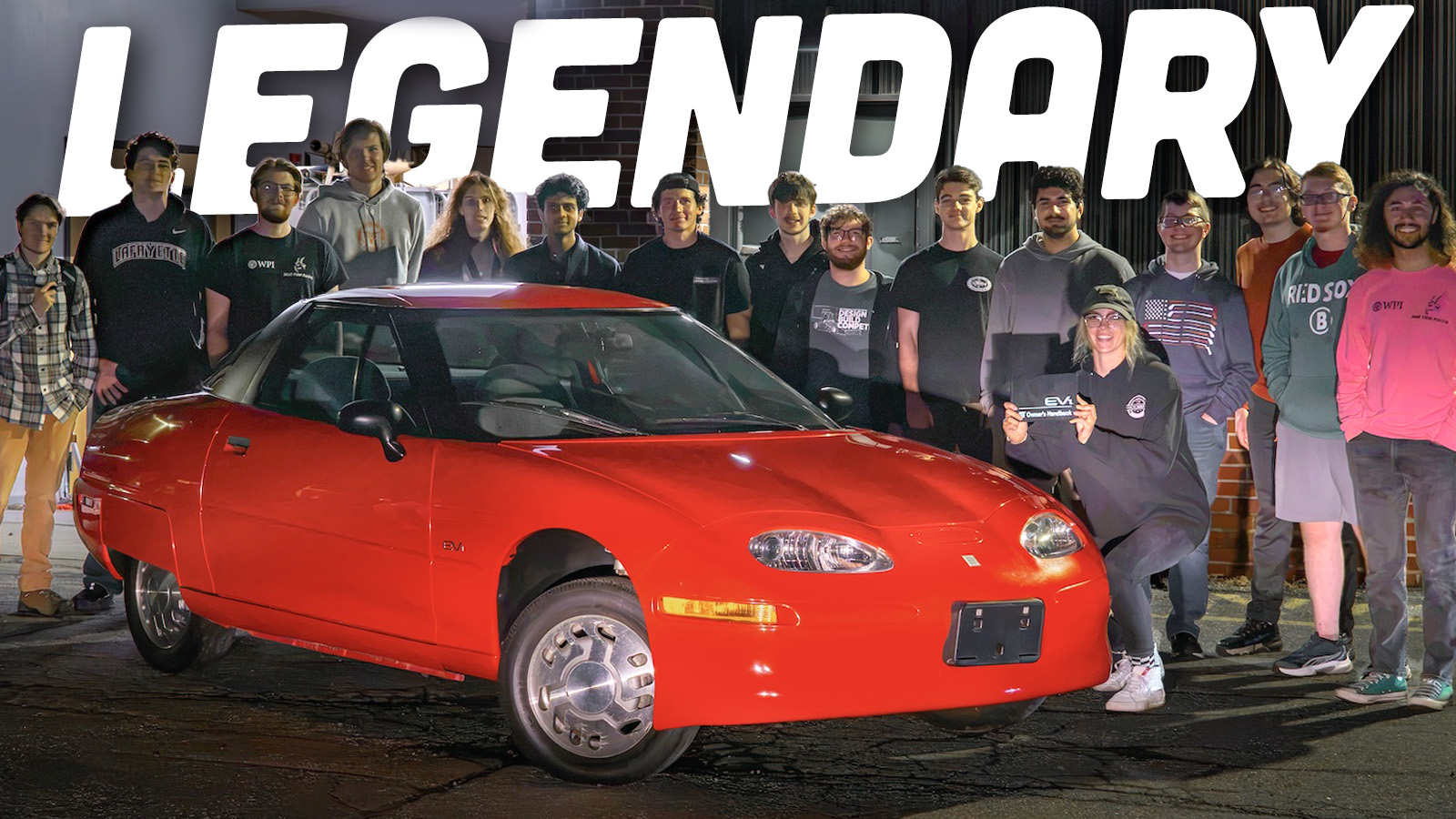
As we near the end of 2026, I’ve been reflecting on how many once-in-a-lifetime, extremely nerdy car enthusiast experiences I’ve had in the span of about a year. I’d venture to guess that it’s probably more than the average person has per year, even for some of the nerdiest of us – which I’m of course incredibly grateful for! One such example of this was discovering the famous Bose suspension Lexus LS400 sitting in a mechanic’s lot and then getting a full tour of the car, which I wrote about here a few weeks ago. But another – arguably even cooler – experience was getting to power up a near-perfectly-preserved GM EV-1, a vehicle so rare that most survivors are behind rope barriers in museums, almost certain never to come to life or see daylight again. And it was really a perfect storm of circumstances that made this day possible, solidifying for me the power of niche interests in creating unexpected friendships.
A Quick Reminder of Why The EV-1 Is So Legendary
Although the existence of electric production vehicles dates as far back as the late 1800s (and experimental ones even earlier), gasoline power won the race to the mainstream fairly quickly. However, 90s tech advancements and environmental concerns brought about a strong resurgence of optimism for electric, and in 1996 California mandated that automakers produce a small portion of zero-emission cars. GM’s EV-1 was one of the only vehicles of the era designed to be electric from the ground up rather than an existing model converted, and it featured incredibly advanced inverter and inductive charging technology while staying feasibly priced for consumers.



The book The Car That Could by Michael Shnayerson is a must-read for any EV-1 nerd, and paints a great picture of the immense R&D that goes into vehicle design, especially one that had to solve as many logistical questions as an early EV. The EV-1 was released in 1996 as a lease-only option in California, Georgia, and Arizona, with a 70-100 mile advertised range from the lead-acid battery pack, and later 100-140 with a nickel-metal hydride (NiMH) pack. There’s a plethora of sources out there that will tell you how much EV1 lessees LOVED their cars – they were quick, fun to drive, stylish, futuristic, and environmentally friendly.

However, ultimately, there just weren’t enough people who were willing to take a chance on the EV1, making it a huge financial loss for GM. Combine that with the eventual weakening of the ZEV mandate and the fact that the technology was still proprietary, and GM concluded it was destined to be a failed experiment, with only 1,117 cars ever produced. If lessees were allowed to buy the cars, dealerships would be obligated to provide servicing, parts, and infrastructure maintenance for years to come, extending the financial burden on the company. In the opinions of GM executives, it was easier to take them all back and crush them, ensuring the cars would never be put back on the road to become liabilities. Despite passionate protests from EV1 owners – many even attended a solemn funeral for the cars in a California cemetery – all but around 40 cars were repossessed and crushed, the remainder stripped of major drivetrain components and donated by GM to museums and universities. The beloved little car only survived from 1996 to 2003.

My First EV-1 Sighting Ignites the Obsession
The fateful story of the sweet little EV had always been a fascination of mine from the day I first heard it, and its unobtanium status cemented it as an icon in the minds of rare-car enthusiasts. The idea that one could find an abandoned example covered in dust behind a nondescript university building gave it a somewhat mythical aura. I knew I had to make a pilgrimage to see one of the few survivors if ever I got the chance. There is a small but very dedicated community of EV1 fans who have somehow collectively logged the location and condition of almost every existing car, so I knew one had been left abandoned in a university parking lot in Washington, D.C. On my way home from a road trip in August 2025, my boyfriend Jacob and I stopped to visit it, and I was even more smitten with the car. I took oodles of photos and videos, and proudly posted on my Instagram account that I’d finally seen one of my holy grail cars.
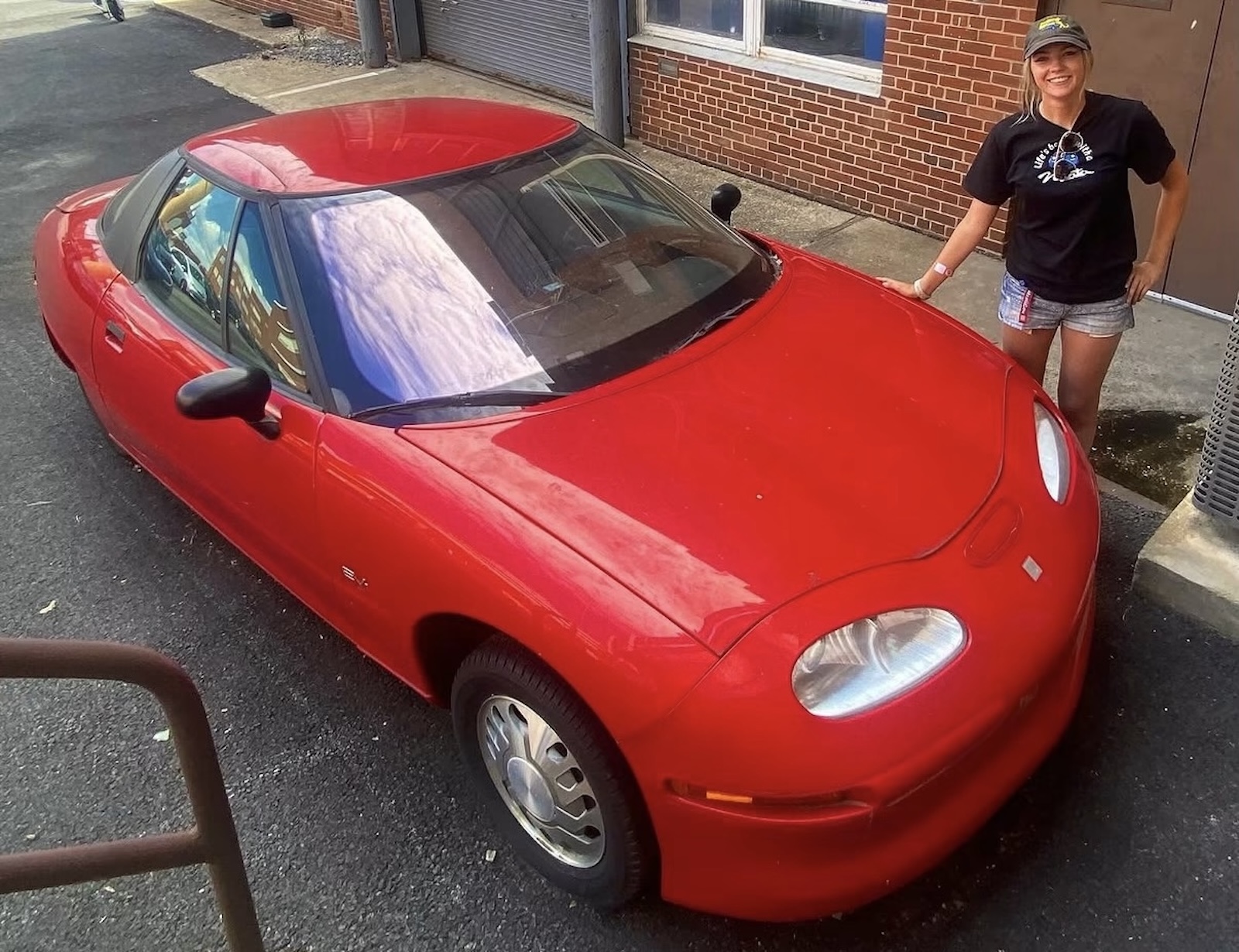
Not long after, my internet friend Tedward the YouTuber (known to friends as Tom) commented, asking if it was the WPI car that I’d seen. WPI? Worcester Polytechnic Institute?! A university only 45 minutes from my house, not 8 hours? How could I, such a dedicated EV1 fan, have missed this car in the EV1 documentation?
Sure enough, after a bit of internet sleuthing, I found one record of the car online – the WPI Society of Automotive Engineers website has a single page with a paragraph dedicated to the car and a photo. Incredibly, I realized that this car didn’t even make it onto a Hemmings compilation of all known EV1s, which the EV1 community considered to be quite a comprehensive list. Realizing I may now be one of very few people to know about the existence of this car, only 45 minutes away from me, I knew I had to reach out. I clicked on the “Contact Us” button on the bottom of the SAE team’s website, wrote a little note explaining my enthusiasm for EV1s and expressing my interest in seeing their car if they still had it, and waited.
And sure enough, I heard back within a day! An SAE club member named Jeevan wrote back to me explaining that they did, in fact, have the EV1, but it was currently quite buried in storage and would be tough to see. He told me they were hoping to get the car out and clean it up a bit in the near future, though, and that I’d be welcome to come out and see it when they did so. And unlike in some cases when someone says that and then falls off the face of the earth, Jeevan actually followed up with me fairly quickly – he reached back out within a few weeks and told me they were going to bring out the EV1, and that Tom was going to be there to see it too!
A Great Day In EV1 History
The day finally arrived, – a stunning, sunny late September afternoon. My boyfriend Jacob and I pulled up to the building in my 1992 Previa, and I could feel the excitement twisting my stomach. Not only was I seeing an absolute legend of a car, but I had to make a good impression on a new group of people that I’d reached out to via a strange, nerdy email… and a well-known automotive YouTuber.
Unfortunately, I’ve never been particularly good at maintaining my composure around cars I’m excited about, and as soon as I glimpsed the little friendly red car, I gasped. It was in PERFECT condition! There wasn’t so much as a speck of faded clear coat or a door ding. A small group of SAE members had assembled to host the EV1 gathering that day, and they immediately told me I could sit in it if I’d like, which I was nearly speechless over. The interior was similarly immaculate, and the smell is something that has really stuck with me long after the day was over.
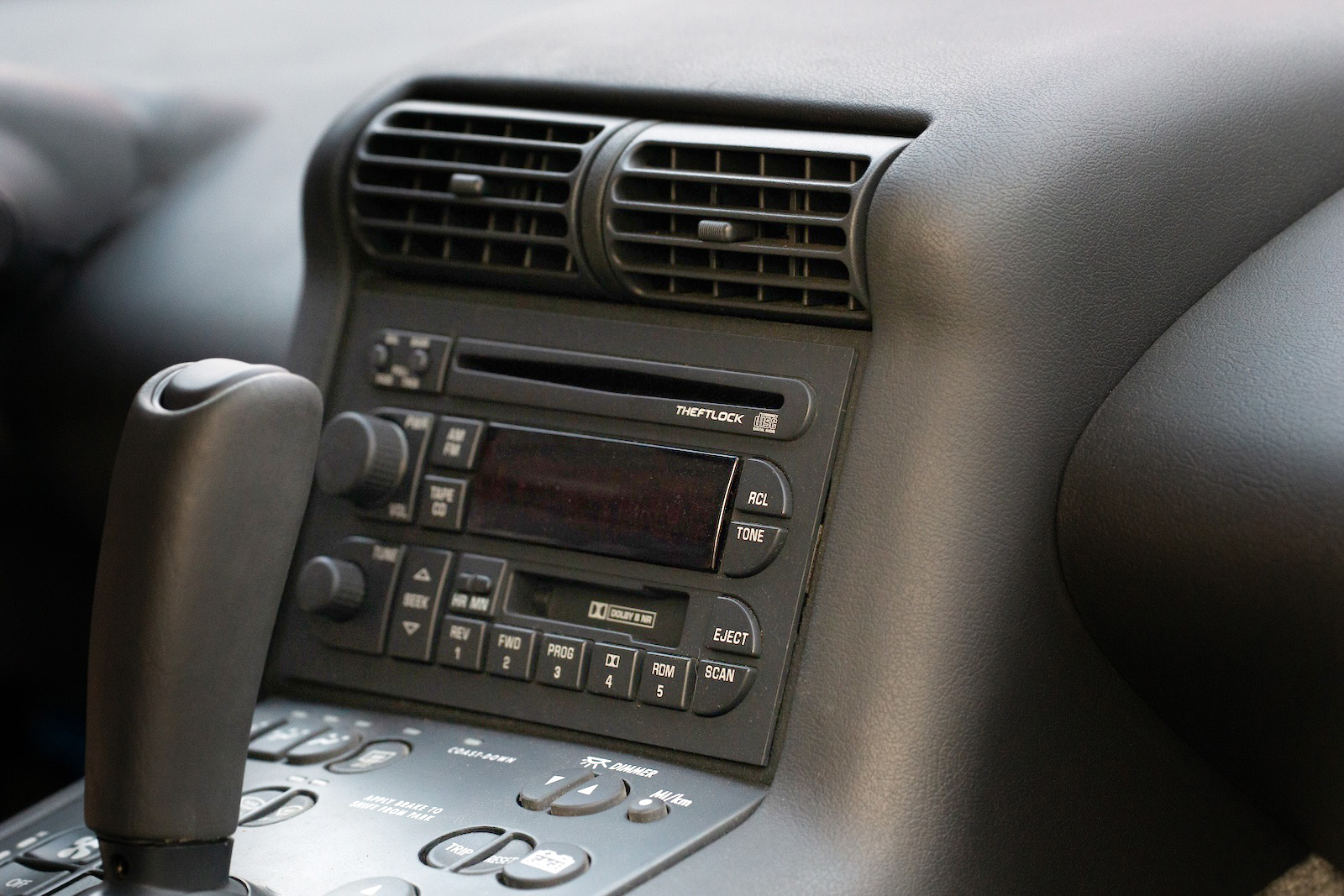
It still had that brand-new fresh plastic aroma, made even sweeter simply by the fact that it was coming from a showroom-quality EV1 that I was sitting in. I work at a Subaru dealership and sometimes, when I get in a brand-new plastic-and-cloth-filled base model, I’ll get a hint of a similar scent, and it brings me right back to that happy day. Oh, and everyone was totally nice to me and completely understanding of my freaking out over a 28-year-old EV, because they understood and appreciated its significance too. Ten minutes in and I already thought the day couldn’t get any better – ah, but I was quite wrong!
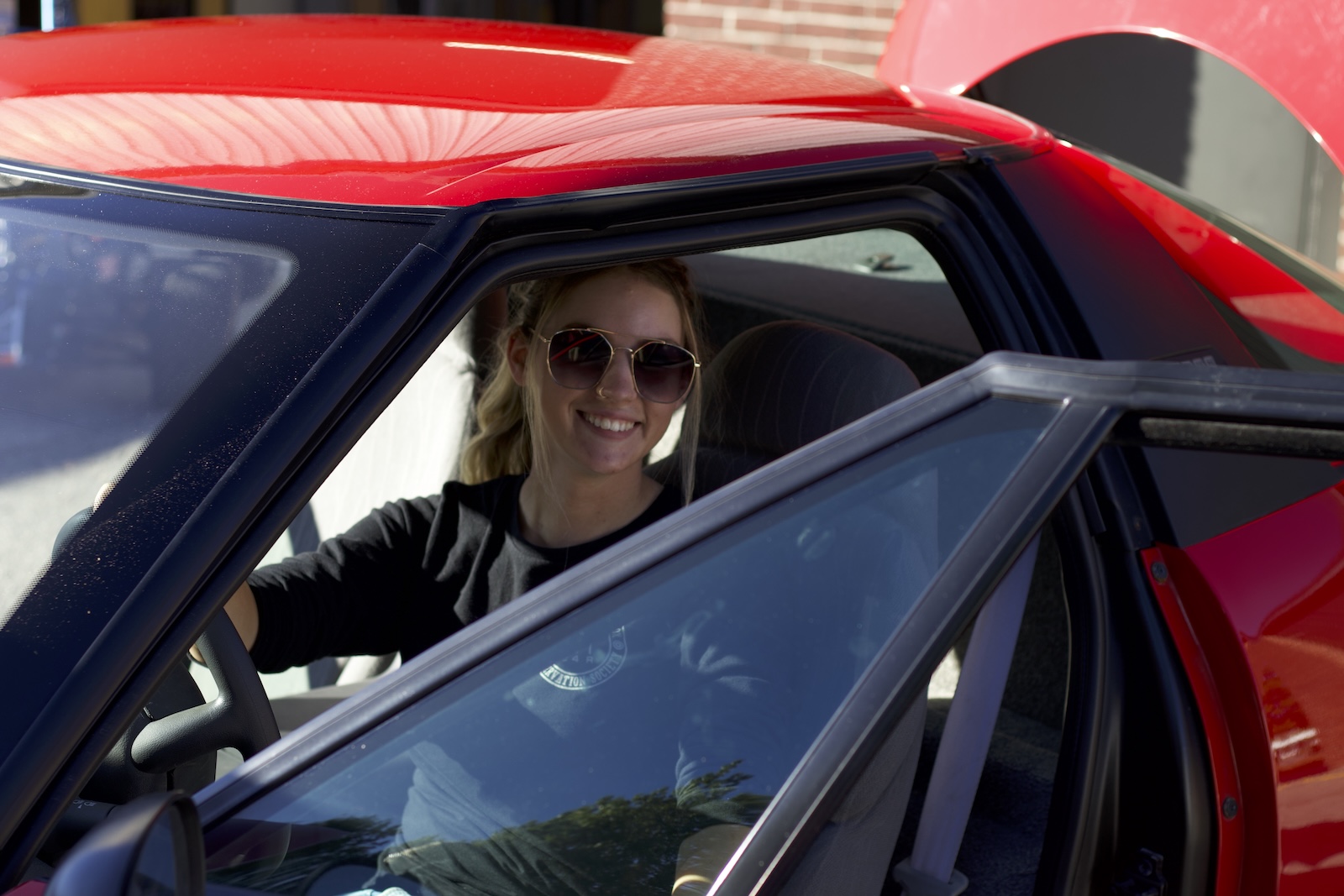
I must have made a decent enough impression because within the first 20 or so minutes of my arrival, I was offered to sit in the EV1 and steer it while it was moved to a better spot for pictures. Sitting in an EV1 WHILE MOVING?! Potentially the closest I would ever get to operating one!? I’m not religious, but GLORY HALLELUJAH! I took my job very seriously and communicated diligently with the pushers as we maneuvered it around a tight corner and into a more open area. Success!
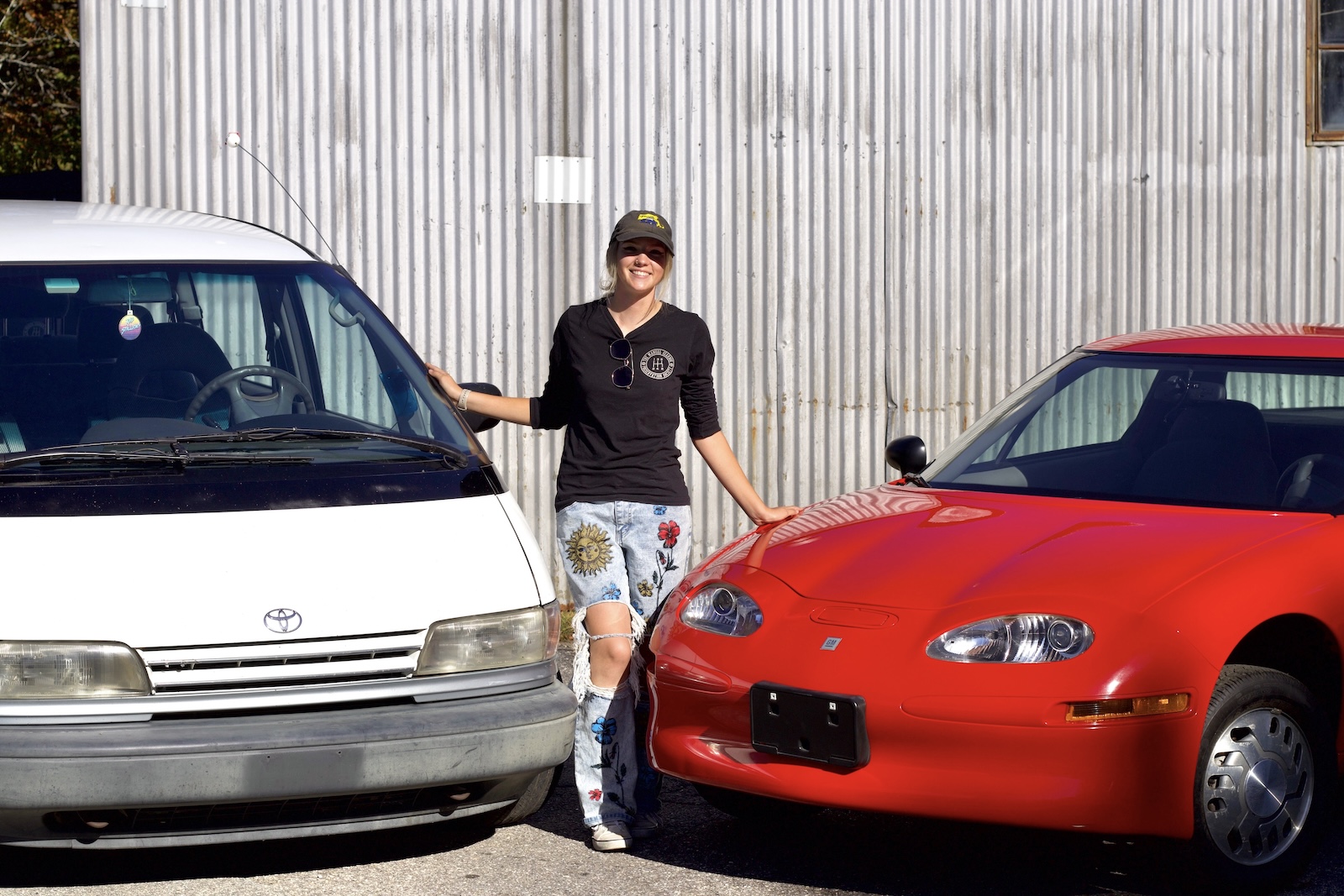
There we were able to get plenty of glamour shots, and it was almost as if the little car wore a proud expression, happy to finally be admired in the sunlight once more. The WPI students even encouraged me to bring my Previa over (and Tom, who was a big fan of the egg himself) to get photos of it with the EV1. Two aerodynamic 90s oddballs for drivers who were willing to go against the mainstream … it was almost meant to be! And of course, absolutely surreal to see two of my dream cars photographed together alongside myself.
Once our photo-op was over, somehow the crazy idea to put power to the car came about. After all, the drivetrain should have been the only thing rendered inoperable by GM … theoretically, if the electronics weren’t fried from 20+ years of dormancy, the car could still come alive in accessory mode. It’s a well-respected technical university, so it’s not like there weren’t plenty of engineering-minded students around that should be able to figure it out. Led by a student named Max, we began by using a regular 200-watt lab power pack connected to the car’s 12-volt system. We increased the power slowly and were cautious about the potential of the airbag being set off by low battery voltage or faulty sensors.
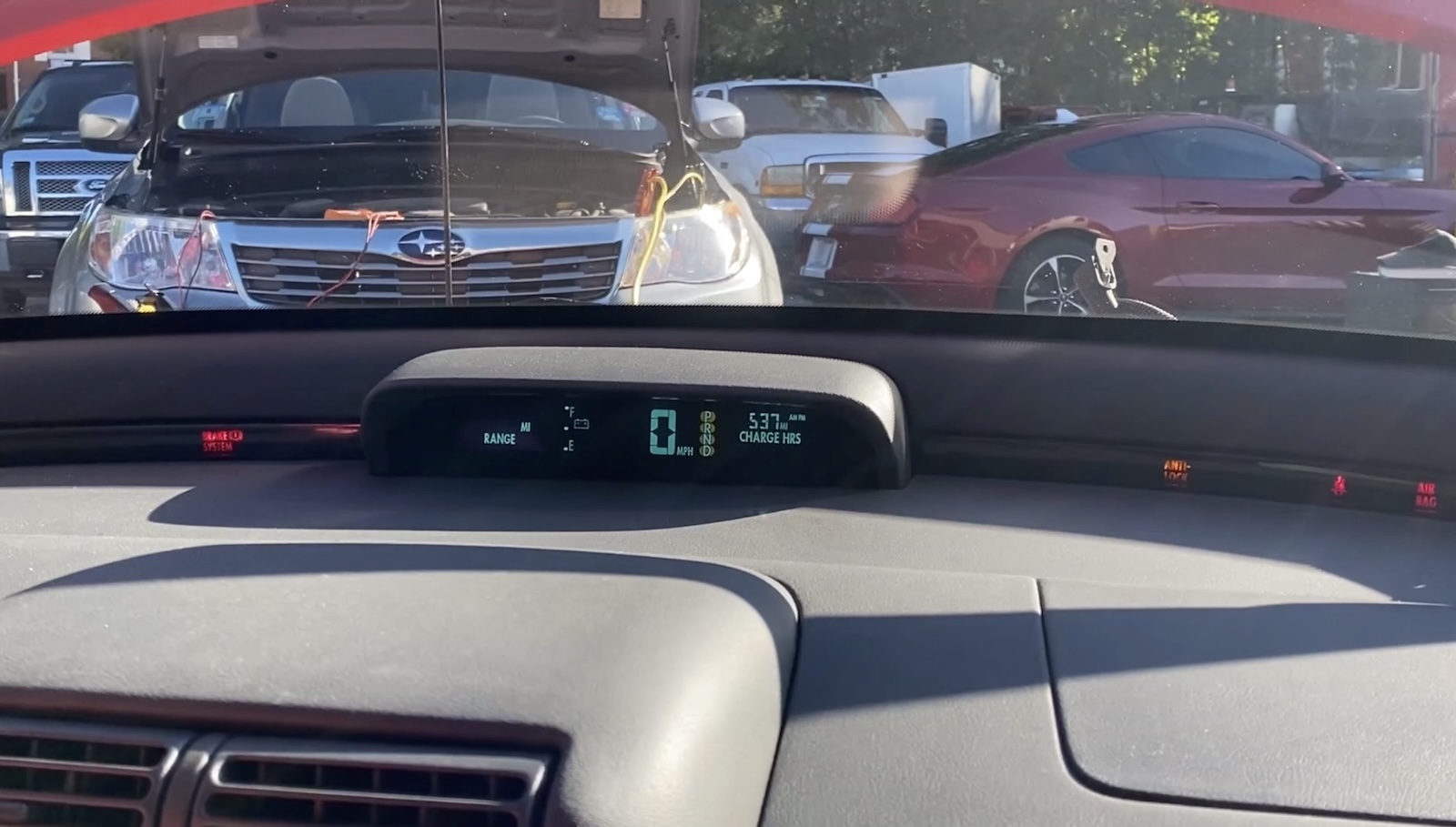
We switched the headlight stalk to the parking lights position so that if the car took power, we’d have an exterior sign of life. Then, finally – DINGING! The little EV1’s parking light symbol showed up on the dash, and it made a slightly garbled chime to signal that the lights were on! We were thrilled! It seemed, though, that we were approaching the limits of the power pack. If we tried to turn on the headlights fully or use the hazards, the voltage reading on the power pack would drop significantly. Since nothing had exploded or caught on fire thus far, it seemed to be a safe enough idea to hook up jumper cables to the car and try to power it with another vehicle that could supply more current. Jeevan’s 5-speed manual Subaru Forester was volunteered to perform the legendary task.
What’s The Code?
Our true final hurdle, however, was figuring out what code could be used to wake the little guy up. All EV1s were powered on using a 5-digit code input via a keypad in the center console, rather than with a traditional key or fob. Without knowing that code, our attempts could be fruitless. However, you should never doubt the ability of a desperate college student to find a necessary source in the nick of time. Somehow, in just a few minutes, Max was able to find documentation online stating that all donated EV1s should be reset to the code 11111. He pressed the [1•2] button 5 times in a row, hit “RUN,” and then…
SUCCESS! The whole dashboard lit up, bright and healthy-looking, and at the same time a triumphant cheer resounded among the assembled EV1 fanatics. The joy and excitement in that moment were palpable. We had just joined the ranks of an incredibly select few people who had witnessed an EV1 functioning within the past 2 decades. It was one of the most thrilling moments I’ve had so far in my life as a car enthusiast!
I tried my hardest to take in every detail and log it straight into my brain, as I didn’t know when, if ever, I’d get to see all the little dashboard lights of an EV1 light up right in front of me ever again. Rather than a gauge cluster sitting right behind the steering wheel, the car has its main gauge pod in the middle of the dashboard, up near the windshield. This little greenish-blue vacuum-fluorescent display gives a digital readout of important vehicle information such as your speed, selected gear, amount of charge remaining, estimated range, and your odometer.
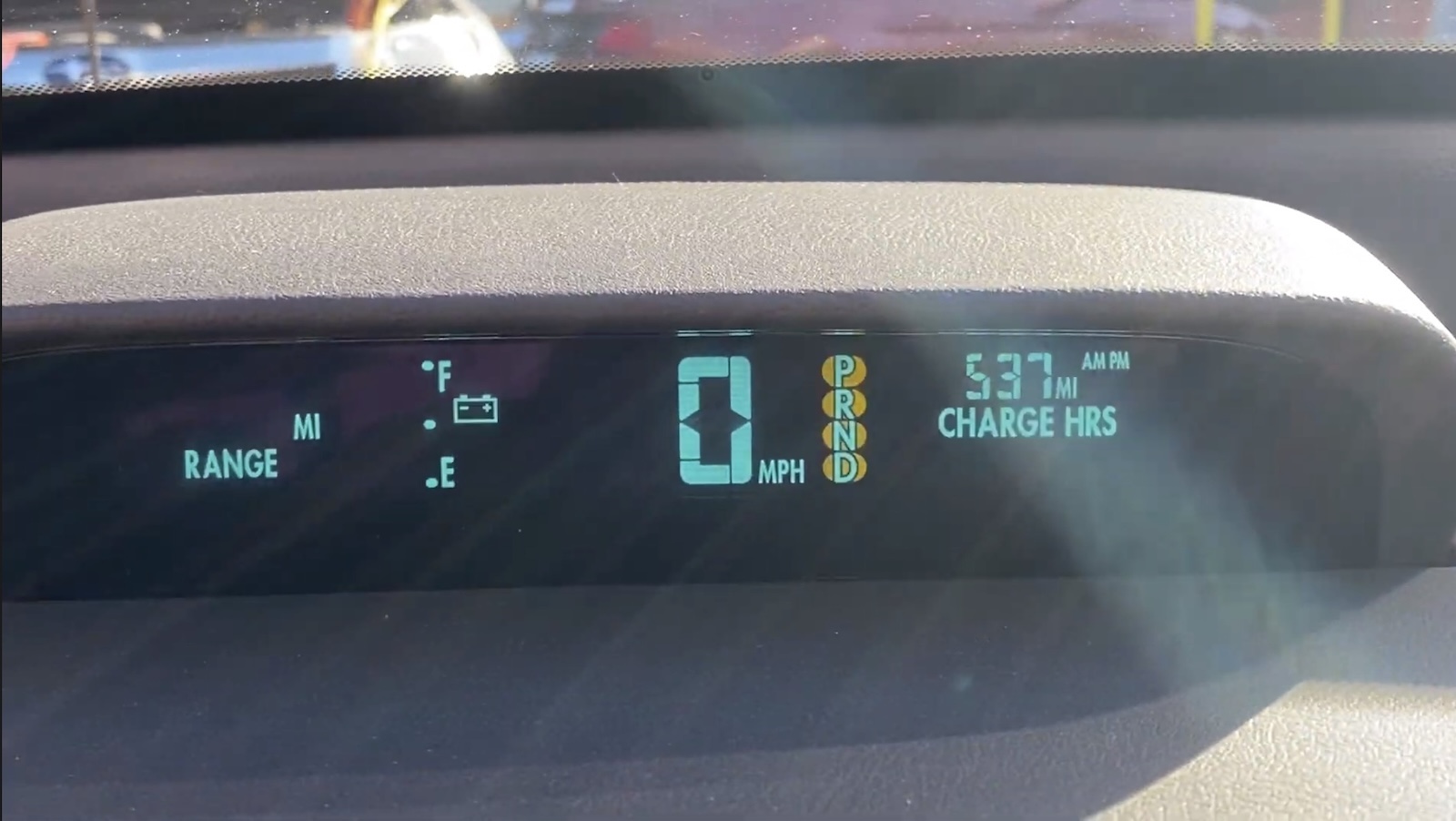
It also offered some very early configurability, with the option to change your state of charge readout to a real-time power use gauge (a digital bar would go up or down depending on how efficiently you were driving and how much power you were using at any given moment). On either side of this central gauge display, two thin black strips extend outwards along the dashboard. These could almost look like trim pieces, but they came to life when the car was powered on, showing the driver important icons such as CHECK TIRE PRESSURE, ABS, REDUCED PERFORMANCE, and an angry red SERVICE NOW warning equivalent to a check engine light. I’ve never been so elated to see a SERVICE NOW message!
Particularly charming was the EV1’s pedestrian warning noise, which was a pleasant little digital chirp that could be sounded by flashing your high beams. Since the car was almost silent in motion, the engineers decided there should be a way to alert pedestrians of your approach in a kinder way than honking. I can now tell you from personal experience, the chirp is very endearing! (Apparently, the same pedestrian chirp was also used in the Chevy Volt, Bolt, Spark EV, and Cadillac ELR, which I only learned after sharing my experience with online friends).
The icing on the cake was the song the EV1 played for us when we turned the radio on. It somehow fit the vibes of the moment to a T – “Rock & Roll Queen” by British indie rock band The Subways. With a powerful and anthemic chorus, and lyrics like “you are the sun / you are the only one / you are so cool / you are so rock and roll” it almost felt like the EV1 chose what it wanted to celebrate its own awakening with.
As far as we could determine, it seemed like every accessory worked. The wipers, power windows, all lights, and the radio functioned like no time had passed at all since they were last operational. However, all good things must come to an end, and we didn’t want to leave the car powered up for too long without being certain that all of the internal electrical and cooling systems were functioning correctly – in fact, we did notice a small puddle form under the bumper, so it was likely that running the 12v system also activated the pump for the cooling system and exposed a weakened seal somewhere.
After each of us had gotten our final photos and videos to remember the EV-1’s brief revival, it was time to wish him good night once more. The group removed the jumper cables, closed the car up, and began the bittersweet process of moving it back into storage for the foreseeable future.
Unexpected Friendships
What I’ve always found particularly meaningful about this experience is how quickly and easily everyone involved became friends. When I sent an out-of-the-blue email to the SAE inquiring about an old EV, they had no reason to respond to me. But shared niche interests are quite good at making friends out of strangers, and that day certainly formed friendships – I now regularly interact with Tedward (Tom) online and we always try to chat if we’re at the same car show, and I greatly enjoy following along with the Formula SAE team’s progress in building and testing their race cars, which are EVs designed and built from scratch. Club members are tasked with everything from custom fabrication to circuit board design to create the best vehicle possible, one that can compete against other universities for the top prize in the annual Formula Hybrid + Electric competition. It’s reminiscent of how the EV1’s engineers faced the daunting task of creating a commercially viable electric vehicle from scratch, all while facing monetary and time constraints … and in that way, I think the Society of Automotive Engineers are the perfect inheritors of this EV1.

I keep up with Jeevan and Max on social media, and since that day they’ve even invited me back for a second EV1 revival at the school, almost exactly a year after the first. By this time, the school’s EV1 wasn’t even the only one to be powered up that year – you may have heard the big news that an EV1 was sold into private hands for the first time in history, and the owner, Billy, has received full support from GM in making it functional again. Billy and his team have been documenting the restoration process on YouTube, and were able to sit in a powered-up EV1 at GM’s headquarters! Billy also recently got his own EV1’s electronics to come alive again (albeit without the body of the car attached yet). I don’t know what’s in the air this year, but it’s been quite a historical time for EV1 enthusiasts. I hope to make it out to Billy’s grand unveiling of his completed, fully functional EV1 project – and you can trust that when I do, you’ll have another shiny new EV1 article waiting for you!


