

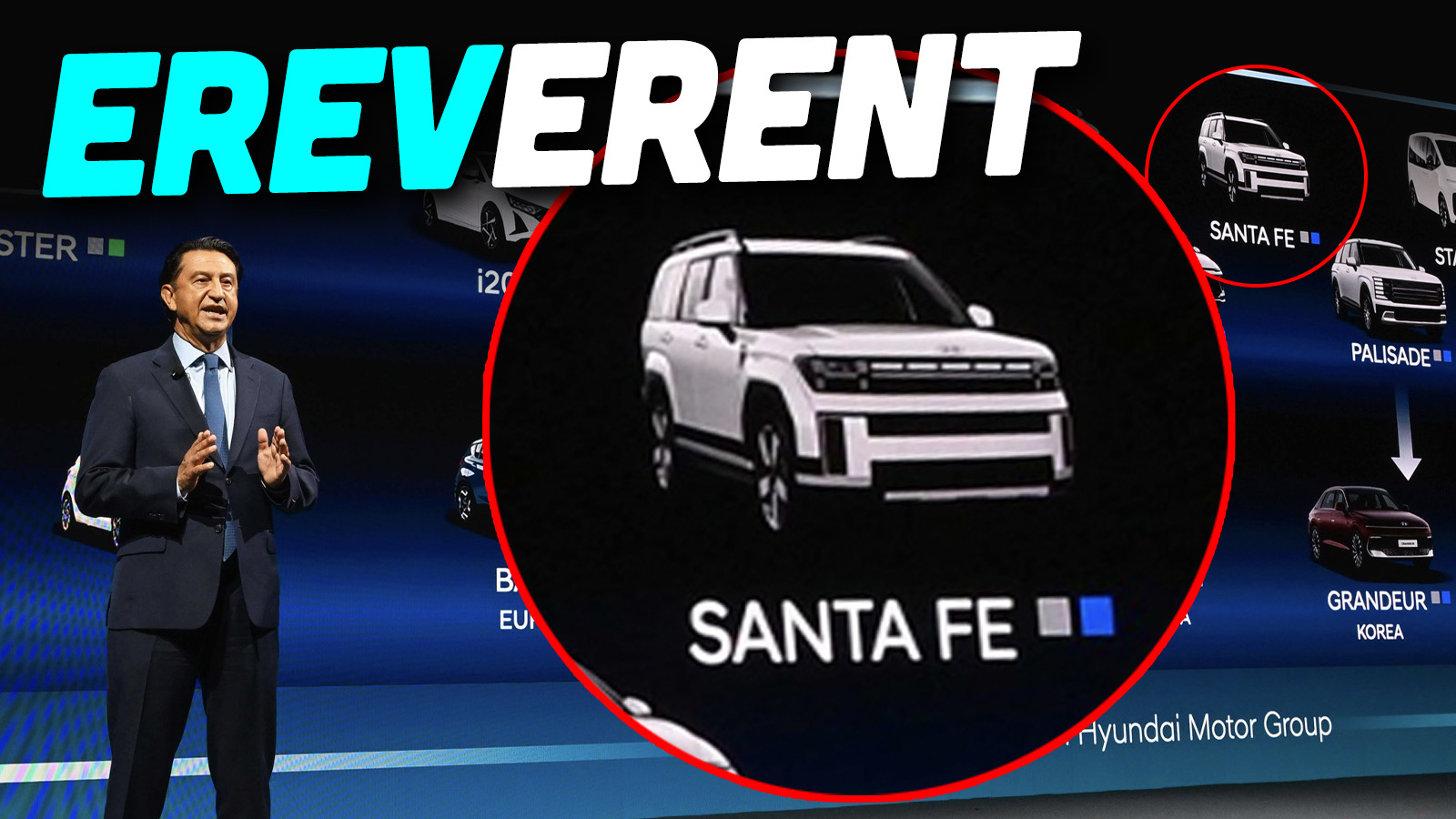
For far too long, Americans have been deprived of what I consider the greatest powertrain solution out there. It eschews many of the usability compromises associated with fully electric cars (imperfect infrastructure, charging times, high cost) and it offers significantly more reliability and lower running costs than a conventional gasoline hybrid. It’s called the EREV, and unlike a plug-in hybrid — which is a gas car first, offering a small amount of electric capability — an Extended Range Electric Vehicle is actually an electric car first with a small backup gas generator to recharge the battery. Finally, for the first time ever, America is getting an ideal EREV.
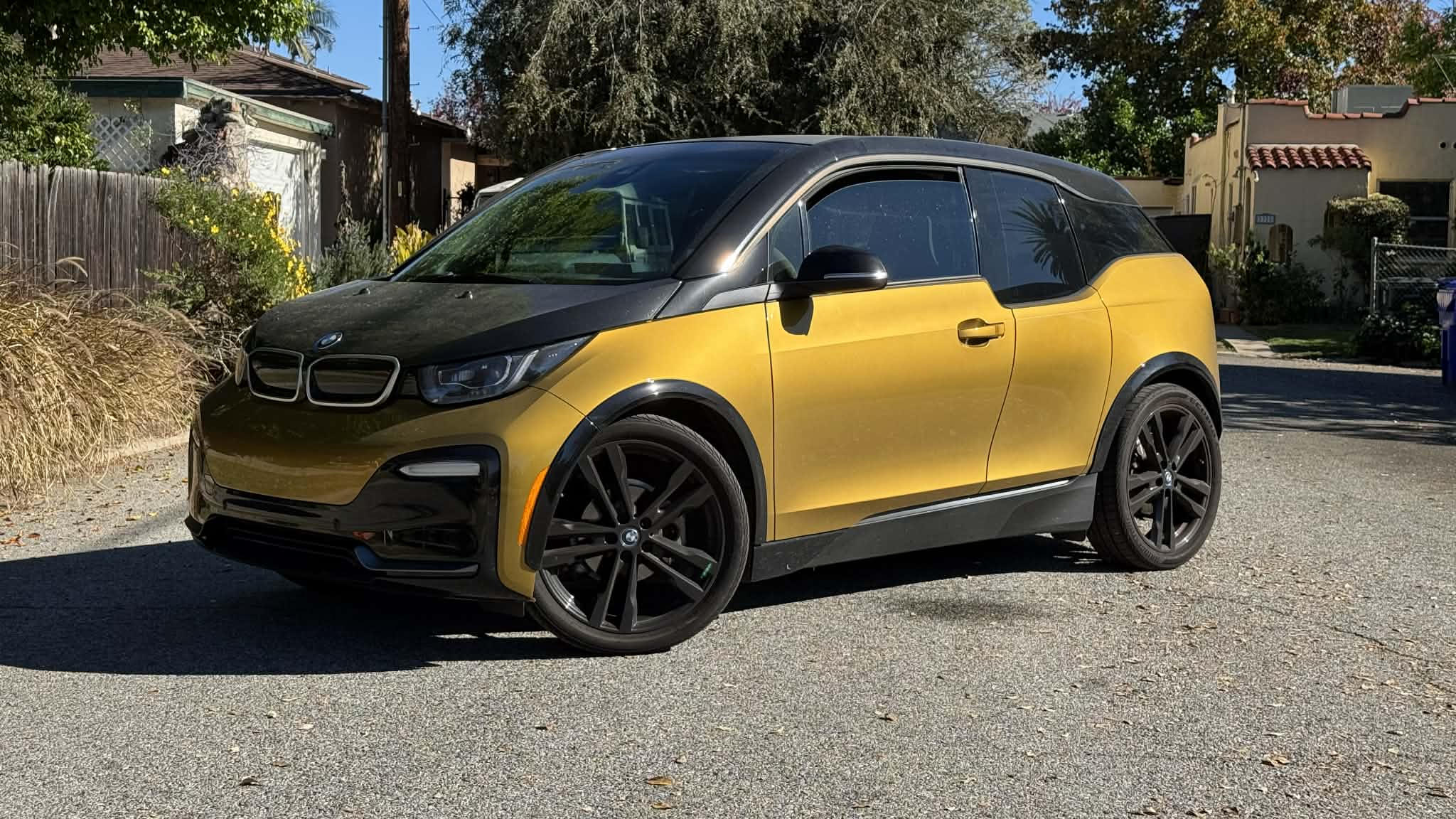
As the proud owner of the only pure EREV ever sold in the U.S. — the BMW i3 — even I have to admit that the i3 wasn’t the best use of EREV technology. First, the best use of a small gasoline backup generator is in a large vehicle that would otherwise require a huge battery to offer the range customers want. The i3 is small, so the cost savings of offering a gas generator instead of extra battery capacity isn’t exactly monumental. Second, nobody wants a small $55,000 German hatchback.


What Americans do want is SUVs and trucks, which require more energy to go down the road and thus huge batteries to offer decent electric range. It’s for this reason that I’m delighted that Hyundai just announced an electric Santa Fe SUV with a gasoline backup generator. And it’s coming soon! From Hyundai’s Investor Day press release:
Hyundai Motor will launch or refresh over 100 models by 2030, including its first extended-range electric-vehicle (EREV) that combines the power and efficiency of a battery EV and the convenience of an onboard charger.
The new Santa Fe EREV will arrive in the first half of 2027, representing an uncompromising approach to electrification. The Santa Fe EREV is expected to deliver more than 600 miles of total range, combining an EV-like daily driving experience while addressing range and charging anxiety for customers. The vehicle will be built in the United States at Hyundai Motor Manufacturing Alabama.

Back at the 2024 Los Angeles Auto Show, I heard CEO José Muñoz tell an audience that EREVs are coming. “EREVs have the potential to lower cost and increase driving range,” he said. The idea is that, instead of carrying around an extra 1,000 pounds and $10,000 of battery capacity — like most people who drive 300+ mile electric cars do — an automaker can replace those superfluous battery modules that drivers rarely use on a day-to-day basis with a cheaper, smaller, lighter weight gas generator. The result is that, instead of a 300 mile EV that weighs three tons and costs $60,000, an automaker might be able to offer a lighter, cheaper, 600 mile EREV with 100 miles of electric-only range — more than enough for daily commutes.
Especially for people who can charge at home (the only people I recommend buying an electric car, anyway), this is a way to drive electric 99% of your trips (i.e. your commutes), while not having to worry about forgetting to charge, finding chargers along your route on road trips, long lines at the chargers, etc. (yes, these will seem to BEV proponents like silly edge cases, but I’ll get to that in a sec). And what’s more, it ideally offers significant weight and cost savings. I’ve written all about the advantages of EREVs in my story The Future Of The Auto Industry Is Electric, With A Gasoline Backup, but here are some of the most important bits:
When batteries are as expensive and heavy as they are today, it just doesn’t make sense in all segments of the industry to use them for edge cases (a major battery improvement/price changes many elements of this whole article, of course). And those edge cases include your family’s annual road trip to Wally World, as well as your bi-annual boat-tow excursion. For those edge cases, it’s logical to save cost and weight and slap in a small range extender, especially while infrastructure remains suboptimal.
I think the “fully EV or nothing” crowd needs to relax and acknowledge that we’re all in this climate change fight together, and EREVs offer a humongous potential to reduce emissions in a way that even BEVs can’t, primarily because EREVs can likely convert more folks over from gas-guzzlers, but also because if the range extenders aren’t used much EREVs can actually be cleaner than BEVs due to their need for fewer battery resources. The marketing thing will also be tricky, and I’m hoping companies like Ram decide to price EREVs lower than BEVs. Carl Lally from Ram said the company is wondering if it should charge more for the Ramcharger than the all-electric Range due to the added utility of the former, or if it should charge less. I’m hoping that — due to EREVs’ theoretical ability to cost the manufacturer less to build than a high-range BEV — some of that savings will go to the consumer. And by golly I hope the Ramcharger reliable, because all eyes are on this truck. It won’t be as reliable as an EV, but a rarely-used gas engine initially developed for prolongued use humming along powering only a generator shouldn’t be that hard to make robust.
(It’s also worth noting that EREV is the only clean way to share a BEV platform with a gasoline alternative. This allows an automaker to hedge bets, as Scout has done; this is important given the shifting geopolitical climate; again, this is all in the article linked above).
I’ve driven some of the greatest electric cars in the world. Teslas, Lucids, Rivians, Hyundais, and various Chinese cars. They are amazing, and in a world where people were 100% rational with their car purchases, BEVs would dominate and there would be no need for EREVs. But such a world does not exist and has never existed, as I mentioned in my article:
Far too many journalists say things like “People don’t need as much range as they think; they should just drive low-range EVs.” As an engineer, I totally support that. But the reality is that the average consumer’s range-lust is not the problem — in business, the consumer can never be seen as a problem, and in fact, people’s thirst for high-range even though they likely don’t need it is fairly typical consumer behavior.
Consumers have historically purchased cars for what they are capable of, regardless of how consumers actually use those vehicles. How many Ford F-150 owners need to be able to frequently tow 10,000 pounds? How many Porsche owners need the ability to snap off an insanely quick Nürburgring time? How many Jeep Wrangler owners need to be able to make it through the Rubicon Trail? Very few, but consumers buy cars based on the thought: “But if I wanted to, I could.” This is normal. This is capitalism.
The issue is that, anytime you’re using something for only a small fraction of its capability, it leads to compromise. The Wrangler rides like crap, the F-150 is a beast to drive around town, and a Porsche 911 can barely fit a pair of golf clubs, and none of those are particularly efficient. But compared to these examples, a typical 350-mile electric vehicle (especially a large one) driven by someone who really only needs 50 miles daily yields way, way worse compromises. That consumer has to carry around an extra 1,500 pounds, and they might have to pay an extra $10+ grand, all for a capability they rarely use. It’s a hideous compromise, and it’s just not worth it to many Americans. EREVs have the potential to mitigate this.
I daily drive a BMW i3S REX (BMW used “REX” as “range extender”); I plug it in, charge it to about 135 miles of electric range, and on the extremely rare occasion that that runs out on a road trip or I forget to plug in, my gas engine fires up, charges my battery, and lets me continue on. My i3 experience has me convinced that EREV technology is deeply compelling and will win over many Americans if the carmakers can get the execution right. Just look at the Scout brand; when it showed off its new SUV, the vast majority of the reservations were for the EREV variant and not the BEV.

But getting the execution is no small task. The marketing side of things will be tough, as EREV is jargony and confusing. And then there’s the pricing/battery capacity; I don’t think 60 miles of electric only range is enough. 100-120ish should be perfect, but on a smaller, slipperier SUV there may not be lots of a cost delta between the batteries needed to offer 200 miles more range and a gas powertrain and all the ancillaries that come with it. Still, even if it costs the same as an equivalent 300 mi BEV, I still think an EREV has more market potential given what we’re seeing in the BEV space (again, see Scout preorders), though it all depends on the particular product. Still, pricing has to be somewhat reasonable, and automakers have got to convince folks to pay extra over a gas car for the added performance, reliability, and running cost savings.
It’s tricky for automakers to get this right, but as a nerd who lives the EREV thing daily, I find it to be an excellent solution for getting more imperfect, irrational humans daily-driving electric.




How does California handle smog testing. Does your I3 need the range extender motor smog checked.
When is the Hyundai EREV pickup coming? I’ll be the first in line!
Make a Kia Carnival version of this and I’ll buy it tomorrow.
The problem with EREV is highway efficiency. Good EREVs have purpose built engines for generating electricity. These American market ones are more than likely to have adapted engines. Without the mechanical link of a PHEV like the Volt, I can see the numbers not looking as pretty as we might want them to be
I think it’ll be fine. If you can plug in at home, you’ll be driving electric most of the time anyway.
Possibly, but considering that the ~100 miles of EV range are likely going to be exceeded while doing highway jaunts, there could be a good amount of grumbling
Long highway trips would be edge cases. You can accept some efficiency trade off for the edge cases. It doesn’t have to be optimized for every single situation, not that that’s possible.
The title of this article is literally “ One Electric Car That’s Perfect For America”. Long highway trips are very American. It’s probably one of the things Europeans think of when they think of America. Calling a highway trip > 100 miles in America as an “edge case” is nearly preposterous. There’s no need to aggrandize a technology as perfect for an entire nation. It’ll be great for some people. It’ll be annoying for others
This ^^^^
I’m not familiar with EREVs nor do I know how fast they recharge, but mentioning the i3 in the article – my understanding is it has a 34kw generator for a 134kw electric motor. Anyway I look at it it’s 1/4ish even before losses. When the battery is all flat and drained, it must be fun.
For every EREV someone smarter than me has, I am sure, figured out up to what speed (on flat ground) the generator can hold up with charging in real time for a realistic use case (passengers, some luggage). I surely hope it’s not 55mph.
I don’t know, I expect it to be a wash or slightly better than a pure ICE vehicle. You’ll lose a little of efficiency via the engine -> dc -> motor conversion than you would via linking it up via a transmission, but you’ll probably make that up by cycling the engine on and off and keeping it at its most efficient rpm. Hearing and feeling the engine turn on and off every 10 minutes would be a little annoying though.
that is what I generally thought until someone familiar with Chinese cars enlightened me. Larger EREVs with adapted engines can hit as low as the 20s when asked to generate power for the larger vehicles with larger batteries. Purpose-built engines can get in the 40s. It can be a large difference. Then you start throwing cheaper EV components in the mix because of added costs, and people who do a lot of highway driving in China tend to migrate to PHEVs and similar vehicles like the Volt that have the high speed mechanical link
Scumbum. Im currently shopping for a santa fe hybrid, amd wish this was an option.
But then if its the facelift model with the new interior screens… maybe Ill pass.
I have stated here before more power to people that want EREVs but I am fine with just a full on BEV. I wish my current one would get s bit more range (the Polestar 2s is pretty awful) if it got 300+ when at 90% that would be much better. Currently I summer I get about 200-220 at 90% and in winter that drops to like 150-170. When I took it on a road trip the range was also around what the either range is (but I was averaging like 70-75mph) but if just got a little bit more range and cut 2-3 charging stops off a ~1100mile trip that would have been really nice.
Yeah, buts way fun to flog the P2 along twisty canyon roads.
Ideally it would be nice to have a replacement battery pack for mine that packs more power density. It’s a wish I often think of while I am at an Electrify America station waiting for the battery to recharge.
So true probably one of the most fun EV’s you can own and drive in the US probably outside a roadster if you could even find one. Most other ones are just typical CUV’s or big luxury vehicles.
The BYD Shark’s ever increasing popularity in other markets shows this is a thing that can be done correctly.
Although the BYD is closer to a Volt in it’s config, as it can drive the front wheels directly.
But it’ll still go 80km and cruise at 120km/h as a full EV.
I wonder how big of an engine they’ll need to keep it from charge depleting at interstate speeds. Especially if there’s a trailer hitch.
That said, maybe you can usually run a 4-cylinder for max efficiency, and only run it for max power in something you call “high speed mode” or “towing mode”. Less efficient that way though.
Cruising power is very little compared to pulling hills and acceleration.
This is why my EcoBoost could get 22mpg on the highway cruising, but TFL Truck’s Ike towing test saw 3mpg doing a full load draw up a steep grade for 8 minutes.
It doesn’t need to supply enough juice to support max power output, it just needs to charge faster than average use.
Programming logic to keep a minimum SoC in the battery can absorb those pulls up hills, while reclaiming during regenerative downhill runs and a constant trickle charge from the generator. At very least the genset can slow the battery draw in a deep pull.
No one is out here pulling 6% grades at max towing capacity for hours. I don’t even think there’s a highway in North America where you could.
If it can pull Davis Dam at max rated load with a nominally “dead” battery (down to whatever the buffer is), that should satisfy anyone realistic.
Ram has stated the Ramcharger will be capable of this.
Even if there’s a bit of de-rate, imo, that’s ok.
Everyone accepts when they have to back off cause the temp gauge is rising on an ICE engine, but have a little reduced output on an EV in the same scenario and everyone loses their minds.
The Ramcharger feels like shooting an ant with an elephant gun, and I’m worried the price will reflect that.
Agreed.
Wait, an Engineer and a Mechanic agreeing on something? This is a rare occasion indeed!
Honestly, fair! But then, not enough engineers wrench.
It’s OK until there’s a lawsuit and/or bad PR because someone towed the absolute maximum load on a 115 degree day and the vehicle couldn’t physically make it up the mountain.
I agree that common sense should prevail but the automakers do need to be careful here too. You can always back off and go slower with an ICE, or stop if you overheat, but if the powertrain in a normally achievable state of charge isn’t physically capable of safely moving the load on a grade, that’s a worse problem.
wind resistance is by far the largest penalty to an EV, so slowing down would likely solve their problem.
Or you have a “heavy haul” mode that leaves a higher SoC before the generator comes online. Even if you’re not gaining on the hills, it could slow down the depletion to a rate that won’t matter with sufficient SoC.
This is probably the best way to do it.
And one thing I learned watching TFL’s Ike runs is that newer, more sophisticated trucks go into tow/haul mode by default when there’s a trailer hitched to them. You’d have to override it through the dashboard screen and even then it would be easy for a manufacturer to put in an “Are You Sure?” popup.
Even my Ioniq 5 goes into a special towing mode when you hook up to the trailer electric. It even tries to figure out the wait of the trailer for improved towing experience (not entirely sure what that means admittedly).
I remember years ago, waiting for lawsuits about the BMW i3 REx, which initially locked out half a gallon of gas from the tank. Either they were very well covered up, or none ever materialized. Seems like the perfect legal storm – company software-locks a portion of the fuel tank in order to get huge tax breaks, and then a consumer who otherwise would have been fine with that 1/2 gal, gets into major trouble. It seemed likely to happen to me, but, maybe the small sales numbers of the i3 prevented it.
I feel similarly about the ‘threat’ of putting too small of a REx in a towing-capable vehicle, but, given the much larger sales numbers it’ll bring, it could actually materialize.
I’m curious why you think so. Last I knew, it will have 100 miles of EV range and use the Pentastar V6 on the gas side. Those seem like pretty reasonable choices to me. It’s not like the Ford hybrid where they threw the stupid 3.5 EcoBoost in it and made it the most powerful powertrain in the entire lineup.
I’m sure it will be expensive, but then that’s kind of the thing with EREVs. You’re paying for most of an EV drivetrain plus most of an ICE drivetrain. It’s gonna be more expensive no matter how you slice it.
For large vehicles, having a large enough battery for 300+miles of range makes the battery the primary cost driver. If you can cut 2/3 of that out, you can probably save enough to pay for the ICE and generator. You still don’t need a transmission or driveline with an EREV. It’s conceivable that the Ramcharger could have a lower overall cost than a BEV Ram with 300+ mile range, and it will almost certainly weight less.
I hope you’re right. I would love for my next truck to be electrified, and these seem like the most probable path to that.
a 92kWh battery and over 600 EV horsepower isn’t cheap. Even Edison Motors is dropping to a 60kWh pack for their truck chassis, and that’s a 1-ton.
I love geeking out about all the engineering decisions involved in getting something like an EREV or PHEV built…
But, this looks like combining the worst possible aspects of both an ICE and BEV in one chassis. It will still be prone to all the usual failure modes for ICE then add on top the possible failures for a BEV. in addition, it will almost certainly be way more likely to brick itself for otherwise minor issues due to the way it’s all integrated (like BEVs tend to do).
Granted, it’s being implemented in SUVs and pickups which are already poor choices for most people that stretch to buy them so I guess it’s not out of character.
I hear these arguments a lot and I get it. But the same was said about regular hybrids too. If its executed correctly aka Prius it can be the best of both worlds – gas engine runs much less and always at lower output in a smaller rpm band while the electric does the hardest work with electrons. But the execution can indeed end up with the worst of both worlds see Jeep 4xE!
When I was worried I would need to get major transmission work on my ICE car and realized that the Toyota hybrids eliminate the transmission altogether in favor of a dead-simple planetary gear I decided I would get a Toyota hybrid as my next car.
With a series-only EREV, you get rid of the planetary gear as well.
Plus since you don’t need the same power from the engine, you can use a simple atkinson cycle N/A 4 cylinder and get rid of the turbo, all the cylinder management stuff, etc. There are plenty of failure points that can be removed for a good EREV setup.
That doesn’t mean all manufacturers will do that, of course. Even Hyundai’s current hybrids keep the multi-speed automatic transmission, the turbos, the cylinder deactivation tech, etc…
Ever since my 36mo lease of a first generation Volt, I’ve been singing the praises of the EREV. Yes I know the Volt technically isn’t one, but it is electric first, and that’s close enough for me.
120 miles of EV range and even just 250 gas would be ideal. Keep the generator package on the smaller size, like what HORSE is doing. Then put every body type on top, and enjoy the benefits of a brand-wide powertrain.
Here here. I love the Volt!
I would argue the Volt really was an EREV and that it was also the first EREV sold in the U.S., since it preceded the i3 by a few years.
This is the worst way to package an EV. The whole idea behind this is to have all the “benefits” of an EV, such as being near silent and amazing torque from a standstill, but forcing people to rely on fossil fuels while selling them on the idea they are getting a good deal out of it. We need the infrastructure in place to support BEV use across the board and leave the fossil fuels and pollution behind.
That said, if it helps people slowly get away from fossil fuel use I am for it.
Unless you can’t plug it in, it does the opposite of forcing use of fossil fuels. It offers a choice.
In my case, I could accomplish my day-to-day on full electric power. But when I hook to my trailer and/or head out of town to see family, I’m not bound by infrastructure.
With current EVs, I’m forced to either own a secondary gas tow rig, give up my towing usage, or just avoid EVs entirely and continue to drive my gas truck.
The idea that reducing my fuel usage down to about 5 days a month, while running on electrons the other 25 is somehow not a massive climate win is puzzling.
I also wonder if it can be plugged in. So far I haven’t seen anything about that.
Yes, you plug it in. It’s an electric car. The gas engine only comes on if you run out of range.
Not all EREV’s are plug-ins. Nissan’s E-Power system has no plug and is sold extensively in Europe. I’d actually prefer if someone offered that option here for those of us who can’t plug-in at home.
That’s a nomenclature thing. They pitch it as an EREV, but I disagree. It’s a series-hybrid.
I guess technically my definition of an EREV should be an ERBEV (since it’s a battery EV with the option of extending the range with a generator), but I think in general the concept of EREV is settling on a BEV with a medium range like 100 miles and a series-only gas generator.
Then I wish there were series hybrids offered here.
Hondas hybrids are all biased toward series operation. There is no multi-ratio transmission, so there’s no way of varying the gear ratio to match engine power to final drive speed, so the electric motors are sized such that they handle almost all of the driving.
The only time they switch to parallel hybrid mode is in highway cruising (at around 60 mph), where a clutch pack can gear in the engine to drive the wheels as well. This is because under those conditions it’s actually a little more efficient to have the engine drive the wheels directly than it is to have the engine drive a generator that creates electricity that’s used to power the wheels.
In practice, this is a slightly better setup than a purely series hybrid setup for the circumstances the Honda hybrids operate under, and lots of commenters here will say that having the ability to run in parallel should always be included. I don’t necessarily agree, since at a certain vehicle size and battery range it probably makes sense to leave out the losses from the parallel connection, but it’s a subtle distinction.
Very interesting. I must admit to getting a tad befuddled at times regarding hybrid tech. I hadn’t paid much attention to the parallel-series question because I thought all the (current) American options were parallel, didn’t realize that some were more biased toward series. Where do the Hyundai/Kia hybrid systems fall on the parallel-series spectrum?
I’d love for the Autopian to do a deep dive on hybrids, not just the propulsion but also the different styles of AWD systems that are offered with pros and cons.
And thank you for the information.
I’m not as familiar with the Hyundai/Kia systems operation, but I’m fairly certain they are strongly biased toward parallel operation and may not even be possible to run in series. They keep the multi-ratio auto transmission and wedge in a smaller electric motor in-line with the engine and transmission.
For example, the Kia Carnival has a 1.6l turbo 4 and a 6 speed auto, with a 72 hp electric motor. The electric motor really isn’t big enough for any driving on its own, so the engine is basically always required to provide torque to keep from having an underpowered driving experience. It’s basically using an electric motor to smooth out the peaks needed during running and allow for a smaller ICE to still feel strong enough.
Contrast that with the hybrid Sienna, which has a 180 hp motor in the front, which is big enough to handle most driving without having to gear in the engine, especially if you add in AWD and the 55 hp rear motor. If the battery was big enough, you could run it as a straight EV and not have terrible performance.
Honda gave up on the single speed connection for the CR-V it is a two speed. That means that it will drive the vehicle mechanically at lower speeds now.
That said it still is less efficient overall than the Toyotas which use a series/parallel system where series operation is really only used for reverse.
Note the original design for the Honda Hybrid system was for pure series operation, hence the reason for the addition of the clutch to provide a mechanical link between the engine and the wheels. At introduction Honda stated a ~4% improvement in hwy mpg with the clutch. Even so that fixed gear ratio prevents matching the most efficient RPM to the current load resulting in relatively poor hwy MPG.
2025 Accord Hybrid 51 city 44 hwy 48 combined
2025 Camry Hybrid 53 city 50 hwy 51 combined
2025 CRV AWD Hybrid 40 city 34 hwy 37 combined
2025 RAV-4 AWD Hybrid 41 city 38 hwy 39 combined
Which is exactly why a PHEV is better. Series operation is not efficient at hwy speeds and that is the whole point of a range extender to provide gas power for road trips, most of which include a lot of higher speed driving.
MPG is only one half of the PHEV/EREV math, though, and unfortunately having a parallel hybrid option has a negative impact on the other factor, which is miles/kWh on electric alone.
Getting exact numbers is tough, since PHEVs don’t publish battery-only miles/kWh, but a rough search turns up ~2.8 miles/kWh for the RAV4 plug-in and ~4 miles/kWh for the bz, which is a much bigger jump than even I expected. So the bz, which has no parallel hybrid capability, is much more efficient running on battery alone than the RAV4 plugin. Adding series hybrid capability will have no impact on that, since you’re not adding any driveline losses and the weight should be offset by removing some battery capacity and replacing it with the ICE generator.
That’s before we even get into the dual mpg gains (on gas alone) you get from going series-hybrid-only, which we don’t have any good metrics on since all of the PHEVs on the market today in the US implement parallel capability.
The first is that if you’re never going to use the engine for traction torque, you can optimize it for power generation. Nissan’s e-power is series only, and they say they’re already hitting 42% thermal efficiency, vs 41% max for Toyota’s atkinson 4’s. That’s a very small improvement, but it’s for essentially 100% of the running time, vs the 41% efficiency of the Toyota only being applicable if it’s running in series and not powering the wheels. I also suspect that thermal efficiency can improve if more effort is put into generator-only engine optimization. Nissan believes they can get this system to 50%.
Of course, those improvements may apply to future parallel hybrids as well, but the load conditions may be different enough that they don’t transfer.
The other benefit you get by eliminating parallel capability is that the increased miles/kWh transfer directly into mpg while running on gas, since that number remains the same whether the engine is running or not. So now instead of burning the 33ish kWh of energy in a gallon of gas, dealing with losses in the system to where you only get ~10kWh into the battery, then getting 2.8 miles per each kWh for 28 mpg, you instead get 3.5-4.0 miles per kWh out of the same gallon/10kWh for 35-40 mpg. None of the current PHEVs on the market do this, so I don’t think PHEV mpg on gas is quite the right basis for comparison.
And that’s all just from an efficiency standpoint and setting aside the packaging improvements, especially as you move up into 4WD vehicles.
At the end of the day, PHEVs and EREVs are both good options, but I like to think of PHEV as the best match if you’re looking for a hybrid that can also run on battery-only and EREV as the best match if you’re looking for a BEV that can occasionally recharge on gas.
The RAV-4 to BZ is an apples to oranges comparison, since they are entirely different vehciles and for the BZ Toyota.
The best apples to apples comparison is the Kia Nero which offered HEV, PHEV and EV versions in the same body.
Per the EPA website for the 2025s
EV 113 MPGe 30kwh/100mi 3.33 mi/kwh
PHEV 108 MPGe 31 kwh/100mi 3.23 mi/kwh
Hybrid mode 48 MPG
HEV 49 MPG
Yes the Kia system is different than the Toyota but being a dual clutch auto there are a lot of bits that are used to link to the engine that are spinning all the time in EV mode. With the relatively lower cost of electric operation in most parts of the country that 3% loss is pretty much a rounding error in the added cost to run About $1 per month at 15 cents/kwh.
Thanks David. I didn’t see it listed so I automatically assumed the worst.
I’m not gonna pretend that I know a whole lot about ICE-powered generators, but I do know that gas and Diesel engines can be optimized to run in the narrow powerband between “no load” and “full load”.
But I think that EREV cars use stop-start technology, which means the engine only needs to be optimized to run at “full load” mode, which means the engine can be super optimized to run really efficiently in a very narrow powerband. Sounds like a win to me.
This is correct. Just don’t use an old Scooter engine from Taiwan. (see i3).
Well, yeah, but the i3 was largely an experiment, and I think BMW was already using that engine for its 650cc scooter, so it was “on the shelf”. I’m guessing that if there had been a second generation of i3, it would have gotten a more appropriate engine, or at least a Kymco engine that got some mods to optimize it.
Exactly. (To be sure, I don’t mind my Kymco. It does about 35mpg; not amazing, but I don’t use it much).
The thing is with variable valve timing the range of peak efficiency is very wide which means that with a system like the Ford/Toyota hybrids you are already only running the engine in that wide sweet spot for the given demand.
Yes, EREV is a confusing term. First brought to use by GM for the Volt and was one of the reason the Volt was a market failure.
I knew a lot of non-car people that thought the Volt was a $40K electric car with a 40 miles range. I would tell them, “no, it also has a gas engine for longer trips” and then they would say “So it is a hybrid, why do they call it an electric car”.
Explaining the Volt was exhausting. Honda flunked out with the Clarity, too.
“When you come home, plug it in. Once a month, buy gas.” was too complicated for buyers to get their heads around when Toyota has billboards announcing 662 miles of range.
I don’t even think this is necessary in practice since we now have a gaggle of EVs that will go 300 miles on a charge and can fill up at Tesla chargers…but it’s never been about what’s necessary, it’s about vibes. Americans have fully convinced themselves that they absolutely NEED a vehicle that will seat 5+ comfortably, go 500 miles up hill in 5 feet of snow, and be a willing companion for all the overlanding that they’ll never do.
…and that’s where this comes in. With the cost of everything being totally out of control right now people are finding their way to more hybrids and EVs and this checks an absolutely ridiculous amount of boxes for even the most delusional buyer. It’s also a shameless copy of a Land Rover design wise, and looking like you have money is a huge priority for a lot if not most of the country.
This is going to be a hit…and the irony of the fact that the Trump admin’s superfluous Middle East conflict is increasing the sales of EVs and hybrids is not lost on me.
Yup.
I NEED a vehicle that will seat 5+ comfortably and go 500 miles uphill in borderline some feets of snow. I don’t do overlanding.
EVERY option I have paid for that I’ve been told I don’t need has paid for itself the first time I used it. I was told I didn’t need AWD in Manhattan – those extra $2k paid for themselves the first two times I didn’t slide backwards on a slope into the curb.
Those parking spots left by AWD SUVs in the deep snow, where you have to cross the berm left by the snowplow? Like a private club – only accessible to me and people in similar vehicles.
Just have to account for the time you’ll have to wait for that lady in a Civic trying to get in the spot, then choose wisely and go away.
That time spent shoveling out my parked SUV snowed in by the snowplows, while being late to pick up the kids from a school that is about to hit me with a $25 fee per 15 minutes for late pickup? Three times less than if I had to shovel my Camry out. Because I don’t have to make it flat as a pan to get out of the spot.
Range? Let’s see.
Greater Miami – Fort Lauderdale area: 2.5 million people to evacuate during a hurricane threat. Tampa Bay? 2 million. Greater Houston? 3 million. New Orleans ? 700k. When I get in that traffic line, 100 miles of range is REALLY what I need.
I did Pittsburg – Connecticut just after Christmas. Eleven hours. Countless cars in the ditch. The kid was behind me in a Sportage. At the end of the trip she was comfortable drifting it in the snow. Not because she’s a genius, but because some genius managed to make a #@$@ Sportage Hybrid smart enough to allow four wheel intuitive drifting WRX style without having to disconnect a single electronic aid, just by selecting snow mode.
I’m honestly tired of fingerpointing, and everybody and their brother telling me what I need. Just this morning I read on this here site that some guy from India knows what type of touchscreen and voice screen interface I want in that BMW I’ll never buy. Smashing.
So many cannot see beyond their own vehicular usage and imagine others with other priorities, who live in other climates, who have other usage patterns, other red lines, and such.
A 300 mile range EV is fine for many. It is not something I would ever spend my own money on, no matter how many people screech at me in comment sections about how easily I could get by with one if I just was willing to spend 30 minutes of every 3 hours in a gas station or convenience store waiting for it to charge.
I stan for stuff like this. Because there’s nothing like it right now. If automakers want me to buy a vehicle with a plug, it’s going to look like this. Traditional EVs will still be available. Naysayers are welcome to buy them. This is the sort of thing that will get me interested when it’s time to buy something new.
Well put.
Agree. You always hear about how the car is the second most expensive purchase of your life or whatever. Fine. True! But its still way down there on how people spend their money. And for a thing as useful as a car its a hard argument to make that a person should buy one that is less useful, even in “marginal” or “edge case” respects.
You can sell “less useful” if it performs better in normal usage and costs less. That is where EVs are today. They are way more convenient and enjoyable in the typical usage going back and forth to work and running errands around down. Charging at home instead of going to a gas station once a week far more important than most people think once it has been experienced. Then there are the fuel savings. My wife’s 30 mpg car costs 15.5 cents per mile for fuel. My EV costs 2.5 cents per mile for fuel.
Yessir, no doubt. Especially where a household has both kinds of cars, which is where we’re headed in my household too (from two gas cars to one gas and one ev). But I’d like even more to move to one PHEV or EREV (or whatever the hell we want to call it LOL) and one EV.
We were one hybrid and one EV for a time and it worked well. We have the gas Acura today because my wife wanted a wagon and there are no hybrid wagons.
My problem with plug in hybrids is that they don’t work economically now that the federal tax credit is gone. Take the RAV4 AWD. The Plug in is $7K more if we match trim levels and $10K more for someone happy with the LE trim. That extra upfront cost isn’t going to pay back in fuel for a very long time without even factoring in more interest or lost earning on that money.
Another problem with PHEVs is that they wear down their battery a lot faster than an EV. Say you have a 100 mile PHEV and your commute is 50 miles per day (like mine). You’re doing a complete battery cycle every 2 days or 180 times a year. A typical NMC or NCA battery is good for 2000 cycles so that is 11 years. A 300 mile EV will cycle the battery every 6 days. That is 33 years to hit 2,000 battery cycles.
Had this pent up for a while, eh? Well Hyundai has good news for you and your extreme vehicular needs!
Nope, I’m always like that when people announce with gravitas how their take is the only correct one 😛
No need for pressure whatsoever. It flows naturally, and it will keep going this way.
As for HyunKia – indeed, they have always had something for my needs since 2010 and I’m not looking to change.
I still think something like this is an interesting efficiency exercise for current battery tech and minerals restrictions. In a car this size, to get the 300 mile range you need a large battery (around 110 kWh for the EV9 for 335 mile range). That’s 1500 lbs and ~$10k or more in cost.
If you can get the math right and a 40kWh battery + engine/gas tank/generator saves cost or weight, then there’s probably an advantage to splitting up the battery materials from 1 BEV into three EREVs.
That’s hopefully a temporary issue as batteries improve, but it is still an interesting engineering exercise. That’s on top of plenty of people having weird hang-ups about BEVs and EREV’s maybe leading to more EV miles driven.
Rata the younger now goes to University in Arkansas 350mi away. We live in DFW. There is next to zero charging infrastructure through the reservations in Oklahoma. PHEV is the next best option for now. EREV is interesting.
I think the delta between EREV and PHEV is too small for this to be considered some kind of leap forward.
They’re not going to exceed the upper end of the existing PHEV market in range, their not going to (in the near term) use a motor that has significantly less costly operation as the generator. They’re just simplifying the driver train to be solely electric motor driven.
If they announced this as a PHEV, it would look pretty much the same.
An EREV is very different, and not only offers significant reliability, cost and packaging benefits to the customer, but to automakers it offers a huge platform-related benefit: You can share bones with a full BEV.
In what way are EREVs more reliable?
Than a PHEV? In the same way that electric cars are more reliable than gas cars/hybrids (at least mechanically): The entire drivetrain of the PHEV is being replaced with just a gear reduction and a pair of halfshafts. It’s amazingly simple.
Ah, I thought you were referencing EREV being more reliable than BEV. I do agree, in theory, EREV should be more reliable than PHEV, but I’d still put my money down on a Toyota PHEV over any EREV that comes to market in the next few years.
I think it’s one of those claims that is so far theoretical, but hasn’t been proven out in reality yet. Not because it’s wrong, but simply because there hasn’t been enough EREVs to actually find out yet.
That’s not substantially simpler than an eCVT in a hybrid, which is just two electric motors and a planetary gearset.
If you’re only looking at the worst hybrid drivetrains, then sure, but I’m dubious that a series hybrid is any more reliable than an eCVT.
A pure series hybrid can get rid of the planetary gearset altogether. Whether that ends up being the reliability limitation is up for debate, but on a purely “less stuff to break” basis, the series-only EREV is still more reliable.
In practice there are other considerations (some of which also give EREVs the advantage, such as packaging flexibility), so I don’t think we just bail on eCVTs altogether, but there are reasons why leaving them behind may make sense.
Honda’s 2-motor hybrid system only has a single gear reduction. Toyota’s 2-motor hybrid system only has a planetary gearset.
Some PHEV that still have a 10 speed automatic and just put an electric motor between the transmission and the engine are complicated but that isn’t the only way to do things.
Honda could put a plug and larger battery in the CRV hybrid and it would be no more complicated than this Hyundai.
I have no doubts there are significant cost benefits to the manufacturer but I feel the customers are going to end up seeing EREVs that are at least as much as the BEVs everyone says are too expensive.
It’s possible, but even at the same price, they should offer more flexibility and possibly slightly better peak performance (due to less weight, though Cg will be slightly higher). So to buyers, they could seem like a better option, even at a similar price.
An EREV certainly is very different, it has much higher costs and poor packaging. Reliability of course is yet to be seen and will vary much more on mfg and their implementation.
For example the RAV-4 Prime/PHEV is more reliable than most CUVs regardless of power train. Meanwhile the 4xe is less reliable that pretty much anything sold in the last couple of decades.
With that Toyota PHEV you have a single case which houses the starter/gen, the traction motor as well as the final drive and power split device (planetary gear set) rather compactly. It has a single cooling loop for both motors and a single oiling system for the entire unit. Because they are co-located in makes it possible to put both inverters in the same case. Again that leads to a single cooling loop. It also means that the electrical transmission losses from one inverter to the other are dramatically minimized due to the circuits being so short. It also saves weight and cost due to eliminating the high voltage high current wires between two different inverters.
Because the Starter/gen controls the power split device the eCVT function is as reliable as can be, as proven in billions of miles of use in Ford and Toyota vehicles.
Now when you go series only operation you have two separate cases for the starter/gen and traction motor, that means more money in design, tooling, materials and assembly labor. Ditto for having to separate inverters. You’ll also need more coolant hoses/pipes and HV wiring to get to twice as many units.
With pure series operation the starter/gen needs to be as powerful as the engine and thus larger than in a power split style system, again added cost, weight and more space needed. Ditto for the traction motor.
Want that traction motor to have its full potential in EV mode, now you need that larger, heavier, more expensive and harder to package battery.
Then there are the conversion losses which limit the hwy MPG potential. Since the entire point of having that ICE is for longer trips and longer trips usually mean highway or at least higher speeds it is less efficient and counter to the mission. There is a reason that Honda changed from their original intention of their hybrid system being a pure serial system to putting in the clutch to allow direct drive and that was a ~4% improvement in MPG. Even then their hybrids can’t touch a Toyota power split system in hwy MPG.
PHEVs are the best of both worlds, when done properly. EREVs are the worst of all worlds even when done perfectly.
EREVs are building for worse edge cases than 300 mi EVs, meanwhile a cheaper, lighter, PHEV with much better packaging works for the majority of people the majority of the time. Having an extra 50-60 miles of EV range is a rounding error on a 1000mi + road trip while the lower MPG of pure series operation will add more total cost to the trip.
For a “200 HP” EREV you need a 200 HP ICE, starter/gen, traction motor and battery pack. For a “200HP” PHEV only the ICE needs to have that much power, the motors and battery pack can be less powerful lowering their cost and size.
Yes from the manufacture’s side it does allow them to repurpose EV chassis and components but that is simply throwing good money after bad.
I don’t get the love for them.
The depreciation of an EV, the maintenance of an ICE, fuel economy (once electric range exceeded) worse than an ICE, the weight almost of an EV, more expensive up front than a standard hybrid…
And all that so you don’t have to wait 30 minutes to charge a few times a year. Oh, you do that more often? Well, then just get a standard ICE or regular hybrid and you’d be better off then, right?
The use case where it seems like a EREV is actually the best choice, seems so narrow to me.
OK explain it to me like I am an idiot (somedays I am ) what is the difference between this and a hybrid ?
They’re close. An EREV is always using the electric motor. The gas motor is to recharge the battery and keep the electric motor going. A hybrid uses an electric motor and a gas motor to move the wheels, and it switches between them
You are describing a series hybrid not an EREV.
The Nissan e-Power is a hybrid where only the electric motor drives the wheels. It is a series hybrid but does not have a plug.
An EREV is a type of series hybrid
What you are calling a EREV is a series hybrid with a plug and a large battery.
You could also have a series / parallel hybrid with a 100 mile range and what would you call that without confusing the general public?
Hybrid: Has both electric motor and gasoline engine. 100% of the energy needed to power the car comes from gas
PHEV: See above but the battery is larger and can be plugged in some part of the energy required to move the vehicle comes from electricity
BEV: 100% electric.
A EREV is just a confusing name for a PHEV (plugin electric hybrid) with a big battery.
It’s an important distinction to me, as an EREV should have enough EV range for my commute even in poor weather conditions, while current PHEVs wouldn’t even cover one way in the best case without firing up the engine.
The second part of an EREV is the series hybrid nature. PHEVs often have undersized electric motors that are reliant on the combustion engine to provide full power. The Nissan *Jason* mentions is unique in the US market as far as I know.
To answer OP’s question, all of these are technically hybrid drivetrains but the way the terms are commonly used makes it weird and the distinctions are pretty arbitrary.
Yes, they are all hybrid and to the lay person that doesn’t follow automotive detail will not understand or care about the details. What they care about is that it is a hybrid and how far it goes on electricity. Something that can easily be communicated by calling hybrid with a plug a plug in hybrid and then stating the range. (Which is clearly stated on the EPA window sticker)
Yes, the e-Power is unique at the moment but it isn’t the first and likely isn’t the last. David’s BMW is also a series hybrid that was made more than a decade ago.
Correct but a new name is apparently desired so people know that unlike most all current PHEVs, this has a bigger battery. I could care less what its called. Its what it can do that matters.
It isn’t a new name. It is the same name GM used for the Volt that confused people into thinking that car was an EV with a very short range.
I think we’re completely agreeing with each other?
Personally I don’t care what it is called because I know how different hybrid systems work.
However, for people that want plug in hybrids to be the next big thing I think the name matters and calling any hybrid an EV is a mistake.
It is technically a hybrid, which is part of the confusion.
There are two classes of hybrid: series and parallel. In series, the gas engine only generates electricity to feed the electric motors (through the battery) and the electric motors are the sole source of torque to the wheels.
In parallel, the gas engine generates some electricity for the electric motors and also has a direct connection to supply engine torque to the wheels.
Lots of hybrids on the market today can operate in both conditions, which muddies the waters. An EREV is strictly a series-hybrid, though, where the engine has no mechanical connection to provide torque to the wheels and can only be used as a generator.
Then there’s a distinction between “regular” PHEV’s and EREVs, which usually includes the fact that most PHEVs can run in series or parallel and an EREV can only run in series. But it also seems to be dependent on some magical number for the battery-only range where “PHEV’s” have 30-50 miles of range and an “EREV” has ~100 miles of range.
But to make it crystal clear, this is a hybrid. And a plug-in hybrid. And an EREV. It’s just that there are some nerds like me who are really interested in the various performance benefits in various conditions you get from all the different ways you can power a car with a combination of internal combustion engine, batteries, and electric motors. Hope that helps lol.
4moremazdas, I’m so grateful you’re part of this community.
Thanks! I’m so grateful you guys built the community!
I too don’t get why an “EREV” HAS to be a series hybrid. Why couldn’t an automaker work up a series/parallel setup with a 100+ mile battery and still get EREV cred?
People seem really hung up on EREVs not being able to power the wheels with the gas engine, as some sort of purity test. Personally, as long as the vehicle can be fully functional on the battery for as long as the battery has charge (i.e. can deliver max acceleration with the engine off), I don’t really care how the power gets from the backup generator to the wheels. If it goes through an eCVT instead of a dedicated generator, it makes no difference to me, especially if the eCVT ends up being a more efficient backup.
right?!
This drives me bananas. I very much appreciate that The Autopian has stopped with the “but ackshually” about the Volt when they mention it because it was always a stupid criticism of good engineering. In very specific circumstances it was more efficient for the engine to directly drive the wheels. Why wouldn’t you want it to do that?
The issue is that adding that parallel capability isn’t free. It comes with additional drag, weight, complexity, and cost as well as drastically limiting your packaging flexibility. At some crossover point of % EV miles driven, that added cost cancels out the possible savings from the parallel system.
Now, these are all very small percent changes and the advantage may tilt either direction (or toward full BEV) depending on the specific circumstances, so it’s hard to build a one-size-fits all that optimizes everything. Which is why there’s lots of options and the distinction between all those options is worthy of consideration.
And pure series hybrids have built-in inefficiencies due to conversion losses. The point is it’s not an inherently bad thing and unless you have receipts showing that it would have been better to omit that (which seems highly unlikely given that GM decided to pay all of those penalties to include it in the finished product), you shouldn’t criticize it solely on that basis. Which a lot of people did and still do to this day.
Oh, for the Volt specifically I don’t have hold any ill-will. In fact, I think for most small commuter cars you’d be hard-pressed to find a time where a series-only setup would be better than a version incorporating parallel capability, even if the battery range is high and therefore most miles are EV.
But I also think EREV tech isn’t well-suited to small cars that can get decent BEV range with a smaller battery. Those should all skip straight to BEV.
My interest in EREVs is specifically related to larger vehicles with AWD or 4WD where the packaging constraints, higher driveline losses, and larger required battery packs all come together to mean that a series-only hybrid with a ~40kWh battery and ~100 miles EV range is the best option. Stuff like the Scouts, Ramcharger, and to some extent 3 row crossovers like this. Although for the crossovers my suspicion is that it’s sixes whether you include parallel capability or not.
It has more to do with intent and the percentage of miles that will be in EV mode. If you build in the ability to run the car in parallel, that really should only be a benefit for the 5-10% of miles done beyond the ~100 mile EV range. And it’s a marginal benefit at that, since a well-designed series hybrid should be within a few percentage points efficiency of the parallel hybrid.
But to get that benefit for the 5-10% of hybrid miles, you have the downside of increased drag, weight, cost, and lack of packaging flexibility required to add the parallel connection. With the marginal gains we’re talking about, the drag from the additional support bearings on the parallel system alone while running in EV mode could cancel out the savings from running in parallel during hybrid operation.
It’s extremely in-the-weeds and nerdy, but that’s kind of the appeal for me. And striking the balance is hard, but I do think that EREV setups as an option are compelling (as well as “long-range PHEV’s” or whatever you’d call a series/parallel capable PHEV with ~100 miles of range). But there is an important engineering distinction.
It’s more that it makes less sense for an EREV to have parallel capabilities. For 95% of driving, you want to be able to run on electric alone, which means you need to size the electric motors to be able to cover 100% of possible drive requirements. So having the ability to gear in the motor to add torque doesn’t really make sense except for steady state highway cruising on trips that will require power generation (meaning a trip that will drain the battery and require running the ICE).
For hybrids, it’s a different story since you’re constantly calling on the motor so you can undersize the electric motors and rely on the engine when it’s more efficient (at highway cruising speeds). That’s basically how the Honda and Toyota hybrids are setup, in that the electric motor really isn’t big enough to drive the car alone even if you put a huge battery in there. That’s also why the Toyota PHEV’s upsize the electric motors vs the standard hybrid, since they need to be big enough to cover all driving needs when running in EV mode on the plug-in range. It’s also why the RAV4 PHEV is so ridiculously fast – it has to have the performance of a good crossover on the electric motors alone, but can also gear in the ICE and add a power boost to make it faster than a Supra.
There’s some evidence that gas mileage of a parallel setup is better in the steady state highway case, but there’s not really a useful performance benefit. And for the 95% of the miles done on EV mode, you still have to have the connection from the engine to the wheels and all its additional drag and cost, which may cancel out the efficiency savings of the parallel option over the life of the vehicle anyway.
But again, this all gets into the weeds of how you use the car and what percentage of miles are EV vs hybrid, and the configuration you land on might perform better or worse for each use case. That said, for the “average” American commute of <60 miles and a few road trips a year, an EREV with ~100 mile range and only series capability should offer the best overall efficiency in a car that has all the benefits of full BEV without the range anxiety.
I agree with you. And I do think it gets into the weeds of how a vehicle is used, for sure. As long as it has a way to fully function for a hundred plus miles without running the gas engine I’ll leave it to the powertrain designers of whoever is building it.
But in the hypothetical situation where these sorts of cars actually can be purchased, would I personally be cross-shopping the mpge of these against BEVs? you bet! and that likely gets to your point that a pure series setup is going to be best.
This is an excellent point, and the more salient one to informed consumers without getting into the weeds. It is interesting, because some buyers look at PHEV/EREV gas mileage while the engine is running vs a standard hybrid, and in that case the EREV suffers without parallel operation and may have a lower gas mileage compared to the base hybrid.
But if you’re more interested in comparing a PHEV/EREV to a BEV, the miles/kWh is going to be much more important, and the gas mileage is secondary.
At the end of the day, I think that’s how the terms should be used – PHEV if you’re looking for a hybrid that can be plugged in and get some EV miles – EREV if you’re looking for a BEV that can have some onboard power generation.
Absolutely, no reason they can’t other such a range. It would just cost more and be dead weight for most users most of the time. The higher cost would result in fewer sales while only benefiting the edge case users.
It’s a series hybrid, which is the oldest kind of hybrid. It’s equivalent to running a generator in a trailer behind your electric car.
I’ve found a helpful distinction to be that: While both can be plugged in and drive purely on electricity, PHEVs require their engine to be running to deliver full power, and EREVs don’t. Batteries can only generate electricity so fast – for instance, the reason Tesla ‘Performance’ models have only been available with the larger batteries, is that the smaller batteries can’t produce electricity quickly enough. There’s marketing decisions behind that too, but, even with the same motors and everything else, a smaller battery would cause the car to accelerate slower, because it can’t deliver electricity as fast as a larger battery. (There are ways to change this with battery chemistry and other factors, but, that comes with other compromises).
Therefor, PHEVs, with their smaller batteries, require the gas (or diesel, etc) engine to be running for full acceleration. EREVs, with their larger batteries, can deliver full acceleration with just the battery – so the engine only turns on when the batteries are low. People like to throw in more purity tests for what constitutes a ‘true’ EREV – such as that the backup generator can’t directly power the wheels. The Chinese market seems to be throwing a wrench into all these cursory definitions too, so, I wouldn’t spend too much time worrying about learning them.
More importantly, have they fixed the taillights?
All I see are dogbones.
They have strong childhood nostalgia for me, because of the early-80’s video game Mouse Trap. It was a Pac Man clone where Pac Man was replaced with a mouse and the ghosts with cats. The power pill equivalents were dog bones that turned you into a dog when you ate them so you could attack the cats, and they looked just like these tail lights.
Jason gets it.
Literally my first thought when I saw the model in question.
It’s really challenging financially, right now, to introduce these kinds of things in the US.
With fuel economy standards being rolled back, it’s riding along on the rest of the world’s coattails.
Rising gas prices and general demand for 3 row vehicles will make this a hit.
Rolling back fuel standards isn’t going to increase demand for 12 mpg vehicles, it’s only going to (potentially) allow manufacturers to service the small amount of remaining demand for them.
You make a fair point, though I would expect that EVs to have capitalized on that.
It still feels, to me, that GM/Stellantis (and to an extent, Ford) are banking on oil prices eventually coming down again – as, it seems, many of the buyers of their trucks/suvs.
We’re back to Toyota/Hyundai/Kia to bring us the Hybrids.
Going to an EV is still a huge step for a lot of people.
That is glossed over in comment sections where everyone is willing and able to install a charger, to take extra time on road trips, to figure out complexities of public charging compared to swiping a credit card at a gas pump, and so on. Where all this was figured out in 2015 and everyone else needs to just get with the program.
The success of hybrids is proving to me that people are interested in extra fuel economy without an extra learning curve. This vehicle is an additional step farther and I’m very curious to see how it’s marketed and received.
I would expect every one of the Big 3 to introduce a system like this in their next generation of trucks and large SUVs. It simply makes too much sense not to.
I would have (past tense) expected GM, and Stellantis to have long had a fleet of hybrid trucks.
Yet here we are with only the Tundra & F150.
Truthfully I would have too.
GM bet big on electric trucks, which was questionable at the time and even more so with hindsight.
Ram got everyone’s attention with the RamCharger but the delays are probably sapping momentum, and who knows if they’ll even be first at this point.
Holding CAFE standards flat from 1990 to 2010 and not adjusted CAFE fines to inflation lead to a 10% decrease in fleet fuel economy.
Today a 20 mpg vehicle is the equivalent of a 12 mpg vehicle back then. (The 2025 new vehicle fleet averaged 27.2 mpg total and 25.6 mpg without EVs and PHEVs)
Gasoline was mostly very cheap from 1990-2010. People wanted larger vehicles and bought them in great numbers. Now that you can buy large vehicles that get good mileage, who is clamoring for a return to 12 or even 20 mpg?
Adjusted for inflation gasoline prices was flat at around $3 a gallon from the mid80s to about 2005.
Hemi bros love those 16 mpg Durangos and 18 mpg Ram 1500s.
I find it baffling that no one has offered a 3 row EREV of any type in the US to this point, but I’m not surprised that the Koreans look like they will be the first.
Hmmmm, this is interesting. I like the way the Santa Fe looks, and it’s about the right size for our family hauler needs (2 kids and large dog), so I did consider it as an option. However, the engine + turbo + automatic transmission + battery + electric motors hybrid strategy can’t compete with the Toyota eCVT that eliminates the transmission and forgoes turbo charging, so I bought a Hybrid Highlander.
I probably won’t “upgrade” to this EREV Santa Fe when it comes out, but I’ll be watching how they handle the range extender. If it’s just a dead-simple N/A 4 cylinder they might have a hit on their hands. Of course, I’m still skeptical of their ability to keep oil in it, so I’d have to see it be reliable long term before trusting one and spending money on it.
I really like the Highlander Hybrid, but the main thing i would change would be adding real EV range. The little tastes you get in low-speed or cruising scenarios where the engine turns off are enough to leave me wishing I could go further on electric alone and I’ve basically decided the next family hauler will have to be PHEV/EREV/BEV because of that.
Put this system in the GV90!
They may!
It just seems odd to announce a flagship EV-only product and then a week later follow up by announcing an arguably better powertrain in a mass market product.
It’s better for showcasing the idea to more people, but contrary to how this stuff usually works. Interesting strategy.
https://www.caranddriver.com/news/a73527970/hyundai-genesis-erev-powertrains-2027/
Car and Driver is reporting it’s going in the GV70 to start, just after the Santa Fe.
“Meh” to the GV90, put it in the G70, G80, and G90, and then I’ll really be interested.
I think manufacturers should just stick with Hybrid and Plugin Hybrid as the term for these vehicles. Yes, they are technically EREV’s, but trying to get people to understand another acronym will confuse them.
Or, we go all out and call them “Locomotive Powered” and start selling them with BNSF Special Editions.
It gets even trickier when you start digging into the various flavors of hybridization that already exist. There’s a meaningful distinction between the cars that bias toward electric motors doing most of the driving (more of a series hybrid, like the Honda hybrids) and cars that just stick a pancake electric motor in the transmission for increased efficiency. But most people can’t even wrap their heads around that distinction.
I think: Electric With Gasoline Backup.
Or
Gasoline Supported Electric Car
I don’t think shying away from the term “gasoline” is the answer.
While I agree that it would certainly help with marketing to the lowest common denominator; I think the whole term of “Hybrid” is in the cultural zeitgeist to tell people a car is both gasoline and electric. Saying “Plug-in” tells people they can plug it in and drive on electricity all the time.
The big problem is getting people to want to buy the car over an EV or pure ICE option. EV buyers don’t want to go back to gasoline. Buyers of gasoline SUV’s may either not care about plugging in or don’t want to plug in. So you’re creating a market that exists for people on the fence, which as gas prices increase may certainly push them over to the EV or EREV space.
It’s nice to see the space expanding, but I don’t see a long term market here. I’m sure Hyundai has worked out the gamble based on the Scout and Ramcharger interest.
Depending on short vs long trip mix, something like this could easily get 100 mpg in normal usage.
Finding demand for something like that, especially in 3 row form, is not going to be difficult.
My daughter has a 25 Escape PHEV that gets about 40 miles all electric range in the city before the ICE kicks in. In theory, she could go all year and not use ANY gas, but in reality she’ll sometimes drive around town or make a few trips and the gas engine will kick in for a few miles. A single tank can last months, but most of the time, her PHEV is an EV.
She recharges every night off a common 120v (level-1) charger.
The PHEV rawback is the escape’s electric motor is only about 1/2 the vehicles’ rated hp and torque, so if she’s needing to get up and go the ICE will kick in to get all the go-juice.
EREVs on the other hand, are all electric drive, all the time, so you always have the full rated power on tap. With 100 miles range about the ONLY time the ICE range extender would be needed is on road trips, Sounds perfect to me.
It’s good in theory, as a Volt owner I enjoy driving to and from the office on batteries and then having a gas/electric combo to get me down the highway and on road trips. I’d love more EV range, who wouldn’t?
The problem is the plugging in to a charger for a lot of people. Most Level 1 chargers are only putting out 12 amps, so if this EREV has a 30kwh battery pack, it’ll need roughly 30 hours to fully charge in the garage. A Level 2 charger will cut that down, but that’s adding either another circuit in your garage or finding one nearby and getting extension cords and outlets at an external expense.
You and I? We see no problem with that. The person who’s never had to do it before? They might have a problem with that. Now they’re driving around an EREV that’s constantly running the generator and wondering why they are refueling way more than on a standard SUV. They end up complaining, swearing it off, and going back to full ICE. Rinse and repeat.
Not saying this happens with everyone, but I can easily see it being a problem and making the future for EREV’s difficult in balancing the EV side and ICE side of the drivetrain.
Finding demand is one thing, selling it to folks who didn’t know they demanded it is another.
I was recently talking with my neighbor, who has been a Toyota driver since the ’80s, about getting a new Sienna to replace a long line of 4Runners, now that she has grandkids she totes around fairly regularly. She was all about it, thought the sliding doors were great, loved the idea of all the room.
And then I told her that I thought she’d really appreciate the fuel economy, because all new Siennas are hybrid. She went cold. She didn’t want anything to do with having to plug in, thought it was too complicated, and immediately didn’t want to talk about the Sienna anymore. I tried to explain it, but, to no avail. She ended up finding the cleanest previous-gen Sequoia she could find, and she’s tickled with it.
I know the plural of anecdotes is not data, and that Toyota is having great success going all-hybrid in their mainstream models. But I think there’s still a notable portion of the buying market that thinks you have to plug in a standard hybrid.
It’s a mixture of ignorance and fear, and trying to break that with people is almost impossible. Especially when it comes to the auto industry. I imagine your neighbor wouldn’t consider any other brand besides Toyota as well. Those kinds of buyers are a gold mine, until you do something like making the whole lineup hybrid and scare them off because they won’t take the time to learn anything.
Completely agree. As soon as you use “Electric Vehicle” to describe a hybrid you will lose a lot of people. Plug-in Hybrid is descriptive. It works for a hybrid that has a 10 mile or 100 mile range. The range is listed on the window sticker.
Any guesses on how much trunk space is going to be lost to the battery?
If it’s a dedicated BEV platform and a small enough engine/generator, it should have tons of space.
The Santa Fe is currently on an ICE platform. Plus, engine size doesn’t really impact trunk space, but the battery most likely will assuming they put the battery in the most likely spot. Just looking at the 4Runner, the hybrid version loses like 3″ floor due to the (presumably smaller) battery and thus additional storage under it. I’m guessing something like this, it’d be even worse.
Unless they are sticking this on the newer N3eK platform, which seems unlikely…
This vehicle will have a battery the size of a small EV. Likely at least 30 to 40 kWh. That will require the battery to be under the floor like an EV.
Which unless it’s going to be a new platform, seems like it’s going to be a huge packaging problem.
If only it were in a car that I actually wanted. A 3-row SUV is actually one of the least useful vehicle configurations for my lifestyle.
That said, I think that the author is very correct that this is what is going to sell in America, judging my how many behemoth SUVs I see on the roads every day.
Agreed, but I’m guessing there’s some internal data that the 2-row will sell more.
My sister is actively looking at purchasing a Palisade or Telluride, and they’d be the perfect customer for an 3-row EREV.
I mean, I still want an EREV hatchback car, personally. All those Chinese EREV hatchback sedans make me incredibly jealous.
I have no doubt that between corporate greed and dealer markup nonsense, the American OEM’s will fumble this opportunity. Here’s to hoping Hyundai can avoid those mistakes.
Seriously. It’s SO IMPORTANT that the advantages of this technology can be passed on to consumers.