

For far too long, Americans have been deprived of what I consider the greatest powertrain solution out there. It eschews many of the usability compromises associated with fully electric cars (imperfect infrastructure, charging times, high cost) and it offers significantly more reliability and lower running costs than a conventional gasoline hybrid. It’s called the EREV, and unlike a plug-in hybrid — which is a gas car first, offering a small amount of electric capability — an Extended Range Electric Vehicle is actually an electric car first with a small backup gas generator to recharge the battery. Finally, for the first time ever, America is getting an ideal EREV.
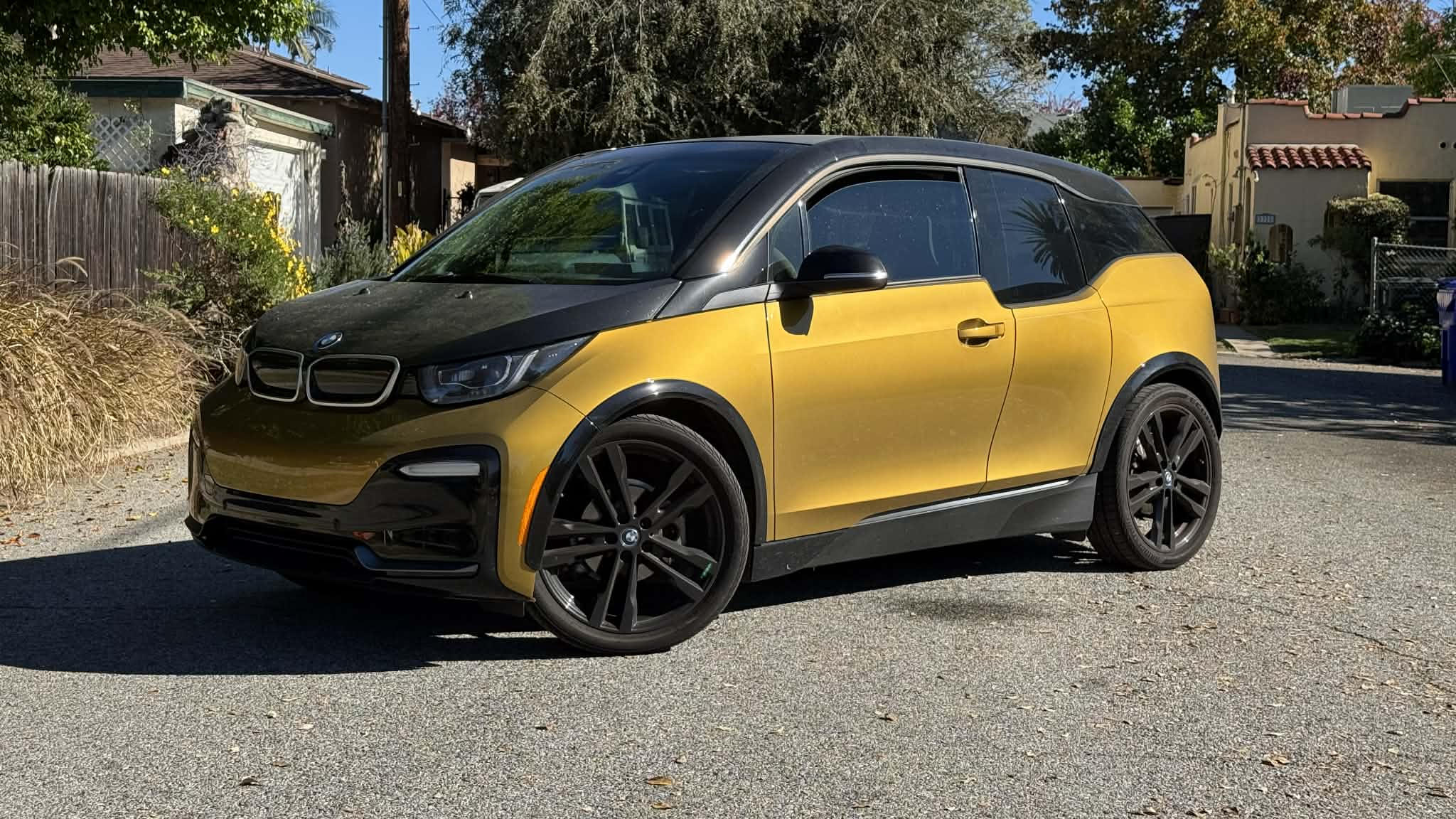
As the proud owner of the only pure EREV ever sold in the U.S. — the BMW i3 — even I have to admit that the i3 wasn’t the best use of EREV technology. First, the best use of a small gasoline backup generator is in a large vehicle that would otherwise require a huge battery to offer the range customers want. The i3 is small, so the cost savings of offering a gas generator instead of extra battery capacity isn’t exactly monumental. Second, nobody wants a small $55,000 German hatchback.


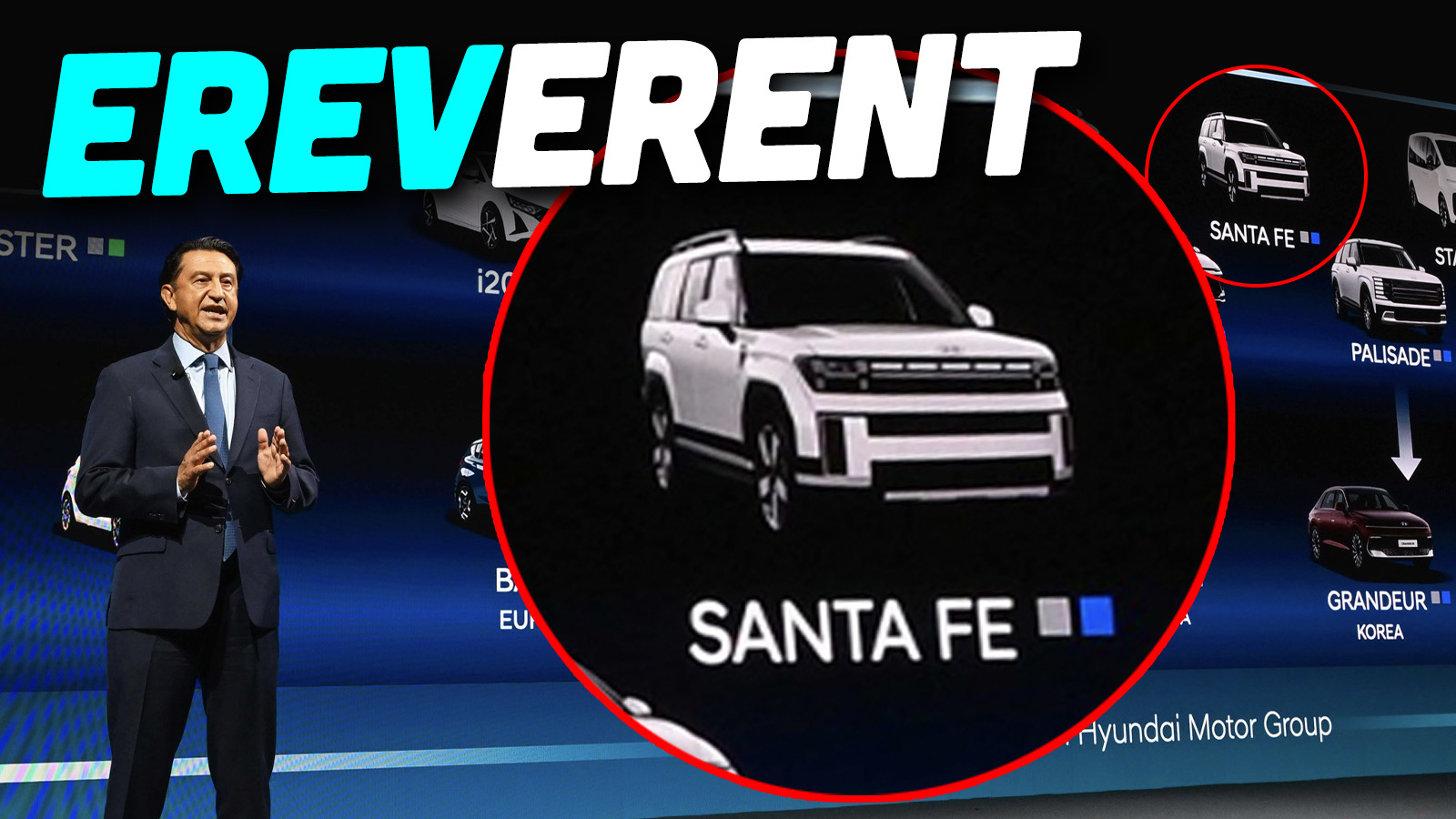
What Americans do want is SUVs and trucks, which require more energy to go down the road and thus huge batteries to offer decent electric range. It’s for this reason that I’m delighted that Hyundai just announced an electric Santa Fe SUV with a gasoline backup generator. And it’s coming soon! From Hyundai’s Investor Day press release:
Hyundai Motor will launch or refresh over 100 models by 2030, including its first extended-range electric-vehicle (EREV) that combines the power and efficiency of a battery EV and the convenience of an onboard charger.
The new Santa Fe EREV will arrive in the first half of 2027, representing an uncompromising approach to electrification. The Santa Fe EREV is expected to deliver more than 600 miles of total range, combining an EV-like daily driving experience while addressing range and charging anxiety for customers. The vehicle will be built in the United States at Hyundai Motor Manufacturing Alabama.

Back at the 2024 Los Angeles Auto Show, I heard CEO José Muñoz tell an audience that EREVs are coming. “EREVs have the potential to lower cost and increase driving range,” he said. The idea is that, instead of carrying around an extra 1,000 pounds and $10,000 of battery capacity — like most people who drive 300+ mile electric cars do — an automaker can replace those superfluous battery modules that drivers rarely use on a day-to-day basis with a cheaper, smaller, lighter weight gas generator. The result is that, instead of a 300 mile EV that weighs three tons and costs $60,000, an automaker might be able to offer a lighter, cheaper, 600 mile EREV with 100 miles of electric-only range — more than enough for daily commutes.
Especially for people who can charge at home (the only people I recommend buying an electric car, anyway), this is a way to drive electric 99% of your trips (i.e. your commutes), while not having to worry about forgetting to charge, finding chargers along your route on road trips, long lines at the chargers, etc. (yes, these will seem to BEV proponents like silly edge cases, but I’ll get to that in a sec). And what’s more, it ideally offers significant weight and cost savings. I’ve written all about the advantages of EREVs in my story The Future Of The Auto Industry Is Electric, With A Gasoline Backup, but here are some of the most important bits:
When batteries are as expensive and heavy as they are today, it just doesn’t make sense in all segments of the industry to use them for edge cases (a major battery improvement/price changes many elements of this whole article, of course). And those edge cases include your family’s annual road trip to Wally World, as well as your bi-annual boat-tow excursion. For those edge cases, it’s logical to save cost and weight and slap in a small range extender, especially while infrastructure remains suboptimal.
I think the “fully EV or nothing” crowd needs to relax and acknowledge that we’re all in this climate change fight together, and EREVs offer a humongous potential to reduce emissions in a way that even BEVs can’t, primarily because EREVs can likely convert more folks over from gas-guzzlers, but also because if the range extenders aren’t used much EREVs can actually be cleaner than BEVs due to their need for fewer battery resources. The marketing thing will also be tricky, and I’m hoping companies like Ram decide to price EREVs lower than BEVs. Carl Lally from Ram said the company is wondering if it should charge more for the Ramcharger than the all-electric Range due to the added utility of the former, or if it should charge less. I’m hoping that — due to EREVs’ theoretical ability to cost the manufacturer less to build than a high-range BEV — some of that savings will go to the consumer. And by golly I hope the Ramcharger reliable, because all eyes are on this truck. It won’t be as reliable as an EV, but a rarely-used gas engine initially developed for prolongued use humming along powering only a generator shouldn’t be that hard to make robust.
(It’s also worth noting that EREV is the only clean way to share a BEV platform with a gasoline alternative. This allows an automaker to hedge bets, as Scout has done; this is important given the shifting geopolitical climate; again, this is all in the article linked above).
I’ve driven some of the greatest electric cars in the world. Teslas, Lucids, Rivians, Hyundais, and various Chinese cars. They are amazing, and in a world where people were 100% rational with their car purchases, BEVs would dominate and there would be no need for EREVs. But such a world does not exist and has never existed, as I mentioned in my article:
Far too many journalists say things like “People don’t need as much range as they think; they should just drive low-range EVs.” As an engineer, I totally support that. But the reality is that the average consumer’s range-lust is not the problem — in business, the consumer can never be seen as a problem, and in fact, people’s thirst for high-range even though they likely don’t need it is fairly typical consumer behavior.
Consumers have historically purchased cars for what they are capable of, regardless of how consumers actually use those vehicles. How many Ford F-150 owners need to be able to frequently tow 10,000 pounds? How many Porsche owners need the ability to snap off an insanely quick Nürburgring time? How many Jeep Wrangler owners need to be able to make it through the Rubicon Trail? Very few, but consumers buy cars based on the thought: “But if I wanted to, I could.” This is normal. This is capitalism.
The issue is that, anytime you’re using something for only a small fraction of its capability, it leads to compromise. The Wrangler rides like crap, the F-150 is a beast to drive around town, and a Porsche 911 can barely fit a pair of golf clubs, and none of those are particularly efficient. But compared to these examples, a typical 350-mile electric vehicle (especially a large one) driven by someone who really only needs 50 miles daily yields way, way worse compromises. That consumer has to carry around an extra 1,500 pounds, and they might have to pay an extra $10+ grand, all for a capability they rarely use. It’s a hideous compromise, and it’s just not worth it to many Americans. EREVs have the potential to mitigate this.
I daily drive a BMW i3S REX (BMW used “REX” as “range extender”); I plug it in, charge it to about 135 miles of electric range, and on the extremely rare occasion that that runs out on a road trip or I forget to plug in, my gas engine fires up, charges my battery, and lets me continue on. My i3 experience has me convinced that EREV technology is deeply compelling and will win over many Americans if the carmakers can get the execution right. Just look at the Scout brand; when it showed off its new SUV, the vast majority of the reservations were for the EREV variant and not the BEV.

But getting the execution is no small task. The marketing side of things will be tough, as EREV is jargony and confusing. And then there’s the pricing/battery capacity; I don’t think 60 miles of electric only range is enough. 100-120ish should be perfect, but on a smaller, slipperier SUV there may not be lots of a cost delta between the batteries needed to offer 200 miles more range and a gas powertrain and all the ancillaries that come with it. Still, even if it costs the same as an equivalent 300 mi BEV, I still think an EREV has more market potential given what we’re seeing in the BEV space (again, see Scout preorders), though it all depends on the particular product. Still, pricing has to be somewhat reasonable, and automakers have got to convince folks to pay extra over a gas car for the added performance, reliability, and running cost savings.
It’s tricky for automakers to get this right, but as a nerd who lives the EREV thing daily, I find it to be an excellent solution for getting more imperfect, irrational humans daily-driving electric.




This article completely ignores two very, very important caveats with ERVs:
We cannot keep catering to low-information consumers who think they need way more range than they do and hallucinate major issues of BEVs because they fall for oil-company propaganda.
Unfortunately, the current administration is very anti-EV, but what we really need are policies that dramatically disincentivize ICE engines to push consumers into getting a BEV. Then, once they realize all their fears are unsubstantiated and the range is more than enough, widespread adoption will increase.
The OG Chevy Volt doesn’t even get a shout-out?
Technically, that was not an EREV because in some very specific circumstances (above 70 MPH with the battery at a low SoC), the ICE could actually drive the wheels.
However probably 99% of the time, it did function as an EREV, and frankly I consider it an EREV for all practical purposes.
As I’ve said before PHEV is a far better option that a range extender that can only provide series operation. The point of having that ICE is for road trips and most road trips include a lot of higher speeds where series operation is simply less efficient.
Once you get past that 40-50 mi of range we are talking about excess capacity just for those edge cases which means paying for and dragging around twice the battery needed for daily operation. Sure it is great if you are one of the few that do have a 100mi daily commute, but otherwise it is just a waste for the majority of people who have something closer to the average commute of under 40 mi.
It also means that you are paying for and dragging around a larger starter/generator and traction motor. Sure having that big electric traction motor means it can “accelerate like an EV” but it is simply not needed for everyday driving.
Shoehorning a range extender into an EV is just throwing good money after bad.
Typically, adding parallel hybrid operation doesn’t come without a cost. The main cost is packaging flexibility, which is more compelling for me, but there are also some driveline losses typical to a planetary style series/parallel setup that reduce the miles/kWh efficiency while driving on electric alone. Depending on how many miles you drive in full-electric vs hybrid, those losses in electric-only mode may actually cancel out the gains from using parallel operation in hybrid mode.
As for battery size, I have a very short commute that could easily be done with a 40 mile range, but I also do a lot of trips on the weekends to camp, mountain bike, kayak, etc that are within a 100-120 mile range round trip or 80-100 miles with an overnight stop where I could charge via L1 or L2. Then a few times a year I’m doing much longer trips of 300-500 miles.
So with a PHEV, my daily miles are all electric, but half my weekend miles need the gas engine, and most of the long trips rely on gas. That could result in ~50% of my miles on gas.
With a 120 mile range, I would only need the gas generator on long trips, and suddenly 90% of my miles are electric.
There’s an argument that I should just suck it up and buy a BEV and charge twice a year, but part of the reason I prefer the EREV is that I wouldn’t have to pay for the 200 miles of extra battery range and lug it around all year, and those battery minerals could be split up into two other EREVs.
A 120 mile range PHEV with parallel capability could also do that, but again, that comes with some packaging and efficiency tradeoffs and I’m interested in whether those can be addressed to optimize for my use case with a series-only EREV.
The packaging and EV efficiency tradeoffs you mentioned tend to be fairly irrelevant in the real world. Other than the Scouts and the old i3, there isn’t a single passenger vehicle EREV that I know of (including the entire Chinese market) that actually uses an EREV’s theoretical packaging flexibility to position the engine any differently than normal, other than the Yangwang U7 and maaayyybe the BYD Shark but that’s very debatable. Nearly every single EREV I’ve seen out of China uses a transverse front engine layout, and a large portion of them even put the generator motor and front drive motor in the same casing, just like a series-parallel hybrid PHEV but without the gears!
On top of that, PHEVs tend to be more efficient on the low speed CLTC cycle (which stresses drivetrain efficiency more than aero) than EREVs in EV mode. This is likely caused in part by their need for larger traction motors for the same peak power output, EREV makers cheaping out on components because of said larger motor and the generator motor not contributing, and often worse aerodynamics even if it’s not a huge factor.
Especially given EV components are still expensive in the west, high range EREVs are going to end up costing the same or even more to produce than pure BEVs.
The packaging efficiency just isn’t there. Making components larger requires more room dedicated to the power train leaving less for passenger/cargo space. Look at the Scout and Ramcharger that we may eventually see get to market. For the Scout they are stuffing a small 4cyl under the back forcing the spare tire to the back of the vehicle. In the Terra that is a huge minus for the way most people use their utility vehicles. People really like being able to just push a button from the driver’s seat so the kids can throw their dirty/stinky sports gear or the drive up groceries in the back. In the Ramcharger the engine is going right where it would be in a conventional truck loosing one of the best tricks of EV pickups and provides no more useable interior cargo room than a traditional truck or what a PHEV would.
Yes there are some losses from spinning that starter/gen, planetary gear set and the associated bearings. It isn’t that high though. If it was really worth it Toyota and Ford could add a clutch to disconnect they planetary gear set and starter/gen but they don’t believe it is worth it. Yes that would be another thing that could fail, but should be pretty reliable since they can match rpms before engagement virtually eliminating wear. Or Honda could stick a big battery in one of their hybrids which already has a clutch to switch between series operation to direct drive or parallel operation. That was what their current hybrid architecture was designed for, the short lived Accord PHEV CA compliance car. The clutch is there to increase fuel efficiency.
Yes your use case makes a good argument for an EV even something with only 200 mi or so as charging infrastructure continues to increase. Still you are lugging around more battery than you will use the majority of the time.
On top of that, those drivetrain losses really start to add up when you start towing, so you’d need additional cooling compared to a PHEV. EREVs are great for startups amd small automakers who can’t competently design transmissions or need to retrofit an ICE into an EV in a rush (both often true in China), not established legacy autos with long development timelines and decades of transmission engineering experience.
An EREV is currently the only potential single-vehicle solution that could work for me and still be mostly EV. A PHEV would also be fine, but is going be in non-EV mode a lot more.
In reality though, I have 10 cars, so there will never be a point where there is a true single-vehicle solution for me, maybe just 1 practical car instead of 2.
Late on this, and I hate to pour cold water on the EREV concept (as I understand it’s Goldilocks-style appeal) but there’s a serious issue that has not been addressed here, that no automaker has actually addressed…
What is the goddamn price going to be??????
I just don’t have a tremendous amount of faith that any EREV, including this Santa Fe, is going to be available at a price that most people are willing to pay, that will result in the sorts of margins that automakers desire. I’m willing to be proven wrong, but until I see an EREV of a normal-ass vehicle sold for normal-ass prices, I just don’t see a tremendous amount of these finding homes.
In China, where EV parts are cheap and BEVs must spend extra to compete in charging speed wars while EREVs can use commodity cells and power electronics, EREVs tend to cost at most 10% less than the BEV versions of the same model. In the US, power electronics and motors cost more, and EREVs are likely to use similar battery cells. I think they’ll end up being quite expensive here, and will be forced into using relatively small battery packs to compensate. It doesn’t help that small LFP cells aren’t very prevalent outside of China yet.
I consider myself a good fit for an EREV; I can charge at home, my commute is 15 miles each way, and I can charge at work (funny thing, when I commute by bike the mileage is just 13.2). I’m ready for an affordable car that can run off the battery 95% of the time and probably only activate the generator on road trips, maybe not even then. I might even look into a used i3 REX if I could find one in good condition.
Sounds like you are the perfect use case for a PHEV, not an REEV. Your 30 mi daily range can be handled by a vehicle with 40-50 mi of EV range so you are not lugging around twice the battery that you’ll actually use regularly. It also means that when you do call on the engine your fuel economy will be worse than it would in a good PHEV.
I drive an EREV every day (Denza B8). It’s the 600HP mongrel offspring of a Landcruiser, Tesla and Range Rover drunken threesome…
But the weight… It’s almost 7,500lbs, and that somewhat impacts efficiency. EV mode uses about 30kwh/100kms – double a Model Y.
Make no mistake – Chinese EREVs are incredible, but there’s no free ride. There’s always a compromise, and it’s only the best choice for a very fine slice of the market…
On my soap box, again. Sprinter-scale EREV ! ! ! Come on, build one, someone, anyone, and the camper conversion folks will throw money at you. I would daily it around town, get to where I’m going for a camping trip, however far it is in that day, bookdock it with all the power needed through the HV battery with gas backup. No extra generator needed with all of its separate maintenance that folks tend to forget to do.
If this ends up being a flop, will this website move on and admit EREVs aren’t what consumers want?
After all, this will be a perfect test case. Hyundai makes well reviewed and popular hybrids, plug-ins, and BEVs. If the EREV doesn’t impress with market share, you’ll have your answer.
I think EREVs have their place, but they’re for niche edge cases (mostly towing). These edge cases are getting edgier by the day with battery chemistry/density improvements.
I disagree. I think E-REVs are a much more accessible way for the average american driver to go “EV” for perhaps 90% of their drives because it gives you all the advantages of going electric without the pain of dealing with expensive dedicated level-2 charging or the hassle of dealing with level-3 charging/apps/bs on the road.
My only issue with the new Hyundai is they’re rolling it out on a large SUV. I get it as it’s sure to be a money maker for them, but a smaller EREV suv, trucklet, or sedan still gives you ALL the advantages of an E-REV and could probably get by with a smaller ICE generator, electric motors, and smaller battery. Maybe they’ve got more in the pipeline yet to be announced. Maybe Kia?
PS. IF (and it’s a BIG IF) you have level-2 (240v) charging options at home, then a pure EV can work as long as you’re okay with the possible hassles of road tripping and dealing with level-3 fast charging. Without a level-2 charger, having JUST an EV at home is less than optimum.. at least for now in this messed up country.
The large SUV space is ripe for electrification, going from 22-24 mpg to mostly electric is a bigger saving than 30ish mpg to EV.
From some light research it seems there is only 1 seven seater EV SUV, more are needed.
Nope. You have:
I may be forgetting a few. The Hyundai Ioniq 9 and Kia EV9 are freaking incredible with their 800v architecture and reasonable price too. There is literally no reason for almost anyone to choose an ICE/Hybrid over one of those.
Hah I got a good laugh out of the Cadillac Visdiq.
The Hyundai /Kia was definitely the one I was looking at, Tesla and ID buzz were out but I will admit I didn’t even think of Cadillac, Thanks for the list.
Idk what GM was thinking with that name lol.
I think rationally, all your points make sense. I just don’t think the average consumer will care about the subtleties between an EREV and a Plug-In Hybrid.
As long as the plug-in has all the power they need for their commute, the distinction with an EREV is really blurry unless you really care, like we do.
What makes me think EREVs won’t gain significant market share is that plug-ins haven’t. To a regular consumer, the nuance will be lost, and the value argument will be the same.
I think in the mind of the average consumer, if you’re going to be plugging in a car every day anyway, might as well make it a full BEV. Even on a 120v outlet, your range anxiety example seems like an edge case.
The only way an EREV is more “accessible” is if it’s priced the same or lower than an equivalent BEV. Given where BEVs are and where they’re headed, the window of relevance for any plug-in (Hybrid or EREV) is shrinking fast.
I’m with you on the displaced emissions of course – but that’s a non issue with BEV.
In my experience, once you get an EV or a PHEV and plug it in every night, you really, really, really don’t want to go to a gas station again if you can avoid it.
Having 100 miles of range, easy 120v charging as a viable option + no range anxiety seems like the best way to get people moving to EVs. It really all comes down to if they have access to a nightly 120v circuit. Without home charging I have a hard time recommending any PHEV, EREV or EV.
My daughter went from her 23 Bolt EV which she absolutely loved to a 25 Escape PHEV when she moved out. At home we have level-2 32 amp charging. Where she lives now, her rental has only a 120v outdoor plug. The PHEV Escape works very good for her as she usually drives about 40 miles a day (kid’s school /. work / kid’s school). The only thing that would make it perfect is if the Escape was an E_REV with 100 miles of range and full power all the time instead of 1/2 power when in electric-only mode PHEV. A tank of gas could last her months if all she does is commute..
Once you get an EV it’s the first time you drive past your favorite (old) gas station. That’s when you have the EV owner epiphany; EVs > ICE for most daily drivers.
P.S. I’m very pro-EV / EREV / PHEV for sure, but they’ll always be at least one ICE Miata with a stick waiting in my stable here. Make the hole big enough and you can put me in behind the wheel and bury me with my automobile.
In practical terms, an EREV is a BEV with extra steps. You have to plug it in AND go to the gas station. It’s electric but you still have to do some ICE maintenance. And if you end up driving in electric mode all the time, you probably have to drain your tank once a year to get rid of the skunked gas. I don’t know the % of drivers who’ve ever done that, but I suspect it’s near 0.
My needs are covered by either ICE or BEV, so I’m not a good target customers for EREV, but I don’t see them being a big seller given how little the average driver wants to deal with car maintenance.
Yes! This site is obsessed with EREVs when the rest of the world has moved on. They made sense 10 years ago when batteries were very expensive, but now it’s possible to produce a long-range BEV for the same price of less than a comparable ICE vehicle.
Im mixed with erev and go back and forth. The Chinese having these 1200mi range erev I don’t see the point of that. 400 mi is more then enough for most people. The horse system seems like a decent one with a small engine mounted on the rear axle. Just like many of the phev I can see many people almost never using the engine. So you have that weight maintenance and complexity for nothing. I still think erev will do well in the US. Because to the what if people.
Even flash charging, a few minute charge is great but you are probably going to stop to use the restroom and maybe grab a snack. With EVs we are still trying to figure out dwell time. It’s literally going to be cultural. The Europeans will have the longest the Chinese the shortest. The us will probably be somewhere in-between.
The casual local gas station for most people won’t be a thing with ev or erev. What people need to realize is dcfc is your travel stop it’s like buckees or a ta or apple green / toll plaza. You are probably going to spend 15 to 30 minutes at least. What could be interesting is small city cars. Even with the current infrastructure they could fast charge very quickly with their small lfp pack.
Who needs that much range, besides a semi driver?
That Ram, though, seems perfect for someone who sometimes pulls an RV but otherwise drives locally. So, 2% of the nation.
We can drive around town for several days on our 50 mile EV range Rav4 Plug-in, yet when we need to drive to my grandkid 700 miles away a few times a year, the gas allow that to be done in one day. It would stretch to two days in a fully EV vehicle.
It would not stretch to two days. 970 miles fully EV added maybe 2 hours to the day’s driving compared to gas.
Adding 2 to 13 hours drive time makes it just too much without a full overnight stop for my spouse. I have done 13 hours solo, not sure I should do 15 for safety reasons.
Living in the mountain West, we make at least 5 trips a year that are over 400 miles one way. Add towing to that and no BEV on the market makes sense. Even when not towing we are often in far out places where it’s not impossible to charge, just more of a pain. We don’t need 600+ miles of range, but when towing it sure is nice knowing that a trip to Moab isn’t going to require a stop along the way and another stop immediately upon arrival to get fuel/electrons. In most diesel trucks the trip can be done without a fuel stop and even enough fuel for the adventures the next day brings.
I’d suspect far less than 2% of the nation ever tows anything.
You are more accurate.
I looked up number of households with RVs, but that probably includes those with motors and a driver, as opposed to fifth-wheels. 600K families with fifth-wheels, out of 82M families. It is less than 1%.
I’m going to laugh really hard if everyone skipped over PHEV/EREVs, and now just as EV infrastructure gets good enough to support road tripping your average 300 mile EV, we get buried in EREVs. I’ll be happy if they exist, but it feels like we’re doing all of this out of order.
Depends on where you live. I agree that interstate charging is FINALLY getting practical on the major byways, but there’s still a lot of luck in finding a level-3 charge station where and when you need it that’s open, working, and not a rip-off. More of an issue in the deep south I think.
Regardless, it looks like the best pricing (requiring an app and a f*#$ing subscription!) for interstate-adjacent level-3 charging is just about par with driving with gas, eliminating most of the operating cost advantage of driving electric on long trips.
An erev eliminates all that charge/range anxiety and offers displaced emission / glorious instant torque EV driving maybe 90% of the time for most users. It also can be used with simple 120v level-1 home/work charging with less desire for a level-2 + it can be a good all-around ‘only’ car that’s suitable for both city and highway travel.
If I could only have ONE vehicle, it would be a proper E-REV. Maybe a Fathom/Maverick trucklet with a range extender, or a mini-van, though if Mazda brought the E-VISION e-rev with the flying Dorito range extender to market I’d be first in line screaming “Shut up and take my money!”
Image below:
https://cdn.motor1.com/images/mgl/r07EY/s3/mazda-vision-coupe-concept.webp
Yeah, in the midwest I’ve been pleasantly surprised by how many charging stations are popping up. I’ve mapped some of the common road trips I do in my hybrid and they’re easy to do in an EV now, contrary to how it was 5 years ago (when we should have been all-in on EREVs). It’s definitely still not for everyone, especially if you don’t have home charging (although neither is a plug-in hybrid in that case), but it’s getting a lot closer to being viable for the same type of people who would buy one of these.
Exactly!
My i3 does 140 miles electric and has a backup generator. It’s the only car I need.
Yet you also have a Lexus in the family. Which is the reality of most families – one car for each adult. A single person might need one car that does everything but most households don’t.
Absolutely this has been out of order. Manufacturers should have listened to their main customer base and not politicians pushing an agenda. Most average drivers are completely on board with hybrids and were very vocal about not being ready for full EV. If we had started there, we’d be much farther along and would have saved more fuel in the process.
600 miles of total range? 100 on battery, 20 gallons at 25 mpg?
I wonder. That sounds like a large tank for the size of the vehicle, with an engine, a battery plus two motors, but possible. As some comparison the Santa Fe hybrid and non-hybrid have a 17.7 gallon tank, and a gas pig 4 door Wrangler JL has a 21.5 g tank.
My Volvo S60 Recharge averages about 30mpg when running on just gas, and that’s a 300+hp boosted 2.0L
My Honda Clarity PHEV gets over 50mpg on gas alone.
The fuel economy for an EREV should be pretty good, as the load should be constant and pretty light.
It’s a range extender, so it would depend on the size and efficiency of the engine they are using to drive the generator.
Is the expected use case for these on a road trip to both fill up the gas tank and to charge the battery? I don’t know that people would really tolerate having to make that decision stop to stop no matter how simple of a task it would be. I would expect people would want to do their highway driving using gas and city driving on electric, but a fully depleted EREV would not be able to run very well on just gas with no charging on a road trip. Presuming the ideal use case of using an EREV to tow a trailer, fueling either gas or electric can be a pain. Asking end users to do *both* sounds like asking them to cut their nose to spite their face.
That depends on the programing. In the past to get a CARB ZEV credit a PHEV had to fully deplete the battery before switching the gas. That is how David’s BMW was set up for the USA.
Today that is no longer the case so manufacturers are allowed to give buyers options. Use 100% of the battery, use none of the battery, or hold back some sort of reserve. I would think even with the option to deplete the battery the manufacturer would still hold back a buffer that would allow the vehicle to operate as a hybrid with a blend of gas and battery power.
That’s funny. I always thought that EREVs were the compromise of electrification. Not saying it’s bad. They’ll sell a crap ton of these things, for sure.
EREVs are a slight technical compromise. BEVs are a significant usability compromise (in the eyes of many).
Yeah, I understood what they were going for, but it was a funny way to phrase it, I thought. I think they really meant that H/K was being uncompromising in that everything is getting some electrification, but again, funny use of the language.
I’m not seeing any specs anywhere yet – is that correct? Unless and until we have those I’m hedging my expectation bets and assuming this will be a warmed over PHEV with about 50 miles EV range and a bigger gas tank so it can go *gasp* 600 miles on a tank. I hope I’m wrong!
Except since it’s a series hybrid so the gas mileage will be a bit worse
Yes! Finally. I just hope we see more EREVs with smaller footprints. Not everyone needs a largeish SUV.
I agree 100 miles is a sweet spot, And since it’s an EV with a range extender, unlike PHEVs, EREVs have ALL the power, ALL the torque , ALL the time; where PHEVs have limited (1/2?) power when in electric-only mode.
Since most commutes are less than 40 miles round trip, assuming you get 3.5 miles / kWh (4+ would be better, but it’s a large vehicle), and all you have is a 120v (level-1 in EV-speak) charge cable on a nearby common 15 amp outlet, that’s about 1.2kw on tap. So… come home and plug in for at least 10 hours (8 pm to 6 am?) gets you 12kWh in the battery, which will add 42 miles every night (more if you keep it plugged in longer of course). Level-2 (240v) charging will be 4x-6x quicker, but who cares if you’re sleeping? No need for expensive level -3 DC charging in an E-REV since the battery won’t be that large anyway and you’ve the ICE generator for long distance travel. That’s a big money savery too.
In other words, EREVs are an excellent way to go EV, even if you only have a 120v outlet available, and you avoid any range anxiety / charge anxiety that you might have dealing with a pure EV. IF you can only have ONE vehicle in the stable, an EREV can be a great option (look for that open 120v outlet!).
I’d wager something closer to 3.0 miles/kWh is more realistic for this vehicle. That’s roughly what the slightly larger Ioniq 9 gets.
The very same math has been done many times to demonstrate that level 1 charge is sufficient for most people if they charge every night, for full on BEVs.
Maybe. A bigger factor is the commute route. If it’s on city streets with lots of stop and go, the miles/kWh will be greater. Get on the interstate and get to work doing 75 mph and it’s going to drop a lot.
Also no idea if this will have a heat pump or resistive heating. Regardless expect a hit in the winter too.
Still, at 3 miles/kWh and 12 hours of charging (6pm to 6am) that’s 43.2 miles added every night with just a 120v outlet.
I think an EREV would be wise to heat using the gas motor considering that engines make so much heat so easily. Gas is better as a heat generator than an electricity generator.
Maybe but you’d still want electric heat for in-city driving. Having to run the ICE to get cabin heat sort of defeats the purpose of an EREV.
f course it’s mainly just adding a heating coil and perhaps a diverting valve into the HVAC system, so having the ability to do both electric and ICE heat could probably make sense.
I think Hyundai has been using heat pumps in its EVs for a while. It would be a step back to go resistive for this one.
They likely will to save costs, as if the extra energy it uses to heat the cabin makes you run out of range, you can use the engine. EREVs are gonna struggle to not cost more than BEVs, so the cost cutting is necessary.
Not all of them. On the Ioniq 5, if you get a RWD you don’t get the heatpump. And I don’t think that changed despite upgrades in 2025.
The Santa Fe is a very boxy vehicle based on an ICE platform, so I’d estimate 2.5mi/kWh or worse; the Ioniq 9 should habe far superior aerodynamics. Level 1 charging should still be sufficient for a decent chunk of people, though.
Rivian R2 manages to get 3.2, and that’s higher up though overall smaller. I think 3.0 is a good estimate for this.
“And since it’s an EV with a range extender, unlike PHEVs, EREVs have ALL the power, ALL the torque , ALL the time; where PHEVs have limited (1/2?) power when in electric-only mode.”
This is a common misconception I see about PHEVs vs EREVs. Almost all PHEVs sold in the US to date have been quite EV-light and ICE-heavy since they’re almost always ICE or HEV conversions with ICE transmissions. This is because EV components used to cost a lot, and are still not super cheap yet, so the motors went underspecced. However, with a Dedicated Hybrid Transmission (DHT) and newer higher output batteries (basically, a PHEV built from the ground up), PHEVs can actually be faster than EREVs when both have empty batteries. Because the traction and generator motors can drive the wheels along with the engine. Theoretically, Honda’s hybrid system can do this but the HEV battery is too small to output sufficient power. In fact, a common problem seen in EREVs in China is that their 0-60 times drop several seconds when the pack is low; this has since been alleviated with EREV specific battery cells that’ll likely take a decade to arrive here. Batteries are actually kinda bad at outputting high power when while they’re being charged by the engine at low SoC.
My only direct experience is with the 25 escape PHEV. Total hp is 210. Gas hp alone is 155 so the electric motor is about 55hp. Lots of instant torque though, so the little electric motor alone is acceptable for city driving. Not great, but okay. As long as you are reasonably light of foot, it’s easy to go 36-40 miles all electric. Hot an interstate on ramp or a steep hill and the ice will fire up as needed.
Evs and EREVs don’t have that issue.
I actually have a lot of experience with the Escape PHEV too. It’s the slowest PHEV in its class, as it uses the same dinky little 88kW as the regular hybrid, as it’s a low effort conversion job. In comparison, the old RAV4 hybrid also has an 88kW motor but the PHEV is upgraded to 134kW (+40kW rear), the new RAV4 PHEV has 150+40kW, the CR-V has 135kW, and the Outlander has 100+85kW. The Hyundai/Kia Tucson/Sportage twins are also low effort conversions with only 80kW motors, and the Dodge Hornet has that about that amount as well, which is kind of a good indicator of how low effort and cost cut most of the models on sale here are; I’d only consider the Outlander and RAV4 to be serious attempts.
For comparison, old ~2021 versions of the BYD Song had 120-145kW motors paired with a 1.5L making 110hp at most, and it targeted a price class lower than the models sold here, usually found in developing countries. The ’24 version has 160kW, and higher end version has a 270kW motor. A similar cheap Geely model from 2024 has 160-175kW.
There’s few very EREVs in this size class, but the Leapmotor B10 EREV also has a 1.5L engine with a 160kW motor. So with an empty battery the Leapmotor EREV will be about equal to BYD and Geely PHEVs, but with a full battery the PHEVs can choose to be equally fast with the engine off, or turn on the engine to go faster. This may not account for the fact that the PHEVs might be able to clutch in their generator motors to the wheels, which could allow them to be faster in EV mode while using the same or slightly smaller total motors than an EREV; the Zeekr 9X is a particularly ridiculous example of that.
So in conclusion, an actually competent PHEV design should not have power issues in EV mode.
Thanks. Sounds good. Near as I can tell, the Escape PHEV and our Maverick hybrid have the same powertrain (‘cept our Mav is AWD). In the Escape, the battery is much larger compared to the little one in the Mav, and the Escape has the on-board level 1/2 charger, but I think that’s about it. Low effort indeed though it does seem to work (instant electric motor torque can partially offset the low hp rating).
My ideal is still an EREV with a purpose-tuned ICE/generator and a smallish battery for 80-100 miles range. Perhaps the PHEV might have a small efficiency advantage on highway drives compared to an EREV, but if the majority (90%?) of travels are in city I think it’s a small price to pay for the simple all-electric drive and no transmission/eCVT.
That said, I would have purchased our MAV with the PHEV option like the Escape if it would have been offered. Low effort but still viable. (most of our trips are under 30 miles).