

Remember last week – holy crap was that really last week? – I was complaining about some mysterious entropy ray that must have hit my Citroën 2CV, because I had two odd failures pretty much at once: some little bits from my shift linkage returned unexpectedly to their home planet, and then one of the bolts holding my alternator in place snapped in two. I fixed the shift linkage pretty quickly, but the bolt took me a bit longer to source and fix. And now I’m going to tell you about that! Because, I assume, you enjoy hearing about small, mundane auto repairs of funny French cars?
There’s a little bit of a bolt-related mystery here, and a little lesson I learned as well that perhaps you may benefit from, too, so perhaps I won’t be entirely wasting your time. We’ll find out, I suppose!


Okay, just to recap, the root of my problem was that a long bolt that holds my alternator in place – and, relatedly, helps keep tension on the belt that drives it – broke, after what is likely many decades of tireless service:
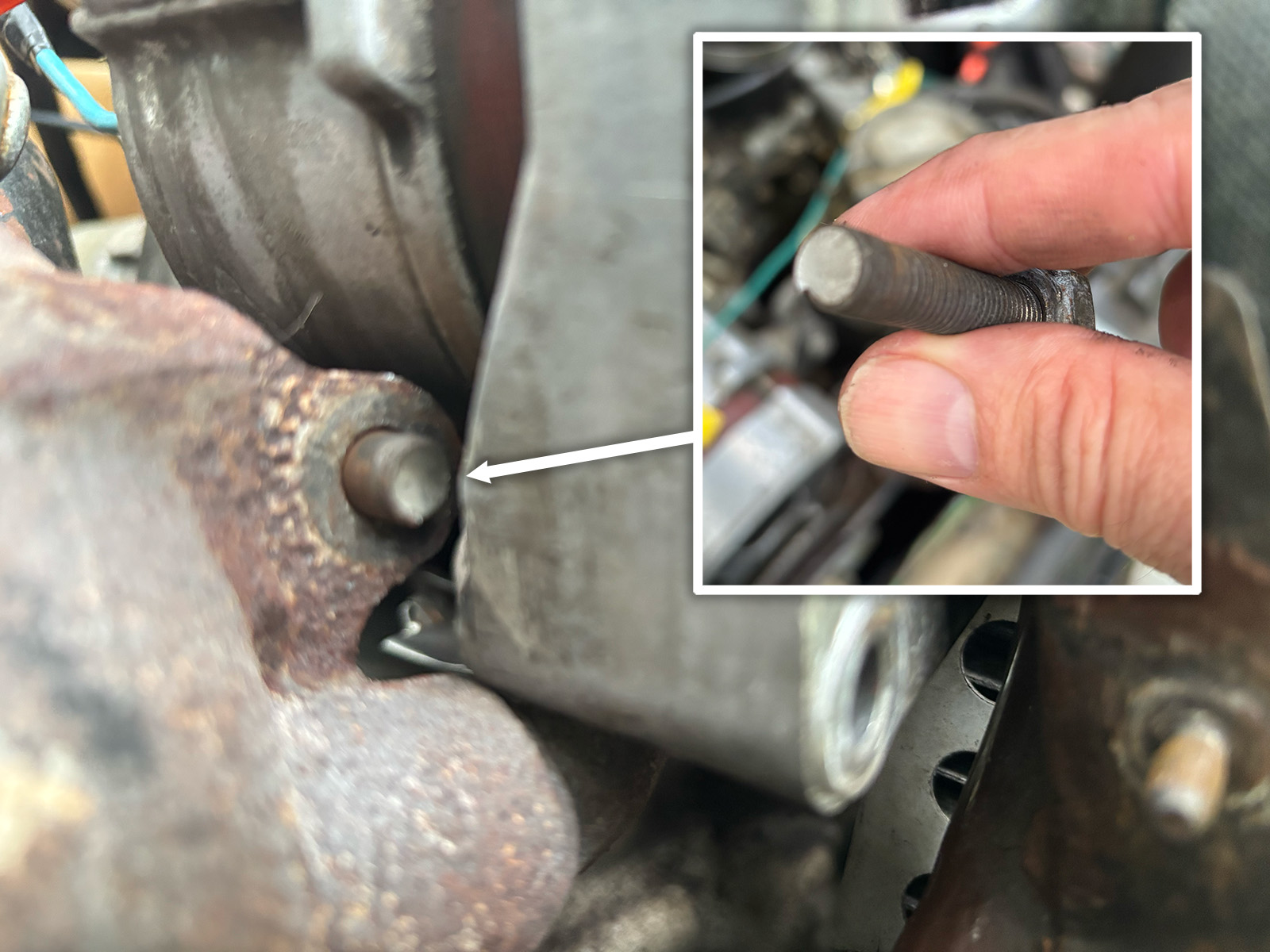
Now, the repair isn’t exactly complicated: I just need to replace that bolt, get the belt back on, adjust the alternator to get the proper belt tension, and there you go. But, as always, there are always some complications.
The first one I found was trying to find a good replacement for that bolt, which proved harder than I would have thought. When I finally found one of the right length, or close enough, I checked that its diameter would fit through the holes by seeing if the original nut would fit.
It did! The thread pitch looked more coarse, but it threaded on just fine, which I took to mean that the bolt itself was the correct diameter to slide through those (unthreaded) holes.
It wasn’t.
I was pretty baffled about this – if the nut fits, that has to mean the diameter of the bolt is correct, right? Why would it not fit if the nut fit? Eventually, I really looked at the bolt and saw why:

Ohhhhhhhhhhh. The bolt increases in diameter after the threaded portion! Why? Just to make me think I was going crazy and the laws of physics didn’t fully apply within the engine compartment of my 2CV? Until I saw where the bolt shank increases in diameter there, I had no clue what the hell was going on. They should put a warning sticker on bolts that do this!
After I figured this out, I went to a hardware store and just got a bolt and nut that would fit close enough; this isn’t exactly a precision thing, it just needs to hold that alternator mount in place.
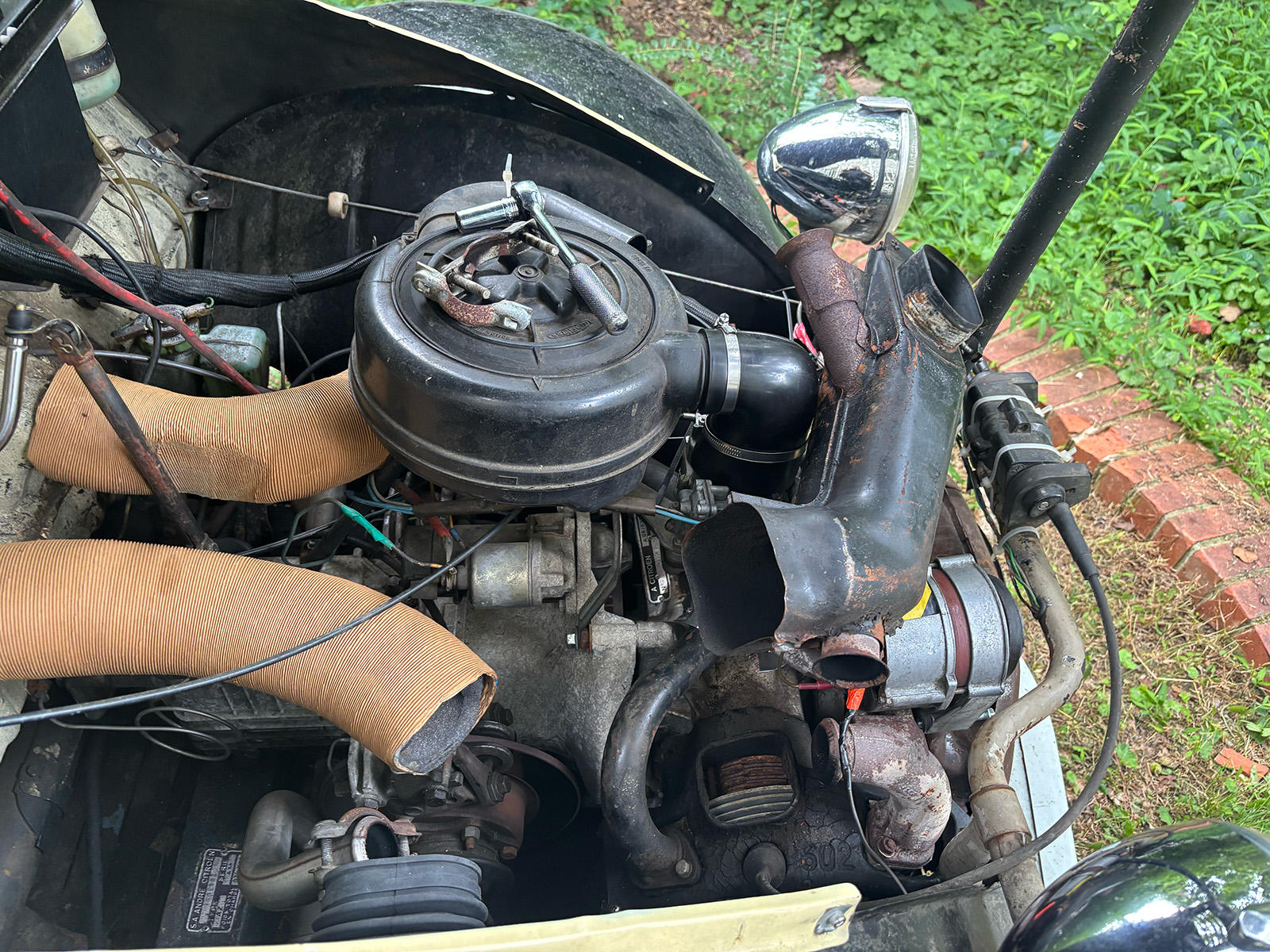
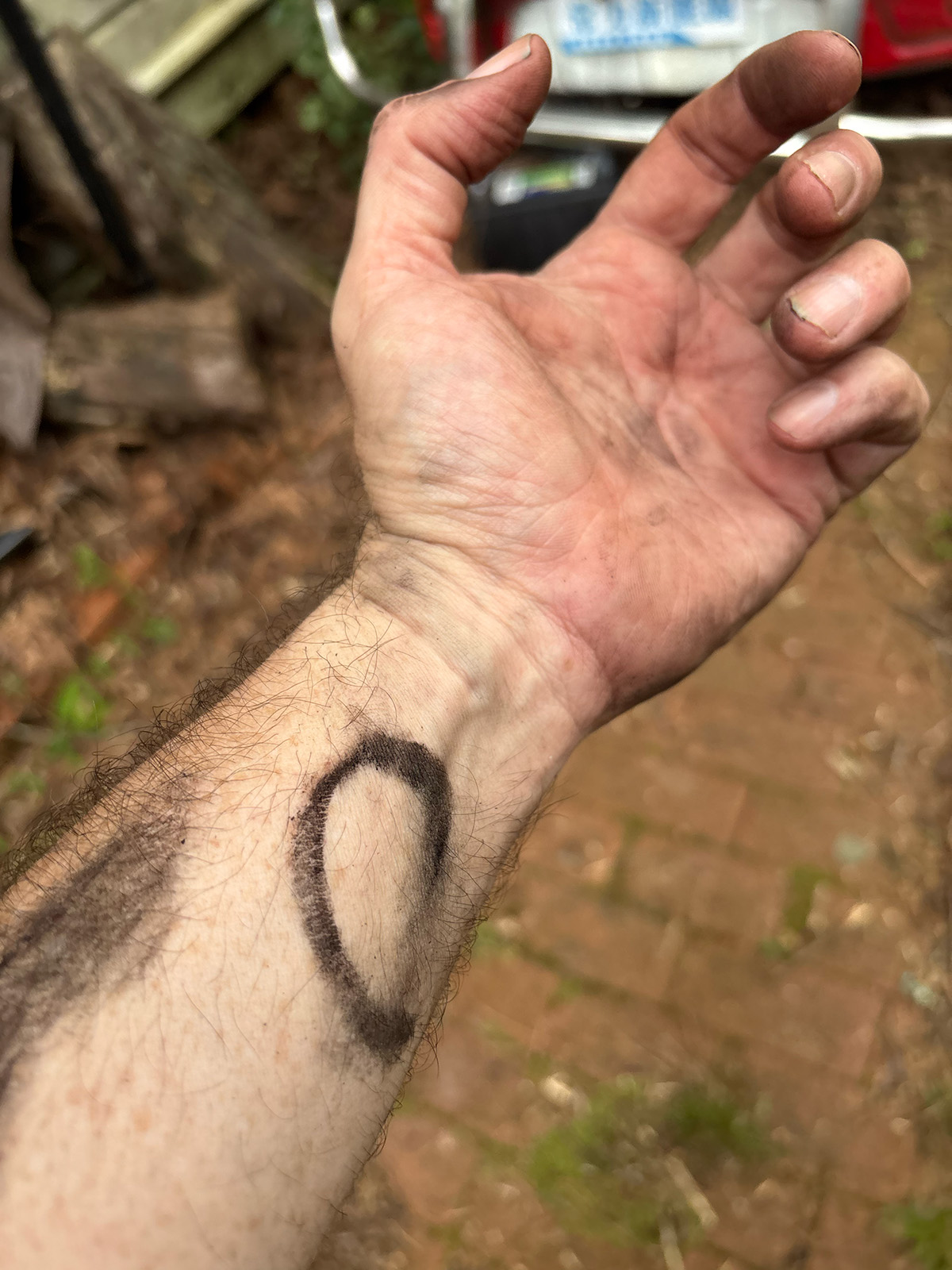
To get the bolt in, I had to remove one of the heat exchangers, which provided two extra perks: first, the process made this fun sooty “brand” on my arm from the exhaust header:
…and second, it gives me a nice thin justification to talk about the 2Cv’s heating system, which is pretty much the same as the one in a VW Beetle, and, really, many air-cooled cars like early Porsche 911s. Here’s how it works:
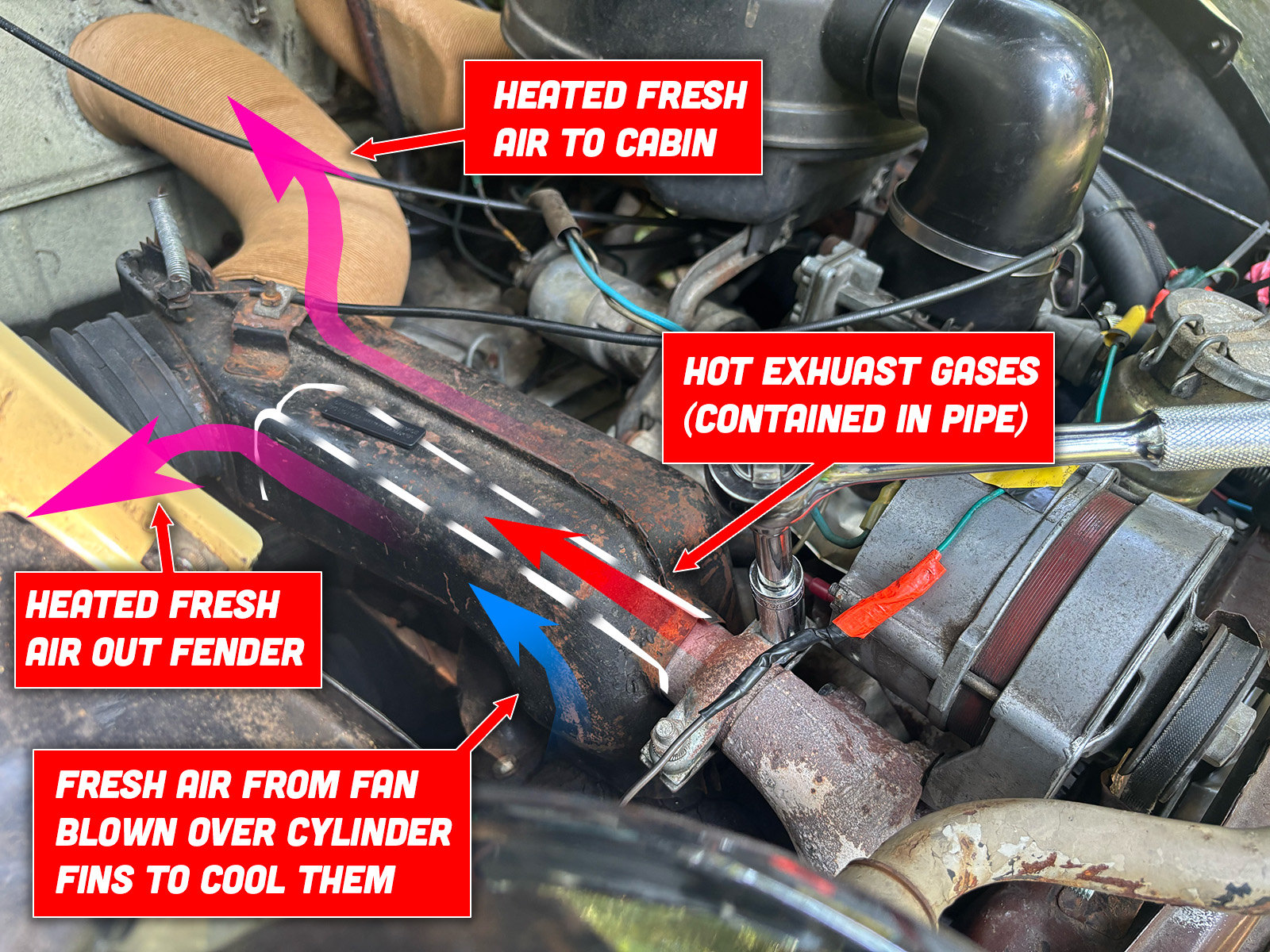
Those black boxy things are heat exchangers, and they’re the core of everything. All they really are is an exhaust pipe enclosed by a secondary outer pipe. The inner pipe has hot exhaust gases in it, while the outer one has fresh air that’s been pulled into the car by the cooling fan. Ideally, these two gases in pipes – outside air and engine exhaust gases – will never mix, otherwise you’re going to get asphyxiated, which I’m told is “bad.”
So, the cooling fan pulls in air from the grille, it passes over the hot fins on the cylinders, taking away the heat, and then flows into the heat exchanger, where the hot central pipe of exhaust gases heats the fresh air even more. The heat is exchanged, you see, from the hot gases in the inner piper to the fresh air in the outer.
Then, if you have the heat turned on, flaps will guide that hot air into the cabin, via floor vents or windshield defroster vents, and if its off, those flaps send the hot air out of these outlets that exit behind the front wheels in the fenders. So, I guess a 2CV kind of has heated tires, too.
The central exhaust pipe in the heat exchangers is just a pipe; on the VW heat exchangers, this pipe has heat radiating fins, which seems more efficient, but then again the Beetle has to pump that hot air all the way to the front of the car, while the 2CV has a much shorter path, so I suspect the resulting heated air temperature is probably pretty similar in both cars.
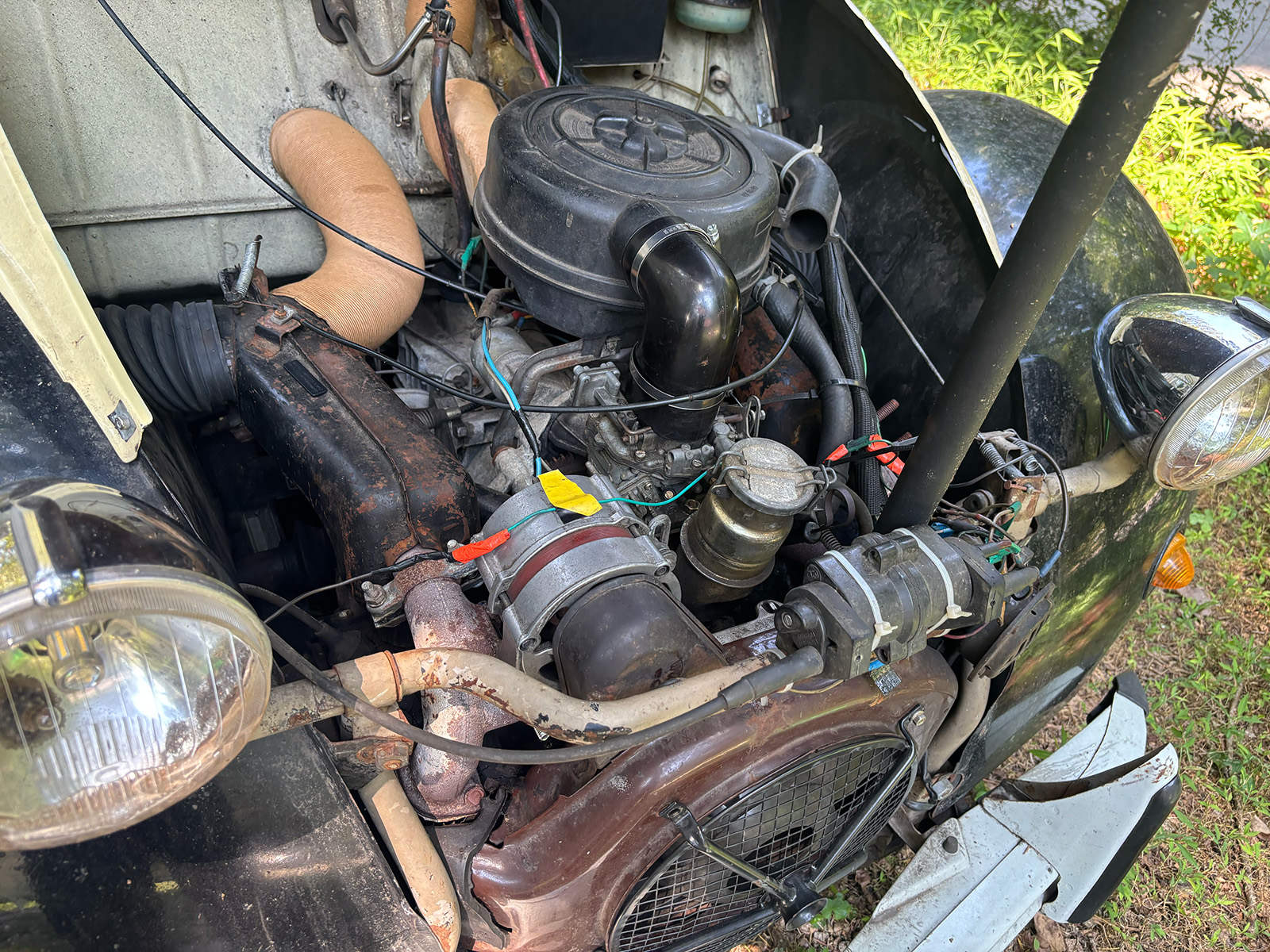
Anyway, after removing the heat exchanger and getting the new bolt in and all nice and tensioned, everything buttoned up nicely. I started the car, and look! The alternator is alternating again!
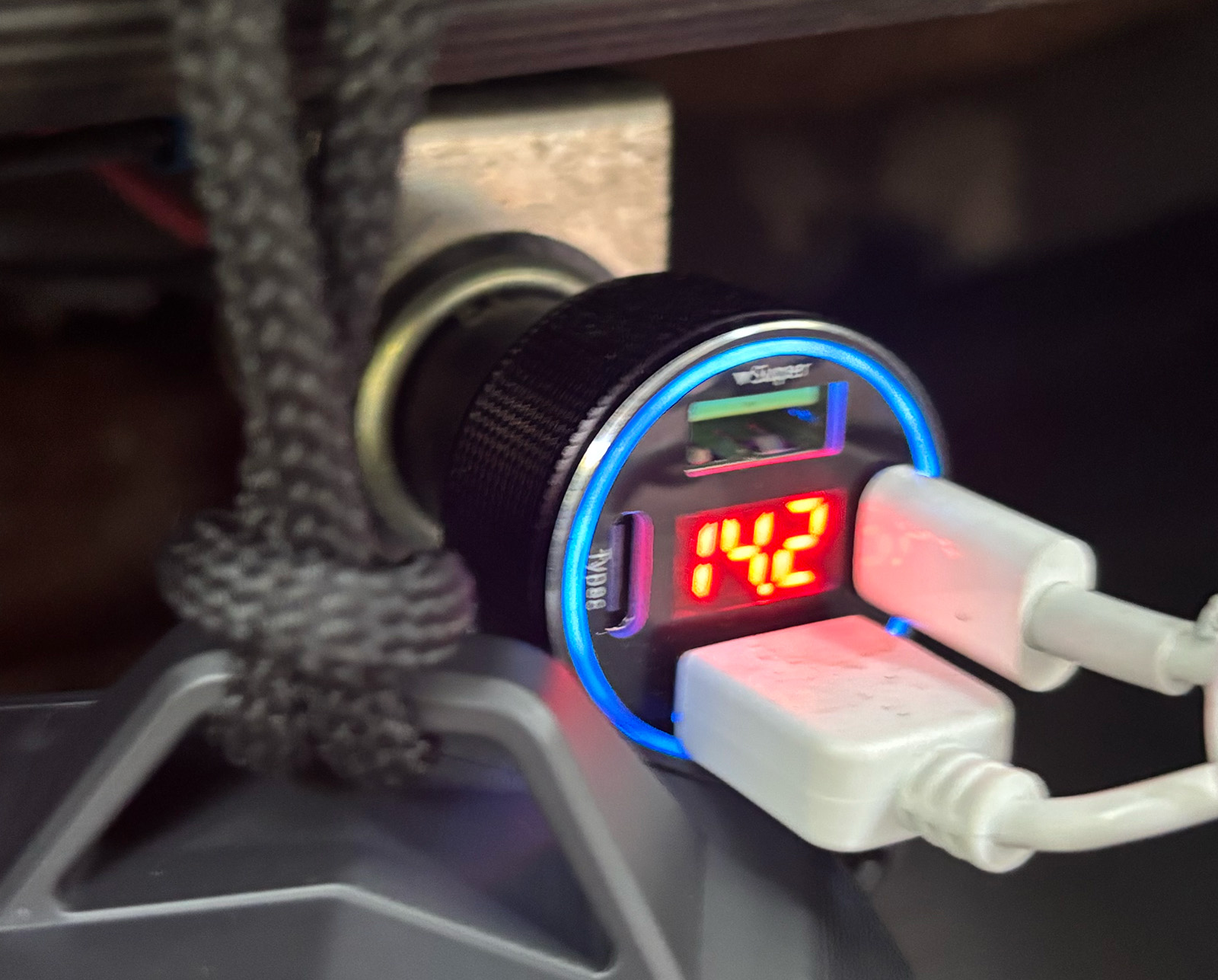
All is right in the world once again. And the lesson here is, um, don’t trust just threading a nut to assume the diameter of a bolt? Sure, why not?


“Because, I assume, you enjoy hearing about small, mundane auto repairs of funny French cars?”
Why do you insult me even questioning this in the first place?
I know from unfortunate personal experience that some 10mm nuts will thread onto a 3/8-16 bolt and vice-versa. That looks like about the size you are dealing with …
Also that bolts from the hardware store in US threads cheaper than a class 5 may have a shank that is smaller than the thread OD, especially in large (1/2″+) diameters.
I probably would have been dumb and bored out whatever the bolt had to go through to allow the thicker shaft to get through. But the new bolt also looks like the reach of the threads on the new bolt didn’t exactly match up with the old one. I guess if it eventually worked, just take the win and go home.
It’s been a long time, but when one of the thin little rods going from the handle to the latches in my ’71 Peugeot 504s sunroof broke, I ended up buying a spoke from the local bike shop to replace it.
Exhaust to fresh air heat exchangers spook me and a similar system in a Cessna 150 was enough to convince me to put a stick ’em on CO detector on the instrument panel and it became part of my instrument scan any time I flew in colder weather.
But mr. Torchinsky,
You just took a DIN931 where a DIN933 was needed.
https://sunhyings.com/blog/hex-bolt-dimensions-guide-din-931-vs-din-933-differences/
Those cardboard heater pipes caused Car Magazine’s first 2CV turbo to self immolate after under hood temperature hit their ignition point. The second iteration had metallic heater ducts and a a black stripe on one fender.
Should you not either shim that bolt at the back where it gets wider, or get one that’s the right width at the back, then tap it down to the correct width at the front? I can see something awful happening to it in the not too distant future otherwise.
Glad the alternator is alternating again. Victory!
Torch – what’s with the rusty nail in the driver’s side headlight support structure thingy?!!!
I realize there’s a future story about how “something” was shaken loose and then something fell off or shifted or distorted something else, but…maybe replace the nail with a cotter pin or other fastener??!
Torch, you do realize that you’re actually measuring absolute pressure with that thing, right?
It’s reading 14.2psi, which is a slight vacuum. This makes sense cause your 2CV sucks.