

As someone who has been obsessed with VW Beetles since youth, despite the attempts of many well-meaning psychotherapists, pharmacists, shock-collar vendors and other behavioral conditioning experts, it would make sense that I have my preferences on Beetle variations throughout the car’s 65-year-long lifespan. And I do! Of course I do. And, for reasons that only clear to me and my endocrinologist, I need to make these preferences clear to you.
Actually, it’s even better, and even simpler: I think I actually have one favorite Beetle variation, at least looks-wise, and, unsurprisingly, it’s one I’ve had extremely minimal contact with.


I should clarify what I mean by “Beetle variation,” probably. I’m referring to a stock, factory-built, mass-market version of the standard Beetle, not a niche low-volume body type or special, limited-run variation. I mean the kind of thing anyone with a small wad of cash and a very achievable dream could have purchased right off the showroom floor of a VW dealer somewhere in the world during the production run of the car. Got it?
So, with that in mind, here’s what I think the Best-looking Beetles were:
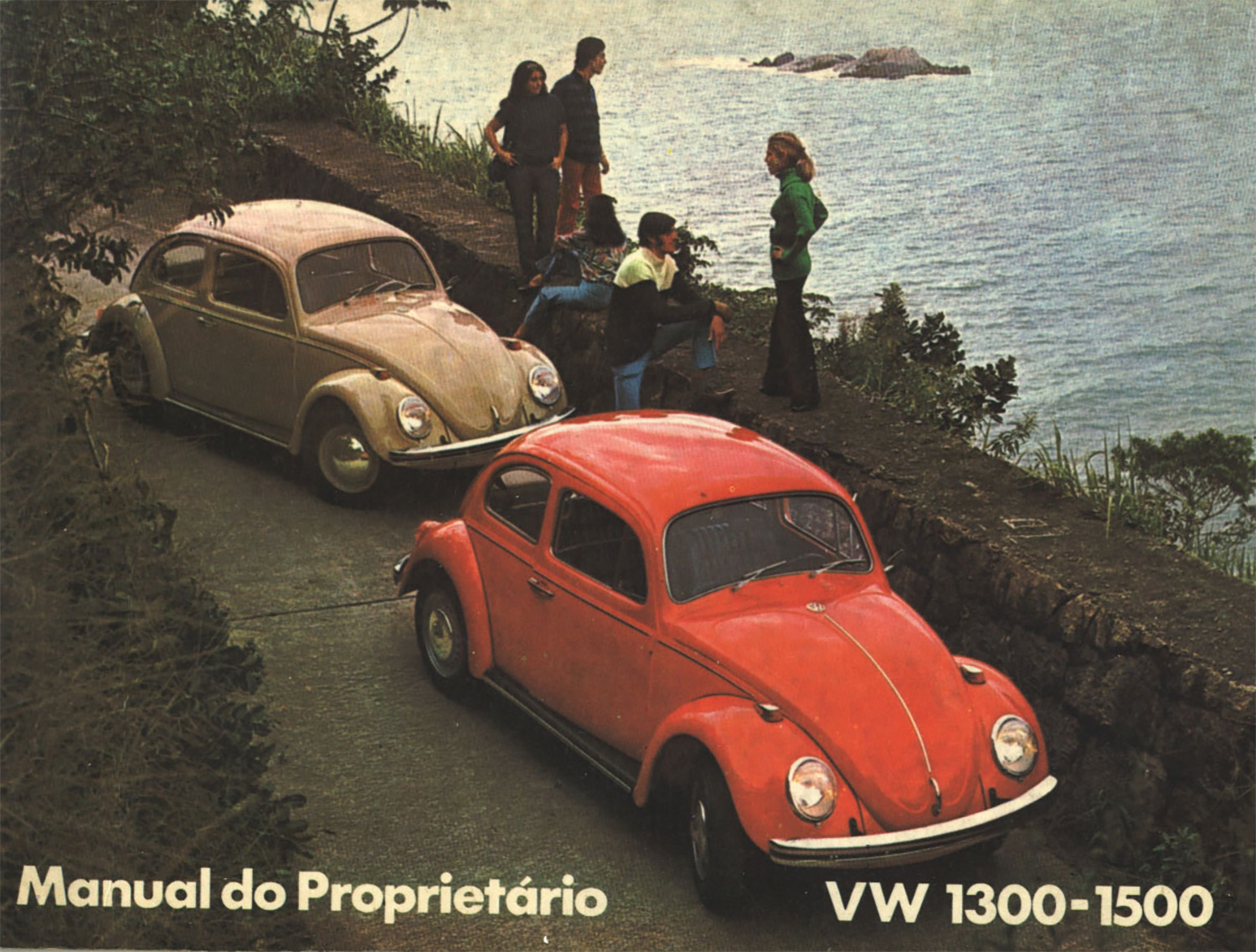
The Brazilian-built 1968-1972 Fuscas.
So, what is it about this particular version of the Beetle that I like so damn much? Well, these were the only Beetles that combined two significant Beetle styling details: the pre-’67 sloping, double-glass headlights – the same Hella ones used on Porsche 356s, early 911s, many DKWs, some Mercedes-Benzes, and other cars, all coming from what (I think) was a 1930s Adler design – and the 1968 and later simplified “Europa” bumpers.
This combination was used nowhere else in the world, and for whatever reasons, I just think it makes for the best-looking Beetle front end.
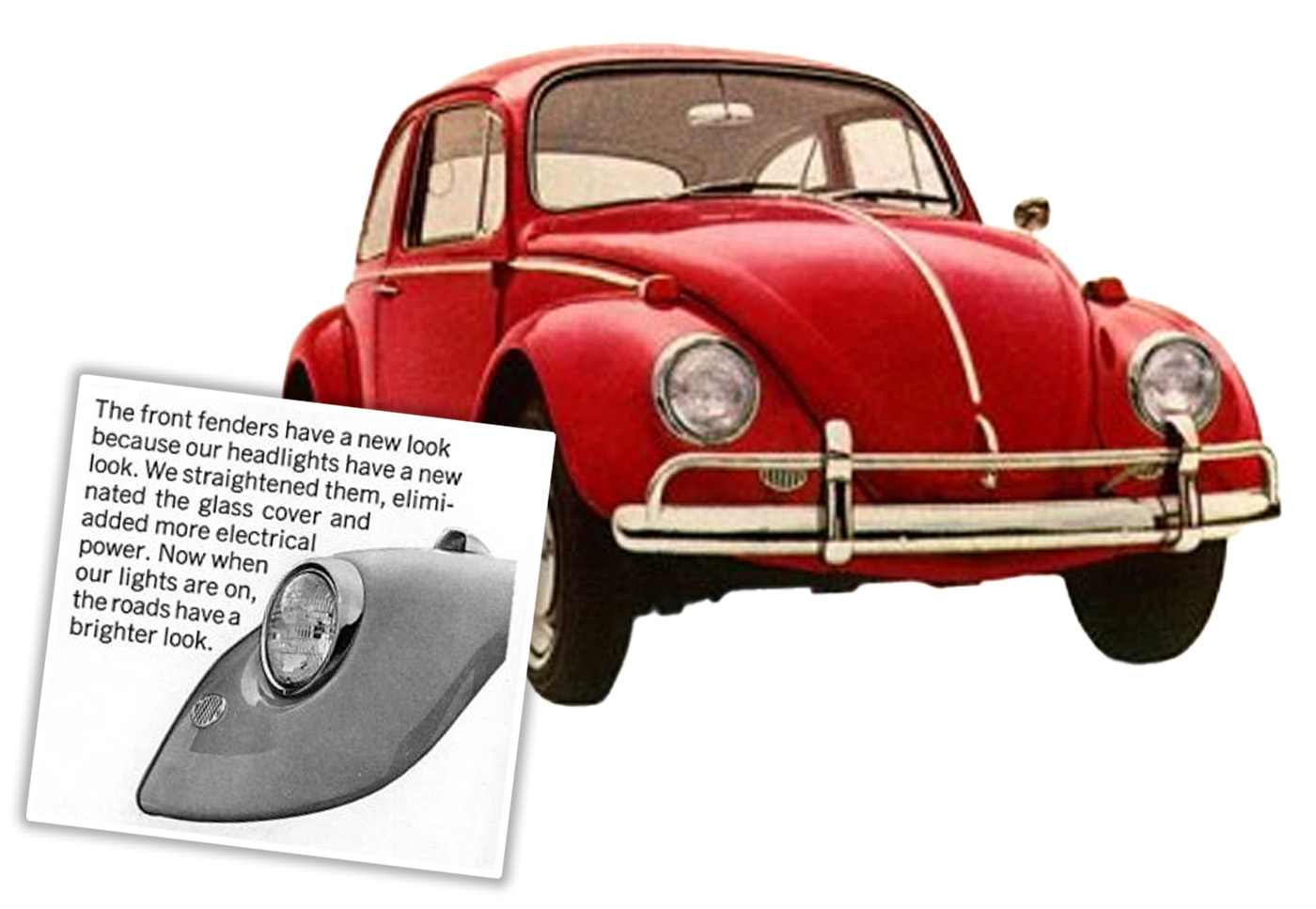
In America, the Beetle’s lights changed from the sloping, double-glass ones to the simpler, upright basic sealed-beam ones in 1967, giving a one-year-only look with the old, more ornate chrome overrider bumpers and the newer upright headlights. It doesn’t look bad, but I just prefer the older lights.

Then, in 1968, The Beetle had what I’d think is its biggest transformation of its lifetime, with changes so dramatic and numerous that most people use 1968 as the dividing line where the “modern” Beetles start. And one of the biggest visual changes was the use of the new, simpler bumpers, with their more squared cross-section, no overriders or bumper guards by default, and a center black stripe.
Only one place in the world combined these new bumpers with the old double glass lights: Brazil.
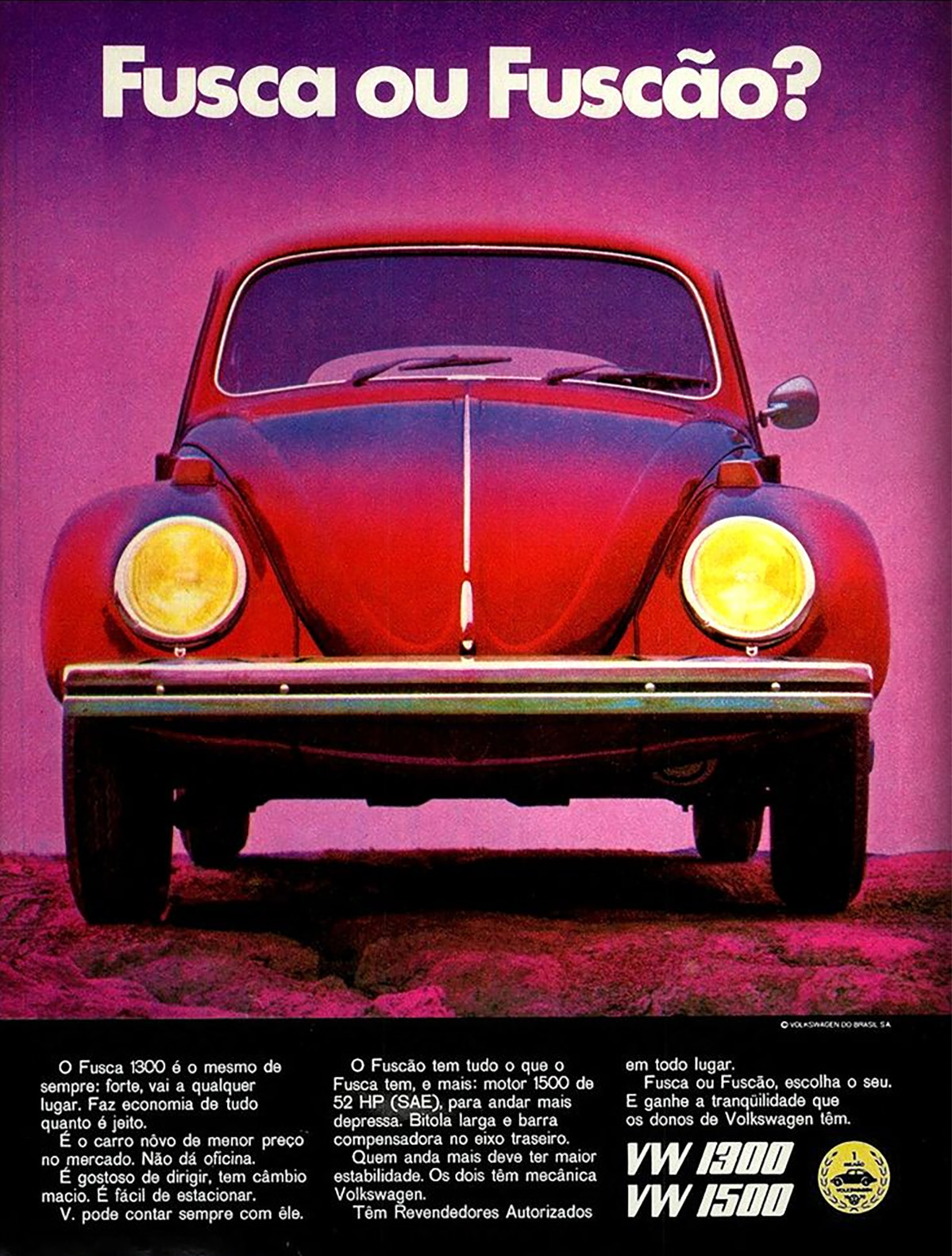
I can’t put my finger on exactly why I like this combination so damn much, but I do. I just think it works and somehow fits the character of the car the best of any combination. I love those old baroque chrome bumpers, but there’s a Bauhausian simplicity of the Europa bars I like, too. And the way those sloping lights keep the flow of the curve of the fender – it’s just right.
It’s somehow just the right mix of visual elements, creating a face that’s friendly, a little sleek, a bit less uncluttered than the big chrome bumper’d ones, but with those more, perhaps sportier? headlights than the upright-headlight ones.
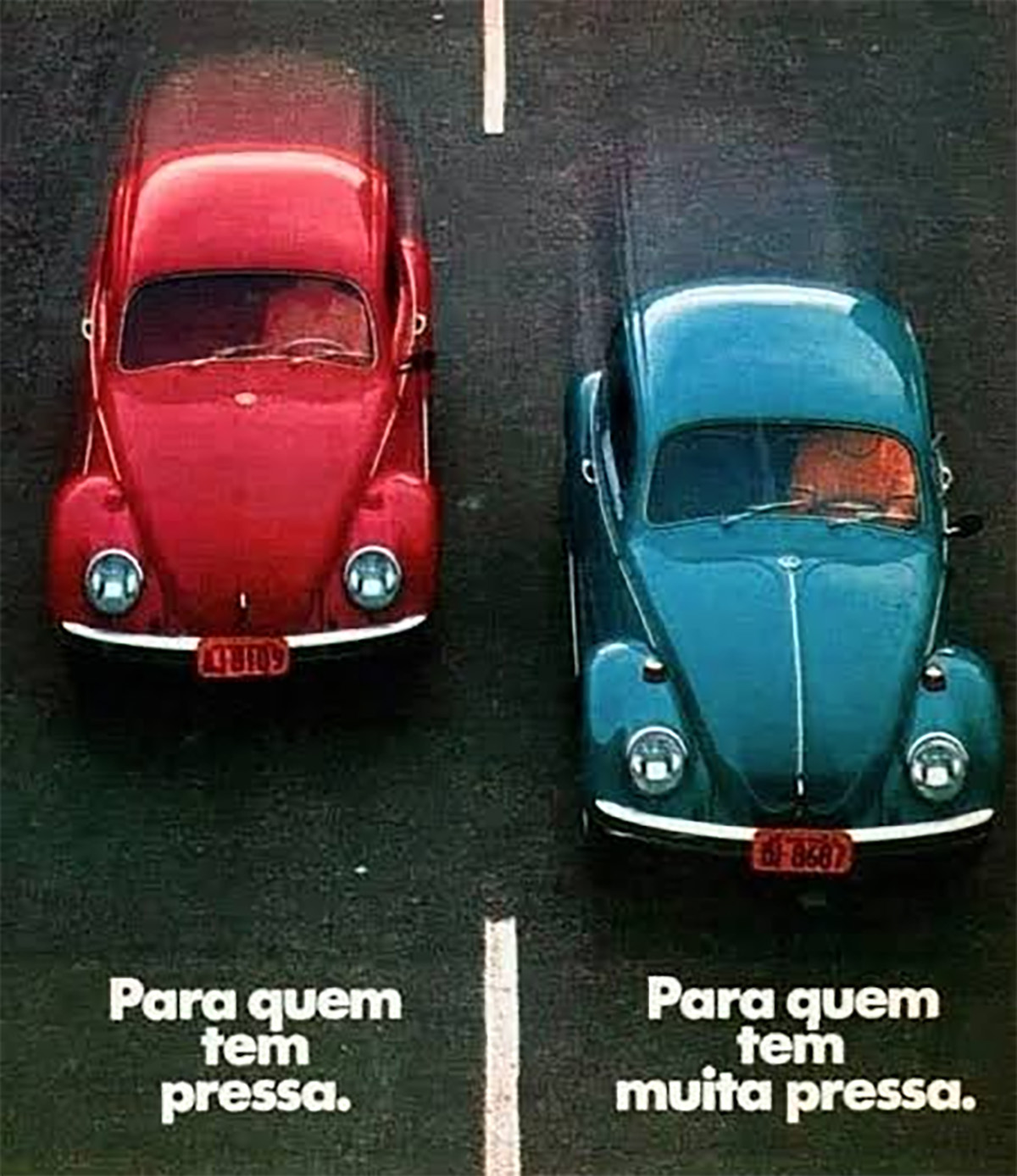
What’s also interesting is that to pull off this look, VW of Brazil had to do a bit more than just mixing and matching existing parts – that fender design is unique. You see, the old bumpers used brackets that came from the center apron panel, below the front hood line. The Europa bumpers from 1968 and on moved the bumper brackets to exit through the fenders.
That means everywhere else in the world, there were no fenders that could house the older double-glass lights and the newer Europa bumper brackets. So Brazil had to make those themselves, just for these cars.
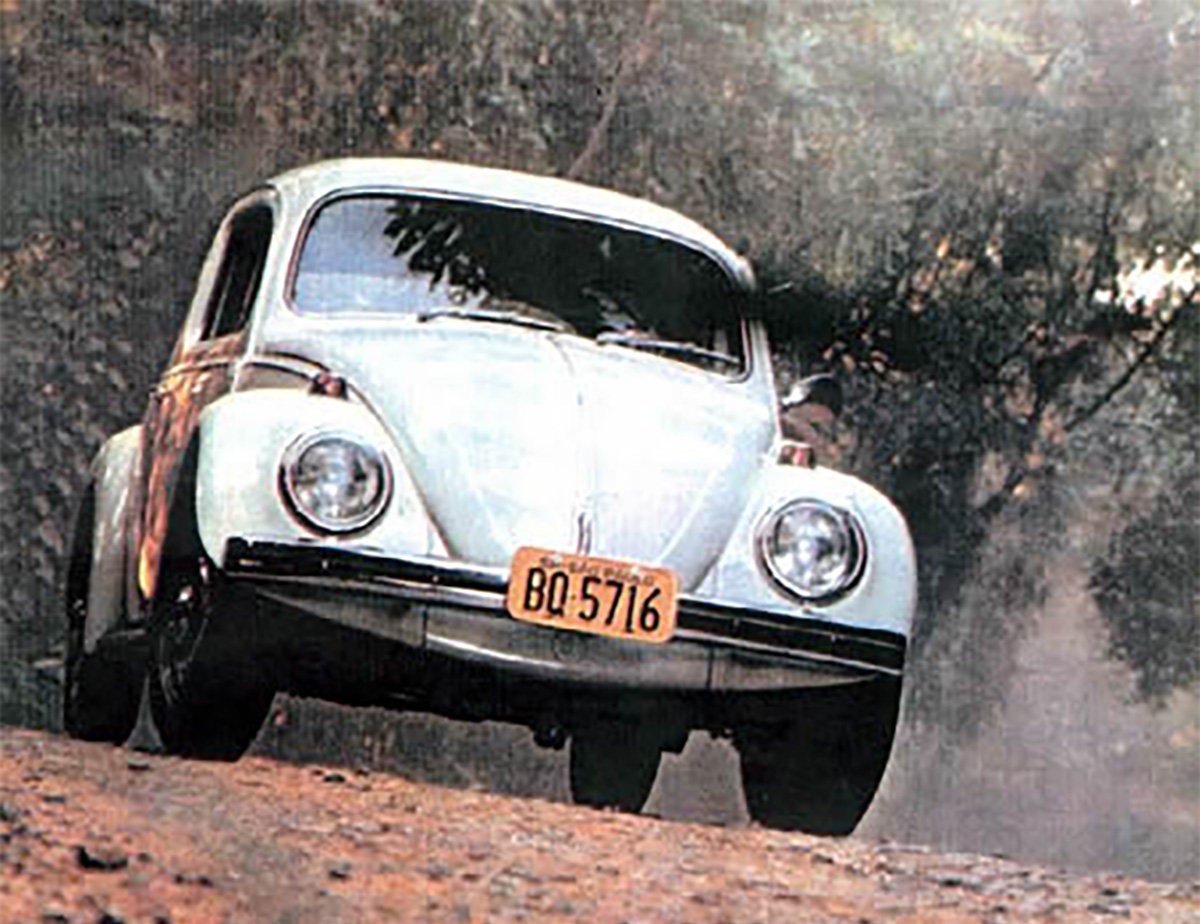
Oh, and these fenders lacked the little horn grilles that VW used to put on the fenders of ’67 and earlier Beetles; you can see them just below the headlights here:

VW of Brazil seems to have only made Beetles this way for a few years, starting in 1968 and finally moving to the rest-of-the-world standard upright sealed beam lights around 1974. I’ve hardly ever seen these Beetles in the wild, with most of them remaining in Brazil.
The only thing I may prefer is if these used the thinner-pillar’d bodies of the rest of the world’s post-’66 cars. Brazil stuck with the smaller window bodies all the way into the ’90s. But, for that front end, I can accept the thicker pillars.
I’ve thought about trying to convert my Beetle to have this look, but getting those custom fenders here in America would be an undertaking, and trying to adapt the older headlight buckets into the new fenders is beyond my sloppy welding skills and time and resources. So I suppose for the time being I’ll have to continue to admire these Fuscas from afar.

Really, early ’70s Brazil is kind of my peak VW lineup, period. The best Beetles, one of the few four-door air-cooled VWs ever, and, of course, one of the loveliest air-cooled VWs, period, the Karmann-Ghia TC.
Did Brazilian VW obsessives know how good they had it back then? Do any of us know how good we have it when we’re right in the middle of it? Who knows. I just know I love the look of those Fuscas.


WOW! Torch’s favorite Beetle is the one I had as my first aircooled: a beige 1972 VW 1500 (in Brazil called “Fuscão” – Big Beetle). Was a great car and I traveled with my daughter (then 6 yo) through the country with it!
But.. but what about the tail lights?
Were they clam shaped?
The 1500 engine was always highly valued here in Brazil because unlike the 1300 and 1600 engines, the 1500 core was imported from the Fatherland itself I am told and was considered far more robust. Brazil had serious aluminum casting issues back then. Lots of impurities. Even as late as the late 90s, I remember reading US VW magazines that had the words “Not from Brazil” beside many panels, floors, rocker panels etc and cast aluminum parts.