

As someone who has been obsessed with VW Beetles since youth, despite the attempts of many well-meaning psychotherapists, pharmacists, shock-collar vendors and other behavioral conditioning experts, it would make sense that I have my preferences on Beetle variations throughout the car’s 65-year-long lifespan. And I do! Of course I do. And, for reasons that only clear to me and my endocrinologist, I need to make these preferences clear to you.
Actually, it’s even better, and even simpler: I think I actually have one favorite Beetle variation, at least looks-wise, and, unsurprisingly, it’s one I’ve had extremely minimal contact with.


I should clarify what I mean by “Beetle variation,” probably. I’m referring to a stock, factory-built, mass-market version of the standard Beetle, not a niche low-volume body type or special, limited-run variation. I mean the kind of thing anyone with a small wad of cash and a very achievable dream could have purchased right off the showroom floor of a VW dealer somewhere in the world during the production run of the car. Got it?
So, with that in mind, here’s what I think the Best-looking Beetles were:
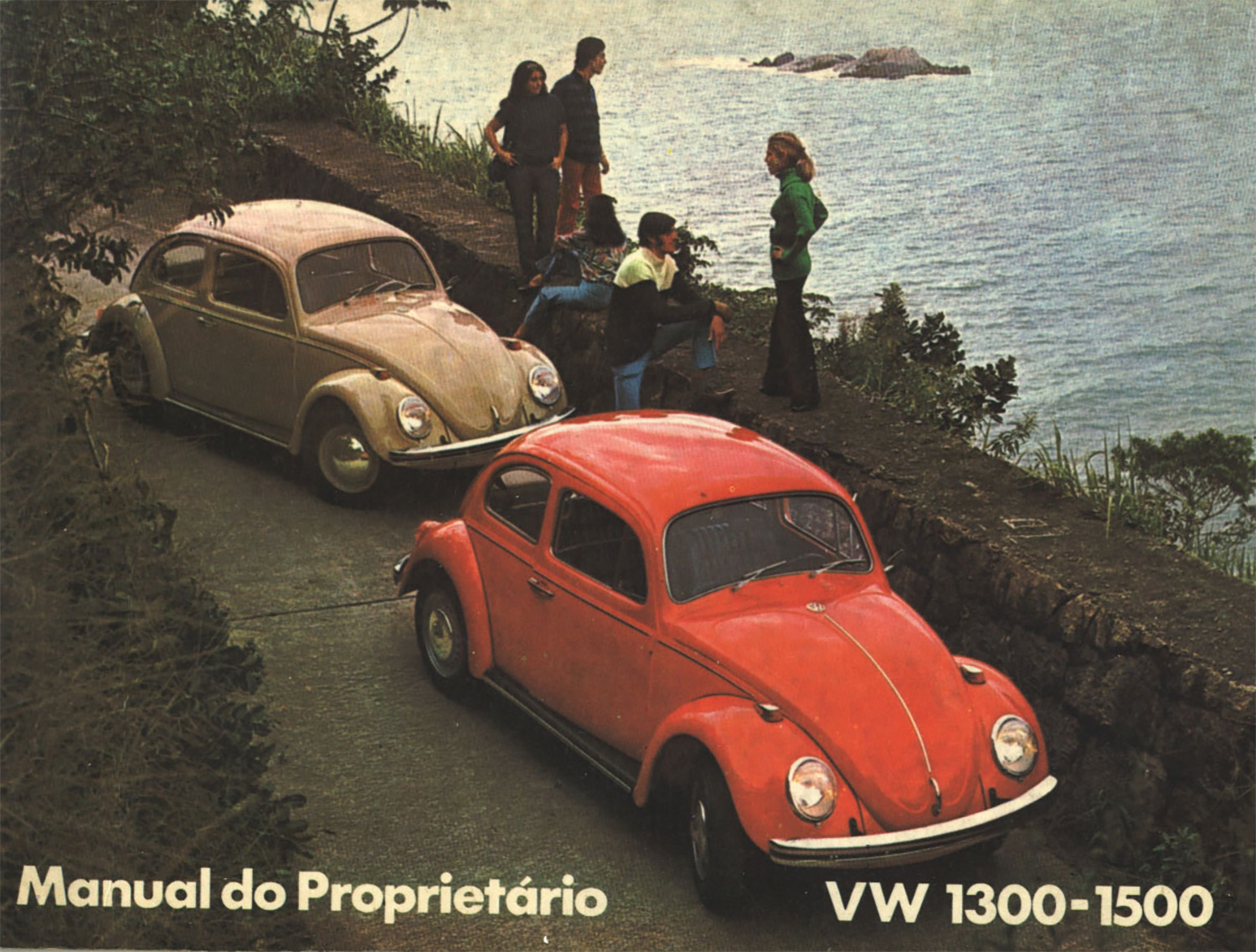
The Brazilian-built 1968-1972 Fuscas.
So, what is it about this particular version of the Beetle that I like so damn much? Well, these were the only Beetles that combined two significant Beetle styling details: the pre-’67 sloping, double-glass headlights – the same Hella ones used on Porsche 356s, early 911s, many DKWs, some Mercedes-Benzes, and other cars, all coming from what (I think) was a 1930s Adler design – and the 1968 and later simplified “Europa” bumpers.
This combination was used nowhere else in the world, and for whatever reasons, I just think it makes for the best-looking Beetle front end.
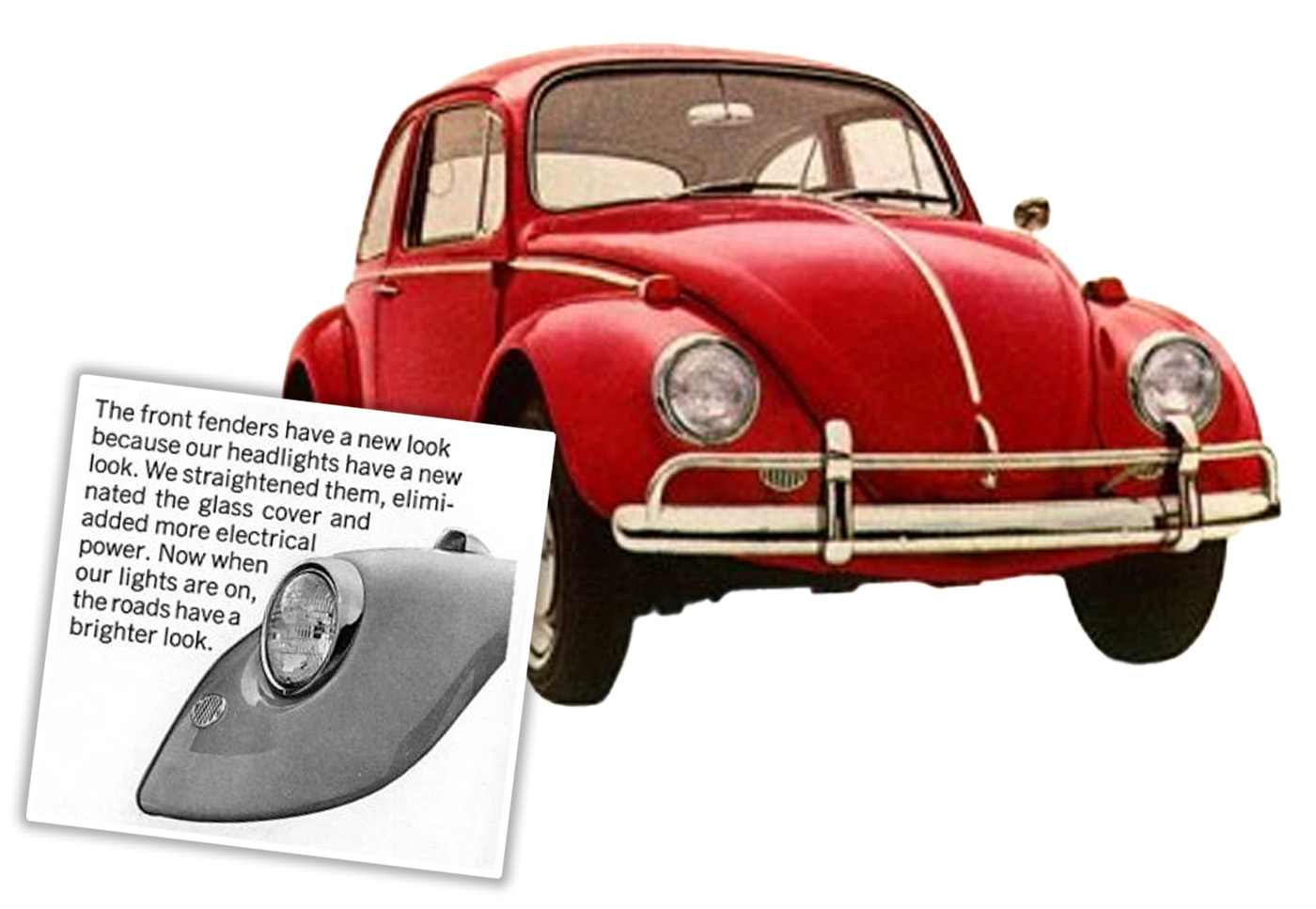
In America, the Beetle’s lights changed from the sloping, double-glass ones to the simpler, upright basic sealed-beam ones in 1967, giving a one-year-only look with the old, more ornate chrome overrider bumpers and the newer upright headlights. It doesn’t look bad, but I just prefer the older lights.

Then, in 1968, The Beetle had what I’d think is its biggest transformation of its lifetime, with changes so dramatic and numerous that most people use 1968 as the dividing line where the “modern” Beetles start. And one of the biggest visual changes was the use of the new, simpler bumpers, with their more squared cross-section, no overriders or bumper guards by default, and a center black stripe.
Only one place in the world combined these new bumpers with the old double glass lights: Brazil.
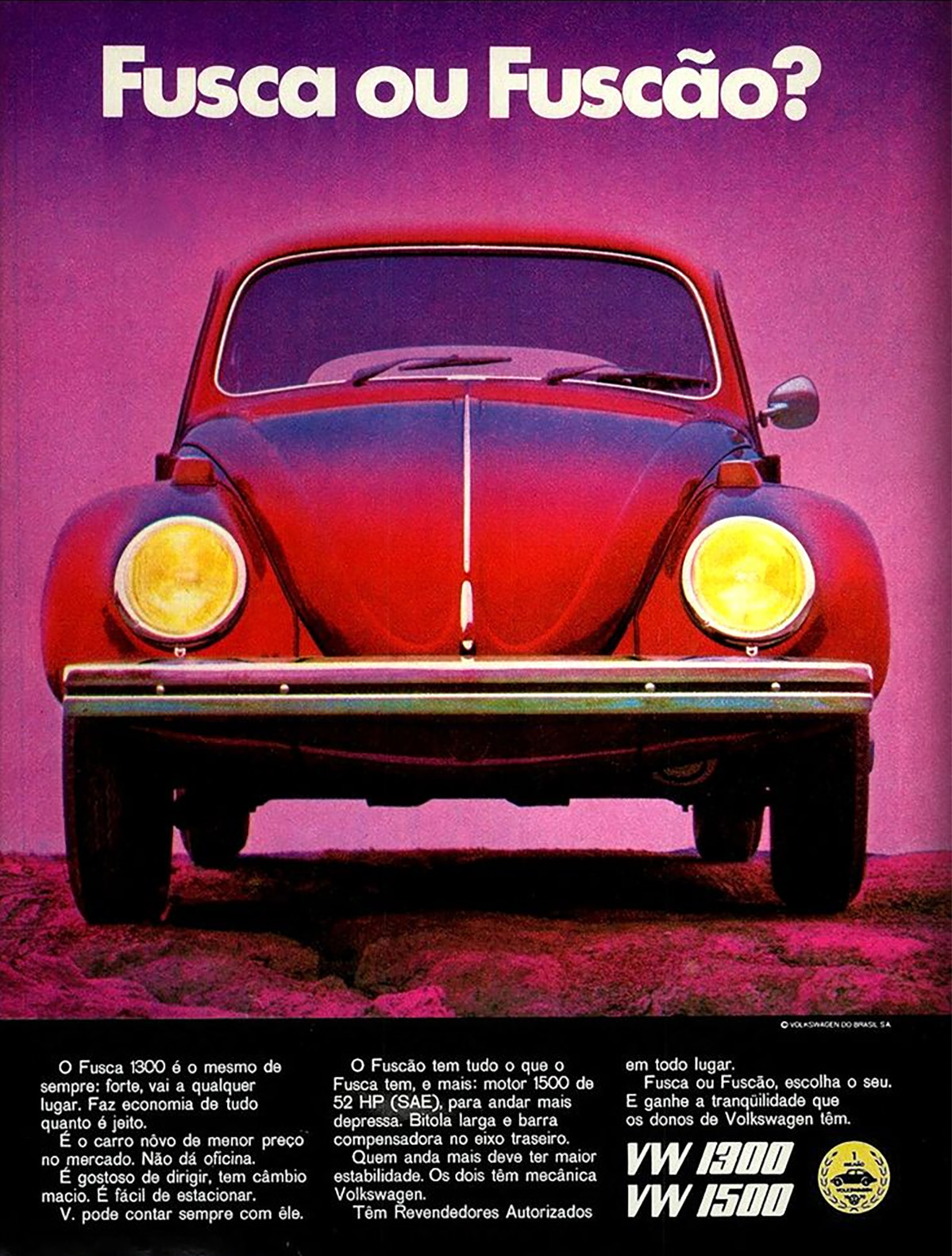
I can’t put my finger on exactly why I like this combination so damn much, but I do. I just think it works and somehow fits the character of the car the best of any combination. I love those old baroque chrome bumpers, but there’s a Bauhausian simplicity of the Europa bars I like, too. And the way those sloping lights keep the flow of the curve of the fender – it’s just right.
It’s somehow just the right mix of visual elements, creating a face that’s friendly, a little sleek, a bit less uncluttered than the big chrome bumper’d ones, but with those more, perhaps sportier? headlights than the upright-headlight ones.
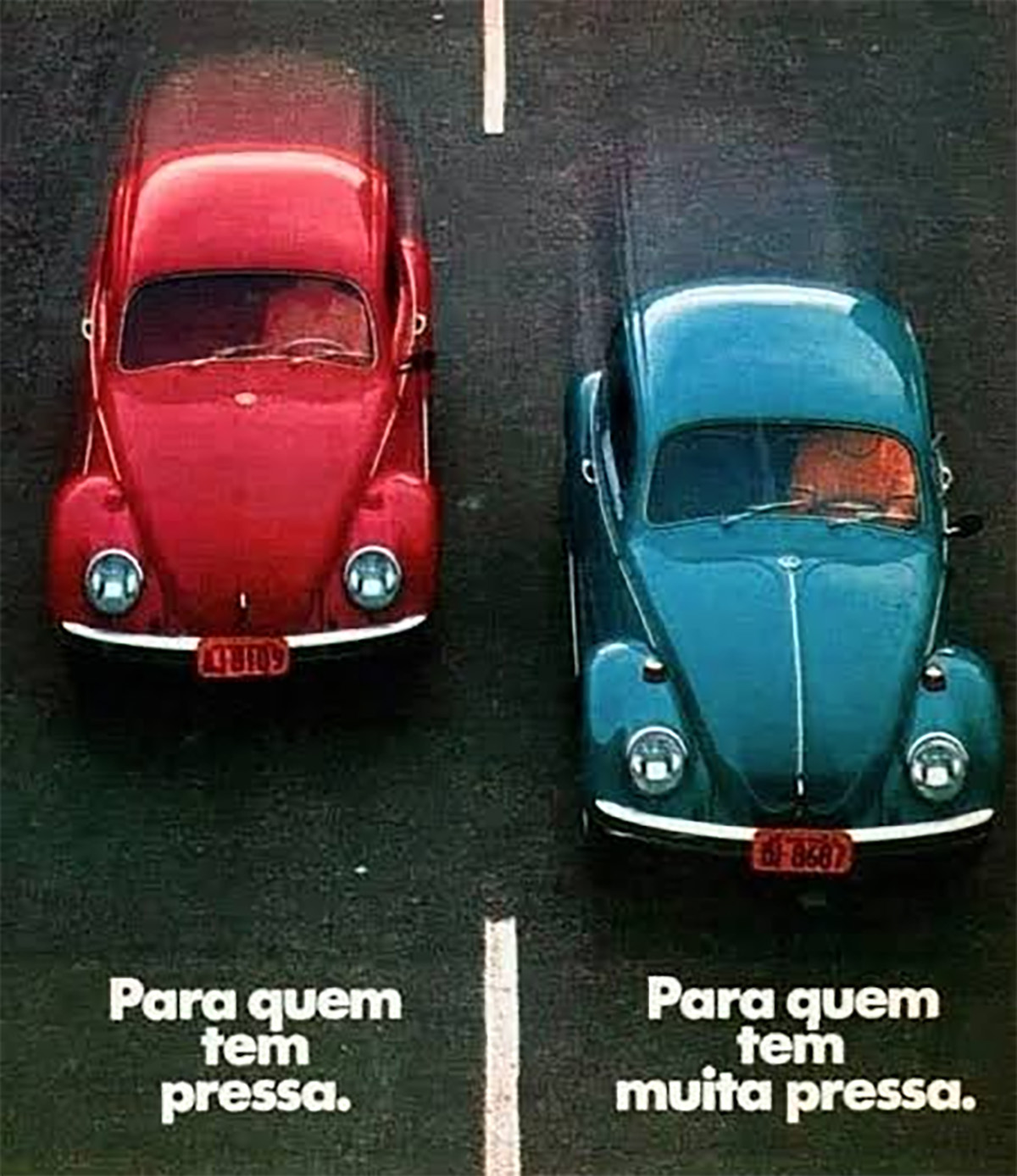
What’s also interesting is that to pull off this look, VW of Brazil had to do a bit more than just mixing and matching existing parts – that fender design is unique. You see, the old bumpers used brackets that came from the center apron panel, below the front hood line. The Europa bumpers from 1968 and on moved the bumper brackets to exit through the fenders.
That means everywhere else in the world, there were no fenders that could house the older double-glass lights and the newer Europa bumper brackets. So Brazil had to make those themselves, just for these cars.
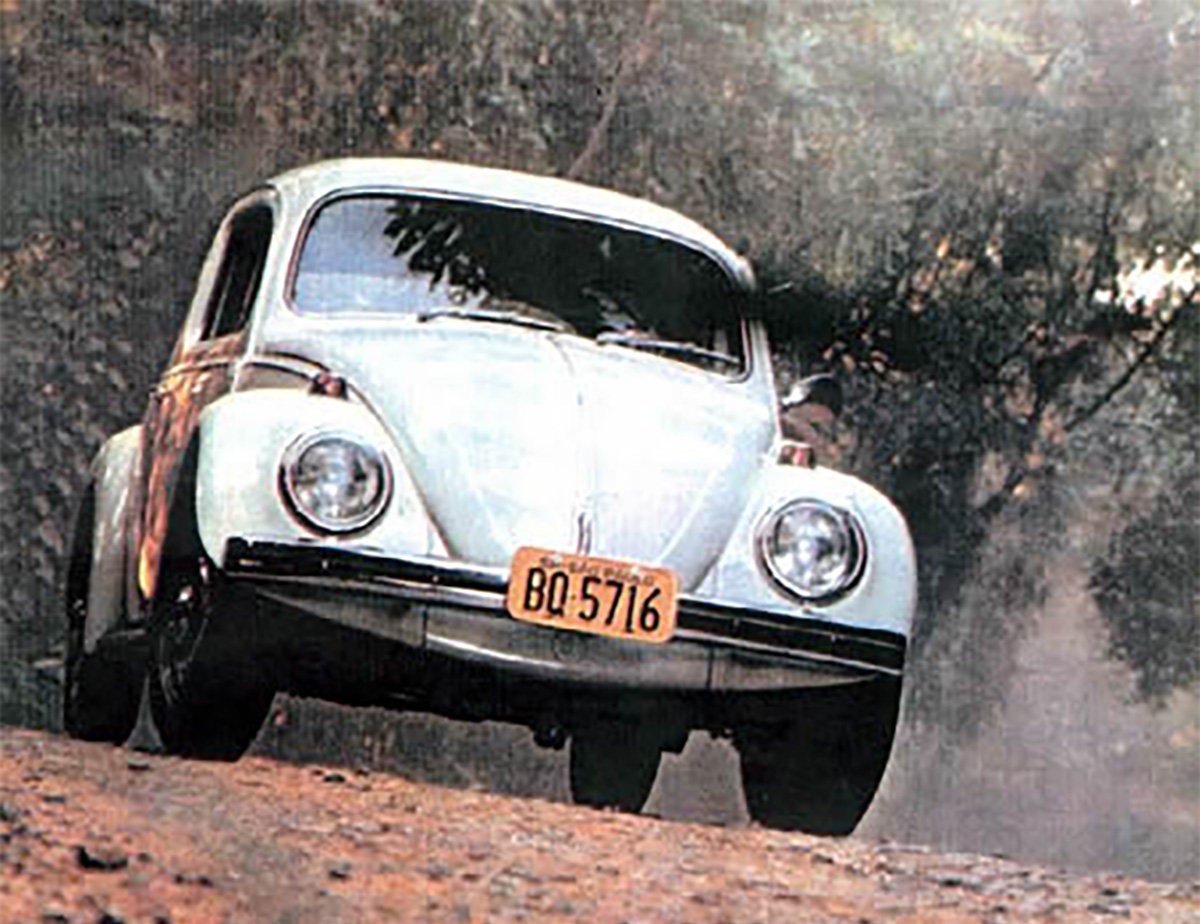
Oh, and these fenders lacked the little horn grilles that VW used to put on the fenders of ’67 and earlier Beetles; you can see them just below the headlights here:

VW of Brazil seems to have only made Beetles this way for a few years, starting in 1968 and finally moving to the rest-of-the-world standard upright sealed beam lights around 1974. I’ve hardly ever seen these Beetles in the wild, with most of them remaining in Brazil.
The only thing I may prefer is if these used the thinner-pillar’d bodies of the rest of the world’s post-’66 cars. Brazil stuck with the smaller window bodies all the way into the ’90s. But, for that front end, I can accept the thicker pillars.
I’ve thought about trying to convert my Beetle to have this look, but getting those custom fenders here in America would be an undertaking, and trying to adapt the older headlight buckets into the new fenders is beyond my sloppy welding skills and time and resources. So I suppose for the time being I’ll have to continue to admire these Fuscas from afar.

Really, early ’70s Brazil is kind of my peak VW lineup, period. The best Beetles, one of the few four-door air-cooled VWs ever, and, of course, one of the loveliest air-cooled VWs, period, the Karmann-Ghia TC.
Did Brazilian VW obsessives know how good they had it back then? Do any of us know how good we have it when we’re right in the middle of it? Who knows. I just know I love the look of those Fuscas.


I had a 1968 Beetle with the new headlights, bumper, external fuel filler door. It also had a crank operated sun roof, larger tail lights with reverse lights, and updated door handles with push buttons. The engine in mine was the 1500cc producing an astounding 53 H.P., and approximately 78 lb/ft torque. I owned that car from age 18 to age 21 and had a ball with it. Today I own a 2024 Golf R, and have a ball with it.
It just struck me that a combination of the 1968 Fusca’s headlights and the 1975 Nigerian cuffed elephant feet taillights Jason wrote about three weeks ago might be quite attractive, as both lights are located closer to the road than usual. We might have seen the result if VW had opened the Lagos factory just a few years earlier.
My uncle had one of those models, and I always liked the look. Since most die cast models were imported, I couldn’t find any that would match, so I adapted one myself with epoxi.
Turns out, I also liked the back of the vw 1600s “super fuscão”, which DID NOT had sloping headlights, to my dismay. So I decided to just have an anachrosnistic model, which was tough for 11 old me.
My favourite is the 1960: Small side windows, small real lights, Wolfburg on hood and steering wheel.
Early sixties VWs are the best cars, ironed out all faults of early models, but hadn’t really started cheapening them out like on later models.
I bet that fender wasn’t too hard to make – I imagine you could do it by removing the secondary stamping die and operation for the horn grill and adding a die press one the bumper slot.
Or if you’re working on a single example, taking early-style fenders and cutting holes for the bumper mounts in them. I’d do the initial test fitment and marking before filling in the horn grill holes, since I’m not sure whether they compete for space or not; if so just cut your fill panel with space for (part of) the bumper bracket slot.
I read this and immediately go to the first Madagascar movie. The Foosas… Perhaps Jason, you could put together an Autopian travel group to go to Brazil and besides eating and birding the main focus (Fuscas) would be finding 25 year old VW’s to buy and bring back to America. Think of all the joy that would bring to the thousandaires that are your compatriots here at the great A.
Now it may be that I am a sucker for kitch, but best Beetle I ever saw was a S African one with a larger (2 litre) motor, which I think was a factory option, or if not was a common bore out.
It had not been lowered but had wide back tyres, with shiny steel, almost mags, wheels, and was in metallic purple. With purple shag pile carpet on the dash….
I like this one:
https://bringatrailer.com/wp-content/uploads/2021/11/1972_volkswagen_super-beetle_DSC_4184.jpg?w=940
I parked my El Camino next to one just like it at a car show last weekend.
You can bolt on cheap reproduction ’66 and earlier fenders to your beetle. Unless it’s a super beetle (it’s not, right?) they’re all interchangeable. Then you can just fill in the that extra hole or stick a champagne cork in it.
I like this style, but my actual favorite is a European or Canadian ’65 or ’66 “standard”. Had the old, blade bumpers with no over-rider and a much smaller headliner.
Agreed, these years are best for a Beatle, but peak brazilian VW is the Brasilia. I would love to take one home with me!
I fully agree. Let’s not forget the SP2. And the first Gol with the Fusca engine deserves an honorable mention, too.
As much as I like the Brasilia, the SP2 takes the cake for me. Not just amongst Brazilian VW models, mind you; it’s my favourite VW model ever. Just a stunning design.
The SP2 is gorgeous indeed. Too bad so few have been sold back then, now they’ve become outrageously expensive. I don’t remember the last time I’ve seen one outside of a museum or a vintage car meetup (and I do live in Brazil BTW).
The last one I saw was in Seattle! I’ve never seen one in Brasil, at least not between Forteliza and Gramado!
I remember reading about the Gol “Bola” and how the Parati’s missing rear doors were a significant problem since the market had moved on – but I cannot for the life of me remember where I read it; I have trawled all the Quatros Rodas articles I can find.
Yeah, I heard they have become very rare over the years. I know I’ve never seen one in the flesh – not sure if any ever made their way to Portugal over the years as private imports. Oddly enough, I know of 1 Puma GT (VW-based) that made it to Portuguese territory – saw one once in Madeira and I could not believe what my eyes were seeing.
Grande abraço desde Portugal a todos os Autopians Brasileiros! Amo a vossa indústria automóvel!
Grande abraço para ti, irmão lusitano! And the SP2 is also my favourite. I missed on buying one to rebuild once, because I was 15 at the time – damn!
Obrigado! Muito amor para todo o povo irmão brasileiro, aí no Brasil e aqui em Portugal – temos muita sorte que tantos de vocês nos escolham como o local para tentar encontrar uma vida melhor, e fico sempre triste por sentir que muitos de nós não só não percebam que isso devia ser um orgulho, e ainda adoptem posições xenófobas e ignorantes contra quem aqui chega vindo do Brasil. Portugal tem de tratar muito melhor quem vem para aqui contribuir para a sociedade e a economia – são parte da comunidade também, e isso é muito mais importante que questões de nacionalidade.
Com sorte vou para Portugal também esse ano 🙂
Meu caro, terei todo o gosto em ajudar no que puder. Fica aqui o meu instagram para podermos ficar em contacto 😉 @emanuelbot
Obrigado! Looking forward to Portimão for F1 next year.
I’d hold out for a 4-door to fully justify the not-Beetle-ness.
For some reason Brazilians in the ’70s and ’80s looked at 4-door cars as if the steering wheel was smeared with pus, but VW Brazil developed and built a 4-door Brazilia mainly for export.
The reason was that 4-door cars were associated with taxi service, and nobody wanted to have a car that looked like a taxi. Totally silly, I know.
Fiat was the first brand that somehow changed this mindset, with 4-door sedan and wagon versions of the Uno. Nowadays, the only two-door cars available in the local market are a few pickup trucks and imported sports cars – but I guess the extinction of two-door cars is a global trend …
I am also told that the Junta favored four-door cars for disappearing people – and most people did not want to look like thugs.
What is funny is that Germany had the same obsession with two doors (part to avoid the taxi look, but mainly in the fear that four doors were unsafe since children could tumble out). Which is why there were Jetta 2-door sedans long after the bodystyle had been abandoned by everyone else, and 2-door Audi 100s (C2) and so on.
Anyhow, the only thing cooler than a four-door Brasilia is clearly the Nigerian-assembled Igala.
What is funny is that Germany had the same obsession with two doors
Even two-door wagons were quite popular until the late 70s. The VW Type 4 as well as various Opels and Cologne Fords were available as four-door sedans, but only as two-door wagons.
I would love one of the late 2-door Opel Rekord Wagons. Built until 1986 (if I am to trust de.wiki) it is a bodystyle which had long been extinct in that size. Although the Brasilians kept at it into the ’90s with the VW Versailles/Ford Royale.
Like this? I have never seen a post-1982 Rekord E2 model in the wild, as the two-door wagon (Opel called it a three-door one, counting the rear hatch as a door) had gone out of fashion by the early 80s. It might be easier to get a Rekord E1 or go for the 4/5-door one.
There are even some Commodore Voyages with the 2.5 l inline six left, but not with 2/3 doors. Decisions, decisions…
Yeah, the only people who bought them were stingy Dutchmen and Danes, and even there I imagine it is ultra rare. The Dutch also liked the Kadett D without the rear hatch…
The Dutch also liked the Kadett D without the rear hatch
I knew they existed and to look for the hinges under the rear window, but I never managed to find one in the wild either.
As for Rekords, you might like the commercial version, too. The car is from East Frisia, which is almost Dutch anyway. At least to us who live further to the south.
My mother always said they were insecure, as the children could open the back doors while on the road and fall out of the car.
Cool Beetle.
Anyway, the L. L. Bean Bootmobile* and Dunkin’ Donuts** have mind-melded to create the Most New England Thing Ever.
https://news.dunkindonuts.com/blog/dunkin-llbean-bootmobile-tour-september-2026
*Bootmobile is 14 years old now!
**Dunkin’ Donuts is now just called Dunkin
I have long thought DD should just change thier name to “Crappy Coffee” and have some truth in advertising. Thier donuts are near inedible at this point. Went to a BMWCCA cars and coffee last weekend and choked a couple down. Amusingly, Dunkin’s are about as frequent here in God’s Waiting Room, FL as they are in New England, you can definitely give directions using them as landmarks here too.
There have been a couple of bootmobiles over the years, I had no idea they were doing a mashup with Dunkin. I grew up about 5 miles from LL Bean world HQ, and a couple extended family members were bigwigs there. LL’s great-granddaughter (then current President/CEO’s daughter) was in my class in high school too. She and her brother were adopted – that’s winning the family lottery!
Maybe we share some Brazilian genealogy? I feel the exact same.
I had a rotting ‘68 in college which never ran (pan rusted to hell, rat-chewed 6V electrical etc) but I became convinced those f needs and headlights were the biz, despite the fact I never made the connection to the 356 bodies. Since I needed wheels, I bought a wheezy ‘73 1300 and I promptly swapped the front fenders before a repaint job by yours truly. I didn’t put the ‘73 bumper back in (the ornate 68 bumper felt too old timey to me) and bondo’d the bracket slots, but I made the little horn grilles a feature. Too bad they kept falling off in pothole ridden streets.
I would set the mark for peak VW do Brasil a few years later in 1973 or 1974. While I like the look of the original Zé do Caixão Type 3, the Variant with the 412 nose isn’t bad either. And the Brasília had a shape to die (or at least kill a journalist) for.
My main argument is that these were the years that saw the Karmann-Ghia TC and the SP2 in production at the same time. Probably the most beautiful VWs ever.
Nice reference about the journo, that’s a deep cut.
For me, a car designed in the 1930s should look like a car designed in the 1930s. Therefore, the best-looking Beetle is a split window with semaphores.
Not a VW obsessive, but I like those wheels on the 1500 too.
I have to admit, having grown around these cars (and being a car nerd since an early age), that I didn’t know this configuration even existed! I may remember seeing them and thinking that they were some kind of Frankenstein aftermarket update – like someone had an old Fusca from the sixties and just replaced the bumpers to make it look newer.
Now I’ll start to pay attention to see if I find one running, though, unless you live in smaller towns, you seldom see Fuscas on the streets nowadays. My neighbor does have a gorgeous-looking pale blue TL (a later model than the 1971 pictured above), which looks ever funnier around a sea of SUVs, many of them Chinese and PHEV/electric, by the way …
I’m thinking Torch likes this combo because G1 Bumblebee.
Animators chose the older headlights and modern bumpers since they were easier to draw.
That’s an awesome trivia nugget and an intriguing theory but I think he’s about five years too old.
The flat bumpers just look lazy to me, drab, sad. The baroque, ornate pre-68 ones are my go-to.
What torques my lug nuts is Beetles with their bumpers removed. It’s like a face without a nose, or a circus trapeze act without a safety net.
Oh… you’d hate mine. All the holes are still there so it definitely gives the correct impression that they’re missing because of neglect.
A true VW aficionado would have their lug bolts torqued.
I will always regret passing up a perfectly running and quite beautifully restored 1966 Beetle that I could’ve gotten for ~$9,000 about 15 years ago. My wife didn’t want to get it because she didn’t “feel safe in it.” Well, that wife added ex- to her title about nine years later when she cheated on me and got pregnant in the process. I honestly think more about that Beetle than I do about her.
I also am a Beetle enthusiast/nerd who has failed attempts at rehabilitation. I agree these are very nice Beetles, but my personal favorite is the version sold in Mexico in the ’90s that had turn signals integrated into the front bumper. These look particularly good with the bumpers painted to match the body.
All Beetles are good Beetles, though.
I….. can’t tell the difference. It looks like a Beetle. Yay.
That Karmann-Ghia is gorgeous
Headlights? Headlights?! Not a word about the taillights. Are you ill?
I know 1967 is the big year collectors go crazy over, but the new upright headlights have always seemed like such a stylistic downgrade to me
Interesting, I hadn’t seen the combination of upright headlights, horn grilles and chrome bumpers before (there are similarities to the post-1967 European Sparkäfer, but that one had bumpers from the 50s without bumper horns and overrider). I must admit I like it, even better than Jason’s favorite from Brazil – I’m not a big fan of the rail-type bumpers anyway.
<they’re the same picture.gif>