

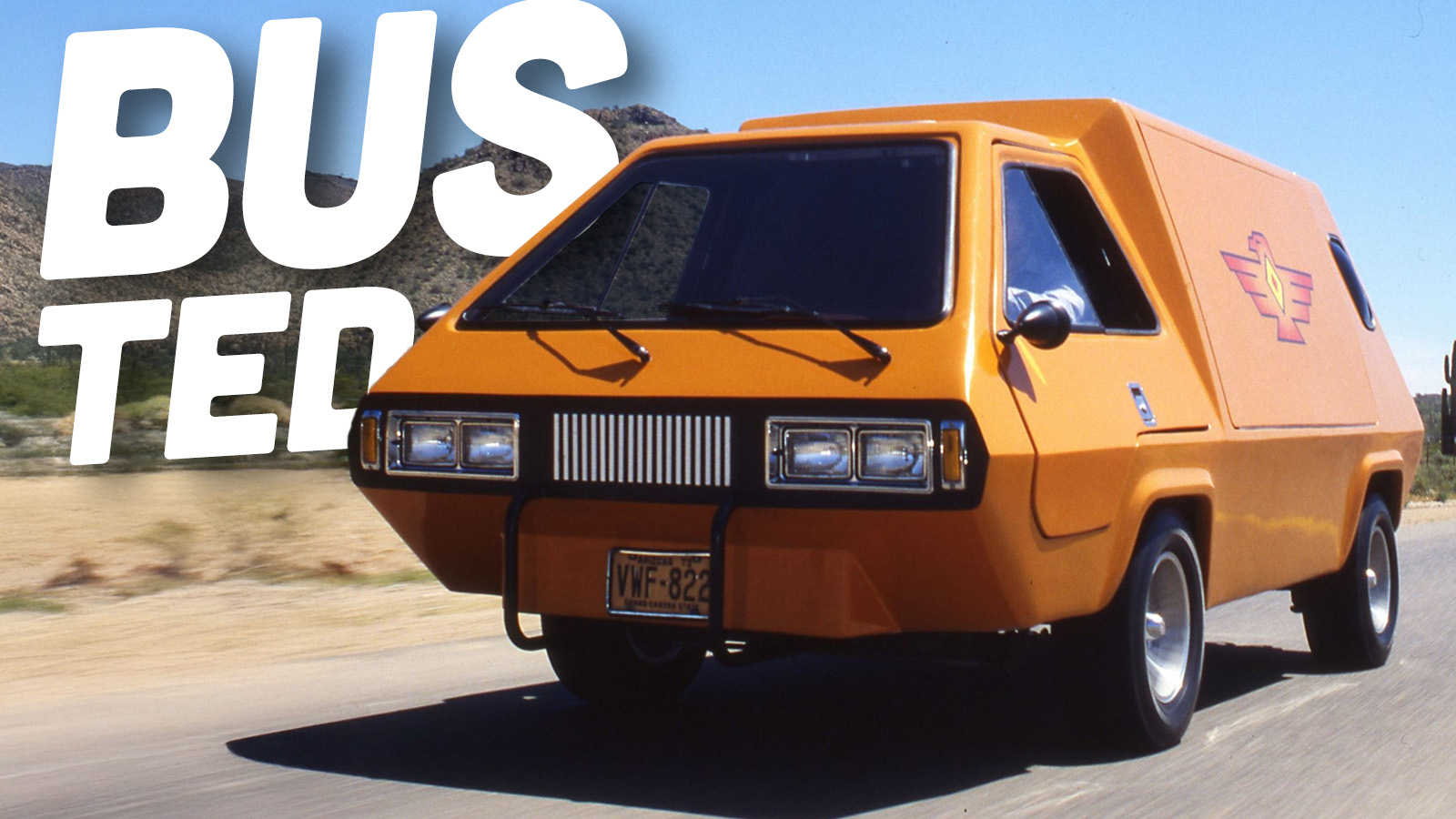
I have long said that the custom-built RV is one of the coolest ways to go camping. Think the RV industry doesn’t have what you want? Just build it yourself! You’ll get something that nobody has with charm that you won’t see elsewhere. A perfect example is this, the Phoenix Camper. This 1970s camper van is a perfect example of what people from that time thought the future would look like. Amazingly, you can even still build one of these campers today, but it would require the sacrifice of an iconic air-cooled Volkswagen.
I was recently reminded that this camper exists when I stumbled upon a recent piece by Autoevolution. That post confused me, because I could swear that I had seen this camper before elsewhere. As it turns out, I’m not crazy. Okay, I am, but not because of my memory. Anyway, I remember seeing this thing on Jalopnik back in 2015. Unfortunately, that post remains up, but the powers that be decided to delete all imagery from old articles.


That’s a shame because this camper van and its story are fascinating. The Phoenix Camper, also called the Renegade, wasn’t something built by a huge company with the resources of an industry titan. Instead, it was penned for a magazine by a little outfit in Arizona. If you wanted one, you had to build one yourself using common tools, some money, and some patience. Oh yeah, you also needed approximately one donor Volkswagen Type II Microbus.
Weird Vehicles For All
Something that I’ve found so awesome is how many weird do-it-yourself vehicles somehow trace back to one man. The Phoenix Camper was the creation of Robert Quincy Riley and David Lynn Carey, who founded Quincy-Lynn Enterprises in Phoenix, Arizona. Autopian readers might be more familiar with the company that came after, Robert Q. Riley Enterprises.
Robert Q. Riley spent his career penning all kinds of build-it-yourself vehicles from sporty trikes and camper vans to hovercrafts and “sports submarines.” Seriously, Robert designed a submersible that you built in your garage. Take a look!

Robert Quincy Riley was an industrial designer and an engineer with an eye for fuel efficiency. He would join forces with another designer, David Lynn Carey, to create tiny, innovative vehicles. Robert and David took their exploits public in the April 1969 issue of Popular Mechanics. The first vehicle plan they sold to the public was for the low-riding Ground Hugger recumbent bicycle. But they had bigger and grander dreams.
In 1973, Undiscovered Classics writes, the pair approached the editor of Popular Mechanics about building a car that would later be sold in kit form. This car would take Robert and David a year to design and build. Then they had to test it and generate plans for it. All Robert and David wanted Popular Mechanics to do was feature their car on the cover.

The pair would finish the Urba Car in June 1974, and then the vehicle underwent testing. Sadly, the owners of Popular Mechanics reportedly thought the magazine focused too heavily on DIY projects and axed the Urba Car plans. Robert and David took the car over to Mechanix Illustrated, instead, which agreed to the same deal the pair originally made with Popular Mechanics.
The vehicle made its debut in April 1975, and it was an instant hit. The Urba Car is in the top left corner of the photo below:
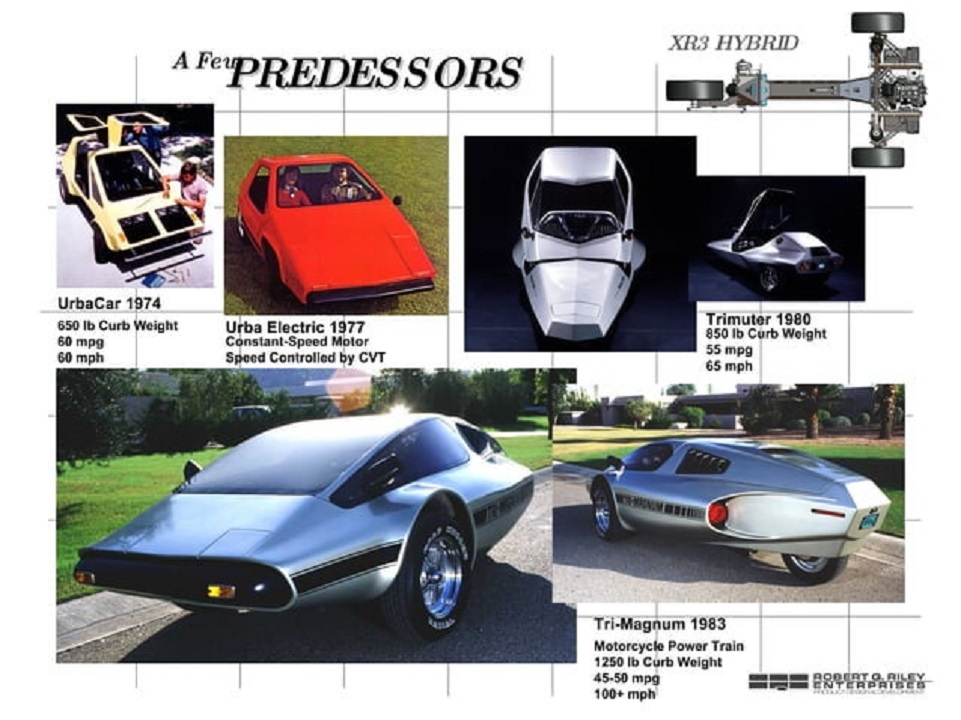
The Urba Car was a cute little wedge made out of one-inch foam panels glued together, and hand-laid fiberglass was put on top. Later, the vehicle would be made into a proper kit, where the builder just had to assemble the parts rather than make everything themself. The Urba Car was such a hit that Robert and David decided to make a proper business out of it, founding Quincy-Lynn Enterprises in Phoenix, Arizona, in 1977.
While many of Robert’s and David’s works appeared in Mechanix Illustrated under the prefix of “Urba-“, Popular Mechanics also got the guys at Quincy-Lynn to make some vehicles, too. Popular Mechanics liked having Quincy-Lynn design the magazine vans. In 1974, Quincy-Lynn penned the Boonie Bug for Popular Mechanics. The Boonie Bug was neat because it was marketed as a sort of road-legal ATV and van contraption with VW Type II bones.
The Phoenix
This time around, it was the late 1970s. America had gone through more than one gas crunch, and folks were tightening their belts. Popular Mechanics noted that there were lots of cool camper vans on the market in the late 1970s, but they were so expensive that they cost a fortune to buy. Then, they got fuel mileage so poor that if you didn’t go broke buying the thing, you’d go bankrupt running it.
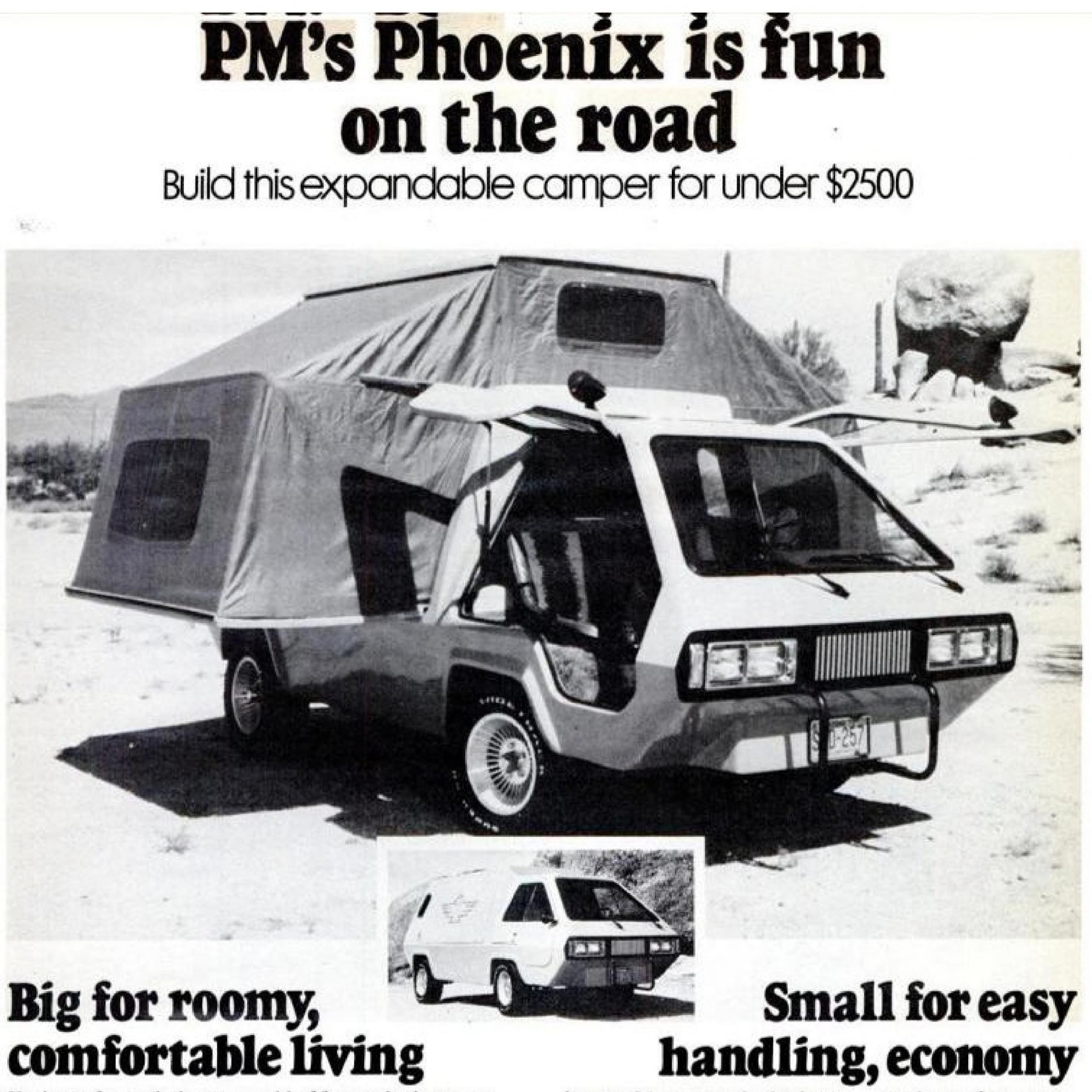
The solution, Popular Mechanics thought, was to ring up their old friends at Quincy-Lynn to design a van that would cost only $2,000 to build and would be frugal. The result was the Popular Mechanics Phoenix Camper, which made its editorial debut in the magazine’s March 1979 issue. Apparently, plans might have been available since 1978.

According to Popular Mechanics, it requested that the new van be similar to the Boonie Bug in that it was rough and tough for off-roading. However, instead of just making any van, Popular Mechanics wanted an aerodynamic and modern camper. Here’s what Robert Q. Riley wrote when he reflected on the project in 1998:
One would hardly guess that Phoenix was designed and built nearly 20 years ago, long before downsized vans were fashionable. Closed up for driving, Phoenix has the sleek look of a modern sports van. Its low frontal area coupled to a curb weight of 2,000 pounds makes it a low-rolling-resistance featherweight by today’s standards. The original Campmobile tipped the scales at about 3200 pounds, and the other VW vans weighed 2500 – 2800 pounds. That, along with its VW van chassis, translates into 25-mpg+ highway fuel economy, nimble handling, and lively acceleration.

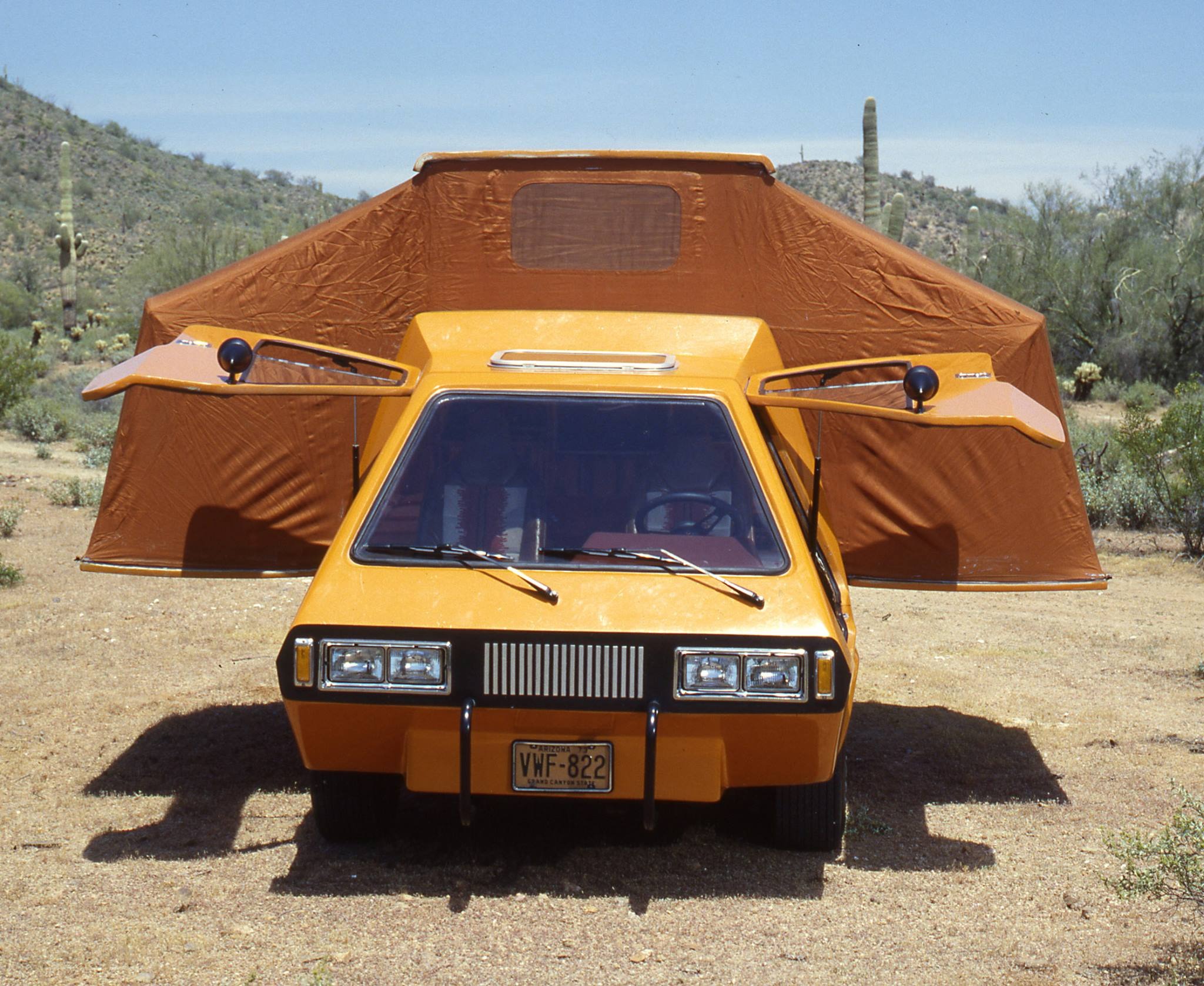
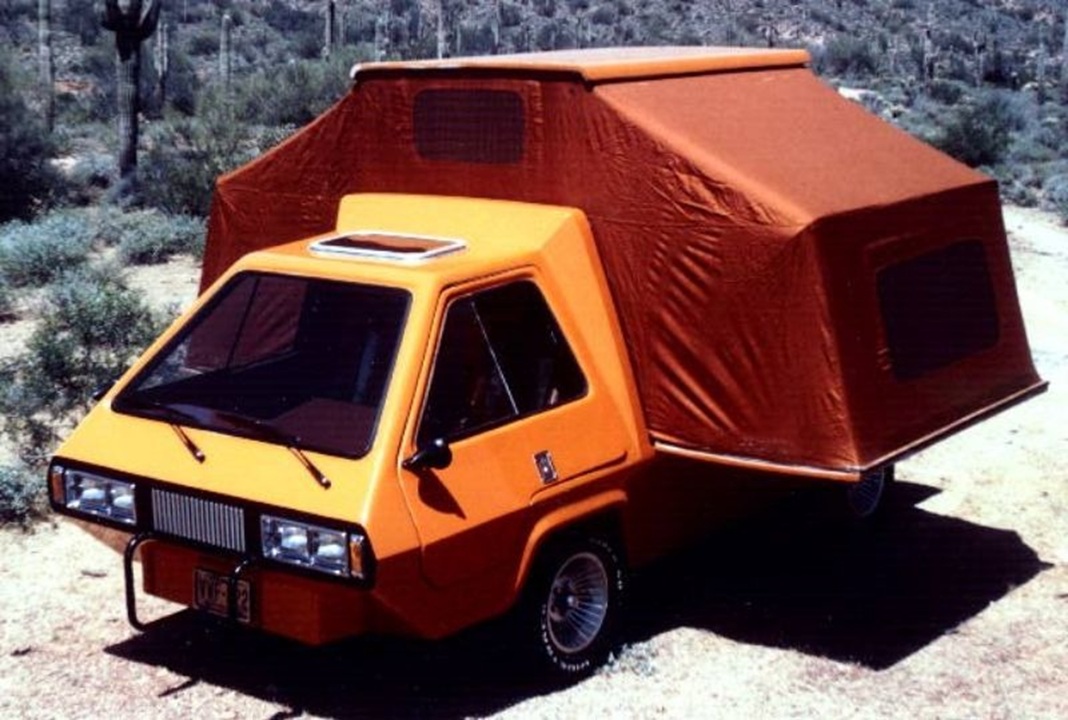
Nitrogen-cylinder-assisted gull-wing doors provide easy entrance into the low-profile cab. Two bucket seats in front allow central walk-through space into the rear. The rear is set up with bench seats along each side. Each bench seat has a lift-up top so food, clothes, and other bring-alongs can be stored underneath. Storage area totals about 14 cubic feet per side. Phoenix expands like a tent-trailer into a large room with stand-up height in the center for a six-foot adult. With the camper expanded, the section along each side that normally forms the back of the bench seat now extends out horizontally to become part of the bed (one bed along each side). Each bed measures 72 x 59 inches. Overall, the unit measures 12 feet wide across the bed area when expanded. The seat area is covered with three-inch-thick foam padding, which then serves as a built-in mattress when the camper is expanded.
Appliances are located across the rear, above the engine cover. The rendering in the Mechanix Illustrated piece shows the layout. A sink is on the right, a mirror-faced ice box is in the center, and a two-burner propane stove is on the left side. The stove uses disposable cylinders, which are the only kind legal in the absence of a power-vented stove hood. A vented stove hood, however, could be installed because the stove is located under a fixed region of the body. A 9-gallon plastic water tank is located under the ice box.
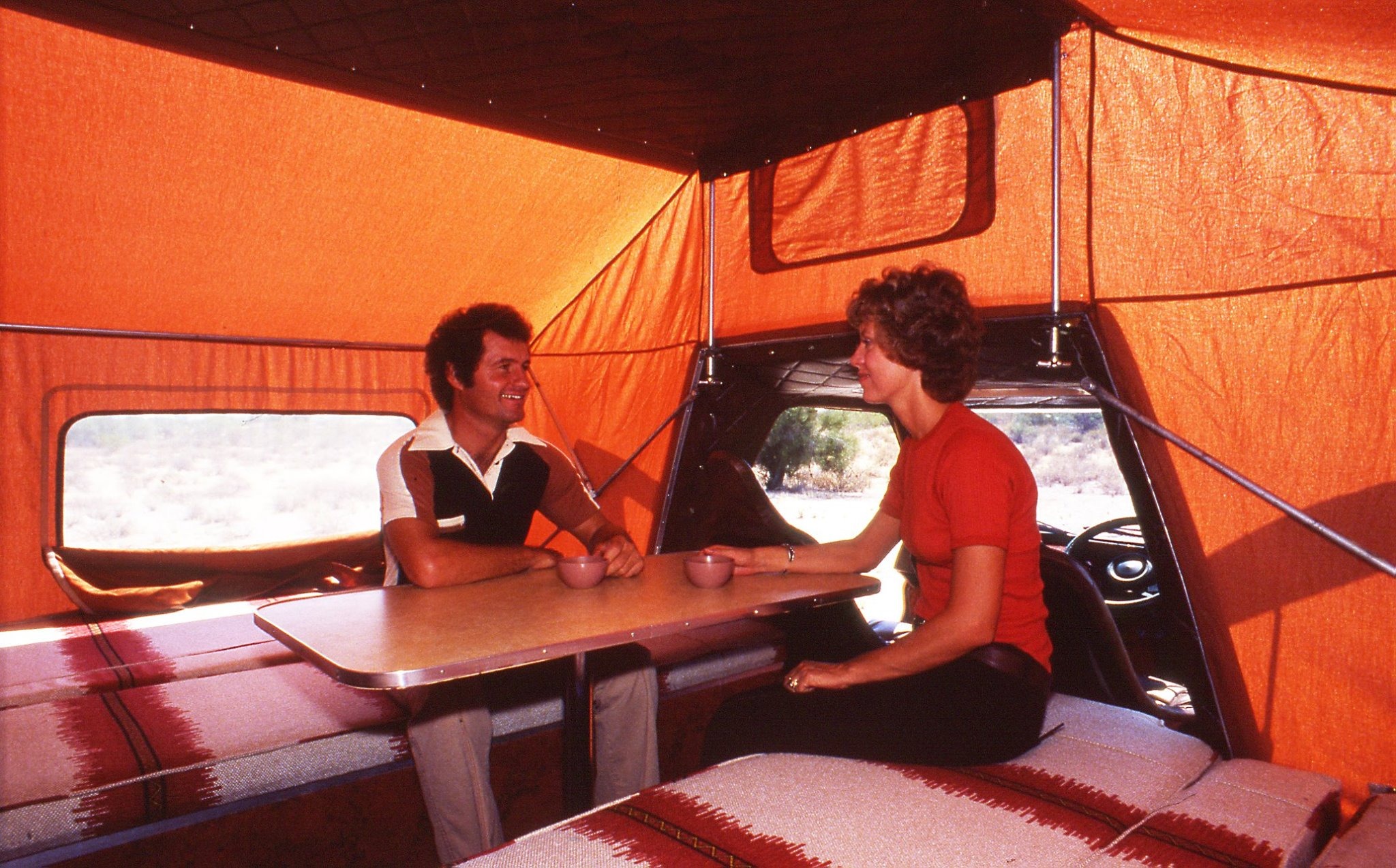
The Phoenix Camper features a body that’s made out of a fiberglass and foam sandwich material. Quincy-Lynn reportedly gave the Phoenix a wedge shape and tried to cut down on frontal area as much as possible. That, combined with the frugal air-cooled Volkswagen bones, is why Robert claimed that the van could get over 25 mpg on the highway. Popular Mechanics claimed that it got an “honest 24 mpg on the highway.” Of course, these were different times, and “highway” meant 55 mph rather than the higher speeds of both the earlier days of motoring and today.
Popular Mechanics marketed the Phoenix, the plans of which sold for $15 in 1979 ($71 in 2026), as costing as little as $2,000 to build ($9,524 in 2026), and claimed that it would outclass any $10,000 motorhome ($47,621 in 2026) on the market. A completed van measured only 13’9″ long and 5’11” tall, which meant that it could fit in normal parking spaces and garages. The catch was that you had to butcher a Volkswagen Type II for the donor chassis.
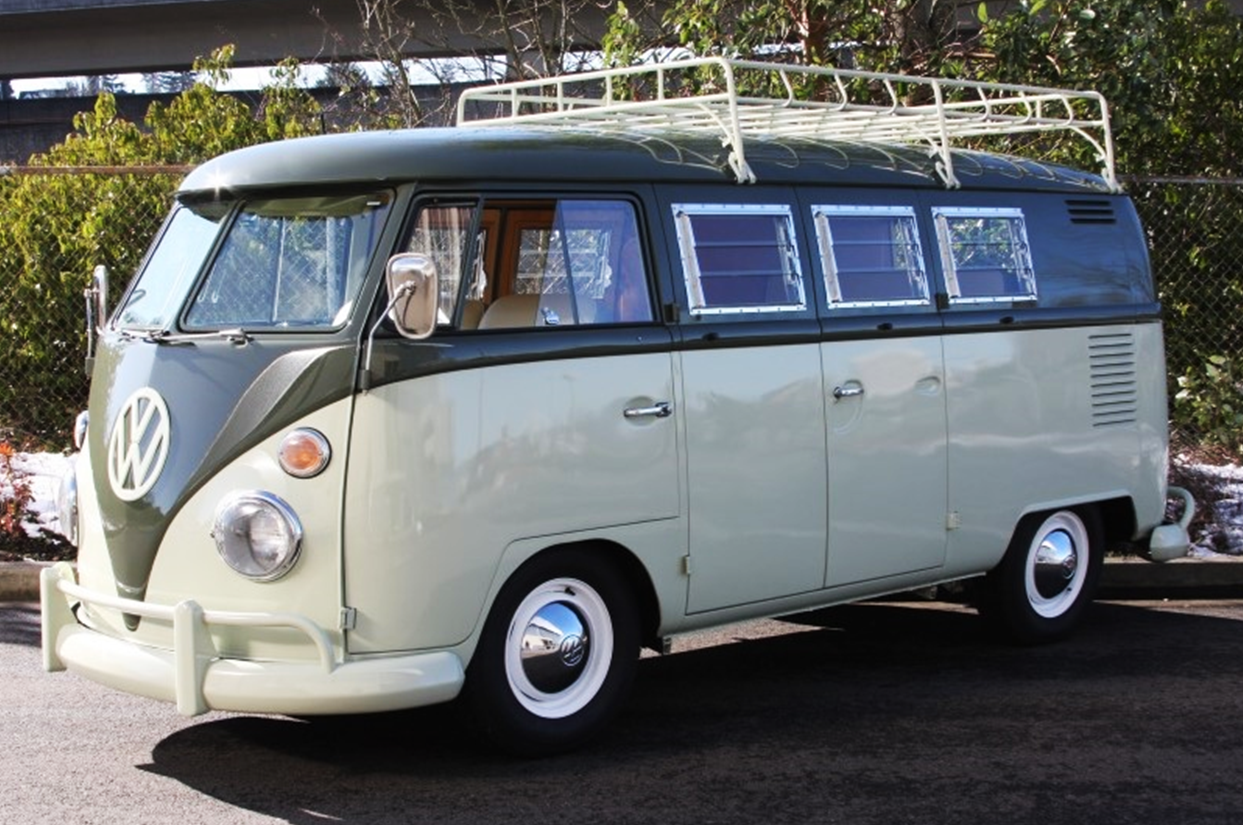
Once you bought the plans, Popular Mechanics tried to help find a donor vehicle. The $2,000 advertised cost was really dependent on you finding the cheapest van possible. The van that Popular Mechanics built was actually $2,200 total, of which $200 was for a wrecked 1969 VW Type II. The magazine said that the good news was that the plans worked for any Type II on the road, so you had decades of vans to choose from. However, the magazine’s recommendation was to go with a 1967 or newer model to benefit from an improved rear suspension design and a 1600cc engine.
The raw materials list included fir wood, plywood, plastic, laminating resin, Bondo, headlight bezels from a Buick, Datsun hatch struts, and other bits. As for removing the body from your donor Type II, Popular Mechanics said to attack it with an air chisel. Apparently, cutting the body off the van was expected to take about a day of time.

If you thought that you’d be replacing all of that metal with some sturdy reinforcement, you’d be only half correct. The plans included instructions for bolting a pair of rollbars and a pair of braces to your naked Type II. But that’s it. This had about the same crash protection as a go-kart. I won’t go through the whole plan, but I will say that this van build wasn’t for the faint of heart. Yes, it required only basic tools, but you were converting one vehicle into another here.
If you braved through the process, the completed van weighed 400 pounds to 500 pounds less than the donor VW van, and it’s said that the camper version was more peppy thanks to the weight loss.
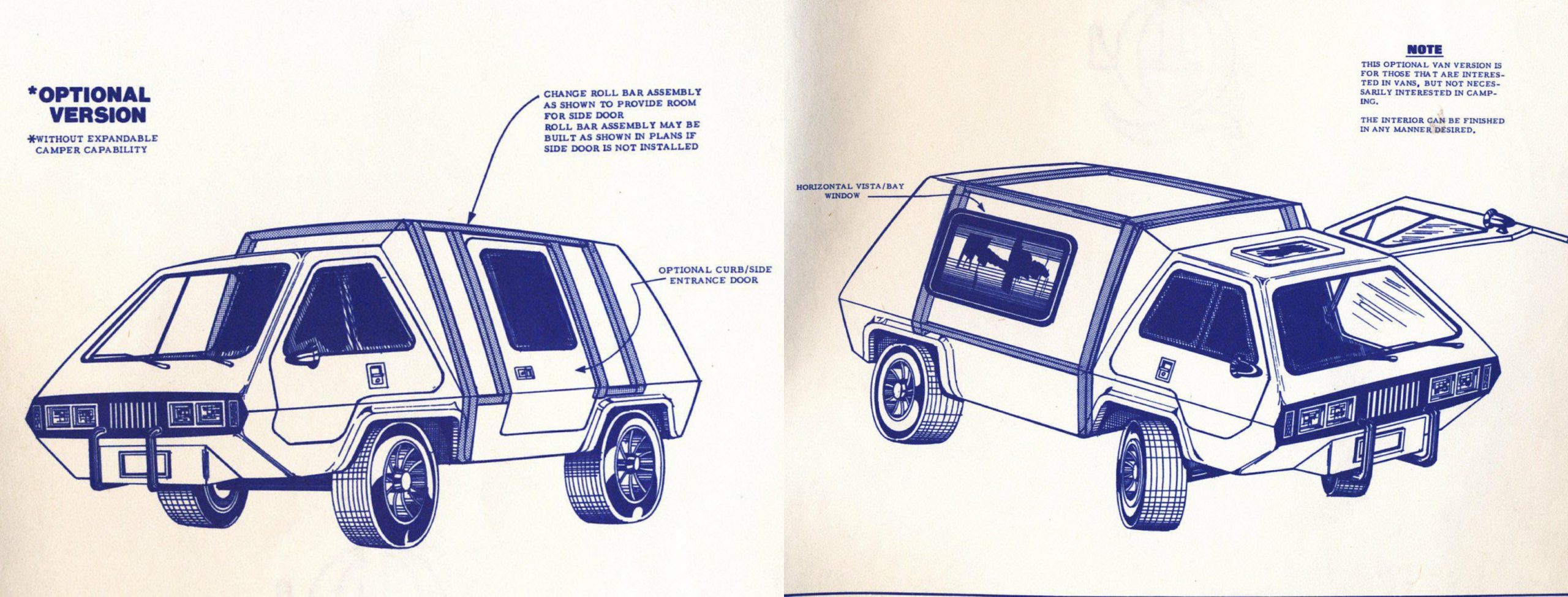
Going into the early 1980s, Quincy-Lynn also licensed the plans to Mechanix Illustrated, which made some cosmetic changes and renamed the camper as the Renegade, but it was otherwise the same kit. There were other derivatives of the Phoenix made over the years, including one that didn’t have a tent and instead had fixed walls, and one that had a second pair of gullwing doors and more of a conversion van interior.
Robert’s Legacy
In 1986, Robert. Q. Riley would go his own way, opening up Robert Q. Riley Enterprises. As I wrote in the past, Robert would become more well-known for his distinctive three-wheelers, including the Trimuter, the XR-3 Hybrid, and the Tri-Magnum. Since his vehicles looked futuristic, they sometimes appeared in sci-fi movies. The Trimuter and the Phoenix both had appearances in Total Recall, for example.
Robert would also use his website to host all of the different plans that he sold over the years. All of these plans, including the Phoenix, were readily available to buy until Robert’s passing in 2021. Now, Robert Q. Riley Enterprises doesn’t exist anymore, and its website is offline. That means that the Phoenix and its derivatives were technically on the market for at least 42 years.

Sadly, it’s not known how many people bought plans or built a Phoenix. However, they do show up for sale sometimes, which suggests that at least some people cut their way through a Type II to make a fiberglass camper van.
I suspect that this won’t be the last time that I talk about a Robert. Q. Riley creation. The man spent decades creating all sorts of weird and fun vehicles. That alone is awesome, but the twist that he designed these things for the average person to put together is something else. I also liked how Robert at least attempted to solve real problems. The Phoenix was the kind of camper van that a lot of buyers are asking for today. Give it some LED lights, and I bet it would be a hit at an RV show today.
Topshot graphic image: Robert Q. Riley Enterprises, LLC


As fascinating as the RV is – and it is – I’m just tickled that you included a shot of the weird submarine. I have to wonder how many of that particular insurance claim got built.
RQ Riley was pretty damned interesting, but with the company no longer active, if anyone out there wants to roll their own you’re either going to have to find somebody’s old plans for private sale, or…roll your own from scratch, I guess?
Does anybody build a body-in-white chassis for the VW Bus? It’d be a shame to sacrifice a real one for a Phoenix.
I’m getting a Lagonda vibe from this.
„Predessors“? In their creativity they obviously couldn‘t stop hacking up even perfectly good words 🙂
Obviously meant “Predeceaser” a chiefly 19th-century noun referring to a person who dies before someone else, derived from the verb “predecease”.
That Tri-Magnum is pretty bitchin’!
I loved all the Quincy-Lynn vehicles, and still have some of the plans I ordered from them as a kid!
Robert Quincy Riley and David Lynn Carey were inspired home builders, who made the leap into something more. They don’t get the love or appreciation from the car world they deserve.
Which plans do you have?
I believe I have plans for the Tri-Magnum, Trimuter, and Urba Centurion.
Wondering how well a Dodge Caravan would do if chopped and framed that way. Somewhere between flexi-flyer and wet noodle ya think?
Now THAT is an interesting concept. I’m pretty sure the roof is substantially structural but that big flat floor is an inviting starting point.
My wife and I made a tent that drawstring-ed onto the back of our Caravan, and a sleeping platform that rested atop the folded-down back seat, and we used that for car camping with two small kids. Worked pretty well, the van just sat with the rear tailgate up all night and made for plenty of stand-up room. With the liftgate providing so much support, important structural elements elsewhere were minimized in the design. We were able to collapse and pack the whole tent in under five minutes.
Absolutely! Gotta show off this giant-collared brown and white velour shirt!
God, I absolutely do not miss seventies fashion.
They’re drinking straight Crush without alcohol mixers and there’s no nicotine delivery supplies, let alone drugs or paraphernalia anywhere to be seen, definitely NOT my childhood memories of the 70’s!
Perhaps Buck and Barbara have quit cold turkey on all that and are trying to “get it together for the kids”? Maybe that’s why they look so fucking miserable.
Hey! There’s my memories after all…
The fondue pot is missing, too.
YES! And the macrame, and so much more that escapes me right now.
It’s just the memories that picture reminds me of the Boomers I watched when the hangover from all of the excesses of the late 60’s through late 70’s caught up with them and they started trying so hard to straighten up and become yuppies in the 80’s
Ya, but that shirt Buck’s wearing is pure ’73. Those cups are full of rum and bitter orange, too. They had to put out the cigarettes (Marlboro and Virginia Slims) for the photo.
And hide the HUGE ornate glass ashtrays and the personalized leather or metal cigarette/lighter cases. You’ve come a long way baby! 🙂
10/10 would cut up a VW for this.
I’d also cut up a VW for the sake of cutting up a VW, though xD
I had to look closely to see the one in red is a woman.
Having sudden flashbacks to the little red Tonka Trucks I had as a child in the late 60’s.
https://www.theautopian.com/a-daydreaming-designer-imagines-if-a-favorite-tonka-toy-came-to-life/
Hello, Newman.
A VW story not written by Jason? Is he sick?
The thought of cutting apart a bus made him faint
With the tent deployed it looks like Dennis’s Dilophosaurus Dinosaur from Jurassic Park:
https://m.youtube.com/watch?v=IxQl9-On6oQ
First thing came to my mind also.
Also makes me flashback to finding the paragraph from the book that describes this scene not that long ago…chilling to say the least.
I took Biochem at UC Davis in the early 90s, a couple of years before the first JP movie was released. The book’s plot of using dino DNA stored in amberized mosquitoes to resurrect dinosaurs was brought up in class as a real possibility (this was long before DNA’s half life was well known about and DNA sequencing was still being done slowly on gels) I had been a fan of Michael Crichton’s works so I was familiar with the book. It was an exciting time but of course things didn’t work out that way. Which is too bad. I was looking forward to riding around on my own Triceratops and living the Land of the Lost lifestyle.
I’m gonna get dragged for this, but my first reaction to the overall look was “Pinto, but camper”
Lol. My initial thought when I saw that tent open version was that this is the same as the spitting dinos from Jurassic Park. Closed it looks sleek and then open it’s a “POW” reflector look.
This looks cool as hell from outside, but from the inside I think I’d rather have a regular Westfaila pop-top.
I’d label this a Westfailure.
So I have had a standing offer with my friend and community cloud for several years: The first person to drop a VW Phoenix van in my yard will get to fly it when I’m done converting it to a heavy VTOL (multirotor drone).
Dubious prize, perhaps, but a noble goal
I’d rather be the 2nd one to fly it if you don’t mind.
Man, this looks straight from one of the sets of the old Horizons ride at Disney World.
From what I gather, this is basically a pop-up trailer put crossways on the back of a VW Bus, with a nose that looks like a Shuttlecraft.
What blows me away is that instead of being a fiberglass kit like the majority of VW conversions, this thing was built from plans. I can only imagine most of the owners were also EAA members.
Also I want that Ground Hugger, that thing gives one of the nerdiest classes of bikes some style, man!
The guy from whom I got my HMV Freeway had a nearly completed Tri-Magnum kit in his garage, which I suppose shouldn’t be all that surprising.
I didn’t try to buy it from him, which I suppose might be more surprising.
That sounds dirtier than it should.
As I recall it was rather dusty.
The Tri Magnum is not for the faint of heart.
Strong Captain Scarlet/Space 1999 vibes here
Either that or the Damnation Alley Landmaster’s baby brother.
And now I’m stuck with the Space:1999 theme earworm. Arrrgh.
It’s the different version of the Landau roof that makes that connection.