

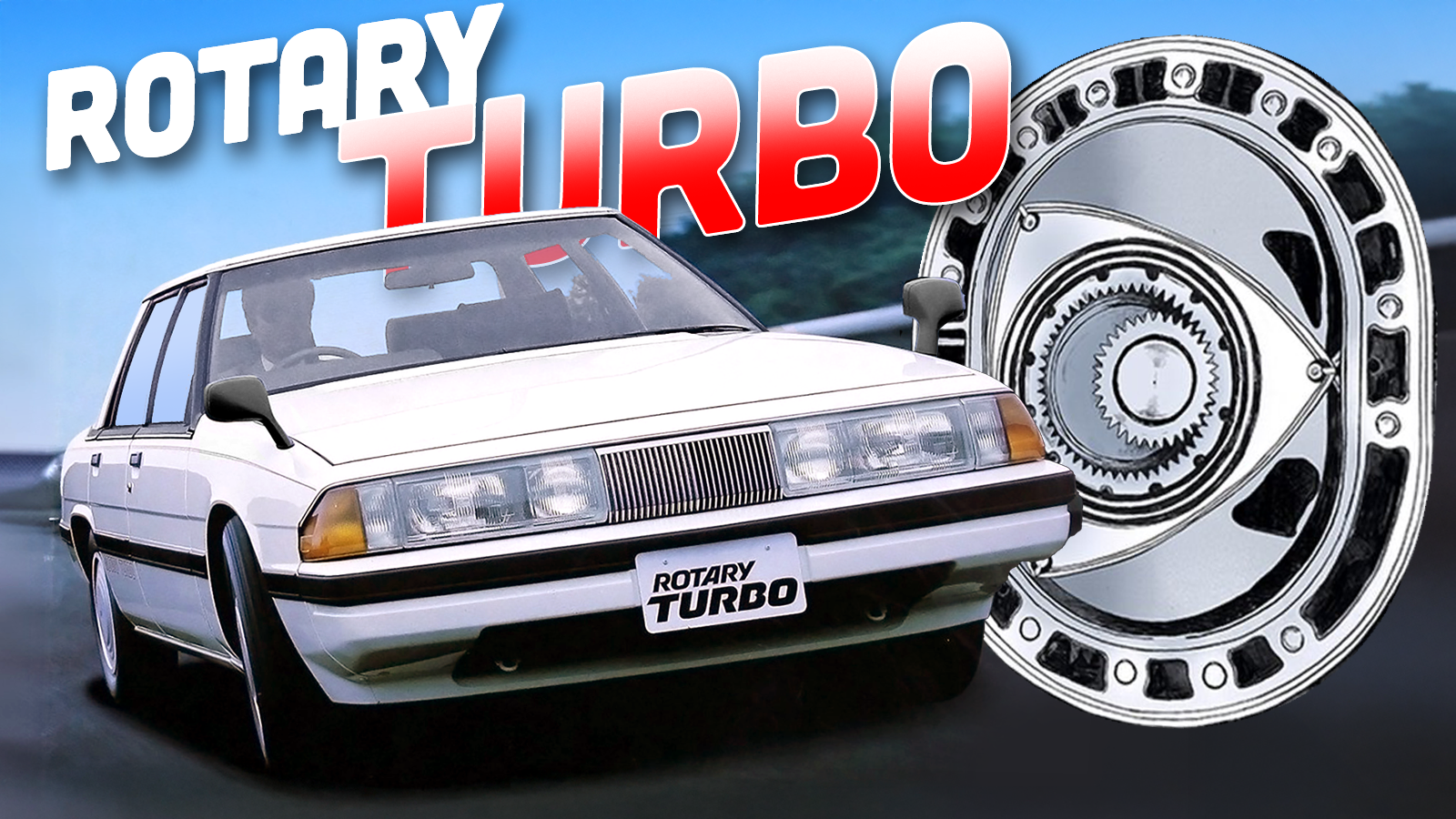
Let’s rewind the clock back to the 1980s and see what Mazda’s all about. Wow, the clock is digital. Other than moving towards front-wheel drive with the newly launched Familia/323/GLC and producing small trucks for Ford, Mazda was still busy trying to make the rotary revolution happen. The first-generation RX-7 had been launched a couple of years earlier, and if there’s one car that will be remembered for its rotary powerplant, in a positive way, it’s the RX-7 sports car that spanned three generations. The 1978 SA-generation RX-7 continued where the RX-3 coupe had left off.
As well as coupes, Mazda was adamant about putting rotary engines into sedans from the 1970s onwards. The RX-3 was offered in sedan form, alongside the 616/Capella’s rotary-engined versions, the larger and plusher Luce and Cosmo, and the notorious Roadpacer, which combined a dinky 1.3-liter, 135-horsepower rotary engine with a full-size Holden Premier body from Australia. The Roadpacer went nowhere, both figuratively and literally, but it used enormous amounts of fuel trying to shift itself. It was soon buried, but Mazda wasn’t done with rear-wheel-drive rotary sedans. Thankfully, turbocharging was there to help things along.


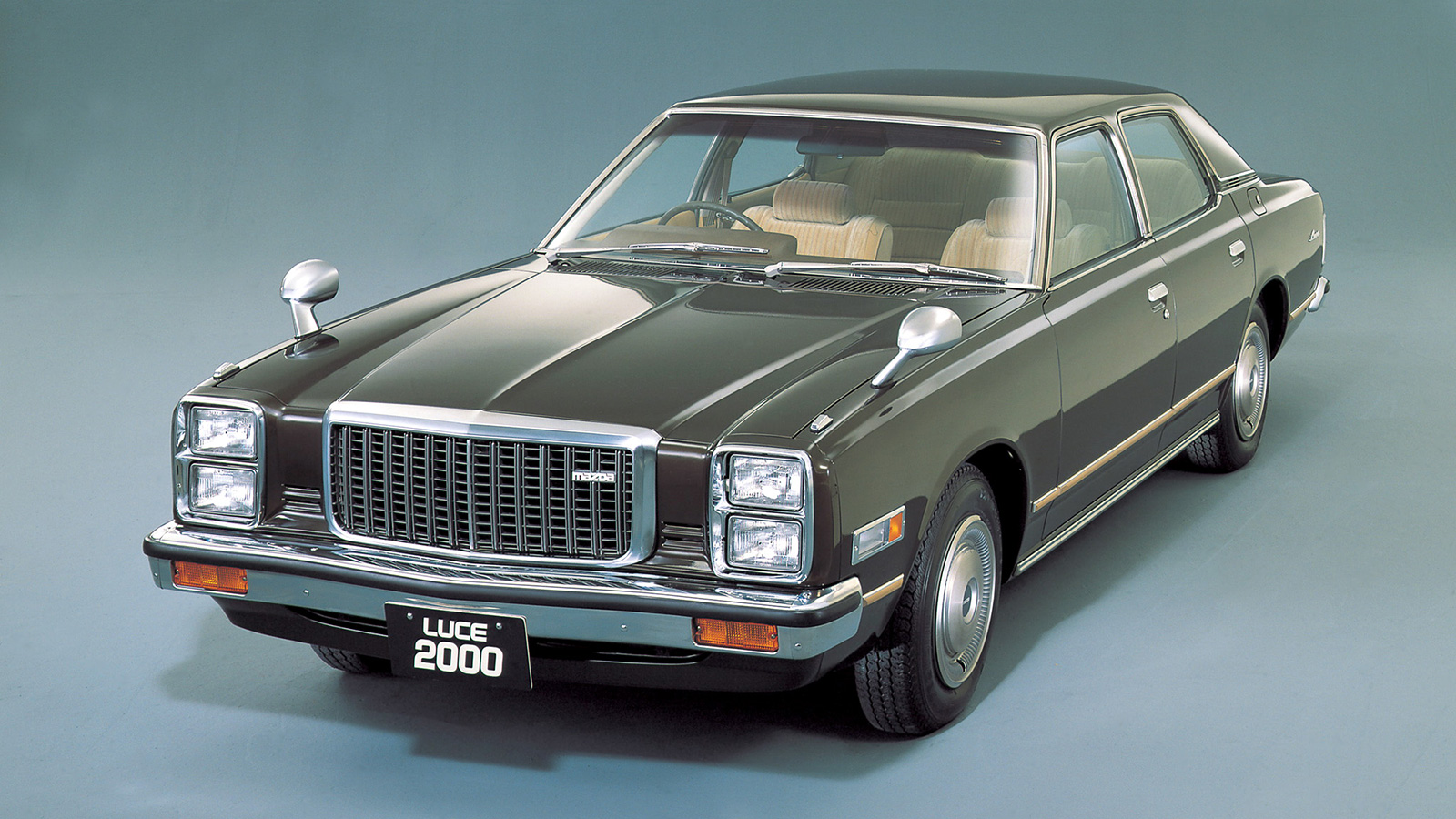
The mid-1970s Luce and Cosmo, both heavier and larger than their predecessors, were styled with a certain amount of American influence. In 1981, those cars were phased out in favor of a new, sharp, 1980s styling approach which cut through malaisey chrome curves like a blade. Only the old wagon remained in production for the rest of the decade.
Sharper Image
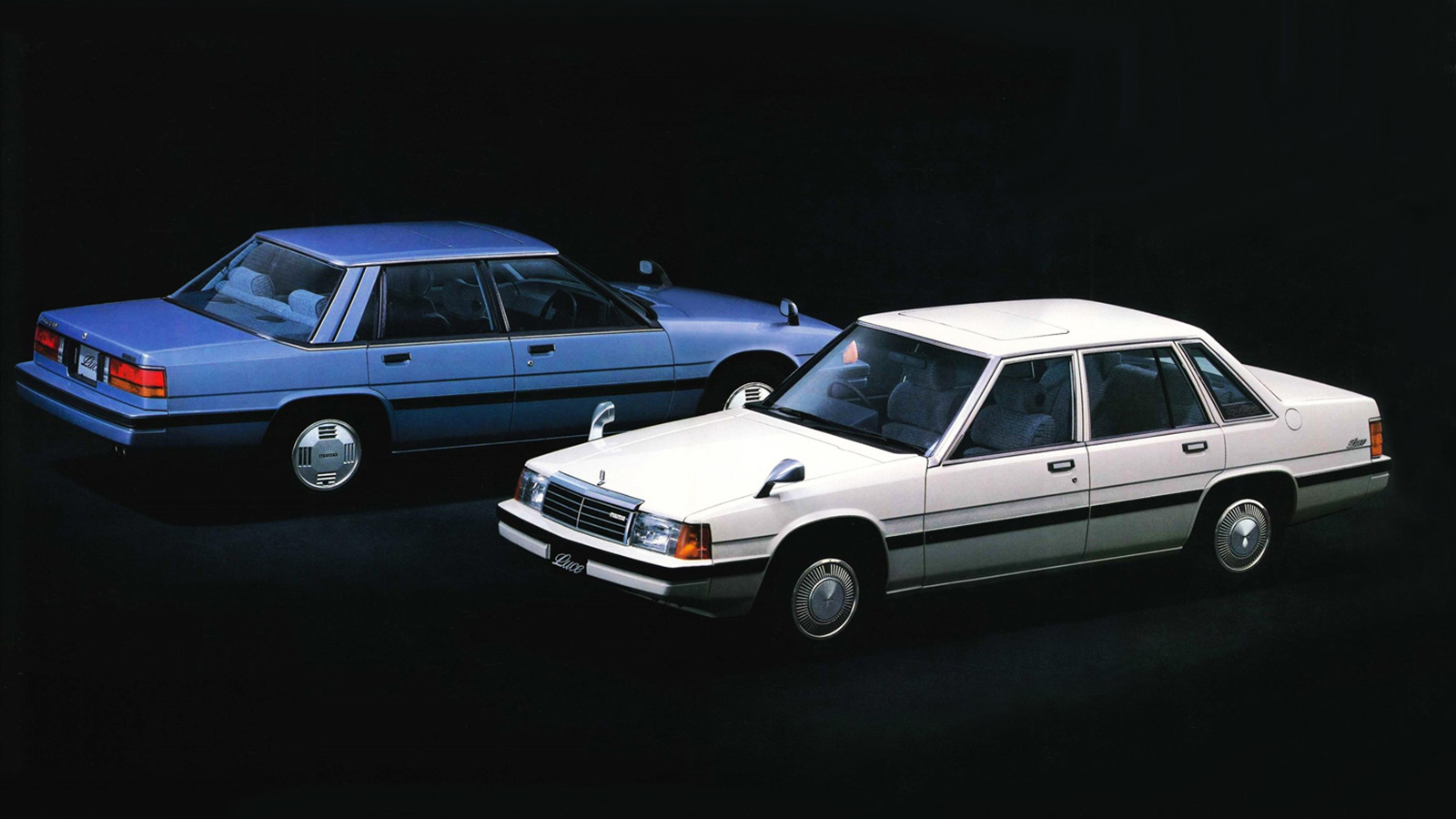
The hardtop sedan Luce and Cosmo were easy to differentiate visually from their export version Mazda 929 siblings: the 929, sold in Europe, got a wide grille and narrow headlights, the Luce and Cosmo got a narrow grille and wide headlights – though you could also get a Luce with a regular 929-style roof and wide grille, as seen in the above shot.
You can also see how much the roof shape changed between versions, as the hardtop sedan lost the large windows on the C-pillar, but gained a wraparound rear screen.

The Luce nameplate was directed towards luxury, so it was only affixed to sedans. Mazda had introduced a Cosmo coupe in the late ’60s, so the HB coupes were all called Cosmo, even if they didn’t really carry any inspiration from the bullet-shaped ’60s coupe that had a bit of 1955 Thunderbird about it. The double-wide pop-ups on the HB Cosmo were some of the widest in the business, and initially, you could get them on both the sedan and the coupe. That’s almost Buick Skyhawk stuff.
I could get lost in the above press photo for hours, but I bet the studio smelled of cigarettes. Or how do you think they recreated the smoke in the shot below?

The Luce and Cosmo were available with piston engines, and the 929 only with them, but especially the 1981-1989 HB Cosmo sedan was a power plant freak show: you could get three inline fours, three rotaries, and a 2.2-liter diesel four. It remains the only car in history to offer an engine palette like that. The 160-hp Cosmo Rotary Turbo coupe was the fastest production car in Japan at the time, until the R30 Skyline RS came along.
Only V6 engines were missing, but the later HC generation took care of that. Sadly, by then, no diesels were offered anymore.
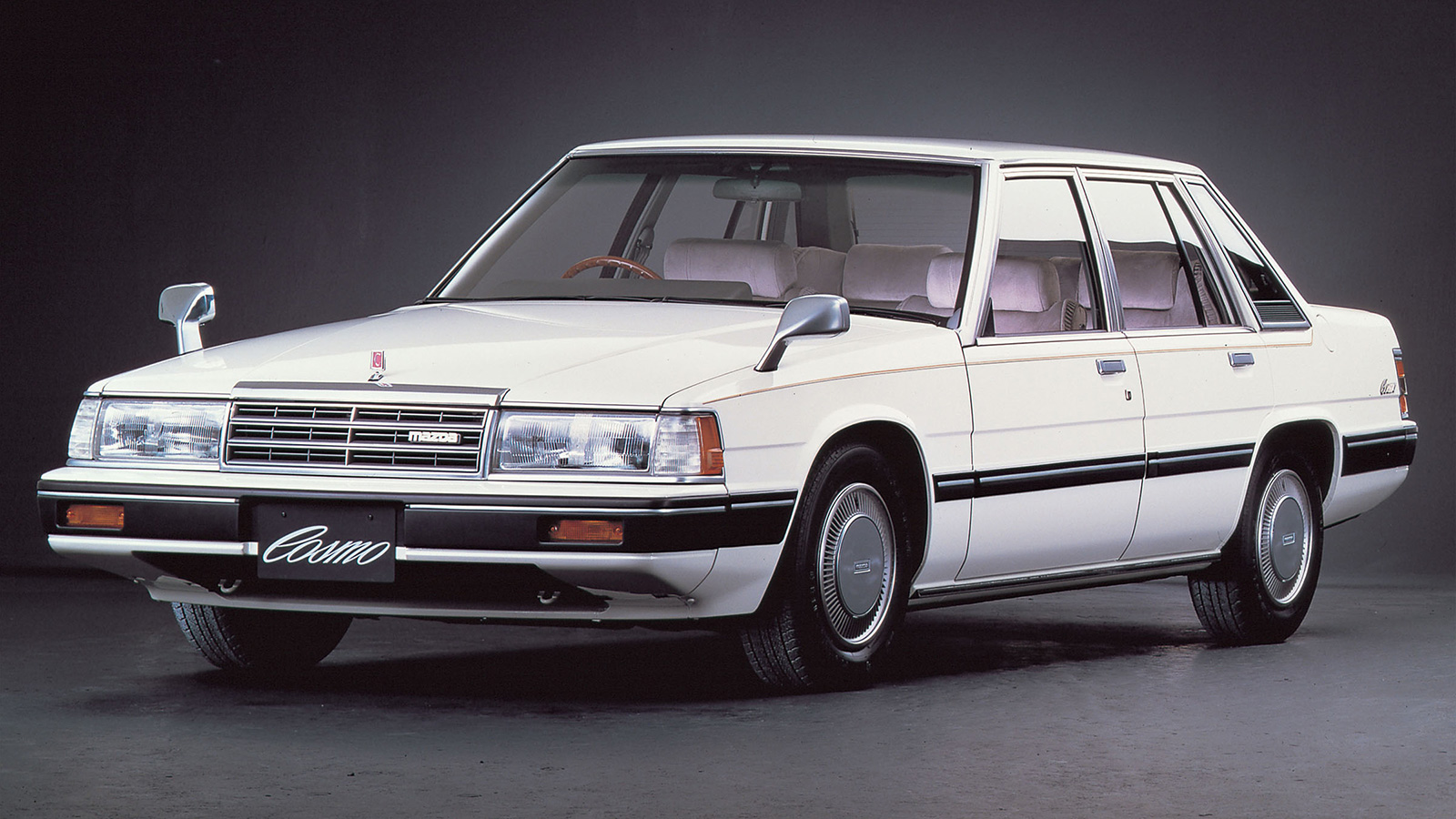
The turbo rotary engines were the only ones of their kind to go in a four-door sedan, which guarantees the Luce and Cosmo a place in automotive history.
For the HB generation Cosmo, Mazda’s marketing department literally went for a Playboy image: the car’s ads, shot in New York with a BIG RUN tagline, featured Playboy bunnies and a nightclub schlager soundtrack whose name translates to “The Blooming Man.” I have the Kazuhiro Nishimatsu single on vinyl, as it popped up on Discogs a while ago.
More Rotary Turbos

And the 1986 HC platform was again larger, with bigger engines, looking like it borrowed a few lines from the Mercedes-Benz W126. While regular four-bangers were still offered, the 1.3-liter rotary turbo was supplemented with a choice of 3.0-liter V6, the same unit as in the export 929.
The HB Luce had bowed out in 1986, but the HB Cosmo soldiered on ‘til 1990, to be replaced with the final production appearance of the Cosmo nameplate so far: the weird and wonderful Eunos Cosmo coupe with a choice of twin or triple rotor engines.
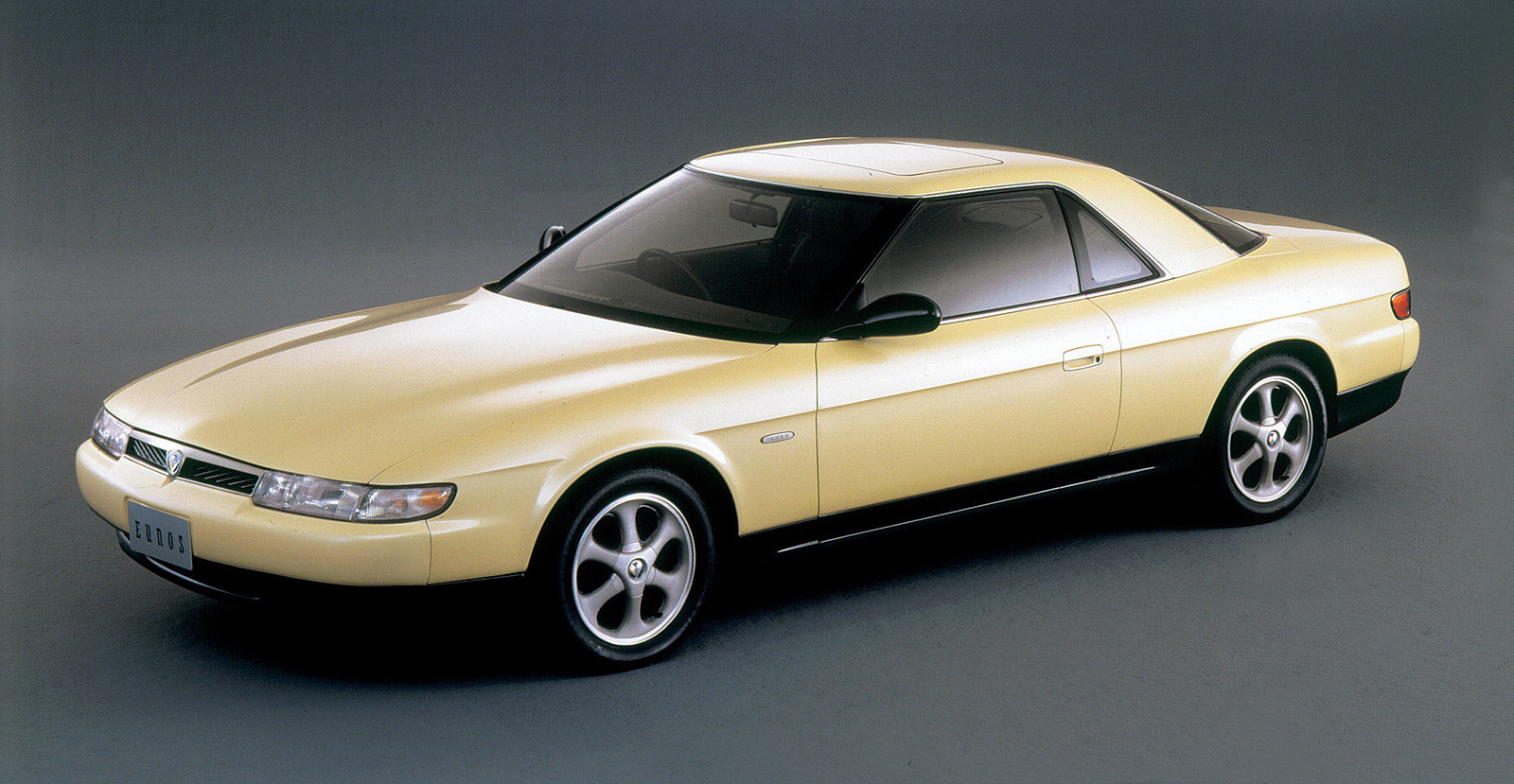
The larger of those was a two-liter, which is immense for a rotary, and it produced the official Gran Turismo era power figure of 280PS/275hp/206kW, like every other hot JDM car of the era.
Mazda had planned to export the ’90s Cosmo as an Amati, but the asset bubble bursting put an end to that, as well as the entire Amati brand. Still, Mazda sold the 1986 929s in the United States as well as its 1991 successor, until that car was replaced in the States by the Mazda Millenia, another Amati remnant.
You Can Get One
1980s and 1990s Luces and Cosmos have largely remained home-market cars, only exported second-hand, but they sometimes appear for sale in the West.
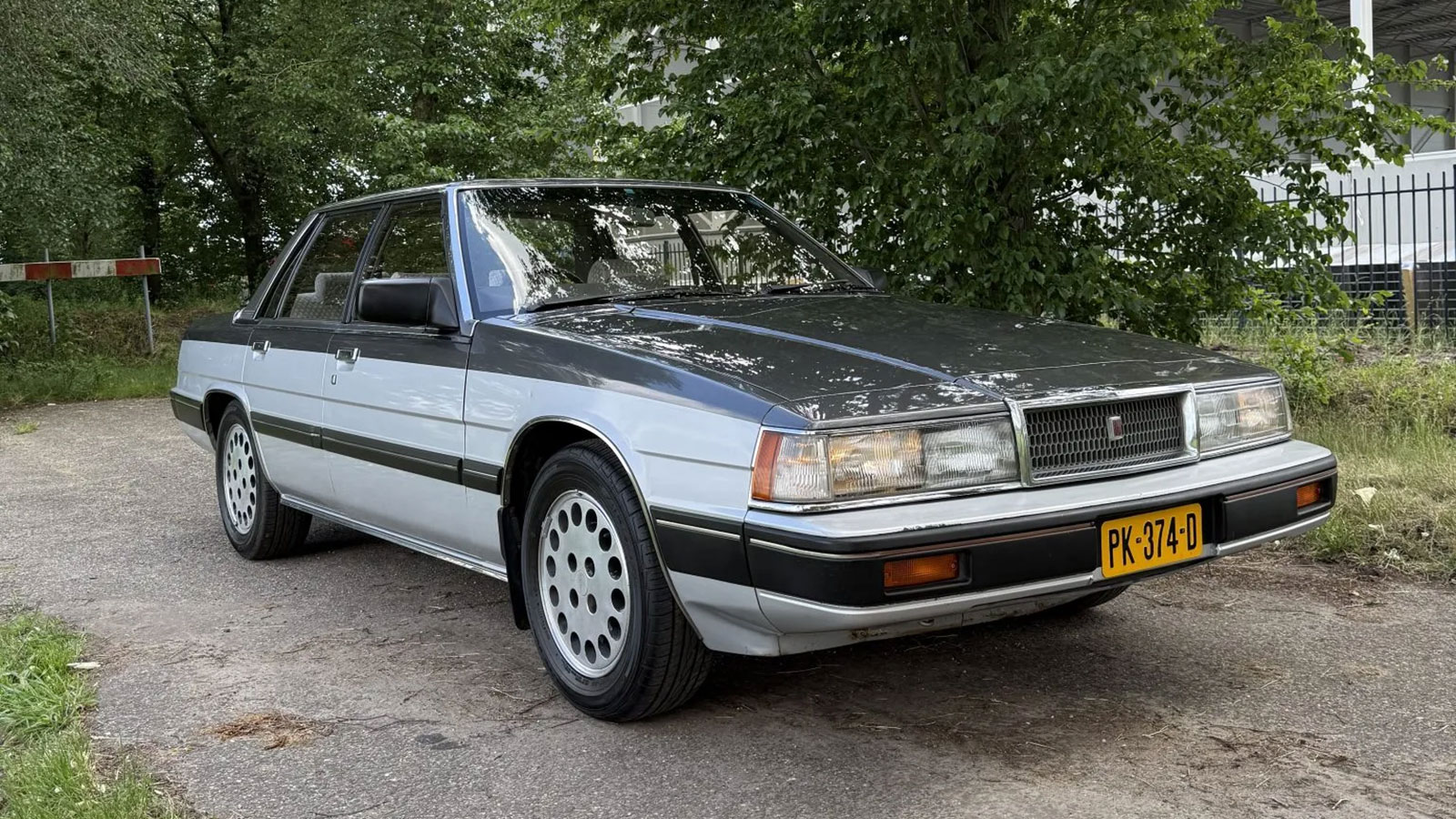
Right now, there’s a wonderful 1986 Cosmo Rotary Turbo Limited on Bring A Trailer, located in the Netherlands. The auction has six days left, with just a couple of bids in.

The car has only done 56,000 miles in 40 years, and it’s the coveted combination of a rotary turbo engine and manual gearbox. It says TURBO or ROTARY TURBO in several places.
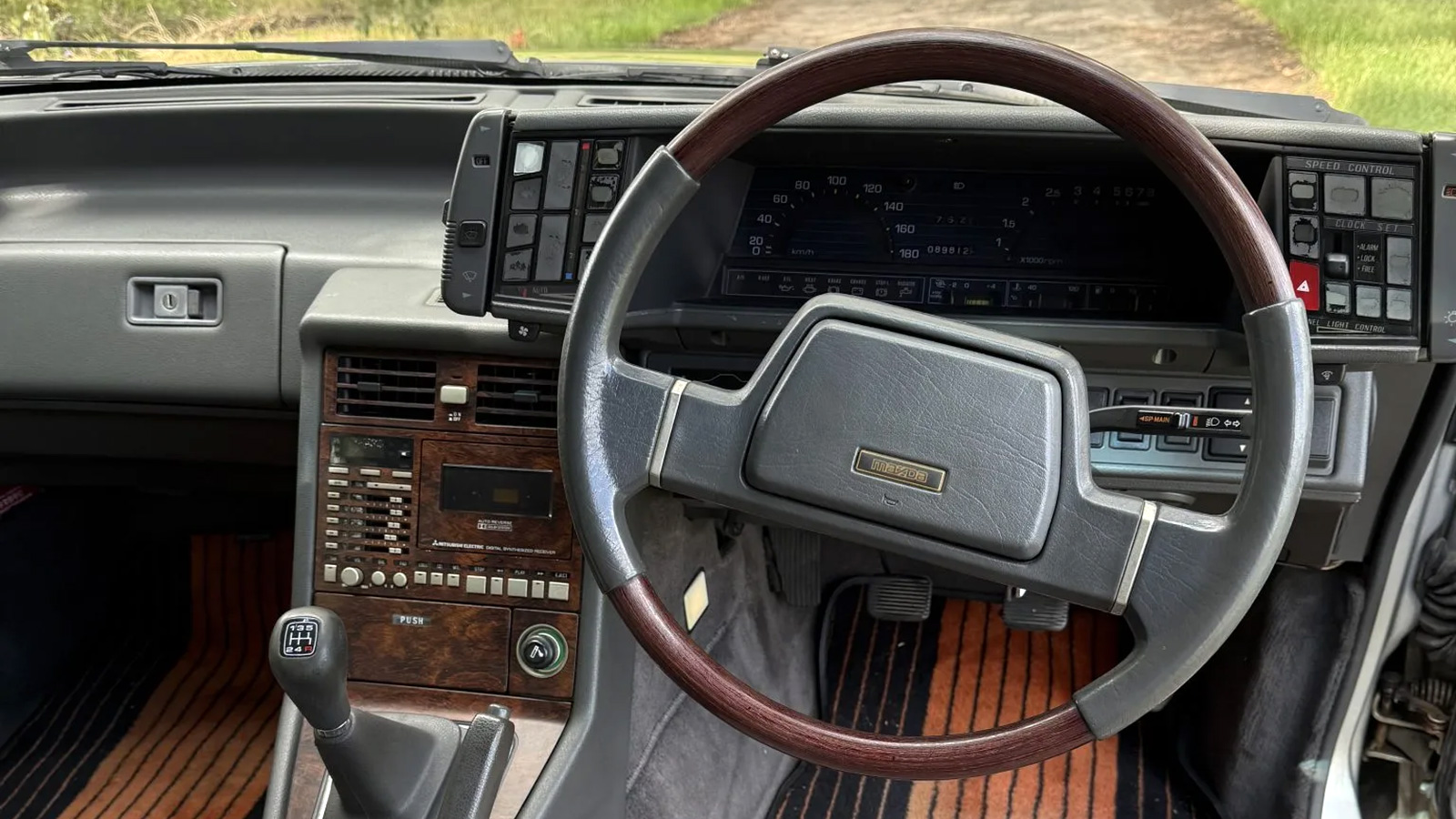
For anyone who’s fascinated with ‘80s Japanese cars on the detail level, the Cosmo sedan is a dream: there’s woodgrain, lace seat covers in the usual JDM style, a vertical-load cassette deck from Mitsubishi together with an equalizer, an onboard “Touring Computer,” graphic gauges done in the same style as on S10/Blazers, and rotating displays for turbo boost and coolant temperature.
Only the headlights and indicators get a stalk, as cruise control (called SPEED CONTROL) is controlled with buttons on the dash, as are the windshield wipers.
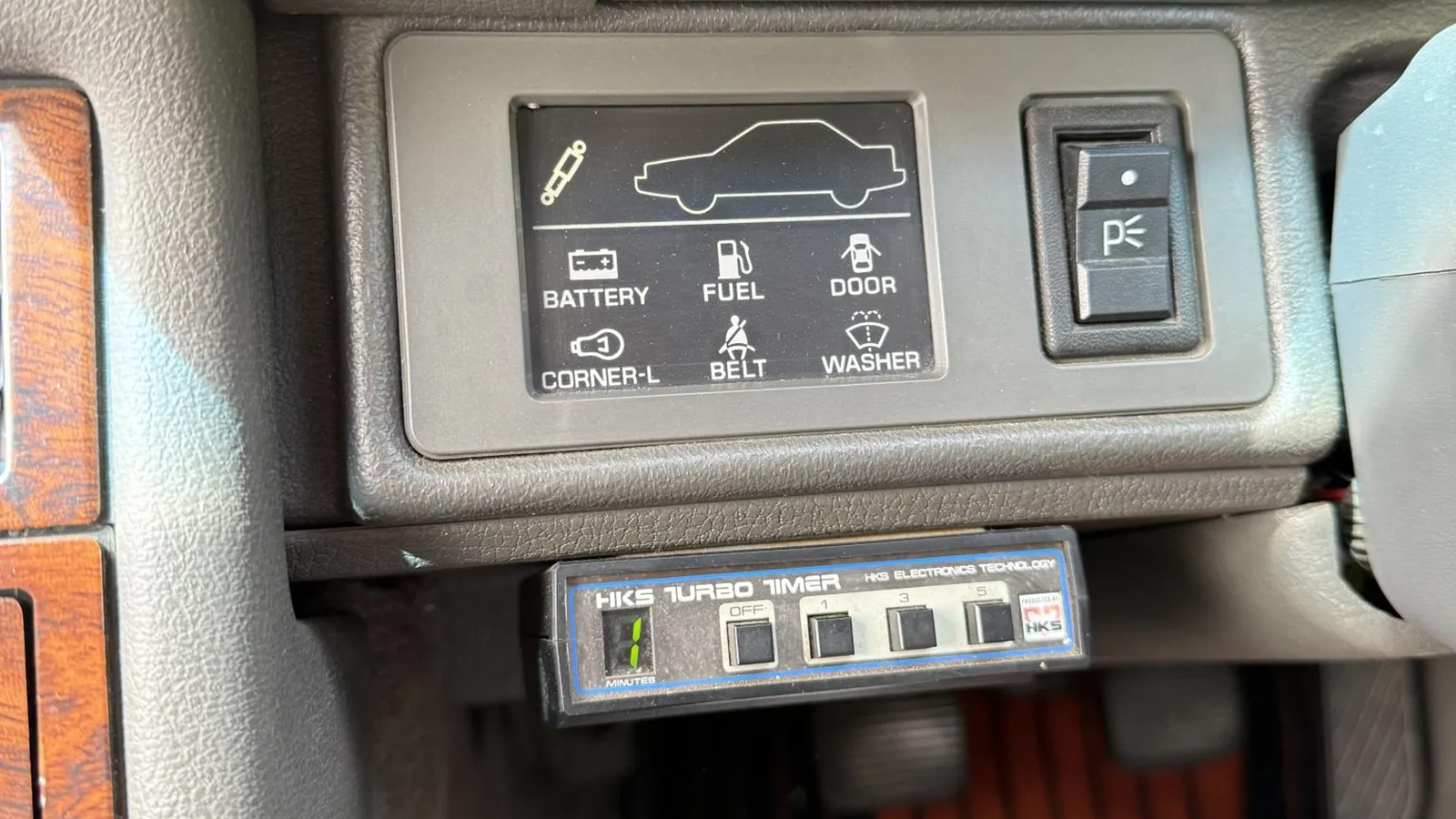
There’s a separate small display on the left side of the steering column with more warning lights and a graphic for the electronically adjustable suspension. Underneath that is the aftermarket HKS Turbo Timer, which can prove handy on a 1980s turbo car with an unconventional powertrain.

The door windows are frameless, because of course they are. The two-tone paint is done in the same exact ‘80s style as on a Prelude or a Nissan Sunny: dark grey on top, silver on the lower panels, as if it were imitating a low-poly shark. The rear window has a wiper, which is another JDM sedan hallmark. The current owner has had the car since 2024 and performed necessary maintenance from fluids to brakes, filters to spark plugs.
Coupe versions of cars are usually the cooler ones by far, but this is a sedan worth dreaming about, if you’re into this kind of thing. A few of the same HB generation 929s have survived in Europe, sedans and coupes, and while they are certainly cool as any old sedan of the time would be by now, the Cosmo’s sharper hardtop sedan looks make it stand out. The HB and HC generation Luce and Cosmo are the only production rotary turbo sedans, and while the world mostly missed out on them when they were new, it’s great to think that enthusiasts outside Japan now have access to them.
All images and top graphic: Mazda unless otherwise noted




This and cars like it are the only reasons I truly wish I was rich.
Yup. I’d buy all the bubble era hotness, and regret nothing.
My dream is a bubble era museum. With an entire wing dedicated to the oh-so popular all-white specials (white with white hubcaps, color-coded bumpers/doorhandles/mirrors).
I’m sure someone already mentioned this, but there was at least one Mazda minitruck with a rotary engine. I saw a restored one on sale for $25K the other year at a car show. It was cute in that simple/utilitarian old Japanese minitruck sort of way, and it had shiny new blue paint. Sorry, I don’t recall what the restorer said it was exactly.
The 74-77 REPU.
That sounds like it I think. Thanks Joe! 🙂
I totally love these. Like you said, these adopted a lot of the awesome ’80s JDM car characteristics in one package.
Back in March I visited Japan and found a scale model of a Mazda Roadpacer at a hobby store in Tokyo. Being an Aussie who likes oddball cars, particularly old Japanese ones, I had to have it. Then we went to the Mazda Museum in Hiroshima and there was a real one on display! I was stoked to see it, and I posted some photos of it online and someone responded that they had been to the museum 10 times but they never had Roadpacer on display. Lucky me.
The JDM two-liter Cosmo was my favorite car in the original Gran Turismo Playstation game.
An electric turbocompounding rotary engine hybrid would be cool. Well actually probably very very actually, but if you think of the rotary engine as a gas generator that also has a power output shaft it would be pretty neat. You could run the turbo as an electricity powered compressor when necessary, and the seals wouldn’t be as much of a problem. You could design them primarily for durability and let them leak a little.
Of course a liquid piston ( terrible name for an engine with no pistons and no liquid) engine would do the same thing better.
I like the Playboy ad, they literally filmed it from the General Motors building’s plaza
Man I love rotaries, ever since I worked at Mazda and got to drive a bunch of RX-8s. Unfortunately I can’t bring myself to own a rotary ever since I worked at Mazda and helped replace a bunch of RX-8 engines…
“The car has only done 56,000 miles in 40 years….”
When you understand that these would often be found idling for hours on the Shuto Expressway in traffic during the summer heat with AC blasting, Grand Sumo on the radio (or portable television) while the driver reads his Asahi Shimbun because he’s going nowhere fast – you’ll understand that “low mileage” means exactly nothing in pre-owned JDM cars.
But yeah – The big JDM coupes and hardtop sedans of that era were achingly cool, no matter what was under the hoods…
…while the sedans were the cars that Mama-San would have chosen – because she controlled the purse strings.
That Eunos Coupe is absolutely gorgeous. I didn’t even know it existed until today, and now I want one.
When I saw this article, I instantly thought of the BaT auction as it pinged one of my notifications I have setup. That’s such a unique car, it would be a hit at Cars and Coffee, RADwood, or any other number of gatherings here in the states.
A small band of rotary engineers still exists in Mazda’s headquarters. They live a nomadic existence, moving between unoccupied offices and skittering away when someone flips on the lights. At night they leave proposals for rotary pickup trucks on the desks of executives and slip rotary engine specifications into the files of other projects. Some see them as mischievous little elves causing no harm. The shareholders have denounced them as fiscally reckless extremists, and call them Wankel-Qaeda.
If only they had turbo’d the MX-30 range extender.
“Made the only rotary turbo sedans in the world”
Yeah because everyone else knew rotaries were a lost cause. It’s not an accomplishment when a company is too stubborn to admit defeat.
Couldn’t care less about the rotary, but that Eunos Cosmos coupe is gorgeous.
The Eunos Cosmo design has aged gloriously. It still looks fresh and modern.
A LOT of Mazdas designs have. Its because they typically haven’t followed fads. They tend to be super clean designs. If the 3rd gen RX7 came out today, I think people would still consider it a great looking car, and that came out 30+ years ago.
Mazda could have put the small displacement high revving V6s that they already made into these cars and gotten similar attributes to a Wankel without many of the drawbacks. Pride and stubbornness was their downfall back then. Compare that today where they put the tried and true Skyactive I4 into half of their vehicles and purchased hybrid powertrains from Toyota instead of trying to develop their own.
The rotary is a great engine for a sports car. Light weight, low center of gravity, and loves to rev. What I wish Mazda had done was what they apparently did in the past: offer cars with both rotary and piston options. The RX-8 probably could have sold 2-3x as many units if they had offered it in either rotary or turbo-4 options for people who wanted to enjoy the amazing chassis, but unwilling to live with the higher-strung nature of the rotary.
The short, low location of the rotary had a lot to do with the handling.
I remember an Alfa spider with a Mazda conversion, described as having a dramatic improvement in handling.
Damn, that (mid?) 1970’s Luce image has some serious 70’s brougham influence going on. If it had any more Ford LTD influence, I think Ford’s lawyers would have come calling…
That Luce is the third generation, introduced in 1977. Ford and Mazda partnership started in 1974.
Perhaps not so much of a coincidence…
So, What was the shock absorber light for?
Suspension settings, the shocks were electronically adjustable.
Okay. So, question. Basically every bubble economy (and well into the mid 90s) Japanese car of basically any sporting intent had some fussy adjustable suspension available (usually only) in the Japanese market that probably didn’t do much of anything beyond add weight. I remember reading you could get a hydraulic setup like a Citreon in the JDM Lexus SC/Soarer, of all things.
Knowing how hard it is to get any parts for any domestic car with anything similar (I assume the only reason you can easily and cheaply get C4 Corvette FX3 shocks is because GM didn’t make them themselves and Bilstein also gave them to Ferrari), what do you do with one of these if literally any part of the no doubt laughably complex and outdated suspension setup has a failure? I recognize on a turbo rotary engine that might be the least of your problems, but I’ve still always wondered.
I’m assuming the Soarer had optional air suspension, probably the same system my 1990 Crown had. When the airbags fail (not if, but when), the fix is actually pretty straightforward- Throw it all in the garbage and switch to coilovers.
I was about to say that there are shops that can convert a vehicle to use standard coilovers. When my sister-in-law needed new shocks for her MDX her options were to put in new magnetic shocks for $6,000 or convert the vehicle to use coilovers for $3,000.
The 5th gen 4Runner Limited has X-REAS suspension that does “something” hydraulically between front left/rear right and front right/left rear. There’s no user controllability or anything. The only advantage to which I can attest is it dives less under braking than conventionally sprung 5th gens which tend to stand on their noses. The disadvantage is it will eventually leak/fail and cost around $4K to replace. Or convert to conventional for much less.
As TheJWT said, you replace with coilovers. Which is what The Autopian’S own SWG did to a Mercedes SL with borked hydraulics: https://www.theautopian.com/how-i-saved-a-once-90000-mercedes-sl-i-bought-for-1900/
Darn. TIL just how hard Mazda tried to make the rotary happen. Amazing they kept at it for long enough to make them somewhat reliable.
If the RX-7 was Flamin’ Hot and the RX-8 was Nacho Cheese, the Cosmo was certainly Cool Ranch.
The American styled Luce: https://www.thrillist.com/eat/nation/cool-ranch-doritos-are-called-cool-american-in-europe
Huh, never knew. S’pose it makes sense, considering the seasoning is uniquely American. And quite popular in Da Midwest.