

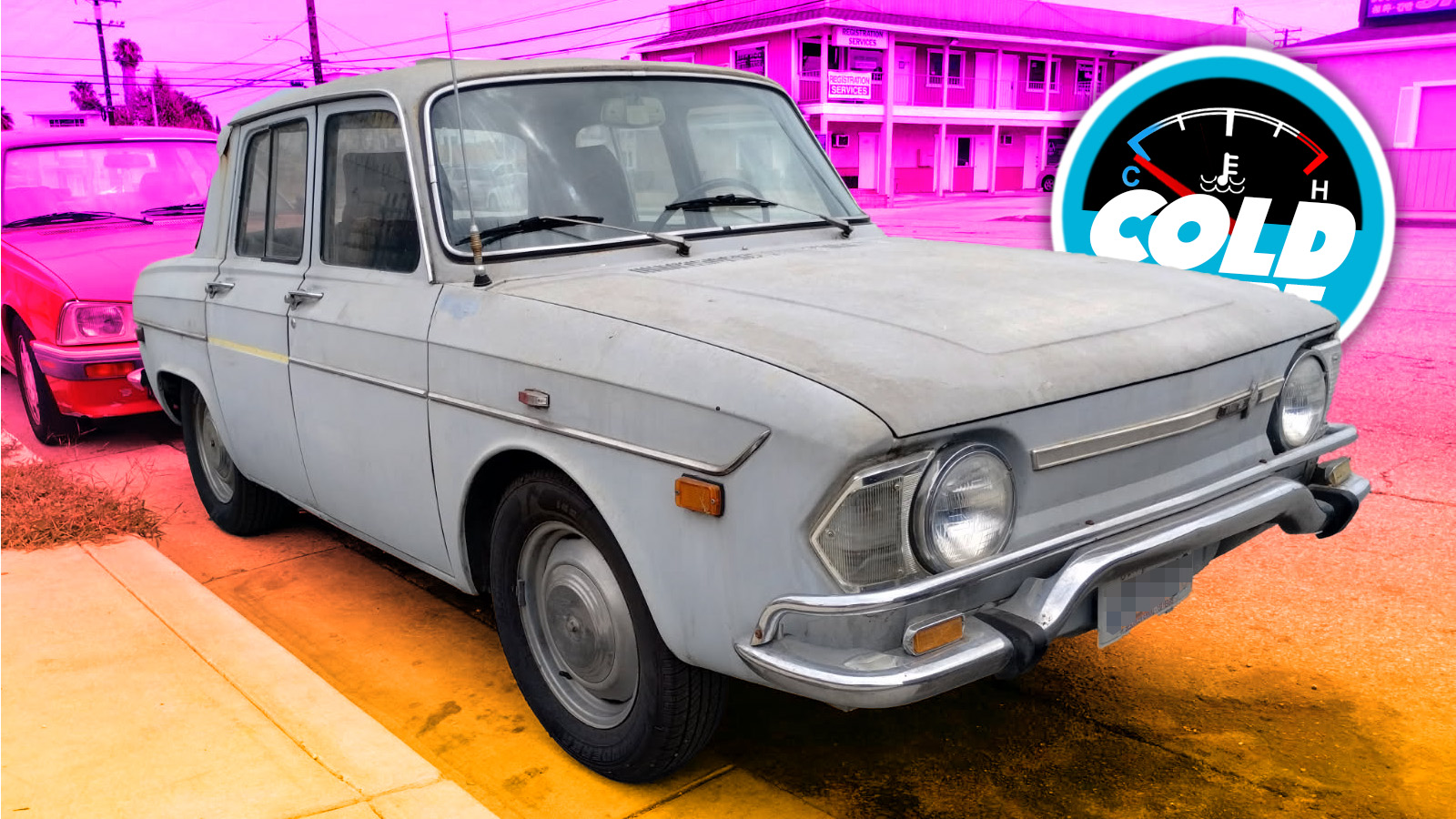
As has been well-established, our occasional contributor Emily Velasco performs an important national service by seeking out and capturing images of interesting street-parked cars of Los Angeles and sending them to me, where I can then ensure they are distributed to a wider audience, as is demanded by the UN charter that we operate under. This is a role I take seriously, and am grateful that I have people like Operative Velasco on my team to help.
This time, Velasco found a really interesting street-parked car, one of those cars that, in America at least, I think you’re only likely to find in this sort of condition, just parked on the street, in LA. There aren’t many in America as it is, and while I’m sure there are a few scattered around the country in various states of repair, this one feels pretty special.


The car is a Renault 10, one from between 1965 and 1967, since it retains the round headlights.
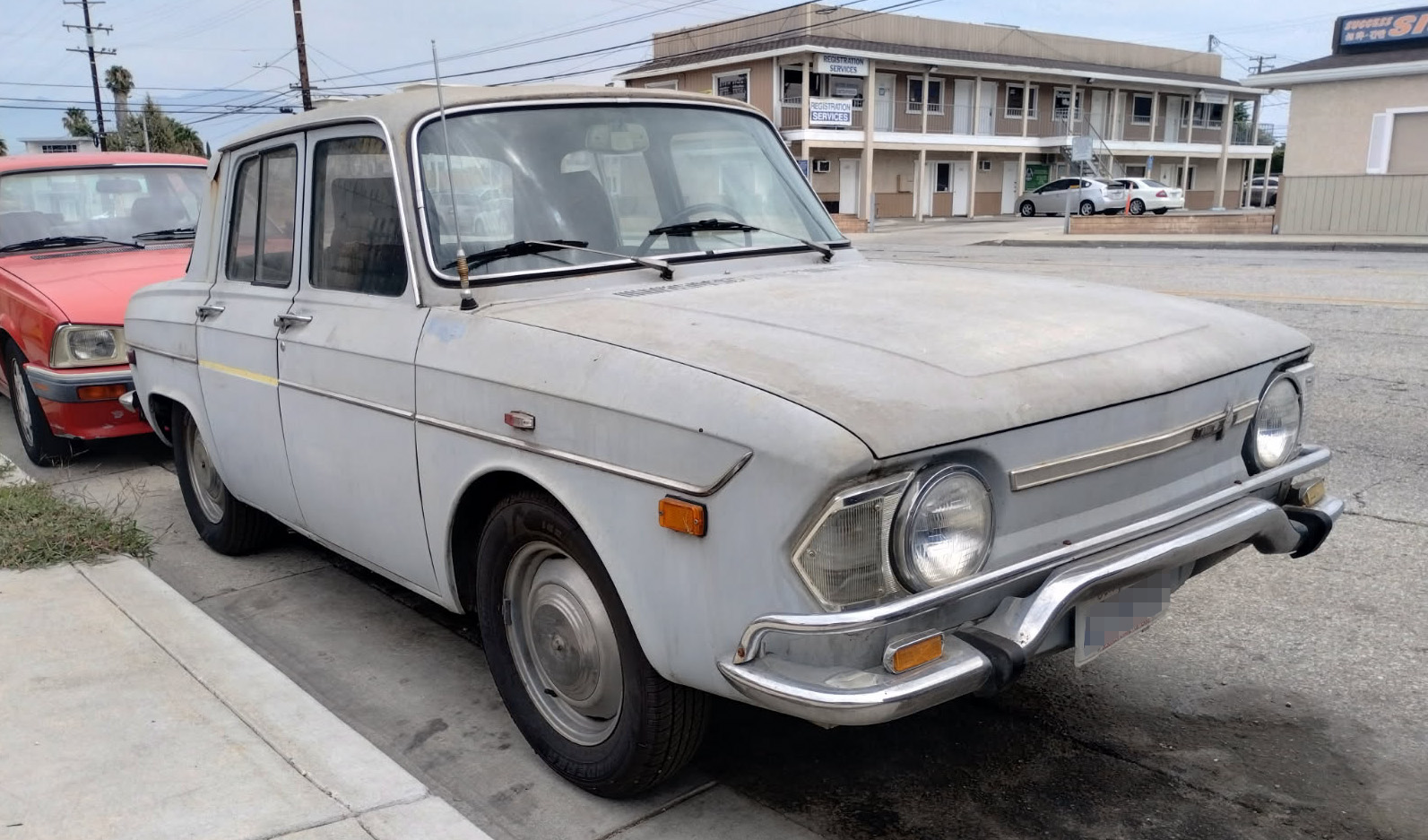
The Renault 10 was a version of the Renault 8 but with better trim and a longer nose to give it about 30% more luggage space. Like the R8, this was a rear-engined car, with an 1108cc inline-four mounted longitudinally at the back. This particular one is remarkable in how it appears to be an unrestored but well-maintained survivor, with a very straight body and retaining all the chrome trim. It’s really pretty incredible to see!
There’s a US-market Peugeot 505 behind it; I wouldn’t be surprised if the same person owns both, and is a sort of Francophile car collector.
Let’s talk about the R10 a bit, because I think it’s a genuinely interesting car. It was sort of positioned as a second chance for Renault in the US after the Dauphine, which was a charming car but not terribly reliable and ended up being a bit of a disaster for Renault in America.
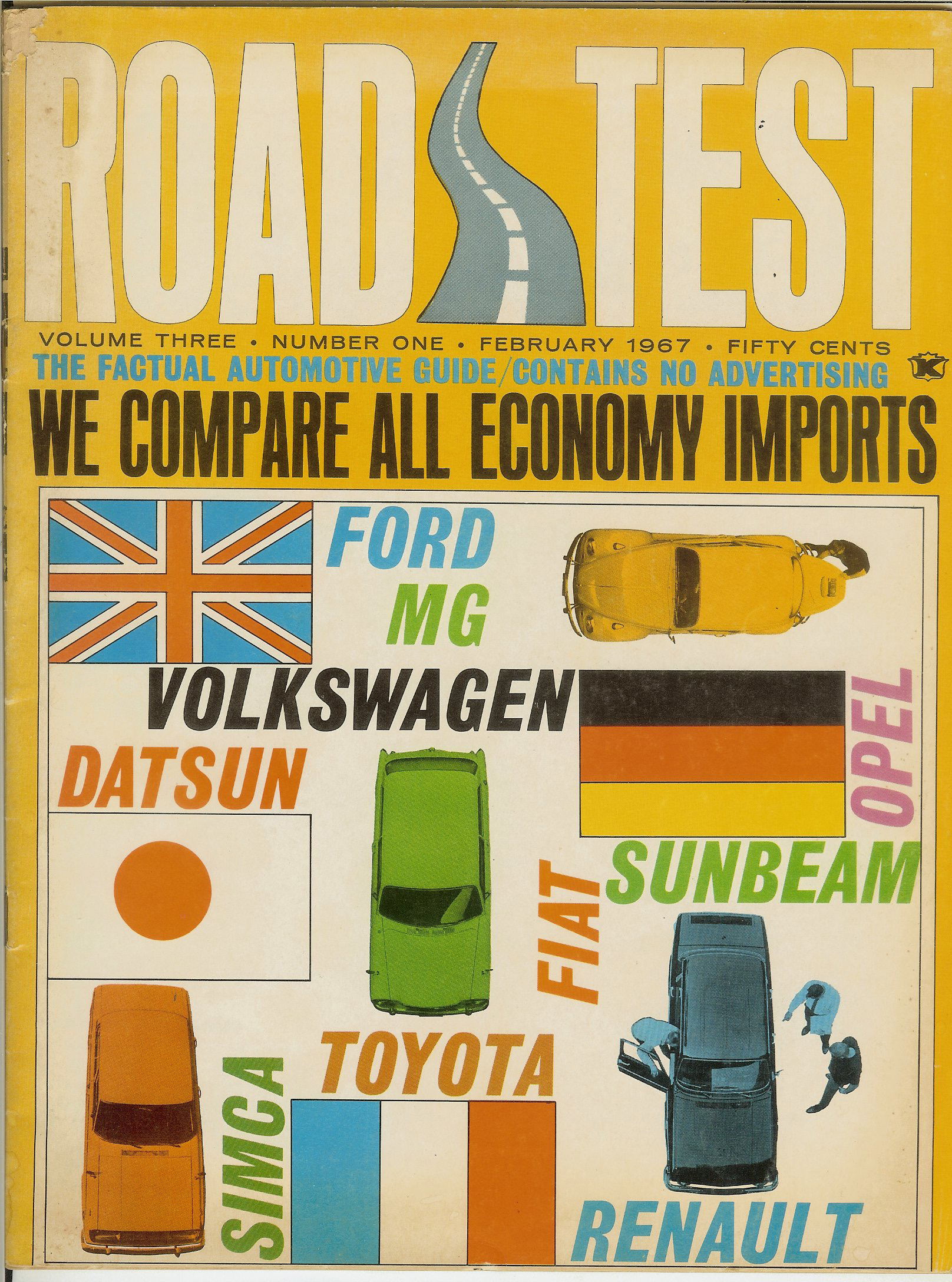
The R10 really seemed determined to redeem Renault; it was a well-appointed, spacious, and well-designed little car, and they wanted to compete with the Beetle. It was far more modern than the Beetle, with unibody construction and a boxy design that fit better with the era.
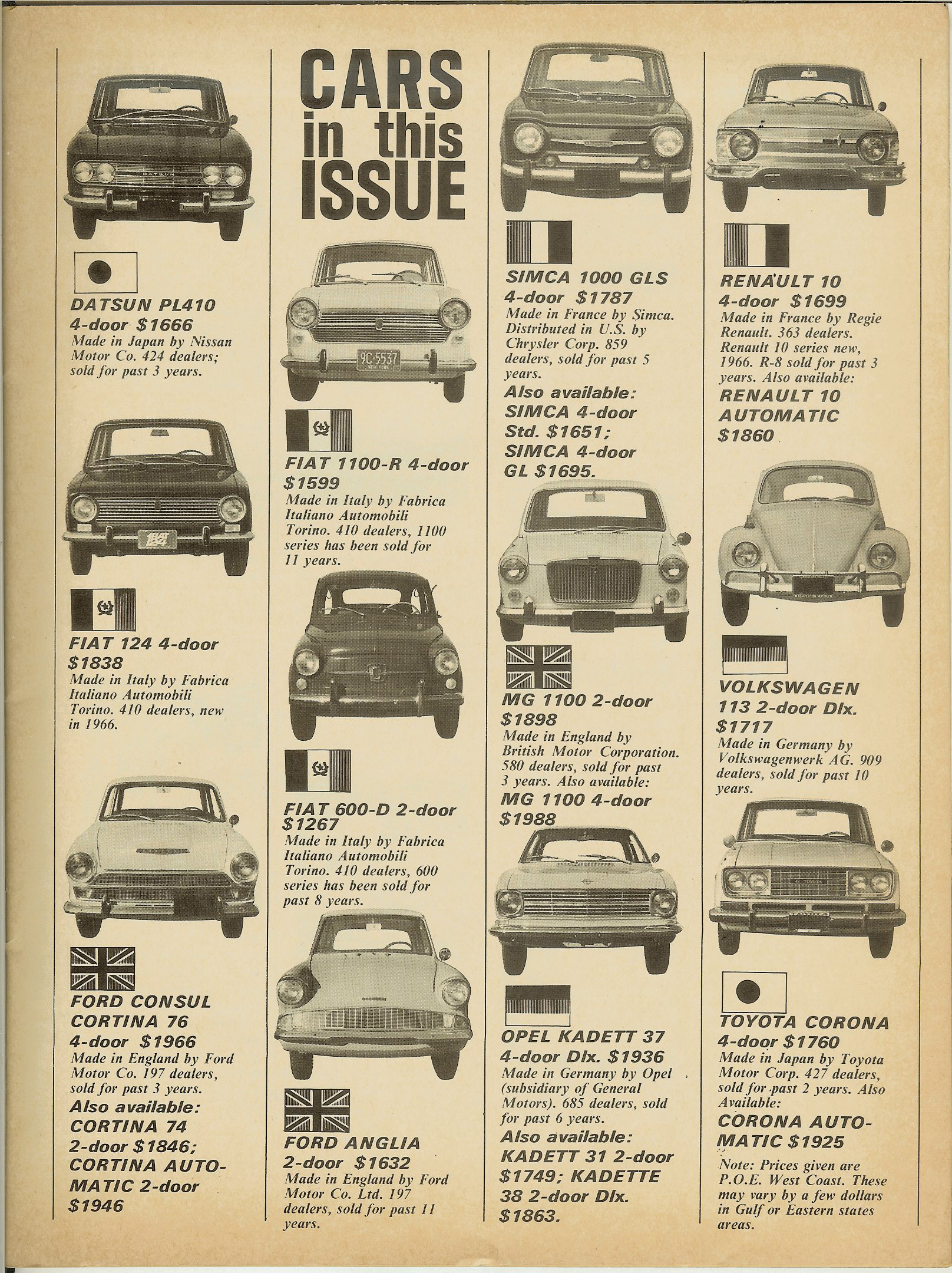
It was even a little bit less expensive than the Volkswagen Beetle, and you got two extra doors in the bargain as well! This 1967 issue of Road Test actually ranked the R10 the top of all the imported cars they tested! I don’t think Road Test endorsement actually translated into the sales Renault was hoping for, but it’s something.
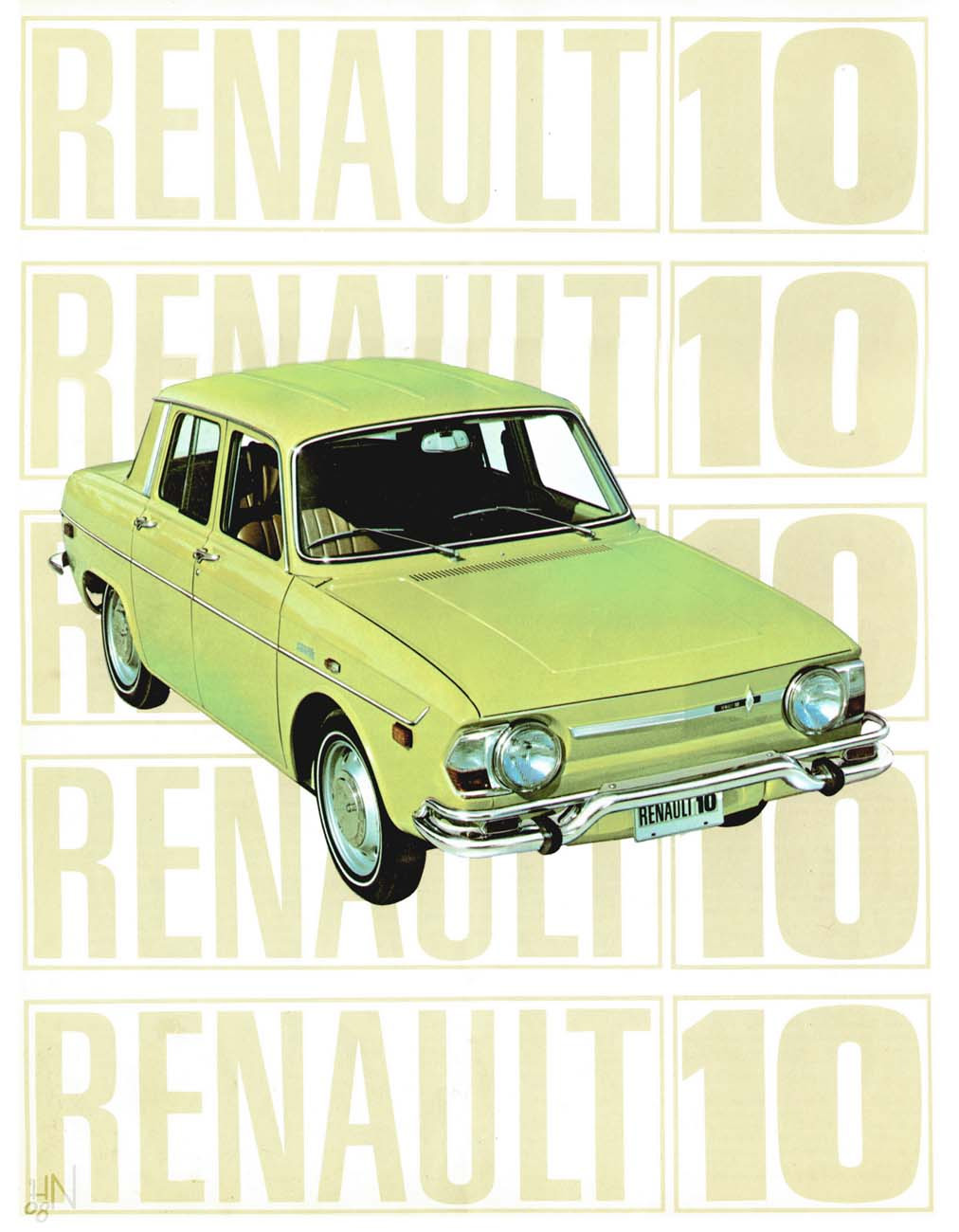
From the front wheel arches back, the car was pretty much the same as an R8, bodywise, but I do like the revised front end. I think the original lighting setup, with the round sealed beams and those wonderful wraparound turn indicators/sidelights, is actually better than what they went to with their facelift in 1968:

I get that rectangular lamps were the new big thing, but I just prefer the look of the round light setup. The R10’s longer nose really did give a good-sized trunk, especially for a rear-engined car. Look at all the fencing equipment you could carry:
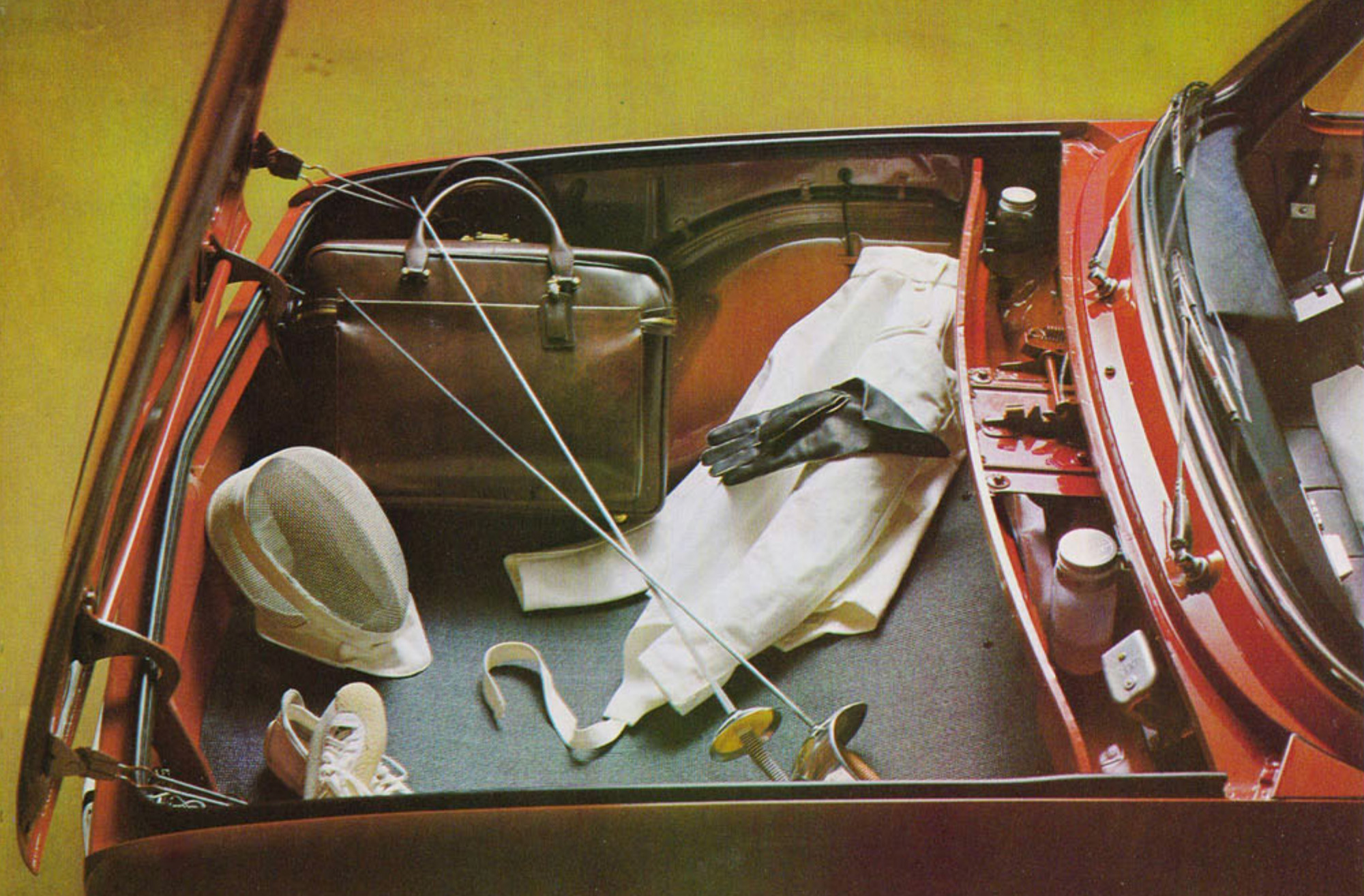
No more bending your foil into pretzels just to get them to fit in the trunk! The R10 lets your foils, sabers, and, yes, even epées rest comfortably under the hood.
And, if you get a flat, you don’t have to drag everything out of the trunk, because, like the Dauphine before it, there’s a separate compartment for the spare tire:

I always loved this approach to spare tires. I’m not sure why more cars didn’t do this? I mean, other than cost and all that.
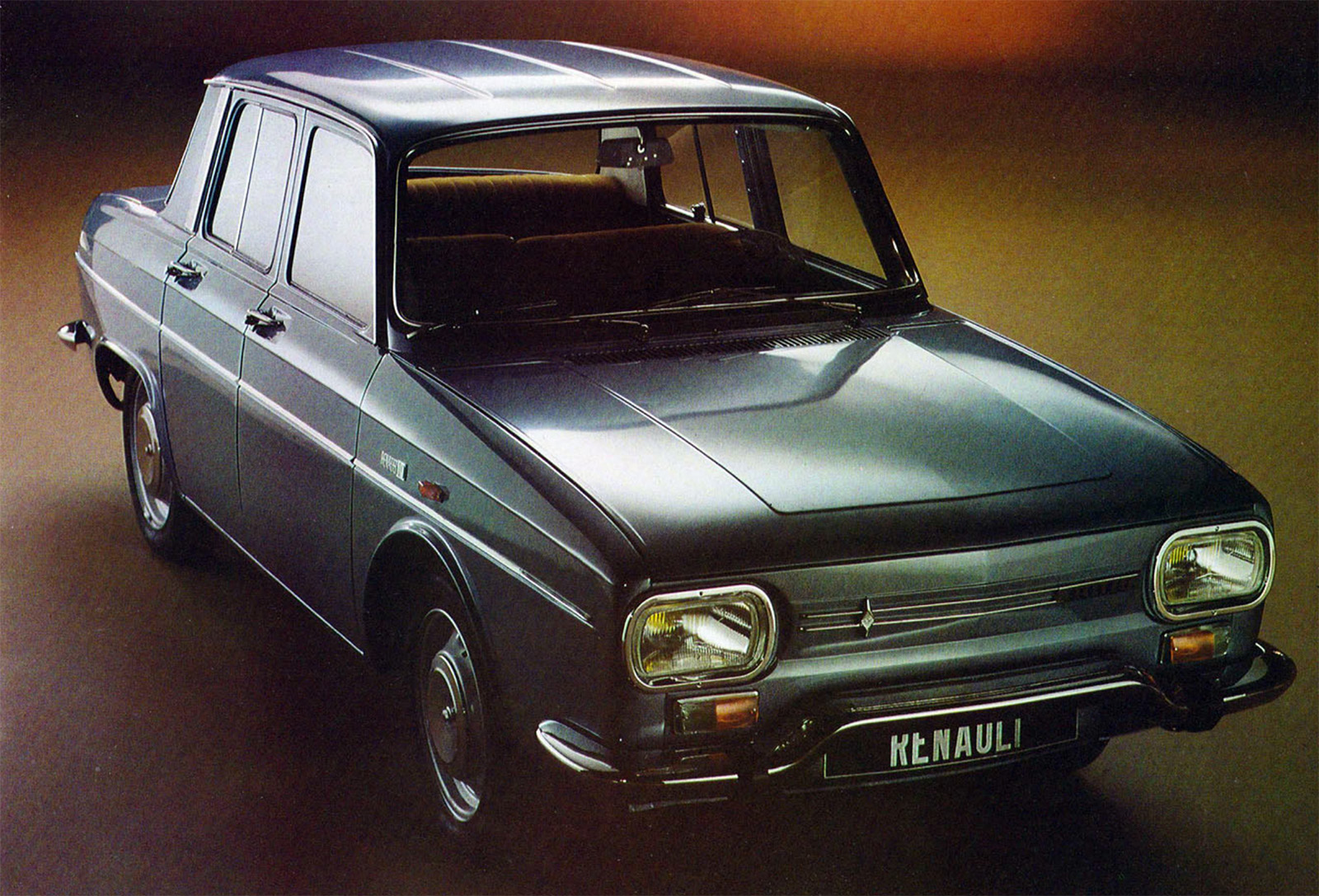
I guess the rectangular-lamp’d version didn’t look bad, I just think it loses some of the charm of the original design.
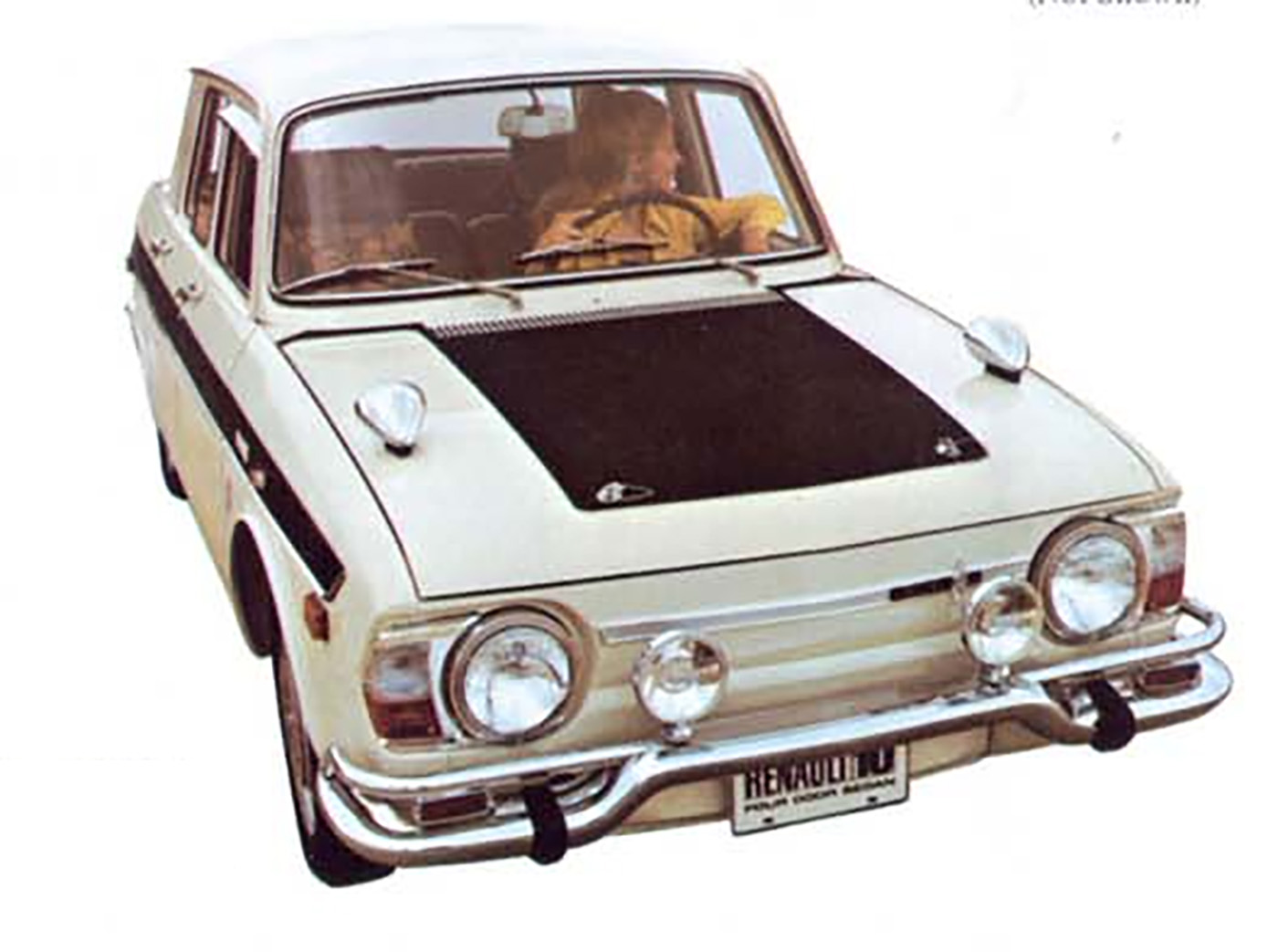
Speaking of design, you could get this Sierra kit for the R10 that gave you driving lights, those cool hood-mounted side view mirrors, and that rally-chic blacked-out hood.
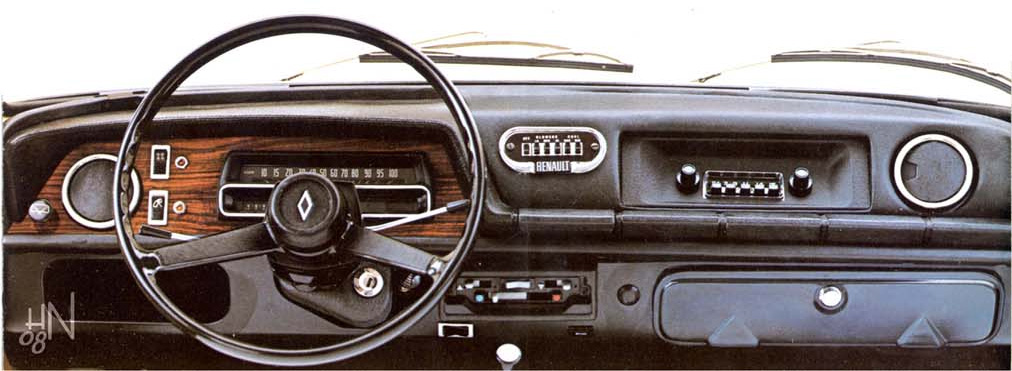
The dashboard design was very much of its era, with dash padding still being something of a novelty. The radio is set quite far from the driver, and I think it was just an open cubby if not installed. I like the triangular hinges on the glovebox, too.
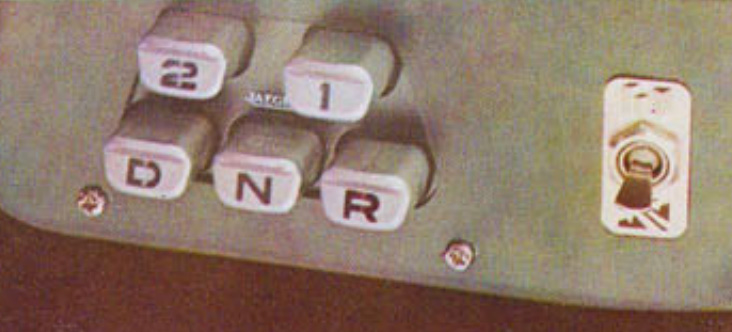
You could get these with a Jaeger 3-speed automatic, too and it was even push-button controlled, which was pretty cutting-edge for the era. I’m sure it did no favors for the acceleration with that 44 horsepower engine, though.
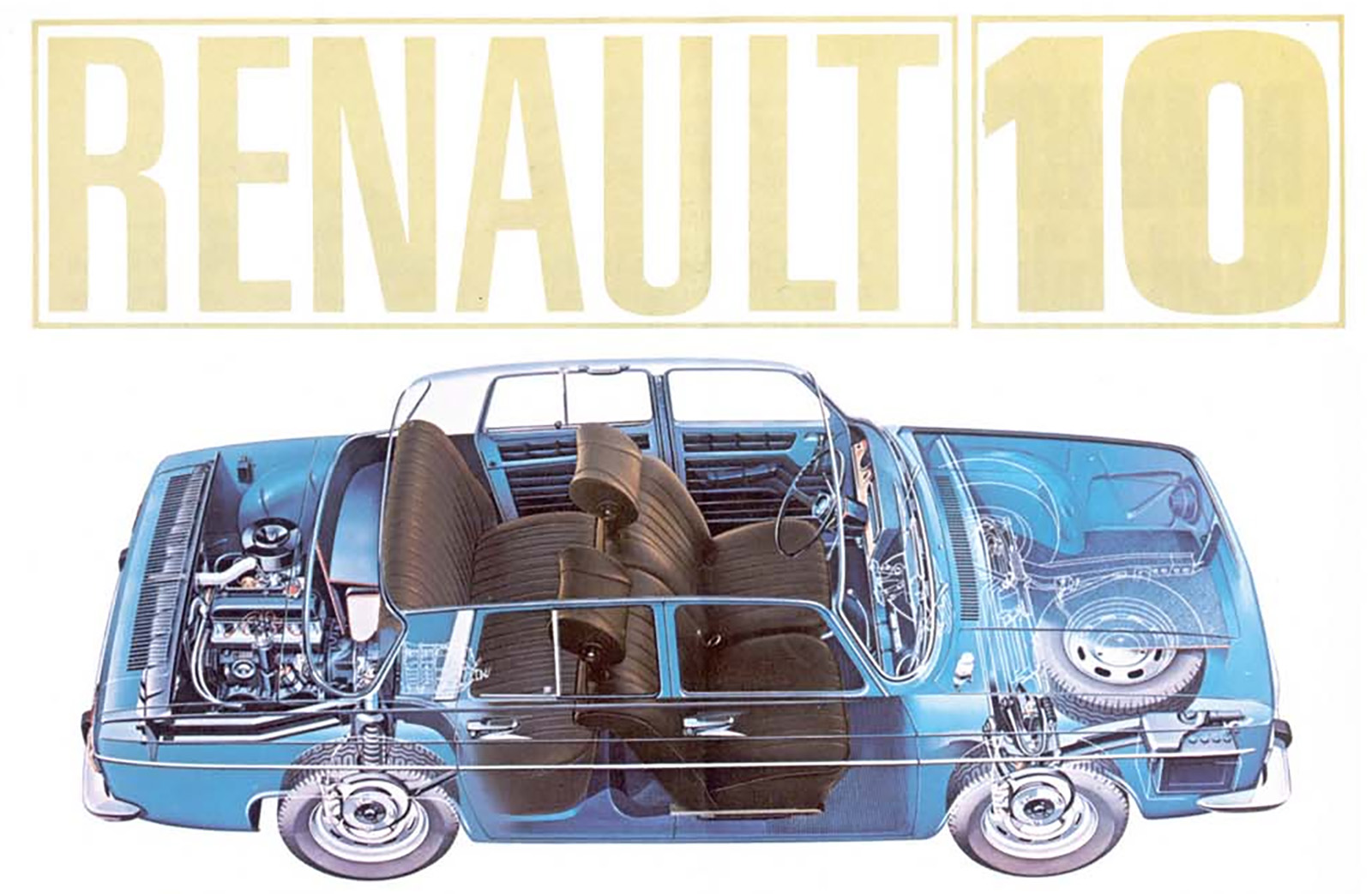
You could get reclining seats in these that converted the inside into a bed, for all your car-sleeping needs. There was a second luggage well behind the rear seats, too. Really, this was a very practical and usable family car, and I think it’s a shame they never really caught on in America. I don’t think Renault ever fully cracked the reliability issues for their cars in these vast United States, and I don’t think they really had a viable dealer network until they bought AMC in the early 1980s.

The R10 never really amounted to much in America, but I suppose that’s why seeing one just parked on the street in LA is such a treat. I hope whoever has it drives and appreciates this clever Gallic sedan.
Top graphic image: Emily Velasco


Nice! I give this R10…a 10 out of 10! Ha ha
Everything I know about these nuggets is from Garbage time. Where Wade and James rescued one from the crusher. Prepare for entertainment!
https://www.youtube.com/watch?v=yZXJMbd-nuU
I see Garbage Time as the Youtube equivalent of The Autopian.
I remember how comfortable the seats were in these, they were amazing. I liked the R10 but the R16 was really a brilliant car. people forget that Renault actually built them in a plant in Quebec.
Last time I saw an R10 was in the early 70’s and it sounded like it was on its last legs. The FIAT’s of that era at least looked good and sounded sporty.
They sounded good because the exhaust was rusting through 😉