

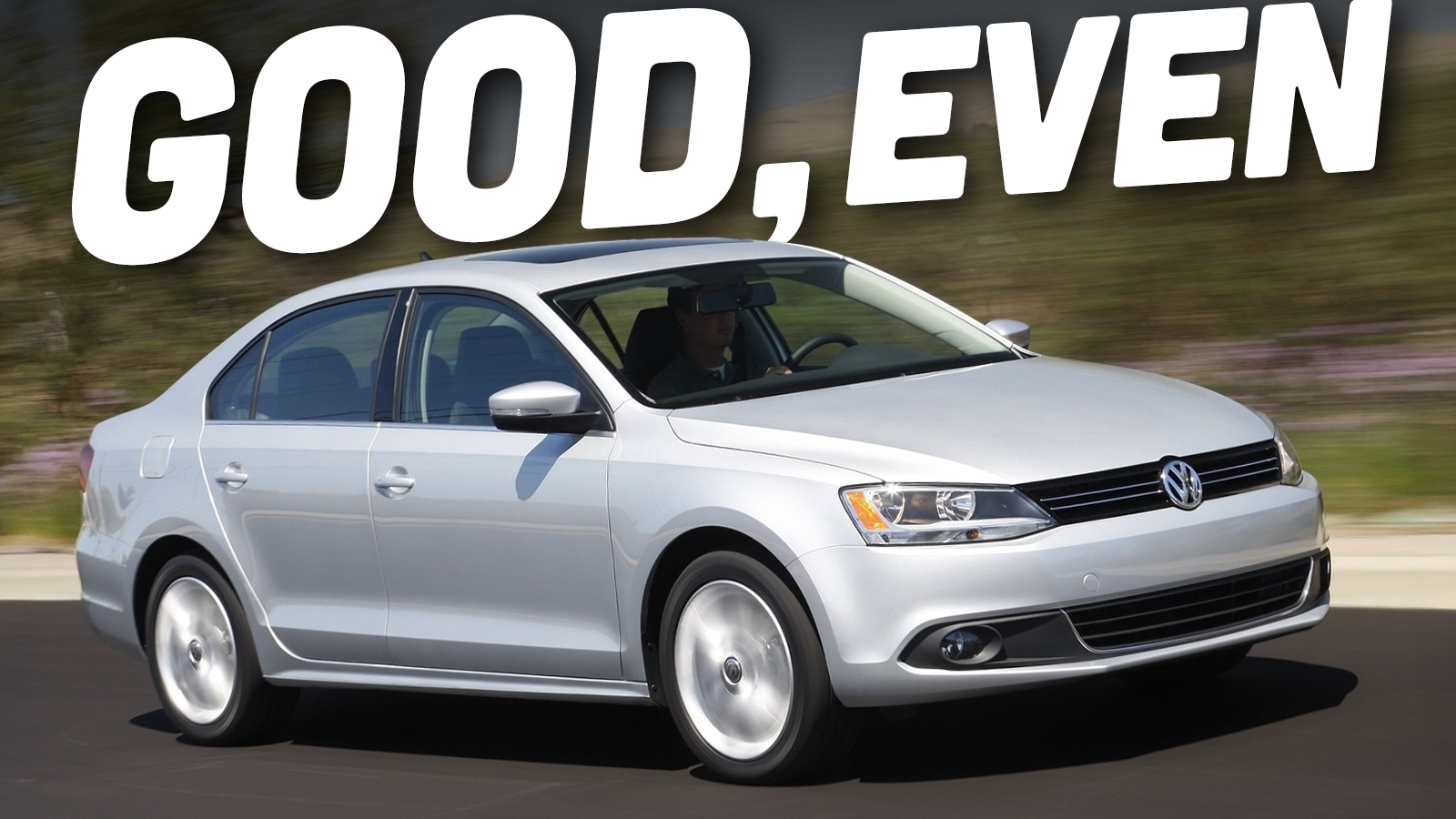
It’s safe to say that Volkswagen isn’t having the easiest time in America. On the one hand, fans of the brand feel somewhat alienated by moves like discontinuing the regular Golf and ditching manual transmissions. On the other, the brand hasn’t had the stateside success it expected over the past decade or so, and we’re still waiting on hybrid models. Where did the visible decline really start? While it’s easy to point fingers at Dieselgate, many enthusiasts of the brand will single out another moment that marked a turning point for the brand: The launch of the 2011 Jetta.
See, for the first three decades of its life, the Volkswagen Jetta was the compact sedan you bought if you wanted something nicer than all the other compact sedans. The Mk4 model of 1999 was a particularly high water mark, instantly becoming one of the most desirable compact cars on the American market. Despite carving out a successful niche, the Jetta never quite saw the sheer sales figures of the Toyota Corolla and Honda Civic, but Volkswagen hoped the Mk6 model of 2011 would turn things around by laser-aiming it at the American market.


While previous Jettas had essentially been four-door variants of the Golf, the Mk6 was a marked departure from that tradition. With a stretched wheelbase and entirely unique sheetmetal, it had a certain glitz at a standstill that carried through every part of its reveal. These days, it’s fairly standard for automakers to rent a venue, have executives say a few words, then drive a new car on stage for journalists to poke and prod. The venue that Volkswagen rented out? Times Square. Yep, Times Square. Oh, and it booked Katy Perry to be the entertainment of the event, right as “California Gurls” was about to hit number one on the Billboard Hot 100. The confidence, the sheer confidence.
Of course, Katy Perry dancing on the hood of Volkswagen’s then-new compact sedan couldn’t conceal a fundamental truth about the Mk6 Jetta: Underneath the crisp styling and enticing list of available toys, Volkswagen made it really cheap. Like, Dollar General cheap.
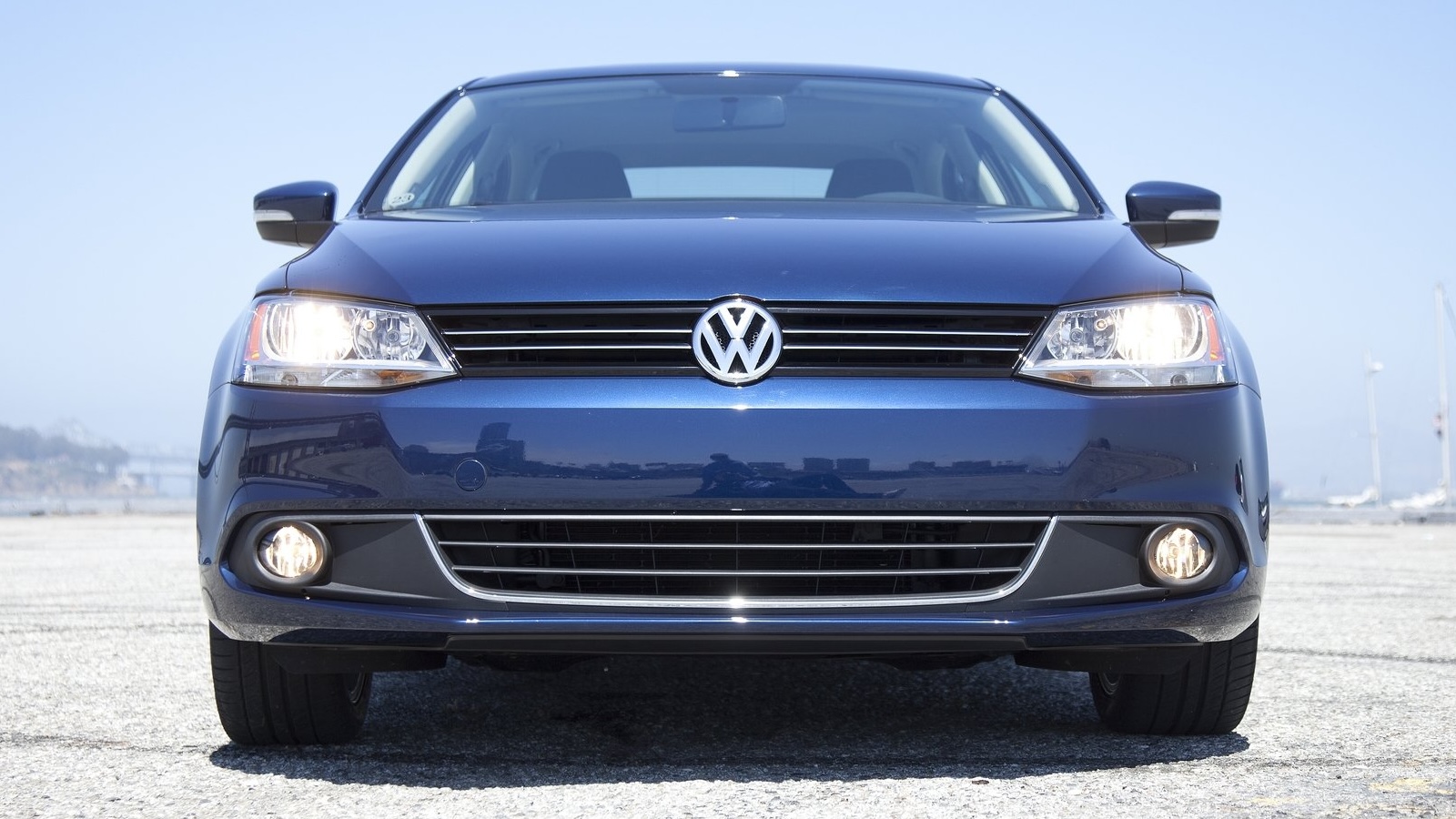
Volkswagen somewhat arrogantly assumed that putting price above everything else would appeal to more Americans, despite the brand having built its water-cooled stateside reputation on offering nicer-than-average cars. The headline figure was $14,995 for the base model before freight, and this base model was truly something to behold. Here’s a short list of the things it didn’t come with: Cruise control, steering wheel-mounted controls of any kind, floor mats, a height-adjustable driver’s seat, rear cup holders, rear disc brakes, independent rear suspension, or an engine from this century. Indeed, while the cheapest 2010 Jetta featured Volkswagen’s 2.5-liter inline-five, the 2011 Jetta S reached into the back catalog and found an engine with an architecture dating back to 1972.
That’s right, it was a two-liter variant of the EA827 inline-four making just 115 horsepower. Why so little? Well, sporting a single overhead cam and just two valves per cylinder when most rivals’ entry-level engines had moved onto twin cams and 16 valves played a big role. Hitched to either a five-speed manual gearbox or a six-speed automatic, the two-point-slow didn’t exactly offer swift forward progress. When Car And Driver tested a stick-shift model, it ran from zero-to-60 mph in 11 seconds flat. That’s not brilliant for a compact car in 2011.

Also in the suboptimal category, the interior materials. As the magazine wrote: “After hitting an Audi-like high point in the 2005–10 fifth generation, you can almost hear the Jetta’s interior screaming as its costs have been cut. The few remaining soft-touch surfaces have now mostly iced over with hard plastic.” Indeed, compared to the fifth-generation Jetta, the 2011 model didn’t feel nearly as lovely in any trim but the most expensive one. That was a hard pill to swallow at a time when compact cars were just getting better and better.
On showroom appeal alone, GM and Ford were making massive strides. The first-generation Chevrolet Cruze felt like a Ritz-Carlton suite compared to its Cobalt predecessor, with dramatically improved interior materials, a standard six-speed manual transmission, standard satellite radio, and optional Bluetooth even on the base model. Likewise, Ford’s then-incoming 2012 U.S.-market Focus was finally a world car again, offering a far more sophisticated suspension setup than Volkswagen’s compact sedan and an additional 45 standard horsepower. Oh, and let’s not forget how vast of an improvement the Kia Forte was over its Spectra predecessor, with the added bonuses of standard Bluetooth, a standard USB port, and a standard height-adjustable driver’s seat. Just as Volkswagen was taking its bestselling sedan downmarket, the backmarkers of the pack (okay, not you, Dodge Caliber) were moving up in the world.

At first glance, it seemed like Volkswagen got the top non-performance trims of its sixth-generation Jetta wrong too. While the two-liter TDI diesel engine continued to be held in high regard until about 2015, and the SEL trim kept many expensive-feeling soft-touch plastics, a whole load of items disappeared from the options list or were reserved for only the top trim. No more 10-speaker audio, only an eight-speaker system. No more power driver’s seat, or optional household power outlet, and not nearly the same quality materials as the previous model when it came to the TDI. The one thing Volkswagen did carry over was the 170-horsepower 2.5-liter straight-five, which was getting a touch thirsty by 2011.

Despite the Mk6 Jetta being a disappointment compared to its predecessor, it still did some things well. The doors still closed with a quality thud, the rear seat was absolutely enormous, the trunk was suitably commodious, and the aforementioned diesel engine really was the high card. Regardless, at the time, none of this could make up for what was indisputably a step back for Volkswagen.

Throughout the Mk6 Jetta’s production run, the marque tried to make amends. The 2013 model year brought a leather-wrapped steering wheel and shifter back to the mid-range SE trim, along with power reclining front seats and a center armrest. All TDI models gained a soft-touch dashboard midway through the model year, but bigger updates came in 2014. Not only was the straight-five replaced with a 1.8-liter turbocharged four-cylinder engine, but independent rear suspension also joined the party. A facelift in 2015 introduced available xenon lights and updated interior materials, and the ancient two-liter base engine was finally replaced in 2016 with a 1.4-liter turbocharged inline-four.
However, a funny thing has since happened to cars with the ancient two-liter straight-four: They’ve soldiered on in regular duty as more and more of their competitors have shown powertrain-related Achilles’ heels. While automatic Ford Focuses have been dogged by failing transmissions, 1.8-liter Chevrolet Cruzes have been suffering from oil cooler failures that cause oil and coolant to mix, Nissan Sentras have been plagued with transmission issues, and Elantras of the time keep blowing up, the base Mk6 Jetta just keeps going so long as the timing belt’s replaced at its intended interval, the odd coil pack’s replaced as necessary, and the $12 coolant outlet flange that takes an hour to replace is changed if it starts leaking.

Likewise, the 2.5-liter inline-five has also proven itself out on the road. The PCV diaphragm can tear with age, but Dorman makes a replacement for about $50. The vacuum pump can leak, resulting in a hard brake pedal and an oil drip on the exhaust manifold, but DIYers have figured out a way to remove it from up top and rebuild kits exist for as little as $50. Coil packs can go with age, but the timing chain on 2011-and-up cars generally holds up perfectly. There are reasons you see clapped-out Mk6 Jettas with mega mileage on them, and it’s not frequent preventative maintenance.

It’s not glamorous, it’s not luxurious, but the early Mk6 Jetta has proven a remarkably robust used car that sells for pennies on the dollar compared to its Japanese rivals. It’s simple, it’s utilitarian, it’s surprisingly faithful to the mission of the Beetle: sensible transportation at an affordable price. In short, it’s a pretty good economy car with the added bonus of unusually good ride quality, even if handling with the torsion beam rear suspension isn’t anything to write home about. It might not be regarded as the best Jetta by enthusiasts, but on robustness alone, it’s a real contender for the title of the best Jetta for its actual purpose.
Top graphic image: Volkswagen


What’s funny is I like all the gens before the more rounded Jettas. I used to have an 84 Jetta 5spd and that was a blast to drive. I like the 2nd/3rd gen body styles too. I’m glad that people enjoy the gens after the 3rd and that they are ok; I just don’t like the design as much. Obviously, all the newer VW suck and they have lost their way. The only exception is I love the new Bus (Buzz) I think it’s great they finally came out w/ it- except it needs to be gas. That’s the only way I’d buy it. If I had a ton of $, I’d buy one and rip out all the EV trash; then sell what I could and throw an awesome big ol V8 in it! (That thing got a HEMI?!) Maybe a Porsche engine would be more fitting.
“you can almost hear the Jetta’s interior screaming as its costs have been cut.”
“okay, not you, Dodge Caliber”
Such great writing! Fantastic
“it’s a real contender for the title of the best Jetta for its actual purpose”
Respectfully disagree but I see what you mean “for it’s purpose” for this era. All I’m saying is that for me personally, I would say the 3rd gen Jetta is the best? It’s hard for me to choose between 1st, 2nd or 3rd since I’ve only owned a 1st gen
I’ve owned a 2005 Jetta, and my wife currently drives a 2024 Jetta. Both cars are underrated.
Fully agree with this. I really came around on the Mk 6.
I bought a new Mk5 in 2008. It really felt like a bargain Audi, inside and out. It had a few issues under warranty, and a few more off-warranty, and I was starting to worry that it was going to get expensive. Despite that, I scoffed at the new Mk6 – back to a beam axle rear suspension AND the 2.slow?!? I couldn’t imagine who would want one.
Then I got hit with a triple whammy – all of a sudden, I found myself laid-off, divorced, and my Jetta totaled in an accident. As a single dad of significantly-reduced means, I needed something reliable and affordable to haul my kids around in. I found a used 2012 in my price range, and reluctantly went for it. To my surprise, my appreciation for the car only grew with time. Over 7 years of ownership, I did nothing but routine maintenance to that car. The EA827 was dead reliable, the handling was better than expected, and it had enough room to accommodate growing kids. Yes, it was slow – but putting the 6-speed auto in ‘S’ mode made it at least a little more entertaining in a ‘slow-car-fast’ kind of way.
Turns out I was unwittingly the target market for the Mark 6, and I’m not sure we’ll see a car of its sort – simple, reliable, practical, and easy for the amateur mechanic to maintain – again.
This is the kind of car people clamor about these days (a simple car that’s dead reliable), but they’ll wince if they actually have to buy it new. Me personally, if given the choice, I would have totally bought this new for myself. $15,000 brand new for a car I know will keep running and running is a fantastic proposition.
My coworker who drives 25,000 miles per year into the office round trip commuting drives a 2014 Jetta base. It’s white and I like to joke that it’s missing its sorority decal on the rear glass…he temporarily had to drive an old base Hyundai Tucson temporarily and I concluded that THAT car was so bad that comparatively “at least the Jetta has some DNA.” Now we say that all the time jokingly and I think our coworkers believe some homeless dudes soup kitchened its interior and not that we’re referring to the bit of intrinsic goodness distilled into even this most basic of Volkswagens.
It definitely was a step down in quality from its predecessor, but it is still pretty reliable. I still have a 2012 model with the 1.4 twincharger engine and its still going. close to 300,000kms now.
0-60 in 11 seconds? My ’01 Jetta TDI did it in 10.
I should note that my TDI was mildly chipped. But the 0-60 time wasn’t the result of a tortured rev up and dropped clutch. I once did a “maximum performance takeoff” (again, no dropped clutch) on wet pavement and the wheel bounce it exhibited was startling and very short-lived. I don’t remember whether I nailed the clutch pedal, let up on the accelerator or both. That car had the relatively primitive torsion beam suspension, but I never really noticed it as a problem. I am trying to remember if the rear end was different on TDIs vs the gassers.
Had one as a rental and was very surprised that it didn’t have cruise control. On the last day of my trip it broke down on the way back to the airport.
I bought a 2014 GLI manual new. It was cheap, trouble-free, and far faster than you expected. I traded it for a 2017 GTI that was better in every way for a couple thousand dollars more. That GTI is still the favorite car I have ever owned.
When I briefly sold Volkswagens, the Mk6 Jettas were about the easiest thing to sell on our little used lot. They were almost always priced $10K or under, they cleaned up well, and they required very little work in the shop to be ready to sell. Whenever I had a chance to drive them I found it to be a solid place to sit because with a manual it was fun enough. Especially compared to other cheap sedans that would pass through our dealership.
The 2011 Golf TDI in beige with a 5spd and less than 80K miles was the only easier sale I made than cheap basic used Jettas.
The Jetta lost its charm when the interiors no longer smelled like melted crayons Period.
Cringy jokes aside, my wife owned a base 2015 Jetta with the 5spd/2.slow combo for a little over 3 years. The car was purchased used with around 60K miles. I despised the interior with the scratchy wafer thin fabric, next to no features and rock solid touch surfaces except for the armrests but the car handled well and it only asked for oil, tires and fuel. I installed an OEM-like touchscreen with Carplay and Android Auto + backup camera and called it a day. It would also do solid 35 MPGs at 70 without even trying, which I didn’t expect for such a dinosaur of a powertrain TBH.
Cherry on top was when we put it for sale last year it took a record time of 3 days to be sold for only $1000 less than what my wife paid for it. A VW enthusiast drove 80 miles south to pick it up from us as he specifically wanted a manual Jetta. I was shocked, I just couldn’t believe these had any market at all, but boy was I wrong… or maybe just pure luck at the right time…
Friend of my sister had one of these as her first car in high school, her Dad drove her to the lot and got her the cheapest one as her new car. She came to me, the car guy, to ask how to put in a radio and to lower the seat a little. My amazement that a new car could come with so few features, power, and lack of enjoyment behind the wheel astonished me. It being from VW, the brand I always assumed was trying to be a step above, really twisted the knife.
I believe she wrecked it 2 years later in a snow storm, replaced by a CPO RAV4.
VW started downhill when they stopped unpimping rides.
https://youtu.be/e1MNEqCr748
The Jetta has long been a great relatively cheap car, even if they were nicer when they weren’t so relatively cheap.
I’ve owned MK1, MK2, MK3, MK4 and MK7. Having driven plenty of MK5/6 cars as well.
MK2 and MK4 are my favorites by far, but thats because I spent all of my youthful days on VWVortex.
MK6 Jetta’s were kind of the ugly duckling in terms of material quality, but they’ve stood the test of time. So maybe all that hard plastic wasnt a bad idea?
The Jetta has always been a fantastic “cheap” car. Even the current generation is an exceptionally reliable, solid driving daily for not a ton of money. (I dont care about the Mazda3, shut up.)
They were College Girl Darlings. pretty cheap with a new car warranty in a car that did not look a lot different than the more upscale, and also surprisingly cheap Passat. I suspect those names made up a few minds as well sadly. I will also say a 2012 SE Passat with the 2.5 is quite possibly one of my favorite cars I have ever owned. It was silver and therefore invisible to car pulling out into traffic or those following behind me as the thing was hit3 times in the rear when stopped and was taken out by a corolla when she did not see it and went for it to get out into traffic. But I imagine the repairs were still tolerable to someone from Copart. it might still be floating around I imagine, it certainly still ran great and got over 30MPG regularly.
I LOVED getting those Passats for rentals, and Hertz had boatloads of them back in the day. I will take one over an Accord or Camry any day. Bonus was that they all had heated seats. Shame there was no wagon in that last US-specific version though.