

Roughly put, there are two kinds of small cars. One is the basic penalty box, designed to get you where you need to go for the least amount of money, in some cases with an inbuilt sense of “If you’d just pay a little more, we could put you in a bigger car…” There aren’t that many creature comforts, the most common color is appliance white, and profit margins for the manufacturer are seemingly slim. That’s why in recent years, the choice in this class of car has increasingly shrunk in Europe, as Euro norms constantly make it harder to turn a profit in the bargain-basement segment.
The other kind is the Fancy Small Car. Small in footprint, big in equipment and style. In this case, the manufacturer has directed its offerings to buyers who don’t mind the small size, or actively want it, but are also willing to pay bigger-car money if that means the thing is cool. Some Fancy Small Cars have been created out of more basic models, body shell and running gear unchanged, but made more profitable with special trimmings. In time, these might even end up cherished and pampered, unlike their econobox brethren.


A Basket Of Goodness

In the Special Edition article, I briefly touched upon the Peugeot 106 and 205 Roland Garros. These metallic green hatchbacks are good examples of the “upgrade the basic model” fancy-small-car path, as they have half-leather seats with the bolsters in white.
The Roland Garros trim level was also available for the Pininfarina- designed 205 convertible, and it used the 85 horsepower 1.4 TU engine from the 205 XS with a wonderful throttle response and lust for life as well as head gaskets.

They are a world removed from the most bare-bones 106 and 205 models, as Peugeot made a couple of tactical choices with the most basic versions: for example, in the one-liter 205 Junior above, you didn’t even get all the fresh air vents that a driver of a better-equipped version did. There was just a big blank on top of the dashboard, even if it would probably take all of five seconds to replace that with a secondhand vent from another car.
It’s also a good sign when the carmaker replaces a gauge or a clock with a blank with the brand name on it.

The Roland Garros cars also often got a big glass sunroof that would bring the summer in, oftentimes also dampening the carpets or drying up the leather. Even the 205 GTI was available as the Gentry, which added full leather seats and a tan dashboard, a deviation from the GTI’s usual red-trimmed hotness; the engine was a 1.9 with the same 105 horsepower as the 1.6 GTI, and the suspension parts were GTI. Consider it a trade-off in power with an extra helping of style instead.
A comparable 106 to the Gentry was the Griffe (above), which again added leather and foglights but didn’t match the XSi or Rallye in power.

Bigger Peugeots, such as the 306 hatchback and cabrio and the 405 station wagon also got Roland Garros editions, and the 206 got a really nice-looking RG version: full glass roof in addition to the metallic green exterior paint, and seats trimmed in cognac and green leather.

The 206 Roland Garros looked really special, and if the 206 itself doesn’t set your heart on fire, the RG cars are worth saving. They don’t cost much for something so neat, as you can get one in Europe for a couple grand. The bigger 307 didn’t get a GTI version, but instead a 307 Feline with leather and a 177-hp two-liter engine shared with the 206 GTI RC.
These days, Roland Garros is aligned with Peugeot’s competitor, Renault, and you can get a new R5 E-tech EV with the usual RG trimmings, though with white paint. It feels weird, as traditionally Roland Garros cars have been Peugeots.
Yes Sir, I Can Boogie
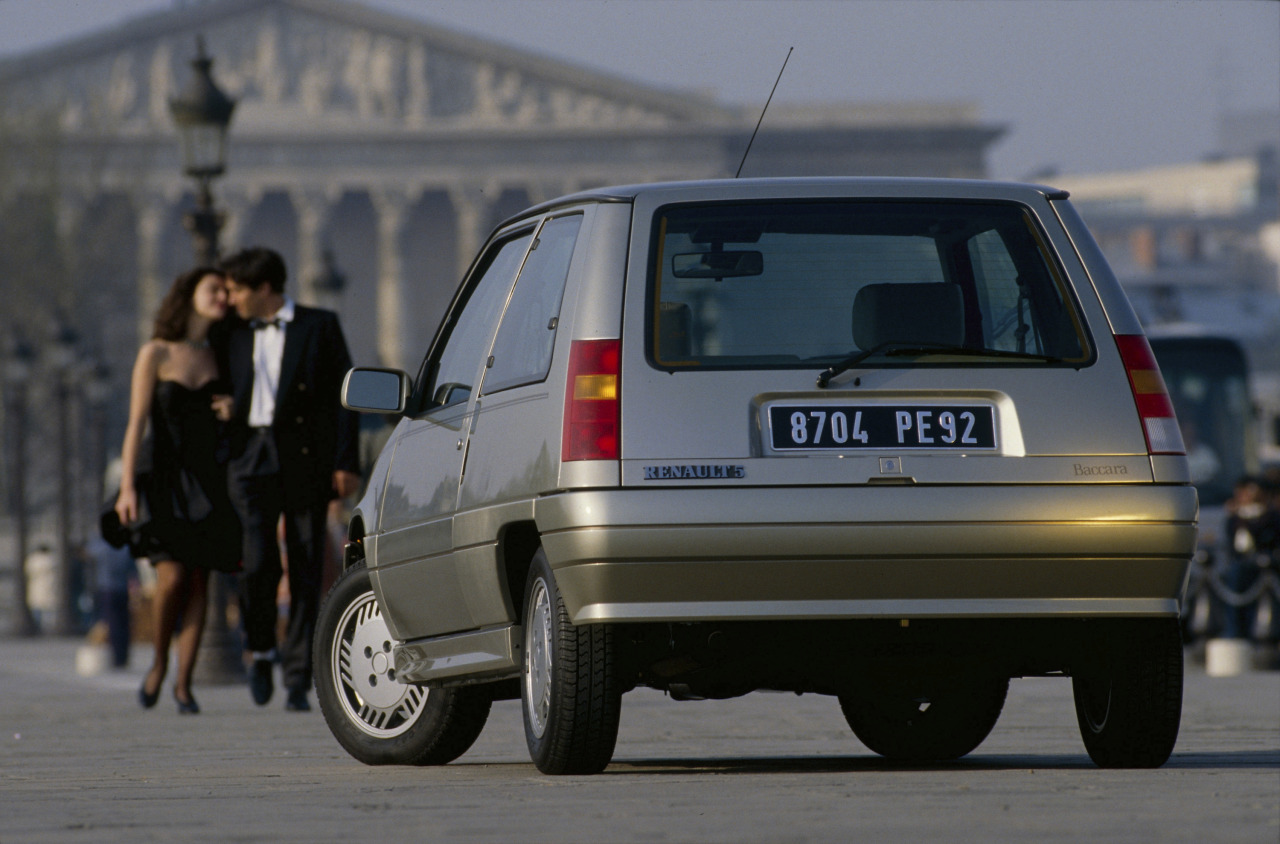
Renault is also no stranger to fanciness with small hatchbacks. The original 5, also known as the Le Car, (the “The” Car, suitable for fans of The The), might have been noteworthy for its Turbo versions, with or without midship engine mounting, but the second generation introduced the Baccara. Take a hatchback, add all of the leather. Step back and admire.
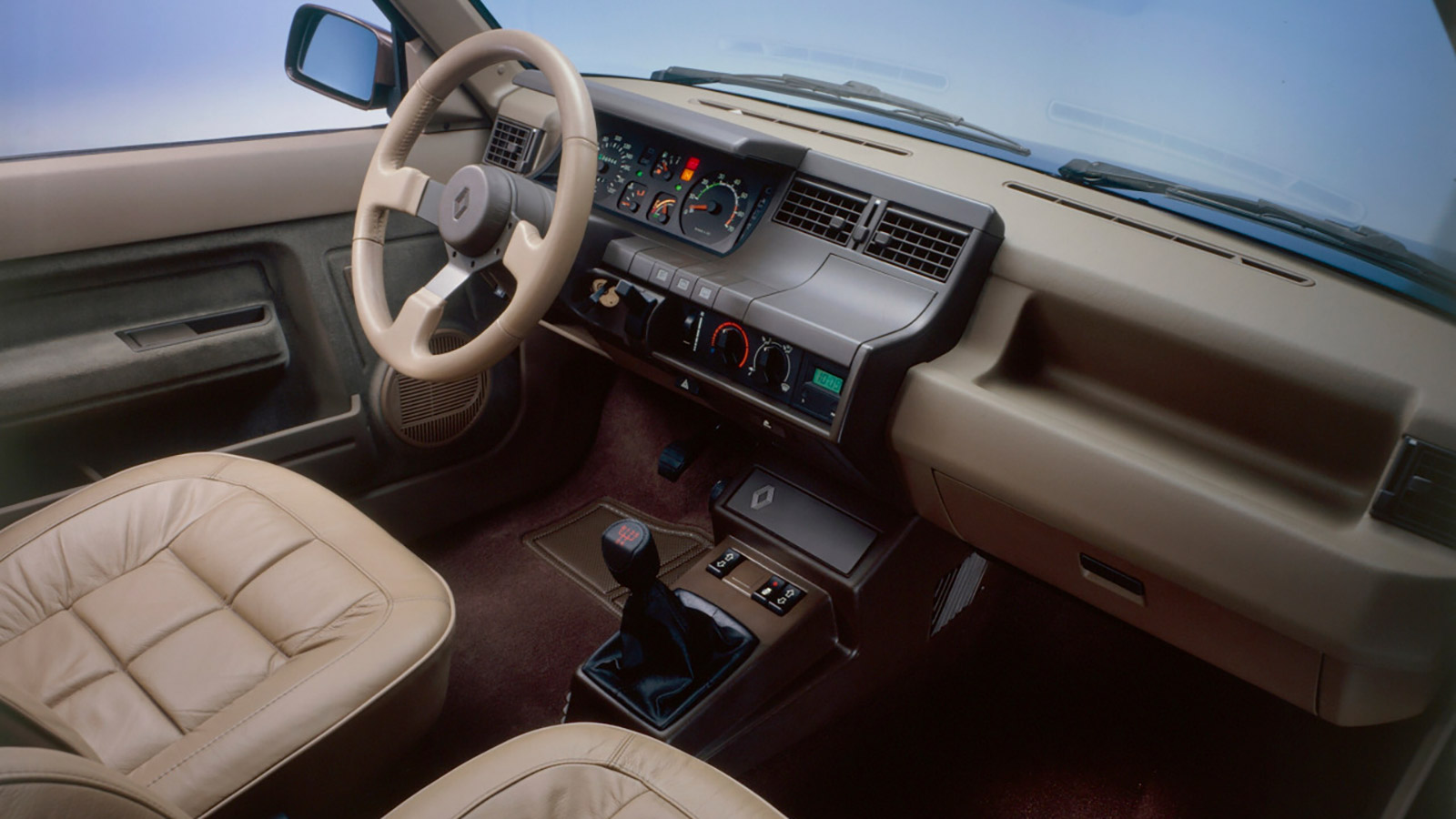
Bigger ‘80s Renaults such as the R25 would get the Baccara trim level too, but you could get the R5 with similar metallic paint and full leather interior. In the UK, these cars were called the Renault 5 Monaco. It certainly adds a bit of Monte Carlo flair to a small Renault hatchback. They had the 1.7-liter engine from the 5 GTX, with 90hp.

The R5’s successor, the Clio, also got a Baccara trim level, again with metallic grey paint, full leather, wood décor, alloy wheels and a 1.8-liter engine, making it a suitable pairing to the bigger Renault Safrane Baccara. It was no Clio Williams, but it was special in its own way. The cross-spoke wheels were a nice addition.
Renault Twingos weren’t always cheap and cheerful either, as the Twingo Initiale/Initiale Paris came with tan leather and a big glass roof instead of the folding canvas sunroof. [Ed note: “Yes Sir, I Can Boogie” never charted in America, so if the reference to the Baccara’s 1977 hit is lost on you, here ya go – Pete]
The Citroën of Plenty

For a fancy small Citroen, you could look at the 2CV Charleston, which was also the trim level of the last 2CV built on July 27th, 1990. Talk about leaving in style.
The small Visa, AX and Saxo most often went for motorsport style rather than plushness (except for a bunch of special edition Visas with “Boxline” imitation leather seats, such as the Carte Noir), but the later Citroën C3 Pluriel nails the look: the ovoid bodywork was painted in the same curved two-tone as the original 2CV Charleston and featured leather seats.

The Pluriel in itself is a good example. It’s nearly concept-car-like in its uselessness; the folding roof has a lot of parts that are difficult to find now, and if you remove the roof pillars to be able to open the top completely, you can’t store them in the car but have to leave them home. Good luck if you get caught up in rain. But it’s all very fancy.
A Highly Individual iQ

Looking at Japanese options, one of the best-known alternatives is partially British, in name and appearance. It’s the 2011-2013 Aston Martin Cygnet, famously based on the short and wide Toyota/Scion iQ.
Cygnets were extensively retrimmed in leather and offered to Aston Martin clients who would like to drive a small, easy-to-park hatchback in town. No engine tuning was done to extract more power out of the Toyota engine.

Cygnets have remained valuable, which goes to show how little a car’s humble beginnings really mean when you affix a storied brand on it. Part of that comes from the Cygnet’s rarity, as only 150 were sold in the UK and some 600 in the rest of Europe, during the two years that they were built. Now, you would pay £40-50k for one in the UK, while an iQ can be had for a grand or a fully-loaded low-mile one for £8.5k.
Mini In Size, But Not In Price

It wouldn’t be right to mention British small cars and forget perhaps the quintessential Fancy Small Car, the original Mini, for one, and its Radford and Wood & Pickett conversions. Rockstars used to pay serious money to get customized, vinyl-topped Minis that had the ambience of Rolls-Royces, and while they didn’t come fully loaded from the factory that famously was struggling to turn a profit with the way Minis were originally priced, they definitely need to be included here.
As well as wide wheels, the converted cars often had headlights and front grilles swapped from other, bigger cars such as Vauxhalls or Mercedes-Benzes, to stand out. In that sense, they’re probably comparable to British Mod-era scooters that had a lot of extra mirrors and lights.

And speaking of profit or lack thereof, the last Mini Wood & Pickett ever made ruined the company. It took so long to build that the client ended up not paying for the car at first, and eventually only getting the finished car after Wood & Pickett had ceased trading.
The Mini in question had a specially tuned engine, custom wood and leather interior with Recaros, Ferrari 308 mirrors, and it was painted in a Rolls-Royce shade of blue. Sparingly driven, it was auctioned by RM Sotheby’s in 2024.
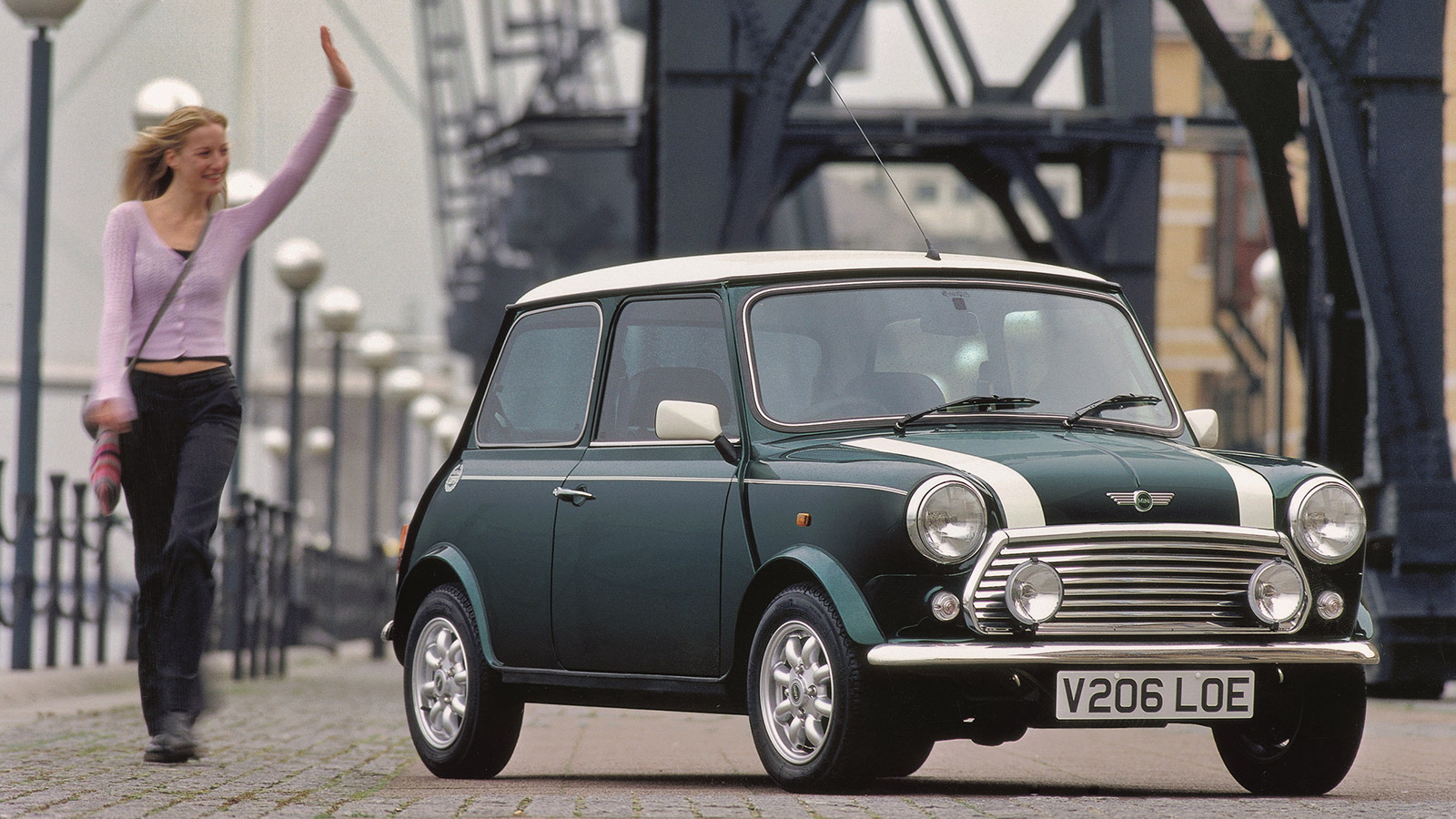
Later and final Rover Minis also have the same attitude, especially when fitted with wide fenders and wheels and shipped to Japan. Rover built the Mini until 2000, by which time it was one of the oldest new cars you could buy. The final edition Mini Coopers were fully leather trimmed. The Metro airbag wheel does stand out in the otherwise 1960s cabin.
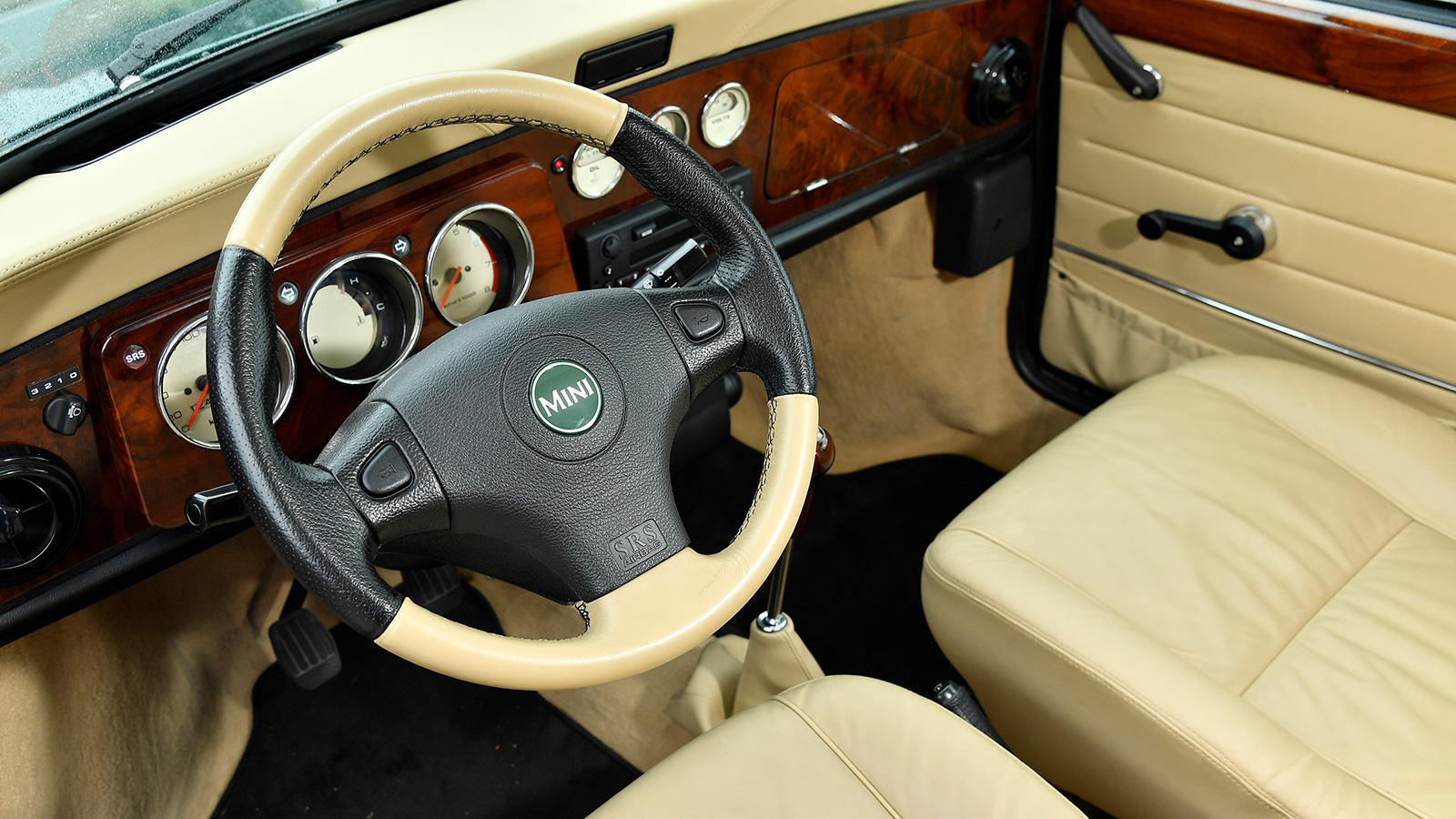
As for factory-built Minis, it’s worth mentioning the Riley Elf and Wolseley Hornet, which were odd-looking Minis that grew a trunk. They don’t really count as shatchbacks, as the original Mini wasn’t a true hatchback, but they are them in spirit. The Wolseley Hornet had a front badge that lit up, which should appeal to modern fans.

BMW Group Classic describes the Hornet, using words that really get to the heart of the matter:
The Wolseley Hornet was designed by BMC stylist Dick Burzi, using the Mini platform. The car with its extended boot and upright radiator grille with its illuminated badge (a feature of Wolseley cars since 1932) plus extensive use of chrome gives an air of refinement. A unique range of colours with contrast roof were available. Central speedometer and auxiliary gauges were surrounded with wood veneer. Leather-cloth seating, thick carpets and chrome gear lever add to the luxury feel. With all the extra features the performance suffered as it used the 848 cc engine. This would be addressed on the Mark II version.
Get Smart – In The Maxwell Coffee Color Palette

Smart cars also dabble in the fancy sector. While the MCC City-Coupé was available cheaply when it was first launched, over time special versions were introduced, including the Crossblade which looks like a sandal and offers about as much weather protection.
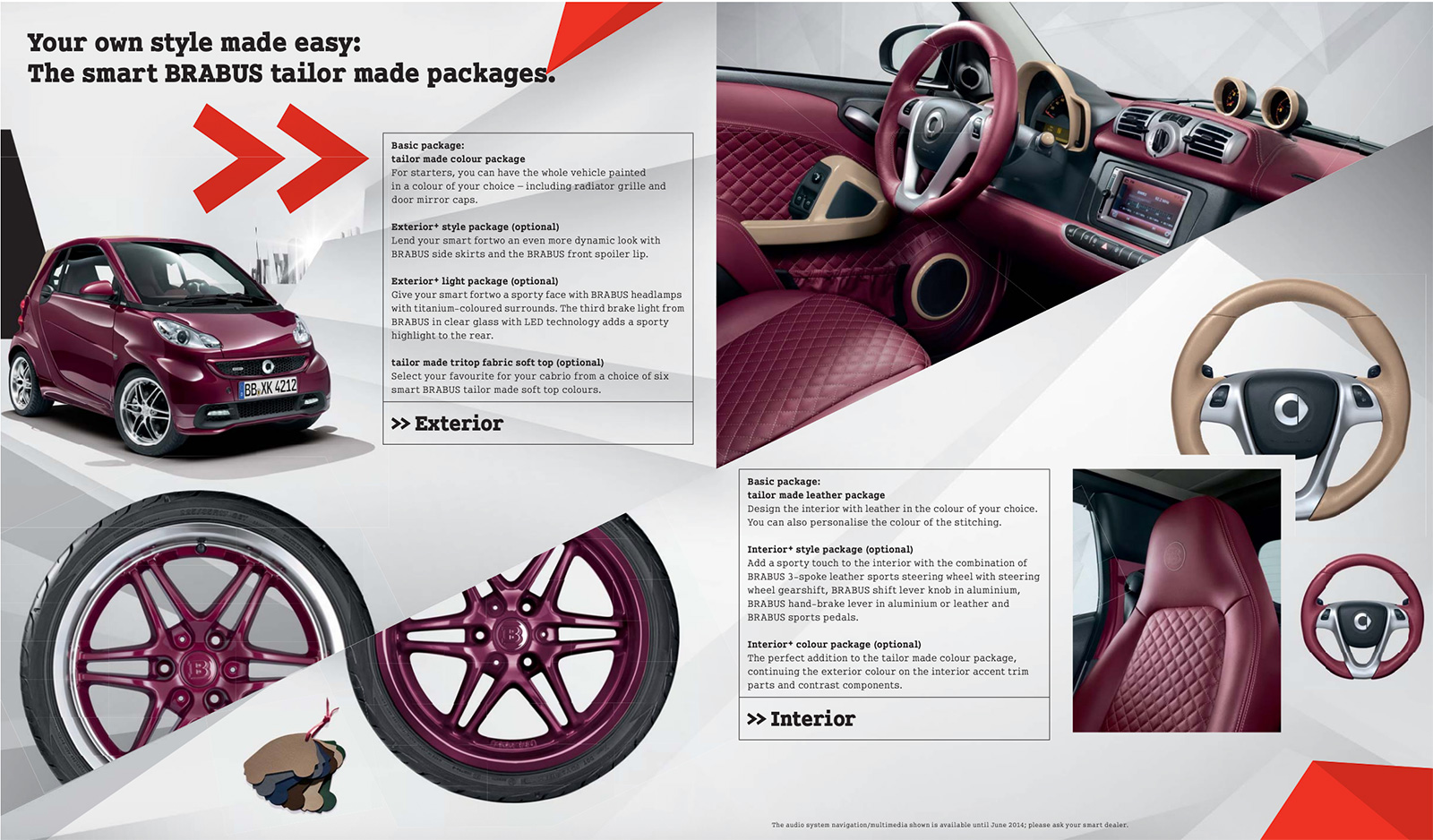
The Mercedes-Benz tuner Brabus also collaborated with Smart, with Brabus-trimmed Smart hatchbacks and cabrios offered for those who wanted that particular style. On top of that, you could get the Tailor Made versions that are as cool, if not cooler than the Cygnet. In the UK, a fully loaded Tailor Made would cost double compared to a base spec car.
La Dolce Vita

Fiat, one of the big companies best known for making small cars, gave its original 500 a lot of extra style by cutting stuff off. The classic Fiat 500 Jolly had no roof and no doors, and its seats were replaced with wickerwork chairs.

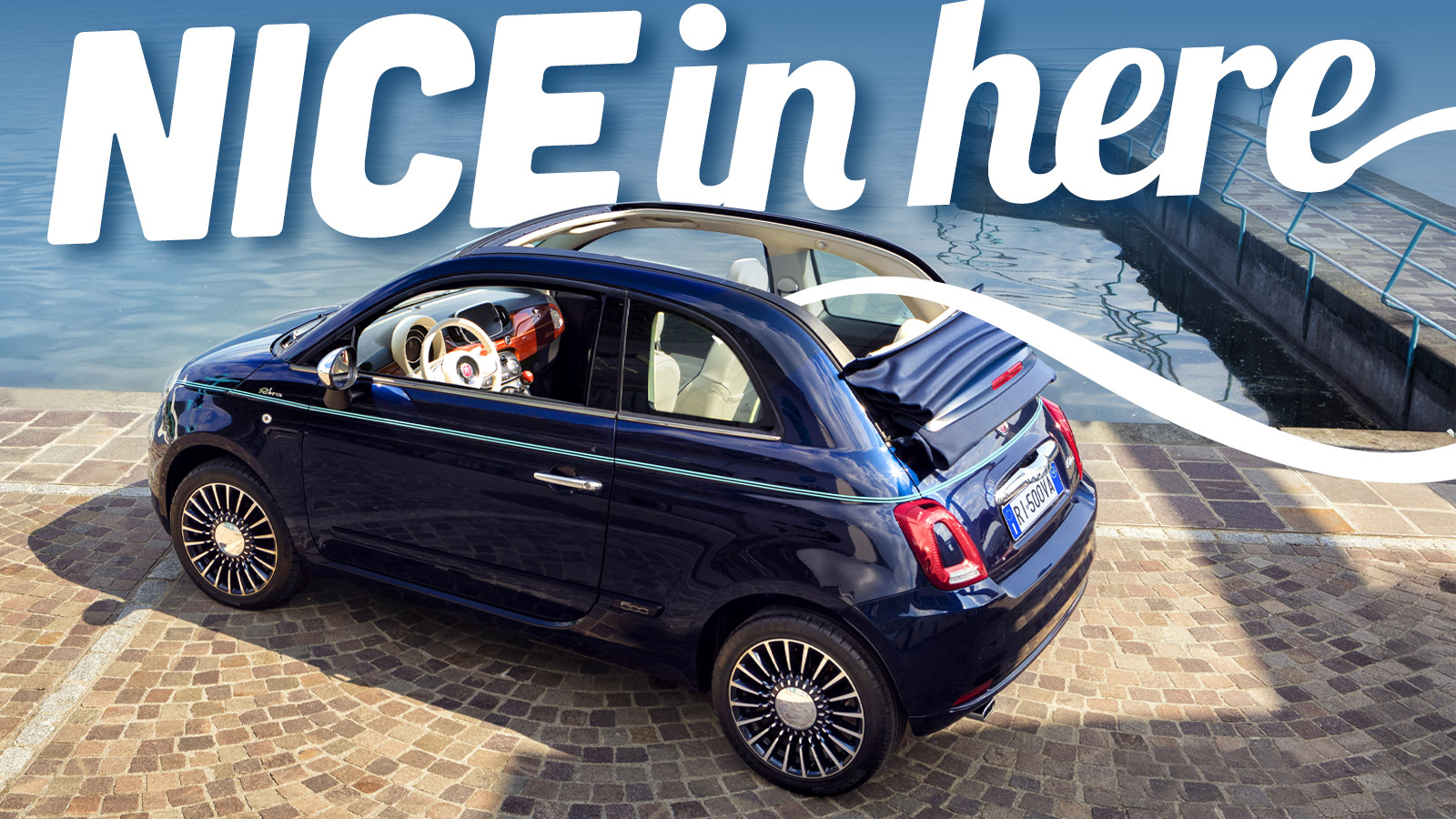
In the 2000s, the new generation Fiat 500 became available in various expensive-looking editions, such as the convertible 500C Riva that harks back to classic wooden Riva motorboats.
The wood dashboard is a direct homage to the boats, which you might remember from the third Indiana Jones movie.

The 1980s Fiat Panda had no such option, but in the mid-’80s the Panda outsourced some style to a platform cousin, as the Autobianchi/Lancia Y10 was a differently trimmed boutique hatchback based on the same mechanicals and floorpan.
The Panda is itself very boxy, yet the Y10 manages to be even more so thanks to its vertical rear with the hatch painted satin black. Inside, you’d find special cloth or alcantara depending on the version, including on the dashboard. Unlike the Panda, the Y10 was available with a turbocharged version of the Brazilian 1050cc FIASA engine.
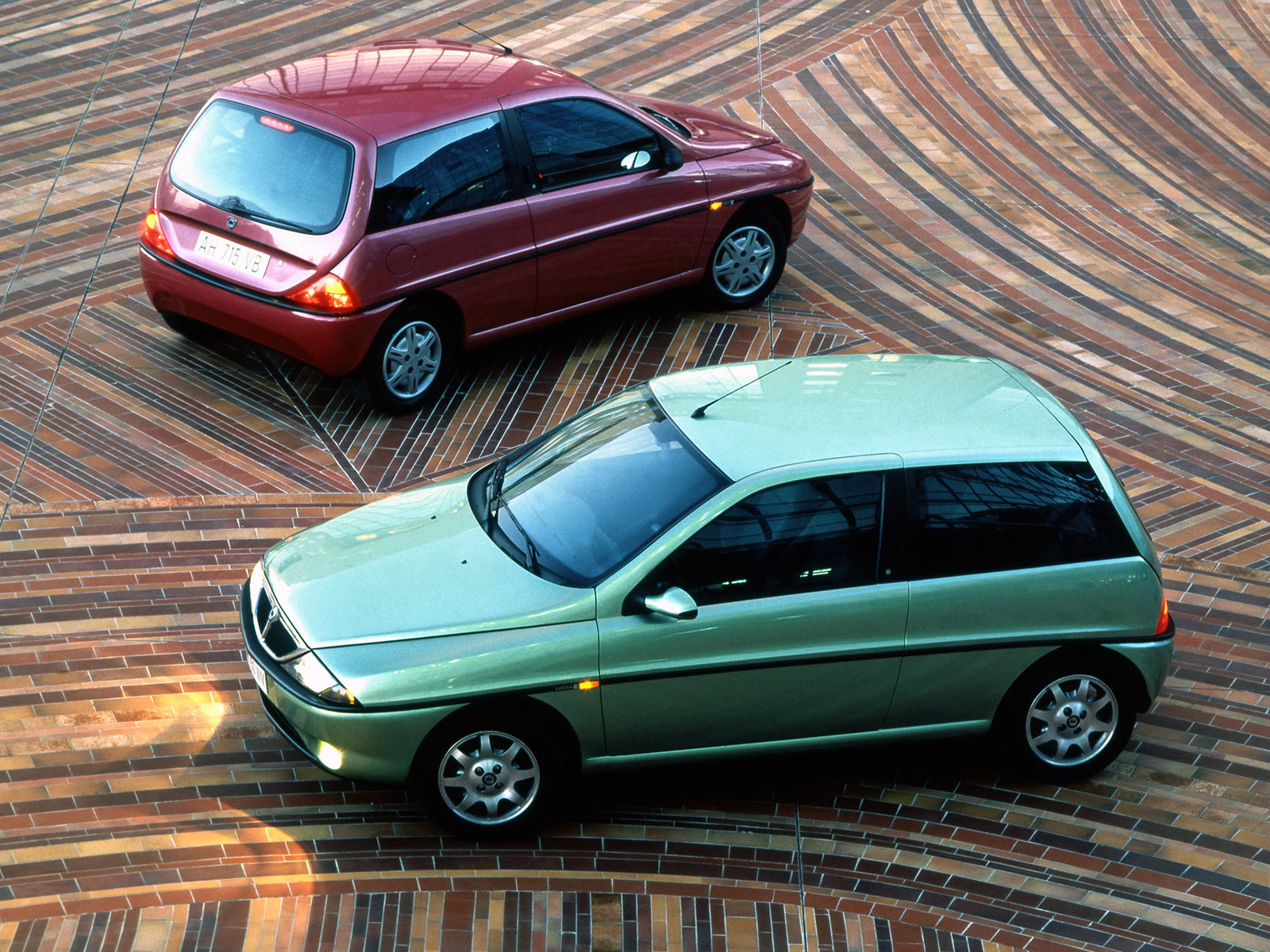
Like the Panda, you could get the first-gen Y10 with four-wheel drive, and Fiat did sell special editions of the Panda 4×4 such as the Sisley and Country Club with comparable amounts of style.
Later Y10s, also sold as Lancia Ypsilons (above), dropped the 4×4 option but kept the Alcantara and wide color palette. In fact, you could pick the color for your Ypsilon from 100 different colors, using Lancia’s Kaleidos color scheme.

And while Lancia has increasingly crumbled from those days, the Ypsilon has survived, sometimes as the only car Lancia has offered. Italians used to buy the final generations of Ypsilon in droves, when they weren’t even sold outside Italy.
Currently, Lancia again makes an Ypsilon, which is based on the Peugeot 208 but with more stylish interior and exterior. On one hand, it’s a disappointment as Lancia could do so much more, but at least they’re making something.

As it competes with the Renault R5 E-Tech, the Lancia Ypsilon is also available as an EV, and small EVs might be the ticket for well-appointed small cars of the future, as they can cost more than city cars have traditionally cost. Hyundai’s tiny Inster EV is quite cool to begin with, and Hyundai has now introduced a better-appointed Inster Lounge (above) that has part leather seats and comes in a special shade of green. Sounds like a Roland Garros to me!
Most of these examples have been European or Europe-specific, as small cars have traditionally suited roads and city streets here better than across the Atlantic. What do you think would represent the Small Fancy American Car – if it ever existed in a similar shape, form or purpose?
Top graphic image: Fiat


The Lancia should be called Uglypsilon.
The first Nash Rambler (1950-54) was intentionally sold as a “fancy” small car with many upscale features. Convertibles and station wagons featured prominently in the line-up.
Where Crosley, Hudson (Jet), Kaiser (Henry J), and Willys (Aero Ace) failed to catch on, the Rambler not only saved Nash but paved the way for American Motors. Eventually Studebaker (Lark), then the Big Three, responded.
AMC brought the old body shell back in 1958 and sold it as no-frills, ironically.
Renault 5 Baccara for me; one of my Holy Grails.
Also, various small Italian Carrozzieres offered luxury versions of the 600 and other wee Fiats, akin to Wood & Pickett’s work on Minis. And of course, the Italians could also offer full custom bodywork if you could afford it (but somehow couldn’t afford to upgrade to a Fiat 1500).