

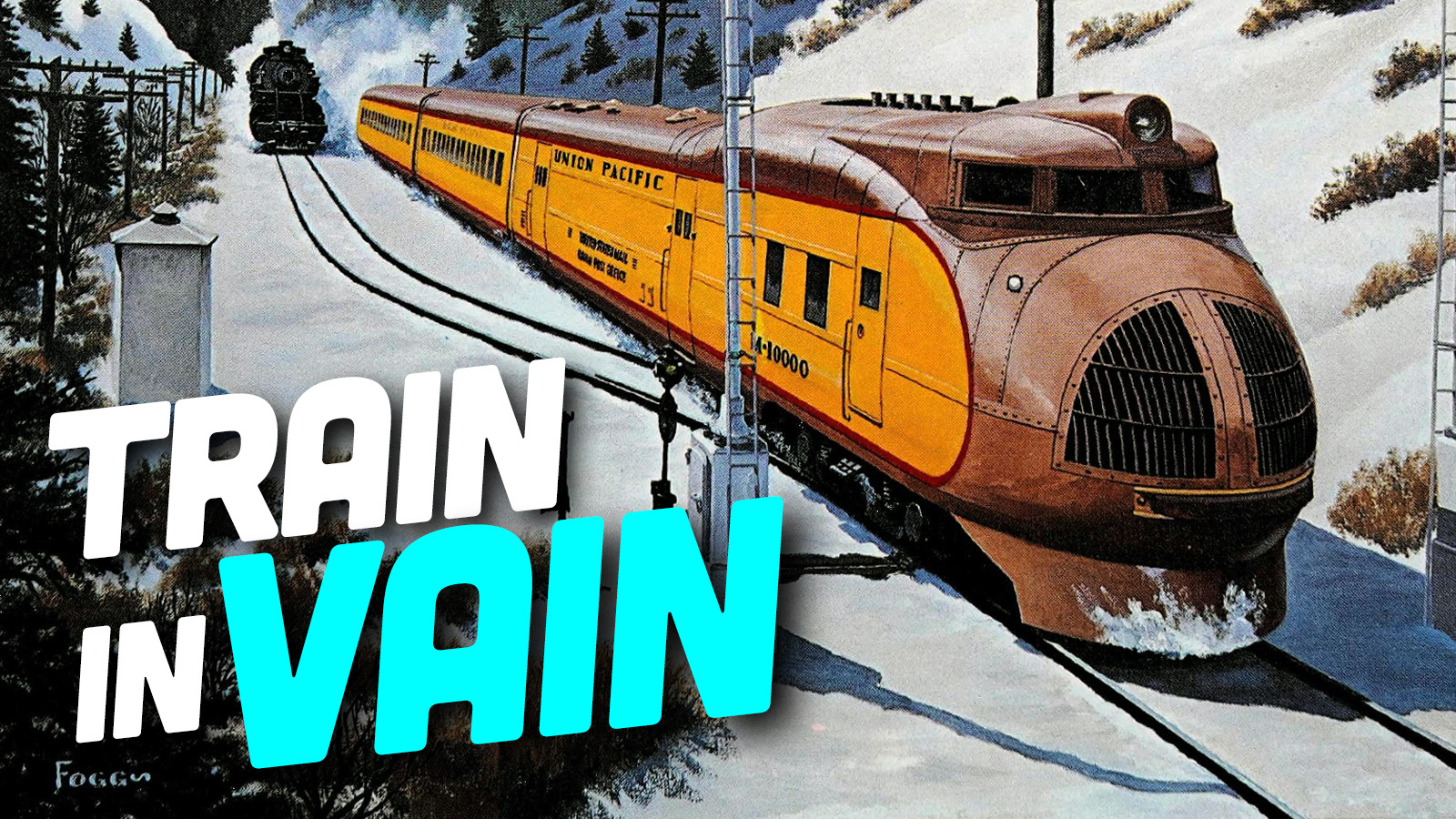
Trains were once America’s only way to travel long distances in anything resembling reasonable times. That was until the early 20th century, when cars became accessible and commercial aviation expanded its horizons. In the 1930s, railroads had to figure out a way to get people back onto the rails, and many of them decided to get slick. Often credited as being America’s first fully streamlined lightweight train, the Union Pacific M-10000 City of Salina helped usher in an era of hopelessly beautiful trains during a dark period in American history. But the train, and its distillate-burning V12 engine, came perhaps a bit too early, and it didn’t even survive a decade on the rails.
Railroads began to notice a change in ridership back in the 1920s. As the automobile became more affordable and America’s road network gradually expanded, some Americans began choosing to drive to their destinations rather than board a train. Competing forms of transportation, like motor buses and a fledgling commercial aviation industry, only complicated conditions for railroads. Passenger rail ridership entered a slow decline in the 1920s that ramped up after the start of the Great Depression.


According to Access Magazine, public transit ridership had fallen by a third during the early years of the Great Depression. Some people just couldn’t afford to travel. Others built their own teardrop campers, hitched them up to their cars, and hit the road in search of work. Those who did have money increasingly chose the freedom offered by car travel, and increasing numbers of people were choosing to travel great distances in the sky rather than by rail.

The railroads began bleeding out, with a third of railroads not surviving the early years of the Great Depression at all, and others choosing to reduce wages or their workforce in an effort to stay afloat. Reportedly, railroad employment plummeted by 42 percent between 1931 and 1932. Railroads tried to shore up their foundations with freight tariffs, but that just motivated shippers to move their cargo through the fledgling trucking industry.
Some railroads stripped investments to the bone, deferring locomotive and passenger car maintenance as long as possible to stay alive. Railroads also dramatically reduced their locomotive purchases. But some railroads had a different idea.
Since the 1920s, locomotive designers had known that public sentiment about steam locomotives was trending toward the negative. Cars, buses, and planes were fast, shiny, pretty, and innovative, while trains seemed to be slow, dirty, and antiquated. By the 1930s, the public began to see trains as old news.

This forced some railroads to rethink the train in its entirety. The trains of the future would have to be faster, beautiful, cleaner, and something that Americans would look forward to riding. These trains had to be aspirational, something more stunning than even the newest gleaming airliners. According to The Streamline Era by Robert C. Reed, since the 1860s, locomotive builders had experimented with aerodynamic fairings as a way to increase the speeds of steamers. But the trend didn’t catch on, as most railroads weren’t really interested in messing around with what they thought wasn’t broken.
In 1931, Dr. Oscar Tietjen of the Westinghouse Laboratories published studies that suggested that a fully streamlined train would require 32 percent less energy to travel 75 mph. Wind tunnel testing had proven that designing a vehicle for aerodynamics greatly reduces that vehicle’s fuel consumption. Coincidentally, aerodynamic design also looked futuristic compared to the typical cars, trucks, and trains of the 1930s.

Railcar manufacturers were quick to respond, creating streamlined electric railcars as early as 1932. The J. G. Brill Co. Bullet (above) is a great example of one of those pioneers of streamlining.
Next came entire trains. There was even an experimental streamlined train in 1933. However, historians generally recognize one train as being America’s first modern fully streamlined lightweight train, and it’s the Union Pacific Railroad’s M-10000. When this train rolled out of the shops, it was unlike anything anyone had ever seen before.
Building The Future
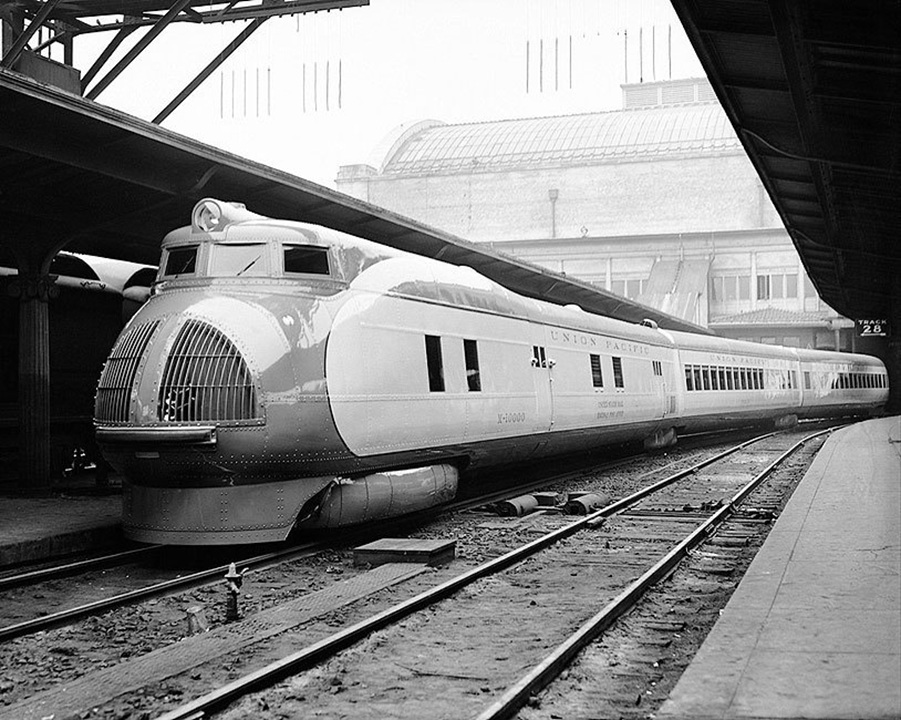
According to The Streamline Era, Union Pacific president Averell Harriman had paid attention to the era’s studies on aerodynamics and had come to the conclusion that his railroad had to go back to a concept that his father had been working on for nearly three decades. From PBS:
As early as 1905, Averell Harriman’s father, E. H. Harriman, had commissioned W. R. McKeen Jr. to design an efficient train that could replace those powered by costly and cumbersome steam. McKeen’s streamlined, gasoline-powered prototype could achieve between 40 and 60 miles per hour on sustained runs.
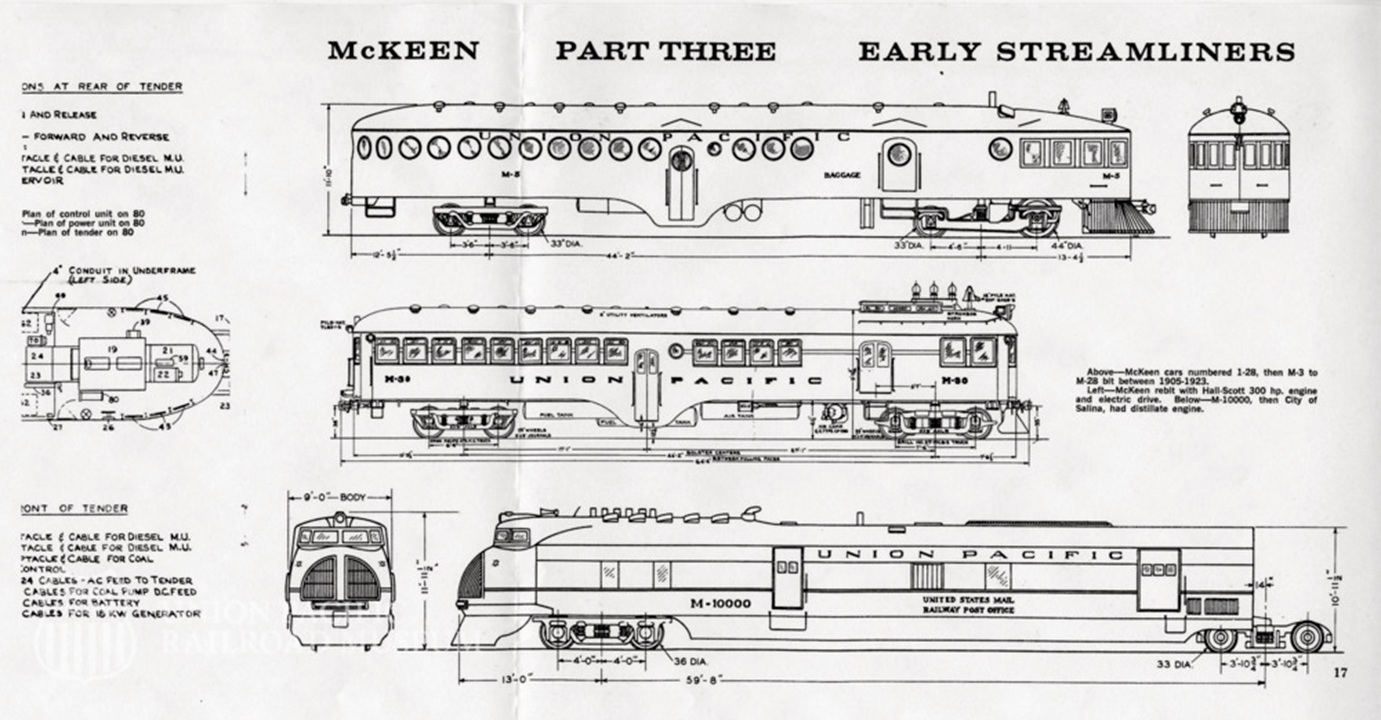
Correction: The full PBS quote claims that the McKeen streamliner was never manufactured, but 152 examples were constructed. I truncated the quote.
Harriman believed that the way to get Americans back on the rails was to produce a “supertrain,” a train that was fast, economical, lightweight, and so beautiful that people couldn’t resist. In 1932, inspired by his father’s efforts, Harriman assembled some of the brightest minds in railroading to take his father’s old idea and modernize it for the 1930s. This future train would not just be a massive draw for the public, but also replace steam on the high-speed, low-traffic routes where profitability had fallen to be marginal on good days.
In charge of the locomotive’s body was the Pullman-Standard Car & Manufacturing Corporation of Chicago, Illinois, which had an established reputation for reliable and innovative train cars. Propulsion was to come from the Winton Engine Company of Cleveland, Ohio, a division of General Motors Electro-Motive Corporation. But much of what would become the M-10000 was handled internally at Union Pacific.
Its Designer Was Obsessed With Aero
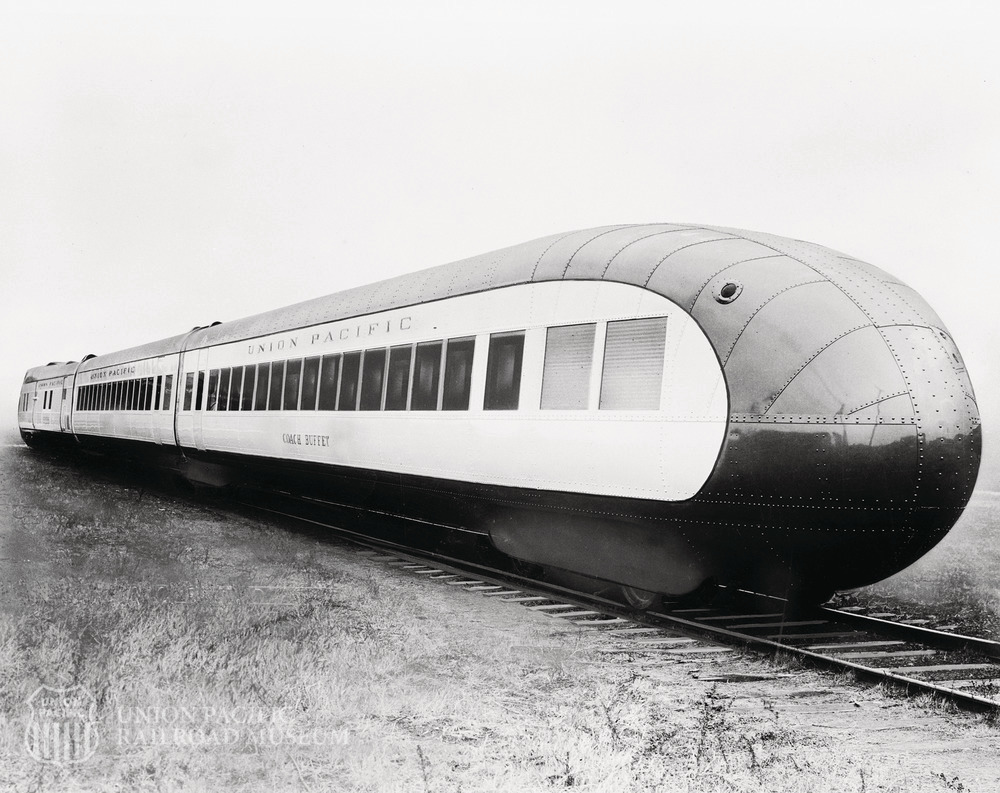
Design of the novel train was handled by engineer and Union Pacific Vice President E. E. Adams, who conducted an exhaustive study into aerodynamic optimization. He would carve out a wooden scale model of his idea for the train, put it into a wind tunnel at the University of Michigan, and examine the result. Through his testing, it was found that the train that cut through the air the most had a highly rounded design with smooth edges, gentle transitions, and notably, the smallest possible gaps between each car.
To facilitate the tiny gaps, the cars of the M-10000 would be permanently married through articulating trucks. Normally, train cars have a set of trucks at each end. This allows the cars to move independently, which, in turn, allows for them to be disconnected from the train for repairs, maintenance, or to be attached to a different train. Apparently, E. E. Adams and Union Pacific chief engineer A.H. Fetters might have been inspired by the bogies of German trains.
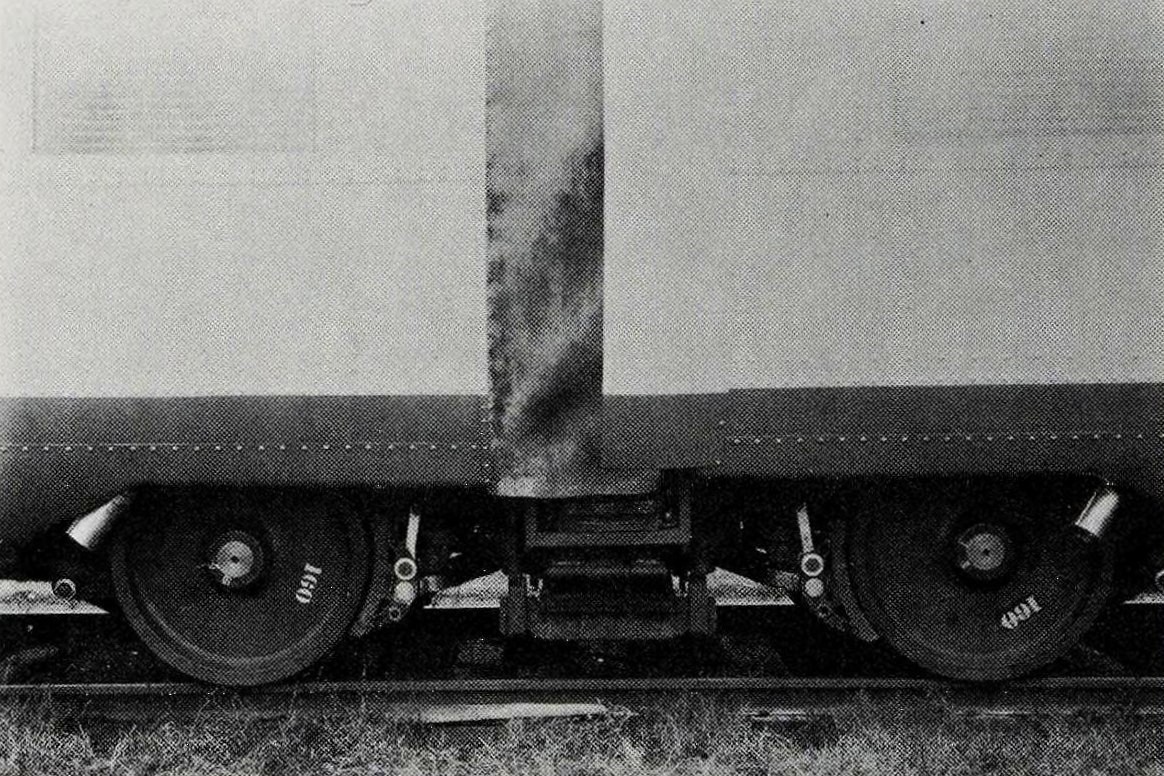
In an articulating train, the trucks are placed between the cars, forming a hinge. The benefit is that there are fewer trucks in this design, saving weight. The cars also don’t need couplers or vestibules. The main draw is that the cars can also be dramatically closer together, which looks great, reduces drag, and makes walking between cars much easier. In essence, an articulated train is a lot like a long snake. The drawback is that the cars cannot easily be disconnected anymore. A serious failure in one car now impacts the whole train. Reportedly, those tasked with repairing trains hated the idea, but they weren’t in charge of train design, so they just had to live with it.
E. E. Adams didn’t stop there in his quest for better aero. He even obsessed over how the rear of the train looked, fearing that a tail that wasn’t round enough would cause parasitic drag that would slow the train down.
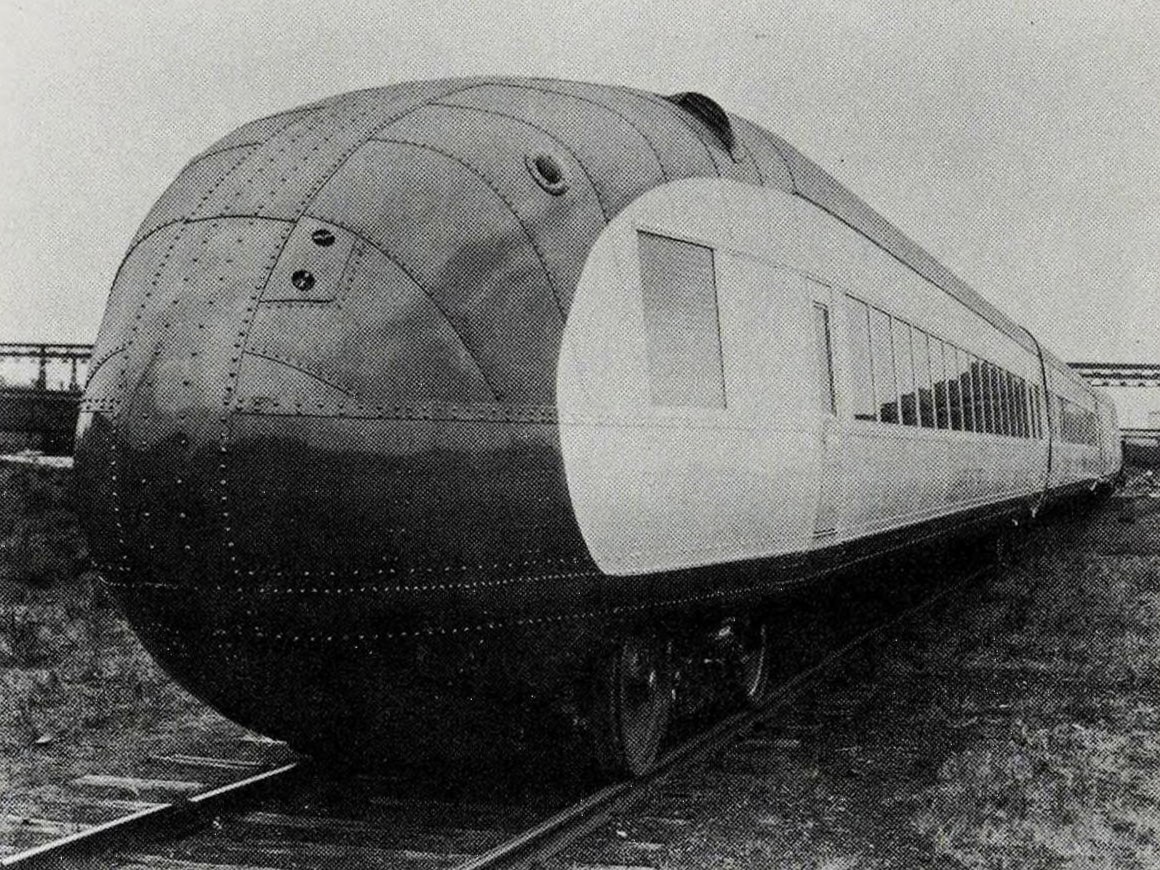
Just having an aero train wasn’t enough for E. E. Adams. To him, his extensive aero work was worthless if the train pounded the rails like the steamers of old did. No, his train of the future had to be as light as it was going to look. In a move to dramatically reduce weight, E. E. Adams demanded that the M-10000’s cars be built without an underlying heavy steel chassis. Instead, borrowing from the work of William Bushnell Stout, the M-10000 would be designed like a plane’s fuselage, where the cars would sport a tubular aluminum space frame construction with Duralumin skin overlaid on the exterior. Further inspiration came from the Pullman Railplane, which was another Stout design.
Designing the M-10000 to be incredibly lightweight had several benefits. The M-10000, which was designed to have three cars, weighed only 85 tons. In comparison, a typical steam train’s 10 cars added up to 1,000 tons. This meant less wear on the tracks. It also meant that the M-10000 didn’t need horsepower figures in the thousands to have a fast train.
The M-10000 Didn’t Burn Diesel
(Above Video: Averell Harriman explains the M-10000.)
The prime mover within the M-10000 was a weird unit. The Union Pacific had been rather obsessed with distillate fuels since the mid-1920s. The railroad used gasoline engines for smaller applications in the ’20s before discovering a cheaper way to provide motive power. According to railroad historical website UtahRails, distillate fuel was a third to a quarter of the price of gasoline, but was still able to be burned by a spark-ignition engine.
In those days, distillates were pretty much any kind of heavier liquid petroleum fuel that wasn’t heavy fuel oil. Distillates back then included low-grade gasoline, painter’s naphtha, liquid petroleum gas, gas oil, and others. Quality was all over the place, as was energy content. But, as I stated, it was dirt cheap. The closest modern equivalent would be No. 2 fuel oil, or what is used in some home furnaces.

A quirk of using distillate fuel was that, due to its weight, distillate fuel didn’t like to vaporize at low temperatures. This meant that engines that ran on the stuff had to feed from two fuel tanks. On a cold start, the engine would run on gasoline and use the heat from its exhaust manifold to cook its carburetor. Once the carb was hot enough, the engine’s operator would switch the fuel flow over to the distillate, and only if the carb was hot enough would effective vaporization occur and the engine continue running.
Despite the extra steps and the need to carry two fuels, Union Pacific would go ahead with using a distillate-fueled prime mover for the M-10000. While diesel engines were becoming widespread back then, Union Pacific believed that diesel technology wasn’t there just yet. As Union Pacific developed the M-10000, its competition over at the Chicago, Burlington and Quincy Railroad was also developing a streamliner, and the CB&Q Pioneer Zephyr would go all-in on diesel.

The prime mover was designed by the Electro-Motive Corporation and produced by the Winton Engine Company as the Winton 191A. This powerplant was a 45-degree V12 two-stroke engine with 3.12 liters per cylinder and an output of 600 HP. In terms of locomotive power, this was not much. The average steamer was kicking out over 4,000 horsepower, and some experimental diesels put out around 1,000 HP. However, considering the M-10000’s lightness, the power figure was enough. Sadly, zero images have been archived of this engine. What’s pictured is the patent for a distillate engine carburetor that would see use in railcars.
Like a diesel-electric locomotive, the Winton engine did not actually drive the locomotive’s wheels. Instead, that was the job of DC traction motors.
Breaking Tradition
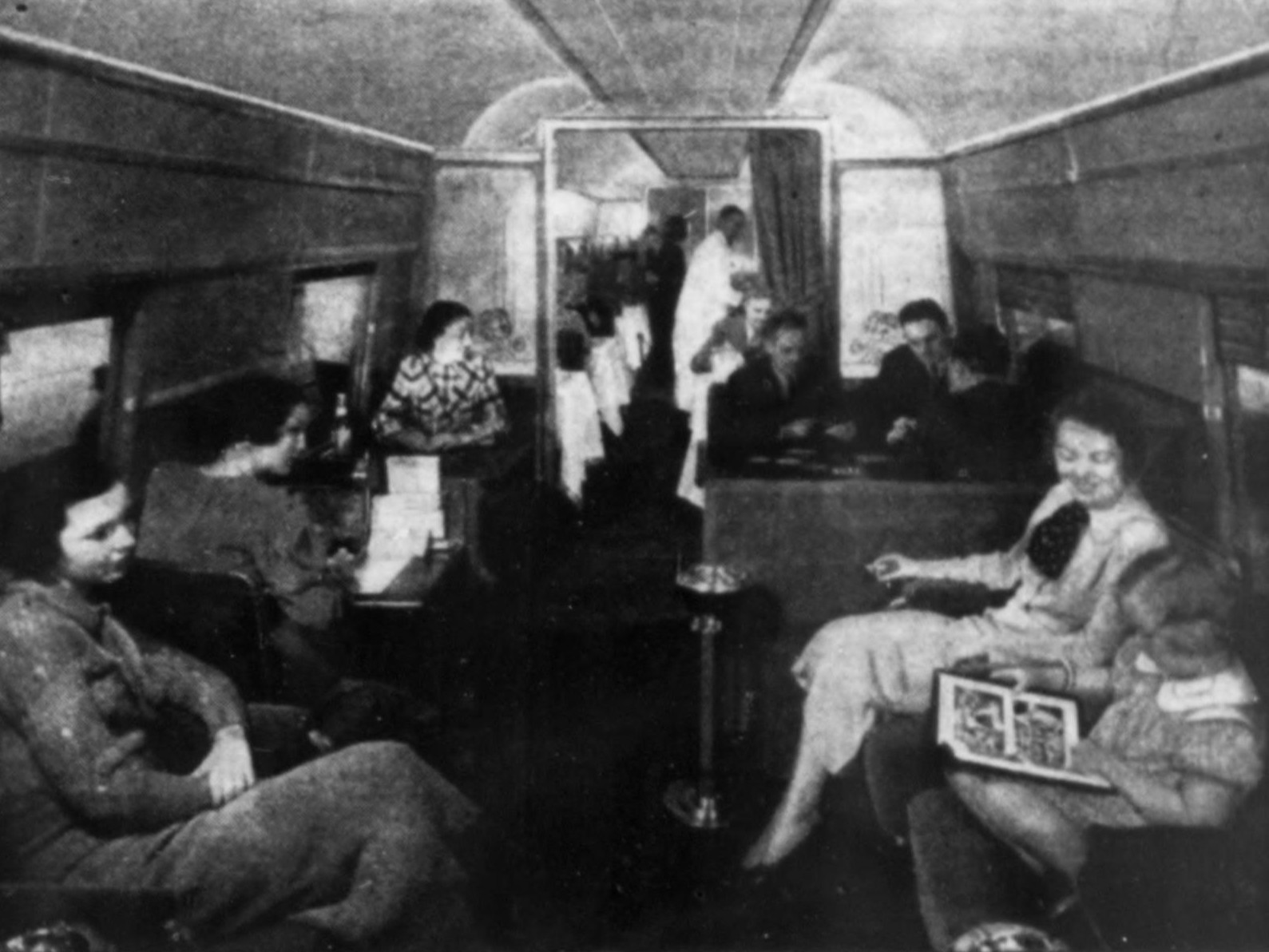
With a body secured, a prime mover to get things going, and even a truck design, the finishing touches were making the M-10000 attractive. A future train couldn’t just have the same interior as everything else, so Averell Harriman let his wife, Marie, handle the design and furnishings. Honestly, Marie Harriman’s accomplishments were impressive on their own. She ran a popular art gallery in New York City for a dozen years with a focus on French painters like Derain, Gauguin, Van Gogh, and Matisse.
Marie was allowed to do whatever she wanted for the M-10000’s interior, and she decided to do something as modern as the train’s exterior. Apparently, Pullman didn’t like this and wanted to stay traditional, but Marie won in the end. The Streamline Era described her work in the M-10000:
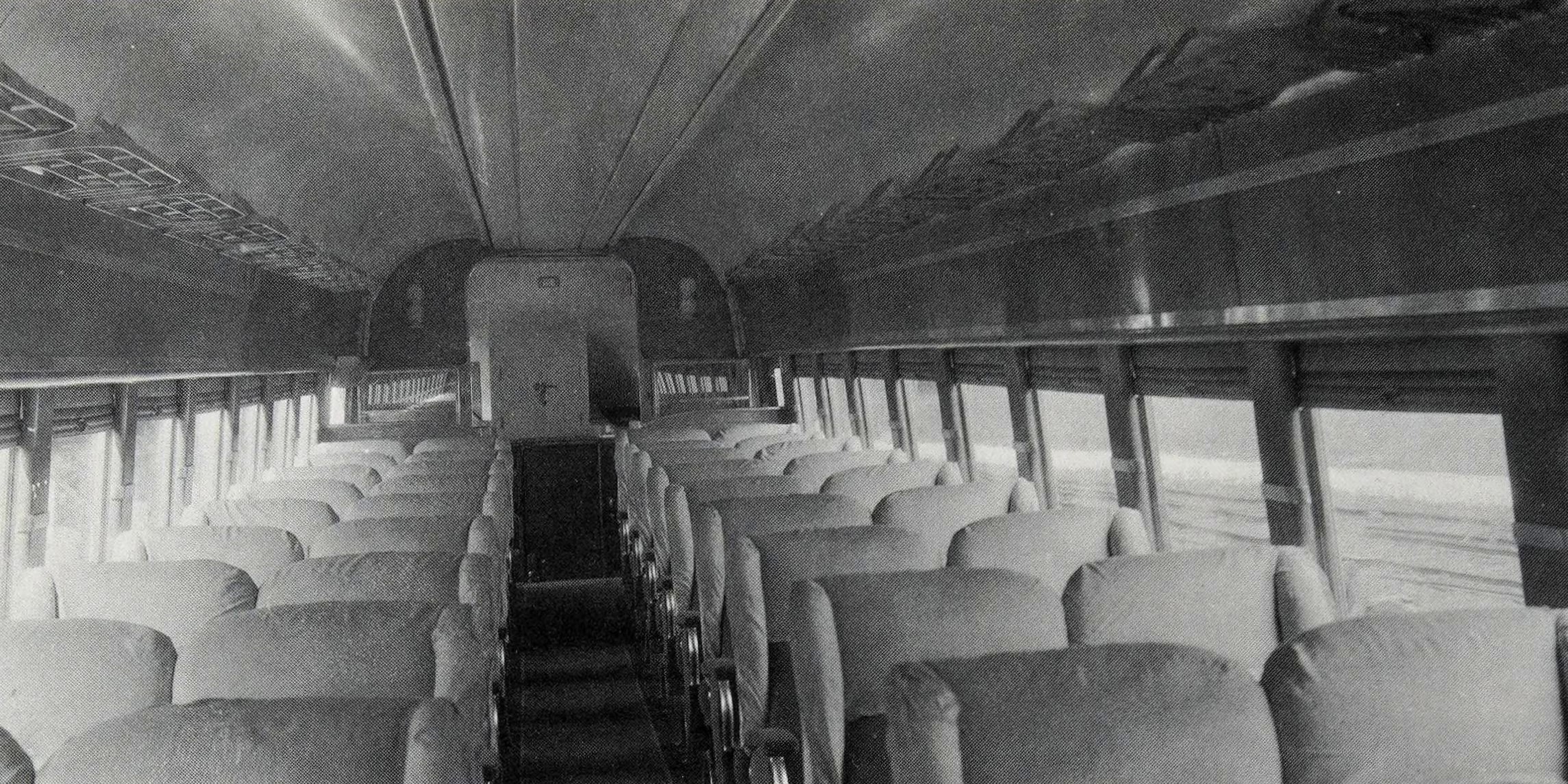
The color scheme she chose for the two coaches of the City of Salina was pale blue, shading down from nearly white at the top of the vaulted ceiling to a deep ultramarine blue below the windows, with horizontal bands of polished aluminum trim to set off the varying shades of blue. The window sills were made of jet black bakelite (an early kind of plastic and a new ma¬ terial for railroad car construction). Shading the windows were Venetian blinds (very big in the 1930’s); the windows themselves were specially manufactured of shatter-proof glass, hermetically sealed because of the air conditioning and set flush with the exterior of the car to reduce wind resistance.
The wing chair seats were independent, though ar¬ ranged conventionally in pairs on each side of the cen¬ tral aisle. Upholstery was of golden brown fabric, like the exterior color, and framed in the characteristic 1930’s brushed aluminum. An indirect lighting system enhanced the simplicity of the cars, as all fixtures were concealed in aluminum panels in the ceiling, eliminating any obvious lamps or bulbs. Light shone out from overhead, reflecting down from the white ceiling, and could be brightened or dimmed from a master control. Moreover, the clutter of overhead storage racks was eliminated, as all luggage was stored beneath the seats.
Meals were served to the passengers at their seats, on a tray from the buffet grill located in the tail of the rear car. A perambulating steam table on wheels brought food to the coaches, serving meals on dishes, silver, and linen especially designed for the City of Salina. Such informal dining arrangements were common on almost all of the new streamliners, perhaps because it was novel and it eliminated a trip to the dining car.
Breakfast on a M-10000 was 35 cents, while dinner was 75 cents.
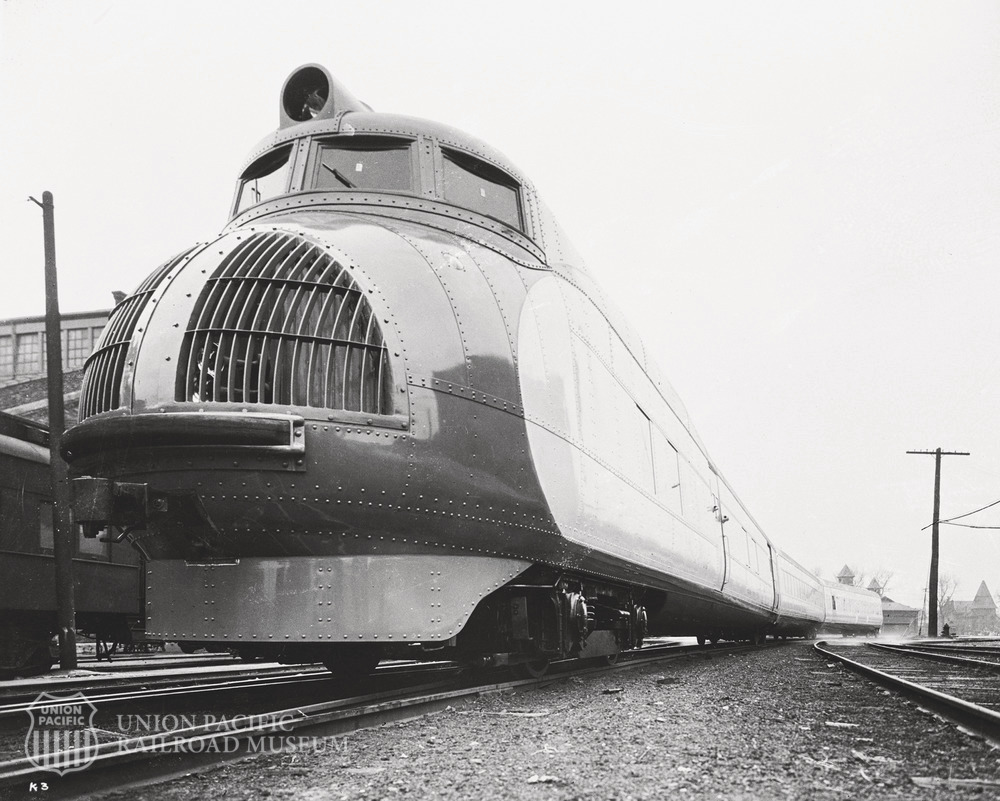
Outside, the M-10000 marked Union Pacific’s first use of the yellow that remains its trademark today. The train was mostly yellow, but with a roof and bottom in a sort of golden brown. A frontal light illuminated the path ahead, while a vertical light alerted anyone watching of the train passing through. The effect was that, by day, the M-10000 was a glistening arrow gracefully flying through the countryside and, at night, it was like a shooting star. The streamliners of the 1930s were all like this. If they weren’t raw, polished metal, they were painted in colors so bright they could easily be seen by passengers in aircraft flying overhead. These trains were as much transportation as they were billboards.
These trains also gave Americans a sense of wonder and optimism. The Great Depression was a horrifying and dark time, but these trains cut through the darkness and gave people a future to root for.
America Fell In Love
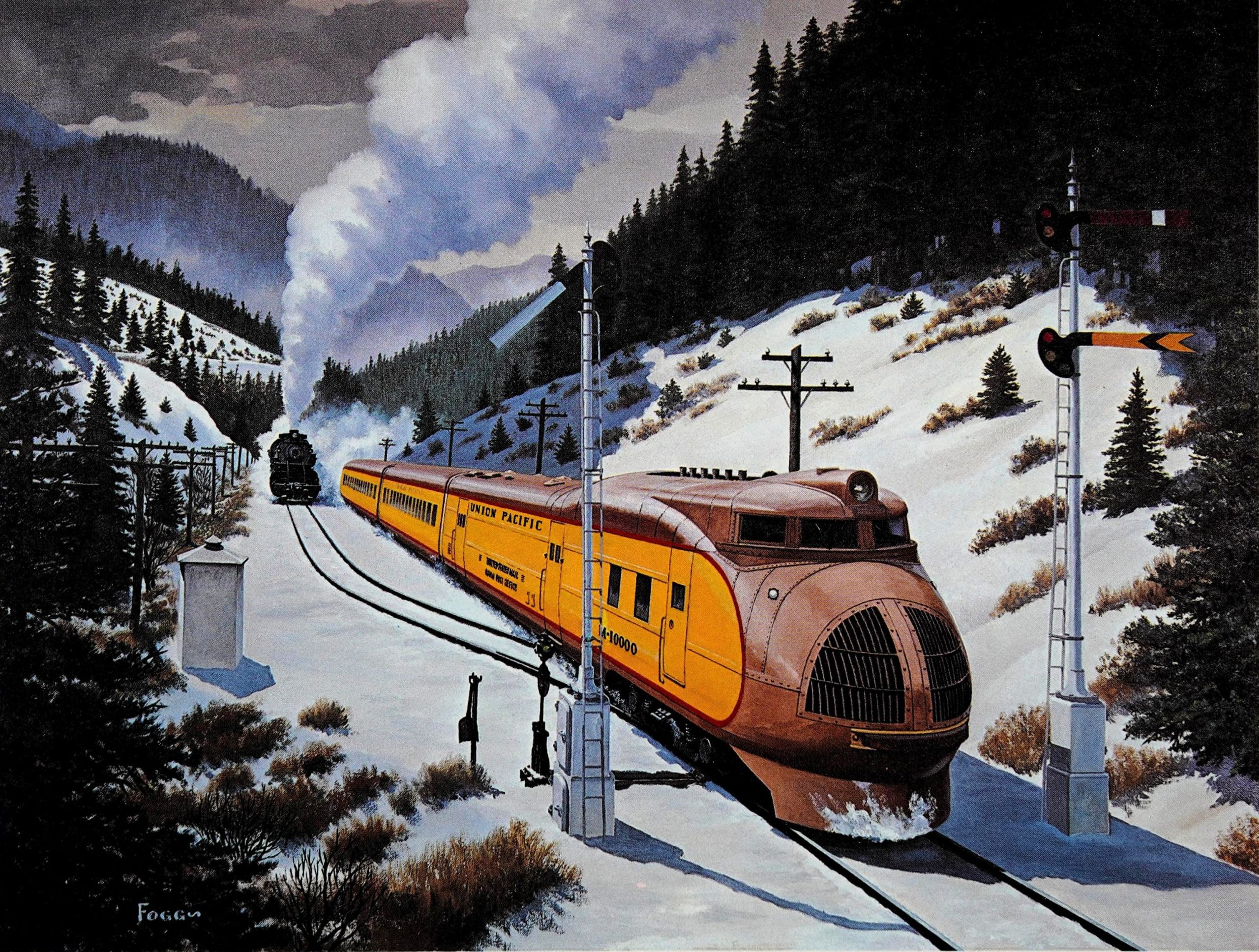
The Union Pacific M-10000 was completed and delivered on February 12, 1934, beating the Pioneer Zephyr by two months. The trainset featured three cars. The locomotive led the pack, and the space that wasn’t filled up with equipment was used for baggage, a Railway Post Office, and the HVAC system. The second car was purely for passengers and had seating for 60. The rear car had seating for another 56 people. The very rear of the last car was the kitchen. Between the two rear cars was an area for boarding, plus four bathrooms.
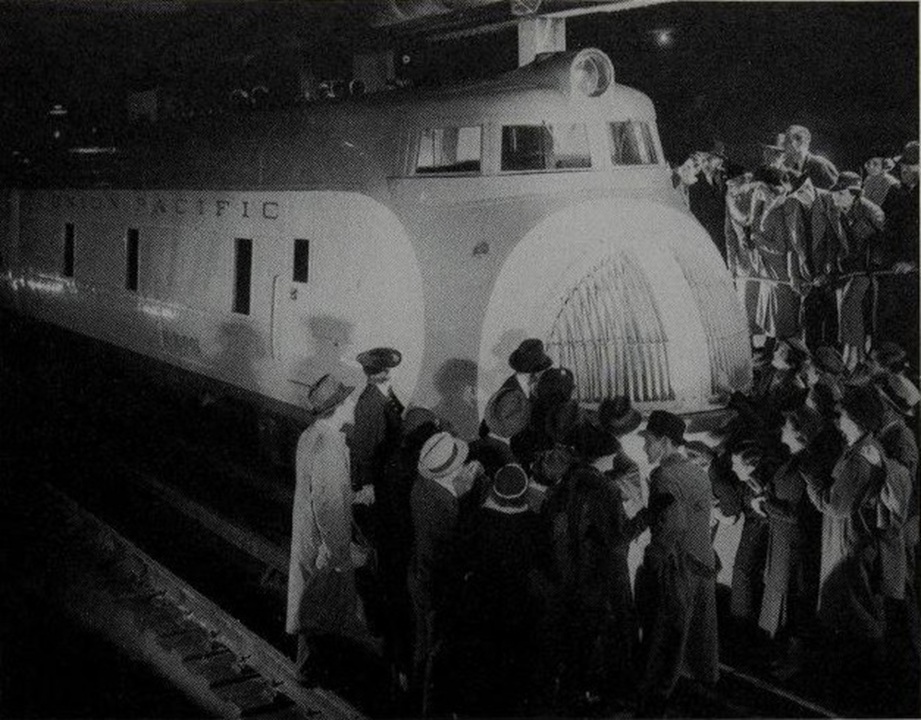
The M-10000 didn’t immediately go into service, and instead, Union Pacific took the train on a publicity tour as “The Streamliner.” During the tour, the train covered some 12,625 miles coast-to-coast, visited 65 cities, gave tours to 1,195,609 people, got inspected by President Franklin Delano Roosevelt, and even got to go to the Century of Progress International Exposition in Chicago, where it parked next to the completed Pioneer Zephyr. The M-10000 even hit 110 mph during its tour.
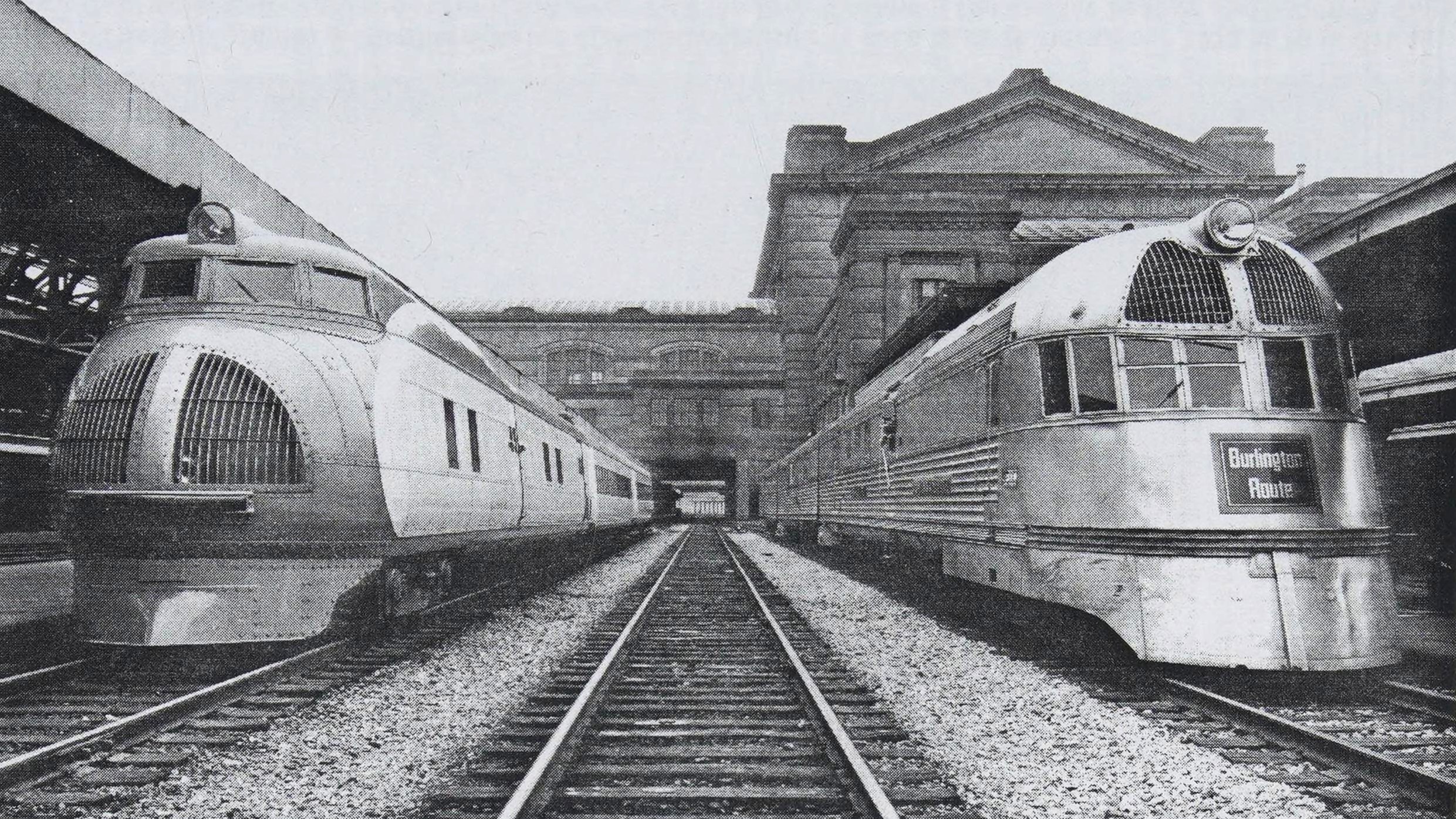
Amusingly, the Union Pacific used the M-10000 for publicity for so long that the Pioneer Zephyr actually beat it to going into revenue service. That’s why some railroad historians debate which train was “first.” The M-10000 was built first and operated first, but the Pioneer Zephyr was the first to actually carry passengers. However, if you go by time, the M-10000 was the decisive winner.
The trade journals for everything from steel to carburetors went wild, as did general interest news publications. Who cares if the distillate engine had a silly starting procedure and the train cars couldn’t be separated; Union Pacific seemingly had all of America captivated.
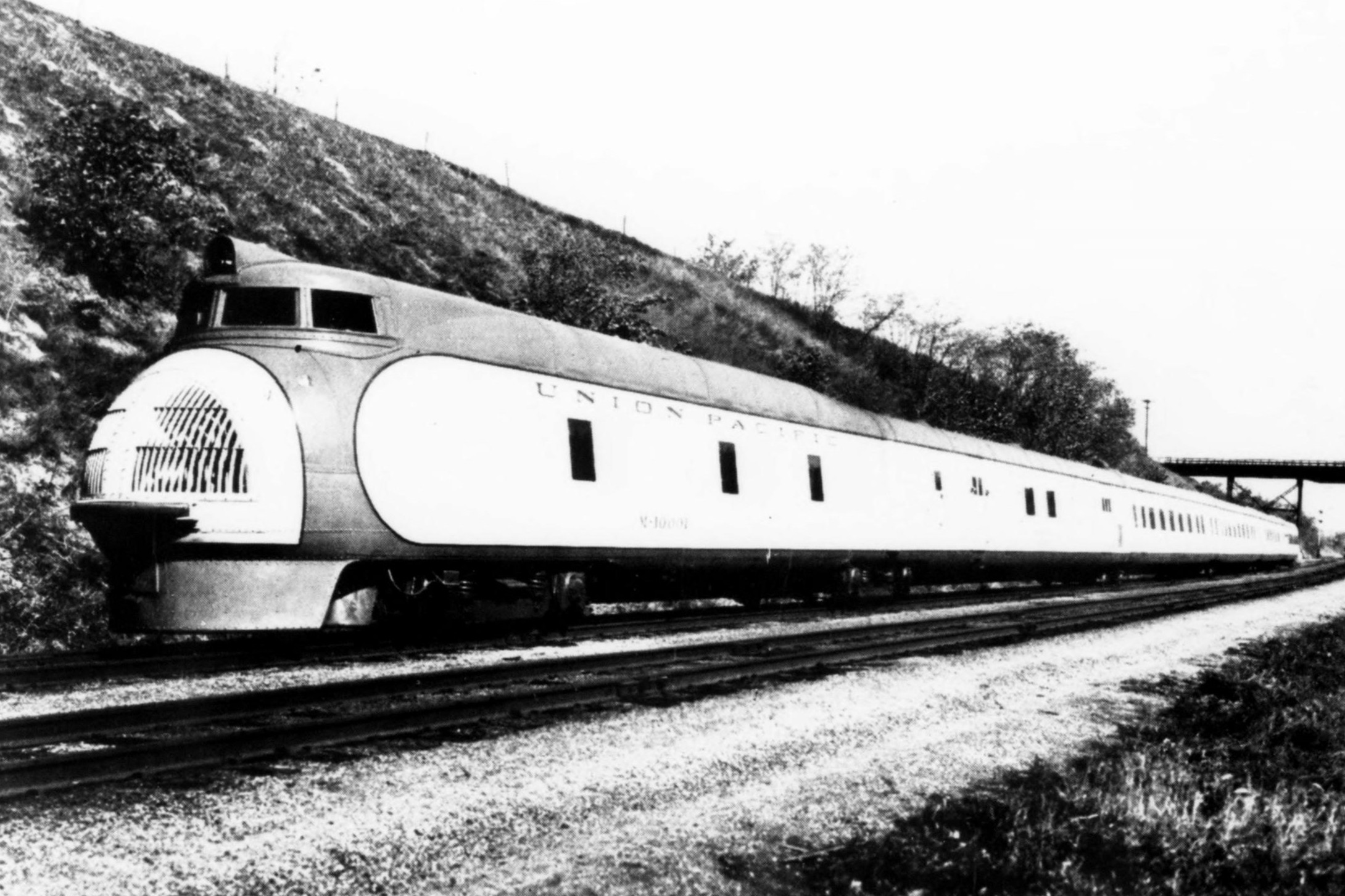
On January 31, 1935, the M-10000 finally entered revenue service as The Streamliner, which carried passengers on an under-200-mile route between Kansas City, Missouri, and Salina, Kansas. Later, as Union Pacific changed to a new naming convention, calling its trains the City fleet, the M-10000 would be renamed the City of Salina.
Before the City of Salina even went into revenue service, Union Pacific, which was still feeling the love from the publicity tour, decided to build a second M-10000. The second unit, called the M-10001, was structurally similar to the City of Salina, only it added three sleeper cars, which the M-10000 didn’t have. Another notable departure was the prime mover. The M-10001 used a Winton 201-A 60-degree V12 diesel with 8.23 liters per cylinder and 900 HP on tap.
On October 23, 1934, the M-10001, nicknamed Canary Bolt, ran from Los Angeles, California, to Grand Central Terminal in New York in only 57 hours, a record that remains unbroken today. In service, the Canary Bolt ran from Chicago, Illinois, to Portland, Oregon, taking 40 hours to do the trip. This was so fast that the Canary Bolt shaved 18 hours off the route’s previous time.
Sadly, despite the wicked speed, it was found that the diesel was overworked, and the M-10001’s trucks were unstable at high speeds. The train would be rebuilt with lengthened trucks; the prime mover was removed and replaced with a version making 1,200 HP, and the train gained an extra car for a total of seven cars. In service, this train was called the City of Portland before being retired in 1939.
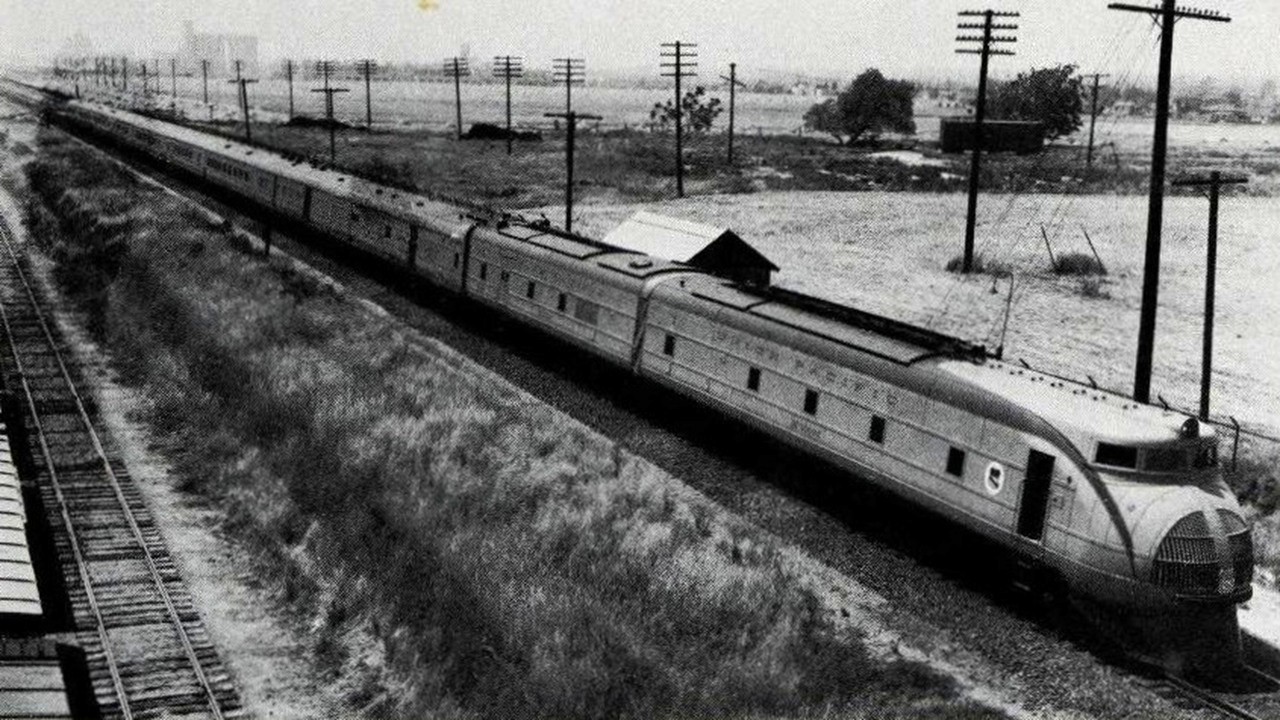
In 1936, a third Union Pacific streamliner was built. The M-10002 featured a cab unit with the same 1,200 HP firepower as the M-10001, and the old 900 HP prime mover from M-10001 was placed in a B-unit behind the cab unit, giving a total output of 2,100 HP. This one hauled nine passenger cars and ran as the City of Los Angeles. It would become the City of Portland following the M-10001’s retirement.
M-10000 Might Have Been Too Weird

Only M-10000 ran on distillates, and it had a sadly short run. Union Pacific’s gamble had proven to be a success. In 1938, Coverdale & Colpitts, consulting engineers for the Edward G. Budd Manufacturing Co., reported that America’s hot streamliners had gotten people in love with trains again. However, as Railway Age reported in 1942, the train became too small to actually serve the influx of passengers. Remember, unlike its larger siblings, the City of Salina had only two passenger cars.
Then there was that distillate engine. Union Pacific’s fear that diesel wasn’t ready for prime time was proven to be incorrect. The other M-10000-series trains had already proven that diesel could be fast, reliable, and far less complicated. While the distillate prime mover was reliable enough, it was almost immediately outdated.
The final nail in the train’s coffin came in 1941, after the City of Salina racked up 995,000 miles of use. By that time, the prime mover was worn out, and rebuilding it or replacing it with a diesel was deemed to be too costly. Ultimately, Union Pacific decided to retire the City of Salina on December 16, 1941. In a move that must have felt like twisting a knife, the M-10000 was replaced by a steam train.
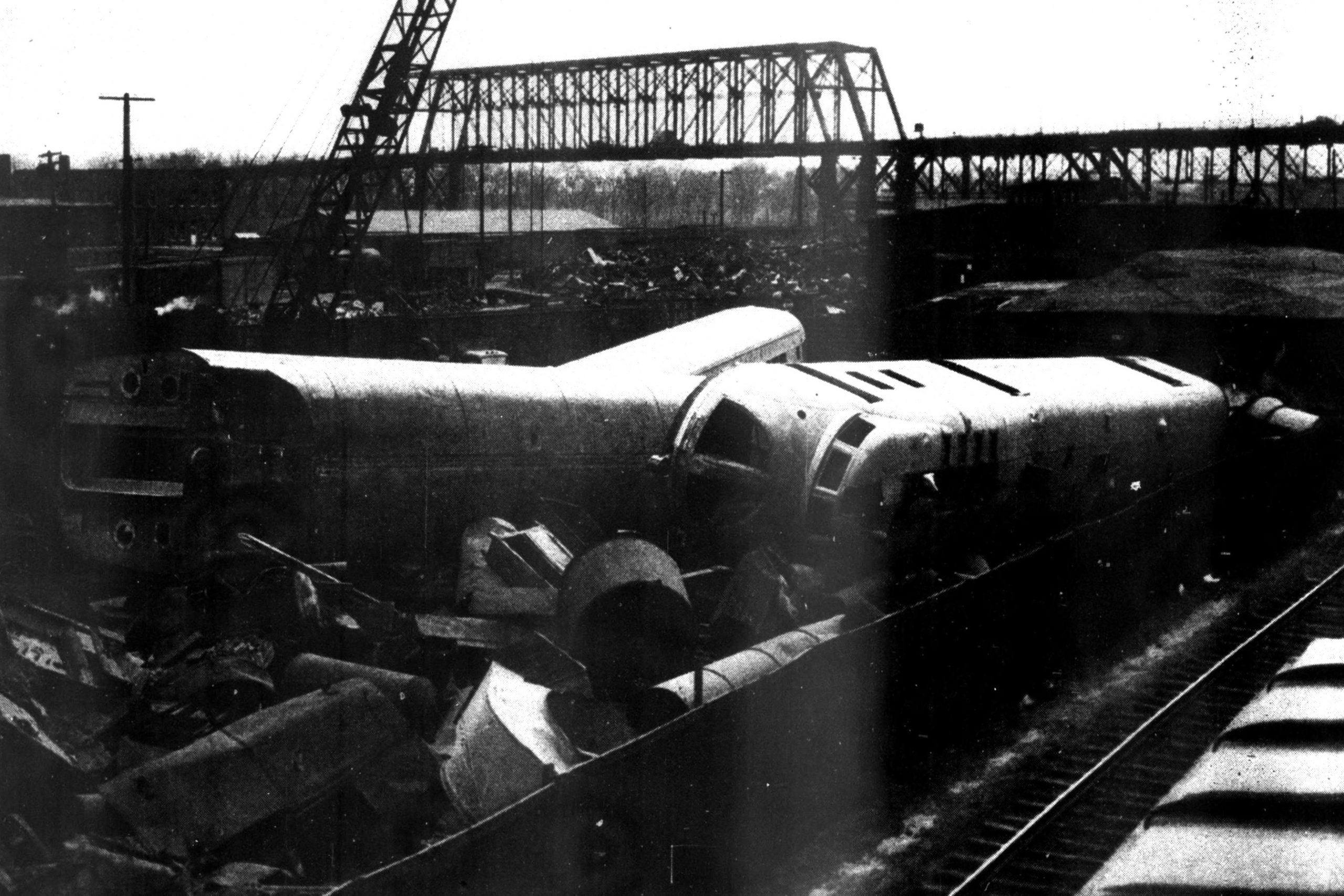
By November 1942, Union Pacific sent the M-10000 to the scrapper alongside 423 machines, dies for the M-10000, and other material from Pullman-Standard. In total, 61,300 tons of metal were scrapped to clear room in Pullman-Standard’s factories to aid in manufacturing for the World War II effort.

What was left of M-10001 was also scrapped. M-10002 was in service until 1943, was then used for a coal-fueled gas turbine experiment, and then met the scrapper in 1947. Union Pacific would build four more streamliners, the M-10003, M-10004, M-10005, and M-10006. Each was a diesel-electric unit, and they stayed in service the longest, with the last examples being scrapped in 1953. Union Pacific reached the end of the line of its streamliner project at that time, and the railroad shifted to using General Motors Electro-Motive Division E-series locomotives.
Inspiration For The Future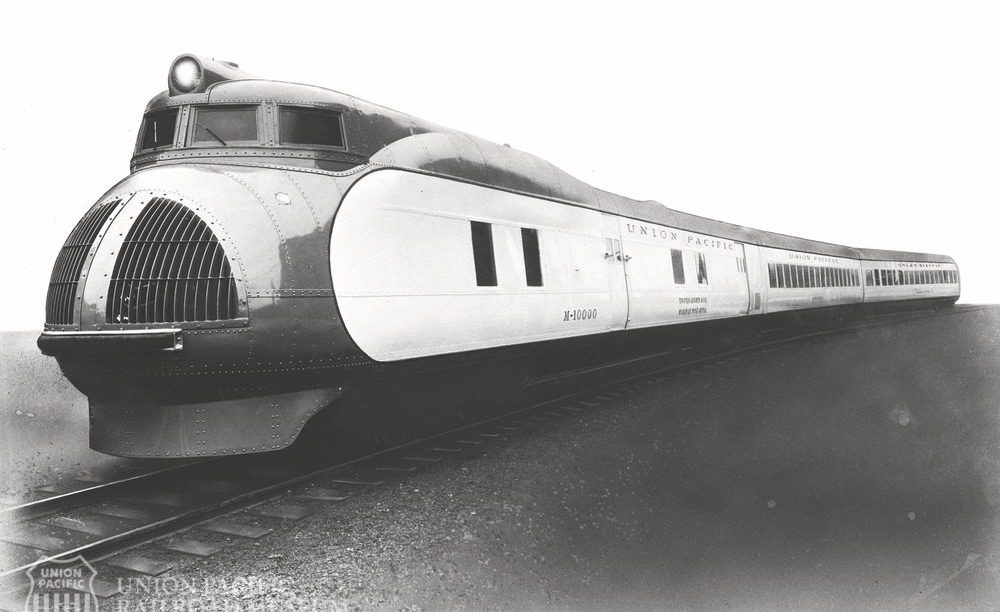
Despite the sad, unceremonious end, M-10000 was actually a success. The train cost the railroad $230,997 to build, but raked in $717,685 in revenues. The other M-10000s were similarly profitable. They were also only the first of many. By 1940, some 60 streamliners were operating in America.
The Zephyrs weren’t just more popular, but their designs had been proven to be superior, too. The Union Pacific streamliners were lightweight, allowing them to reach blistering speeds, but the Zephyrs were far more durable while also looking rather resplendent in their polished stainless steel. So, the Burlington might have been in second place to building America’s first streamliner, but it did win the streamliner war. I will warn you that if you want more information on the M-10000, you should probably avoid YouTube. AI train content creators have been all over the M-10000, publishing all sorts of wild, outlandish claims with zero proof.
Still, there’s no discounting what the M-10000 did. It was a beacon of hope in a dark period. It was something for people to look forward to. It made trains cool again. Sure, Union Pacific made the City of Salina too small and saddled it with outdated technology from the jump, but it was the first of a long line of perhaps the coolest passenger trains to ever exist. For that, I think it was an incredible part of history that perhaps should have been saved.
Top graphic image: UP


Wilford! WILFOOORDD !!!
“The benefit is that there are fewer trucks in this design, saving weight. The cars also don’t need couplers or vestibules. The main draw is that the cars can also be dramatically closer together, which looks great, reduces drag, and makes walking between cars much easier.”
Alstrom TGV trainsets use the Jacob bogies and specific articulated design that maintain the stability and integrity during the derailment caused by collision, severe emergency braking, technical failure, etc. In 1993, one of the TGVs experienced the derailment while travelling at 294 km/h (world speed record for derailment), but none of the wagons jack-knifed or separated from others. Same for the 2000 derailment of Eurostar.
Deutsche Bahn’s ICE 1 used the conventional bogies (one at each end), and the 1998 Eschede train disaster showed the vulnerability of conventional bogies as many of wagons jack-knifed during the severe derailment event and collision against the bridge support columns.
A primitive bullet train with a 747 cockpit grafted on top, all in the 1930’s. Inconceivable.
McKeen streamliners used to run in San Diego.
https://mckeencar.com
Have you been hanging out with SWG?
It might count as streamlined, but it sure is wayyyyy ugly and awkward compared to the Zephyr/Super Hudson/Milwaukee Class A. Thing looks like a dorky fat policeman with a giant mustache.
Minor correction — No. 2 heating oil isn’t really anything like distillate fuel. It’s actually essentially the same as No. 2 diesel fuel, just dyed to indicate it’s sold without road tax, and may or may not be blended to allow more sulfur content than on-road No. 2 diesel.
Today, most “heating oil” is indistinguishable from dyed “off-road” agricultural/industrial diesel, which is in turn just regular diesel with red dye added to meet tax regulations. Refineries make more money by just churning out the main fuel blend and then adding dye and, if required, other minor additives required for regulatory compliance.
I lived for a long time in northern New England — in times when heating oil shortages happened and your oil tank was running low, the solution was to fill up portable cans with diesel from the nearest filling station and dump it in the tank. It burned the same, had the same heat output, and kept the house warm if the oil delivery was going to be delayed. There were also a couple of winters where the price of heating oil went up due to overall shortages of diesel, to the point that road-taxed diesel actually cost a little less — right in the coldest part of winter, of course. Oddly, most city folks didn’t know that the two fuels were functionally the same. And it didn’t help that heating oil suppliers often falsely warned against it, claiming that it “might” clog the burner somehow — highly unlikely because “winter blend” diesel generally had more kerosene (which is what you heated your house with if your tank was located outdoors) and other anti-gel additives to keep it flowing. So it was usually just the thrifty “old Yankees” who filled up cans in the back of their pickups and lugged them around in the snow to fill the tank, in order to save some money or just shrug off the need to worry about the oil delivery being late again. Besides, lugging and pouring cans of diesel wasn’t really any worse than lugging firewood inside for woodstoves.
I grew up in the sticks quite a while ago treating anything that smelled like diesel, as diesel.
Nice Clash reference.
Are Adrian and I the only ones who got that?
Articulated trucks is the essence of the French TGV. (I know thee German, Italians and Japanese went the classic way)
With modern technology raising up a whole train to replace a truck is a non issue. But at that time it was a big problem.
Another advantage, that might not have been seen at the time, is that trains built that way are more rigid, and as such tend to stay up in case of derailment. (except when being way overspeeding during a test of a new track in a junction curve)
Snowpiercer!
Mercedes,
One correction to another great article.
They did actually build a number of McKeen cars but the drivetrain wasn’t quite ready for the real world so they mostly didn’t stay in service terribly long.
The McKeen Motor Car Company Historical Society – Restoration of the McKeen Car “Cuyamaca”
Distillate engines were. very popular on tractors at the because they were cheap to run and to buy. I’m not sure of the value in a train. I suppose if you burned distillate in your steam locomotives it made sense but otherwise diesel was the right choice.
Design wise I’ve always preferred the Zephyr.
This will always be one of my favorite trains to have existed. The look was just perfect, ultra modern for the time and now it’s like seeing the crusty old grandad of the Shinkansen.
Thanks for that AI callout at the end. Just a couple of days ago I forgot about my “don’t click any recent unknown channel” rule and started watching one of those YT-abominations about these. Grrrr. Much happier now after your write-up appeared here – seeing the Mercedes Streeter name means excellent genuine content!
Are you referring to the video with the title that claims the M-10000 was lethal for its crew?
That’s the one! It suddenly started showing up near the top of the suggestion list every time I opened YouTube.
Alrighty! Now I know to send that whole channel to the Sin Bin. Thanks!
Glad to see this; usually I see so much more about the justifiably famous CB&Q Zephyrs. Note that your Access Magazine article documents the declining trend of urban transit ridership, not intercity passengers on railroads like the UP and the Burlington. My grandfather was a conductor on the Burlington.
Neat history! For shorter runs these were probably great. But competing with cars post WWII was difficult.
Only because we chose to put massive amounts of government dollars into building roads and other infrastructure for cars while at the same time cutting back on funding for trains and public transit. That was a choice we made with heavy lobbying from the auto industry.
What AI has taken over YouTube train videos? Is no topic safe?
That was interesting read. Thank you.
Excellent overview of the early streamliners. With their aero designs, articulated train sets, and varied fuel sources these were the inspirational ancestors of the UAC TurboTrain, a gas turbine powered high speed train that emerged in service during the early 70s in the US and Canada and disappeared by the early 80s. Still holds the rail speed record of 170 mph for gas turbine trains, though in service it never approached those speeds. These oddballs from the M10000s and Zephyrs to modern high speed rail have always fascinated me.
LA to NYC in 57 hours ….. Those were the days.
Pretty sad that it takes 71 hours today.
The problem is now you can fly it in 6 so I suspect most people taking the train are not in it for the speed.
Sure, but if we even had just an Acela (which is nowhere near the fastest trains of Japan, China or the EU) across the country, running at an average of 125mph, it would only take @ 22 hours to get from Los Angeles Union Station to NY Penn Station.
I’d be down for that instead of dealing with TSA, then being jammed into a cramped tube, all while using less energy and creating lower emissions per passenger.
Do you imagine this would be a nonstop service? This could only ever be built with buy-in from across the country, which would require not just stops along the way, but a convoluted alignment to hit various population centers (and significantly reduced speeds while navigating sub/urban areas). Maybe have a relatively direct route with a number of “hubs” where multiple regional spurs would connect, served by traditional trains. I know we’re in fantasyland even thinking about this…
I calculated it as non-stop Acela service – but with faster trains (150-175mph?) generally following the interstate routes, it could easily be done in the same time with stops in, say, Phoenix, Albuquerque, Amarillo, Oklahoma City, St Louis, Indianapolis, Columbus, Pittsburg and Philly.
the other, unfortunate, thing I thought about was terrorism. If this became a vital transport link, the hundreds of miles through uninhabited desert would be both a tempting target and a hard one to protect.
When is the last time a passenger train was derailed by terrorists? Plenty of trains around the world go through unpopulated places.
It’s been at least 30 years.
https://www.npr.org/2015/04/12/399159965/20-years-later-sabotage-of-amtraks-sunset-limited-still-a-mystery
The Union Pacific Streamliner City of San Francisco derailed in Nevada in 1939. It was an act of sabotage, never solved. There were almost 150 casualties when the train wrecked, including 25 fatalities.
When I was in the first week of Basic Training – after we were given a rule, there were the recruits who would raise their hand and ask “What If…?”
Our TI got in the face of one guy and screamed in his face so loud and hard that his skin rippled, “What if Donkeys Fly?!?! Don’t ask ‘What-Ifs’ – Just do your duty!”
The US used to be the country of “Can Do.”
Now we’re the country of “What if?”
More like the country of “We Can’t”.
If find it absolutely baffling that people today believe the USA cannot do simple things like increase our electricity generation and distribution. The USA increased electrical generation capacity by 95% from 1960 to 1970.
The problem of HSR in the US is the mountains. Trains use steel wheels. At lower speeds, these wheels limit them to a 4% grade. At high speeds, they are limited to a 2% grade. US interstates are built to have 6% or less grades, which they can get away with given the rubber on pavement traction that a car has.
To keep the railroads at 2% grade in the mountains is a major challenge, either a lot of switchbacks or a lot of tunnels. Switchbacks add distance and you can’t make a tight turn with an HSR safely. Tunnels aren’t cheap to setup and maintain.
The Appalachians and the Rockies pretty much slice the Lower 48 into 3 sections. East Cost, Middle and West Coat. The East Coast could do HSR going from Maine to Florida and Acela is starting to make those runs. However, property values on the East Coast drive up the construction costs.
The Middle could do HSR pretty easily, but the cities that could benefit from HSR aren’t in a straight line, so it would be a challenge to come up with a system that would be profitable. The West Coast is too mountainous to really do HSR, although they show a lot of interest in it.
If HSR is to take off in the US, I predict it will start in Texas. A triangle route of Dallas to San Antonio to Houston and back to Dallas would get riders from Austin as well and thus cover the 4 largest cities in Texas and not have any significant hills to climb and descend. Each leg would be about 250 miles, so do-able easily within 2 hours (perhaps 90 minutes with 250 mph trains), vs 4 hours via car and not much slower than a direct flight, when you add TSA. Since this triangle route would stay inside of Texas, it would be easier politically than when you cross a state line.
“If HSR is to take off in the US, I predict it will start in Texas.”
Two HSR lines are already under construction in California.
Meanwhile, we have higher-speed lines (under 180mph) such as the Acela Express in the Northeast – and the Brightline in Florida is in operation.
Meanwhile – Mountains are not exclusively American.
Other countries have dealt with mountains, valleys and rivers for their trains too – from the Simplon tunnels under the Alps, which were built over 100 years ago – to the Gothard Tunnels, Ceneri and Brenner Base tunnels in the EU – the Chunnel under the English Channel which is over 30 years old now – and the Taihanshan and Sichuan-Tibet Tunnels, the Chiong-Tai Yangtse River Tunnel, the Jintang Undersea Tunnel, and others in China.
The US is sooo faaaar behind in just about everything these days it’s ridiculous.
California has been working on HSR for years. It’s 171 miles of ordered track right now. No operational train service and it’s been at least a decade, perhaps 2.
The problem with mountains isn’t that they aren’t solvable. It’s that they aren’t cheap. For HSR to work, you do the cheap and easy routes first. Which is why California is always over budget and behind schedule on their system.
What people miss on the focus for HSR is the US train system is very efficient for freight. Per Wikipedia, moth nations of the EU have about 10% of their population travel via train. The US is 0.3%. Which sounds horrible.
However, per the same site, The US does 44% of freight traffic via train, while most EU nations are in the low 20s.
So, an average US citizen has over 9,000 tons-km of rail freight, while an average EU citizen has under 800 ton-km of frail freight, a 10 times switch the other way.
The result is that the EU takes cars off the roads and replaces them with rail traffic, while the US takes trucks off the roads and replaces them with rail traffic.
Given the geography of the US, the focus on freight over passenger rail is likely the right call. Yes, Adding HSR would be a good idea, but the focus needs to be in areas that are NOT the challenging part of a network, like mountains or areas with small population centers.
Yes, someone going coast to coast might want to fly but if we had modern trains that trip would take less than a day. That coast to coast trip time is also just a demonstration of the overall problem.
That trip also takes such a long time because we basically don’t have a passenger train network in the USA. Shorter trips make a lot more sense by train and would be quicker than driving or flying. It is crazy that it takes it takes 3.5 to 4 hours to get the 160 miles from Portland, OR to Seattle, WA. Frankfurt to Dusseldorf is the same distance and takes 1.5 hours.
Just to clarify, Actual high-speed rail is absolutely a worthy goal, but given the current transportation options, I don’t think the difference between 2.5 days and 3 days is significant considering the enormous amount of infrastructure and labor it took for the slightly higher speeds.
Even in the heyday of American Passenger trains, 57 hours was only possible by taking the exclusive, extra fare, limited stop trains (Looks like the 20th Century Limited NY-Chicago and the Super Chief Chi-LA would manage that time) The trains that most people would ride would be more in the neighborhood of 66-70 hours which doesn’t make Amtrak look too bad. Now, how does the on time performance compare? That’s a whole different can of worms.
Yeah and alot of it has to do with freight taking priority on a given run of tracks.
For longer distances, flying killed passenger trains on one end.
And for shorter distances, bus services like Greyhound killed it at the other end.
It’s a chicken and egg thing. The vast majority of rail traffic is freight so it gets priority. If more people took Amtrak, there’d be a case for a more equitable split of the track. But (almost) no one does b/c it’s deprioritized.
Federal law requires passenger trains to be prioritized over freight. However that law has not been enforced in decades. However, that isn’t the real problem for US passenger trains. The real problem is that our trains are slow and routes are limited.
That is a chicken or egg problem. Routes are limited because people don’t ride trains. People don’t ride trains because they are slow, with limited routes, and limited service times.
“Federal law requires passenger trains to be prioritized over freight.”
That’s news to me. And it’s definitely not Federal law in Canada.
In the USA it has been the law since 1970 when federal law removed the requirement for private rail companies to provide passenger service. (Which was a requirement because the US government gave railroads most of the land they used to build their tracks)
However, there is no regulatory body to enforce it nor are Amtrak or delayed train passengers are allowed to sue freight carriers to enforce the act or recover damages from delays.
Only the Justice Department can enforce the act, through a federal lawsuit against a freight carrier that sidelines a passenger train to let a freight train pass. Which almost never happens.
The freight rail companies also get around this priority by, in the interest of lowering the cost per freight mile, making trains so ridiculously long they don’t fit on any of the sidings. So only Amtrak can pull over and let an oncoming train pass.
Plus, they defer so much maintenance that existing track is pretty speed limited in a lot of places. Last time I rode the Empire Builder there was a couple hours of track I remember being so crooked the train had to slow down to city street speeds to keep on the rails.
Yes, many freight trains are longer than can fit on a siding, that doesn’t change the law that says railroads have to give passenger trains priority. It just shows that they have no intention of following the law and they know it won’t be enforced.
Lots of railroads were really a real estate deal. The government would give the railroads a square mile of land on alternate sides of the tracks to encourage railroad building. The railroad would would then build a railroad through the middle of nowhere, then subsidize early settlers until there was a town going, then reap a profit on having a transportation monopoly. That’s also why so many cities have a “wrong side of the tracks”. The railroad would make sure that the land they owned was the nice spider at least the profitable side. Sometimes the profit was in fancy houses and a business district, sometimes it was a slaughter house or a steel mill.
If you look out the airplane window flying over the Midwest and notice a checkerboard of development on a one mile grid, that’s why.
Greyound is a sad shadow of what it used to be. How much U.S. or Canadian scheduled intercity bus service remains today?
Not much an a lot of it is subsidised. Same cycle with city buses. Make cuts, which cuts service, which makes it slower and less convenient, which means fewer riders that have other options, which means more cuts…. Before long it is only those that have no other options using the service.
In Canada… nothing.
Greyhoud pulled out of Canada in 2021. On the bright side, EU-based Flixbus entered Canada and filled in a lot, but not all, of the gaps.