

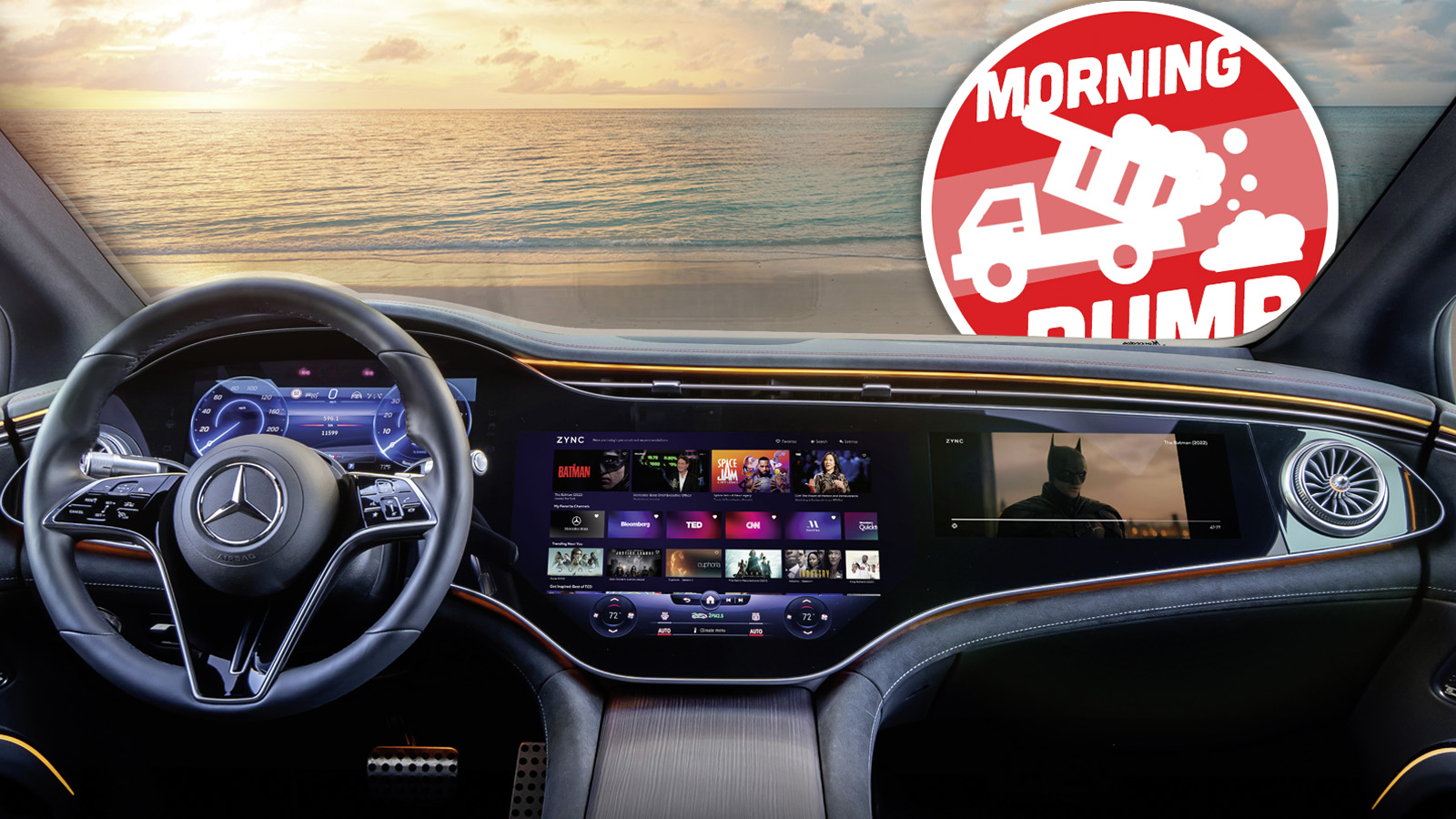
Even though I’ve long thought the sudden shift to electrification was probably foolhardy, the gradual rollout of mea culpas from automakers has hardly been satisfying. Not only has the ‘EV headfake’ cost billions of dollars, but the positive environmental benefits of turning a lot of commuter cars into EVs are real. Overoptimistic as they might have been, a large part of me wishes they’d been right.
At the same time, automakers admitting that swapping screens for buttons was a mistake feels pretty good. Everyone with sense knew this was a bad idea, and now the head of Mercedes is meekly admitting that some buttons are necessary. Of course, he’s doing so without also seemingly admitting to one of the big reasons why they’re doing this.


While EV sales have been disrupted, hybrids continue to sell extremely well, catapulting Hyundai and Kia into another record month. Nissan has seen its market share erode in the United States and is ready to launch a hybrid to meet that demand. BYD makes hybrids and EVs, but it’s not selling enough of them to meet its big annual sales target.
‘I Don’t Know If We’re At Peak Screen, But We’re At Low Button’

Mercedes-Benz and Volkswagen/Audi spent a generation competing over who could build the most annoying, least tactile interfaces in their cars. Who won? On volume, it might be Volkswagen who build the largest number of confounding cars. On volume controls, I think Mercedes handily wins. The last Mercedes product I reviewed was a real screenfest and, other than some fun knobs, irked me to no end.
Automakers have spent the last year or so walking back these decisions, and Mercedes has begun to make steps in the right direction, with at least some buttons on the steering wheel. That’s not nothing.
CEO Ola Källenius talked to Autocar and said a bunch of fun things, including:
“We spend countless hours on UI [user interface]. I spend hours every year discussing this with our engineers and we joke it needs to be so easy that either a five-year-old kid or a Mercedes board member can use it. That is the hurdle, and once you familiarise yourself with it, it becomes second nature.”
Credit to Ola, that’s a good joke.
He also said that the industry “might have gone a little bit too far” in its quest for purely digital controls. While this is an industry-wide thing–initially led by Tesla and then taken to the extreme by Chinese automakers–Mercedes is one of the worst offenders for a Western automaker. He did acknowledge that Mercedes might have done some tech just for the sake of doing tech and that the company “will reintroduce the most sensible buttons.”
At the end of the article, he said something interesting in response to a good question from Autocar:
Asked if that meant the car industry had reached ‘peak screen’, Källenius said: “I don’t know if we’re at peak screen, but we’re at low button.”
I didn’t see this interview and wasn’t party to it, so it’s possible this was mentioned, but there is something that seems to be missing, as Andrew Clewes pointed out on BlueSky, which is that regulators are increasingly requiring certain physical controls in order to get those important five-star ratings. As the European Transport Safety Council announced in 2024:
“New Euro NCAP tests due in 2026 will encourage manufacturers to use separate, physical controls for basic functions in an intuitive manner, limiting eyes-off-road time and therefore promoting safer driving.”
Under the new rating scheme, which is due to come into force from January 2026, manufacturers won’t be able to achieve the highest safety ratings if they don’t provide proper, physical switches for certain functions including indicators, hazard lights, sounding the horn, operating windscreen wipers and activating the eCall SOS function.
Chinese authorities are also making similar changes to regulations.
I do think that, even in a regulatory vacuum, consumers are just overall cranky about the lack of buttons and that most automakers would probably end up at the same place eventually.
Hyundai And Kia Hit New Records On The Backs Of Hybrids

Another month, another monthly sales record for both Kia and Hyundai. The reason? In addition to making stylish, reasonably affordable cars, the brands also offer a wide range of ICE, hybrid, and even EV-powered vehicles.
Kia sold 75,857 units in July, which is the best July ever and up 7% year-over-year. Hyundai did a little better this month, only up 4%, but for a total of 82,480 units. Underpinning all of this is hybrids, with Hyundai hybrid sales up 35% and Kia sales up 108%.
“Kia’s momentum continues to increase as we see widespread interest in a variety of models across our entire lineup, from sedans to SUVs, to hybrids and all-electric powertrains,” said Eric Watson, vice president, sales operations, Kia America. “Our ability to continue setting records despite a tepid industry reflects the strength of our product lineup and sustained consumer demand. With the all-new Seltos now in showrooms, continued high consumer interest in the redesigned Telluride, and the launch of the all-new, all-electric and affordable EV3 later this year, Kia is poised to continue setting records throughout the second half.”
Decade of the hybrid, et cetera.
Nissan’s New Hybrid Is Its Biggest Launch Of The Year
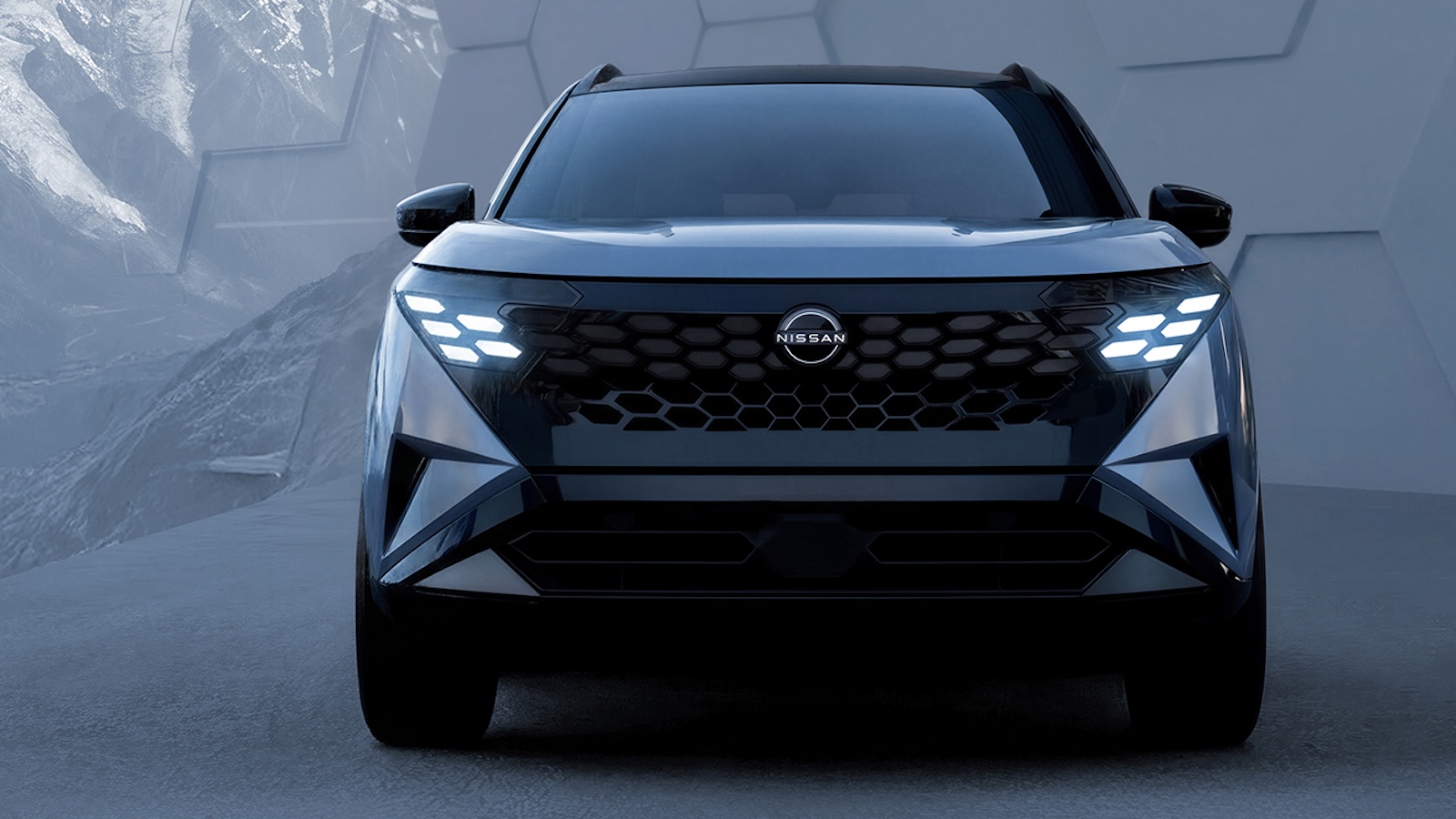
Most Japanese automakers are on a non-calendar fiscal year, which means Nissan just filed its Q1 report (For April to June), and the company posted a $480 million profit, which is a big improvement over the nearly half-a-billion-dollar loss in Q1 of FY2025.
Still, things aren’t all peachy pao over there as the company has had to walk back its sales forecast a bit due to the same factors causing almost everyone else to walk back their own sales goals (China, war, earthquakes, the cancellation of Stumble by NBC).
The key will be North America and, according to CEO Ivan Espinosa, the most important debut will be the new Rogue hybrid:
“It’s the most important launch of this year for a few reasons,” Espinosa said Aug. 3. “It will give us access to a market that we didn’t have access to before.”
Nissan is banking on the e-Power variant of the Rogue to tap surging U.S. demand for gasoline-electric hybrids at a time when high pump prices are driving interest in fuel-efficient vehicles. Nissan has suffered from a lack of hybrids, while Japanese rivals including Toyota Motor Corp. and Honda Motor Co. rack up big sales gains on lineups rich in hybrid offerings.
Having the e-Power will also help Nissan temper incentives, Espinosa said.
“We have many customers coming back from a lease, and they want a hybrid. We don’t have a hybrid, and in order for us to keep them with us, we need to sweeten the deal a little bit,” Espinosa said. “So, we expect this to change once we have the Rogue e-Power in the market.”
I am very excited about the Rogue. Presumably, we’ll get invited to the launch and can bring you more info. If we’re not invited, I’ll just assume it’s because it’s not there yet and they were too afraid to invite us.
BYD’s Global Expansion Might Hit A Snag In Hungary

The saga of Chinese automaker BYD in Europe is an interesting one. The company has invested heavily in Hungarian production, which gave it access to the European car market via an EU country that was, under PM Viktor Orbán, quite friendly with Russia and China. The EU has been increasingly concerned about Chinese automakers and downright hostile to Russia given its invasion of Ukraine.
There’s a new government in Hungary, and it’s already started to find problems with the way BYD has expanded in the country. This oversight is now starting to put a dent in BYD’s ambitions, per Bloomberg:
BYD’s global expansion is facing risks in Hungary, which serves as the anchor for its European manufacturing strategy. The company’s flagship factory site under construction in Szeged has come under scrutiny over alleged labor abuses by subcontractors, while a change of government in Budapest has triggered a probe into the massive state subsidies, tax breaks and environmental exemptions previously granted to BYD.
These escalating disputes have directly impacted BYD’s rollout schedule. The automaker recently confirmed that vehicle assembly at the Szeged plant has been delayed to the fourth quarter of 2026, roughly a year behind its original target.
Politics impacting cars is a global phenomenon.
What I’m Listening To While Writing TMD
Tony Bennett lived to be 96, which is pretty good, but today marks what would have been his 100th birthday. There are so many possible great Tony Bennett songs to choose from, from his iconic early stuff to his later charming duets. I’m going to go with “Anything Goes” from the album he did with Count Basie and his orchestra as something you maybe haven’t heard.
The Big Question
Which controls absolutely have to be buttons? What’s ok to be on a screen?
Top Photo: Mercedes-Benz


Everything you use repeatedly while driving should be mechanical buttons, switches, knobs, or levers. Doors should be opened with mechanical levers. Displays for HVAC or audio can be digital, but on-off and adjustments should be made with physical buttons/switches/knobs.
A big part of the problem and the Germans built themselves into their own corner with this, is the option bloat on newer cars requires soooo many controls.
Drove my dad’s ’19 X5 recently, arguably the sweet spot since most major controls are still physical and touchscreen is largely for apple car play and fiddling with vehicle settings, but it has so many buttons I began to see how a BMW designer could make an argument for putting more stuff in the touchscreen 🙁 at night it felt like I was in the cockpit of a 747. But jokes aside I think I’d still take that approach over stuffing it all in the touchscreen.
Any control that is not NAV/Infotainment related should be a physical button with tactile movement. Anything that you would do with the radio off. Mode switching buttons, such as using 2 window switches + a selector in a 4 door car, should be verboten.
Any function required by law should have it’s own physical control. Lights, turn signals, wipers, horn, etc.
Putting on my flame suit here:
Tesla made a screen centered car work because they nailed the UI up until MY 2025. Stuff that was constantly adjusted stayed sticky. Occasional controls were a screen away. Rare controls two screens away and sometimes a slide involved. Multifunction buttons/wheels on the steering wheel that duplicated commonly adjusted stuff. Stalks for turn signals/high beams and shifting.
They then went too far removing controls in MY 2025 and later. Namely the stalks. I can’t stand the new Teslas without a shift stalk and a turn-only stalk. Plus the steering wheel blocks the screen edge since the screen is too big.
Glad to hear some controls are being mandated to be physical.
Fully agree. Our 2018 Model 3 is super intuitive. The only button they’ve moved a few times and is fiddly to hit is the homelink garage door.
For a few months it would appear in the bottom-left corner with a big, easy, button as you approached the house. Then they put it back up in the top area, but still appears automatically. Further to reach, but fine.
The annoying bit is when I’m backing out of my garage. At some point, another button or UI element in the top row goes away, shifting the position of the rest of them. I accidentally open the completely pointless car connectivity menu instead of the homelink button a couple times/week.
Agreed, I’ve admittedly only driven one Tesla, an older Model S, and it had the buttons and dials on the steering wheel in addition to the screen touch controls, but as a UX designer it’s basically the only touchscreen infotainment UI (of those I’ve used) that I’ve actually thought worked well and felt like a polished end product.
I consider the 2018 Beetle ergonomic nirvana.
Fat double-DIN CarPlay touchscreen, flanked by a volume and tuner knob, and all the mode buttons you need. Redundancies built in, including using the volume knob to operate CarPlay if say, the touchscreen fails (ask me how I know).
Below that, buttons for the heated seats, AC on/off, and recirculate. Three big honkin dials for climate, and a nice, neat row of blanks and buttons as needed.
Headlights? Dial on the left of the gauge cluster. Locks and mirrors? On the doors where they belong. Telematics and convertible top? Up by the mirror.
Everyone can reach everything they need, at any time, and the right amount of twisting, pushing, and spinning to avoid accidentally turning on the CD player when all you wanted was warmer air.
Pretty much anything not A/V related, should have a button.
I’d not mind a screen filled car if I can park it and turn on a 2001 Jupiter the Infinite and Beyond video sequence mode and also simultaneously blast that weird music during the monolith scene… eeeeeeeeeeeeeeeeeeeeeeeeeeeeeeeeeeee.
ALL the controls need to be physical buttons, knobs, and sliders. Screens should be minimal and display-only. The only screen you should be paying attention to is the *windscreen*.
The right way to control a screen if you MUST have one is a properly placed knob ala iDrive/Comand, and keep your grubby-ass fingers away from the screen.
“Which controls absolutely have to be buttons?”
Basically everything HVAC, including heated and cooled seats. Volume (and also a specific mute button should be standard and its own button) and several other audio controls. My current car has fade and balance as touch commands and it sucks. I could see a hybrid where you pick on screen and adjust with a dial, but all touch sucks. Hazard lights, glove box access, gas cap access, trunk access, trip meter reset, onboard computer item display (fuel economy, range) child lock out controls…I’ll stop now.
“What’s ok to be on a screen?”
Thing you aren’t likely to need when in motion, like paring devices, screen themes, layout, etc.
I think fade and balance on buttons is probably overkill… are you adjusting those daily, or song by song?
I don’t think I’ve ever touched them after setting them up the way I like the first time.
Nothing to do with frequency of use, but the interface is SO bad on my Subaru. Rather than like a + – type for left, right, front, back, it was a two access grid and finger dragging along it was almost impossible to work just one axis. I can think of some ways to partial, but entirely touch screen was a horrid experience to set up.
Doesn’t the new Nissan ‘E-Power’ engine include the 1.5 liter VQ engine that almost every reviewer/car enthusiast on Youtube bitches about, bemoans, and hates?
The only features that should be on a screen are things like on-board diagnostic info and carplay/android auto. The diagnostic info shouldn’t be codes, either, it should be a description of the fault. If it’s necessary for operation of the auto, it should be a physical control, including HVAC, wipers, radio (at least volume), and lights.
“We need to have a conversation about the screens” I can already tell you that these current dashes featuring separate passenger displays with acres of shiny plastic spread across the dashboard are going to date horribly.
The one exception that I find remotely palatable is the neue klasse BMW projection strip at the base of the windscreen. That at least integrates into your field of vision and disappears when not being used.
I can’t stand driving newer vehicles due to all the glare off screens. It’s even worse with shiny plastic trim for bezels and accents. I miss high contrast gauges you could dim super low when driving at night, effectively blacking out the interior.
For awhile saabs had a black out mode, dimming everthing except speed and indicators if a problem.
I don’t even like all the screens at Dodger Stadium (sorry, Uniqlo Field at Dodger Stadium), especially the several “LED ribbon boards” constantly flashing and circling the field. A man can’t even eat a hot dog in peace.
Thanks for the Tony Bennett! Not really in my usual listening rotation, but I have fond memories of hearing “I Left My Heart In San Francisco” over the ballpark sound system after a Giants win. That song’s not getting much of a workout this year though…47-65 ugh.
Yeah. Tough year for the Giants. A producer and I were doing a site survey for a live television broadcast from Alamo Square Park across Steiner Street from the Painted Sisters houses. A limo pulled up and out steps Tony Bennett and a still photographer. We immediately recognized him and couldn’t help but smile. He graciously waved to us and got on with his photo shoot. We laughed and figured that if that location was good enough for Tony Bennett, it was good enough for us. Getting permits was easier than we thought it would be and the weather was perfect.
That the Dodgers also get Skubal is really making me start to question why I keep watching baseball and it’s entirely unfair lack of salary cap. Starting to feel like the entire league is just a farm system for Yankee/Dodger super teams. To be fair, I am a Mariners fan and we are destined to never go to the World Series and this is the most disappointing year in over a decade so I’m a bit salty.
I freely confess that my old Toyota pickup has fewer things to control than many modern vehicles – then again, I have to shift it for myself too, so it does pick up some yardage. But I don’t have to look for where the controls are. They fall readily to hand and after just a few days of using the vehicle, I didn’t have to look anymore to know what I was doing. This lever, wipers. That knob, defrost. No problem.
I’ve had my new-to-me car for over a year now and there are some features it has whose controls I cannot operate without looking at the screen to know I’m actually on the appropriate spot. Fortunately none of these are germane to actually operating the car, but the point remains. There are lots of vehicles out there with necessary functions operated only by a touchscreen. If you have to look away from the road to be able to determine that you are touching the correct spot on a featureless flat surface, that’s a design failure.
Electric horns and floor-mounted dimmer switches really should be buttons. For pretty much every other automotive electrical application I prefer rotary switches, toggle switches, rocker switches, push-pull switches, and so forth over buttons.
I like to have at least one wiper on my windscreen. This just seems prudent.
He did acknowledge that Mercedes might have done some tech just for the sake of doing tech and that the company “will reintroduce the most sensible buttons.
Look Ola, nobody is asking for a 1990’s Pontiac grab bag volume of buttons but how about SOME of the less sensible buttons too?
LMAO as a former owner of two late ’80s Pontiacs. Why have a knob or slider when you could have several buttons instead??
What I’m listening to.
Any big band song of that era brings this masterpiece to mind.
https://youtu.be/_8yGGtVKrD8?list=RD_8yGGtVKrD8
The funny thing is that Tesla is always called out for buttonless interiors, but it turns out that most of the things you actually interact all the time with have buttons. Audio controls (pause/play, next/prev, volume) are on the wheel. Cruise control set/cancel/speed/following distance is also on the wheel. When a phone call comes in, the answer/hang up and other controls are on the wheel. This is based on the original Model 3, I don’t know what they changed with the 2024 update, I know there was some foolishness with the turn indicators.
You use the screen for stuff like changing the HVAC – but since it’s auto, the best thing to do there is set it once and just plain leave it. If you want to change the temp, the +/- is always in the same place on the screen and it’s not surrounded by identical looking buttons so it’s quick and easy to use. Nav is best handled by voice command because nav is always chunky. Same with audio selection.
Compare this to my 2002 BMW which has dozens and dozens of buttons (there are 20 just for the HVAC!) which means you’re hunting around to find just the right one. I also got into the 2026 version of my 15 year old Dodge truck last week and there were buttons everywhere – but also a big screen covered in tiny icons. It was a great illustration that implementation is everything. Screen and button controls can both be done well and poorly, and damning one without considering that is missing the main point.
My 98 Z3M is about the opposite of your BMW situation. There’s 3 dials for HVAC (fan speed, face/floor/defrost, and hot/cold), plus 2 buttons (AC/Recirc).
Lights are an old school pull knob, first detent parking lights, second headlights. There’s a pair of buttons for each side heated seat, and another pair for window controls (with auto up/down). That’s basically it save the Hazard switch.
Your article about Mercedes going too far with screens reminds me of a quote from their former chief designer who stated that the Audi Concept C was inferior due to two things: It looked like it had been designed in 1995, and it had small screens.
To me – those are plusses.
Mercedes and Nissan have more in common now then probably ever. Both caught making a junk product that only lasts a few years and no one wants to actually buy. It’s just the Mercedes lease payments are higher. Nissan is at least learning. Rouge sells well because it’s a cuv. It has a a bad reputation they really should have called the new one something else if they are trying to turn a new leaf.
But it does appear Nissian has someone that is trying to right the ship who seems understands what the problems were and has an idea what the market wants. Mercedes just got slapped by regulators in their home market after trying to copy everyone else and coming up with a worse version for more money while loosing money on the deal. They haven’t learned anything. Whatever the next fad is in China they will blindly follow. Just like the rest of the Germans. They got addicted to selling mass amounts of cars in China and need to get off of it. It’s never going to happen again.
Turn signals , windshield wipers , hazards, horn, headlight, park, neutral, drive, reverse. I think need some kind of physical interference. Turn signals were almost almost uniform on a stalk getting away from that was a bad idea. They know how to build a decent stalk Toyota has for years. They just choose not to. I also find it interesting that the Munro was so happy to see no stalks because they are expensive and can be problematic yet the vehicle that basically came from people very much around him and probably with his thinking. On their mission to build the cheapest vehicle they could have two stalks.
The reality is touch screens are cheap and software is much cheaper to regionalized then physical controls. That’s why Tesla did it that’s why the Chinese do it. I’m not sure Mercedes got that info it was just monkey see monkey do.
“They got addicted to selling mass amounts of cars in China and need to get off of it. It’s never going to happen again.” This is correct and an important lesson.
Other than on the aftermarket radio, I think my ’95 Tracker only has one button, for the rear window defrost (which didn’t even do anything until I installed an aftermarket hardtop), unless you count the horn!
There’s also no touchscreen, with only one knob (for dash lighting brightness), one lever (for fan speed), and the signal/wiper stalks, so really it’s much more a matter of “there’s not really any electronics here needing controls” than “we don’t like buttons”