


CarGurus is a popular car shopping platform that allows users to find and research cars across the country. The platform seems especially useful in helping you gauge how much some dealerships want for a certain car. But New York City has found evidence that such isn’t the case. In a bombshell of a lawsuit, the city is alleging that the CarGurus website’s car pricing features “deceive consumers” by hiding the potentially thousands of dollars in mandatory fees that some dealerships charge on top of asking prices. This, therefore, makes cars sold by some dealers look cheaper than they actually are.
On October 5, the City of New York and Department of Consumer and Worker Protection (DCWP) Commissioner Samuel A.A. Levine have filed suit against CarGurus, Inc., in the Supreme Court of the State of New York, New York County. In New York, a “Supreme Court” is actually the equivalent of a trial court elsewhere in America.


The city opens its suit by swinging hard, saying, “Dealerships are consistently one of the business categories about which DCWP receives the most consumer complaints, and they are among the businesses most commonly cited for deceptive practices.” The city then continues, saying that one of the “most cited deceptive practices” is car dealers advertising artificially low asking prices. Then, when the consumer gets to the dealership, they are faced with previously hidden and mandatory fees.
In the past five years alone, DCWP says, it investigated more than 106 dealerships in the New York City region for violations of the city’s consumer protection laws. In the process, DCWP says it has helped over 675 people, recovering $1.97 million for customer restitution and levying another $6.53 million in civil penalties. Apparently, one dealership alone was responsible for a whopping 9,500 violations and had to pay out $1.5 million in restitution and another $300,000 in civil penalties.
Despite this work, DCWP says some dealerships still aren’t being honest about the total prices of their cars. This is aggravating for a number of reasons. A consumer comparing a car sold by an honest dealer (and those certainly do exist) against a “cheaper” car sold by an allegedly dishonest dealer might go to the latter dealership, not knowing that the advertised price wasn’t real. This hurts the consumer and the honest dealerships.
DCWP says that by advertising an artificially low price and then calling that price a “Great Deal,” CarGurus is perpetuating this problem. Allegedly, the city has worked with CarGurus for three years to bring it into compliance with the law, but that has failed. So, now, the city will be dragging CarGurus into the courtroom.
How CarGurus Works
CarGurus was founded in 2006 by Langley Steinert, who co-founded TripAdvisor, another famous comparison site. The mission behind CarGurus is, in its own words, “to bring more trust and transparency to car shopping.” One way CarGurus tries to make car buying more transparent is through its policies. In order for a dealership to list on CarGurus, the company sets a pricing requirement:
All prices displayed for vehicles on the CarGurus.com website, mobile and other applications, products, and services (the “Site”) must reflect the total price available to any shopper. The price must include all mandatory dealer-imposed fees and charges required to purchase the vehicle as advertised, except for tax, title, license, registration, and other mandatory government fees.
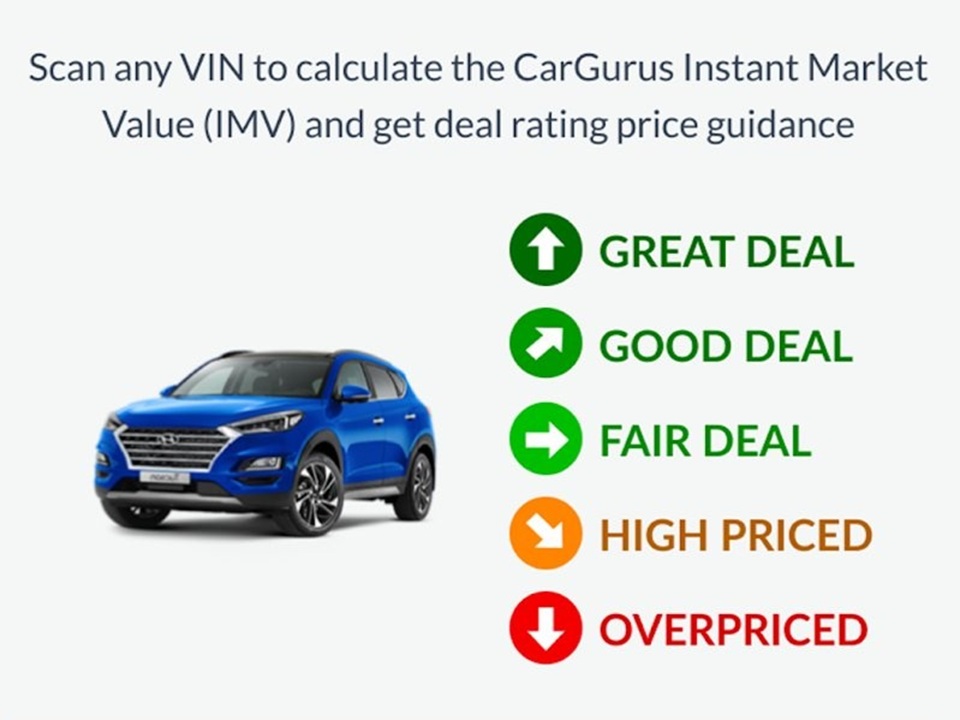
CarGurus then has a tool that tells you if the advertised price is a “Great Deal,” a “Good Deal,” a “Fair Deal,” “High Priced,” or “Overpriced.” The site does this by comparing the advertised price against the CarGurus Instant Market Value, or IMV. CarGurus calculates IMV by, per the company:
[U]sing a complex algorithm that takes into account millions of data points including make, model, trim, year, mileage, options, and vehicle history.
You as a consumer can go to CarGurus and should be able to use it as a car comparison tool. In fact, I have used CarGurus for this purpose for years. Whenever I want to see what the market looks like for a certain car, I scroll through CarGurus to see what dealers are asking.
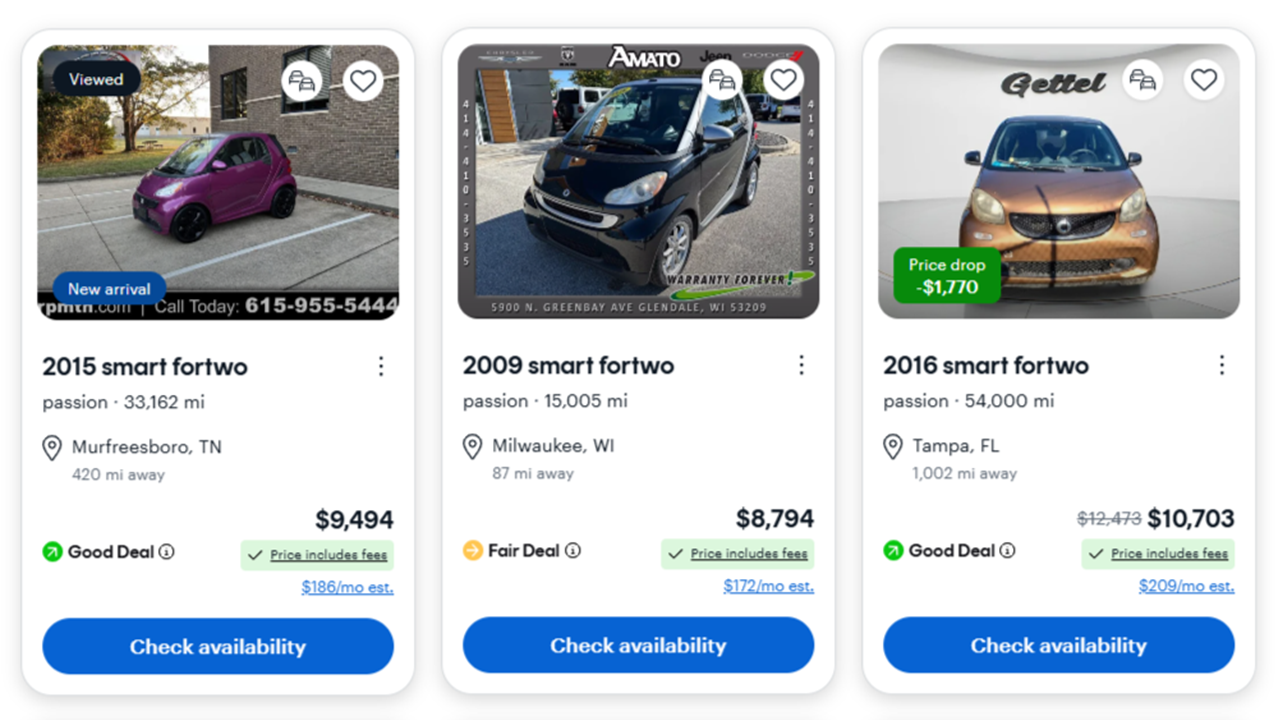
Again, in theory, the prices you see are the final prices, including fees. I have even used the prices I’ve seen on CarGurus to determine how good of a deal I got on a car from Facebook. I have sometimes even linked out to CarGurus in some of my articles.
The Allegations
DCWP alleges CarGurus isn’t honoring its own policy, as it allows dealerships to list a price that is far lower than the total price. Dealers may then add a disclaimer about the additional fees, but as DCWP alleges, these fees are “in partially obscured text boxes that can only be fully viewed by clicking a button, leading to a separate webpage or pop-up screen.”
The suit continues:
Defendant, CarGurus, Inc. (“CarGurus”), has caused these deceptive business practices to further proliferate through its creation of an online shopping website where consumers believe they are comparison shopping for the best deal but are actually subjected to misleading pricing information by both the dealerships and CarGurus itself. Specifically, CarGurus creates “Deal Ratings” that deceive consumers. First, for each car listed by a dealership on the Website, CarGurus prominently posts what it refers to as the dealership’s “Asking Price,” or total cost of the vehicle (“Asking Price”). In reality, the Asking Price may fail to include hundreds or thousands of dollars in additional fees, downpayments, and trade-in requirements, that are part of the dealership’s offer.
CarGurus then prominently labels the deals to consumers as a “Great Deal” or a “Good Deal.” CarGurus awards these labels based on the difference between the Asking Price and the average price of a similar model, which it calls the Instant Market Value (“IMV”). However, as CarGurus knows, for many listings, if all additional required fees and costs were added to the Asking Price, the resulting true cost of the vehicle would greatly exceed the Instant Market Value. Despite this, CarGurus continues to deceptively label such listings as “Great” or “Good” deals.
CarGurus even goes so far as to identify the exact dollar amount by which the Asking Price is “below market,” highlighting the purported benefits the consumer stands to receive from a deal, despite the Department having provided CarGurus with notice of the presence of additional fees that render this dollar amount misleading. In many cases, the fees and disclaimers included by the dealerships render these representations untrue.
The city then alleges that while CarGurus claims to delete listings with phony or misleading prices, it doesn’t always do so in practice.
It goes deeper. The city says that, in April 2026, CarGurus updated its website to combat artificially low prices. This came after the Federal Trade Commission told 97 dealership groups that it considered the practice of omitting mandatory dealership charges from listed prices to be illegal.
Yet, when CarGurus changed its site, New York City alleges, it apparently made the issue worse. Listings began coming with badges to inform shoppers when an asking price included fees or that fees hadn’t been disclosed. However, as the city found in the summer of this year, listings with asking prices that claimed to have included all fees still included additional mandatory fees in the fine print, furthering the alleged deception.

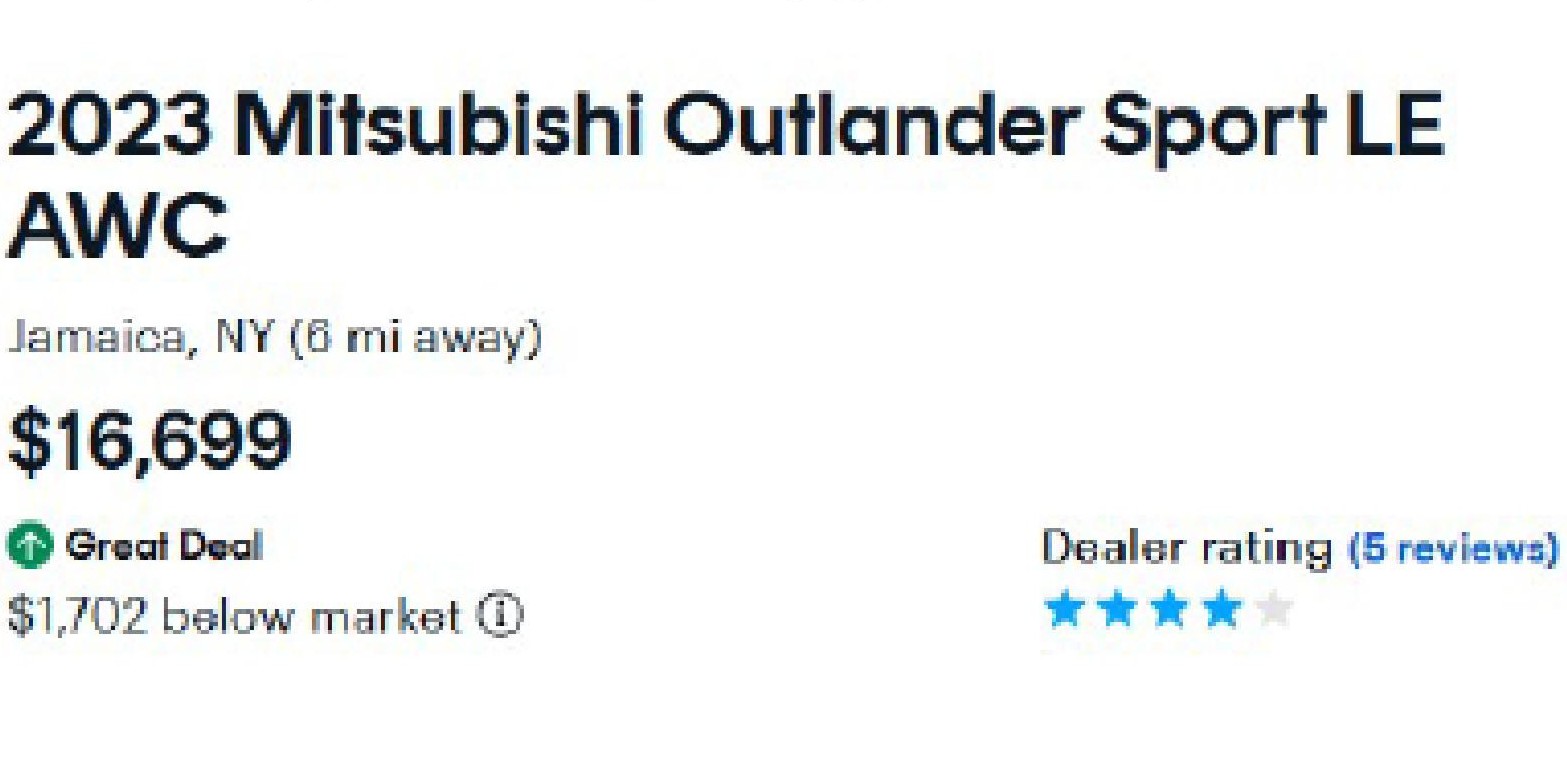
In its suit, the city admitted a list of alleged facts. Among them was evidence of the CarGurus site listing asking prices that weren’t total prices. In one case, a 2023 Mitsubishi Outlander Sport was priced at $16,699, and called a “Good Deal” because it was $1,702 below the market value as determined by the CarGurus IMV. However, the city found that when all concealed fees were added up, the Mitsubishi actually exceeded its estimated market value, and should therefore not have been called a “Good Deal” by CarGurus or advertised with the lower price.
In another case, a 2018 Mercedes-Benz GLE 350 was listed with a price of $18,590, which was $3,413 “below market,” and therefore earned a “Great Deal” rating from CarGurus. However, in a hidden textbox at the bottom of the listing was a disclaimer that said: “the advertised price [reflects] the balance after a 20% [downpayment]” and “all quoted payment calculations are based on twenty percent down.” Once the disclaimer was factored in, the car’s price was $1,234.50 above market value, and therefore not a “Great Deal,” as the CarGurus software claimed.

In one more example, a 2019 Audi Q5 quattro Premium Plus 45 TFSI was listed for $14,999, or $2,818 below market value, triggering another “Great Deal” rating. However, in the disclaimer section of the listing, the dealership noted these fees: “1. Prep & Destination – $1,995. 2. Conveyance Fee – $995.00. 3. Admin Fee $695.” That’s $3,685 in fees, for a total price $867 above market value.
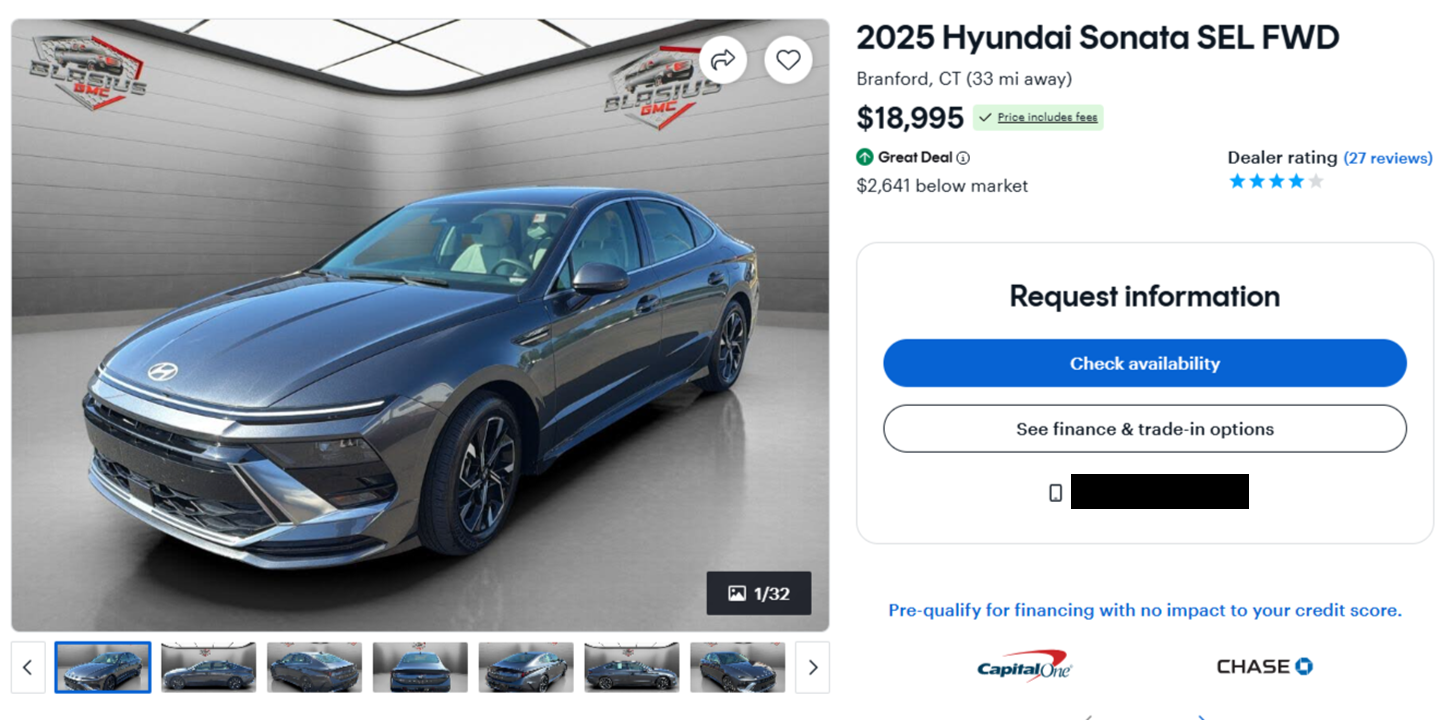
The city also notes that the CarGurus AI chatbot doesn’t disclose the fees to car shoppers, even though the fees are on the listing. I have done some of my own research on this, and have noticed that some dealership listings do indeed list non-governmental fees that are not included in the listed price. One example is below:
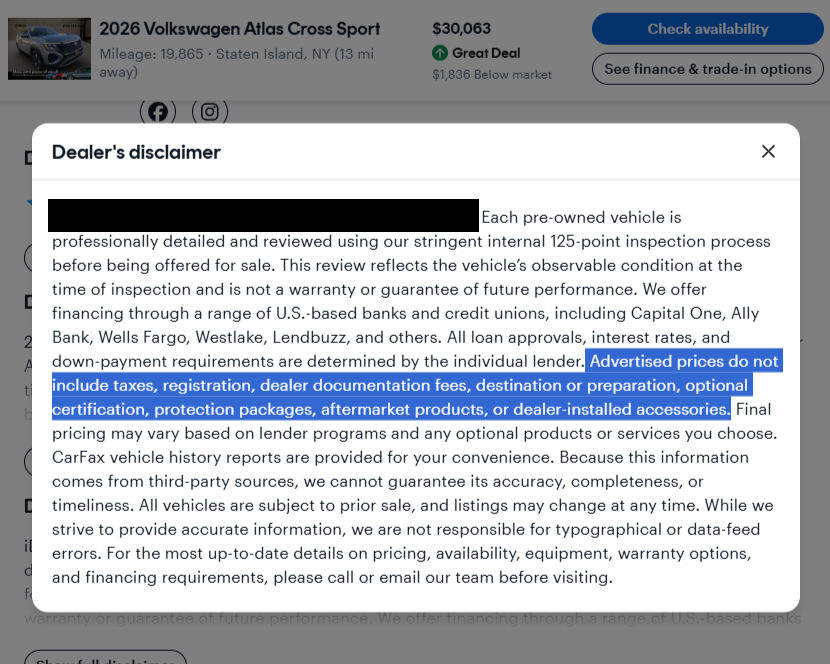
CarGurus says when you see the “Price includes fees” badge, the price shown includes all mandatory dealer fees aside from tax, registration, and other governmental fees. In theory, then, the destination charge, preparation, and any pre-installed dealer accessories should also be a part of the listed price.
Here’s another one I found:

The Lawsuit
In short, New York City’s problem with CarGurus is that the city thinks CarGurus is not doing enough to enforce its own policies. In doing so, it is allegedly misleading car shoppers into thinking some cars are thousands cheaper than they actually are. The city cites NYC Code § 20-700, which says:
NYC Code § 20-701(a) defines a deceptive trade practice as: Any false, falsely disparaging, or misleading oral, written, digital, or electronic statement, visual description or other representation or omission of any kind . . . which has the capacity, tendency or effect of directly or indirectly deceiving or misleading consumers.
Deceptive trade practices include but are not limited to:
• Representations that goods or services have … certification, accessories, characteristics, … benefits, or quantities that they do not have;
• The use, in any representation, of exaggeration, innuendo, or ambiguity as to a material fact, or the failure to state a material fact, if such use of, or failure to state, a material fact deceives ortends to deceive; and
• Making false or misleading representations of fact, or omitting material facts, concerning the reasons for, existence of, or amounts of price reductions, or price in comparison to prices of competitors or one’s own price at a past or future time.Under 6 RCNY § 5-01 et seq., “Sellers offering consumer goods or services in print advertising and promotional literature must disclose clearly and conspicuously all material exclusions, reservations, limitations, modifications or conditions.”
New York City is accusing CarGurus of “Knowingly Publishing Misleading Deal Ratings and Fee Disclosure Badges in Violation of NYC Code § 20-700 (at least 1,360 violations),” “Knowingly Publishing Inaccurate Representations of Potential Consumer Savings, in Violation of NYC Code § 20-700 (at least 2,017 violations),” and Knowingly Deceiving Consumers By Falsely Representing that It Adheres to Its Guidelines, in Violation of NYC Code § 20-700 (at least 2,218 violations).”
The city is seeking $3,500 per “knowing” violation of NYC Code § 20-700, or alternatively, between $350 and $2,500 for each violation. In addition, the city wants CarGurus to pay restitution to consumers and to pay the city for the costs of its investigation. The full 31-page lawsuit can be viewed by clicking here.
CarGurus Responds
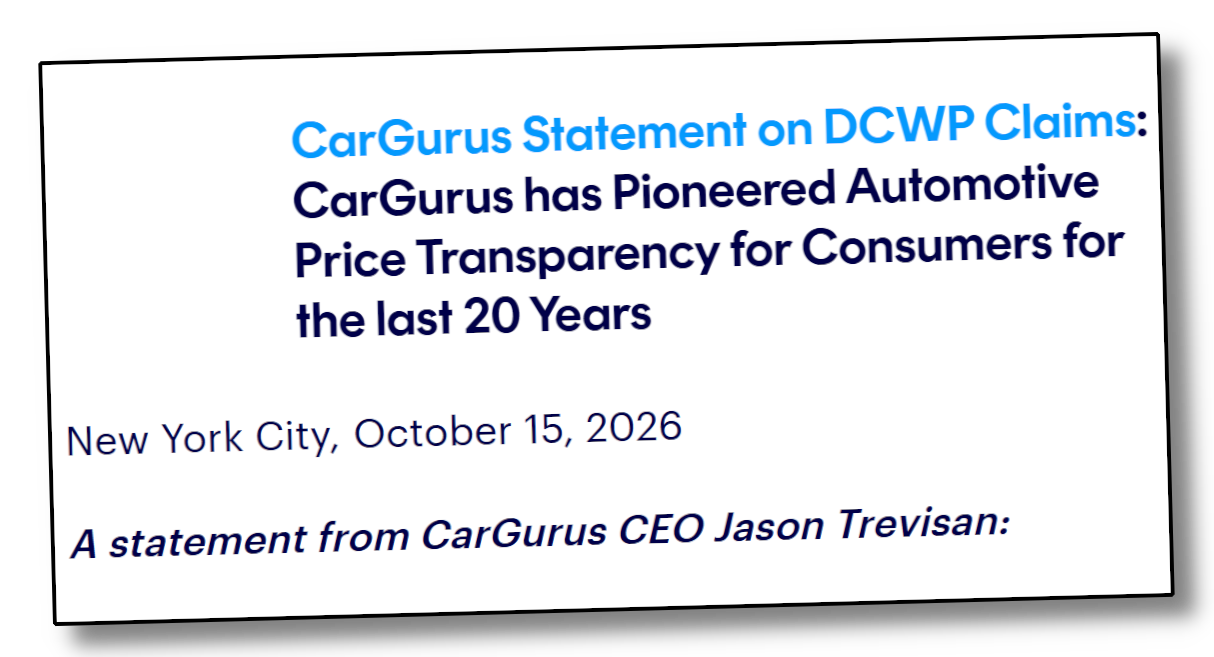
In a statement, CarGurus CEO Jason Trevisan has said:
We are deeply disappointed that the New York City Department of Consumer and Worker Protection (DCWP) is bringing claims against CarGurus. We’re also surprised they’re taking this step given our history of leading the market in information transparency, our open collaboration with them, and our repeated efforts to engage productively with them.
Their claims don’t reflect the facts: Since our founding in 2006, CarGurus has pioneered used car price transparency for consumers through tools and features that have since become industry standards. Over the last 20 years, we’ve continued to raise the bar as the leading provider of automotive information, driving others to follow our example.
Trust and transparency have been core to the CarGurus mission. We’ve led the industry with tools that give shoppers more confidence when making one of the biggest financial decisions of their lives — a responsibility we take seriously.
[…]
The allegations in the complaint ignore our decades-long track record of setting the standard for transparency in car buying and selling. They also overlook clear evidence of the value consumers find in our features. Shoppers have made CarGurus the most-visited car shopping site in the US3, and they choose to spend more than double the total time on our site than on our closest competitor’s.
We reject the DCWP’s claims and will defend the company vigorously.
Cases like this can take some time to meander their way through the court to a resolution.
However, there are ways you can reduce your own car shopping frustrations right now. If you are a CarGurus user, click into each listing, scroll to the bottom, and check for undisclosed fees or other disclaimers. Honestly, you should be doing this with all car selling platforms. It’ll add time to your car shopping journey, but it’ll be less time than going through the steps to inquire about a car, just to find out that the dealership wants to assess so many fees that it’s more expensive than a competing dealer.
You also want to read the deal you’re signing in full, and make sure you understand what you’re getting into. If you don’t like what’s about to happen, don’t ink that deal. Walk away and find the option that works better for you. Yes, that may mean more time burned, but since a car is likely to be the second-largest purchase you’ll make, it pays to spend time to make sure you’re getting a car that’s right for your situation.
Otherwise, I’ll be watching this case unravel to see where it goes. Hopefully, it ends in a manner that benefits everyone.


I never pay attention to the ‘cargurus’ rating. And the older the car, the less relevant it is.
“In New York, a “Supreme Court” is actually the equivalent of a trial court elsewhere in America.”
That part of Law & Order was always confusing.
Who is buying a car in New York City?
Lots of people in the outer boroughs.
If I’m understanding this correctly, sleezy dealers are being sleazy dealers (you could argue the word “sleazy” is unnecessary, but I’m gonna roll with it) and the lawsuit alleges that Cargurus isn’t doing enough to police it.
I’m not necessarily against this in concept when the site is specifically rating whether a car is a “deal” or not, but it doesn’t seem to address the core issue of sleazy dealers.
I know there had been a lot of work done in the last few years to make online pricing more transparent. From my experience car shopping recently, it is (in general) much better than it used to be. There are still dealers listing prices (I use Autotrader, and haven’t used CarGurus) that include a shit load of discounts that “don’t apply to everyone”. In my experience, the Chevy dealers are the worst offenders, listing a cumulative total discount for Recent college grad, first responder, active military, retired military, gm employee, cash incentive (cannot be combined with other incentives), finance incentive (cannot be combined with other incentives), first born child trade in discount, competitor lease incentive, current customer lease incentive, etc etc etc.
Again, this has gotten better and many do clearly lay out the incentives for everyone (which are included in the price) and the “you may qualify” incentives. But it’s still an issue of sleazy dealers doing dealer things.
Besides everything related to Elon, there’s only a short list of what’s less trustworthy than a used car dealer.