

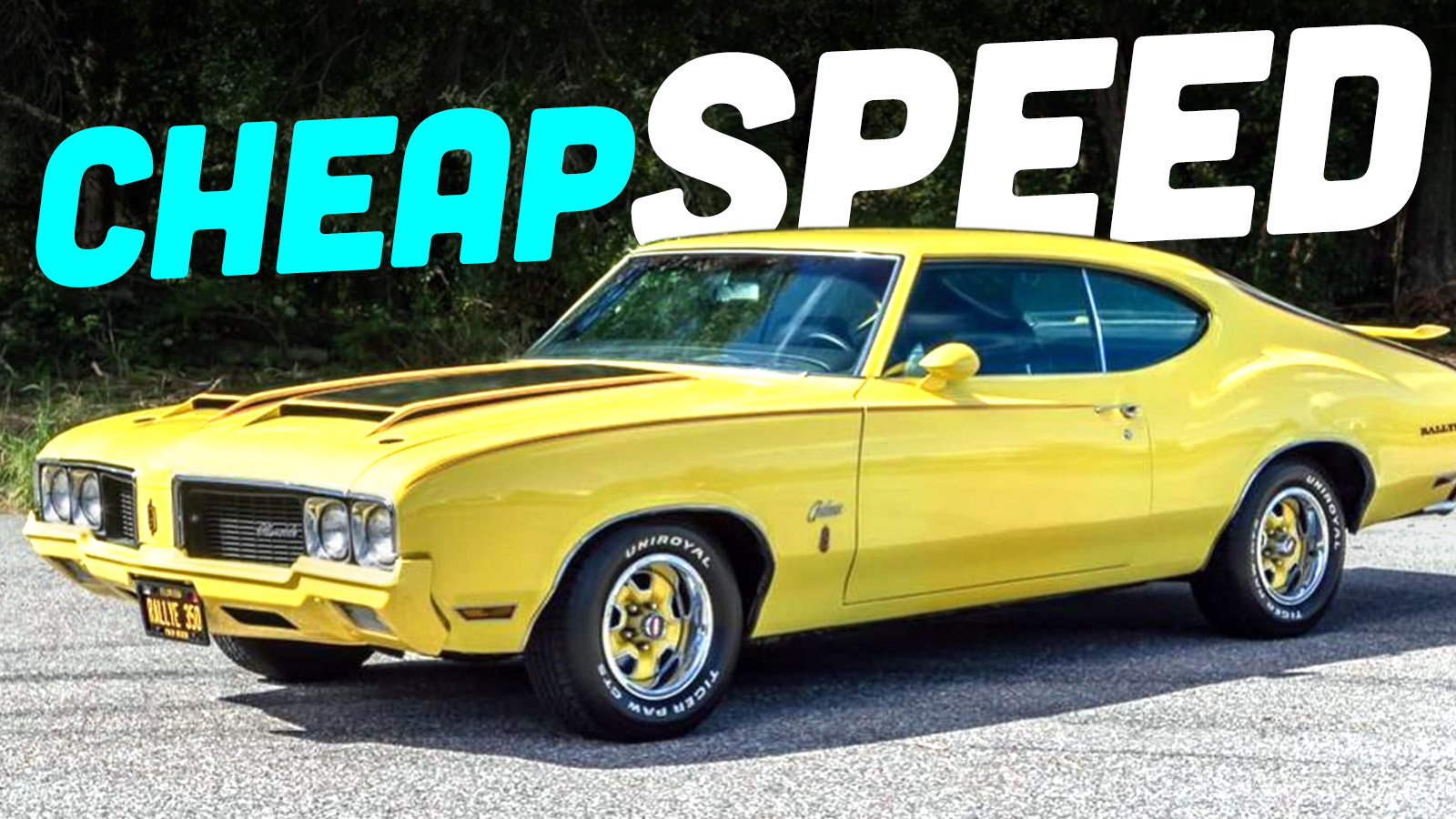
The muscle car era of the 1960s and early 1970s was a defining moment in automotive history. America’s automakers cranked horsepower to hilarious levels, and then dropped those engines into cars that you didn’t need Ferrari money to buy. But not everyone was able to afford something like a Pontiac GTO or an Oldsmobile 442, especially someone just getting started in a career. Oldsmobile was one of the automakers that tried to cater to this demographic with the Oldsmobile Rallye 350. This one-year special edition gave buyers 442-like muscle car looks and some of the speed for a more accessible price.
Automakers have worked tirelessly for decades to attract young car buyers. A younger buyer might not be able to afford a flagship, but they’re still an important demographic. Someone who buys your cheaper car when they’re young may become hooked and upgrade to more expensive models as they age. At the very least, if you can sell cars to the “yutes,” that’s a whole new income stream!


Most, if not all of your favorite brands have had to consider young buyers at some point in their histories. Chasing younger buyers is why BMW built the 3 Series Compact and is part of the reason for the Porsche Boxster’s existence. At the same time, a car that targets a younger buyer is often also good for an older buyer who doesn’t have a ton of cash on hand. The fact is that some folks may never be able to afford a BMW M5 or a Porsche 911.

This was the case during the old muscle car era. Automakers knew that not everyone could pony up the cash for the flagship muscle cars that kids had on their walls. A lot of folks couldn’t afford the high insurance rates for a flagship muscle car, either. The solution was simple. What if you offered musclecar style and some performance, but with much lower insurance rates and a more affordable price of entry?
Last year, I wrote about how Pontiac did just that with its GT-37. If you couldn’t afford the fabled GTO or its insurance, you could get a car that looked the part and still went fast, but was easier on your wallet. Chevrolet followed down a somewhat similar path with its Heavy Chevy, a car that looked as hot as a Chevelle SS for a lot less coin. These cars, along with competition like the 1970 Dodge Dart 340, are known more as “junior” muscle cars.
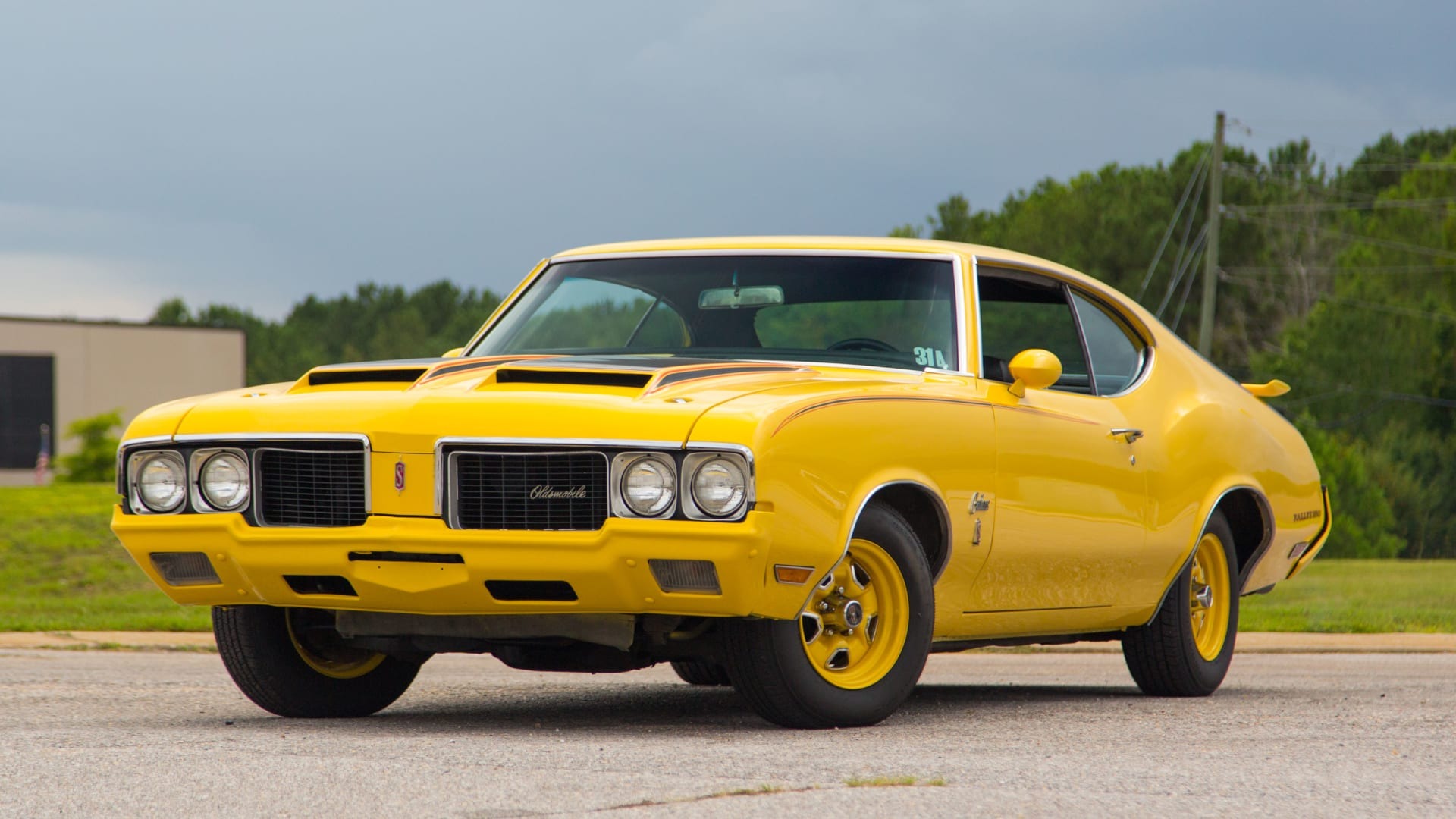
Today, we’re going to look at yet another time when Detroit tried to lure in muscle car lovers who had lighter wallets. The 1970 Oldsmobile Rallye 350 was a muscle car that was meant to look great and be cheap to insure right from the start.
Setting The Stage
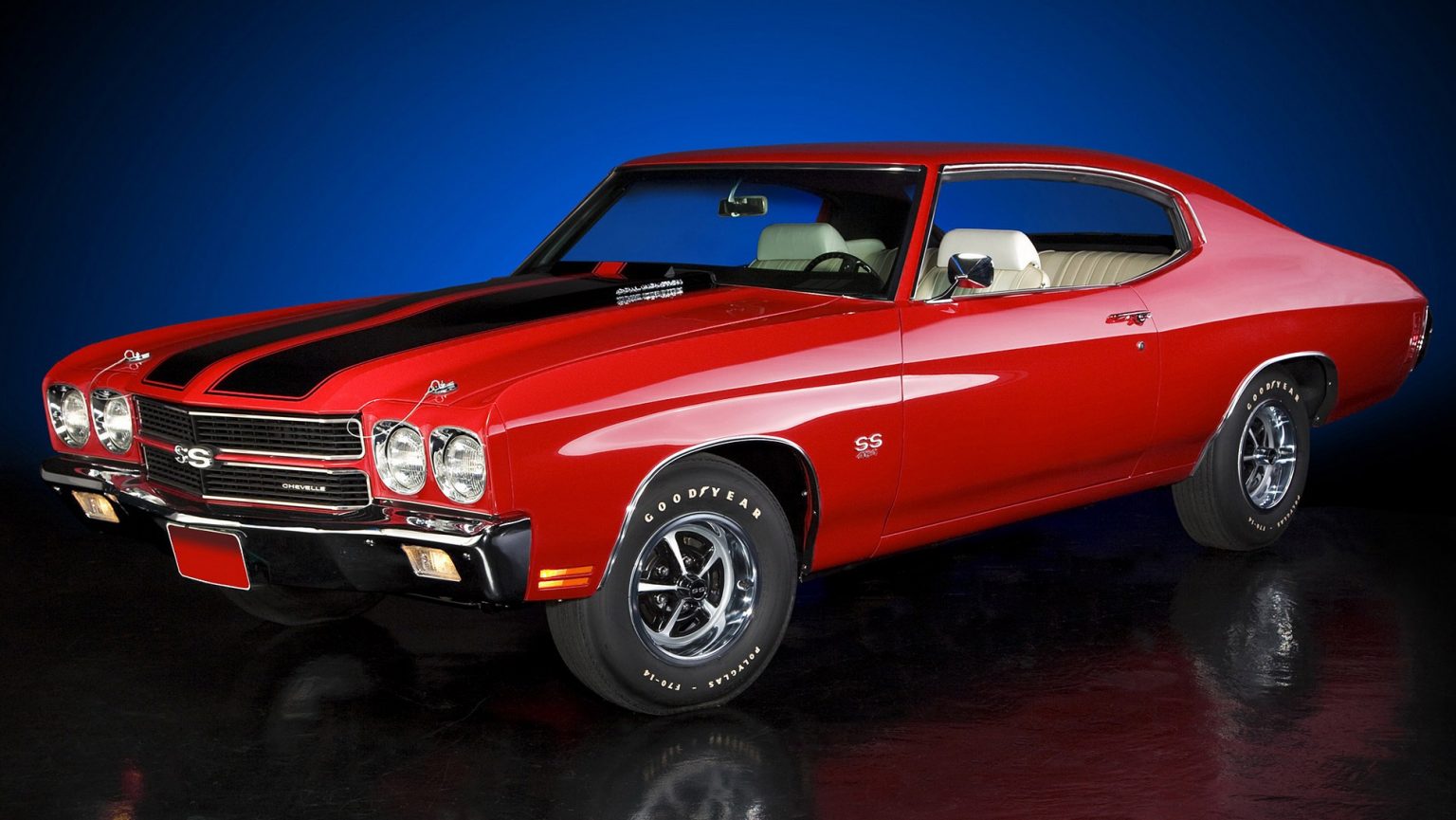
1970 was the absolute peak of the old muscle car era. This year produced some of the most iconic American cars in history. The hottest Chevrolet Chevelle had a gross 450 horsepower LS6 V8. Nipping on its heels was the 425 HP V8 Plymouth Hemi ‘Cuda, Pontiac GTO and its 370 HP Ram Air IV V8, and Oldsmobile’s own 442 W30, which punched out 370 HP through, you guessed it, a V8. These engines were colossal units, too, with the Chevelle’s coming in at 454 cubic inches, or 7.4 liters in more modern terms. The Oldsmobile 442 W30 had a slightly bigger engine with 455 cubes on tap
The beauty of these muscle cars was that they had these titanic engines, mid-size bodies, luxurious interiors, and surprisingly reasonable price tags. In 1970, a Chevrolet Chevelle had a base price of $2,719 ($23,363 in 2025). For $4,276 ($36,741 in 2025), you got the best of the Chevelles with the LS6 V8.
What was far less reasonable were the insurance rates. By 1970, the insurance industry was clued in to what was happening in Detroit. If you were brave enough to buy a racecar for the street, your insurer was happy to saddle you with high costs to keep it legal.
High insurance rates were such a big deal that they made national news. In 1970, the New York Times reported that State Farm Mutual had conducted a three-year study and found that muscle cars had 56 percent higher insurance losses than regular cars. Collision claims were 50 percent higher than regular cars, while comprehensive claims were a shocking 117 percent higher. In other words, the people who bought muscle cars often found ways to wreck them, which isn’t too different than today, really.
Allegedly, insurance rates for muscle cars skyrocketed to $1,000 ($8,592 in 2025) to $1,500 ($12,888 in 2025) a year for a muscle car. Considering that these cars cost over $4,000 on the high end, that was shocking. Imagine having to spend nearly the value of a Mitsubishi Mirage every year in just car insurance. The Oil Crisis and the emissions era often get blamed for the death of muscle cars, but absurd insurance rates were absolutely a contributing factor.
Automakers didn’t take this lying down and created some of the budget muscle cars that I mentioned earlier. While these cars looked the part and even had powerful engines on their own, they often managed to fly under the insurance radar. For Oldsmobile, this meant making a cheap muscle car. This would end up being the single year only Rallye 350.
Beating Insurance Companies
The February 1970 issue of Motor Trend explained why the Oldsmobile Rallye 350 came to be. Motor Trend reported that, at the time, many insurance agents were looking to see if a car weighed less than 10 pounds per horsepower. If your car met that criteria, you got hit with insurance expensive enough to purchase a used car.
This was troublesome for many buyers, but especially the younger buyers that Oldsmobile wanted to keep around. But this was more than just trying to cast a wide net to buyers. By 1970, brands like BMW had become popular with young buyers, and GM’s brands took the ascension of Germany’s brands as a threat to their bottom line. Motor Trend‘s article on the Rallye 350 actually pitched the baby muscle car as something a young person could consider instead of a BMW 2002.
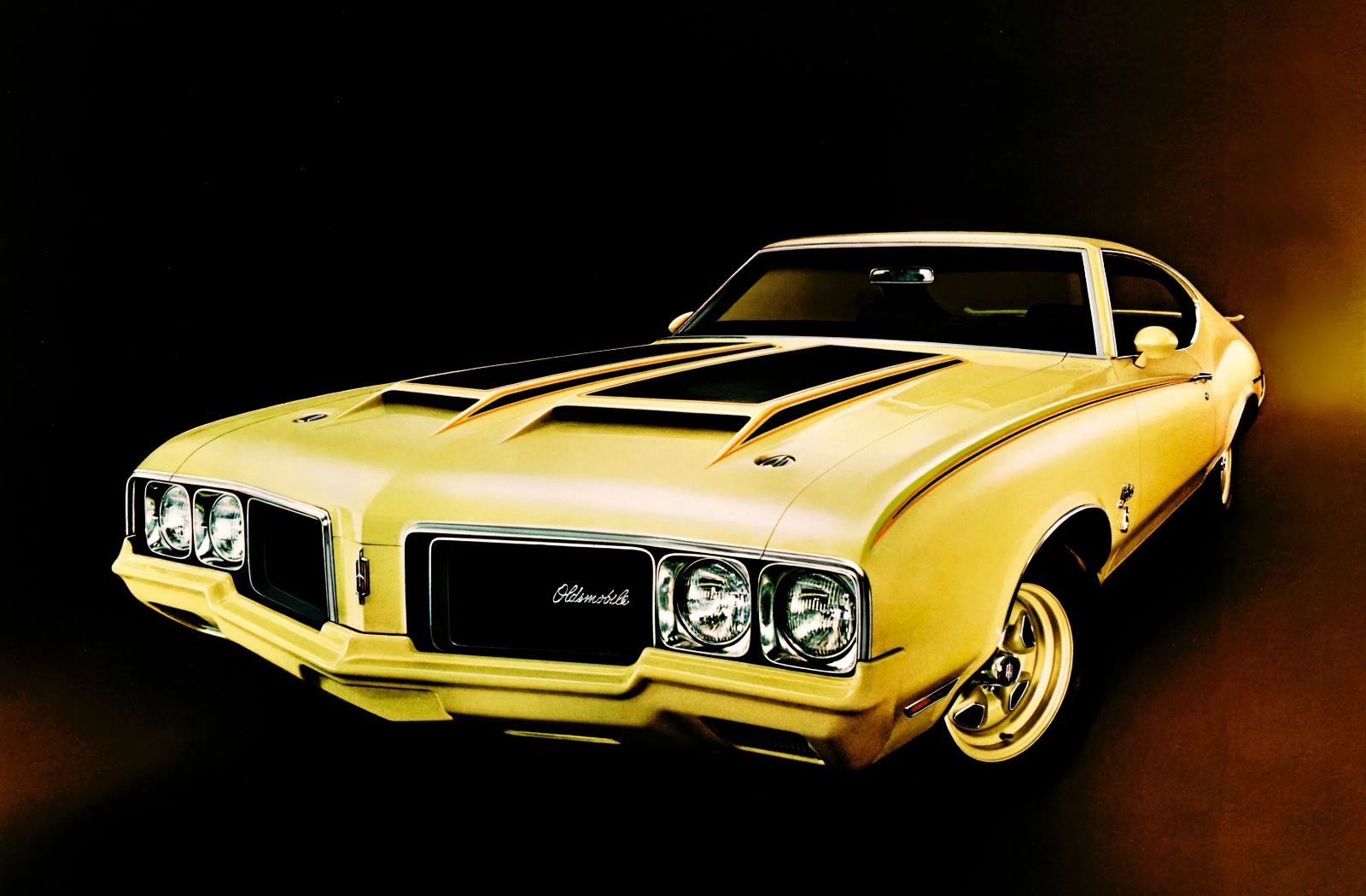
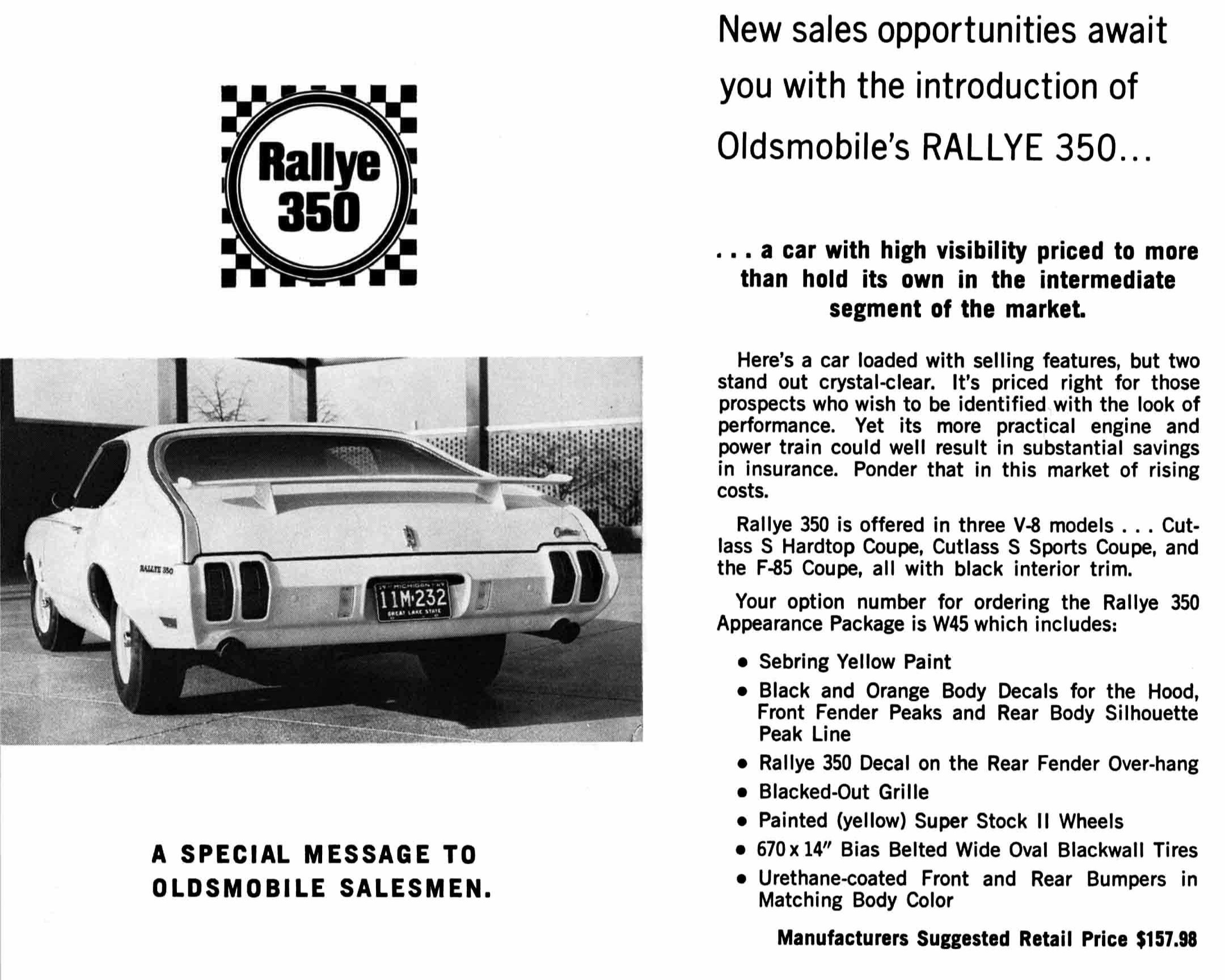
Oldsmobile General Manager John Beltz launched the Rallye 350 on February 18, 1970 at the Chicago Auto Show. By that point, the car had already been in production for about a month, and Oldsmobile was advising dealers and salesmen on how to reel in buyers. From the Oldsmobile “A Special Message To Oldsmobile Salesmen” pamphlet:
Here’s a car loaded with selling features, but two stand out crystal-clear. It’s priced right for those prospects who wish to be identified with the look of performance. Yet its more practical engine and power train could well result in substantial savings in insurance. Ponder that in this market of rising costs.
Oldsmobile was also quite open in that the Rallye 350 was more about looks than actual performance:
The Rallye 350 fits competitively into an existing product group made up of performance appearance packages added to intermediate price leader models. Competitive makes are the Plymouth Road Runner, Ford Torino with the GT option and Dodge Super Bee. Pontiac’s GTO Judge is similar in appearance. But the “Judges” are top-of-the-line intermediates with a much higher price tag and a standard ultra-high performance engine and power train.
Our Rallye 350 is offered with the L74 (Cutlass Supreme) engine. It provides unquestioned performance at a level that may offer substantial insurance rate benefits to the buyer. Remember this … the Rallye 350 will find its greatest appeal to the prospect who wishes to identify with the “performance look”… the NOW look … that has been happily combined with the practical aspects of a more conventional engine and power train.
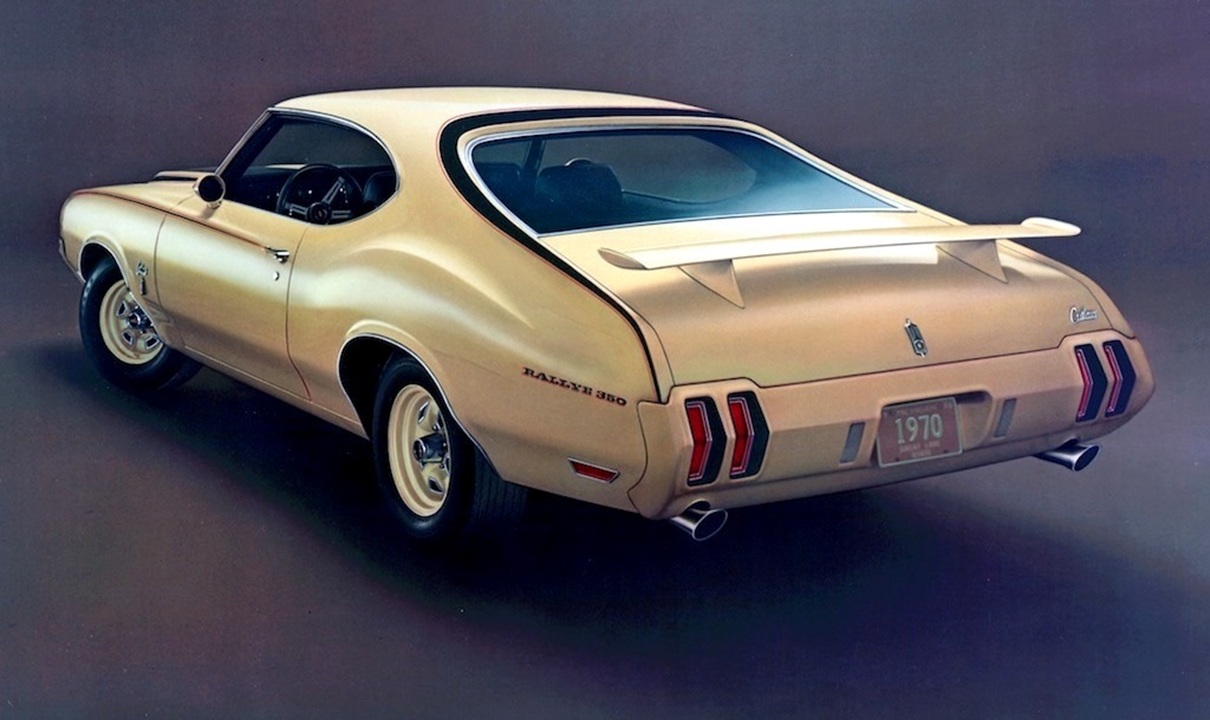
Immediately after, Oldsmobile said the Rallye 350 was made for the kind of person who knew that the high-end muscle cars were out there, but specifically wanted something that looked unusual, was cheap, and practical.
The Rallye 350 package was applied to the Oldsmobile Cutlass Holiday Coupe, F-85 Club Coupe, and the F-85 Sport Coupe. All of these variations were A-body cars, which served as the underlying platform for GM’s go-fast intermediates of the era.
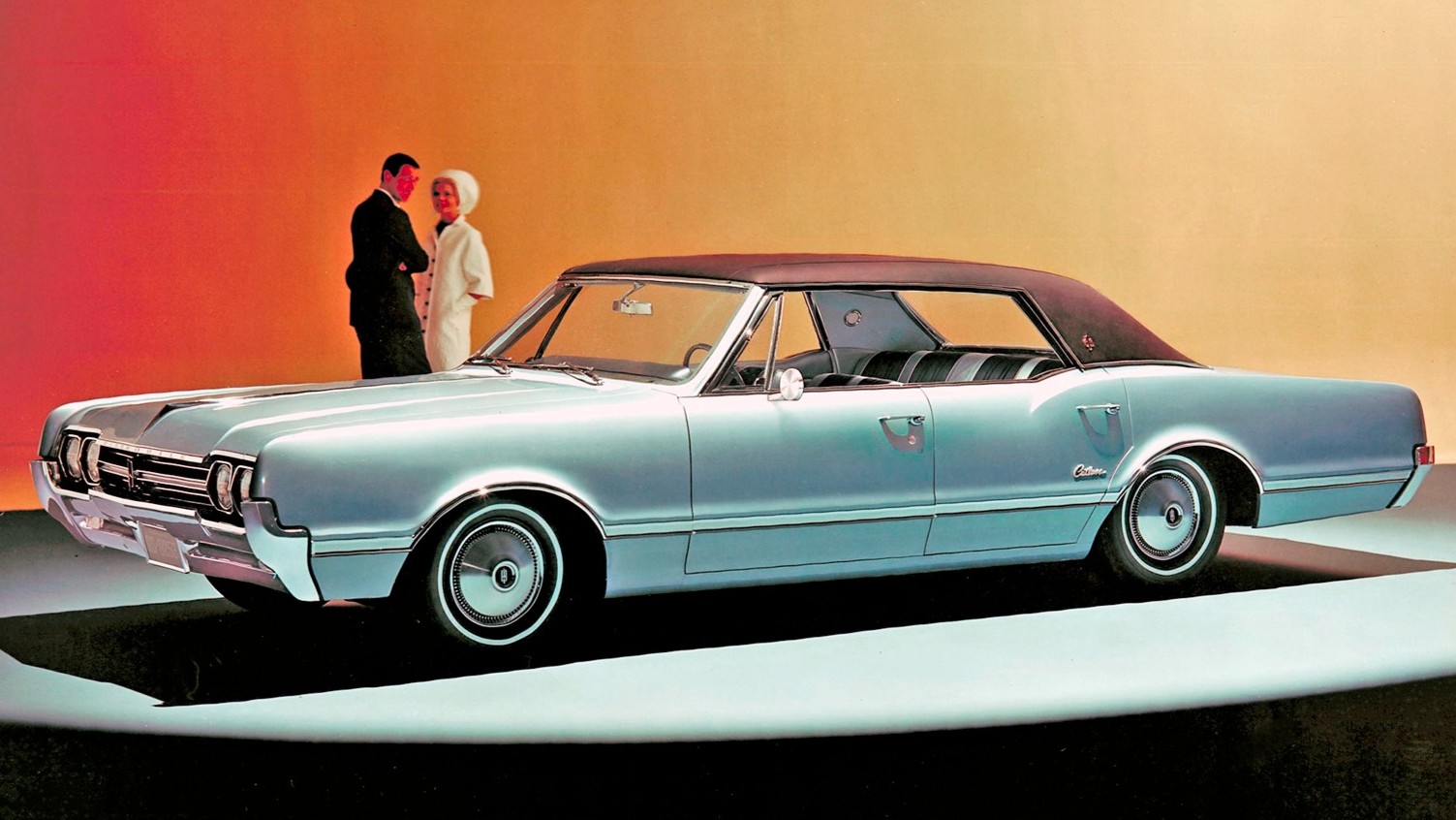
The Cutlass was introduced in 1961 as an upmarket version of the F-85 senior compact. These cars were initially on the GM Y-body platform before moving to the larger A-body platform in 1964. GM’s A-body platform went through several iterations over the decades. The platform made its first appearance in 1926 and underpinned several cars and trucks over the decades. Then, in 1982, the A-platform switched to front-wheel-drive.
In 1964, the A-platform launched, and at the time, it had some fresh ideas. A-body cars featured full perimeter frames and four-link coil rear suspension. Most cars riding on the A-body platform had 115-inch wheelbases, except for wagons, which got an extra five inches. As Hagerty writes, GM demanded that its intermediates didn’t have engines with more than 330 cubes of displacement. Pontiac loved breaking this rule, first by calling its 336 cubic inch V8 engine the Pontiac 326, and then by creating the GTO by calling its 389 V8 a low-volume option. By 1965, GM raised the ceiling to 400 cubic inches.
Eye-Searing For A Reason
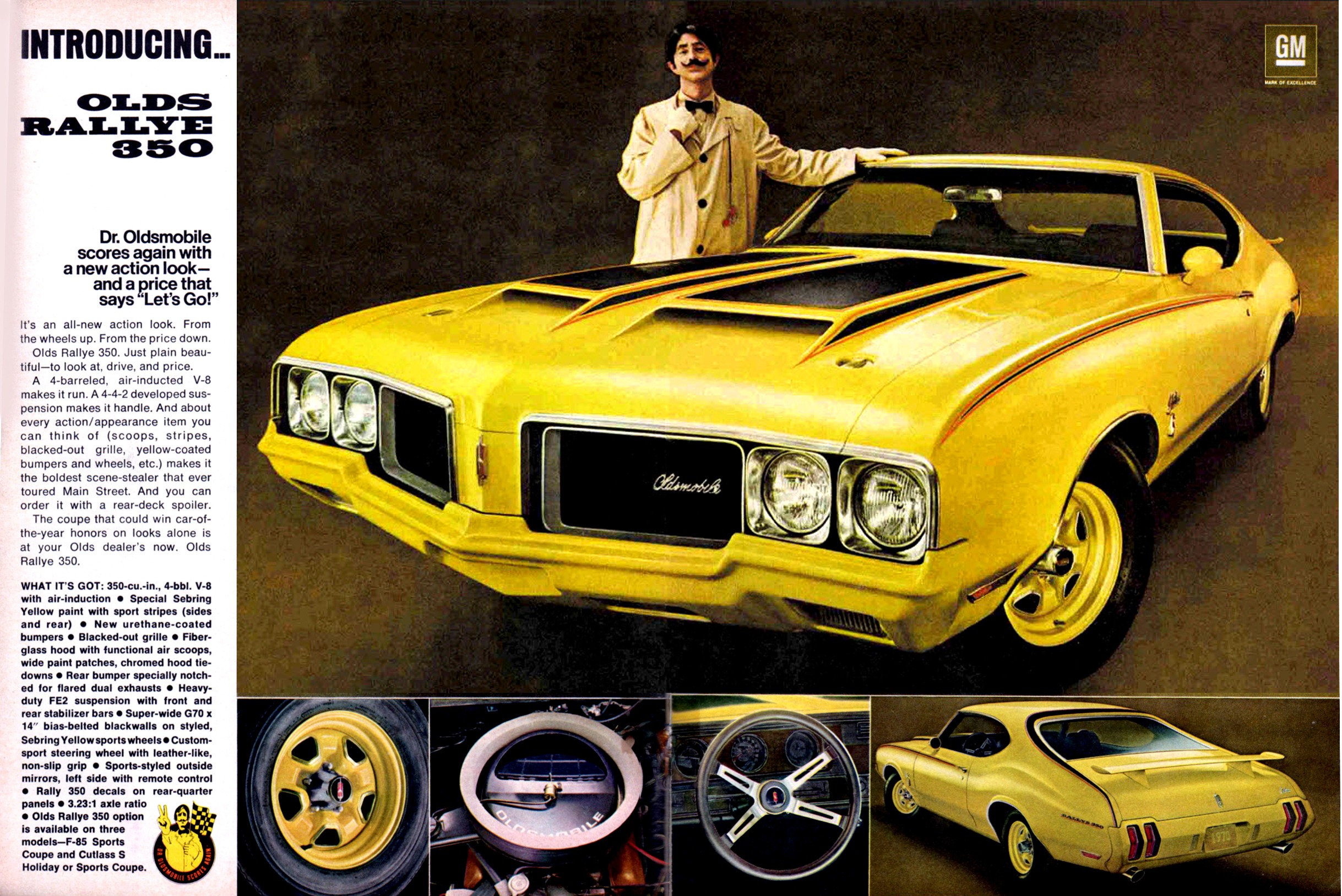
The brilliance of the Rallye 350, like the rest of the so-called junior muscle cars, is that they were largely created by raiding existing parts bins. Here’s what Oldsmobile said it did to create the Rallye 350:
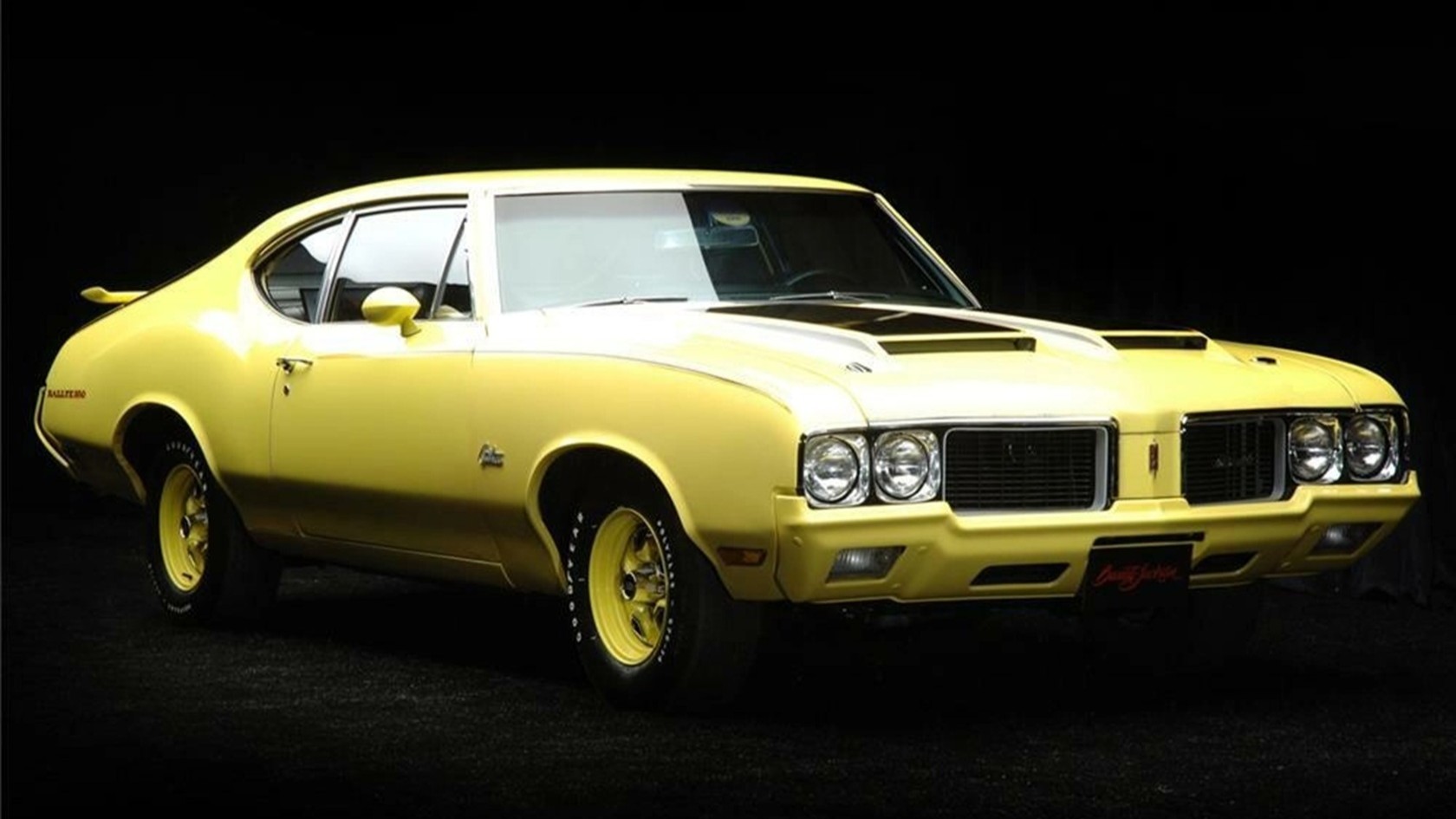
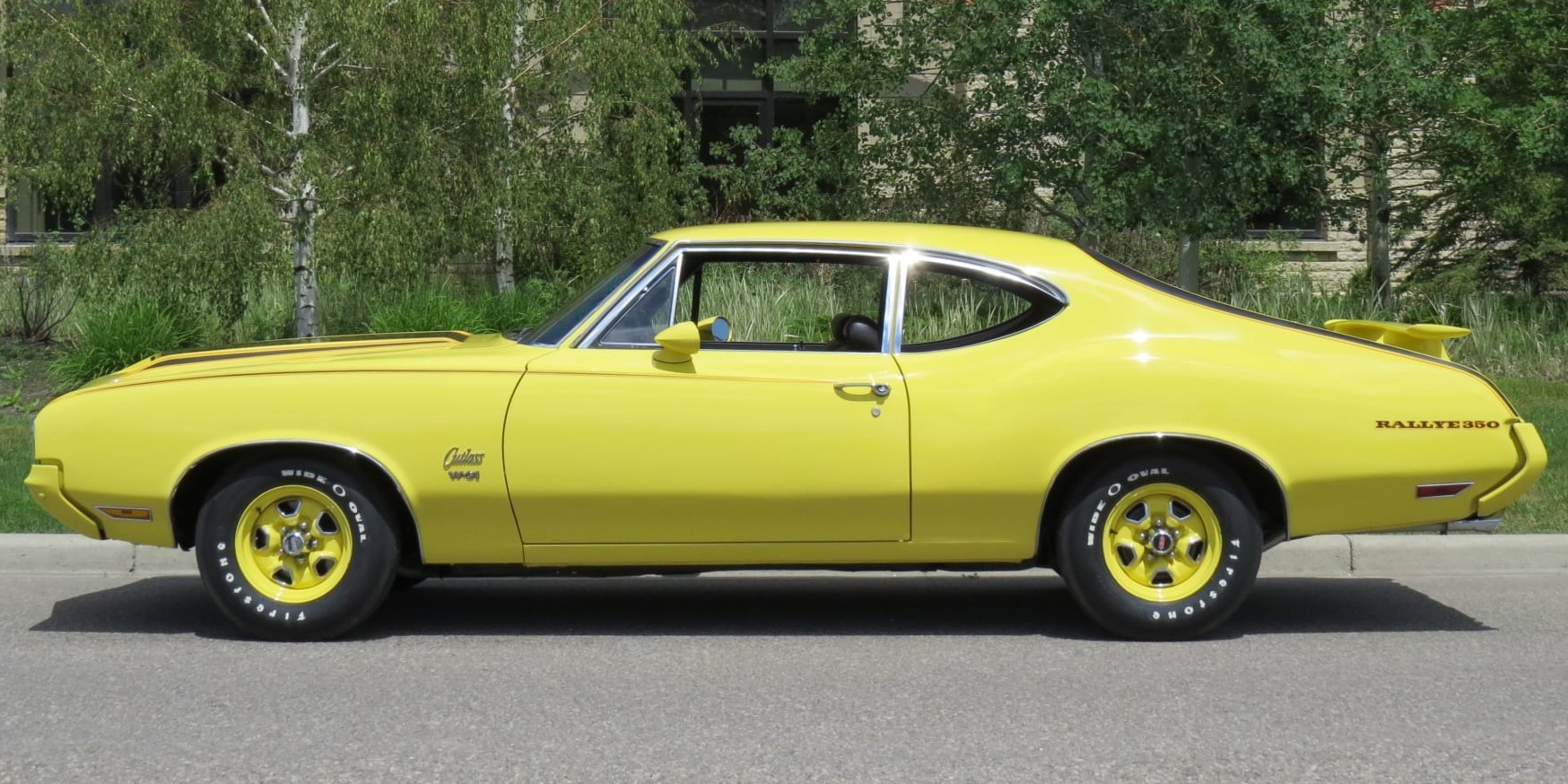
Sebring Yellow Paint.
Black and Orange Body Decals for the Hood, Front Fender Peaks and Rear Body Silhouette Peak Line.
Rallye 350 Decal on the Rear Fender Over-hang.
Blacked-Out Grille.
Painted (yellow) Super Stock II Wheels.
670 x 14″ Bias Belted Wide Oval Blackwall Tires.
Urethane-coated Front and Rear Bumpers in.
Matching Body Color.
Oldsmobile said that you got all of this for the sum of $157.96. However, the package didn’t stop there, as cars with the Rallye 350 package had a list of required options, from Oldsmobile:
W25 Force-Air Fiberglass Hood.
L74 350 cu. in. 350 h.p. high compression engine with standard 3/23:1 axle ratio.
N10 Dual Exhaust System.
FE2 Rallye-Sport Suspension with front and rear stabilizer bars.
D35 Sports-styled Outside Mirrors.
N34 Custom-Sport Steering Wheel.
Add it up, Oldsmobile said, and a buyer would have to pay $3,252.84 to get their low buck muscle car. Oldsmobile was happy to point out that the Rallye 350 was $67.16 cheaper than a comparable Plymouth Road Runner.

Oldsmobile was also quite proud of the urethane bumpers, too, and devoted a whole section of the brochure to explain why:
A real red-hot selling feature is the urethane coated bumper material of the Rallye 350. This is a magic-like substance that can be likened to an “elastic plastic”. It is applied to the metal bumper forming a protective coat of urethane in yellow primer color. Baked out at 250 degrees Fahrenheit the bumper is then sprayed with Sebring Yellow paint. A urethane (pronounced you-ra-thane) coated surface has a number of advantages over both painted and chrome plated bumper surfaces. Exhaustive tests have proved its superior resistance to minor abrasions, corrosion, blisters, chipping, and has also shown a marked indifference to an assortment of scratches and scars. As for minor dents, the urethane treated bumper can be “banged out” without having to refinish the surface.
When subjected to more severe dents, the surface can be restored to its off-the-line condition by sanding and repainting it with a urethane lacquer. Other tests have proved without question that urethane coated bumpers are superior to paint and chrome plated bumpers when exposed to extreme salt spray, humidity and thermal shock (minus 20 degrees to live steam.) Bumper jack tests also put the urethane bumper in a favorable light.

All of this was wrapped in a package that was painted in bright Sebring Yellow paint. This paint wasn’t just limited to the body and bumpers, either, but it also made it over to the wheels. Oldsmobile said the looks were one of the key parts to getting buyers into showrooms, but insurance was also a key part. The smaller, less powerful V8 meant that a buyer could get muscle car looks without having to pay muscle car insurance.
Oldsmobile also wanted to use the car as bait. A dealer was to put a Rallye 350 in the middle of the showroom and surround it with Cutlass, Cutlass S, Cutlass Supreme, Supreme SX, 442, and Delta 88s with the idea that if the person didn’t buy a Rallye 350, maybe they’d buy one of those other cars. Oldsmobile ended its dealership pamphlet by saying that the Rallye 350 was going to be the next big thing for Oldsmobile.
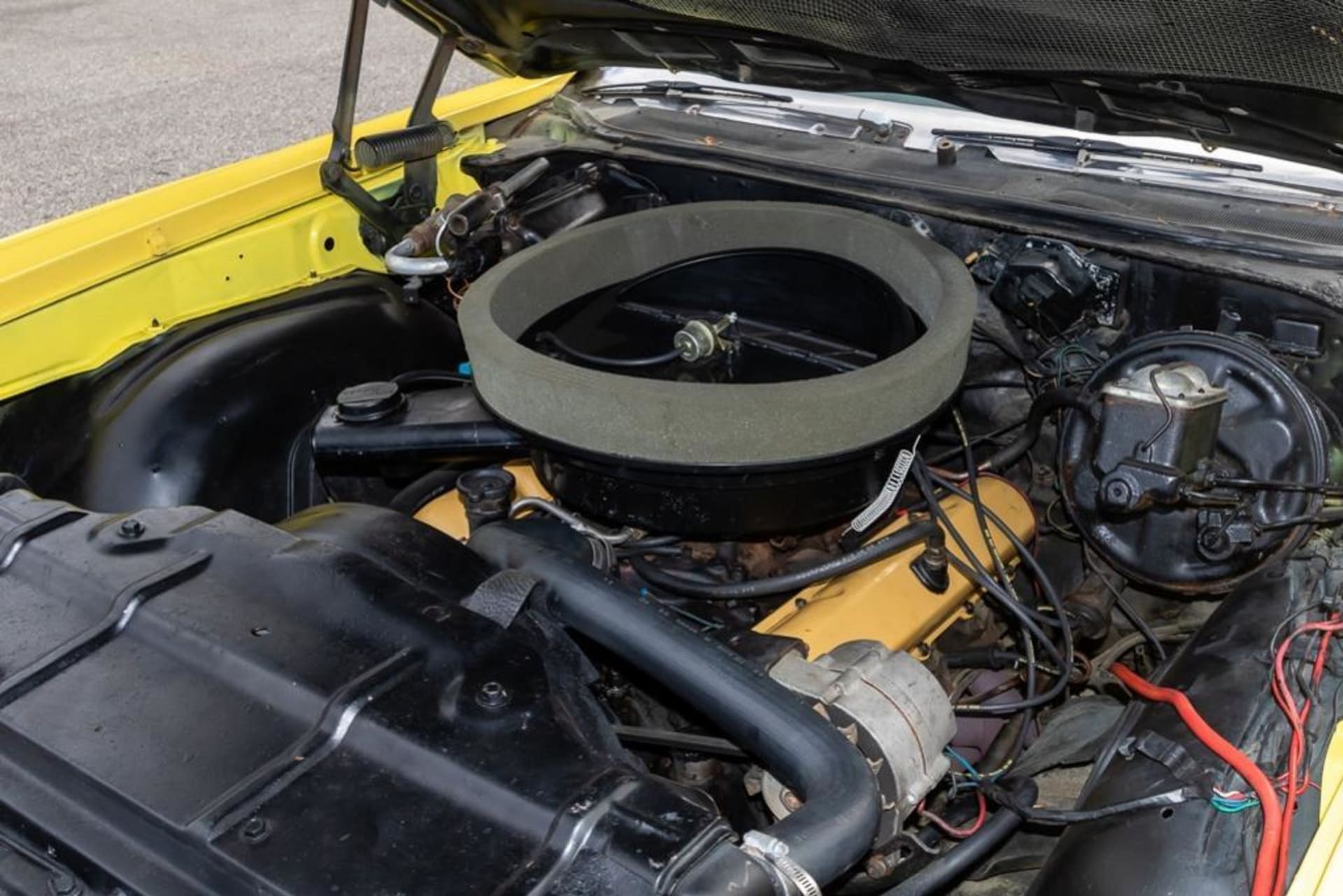
When the Rallye 350 launched, it actually shipped with 310 horsepower under the hood rather than the 350 advertised to dealers. But that was fine, because it further helped buyers keep in the good graces of their insurance companies. The engine also wasn’t entirely stock, as it did get the aforementioned upgraded intake and exhaust. Not noted above is that the Rallye 350 also got a 4MV Rochester Q-jet four-barrel carburetor like the ones found in 442s with manual transmissions.
In terms of gear changes, buyers had the option of a Turbo Hydra-Matic 350, a three-speed column-shift manual in an F-85, or a floor-mounted three-speed manual transmission in a Cutlass variant. Reportedly, a Muncie four-speed is also noted on the Rallye 350’s order form, but it’s not known if any cars were built with it.
Pretty Quick
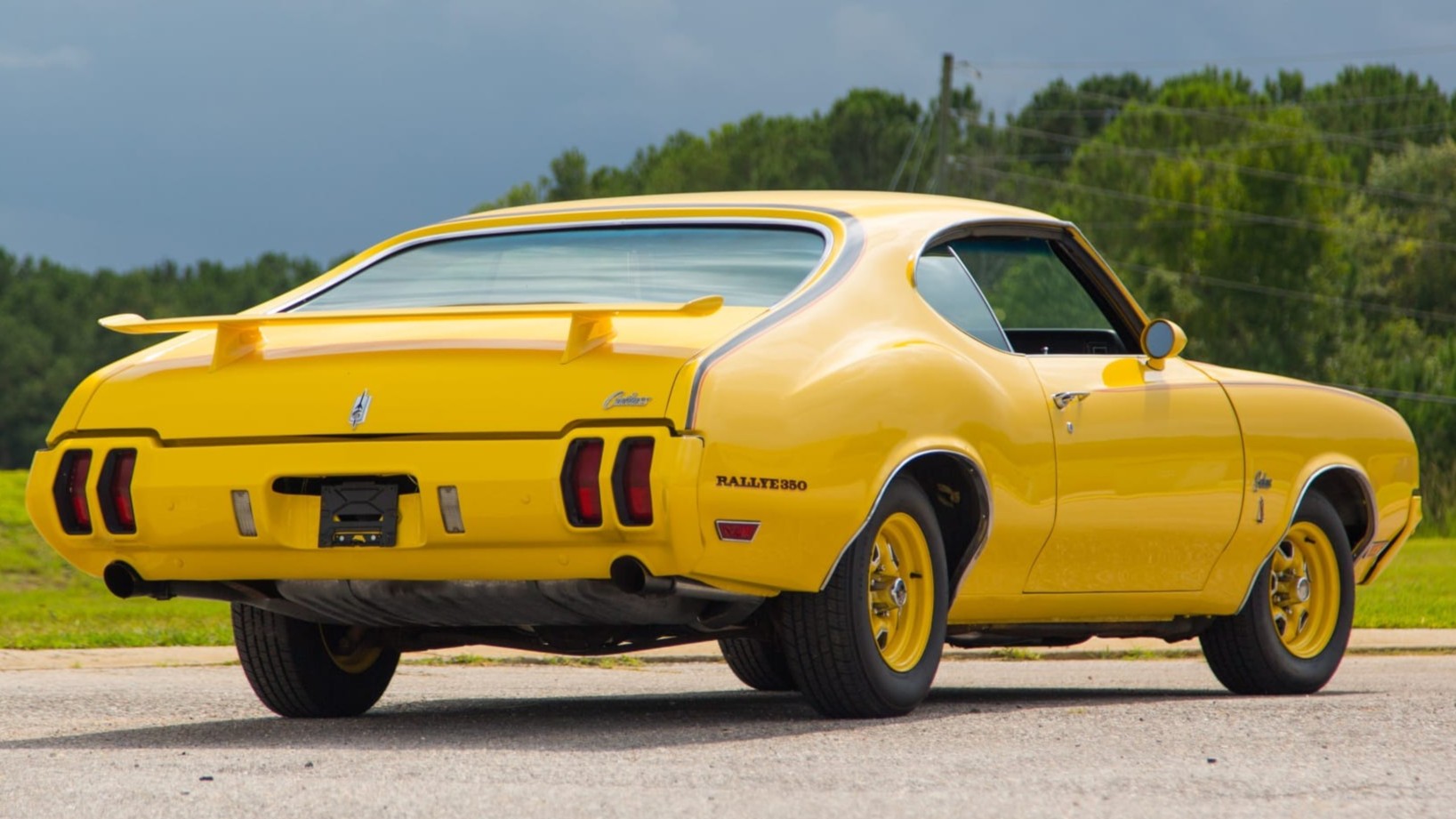
Motor Trend tested the Rallye 350, and the test car completed a quarter mile in 15.4 seconds at 89 mph. 60 mph was dispatched in 7.7 seconds. Hemmings notes that, in different hands, the Rallye 350 could hit the quarter in 15.27 seconds at 94 mph and hit 60 mph in 7 seconds. Either way, Motor Trend called the straight-line performance adequate.
Where the car really stepped up, Motor Trend said, was in handling. Sure, drum brakes were standard and power steering was optional, but Motor Trend pointed out that since the Rallye 350 had many of the bones of the 442, it was great when the going got twisty. Much of the credit for the Rallye 350’s suspension tuning went to engineer and SCCA racer Marv Thompson.
Motor Trend even went as far as to say that the Rallye 350 was one of 1970’s most tossable cars, in part for the fact that you could just enter a corner and use the throttle to determine how much drama you want to cause. The review further stated that the Rallye 350 had a neutral feel in slow corners and understeer in fast ones. The only part of the handling experience that Motor Trend didn’t like was the steering, which the magazine said was quick enough, but totally numb.
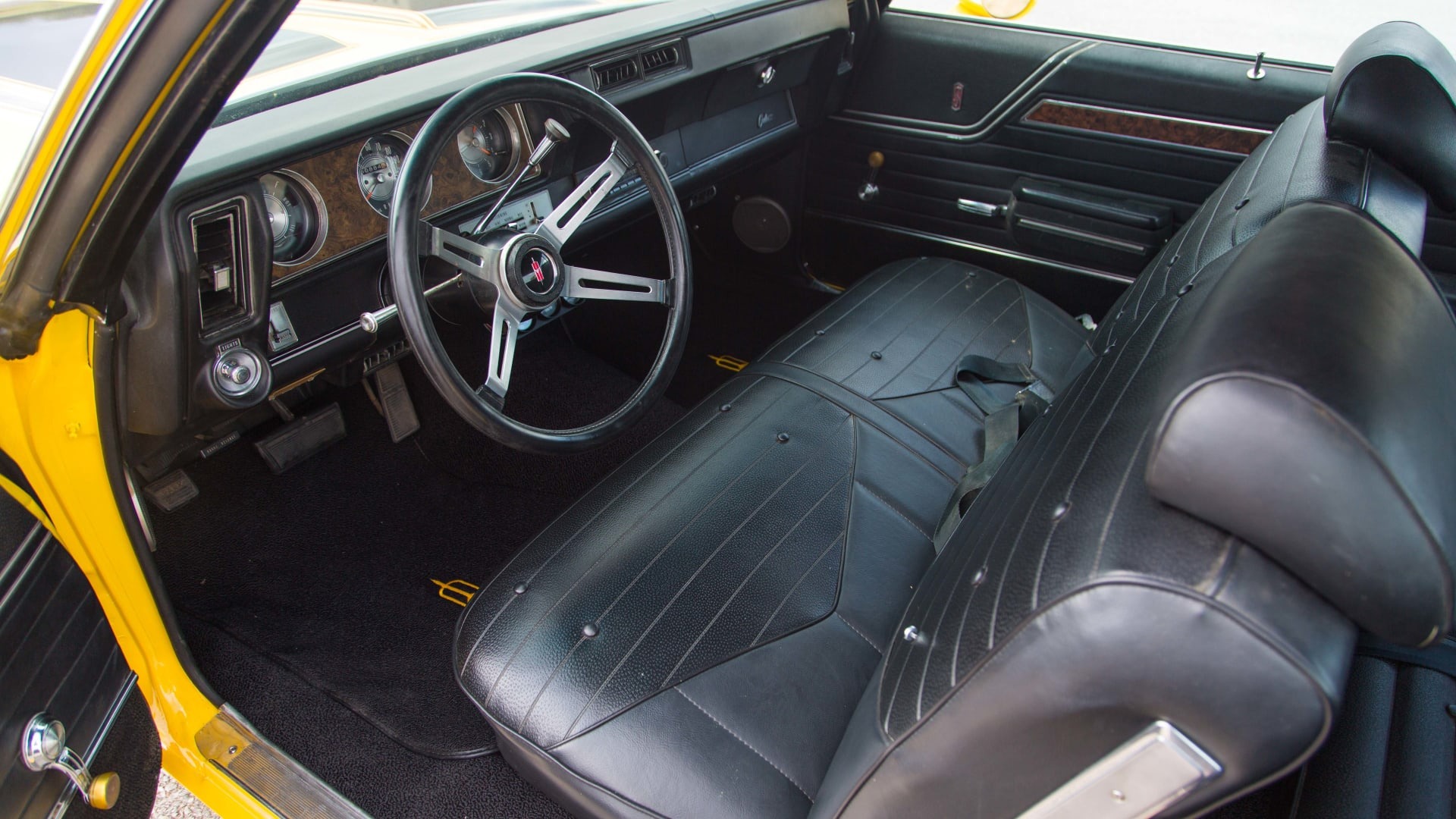
Ultimately, Motor Trend said, the Rallye 350 wasn’t really going to win races, but you were probably going to have enough fun and save money doing it. The publication’s recommendation was to go with one based on the Cutlass and not the F-85 since the latter’s bench seat isn’t exactly sporty.
Oldsmobile never intended the Rallye 350 to be a volume seller. It was expected to sell at least 2,000 examples, and maybe as many as 4,000 units. Oldsmobile built 3,547 Rallye 350s, most of which were built out of Cutlass Holiday Coupes.
Too Yellow For Its Own Good
The Rallye 350 turned out to be a bit of a weird flop. Yes, Oldsmobile built more Rallye 350s than the minimum it wanted to make, but as Hemmings writes, most of these cars were not customer orders. Instead, dealers and Oldsmobile zone representatives ordered up most of the cars. That makes sense since Oldsmobile also pitched the car to dealers as a way to move other stock.
Dealers had a hard time selling the Rallye 350. Hemmings notes that some dealers found it hard to sell the Rallye 350 because it had way too much yellow going on. Dealers got desperate enough to contrast the yellow by adding trim rings to the wheels and, sometimes, by throwing away the yellow bumpers and replacing them with chrome bumpers. Apparently, the Rallye 350 sold so slowly that there were still plenty of unsold examples out there in 1971.
The public reception was so lackluster that Oldsmobile didn’t even attempt to make a 1971 model. As sad as that sounds, it wasn’t particularly surprising. Pontiac experienced a similar issue with trying to get people to buy its GT-37. The discount muscle car was a good idea on paper, but most buyers still wanted the flagship, anyway, regardless of how expensive it was to insure.
The good thing about this is that, like the other under-the-radar muscle cars I’ve written about, the Oldsmobile Rallye 350 has remained attainable. The average selling price for a good example has trended at about $32,000, with less-than-perfect examples going for less than that. A nice 442 could easily go for twice that price. Of course, the 442 is also a much more famous car with more juice under the hood to match.
I have always found this part of car history to be fascinating. Automakers have invested so much into trying to attract younger buyers. Detroit also gets clever to avoid roadblocks. All of these junior muscle cars were designed to look like muscle cars, but not require muscle car money. It’s something that still happens today, too, but with a lot more success.
So, if you’re looking for a classic muscle car but aren’t made of money, try finding a version of your favorite car that’s a step down or two from the flagship. Sure, it won’t be as fast, but you’ll find something more accessible and your bank account will thank you later.
Top graphic image: Mecum Auctions


My ’77 Cutlass Supreme’s 350 has only half the horsepower of this one. But at least it has the same cool wheel design! What’s not so cool is the decaying whitewalls I have on him.
I wouldn’t trade my land yacht for the world, but I’m still jealous of the older cutlasses.
Was reading that too fast. I thought that read “urethra coated bumper” there for a second. Must have been the yellow paint in the pictures.
“It’s priced right for those prospects who wish to be identified with the look of performance.”
Ouch.
“Hello, my good man! I am in need of inexpensive transport, however, I wish to be identified with the look of performance.” — “You’ve come to the right place! I have just the car for you!”
oooooooo yellow 😀
It wasn’t too yellow at all! Fuck the haters LOL
The ones from back then who are still alive now are probably driving boring-ass “colors” like black and white and gray, if they can still drive.
We need more cool cars and cool colors.
Was being too yellow really a deal breaker in the fucking 70s when they had green cars with green interiors and other weird combinations and pimptastic Cadillacs? I mean, GM’s catalog of options was the size of the yellow pages!
I love this.
One note: rising insurance rates were not a “contributing factor” to the death of the Muscle Car, they were the primary factor. Look at the GTO: the more-potent 1970 models sold half as well as the 1969s. ’71 sales were one-quarter of the diminished ’70 total, and the ’72 fell by nearly another half. This happened before pollution controls had really started to bite — years before catalytic converters — and well before the first oil crisis, and subsequent CAFE.
The idea that “The Gub’mint” and OPEC killed the Muscle Car is just post-hoc mythmaking. You could say that the oil crisis was the last nail in the coffin, but the corpse was already cold by then.
I will agree with that. 1970 cars had substantially more HP than 69 models for the sameish price. Insurance was the big killer of musclecars. For example, in 1969 you could get a 396 Chevelle with 350HP, and for a couple hundred more in 1970 you could get an LS6 454 Chevelle with 460HP. Olds went from a 325HP 400 to a 370HP 455. Cool, but $1500 insurance on a $4500 car didn’t make sense to a lot of people. In 1971 performance was down some, but insurance was still high. 1972 cars aren’t any slow than 1972’s but HP RATINGS took a major dive with the change from gross to net. 1973-74 gas tripled in price, and the cars were heavier due to 5mph bumpers and safety requirements. Things just kept getting slower, fatter, lower mileage, and more expensive every year. A 1970 Cadillac Eldorado had a 500in (8.2L for you furriners) V8 with 400HP and 550ftlb of torque. by 1975, the same engine in the same car made just 190HP, but was 7.9mpg instead of 13, and cost $3000 more. That would be frustrating if you traded in a car for a newer one that was worse in every quantifiable manner for a new one of the same model. By 1975, it was hard to give away musclecars, and prices dropped to 200-500 until the end of the malaise era in 1986 or so. Insurance did them in, lower performance and gas prices wiped them out. I remember when my dad said he was gong to stop driving if gas go to 50 cents a gallon . . . . he didn’t.
As for performance, more compression makes more power, but higher temperatures also make more NOx, so to reduce NOx emissions in 1971, you have to lower compression, which also makes less mileage and economy. Then you don’t need premium leaded gas. You can reduce NOx even more by adding EGR in 1973. Which sucks with carbs and not EFI, because then you have to adjust AFR leaner and lose power when not at WOT. Then in 1975 you get catalytic converters, and you have to turn back the timing to prevent knock with higher underhood temperatures and unleaded gas. So you have a car that weighs 400-500 pounds more, gets 3-4 mpg less, has half the horsepower, doesn’t start and run as well, is more complicated, and costs more than ones from 5-10 years ago. Bleah.
It would make me look at a Datsun.
I’ve got one of these, it’s a fun car, and even today all the mechanical parts can come from Rock Auto. The L74 350 had 310HP (gross) with 10.25:1 compression and was the same as the base engine in the big cars. With a 160deg thermostat and 91 octane gas it works fine. NONE of these cars came with the 325HP W31 350, as is often assumed. That has a lot more cam, and is not friendly with AC, Automatic, power brakes, or anything less than 3.91 gears those cars came with. W31 cars had the same insurance problems as the big blocks in 442’s and were dropped for 1971. In 1971, compression was lowered to 8.5:1, and HP dropped to 250 with no other changes (still gross at flywheel). Exact same engine in 1972 is 180HP net rating (as installed in car, full intake and exhaust, accessories, etc.) 1973-1980 with 4bbl, EGR, and single exhaust was 170HP. All the same engine, with the same potential.
It handles much better than a standard GM A body due to the upgraded suspension parts, and everyone notices it. (hard not to with Sebring Yellow, stripes, and blackout trim). Anywhoo, that’s my post – thanks for looking into it Mercedes!
Your car is awesome.
Makes me wonder what companies could create now if they decided to allow some parts bin muscle to be created. Drop a turbo 4 from one of the trucks into the Chevy Trax and lower it a bit.
Great idea, but then they would charge $40,000 for it.
Expensive, yes, but that seems like the going rate for go fast versions of economy cars. GTI, WRX, Elantra N, Corolla GR, Civic Type R, etc. All of these are roughly $40k.
The Old Man would’ve liked this had he been more of a GM guy. I remember him telling me that when he did some research before ordering a new Duster 340 in ’71 he found out a 3-on-the-floor cost about half of what a 4-on-the-floor cost to insure all other things being equal. So, 3-speed is what he went with.
I never realized how insane those insurance numbers actually were until reading this.
Thanks for covering the Rallye 350! I never thought of it as not being well known because I read too many Oldsmobile magazines. It was so unmistakable and yellow that the surviving examples got a lot of press in later years. It does have the dubious distinction, along with the 1969 Hurst/Olds of being the car that was offered with that same spoiler that all of us Olds people like to add to their cars.
I feel like the 1968 RamRod 350 was a less well-known Olds variant. Did you cover that one already?
The front bumper on the Mecum auction car looks like it’s going every which way from Sunday, compared to the bumper in the catalog photo. I think the Rallye 350 would have been more successful if more colors had been offered. Maybe Olds had a bunch of yellow in the warehouse to get rid of and came up with this. While extreme colors were offered on many muscle cars, most cars were milder as people didn’t want to drive around in something so bright for at least a year or 2 before trading it in. Trade-in was a big concern for people, a strange color could reduce the dealer offer. Instead of earth tones, now it is white/silver/black.
I ran into a 442 club at a rent a garage place, where they were all working on their cars.
None of their cars were in Arrest Me Colours.
Mostly mild metallics.
The 442 is one of my most-wanted vehicles ever, but I would gladly settle for a Rallye 350.
I first became aware of the Rallye 350 in the very late ’90s, when I rode along to an Oldsmobile club meet with a friend who was the local Oldsmobile guru (he and I bought and sold a few cars from each other over a period of a few years back then). Ever since then, I’ve always liked the look, especially with the color-keyed Super Stock II wheels. His car was a floor-shifted manual, and my memory wants to say it actually was a 4-speed, but that was far too long ago for me to be able to remember for sure, and that’s probably just the memory being filtered through rose-colored (lemon-colored?) glasses.
There was one of these in yellow in beautiful shape at the Orphan Car show at the Stahl Museum this summer, but I didn’t know the history. It was an attention getter, especially to me, since I had a ’72 Cutlass S as a first car in the 90’s
no YOU’RE a thane!!!
Oh, I remember these. A guy at my high school had one. Even in rough shape with the paint falling off, it was an excessive amount of yellow that faded to odd shades over the years. I think by senior year he had replaced the wheels with Cragars and swapped the bumpers for chrome ones, which certainly helped, but it still wasn’t as cool as a friends 442 that I lusted after.
I know an old guy that was the target demo drove 3 hours to look at one didn’t like the color and felt it was just appearance so he bought a cutlass s. He still has the cutlass s.
I barely remember it, but we had a Cutlass Supreme this year or the next. While this car is a nice idea, I’d guess most potential buyers just settled for a similarly optioned Chevelle or Nova for less money and called it a day.
Such beautiful coupes from GM, each brand’s version very different from each other. Peak GM / Bill Mitchell.
I get why the insurance companies raised the rates. 400 hp with drum brakes and bias-ply tires? That’s a recipe for disaster.
But this Olds made 350hp, which is more than the 1964 base GTO. Even if they were deflating the hp numbers on the big motors- which they were- 350 was more than enough to get into trouble. My old man never owned a car that made even 200 hp, and the most I’ve ever had is 320, but that was in a gigantic Electra that weighed more than the moon. The fastest car I’ve ever owned had 265 hp, and resulted in a flurry of constable encounters. My current car has 225 and would blow the doors off of this 350-hp Olds, and might even beat a 442.
Circle of life. Automakers make cool cars, sell a bunch of them, then insurance companies come in and kill off the market. Same thing happened to sportbikes and rally car homologations. And then there’s a decade of news articles asking why young people don’t buy enthusiast vehicles anymore.
Between inflated gross hp numbers and modern tires, 265 hp today is definitely faster. A Honda Odyssey puts down the same numbers as this Olds. Doesn’t look near as cool in a 1/4 mile though. I’m surprised the yellow didn’t sell because this was a great looking car.
“Circle of life. Automakers make cool cars, sell a bunch of them… some of which got into the hands of IDIOTS, THE IDIOTS CRASHED THEM AND DID OTHER STUFF TO CAUSE INSURANCE LOSSES TO SPIKE, then insurance companies come in and kill off the market.”
There… fixed it for accuracy. It’s not the fault of the insurance industry. It’s the fault of IDIOTS who crash the cars which in turn cost the insurance companies money, which caused them to jack up rates.
It’s the same reason why I was quoted CAD$4500/year for insurance on a 2014 Tesla Model S while a 2017 Ford C-Max energi is less than CAD$1500/year to insure.
Too many idiots being attracted to the speed of the Model S… while at the same time, none/few of the idiots were/are attracted to cars like the C-Max or Prius.
As is the case with a lot of things… it’s a minority of idiots who ruin it for the rest of us.
The under-estimating of horsepower was always a balancing act between the needs of the advertising department and the ability of the buyers to insure the car.
335 hp Cobra Jet 428’s that ran low 14s on bias ply tires? Seems a little low.
Yup, also the not-related Boss 429? Also rated at 335, many said it was closer to 500.
If I recall correctly the Ram Rod 350 which was supposed to be over 320HP was available on all w31 equipped oldsmobiles, So the Big Bird Yellow Rallye was not all that special outside of the color saturation. I am pretty sure the L74 is the same engine, and it was sufficiently potent to have birthed some lore about looking for the Ram Rod badge on these before trying to mess with them.
The wheels. They don’t have the trim rings here, but my god they were beautiful. I once bought an ’80 cutlass supreme and had it repainted to original color (knew a guy in a dealer body shop) because the doofus who rattle canned the car previously left the original blue/silver color on the wheels.
“Motor Trend‘s article on the Rallye 350 actually pitched the baby muscle car as something a young person could consider instead of a BMW 2002.”
Yeah, that indeed made my monocle pop out. Who was actually cross-shopping an Oldsmobile Cutlass and a BMW 2002?!?
Yeah, a test drive of both models on anything but dead-straight roads wouldn’t have provided results to GM’s liking, lol.
Well the Cutlass Supreme was pretty long lived as junior executive type vehicles. They were classy but sporty, which at the time the 2002 was basically just that. Also BMW did not yet have a huge share of the Yuppie market yet.
I also figure dealer availability would factor in. There were probably what, 10x the number of Olds dealers in the country at the time than there were BMW dealers? If you’re reading reviews on the 2002 in the auto rags but have no dealers anywhere close, the BMW is less likely to be in serious consideration and it’s tougher to see one in person to really grasp how different the two are.
I can certainly say they are very different, shape and overall size was tremendously different. and you are right, the 2002 was new to most places and therefore either looked for by people wanting to be different or completely ignored since getting to one was difficult.
Strangely though the Cutlass enjoyed a weird middle to upper management Car status up until the late 80’s when it went mostly FWD. but even then the the Crackpipe Cutlass in the this or that cheap car challenge was a very expensive car for it’s time and was competing against 3 and 5 series Beemers even then. They obviously failed in the end, but they definitely tried.
I paid 3500 in the early 2000’s for a 1995 Olds Cutlass Convertible with the DOHC 3.4. it was pretty low miles at around 60K and it ran fine, though it had a low voltage number on the gauge sometimes. And I found out about the Timing Belt issue when looking up Maintenance expectations. But all that being said, the sticker for the car was in the glove box and I was very surprised the thing was in the high 20’s on pricing in 1995.
Yeah it’s a little bit of the idea people don’t necessarily want to be in the ‘cheapest’ cars (trucks end up a little different). In a way you still see it as Toyota/Honda have never been the cheapest in their segments but obviously are often volume leaders.
Speaking of price – lease offers in 90s commercials always fascinates me, like this 1995 one at $279/mo with $2k down, that was pretty close to what a lot of midsize sedan leases were advertised for up until a few years ago without adjusting for inflation. Actually Honda advertises $279/mo right now on the Accord with $4k down, and 2k in ’95 -> 4.3k today.
You must remember, these weren’t BMW buyers considering an Oldsmobile, these were Oldsmobile buyers considering a BMW.
And they very much were the same demographic; the Olds was always the car that had the latest technology, a car for an upwardly mobile type. If there was a US customer that would be considering a BMW in 1970, it was probably someone who would have considered an Olds, at least among available options…
“Who was actually cross-shopping an Oldsmobile Cutlass and a BMW 2002?!?”
Someone who didn’t know the Datsun 510 existed or refused to even consider “Jap crap”.
Or considered it too cheap. Datsun 510s were more likely cross-shopped with Chevy Novas.
Funny thing is the 510 was just getting started in 1968, and it was intended to ape the BMW 1600 from Europe. Which the 2002 was derived from in 1968.
That being said, unless the person buying the daily was perhaps enamored by English sports cars and was ok with Low displacement slow cars that can fun when driven fast, then neither of these were likely in the same realm of consideration for most Americans at the time.
To be fair, Jason Camissa once had a pretty good take on why the big, lazy, American cars were more popular in certain parts of the country; especially the Midwest cities. A lot of these cities have incredibly straight grid-like streets, where you pull out of your driveway and it was 40-55 mph light to light. The big, lazy, V8’s thrive here. Taking a small European car, which required revving it out to the moon for torque, was wasted in these environments. They had very few fun roads to experience, and the suspensions couldn’t handle the poorly maintained roads. When Camissa moved to Detroit/Ann Arbor (can’t remember which), his E30 was quickly more annoying than anything, where it thrived in CA.
Definitely the case here in Phoenix. The entire valley is just a flat grid of 1 mile blocks with lights every 1/2 mile or so. You can sit at a light with the clutch in and no brakes and not roll. Big trucks and muscle cars still thrive here. Walk around any neighborhood and sitting under car covers everywhere are cars from the heyday of the 60’s/70’s waiting to be restored, sun baked interiors and faded paint but mostly rust free.
Stroads
I’m surprised that phone companies didn’t scoop these up as promotional vehicles used for getting the word out about the yellow pages. Let your fingers do the walking!
People often say how expensive the muscle cars were to insure, but I had no clue how bad it actually was. That is horrific!
Now back to the Olds. I would 100% take the Superbee or Roadrunner over one of these. Still cool to see that it existed.
Look at these cars
Look how they’re built for youths
And please insurers too
Yeah, they were all yellow
Hey a reference DT can get!