

Do you like driving? Well, since you’re on an automotive website, it’s likely that you do. Do you like driving long distance? A lot of you probably do. It’s great to relax behind the wheel on a long stretch, possibly with a drink in the cup holder, just eating up the miles with the radio on. “Big Gulps, huh.” But do you like driving a lot, the whole time? That’s something that takes either a dedicated professional that does it for a living, or someone out there to prove a point.
Hansjörg von Gemmingen-Hornberg, a nobleman from Germany, set out to prove how far he can take his 2013 Tesla Model S. Over the years, various articles have been written about him and his car, as he’s pretty much the Tesla equivalent of Irv Gordon, the famous Volvo man who took his 1966 P1800S to over three million miles. Hansjörg is approaching two million miles, and he’s likely to pass it soon, as he just took his Tesla over three million kilometers (1.86 million miles) on Sep 30th.


#NeuesProfilbild pic.twitter.com/4Bd85vqM8p
— Hansjörg von Gemmingen – Hornberg (@gem8mingen) September 30, 2026
Hansjörg bought his Tesla second-hand and he got it to the first million very quickly, by 2019. There were two major reasons why he wanted to reach Kilometerkönig status: first of all, as he told the German paper, Wirtschaftwoche in 2019, “There’s so much bashing (of electric cars) that I wanted to counteract.” Before getting the Tesla, he was a dedicated Mercedes man with a W124 500E that he took to 600,000 km (372,823 miles), driving 50,000 km (31,069 miles) per year in the Porsche-assembled V8 hotrod. When Tesla started out, he initially got one of the early Roadsters and somehow put some serious miles on it despite the electric car charging network being very sparse in 2000s-2010s Germany. He replaced the Roadster with the used Model S, as it was larger, safer, and more comfortable, and let an acquaintance keep driving the Roadster, which had accumulated 600,000 km in its first decade. This is still a Lotus Elise-sized car we’re talking about, so dedication is key.
The other reason to go for mega-miles? The required electricity is free. Hansjörg has free Tesla Supercharging, meaning if he plugs his car into the Tesla-branded rapid charger, the battery will be topped up at no cost. Some, but not all, early Model S and Model X Teslas built up to early 2017 have free, transferable Supercharging, and Hansjörg’s car is one of those.
The Latest Battery Pack Has Lasted Over A Million Kilometers
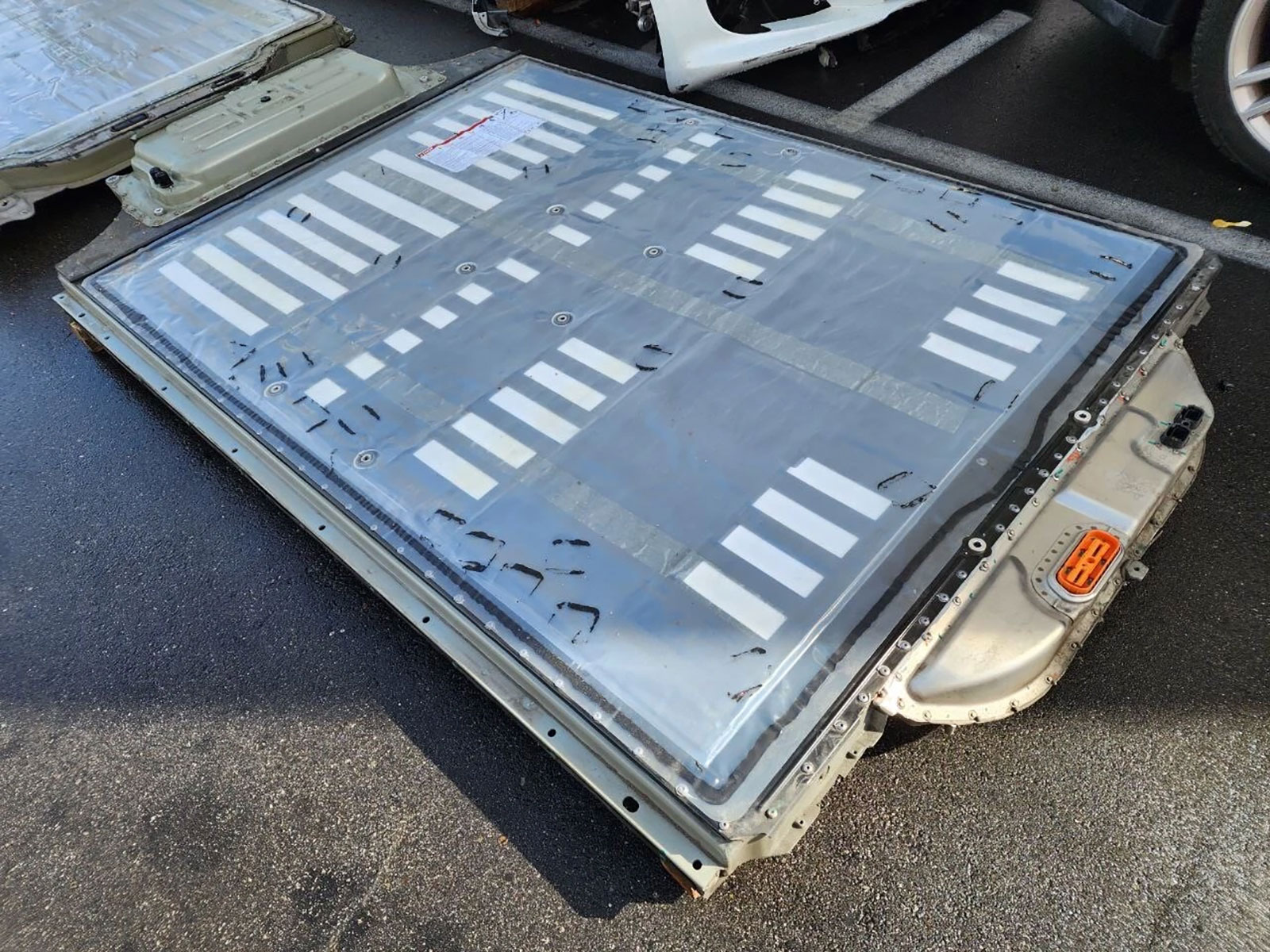
The red Model S is on its fourth battery, and the fourth one has proved to be good. The three earlier ones were replaced on Tesla’s coin, and they failed relatively early, compared to the current one that’s been in place for over 1.2 million kilometers (745, 645 miles), and it’s still in useable condition. The first battery pack was replaced at 290,000km (180,ooo miles), the second one was done just before the first million-kilometer mark (meaning it lasted around 416,ooo miles), and the third battery needed replacing after 341,000 miles. The immense mile accumulation means Hansjörg hasn’t really eased off on the car, and earlier articles note he’s stuck to a regimen where he charges the car up to 80% and doesn’t let it drop under 20%, to keep it from spending too much time in either extreme.
When the battery pack was replaced the last time, it cost the owner 20,000 Euros (about $22,400). You could compare that to the car’s remaining value, but the car is a bit of an edge case, and its value is difficult to assess. What is the world’s highest-mile Tesla worth?
In addition to battery packs, the car has really gone through rear drive units, and the total tally is a staggering 13 motors. The last time it had a motor rebuilt, it was done at an independent Croatian EV specialist called EV Clinic, which deduced the earlier rear drive unit failures were caused by coolant leaks. In this specific problem, the coolant seal disintegrates and leaks coolant into the motor’s bearing area, short-circuiting the stator. Some owners have tackled the issue with a so-called coolant delete, but EV Clinic advises using a graphite seal instead, as the delete job can cause overheating problems instead. With a graphite seal, EV Clinic seems to have nailed the issue, as the car’s now done hundreds of thousands of miles on the Croatian-rebuilt rear motor without further problems.
How Much Would It Have Cost In Diesel?

Let’s calculate some mileage costs to put the Tesla’s long haul into the proper context. Way back in 2014, when Hansjörg got the car, diesel cost around 1.25 Euros per liter, which is 1.65 Euros today using a German inflation calculator. That’s seven bucks per gallon. That means doing a million kilometers in 2014 prices would cost over 100,000 Euros just in fuel, if you’re doing Autobahn speeds with a very frugal big diesel that’s in any way comparable – so we’re talking either a Mercedes-Benz E-Class or S-Class with the 350 CDI OM642 engine. If one of those drinks 7l/100km cruising down the highway (33.5 MPG), it costs an easy 115,500 Euros ($130k) to do a million kilometers.
With diesel costing nearly an extra Euro per liter today, you’re looking at over 175,000 Euros to do a million kilometers with 2.5 Euro/liter diesel with the same fuel consumption. That’s $315,000 to do a million miles, in fuel only, with no maintenance, upkeep, or tire costs, just a 2010s Mercedes-Benz driving through Europe without anything breaking, fueled with diesel that costs over ten bucks a gallon. Compare that to paying $25k tops for a battery pack every 500,000 miles as a worst-case scenario and not paying for charging.
Both those Mercs and the Tesla are likely to need a bunch of wear items, from ball joints to air suspension bags, but if there’s a car designed to do big miles on European roads, it’s a diesel Benz. These early Teslas also use a bunch of Mercedes-Benz parts, from steering column stalks to window switches, and to develop the Model S, Tesla used a Mercedes-Benz CLS as a mule.
So, mal wieder locker 1.300 km mehr in 24 Stunden. pic.twitter.com/REgqiqpRpM
— Hansjörg von Gemmingen – Hornberg (@gem8mingen) October 1, 2026
Obviously, the bigger question is why would you sit behind the wheel that much, but it’s not like the owner is simply going to the office and back. He’s exploring countries all over Europe and beyond, having passed the two-million-kilometer (1,24 million miles) in Morocco. Yes, you can charge an EV in Morocco, and there are Tesla Superchargers there. Europe’s northernmost Tesla Supercharger is in Honningsvåg, Norway, near the Nordkapp (North Cape), and he’s been there, too. With the 85.5kWh battery pack, his car likely takes 30 to 40 minutes to charge from 20% to 80%, and if you’re driving that much, any break is more than welcome. “It’s not that I do much else,” he quipped back in 2019 in the Wirtschaftswoche interview.
Hansjörg keeps going at a steady pace, driving his Tesla eight to ten hours per day. The latest million-kilometer jaunt took two and a half years, which is staggering to think about. His tweet today shows the odometer at 3,001,301 km, meaning he’s probably already put another thousand miles on the car. Heck, in the time I’ve spent writing this piece, it’s likely done a lot of driving. Irv Gordon’s Volvo got to 5,250,000 km, so there’s still a couple million left to break that.
Top graphic image: Tesla


1,000,000 km in two and a half years? Jesus, that works out to over 1,000 km per day. On average, meaning if you don’t drive today you drive 2,000 km tomorrow. That’s like being famous for living on gruel and water while sitting on a pole.
Given the Model S was considered an S-Class equivalent due to size and price – it would have made sense to compare rough running costs to that of a used S-Class.
If the S-Class would have cost $300,000 to fuel, plus a service every 10,000 miles per MB requirements – lets say the average maintenance costs outside of tires and system failures was approximately $2000/year (Which is what I budget for my 2009 CLK350 annually – some years being higher and some lower) – then the cost to run a used S-Class for 1,950,000 miles (assuming it already had 50K miles on the clock when he bought it) would have been around $690,000.
Probably more tho – Because S-Class air suspensions, and such.
But we’ll let that go for argument’s sake.
Compare that to the costs of the 4 batteries (Lets call that $25000 each time on average) and 14 rear motors (Lets assume that’s $10,000 each time as part of an annual service – tossing in wiper fluid and wiper blades – but probably less)
Tesla Model S running costs outside of tires would have been about $240,000 due to free charging.
But let’s say he didn’t have that advantage – and he charged at a Supercharger facility each and every time – costing an average of $50 every 300 miles.
(Cost to fully charge at Superchargers in Germany is running 30-55 Euro, depending on timing these days – so I’m estimating high)
That’s $325,000
So total running costs for the Model S without free charging would have been approx $565,000.
That’s a conservative difference of approximately $125,000.
Which is the cost of a new S-Class or the last Model S.
Advantage Model S.
Wow 13 rear drive motor. That is 2 to 4 thousand dollars for parts. Installed 6 to 20 thousand. Since the author is figuring diesel at the highest level of 1 month let’s look at that $4 k for parts $20k for install . 13 x $24 so around half a million dollars. I’ll take the diesel on this shit box show down Alex.
That diesel has been going since 2013 but you figured the cost of diesel based on the 1 month in 17 years it was at its highest cost ever? And give no cost estimate for the electric bill which while free still cost money. It’s like saying an EV was $7500 cheaper because we all paid the $7500
Apples to hand grenade comparison here. You can’t get free charging that is a one off. You didn’t show the repair cost of the Tesla or any costs. But you mentioned everything about the diesel while ignoring any warranty coverage. With the warranty you still paid for 3 new Tesla’s. Where is he driving all this time flat surfaces EV favorable surfaces but the Diesel was everywhere. Can we get a few fair comparisons instead of fake EV HERO stories where the hero is participating person trophy?
13 rear motors???
I’d think after like #4, he would have looked for a better solution.
Without warranty and at worst price that is half a million dollars and no one who isn’t making money off of it could afford the cost of 12 new cars
Most of them were covered under warranty. It was only after they were out of warranty that he went the rebuild route. Those early tesla motor designs are notoriously trash
He’s a Tesla fan, was probably looking for the final solution.
One thing I really appreciate about The Autopian is the fierce resistance to the enshitification of online publications. There are so many deliberate choices this website makes that make it a uniquely refreshing read.
This article title isn’t it. I only clicked on it to leave this comment, so I guess you got me, but I won’t read it.
Next time “One Man Is Closing In On Two Million Miles With His Tesla Model S, And It Only Took X Battery Replacements” works just as well, and I would have actually read it.
You’re better thank this basic clickbait!
I did read it. I liked it.
Thanks for the not. It didn’t bother me. Also, I was more interested in why than the how.
Just for the record: I do not like driving. At least not anymore. And I do not drive long distances anymore, either. My current limit would be 2 hours, tops; anything more would drain my mental batteries to dangerous levels.
You don’t want that to happen.
It’s interesting that there are still “nobleman” titles these days.
Yep. It’s a very Pan-European thing. We don’t really have an analog for it here in North America. The elite class exists here; it’s just more tied to having old money and a relatively old family name and isn’t codified in laws or statutes. And it certainly isn’t anything to do with your ancestor having been given land or appointed a title by a monarch.
But I’ve dealt with a lot of people from the UK. There, someone with a hereditary peerage would be described as “posh.”
Just because the King is dead doesn’t mean the nobility is abolished.
Strictly speaking, there aren’t, at least not in Germany (places with royalty are different, of course). Nobility as such was abolished after WWI in Germany and Austria. In Germany they were allowed to keep the “von” and similar naming specialties, but they are not legally considered “noble”.
We went to a wedding in Southern Germany several years ago, which was held at the town castle. At some point the Duke and Duchess showed up to (for lack of a better word), bless the couple & wish them good luck. The Germans in attendance got jazzed up about it (teutonically jazzed up, so in hushed and understated tones); the Americans thought it was cool but we also all commented later that it was a little odd to see everyone almost still bow down to the local nobility.
I remember reading several years ago about a Model S that was used as a ferry from California to Vegas, and the owner was reporting that the thing was going great guns with little difficulty. Its biggest cost was tires because that guy, too, had free-for-life supercharging.
Level 3 fast charging is harder on the battery, especially if that’s all you use.
I wonder how much longer the battery packs would’ve lasted had he used Level 2 charging as his primary charging method.
No Level 1 charging in Europe, since their standard outlets are 220V anyway and that’s Level 2 by default.
Someone in the US using mostly Level 1 charging might be able to get a million miles out of the original battery pack, maybe.
I wonder how much longer the battery packs would’ve lasted had he used Level 2 charging as his primary charging method.
I would guess somewhere around 47 years, assuming the battery would last the same numbers of miles.
I presume time itself has a substantial impact on battery longevity in unusual use cases like this. I suspect if you want to maximize the number of miles on a battery pack, level 3 charging and constant highway driving is optimal. If you want to maximize the number of years on a battery pack, level 1 or 2 charging is optimal.
His experience makes me more bullish on the prospect of electric semi trucks, though. Obviously, it takes an unusual person to drive 8-10 hours per day just for the hell of it. However, truckers do that all the time.
The US uses about 3.75M barrels of diesel a day, presumably mostly consumed by big trucks. At 42 gallons per barrel by my maths that works out to 6.4 terawatt-hours per day.
https://www.eia.gov/outlooks/steo/report/BTL/2023/06-dieselmacro/article.php
Lets see how hard it would be to replace that diesel with renewable power:
“In 2025, wind generated about 464 terawatt-hours and utility-scale solar generated about 296 terawatt-hours. Together, these utility-scale sources accounted for 17% of U.S. electricity generation.”
Which works out to 2.08 terawatt-hours per day.
https://en.wikipedia.org/wiki/Renewable_energy_in_the_United_States
So to replace all the 35% thermally efficient diesel trucks in the US with (lets say 100% efficient to keep the math easy) BEVs you’d need at least to double the current solar and wind capacity. That’s… actually not too bad and it’s likely other types of renewables like geothermal would be able to contribute as well.
(Of course data centers and other power hungry industries would also be competing for that power.)
Doing this would have the enormous benefit of freeing up that diesel for the commercial amd military aviation sectors that AFAIK cannot feasibly use anything other than jet fuel, a close relative of diesel.
If he charges for 10 hours every night, that’s well under 40a charging rate. Pretty brisk as Level 2 goes, but fairly light for a Model S capable of supercharging.
And it would absolutely not be free. If it weren’t for the free charging, this guy would be spending his retirement some other way.
Guy is driving so much he has to recharge a few times a day. Can’t really do that without level 3. But in time; I’m sure we’ll see cars with 1M miles and on their original battery that mostly charge at home. Those will be the real long term life test cars that lived normal lives.
luxury vehicles being used in ‘how much money can you save’ comparisons are generally disappointing.
Model 3 vs Jetta TDI seems a bit more reasonable if you’re needing a Diesel comparison. but then you’re topping out at 40mpg.
Model 3 vs Camry hybrid seems a better comparison in the economy game. here you top out at 50mpg, and now we’re cooking with gas/electric hybrid!
of course, the comparison starts out with a car that’s over 10 years old when new, and since we’re just looking for economy, the bluemotion golf got over 70 mpg.
anyway, point is, luxury vehicles being used to compare economy standards is stupid.
This is a Model S, not a 3.
I can’t speak for the tesla, but you can’t drive 3 million km in a golf bluemotion without getting seriously depressed. So there is that.
Holy EV of Theseus, Batman!
My thoughts exactly. 13 freaking motors?! This isn’t impressive when there are practically no original parts.
Huh? The whole chassis is original. That’s at least 80% of the car by volume.
13 motors in 1.86 million miles is averaging 143,000 miles a motor, which some auto manufacturers would kill for but this most recent one has done over 200k miles at minimum. This is crazy good longevity and $/mile ownership
If I had a 2013 Jeep Wrangler on its 13th motor people would be blasting the horrible build quality of Jeep, right or wrong, reasonable or not.
Very true. 5 out of 4 people are bad at math
That’s because it’s a Stellantis product. Reason and actual data left that conversation long ago.
Ideally, someone would have figured out the design flaw that was killing the drive units before they did.
Most of them were under warranty earlier in the vehicle’s life. Warranty work is typically just replace with original part. The later fix out of warranty addressed the flaw because it’s your money now. ha
Reminded of a friend that bragged about how reliable his 90’s Volvo wagon was, after the third transmission and second engine.
Seems like a lot of the early replacements were early design flaws as each subsequent replacement has gone far longer than its predecessors, like the motor seals failing.
I mean almost 2 million miles is crazy far. That’s to the moon and back 4 times
The only thing I have against EV’s now that they are sorted, is what I have against All new cars. Too many damn vampires!
That’s the thing about living in Santa Carla.
Weird things happen… I have a 2004 RX8 that has had it’s shocks replaced at 40K because one failed and I wanted Ohlins, radiator and oil coolers replaced at around 20K due to an aggressively detaching retread on a semi in front of me, heater control knob has failed twice now, and that’s it except for two big asterisks and one small one… At 45K I asked the dealer what trans fluid I should switch to / what the Mazda racing teams use as I’ve been tracking it a lot and get grinding into 3rd, so Mazda authorized a brand new transmission filled with Amsoil fluid. At 70K and 6 years old I asked them to run a compression test as I suspected the apex seals now looked more like a crescent moon after moneyshifting the car 3 times now making it hard to start when the oil’s warm and instead they replaced the engine. (the small asterisk is fuel pumps because I pulled the perfectly working one out of my car to fix a lemons car and it’s been working flawlessly there every since, but every replacement I’ve tried to buy dies within 2 years)
So, is this the most reliable car in the world because the only expensive thing I’ve paid for other than tires in the last 20 years is suspension, or is it unreliable because it’s on its second engine and transmission by 95K miles that honestly had a lot more life left in them?
It is remarkable that Mazda did you so righteous! The most surprising experience I’ve had was a 2002 Beetle Turbo S with the 1.8 L 180hp. that I bought for $300 with 158k miles to save from the scrapper. Tires, clutch, suspension and still running great at 200k when T-boned.
It was a great dealership to work with for the first 4 years until I moved. I had free oil changes for the first 36000 miles or so every 5K miles or so but I’d bring it in twice as often and pay for the others as they’d also wash the car inside and out for only $30. They also knew I was driving the car hard as I had them replace the front pads and rotors at 9K miles (I had to find out just how endless the brakes really were), tires at 11K, (I could choose what I want from tirerack, pay $100 for installation, and get a loaner car for the day!) trans, diff, and brake fluid changed annually, etc. They were simply a good honest dealership and service department that charged fair prices. My parents eventually started taking their Subaru and Toyota there even for warranty work rather than their respective dealerships. Unfortunately the scummy Toyota dealership bought this Mazda dealership and it all went to shit.
edit – to this day I don’t understand why I got the engine replaced though… It was at a scummy dealership in IL and I think they sounded just as surprised as I was when Mazda corporate told them to replace the engine, but they must send the original one back to them. I really, really wanted to attempt to rebuild it based on the compression test as I had a “finished” project car and nothing else to do.
As far as rich people hobbies go, this one seems pretty harmless. You do you, weird German guy.
How many driver’s seats has he been through?
noblemen don’t fart, so fewer than most would have used.
COTD
He’s exploring countries all over Europe and beyond
Seeing the world through a windshield is not exploring.
It’s a shame he can’t get out of the car and walk places…
So you are saying we should buy cars with removable windshields?
Sounds uncomfortable.
Daaaaaaang! Not cheap to replace a battery. But if the rest of the car is in good shape, what kind of car comparable to the MS will $23k buy? Probably not one in as good shape.
not to mention, think of all of the maintenance that he hasn’t had to do. No oil changes, transmission flushes, spark plugs, etc. that all adds up
Serious question – the two or three engine replacements I’ve heard of lately were easily 5 figures, or much more. Why do people have a fear of the cost of replacing a $20k battery pack, but have no fear of replacing a $20k twin charged Volvo motor or truck V8?
because people are not rational
IDK. Replacing the battery has a lot lower chance of going wrong than all the myriad issues of replacing an engine. The battery is a few wires, some fuses, some coolant lines and some coolant. Torque to spec, bleed it and send it. The engine harness has a lot more to go wrong plus all the contamination risk of dirt in the fuel lines fragging a high pressure pump or injector. Or someone forgetting a shop towel in the SC inlet.
This 100%. A name brand reman engine barely comes with a one year warranty on just the motor itself. Battery replacement? Easy.
A few years back, batteries were expected to go 100k at most, engines should last double that, batteries have come much further though so now it’s just old biases that haven’t died out yet
considering in addition to having to replace the battery pack, the motor (or drive unit, if you will) needed to replaced 13 times. it adjusts the calculus just a bit.
Apparently a rebuild kit that fixes the leaks is $2200 or so. So that’s at least $26k in parts alone. Plus the four batteries. It ends up being $100k in parts to keep it going so far.
But for 2 million miles, that’s $0.05 in parts cost for every mile driven. That seems dirt cheap.
The motors are interesting. I haven’t heard of similar issues on high mileage bolts for example.
We have EV models in our showroom at work. I tell people this all of the time. Yeah battery packs aren’t cheap but neither are engines or transmissions and they definitely don’t go as far as battery packs
I’d imagine because batteries tend to be “all-or-nothing” in terms of repair. Maybe not in cars, I’m not sure, but in most applications consumers are looking at, a dead battery needs complete replacement. Engines, on the other hand, have lots of nice ways to break down that can be repaired rather than replaced! Additionally, consumer-grade battery experience might make it feel like battery failure is inevitable, while most people think they’ll be lucky enough to never need a full engine replacement
EV batteries can be repaired. There are numerous companies that do it. They also remanufacture or recycle used batteries as well. Same as any other car.
Yeah, I can see how that could be worthwhile on cars. My point was just that in most consumer experience, batteries are replaced outright, so many consumers might expect the same to be true for cars
I scored a brand new motor with 5 year warranty for under $7k (pentastar).
But that was only a V6.
Name checks out. 🙂
I’m actually surprised he went through so many batteries in such a short time, regardless of mileage. My understanding is that most of the cells used in EVs are rated for around 5000 cycles (and they’re not dead at that point, just potentially below 80% capacity), which at 300 miles per charge would make it good for around 1.5 million miles. Which explains why most batteries seem to die due to age more than mileage, even in hybrids where the capacity is small and the cycles are frequent.
The only cells that are rated for around 5000 cycle are LFP batteries. Older Tesla model S have NCA lithium ion batteries. Li-ion batteries are usually rated for around 1000 cycles or so.
Drat, knew I should have checked the type of cells. In that case, the latest battery that seems to have gone well over 1000 cycles is doing quite well!
Yeah that is why your cell phone battery is pretty degraded by year 3 because you hit 1000 cycles in about 3 years if doing a full charge each day. Most EVs would take like 20-30 years to hit that 1000 cycles which is why age is kind of more important because I think lithium batteries really only last about 15 years before dying. Essentially they age out in most cases before cycling out.
Serious question: I understand that Europeans like using the period (.) to designate numbers in the thousands.
How do they separate these from decimals?
With a comma. It’s backwards from the US system.
And if you’re unhappy about that… wait until we introduce what they do in India…
Yeah, he’s spent almost 1 lakh dollars on batteries alone
Hear, hear. The first time I was in France, I about had a heart attack when I saw the price for my breakfast.
I like road trips and Europe’s not huge, but still that’s a lot of driving and charging, even if fueling is free.
But holy crap the European supercharger network is huge.
Europe tents to get a lot bigger if you coun’t the traffic jams.
I watch Out of Spec Renew on YouTube because I’m curious about EV failure modes and serviceability and coolant leaks taking out bearings seems to be the biggest issue beyond bad cells in a battery.
I’m guessing that it was caused by a flaw from Tesla’s scrappy early days since it was a 2013 model. I doubt that many models have that same issue anymore, especially since many motors are now oil-cooled.
I’ve been trolling the Audi E-Tron subreddit because I was at one point considering a pre-owned E-Tron (the SUV not the GT) and it looks like coolant leaking into both front and rear drive motors are such common failure points that Audi has an extended warranty on these motors, 10 years/120,000 miles.
I believe there is a drain plug in the motors specifically for this issue.
Interesting, I would’ve thought a design that new would’ve avoided that problem, but I guess it was still developed in the late compliance car era.
Jesus. He must spend 24 hrs a day driving.
Or charging!
How much of his life has he spent waiting somewhere he really doesn’t want to be?
Less than most of us with jobs…
god damn this one stings
Sure – but can you take a nap behind the wheel of your S-Class on the Autobahn?
You can nap behind the wheel of any car on the road… for a little bit. ha
You can’t sleep with autopilot on a Tesla. There are cameras that can tell when you’re not paying attention for a bit and will turn off the autopilot.
Not in a 2013.
Not for the early Model S.
People were sleeping, climbing in to the back seat, etc while the car was hauling ass down the freeway.
That’s how people died.
At least they died in their sleep.
I like the Model S and this level of reliability is astounding. Might look into a used one as a second car. I’m going with the argument that I’m not supporting Eldof if it’s used.
I’ve been having the same thoughts. There’s some attractively priced Model S units around me, and one of my friends is a tech for Tesla, so I can get help on troubleshooting.
If I get one I might reach out about your tech!
If the free charging is transferrable and available in the US still, I’d view it as an opportunity to stick it to Elmo.
Oooooh, I like your thinking
Its like 154,000 miles per motor swap, but every battery after the first one held up ok. Still, from a purely financial perspective, it was definitely mechanically totaled a few times
The fuel cost offset of having free charging definitely offsets a LOT of that cost