

Do you like driving? Well, since you’re on an automotive website, it’s likely that you do. Do you like driving long distance? A lot of you probably do. It’s great to relax behind the wheel on a long stretch, possibly with a drink in the cup holder, just eating up the miles with the radio on. “Big Gulps, huh.” But do you like driving a lot, the whole time? That’s something that takes either a dedicated professional that does it for a living, or someone out there to prove a point.
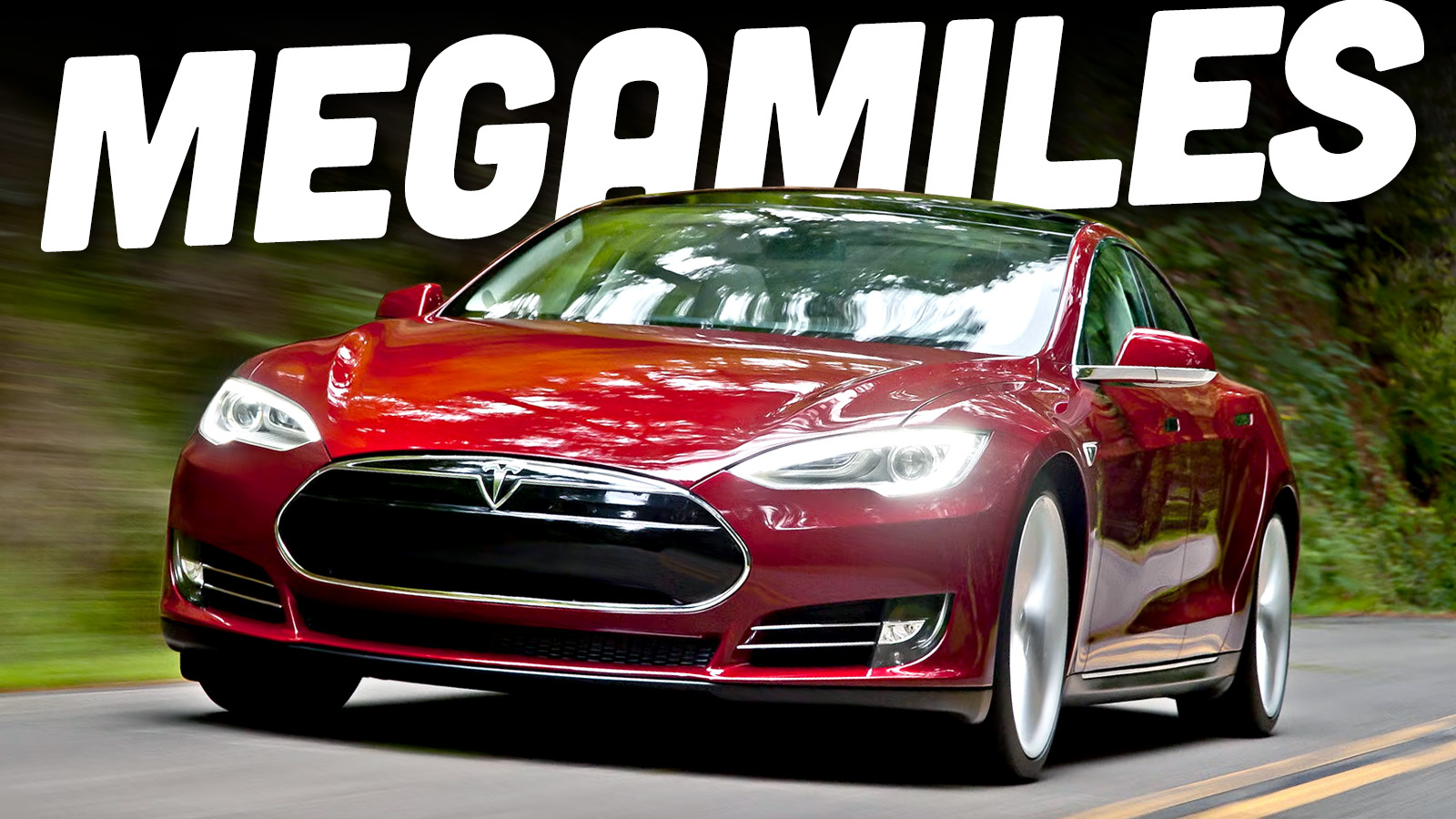
Hansjörg von Gemmingen-Hornberg, a nobleman from Germany, set out to prove how far he can take his 2013 Tesla Model S. Over the years, various articles have been written about him and his car, as he’s pretty much the Tesla equivalent of Irv Gordon, the famous Volvo man who took his 1966 P1800S to over three million miles. Hansjörg is approaching two million miles, and he’s likely to pass it soon, as he just took his Tesla over three million kilometers (1.86 million miles) on Sep 30th.


#NeuesProfilbild pic.twitter.com/4Bd85vqM8p
— Hansjörg von Gemmingen – Hornberg (@gem8mingen) September 30, 2026
Hansjörg bought his Tesla second-hand and he got it to the first million very quickly, by 2019. There were two major reasons why he wanted to reach Kilometerkönig status: first of all, as he told the German paper, Wirtschaftwoche in 2019, “There’s so much bashing (of electric cars) that I wanted to counteract.” Before getting the Tesla, he was a dedicated Mercedes man with a W124 500E that he took to 600,000 km (372,823 miles), driving 50,000 km (31,069 miles) per year in the Porsche-assembled V8 hotrod. When Tesla started out, he initially got one of the early Roadsters and somehow put some serious miles on it despite the electric car charging network being very sparse in 2000s-2010s Germany. He replaced the Roadster with the used Model S, as it was larger, safer, and more comfortable, and let an acquaintance keep driving the Roadster, which had accumulated 600,000 km in its first decade. This is still a Lotus Elise-sized car we’re talking about, so dedication is key.
The other reason to go for mega-miles? The required electricity is free. Hansjörg has free Tesla Supercharging, meaning if he plugs his car into the Tesla-branded rapid charger, the battery will be topped up at no cost. Some, but not all, early Model S and Model X Teslas built up to early 2017 have free, transferable Supercharging, and Hansjörg’s car is one of those.
The Latest Battery Pack Has Lasted Over A Million Kilometers
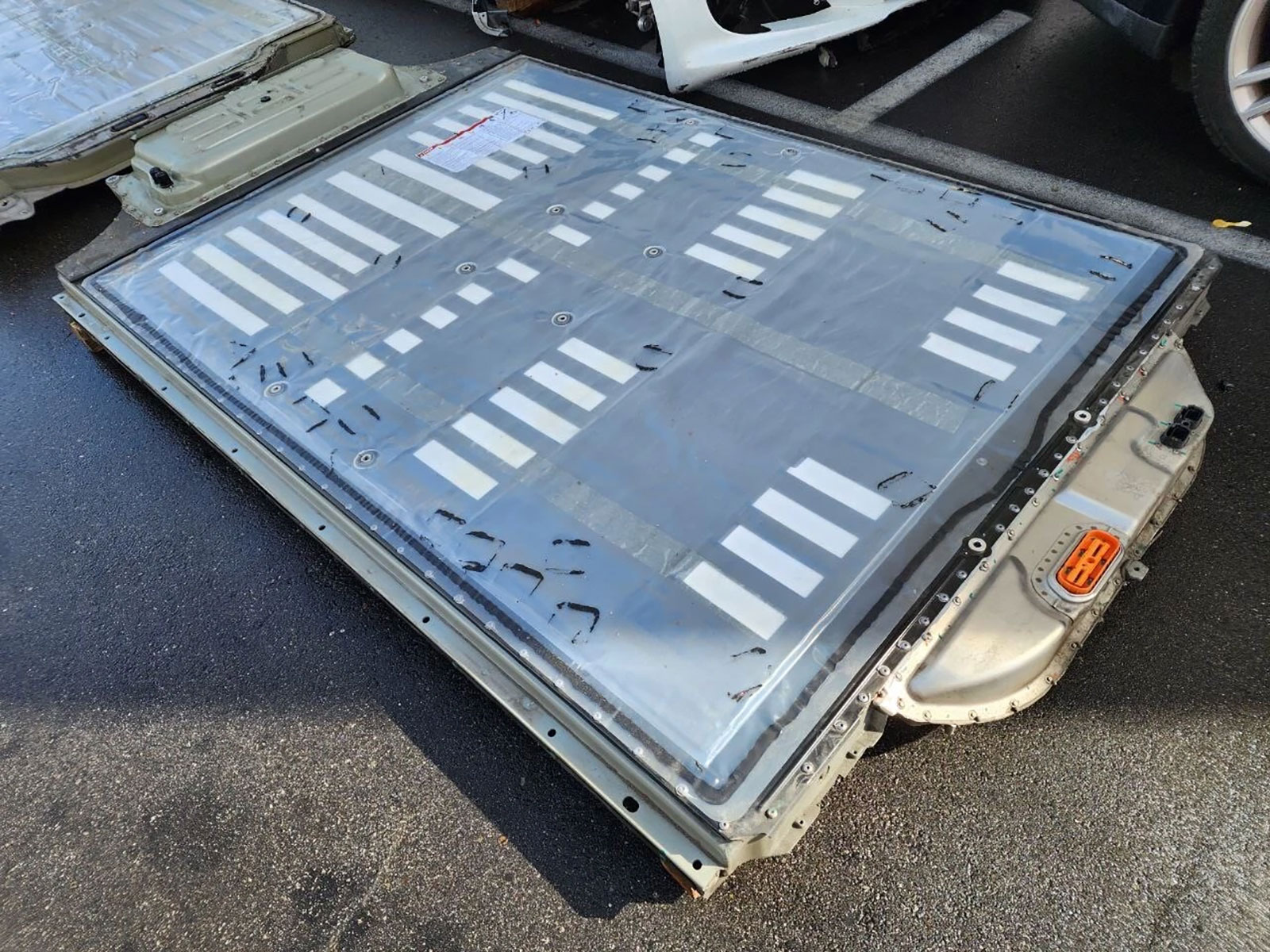
The red Model S is on its fourth battery, and the fourth one has proved to be good. The three earlier ones were replaced on Tesla’s coin, and they failed relatively early, compared to the current one that’s been in place for over 1.2 million kilometers (745, 645 miles), and it’s still in useable condition. The first battery pack was replaced at 290,000km (180,ooo miles), the second one was done just before the first million-kilometer mark (meaning it lasted around 416,ooo miles), and the third battery needed replacing after 341,000 miles. The immense mile accumulation means Hansjörg hasn’t really eased off on the car, and earlier articles note he’s stuck to a regimen where he charges the car up to 80% and doesn’t let it drop under 20%, to keep it from spending too much time in either extreme.
When the battery pack was replaced the last time, it cost the owner 20,000 Euros (about $22,400). You could compare that to the car’s remaining value, but the car is a bit of an edge case, and its value is difficult to assess. What is the world’s highest-mile Tesla worth?
In addition to battery packs, the car has really gone through rear drive units, and the total tally is a staggering 13 motors. The last time it had a motor rebuilt, it was done at an independent Croatian EV specialist called EV Clinic, which deduced the earlier rear drive unit failures were caused by coolant leaks. In this specific problem, the coolant seal disintegrates and leaks coolant into the motor’s bearing area, short-circuiting the stator. Some owners have tackled the issue with a so-called coolant delete, but EV Clinic advises using a graphite seal instead, as the delete job can cause overheating problems instead. With a graphite seal, EV Clinic seems to have nailed the issue, as the car’s now done hundreds of thousands of miles on the Croatian-rebuilt rear motor without further problems.
How Much Would It Have Cost In Diesel?

Let’s calculate some mileage costs to put the Tesla’s long haul into the proper context. Way back in 2014, when Hansjörg got the car, diesel cost around 1.25 Euros per liter, which is 1.65 Euros today using a German inflation calculator. That’s seven bucks per gallon. That means doing a million kilometers in 2014 prices would cost over 100,000 Euros just in fuel, if you’re doing Autobahn speeds with a very frugal big diesel that’s in any way comparable – so we’re talking either a Mercedes-Benz E-Class or S-Class with the 350 CDI OM642 engine. If one of those drinks 7l/100km cruising down the highway (33.5 MPG), it costs an easy 115,500 Euros ($130k) to do a million kilometers.
With diesel costing nearly an extra Euro per liter today, you’re looking at over 175,000 Euros to do a million kilometers with 2.5 Euro/liter diesel with the same fuel consumption. That’s $315,000 to do a million miles, in fuel only, with no maintenance, upkeep, or tire costs, just a 2010s Mercedes-Benz driving through Europe without anything breaking, fueled with diesel that costs over ten bucks a gallon. Compare that to paying $25k tops for a battery pack every 500,000 miles as a worst-case scenario and not paying for charging.
Both those Mercs and the Tesla are likely to need a bunch of wear items, from ball joints to air suspension bags, but if there’s a car designed to do big miles on European roads, it’s a diesel Benz. These early Teslas also use a bunch of Mercedes-Benz parts, from steering column stalks to window switches, and to develop the Model S, Tesla used a Mercedes-Benz CLS as a mule.
So, mal wieder locker 1.300 km mehr in 24 Stunden. pic.twitter.com/REgqiqpRpM
— Hansjörg von Gemmingen – Hornberg (@gem8mingen) October 1, 2026
Obviously, the bigger question is why would you sit behind the wheel that much, but it’s not like the owner is simply going to the office and back. He’s exploring countries all over Europe and beyond, having passed the two-million-kilometer (1,24 million miles) in Morocco. Yes, you can charge an EV in Morocco, and there are Tesla Superchargers there. Europe’s northernmost Tesla Supercharger is in Honningsvåg, Norway, near the Nordkapp (North Cape), and he’s been there, too. With the 85.5kWh battery pack, his car likely takes 30 to 40 minutes to charge from 20% to 80%, and if you’re driving that much, any break is more than welcome. “It’s not that I do much else,” he quipped back in 2019 in the Wirtschaftswoche interview.
Hansjörg keeps going at a steady pace, driving his Tesla eight to ten hours per day. The latest million-kilometer jaunt took two and a half years, which is staggering to think about. His tweet today shows the odometer at 3,001,301 km, meaning he’s probably already put another thousand miles on the car. Heck, in the time I’ve spent writing this piece, it’s likely done a lot of driving. Irv Gordon’s Volvo got to 5,250,000 km, so there’s still a couple million left to break that.
Top graphic image: Tesla


This is much better for the environment than taking cruises or flying jets to tropical locations. Not the car I’d choose, but it does seem to work for him. Kudos!
Edit: I did some dirty calculations. For 1 million miles over eight years, and assuming an average speed of 50-60mph, that comes out to maybe 6 hours of driving per day. Considering many people spend that much time on television and phone videos, that doesn’t seem like an awful lifestyle.
I just can’t imagine putting those kinds of distances on a car. It must take a lot of long drives at relatively high speeds to rack that up. When I was younger, and in the summer, I have made trips where I drove until I couldn’t safely anymore, find a motel, sleep until I woke up and repeat. Most of those trips involved a trailer or a U-Haul van. So, not fun or at hyper legal speeds. Maybe 800 miles in a day.
For me to have done that, it would take roughly 2500 days or 6.85 years. Every day.
Former Tesla master tech here… just for everyone’s information: the original model S motor is notorious for drive-unit failure due to coolant intrusion. That failure mode is absolutely not typical for modern EVs. The battery packs were also not great… I am pretty shocked how well his current pack is doing.
I’m assuming Tesla mostly solved that issue at some point? Is there a year after which the drive motors became more reliable?
The problematic LDU was only used on Model S/X up to model year 2020 (aka pre-refresh or legacy models). It was only in the RWD or Performance trims. The standard dual motor (AWD) trim had a different drive unit that wasn’t affected.
Tesla eventually (2023?) released the Rev U version of the LDU for warranty replacement that had the coolant delete installed at the factory.
The Model 3/Y/CT never used the problematic LDU in any trim.
That you for that super helpful information!
My Ioniq 5 lease is up in about a year and I’m just preliminarily considering replacement vehicles since I plan to go back to buying used.
The Model S is on my list of potential candidates, particularly the 2017-2019 models since they seem to be near the nadir of their depreciation curve while still having good range.
My suggestion for that year/price range is to look at the 2019-2020 S dual motor trims. That’s the Raven platform models which had the PM front motor for a little extra efficiency and power, the more reliable SDU (small rear drive unit), more comfy air ride, etc. They have their idiosyncrasies like everything else but if you are thinking of a legacy Model S/X they deserve a look.
(I didn’t take my own advice and have a 2020 S Performance Ludicrous for what it’s worth)
Thanks for the advice! I took a screenshot for the future.
TBH a Model 3 would work just as well for my needs (although I’d love the hatch on the Model S), but I just think the pre-Highland ones are so freaking ugly, and the 2024+ ones are $$$.
I love the way the Model S looks and love that there’s a driver display. I’d add an aftermarket one to the Model 3, but it’s nice to have one just built in.
DaChicken is right on… however IMO whatever the year of Model S I would only consider it if you would be willing to spend a few thousand on a moments notice. The HV battery can fail, the AC can fail, the air suspension… by the Raven years they were pretty dialed in but it’s an antiquated, complex design and things do go wrong. It also has weak charging and degradation compared to any of the modern Teslas. I love the legacy S myself but I never recommend them to anyone.
I’m not even remotely impressed but I’m more concerned for this man’s health. That’s an insanely sedentary lifestyle, has his ass gone all lumpy yet?
He replied to worries on twitter that he takes regular breaks to exercise while the car charges, hardly eats any meat, no alcohol or painkillers, etc etc. Seems happy but it’s like doing a tough and demanding job for fun and kudos. Sure, the car probably takes a lot of strain out of it and it’s likely very cushy (especially compared to any other Tesla), but I can’t imagine basically living in your car just to drive it.
Well, I’m impressed by the numbers, and of course I immensely respect actually using something to its full potential, rather than just replacing it every few years like so many folks do.
Shame that it has to be a Tesla though, given what an epic, uber-douche Musk has proven to be.
Still, even taking those big mileage numbers into account, three battery replacements and 13 (!) motor replacements is sobering. If he had to pay for all of that, I imagine maintaing a W124 Benz would actually wind up looking like a bargain. And with a Benz, you only have to deal with vaguely Naziesque associations from the distant past, as opposed to Elon’s proclivities today.
I haven’t checked, but I don’t think that Tesla does the ‘free charging for life’ thing anymore, and EV charging in LA ain’t free, sometimes suprisingly unfree, with charges costing over half of what a tank of gas costs in CA until the recent economic insanity (thanks to Elon’s former co-President).
The free charging was only available to early adopters up to 2017, and if you traded your car back to Tesla they nixed it. But he likely bought it from a private party and it’s fully transferrable then.
I thought something like that but couldn’t articulate my thoughts. Thanks Antti!
I imagine he has super skinny legs by now for lack of using them.
He says while sitting at a computer, likely indoors, likely stuck there for 40-50 hours per week……
I work in construction brah, and I swim to work, as the bike path we are building and testing is on an island. Florida does have advantages.
Fair.