

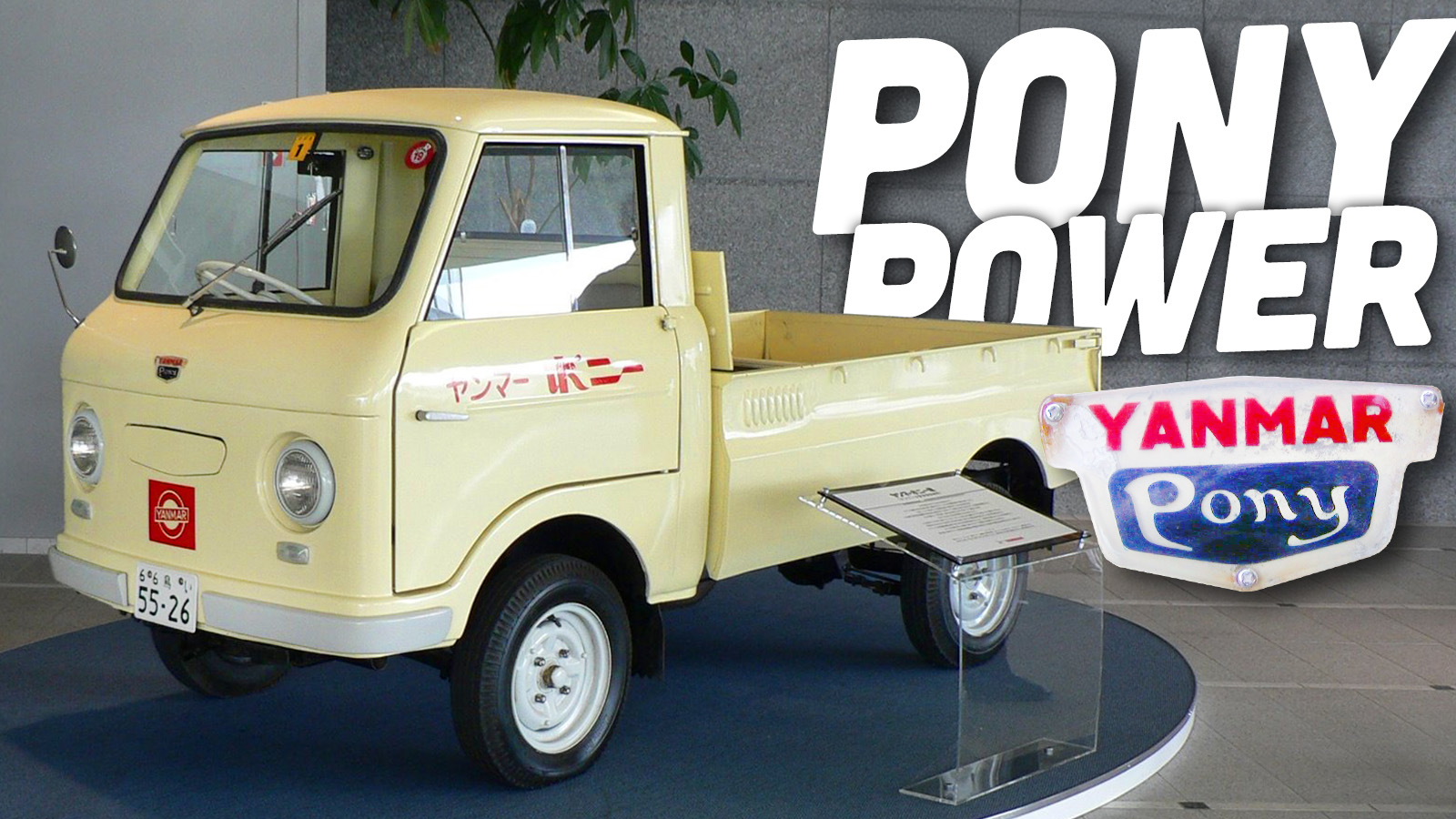
The Japanese Kei truck is a wonderful creation that many Americans are still discovering for the first time. These little trucks do much of the work that big pickup trucks can, but in a friendly shape and size. But nearly all of the tiny trucks that you’ll find in Japan or imported to America have diminutive gasoline engines. Japan, like America, largely reserves diesel power for larger trucks. One of the weird exceptions is the Yanmar Pony. Built in the 1950s, this outrageously rare Japanese pickup sported a tiny diesel engine that returned an impressive 80 mpg. When it wasn’t sipping diesel, the driver of the truck could pull over and use the engine as a farm or worksite generator.
The pickup truck is one of the greatest classes of vehicles in the world. A good pickup can haul any load you throw at it while carrying its driver, or even a whole family, in surprising comfort. Diesel pickup trucks are great for doing work while being a bit more frugal at it.


The beauty of the pickup is that each region of the world seemingly has its own flavor of the same concept. American pickup trucks are often mammoth work vehicles and luxury vehicles that can tow up to 40,000 pounds and are powered by snarling engines making 500 horsepower or better. Some trucks in other parts of the world have trays with fold-down sides, are secretly muscle cars underneath, or are cabover workhorses.

The Japanese kei-jidōsha truck, or Kei truck, represents a fascinating class of motor vehicle. So long as you’re willing to put up with a vehicle that is no longer than 11.16 feet, no wider than 4.85 feet, and has an engine no bigger than 660cc, you get to enjoy lower sales taxes and driving-related taxes. In the modern era, the Japanese government has greatly reduced those tax benefits, but there are still some reasons to go small to save money. Of course, once these vehicles turn 25 years old, they’re also legal for Americans in several states to enjoy.
The great thing about a Kei truck is that it’s more useful than its size would suggest. Keis are limited to carrying 350 kg (771 pounds) of cargo, or close to half of a metric ton. Sure, that’s less weight than an American pickup, but Keis make up for it by having a huge loading surface. You can also get your Kei with four-wheel drive and a turbocharger.
But something that you might have noticed is that there are no diesel Kei trucks. The trucks that are legal to import into America right now don’t have diesels, and neither do the new ones. I haven’t been able to pinpoint the exact reasons why, but it’s not entirely surprising. Japanese automakers have tight Kei legal constraints to work with to fit. Diesel engines tend to be heavy and are relatively weak without a turbo. Gas engines seem to suit the Kei role best.
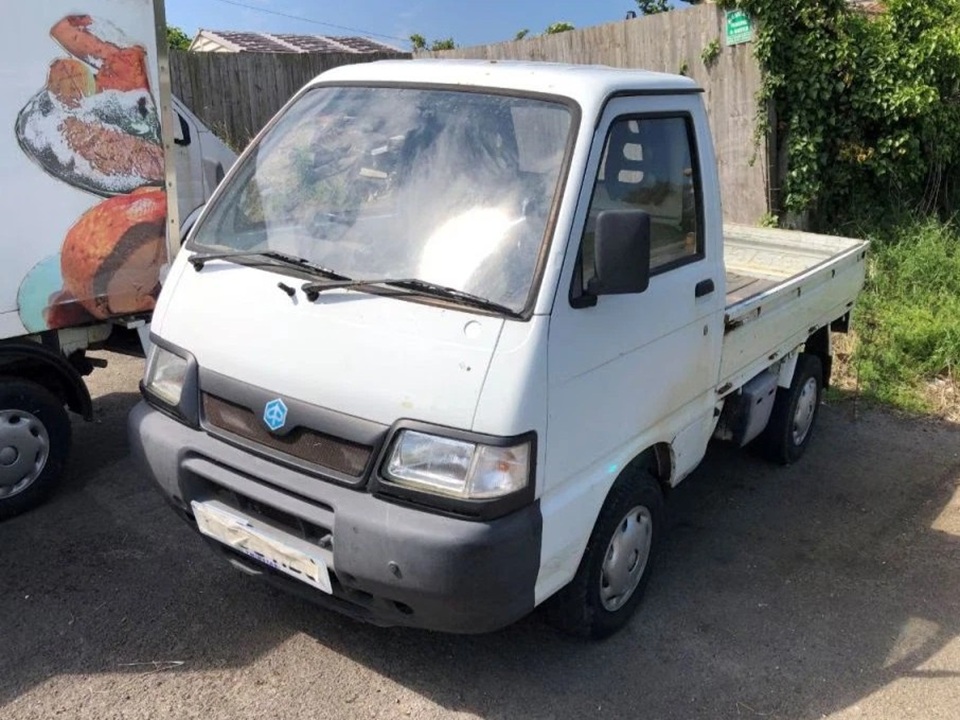
I have found a couple of adorably tiny diesel pickups out there. One is the 1992 to 2021 Piaggio Porter (above), which is a rebadged Daihatsu Hijet for Italy and India. Unburdened by Kei engine size regulations, the Porter had three different diesel engines, with the largest being a 1.4 inline four with a hot 38 horsepower on tap.

Even smaller and even rarer than the Piaggio is a true Japanese Kei truck that had a diesel engine. Yanmar, a company that you might be more familiar with for its small industrial engines, used to make road vehicles! One of them was what Yanmar called the smallest diesel minicar in the world.
The Maker Of The First Small Diesel
Yanmar isn’t really a name most people run into unless they’ve fooled around with small diesel engines or compact construction equipment. But it is a company with a storied history. Yanmar says that its founder, Magokichi Yamaoka, followed in the footsteps of Rudolf Diesel by making the world’s first practical small diesel engine. From Yanmar:
The rich story of Yanmar dates back to 1912, when the company was first started in Osaka, Japan under the name Yamaoka Hatsudoki Kosakusho. Yanmar founder, Magokichi Yamaoka, was inspired to build the most reliable, compact, and efficient engines to ease the burden for farmers and laborers who worked long hours in harsh conditions. While Yanmar is known for diesel engines, the first engine produced was a three-horsepower vertical oil-powered engine. Released in 1920, this was Japan’s first oil-powered engine designed specifically for agriculture. Soon after, in March 1921, a horizontal oil-powered engine was released and was the first to bear the Yanmar name. This engine was called the “Yanmar throttle governed oil engine.” Though the company traces its roots back to 1912, the Yanmar name was not adopted until 1921. An employee suggested using the name of the Yanma Dragonfly, a symbol of a rich harvest in Japan, and together with the “Yama” from the name of the company founder, Magokichi Yamaoka, the name of “Yanmar” was created.

The efficient and innovative new Yanmar engine soon found a host of practical uses. Magokichi showed the machine around Japan, attaching a rice huller to it and demonstrating its practical uses to astonished farmers. The response was overwhelming, and the company began to introduce its engines into more and more applications. Yanmar’s first foray into engines outside agriculture was for marine use. As the brand’s popularity grew and new engine models were introduced, Yanmar’s first marine model was released in 1925 for use in fishing boats. To this day, Yanmar remains one of the most trusted names in marine equipment.
As Yanmar’s reputation and popularity grew, so did demand. In addition to the Tokyo branch, new branches were opened across Japan, as well as in South Korea, the Philippines, Taiwan, and Shanghai. Though business was booming, the Great Depression of 1929 would slow the company’s momentum, if only briefly. The diesel engine was known to be ideal for agricultural use, but its main drawback was size. To create an engine powerful enough for farm work, the size just wasn’t practical. After more than a year of work and numerous setbacks, optimism was dwindling that a smaller, effective diesel engine could be created. Then, in December 1933 there was a breakthrough: The latest prototype small-size diesel engine fired up and ran smoothly. The resulting product was called the HB Model, and set Yanmar on the trajectory to become the leader in diesel engines we know today.
Yanmar says that Yamaoka’s desire to build a smaller diesel engine came after he studied Rudolf Diesel’s creation in Germany. Yamaoka, like Diesel, thought the diesel engine was the future. Yamaoka was so confident in the diesel engine that he thought that there was no better internal combustion engine to change the course of farming.

There was only one problem, and it was that Diesel’s engine was large, and it had to be scaled down if it had any chance at revolutionizing farming. In Yamaoka’s eyes, a farmer didn’t need a massive brute of an engine, but something small and simple that made 3 HP or maybe 5 HP. He thought that maybe there had to be some company in Japan with the same idea. But after visiting 20 to 30 factories, he found that none of them were even thinking about making tiny diesels.
This sparked a flame in Yamaoka’s heart, and he would become obsessed with making the small diesel engine a reality. First, he toured the world to see state-of-the-art factories across Europe and America. Then, he returned to Japan in 1932 to overhaul his own factory. Yamaoka would join forces with three young engineers to make the small diesel a reality.
Apparently, making a small diesel wasn’t easy. Yanmar cranked out larger engines up to 75 HP, but the 3 HP diesel proved elusive. The company poured money into the project, got loans from banks, and then burned that money, too. But every tiny diesel the engineering team built was a failure, sometimes smoking out the lab as it coughed a few breaths before dying.
By September of 1933, Yamaoka gave up his dream, paid his workers 200 yen, and then suspended the project. He thought that if the project continued, it might have taken down the whole company. But Yanmar’s engineers didn’t give up, and they kept working. Yamaoka once again greenlit development, and in December 1933, right before the year closed out, the tiny engine ran successfully.

That tiny engine would be known as the HB, but would later be named the “Yokosui,” which is a shortened version of “yokogata suirei” (“horizontal and water-cooled”).
If you’re interested in reading about the complete history, the company has a free 120-page book that’s available on its website. It’s actually quite impressive how much of its story Yanmar has been able to preserve. Many companies can’t say that! Yanmar even has a fun manga-style book telling its history.
Over the next couple of decades, Yanmar would spread its wings from diesel engines for agriculture to diesels for construction and marine use, too. Yamaoka operated the company under the principle of “to conserve fuel is to serve mankind.” His theory was that if the 300,000 oil engines that were in Japan in the 1930s were replaced with more efficient diesel engines, Japan would save 20 million yen in fuel expenses each year.
Diversification Into Trucks

After World War II, Yanmar would rebuild and continue to expand. Yamaoka would step down as president at the end of 1953. By now, he was old and in poor health. His eldest son, Yasuhito Yamaoka, would be promoted from vice president to president of the company.
The younger Yamaoka had a different approach to leading the company. He believed that the best businesses were thoroughly modern, and he updated Yanmar’s training and organization to keep up with the times. Yasuhito Yamaoka got the Yanmar name on the radio and television while expanding the business beyond the scope of just making small diesel engines. Under his control, Yanmar would also get into the medium- and large-diesel markets. Yasuhito Yamaoka even found a unique way to get Yanmar into the ship auxiliary engine market by forming a joint venture with shipping companies to sell engines to shipbuilders.
Another move from the younger Yamaoka was a new strategy to move more units of the Yokosui engine. One method explored by Yanmar was the establishment of the Vehicle Department in the late 1950s, which would later be renamed the Machinery Department. The job of this department? Make a work truck for farmers. This was a challenge, as Yanmar’s designers had no experience in building motor vehicles.
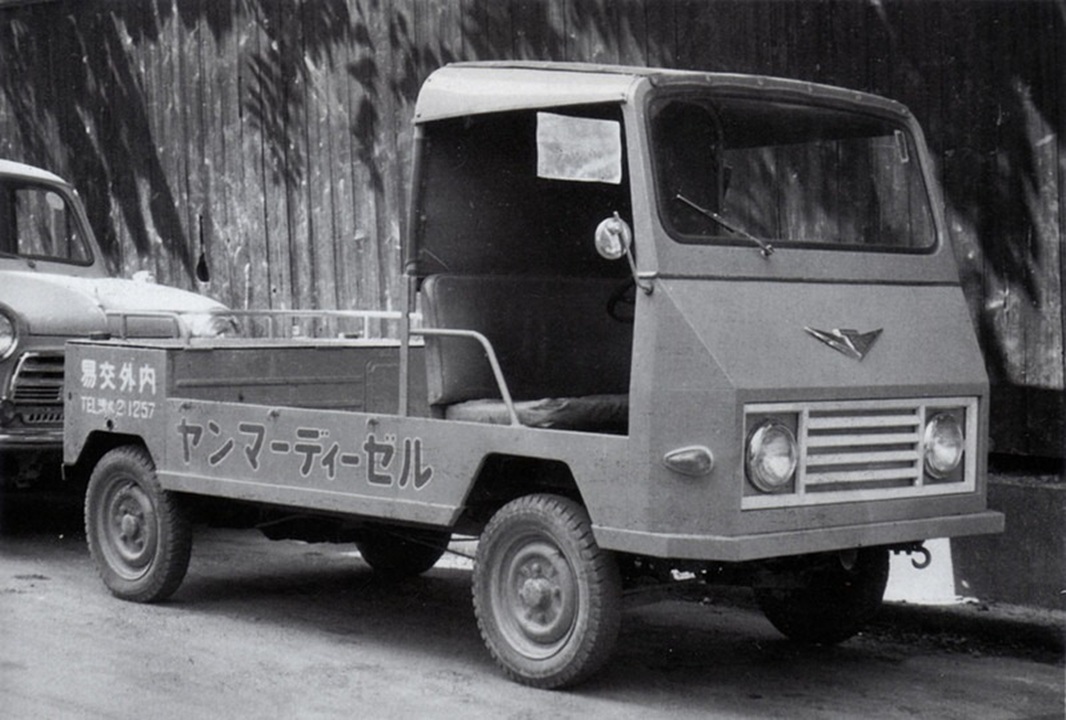
Yanmar’s mini truck was designed by Ōhta Shōkai, who also designed the Kurogane Baby. The truck was called the Pony, and a prototype (above) was built in 1958 before a production version launched that same year as the Yanmar Pony KT.
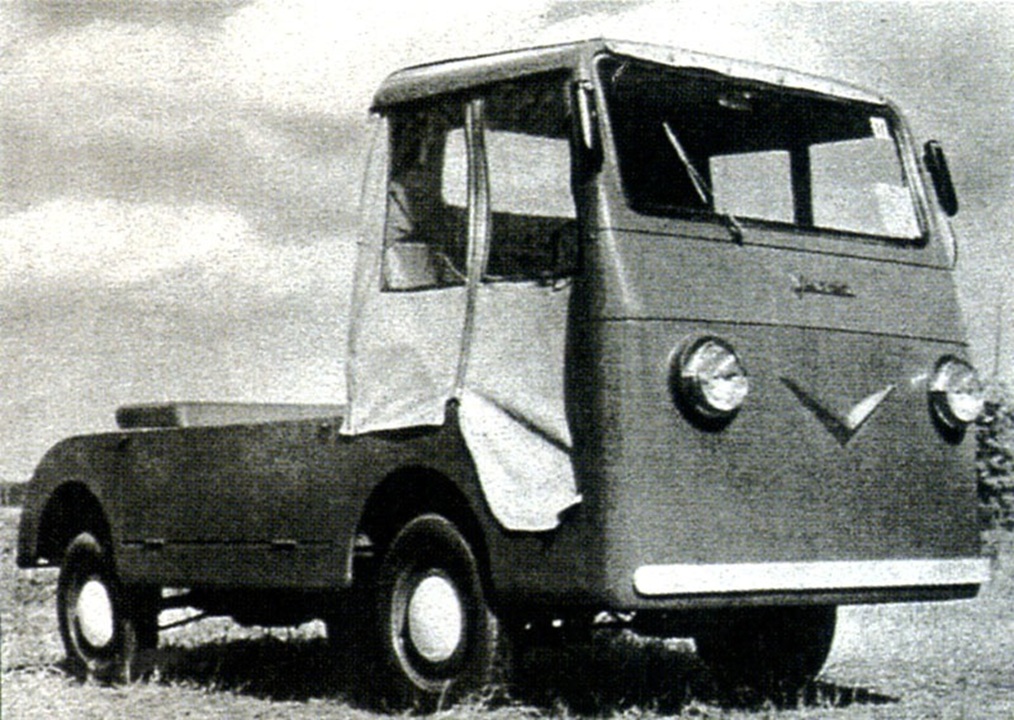
The production Yanmar Pony KT had a bit of a goofy design. The cab up front was mostly open to the air with only soft coverings for the back wall and doors. In the middle was a low bed capable of carrying 300 kg (661 pounds), and in the rear sat a 358cc V-twin diesel good for 6 HP. This engine propelled the truck to a top speed of 15 mph. The price was 298,000 yen in 1959 (1,664,249 yen today, or $10,446).
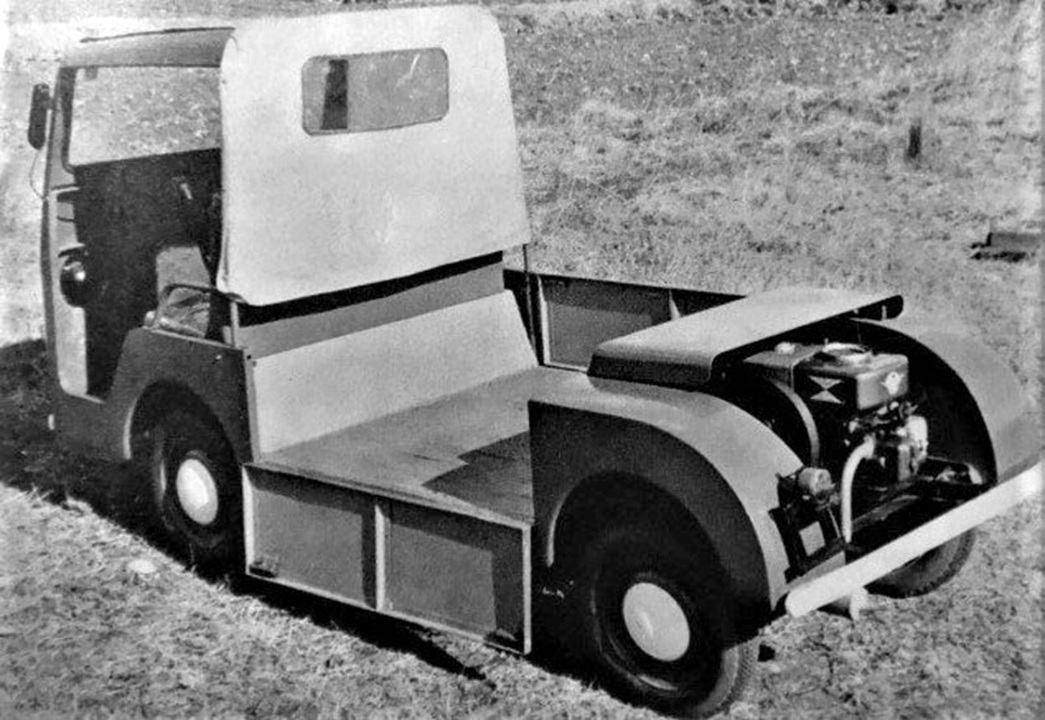
The truck had a novel feature that allowed the driver to remove the engine from the back of the truck to use it either as a generator or as an engine to power tillers or spreaders.
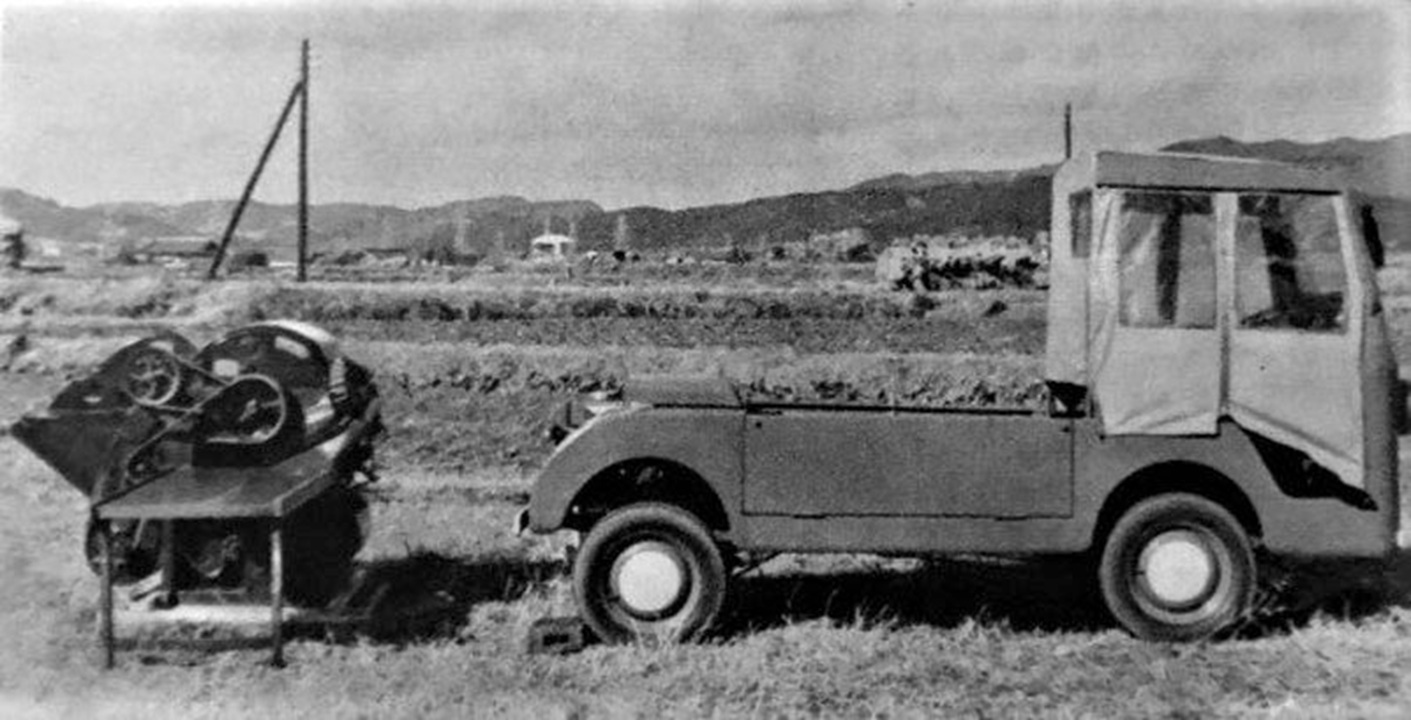
Later, the Yanmar Pony was updated to the FM model, which retained the novel engine but now included an enclosed cab and a more traditional bed. Unfortunately, both versions of the Pony thus far were commercial failures. The widespread adoption of rotary tillers and spreaders meant that there was no real need to remove the engine from your truck to power such devices.
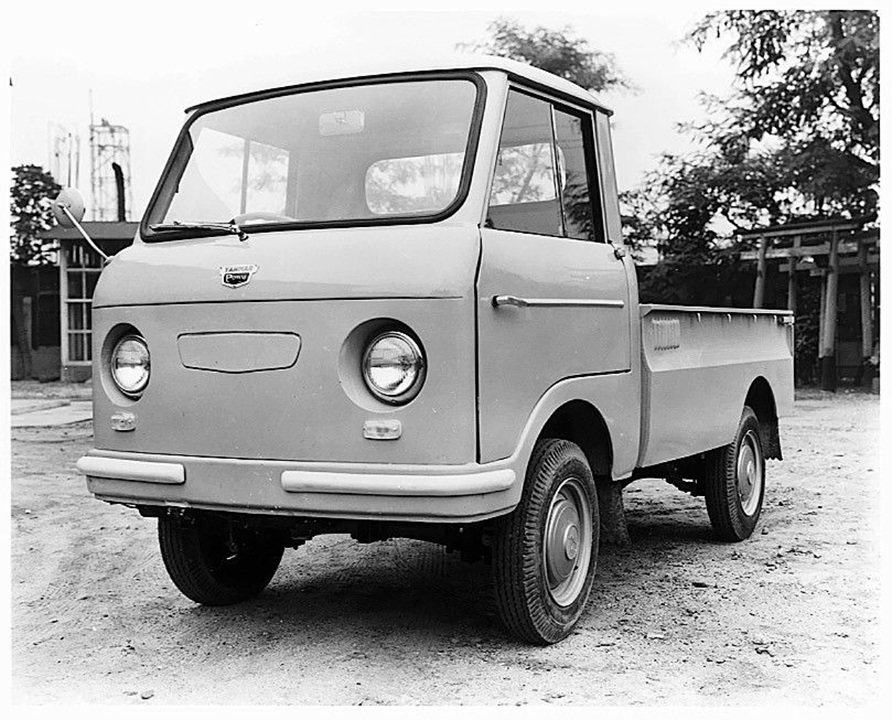
In a last-ditch effort in 1960, Yanmar updated the Pony design into the Pony KYT. This version saw output rise to 9 HP and payload grow to 350 kg (771 pounds). The engine was now a permanent fixture, too. Yanmar says that every part of every generation of Pony truck was built in-house, even the body.
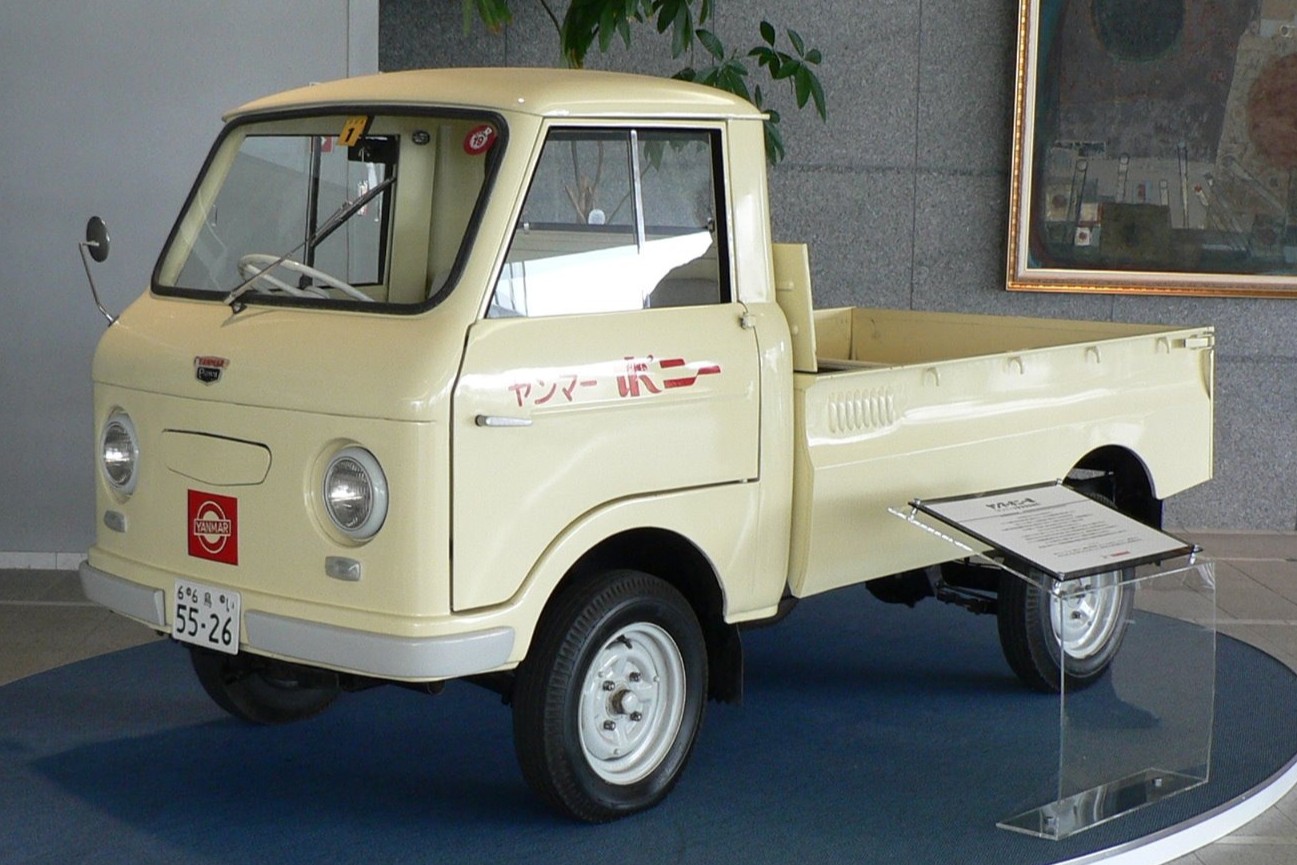
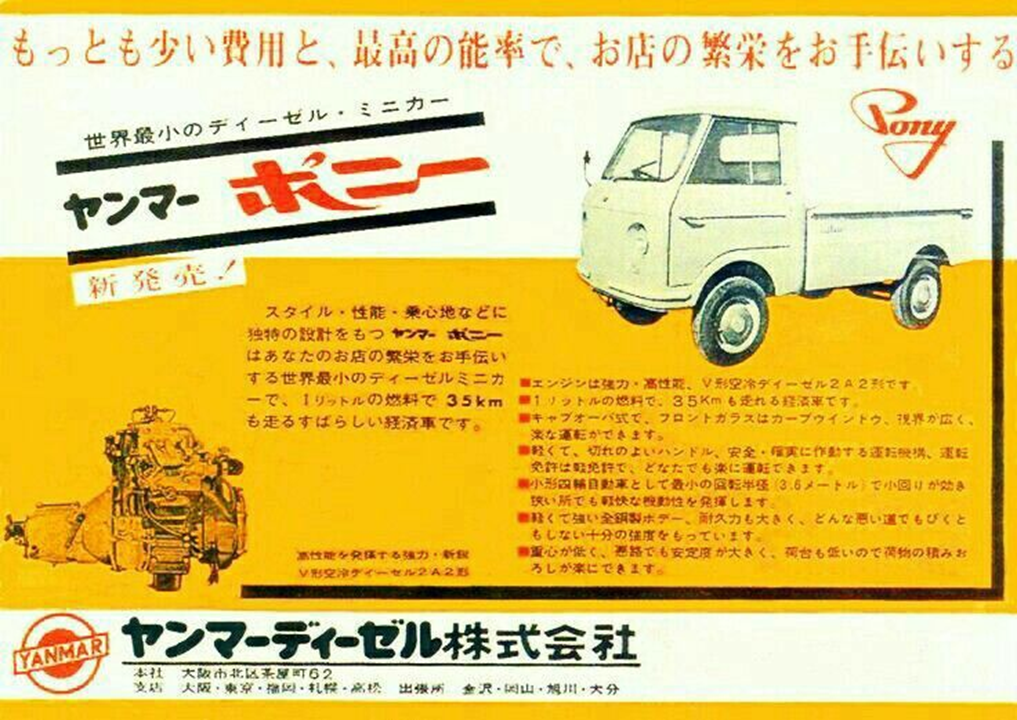
In an advertisement, Yanmar said that the Pony traveled 35 km on just a single liter of fuel (roughly 80 mpg), its low center of gravity made it stable, and that the all-metal body could survive rough farm roads. Further, Yanmar said that the truck was the world’s smallest diesel minicar and that it was so maneuverable that it had a turn radius of only 12.4 feet.
Unfortunately, a faster, more capable truck failed to capture the public. Only 650 units were sold before Yanmar pulled the plug in 1962. In total, 1,000 Pony trucks of all types were sold. Yanmar’s attempt to get into mini trucks was such a failure that it closed its car division entirely. Here’s what Yanmar said about the Pony in 2014, roughly translated from Japanese:

Did you know that 50 years ago, Yanmar manufactured and sold light vehicles? Named “Pony,” which means foal, this little car saw a total production run of around 1,000 units.
The Pony was, of course, powered by Yanmar’s unique compact air-cooled diesel engine. Equipped with a tiny engine with an engine displacement of less than 360cc, within the light vehicle standards of the time, the Pony was a small light truck. It’s said that it was literally like a pet, roaming the farm roads all over Japan with farmers.

The know-how cultivated through the minicar development project, which was initiated at the initiative of Yanmar’s second president, was passed down through the practical application of the Pony light truck and the development of Yanmar’s first passenger tractor, the YA12 Model (1963).
Today, Yanmar admits that while the Pony was a failure, it was also probably one of the forerunners of the four-wheeled Kei truck. In the decades before the Pony and similar efforts, many of Japan’s tiny trucks had three wheels. It’s also interesting that Yanmar used what it learned with the Pony to make a tractor.

The Yanmar of today is still a powerhouse of diesel engines, but it also makes a variety of tractors, wheel loaders, track loaders, mini excavators, and tracked cargo trucks. Yanmar even makes diesel and gas UTVs, too. These aren’t Kei trucks, but I suppose that, in a way, these are the modern equivalents of Yanmar’s old farm trucks.
Sadly, your chances of finding a Yanmar Pony are practically slim to none. Only 1,000 were ever built, and the youngest of the lot is 64 years old. Chances are, most of these trucks were worked on farms and construction sites until they were taken out of service. I cannot even tell you what one would cost if you found one for sale.
The Yanmar Pony takes an obscure place in history. Most Japanese Kei trucks have never dared to go diesel, but this one did. It had cute looks and a novel engine concept, but it was also quite slow and, apparently, not very attractive to buyers. Still, a company that didn’t even make cars built one of the smallest production diesel pickup trucks. Failure or not, the little Pony was a weird and largely forgotten ride.
Top graphic image: Yanmar


Yanmar makes excellent diesel marine engines. I was impressed with my experience maintaining and operating a pair on a 42 foot express cruiser.
Yanmar makes excellent motors, and pretty great tractors! My Grandpa bought a 32 horse Yanmar tractor in the 80s that I still use to this day
Kurogane Baby
Had to look this one up, because I’d also never heard of it.
Neat! Love that it can be used as a jobsite generator. I know Yanmar engines from my sailing days, but had no idea they once built vehicles too.
I would posit that pickup trucks are actually kind of stupid. They subject the load to falling out, the weather, and theft, and greatly limit interior space when not loaded. The majority of the time, a VAN is the better work vehicle (as evidenced by the ratio of vans to flat bed trucks globally). For things that need to stay outside or are oversized – tow a trailer with the van. Then you get more capacity and a better loading height than any pickup can manage in it’s bed, and can optimize for the job – for example, dump trailers.
I love it!
You’re right, I only know Yanmar by their engine offerings. What a cool piece of history!