

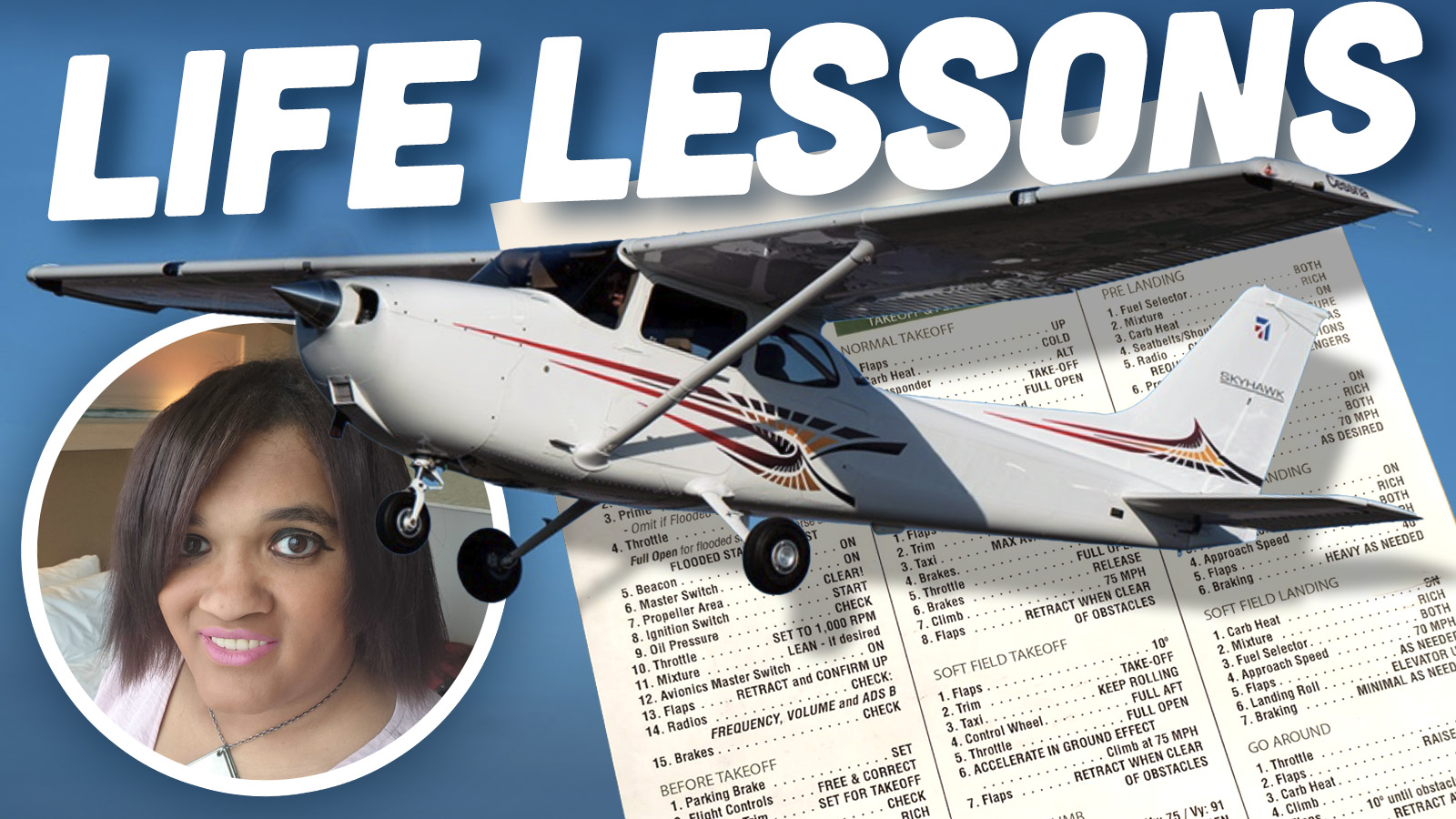
One of the greatest joys and privileges I’ve had as a vehicle enthusiast is flying small planes. If you’ve ever dreamt of soaring through the sky like a bird, strapping yourself into an old Cessna comes pretty close. It’s also a great learning experience, and not just for teaching you how to safely operate a flying vehicle. The lessons that every pilot learns are actually teachings that everyone should know, no matter how they get around.
Last August, I reignited my dream to become a pilot. I love everything with a motor or engine, from the smallest boats and motorcycles to titanic aircraft. If it’s a self-propelled vehicle, I’m going to love it. My life’s mission is to take command of as many vehicles as humanly possible! My childhood dream was to fly a Boeing 747. The only way I can achieve it is by starting right here on the ground.


My training went steadily until February. That’s when I got bad news from an Aviation Medical Examiner that the Federal Aviation Administration in Oklahoma City will need to perform a detailed review of my medical records to ensure I’m safe to fly. Unfortunately, I technically have a disqualifying condition, diabetes. While my condition is maintained entirely by eating better and Ozempic, the FAA wants to make sure I won’t have an episode in the sky and put any lives in danger. Thus, I cannot get an FAA Medical Certificate until the FAA decides I’m safe enough. The FAA has been reviewing my records for the past two months, and I have no idea when I’ll be able to fly again.
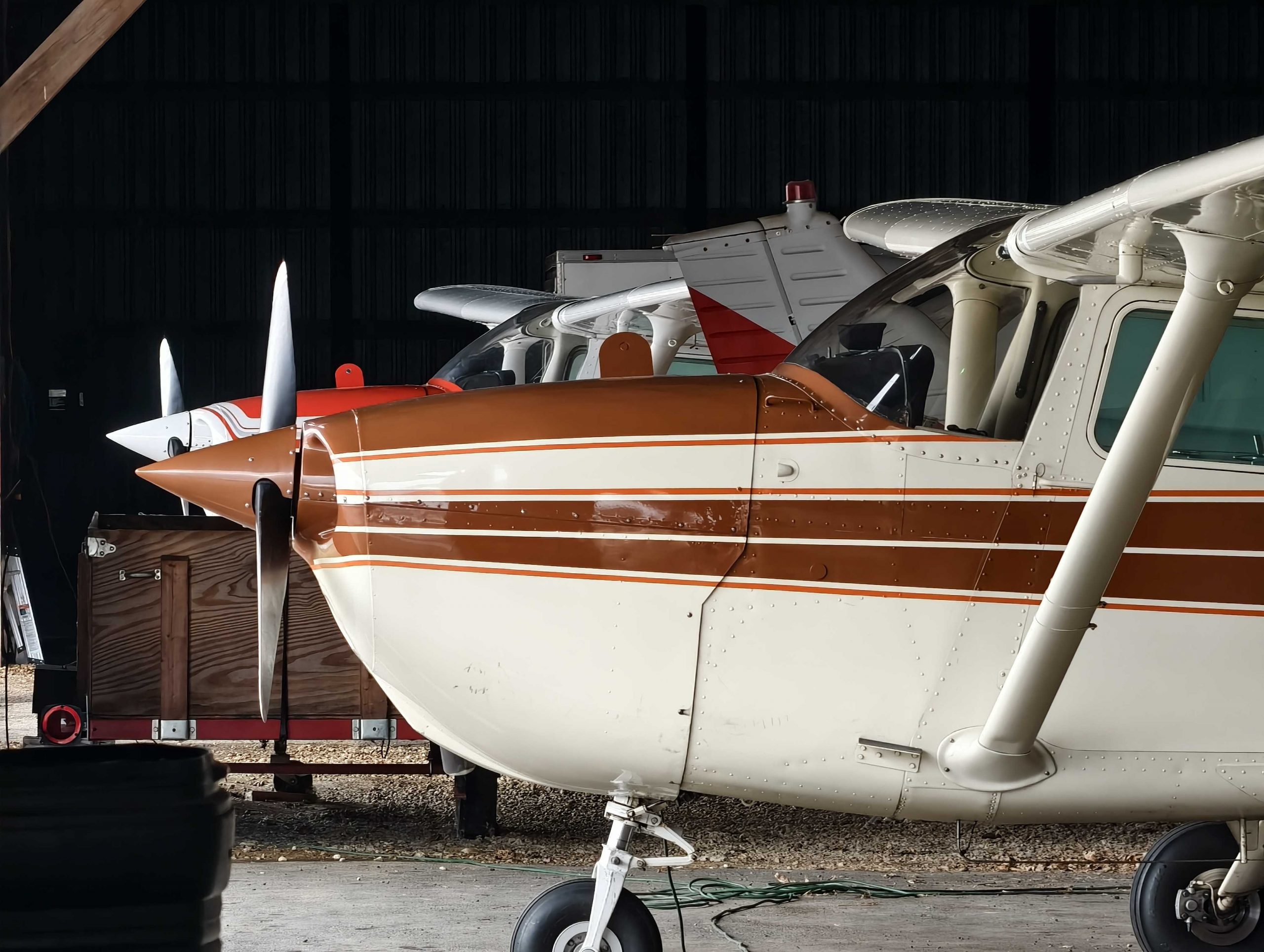
This has completely stalled out the practical part of my training. The cruel twist? When the bad news hit in February, I had just been cleared for my first solo. My wife even bought a GoPro to film it!
Instead of letting the news get me down, I’ve been trying to stay fresh. I’ve been reading my private pilot textbook and practicing in my home simulator. I will need to perform a flight to shake off the “rust” before my solo, but my hope is that I will have kept myself fresh enough that I don’t have to backtrack.
While I have been doing this, it hit me that there’s a lot that I have learned over only 35 hours of flying that actually transfers over to driving cars almost perfectly. Yet, when I took driving classes when I was a teenager, I was never taught this stuff. I’ll even go a step further. What I learned in the sky is something that every single person should know to make their life a little easier. This story was inspired by a somewhat similar idea from Axios, but adapted to car enthusiasm.
Aviate, Navigate, Communicate

One of the core ideas of flying that I learned as a student pilot is an order of operations that has been proven to keep pilots alive in abnormal situations. It’s just three words: Aviate, navigate, communicate.
What this means is that if you’re getting into a situation that’s different, unknown, abnormal, or even an emergency, your priority is to keep the plane flying. You might feel inclined to mess around with your aircraft’s automation or navigational equipment, but that’s pointless if you do not have control of the aircraft. It’s the same deal with calling air traffic control. All of these are good intentions, but meaningless if the aircraft is spiraling toward the ground or barreling toward the side of a mountain. Make sure the plane is flying and safe first, then work on the rest.
It’s the same deal with your car. Are you driving in an unfamiliar place and you’re confused? Don’t try fiddling with your phone, your vehicle’s navigation system, or GPS while you’re lost and frazzled. You can always continue to drive and then pull over somewhere safe. Then get your bearings. This even applies in emergency situations. Did you crash into a pond? Keep something like a Resqme tool on you, bust out of the car first, and then call your family.
Always Have An Escape Plan

Another thing that I learned almost from the jump is to plan ahead in case of an emergency. In the sky, this means that I’m scanning for other aircraft that I might want to avoid before they become a problem. It also means that I’m scanning the ground for a suitable spot to land in case my engine dies out. The goal is that I should have some sort of idea what I’m going to do if something goes wrong.
Before I even depart a runway, I have calculated my aircraft’s performance, and I have set minimums. I know what I’m going to do if the aircraft encounters an engine failure at various points during my takeoff roll.
This goes beyond just scanning for escape paths. Before I even start the engine, I want to make sure that I have alternate airports to fly to in case the flight doesn’t go as planned. I also don’t want to commit to bad ideas just to complete a flight. If I’m about to fly into weather, I should just turn around. There’s no shame in going back to the airport if I cannot complete a flight.
In a car or motorcycle, this means scanning ahead. You’re looking not just for dangers, but also places to go in case the car next to you suddenly decides that it wants to be in your lane. Often, this might mean going into a shoulder. But since you’re paying attention before this happens, maybe you’ll notice that the road you’re on doesn’t have a shoulder, and thus you would have to try something else.
Stay Ahead Of The Aircraft

There are a lot of tasks pilots have to do to safely command their aircraft. They have to communicate to air traffic control, watch for traffic, watch their instruments, perform approach procedures, and, if they’re rated for it, even fly their aircraft in the blind. It is possible for a pilot to become task-saturated and fall behind the aircraft.
For example, a pilot who’s behind their aircraft might pass certain stages in their approaches before they’re ready to perform them. This could mean ending up at the wrong altitude, flying too fast, not having the gear or flaps down, or other missed steps. Basically, the aircraft is flying faster than you are. This is dangerous because if you never get ahead of the aircraft, it’s entirely possible to crash it. So, during cruise when you have a low workload, you want to check the weather, brief approaches, and set your radios. That way, you have a leg up when it’s actually time to start descending toward the ground.
A lot of this directly carries over to your car or truck. If you’re towing a giant trailer, for example, you want to know if you’re going to be dealing with any sharp turns or clearance issues before you have to figure it out in real-time. If you’re taking a cross-country motorcycle ride, you want to periodically check the weather ahead to make sure you won’t be riding into a severe thunderstorm.
Always Perform A Pre-Flight Check
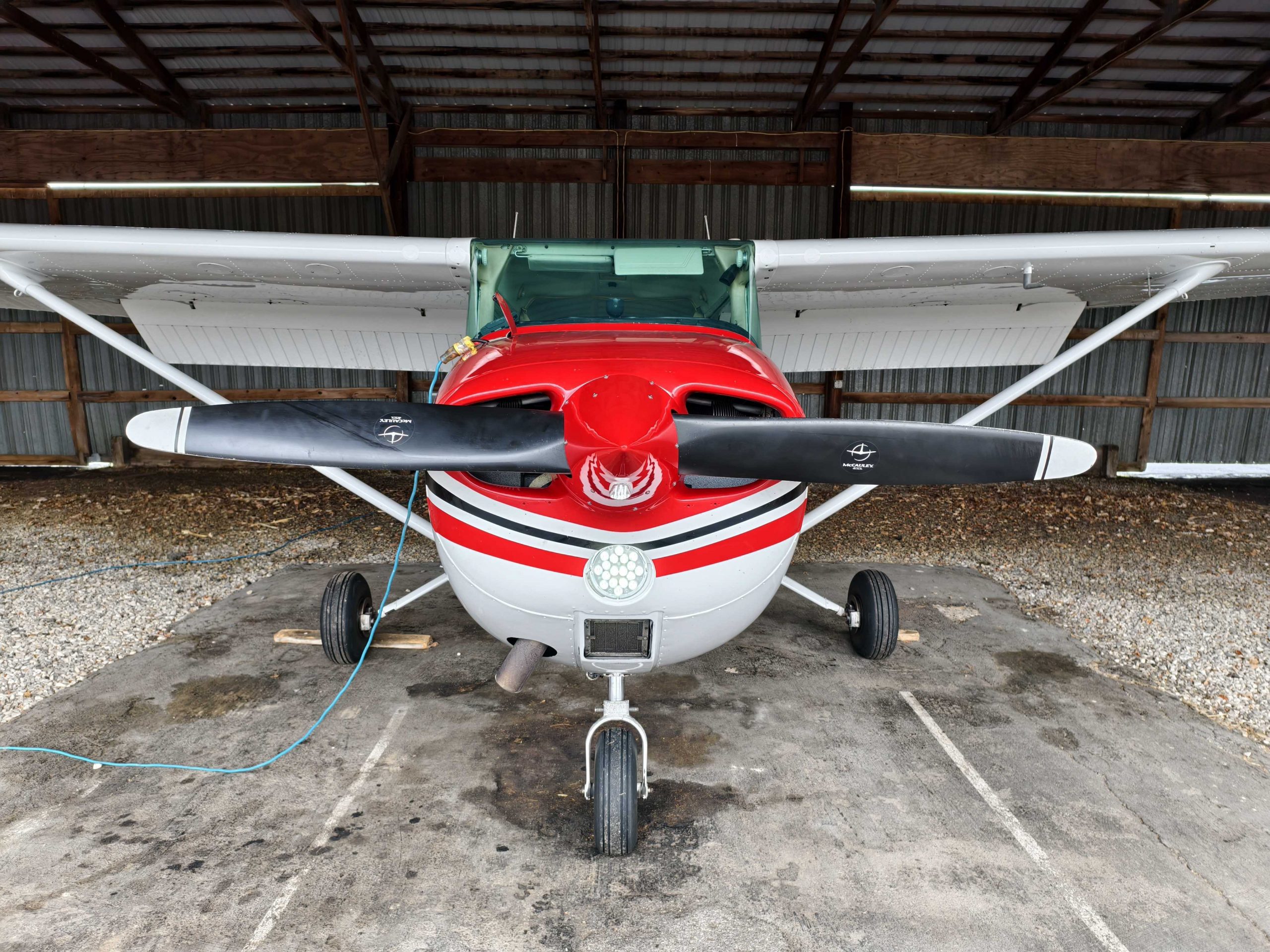
Every single time I fly the trainer Cessna 172, I walk around the aircraft. I make sure there are no visibly loose rivets, no obviously missing nuts and bolts, no leaking hydraulic fluid, and no parts hanging off. I check to make sure bees didn’t make a hive in the stall horn, check the engine’s oil level, check the wing struts, check for water in my fuel, check fuel level, and pretty much every other critical safety element of the aircraft. Sadly, some pilots have perished after skipping pre-flight check steps and finding out the hard way that they had water in their fuel or some other issue.
This can directly translate to your car, motorcycle, RV, or truck. It’s easy to just hop in your car and go, but you should at least give your vehicle a walkaround first. You should check your fluids, make sure nothing new is leaking, and ensure your tires look safe enough. My wife once drove her car for months with a blown taillight. It’s something she would have caught immediately if she took a few minutes to walk around the car every morning.

Learn The Fundamentals First
The great thing about the present day is that there are so many technological aids. Foreflight is an incredibly powerful piloting tool, and there are plenty of general aviation aircraft out there with fancy autopilot systems and other automation. Some pilots make the mistake of leaning heavily on technology before they have developed their stick and rudder skills.
What this sometimes means is that you get a pilot who immediately turns on their autopilot the moment they get airborne and then leans on the autopilot for most of their flight. Then, one day, the autopilot malfunctions, and they’re in a whole world of trouble because they never honed in on their stick and rudder skills. Or, maybe their iPad dies, or their GPS fails, and they haven’t the faintest idea of how to get onto the ground.
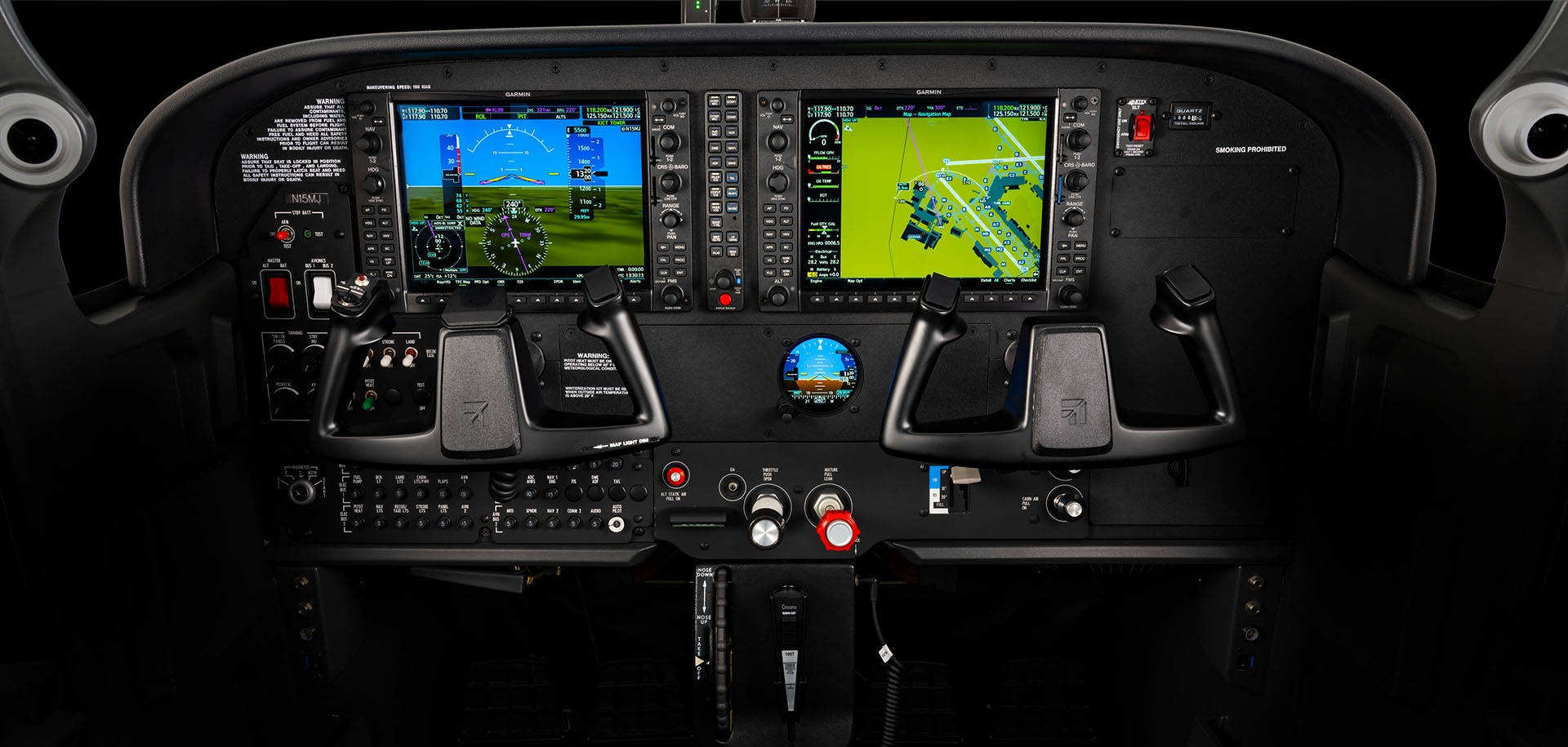
The automation tools are great, but they should be an augmentation to the skills you already have, not a replacement for the skills you don’t have.
In your car, this means learning proper driving techniques before you start leaning on whatever driver assist technology your vehicle has. You should know how to control your vehicle, roughly where its limits are, and where your own limits are. If you can’t safely complete a drive without leaning on Full Self Driving, Autopilot, or whatever software your car has, that’s a problem.
When In Doubt, Go Around

This one is another extremely important lesson that I learned early on in flight school. If I think a maneuver isn’t safe, there is no shame in taking the safe way out. This lesson is often used during landings. Some pilots may pressure themselves to continue an unstable or otherwise unsafe landing. But there’s no reason to. If the landing isn’t feeling right, just punch the throttle and get out of there. I can always try the landing again. It’s better to burn more fuel to do a safe landing than potentially crash in trying to get to the ground.
This has a great direct example for when you’re driving. If you’re about to blow past your intended exit and you’re not in the correct lane position, it’s fine. You can always re-route or turn around. There is no need to sail your car across five lanes of traffic and endanger yourself and others just to get to an exit. Yes, you’ll burn some more gas, and yes, you’ll lose some time, but most importantly, everyone will get to go home safely.
This is also a big life lesson, too. If you’re not feeling comfortable with a situation, maybe you shouldn’t do it, or return when you’re feeling better about it. If you’re being dared to do some physical feat or something dangerous and you think it’s not going to end well, just get out of there. Who cares what people say or think? It’s better to be safe than to risk harming yourself.
Whatever You Love, Be Safe!

Of course, I know that not every Driver’s Ed course is the same, and I have no doubt that there are drivers out there who learned these ideas. At the same time, I know there are also a lot of self-taught drivers out there and drivers who didn’t learn these things in school. I know my Driver’s Ed teacher didn’t explore these concepts. I didn’t really grasp the concept of scanning for an escape route until I took a motorcycle training course many years ago. Flying has only reinforced the idea.
I think these concepts also show how two vastly different kinds of vehicles can still have similar principles. Planes and cars should never mingle, but what you learn in the sky can apply to what you do behind the wheel, and vice versa. If you’re interested in reading more about how flying works, feel free to browse the FAA’s Airplane Flying Handbook
I think if most drivers followed these rules, the roads could be a safer place. Imagine a world where nobody cuts across traffic to reach an exit or gets their trailer stuck on a curvy road. Maybe following a few of these ideas might even prevent a crash or a few. At any rate, drive safe and have fun, no matter what you drive, ride, or fly.
Top graphic images: Cessna; Mercedes Streeter


I was going to mention the LSA option, but others already have. The new LSA regs are shockingly lenient. 250 knots? Retractable gear? Four seats?
Had this been in place 45 years ago, I would have saved a lot of money.
What are you using for a flight simulator? Last one I “flew” was Microsoft FS 2000.
I don’t fly any more. But putting around town and out in the sticks on a Honda ADV 160 fills the yearning for banking in turns and exploring places I wouldn’t take my car.
Great article…good luck on getting your pilot’s license!
“When In Doubt, Go Around”
This made me randomly think of that Mitch Hedberg bit:
“I had an apartment and I had a neighbor, and whenever he would knock on my wall I knew he wanted me to turn my music down and that made me angry ’cause I like loud music… so when he knocked on the wall, I’d mess with his head. I’d say Go around I cannot open the wall I dunno if you have a door on your side but over here there’s nothin’. It’s just flat.”
Yesterday I took my grandkid to the airport. The grandkid is in the driver training phase, so we got to talk about driving. As we were driving along a multi-lane stretch of highway some vehicle ahead and a couple of lanes over was attempting to pass a vehicle on the inside shoulder. Several times they went into the shoulder. Perfect opportunity for me to scan my escape options in case that vehicle overcorrected from the dirt and rolled. And perfect opportunity to explain what we were seeing and what I was doing in response, and what could happen. Later down the road was a car veering into the adjacent lane several times. Again an opportunity to provide guidance for options for dealign with that vehicle. In this case, when passing that vehicle, they can not be trusted to drive properly, so when passing, don’t hesitate, just get by quickly, and that the same applies to passing big rigs. We also had an opportunity to discuss options when on a on-ramp the car ahead was goign too slow. Fun times teaching a new driver!
Some great insight in the article but I am interested in peoples opinions do all the safety features help people see issues or make the complacent and ignore possible problems untill the warning signs go off?
Simple. My car doesn’t have any active safety features other than me.
I believe the worst thing that can happen is to not have any close calls. You get complacent and then you get dead.
Flying is to driving as 3D Chess is to Chess.
As for walk arounds on a car my mechanic shop just presented me their customer with the most tire repair jobs for all time. Impressive considering I only discovered them 8 years ago and they have been in business for 60 years. I came in second for the most engine/transmission replacements for the same vehicle.
Username checks out.
Good article. I would say there’s a lot of crossover in these tenets to track day driving also.
In my formative years I ran and learned with TrackTime, and a lot of stuff they hammered into my head in my novice period sticks with me to this day. Always listen to your car; if something seems off, bring it in. If you’ve blown the corner, ride it out, straight into the gravel if necessary, rather than try to jerk it through wildly. Always be looking for your out, and drive to safety rather than fixating on what you don’t want to hit. Be aware where all the flaggers are, and look for them each lap. If something has gone wrong on track, bring it to a stop near a corner worker, so they can be of immediate assistance if needed (particularly important with regard to fire).
The big one many people miss: if you find your mind wandering out there, or you’ve made two mistakes in a row, bring it in. A lot of incidents happen when people are tired but think, “just one more lap.” Focus is important.
So, “aviate, navigate, communicate” is something that holds a lot of off label meaning to me. I spent a long time in a cptsd recovery program and at the time had been watching MentourPilot on YouTube and they use that phrase often. I happened to say it in therapy one day and it ended up being a way for me to navigate intense situations. I don’t often say it these days, but it still holds true.
Just wondering, does the FAA differentiate between Type 1 and 2 diabetes? Glad to hear that you’re a reasonable, logical person. I had a friend, a doctor, who told me that on his first solo, he got lost, disoriented, whatever, and was too embarrassed to call the tower. He said he had to use his phone to figure out where he was. I wasn’t surprised as physicians who own their own planes crash at a much higher rate compared to other owners. Unfortunately, I didn’t hear this story until I was up in a tiny Piper Cub with him. It was like being in an ancient VW Beetle! My job was to constantly scan for other aircraft. He botched a “touch-and-go” in Oceanside, CA; came down a little crooked and came close to losing control. The tower dryly said “Smooth move…” Needless to say, I never went up with him again…
Yes! When I get my medical certificate, I do plan on writing about it. Some months ago, my local airport had a seminar hosted by Michael Hunter, the founder and stunt pilot behind Flight For Diabetes. He had impressive resources for pilots who want to fly with Type 1 Diabetes, but not much for Type 2, especially when there’s only minimal intervention as I have. So, I’m sort of a test subject so Michael can add further FAA resources for Type 2 Diabetics.
Anyway, as the medical examiner told me, the only way to avoid being deferred to Oklahoma City would be to have an A1C that has never gone above 6.4% (Pre-Diabetes) in your medical records. It doesn’t really matter what kind of Diabetes you have, as the FAA sees Diabetes in itself as a potential disqualifier. Of course, since I was at 8% when I was diagnosed, I had to be deferred, even though my A1C has been at around 6% for years.
I’m not mad about it. I get it. Safety above all!
When you get deferred, the FAA may ask for additional documents or proof that you’re not a flight risk. Since my Diabetes is easily managed with a weekly Ozempic injection, the medical examiner thinks that the FAA will not drag me through that whole process. But I still need to wait for my records to be reviewed. It took two months just for the status of my exam to go from “transmitted” to “in review.” Apparently, the chaos going on in the federal government hasn’t sped up exam processing.
That’s cool you’re contributing to further FAA resources. I get it too, safety first.
I am currently in the process of trying to get my FAA medical as well, apparently they have a Fast Track for the items I’m dealing with but it’s still a whole huge frustrating process. My ground instructor showed me a meme with the FAA logo and a slogan that said “We’re not happy until YOU’RE not happy” as he was commiserating with the struggles I was having with this medical cert stuff. I get the safety and all, but some of the requirements really seem over the top…
BTW Mercedes, I started doing flight lessons after reading your articles on your journey helped me understand it more, thank you for the inspiration!
It’s just as hard in the UK. A friend who’s now a professional helicopter pilot was asked the question “did you have headaches as a child?” during his first medical, and made the mistake of answering “yes”.
It took months of scans and going to see specialists before he could get signed off as ok to fly.
Good luck with your health issue.
I see many parallels between pilot and CDL training. Of course, piloting is more complex, but the tenets are the same; pre-trip inspection, know where you’re going, keep looking ahead (or as you call it, stay ahead of the airplane) and have an out. Great article.
All I can say is good luck Mercedes, and also that Axios has very ungentlemanly article scheduling.
That Axios article inspired this car-oriented version! I’ve long thought it was funny that what I learned in the sky had some parallels to cars, but I never really got around to writing about it. But Axios finally gave me that push I needed. I did note that early on, because credit where credit is due:
Two years ago discovered Hoover on Pilot Debrief. Those holes in the Swiss cheese line up and you become toast..literally in many cases. I have applied the aviate /navigate/ communicate process to the use of the touch screens in my car, as they deviate my attention from driving.
Yeah Drivers Ed in the early 90s was basically LOL Don’t Die, here’s some snuff films.
BLOOD ON THE HIGHWAY!
Excellent movie
Excellent but wasn’t it Blood on the Asphalt? Or was that a sequel?
One student passed out while watching that video in my drivers ed class.
Yes. This. If I had a dollar for every time I was with someone who was panicking because they missed the turn…
Taught both my daughters this when they were learning to drive: don’t panic because you in wrong lane or missed a turn, just follow through and then go back.
Since common sense isn’t common, we need pieces like this. Thanks.
Sorry to hear about the setback, but way to stay with it!
Rallycross and autocross (plus a few track days) since 2011 has taught me a lot. Scanning ahead, multiple steps ahead. Having an “out” if something goes wrong (that guy up there riding the other guy’s ass and looking in his mirror 3 times per second is probably going to cut me off).
Then throw in two Street Survival schools and this old man learned a few things along with the kids. I really wish a driver’s test was required to be more than drive around the block and parallel park over there.
All the things that you’d do as a motorcyclist, too.
Words to drive by.
I was largely taught to drive by my ex WWII torpedo bomber pilot grandfather. He was also a commercial driver for much of his working life. All of your words are very, very familiar and bring back some memories for me. I like to think I do a reasonable job of practicing what he preached. At least today. My first few years behind the wheel, well…
Sorry to hear about your FAA situation, hopefully that works out OK. Diabetes is not the curse it once was (I have it too), but the FAA definitely takes the better safe than sorry approach to the hilt.
Check out the new Light Sport Aircraft rules!
https://www.aopa.org/news-and-media/all-news/2025/august/14/mosaic-explained-faq
I have considered becoming an LSA pilot, but a large part of me knows I will not stop at just being a private pilot. So I want to go all the way!
Not to mention, Sport Pilot is off the table with a medical cert in deferred or denied status.
Hang in there, Mercedes!
The wheels of FAA aeromedical turn glacially slow.
You have one of the best difficult-case Senior AMEs in your veritable backyard (at Clow) …
Leaving space between you and other road (or sky) users. My daughter is learning to drive and I keep telling her that space is your friend it buys you time to think and make decisions / react to what is happening around her.
Can you still fly a LSA or ELSA type plane even if you don’t have the official FAA medical clearance?
Great article.
I look under for leaks and look at all 4 tires every time I walk up to my vehicle. A lifetime of POS junk cars has taught me to.
Word.
Maintenance and preventative part replacement as well. It’s what the dealer/manufacturer will always tell you, and in this case, they are not wrong. It’s just that most people will not actually follow through with it.
If vehicles were easier to work on I bet more people would do maintenance. Unfortunately it’s only gotten worse.
When changing a serpentine belt is 5 hours of labor I’m less inclined to do it.
To add another: GottaGetThereitis
Don’t be in a rush, don’t go if the conditions are really bad or you’re not in shape to operate heavy machinery.
Mentour Pilot is a wonderful youtube channel that goes into detail over air plane incidents in a sensible non-sensational ways from a pilot’s perspective.
The best thing is he discusses all the main points about general flying that carries over to everyday life and other industries including planning, communication, and knowing when to stop.
Highly recommend Mentour Pilot! I’ve watched every single one of his videos for I forget how many years now. Now, he’s spread into investigations about incidents outside of aviation, and I’m even more addicted.
Him and Juan Browne (blancolirio) are excellent channels
Great post. You see the pleasure in operating a vehicle. I think many people can also see it but I feel most see it as a task. If you like to drive, as I do, then you probably enjoy thinking about the physics involved such as always have an escape plan, etc.
Take Mercedes advice to heart or you might end up on an episode of Pilot Debrief.
I’ve been watching Pilot Debrief and, as someone that occasionally does surgery, I found that the lessons are very relevant to doing a surgery or other procedure that I have not done in awhile. Specifically, the longer that it’s been since I have done that surgery, the more I’m going to plan out and triple check all the minutiae. Even if you’re experienced and the task if routine, the checklist will save your ass on days when something goes wrong and you get distracted.
This is smart for any complex task you don’t do very often. I work on large enterprise storage arrays, and in a few weeks I am going to have to take apart, move, and reassemble one. I have done that many, many times, but not on this particular type for some years. So I am doing a LOT of review of the proceedures, creating a checklist, etc. Better over-prepared than sweating bullets onsite when something goes wrong.